In the so-called “War on the Car,” it feels like the provincial government is the one leading the charge.
In the last few years, the Ontario PC government, led by Doug Ford, has pulled out all the Stops (pun intended) in favouring motorists. Though the province is funding major transit expansion in the Greater Toronto Area, it has also accelerated the construction of new highways in the suburban “905 Belt” including the Bradford Bypass (Highway 425) and Highway 413 between Milton and Vaughan. It eliminated tolls on the provincially-owned sections of Highway 407 in Durham Region. The province also raised most provincial freeway speed limits to 110 kilometres per hour, even on congested sections of Highway 401 in Toronto. It eliminated the automobile licence plate renewal fee, and reduced fuel taxes soon after getting elected. Premier Ford has also pushed for a tunnel under Highway 401 that will never get built, but will waste time and resources for a study.
Along with these pro-driver policy decisions, the Ford government has struck back against local measures that were designed to promote walking and cycling and protect road users — especially pedestrians and cyclists — from injury and death.
In 2025, the province, once again weaponizing its constitutional authority to override municipalities, forced the removal of speed enforcement cameras. Traffic speeds, predictably, went up. In 2024, the government used its majority to pass Bill 60, the “Reducing Gridlock, Saving You Time Act” which prohibits municipalities from installing cycling infrastructure that would take away from general traffic lanes without ministerial approval. The legislation also gave the government authority to override Toronto City Council decisions, by removing city-installed cycling lanes on Bloor Street, Yonge Street, and University Avenue/Queen’s Park Circle. All three of these routes have subways underneath and parallel other multilane routes such as Jarvis Street/Mount Pleasant Road and the Gardiner Expressway.
It didn’t matter that the municipalities are responsible for their own streets. It didn’t matter that the people of Toronto elected their councils with the mandate to make these local decisions. It didn’t matter that experts and even senior civil servants in the Ministry of Transportation pushed back, as the Toronto Star reports. And it didn’t matter that a majority of Toronto voters rejected the PC government, even tossing out a PC MPP in Etobicoke-Lakeshore in the Winter 2025 snap election.
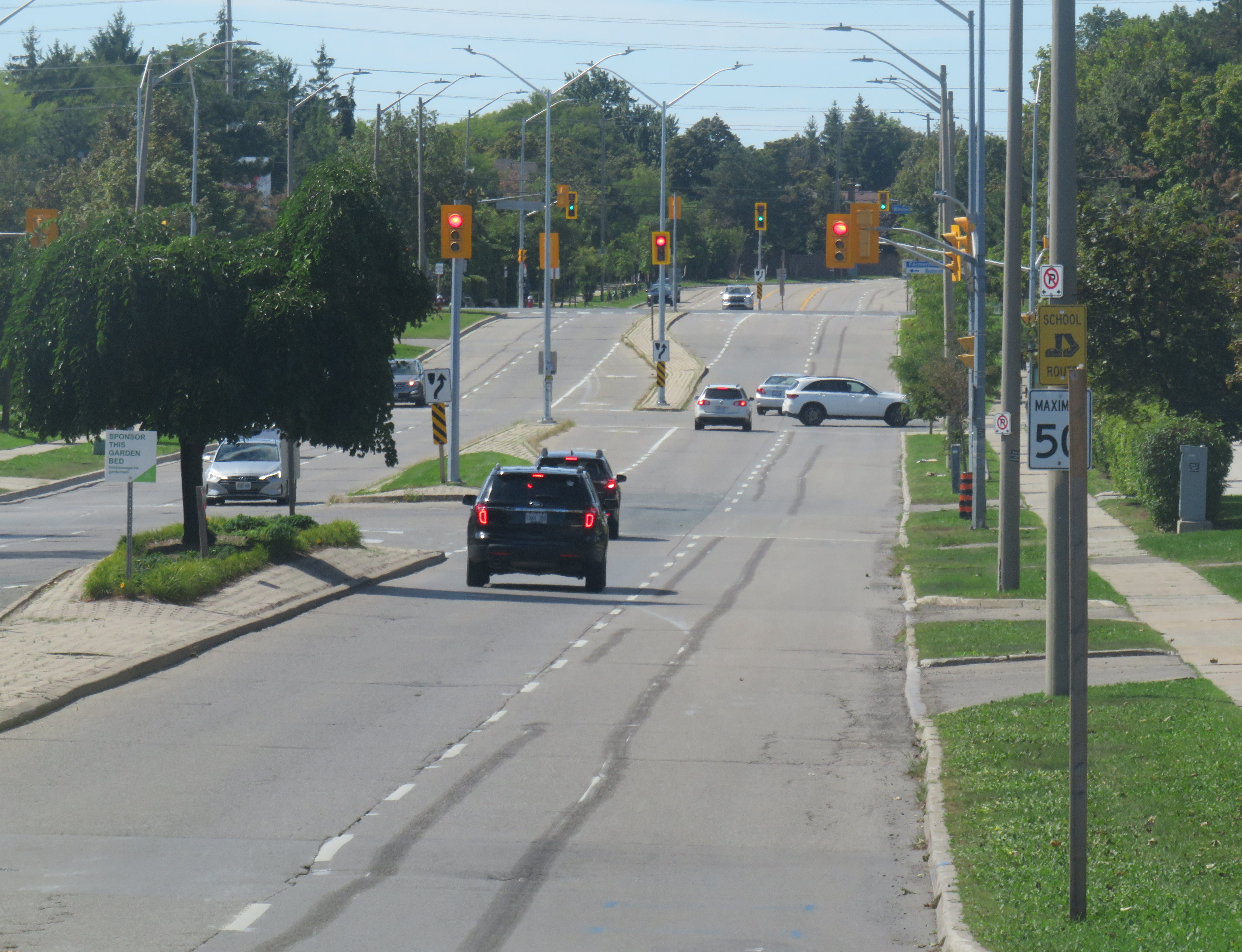
Several suburban municipalities have used the province’s direction as an excuse to remove some of their cycling infrastructure. The enactment of Bill 60 was cited in the resolution by Brampton City Council earlier this year to remove bike lanes on Charolais Boulevard in the city’s southwest, restoring four driving lanes on a street that never needed them.
Make no mistake, this is a culture war, manufactured to pit cyclists that the Ford Brothers have long vilified versus the Ford Nation base of middle class suburbanites and affluent voters. Not only is it a convenient distraction from education scandals, allegations of corruption, and a teetering health system, it’s a great fundraising tool. The PCs don’t need their supporters to chip in to fight the war for the car — they’ll do it with or without your $25 donation — but they’ll sure take your money.
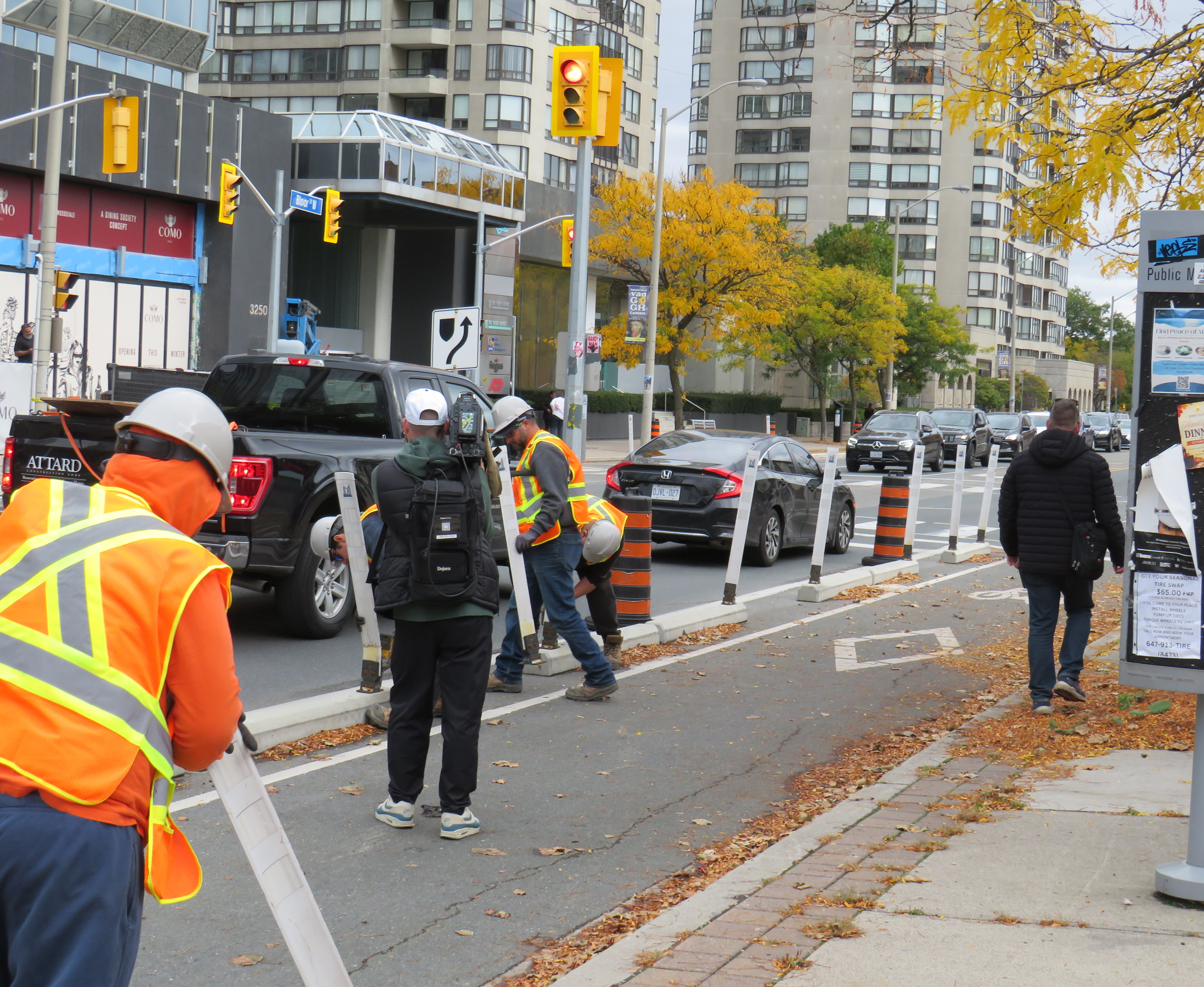
After winning an appeal in August of a lower court decision that had blocked the removal of lanes (in that earlier decision, the judge found that the province had no evidence that cycling infrastructure causes congestion), Ford’s government wasted no time dismantling a 1.1 km section of the Bloor Street bike lanes in Etobicoke, between Clissold Road (just west of Islington) and Royal York Road. Though Bloor Street is a municipal road, the province took it upon itself to begin removal work, overriding the city.
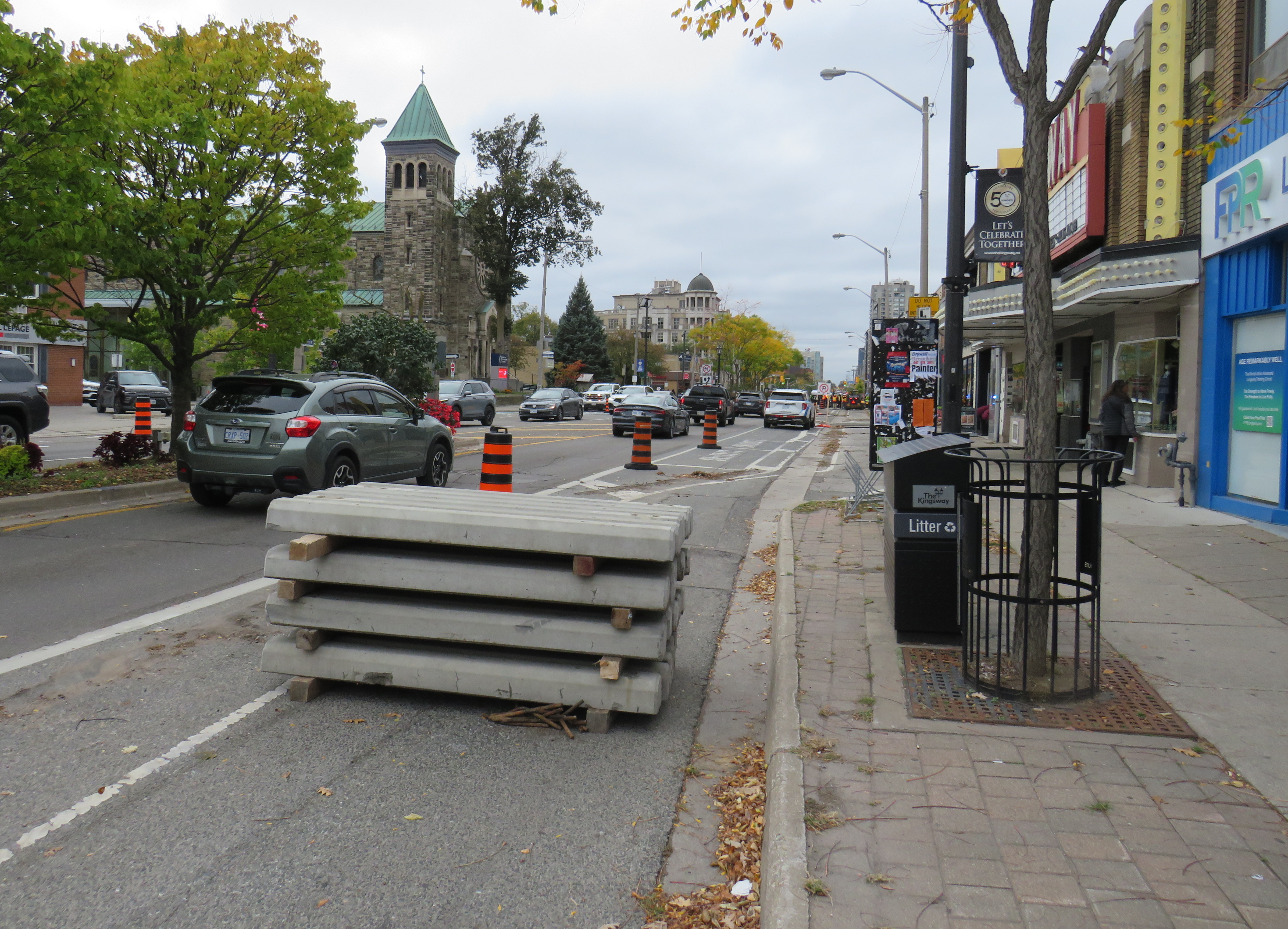
On this section of Bloor, the City of Toronto installed short concrete curbs augmented with plastic flexiposts to separate the bike lanes from parked cars and general traffic, often an interim measure before major road construction allows for more permanent infrastructure. This was a relatively easy bike lane to remove, at least without active opposition from cyclists and safe street activists.
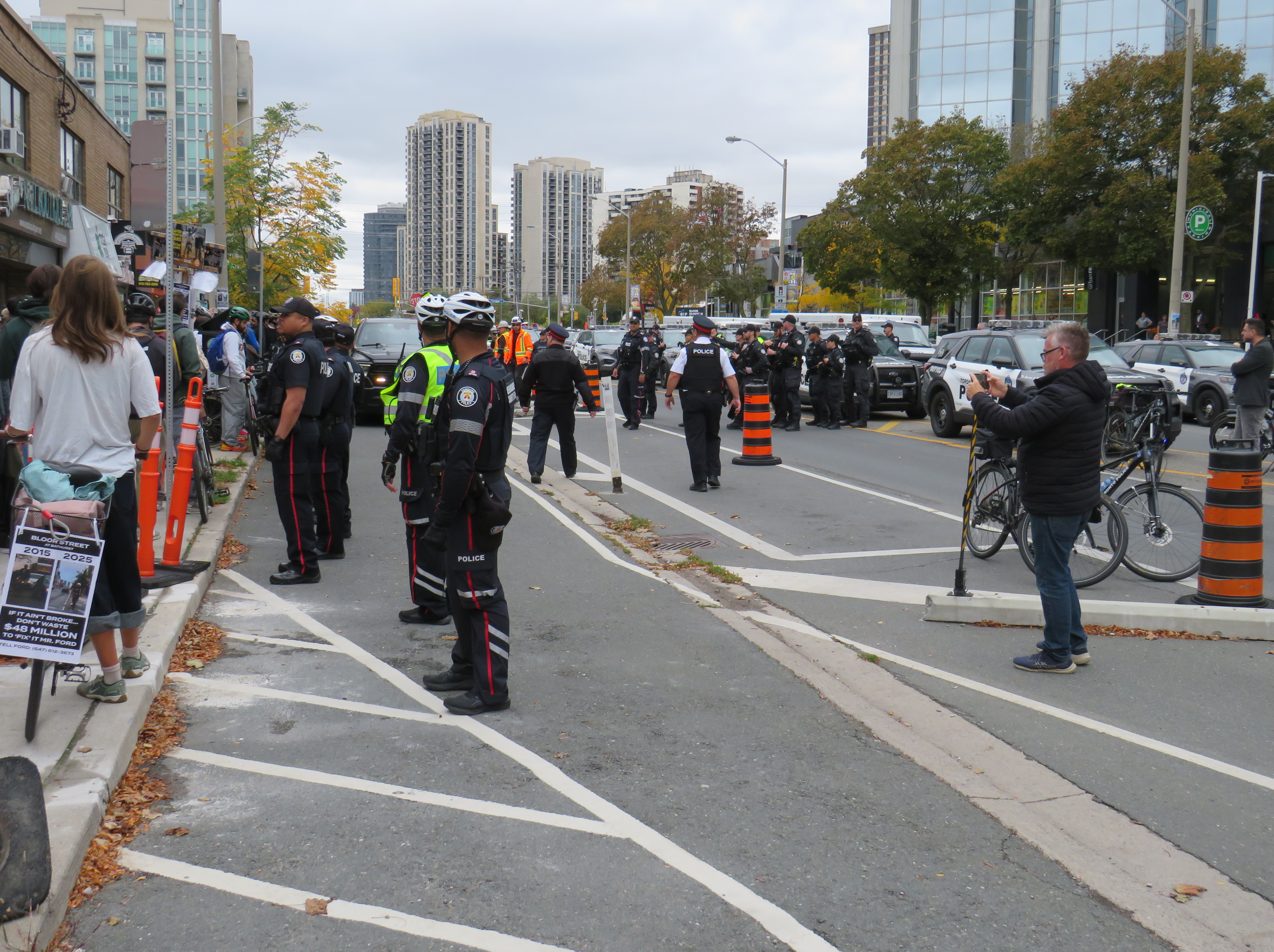
Work was scheduled to begin the evening of Tuesday, October 13, the day after the Thanksgiving holiday. The work was originally intended to only occur after 6PM, to minimize effects on traffic. But after hundreds showed up that evening to block removal work, it was quickly rescheduled for the next day, with work slated to begin by 11 AM. Still, several dozen showed up, and after blocking the work yet again, dozens of police from all over the city came out to put an end to that. The resistance was peaceful, and there was just one arrest of a cyclist refusing to get on the sidewalk that day (a second was arrested in the evening).
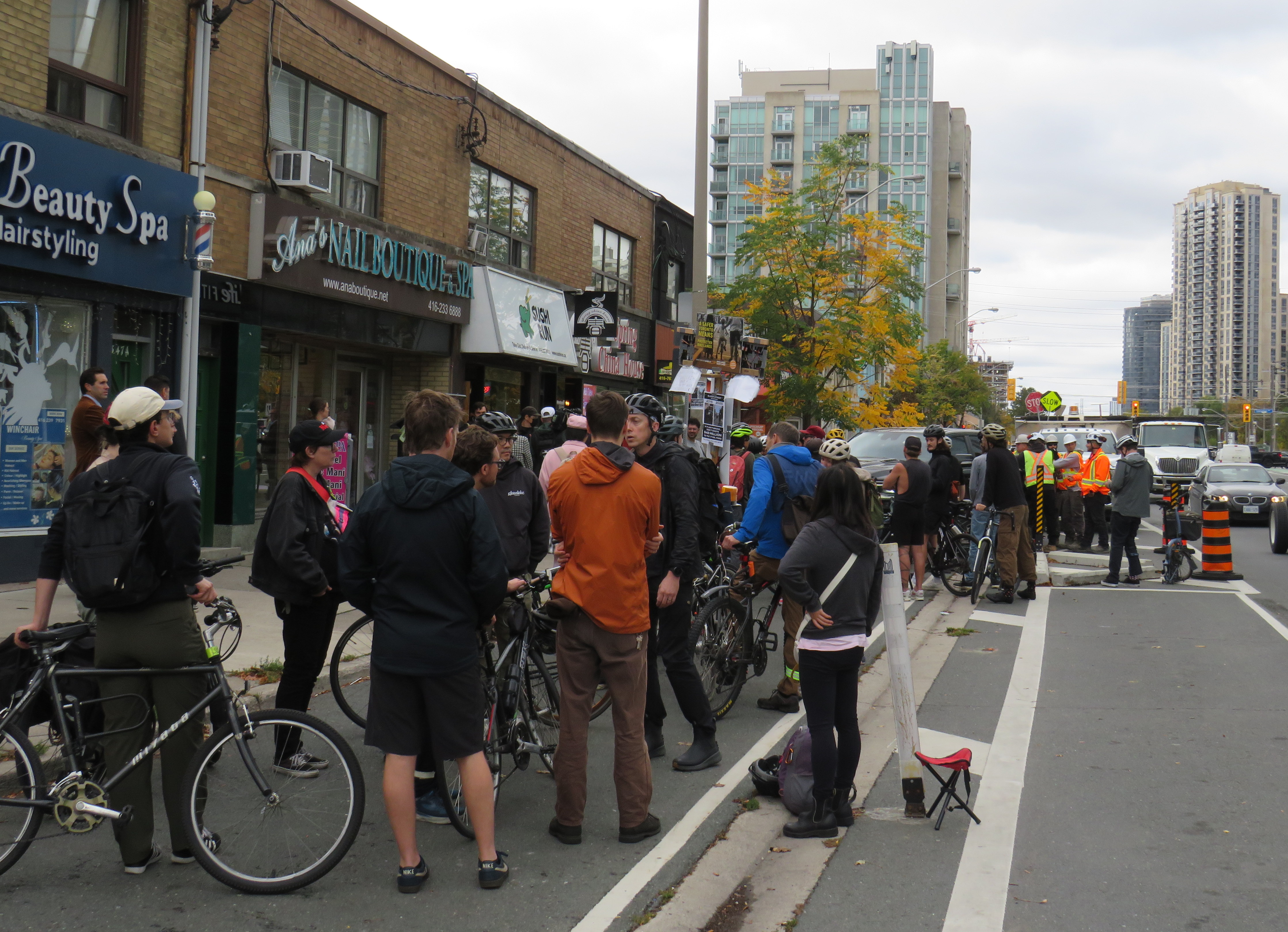
One also noticed that the untendered contractor — Verdi Alliance — was not proud of its work on behalf of the province. It covered up the logos on its vehicles with paperboard and duct tape. Logos on its temporary conditions road signage (the orange signs in construction areas) were also covered in tape. One could feel some sympathy for the workers on site, who faced several days of being yelled at, as they are usually assigned for legitimate road work, perhaps installing cycling infrastructure elsewhere.
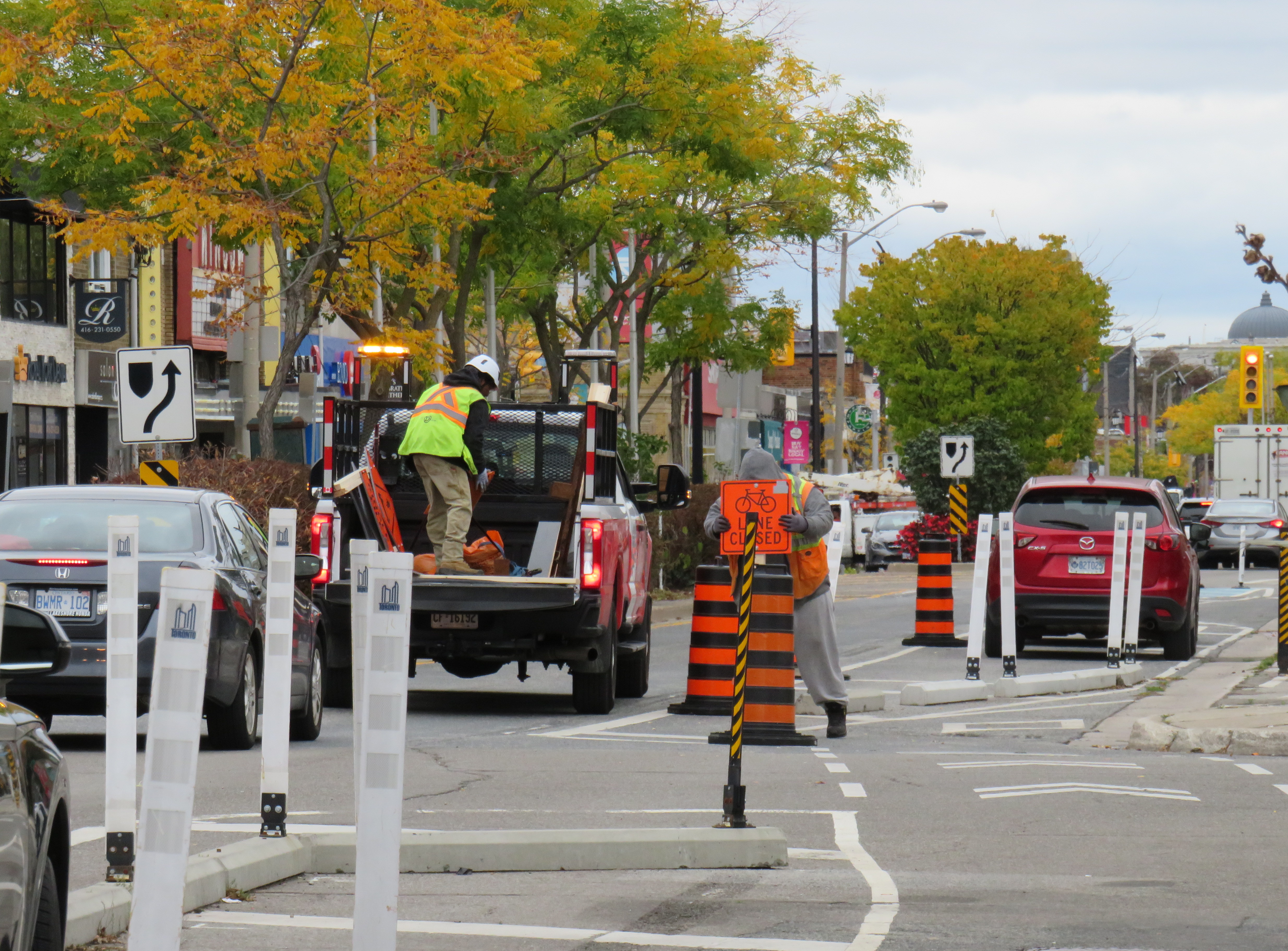
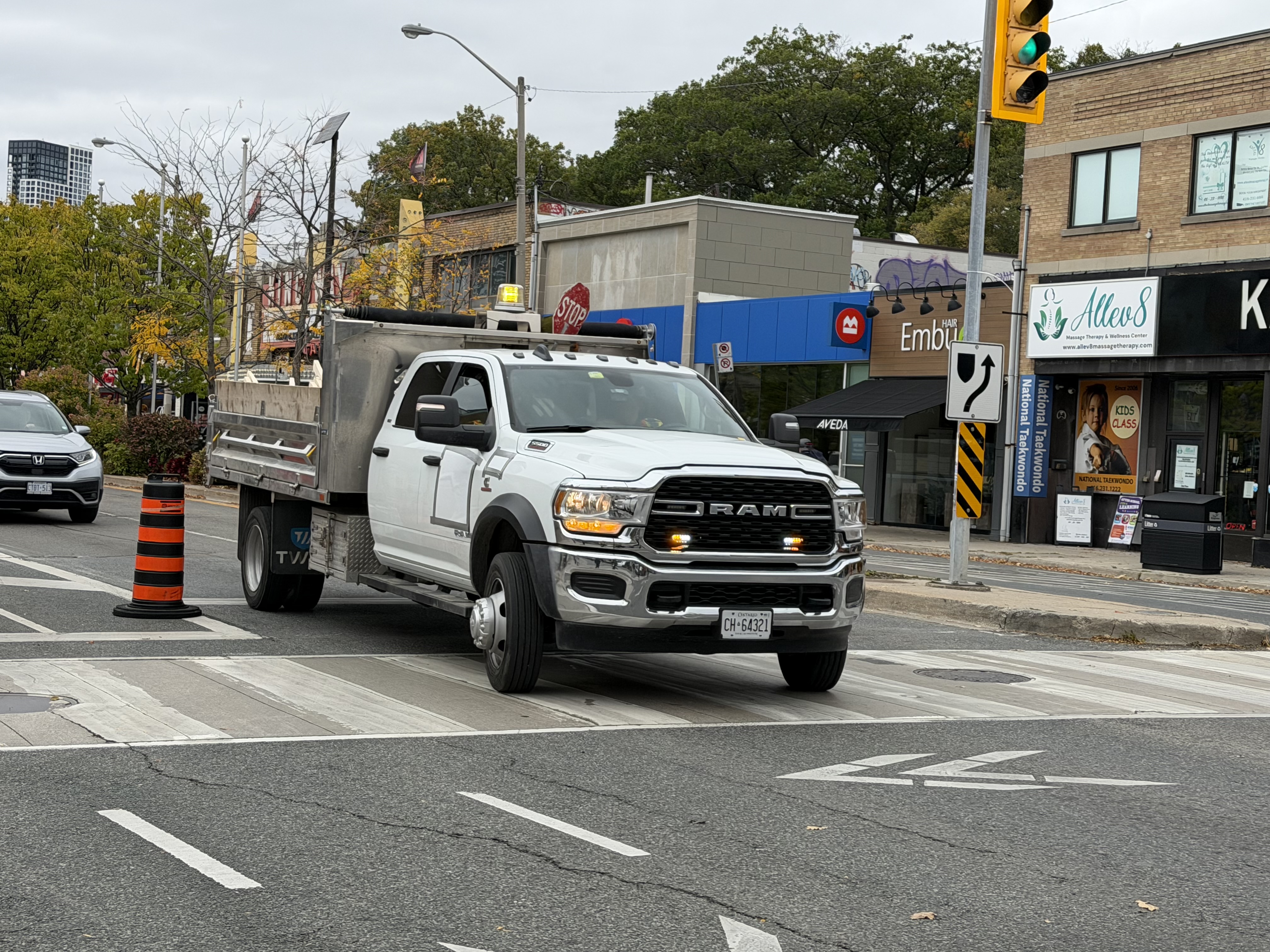
Returning mid afternoon on Thursday, October 15, I had just missed witnessing the rough arrest of a paralympic athlete who was blocking removal of the concrete curbs near Royal York Road with their wheelchair. I heard yells of “shame” in front of the Crooked Cue tavern, whose owner has been one of the loudest anti-bike lane voices in the last few years.
To me, the piles of removed concrete curbs in the abandoned bike lane made me think of the piles of old wooden ties from disused railways being ripped up. I had a similar feeling of melancholy when I saw railways like the Orangeville-Brampton line disappear.

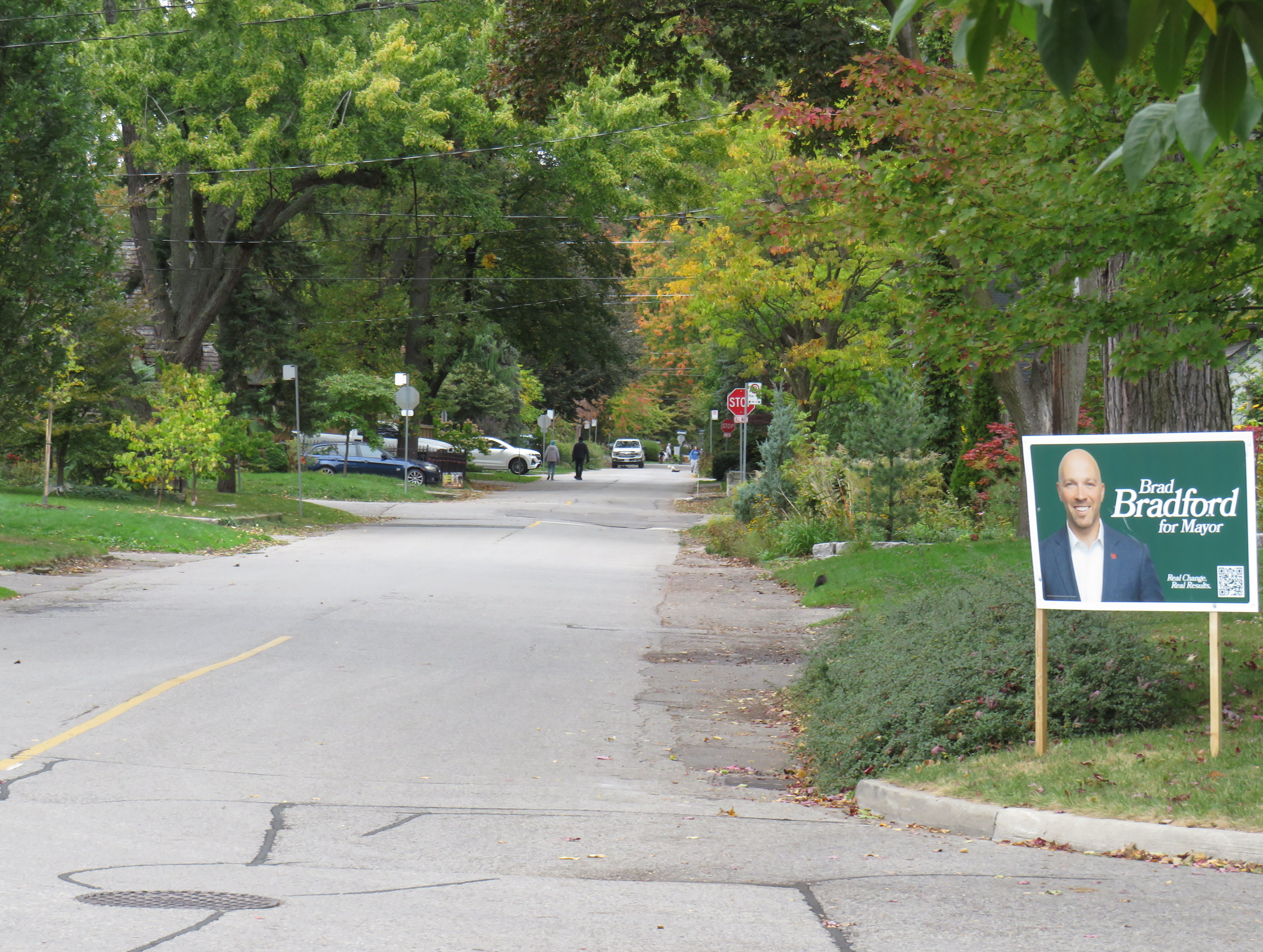
While visiting the Kingsway neighbourhood, I could not help but notice how affluent and conservative the Bloor-Royal York area is. In the last weeks of a municipal election, Brad Bradford’s signs dominated over incumbent Olivia Chow’s on large residential lawns. There were many luxury SUVs, such as BMWs, Porsches, and Land Rovers, being driven or parked on the side streets. Teenagers exiting Royal York Station wore the uniforms of prominent Rosedale and Forest Hill private schools. Cycling infrastructure was probably always going to be a hard sell here, where the older urban city meets the postwar suburbs.
Off of Bloor Street, most residential streets are made of large houses on roadways without sidewalks. Of the election signs I saw, most were for right-wing mayoral candidate Brad Bradford and council candidate Ted Opitz, who previously represented the neighbouring riding as a Conservative MP.
But my sadness and anger became a white hot rage after crossing in a marked crosswalk at Bloor and Brentwood: I was nearly nailed by a driver in a Land Rover SUV who violated the HTA by failing to stop at the stop sign and solid stop line protecting the crosswalk and bike lane. This turned out to be a very common occurrence at this intersection, as I sat on a bench and recorded drivers blowing through.
Clearly, drivers here do not care about the safety of anyone else. And the province is catering to them above all others. If pedestrians or cyclists are injured or killed by aggressive, distracted, or speeding motorists, that’s just the cost of living in Doug Ford’s Toronto.
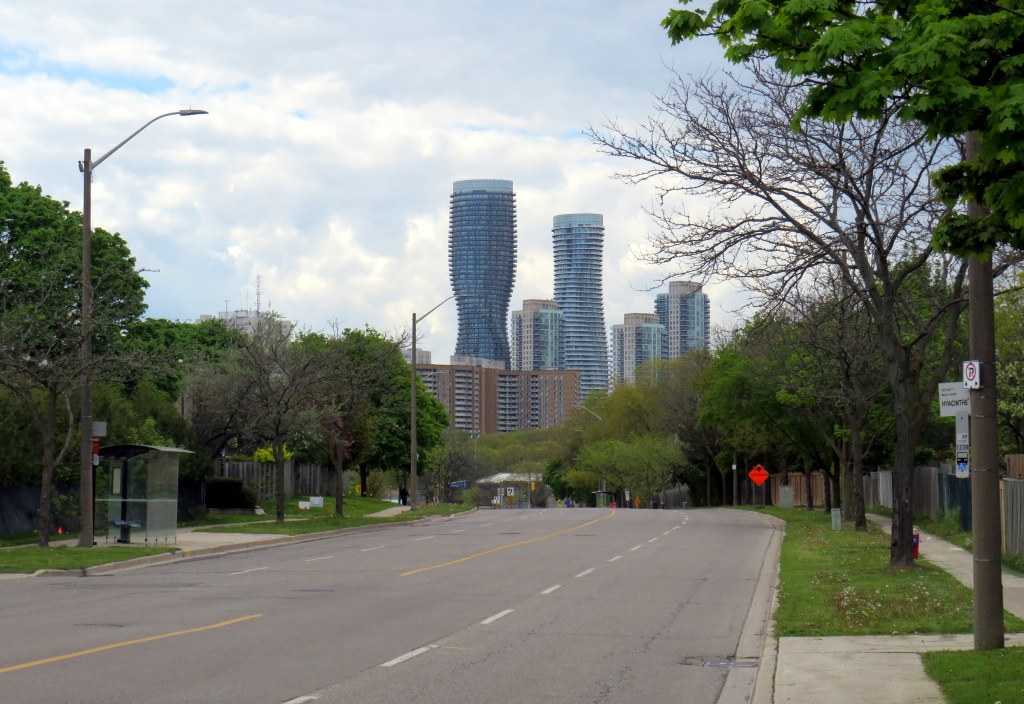
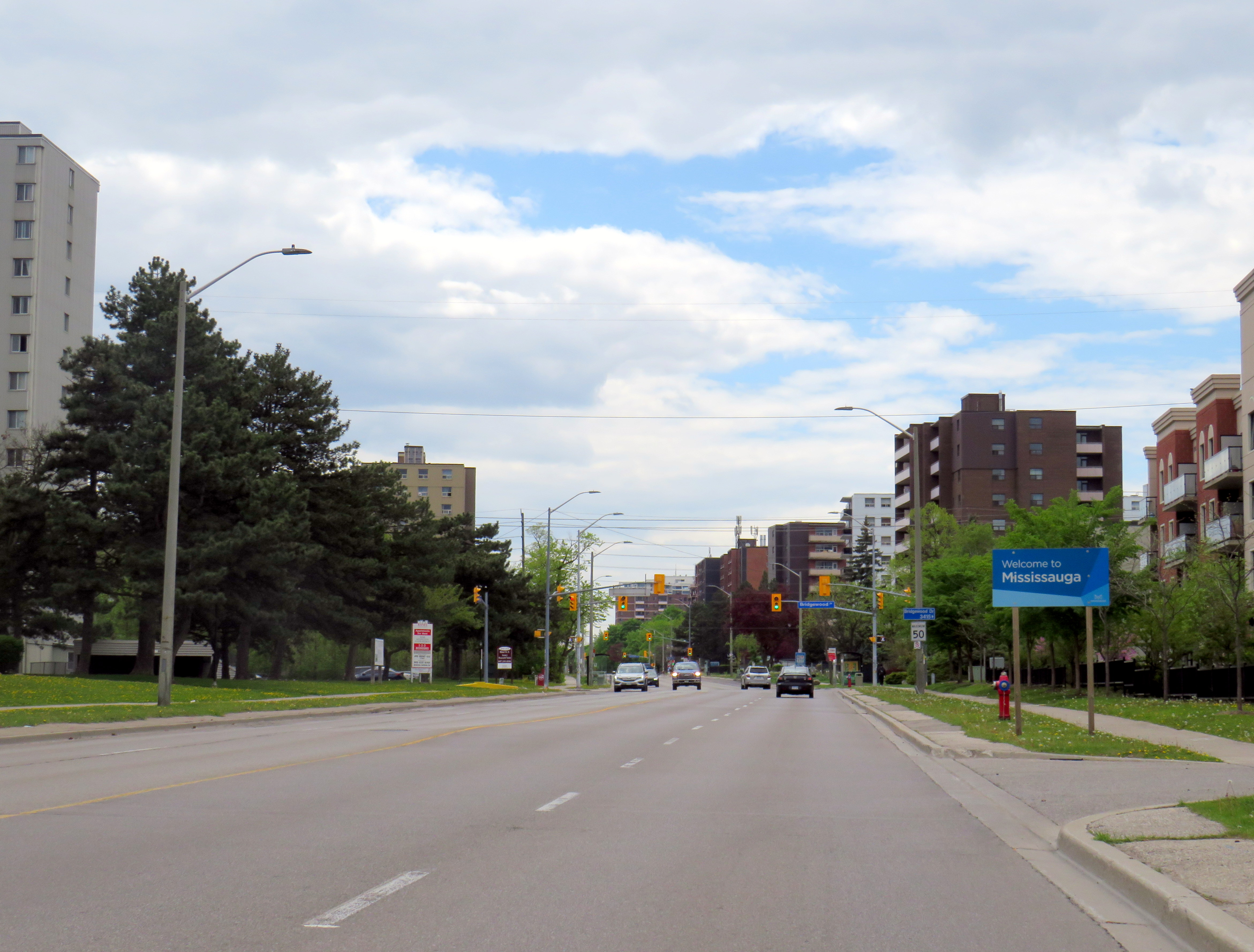
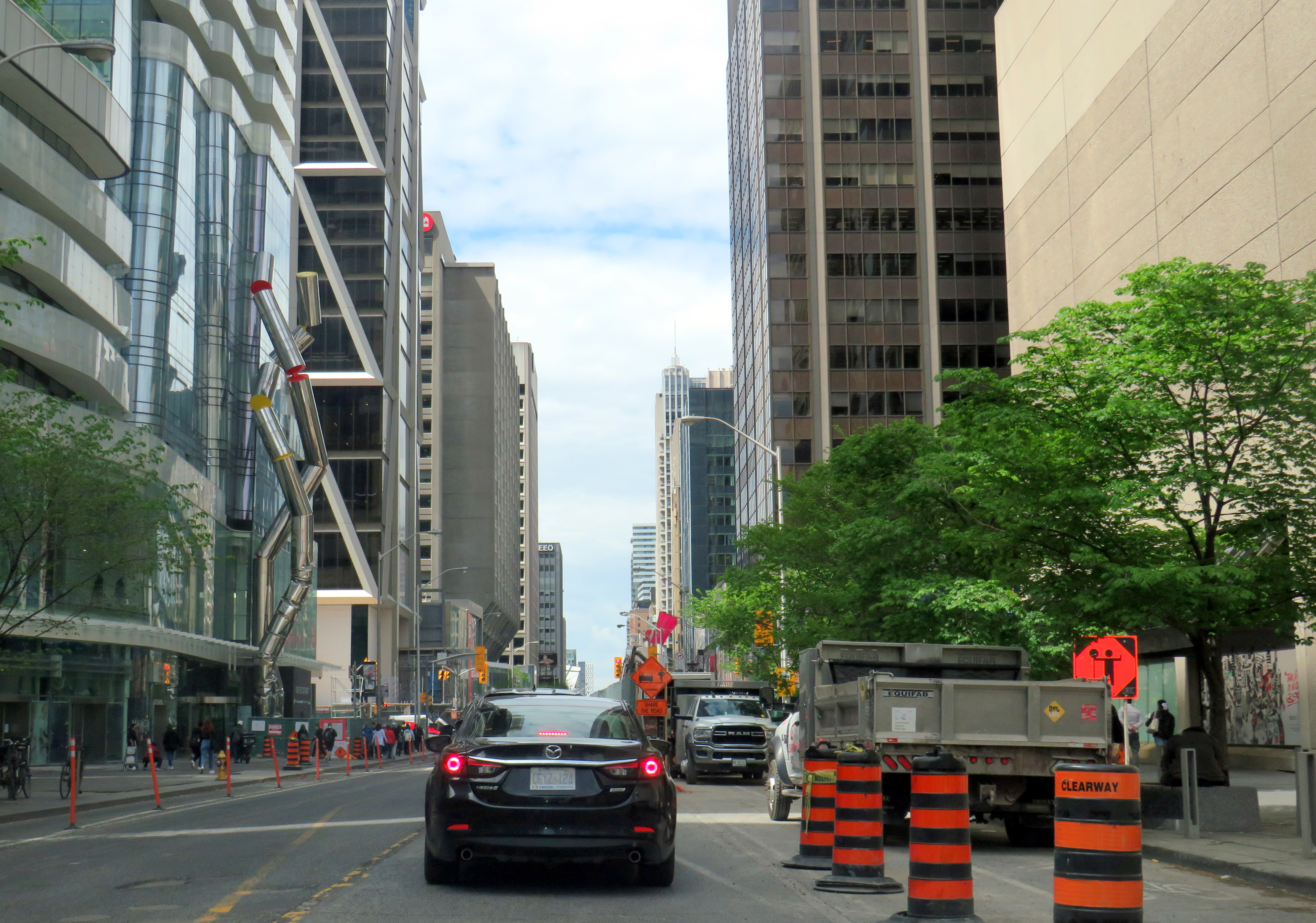
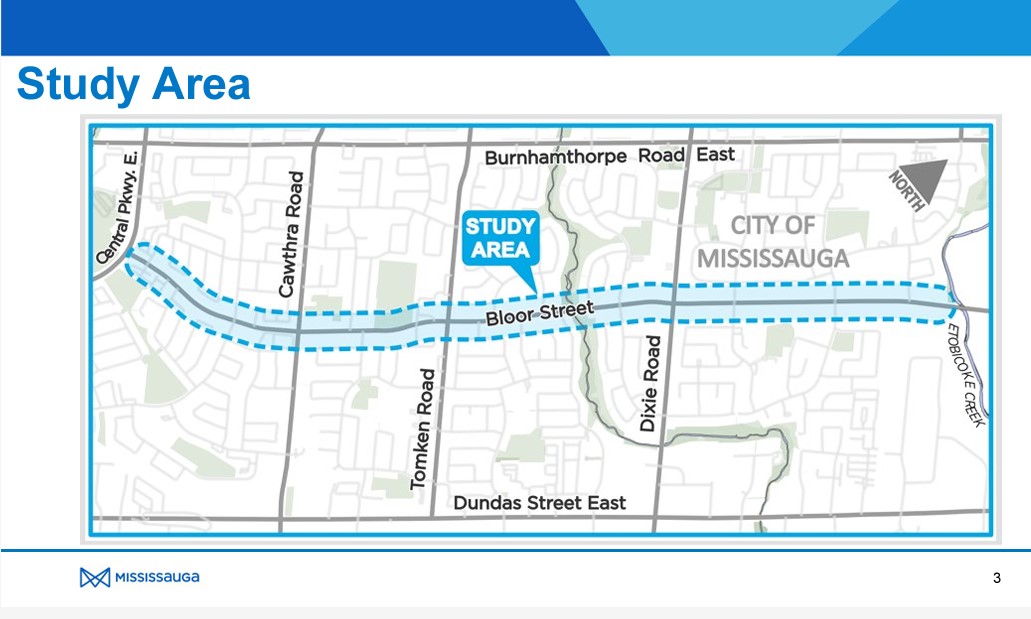

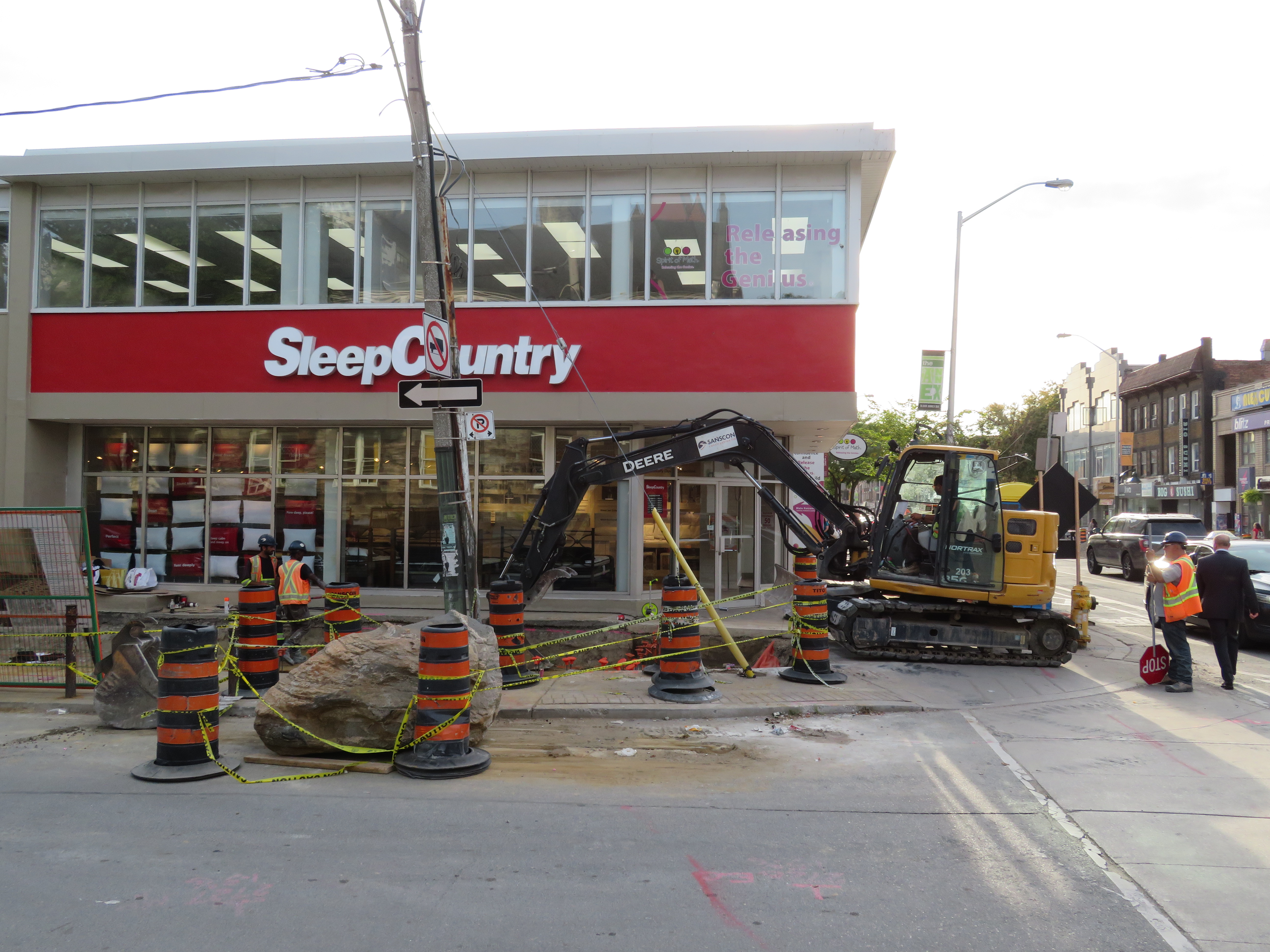
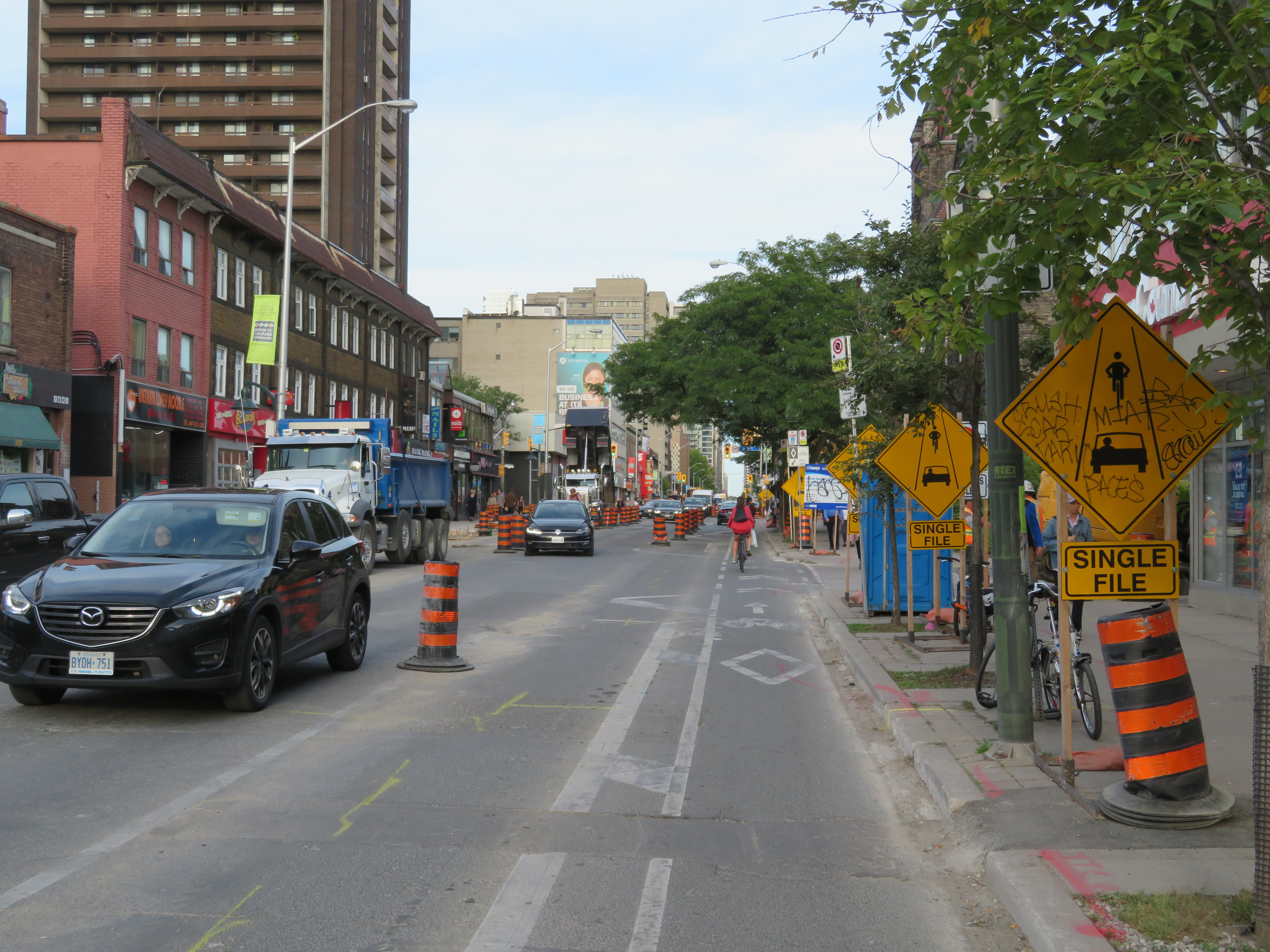 Bloor Street is a mess of construction and signage as construction continues through September
