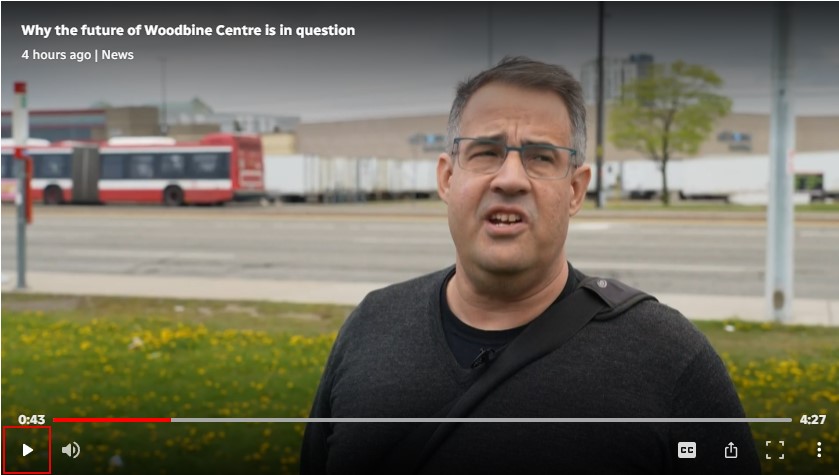
You can catch me on CBC Toronto today talking about the history of Woodbine Centre and Fantasy Fair with reporter Nav Nanwa. The CBC television report has some pretty good drone shots of the mall as well.
Here’s me standing in front of Highway 27 and the trailers stored in the old Sears parking lot
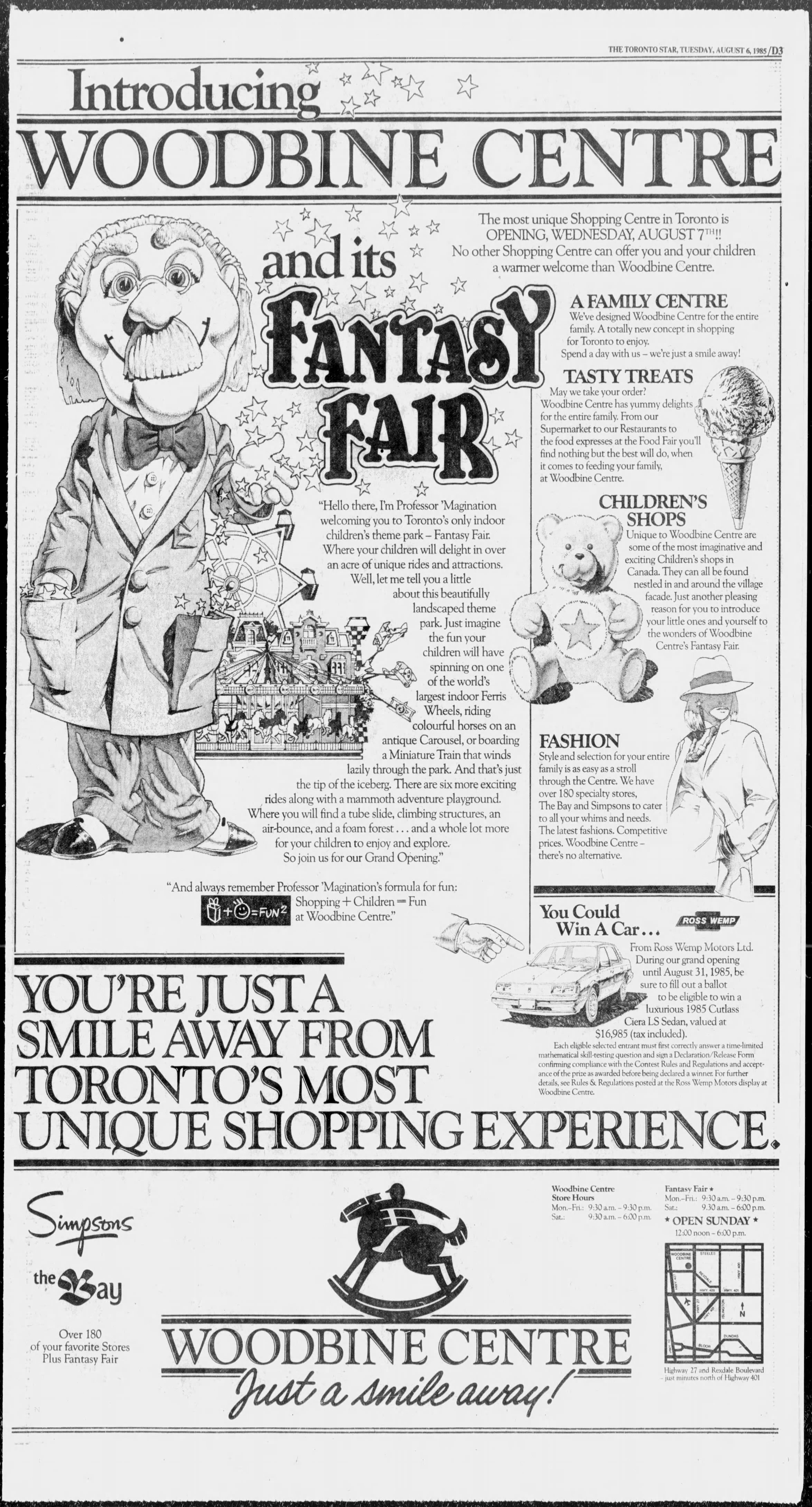
I wrote more about the history of Woodbine Centre in November 2024, which you can read here. Looking for reports of the mall opening from 1985, I found this full page ad in the Tuesday, August 6, 1985 edition of the Toronto Star.
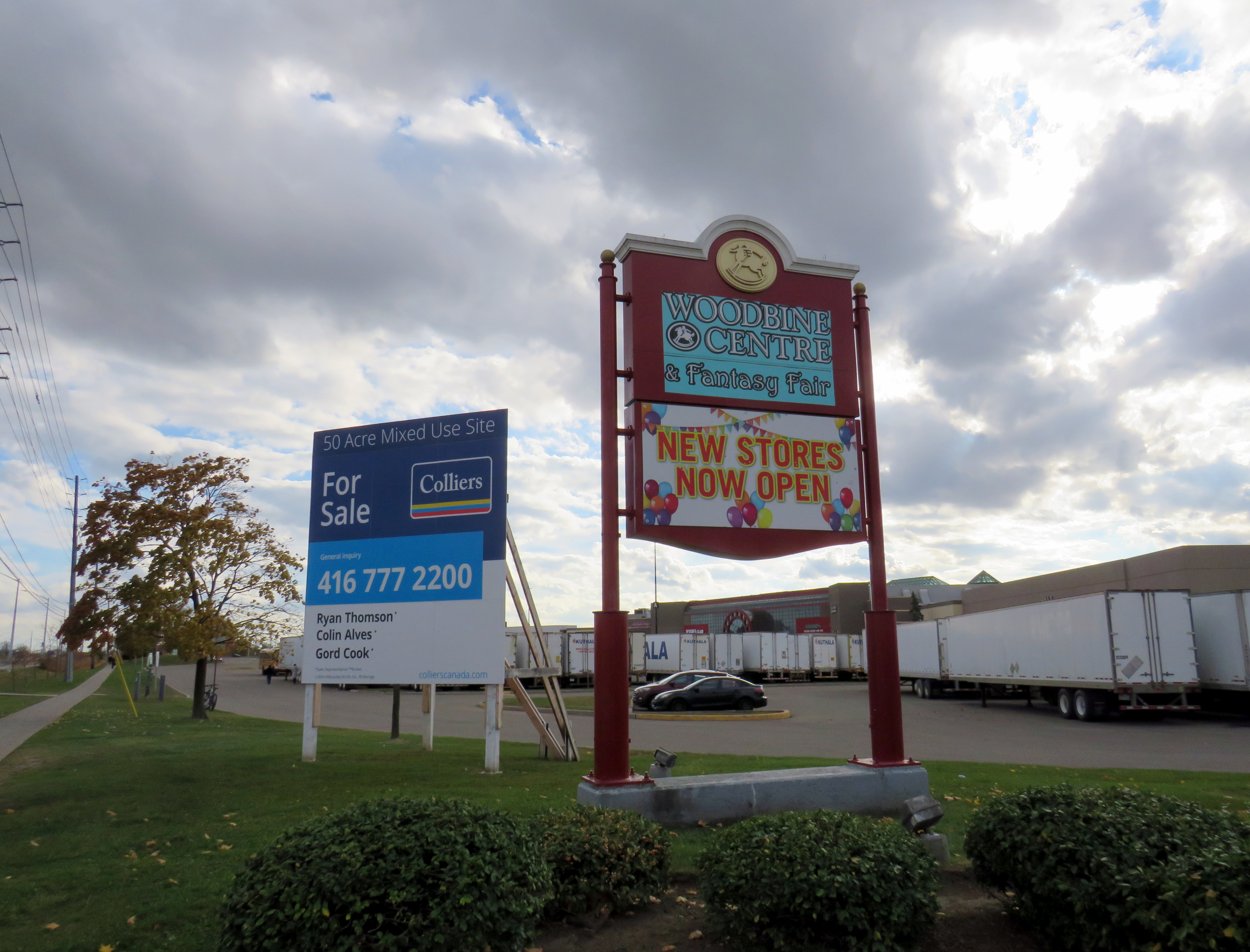
Woodbine Centre & Fantasy Fair is up for sale, again
Growing up in Brampton in the 1980s and early 1990s, there were two favourite day trips I fondly remember.
There were the drives to nearby Georgetown, which had one of the largest indoor playgrounds at any McDonald’s restaurant. It featured a multistorey indoor crawl maze, a spiral slide that led to a giant ball pit, a tire swing, as well as a standard McDonaldland-themed merry-go-round. A CN caboose could be rented for children’s parties. At least we’d burn off some of the calories from the burgers and fries. (There’s a video on Reddit from 1992 that shows what it looked like.)
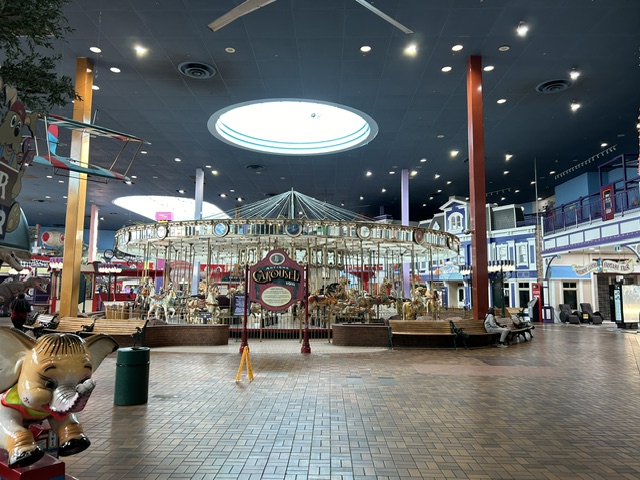
Then there were the trips to Fantasy Fair. When Woodbine Centre opened in 1985, it featured a unique attraction: a large indoor amusement park, complete with a historic Looff carousel (though with replica fiberglass horses), a Ferris wheel, and a train ride that wound through the attraction. The highlight for me, however, was a huge indoor playground that spanned two floors that was many times the size of the Georgetown McDonald’s playground. It had multiple slides, a mirror maze, swings, and two ball pits. There was also a McDonald’s restaurant facing Fantasy Fair, in one of the faux-Victorian storefronts that surrounded the attraction.
Fantasy Fair Carousel, November 2024
The mall itself was anchored by The Bay and Simpson’s, along with a Cineplex multiplex cinema, and a complete assortment of mid-market retailers. In 1991, when the Hudson’s Bay Company retired the Simpson’s brand (converting most of those stores into The Bay), it sold the redundant store to Sears Canada. A Zellers discount department store was added in the 1990s. But the mall slowly lost its pizzazz.
Cadillac Fairview sold Woodbine Centre in 2005 to a numbered company, with real estate management firm Avison Young operating the mall. By then, many of the national retailers had left once their leases were up. The mall’s relatively isolated site, without good transit access became a liability. Changing demographics in northern Etobicoke, competition from surrounding larger malls (Bramalea City Centre, Sherway Gardens, Square One, Vaughan Mills, and Yorkdale) and new big box retail developments also took their toll.
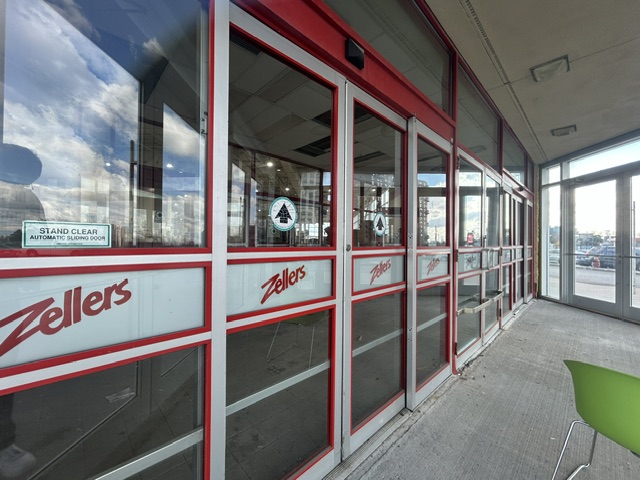
The Zellers store was not one of the leases picked up by ill-fated Target Canada, and it closed in 2012. Sears closed in March 2017, a few months before the entire chain was liquidated. Sport Chek closed its store in 2018.
Woodbine Centre’s Zellers store was not picked up by Target, and the parking lot-facing doors still have the defunct retailer’s logo intact
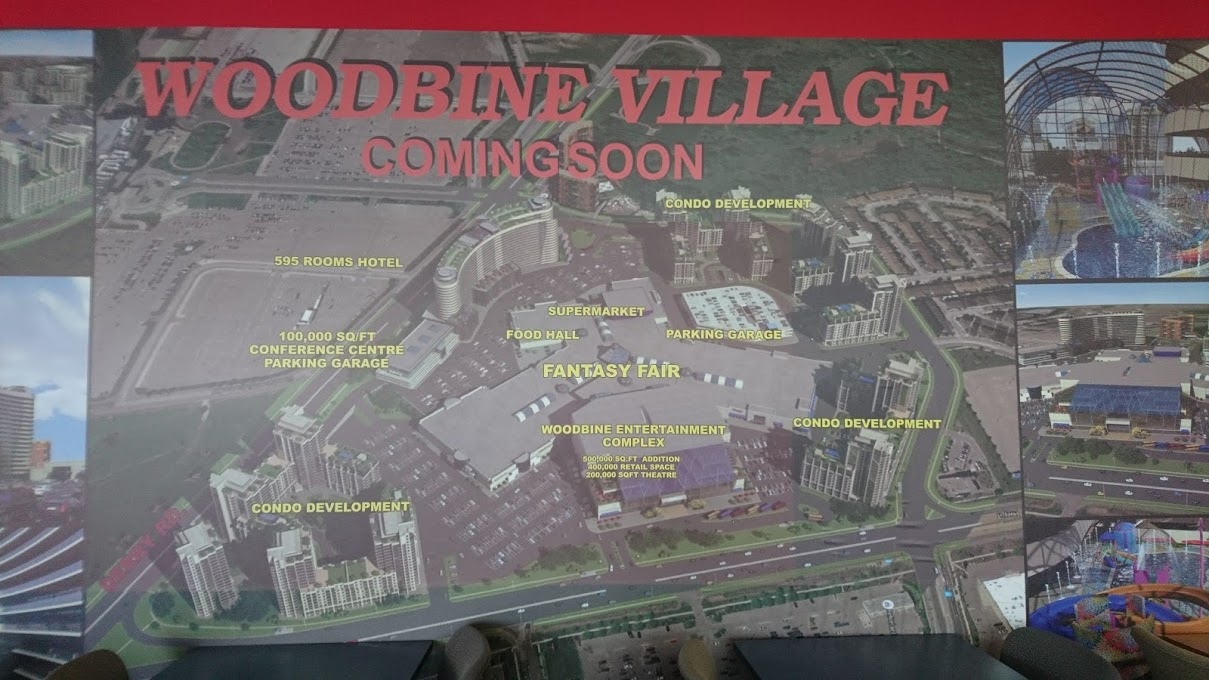
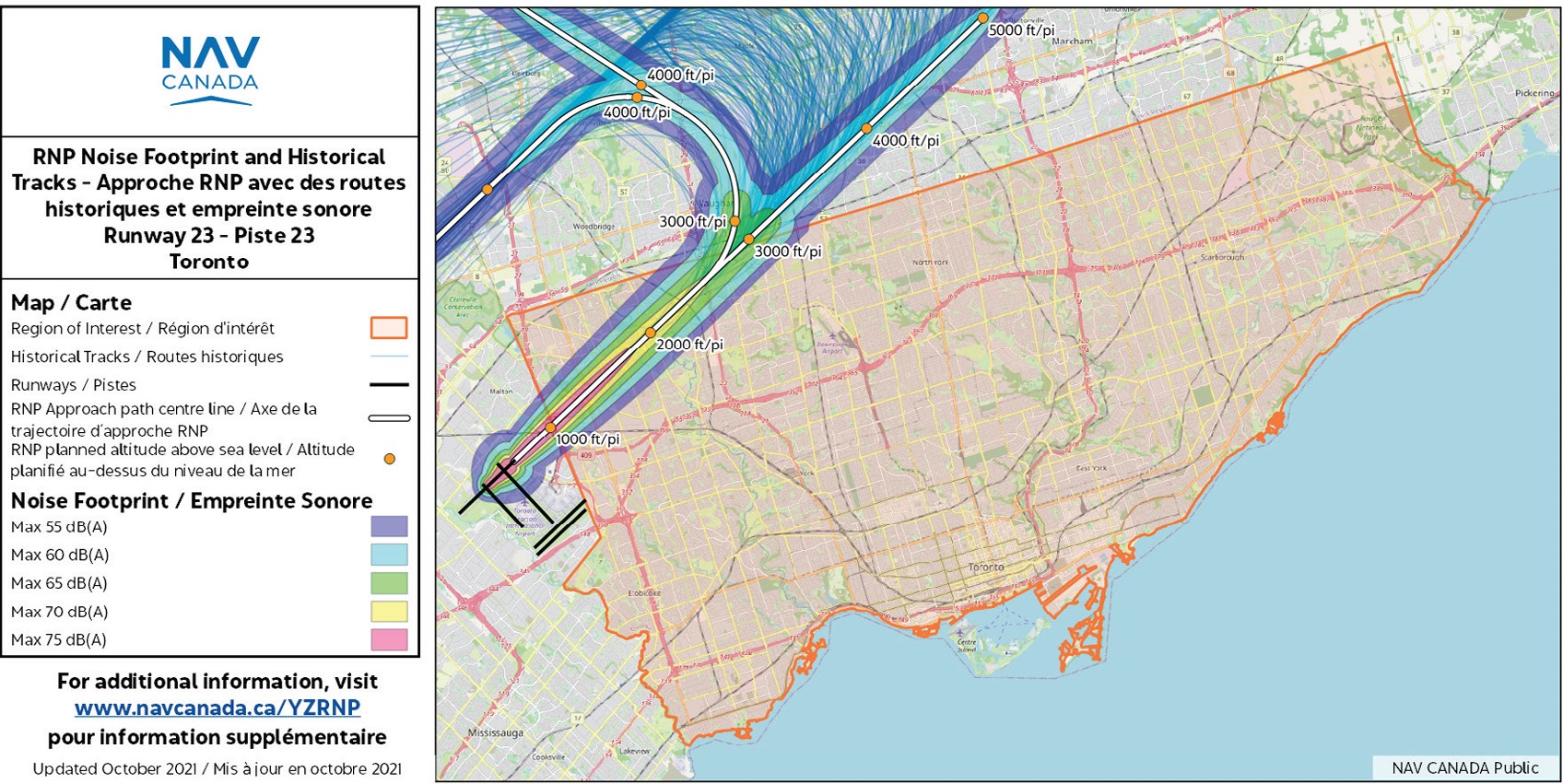
There was an attempt to renovate the mall, as part of a grand plan to revitalize the property with a new supermarket, refreshed food court, new entertainment options, and condominium towers surrounding the shopping centre. The Woodbine Village proposal competed with the better-financed Woodbine Live plans at the nearby racetrack, which included a casino, hotel, and event hall, all of which were built or are nearing completion. Condominium development is complicated as the property, particularly the southeast corner at Highway 27 and Rexdale Boulevard, is directly below the approach for Pearson Airport’s Runway 23.
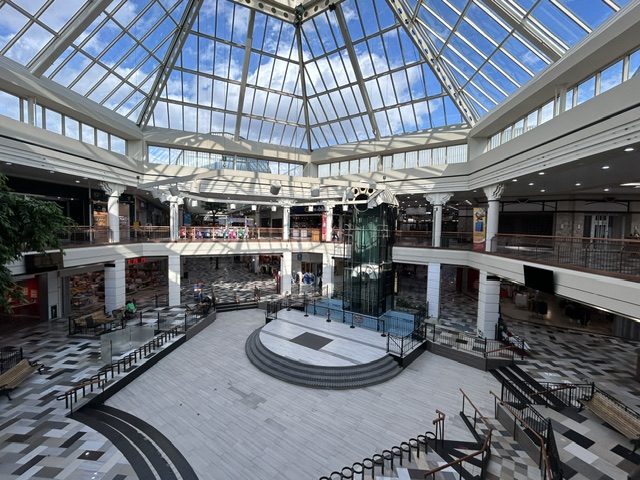
Poster promoting “Woodbine Village” which boasts a new supermarket, condo development, hotel, and expanded Fantasy Fair including indoor waterpark NAV Canada map showing approach and noise contours for Runway 23, which passes directly above Woodbine CentreWoodbine Centre’s central atrium, including defunct fountain below glass elevator
After a disheartening American election result on Tuesday, November 5, I decided to turn off the newsfeeds, and out for a walk and explore Woodbine Centre again.
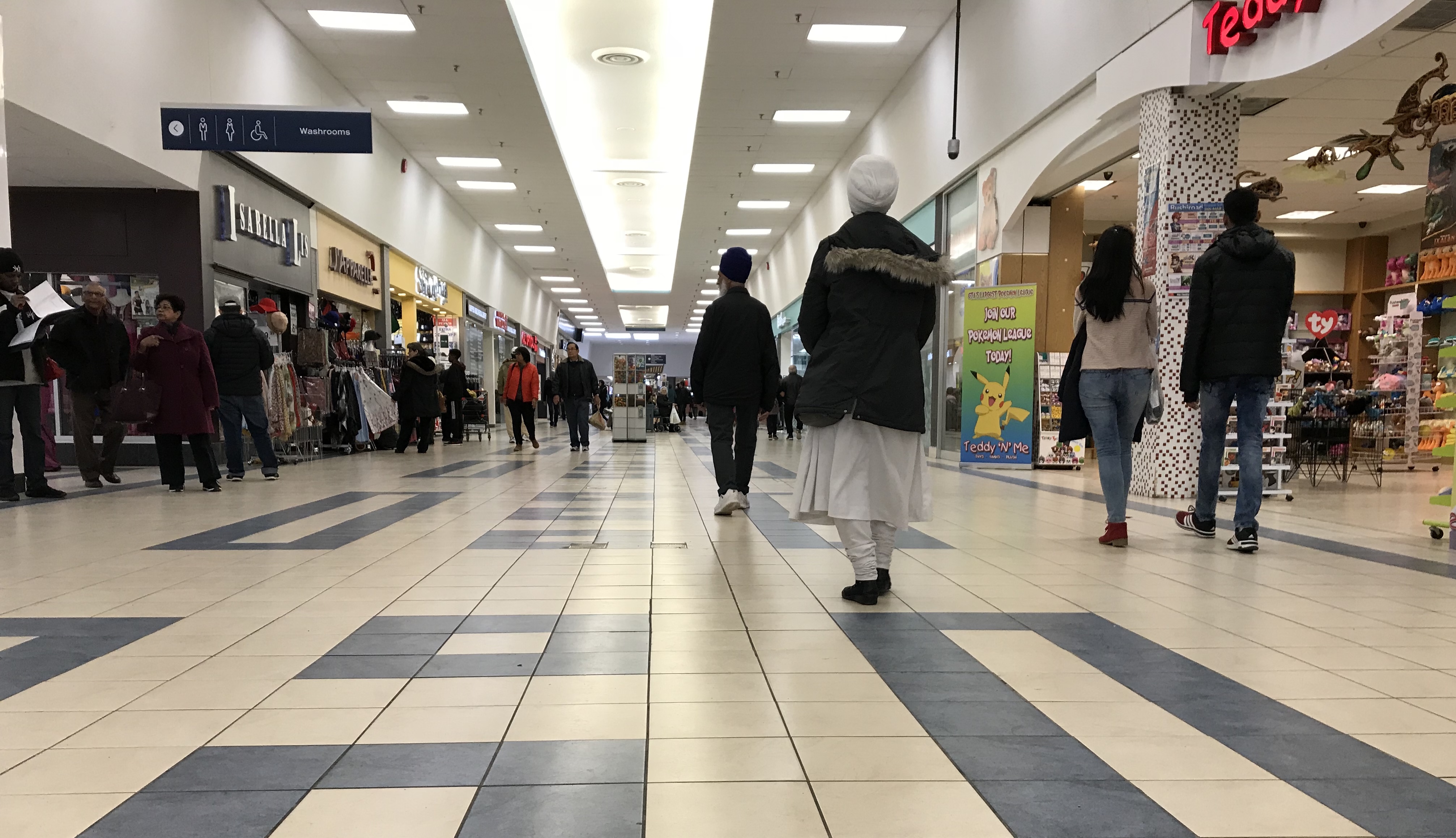
Though the basic architecture remains intact, the corridor floors were given cheap new brown, grey, and beige tiles that look out of place in the post-modern interior. Much of the original green paint on the roof, walls, railings, and signs is now red and mahogany.
Apart from the fast food offerings, there were few recognizable store names among the tenants in 2024. Apart from Hudson’s Bay, Foot Locker, Ardene, The Children’s Place, Dollarama, LensCrafters, TD Bank, and Urban Behavior, most stores were independent clothing, home décor, and furniture stores, or were cellphone vendors such as Wow Mobile, Best Buy Express, or Rogers and Bell kiosks. About 20 percent of the store fronts were vacant.
Looking towards the old Sears store, which is now All Home Furnishings, which was having a clearance sale in November. Note the Payless Shoe Shack, a knock-off of the defunct Payless Shoe Source chain, on the left. Vacant faux-Victorian storefronts at Fantasy Fair
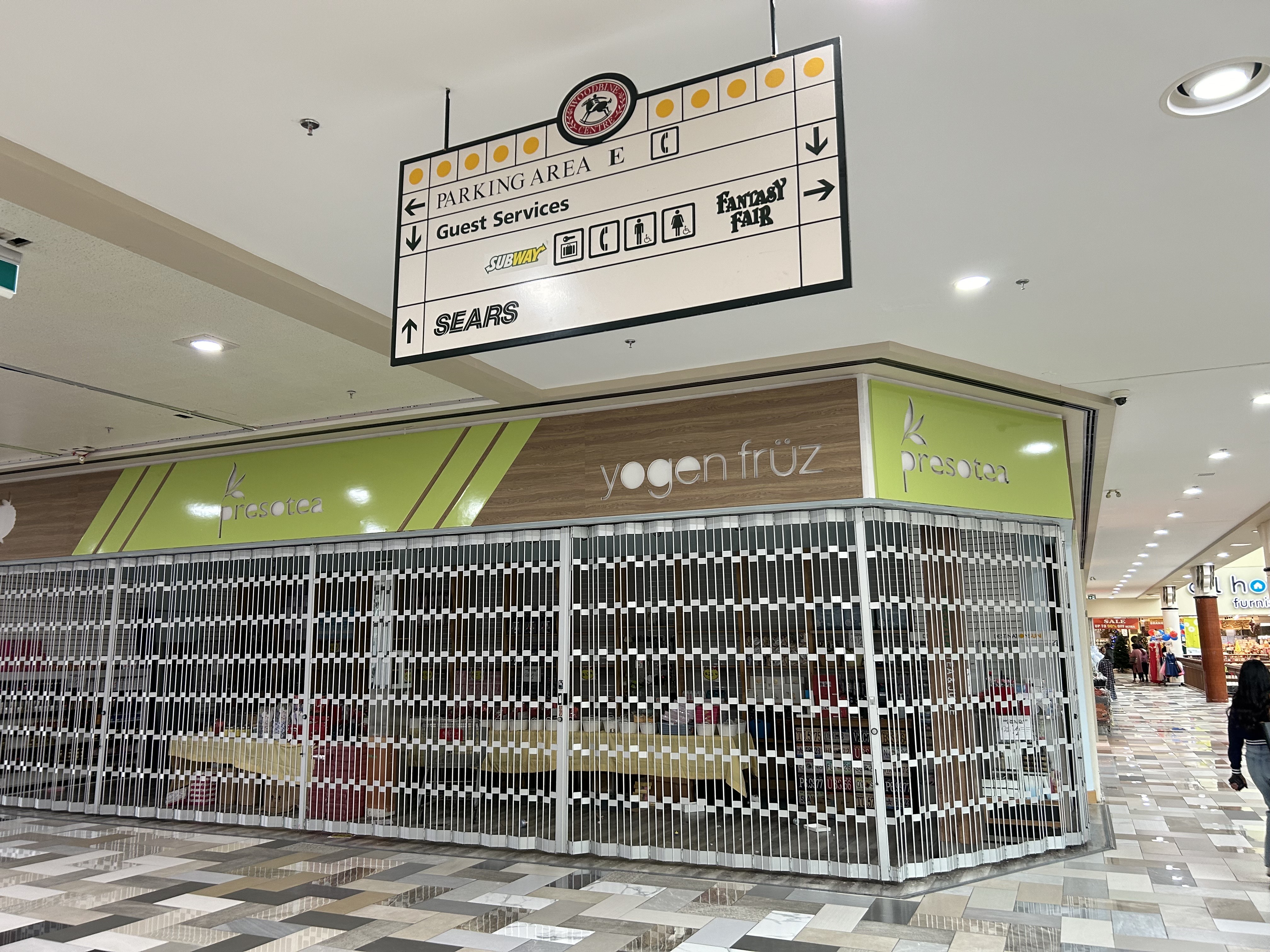
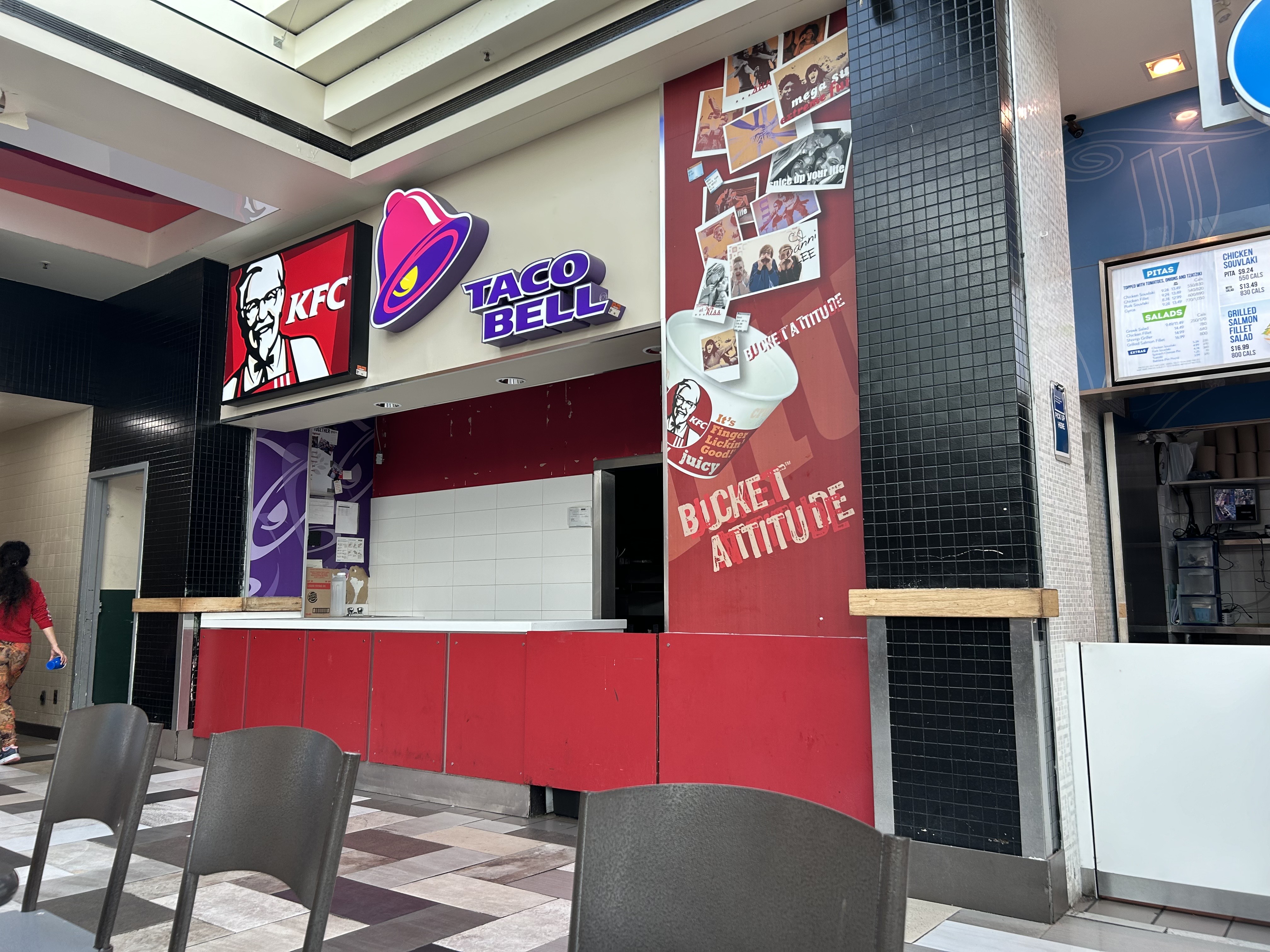
Professional property managers are quick to update signage and keep up appearances; the management at Woodbine has clearly given up. Vacant storefronts are left exposed, rather than blocked off. Signage advertises stores that are long gone. Pot lights flicker on and off.
Overhead sign pointing the way to Sears, which closed over seven years ago. The Subway restaurant is also gone. Behind the sign, a shuttered Yogen Fruz/Prestotea store front acts as storage. A closed KFC/Taco Bell stall in the food court, with the signage still up and illuminated, despite the equipment taken out
Surprisingly, Fantasy Fair was still operating, even on a Wednesday afternoon where there were few visitors. Ride attendants, dressed in red vests, looked bored, even when running the train for the lone parent and child. The Ferris wheel is now permanently closed, however, and some of the attractions look sadly decrepit.
The railway crossing lights, bells, and gates still work at Fantasy Fair when the train passes through
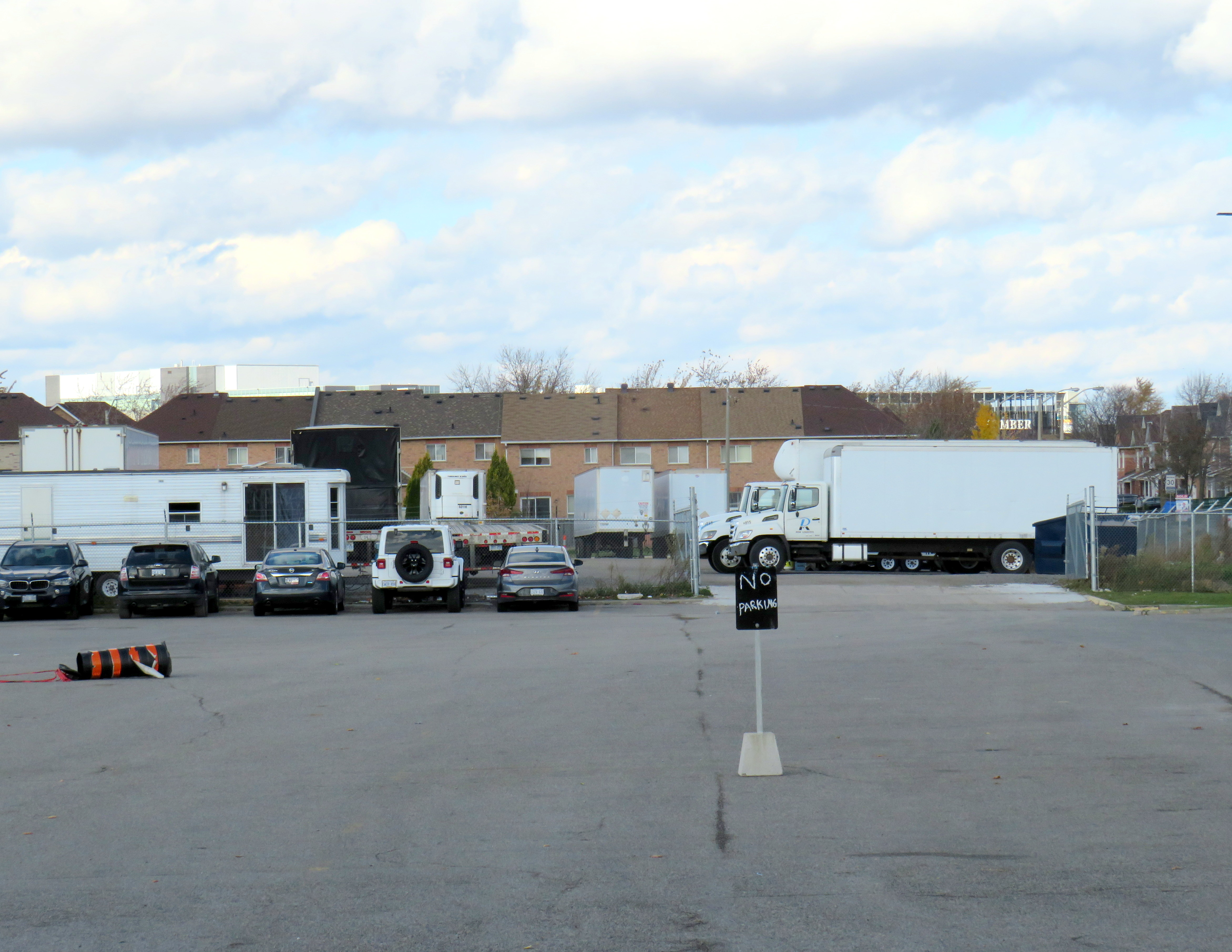
Outside the mall, much of the parking lot is fenced off and is now used for truck and trailer storage, and the storage of overflow rental car fleets. Though the rental car parking began during the COVID-19 pandemic, when people stopped travelling, it continues to be an easy revenue stream for the mall management. The truck trailers, on the other hand, are an unsightly feature, particularly where they face Highway 27.
Fenced-off rental cars in the Woodbine Centre parking lotTruck trailer parking on part of the mall parking lot
Unfortunately, the future is not good for Woodbine Centre as a mall. Though mixed-use development remains a possibility — Humber College is within walking distance — the airport noise will continue to be a challenge for condominium sales. Transit expansion would certainly help; the nearly-complete Finch West LRT terminates nearby. Extending that two kilometres south to serve Woodbine Centre, Woodbine Racetrack/Casino, and a planned GO Transit station, could be the boost the site needs. (Of course, the mall site could have made a good location for a mega-spa, particularly with the nearby casino venue and hotels, but I digress.)
The Humber College LRT terminus is less than a kilometre north of Woodbine Centre
The mall’s fate will likely be decided soon. The site is up for sale again, not advertised as a shopping centre, but as a “50 acre mixed use site.”
1992 Tenants
Below is the list of tenants at Woodbine Centre in 1992, obtained from the 1993 Canadian Directory of Shopping Centres, published by Maclean-Hunter. Tenants still open in 2024 are bolded.
Anchors Anchors: The Bay (140,000 sq.ft.), Sears (135,000 sq.ft.)
Fashions and footwear Children’s Wear: Flora’s, Just Kids. Family Wear: Cotton Ginny. Ladies’ Wear: Addition-Elle, Antel’s, Au Coton, Braemar, Braemar Petites, La Cache, The Cavery, Cotton Plus, D’Allaird’s, Dalmy’s, Emotions, Fairweather, Irene Hill, Jacob, La Jolie, Karuba, Lady Foot Locker, Limité, Lindor, Liz Porter, Mia, Northern Reflections, Ports International (Ladies), Reitmans, Ricki’s, Shirley K Maternity, Smart Set, Suzy Shier, Tabi International, Tan Jay, Tristan, Tucci Fashions. Menswear: Casa Angelo, Petrocelle Vomo, Randy River, Star’s Men’s Shop, Steel, Tip Top, Tuxedo Royale.
Unisex / Men’s & Ladies’ Wear: Benetton, Boca, Bootlegger, Canary Island Adventure & Travel Company, Le Château, Frenz Leather, Jean Machine, Levi’s 1850, Pantorama, The Pro Image, Stitches, Thriftys, Willow Ridge. Footwear/Leather Goods: Agnew, Aldo, Bata, Belinda & Brother, Bentley Leathers, Calderon, Florsheim Shoes, Foot Locker, Fredelle, K. Jamson, Kinney, The Little Shoemaker, Moneysworth & Best, Naturalizer, Pegabo Jewellery/Fashion Accessories: Accessories For You, Ardene, The Joy of Sox, Mappins, Peoples Jewellers, Reflexions, Young’s Jewellers
Other retailers Books: Classic Bookshop, Coles, Moyer’s The Teacher’s Store, Smithbooks Cosmetics/toiletries: Body Reform, Caryl Baker Visage, Enchante Perfumes, Merle Norman Cosmetics Department store/mass merchandiser: Marks & Spencer Drugs/health & beauty: Shoppers Drug Mart Electronics/Computers: Bell Canada Phone Centre, Compucentre, Majestic Sound Warehouse, Radio Shack, Safe & Sound Fabric & Sewing: Needle ‘n’ Thread Florist/Nursery: Woodbine Florists Furniture & Furnishings: Brass Imports, Clocks Unlimited, Diamond Furniture, Lighting Unlimited, Pictures Gift: A. David Soloway, China Panda, Den For Men, Jinny’s China & Gifts, Party Hut, Rafters, Le Roulet Grocery: Bulk Barn Hardware/Paint & Paper: St. Clair The Paint & Paper People Hobby/Craft: Lewiscraft Housewares: House of Knives, Pot Pourri, Shaver Centre Fine Blade, Stokes Music/Records & Tapes: A&A Music & Entertainment, Discus, Music World Optical:LensCrafters Pet: Aquarium Toronto Photo/Camera: Blacks, Japan Camera Restaurant and Fast Food: A & W, Abacus Cuisine, Baby O’Donuts, Dutch Treats, Jimmy The Creek, J.J. Muggs, Kentucky Fried Chicken, Kernels, London Style Fish & Chips, Los Rios, Made In Japan A Teriyaki Experience, Manchu Wok, Manfreds, McDonald’s, Mr. Submarine, New York Fries, Sbarro. Specialty Food & Drink:Baskin-Robbins, Laura Secord Mrs. Fields Cookies, mmmarvellous mmmuffins, Swiss Fudge, Timothy’s Coffees of the World, Yogurty’s Yogurt Discovery. Stationery/Card: Garfield, Grand & Toy, Hallmark. Toy: Toy World. Variety/Convenience: The Silver Dollar Store, United Cigar Store. Dry Cleaners: Parker’s Cleaners. Financial/Legal: Bank of Montreal, Canada Trust Hairstyling/Esthetics: The Cut Above, Da Vinci, Tantastic, You’nique Hairstyling. Medical/Dental: Eye-Exam Centre, Procare Medical Centre, Woodbine Dental. Printing: K.P. Copy. Theatre / Entertainment: Cineplex, Orville & Wilbur Family Games, Wizard’s Castle Travel: Marlin Travel Miscellaneous: Lottery Kiosk
It is no secret that I am fascinated by Ontario’s failed downtown malls. Over the last decade, I have visited most of these half-dead shopping centres, from Thunder Bay to Sarnia to Peterborough. All of these malls were built in smaller centres hoping to revitalize their urban cores, especially after the successes of the Toronto Eaton Centre and Ottawa’s Rideau Centre.
A majority of downtown shopping centres in Ontario counted Eaton’s as an anchor, starting with London’s Wellington Square in 1960. New malls in Sudbury (1970), Hamilton (Jackson Square, 1972-1975) and Kitchener (Market Square, 1974) followed, with the pace of downtown mall openings quickening in the late 1970s and 1980s as the provincial government provided assistance through the Ontario Downtown Redevelopment Program (ODRP).
A few downtown malls did not secure Eaton’s as the lead anchor. These malls, which were anchored by Sears, included King Centre (Downtown Kitchener’s second indoor mall), Cornwall Square, and Downtown Chatham Centre. I visited the latter mall in late September 2023.
Chatham, a small city located halfway between London and Windsor, has had bad luck ever since the 1950s. City growth was curtailed when neighbouring townships fought the city’s annexation efforts to develop new industrial lands on the urban outskirts. Political pressure from exurban residents kept the city rather isolated from the new Highway 401, which passes south of the old city limits; residents of the hamlet of Charing Cross opposed a highway interchange that would have provided direct access into Downtown Chatham. Meanwhile, a new Multi-Malls shopping development was approved for a site north of Chatham; an appeal to the Ontario Municipal Board by the city was dismissed, and the new Woolco and Loblaw-anchored plaza helped to draw customers — and tax revenues — from the city proper.
This unfortunate situation was only rectified in 1998, when the City of Chatham was amalgamated with not just its neighbouring townships, but the entire county, creating the new municipality of Chatham-Kent, coming far too late for the industrial and commercial development Chatham had hoped for. In the meantime, a new downtown mall that would not only retain shoppers but hopefully attract new visitors to the city, was seen as the solution.
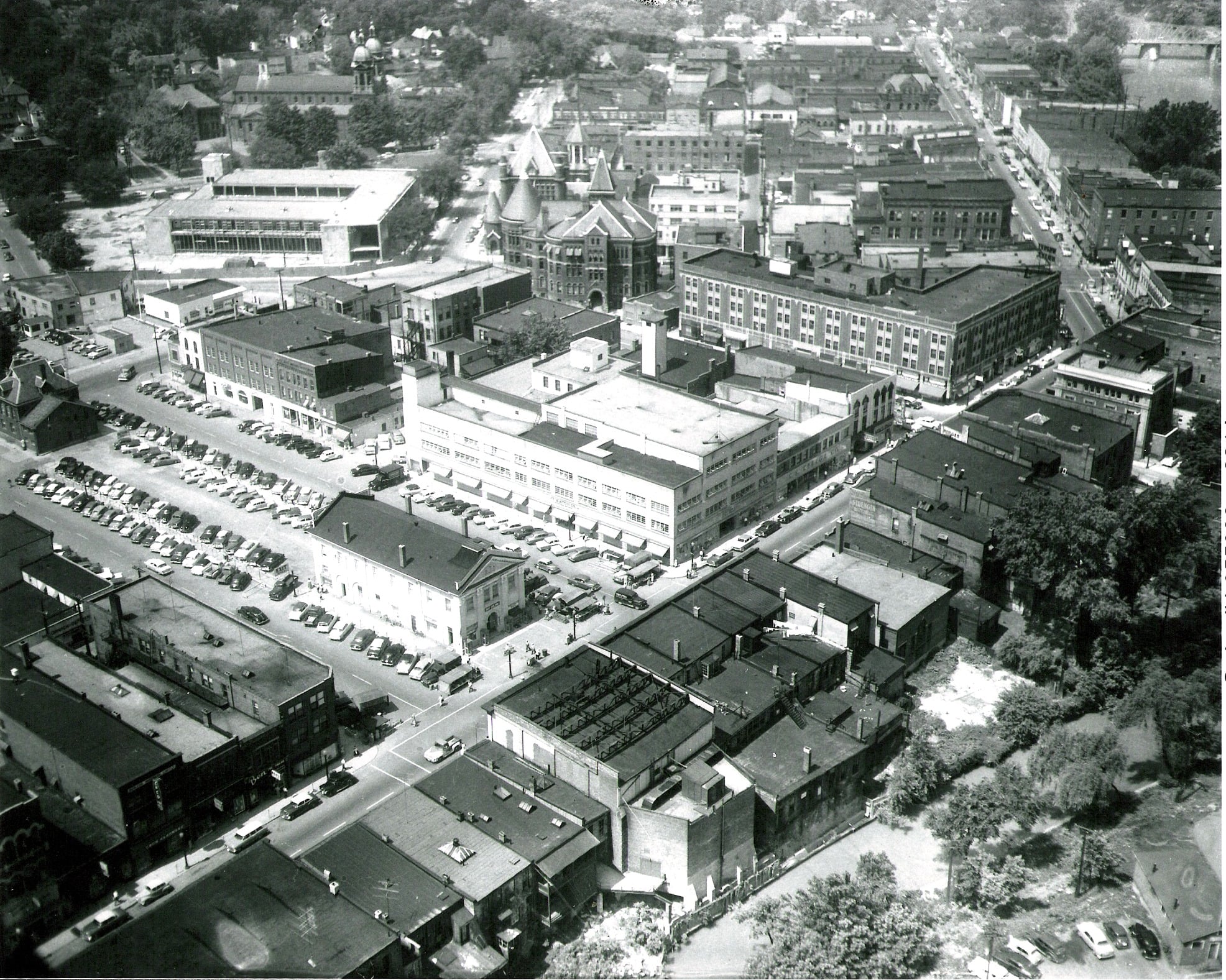
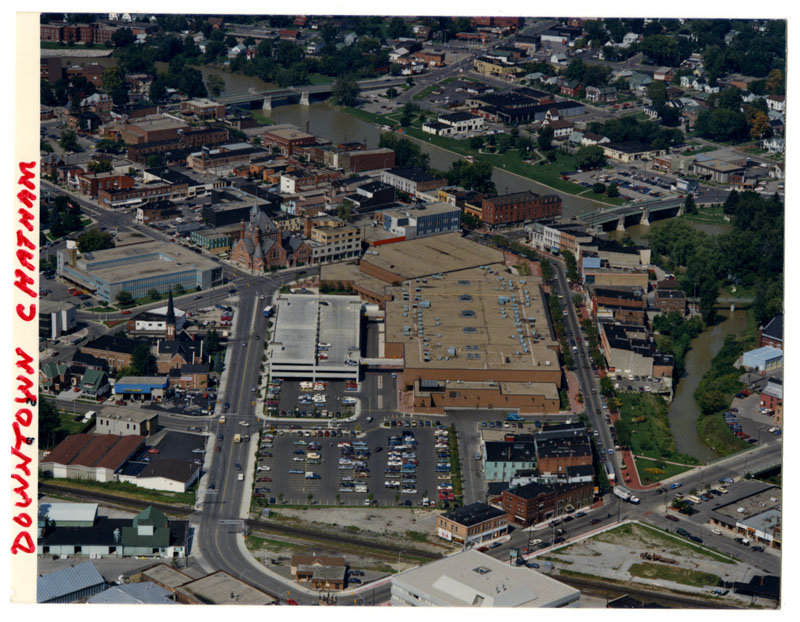
While most downtown malls built during the ODRP era were led by Eaton’s and Cadillac Fairview, the Downtown Chatham Centre (DCC) was managed by Cambridge Shopping Centres. The city of Chatham conducted the land assembly (using its powers of expropriation where necessary), and cleared two city blocks, including the Garner Hotel, the old market square, the Romanesque Harrison Hall, and several commercial blocks, including a shuttered Eaton’s store.
Downtown Chatham in the 1950s. Most of the buildings in the foreground and midground have since been demolished. The old market square became a parking lot by the 1950s; to the immediate left of the old market is the 3-4 storey Eaton’s store. Harrison Hall, with its conic tower, stands behind Eaton’s.The Downtown Chatham Centre soon after opening in 1983(Chatham-Kent Museum)
Instead of Eaton’s — which closed its Chatham store in 1974 — the lead anchor would be Sears, which was expanding its Canadian footprint at the time, as it just pulled out from its 25-year partnership with Simpson’s. Unlike most downtown malls built in Ontario, DCC had always offered ample customer parking, located in a garage linked to both of the mall’s two shopping levels, as well as an adjacent surface lot, with mall visitors able to get their parking validated. On the south side of the mall, there was a Miracle Food Mart, along with a food court on the second floor. Downtown Chatham offered the only full-line department store in town; the mall also had the city’s only escalators. The plaza out front featured a fountain in the summer and a public skating rink in the winter.
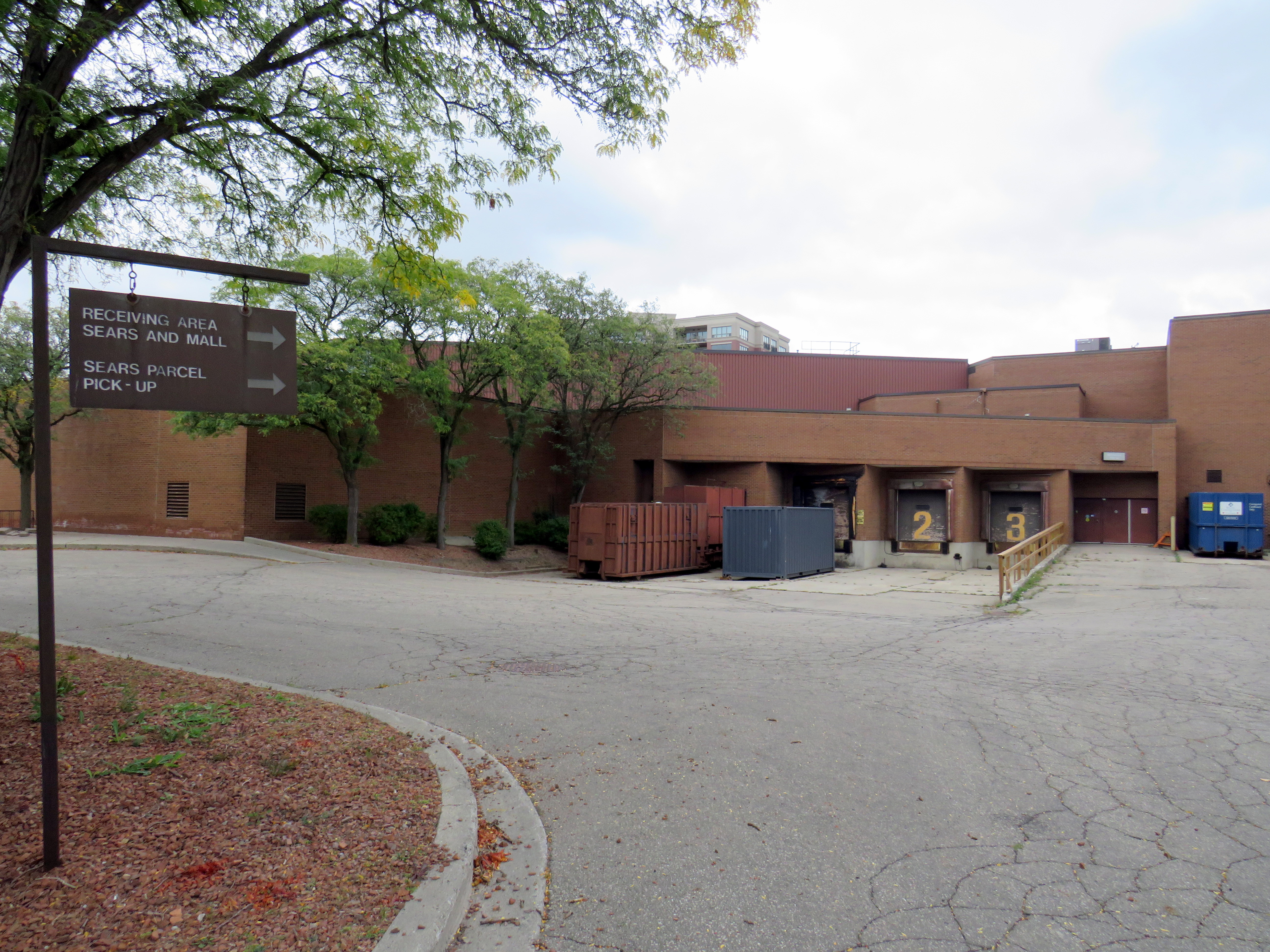
Harrison Hall, which was home to both the City of Chatham and Kent County before demolition in 1978 to make way for the Downtown Chatham Centre. (Chatham-Kent Museum)The site of demolished Harrison Hall in 2023. Asign still directs drivers to the Sears receiving area and the parcel pick-up.
For a time, DCC held its own. Sears was a much more suitable department store for a smaller industrial/agricultural city like Chatham than Eaton’s would have been. Though the Multi-Mall development north of the city on Highway 40 and the Thames-Lea plaza in the suburbs provided competition, the downtown mall’s regional market dominance was undisputed in the 1980s and most of the 1990s. Unlike Eaton’s, Sears Canada was particularly healthy until the early 2000s as it catered to the suburban middle class; in 1999, it purchased the remains of the bankrupt T. Eaton Company, converting many better performing Eaton’s stores to its own brand.
Unlike Chatham’s peer cities like Brantford and Sarnia, the mall’s tenant mix stayed relatively healthy well into the new millennium (see the 1992 and 2014 tenant lists below). Though Miracle Food Mart closed, that space was remised into a Sport Chek and a Goodlife Fitness gym. It wasn’t until the last decade that serious decline began to set in.
What happened?
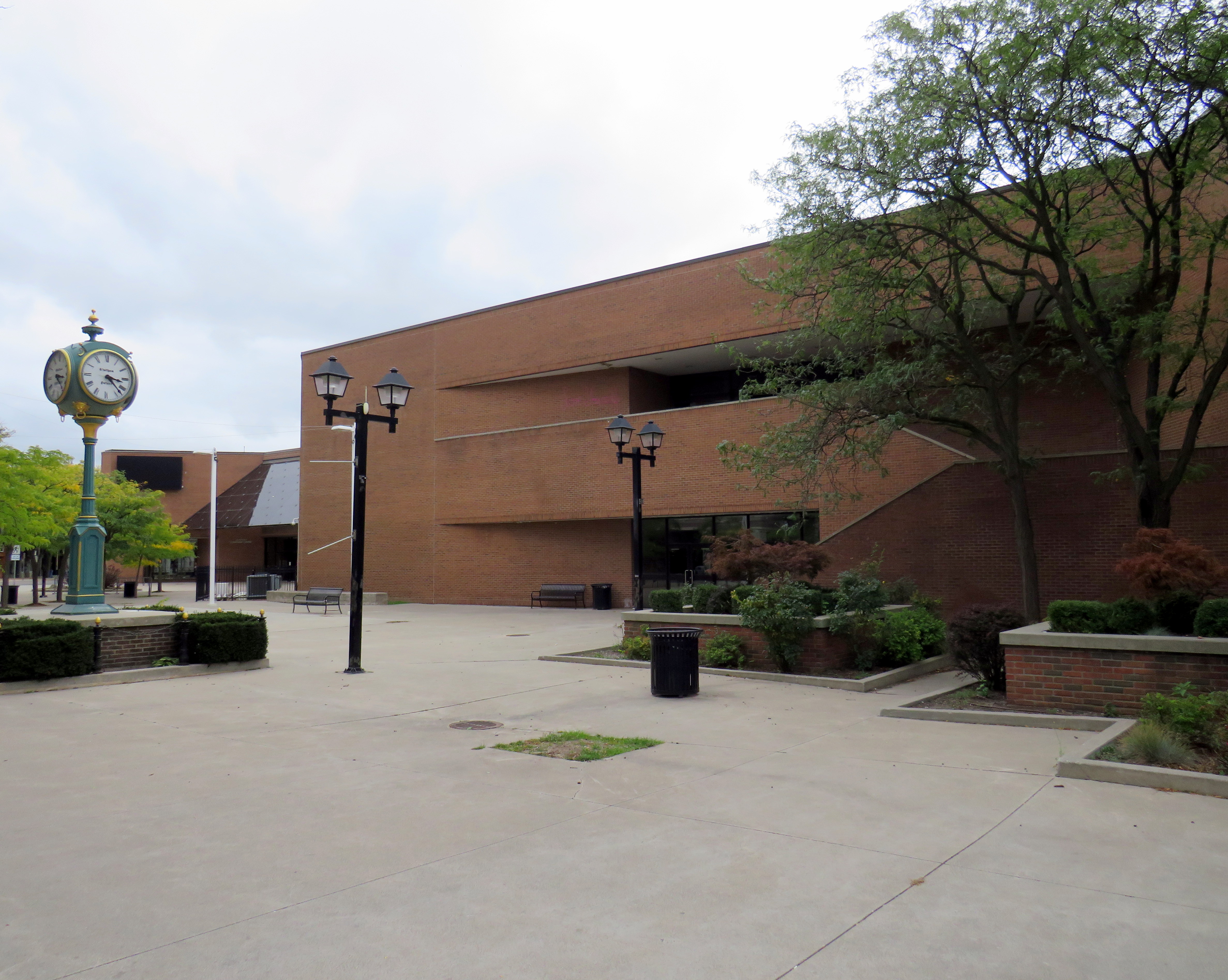
The empty public plaza outside the vacant Sears store
There were several factors that led towards the decline of Downtown Chatham Centre, similar to the reasons why most downtown malls failed. The main difference is that the decline came later than most others.
Chatham’s economy, like most smaller Ontario centres, was in flux, particularly in the 1990s and early 2000s. Free trade agreements affected the local industrial economy, which was already weaker than neighbouring cities like Sarnia, Windsor, and London-St. Thomas.
Factory closures included the Navistar plant. For nearly a century, International Harvester was one of Chatham’s largest employers. The Chatham plant, which assembled International truck tractors and employed 2400 workers in 2001, closed for good in 2011. The rise of Walmart, which moved into the old Woolco store on Highway 40 along with other big-box retailers, also hurt the downtown mall. But Sears Canada entered its own death spiral in the mid-2000s. In 2005, the company was taken over by the private equity firm Pershing Square, whose CEO, Edward Lampert, was already slowly sucking the American parent company dry. Sears Canada sold off its credit card division, its Downtown Toronto headquarters, and eventually the leases for its most attractive stores in 2012 and 2013, including the former Eaton’s flagship in Toronto Eaton Centre.
By 2014, the DCC Sears was converted to an outlet store, foreshadowing its eventual closure in 2017, less than year before the entire chain disappeared from Canada.
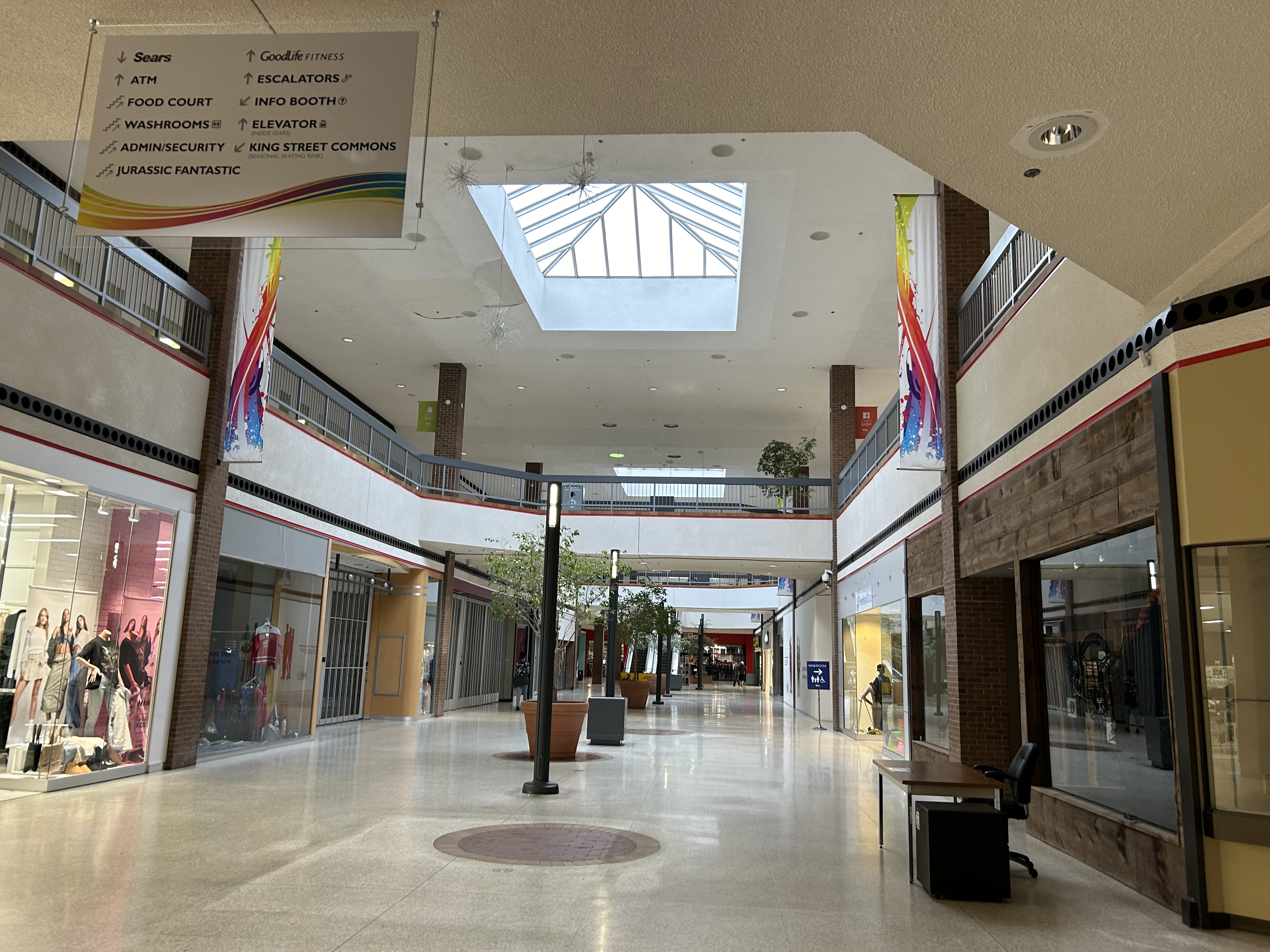
Mall interior looking east, September 2023
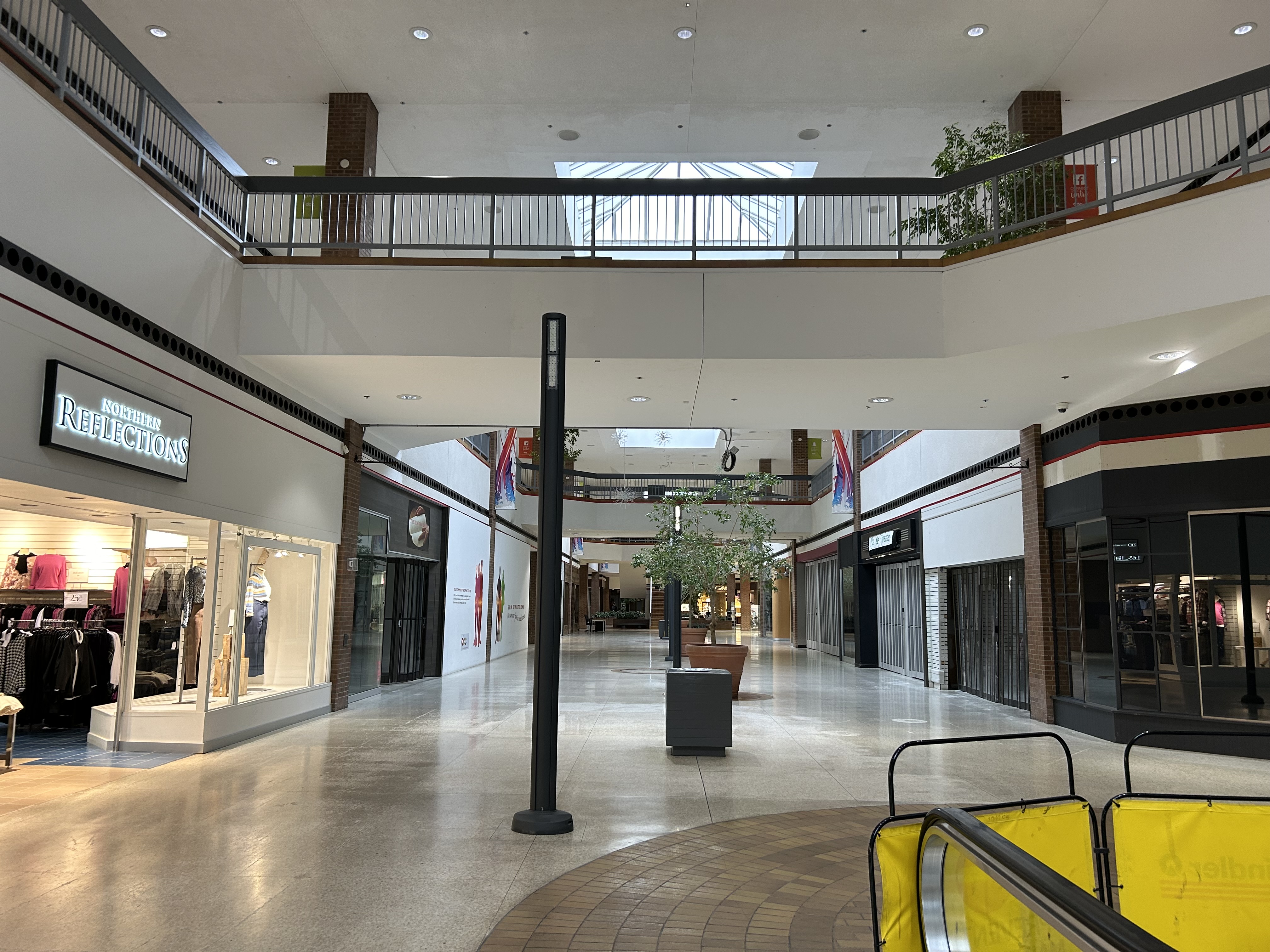
In September 2023, there were only a handful of open stores left inside DCC, including Northern Reflections, a Dollarama, Fit4Less (a budget brand of Goodlife Fitness), Ardene, an independent jewellery store, and a Hart discount department store located in the old Miracle Food Mart/Sport Chek space. All open retail spaces were on the first floor; the escalators were completely blocked off. The Ardene store was already in the process of moving to the Thames-Lea plaza.
Security guards were stationed at both public entrances, likely to ensure the mall did not become a hangout for Chatham’s unhoused.
Mall interior, looking west
The mall also has a pharmacy and medical office, but since 2015, they are accessed only from the outside, in a storefront facing King Street.
What’s next?
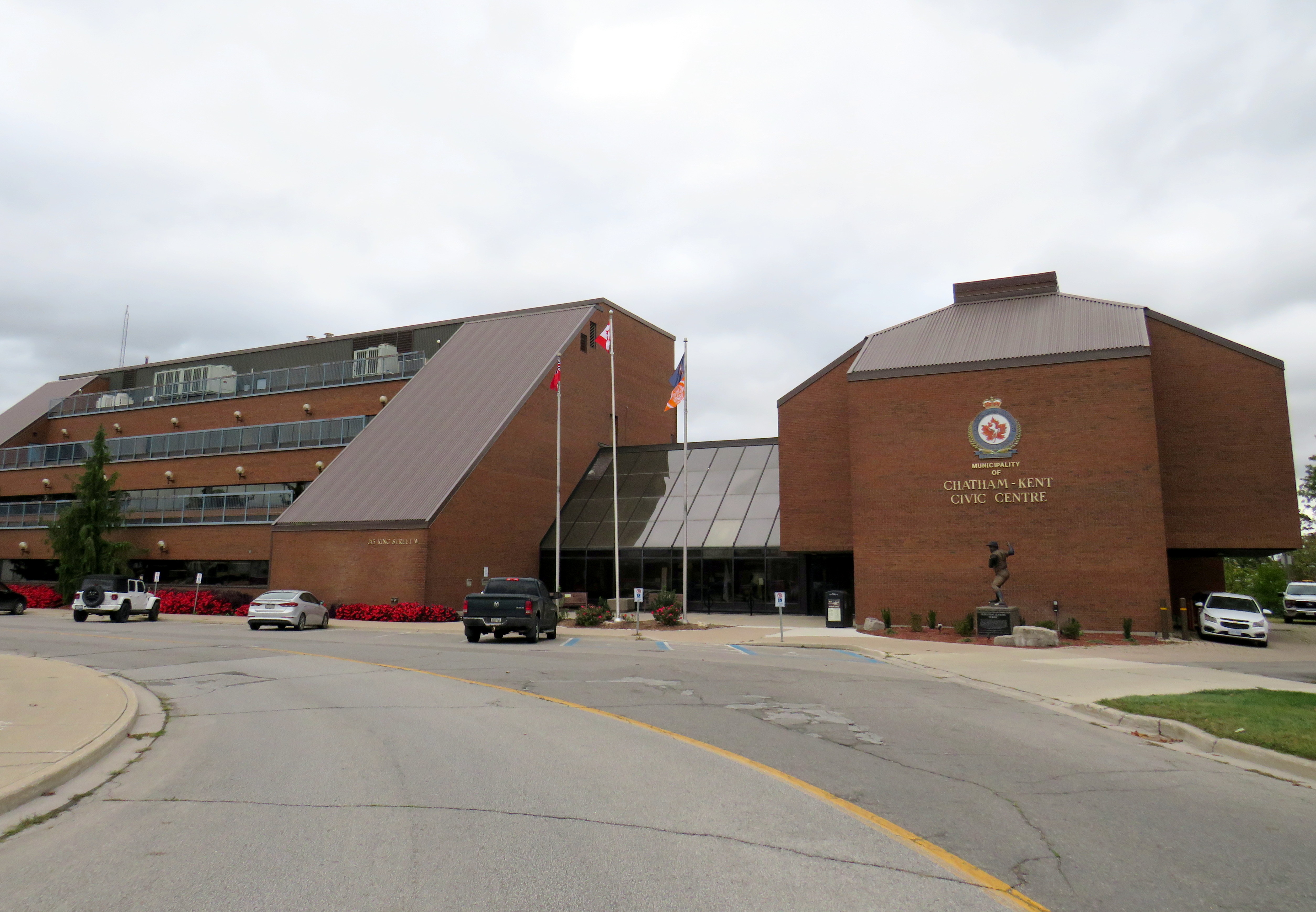
Chatham-Kent Civic Centre, built in 1975-1976
The Municipality of Chatham-Kent currently occupies the Chatham Civic Centre, which was built in the late 1970s on the site of a former gas works on the Thames River. The Civic Centre requires major renovations or replacement, and the municipal government is considering purchasing part of the Downtown Chatham Centre, and moving the municipal government, the main library, and the art gallery/museum into the Sears store, which would be heavily renovated. Staff report that the cost of purchasing and renovating part of the DCC ($42,387,400) was similar to renovating the existing Civic Centre, library, and museum ($38.7 million to $45.8 million) and nearly half the cost of building brand new.
Earlier plans also included a new entertainment centre to host concerts and the Chatham Maroons minor hockey team, replacing an existing municipal arena constructed in 1949. Those plans were later dropped by the mall’s owners.
If Chatham-Kent agrees to purchase and renovate the vacant Sears store, they will relocate to nearly the same site as the old Harrison Hall.
The proposed relocation of the civic centre and library to a central location, adjacent to the RideCK transit terminal (which serves the old City of Chatham as well as many smaller population centres within the municipality) is certainly a more sustainable and equitable outcome than building a new civic centre outside the downtown core. It repurposes an existing building and helps to support downtown business. However, more housing, both on the surface lot and on any vacated civic properties would help bring even more people into the downtown core, which can use the boost. Though retailers may not flock back into the mall once renovations are complete, the storefronts offer flexible space for community programs and small business incubators.
For a small city like Chatham, this is likely the best outcome.
1992 Tenants
Below is the list of tenants at Downtown Chatham Centre in 1992, obtained from the 1993 Canadian Directory of Shopping Centres, published by Maclean-Hunter.
Fashions and footwear Children’s wear: Just Kids Unisex/family wear: Cotton Ginny, Le Château, Pantorama, Stitches, Work World Ladies’ wear: Addition-Elle, Born Free, D’Allairds, Fairweather, Irene Hill, Just Petites, Lady Foot Locker, The Lady’s a Champ, Mariposa, Northern Reflections, Pennington’s, Personally Yours, Reitman’s, Ricki’s, Station Cotton, Suzy Shier, Thyme Maternity Menswear: Tip Top Footwear & leather goods: Foot Locker, Joggers, Kinney, The Shoe Place Jewellery/accessories: Lady Jewellery Company, Ostranders, Young’s Jewellers
Other retailers Books: Classic Bookshop, Coles Drugs/health & beauty: Pharma Plus, The Soap Emporium Department/mass merchandiser: A Buck or Two Electronics: Radio Shack Gift: Den For Men, Things Engraved Hardware/paint & paper: Tool Den Housewares: Junor’s, Stokes Music/Records: Sam the Record Man Pet: Pet Paradise Photo/Camera: Black’s, Japan Camera 1 Hour Photo. Restaurant/fast food: A&W, Crumbles Muffins, Frankfurters, Lumberjack Restaurant, Manchu Wok, Mulligan’s Roadhouse, Sorrento Specialty Food & Drink: Bright’s Wines, Laura Secord, The Gourmet Cup Stationery/Card: Carlton Cards, Hallmark, Willson Stationers Toy: Toys & Wheels Variety/Convenience: News Room Dry Cleaners: La Moderna Dry Cleaning. Hairstyling/Esthetics: The Golden Razor Theatre/Entertainment: Fun & Games Miscellaneous: Infoplace
2014 Tenants
The 2015 Canadian Directory of Shopping Centres tenant list was shorter, though still much more robust than former Eaton’s-anchored downtown malls in comparably-sized cities like Sarnia, Brantford, or Peterborough at the time.
Late last year, I wrote about the closure of the Hamilton City Centre mall, the last of Ontario’s downtown Eaton Centres to open. But Hamilton’s failed shopping centre wasn’t the only old downtown mall to close in recent years: Sarnia’s Bayside Centre, opened in 1982 as the Sarnia Eaton Centre, was recently demolished, with a seniors’ residence and long-term care home set to take its place.
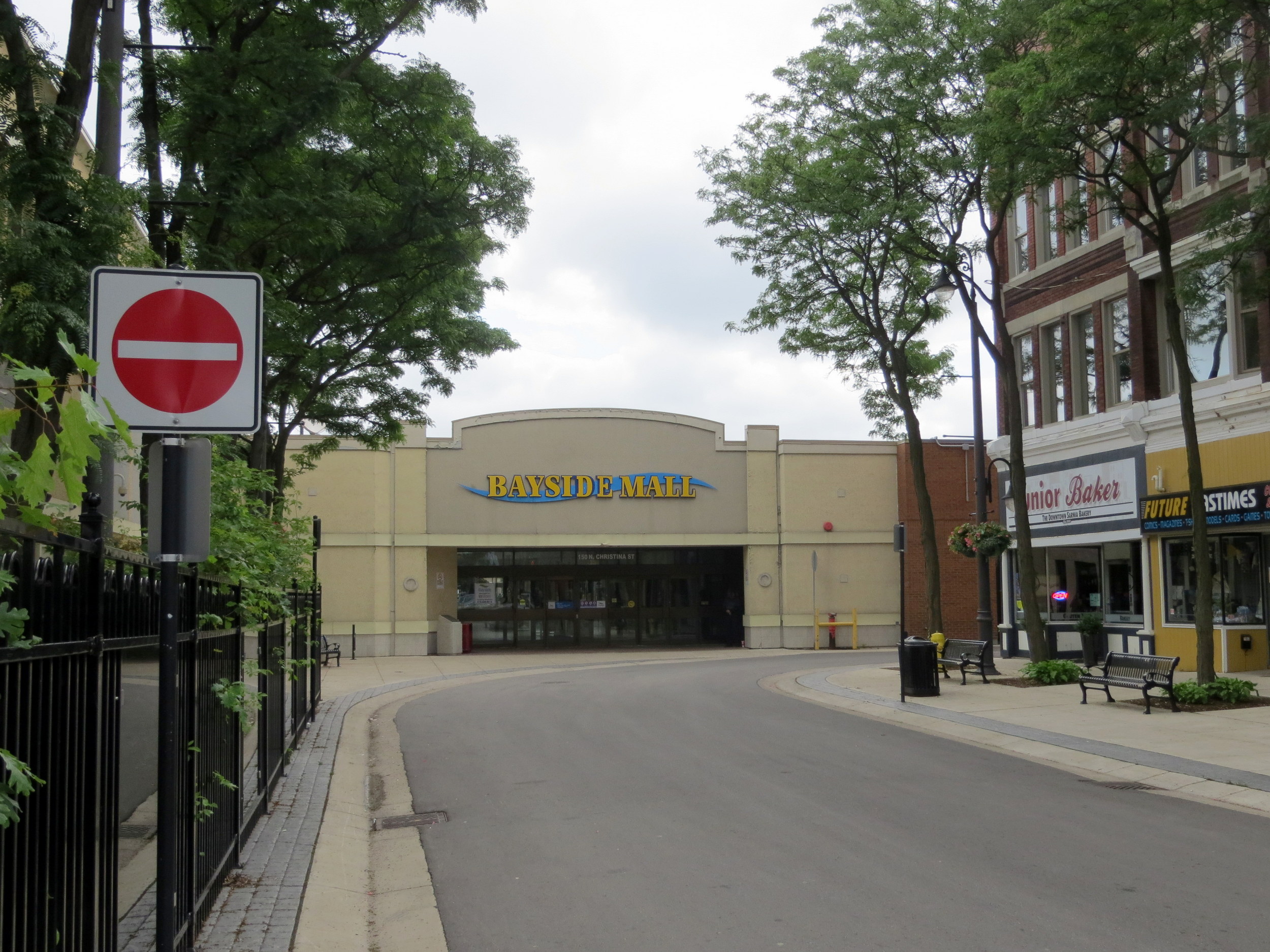
Bayside Mall in 2013
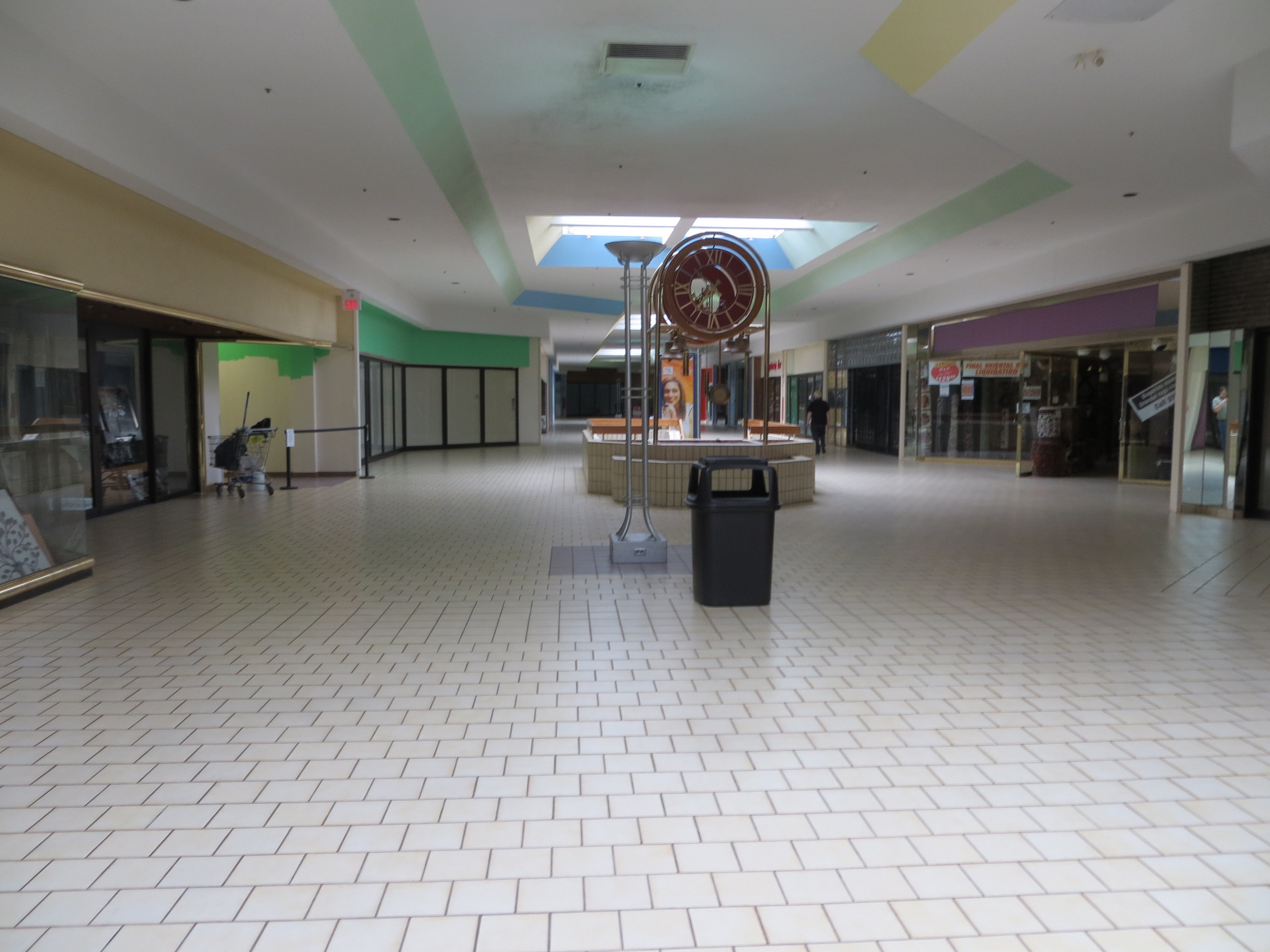
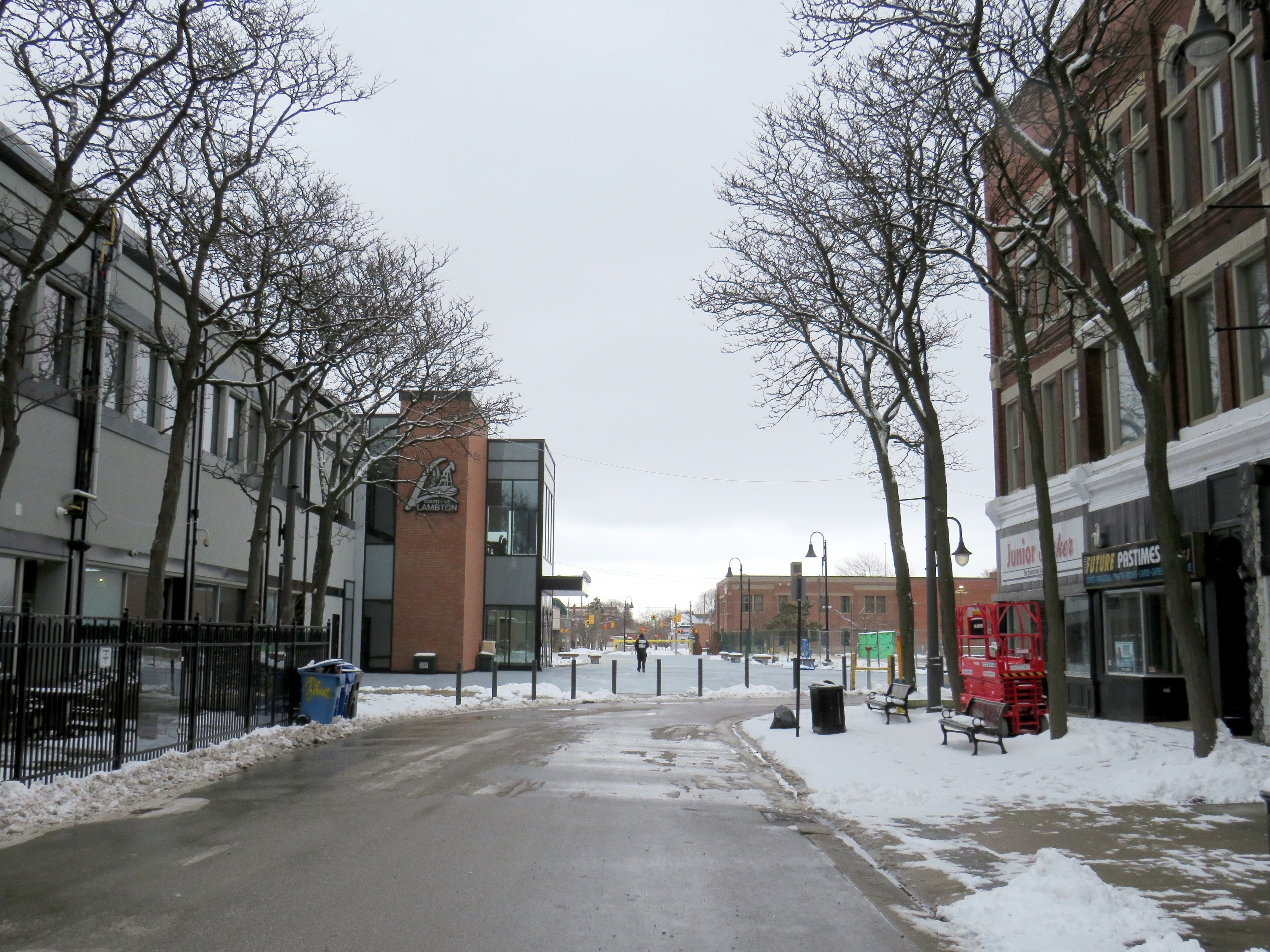
I previously visited Sarnia’s Bayside Mall in 2013, when the mall was already mostly dead. Community uses, such as a local museum, a Canadian Blood Services clinic, a seniors’ drop-in centre, and a March of Dimes office predominated, with only Hong Kong Express and Subway left in the food court, and a few other shops — a rug store, an optician, a beauty salon, and a pharmacy — scattered amongst the vacant storefronts. The old Eaton’s department store was already converted into offices for Lambton County’s social services department.
The old fountain at the main entrance to Bayside Mall in 2013.
As I discussed previously on this website, there was a downtown redevelopment boom across Ontario in the 1970s and 1980s, with municipalities and the province eager to support the construction of new shopping centres to help them compete with suburban malls.
The Sarnia Eaton Centre was the first of several malls funded by the Ontario Downtown Redevelopment Program, though previous downtown shopping centres, such as Hamilton’s Jackson Square and the Sudbury City Centre, were built with municipal support.
The case for Sarnia Eaton Centre was always weak, but it was the result of inter-municipal rivalry as much as it was an attempt to revitalize Downtown Sarnia. In the 1970s, Lambton Mall opened in the city’s outskirts, near the intersection of Highways 40 and 402. But Lambton Mall was built outside the city limits, in suburban Sarnia Township. Lambton Mall’s anchors included Sears, Canadian Tire, and Toys R Us.
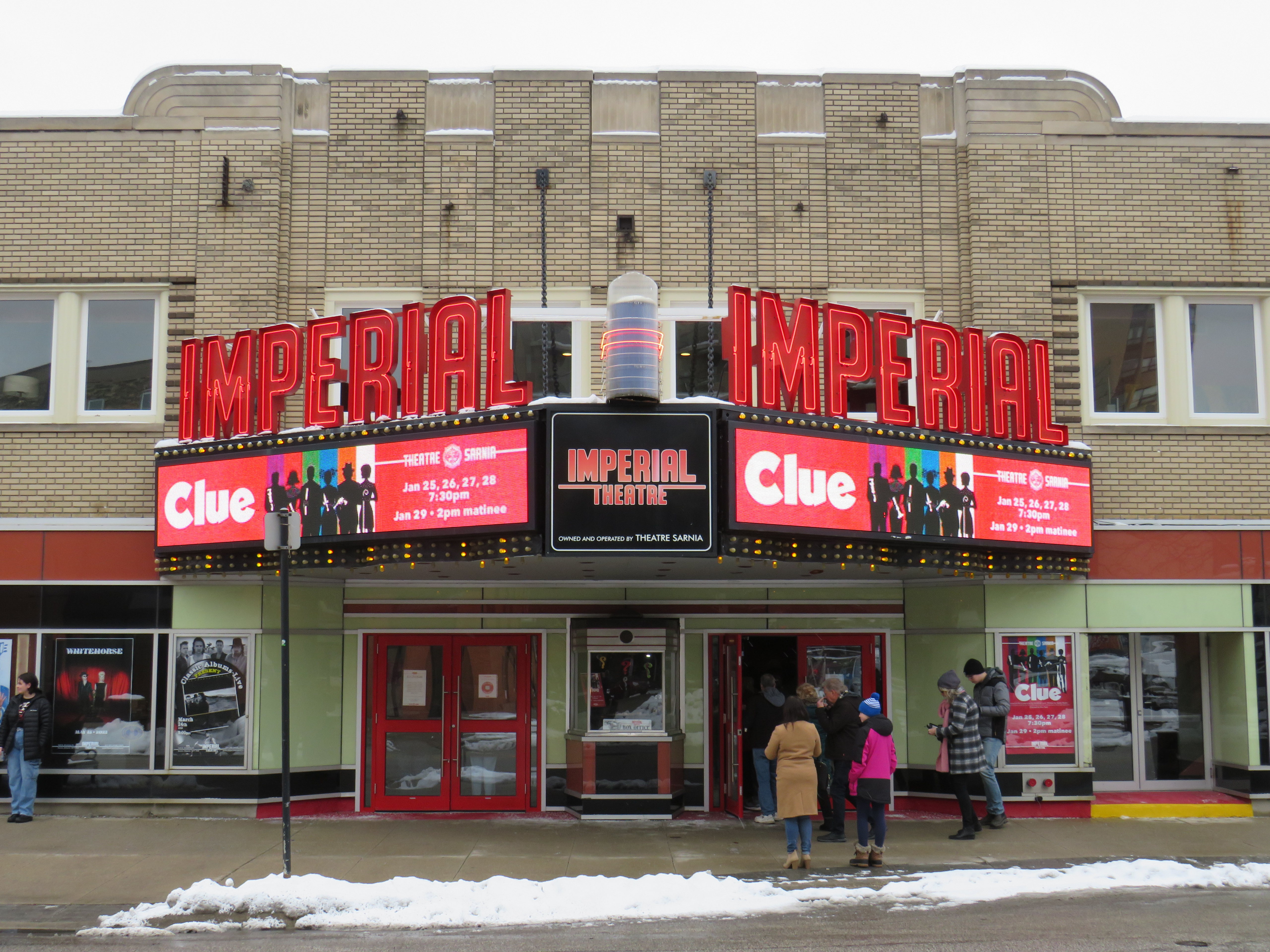
While Sarnia Township’s population was growing due to residential, industrial, and institutional growth (Lambton College’s main campus was also established in the township, near Lambton Mall), the City of Sarnia’s population declined. Along with the new Eaton Centre, the city also encouraged new highrise residential development in the downtown core, and two new office buildings were also constructed. The city – with support from Imperial Oil, a major employer – renovated the old movie theatre, converting it to a playhouse for local productions and touring shows.
The Imperial Theatre remains a popular attraction
When it opened in 1982, Sarnia Eaton Centre was the centrepiece of Sarnia’s downtown comeback. It filled in nearly four blocks of Downtown Sarnia, with Lochiel Street closed between Christina and Vidal Streets, and Victoria Street closed north of Cromwell.
The mall was anchored, of course, by Eaton’s, a smaller, two-storey store with 91,470 sq. ft. of floor space (just under 8500 square metres), and an A&P supermarket on the southern end. Sarnia Eaton Centre’s 1993 Canadian Directory of Shopping Centres, showed that the mall still had a healthy assortment of national retailers, along with some local businesses. But many retailers refused to renew their store leases, and when Eaton’s entered bankruptcy for the first time in 1997, the Sarnia store was among the first to close.
The City of Sarnia merged with Sarnia Township in 1991, while the area surrounding Lambton Mall continued to grow as the region’s commercial centre. Big-box stores such as Walmart and Home Depot clustered around the older mall, and even with Sears Canada’s closure, Lambton Mall continued to do well, with Marshalls/Home Sense taking over the old Sears store.
20132023
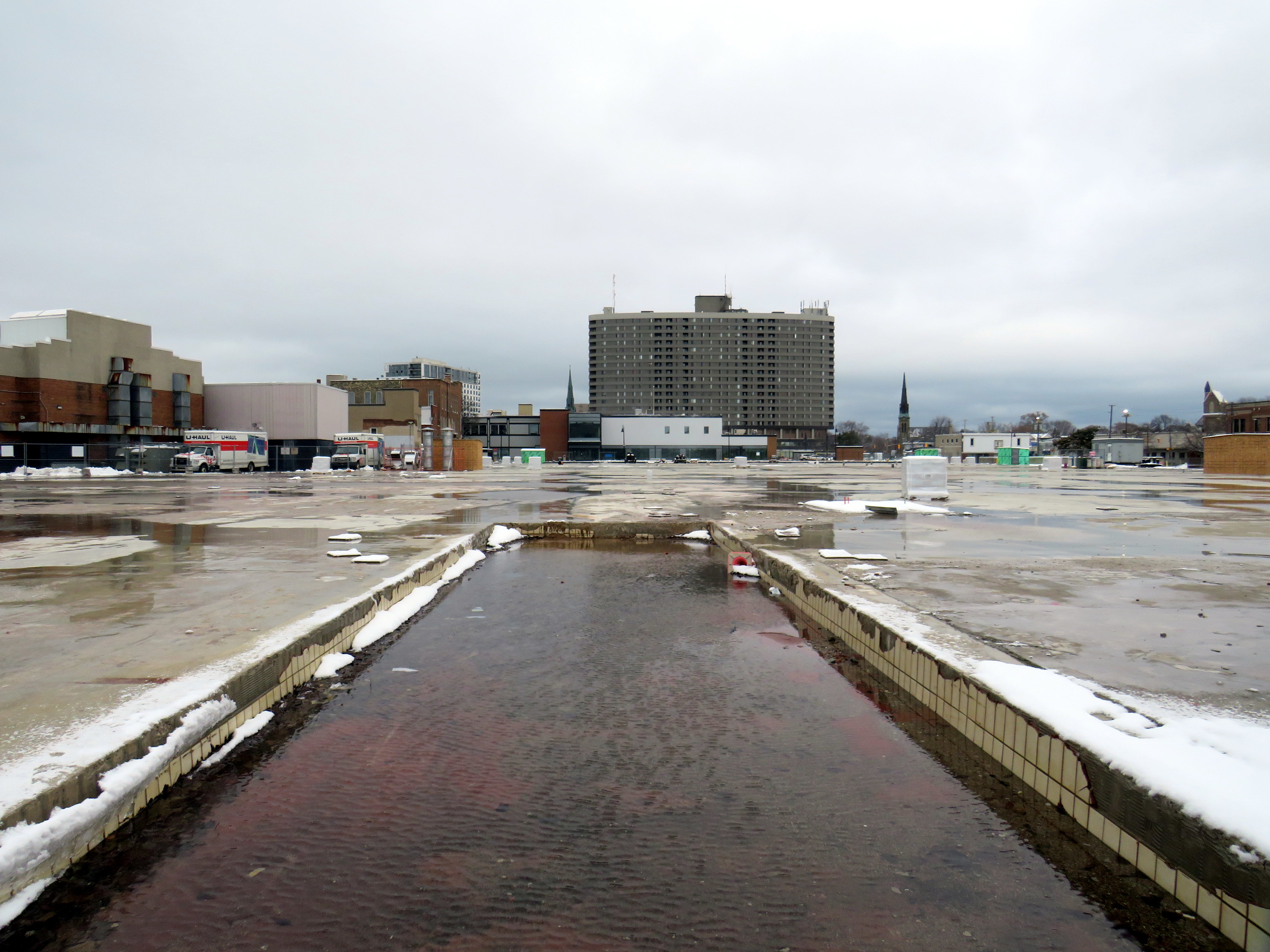
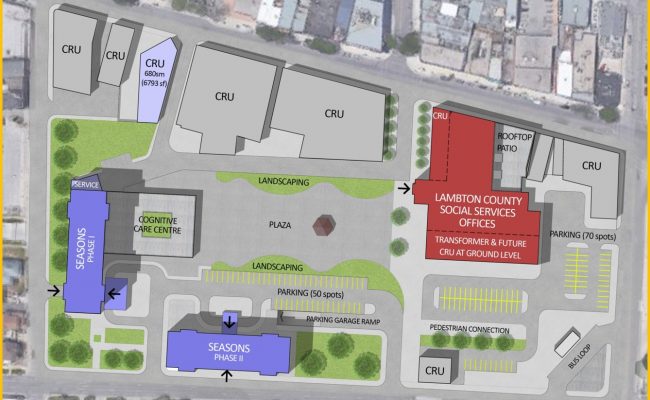
The Bayside Mall property was purchased by Seasons Retirement Communities in 2017, and most of the mall was demolished in 2021-2022. Lambton County, which operated its social services offices in the former Eaton store, expanded its footprint, with a new municipal courthouse located next to the old Eaton’s store, which was renovated.
Lochiel Street has been partially restored as a pedestrian walkway across the site, while the southern half of the old mall will be redeveloped for mid-rise seniors’ homes, with a central plaza.
Map showing the redevelopment of Bayside Mall, with the Lambton County building, in red, already complete in early 2023. The top of the map faces west.
Meanwhile, Downtown Sarnia will continue to hold its own. It has a few nice restaurants, cafes and pubs, and the highrise development of the 1970s and 1980s ensures that there’s a local population that will frequent the businesses there. The addition of seniors housing won’t hurt either.
Below is the list of tenants at Sarnia Eaton Centre in 1992, obtained from the 1993 Canadian Directory of Shopping Centres, published by Maclean-Hunter. In 1992, the collection of retailers was still quite strong, largely driven by Cadillac Fairview’s leasing team.
Anchors
A&P (26,512 sq ft), Eaton’s (91,470 sq. ft)
Fashions and footwear Children’s wear: Just Kids Unisex/family wear: Le Chateau, D’Gala, Pantorama, Stitches, Thrifty’s Ladies’ wear: Fairweather, Irene Hill, Just Petites Lady Foot Locker, Lindor, Reitmans, Smart Set, Suzy Shier Menswear: Tip Top Footwear/leather goods: Agnew, Baronessa, Bata, Belinda & Brother, Joggers, Kinney, Mr. Minit Shore Repair Jewellery/accessories: Ardene, People’s
Other retailers Books/stationery: Carlton Cards, Garfield, WH Smith Health and beauty: Caryl Baker Visage, Shoppers Drug Mart Department store/mass merchandiser: Marks & Spencer, A Buck Or Two Electronics: Radio Shack Entertainment: Fun & Games Furniture & furnishings: Brass Collections Gifts: Things Engraved Hardware/paint & paper: St. Clair Paint and Wallpaper Housewares: The Royal Douton Store, Stokes Music/ records & tapes: Discus, Music World Pets: Tropicarium Pet Centre Photo/camera: Black’s, Japan Camera Restaurants & fast food: Elephant & Castle, Global Donuts, Hamby’s, Hong Kong Express, Kernels, Mykie’s, Viva Pasta Specialty food & drink: Laura Secord, mmmarvellous mmmuffins, Second Cup
Services Banks/financial: Canada Trust, TD Bank Hairstyling/esthetics: Regis Hairstylists Medical/dental: Tridont Dental Travel: Marlin Travel Misc: Infoplace
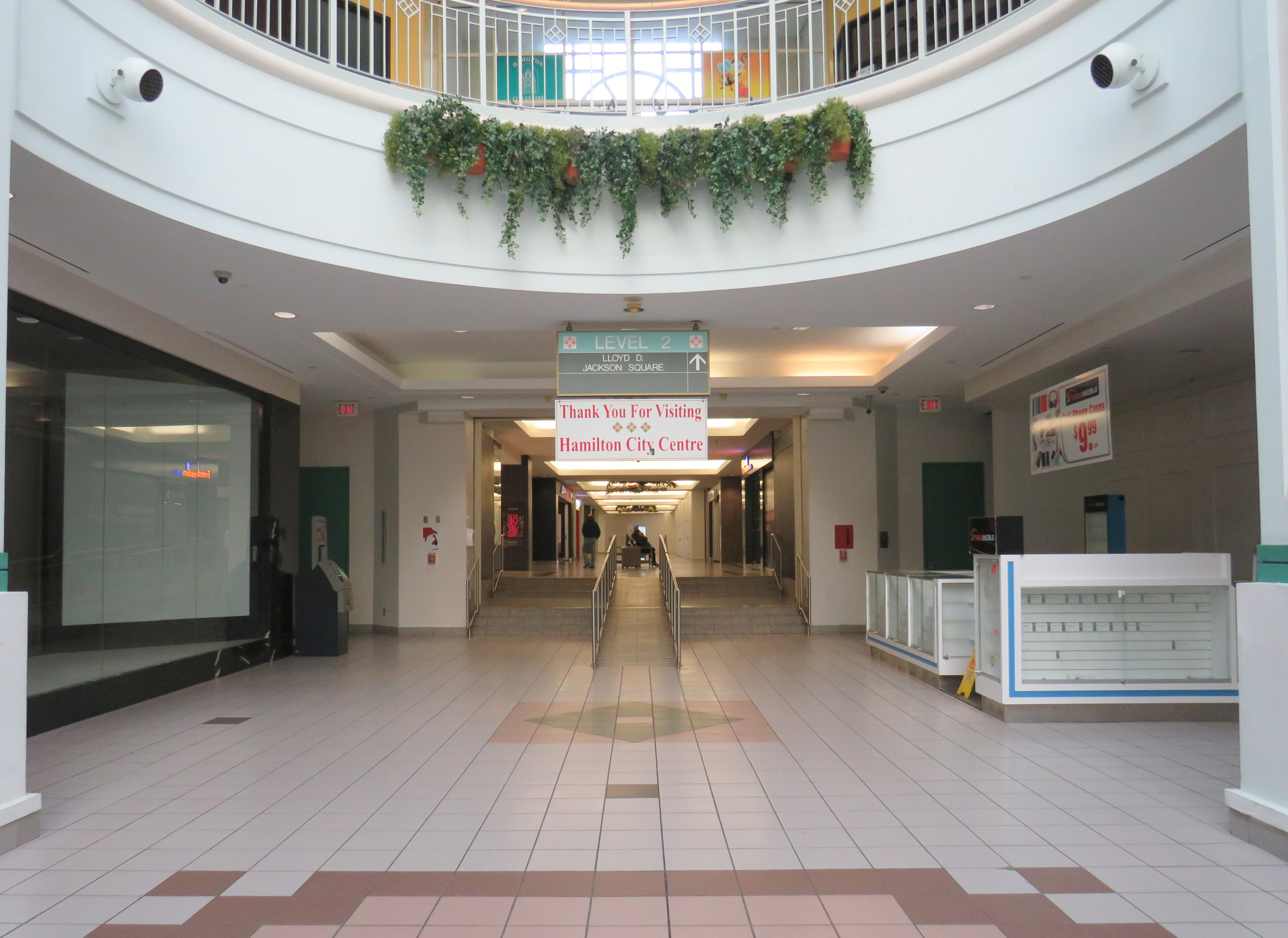
Main entrance to Hamilton City Centre, on James Street North. Note the awkward spacing of “City” over the entrance; it originally read “Eaton.”
On December 26, 2022, Hamilton’s former Eaton Centre, opened just 32 years ago, will close for good. Early in the new year, demolition will begin on the failed downtown mall, making way for a new residential development.
Hamilton Eaton Centre, fully opened in October 1990, was one of several downtown malls built in Ontario through a partnership between Eaton’s and commercial developer Cadillac Fairview, hoping to replicate the success of the Toronto Eaton Centre, which opened in phases between 1977 and 1979. It was the second major shopping centre to open in Downtown Hamilton; it followed the construction of the massive city-led Jackson Square development in the 1970s and 1980s in which entire city blocks were cleared to make way for urban renewal.
With support from the Ontario and municipal governments, the T. Eaton Company and Cadillac Fairview built new malls in Ottawa, Peterborough, Brantford, Kitchener, Thunder Bay, Sudbury, Sarnia, Hamilton, and expanded London’s existing Wellington Square. These private-public partnerships seemed to be beneficial; smaller cities worried about the decline of their downtowns would get an attractive new shopping centre after expropriating and demolishing existing buildings and/or providing municipal lands for the project. The municipality would finance new parking garages to support the new development. Meanwhile, Eaton’s would help finance the construction and provide a lead anchor for the new development. Cadillac Fairview, which specialized in retail and office development, would arrange the construction and the leasing for the mall stores. (There were a few downtown shopping centre projects in Ontario that did not have Eaton’s involvement, including malls in Chatham, Cornwall, Tillsonburg, and Waterloo.)
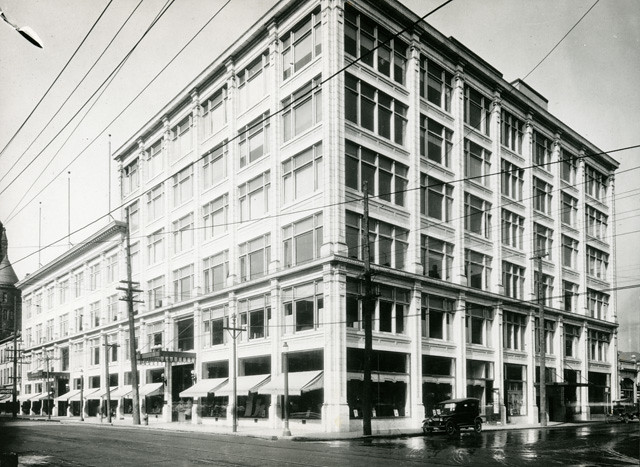
The old Eaton’s Hamilton Store in the 1920s, looking southwest from James Street North and (now disappeared) Merrick Street (Hamilton Public Library)
Unlike malls in Kitchener, Sarnia, Brantford, or Guelph, the Hamilton Eaton Centre was mostly built upon lands already acquired by Eaton’s itself, much like the larger and more successful Toronto Eaton Centre (the city of Hamilton assisted by closing Merrick Street between York Boulevard and James Street and transferring the right-of-way for the new development). The first phase of the project, built on the site of the Merrick Street parking garage and the old Hamilton Farmers Market, became the home of a new four-storey Eaton’s store to replace the dilapidated building on James Street. When the new store opened in April 1989, the old store was quickly demolished to make way for the mall itself, which opened just 18 months later.
The new Eaton’s Hamilton store on York Boulevard soon after opening in 1989. The store had exits to both Jackson Square and once completed, the new Eaton Centre mall. (Hamilton Public Library)
At first, Hamilton’s Eaton Centre was able to attract prestigious tenants such as HMV and Eddie Bauer thanks to Cadillac Fairview’s expertise and new office development in Downtown Hamilton, including a new CIBC office complex. The new mall was also able to attract existing downtown businesses out of storefront retail and the older Jackson Square mall.
YouTube video showing the exterior and interior of the old Downtown Hamilton Eaton’s store prior to closing, as well as its demolition in 1989 to make way for the new Hamilton Eaton Centre (via Hamilton Sight & Sound YouTube channel)
However, as I discussed previously on this website, the malls developed by Eaton’s and Cadillac Fairview did not do well in most markets. New, full-line Eaton’s stores were a poor fit for smaller, industrial cities like Peterborough, Brantford, and Sarnia. The malls themselves were more difficult to get to by car, and shoppers usually had to pay for parking. The established suburban malls were typically larger, and they offered ample free parking. By 1990, the old, large industries were in decline due to free trade and industrial automation, and in the 1990s, a new retail format — the big box “power centre” — emerged as serious competition during a major recession. And in 1994, Walmart entered the Canadian market.
The former Hamilton Eaton Centre (known as Hamilton City Centre since 2000) from the corner of James Street North and York Boulevard. The clocktower on the corner is an homage to the old Hamilton City Hall, which was demolished in 1960. The clocks themselves were originally installed in the old city hall and will be preserved when the current building is demolished.
With low traffic and many national retailers unwilling to renew their leases, Cadillac Fairview divested itself of most of its downtown malls. It sold its half-stake of Hamilton’s Eaton Centre to the T. Eaton Company in 1995 (Of its downtown malls, Cadillac Fairview would only hold onto the flagship Toronto Eaton Centre, and the Rideau Centre in Ottawa). According to a Hamilton Spectator article from that year, one of the mall’s three floors was already closed, just five years after its grand opening.1 Among the tenants that left the mall early was upscale men’s clothier Harry Rosen. By 1996, only 50 of the 120 stores outside the Eaton’s department store were still occupied, with another six stores closing early that year.2 A McMaster University business school lecturer predicted that one of the two downtown malls — Eaton Centre or Jackson Square — would close within 10 years. (He was only 15 years off the mark.)2
In February 1997 — after years of mismanagement and neglect by the fourth generation of the Eaton family — Eaton’s entered bankruptcy protection, allowing it to settle debts and restructure. Though stores in other downtown malls in Brantford, Sarnia, and Kitchener were among the first to go, the Downtown Hamilton store was left off the closure lists, as Eaton’s itself owned the property – losing the department store anchor would not help the mall in case of a property sale. In the meantime, Metrus Developments — which purchased the neighbouring Lister Block in 1989 — evicted its remaining tenants and boarded up the six-storey commercial building, hastening Downtown Hamilton’s visual and commercial decline.
In 1998, the Region of Hamilton-Wentworth (dissolved in 2001 after amalgamation) began leasing space on the formerly vacant third floor of Hamilton Eaton Centre, partly to help maintain the department store’s presence and support Eaton’s, which still owned the property. The City of Hamilton agreed to provide two hours of free parking at the attached York Boulevard garage and planned for the construction of a new store entrance to the Hamilton Farmers’ Market. This was just enough to keep the department store open until the company collapsed in 1999; the store closed for good in October of that year. The mall was rebranded Hamilton City Centre the year after, sold to a private real estate firm.
View from the third floor in Hamilton City Centre; the conversion of retail space to offices on the top level is apparentThe central atrium. All remaining stores must close by December 26, 2022.The connection between Hamilton City Centre and Jackson Square. This was originally the main route between the old Eaton’s store and the first phase of the 1970s-era mall. The largerJackson Square will undoubtedly benefit from the residential re-development of the Eaton’s site.
After Eaton’s closed, part of the massive retail space was renovated and turned into a fitness club. The City of Hamilton leased additional space in the old Eaton’s store, especially as it undertook renovations to its modernist 1960s-era city hall. New windows were punched into the brick facade to provide natural light to the new occupants. But the remaining national retailers like HMV, Fairweather, and Eddie Bauer left the mall, while a few small, independent retailers came in, attracted by cheap rents.
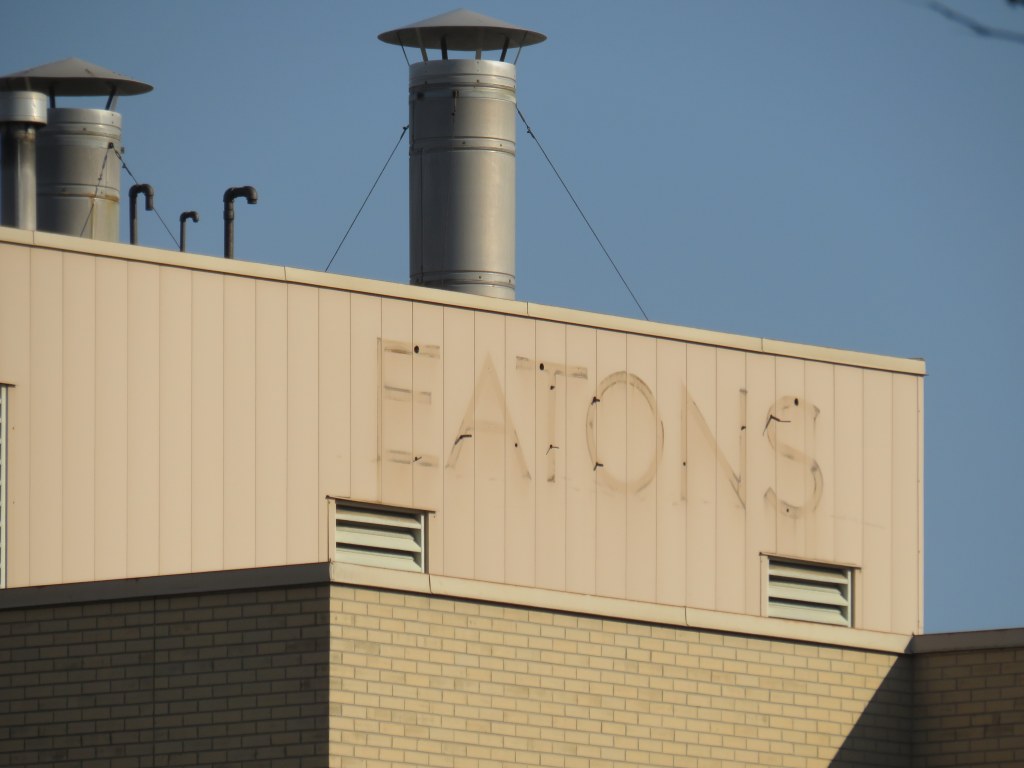
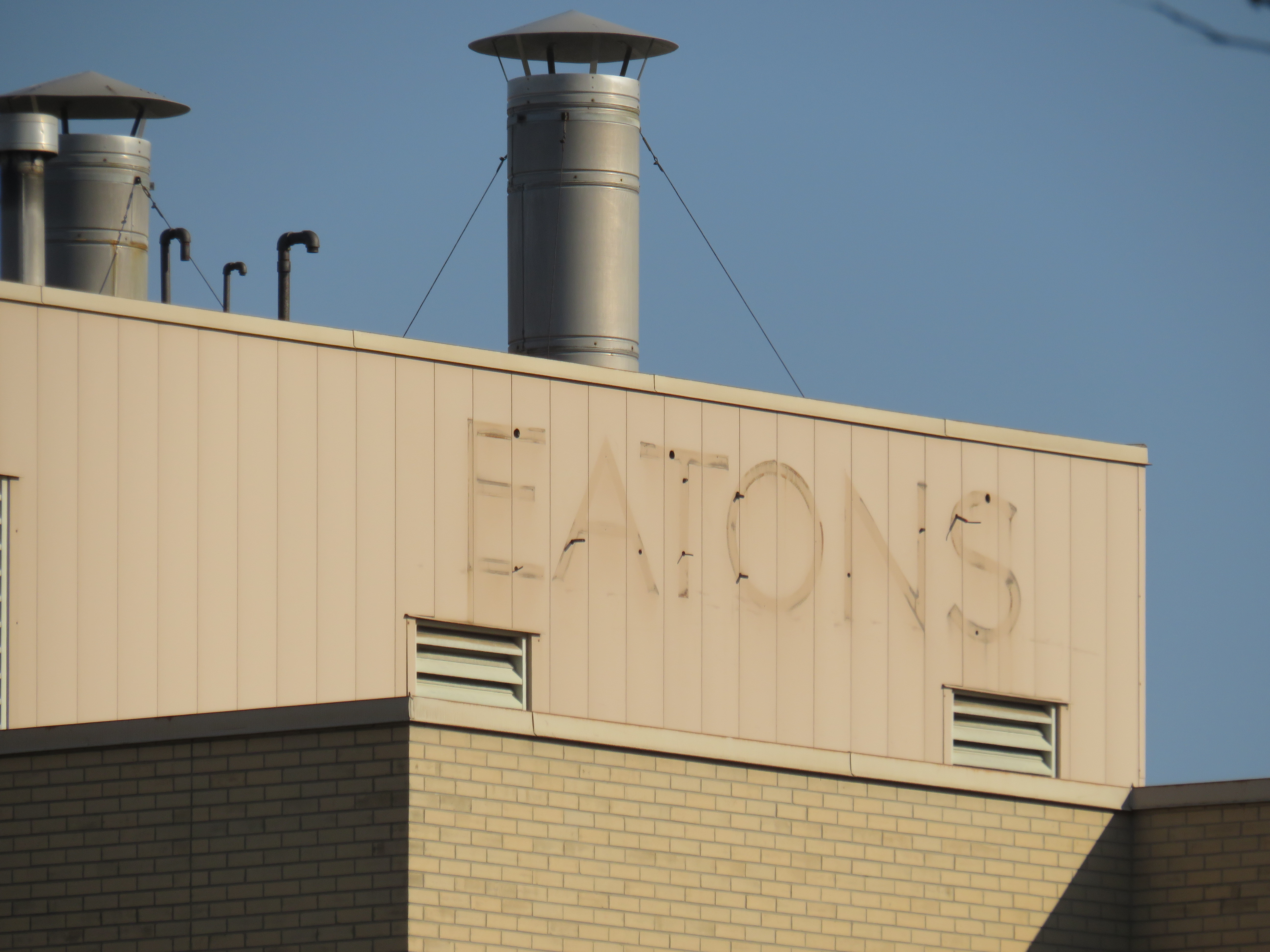
A fresh labelscar on the south-facing roof of the Eaton’s store, as seen from the patio on top of Jackson Square. Until 2021, a forgotten and unmaintained Eaton’s sign was left alone, hidden from street level.
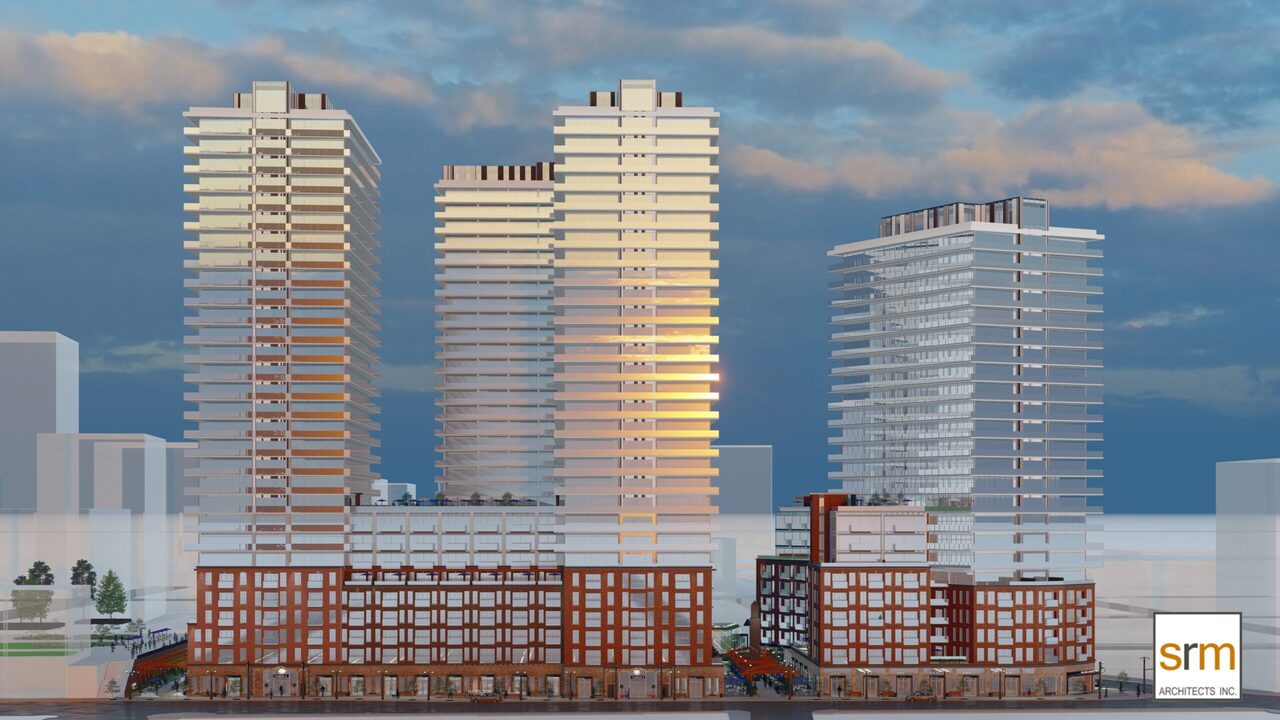
The new development will have 1,940 residential apartments, along with street-level retail and office spaces, constructed in three phases. Walkways will allow the public to cut through the property, with one of those roughly following the old Merrick Street alignment. Unfortunately, it is being developed and planned independently of the rest of the Jackson Square superblock bound by James, King, and Bay Streets, and York Boulevard, and which also contains the farmers market, the central library, and Copps Coliseum, the sports venue built for an NHL franchise that never arrived.
But with the influx of new residents, Jackson Square — which, despite is retail vacancies, holds its own due to the attached office, hotel, and civic functions, as well as the full-service Nations supermarket — will only benefit from the demise of its newer downtown competitor.
Rendering for the new development on the Eaton Centre site by SRM Architects.
“Eaton eyes the future after buying centre” Hamilton Spectator 13 July 1995: D12.
John Burman. “A tough sell: Struggling Eaton Centre looks for new direction” Hamilton Spectator 13 Feb 1996: A1
Shoppers World Brampton, 2016, before the Target store was replaced by smaller stores, including Giant Tiger
Recently, I wrote about the history of Ontario’s downtown malls. Most of these shopping centres, built in the 1970s and 1980s in the downtown cores across the province, failed by the end of the 1990s. The collapse of the Eaton’s department store chain and competition from larger, suburban malls and new big-box retailers drove customers away from Ontario’s downtowns. Only in Toronto and Ottawa, with large downtown office employment, residential development, and good urban transit, did these major shopping malls thrive.
But that does not mean that all suburban shopping centres are doing well, especially after the loss of Target in 2015 and Sears Canada in 2017. For TVO, I wrote more about how smaller regional malls in Ontario are re-positioning themselves.
The Brampton house that I grew up in was a ten minute walk from Shoppers World, which, in the 1980s, had a full line department store, Simpson’s, as well as Marks and Spencer, K-Mart (where I had my first paying gig, delivering shopping carts back to the store abandoned in nearby parks), a Pascal hardware store, and two supermarkets, Food City and A&P. Larger, more popular malls like Mississauga’s Square One and Bramalea City Centre were one bus ride away, but Shoppers World held its own, even if it was second tier. By the 1990s, though, it was clear that the mall was in decline: national retailers were leaving and there was a noticeable lack of investment in the property.
When RioCan REIT purchased Shoppers World in the late 1990s, it made some improvements and attracted big-box retailers like Canadian Tire, Staples, and Winners. Zellers took over the K-Mart store, which was expanded. But The Bay (which replaced Simpson’s) was closed down and the store later demolished. I had left Brampton in 2006, but I was still sad to see my one-time local mall decline. Now RioCan has talked about downsizing the mall, and redeveloping part of the property. Competition from larger, stronger shopping malls, newer retail power centres, the mismanagement of several retail firms, and internet shopping have all taken their toll. Shoppers World isn’t a dead mall, but like many smaller malls, it will be adapting to changing times.
In the TVO article, I take a look at a few other malls, like London’s Westmount Mall, in similar circumstances.
Shoppers World, 2018. Despite many store vacancies, it’s still a community hub.
Bayside Mall, formerly the Sarnia Eaton Centre, on a Saturday morning in 2013. Most stores are vacant or occupied by non-profits or independent businesses.
The Toronto Eaton Centre, large, famous, and vital, is only one of many malls built in the downtown cores of Ontario cities between the 1960s and 1990s. From Thunder Bay to Cornwall, the construction of new enclosed shopping centres were seen as a necessary tool to keep the old city centres vibrant and relevant in the face of competition from new suburban malls. But only in the province’s two largest cities did the concept work. Elsewhere, these urban shopping complexes were left largely vacant within ten years of opening, when leases expired. When the Eaton’s department chain went bankrupt in 1997, huge voids were left behind that developers and municipalities struggled to fill.
The Toronto Eaton Centre was opened in two phases between 1977 and 1979. It added hundreds of shops and new office space to Downtown Toronto, anchored by a new Eaton’s flagship and was connected to the Simpson’s store across Queen Street. Today, the Eaton Centre is Canada’s second largest mall (including the Hudson’s Bay/Saks Fifth Avenue building) and the Toronto region’s second most productive shopping centre in terms of sales per square metre. In Ottawa, the downtown Rideau Centre, opened in 1983, is the busiest and most productive mall in that region (Retail Council of Canada, 2016).
But elsewhere in Ontario, downtown malls — mostly built with municipal and/or provincial government support — have been, without exception, commercial and urban development failures. Not only did they suffer from high vacancy rates, they helped to wreck the downtown cores they are located in rather than foster the economic revitalization they once promised.












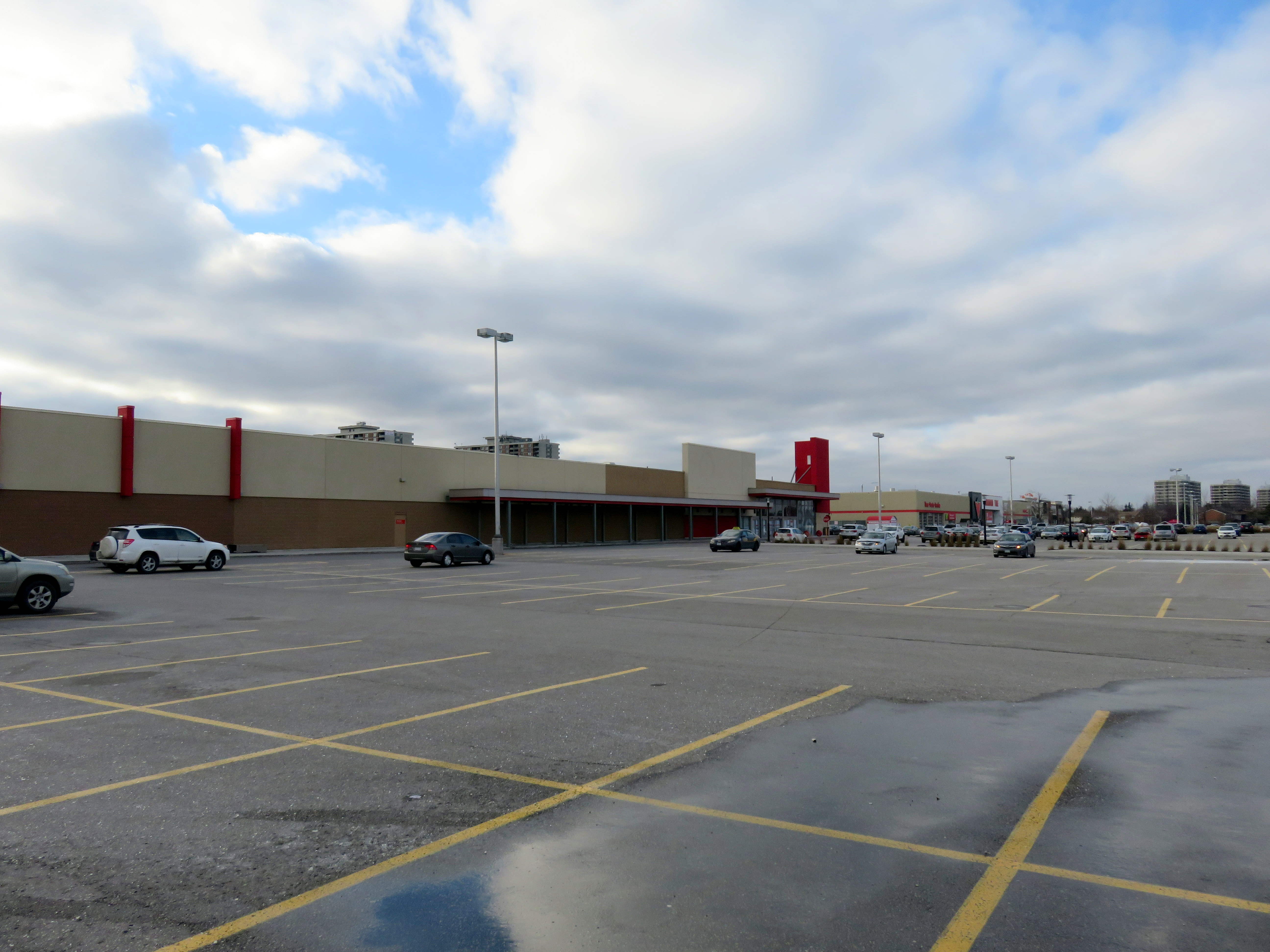 Shoppers World Brampton, 2016, before the Target store was replaced by smaller stores, including Giant Tiger
 Shoppers World, 2018. Despite many store vacancies, it’s still a community hub.

