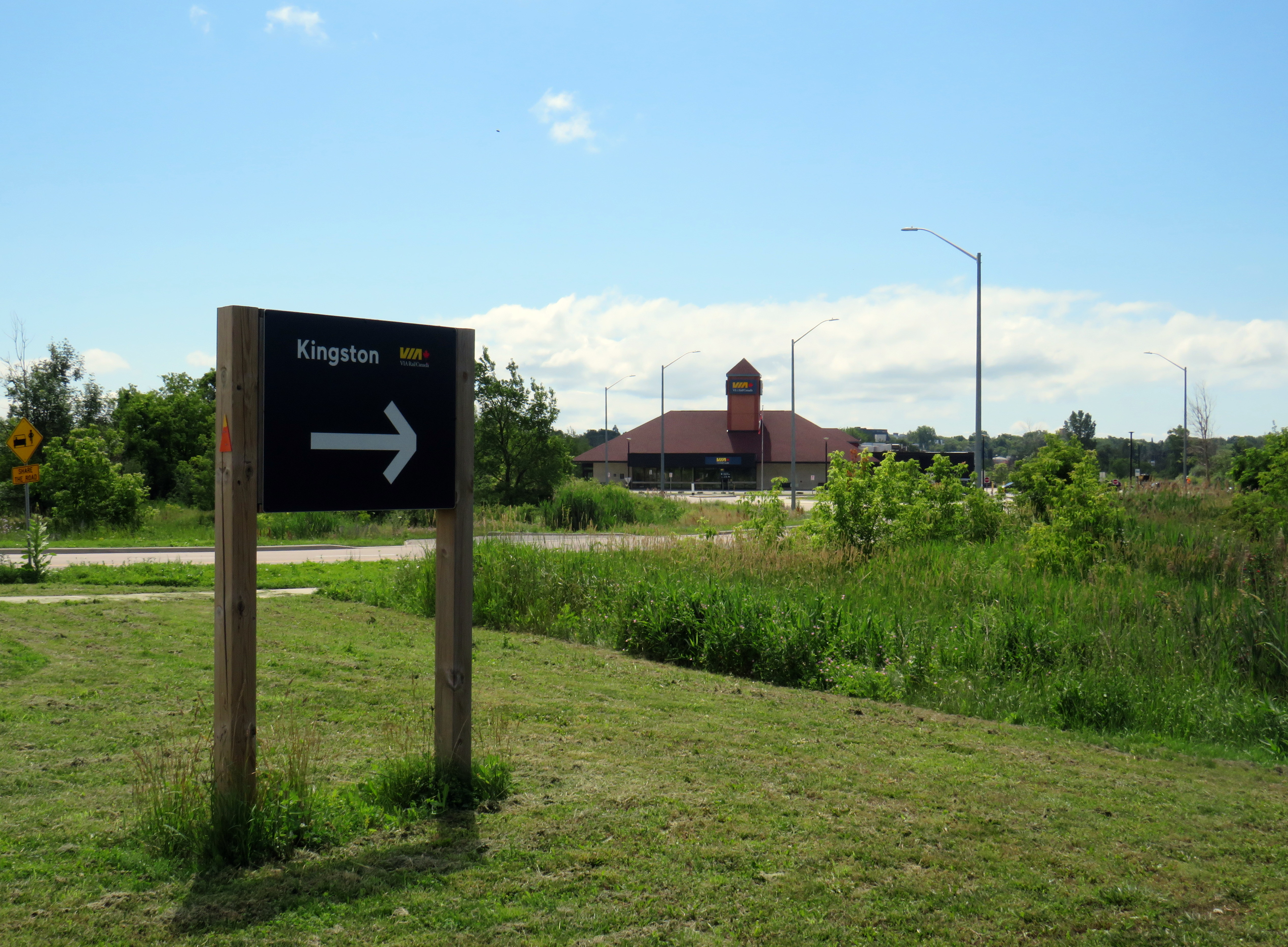
Kingston, Ontario, is the largest city between the Greater Toronto Area, Ottawa, and Montreal. With Queen’s University, Royal Military College, and St. Lawrence College, Kingston is a major trip generator for VIA Rail, and has one of the busiest stations on the Quebec-Windsor corridor. It is also one of the most isolated intercity rail stations in Southern Ontario. Kingston’s geography and earlier decisions made by CN are largely to blame, but the future of VIA’s existing rail services is largely dependant on the fate of Kingston Station.
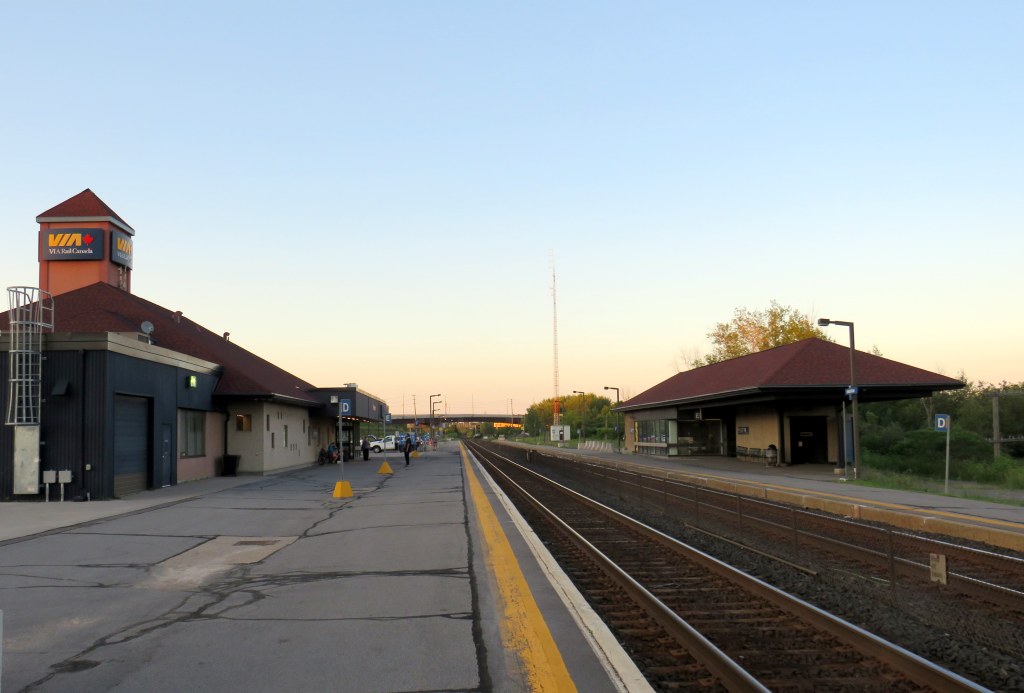
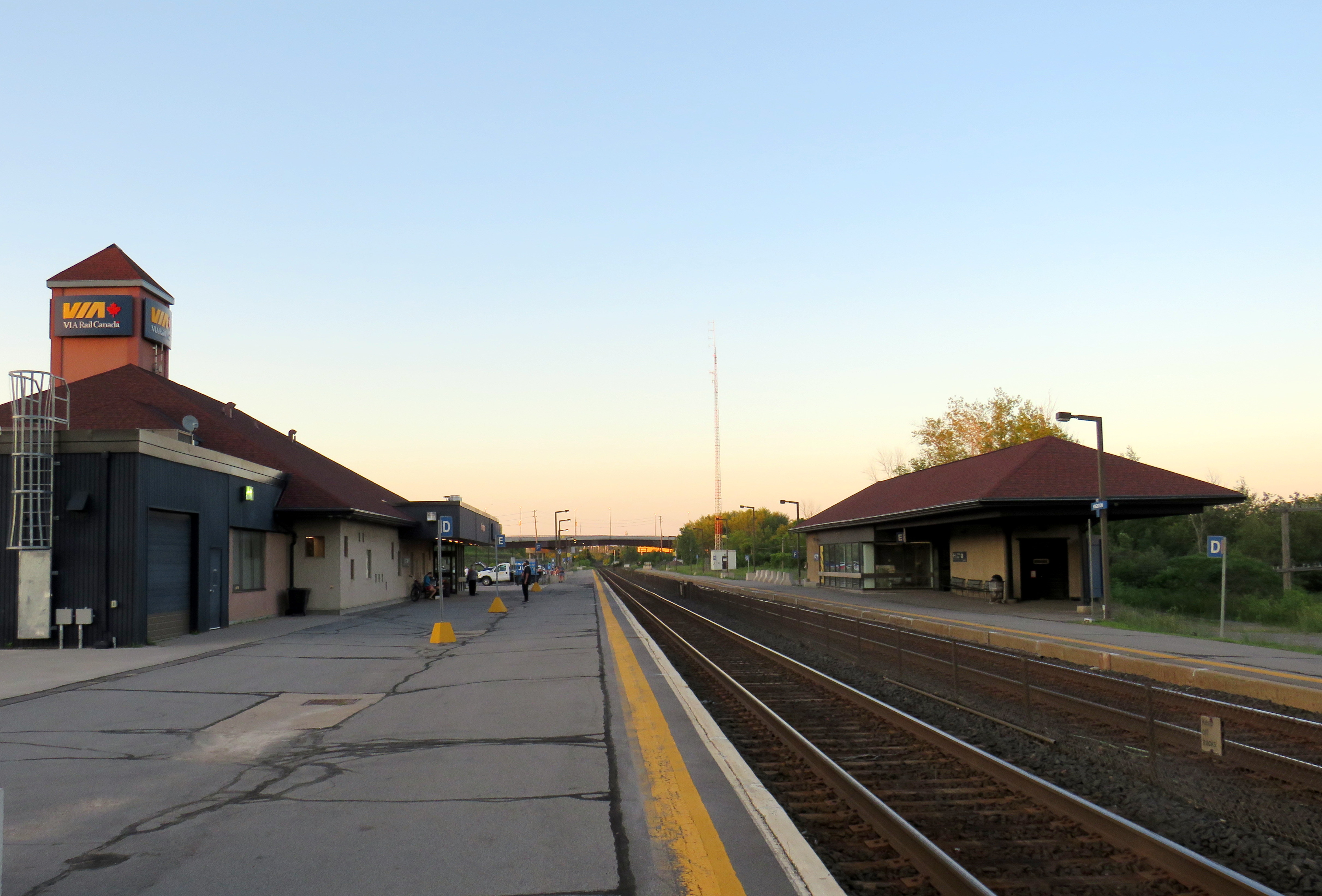
The VIA Rail station, off John Counter Boulevard, was constructed by CN in 1974 to replace a 1850s-era railway station on Montreal Street. The station has a ticket counter, washrooms, a ticket counter, and a small business class lounge, and two platforms. The south platform is connected to the station by way of a tunnel, with elevators, stairs and escalators providing access. Renovations in the early 2000s added a peaked roof and a tower displaying the VIA Rail logo to the minimalist CN station.
But the station is in an isolated location, located in a marshy area; the nearest businesses are a furniture store, a funeral home and a used car dealership. Despite this, Kingston Transit does a satisfactory job connecting the station to the downtown and post-secondary institutions, but the bus stop is unsheltered and a short walk away from the station building.
The two-track arrangement at Kingston Station does not suit CN or VIA particularly well. Both tracks are on the mainline, meaning that they are shared by VIA and freight. Delays to either CN or VIA causes congestion, one of several causes of train delays, contributing to VIA’s poor on-time performance. It also limits VIA’s flexibility in offering early morning or late evening trains that originate or terminate at Kingston or local all-stop service in conjunction with through express services. Newer VIA stations in Belleville and Cobourg have three platforms; the Belleville station tracks allow VIA trains to bypass the CN yard to the north.
The reasons for the Kingston station’s relative isolation compared to other mid-sized centres like London or Brantford, partly goes back to the 1850s, when the Grand Trunk Railway, which built the Toronto-Montreal mainline, routed its tracks away from Kingston’s urban centre. As the historic downtown sits at the mouth of the wide Cataraqui River, the Grand Trunk sought a narrower crossing further inland. To compensate, it built a spur into Downtown Kingston to serve local passengers and freight service; eventually a streetcar line ran to the main Montreal Street station and the city grew north to meet the railway.
In the 1970s, Canadian National, the successor to the Grand Trunk, was in the midst of modernizing its core infrastructure to focus on long-distance freight and container shipping. It rerouted its mainline north of Kingston on a shallower curve while eliminating several at-grade crossings. As CN continued to operate passenger rail on the corridor, it had to build a new station to replace the old Montreal Street location. The new Kingston Station had plenty of parking along with a passenger pick-up/drop-off loop, easily accessible to Princess Street and the new subdivisions in Kingston Township.
CN had the same principles in mind when it built new stations after the Second World War in Oshawa, Saskatoon, and Ste-Foy, outside of Québec City. Ease of rail operation and access to parking were bigger considerations than having a downtown station accessible by foot or public transit.
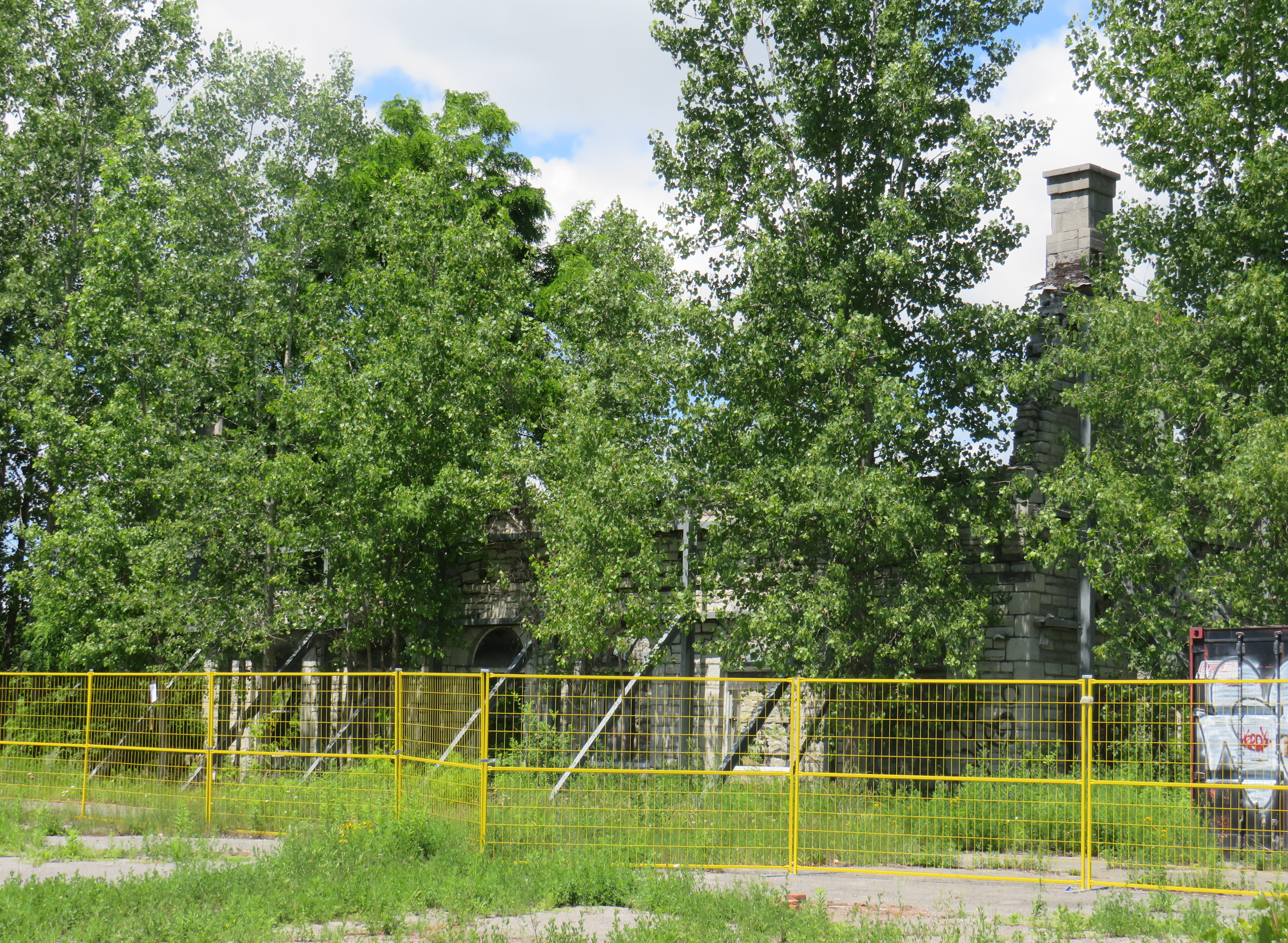
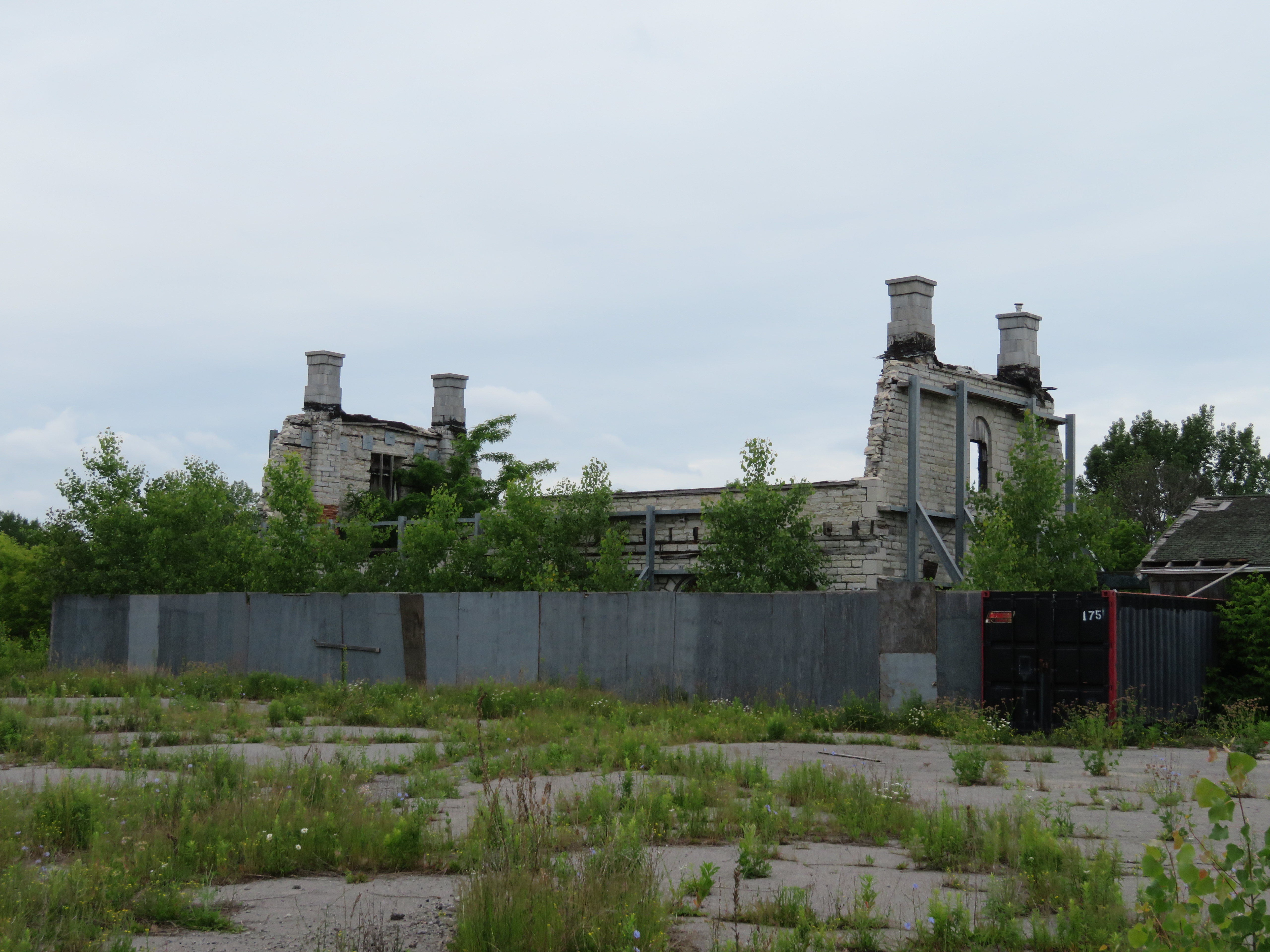
Today, the original GTR station lies in ruins, fenced off, and partially hidden by trees that have grown around it. The roof is long-gone, as are the additional station buildings such as the express freight and restaurant structures. With the vacant railway lands sitting abandoned for decades, this part of Montreal Street looks rough.
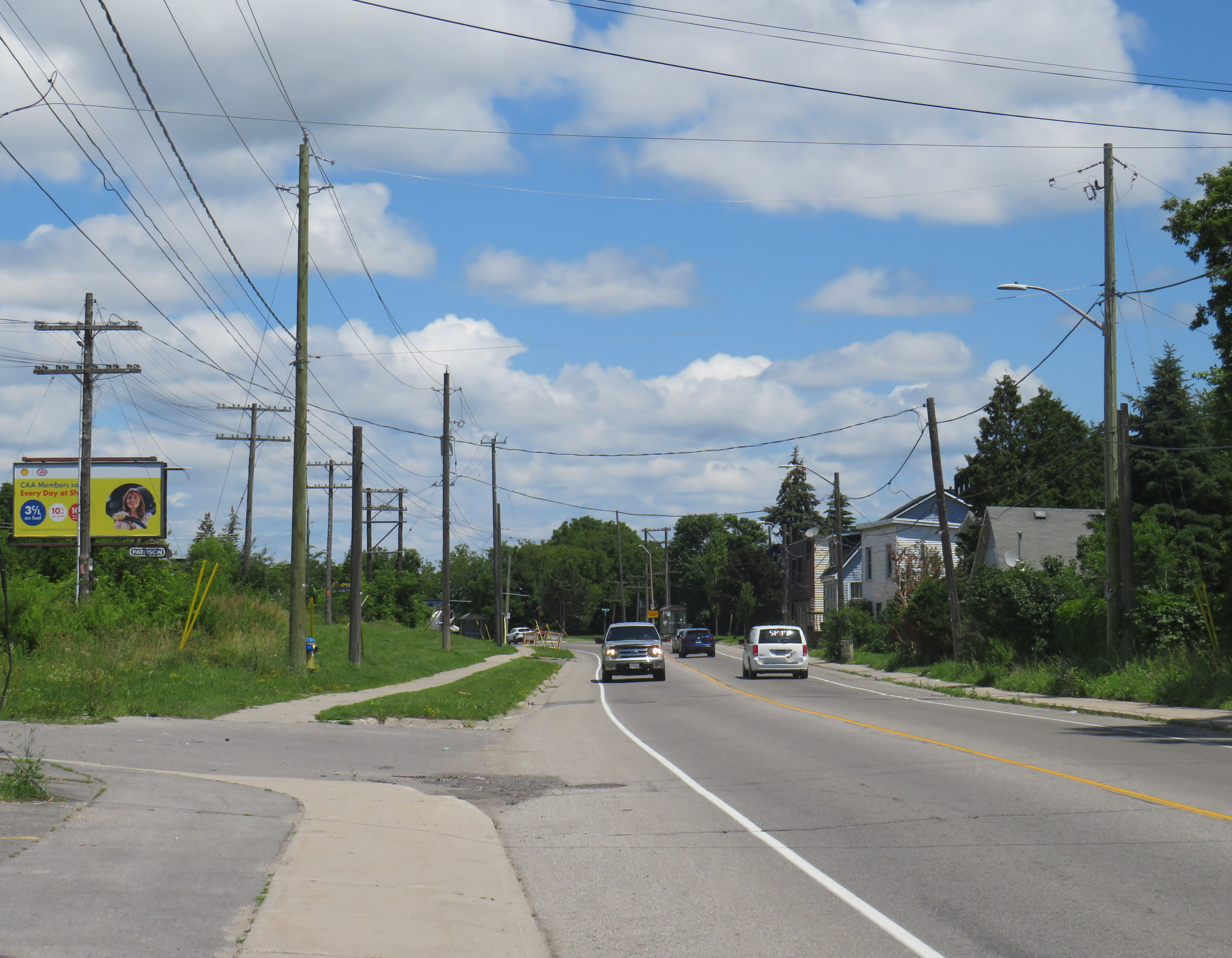
An opportunity for a new station
Happily, there’s an ideal place for a larger Kingston Station between the old Montreal Street and the newer John Counter Road site that could serve as a proper multimodal hub while being somewhat more convenient to Downtown Kingston and Queen’s University: Division Street. I alluded to this in an earlier post, but after a recent visit, it appears that this is an excellent opportunity.
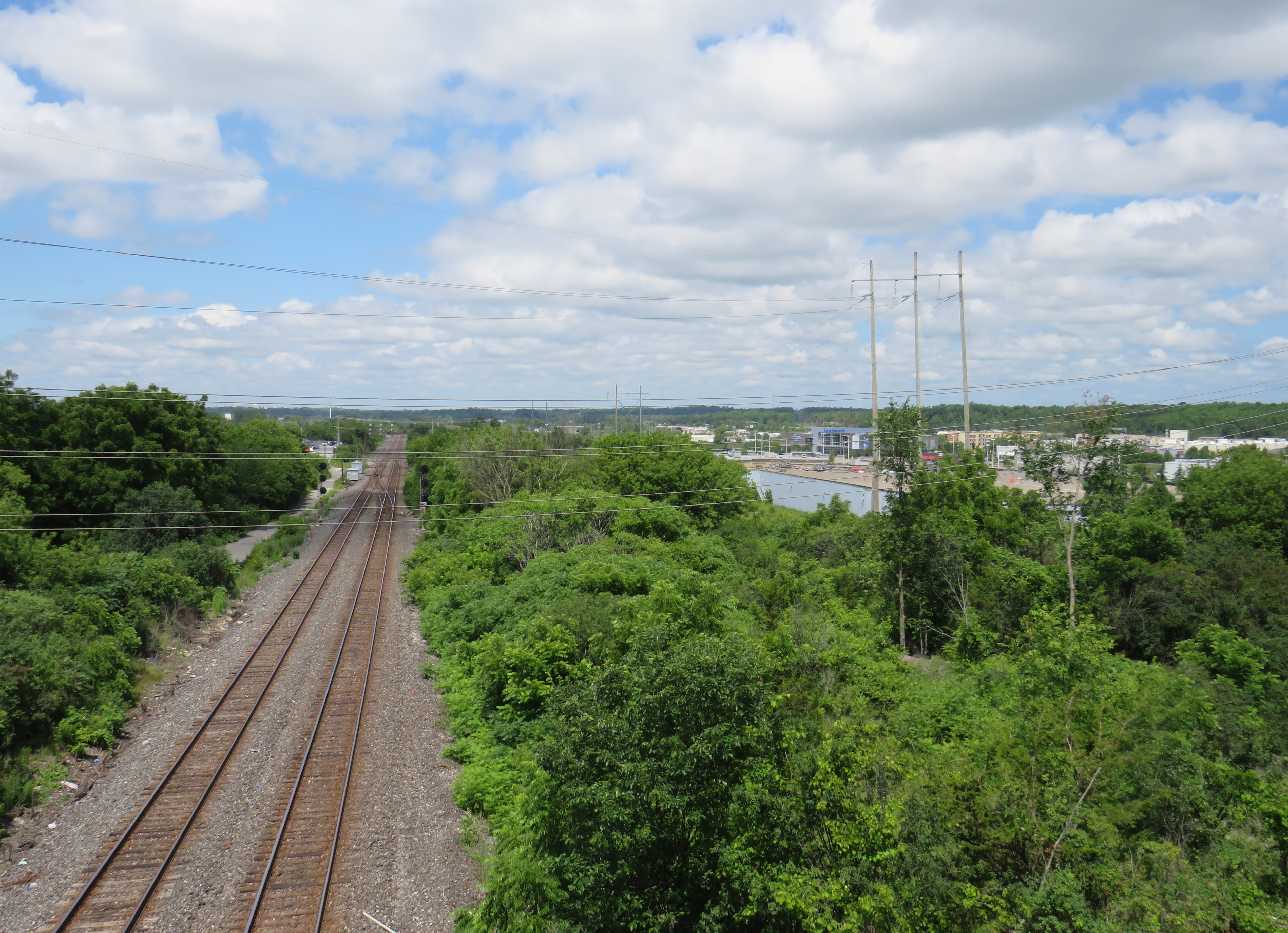
The CN mainline passes under a long overpass at Division Street that was built in the 1970s not only to cross the CN line but also a Canadian Pacific-owned branch line that once ran between Kingston’s waterfront and Renfrew, near the Ottawa River. The additional room allocated for the now-abandoned CP branch could easily fit two VIA-exclusive tracks, separate from through CN freight trains. This would allow VIA trains to sit overnight, and provide early-morning service to Toronto, Montreal, and Ottawa leaving on schedule. If the Alto HSR takes over the bulk of the through passenger traffic, Kingston will have an excellent regional hub that will serve Eastern Ontario rail passengers far better than the status quo, with more reliable schedules and the opportunity for late night arrivals.
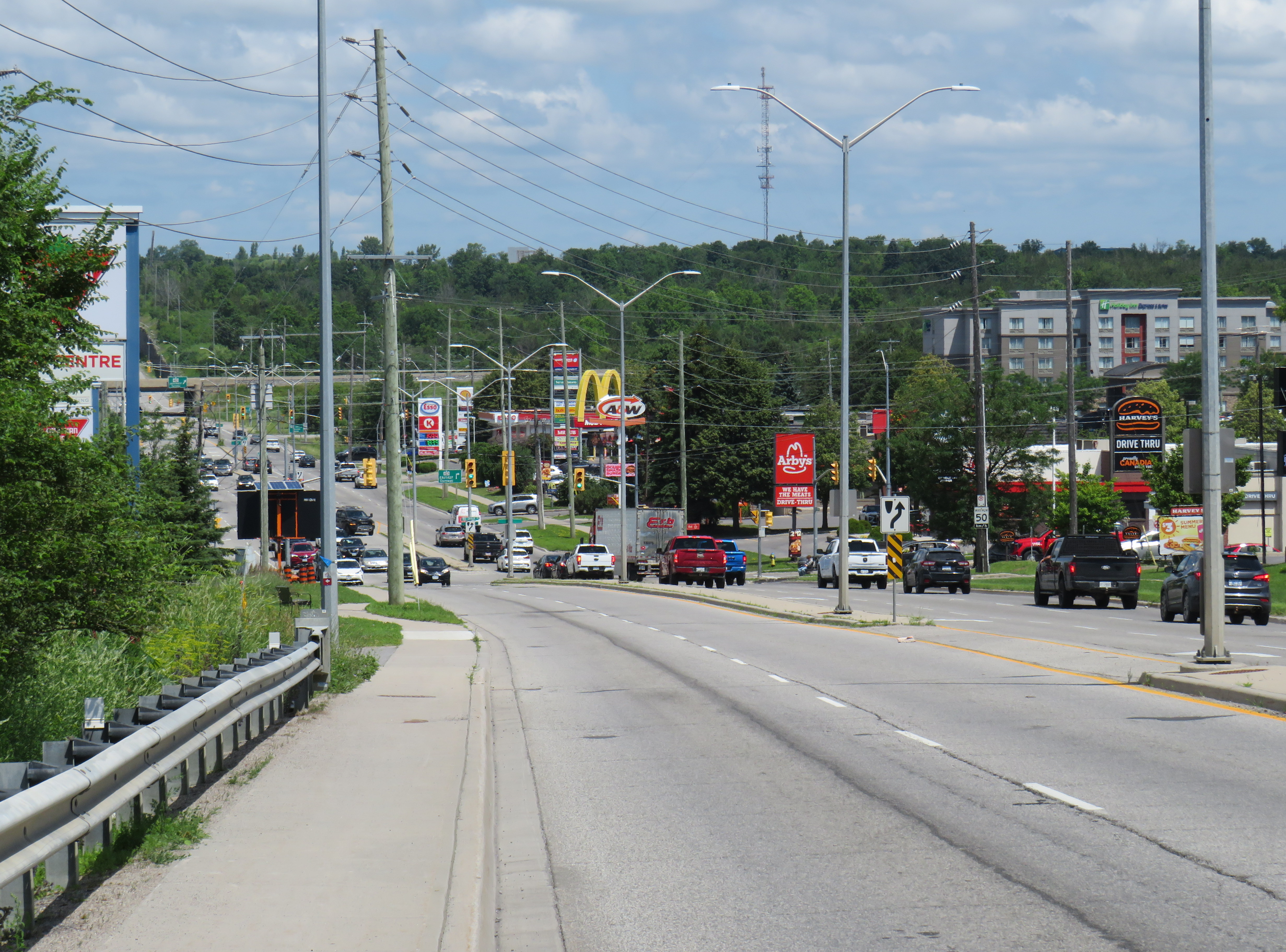
Another advantage of the Division Street site is the proximity to Highway 401. This would allow intercity and regional buses to easily exit and enter the intermodal station. As Division Street continues south towards Downtown Kingston and Queen’s University and is already a major Kingston Transit corridor (with direct and regular service on Routes 1, 2, and 701/702 express, as well as other nearby routes), it’s a logical focal point that can consolidate the various intercity bus stops.
Back in June, Alto announced that federal transport minister Steven MacKinnon directed the consortium to “…develop a plan to assess a southern route option between Peterborough and Ottawa that includes a potential stop in Kingston that would interconnect with VIA Rail services, subject to technical feasibility and project requirements.”
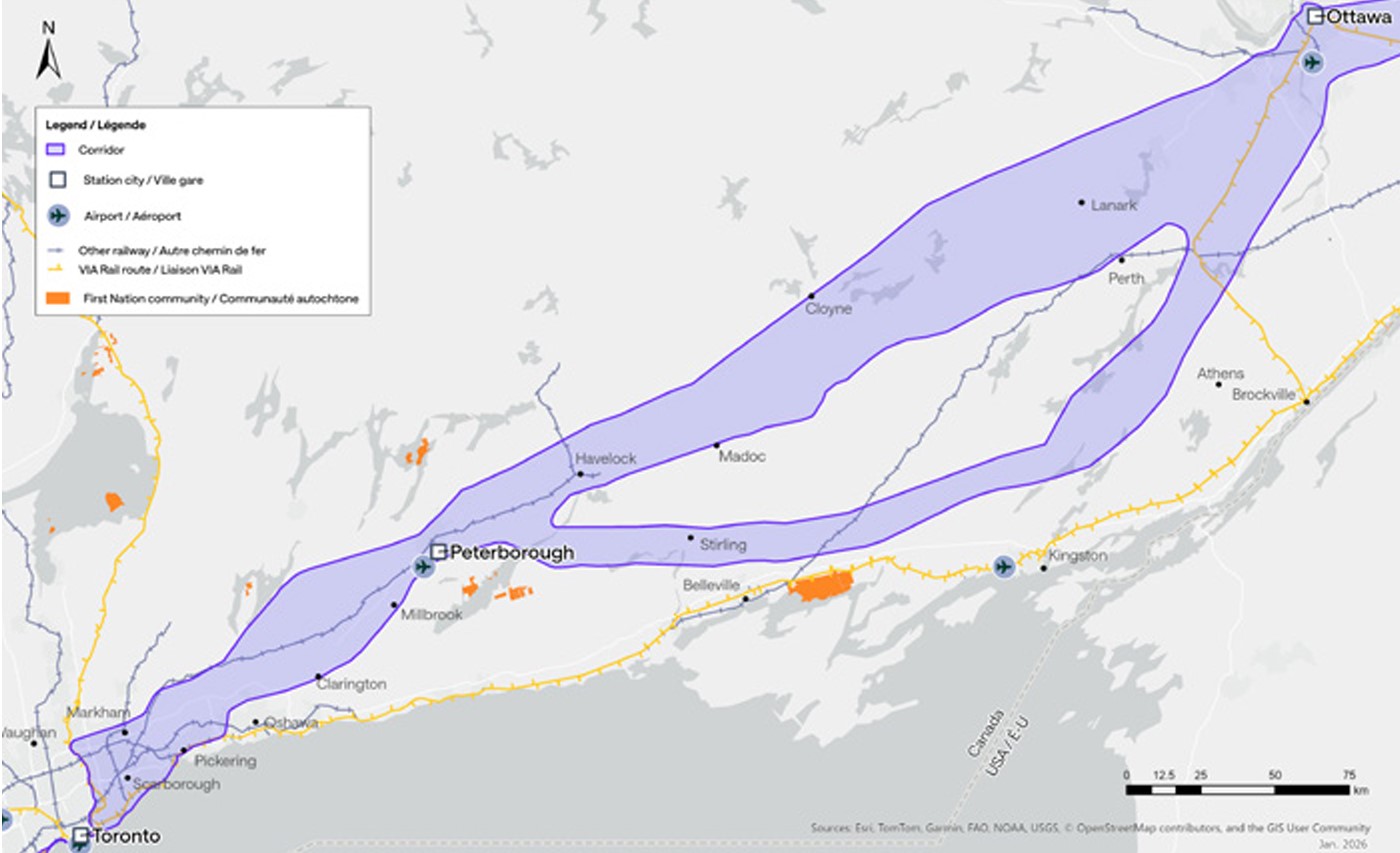
Previous conceptual maps showed the proposed southern alignment located far from Kingston’s urban area, with the closest potential station locations in sparsely-populated South Frontenac Township near the communities of Verona, Sydenham, or Perth Road, at least 20-30 minutes north of Kingston’s urban area by car. If Alto were to serve Kingston properly, it would have to swing much further south, adding to construction costs and through travel times. A spur line into Kingston might make more sense, then, just as the Grand Trunk did 170 years ago.
The time savings to Montreal, Toronto, and Ottawa with a high speed line from Kingston might be better provided with a new conventional railway station and more flexible, reliable service to meet the needs of communities like Kingston, Belleville, and Brockville, rather than forcing Alto farther south. Division Street offers that opportunity.