Tag: Peel Region

  • It’s time to rethink slip lanes

    It’s time to rethink slip lanes

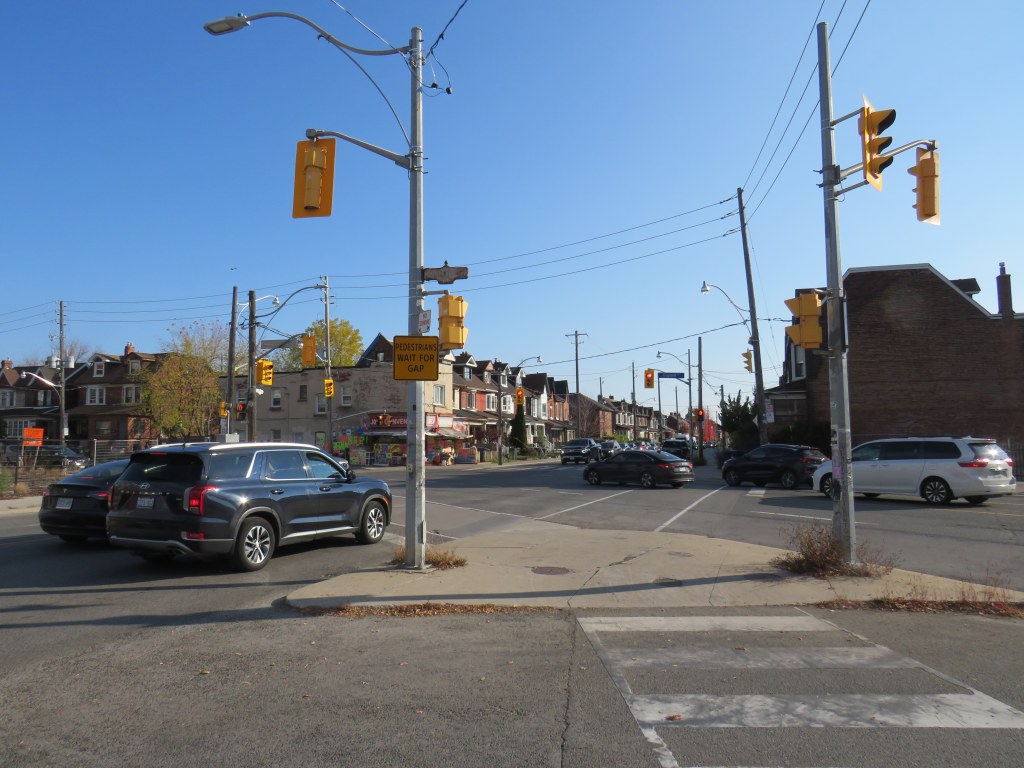
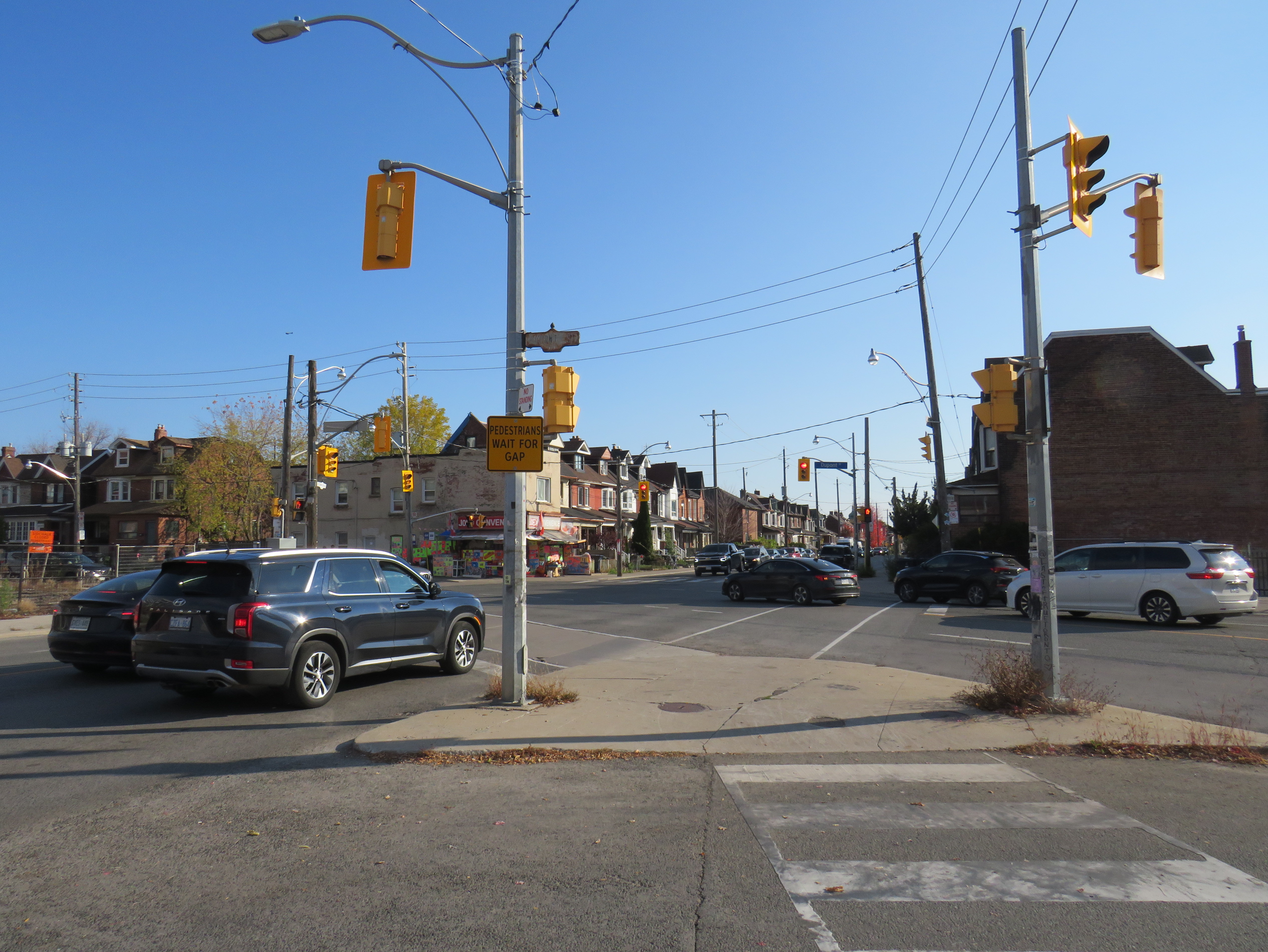
    Slip lane with small pedestrian refuge island at Dupont Street and Ossington Avenue

    There are many ways that road design acts to facilitate vehicle drivers yet impede pedestrian mobility. There’s the beg button (traffic engineers prefer the term “pedestrian call button”) that ensures maximum traffic throughput unless a pesky pedestrian or cyclist decides they want to cross the road too when the light turns green. There’s the two-phase pedestrian crossing that guarantees a long wait to cross a wide traffic artery on foot. Wide curb radii at intersections allow drivers to easily turn, yet they intrude into the crosswalk space. And there’s the slip lane, also known as a channelized right turn.

    Most slip lanes are designed to allow right-turning motor vehicles to bypass an intersection. Where an intersection may be controlled by a traffic signal or a stop sign, typically, a slip lane is only controlled by a yield sign, reminding motorists to give way to pedestrians crossing and/or oncoming traffic on the roadway being turned into. They are typically built for higher speeds, with turn radii even greater than those afforded by generous curved curbs at many urban intersections. The space left over in the triangular bit of concrete is where pedestrians must wait to cross the main roadways.
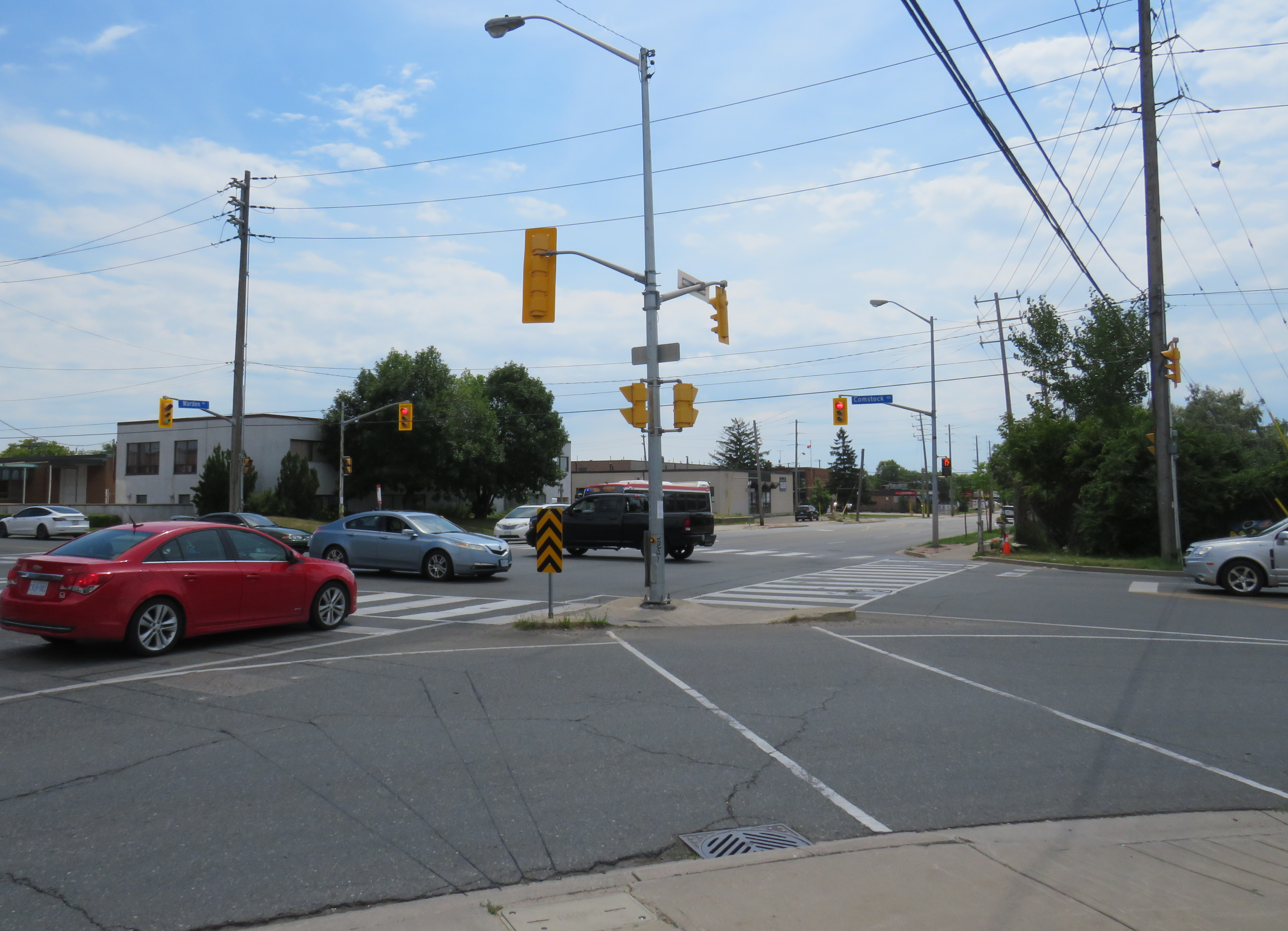
    Slip lane at Warden Avenue at Comstock Road in Scarborough features a very small island for pedestrians to wait to cross

    Occasionally, slip lanes are used to discourage or prevent certain turning movements. At shopping plaza entrances, for example, slip lanes are used to prevent left turns into or out of the driveway. They may also be used at one-way streets for the same purpose.

    Thankfully, slip lanes are not the standard in the City of Toronto. At least forty slip lanes were removed between 2005 and 2025, including Front Street eastbound at Yonge, from Coxwell Avenue southbound at Dundas Street East, and a half dozen on Danforth Road in Scarborough. In the downtown core, there are only three remaining examples that cross pedestrian pathways: from southbound Bay Street to Queen Street West, from eastbound Bloor Street to Parliament Street, and from Mount Pleasant Road to Jarvis Street. There are several other intersections in the city centre that allow some right-turning vehicles to bypass the main intersection, such as Adelaide and Richmond Streets at Jarvis, University at Front, or Parliament at Gerrard, but these still require a full turn at their start or end point, mitigating their danger.

    A map of slip lanes in Toronto, and those removed in the last twenty years, is below. This work was assisted my followers on BlueSky for their additions and corrections, and I appreciate their help.

    By removing slip lanes, pedestrians and cyclists are better protected, and there can often be new space for seating, public art, or even plant life.
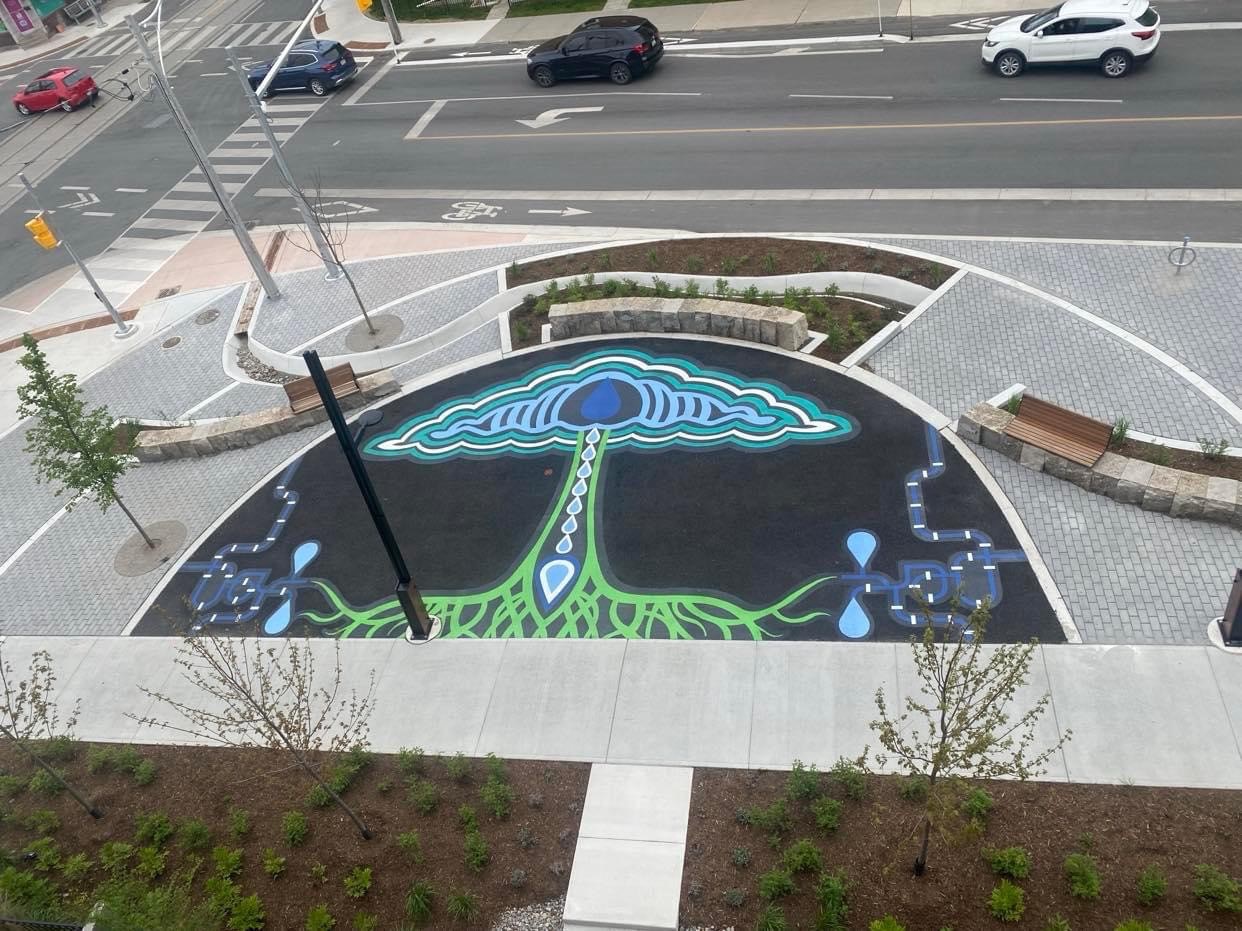
    Former slip lane at Coxwell Avenue and Dundas Street East
    (City of Toronto, 2025 Water Summit winner)

    Slip lanes are far more common in suburban neighbourhoods outside the City of Toronto. In Brampton and Mississauga, slip lanes are common on regional roads such as Steeles Avenue, Dixie Road, or Erin Mills Parkway. These six-lane roads are designated as goods movement corridors, and are designed for heavy traffic, including tractor-trailers. Even in Peel, though, slip lanes are being rethought. Several were removed on Bovaird Drive in Brampton two years ago (replaced by signalized crossrides), while others are being repainted to empathize the pedestrian crossing and encourage slower movements. More signage tells motorists to stop for pedestrians.

    Modified slip lane at Bovaird Drive and Main Street in Brampton. Further east, slip lanes were removed at three lower-traffic intersections and replaced by multi-use path crossings.

    Though the City of Toronto has done some good work eliminating or modifying slip lanes in the name of traffic safety and an improved pedestrian realm, there are many more that still should be examined, such as the one at Ossington and Dupont, where, unusually, pedestrians are instructed to wait for a gap, rather than motorists instructed to yield. These “wait for gap” signs are found at the entrances and exits to expressways, such as the Gardiner Expressway or Highway 401. But these, too, can be changed. At the eastbound ramp to northbound Don Valley Parkway on the Prince Edward Viaduct, a free-flowing on-ramp was changed to a signalized right turn, improving safety and comfort for pedestrians and cyclists.

    Crossing the Bay Street on-ramp to the eastbound Gardiner Expressway makes getting to the Waterfront more dangerous and uncomfortable than it should be

    Hopefully, City of Toronto staff work to correct the situation at Dupont and Ossington (there’s no reason why pedestrians should be expected to yield to traffic in this revitalizing part of the city) and continue the work to make our streets safer for all.


    If you like my work and you would like to help out with my webhosting costs (I just had to renew my ad-free WordPress subscription), consider buying me a coffee. Thank you!
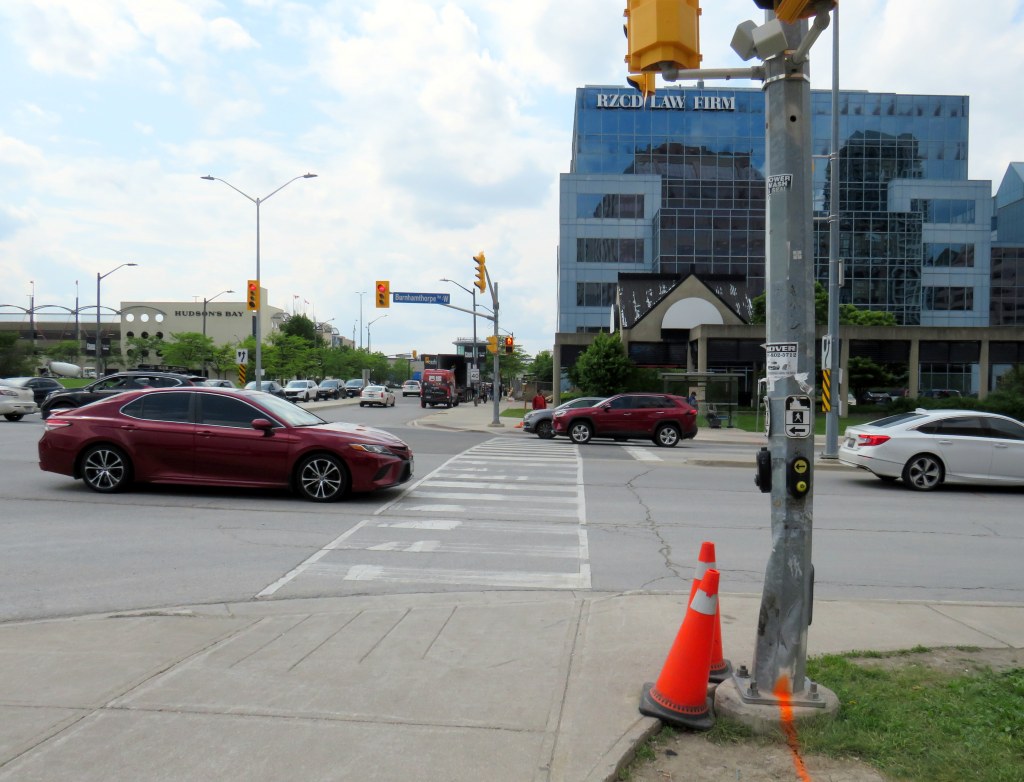
  • Deadly by design: Burnhamthorpe Road

    Deadly by design: Burnhamthorpe Road

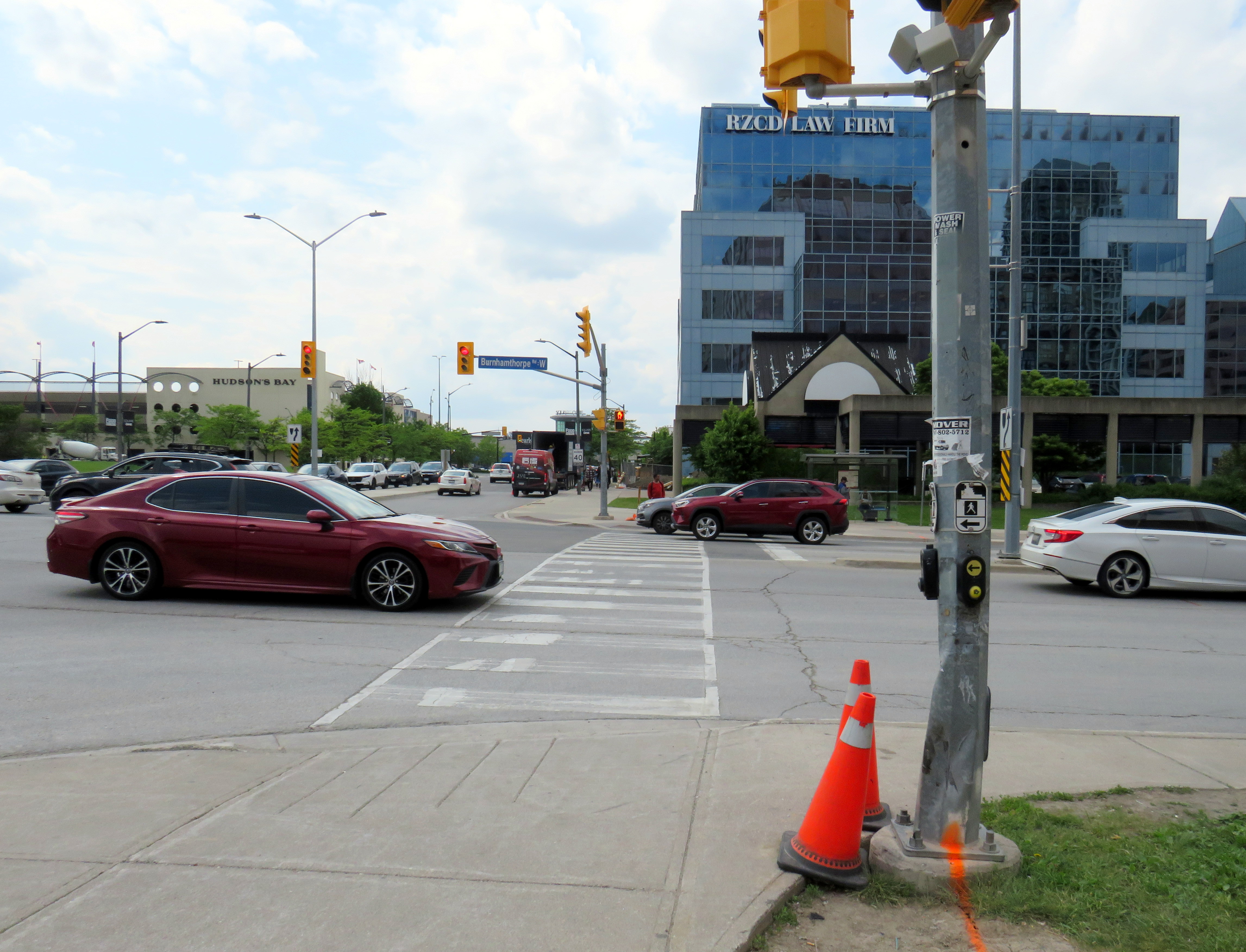
    A dented light pole is the only indicator of a deadly collision in Mississauga City Centre

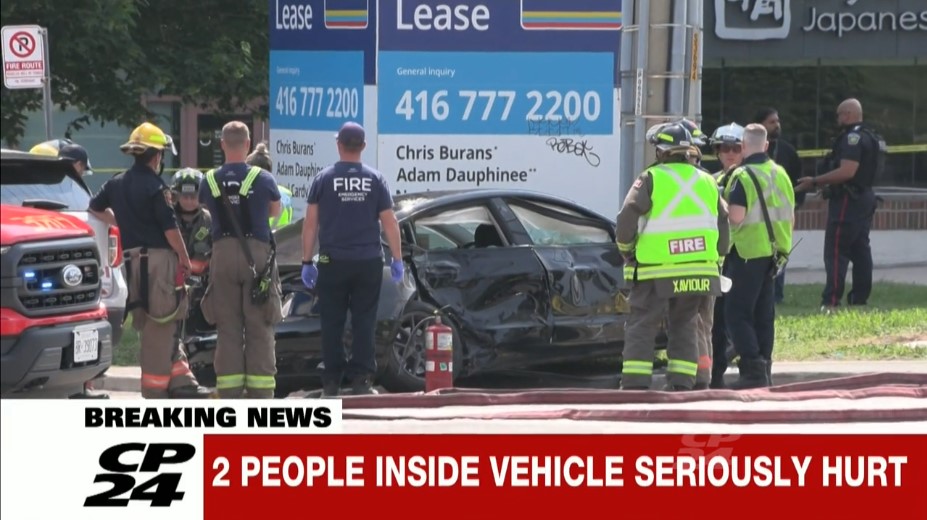
    On Saturday, June 7, around 10:20 AM, the drivers of two vehicles collided in the intersection of Burnhamthorpe Road and Kariya Drive in central Mississauga. One of the two cars that collided, a Tesla sedan, slid onto the sidewalk on the southeast corner, hitting a traffic pole, and then colliding with two pedestrians waiting at the corner to cross the street. One of the two pedestrians, a man in his forties, was killed; the other was taken to hospital with serious injuries. CBC Toronto, CP24/CTV News and the Toronto Star covered the collision.

    Unfortunately, there has been no follow-up reporting so far, and there is no press release or statement on the Peel Regional Police website.

    Screenshot of CP24 news report showing the badly damaged Tesla that crashed into two pedestrians

    A few days later, I visited the area to take note of the intersection and the surroundings.

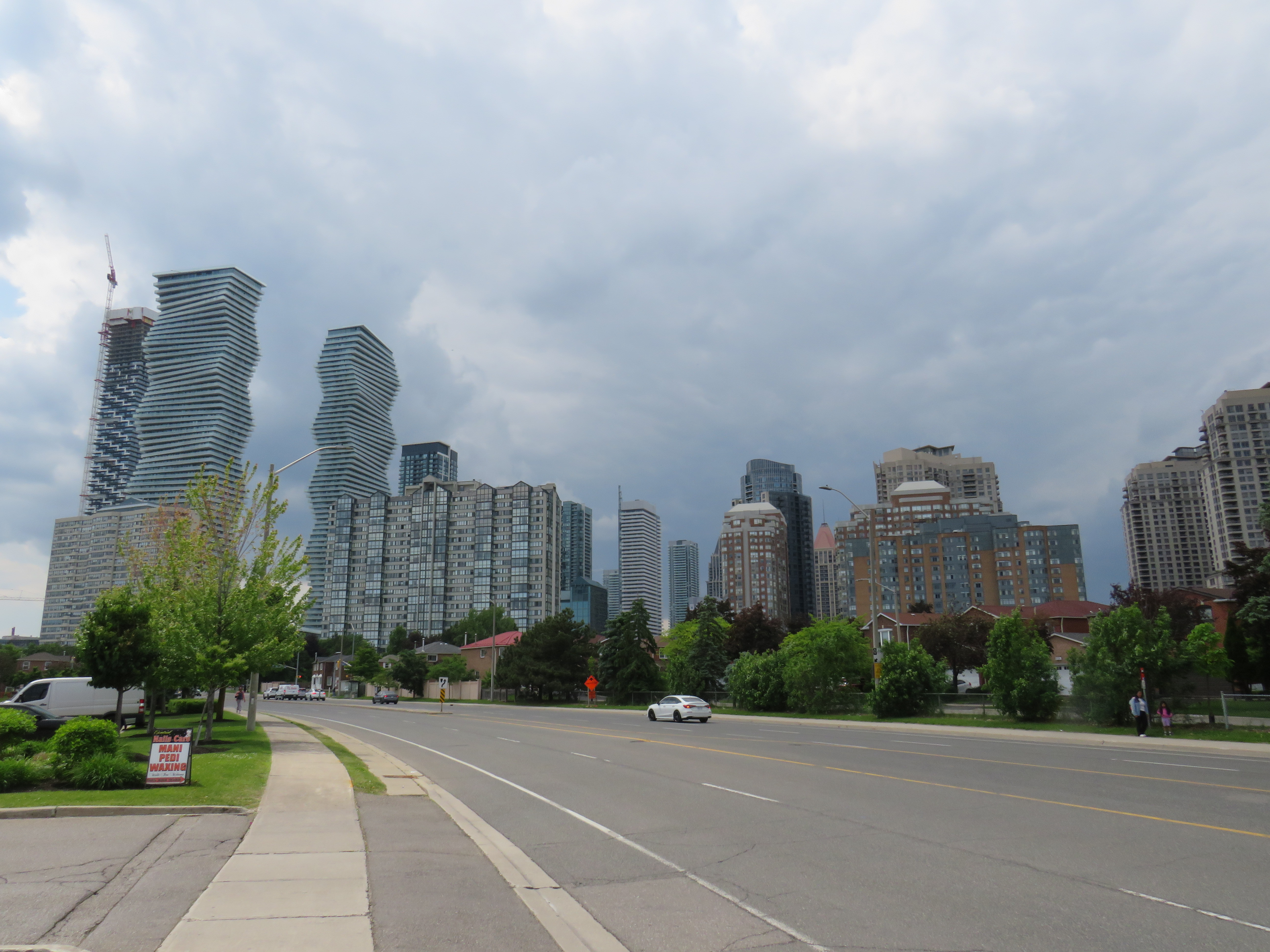
    The intersection of Burnhamthorpe and Kariya is within the busy, urbanizing Mississauga City Centre (MCC) neighbourhood. MCC, also known as Downtown Mississauga, is the political, commercial, and cultural centre of the sprawling suburb of 750,000. The area is centred around Square One Shopping Centre, which opened in 1973, expanding several times in the next four decades to become one of Canada’s largest malls. Immediately to the west of Square One is Mississauga’s post-modern city hall, which is one of the most interesting and walkable civic centres in Ontario. Nearby is a performing arts theatre, a Sheridan College campus, several office buildings, a YMCA, central library, parks, a transit hub, as well as many high-rise residential towers. Newer residential development includes streetfront retail, oriented to the community with local restaurants, cafes, pharmacies, and grocery stores. Despite its greenfield suburban origins, Mississauga City Centre has become a true 15-minute city.

    Looking north on Confederation Parkway towards MCC
    Looking north on Confederation Parkway near Central Parkway, where MCC’s high-rise condominiums tower over older single-family homes

    The problem, though, is despite its impressive growth, MCC’s built infrastructure still has the trappings of a suburban speedway. Though some collector streets and minor arterials, like Living Arts Drive and Confederation Boulevard, are more human-scaled, with bicycle lanes, wider sidewalks, benches, and street trees, other streets have not been updated to suit the emerging urban environment. Burnhamthorpe Road is the best example of this.

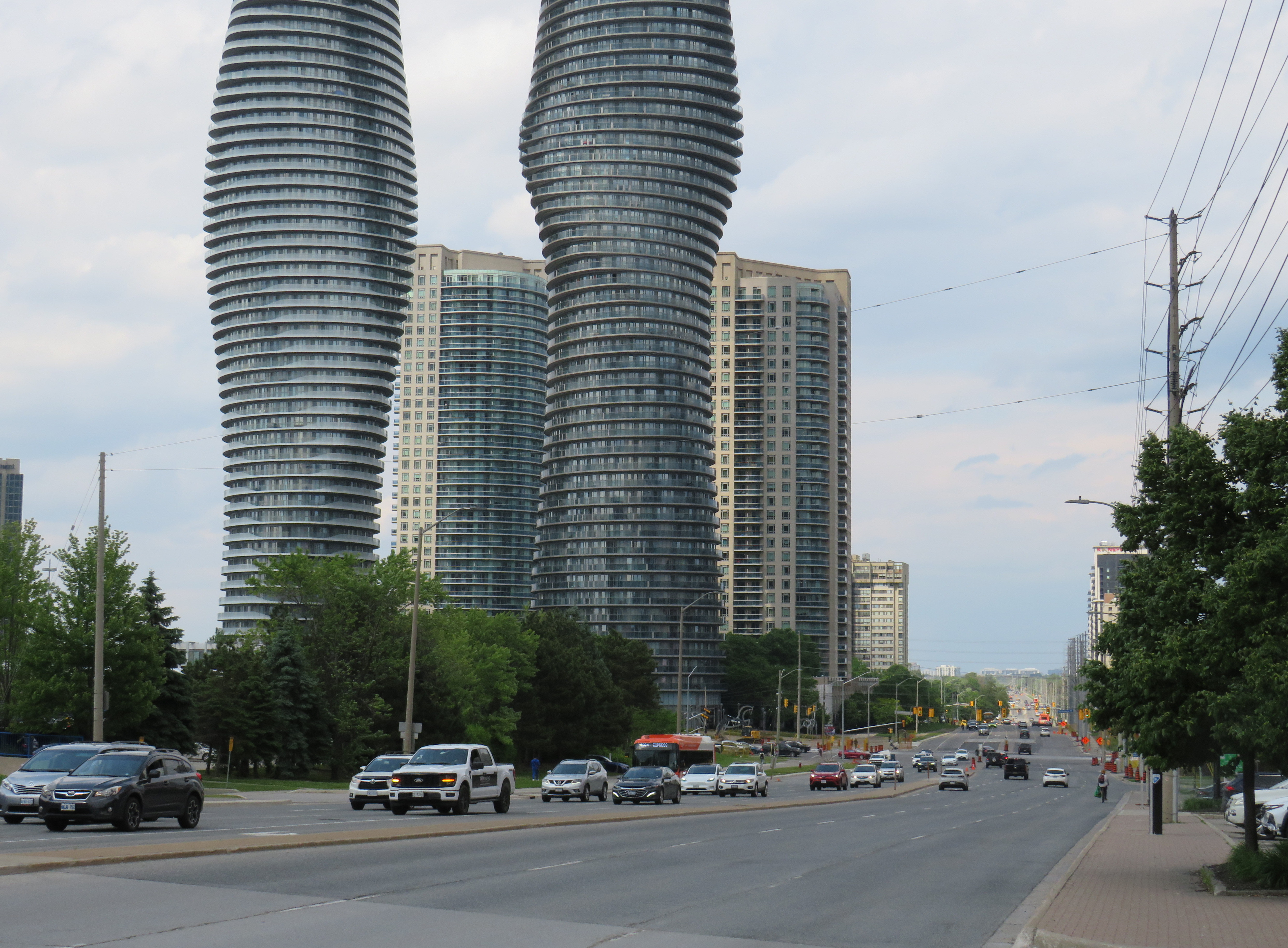
    Looking east on Burnhampthorpe
    Looking east on Burnhampthorpe Road from Kariya Drive, towards Hurontario Street and the landmark Absolute condo towers

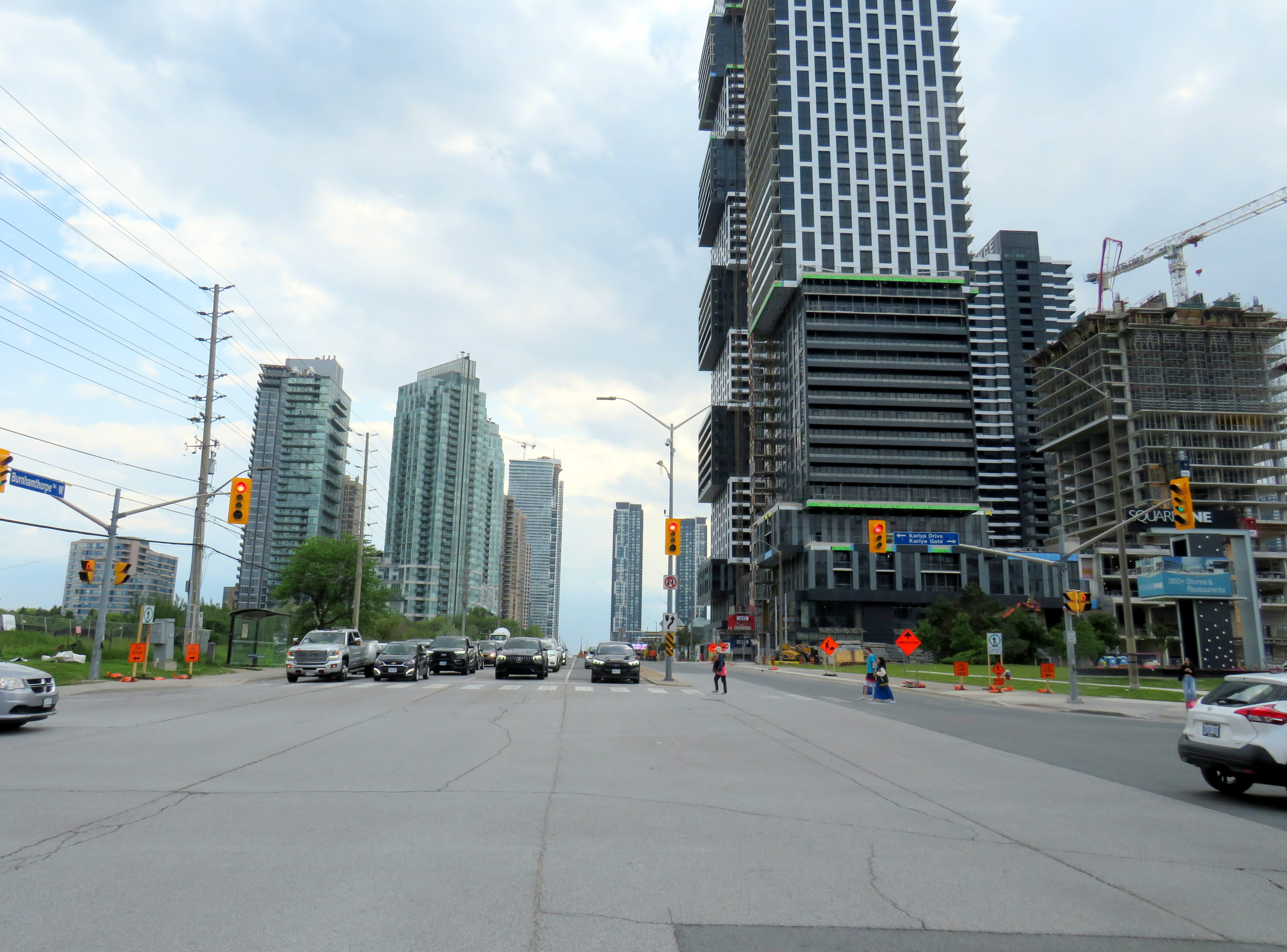
    Burnhamthorpe Road is six lanes wide, with an additional left turn lane at every intersection. Though there is a sidewalk on the south side and a designated multiuse path (MUP) on the north side, it is not a pleasant place to walk.

    Looking west on Burnhamthorpe
    Looking west on Burnhamthorpe Road, towards newly built and under-construction high-rise residential towers

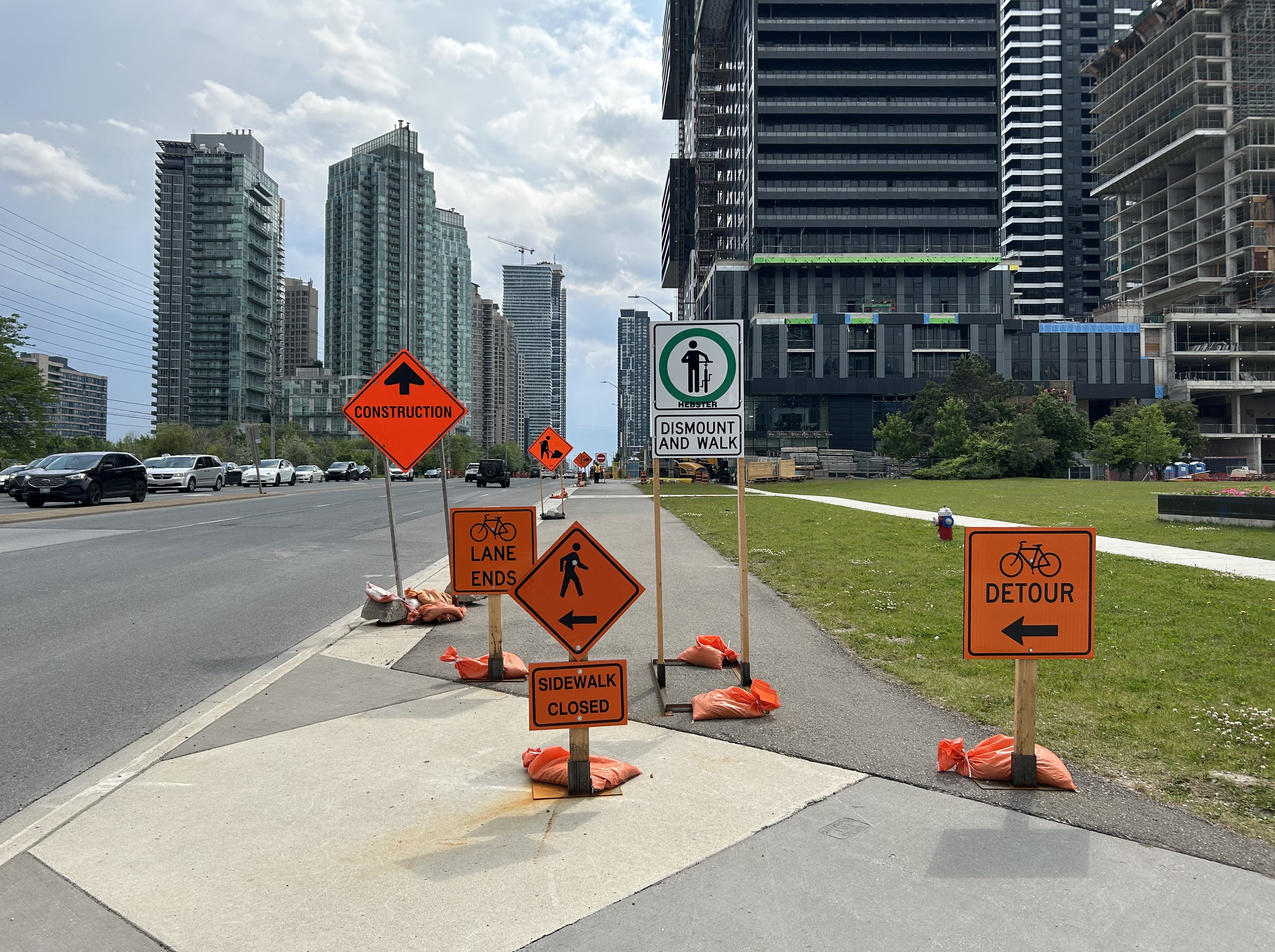
    While I visited The MUP on the north side of Burnhamthorpe west of Kariya Drive was also closed off for the convenience of the builders of the Exchange District Condos development, one of many new mixed-use projects in the area. This forces pedestrians to cross the intersection to continue west, and no thought was made to closing one of the three westbound traffic lanes to provide a continuous path.

    Signs blocking path
    Multiple “sidewalk closed” bike lane detour, and “dismount and walk” signs blocking the asphalt MUP on the north side of Burnhamthorpe Road. Note that no traffic lanes were blocked to provide a continuous route for vulnerable road users.

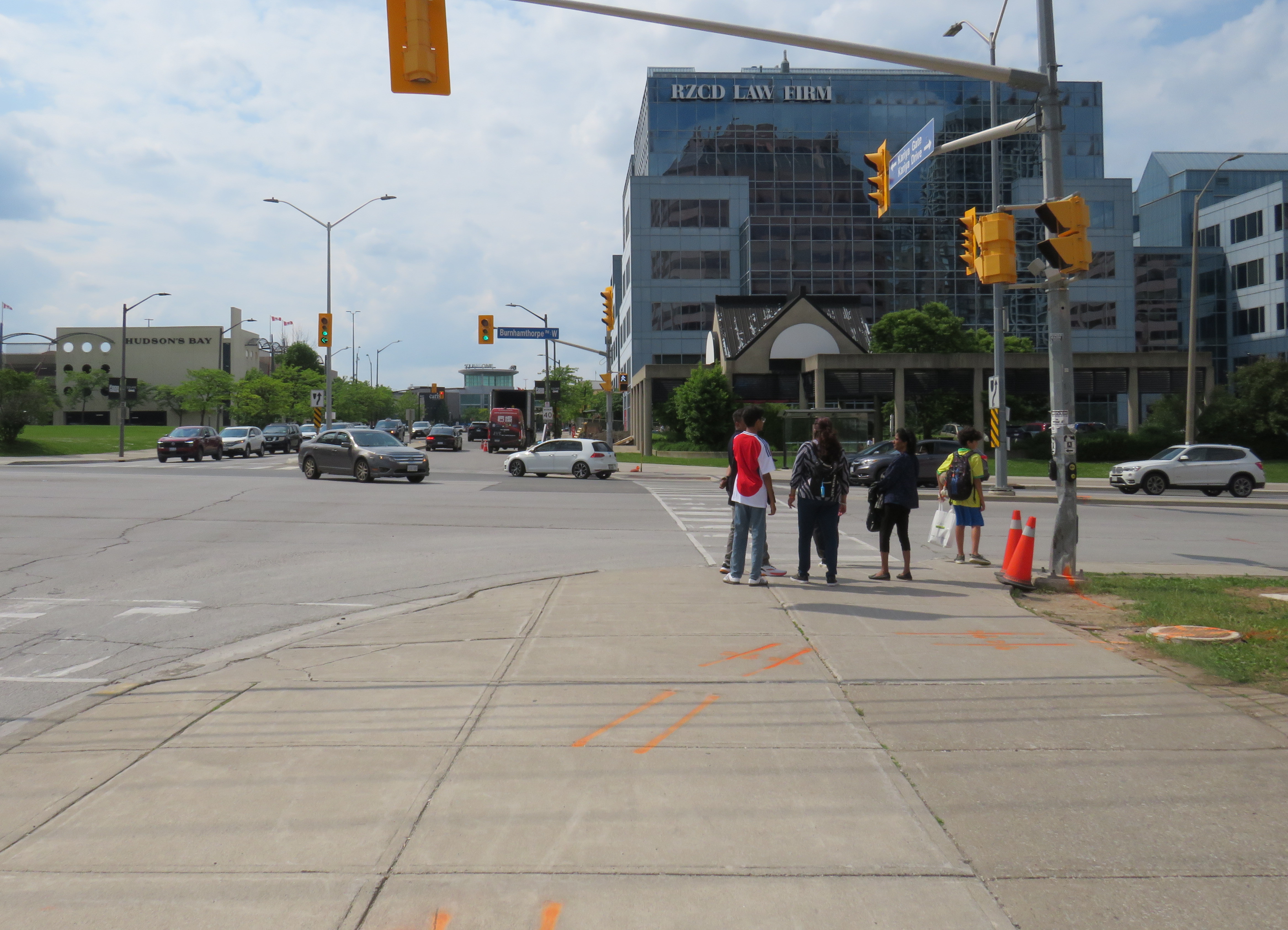
    The intersection of Kariya and Burnhamthorpe is quite busy; at every light cycle, there were multiple pedestrians crossing here on mid Tuesday afternoon, including students walking to the mall or to home from nearby schools, couples and young families out for a stroll. (Kariya Park, named for a Japanese city that was twinned with Mississauga in 1981, is a lovely oasis.) Burnhamthorpe has a 60 km/h speed limit, though Kariya has a 40 km/h limit.

    Five pedestrians, standing where a man was struck and killed last Saturday, about to cross Burnhamthorpe Road on a Tuesday afternoon

    The corner is also a busy transfer point. Miway route 26 Burnhamthorpe is a major east-west bus corridor that connects with the TTC subway at Kipling Station; Kariya Drive is the best stop to get to Square One as Route 26 doesn’t serve the main terminal. Routes 3 Bloor and 8 Cawthra, which do continue to the City Centre Terminal, stop here as well.

    Route 26 Burnhamthorpe is one of MiWay’s busiest

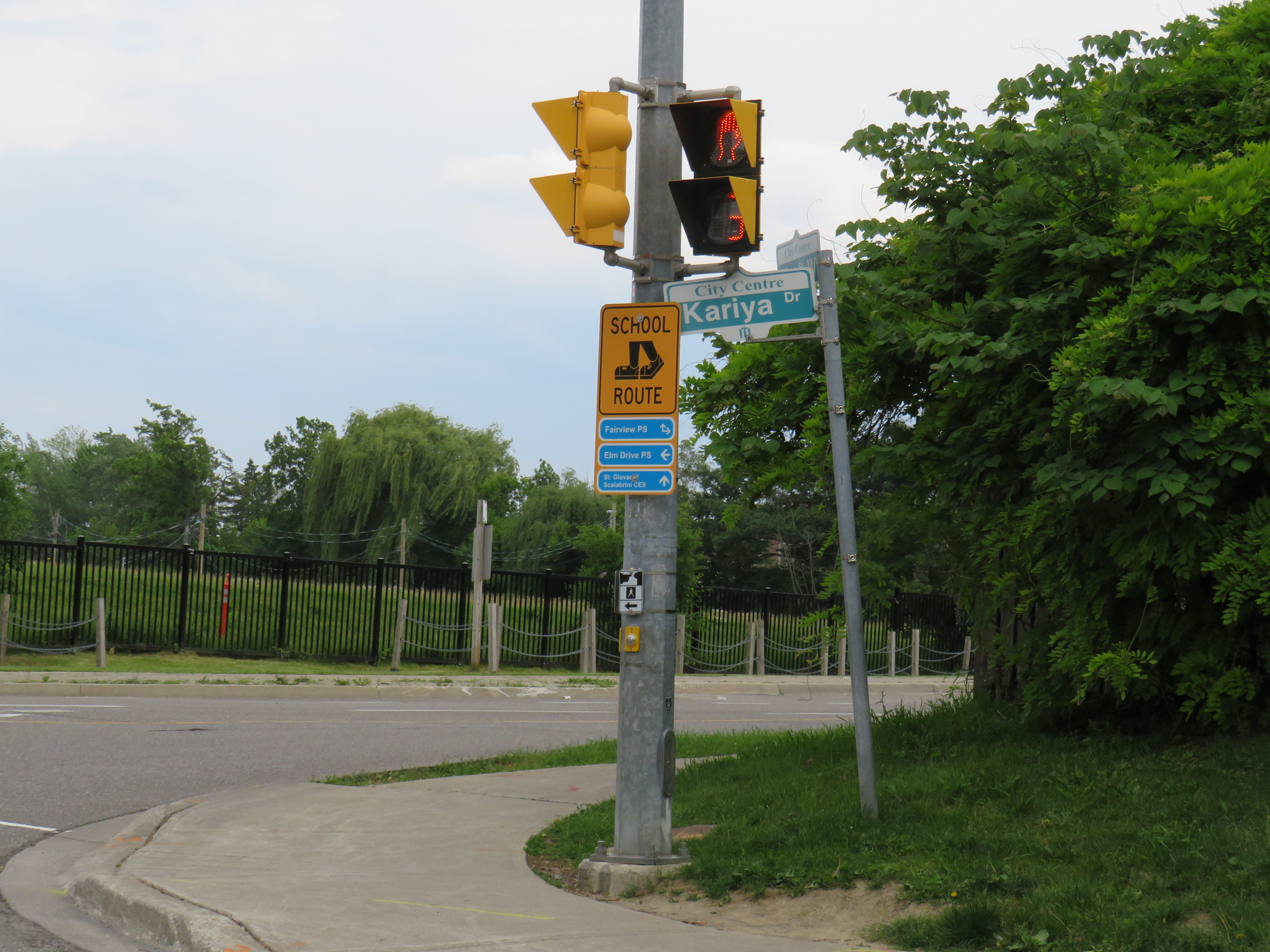
    Also worth noting is that Kariya Drive is a signed school route. MCC itself does not have any elementary or secondary schools, but there are several schools within a short walk to the south of Burnhamthorpe, including Fairview Public School, Elm Drive Public School, St. Giovanni Scalabrini Catholic School, and Fr. Michael Goetz Catholic High School. The more people move into MCC, the more necessary safe walking routes will be.

    School route sign at Kariya Drive
    A school route sign with walking paths to three nearby elementary schools at Kariya Drive and Fairview Boulevard

    There is nothing particularly remarkable about the intersection of Burnhamthorpe Road and Kariya Drive itself that makes it deadly, but that is the problem here. To make walking safer and more attractive, there is much that should be done. Reducing Burnhamthorpe to four lanes in each direction, along with more street trees, could help to reduce speeds (the speed limit should also be dropped to at least 50 km/h), and with several nearby schools, parks, and YMCA, there’s a case for Burnhamthorpe to be designated a community safety zone, with increased enforcement, along with automated traffic cameras. Perhaps dedicated bus lanes could supplant the third traffic lane in each direction, as the nearby Hurontario LRT nears completion.

    Right now, drivers race through the intersection, making left turns against oncoming traffic and crossing pedestrians after the advance arrow signal disappears, as seen in the video below. Wide lanes and a 60 km/h speed limit encourage unsafe driving.

    Three motorists continue to make left turns from Kariya to Burnhamthorpe (behind the FedEx truck) after the advance turn arrow disappears and the green light for opposing traffic and walk signal turn on. Note several pedestrians waiting to cross as drivers rush through.

    To make Mississauga City Centre a complete urban hub, it needs to be safe for pedestrians and cyclists of all ages and abilities to get around. Six-lane arterials like Burnhamthorpe have no place in a dense, multi-use neighbourhood, especially when nearby Highway 403 can handle goods movement and through traffic. One death is too many.

  • Can you walk to City Hall?

    Can you walk to City Hall?

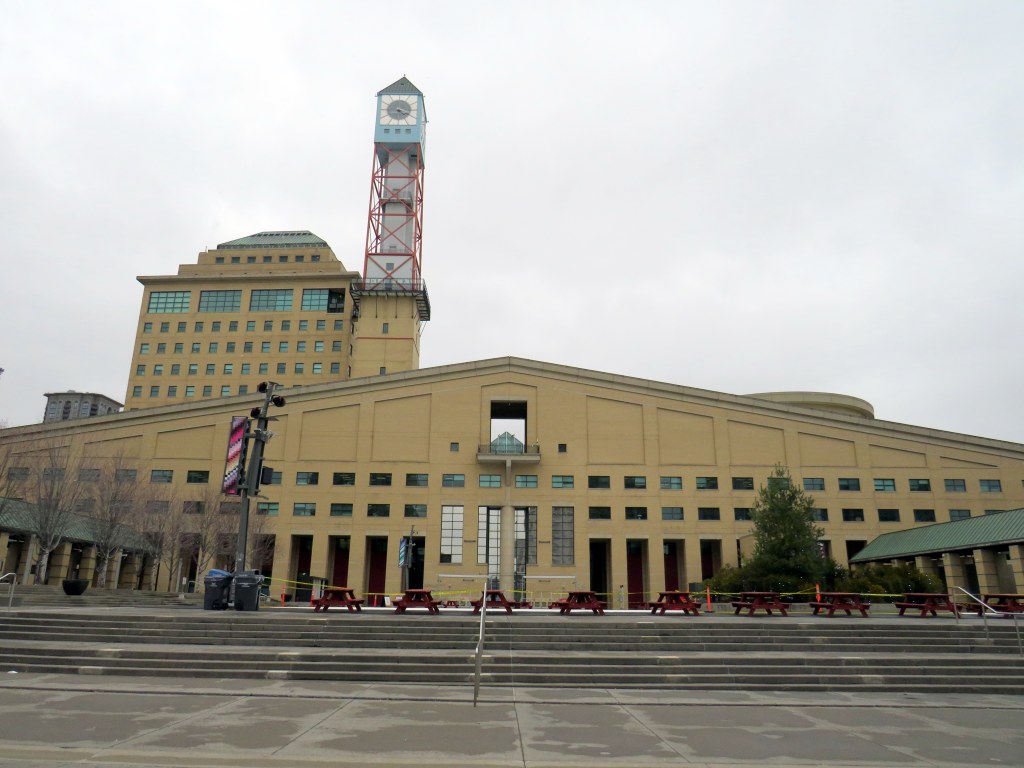
    Mississauga City Hall, one of the most walkable municipal buildings in Ontario

    In late March 2024, with a streak of mild, sunny days, I was eager to get outside and walk. As I have long been interested in local politics and planning issues, public transit, active transportation (especially walking advocacy), I thought I would try to get to every city, town, and township hall in the Greater Toronto and Hamilton Area (GTHA) without a car.

    This was a fun project, even if there were times I felt really frustrated at times by poor transit and long hikes. The highlight of my quest was a tour of Mississauga City Hall from Councillor Joe Horneck. Mississauga’s civic centre is one of Ontario’s most iconic — and walkable — government buildings.

    Mississauga Council Chambers

    Of the three levels of government (federal, provincial, municipal), the municipal level has the most impact on the day-to-day lives of most Canadians; it is also the closest level of government to all. Residents can depute at committee meetings, get meetings with their local councillor and city staff, and obtain building permits, marriage licenses, or pay bills at city and town halls. Therefore, they should be as accessible as possible, especially to those without cars.

    Only one GTHA town hall (Caledon) was completely inaccessible without a car, though several other town halls required long walks from the nearest transit stop, making them inaccessible to some residents. But I could get to Brock Township, the least-populated and most-rural municipality in the GTHA, thanks to Durham Region Transit’s On-Demand service, though I had some difficulty there.

    The complete list of GTHA city and town halls, along with photographs and a map can be accessed here.

    Preview of Story Map

  • Heavy interference in a light rail transit project

    Heavy interference in a light rail transit project

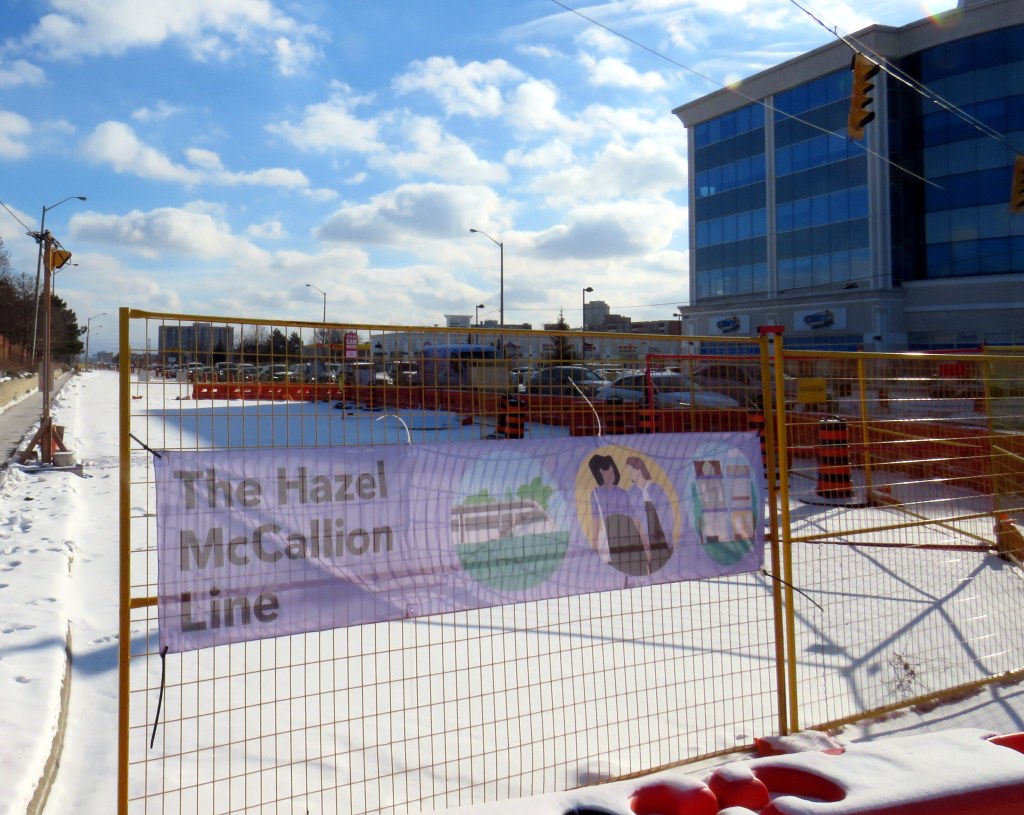
    Banner promoting “The Hazel McCallion Line” on Hurontario Street in Brampton, January 2024

    Previously on this website, I wrote about the renaming of two GO Transit stations: Oshawa and Brampton. I explained why renaming transit infrastructure is problematic, especially when they violate wayfinding standards, which call for simple, accurate, unique, and self-locating names.

    Both GO Transit stations were renamed by provincial agency Metrolinx, on behalf of the provincial government. Metrolinx operates GO Transit buses and trains, the UP Express airport link, administers the Presto fare payment system, and oversees the construction of new rapid transit projects in the Greater Toronto and Hamilton Area. The Hurontario LRT, which is currently under construction between Port Credit GO Station in Mississauga and Steeles Avenue in Brampton, is just one of many transit projects managed by Metrolinx.

    On February 14, 2022, at Cooksville GO Station, Premier Doug Ford, then Transportation Minister Caroline Mulroney, then Mississauga Mayor Bonnie Crombie, and Metrolinx CEO Phil Verster joined former Mississauga mayor Hazel McCallion announcing the name change from the Hurontario LRT to the Hazel McCallion LRT. The occasion also marked McCallion’s 101st birthday.

    Hazel McCallion with Metrolinx CEO Phil Verster, February 14, 2022 (Metrolinx photo)

    This is the first rapid transit line in North America to be named for a person, contradicting established standards for transit projects.1 Though McCallion was a formidable and popular mayor whose political career spanned seven decades, she was also very close to the Ford government in the last few years of her life. She also had many other public facilities named in her honour — a senior public school in Mississauga’s Streetsville neighbourhood, the library at University of Toronto’s Mississauga campus, the City of Mississauga’s central public library, a walkway leading to Square One Shopping Centre, and the Mississauga campus of Sheridan College. There is also the Hazel McCallion Auditorium at Mississauga Valley Community Centre and the Hazel McCallion Hall at Vic Johnston Community Centre. There was no need for yet another civic asset to be renamed for her.

    In Toronto, most former mayors have just one public asset named for them: David Crombie, Art Eggleton, June Rowlands, and Barbara Hall have parks dedicated in their honour. Mel Lastman — mayor of North York for 24 years before being elected mayor of amalgamated Toronto for another six — and Nathan Phillips have major public squares.2 In Mississauga, there was no need to rename yet another piece of civic infrastructure for the same person.

    Furthermore, there was no public consultation about the name change — even officials at the cities of Brampton and Mississauga were kept in the dark — while the name itself contravenes Metrolinx’s own naming conventions.

    In July, 2023, I submitted an access to information request to Metrolinx, the second time I went through the freedom of information process to find out more about the light rail transit project. There were several delays, and I did not receive my requested documents and communications until late January 2024.

    A deep dive into the background of the Hurontario LRT project, the person it is being renamed for, and my findings and impressions follow.

    (more…)
  • How Brampton commuters are caught in the middle at Steeles

    How Brampton commuters are caught in the middle at Steeles

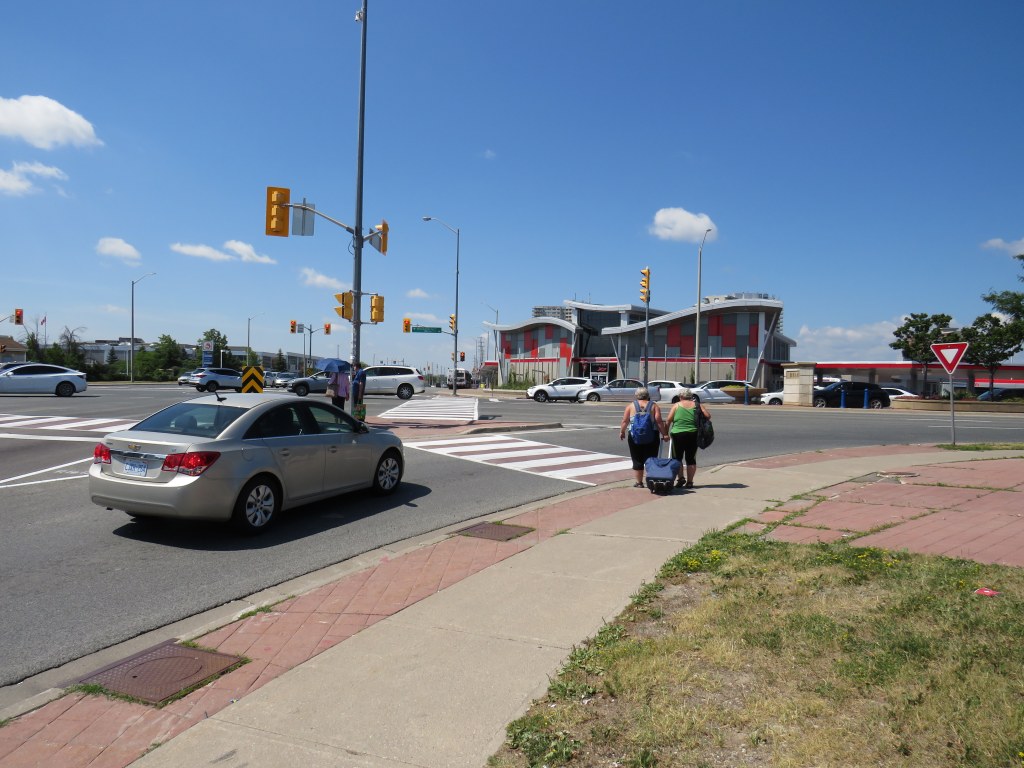
    The intersection of Steeles Avenue and Main and Hurontario Streets

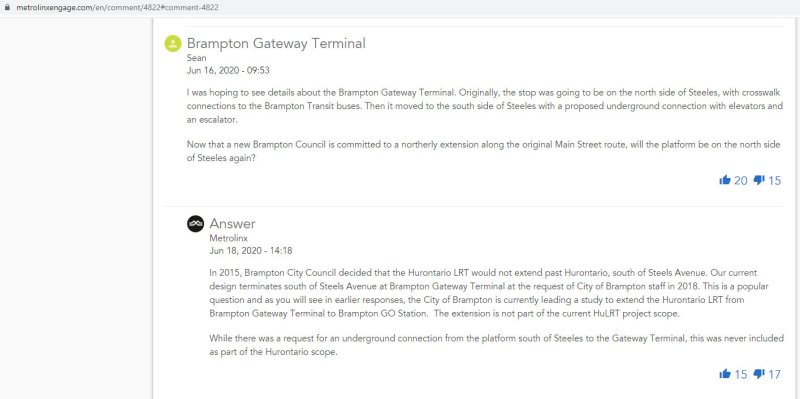
    Last year, I wrote about a foreseeable problem coming to the corner of Steeles Avenue and Hurontario and Main Streets in Brampton: the planned Hurontario LRT terminus, to be located on the south side of Steeles Avenue, would require thousands of commuters to transfer to Brampton Transit buses on the north-west corner of the intersection.

    This transfer would require crossing ten or eleven lanes of traffic at one of Peel Region’s busiest intersections, with crowding at the street corners, with passengers awaiting a walk signal two separate times to make the necessary connection.

    After twice receiving unsatisfactory answers at a Metrolinx online town hall, and hearing no information about how the crossing at this intersection might be mitigated, on March 9, 2021, I took the step of making an Access to Information Request to Metrolinx under the province’s Freedom of Information and Protection of Privacy Act asking for communications between Metrolinx, the Ministry of Transportation, Mobilinx (the consortium awarded the contract to build and operate the LRT), and the City of Brampton.

    I received a package with the requested materials from Metrolinx on July 29, 2021. The request cost me $360.00, plus a $5.00 application fee. Communications from Metrolinx’s privacy officer were professional, friendly, and very helpful.

    Through my request that covered the dates December 1, 2018 to March 11, 2021, I obtained several letters from Brampton officials, including City Councillor Gurpreet Singh Dhillon, Director of Transportation Special Projects Chris Duyvestyn, Chief Administrative Officer David Barrick, and Mayor Patrick Brown to Metrolinx and Ministry of Transportation Officials requesting restoration of the north side stop at Steeles Avenue/Brampton Gateway Terminal. I also obtained replies from senior Metrolinx staff, including President and CEO Phil Verster and the Deputy Minister and the Minster of Transportation.

    What is the communications reveal is that decisions made during the 2014-2018 term of Brampton Council significantly tied the hands of everyone involved — both at the City of Brampton (which reversed its previous decisions when a new council was elected in October 2018) — and at Metrolinx, which was quickly working towards finalizing the contracts to construct the transit project. Unfortunately, important details, such as the final configuration of the Steeles-Hurontario/Main intersection, remain unknown. Neither Metrolinx nor the Ministry of Transportation, which funds Metrolinx, appear to grasp the problems that will be caused when thousands of commuters have to cross two major streets at an especially busy intersection.

    Despite Brampton’s work since December 2018 to move the Brampton Gateway stop back north of Steeles Avenue, including formal requests to Metrolinx and the Ontario Ministry of Transportation (MTO), and despite a similar request from RioCan, owner of the massive Shoppers World Mall property at Main Street and Steeles Avenue, Metrolinx and the province have held firm in their decision.

    Though Metrolinx’s mandate is to “improve the coordination and integration of all modes of transportation in the Greater Toronto and Hamilton Area,” terminating the LRT on the south side of Steeles Avenue will only reduce the integration of transit modes at Brampton Gateway.

    While Metrolinx and the MTO cite the difficulties of reopening a project which was getting underway, and concerned about setting precedents for other changes to the Hurontario LRT or other transit projects, this would still be a minor change, costing just $15 to $20 million according to a 2020 letter from Metrolinx CEO and President Phil Verster to Brampton Mayor Patrick Brown.

    Sadly, transit riders in Brampton – who do not have affluence or political might — have been left in the middle of this political back-and-forth between municipal politicians, the province, and Metrolinx. They will be forced to endure a more difficult transfer between LRT and bus than anything proposed to them in public consultations.

    (more…)