Tag: Right turns

  • It’s time to rethink slip lanes

    It’s time to rethink slip lanes

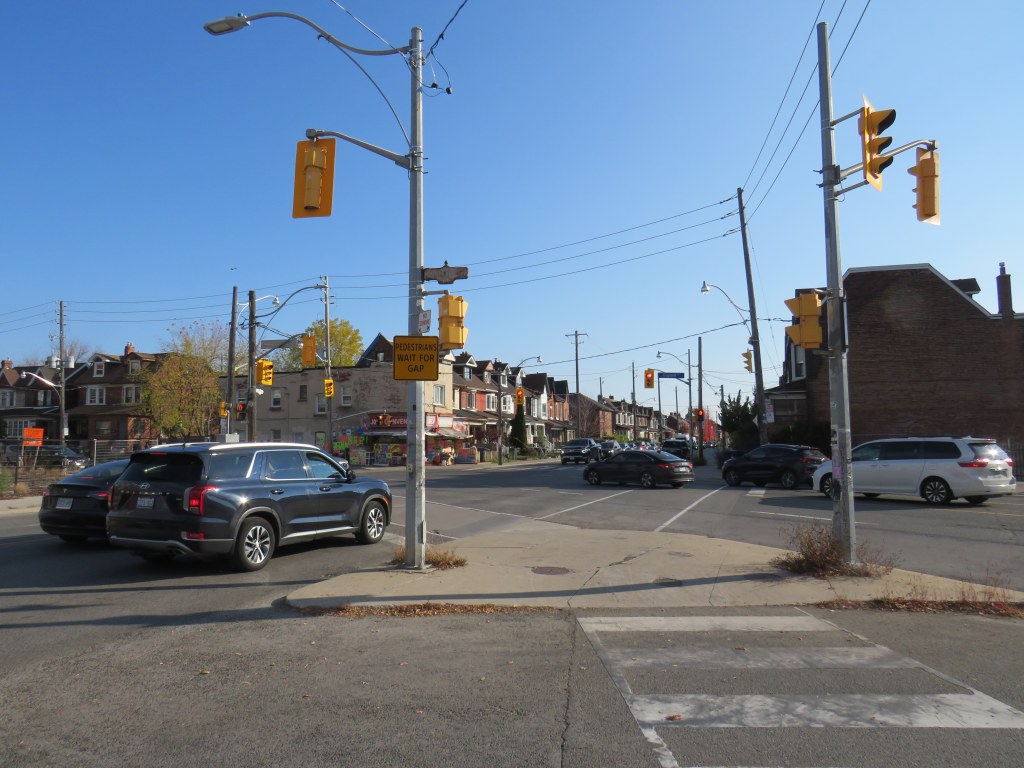
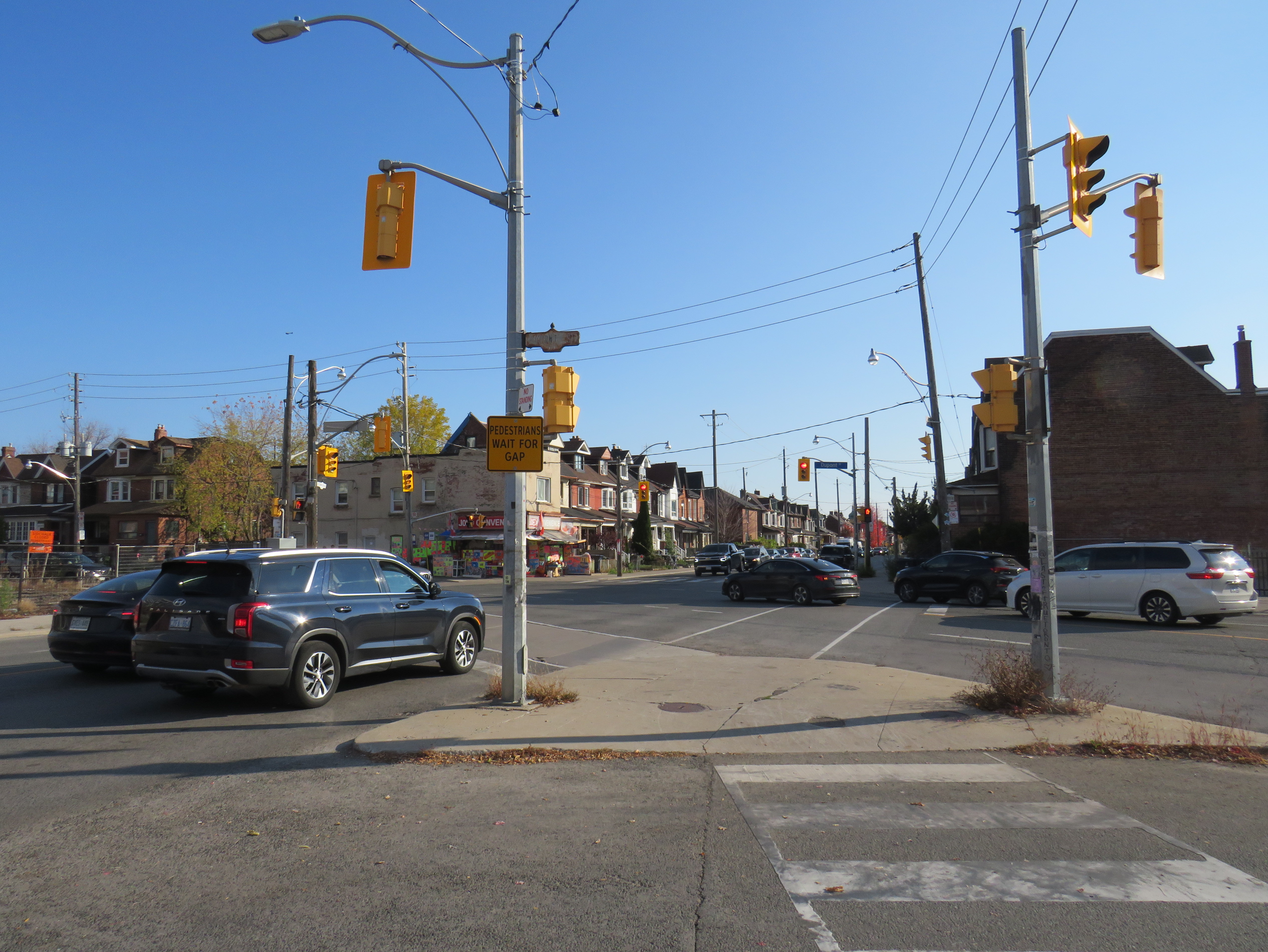
    Slip lane with small pedestrian refuge island at Dupont Street and Ossington Avenue

    There are many ways that road design acts to facilitate vehicle drivers yet impede pedestrian mobility. There’s the beg button (traffic engineers prefer the term “pedestrian call button”) that ensures maximum traffic throughput unless a pesky pedestrian or cyclist decides they want to cross the road too when the light turns green. There’s the two-phase pedestrian crossing that guarantees a long wait to cross a wide traffic artery on foot. Wide curb radii at intersections allow drivers to easily turn, yet they intrude into the crosswalk space. And there’s the slip lane, also known as a channelized right turn.

    Most slip lanes are designed to allow right-turning motor vehicles to bypass an intersection. Where an intersection may be controlled by a traffic signal or a stop sign, typically, a slip lane is only controlled by a yield sign, reminding motorists to give way to pedestrians crossing and/or oncoming traffic on the roadway being turned into. They are typically built for higher speeds, with turn radii even greater than those afforded by generous curved curbs at many urban intersections. The space left over in the triangular bit of concrete is where pedestrians must wait to cross the main roadways.
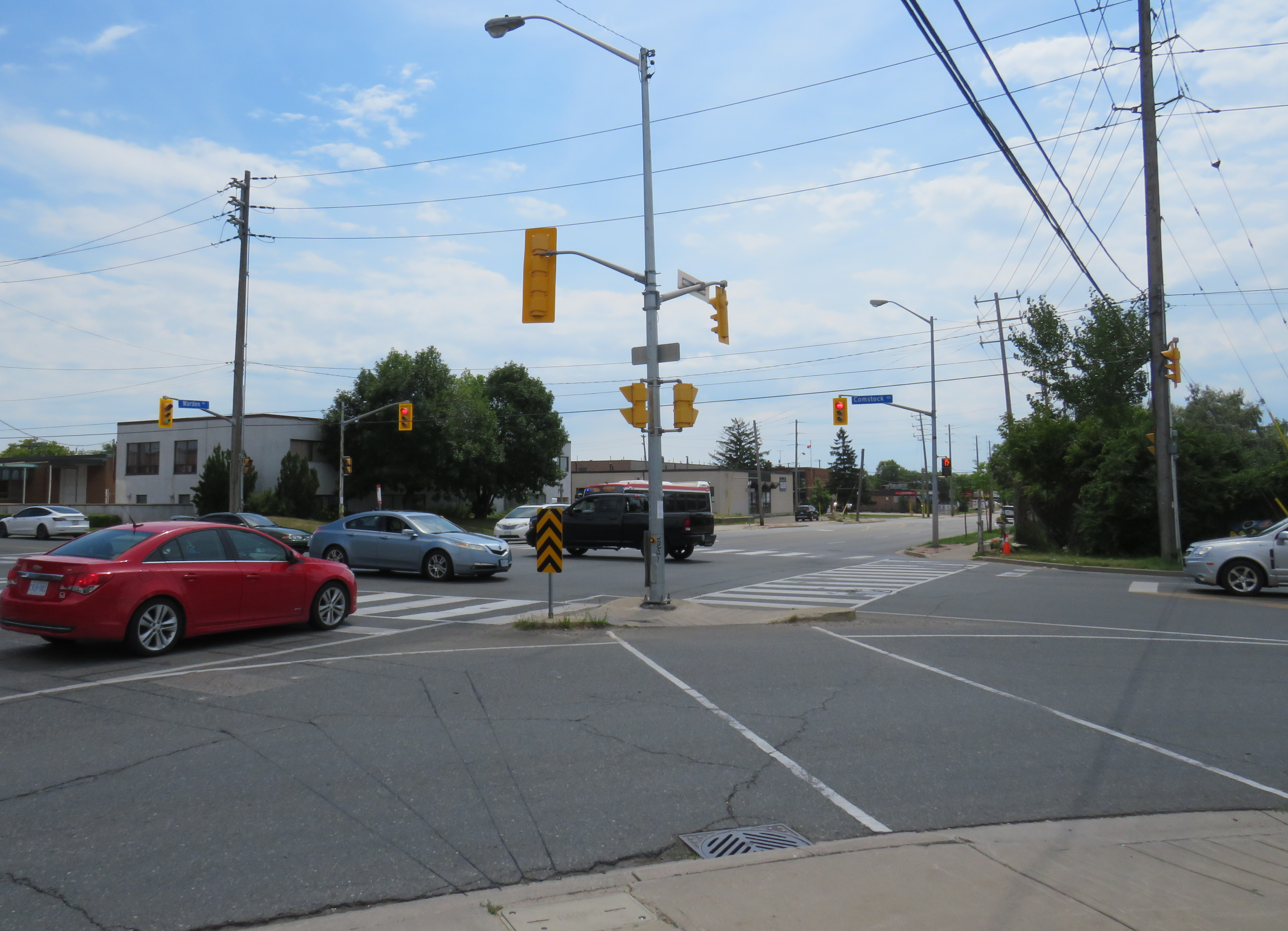
    Slip lane at Warden Avenue at Comstock Road in Scarborough features a very small island for pedestrians to wait to cross

    Occasionally, slip lanes are used to discourage or prevent certain turning movements. At shopping plaza entrances, for example, slip lanes are used to prevent left turns into or out of the driveway. They may also be used at one-way streets for the same purpose.

    Thankfully, slip lanes are not the standard in the City of Toronto. At least forty slip lanes were removed between 2005 and 2025, including Front Street eastbound at Yonge, from Coxwell Avenue southbound at Dundas Street East, and a half dozen on Danforth Road in Scarborough. In the downtown core, there are only three remaining examples that cross pedestrian pathways: from southbound Bay Street to Queen Street West, from eastbound Bloor Street to Parliament Street, and from Mount Pleasant Road to Jarvis Street. There are several other intersections in the city centre that allow some right-turning vehicles to bypass the main intersection, such as Adelaide and Richmond Streets at Jarvis, University at Front, or Parliament at Gerrard, but these still require a full turn at their start or end point, mitigating their danger.

    A map of slip lanes in Toronto, and those removed in the last twenty years, is below. This work was assisted my followers on BlueSky for their additions and corrections, and I appreciate their help.

    By removing slip lanes, pedestrians and cyclists are better protected, and there can often be new space for seating, public art, or even plant life.
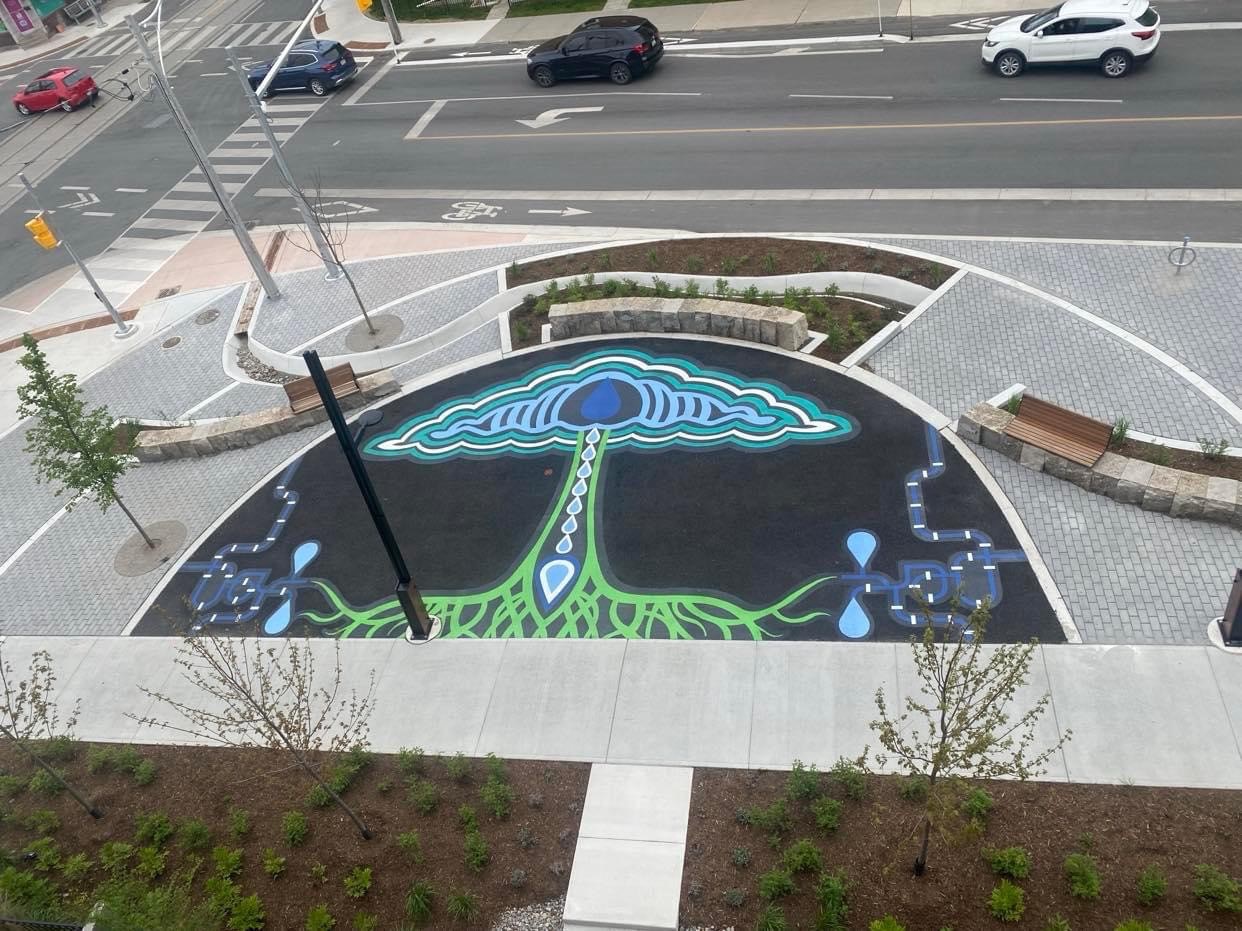
    Former slip lane at Coxwell Avenue and Dundas Street East
    (City of Toronto, 2025 Water Summit winner)

    Slip lanes are far more common in suburban neighbourhoods outside the City of Toronto. In Brampton and Mississauga, slip lanes are common on regional roads such as Steeles Avenue, Dixie Road, or Erin Mills Parkway. These six-lane roads are designated as goods movement corridors, and are designed for heavy traffic, including tractor-trailers. Even in Peel, though, slip lanes are being rethought. Several were removed on Bovaird Drive in Brampton two years ago (replaced by signalized crossrides), while others are being repainted to empathize the pedestrian crossing and encourage slower movements. More signage tells motorists to stop for pedestrians.

    Modified slip lane at Bovaird Drive and Main Street in Brampton. Further east, slip lanes were removed at three lower-traffic intersections and replaced by multi-use path crossings.

    Though the City of Toronto has done some good work eliminating or modifying slip lanes in the name of traffic safety and an improved pedestrian realm, there are many more that still should be examined, such as the one at Ossington and Dupont, where, unusually, pedestrians are instructed to wait for a gap, rather than motorists instructed to yield. These “wait for gap” signs are found at the entrances and exits to expressways, such as the Gardiner Expressway or Highway 401. But these, too, can be changed. At the eastbound ramp to northbound Don Valley Parkway on the Prince Edward Viaduct, a free-flowing on-ramp was changed to a signalized right turn, improving safety and comfort for pedestrians and cyclists.

    Crossing the Bay Street on-ramp to the eastbound Gardiner Expressway makes getting to the Waterfront more dangerous and uncomfortable than it should be

    Hopefully, City of Toronto staff work to correct the situation at Dupont and Ossington (there’s no reason why pedestrians should be expected to yield to traffic in this revitalizing part of the city) and continue the work to make our streets safer for all.


    If you like my work and you would like to help out with my webhosting costs (I just had to renew my ad-free WordPress subscription), consider buying me a coffee. Thank you!
  • A driver’s case for banning right turns on red lights

    A driver’s case for banning right turns on red lights

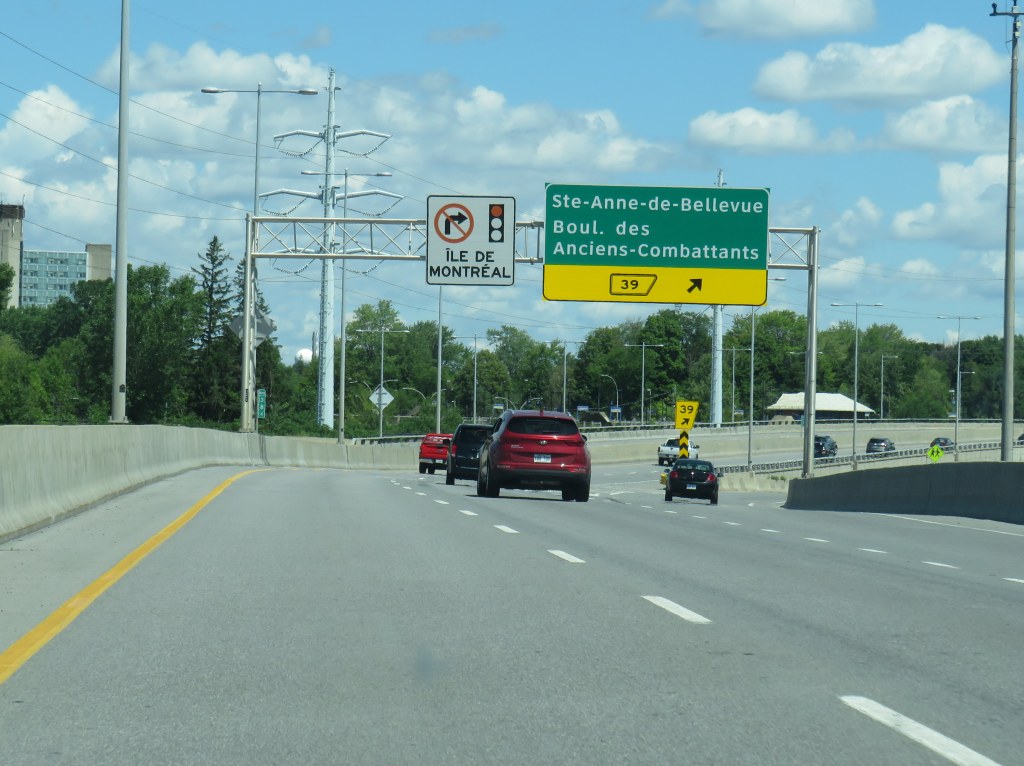
    Entering Montreal on Autoroute 20, with a sign reminding motorists of the blanket ban on right turns on red on Montreal Island

    During the August long weekend, my spouse and I rented a car and drove to Montreal. Normally, I take the train, as it’s a long and boring drive on Highway 401, while VIA Rail offers a quiet, relaxing, and more interesting ride. But with the ongoing COVID-19 pandemic, driving seemed like a good idea. (In doing so, I finally drove the entire length of Highway 401 — I had not yet done the section between Cornwall and the Quebec border).

    Despite Montreal’s infamous potholes, never-ending construction, and stereotypically aggressive motorists, I found driving around the city less stressful than in my own home city of Toronto. It may sound counter-intuitive, but a big reason for this was the city’s blanket ban on right turns on red.

    Outside of North America, turning movements on red lights are generally prohibited. They were only widely introduced to the United States as part of an energy-saving measure in the 1970s, as a response to the first oil shock; a regulation was written into a 1975 federal bill that provided federal aid to states provided that they permit right turns on red lights (along with carpool programs and energy, thermal, and lighting efficiency measures), though many western US states had such laws on their books much earlier.

    U.S. Energy Policy and Conservation Act, 1975, Section 362(c)
    
    Each proposed State energy conservation plan to be eligible for
    Federal assistance under this part shall include —
     (1) mandatory lighting efficiency standards for public buildings
     (except public buildings owned or leased by the United States);
     (2) programs to promote the availability and use of carpools,
     vanpools, and public transportation (except that no Federal funds
     provided under this part shall be used for subsidizing fares for
     public transportation);
     (3) mandatory standards and policies relating to energy efficiency
     to govern the procurement practices of such State and its political
     subdivisions;
     (4) mandatory thermal efficiency standards and insulation
     requirements for new and renovated buildings (except buildings owned
     or leased by the United States); and
     (5) a traffic law or regulation which, to the maximum extent
     practicable consistent with safety, permits the operator of a motor
     vehicle to turn such vehicle right at a red stop light after
     stopping.

    The Province of Quebec was the last subnational holdout in North America, permitting the practice in 2003. However, the City of Montreal continued to outlaw turns on red, following New York City’s continued prohibition, while Mexico City introduced a new prohibition in 2018.

    North Americans may have given up the small cars that they began driving in the 1970s in favour of SUVs and aggressively styled pickup trucks (whose proportions and poor sightlines increase the danger to pedestrians), but we continue to cling to the right turn on red as a matter of convenience.

    In my experience, though, I found driving less stressful when I knew I could not turn on red. I did not have to worry about a driver behind me inching forward, pressuring me to move past the stop line and into the intersection so they could turn. If I was waiting to turn right, I knew I could relax and wait for the green signal before I had to try to make the maneuver. The leading pedestrian interval common in central Montreal (which also allows through traffic — including cyclists — to go first) made pedestrians easier to see and predict as I was making my turn.

    Montreal’s leading pedestrian interval signal

    I might have saved a minute or two on each car trip had I been able to turn on a red light. But it did not feel like much of a difference. The reduced stress was worth it.

    As a pedestrian and as a cyclist, I appreciated turn-on-red prohibitions whenever I was in a city where they are in place, as I did not have to worry about right-turning motorists not seeing me as I crossed at a street corner, or those motorists who rush red lights or refuse to stop before turning. As a driver, I appreciated it too.