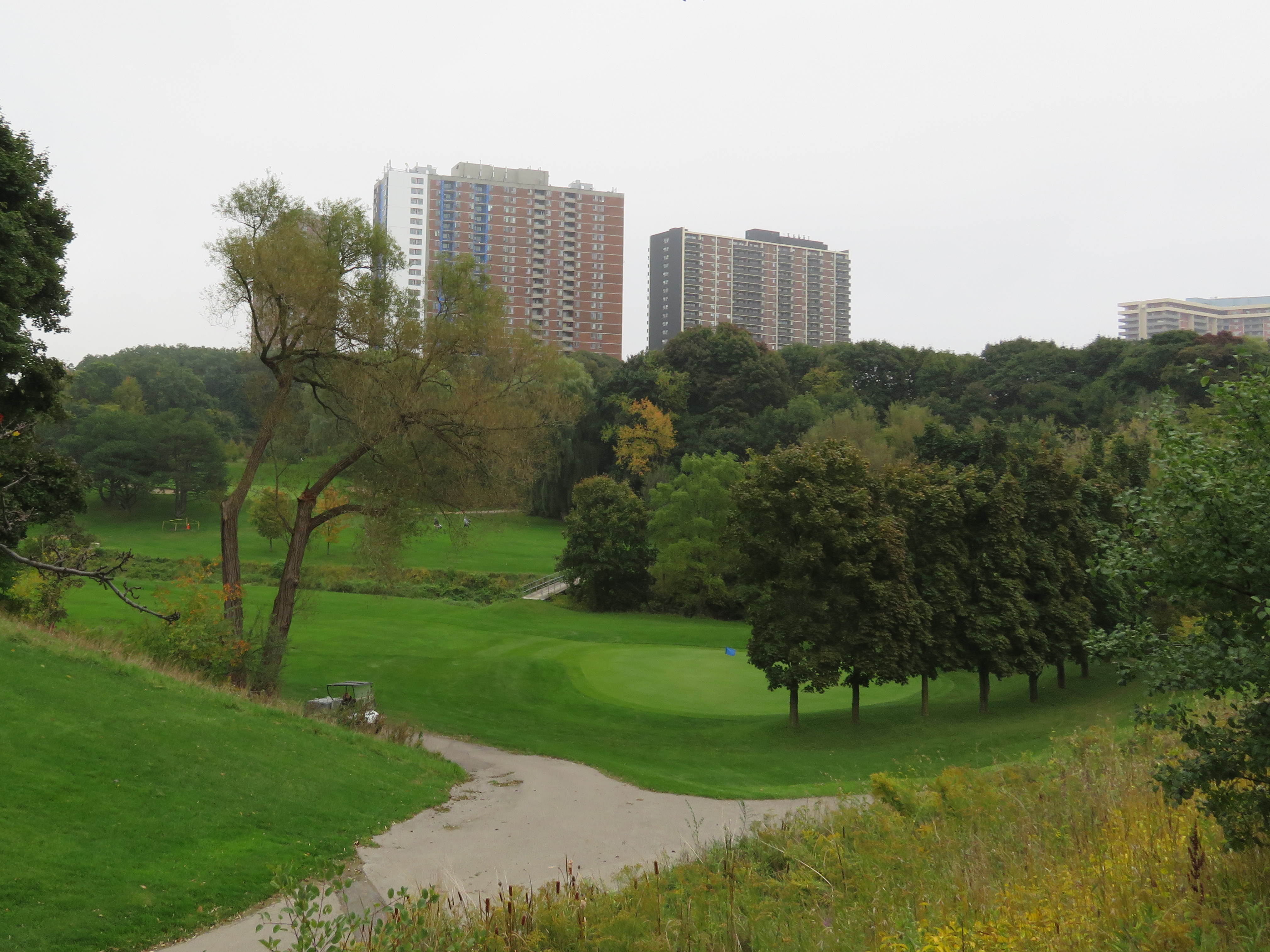
 Dentonia Park Golf Course
Yesterday, Thanksgiving Monday, mayoral candidate Jennifer Keesmaat proposed closing three of Toronto’s five municipally-owned golf courses. Keesmaat, Toronto’s previous chief planner, pointed out that the municipal golf courses operate at a loss, and that $10 million is allocated for improvements to those three courses. Furthermore, she intends to consult the local communities to best re-program the sites to address local wants and needs for the opened-up greenspace.
The three courses are:
- Dentonia Park Golf Course, located on Victoria Park Avenue north of Danforth Avenue, next to Victoria Park subway station, in the Massey Creek ravine.
- Don Valley Golf Course, located in the West Don Valley near Yonge Street and Wilson Avenue, near York Mills Station. It extends under Highway 401.
- Scarlett Woods Golf Course, located near Eglinton Avenue and Scarlett Road on the Humber River.
Tam O’Shanter Golf Course, near Sheppard Avenue and Kennedy Road in Scarborough, and the Humber Valley Golf Course in north Etobicoke, are not mentioned in Keesmaat’s proposal.
I’m very happy that Keesmaat has put forward this bold idea. Despite the municipal ownership of these lands, they are fenced off from residents. For example, Dentonia Park is located in a lower income neighbourhood made of many high-rise rental buildings. As Toronto continues to grow in population, greenspace reserved for golfers could be put to better uses such as sports fields (soccer and cricket, especially), playgrounds, natural wetlands and woodlands, and public paths.
Golf is an expensive leisure activity with a large environmental footprint: the tending of golf courses require lots of water and pesticides. (Golf courses are exempted from a provincial ban on certain types of pesticides.) They may not adequately address the local community’s needs either, especially in lower income areas. Interest in playing golf is waning in North America as well. It makes sense to open up these publicly owned lands.
Golf courses get in the way of potential linear parks. As I mentioned before, the Don Valley Golf Course blocks access to Earl Bales Park from the south. Opening up the grounds to the general public would provide a continuous path from York Mills Station to Bathurst and Sheppard and beyond. This would provide a safe and pleasant walking and cycling route across Highway 401, compared to the unpleasant and dangerous crossings at the interchanges with Yonge Street and Avenue Road.
Dentonia Park Golf Course sits in between the path through Warden Woods and the Taylor Creek Ravine. If opened to the public, there could be a car-free path for pedestrians and cyclists all the way from Warden and St. Clair Avenues all the way downtown via the Don Valley trail system.
Keesmaat’s plan to close money-losing, poorly-used golf courses is a great idea, much like her promise not to go ahead with the costly replacement of the eastern section of the Gardiner Expressway, instead going with the locally preferred boulevard option. Both of these ideas may not be popular with some, but they are both fiscally and environmentally sound.
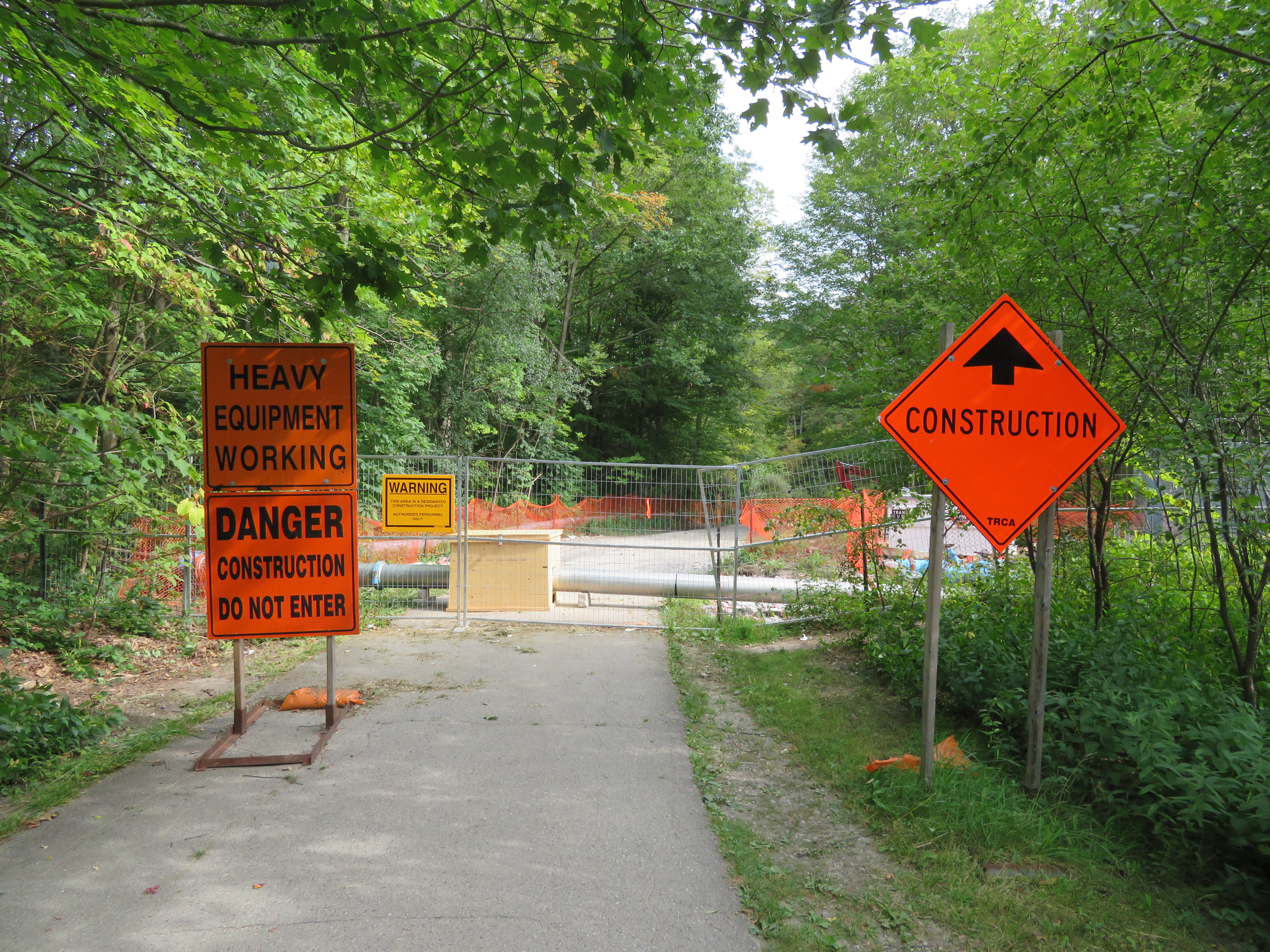 Wilket Creek trail closure, September 2017
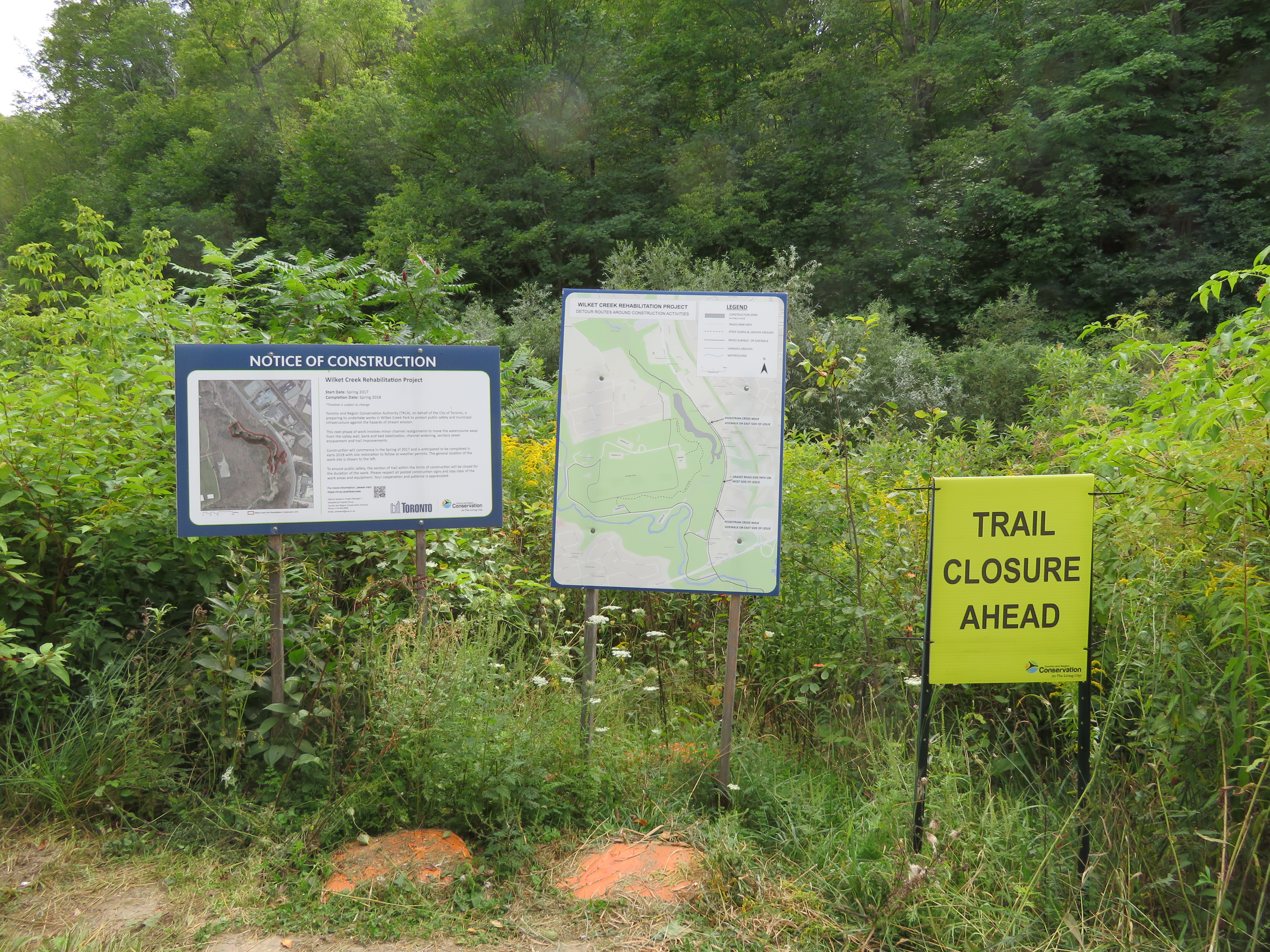 Advance warnings and a detailed detour map on the Wilket Creek Trail
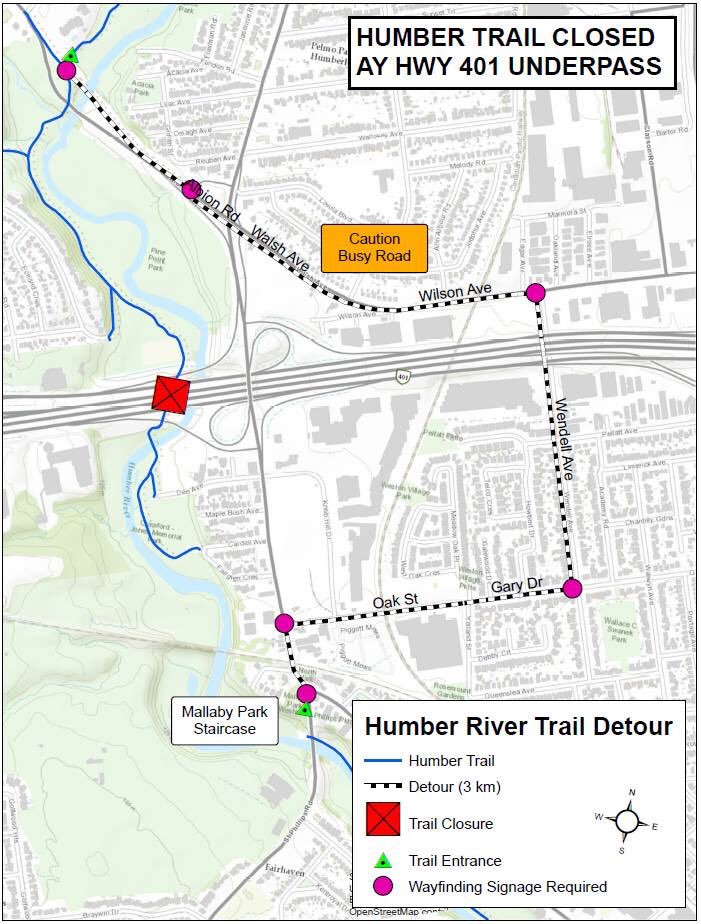 The circuitous and dangerous 2016 Humber River Trail detour at Highway 401. Source: MTO.
