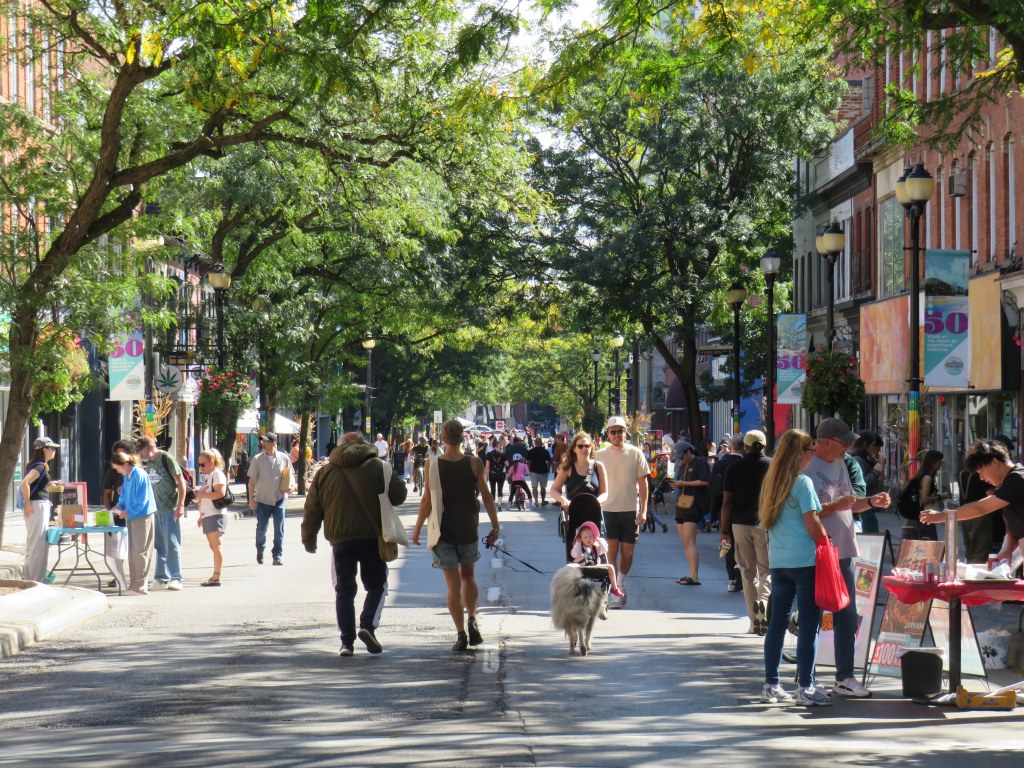
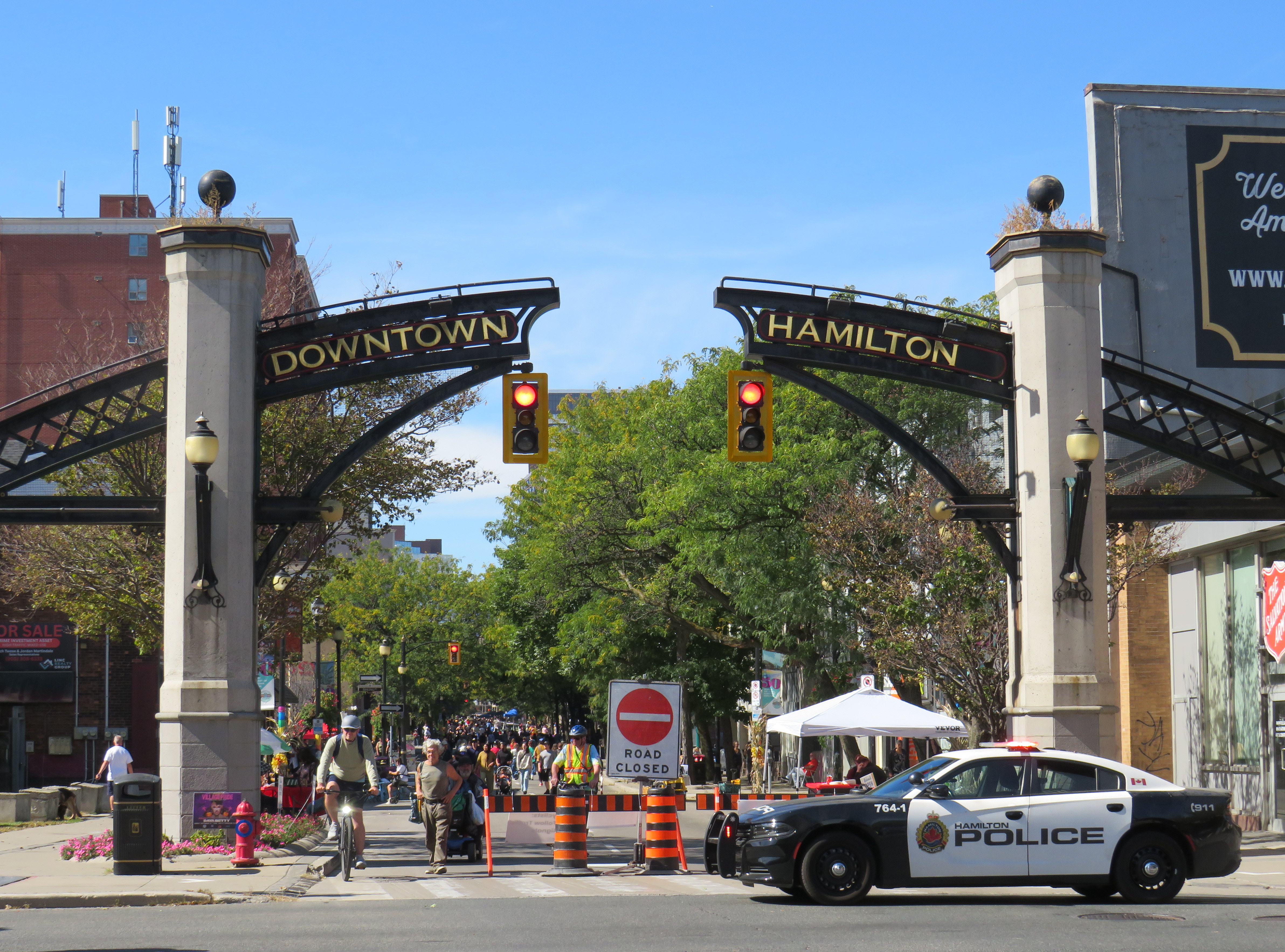
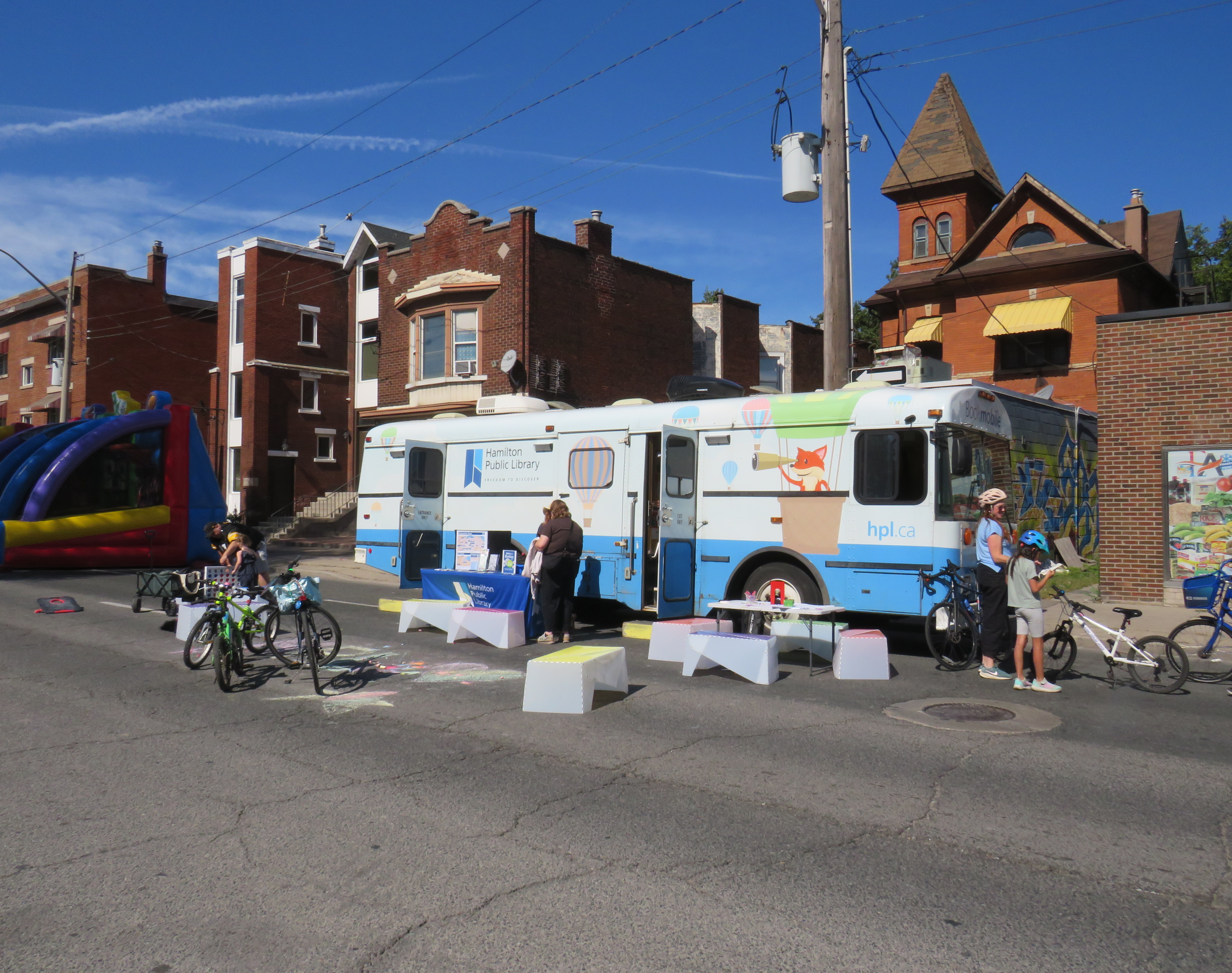
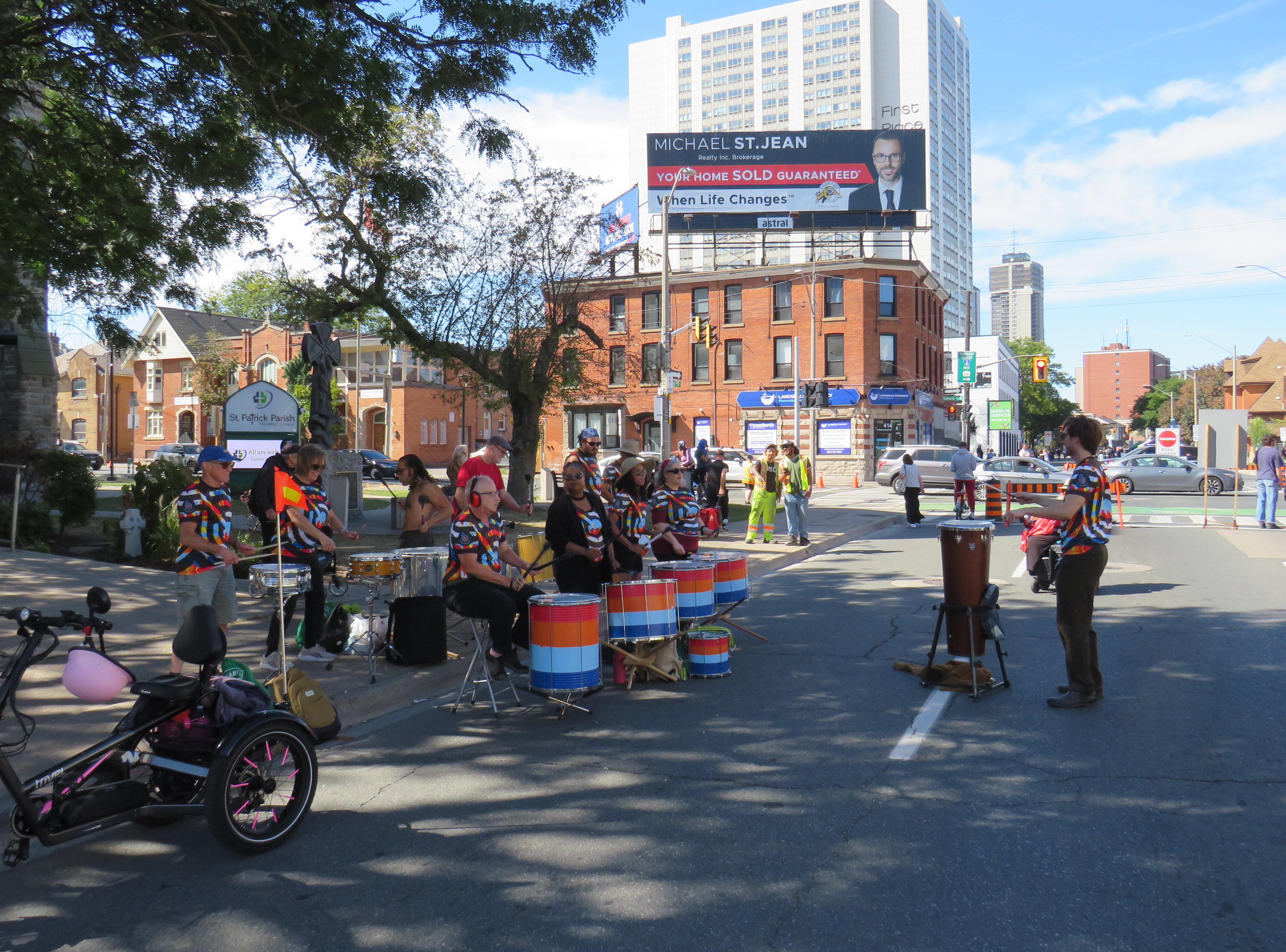
On Sunday, September 27, I took the GO train to Hamilton with my bike to experience Open Streets Hamilton, an annual event that shuts down just over three kilometres of King Street East between John Street and Gage Street from 10AM to 4PM. An official program of the City of Hamilton, pedestrians and cyclists get to enjoy a car-free experience, with five activation hubs, with live music, play spaces, and booths set up by city-affiliated agencies like the Hamilton Street Railway and Hamilton Public Library as well as local non-profit and activist organizations. Businesses along King Street were welcomed to take their business outside with displays and tables for passers-by to browse.
The Hamilton Public Library’s bookmobile near King and ShermanDrum band at King and Victoria
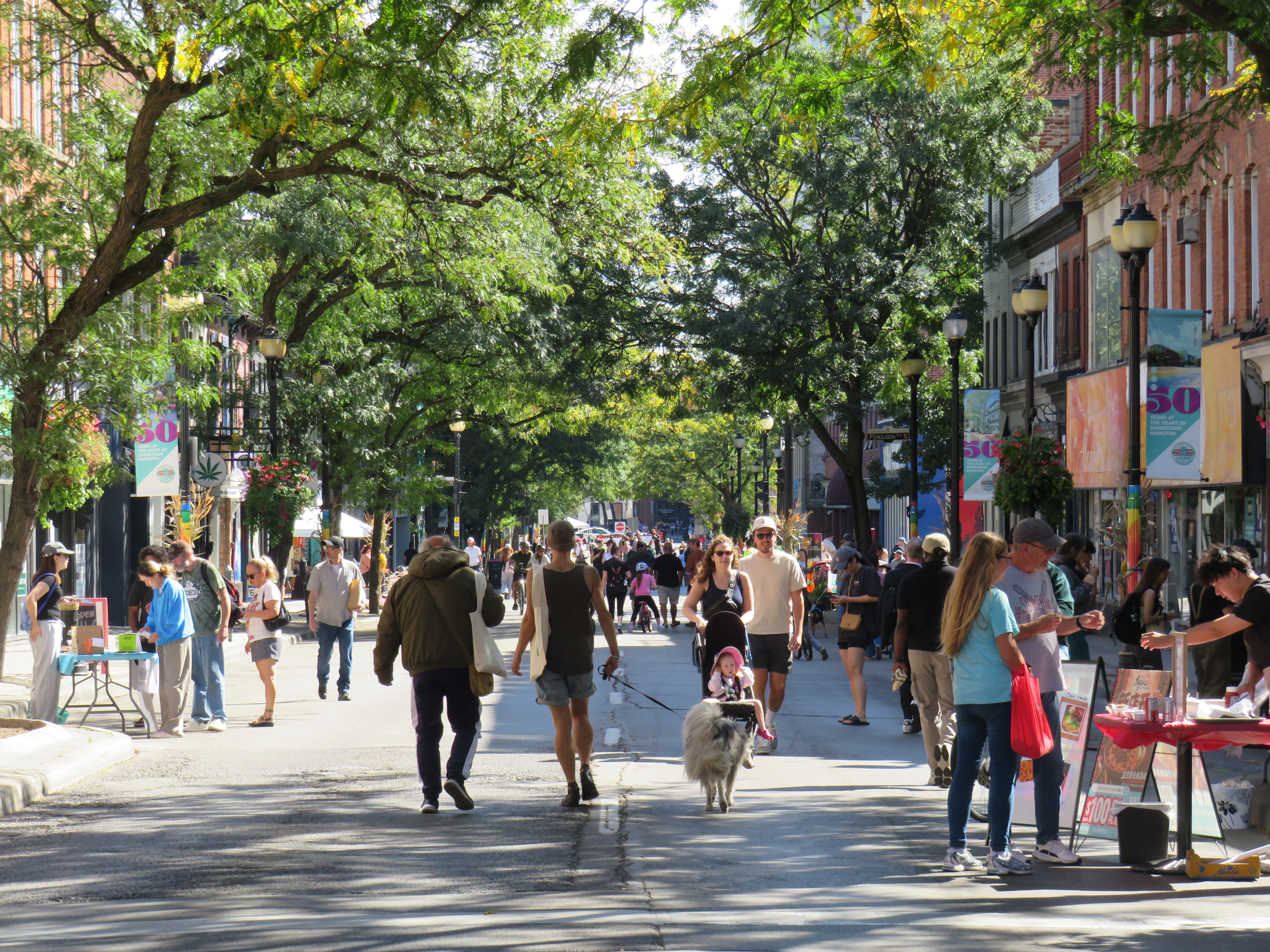
Hamilton’s Open Streets was a delight. A pleasant, sunny day certainly helped, but it was nice to see so many people sharing the space, all at a gentle pace. Cyclists taking advantage of the car-free King Street were respectful of pedestrians having the whole right-of-way and especially careful around the five hubs. Cyclists looking for a faster route could easily go just two blocks north to Cannon Street, which has a continuous two-way cycletrack as far east as Sherman Avenue.
King Street narrows between John and Wellington Streets through the tree-lined International Village BIA
By extending Open Streets into the later afternoon, Hamilton helped to encourage businesses to participate and to get a wide variety of participants through the day. Though Open Streets in Toronto was supported by the Downtown Yonge BIA, there was limited commercial activity along the routes, likely due to the short hours.
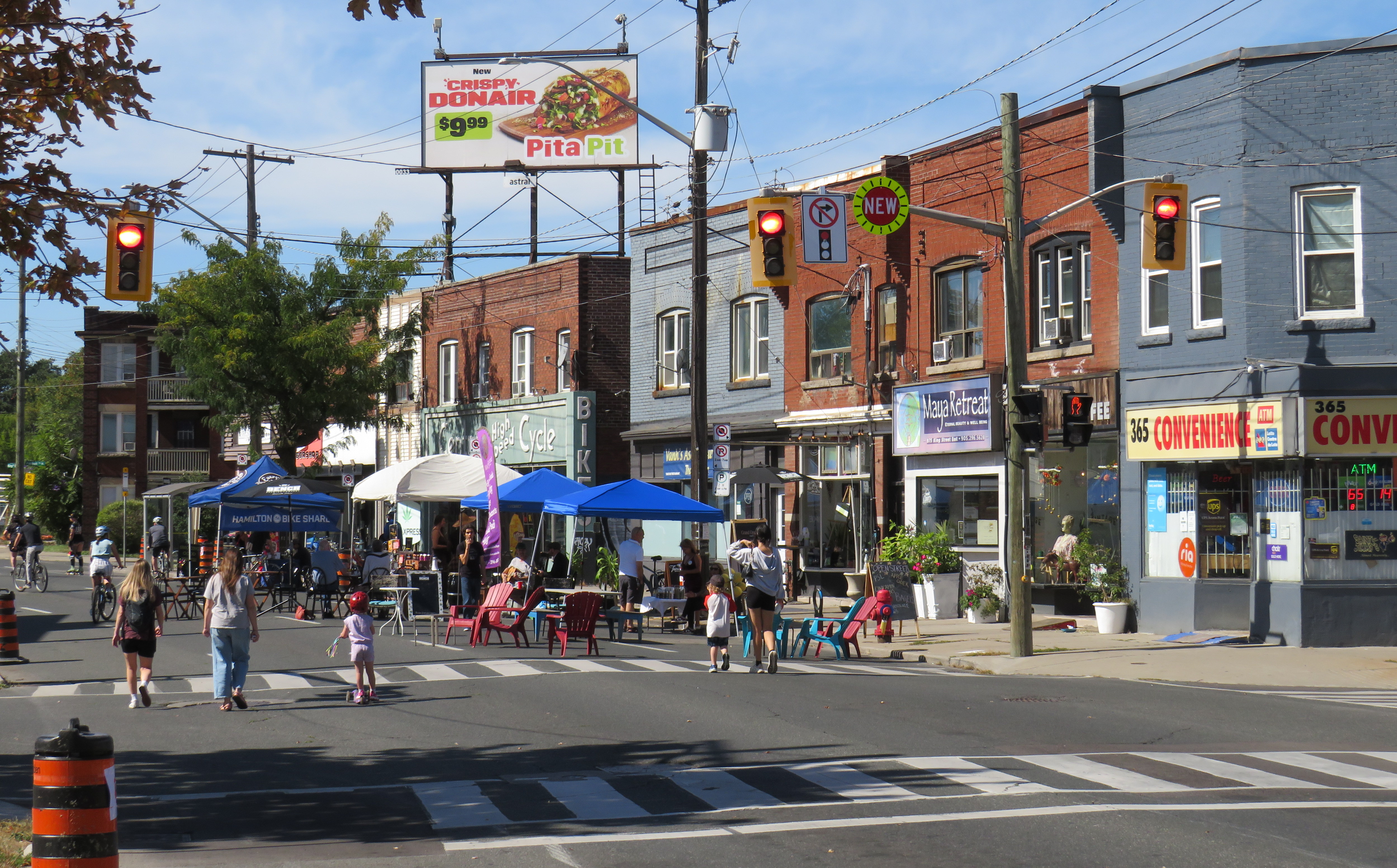
King at Barnesdale, towards the east end of the Open Streets. Note the café on the block put out seating and shade canopies.
In 2026, Toronto only had two blocks of temporary pedestrian activation — Church Street between Alexander and Wellesley Streets in the Village. Happily, that experiment ran for over six weeks, and restaurants and bars took advantage of the extra space. It worked well, despite nearby road construction and concerns about safety and traffic congestion. But it was just a taste of what Toronto can and should do.
Hamilton shows that open streets are popular and Toronto needs to bring them back. Hopefully the mayor and council elected later this month will have the courage and ambition to get Torontonians outside and on the streets.
Quinte Transit bus stopped at the Belleville Bus Terminal, August 2026
Last month, I visited two beautiful towns in Eastern Ontario: Picton, in Prince Edward County, and Almonte, in Lanark County. Both communities have populations of just over 5,000 (though Almonte, within Ottawa’s commutershed, is growing), and both have wonderful downtowns full of independent stores, restaurants, and great public spaces. But you can only get to one of them without a car.
It was pretty easy to get to Picton from Downtown Toronto on a Thursday morning. Flixbus offers a direct seasonal service from Pearson Airport and Union Station Bus Terminal, stopping at Scarborough Town Centre, Whitby, and Trenton, and in Wellington, Bloomfield, and Picton in Prince Edward County. The County (which is actually a single-tier municipality) has become a popular tourism area, with visitors attracted by local wineries, art galleries, resorts, and the famous Sandbanks Provincial Park on Lake Ontario, so having alternative modes of transport to get to and around the area is welcome.
Unbranded Flixbus unloading in disused parking lot near Downtown Picton
As Flixbus does not operate its own buses — it partners with local coach operators — the buses do not have a consistent look. The bus on my August 20 trip, operated by Eastern Charter Inc., was a plain grey coach bus, but it was a comfortable ride. The last stop, in an unused parking lot off Picton Main Street, is across the street from a McDonald’s but is also a short walk to the downtown area. The parking lot, once used by a now-demolished church, is large enough to turn the bus around for the return trip.
Picton Main Street
Downtown Picton itself is very walkable, with regular pedestrian crossings and beautifully maintained sidewalks and street furniture. Even though there are larger retailers just outside the town centre, most storefronts are occupied by clothing stores, antique dealers, financial services, and craft shops, there is also a large independent bookseller, complete with attached cafe. Though many businesses are geared towards tourists and more affluent residents, it is not exclusively the case. The public library, a renovated and expanded Carnegie building, serves the entire community well. Discount chain Giant Tiger also thrives in the downtown area. The Regent Theatre, one of Ontario’s oldest continuously-operating theatres, has been hosting concerts, shows, and first-run movies since 1931.
Regent Theatre, which also contains a tourism information desk, is open between showsThe Carnegie Library on Picton’s Main Street, with a small playground out frontThe sidewalks full of life and room for street trees, benches, and outdoor store displays.
Prince Edward County also offers on-demand transit service within the municipality and a weekday fixed-route service between Picton, Bloomfield, and Belleville operated by Trenton-based Quinte Transit. During the summer and early fall, additional fixed-route services operate between Belleville, Wellington, and Picton, sponsored by local wineries and tourist attractions. Bus stops are well marked, with current schedules posted at each point.
County Transit bus stop at the Fairgrounds (Crystal Palace)
At Downtown Belleville, there are connections to Belleville Transit, which serves the VIA Rail Station and the Megabus/Flixbus stops near Highway 401 and to Quinte Transit’s Trenton service at Loyalist College. There also used to be a connection at the downtown terminal for Deseronto and Napanee, but sadly it disappeared last year.
Prince Edward County does a fine job running and marketing a transit service geared to both its residents and to visitors. It should be a model for other communities in Southern Ontario and elsewhere.
Almonte: Nowhere to go
Dr. James Nasmith Square, Almonte. The old post office on the right is home to a great Italian restaurant, fittingly named Il Postino.
Almonte, less than an hour’s drive from Downtown Ottawa, is another charming and busy town, full of independent shops and restaurants in heritage buildings. On a busy summer weekend, parking can be hard to find. The town, part of the municipality of Mississippi Mills, is also growing, with new residential development to the east of the historic downtown. It has just about everything that Picton has, except for a transit link.
Prior to the COVID-19 pandemic of 2020, there was a weekday commuter bus that would shuttle workers from Almonte and Carleton Place to Ottawa and back, making several stops along the OC Transpo bus network. Though Flixbus has restored the lost Greyhound route along Highway 7 between Toronto, Peterborough, and Ottawa with stops in Carleton Place and Perth (and with a schedule that accommodates commuters), these coach buses stop at gas stations along Highway 7 and don’t serve the communities very well, unlike the commuter-centric buses operated by smaller companies like 417 Coach and Thom Transport.
As the federal government is mandating full in-office shifts again, and as towns like Almonte and Perth become popular day trip destinations, it’s time for places like Lanark County to follow Prince Edward’s lead.
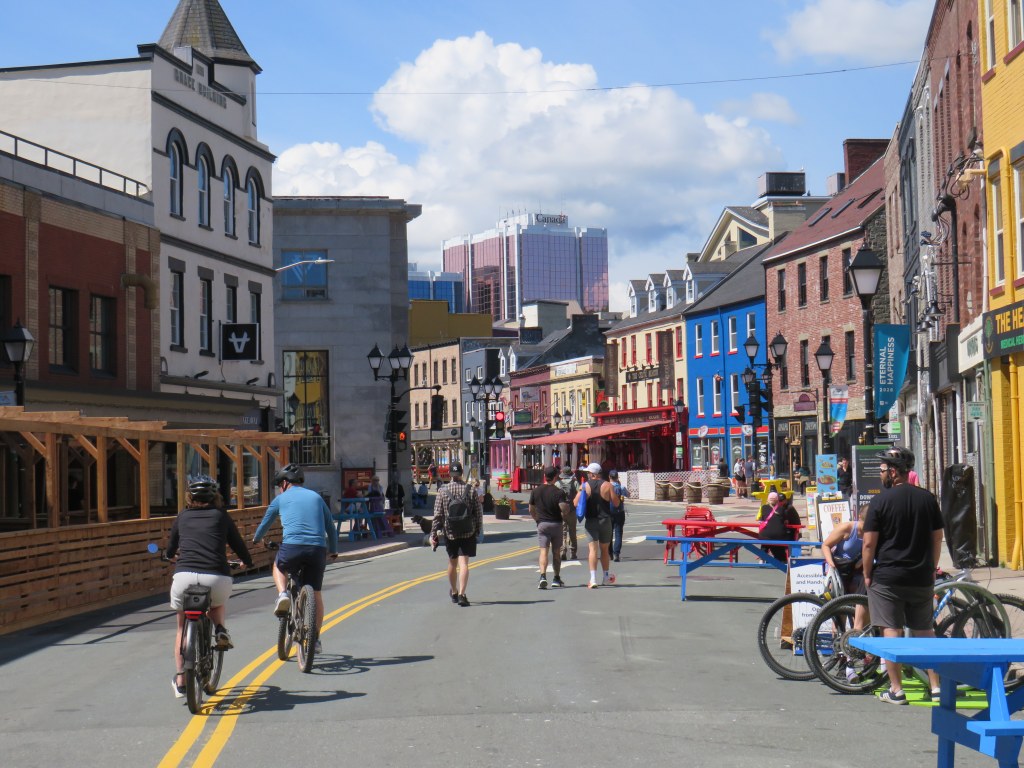
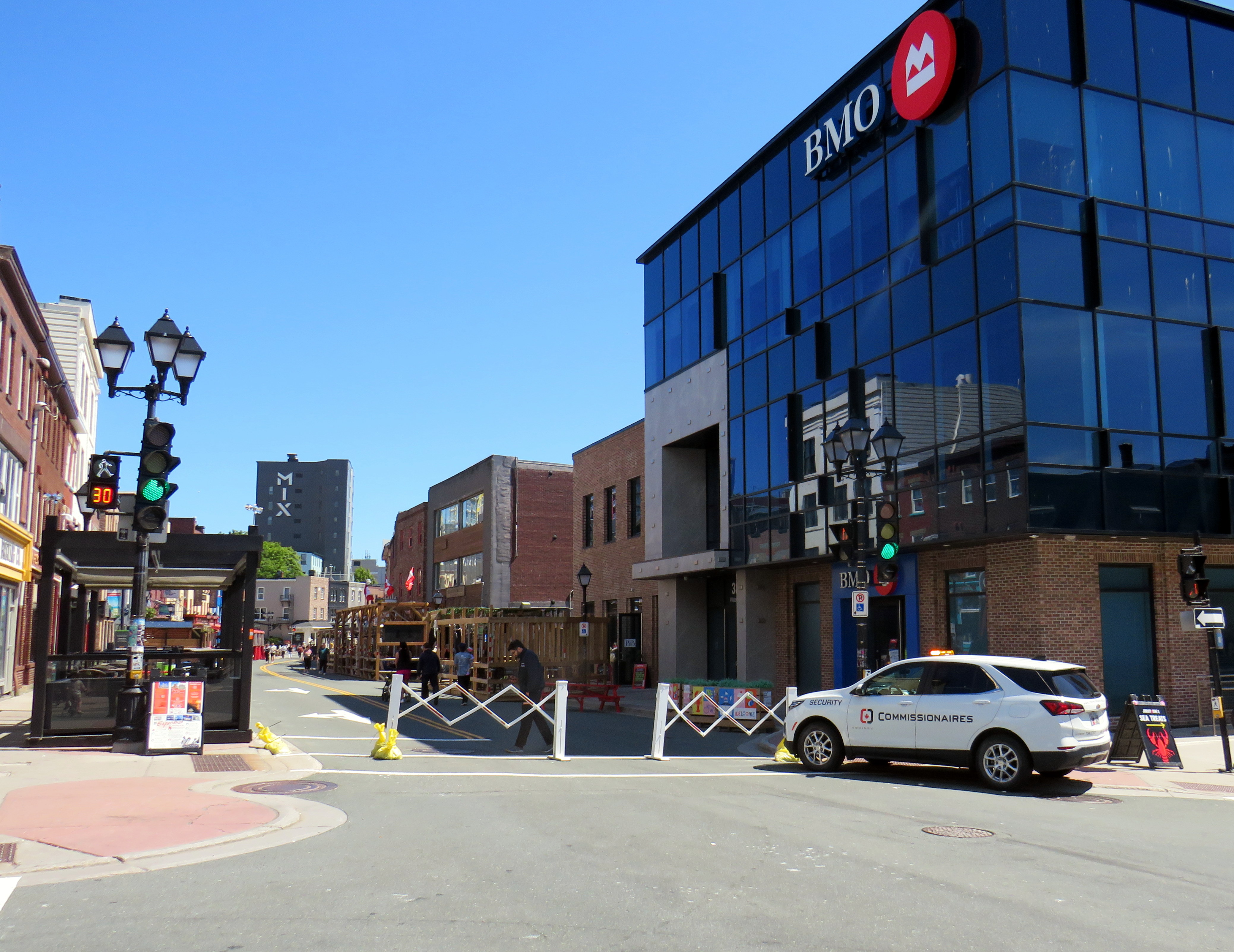
Pedestrians and cyclists enjoying a sunny Sunday morning in St. John’s
In late June of this year, my spouse and I had the chance to visit St. John’s, along with a few other destinations in Eastern Newfoundland and Saint Pierre, France. I highly recommend the visit, though even late June can be a bit cool and wet there.
During our last two days, several blocks — about 700 metres — of Water Street, the main commercial street in St. John’s, was closed to all motor vehicles, and remains so until September 7, Labour Day. This is an annual event, supported by downtown businesses, and is one of the positive legacies of the social distancing era of 2020-2021.
Though fenced-off restaurant patios spill on to Water Street, there are plenty of public spaces to sit, too
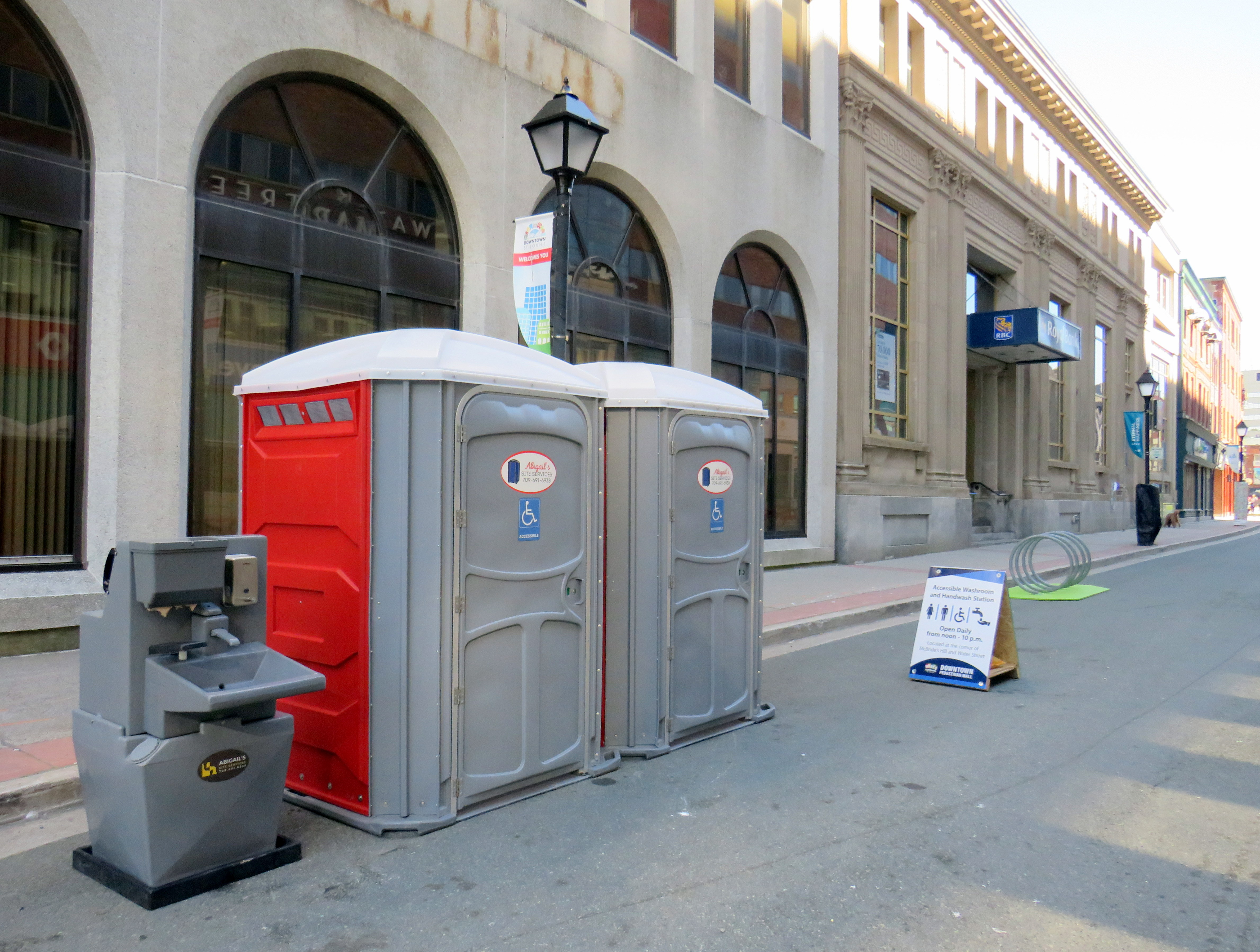
This is much less a street festival (though there are plenty of organized events) and more of an open street initiative. Though restaurants’ patios spill out into the street, there are plenty of public picnic tables set up for anyone to use, both in sunny and shaded areas. There are several portable toilets, complete with adjacent hand-washing sinks, which provide relief without having to pay to use a washroom.
Portable washrooms, hand-washing station, and portable bike parking on Water Street
Pedestrians and pedal cyclists are welcomed, though cyclists are instructed to go at a slow speed, and e-bikes passing through must have their power assist off.
Sign explaining e-bike policy for the Downtown Pedestrian Mall
Of course, there are security guards and gates set up to keep motorists out, apart from emergency vehicles and local deliveries. But I did not notice any police cars stationed at any of the intersecting streets, and the few RNC officers I saw were on general foot patrol. Though several Metrobus routes normally serve Water Street, these are diverted one block away to Harbour Drive.
Security minding traffic gates at Water and Adelaide Streets, the southern end of the pedestrian mall
Though St. John’s is a much smaller city than Toronto (its metro area is less than 4% the size of Toronto’s CMA), it is also much more car-dependent, with only a basic bus transit system, and very little cycling infrastructure. Yet, they are able to pull this off for ten weeks a year, on an annual basis. The last Open Streets event in Toronto was in 2022, and those were only held two Sundays of the year. Yes, there are wildly successful street festivals, such as Taste of the Danforth, which just had its record-breaking comeback, but they aren’t the same as they are rammed with crowds, and those only take place over two or three days.
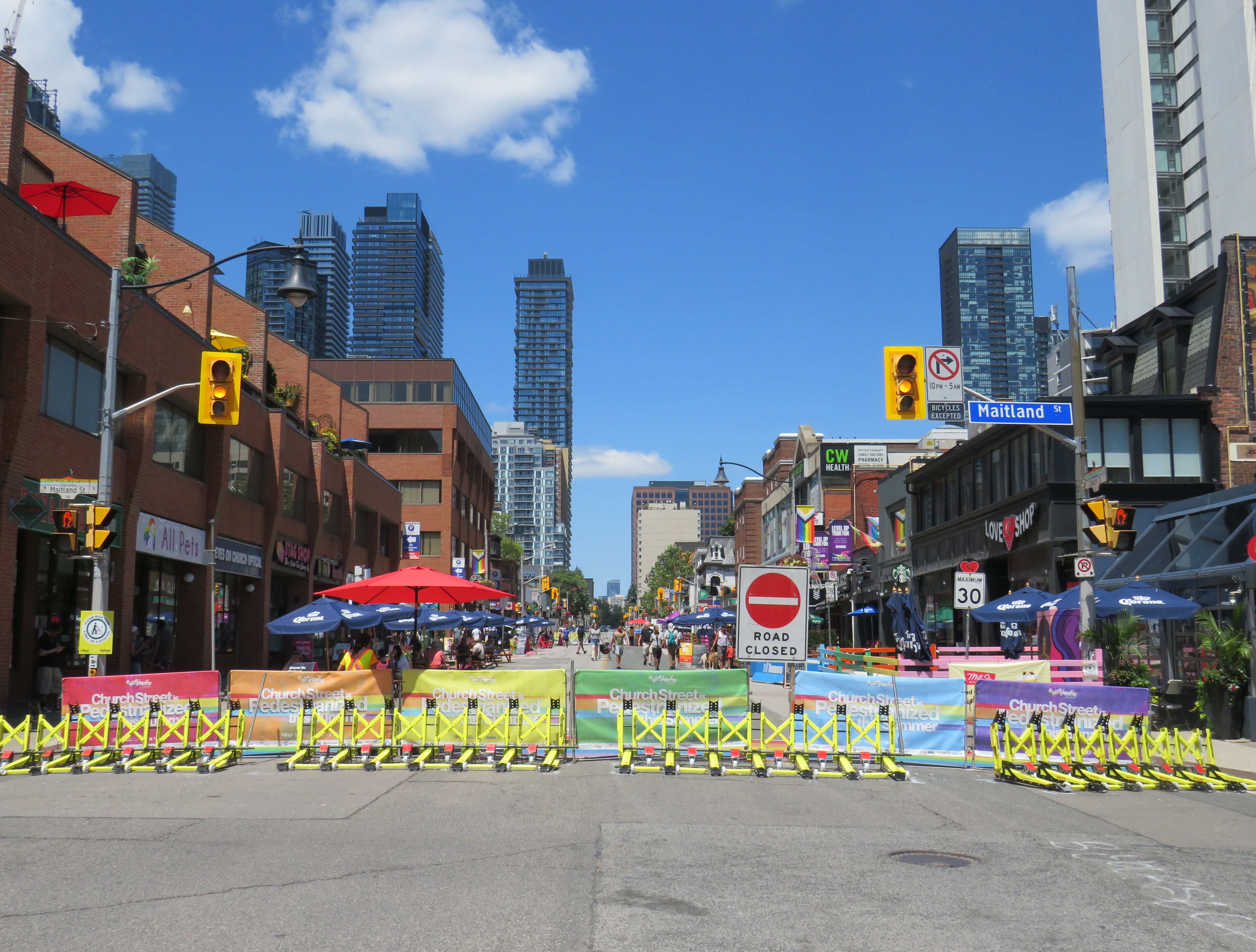
Moveable car traps and metal barricades block Church Street, looking north at Maitland
One key noticeable difference are the harder barriers to prevent motor vehicles from entering. Yellow wheel traps are lined up next to metal barricades, decorated with colourful banners. Though understandable given recent history in Toronto and Vancouver with vehicular attacks on sidewalks and a street festival, they sadly act to fence in what should be an open street and pedestrians must enter on the sidewalks. Unlike St. John’s, cycling is prohibited as well.
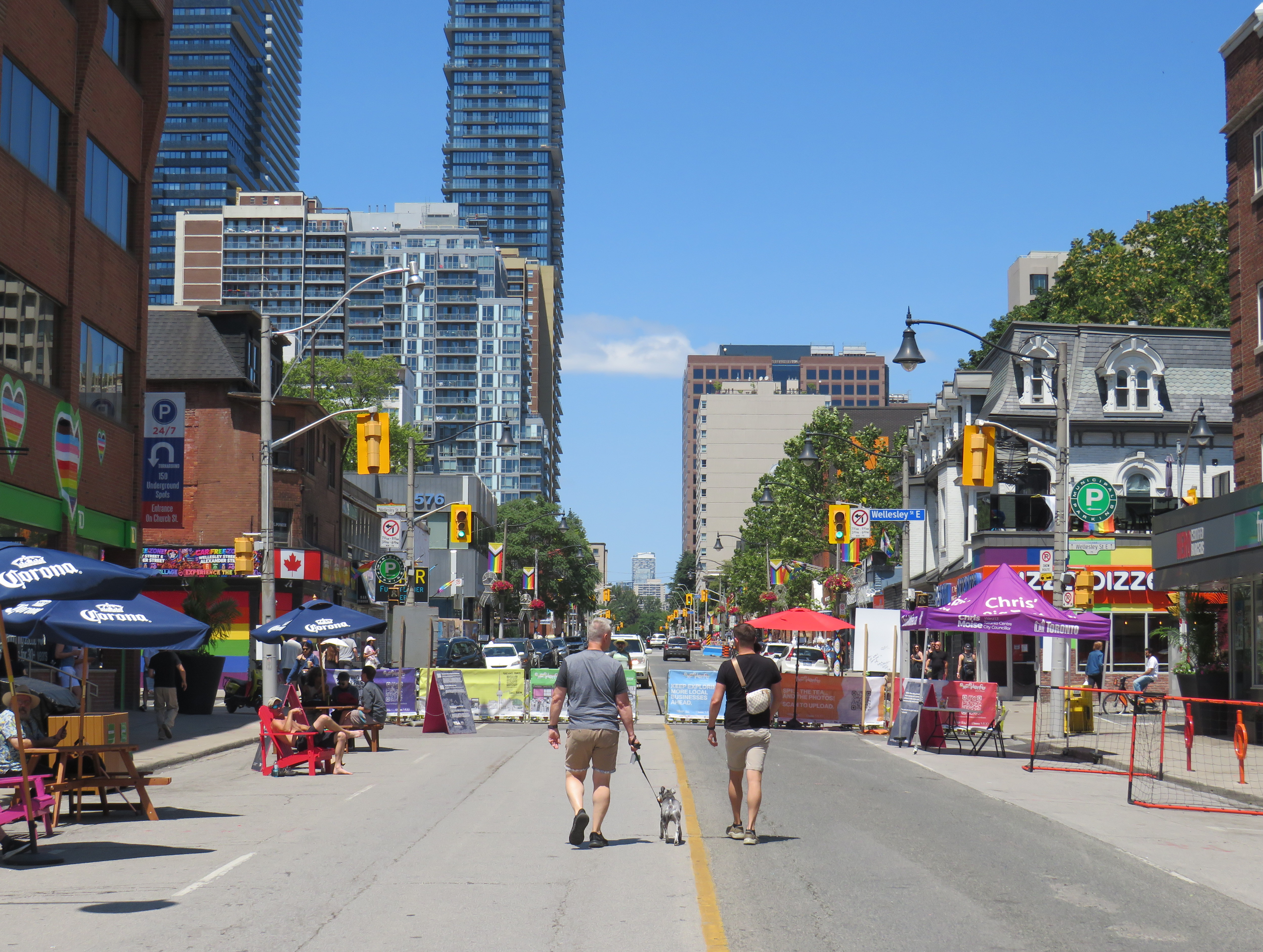
Shaded by branded patio umbrellas, the picnic tables and Muskoka chairs on the left are open to anyone
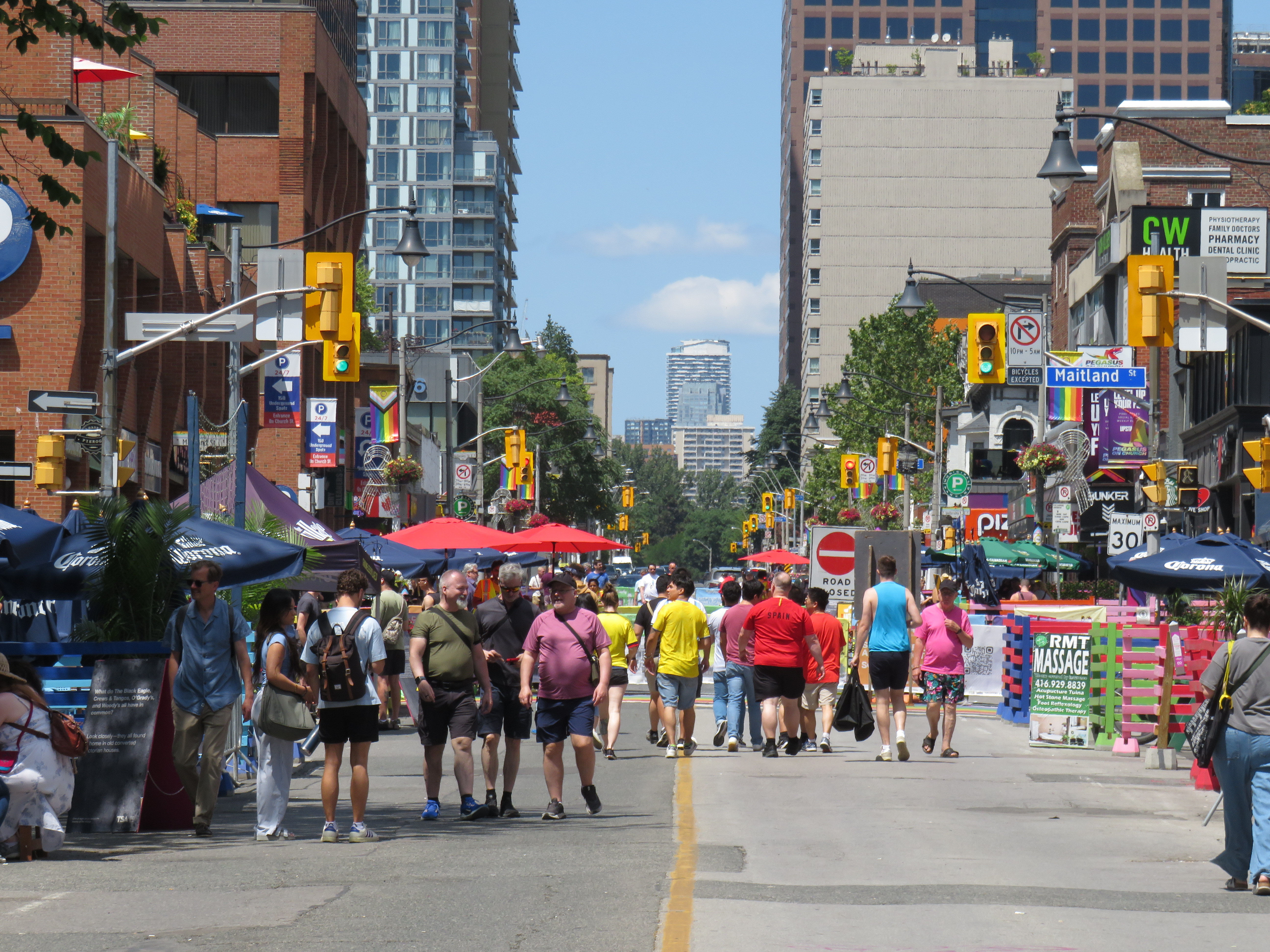
Still, it’s a great taste of what Toronto should have more of. As on Water Street, there are both private patio spaces on the street as well as public chairs and benches, as well as extra waste bins, though no public toilets. It’s also very well used, especially later in the day. The Church-Wellesley Village is the cultural and commercial centre for Toronto’s 2SLGBTQ+ communities, as well as being in the centre of a very densely-populated area with limited open space.
It is also oddly quiet, despite the vibrancy. That’s because there are no cars, which are a major source of urban noise pollution. The car-free environment also makes sitting on a curbside patio much more enjoyable, without the noise and smells of passing motorists. How can anyone object?
Later in the afternoon, Church Street was busier with pedestrians
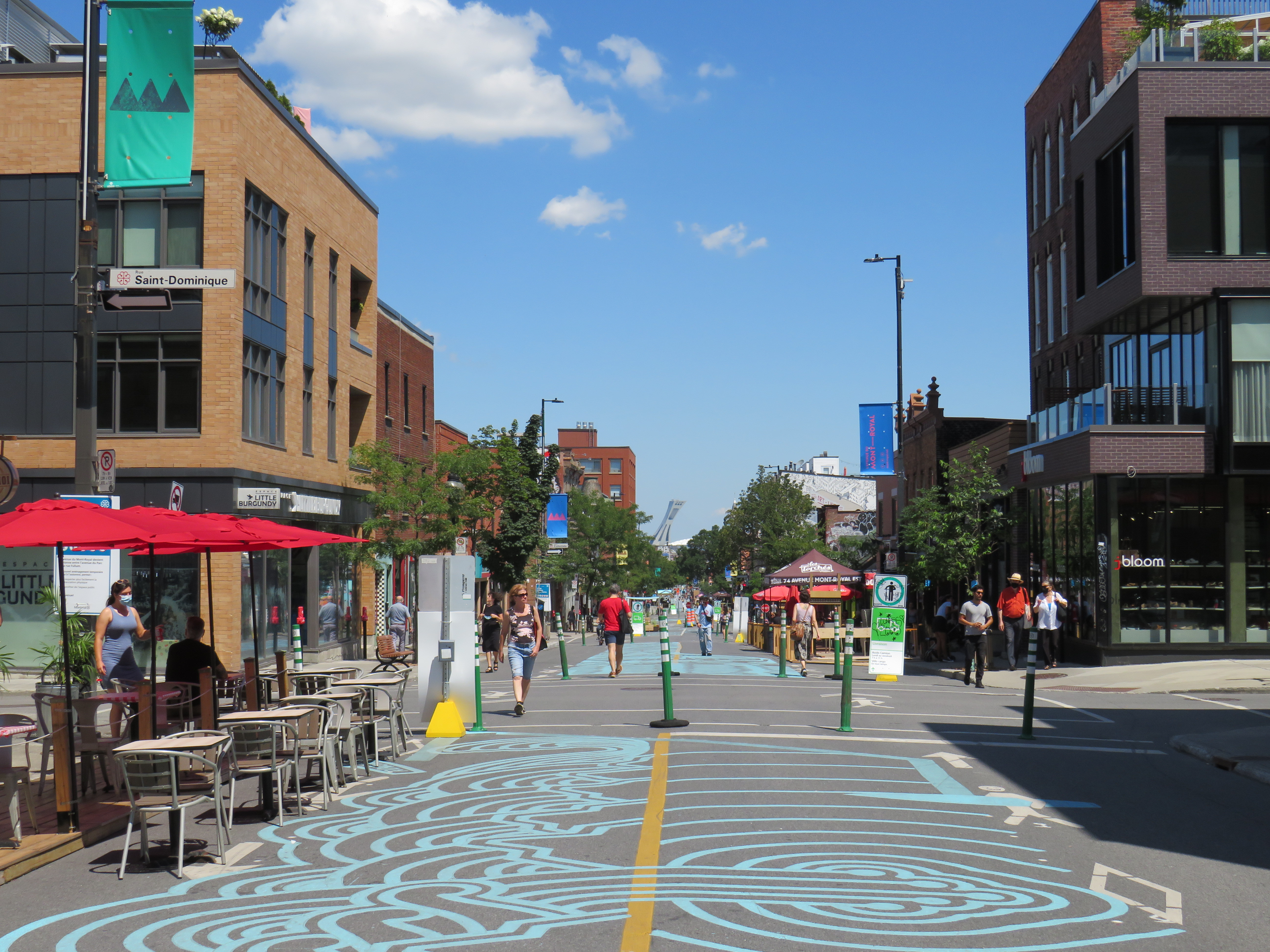
It might be too much to ask for Montreal-style open street corridors, but Toronto should at least aspire to more, long-term open street set-ups like Water Street and Church Street. Kensington Market would be the perfect place to start. Even on our busy east-west streetcar routes on corridors such as Gerrard Street East or Queen Street West, with a bit of imagination and can-do spirit, we can accommodate those as well.
With adding long-term implementations, we will need to rethink the costs of policing and security, which are currently a major barrier to providing these spaces in Toronto. In Montreal, security staffing is minimal on open streets such as Ave. Mont-Royal. The needs of policing and securing a regular pedestrianized area are quite different than ensuring safety at a crowded street festival.
Ave. Mont-Royal, where security measures are minimal on the summer open street
Such crowd-pleasing, neighbourhood-building actions as Open Streets should be on any serious mayor or council candidate’s policy platform in the upcoming municipal election.