Tag: Architecture

  • An exciting future for Old City Hall

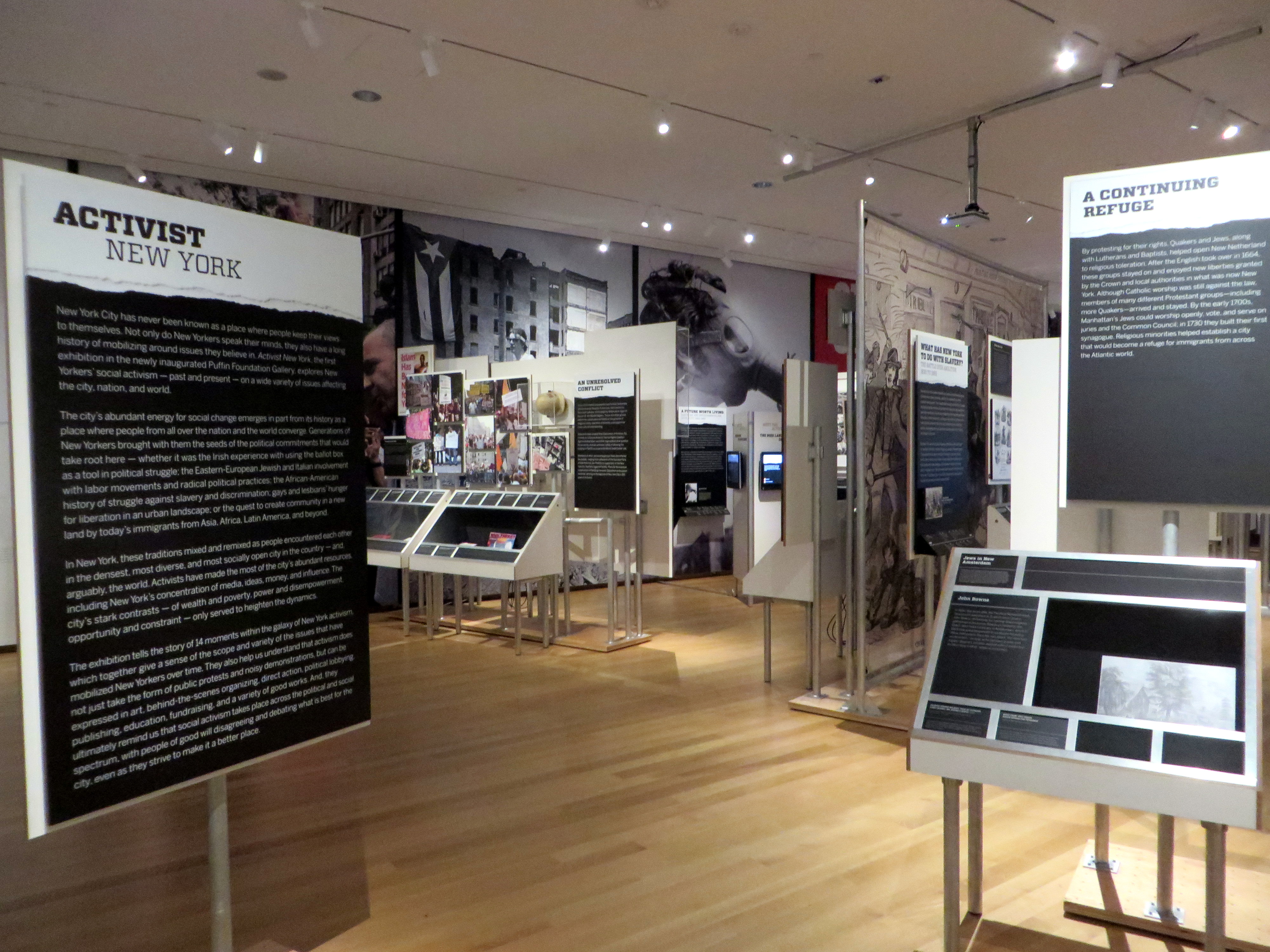
    IMG_8119-002Activist New York exhibition, Museum of the City of New York, January 2015

    During my last visit to New York City, in January 2015, I visited the Museum of the City of New York. I spent several hours exploring the museum, which is dedicated to telling the story of the city and its inhabitants. The exhibit that fascinated me the most was a temporary exhibition called “Activist New York” which covered everything from campaigns for and against religious tolerance in the 1600s to the struggles for LGBT rights in the last several decades. With rich and trying history of human rights struggles in our city, I felt that this is exactly the type of exhibition that would fit a potential City of Toronto Museum.
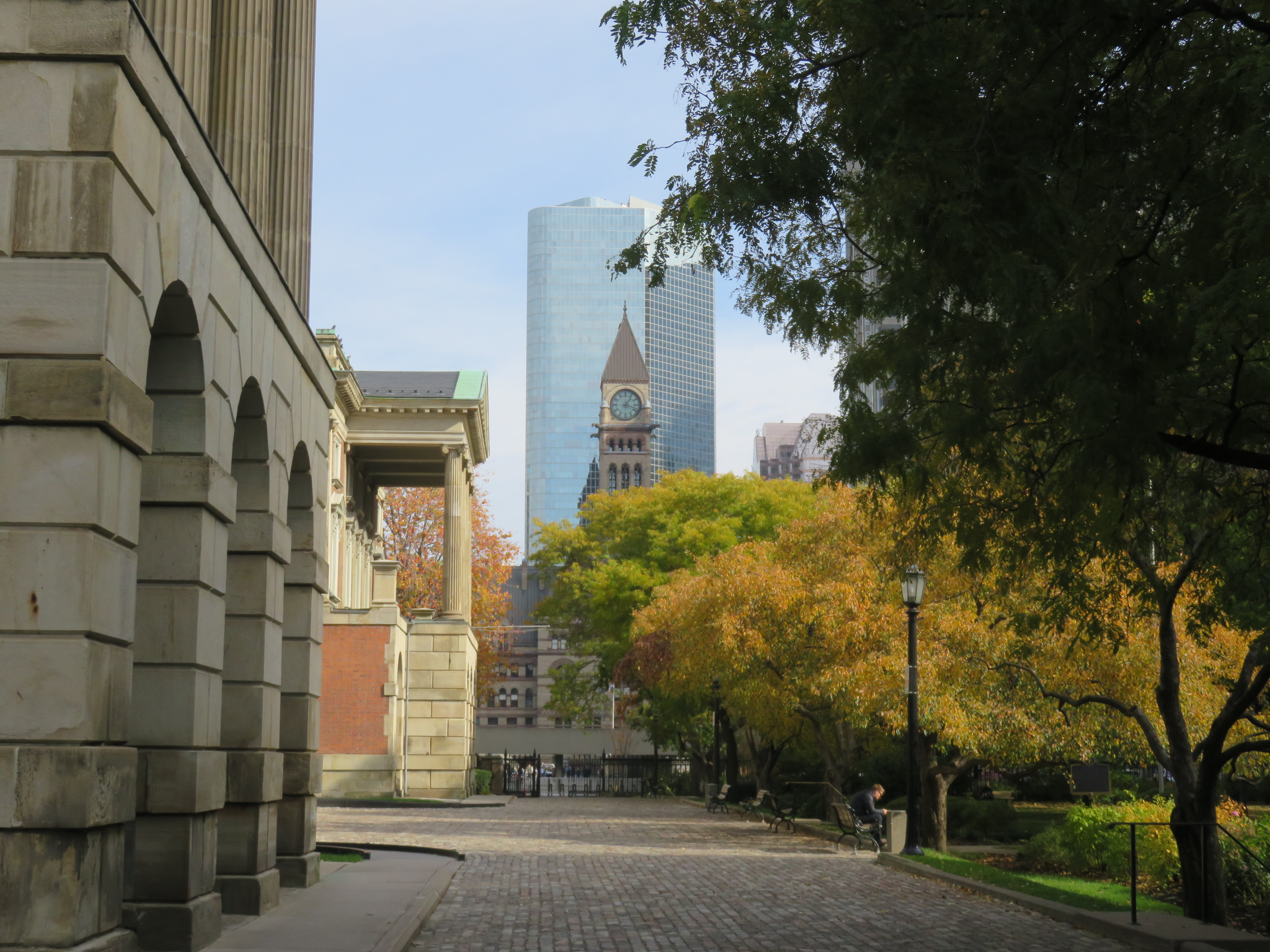
    osgoode-oasis_30887205805_oOld City Hall’s clocktower overlooks Nathan Phillips Square and Osgoode Hall

    With new plans for Old City Hall currently being studied, the dream of a civic museum worthy of the City of Toronto is one step closer to reality. With provincial courts due to vacate E.J. Lennox’s Richardsonian Romanesque masterpiece, the City of Toronto is looking to re-purpose the building for new public and private uses, including a new enclosed courtyard. Retail and commercial uses — such as shops, cafes, educational spaces and offices — would be sympathetic to the historic structure. But the highlight is a proposed 100,000 square foot museum, comparable in size to that in New York.

    https://twitter.com/Sean_YYZ/status/801209680060182529

    There’s still the risk that City Council won’t approve a new museum, which would be expensive to build and may not, in itself, be a money-maker. But as a city-building initiative, it’s necessary, like a new major downtown park.

    I attended the public consultation meeting at Metro Hall last night; I wrote more about it in Torontoist.
  • Two buildings that truly define Toronto

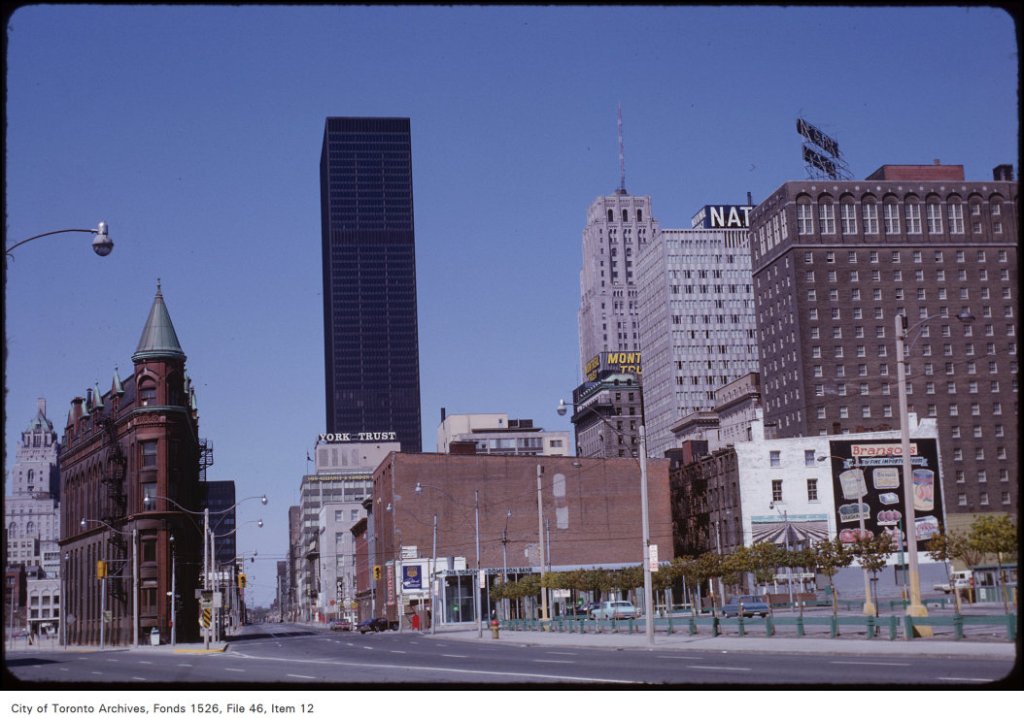
    City of Toronto Archives, Fonds 1526, File 46, Item 12. Creator, Harvey R. Naylor
    City of Toronto Archives, Fonds 1526, File 46, Item 12

    The first tower of the Toronto-Dominion Centre, from Front and Church Streets, 1967

    Back in May and June of 2015, the Guardian newspaper ran an intriguing series on its Cities page entitled “A history of cities in fifty buildings.” The list is quite interesting: it includes several buildings no longer standing, such as the infamous Pruitt-Igoe housing complex in Saint Louis, Missouri, and the World Trade Center in New York, and some iconic, transformative landmarks such as the Guggenheim Museum in Bilbao, Spain, and even the first Starbucks location in Pike Place Market, Seattle.

    In Toronto, the Guardian chose Honest Ed’s as Toronto’s entry on the list. Of course, the Guardian’s list wasn’t meant to include the world’s most famous or iconic buildings, but chose an assortment of structures, standing, demolished — or in Honest Ed’s case, imperiled — meant to “tell unique stories of our urban history.”

    [Disclosure: I contributed to the Guardian Cities site in February, 2015, discussing new streetcar systems in American cities.]

    Over six months later, the Toronto Star finally noticed the Guardian’s inclusion of Honest Ed’s in its list of fifty buildings. The Star sought the opinion of two local architecture professors, Vincent Hui, of Ryerson University, and David Lieberman, of the University of Toronto. Hui agrees with Honest Ed’s inclusion, while Lieberman says that “at first glance, [the Guardian’s series] is a really dumb list.”

    In some ways, Honest Ed’s — that kitschy emporium of bargains, bad puns, and faded memorabilia, fits the criteria of the Guardian’s list. The store was innovative (it was one of the first stores to feature “loss leaders” and store greeters), it served the needs of Toronto’s growing post-war immigrant communities, and was the starting point for a larger empire that included theatres in Toronto and London. The store’s replacement by a new mixed use development proposed by Westbank, is also part of Toronto’s story, as it becomes an increasingly high-rise city. So I agree with its inclusion in the Guardian’s list, based on the newspaper’s interesting (and provocative) criteria.

    But if you were to ask me, I’d select two different buildings that would best represent Toronto’s modern history: the Toronto-Dominion Centre and City Hall.

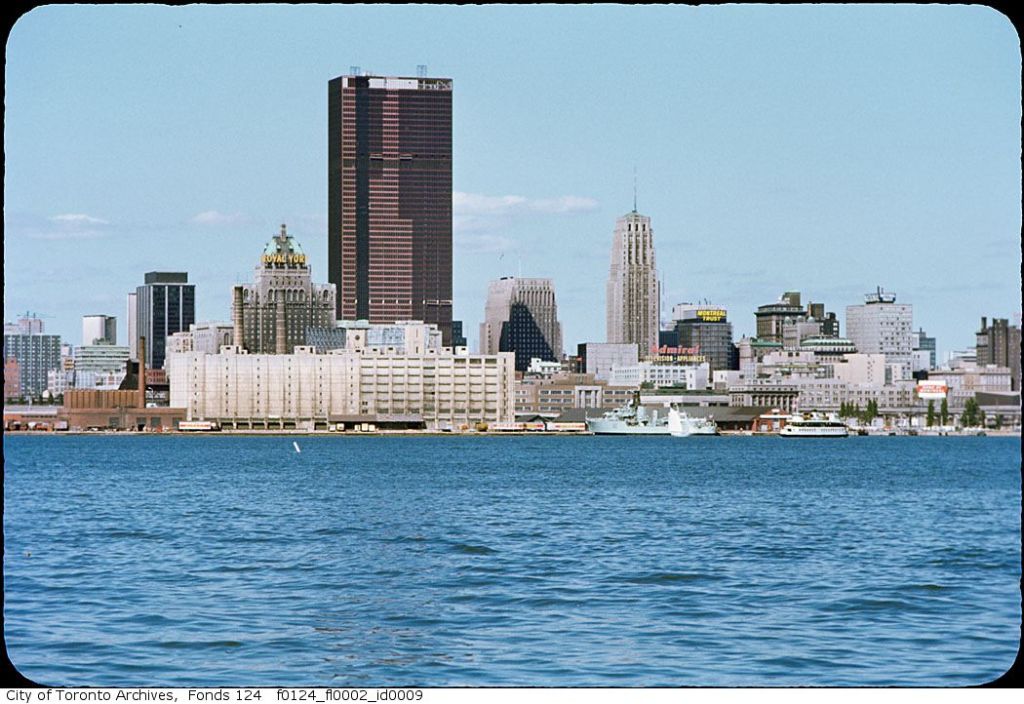
    f0124_fl0002_id0009
    City of Toronto Archives, Fonds 124, File 2, Item 9

    (more…)