Tag: Barrie

  • A transit tour of central Ontario

    A transit tour of central Ontario

    On the morning of Thursday, August 19, I departed Toronto’s Union Station. My destination: Union Station. I set out to travel the longest distance possible by local and regional transportation services, taking advantage of several new routes set up by local and county governments to fill the gaps left by traditional intercity coach operators.

    The round trip from Union Station required two trains and seven buses, operating on five separate transportation agencies. In some cases, the transfers were smooth and reliable; in Owen Sound, I waited several hours between connecting trips. For a casual traveler like myself, this was not a problem, but for more frequent commuters, the patchwork of various schedules and fares is not ideal.

    I left Union Station on a westbound Kitchener Line train at 7:34 AM on Thursday, August 19. I returned to Union Station at 9:34 PM Friday evening, staying in Meaford overnight. I made time for short visits to Owen Sound, Meaford, Collingwood, and Barrie, with short stopovers in Guelph and at the Blue Mountain resort.

    The following is a travelogue of sorts, concluding with a few conclusions on how parts of this trip can be made better for future passengers.

    Thursday: Toronto to Owen Sound and Meaford

    Intending to catch the morning GOST (Guelph-Owen Sound Transportation) minibus from downtown Guelph, I boarded the first westbound Kitchener Line train at Union Station at 7:34 AM. The train only goes as far as Bramalea Station, requiring a transfer to a bus to continue westward. Happily, the train arrived at Bramalea on time, so there was no problem taking the connecting bus that departs at 8:18 AM. (I had bad luck on a previous trip through Bramalea.)

    The connecting bus from Bramalea to Guelph is a slow, local service, winding its way through Brampton, Georgetown, Acton, and rural Wellington County before arriving at Downtown Guelph at 10:13. Through GO Transit’s buses are comfortable, they lack lavatories, so a two-hour trip may be difficult on some passengers’ bladders. Though the 7:34 train to Bramalea connects to an express bus via Highways 407 and 401 to Kitchener, anyone headed to Guelph gets to ride the scenic route.

    Though an express bus would be welcome, I noted the importance of the local GO bus for workers living in Brampton getting to jobs in Halton Hills, and residents in Acton and Rockwood commuting to Guelph. There is a need for both services.

    At least I got a spot at the front of the double decker bus and was able to enjoy the ride.

    This first leg on GO Transit between Toronto and Guelph cost $14.06, deducted from my Presto card.

    Brampton Transit used to operate a double-decker bus. GO Transit has brought them back to the Flower City.
    Due to a construction project on Highway 7 in Rockwood, the double-decker bus took a scenic, yet unexpected detour on country roads. This must have turned some heads.

    At Downtown Guelph, I had just under 20 minutes to use a washroom and have a quick coffee before switching to the GOST minibus. GOST serves the Guelph Central Station bus terminal, with easy connections to GO buses and trains and most Guelph Transit services.

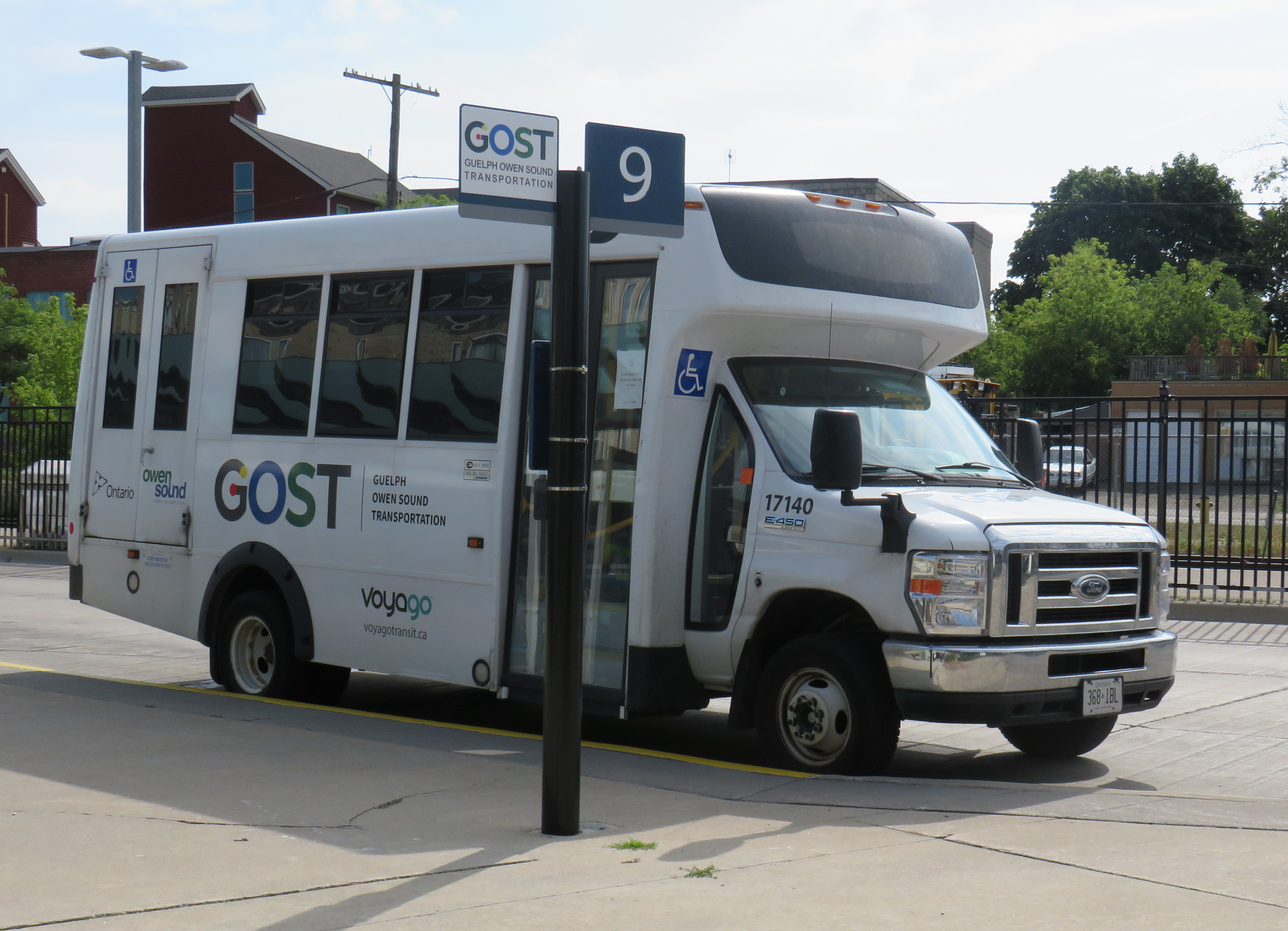
    A GOST minibus waiting for departure at Guelph Central Station

    The GOST minibus service operates two round trips, seven days a week, between Guelph and Owen Sound, with stops in Elora, Fergus, Arthur, Mount Forest, Durham, Williamsford, and Chatsworth. Except for Fergus, all stops are located in or near each town’s commercial centre. The service is funded by Owen Sound and a provincial grant, and operated by London-based Voyago (which operates several other rural services in Western Ontario).

    Until the mid 2000s, Greyhound ran buses six days a week between Toronto and Owen Sound via Highway 10 through Brampton and Orangeville or via Highway 6 through Guelph and Mount Forest, each route on alternating days. Gray Coach, the TTC-owned predecessor to Greyhound, ran several daily trips. The twice-daily GOST bus is a significant improvement over Greyhound’s schedule in its waning years.

    On this Thursday midday northbound trip, there were two passengers going all the way up to Owen Sound, one getting off in Elora, one disembarking at Mount Forest, and one passenger who boarded at Williamsford for Owen Sound. The fare from Guelph to Owen Sound is $20 cash, with cheaper fares to ride shorter distances.

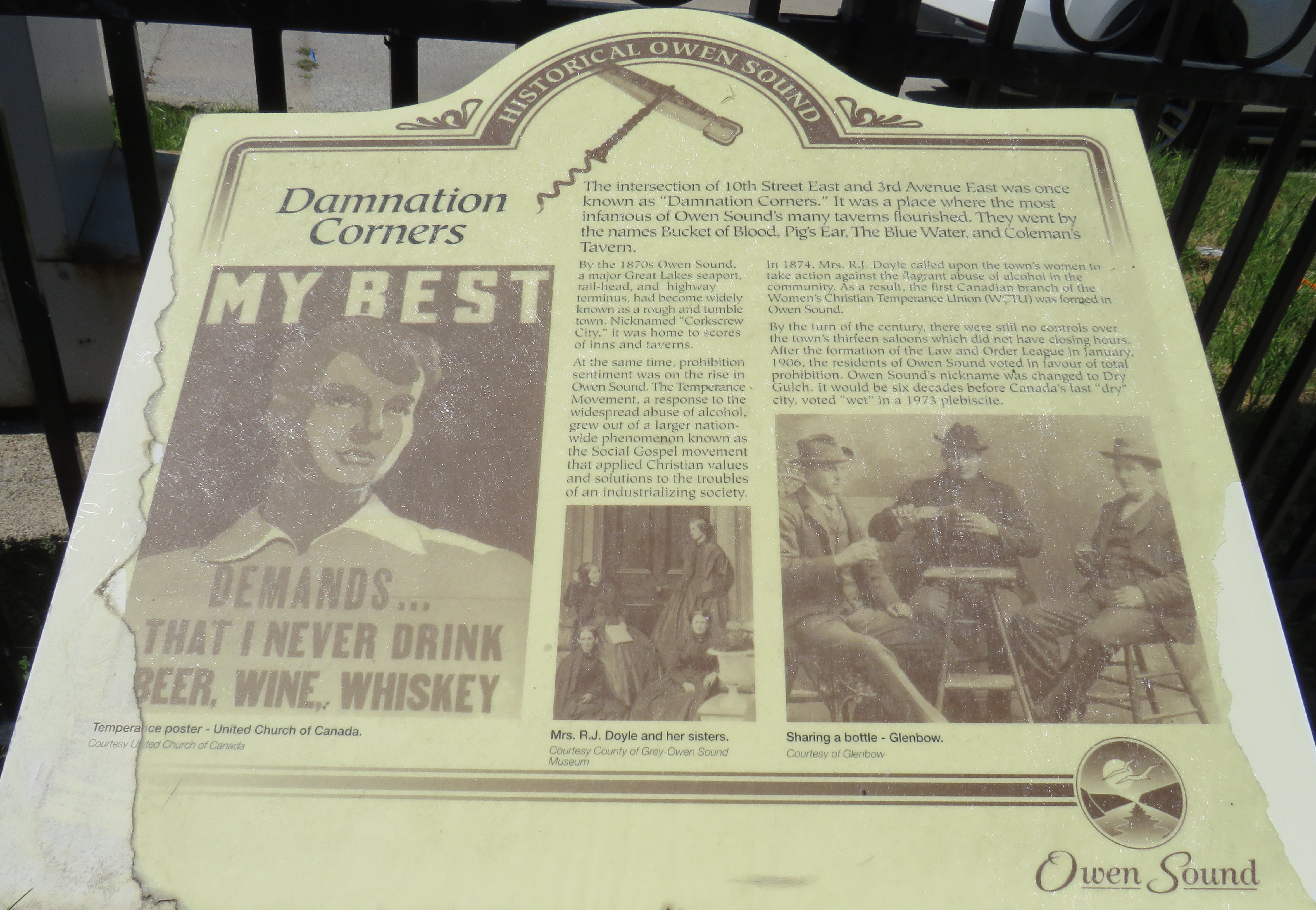
    I arrived in Owen Sound a few minutes before 1:00 PM, with several hours to spend before my next ride to Meaford. Owen Sound, population 26,000, has an interesting history as a Great Lakes port and railhead for both the Canadian Pacific and Grand Trunk/Canadian National Railways. The maritime traffic and local industry gave Owen Sound a reputation as a hard drinking town; it became one of the first municipalities in Ontario to go “dry” in 1906. It remained that way until 1973.

    With the construction of the St. Lawrence Seaway and the decline of branch lines across Ontario, the city declined as a port and both railways were torn up in the late 1990s. However, both stations remain standing – the Grand Trunk Station on the west side of the harbour is now a local museum, while the modernist CP station, built after the Second World War, is now a brewpub.

    With a lovely downtown, harbour, parks, and heritage neighbourhoods to wander through, Owen Sound was worth a three-and-a-half stopover.

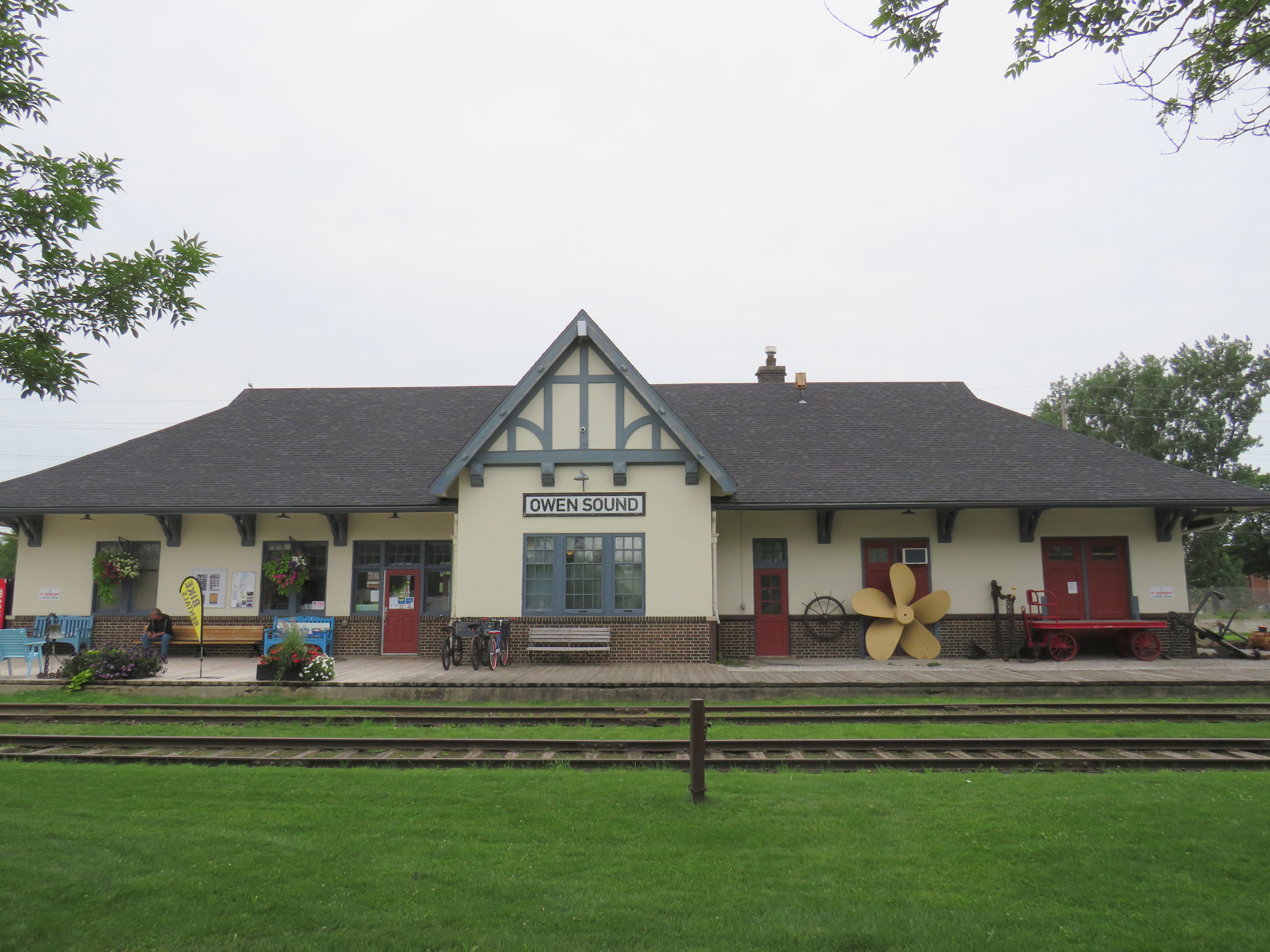
    Owen Sound Marine and Rail Museum, the former Grand Trunk/CN Station
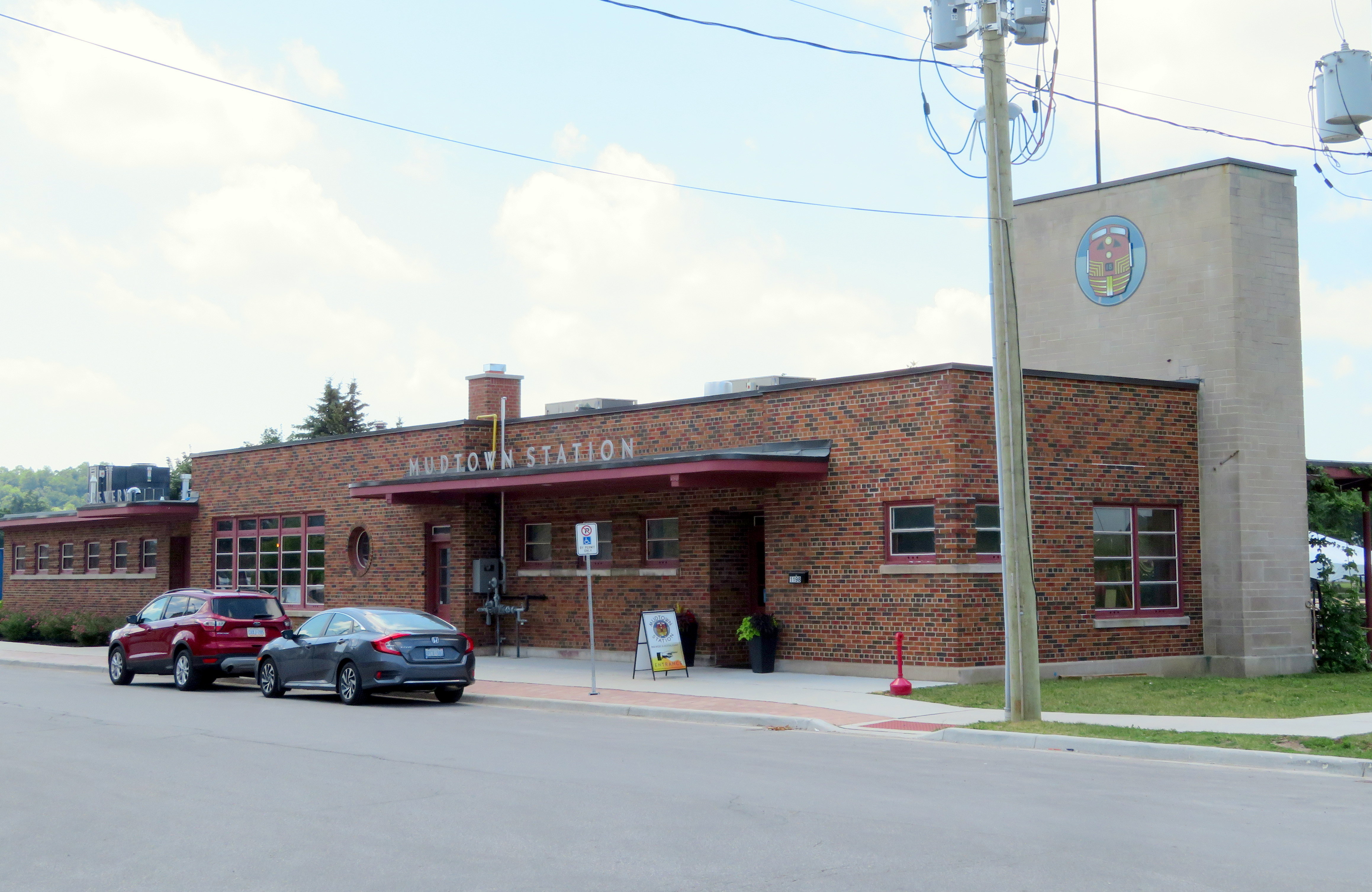
    Mudtown Station, the old CP Station in Owen Sound
    Plaque commemorating “Damnation Corners” where taverns once stood on all four corners. One block to the east was “Salvation Corners” where four Protestant churches still stand.

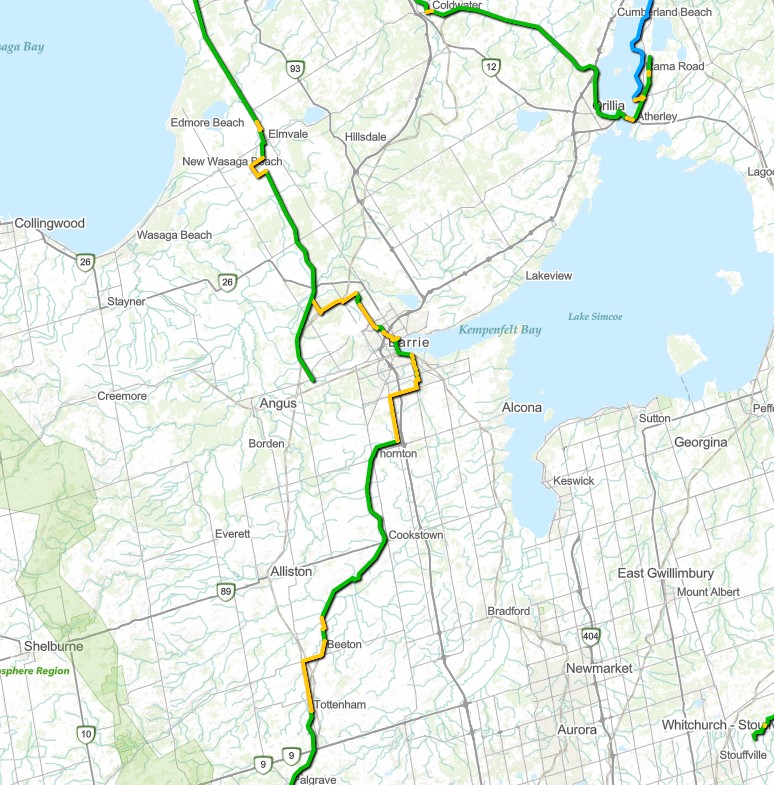
    I decided to stay in Meaford overnight. Though I could get as far east as Wasaga Beach via Grey Transit Route, Colltrans, and Simcoe County Linx, I would not have been able to continue my trip back to Toronto that night, missing the last Linx bus from Wasaga Beach to Barrie by one hour.

    Meaford had cheaper accommodations than Owen Sound or Collingwood, and by staying there overnight, it gave me plenty of time in Meaford and Collingwood the next day. Before Greyhound Canada suspended operations in April 2020, there was one daily bus between Toronto, Barrie, Collingwood, and Owen Sound. PMCL, which Greyhound purchased in the 1990s, used to run several buses a day on that route.

    I departed Owen Sound on a pre-booked GTR minibus at 4:30 PM, which cost $5 for the trip into Meaford. As I was the only one on that departure, the driver was kind enough to drop me off right by my motel. There are six daily trips between Owen Sound and Meaford, with four of those trips offering a timed connection or direct run to Blue Mountain Resort, GTR’s eastern terminus.

    GTR minibus at Owen Sound Terminal (October 2020)

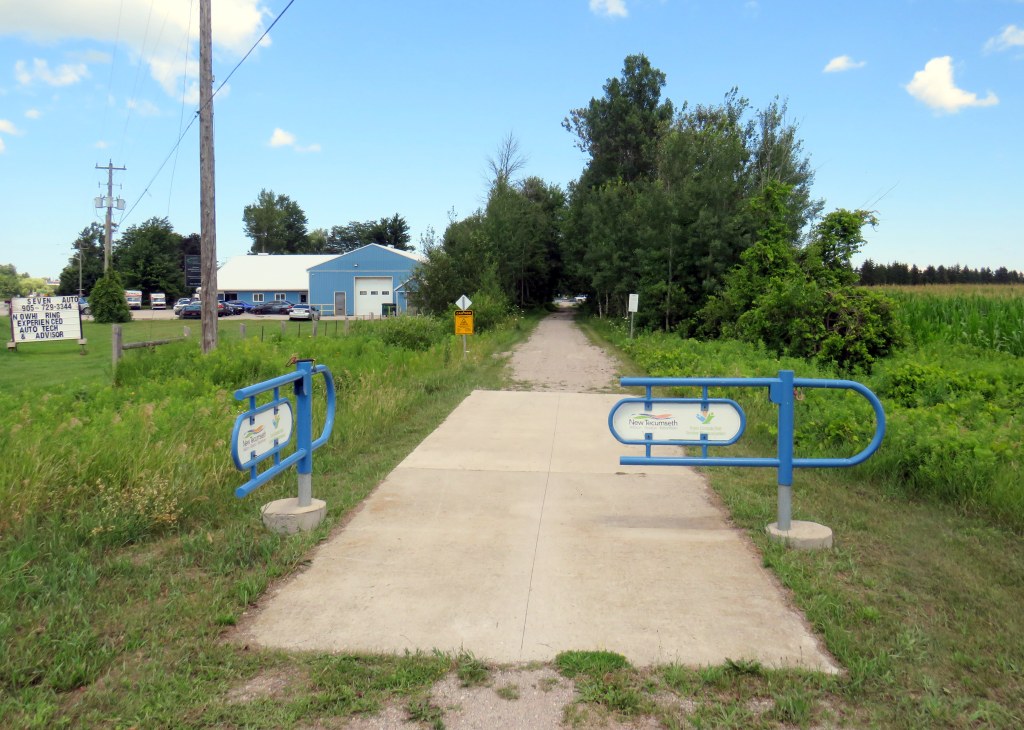
    Meaford itself is a charming little town, with several good restaurants, and a lovely harbour. Meaford is the western terminus of the Georgian Trail to Collingwood, one of Ontario’s first rail trails. As GTR minivans and Simcoe Linx and Colltrans buses all have bike racks, Meaford would make for a nice cycling trip.

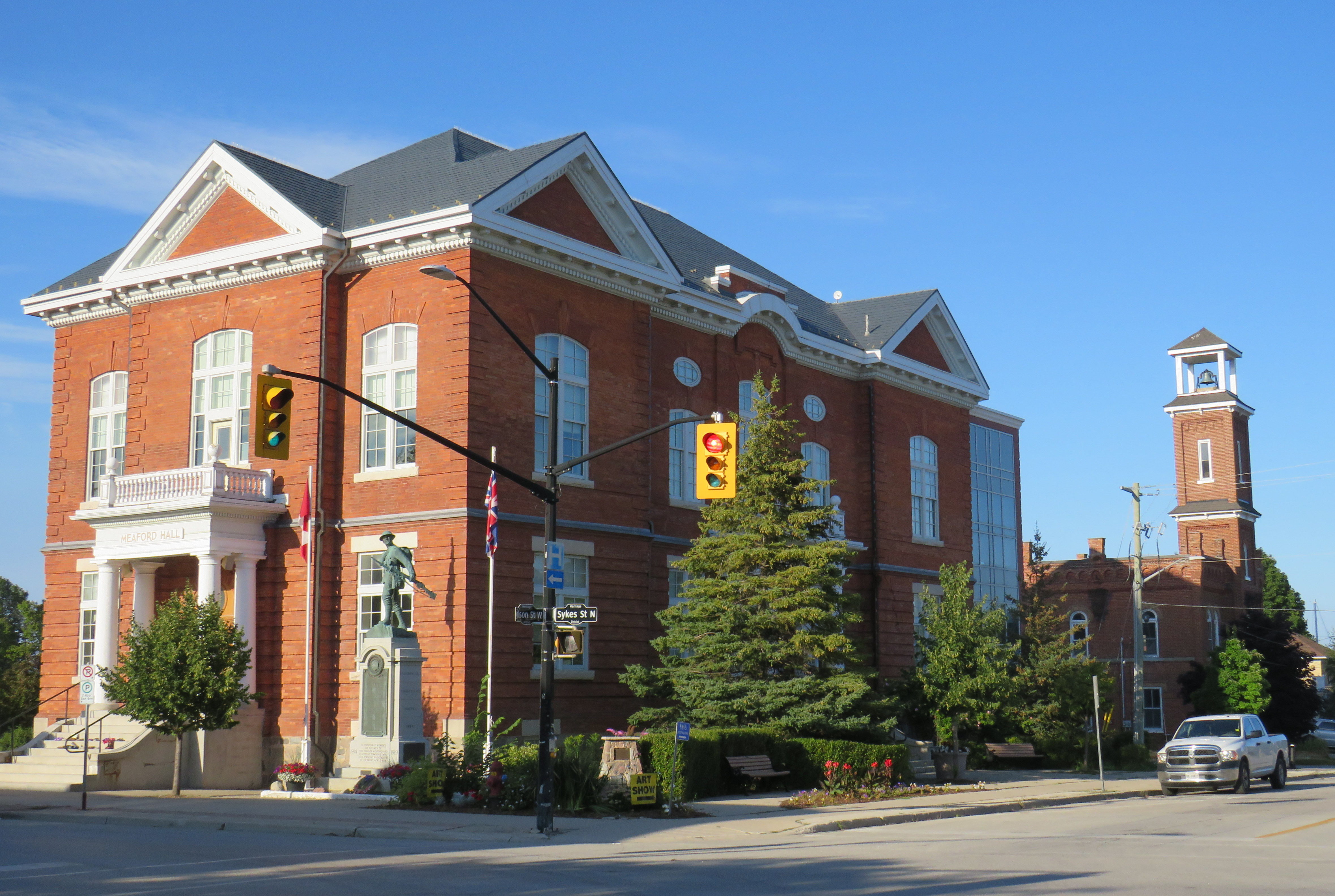
    Meaford Hall, with the old fire station behind
    Terminus of the Georgian Trail, which continues to Collingwood, with connections beyond

    Friday: Meaford to Collingwood and Toronto

    The next morning, I departed Meaford on GTR Route 4 at 8:46AM, and arrived at Blue Mountain Village just after 9:30, another $5 pre-booked trip. The popular resort is also served by Colltrans’ Blue Mountain Link route to Downtown Collingwood, with connections to local buses and the Simcoe County Linx Route 4 to Wasaga Beach.

    Approaching Blue Mountain, the driver helpfully asked me if I needed to catch the bus to Collingwood. Though the timetables between GTR Route 4 and Colltrans’ bus don’t permit an easy connection, if I got off at Craigleith, at the bottom of the escarpment, I would be sure to get the onward bus. I declined the offer, because I was curious to see Blue Mountain Village itself, and I needed a coffee.

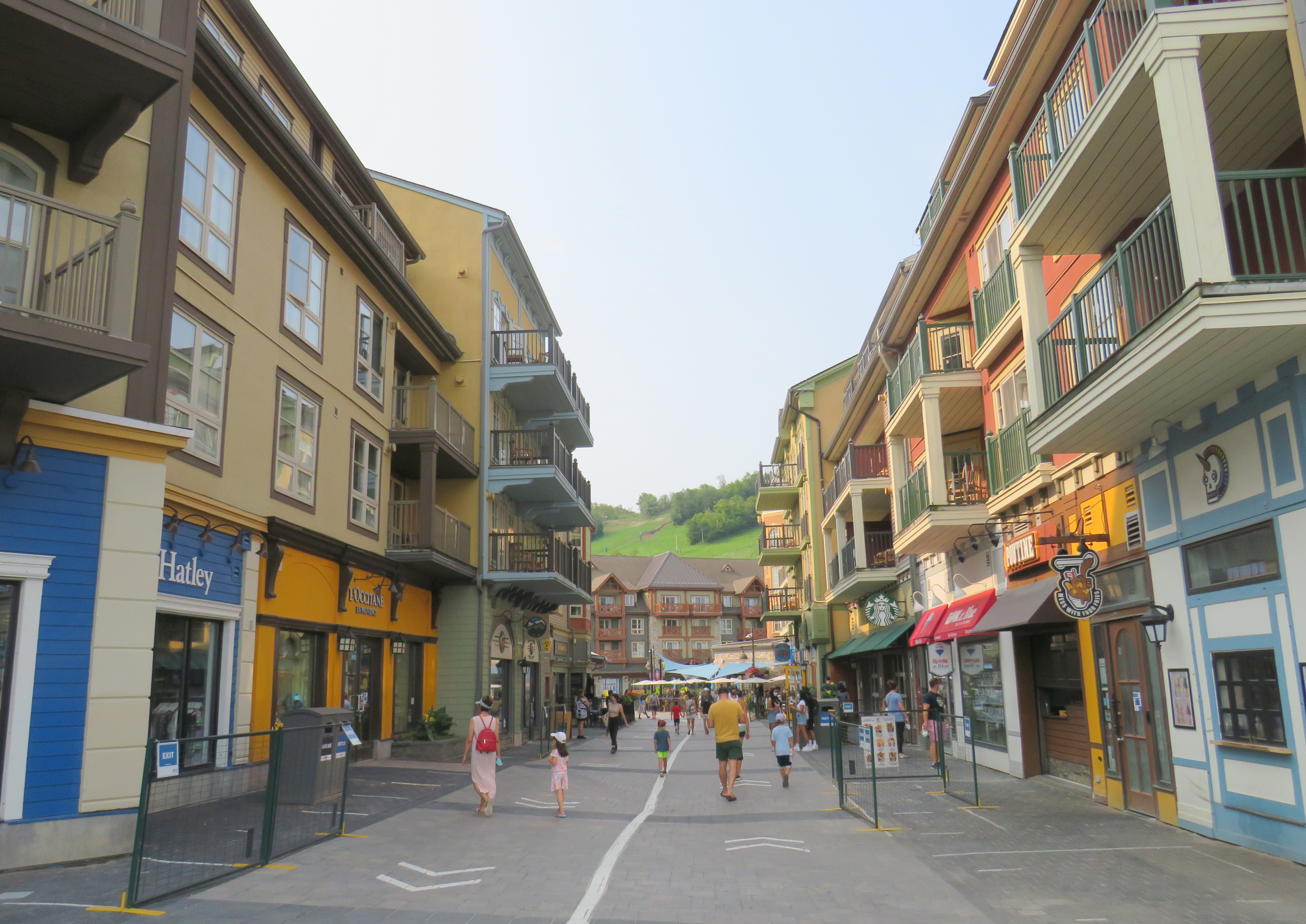
    The Disneyland-like urbanity of Blue Mountain Village

    Blue Mountain Village, the heart of the sprawling Blue Mountain resort, contains many shops, restaurants and bars, along with three hotels and timeshare apartment complexes with the architecture and walkways meant to invoke a European ski resort. Cars are not permitted in the internal streets, which gives it a somewhat surreal atmosphere. In the summer, tourists and vacationers are attracted by several golf courses, downhill mountain biking trails, rope courses, spas, nearby beaches, and, of course, the shops.

    Having gotten my coffee and my morning walk, I paid my $2 fare and got on the 10:20 bus to Downtown Collingwood.

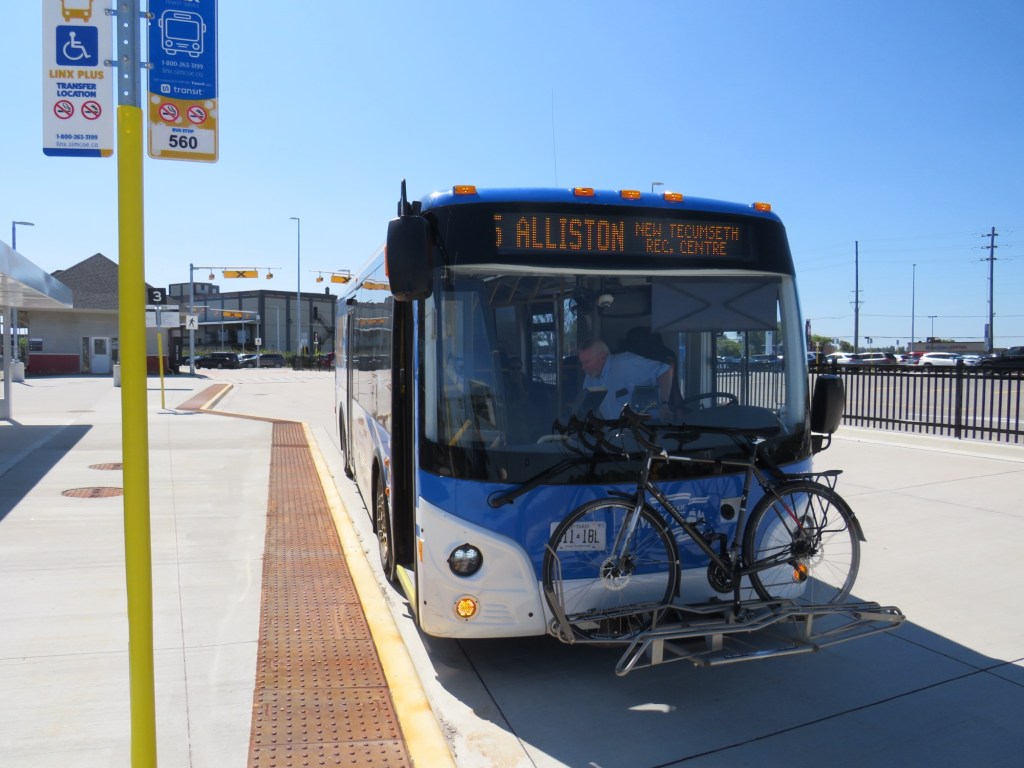
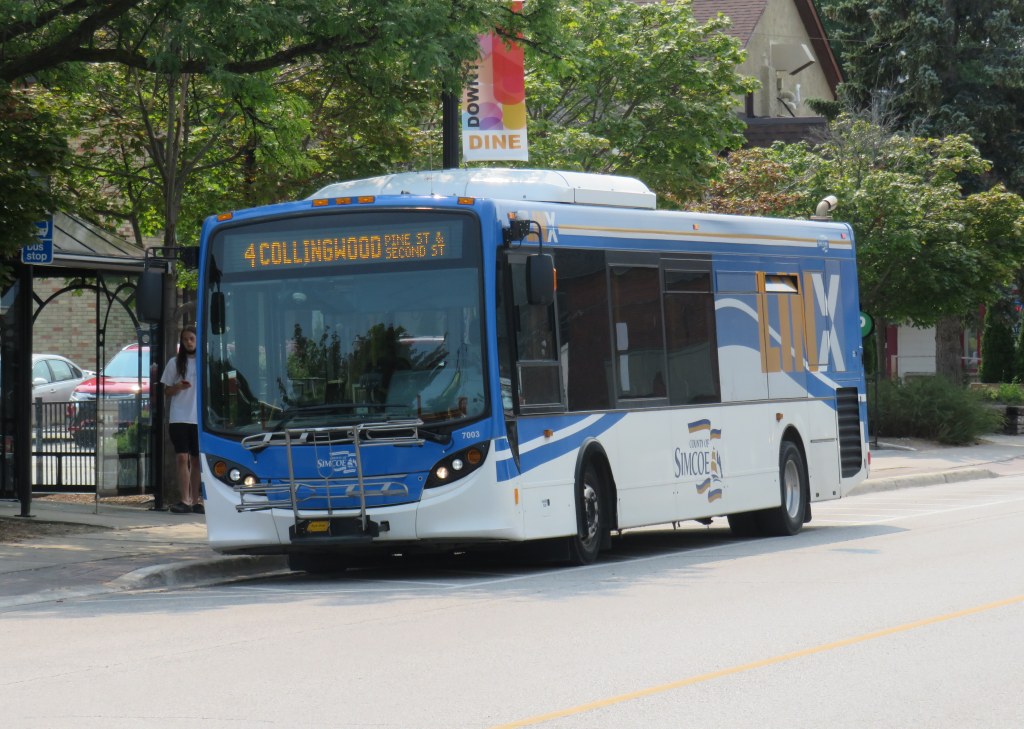
    Colltrans and Simcoe County Linx buses at Downtown Collingwood

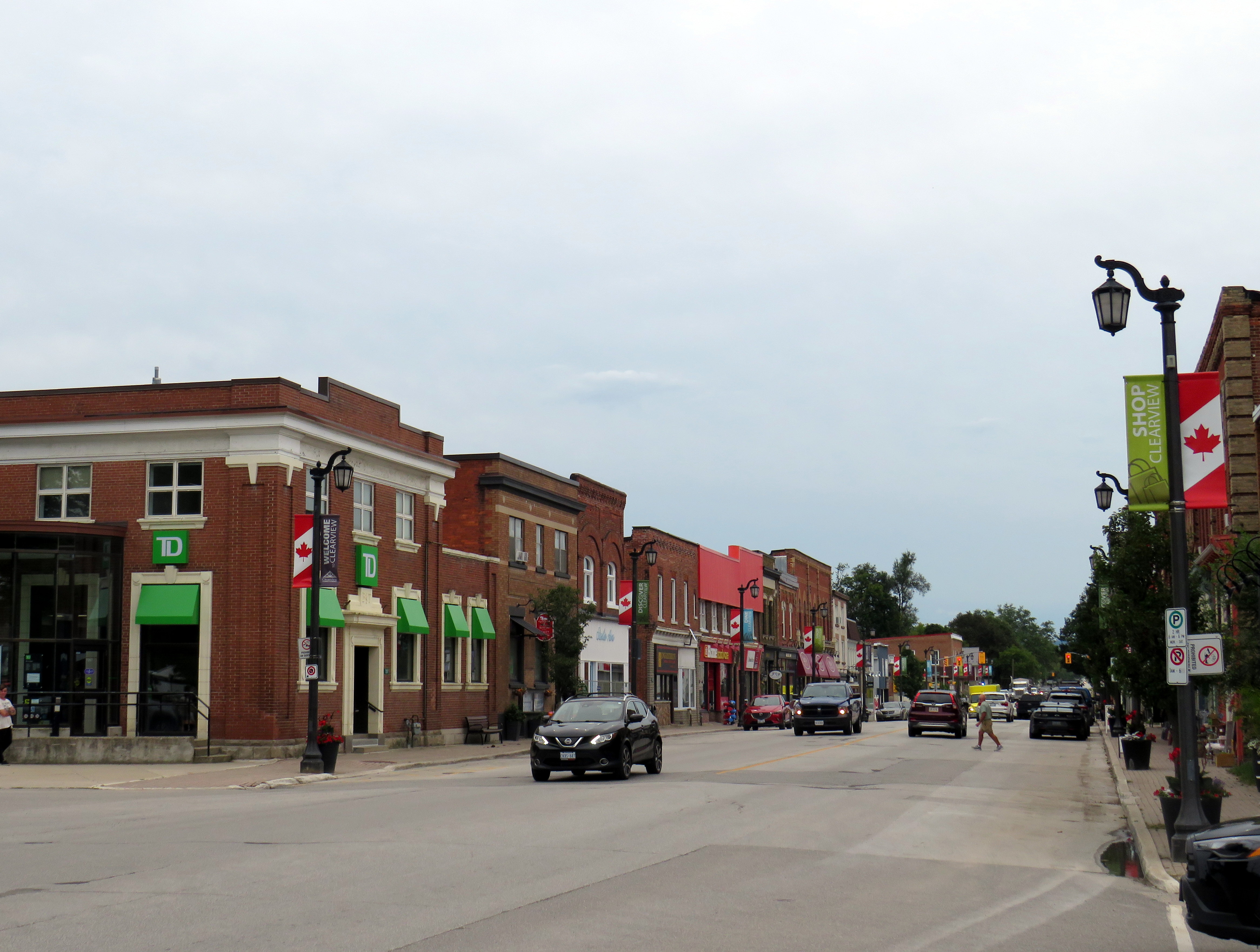
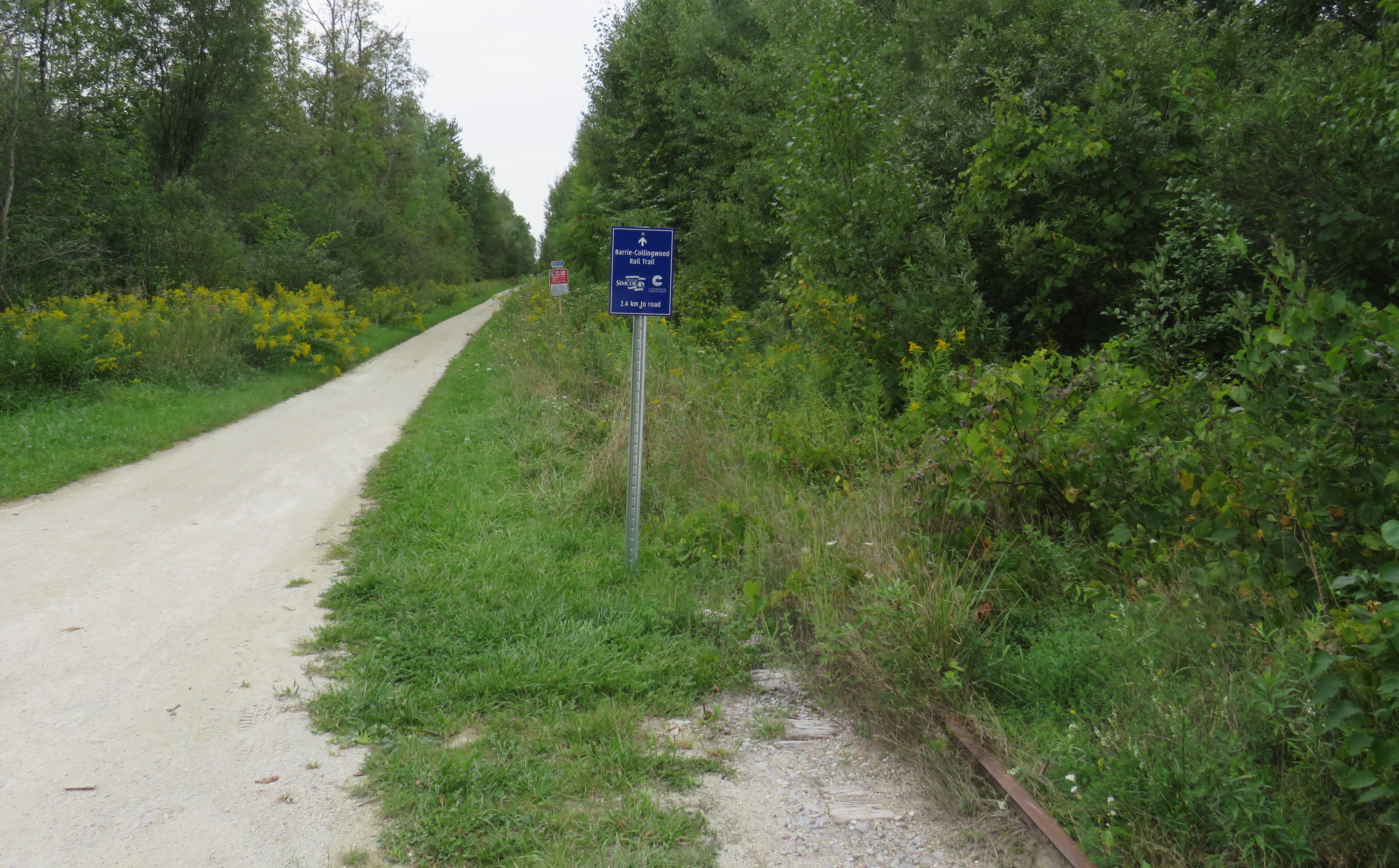
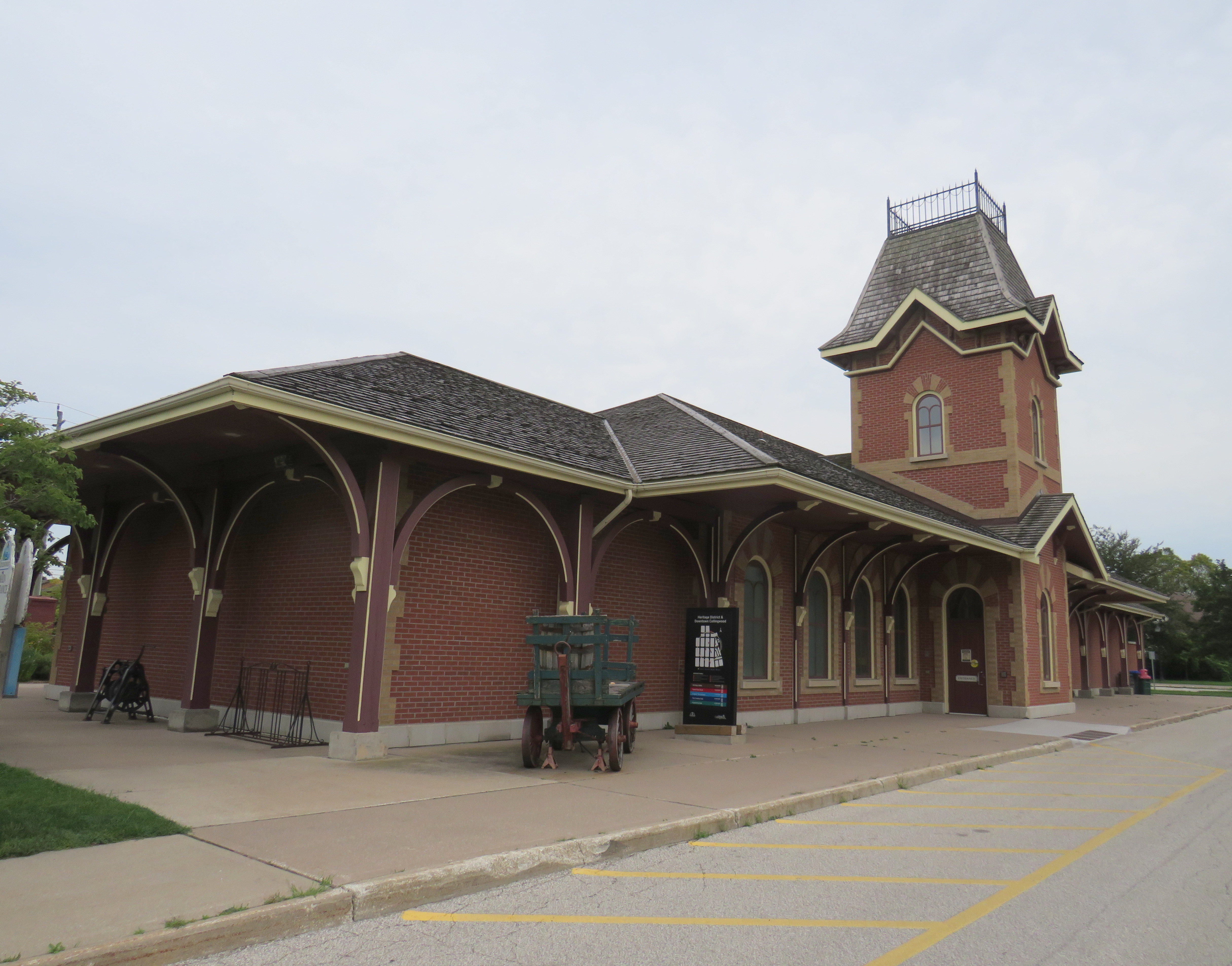
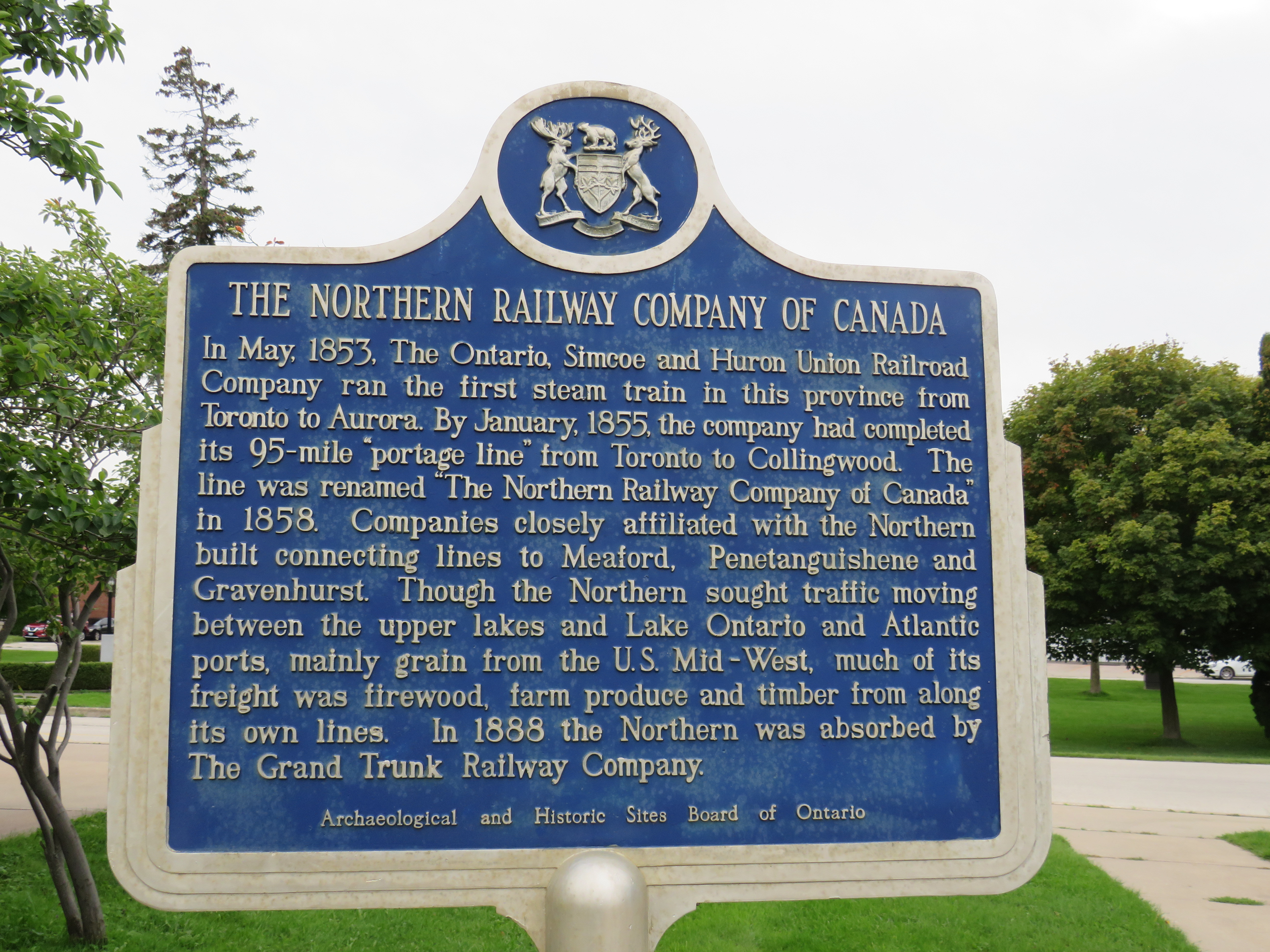
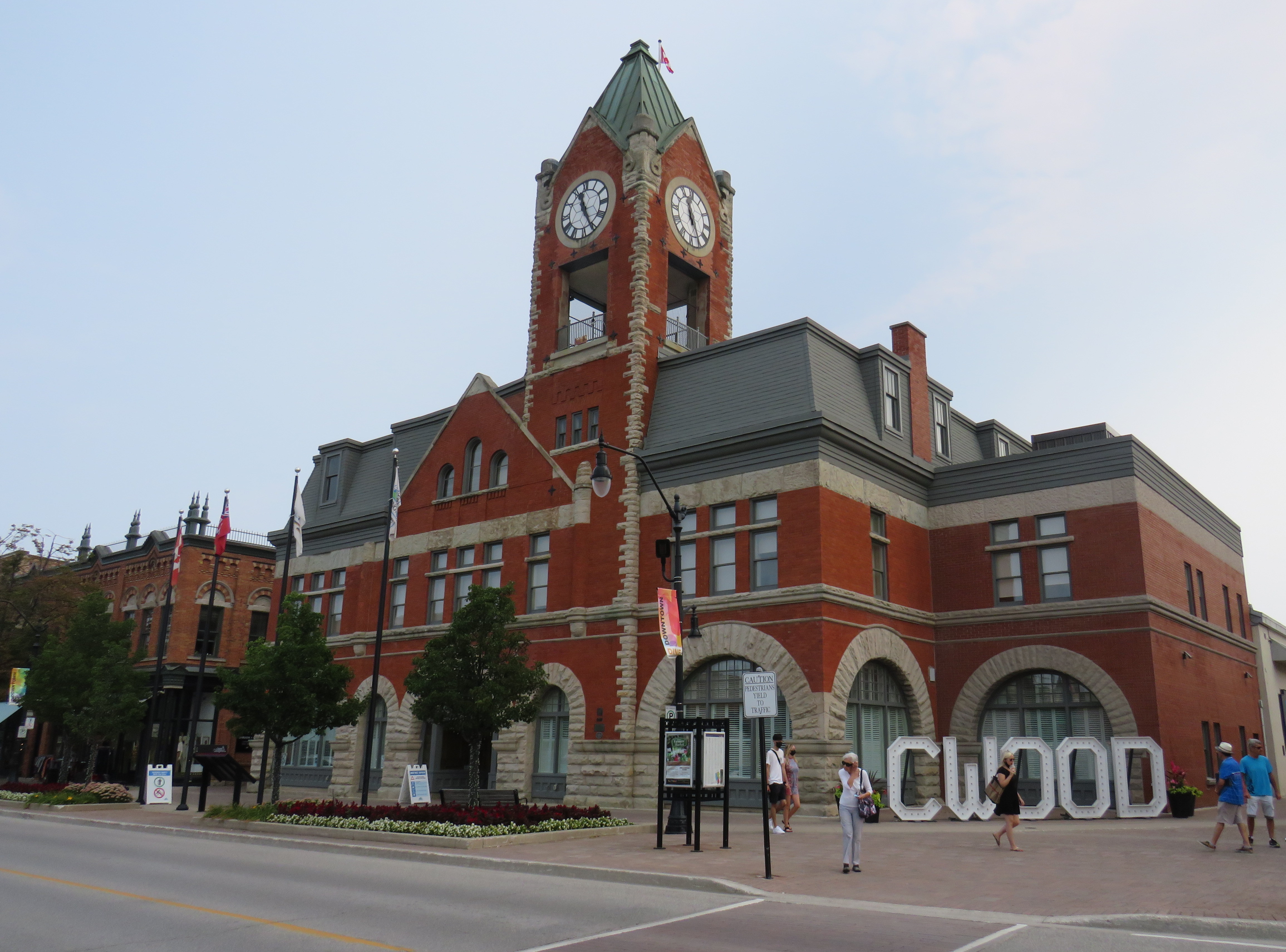
    Like Owen Sound, Collingwood has a lovely and vibrant downtown core, with its own proud marine and railway history. Collingwood was the terminus of the Ontario Simcoe & Huron Railway, the province’s first rail connection, built in 1853-1854. The OS&H was built as a shortcut between the Upper Great Lakes and Toronto and prospered before merging with several other railways to become part of the massive Grand Trunk system. Sadly, passenger service to Collingwood ended in 1960, and the railway itself is abandoned and partially removed.

    Collingwood Town Hall

    After a hearty lunch in Downtown Collingwood and walk through the area, I paid another toonie and boarded Simcoe Linx Route 4 to Wasaga Beach.

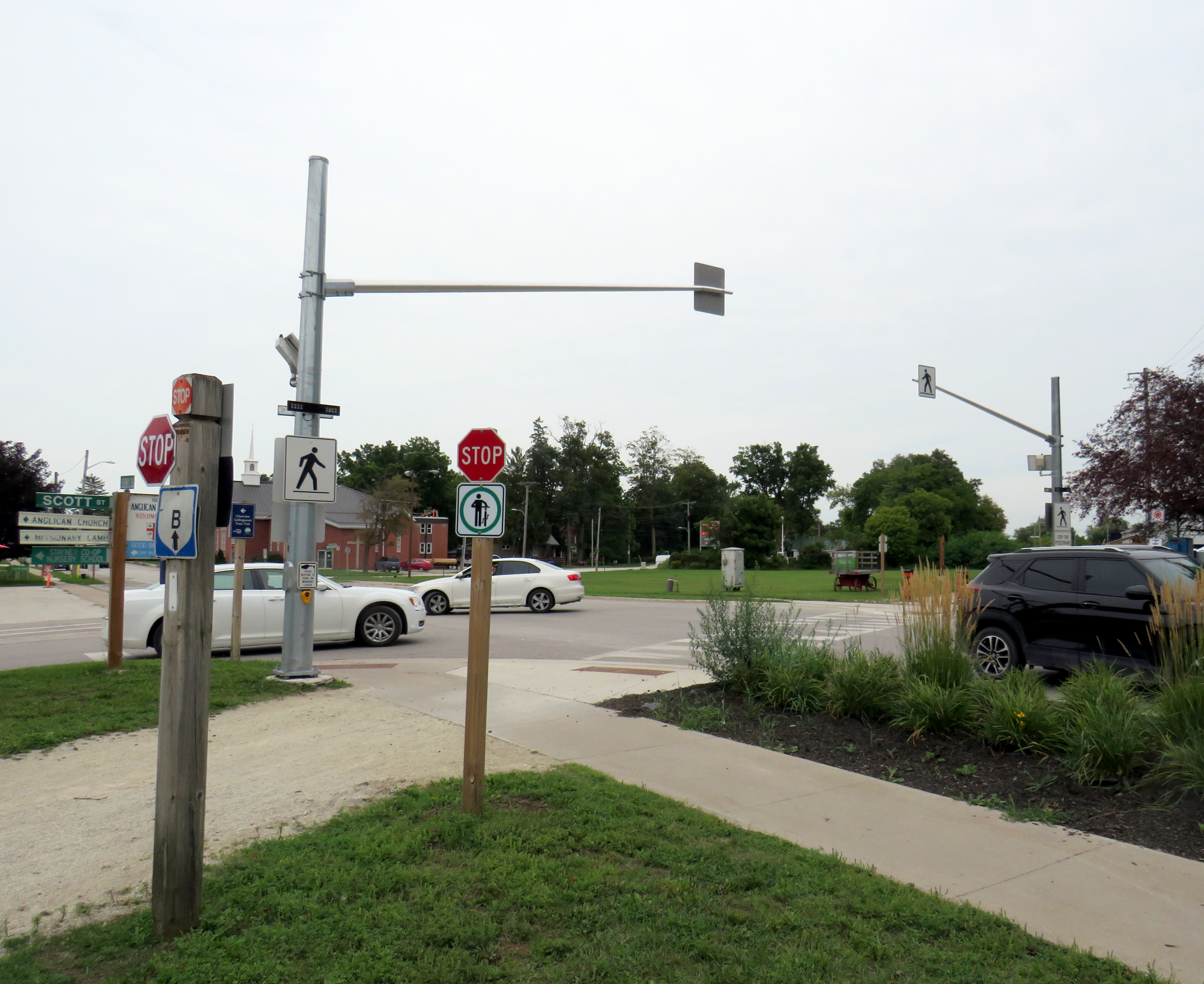
    In the back parking lot of a Loblaws Superstore in the west end of Wasaga Beach, two Simcoe County Linx buses, a Wasaga Beach Transit bus, and a Clearview Transit minibus meet to exchange passengers. The grocery store is distant from the main tourist area and the downtown commercial centre, but at least transfers between buses are easy. The Wasaga Beach Transit bus does pass by most motels, tourist traps, and beach areas. I changed to another Simcoe County Linx bus (Route 2) that passes through Stayner and Angus for Allandale Waterfront GO Station south of Downtown Barrie. The fare between Wasaga Beach and Allandale was $6.00 cash.

    At a grocery store parking lot, Simcoe County Linx, Wasaga Beach Transit, and Clearview Township buses meet
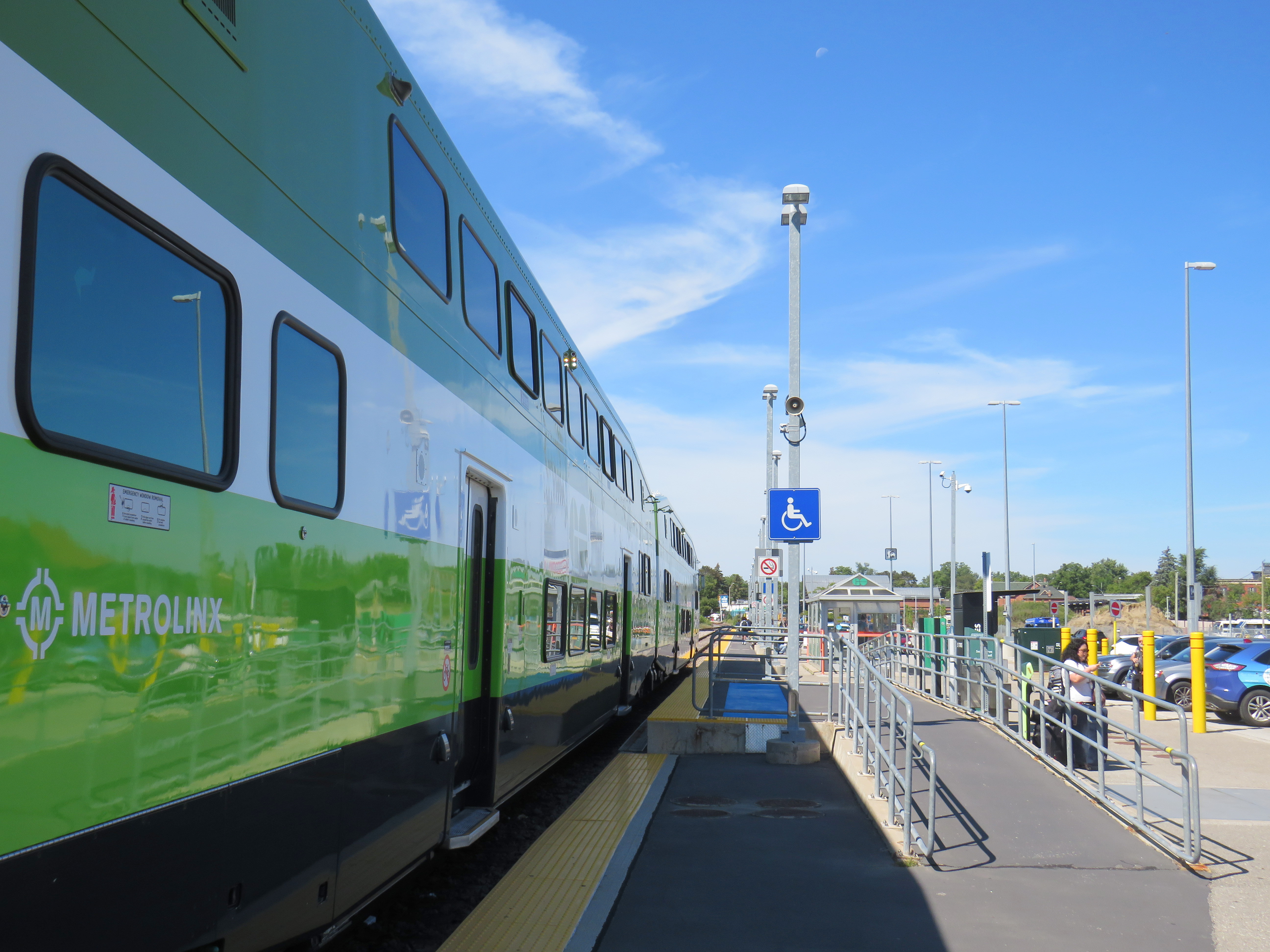
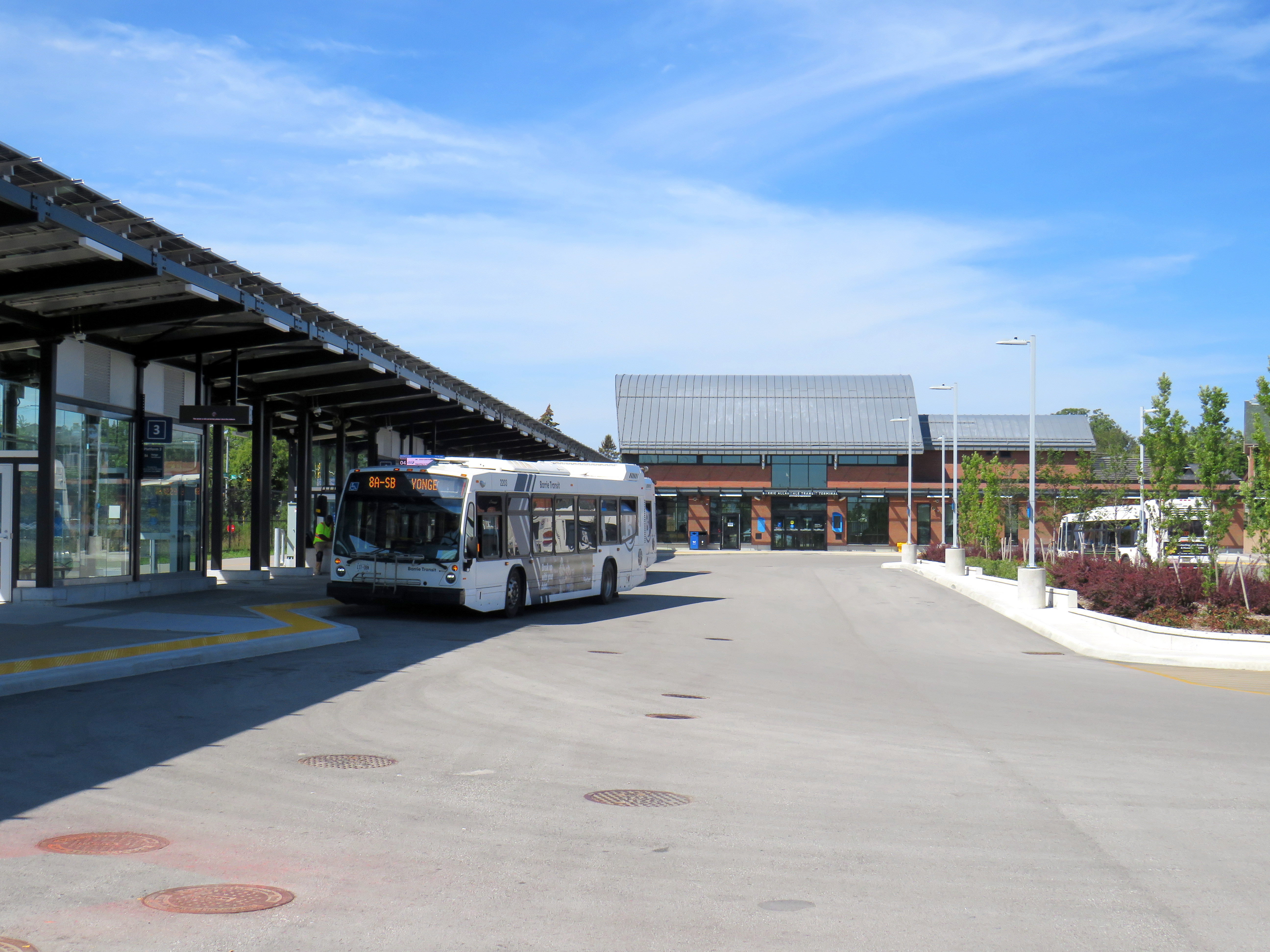
    Arrival at Allandale Waterfront GO Station

    Allandale Waterfront GO Station, which hosts GO trains and buses and several Barrie Transit routes, is one of two Barrie terminal points for Simcoe County Linx’s buses. Buses to Orillia and Midland terminate at Georgian College and Royal Victoria Hospital in the northeastern corner of Barrie, with a Barrie Transit fare and a 30-minute local bus ride to get from one Linx route to another.

    Kempenfelt Bay, Barrie

    The ride back to Union Station, which included a bus to Aurora GO and a change to a train the rest of the way. That final trip cost me $13.76 on my Presto card.

    In total, I paid $39.06 on Thursday and $28.76 on Friday to complete the round trip between Toronto and Georgian Bay.

    Analysis and Conclusions

    It is good to see Owen Sound, Grey County, and Simcoe County develop local solutions to replace and improve upon vanished coach services that ran on Highways 6, 10, and 26, better schedules and improved connections will only make their services better.

    With limited schedules, particularly on Grey Transit Route and Simcoe County Linx, I could only do this exact trip by leaving Toronto on a Wednesday or Thursday. GTR’s Routes 3 and 4 between Owen Sound, Meaford, and Blue Mountain operates Wednesdays through Sundays. Though transit between Blue Mountain Village and Wasaga Beach runs 7 days a week, the Simcoe Linx bus between Wasaga Beach and Barrie only runs weekdays, with the last buses leaving Allandale GO and Wasaga Beach Superstore at 6:30 PM.

    Later service hours and weekend service between Barrie and Wasaga Beach would allow GTHA residents to get to one of the Great Lakes’ great beaches without a car for a weekend getaway, without more congestion on Highways 400 and 26.

    Grey County at least gets this, with its council committed to additional funding for GTR, allowing for daily service on most routes in 2022.

    In addition, it would be good to see Simcoe County and municipal systems in Collingwood, Wasaga Beach, Barrie, Orillia, and Midland/Penetanguishene develop a coordinated fare structure, as transfers or fare discounts are not provided between each service, except between Linx and Midland/Penetanguishene. Simcoe County Linx already has its own farecard; if that were upgraded it would at least allow frequent riders to benefit from easy fare payments and transfer discounts.

    These are relatively simple changes that can further drive ridership growth and improve mobility throughout fast-growing Simcoe County as well as attract more visitors from Toronto and beyond.

    The Toronto-Guelph leg of my trip was unnecessarily slow, and will continue to be so until all-day, two way GO service is introduced on the entire Kitchener Corridor, or if express buses are added to the schedule. While all-day GO train service will take several years with several construction projects underway or necessary in Toronto, Brampton, and Guelph to provide the necessary capacity, improved bus service can provide a stopgap for the time being.

    Without an express GO bus or competing services such as Greyhound (which used to operate multiple buses between Guelph and Toronto) or a morning VIA Rail train, it can take nearly three hours to get from Toronto to Guelph without a car.

    Though GO Transit will introduce significant service improvements starting Labour Day, including new peak-direction express trains on the Kitchener Corridor. Unfortunately, there are no travel time improvements for getting between Toronto and Guelph weekday mornings. Given that there is currently no alternative access between the two cities, there’s a market that GO Transit is clearly missing right now.

  • A patchwork of new intercity connections in Ontario

    IMG_6956-001.JPG
    RideNorfolk buses at Norfolk County Hall, Simcoe

    Over the last three years, I wrote about the gaps in intercity rail and coach services in Ontario, and how some companies were working to fill them.

    In Northern Ontario, Ontario Northland and Kasper Transportation worked to fill the void left by Greyhound’s departure from Western Canada, with both companies offering new links to towns such as Hearst and Fort Francis.

    Unfortunately, there have also been some setbacks. Wroute, a shared taxi service in the Kitchener-Guelph-Hamilton triangle, was operational for less than a year. Though GO Transit added new weekday trains between Guelph and Kitchener, none allow for Kitchener-bound commutes, and there has not been interest in serving those gaps identified by Wroute.

    Outside of Northern Ontario and the Golden Horseshoe, many cities and towns remain disconnected from nearby communities and larger centres. Though every city and town in Ontario had daily bus and/or rail service in the 1980s, many communities are now completely inaccessible for anyone without access to a car. Though GO Transit expanded to Peterborough, Brantford, Niagara, and Kitchener in the last fifteen years, they are extensions of GO’s radial network from Toronto rather than a true intercity network.

    St. Thomas, population 41,000, is the largest city in the province without any passenger links, despite being a short drive to London. Many other cities and towns — particularly in Midwestern and Eastern Ontario — find themselves in similar situations. A few other cities, such as Sarnia (which has just one train a day each way to London and Toronto), are grossly under-served.

    But thanks to municipal innovation and a new provincial grant program, this is finally changing. Though several municipalities addressed this problem early on, three new inter-municipal bus systems began operations in 2019, with many more launching this year.

    (more…)

  • A check-up on Downtown Barrie

    IMG_8357-001
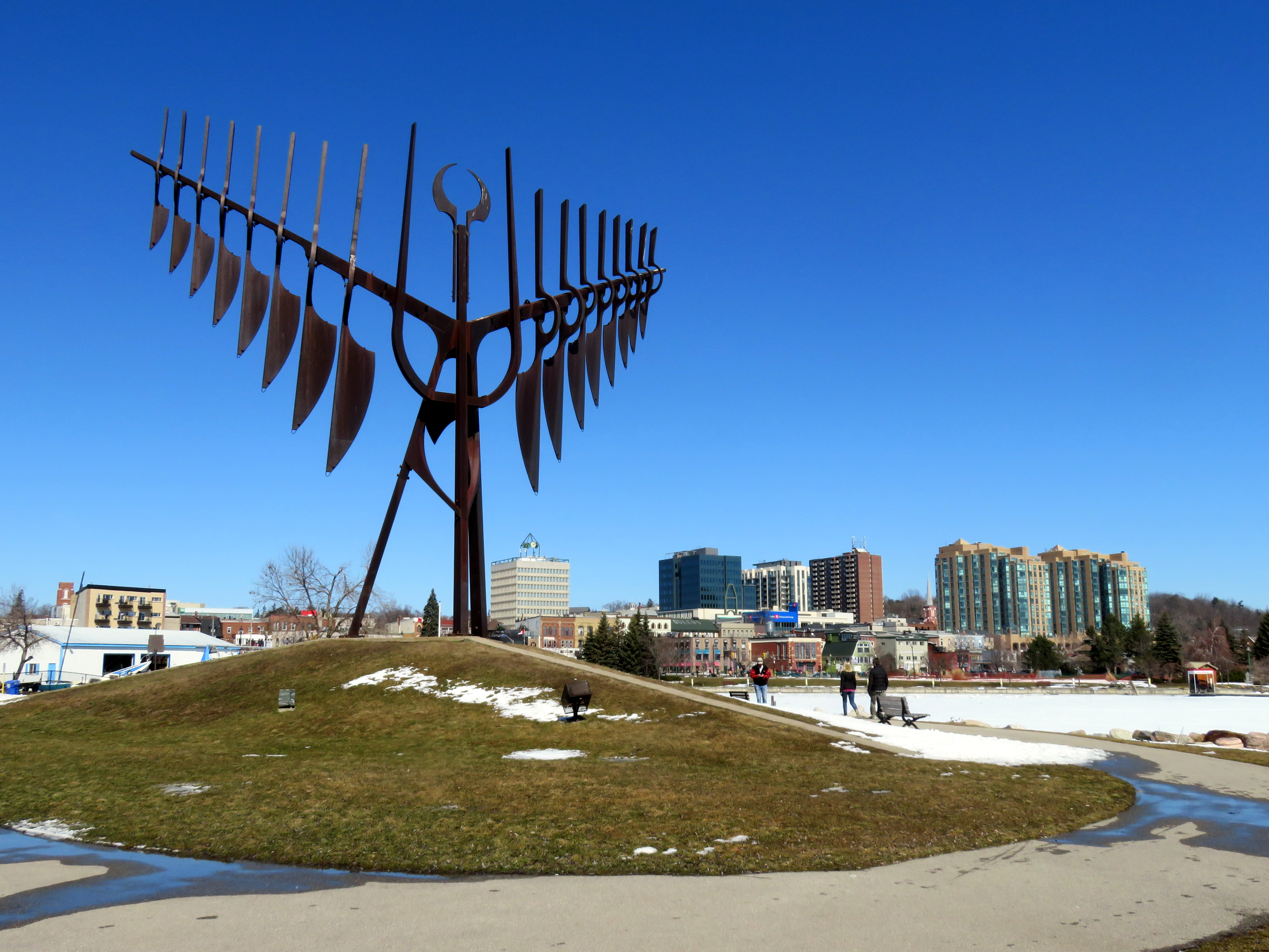
    “Spirit Catcher” by Ron Baird on Downtown Barrie’s Waterfront

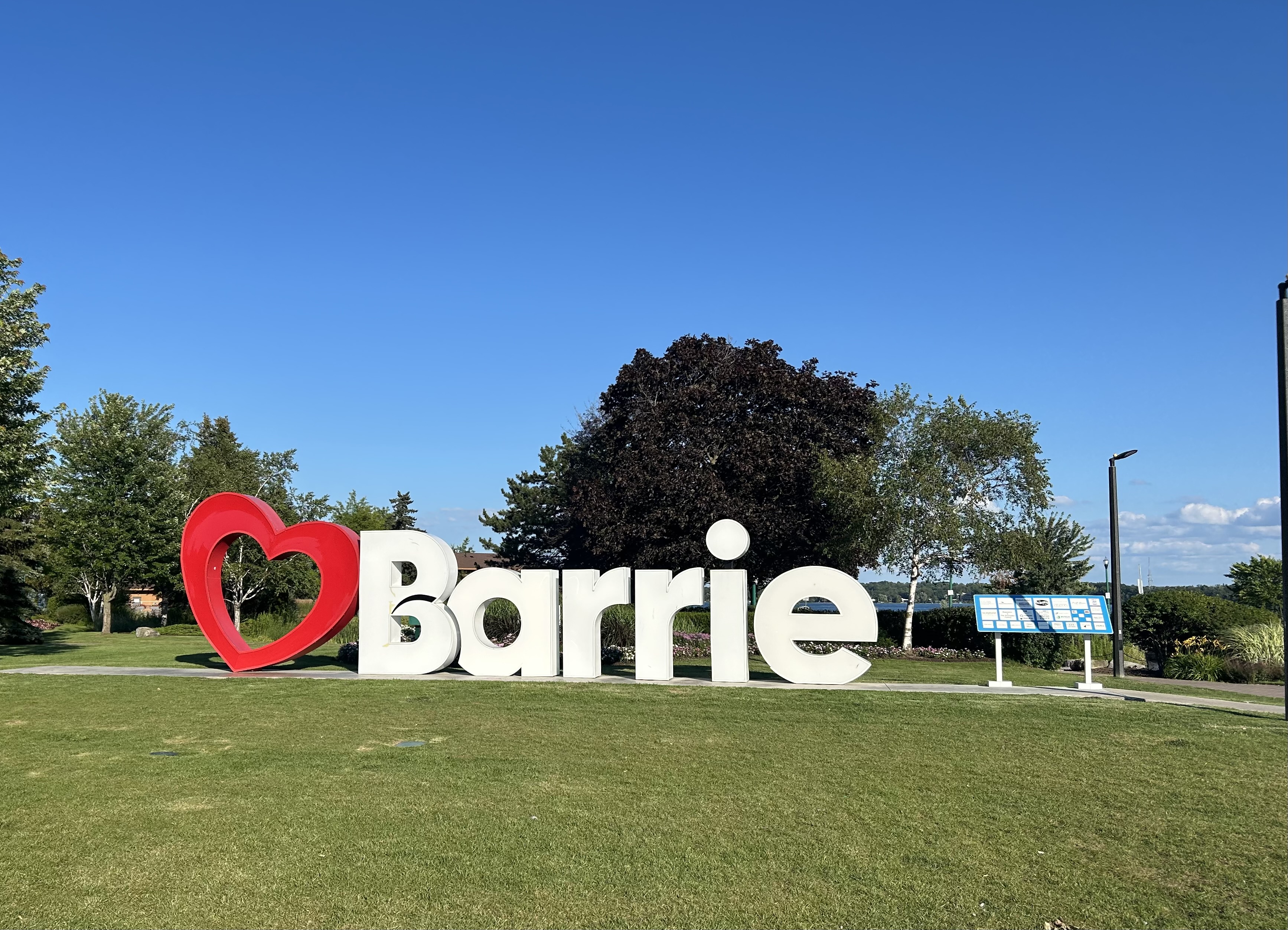
    Last weekend, I made a trip up to Barrie on GO Transit. Most people in the Greater Toronto Area know of Barrie as a place you pass on Highway 400 on the way north to Collingwood, Wasaga Beach, or Muskoka, but it has a population of 140,000 people, many of them commuters to the Greater Toronto Area.

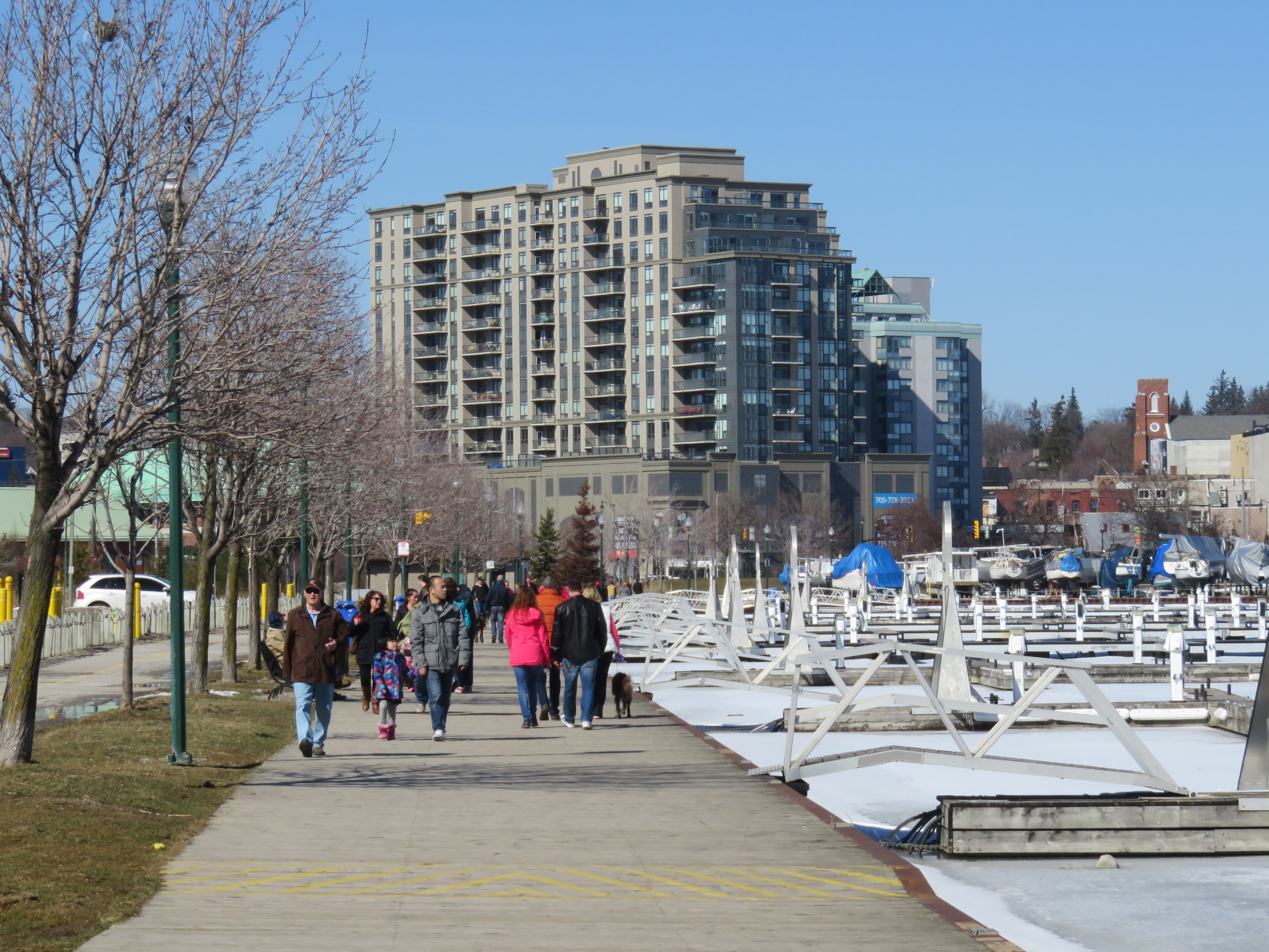
    Barrie features a lovely waterfront, situated at the end of Lake Simcoe’s Kempenfelt Bay. After the abandonment of the Canadian National Railway tracks north of Allandale Station in 1997, a new waterfront trail was created and Lakeshore Drive moved inland to provide more park space. The waterfront trail connects on the north with a rail trail that extends to Orillia. The waterfront has three swimming areas, a marine, food concessions, playgrounds, and gardens. On a warm Sunday in March, the boardwalk and waterfront paths were very well used. Work is being completed on further enhancements to the public realm.

    IMG_8386-001A busy March Sunday on Barrie’s waterfront
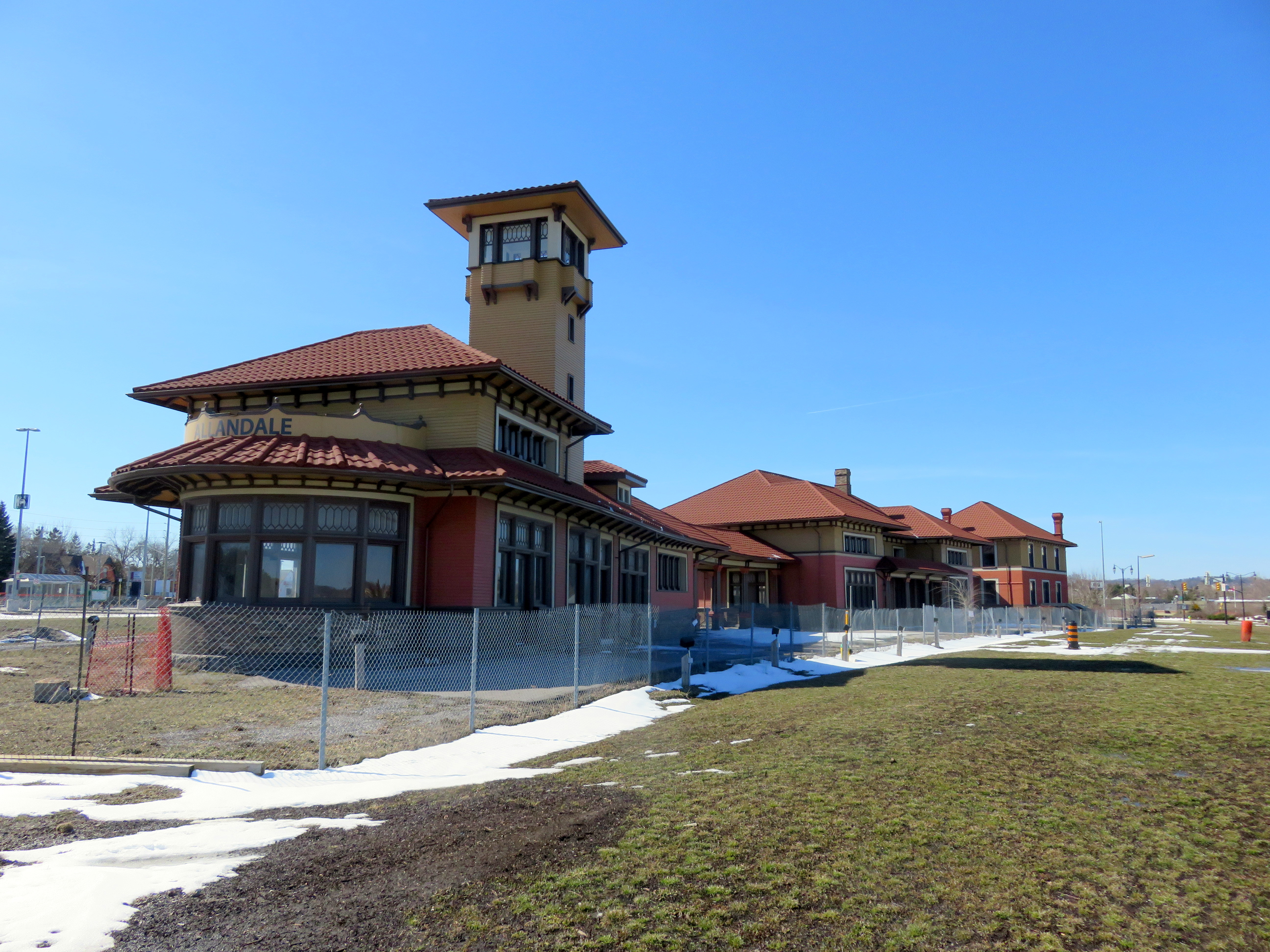
    In 2012, GO Transit extended the Barrie line to Allandale Waterfront Station, at the closest point possible to Downtown Barrie where tracks remained. The old Allandale Station, built by the Grand Trunk Railway in 1905 and abandoned by CN in the 1980s, still stands just north of the GO station, newly restored. Yet the station is fenced off and is awaiting re-use.

    IMG_8372-001.JPGAllandale Station is fully restored on the outside, but remains fenced off. The GO Station is to the far left.
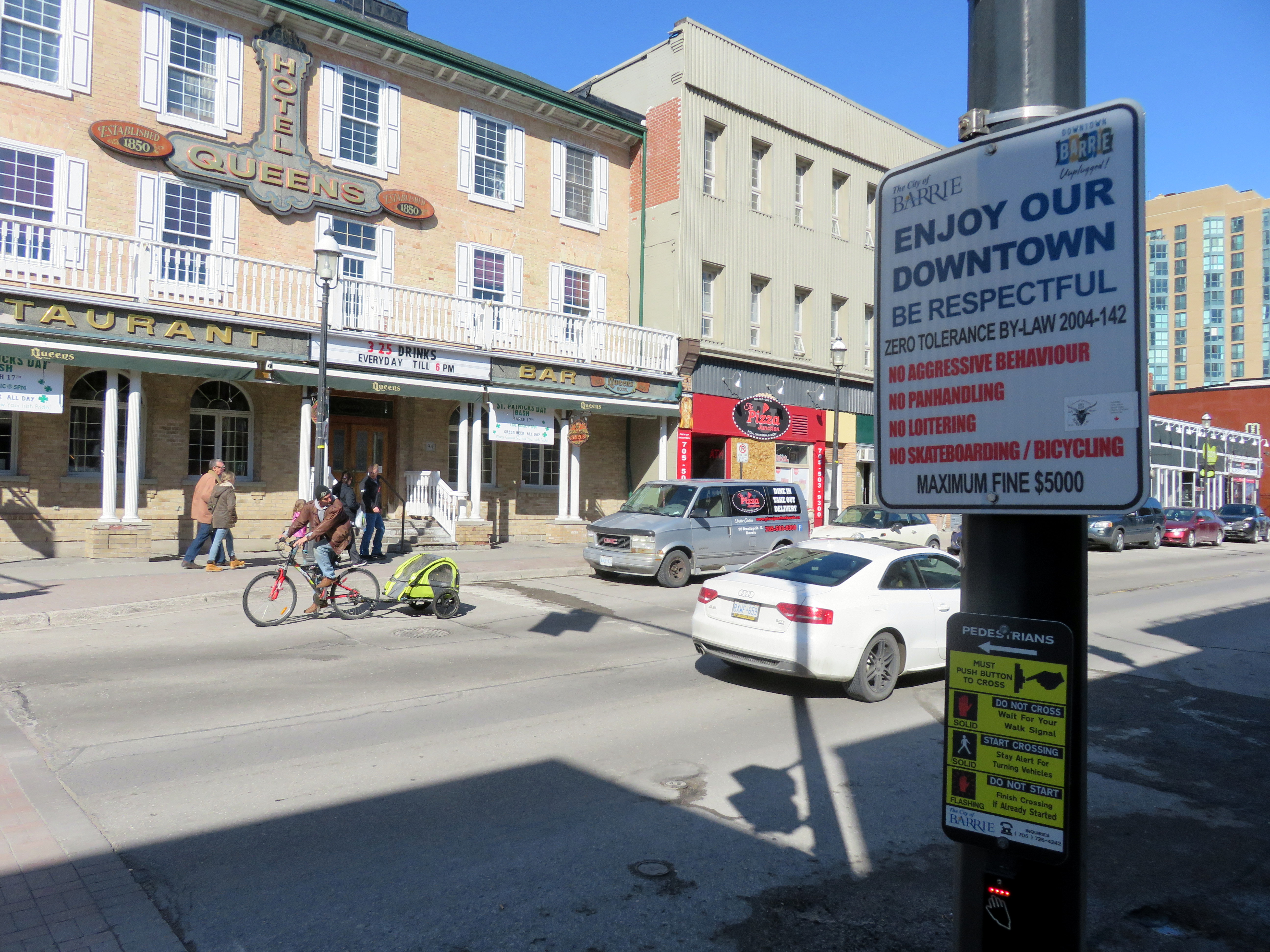
    Downtown Barrie hosts many heritage buildings. Despite a catastrophic fire in 2007, the downtown core boasts a mostly-intact inventory of heritage commercial and institutional buildings. The old Carnegie Library was incorporated into the MacLaren Art Centre (a new central library was built in the 1980s). The Queen’s Hotel on Dunlop Street, established in the 1850s, retains its historical veranda. Brampton and other county towns had similar hotels, but many were lost to fire or development.

    The downtown business improvement area has been active as well. During the summer months, patios are brought out into the streets, and festivals are put on year-round. New condominium towers built along the waterfront and downtown bring new residents that can support the historic city centre.

    Despite my positive impressions, one thing really bothered me: Downtown has many signs posted reminding people of a 2004 by-law prohibiting “aggressive behaviour, panhandling, loitering, and skateboarding/bicycling” with a maximum fine of $5000. Surveillance cameras are positioned at several downtown corners.

    IMG_8396-002Sign reminding of Downtown Barrie’s Zero Tolerance Bylaw. The historic Queen’s Hotel is in the background.
    The intent of the rule against cycling probably refers to bicycles ridden on sidewalks, rather than on roadways (there are some bicycle lock-up locations downtown and along the waterfront). That said, the signage and the by-law have the effect of telling young people and low-income residents that they are not welcome.

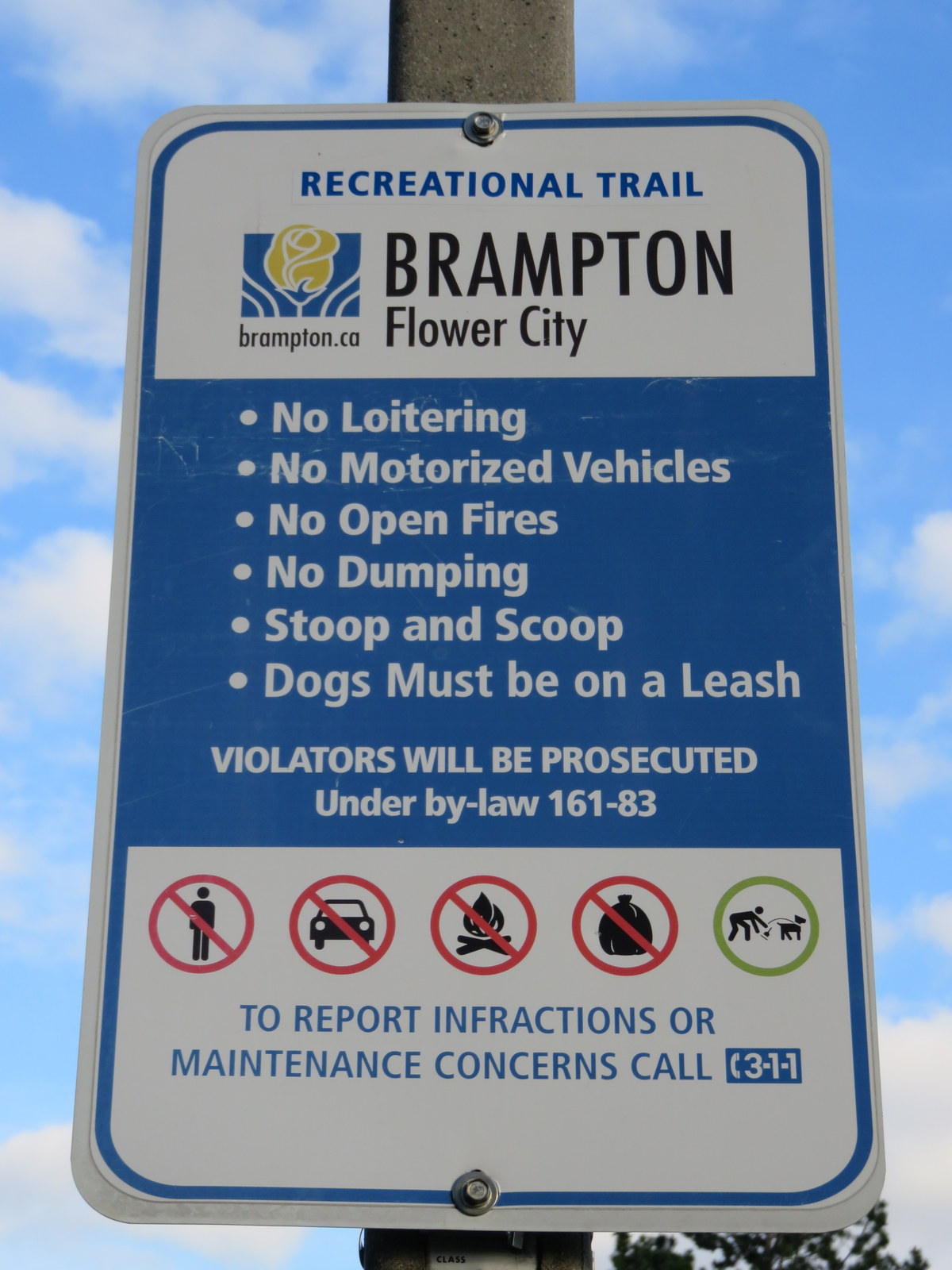
    Signs and specific bylaws such as this are not uncommon in Ontario. In Brampton, signs in public parks and along its pathways prohibit loitering as well. Yet sidewalks and parks are public spaces; parks in particular are places where one might wish to relax, have a picnic, or just sit and enjoy nature or to people-watch.

    IMG_2362-001.JPG“No loitering” in Brampton’s parks

    Downtown Barrie has struggled with poverty, vacant lots, derelict properties on the periphery, as well as crime, such as assaults, and drug trafficking. Downtown Barrie has many of the support services for economically and socially marginalized people; there are affordable rental apartments and rooming houses in the core as well. Downtown has several cafes and restaurants, a few clothing and furniture stores, as well as a craft brewery, but many of the businesses along the main streets are convenience stores, hair salons, vape shops, tattoo parlours, bars, and nightclubs. Especially missing are businesses such as a drug store, and a supermarket.

    To discourage loitering, benches were removed from Dunlop Street, Barrie’s main street. However, seniors in particular benefit from places to sit and rest while going on walks or doing shopping. Payphones downtown were also removed in 2013; the local councillor said that they were “degrading the quality of the neighbourhood.”

    In 2014, the City of Hamilton was looking at adopting a similar by-law to discourage low-income and homeless people congregating and creating a nusiance in Downtown Hamilton. Councillor Jason Farr pointed to Downtown Barrie’s success, but noted the importance of consulting with poverty advocates to “include that social side of the argument.”

    Instead of merely implementing aggressive regulations and ticketing, there’s a need for inclusive urbanism. Are there adequate recreational and social activities for youth and marginalized populations? Barrie has a skateboard/BMX park nearby, at Queen’s Park, but that might not be enough to satisfy local youth. What urban interventions would Barrie’s low income populations like to see? Sadly, I doubt they were consulted.

    Barrie’s waterfront is one of Ontario’s best: accessible by transit, connected to its downtown, hosting many activities and events. As construction concludes, it should help revitalize the neighbourhoods around it. Barrie should not further push away its already marginalized populations; it should find a way to be welcoming to all.