Tag: Highway 401

  • The tragedy of Ontario’s HOV lanes

    The tragedy of Ontario’s HOV lanes

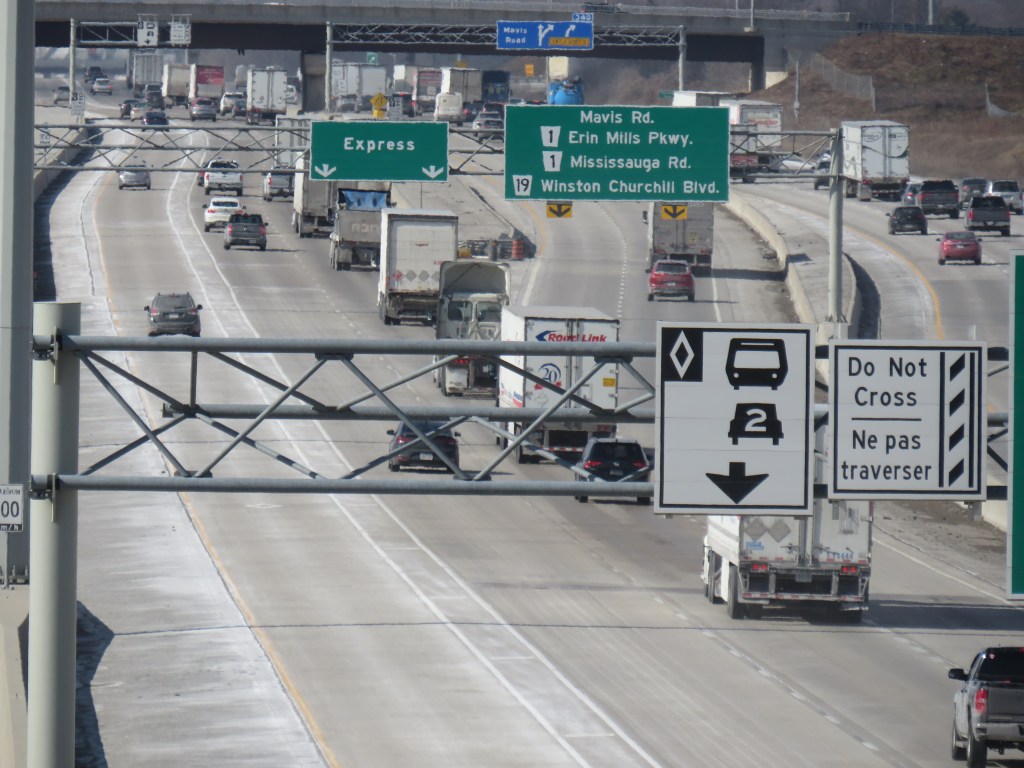
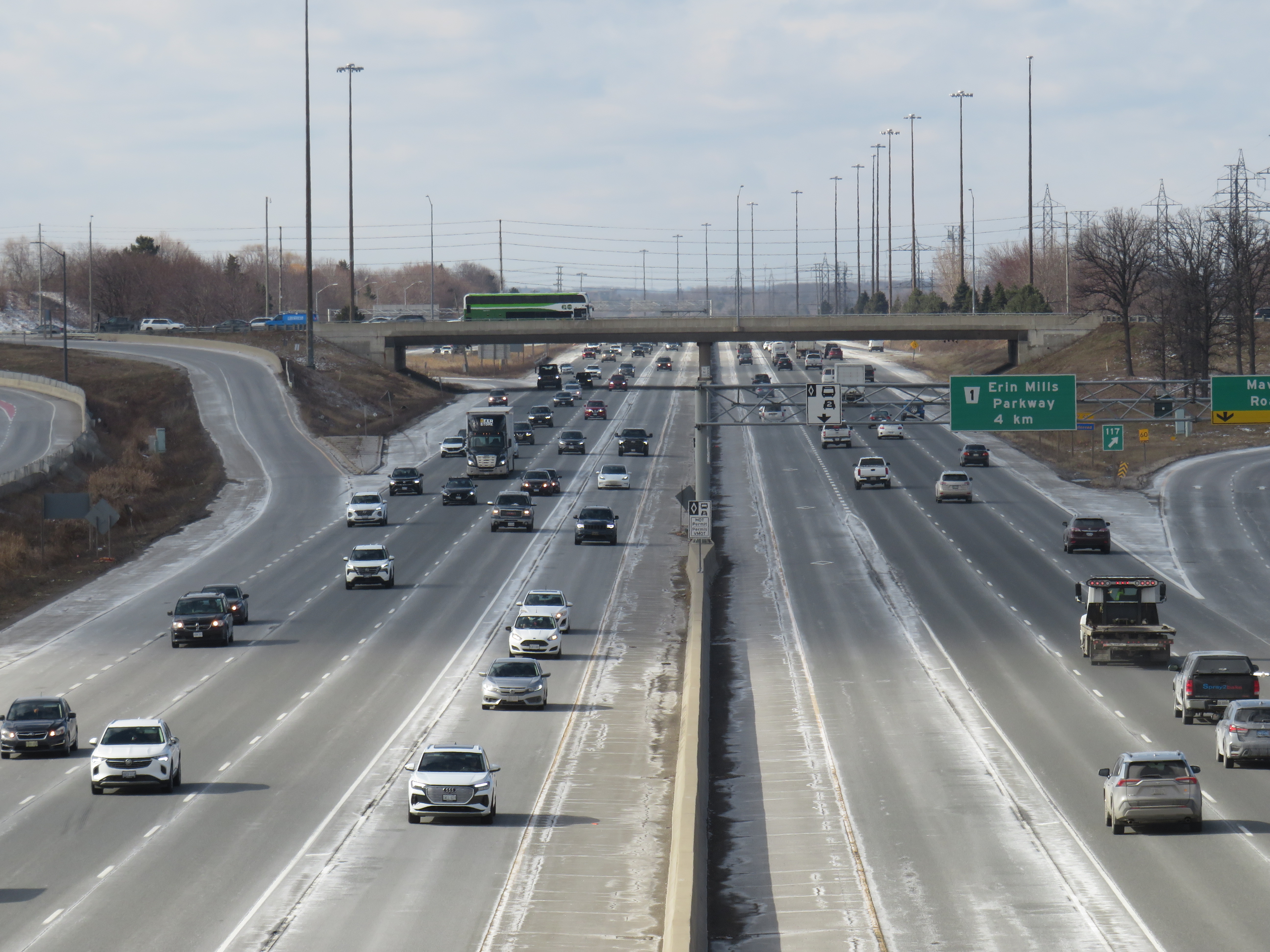
    Highway 403 in Mississauga, with HOV lanes in the centre

    In the last year, making the occasional car trip to visit family in Northeastern Ontario or just to get out of the city for a day or two, I kept wondering what the point of those new high occupancy vehicle (HOV) lanes were on the Queen Elizabeth Way, Highway 400, or Highway 401. At first, they seemed like a real time saver for anyone riding on a transit bus or driving with a few family members, friends, or carpool colleagues in the car. As time went on, with new exceptions, minimal or no police enforcement, and increasingly aggressive driving post-pandemic, one is left wondering why the province even bothers adding them to more highways.

    Now, amongst a flood of moves and musings by our oft-Trumpian premier, it appears that the province has given up on even the veneer of sustainability with these highway widenings throughout the Greater Golden Horseshoe and Ottawa regions. On Tuesday, March 17 — St. Patrick’s Day — Transportation Minister Prabmeet Sarkaria announced a proposed regulatory amendment that would allow all cars and light trucks in the HOV lanes, during off-peak periods. The change would “help keep drivers moving across the province, so they can spend less time in traffic and more time with their families and friends.”

    This announcement is part of a stream of messages from Doug Ford and his government clearly seeking the attention of the news media and the public. The week prior, Ford was talking about expanding the Toronto Island airport, even seizing control of the City of Toronto’s interest to ensure that jets could land on the waterfront. Before that, Ford mused about a new convention centre built on Lake Ontario near Exhibition Place. This week, Ford was on a law-and-order kick, attacking a fair and impartial judiciary, promoting the idea of “Bail TV,” and praising a homeowner that shot an intruder during a home invasion. Maybe this is to distract from scandal and a new proposed law to shield the premier, ministers, and staff from journalists using freedom of information requests to keep the government accountable.

    The legislative assembly will finally reconvene next week, starting Monday, March 23, after a 14-week break.

    The first HOV lanes were introduced on Highway 403 through Mississauga and on Highway 404 southbound from Highway 7 to Highway 401/Don Valley Parkway in 2005. A year later, the HOV lanes were touted as an “unqualified success,” with the minister of transportation at the time, Liberal Donna Cansfield, promising more reserved lanes to follow, with the QEW through Oakville and Burlington to be the next implementation. With the Ontario Provincial Police (OPP) conducting active enforcement on those two sections, they found that only 5 percent of motorists in the HOV lanes were violating the law.

    GO Transit was an especially keen user of the new HOV lanes. In 2005, only the Lakeshore Line had regular off-peak train service, and buses filled in the gaps in between. The 404 lanes saved valuable minutes for buses on the 70/71 Stouffville Line route between Union Station and Markham; the City of Toronto designated sections of the inner paved median on the DVP as well for GO buses that could be used to bypass traffic congestion.
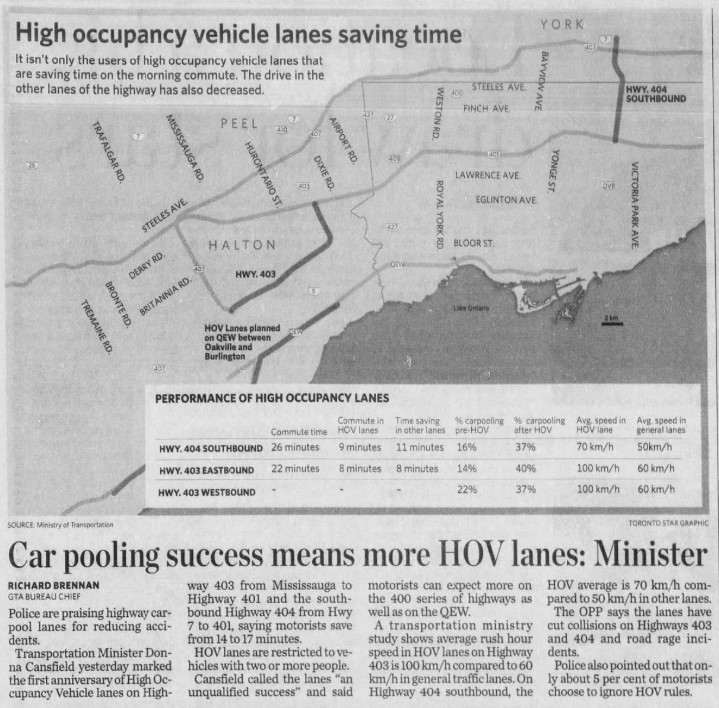
    Clip from the Toronto Star on Thursday, Dec 14, 2006 

    At the time, the HOV lanes saved carpoolers and transit riders up to 17 minutes on the initial segments on Highways 403 and 404. The additional capacity created with the new lane (no existing lanes were to be converted to HOV-only under provincial policy) also led to time savings for all drivers, at least in the short term. Increased traffic caused by suburban growth and induced demand eventually negated those time savings for general traffic.

    HOV lanes were included in more highway expansion projects. The QEW HOV lanes through Oakville and Burlington were added in 2011. Lanes on Highways 400, 410, and 427 and Highway 417 in Ottawa followed, and when Highway 401’s express/collector system was expanded through western Mississauga and Milton, HOV lanes were part of that too.
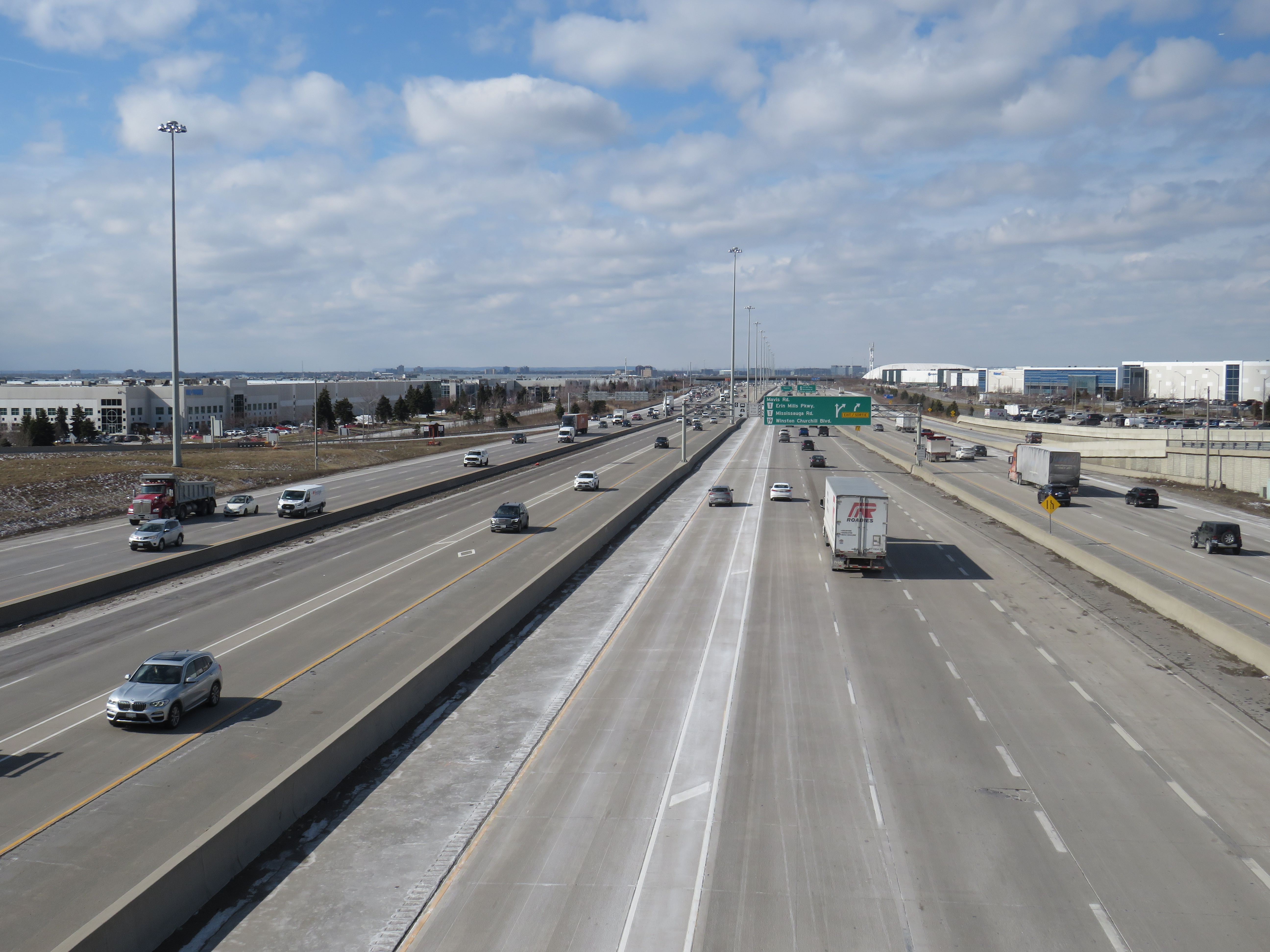
    “One more lane should do it,” Highway 401 in Mississauga, with HOV lanes in the middle of a recently widened highway

    Regulations on the use of HOV lanes were relaxed over the years too. Motorcyclists were permitted, as were any vehicle with a “green” license plate (available to any battery-electric or plug-in hybrid car, SUV, or light truck). HOT permits were also added, for anyone willing to pay and enter a lottery for the right to use the lanes while driving alone. Taxis and airport limos were also allowed, even when not carrying a passenger.

    Poor driving habits, which seemed to have gotten worse since the COVID-19 pandemic, have made a mockery of the initial intentions of the HOV lanes. Without enforcement, the HOV lanes are essentially treated by some drivers as fast lanes, with sudden swerving in and out despite double solid lines and “Do Not Cross” signs consistently posted along the highway, intended to reduce weaving. Solo drivers regularly use the lanes without consequence to get around slower drivers or trucks.
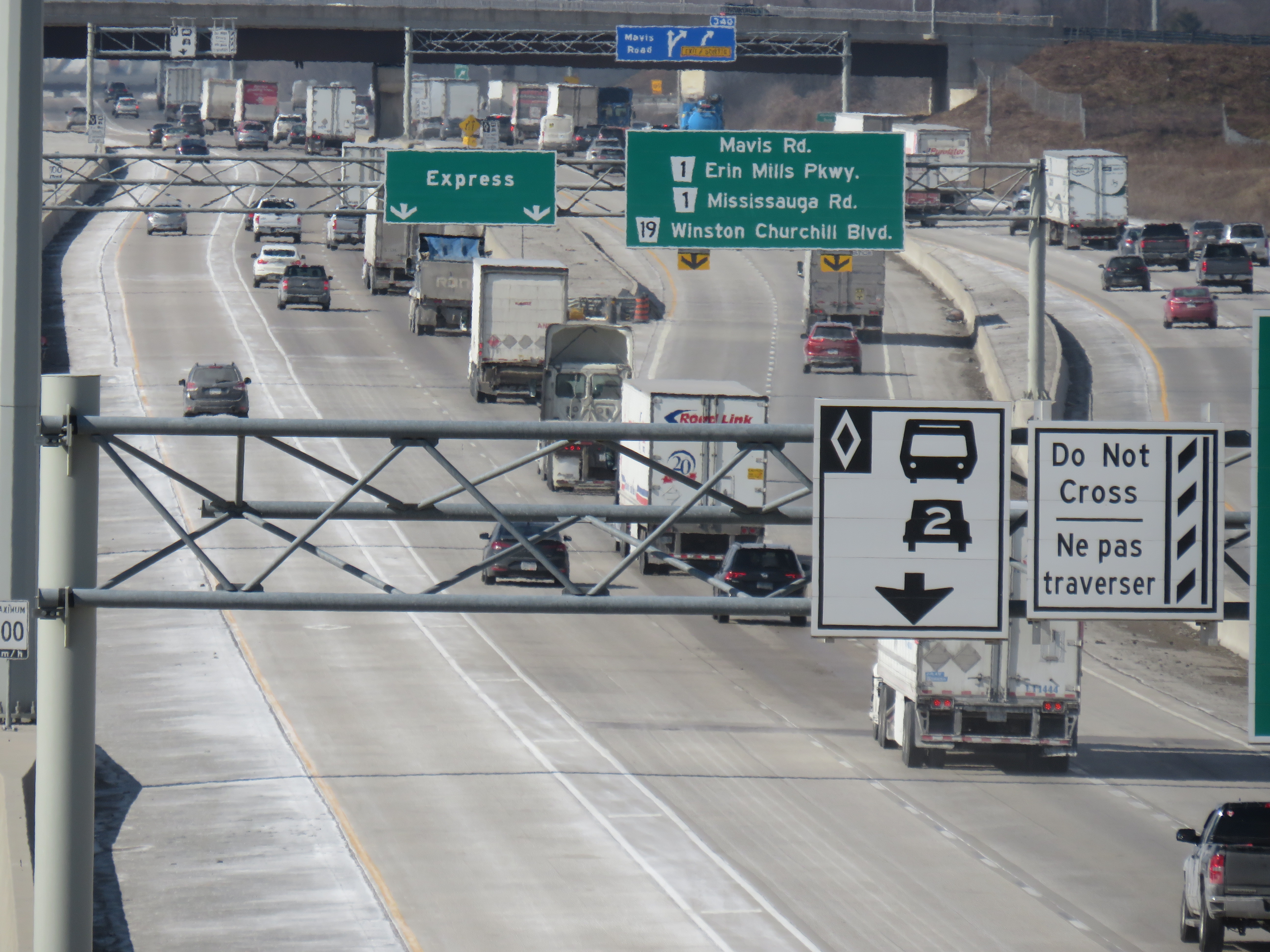
    Despite “Do Not Cross” signs, and a double solid line between the HOV lane and general traffic, this regulation is regularly ignored

    For now, we do not know what “off-peak hours” would mean when the provincial government finally legalizes another bit of the selfish and aggressive driving behaviour the rest of us have sadly gotten accustomed to. The QEW is frequently jammed most weekends between May and October, when families and tourists travel between Toronto, Hamilton, and Niagara. Highway 400 is notorious on Friday evenings and Sunday afternoons during Cottage Country commutes.

    This is yet another motorist-friendly move by this government eager to hold onto seats in suburban ridings and please its wealthy backers, along with permanent gas tax breaks, abandonment of license plate renewal fees, the prohibition on speed enforcement cameras, and the construction of destructive new highways like the 413. But at least this latest move is an acknowledgement of something I have felt for years about the HOV lanes in Ontario: a simple greenwashing of highway expansion, making us feel better about laying more concrete and asphalt.
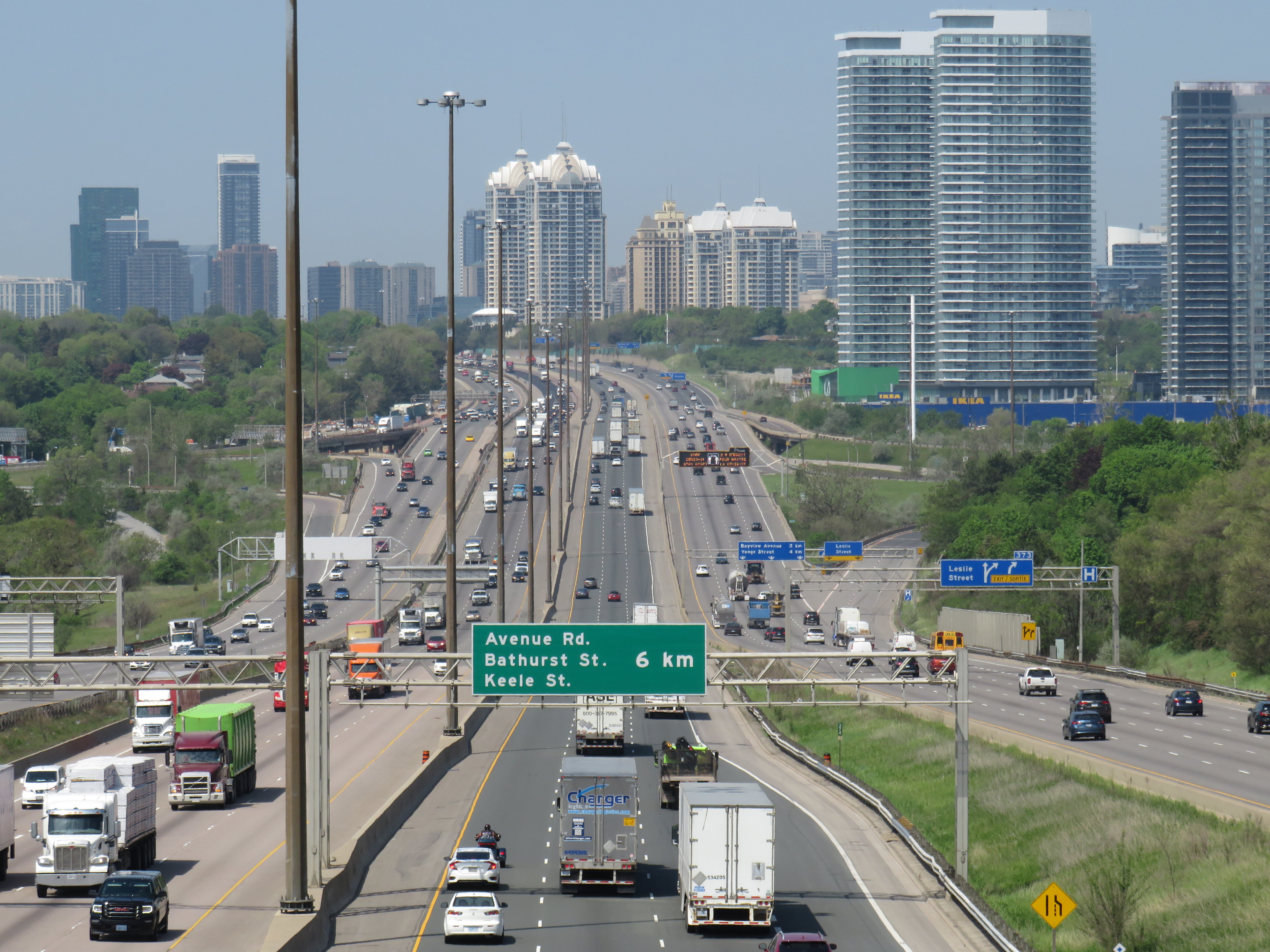
  • Deadcatting: Doug Ford’s big dig

    We need a Highway 401 Tunnel like we need a dead cat on the dining room table

    On Wednesday, September 25, Ontario Premier Doug Ford, along with transportation minister Pradmeet Sarkaria, announced that the provincial government would fund a feasibility study on building a new highway tunnel under Highway 401 from Peel Region to Durham Region, along with an unspecified new transit facility.

    Earlier this week, Doug Ford exclaimed that those living in homeless encampments and anyone else without housing who he thought could work should “get off their a-s-s and start working like everyone else.” The day before that, we learned that Ford’s Progressive Conservative government would prohibit new bicycle infrastructure if it took road space away from motorists.

    The old Doug Ford — the angry bull-in-a-china-shop we remember from 2018-2019 — is back, and it is clear that governing, in fact, has not changed him. After six years, and a rumoured early provincial election, Doug Ford will need to run on something, because there’s little to show for his promises of getting housing built, transit projects completed, and hospitals fixed. An RCMP investigation continues to look at the government’s Greenbelt land swaps, and it is rare for provincial or federal governments in Canada to get elected with a majority three times in a row. So here we are.

    But after three straight days of political red meat policy announcements, the strategy has become clear: Doug Ford is “deadcatting.” Dead cat theory, popularized during the leadership of former London mayor and British prime minister Boris Johnson, is the practice of suddenly throwing down an outrageous policy or statement to divert attention away from an unpleasant topic. The shocked audience is suddenly compelled to talk about the metaphorical dead cat thrown on the table. In the United States in recent weeks, dead cats have become less metaphorical, with baseless and racist accusations against Haitian migrants in Ohio spread by Donald Trump, vice-presidential candidate J.D. Vance, and far-right commentators.

    The strategy is thought to come from Lynton Crosby, an Australian conservative strategist who worked on Johnson’s mayoral and UK Conservative leadership campaigns, as well as Canada’s Conservative Party in 2015.

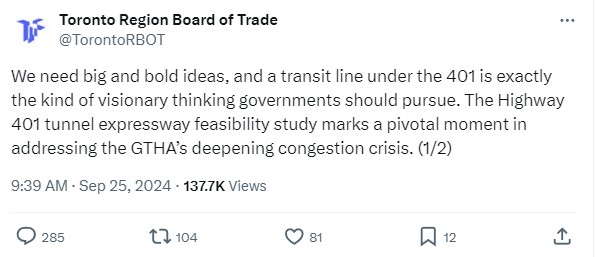
    There is no way a Highway 401 tunnel will be built. Not only would it be the longest road tunnel in the world, but the long on-ramps and off-ramps required to access a deep-bore urban highway tunnel will make it completely infeasible. The proposal also completely ignores the problem of induced demand, and it won’t solve the problem of where the traffic goes when it gets off that additional highway. For these reasons, it was especially disappointing to see the Toronto and Region Board of Trade (TRBoT) endorse the idea.

    TRBoT post on September 25, 2024

    There are things that can help alleviate traffic. One is ensuring that transit projects are completed, funded, and maintained. That doesn’t just mean building and completing projects like the Crosstown LRT and the Ontario Line, it’s also making sure the system remains in excellent condition to avoid problems like the persistent slow orders in the Toronto Subway. It also means making the best use of existing infrastructure, like Highway 407, for goods movement. Highway 407 passes by every major freight yard in Greater Toronto, but trucks clog Highway 401, Highway 7, and Steeles Avenue instead because of the high tolls. And it means active transportation improvements, like bike lanes and multi-use paths.

    What we don’t need are more dead cats to distract us from the real problems.

  • A good truck stop doesn’t make for a good bus stop

    Following Greyhound Canada’s inevitable final departure, several other companies have begun to take over Greyhound’s busiest routes in Ontario and Quebec.

    In May, Megabus Canada began service between Toronto, Kingston, and Ottawa, operating out of the new Union Station Bus Terminal. Megabus’ terminal in Ottawa is the St. Laurent Shopping Centre, with easy connections to Ottawa’s O-Train LRT and several bus routes.

    In June, Rider Express, a new intercity carrier based out of Western Canada (where it picked up many of Greyhound’s abandoned routes there), began operating its own Toronto-Kingston-Ottawa route, in competition with Megabus.

    Québec-based Orleans Express took over Greyhound’s former Ottawa-Montréal route, joining Ontario Northland and Rider Express at the Ottawa VIA Station. The VIA Station, like St. Laurent, offers a safe, enclosed waiting area, passenger amenities, and easy connections to the O-Train LRT.

    While Ottawa has many options for getting to and from Toronto: VIA Rail, Megabus, Rider Express, and two frequent airlines, connections to other cities and towns are limited at best. Ontario Northland’s single daily bus from Sudbury and North Bay through Renfrew County arrives in Ottawa in the late evening, a time not convenient for most passengers. Commuter routes to nearby communities such as Perth, Carleton Place, and Cornwall remain suspended during the ongoing pandemic.

    But at least there’s some bus service again, providing new capacity on some of Canada’s busiest intercity routes.

    On Thursday, July 15, intercity coach service returns to Southwestern Ontario, with a new Toronto-London service operated through a partnership between Megabus and St. Thomas-based Badder Bus. The route will run non-stop twice daily between the Flying J Truck Stop at Highway 401 and Highbury Avenue and the Union Station Bus Terminal in Downtown Toronto.

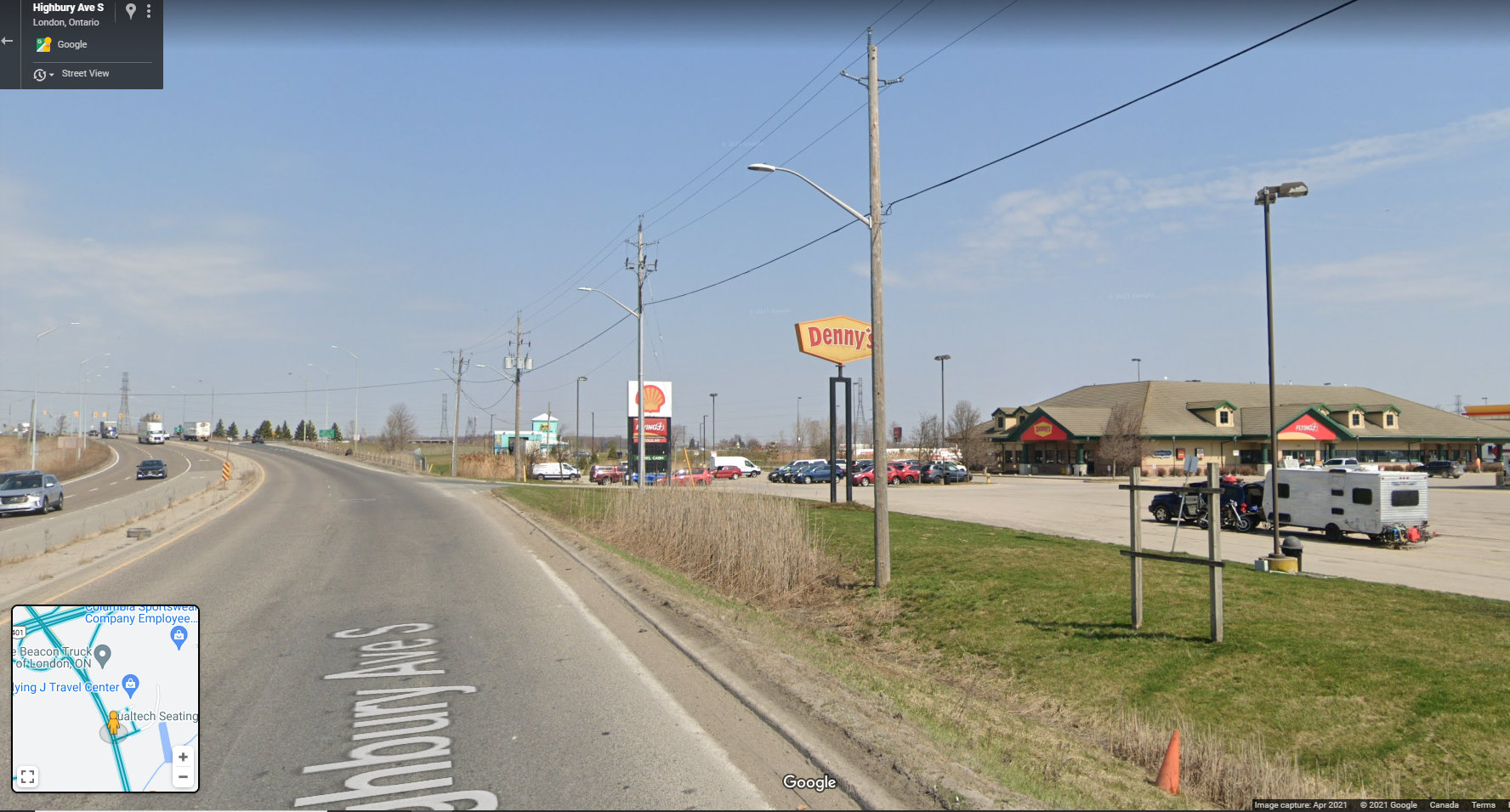
    Unfortunately, the Flying J truck stop, while convenient for truckers and other motorists, is a terrible place for a bus stop. The map below illustrates the truck stop’s location, on the southeastern outskirts of London.

    The truck stop was likely chosen for its proximity to Badder Bus’ operations centre in nearby St. Thomas, and for the space available to park and load a bus in the RV/trailer parking area. The truck stop operates 24 hours, with an on-site convenience store, washrooms, and restaurant, so there are amenities for bus drivers and waiting passengers.

    Unfortunately, Megabus and Badder Bus could not pick a less accessible place to catch a bus. The truck stop is surrounded by warehouses, light industry, and agricultural lands. Highbury Avenue is a high-speed highway connecting Highway 401 and central London, with a 100 km/h speed limit. Pedestrians and cyclists are prohibited from using Highbury Avenue (which, until the 1990s, was provincial Highway 126). There are no sidewalks leading south to Wilton Grove Road.

    Looking north on Highbury Avenue towards Highway 401, with the Flying J truck stop on the right. Note no sidewalks — pedestrians and cyclists are prohibited from Highbury Avenue at and north of the 401. (Google Streetview – April 2021)

    The only transit route within walking distance is London Transit Route 30, a rush-hour only service that serves the industrial area south of Highway 401. Downtown London is easily a 45 minute bus ride (when route 30 is operating), and Western University — a major market for Greyhound when it operated — is over an hour away by bus or a $50 taxi ride. Ironically, the northern outskirts of St. Thomas — that city remains disconnected to nearby London — are closer to the Flying J than Western University.

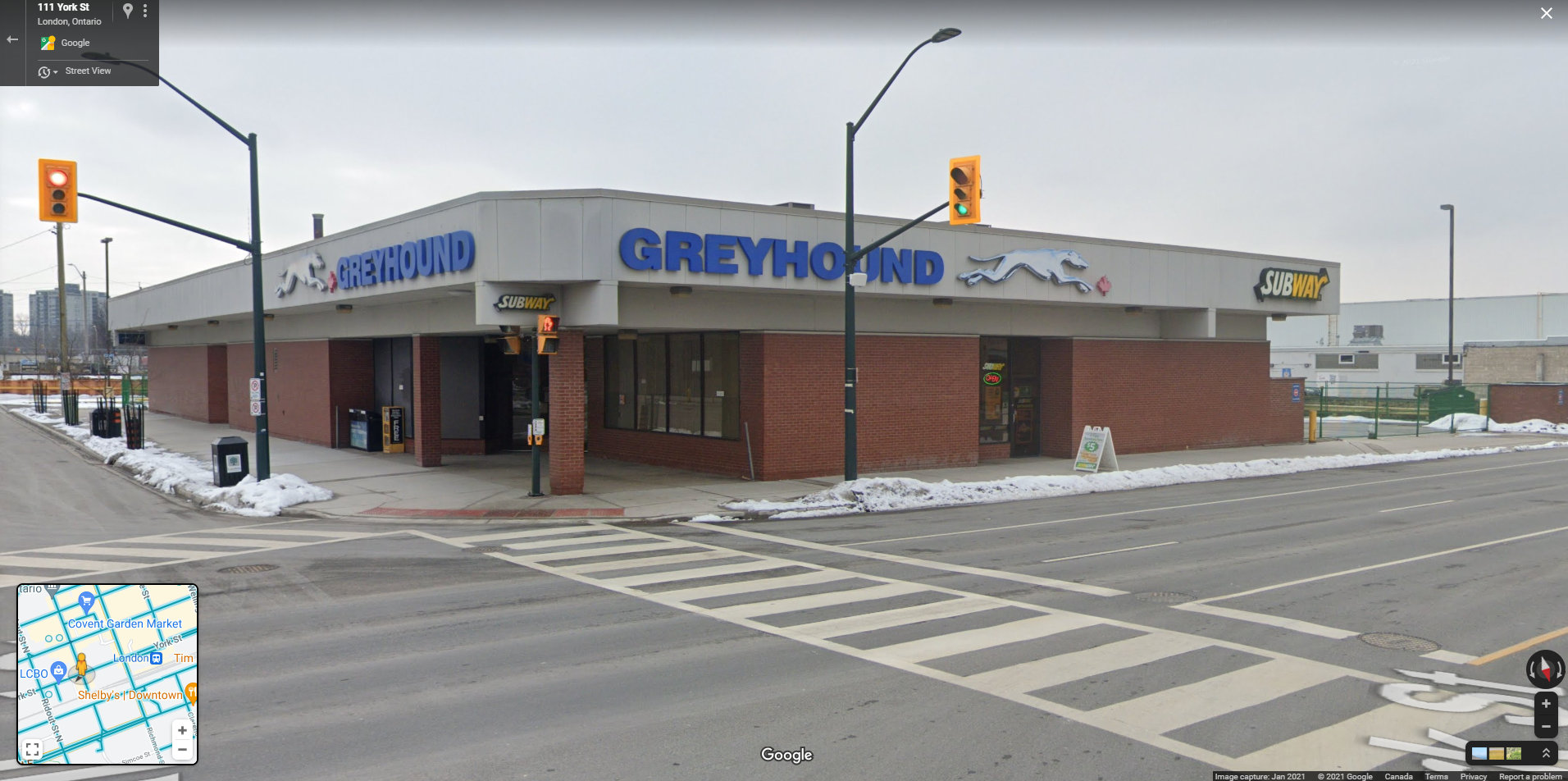
    The Greyhound Terminal in downtown London, two blocks from the VIA Station. At its peak in the 1980s, the terminal served Greyhound, Gray Coach, Erie Coach, and Cha-Co Coach, with buses departing for Toronto, Detroit, Niagara Falls, Buffalo, and cities and towns throughout Southwestern Ontario. (Google Streetview – January 2021)

    Greyhound Canada operated out of a terminal in Downtown London, two blocks west of the VIA Rail station. Greyhound shared its building with other carriers in the 1970s, 1980s, and 1990s, including Gray Coach, Cha-Co Trails, and Erie Coach Lines. From Downtown London, there were direct buses to Toronto, Detroit, Niagara and Buffalo, and cities and towns throughout Western Ontario. The terminal was a short walk to nearly all of London Transit’s bus routes, making connections to Western University, Fanshawe College, and the major hospitals easy.

    Choosing a truck stop at the far edge of town, nearly inaccessible by public transit reminds me of the final years of Greyhound’s operations in Western Canada. Greyhound abandoned downtown terminals in Winnipeg, Edmonton, Regina, and Saskatoon in favour of new stops in outlying area.

    In Edmonton, the downtown Greyhound terminal was expropriated for a new hockey arena, but Greyhound moved for the VIA station in the city’s northwest, which had no public transit access. (Red Arrow, a competing coach operator, maintained a downtown office and stop). In Regina, Greyhound moved from the downtown STC terminal to the airport, which has no public transit connection, and in Saskatoon, Greyhound moved to a truck stop — similar to London’s Flying J — in the northern outskirts of that city. It was clear that Greyhound Canada had no interest in attracting customers and was planning for an eventual withdrawal.

    Given Greyhound’s experience, why would a new carrier choose such a poor location for an intercity bus stop, especially in a city as large and important as London? The terminal need not even be in Downtown London to be a major improvement; a stop at White Oaks Mall, just one interchange to the west at Wellington Street, would provide good local transit connections to Downtown London and even Western University while remaining close to the highway.

    For now, Ontario’s newest bus stop might also be its worst bus stop.

  • Highway 401 revisited

    Highway 401 revisited

    Earlier in September, I paid a visit to Woodstock, Ontario, to check out one of several new intermunicipal transit services that launched across the province this year. While in Woodstock, I paid a visit to the Highway 401 interchange at Highway 59.

    In 1968-1969, London, Ontario artist Jack Chambers painted 401 Towards London No. 1, which depicts a tranquil scene from the Highway 59 overpass, looking west. The highway, just two lanes in each direction, bends slightly to the southwest as it heads towards London and Windsor. On either side, autumn trees, farm fields, and gentle hills stretch out. The only buildings visible are farm silos, and two truck terminals on the north side of the highway. Only a few vehicles on Highway 401 are visible in the scene.

    Chambers became well known for photorealism in his work. The scene in 401 Towards London No. 1 is slightly askew, as if this was a Kodachrome snapshot.

    Jack Chambers, 401 Towards London No. 1. Collection of the Art Gallery of Ontario.
    A larger version can be found here.

    Highway 401 was only fully completed between Windsor and the Quebec border in 1968, the year the painting was started, though the section between Woodstock and London was completed in 1957, bypassing an especially congested section of Highway 2. Like many interchanges built by the province in the 1950s and early 1960s, the junction of Highways 59 and 401 was an eight-ramp cloverleaf.

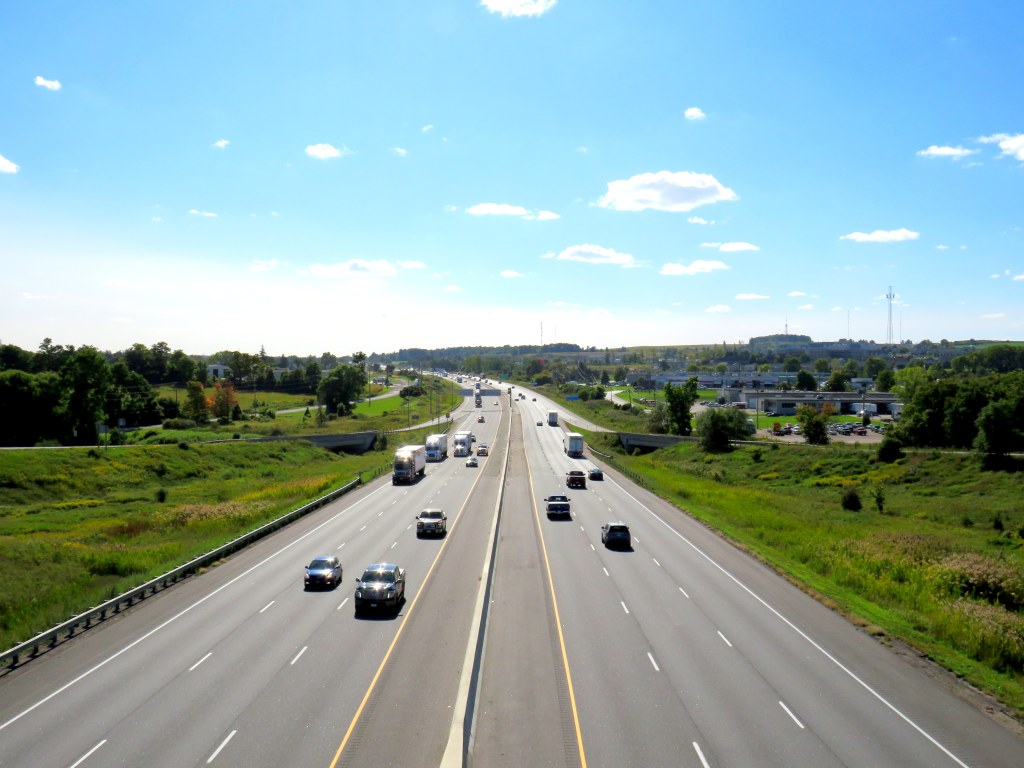
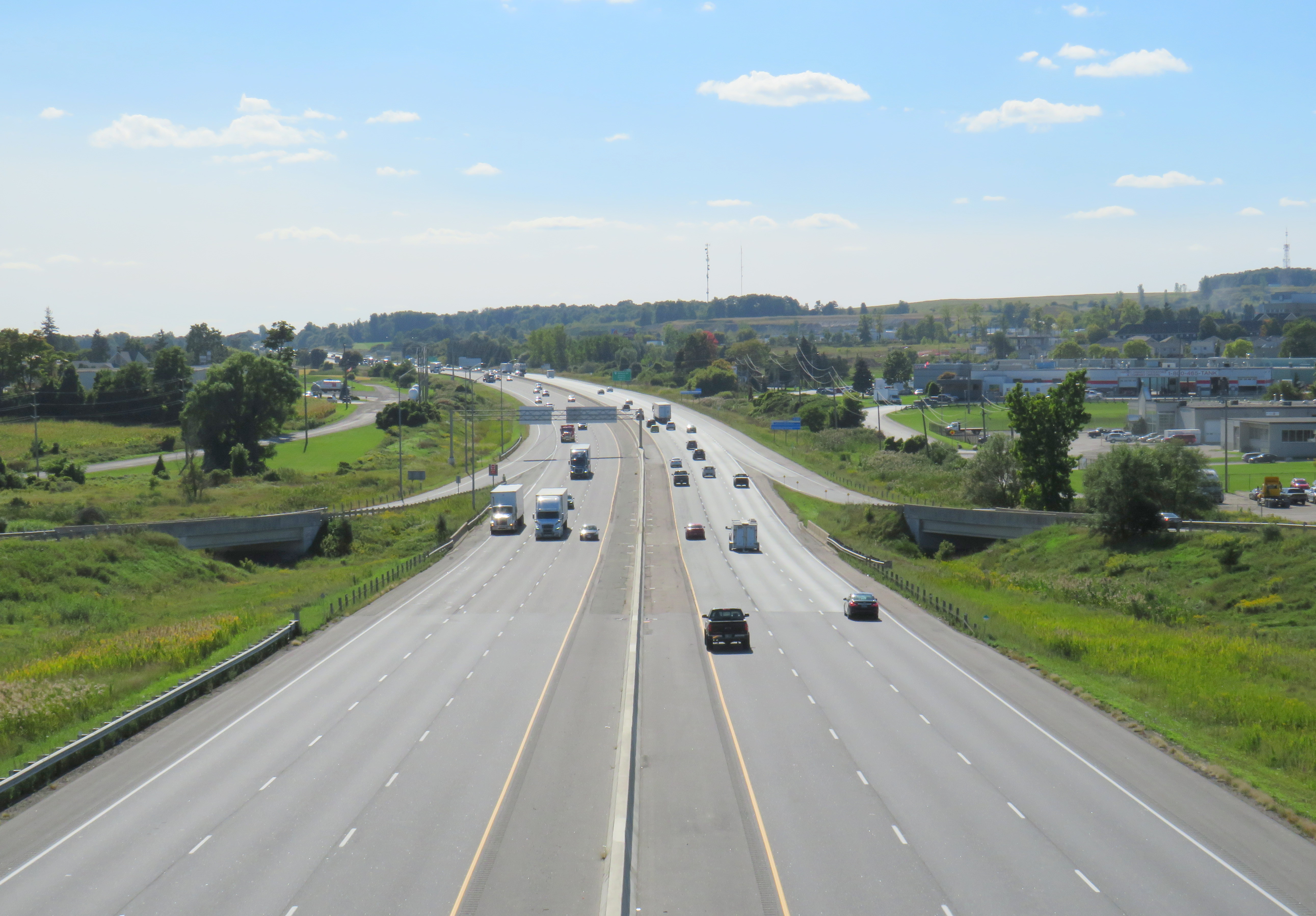
    A contemporary view towards London

    By the 1990s, Highway 401 was widened to six lanes. The cloverleaf interchange, like most others in Ontario, was removed and replaced by a simpler interchange. (As traffic levels increased, the danger of vehicles entering and exiting the highway with little space to merge became apparent.)

    Woodstock’s sprawl caught up to the highway, with new warehouses, motels, subdivisions, and a hospital joining the original freight terminals. Though the distant trees and hills are the same as those in Chambers’ painting, the gentle curve in the distance remains the easiest way to match the two views, fifty years apart. Highway 59 itself was downloaded by the province in 1997. To the south, the old highway is Oxford County Road 59. To the north, it is simply Norwich Street.

    Breezewood, Ontario: former Highway 59 looking north towards central Woodstock, where chain hotels, restaurants, and gas stations line the road

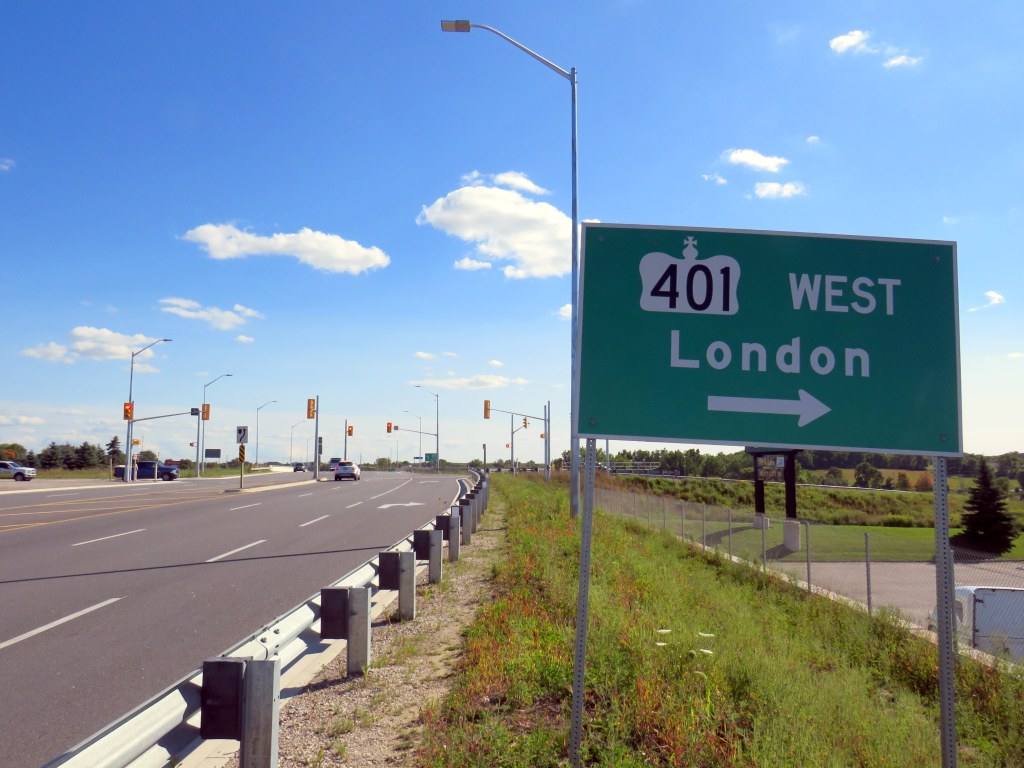
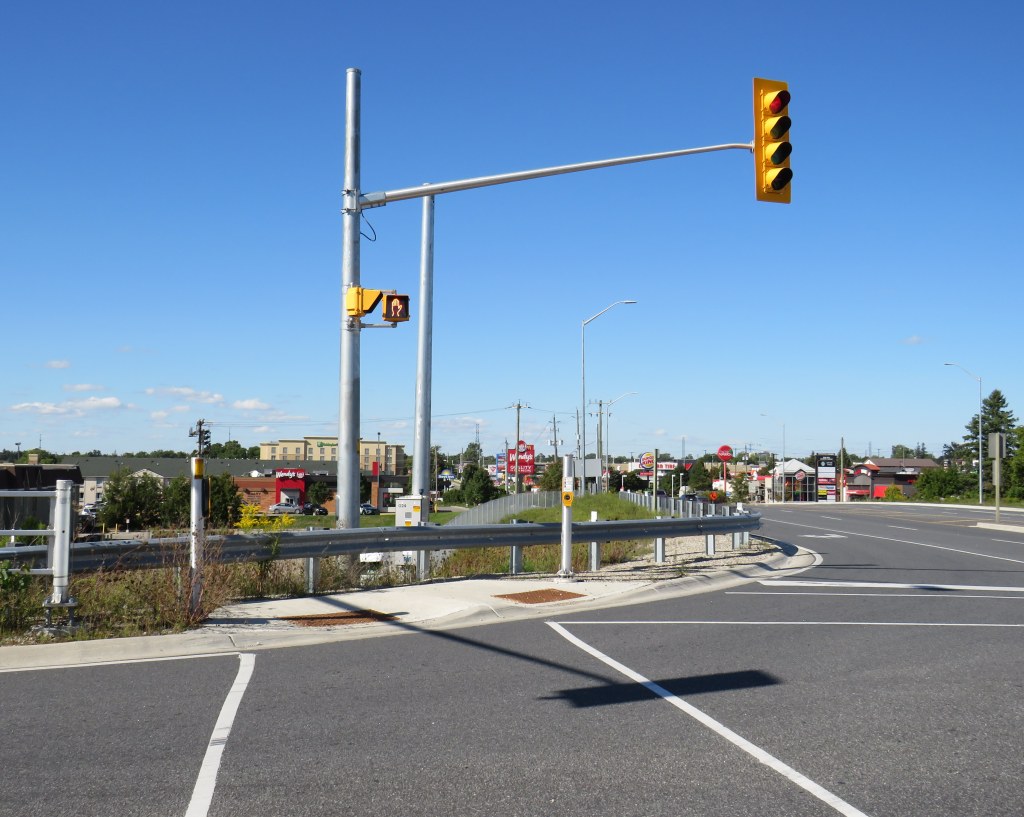
    As I climbed over guardrails and navigated sidewalk-less embankments and road shoulders to capture the contemporary image of Jack Chambers’ painting, I was surprised by two things. The first were fully AODA-compliant crossing treatments at the highway ramps, despite there being no safe and marked way to get to those crosswalks.

    I had to climb over the guardrail to get to this crosswalk at the westbound ramps to Highway 401

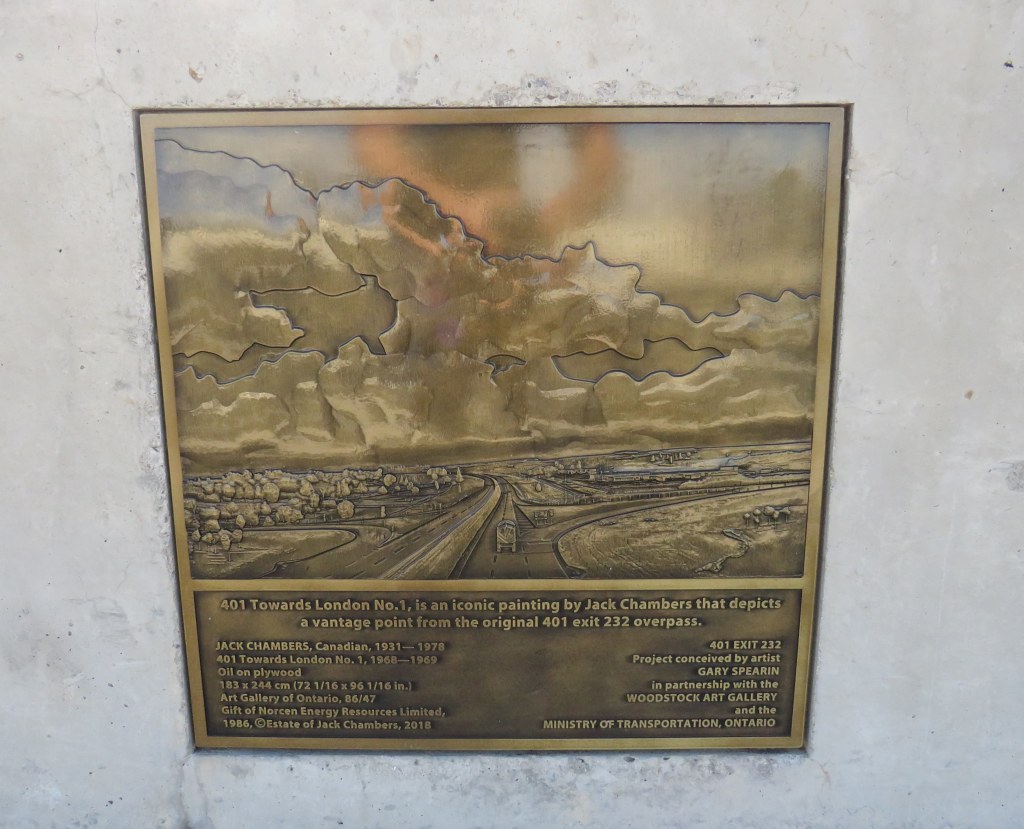
    I was even more surprised to see an engraved version of the Jack Chambers painting embedded in the guardrail. When the Ministry of Transportation Ontario (MTO) rebuilt the overpass in 2017-2018, it thoughtfully included this nod to a local artist.

    Plaque embedded in the guardrail at the Highway 59 overpass in Woodstock

    Unfortunately, given the isolation of the plaque, few will actually see it, even if thousands pass by it daily. Larger signs mark the overpass as the Constable Jack Ross Memorial Bridge, in honour of a Ontario Provincial Police officer.

    But it will always be the Jack Chambers bridge to me.

    A larger sign right above the Jack Chambers plaque commemorates a different Jack

    Though 401 Towards London No. 1 has long been one of my favourite Canadian paintings, it is not typically on display at the Art Gallery of Ontario. I would love to see this work put on permanent display, either at the AGO, or at another gallery that will appreciate the ode to Ontario’s mother road.