Tag: Perth County

  • The slow way to Stratford

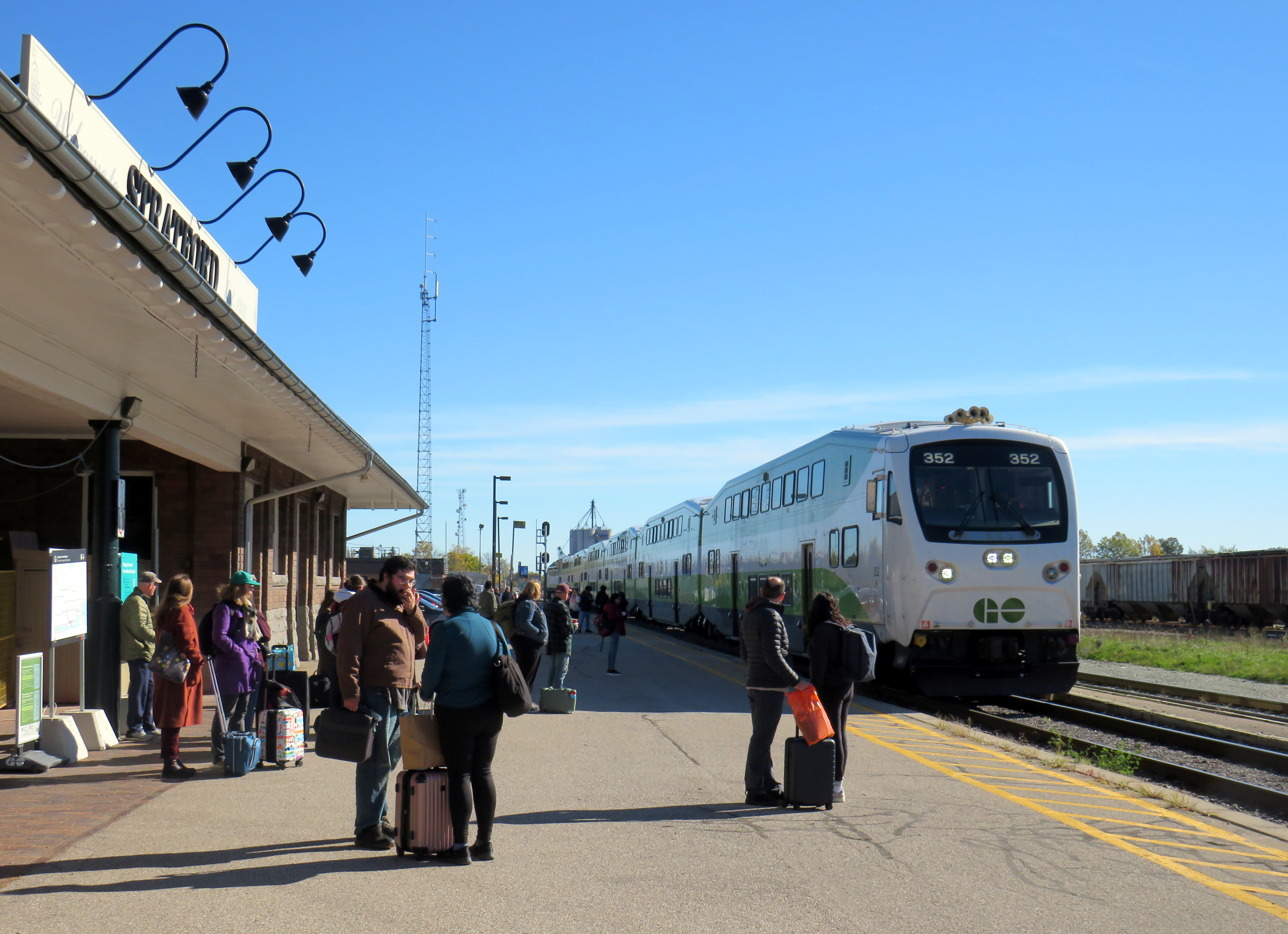
    GO train at Stratford Station, October 18, 2026, just before 11:30

    Ten years ago, I wrote about travelling to Stratford, Ontario by train, lamenting the slow ride and the limited schedule. Now that limited GO train service has returned to Festival City, I thought I’d go for another ride, on Sunday October 18. I also took the opportunity to ride on country roads between Stratford and St. Marys and back while the weather was still good.

    Earlier this year, GO Transit introduced one daily train between Stratford and Toronto, a partial restoration of an ill-fated train that went all the way to London. On weekdays, one of the peak express trains to and from Kitchener was extended to Stratford. On weekends and holidays, a new train departs Union Station at 8:49 AM; the return trip departs Stratford at 6:07 PM.

    The weekend GO train has operated sporadically throughout the summer and fall of 2026; the Kitchener Corridor is partially closed on certain weekends between Union and Mount Dennis and between Mount Pleasant and Kitchener/Stratford for construction work at the new Stockyards Station, improvements at Guelph Station, construction at the Grand River bridge near Kitchener, and other track work. Though Stratford’s tourism office promotes the service, it can take some thoughtful planning to actually take advantage of the ride.
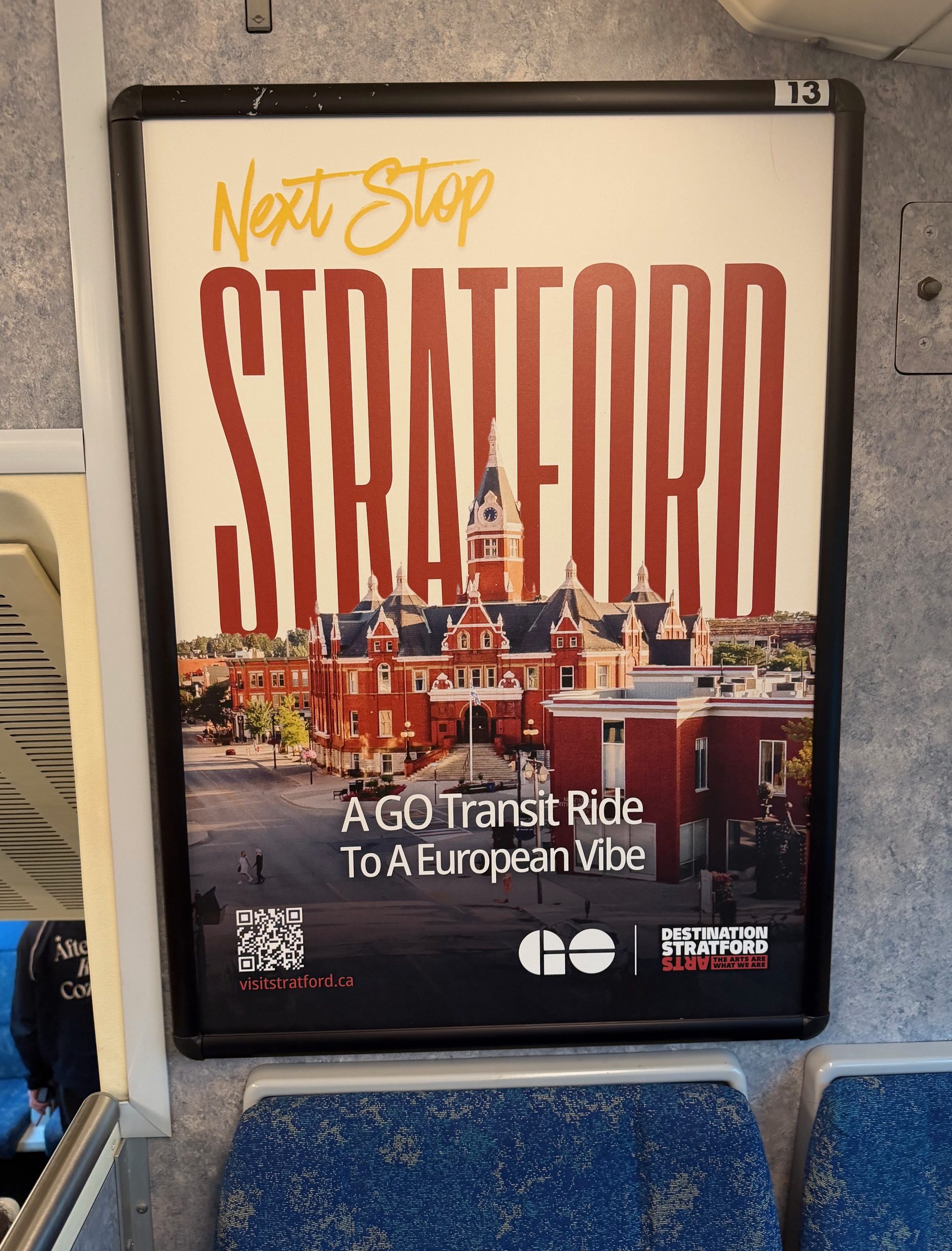
    Advertising for Stratford via GO, featuring the late Victorian city hall

    GO previously called at Stratford as part of a two-year pilot extension to London between October 2021 and October 2023. The problems with that service were two-fold. The track conditions west of Kitchener makes for a very slow ride, taking over four hours between Toronto and London, while VIA trains through Aldershot and Brantford could do the trip in almost half the time. By 2021, there were new bus operators between Toronto and London, competing on price and schedule, typically a 2-3 hour ride between the two cities.

    The London departure time of 5:20 AM was very early in the morning, even for commuters to Kitchener-Waterloo. The scheduled arrival at Union at 9:13 AM was too late for many office workers. A four hour ride on a GO train is just too long with quad seating intended for much shorter 30-60 minute rides. For Stratford commuters, however, the 6:43 departure made for a more attractive option.
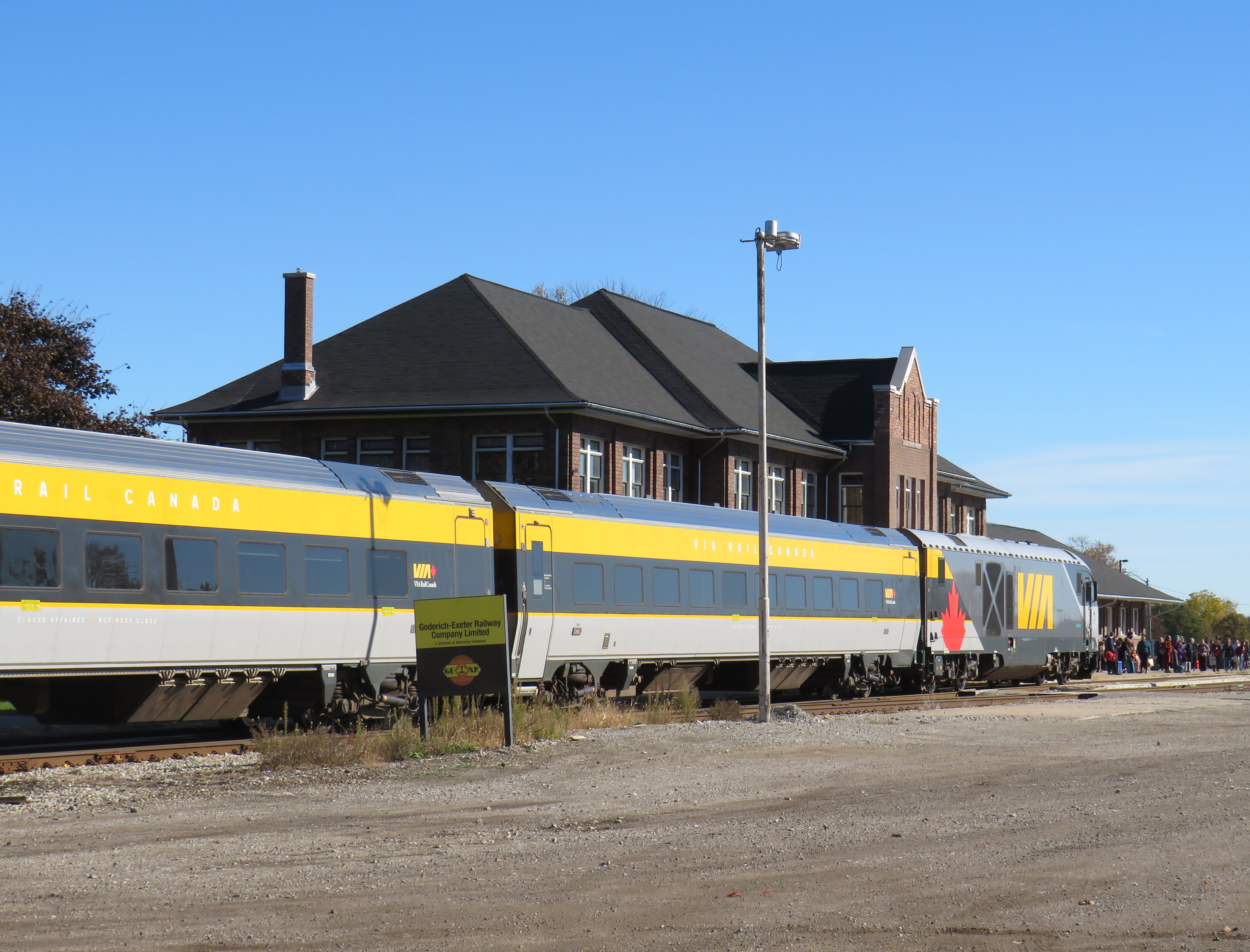
    Toronto-bound VIA train arriving at Stratford at 11:39 AM

    Despite GO’s return to Stratford, VIA still stops here once a day. Until 1990, VIA offered five trains between Stratford and Toronto, that was cut to just two after the devastating cuts that year. The second train (mornings westbound and evenings eastbound) disappeared during the pandemic and never returned. A few dozen people were waiting for the 11:20 eastbound midmorning train, which had to wait for the GO train to get out of the way, departing Stratford at 11:41.

    Despite the loss of one of the two VIA trains, Stratford has more travel options in 2026 than it has in many years. There is a daily Flixbus run between Toronto, Stratford, and London. PC Connect‘s routes link Stratford with Kitchener/Waterloo, St. Marys, and London six days a week. There’s still the Festival shuttle for ticketholders. And now there’s the GO train.

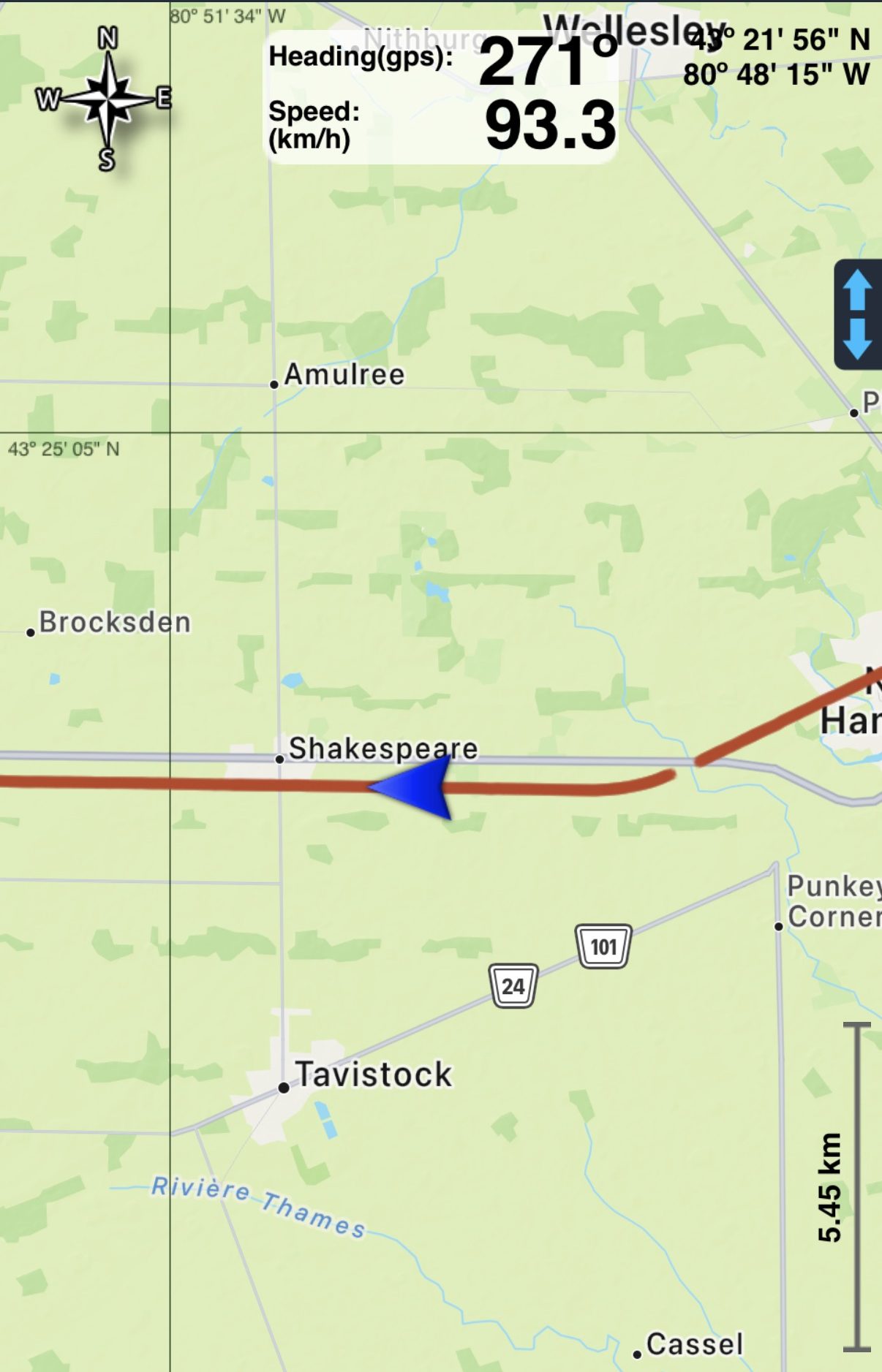
    Despite the resumption of GO service, there are still some issues that will have to be addressed. After Metrolinx acquired the Georgetown-Kitchener section of track from CN, it made several improvements including a new passing siding east of Kitchener and improving speeds through Downtown Guelph, up to 45 MPH from 10 MPH (railways in Canada still use miles instead of kilometres). West of Kitchener, the track continues to be owned by CN (which took over operations from the Goderich-Exeter short line several years ago) but remains in fair or poor condition, with bolted rail and multiple permanent slow orders. Through western Kitchener, the train crawled at 16 km/h (10 MPH), before increasing somewhat to 45-48 km/h in Wilmot Township. West of New Hamburg, the train reached speeds of just over 90 km/h. The Kitchener-Stratford section took just over an hour, despite a distance of just 42 kilometres. The screenshots from a GPS app on my phone below depict the speeds along this part.
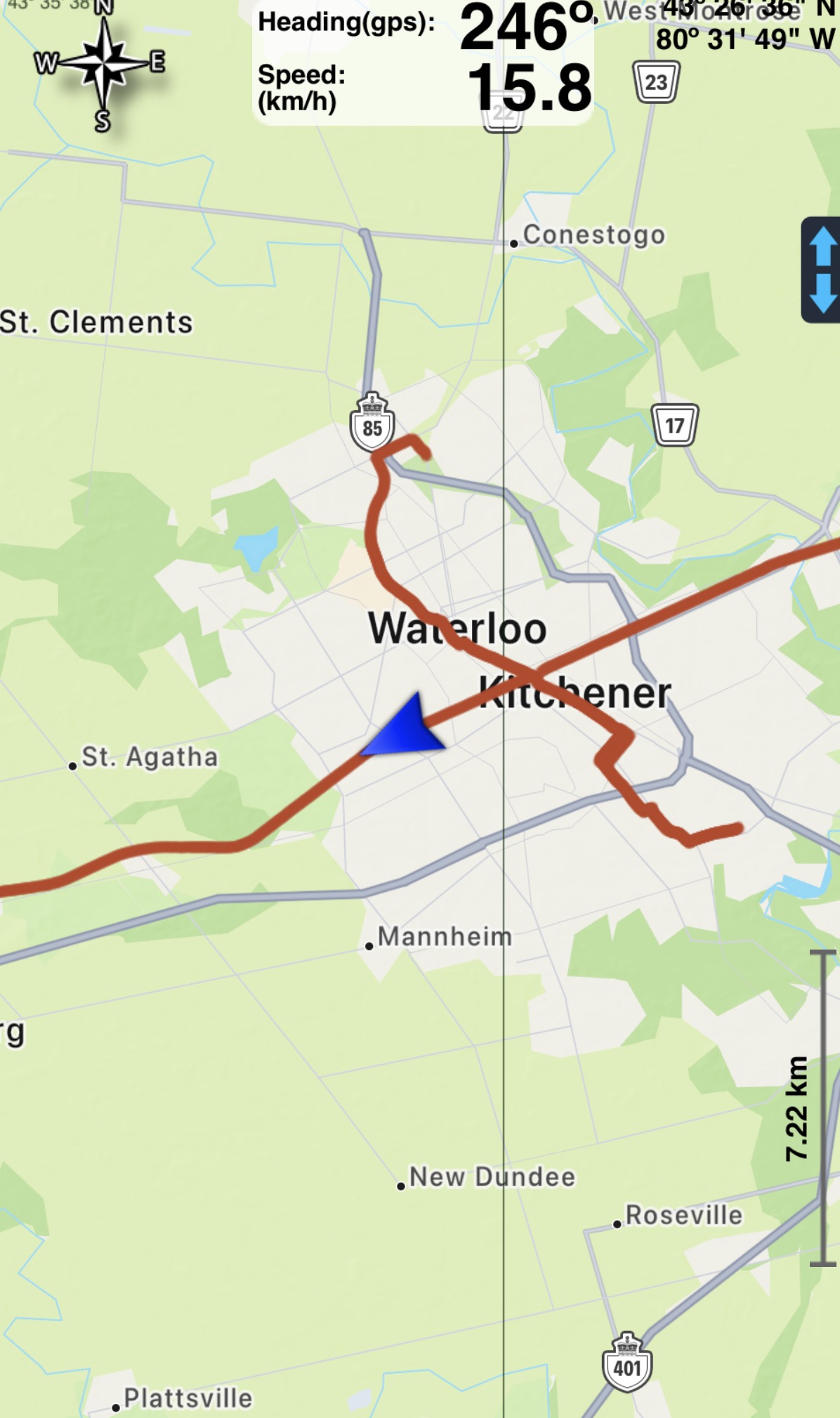
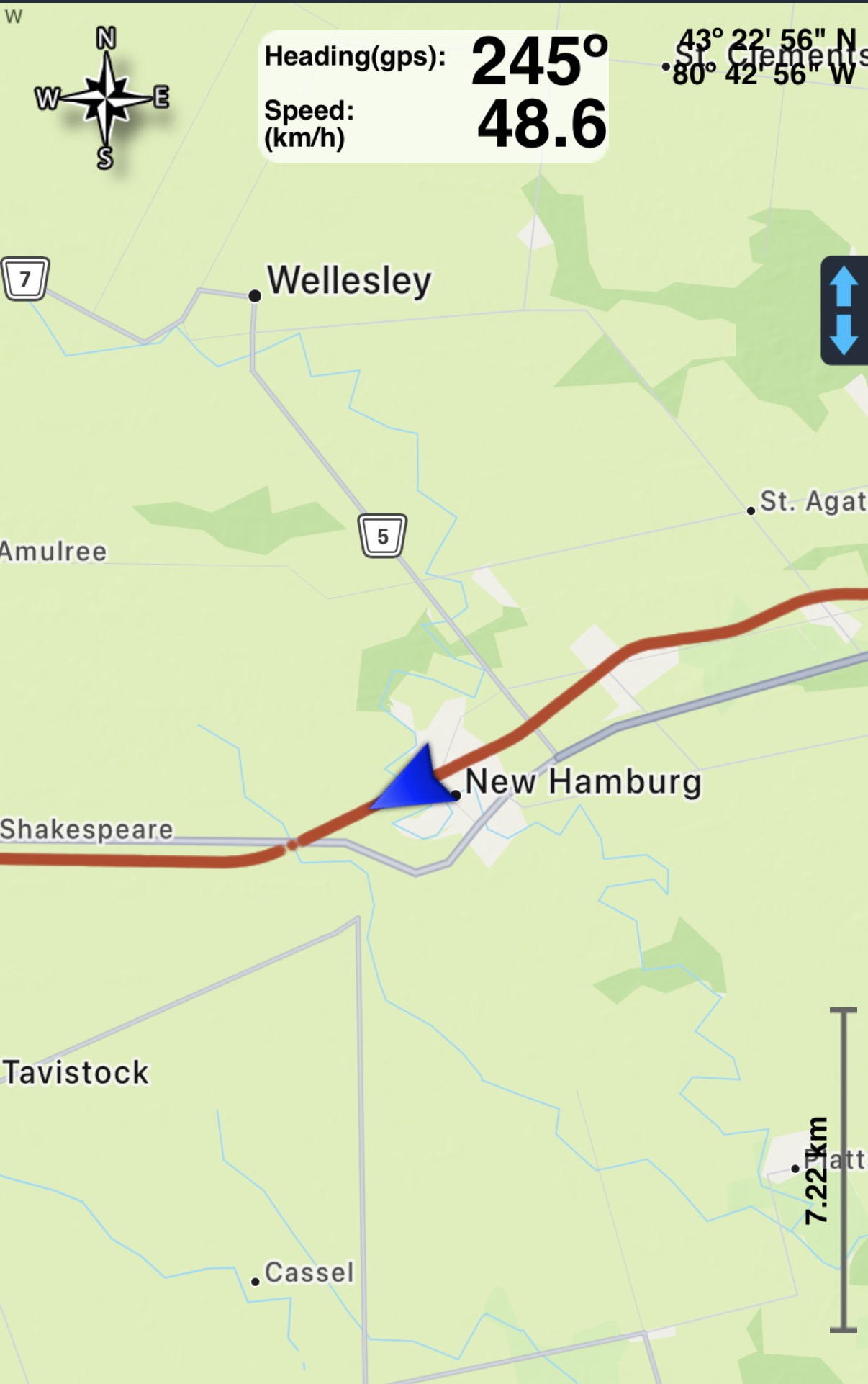
    For a weekend excursion train, the added delays from these slow zones (an additional 10 minutes) do not really matter but they have been causing trouble in the morning peak, with the late departures causing delays and overcrowding at the Brampton stations. On Monday, October 26, the departures and arrivals at Stratford were adjusted to account for this.

    As GO Transit’s Stratford service is not yet a permanent, long-term commitment, there are no Presto or fare vending machines at Stratford; customers must purchase their fares on their smartphones. On weekends, GO still offers a $10 day pass, otherwise the fare is $25 one-way. The weekend trains are just six cars long, with only the cab car and the accessible car opening at the short Stratford platform. Bringing a bike on or off can be a challenge if the two spots in the cab car are taken — it will mean getting it up and down the stairs and between the coaches, as I had to on my return trip — to get to the next bike-permitted area.
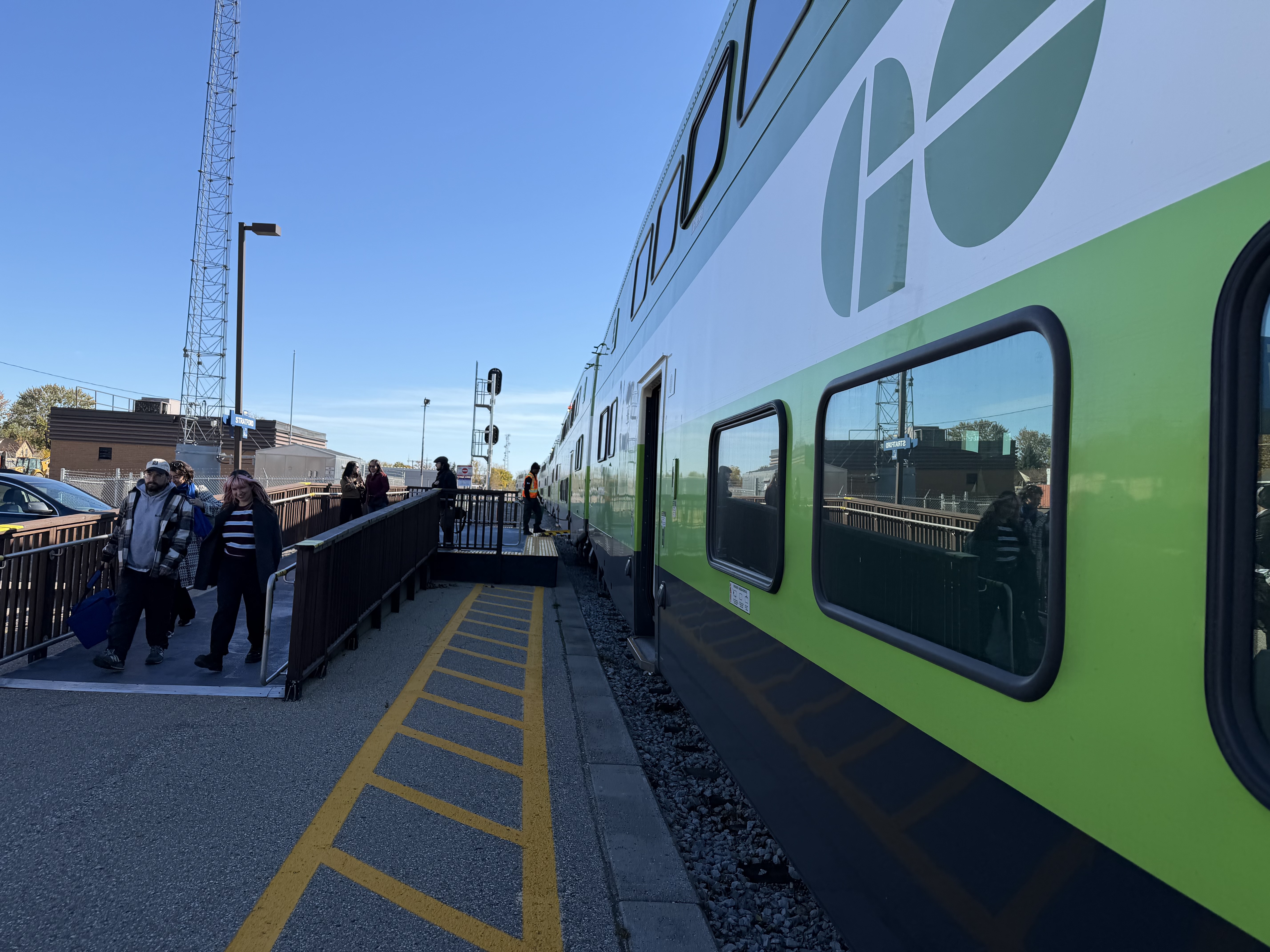
    Only two of the six cars open at Stratford

    Unfortunately, the PC Connect bus service may be cut back, as the Town of St. Marys is no longer interested in helping to subsidize it. Instead, St. Marys is more interested in a local service, likely an on-demand system, rather than the limited fixed-route. That might mean the end of the London connection, if not the entire service. Though there is still Flixbus and GO, it might make it harder for students and commuters to get to universities and colleges in neighbouring cities, or for residents to get to work, health services, or social connections.

    If the provincial government is committed to the Stratford service, it should either pay CN to upgrade the track to at least the standard it was in the 1980s, when VIA trains were consistently travelling at 70 MPH (110 km/h), or purchase the corridor outright, as it did east of Kitchener. In the meantime, it should ensure the continued operation of PC Connect, perhaps with better integration with the GO services in Kitchener-Waterloo. Metrolinx, as it continues to expand far beyond the Toronto/Hamilton area, should also consider different car configurations for longer trips for passenger comfort, especially as it takes over markets previously served by VIA.

    Furthermore, Stratford should be a minihub for Midwestern Ontario, with connecting buses to places like Clinton and Goderich on Highway 8 and up to Listowel, Wingham on Highway 86, even as far as Kincardine.

    Ride to St. Marys
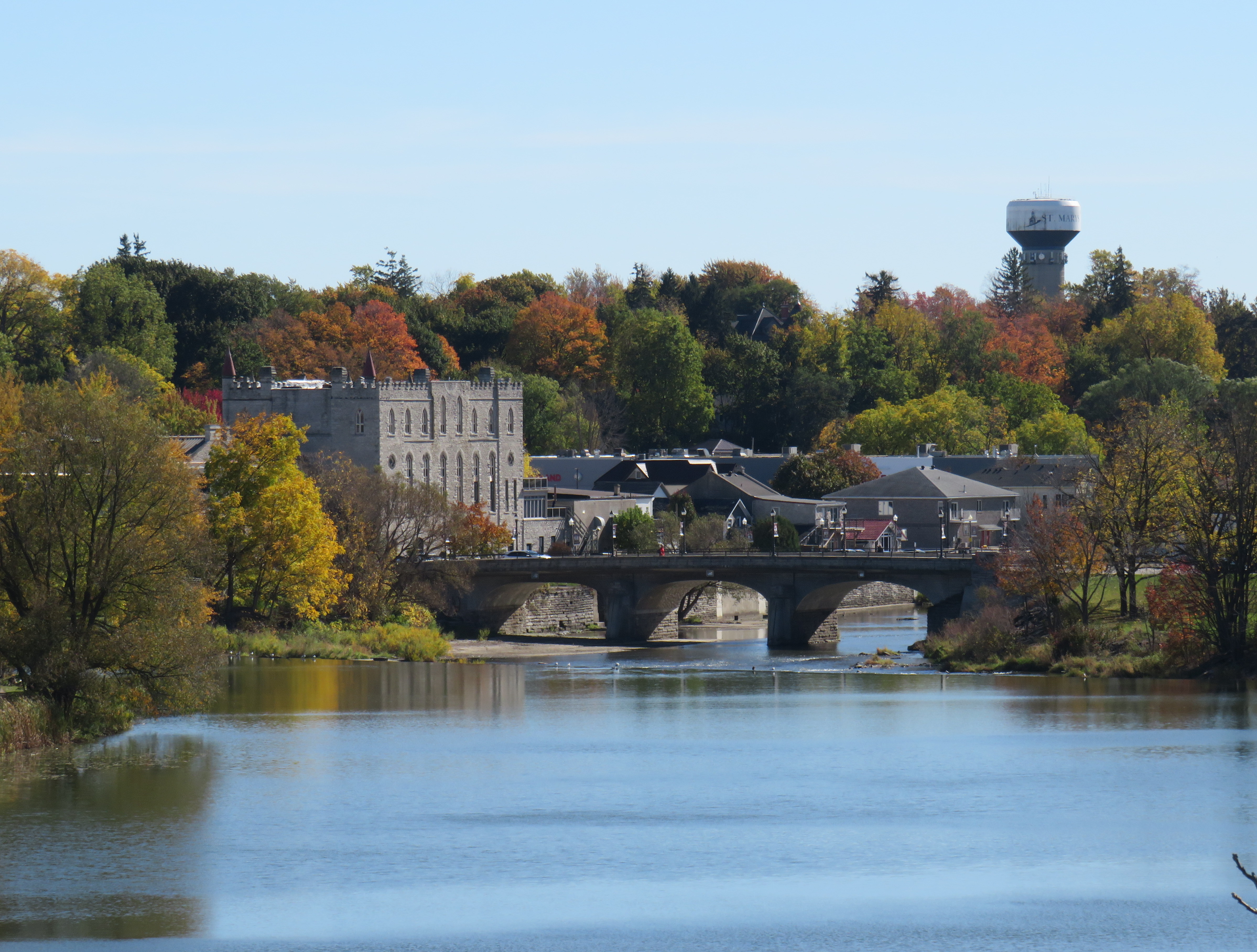
    St. Marys from the Rotary Trail bridge

    St. Marys is about 20 kilometres from Stratford, easily bikeable by way of mostly flat country roads parallel to Highway 7. Though the ride to St. Marys was made difficult by a strong, cold wind from the southwest, the ride back to Stratford was very pleasant. Traffic on Perth South Road 122 was light, with every passing motorist courteous and giving lots of space. Short sections of the ride were on unpaved roads, however.
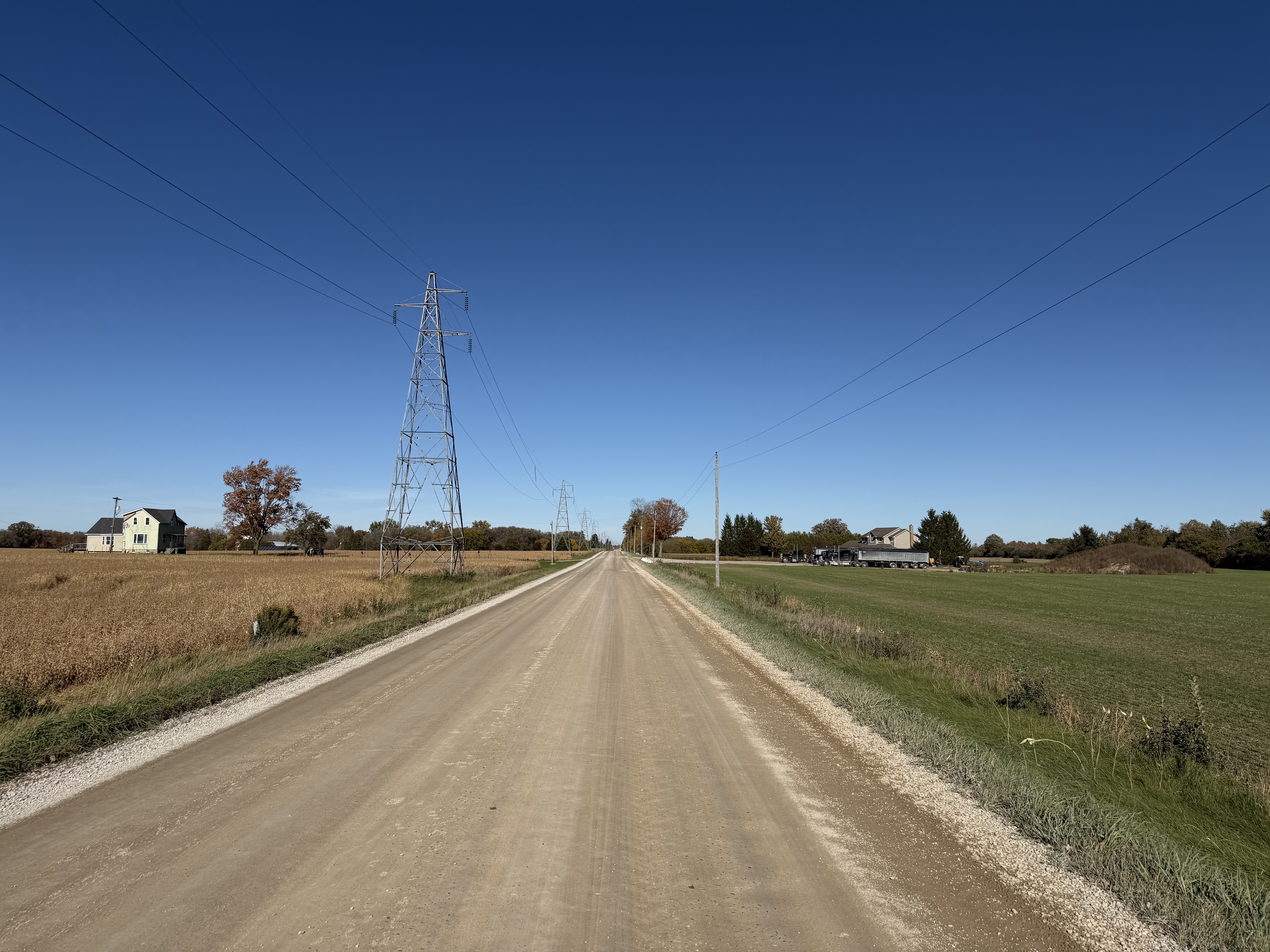
    A short section of unpaved road near St. Marys

    St. Marys was once the junction between the Grand Trunk Railway’s 1850s Toronto-Sarnia mainline and a branch south to London. After the Grand Trunk merged with the Great Western, whose southern Ontario mainline passed through Hamilton and London, the old Sarnia route, which served communities such as Forest and Lucan, became a branch line, eventually abandoned in the 1980s. Happily, the bridge over the North Thames River remained in place and was later converted to a short trail within town.
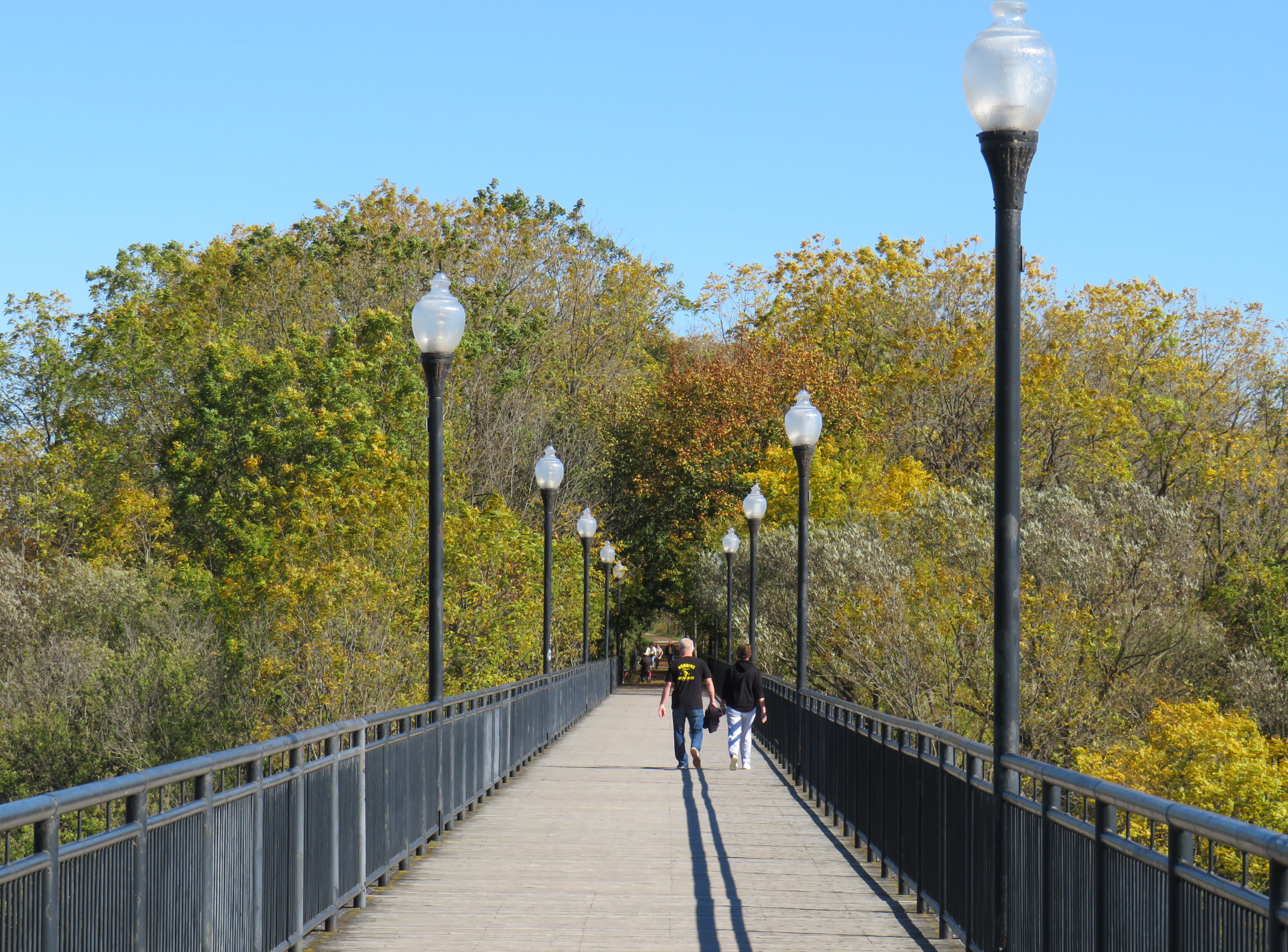
    The old railway bridge now a popular active transportation route

    The historic stone St. Marys Junction station, abandoned and fenced off for years, recently became an independent brewery. Despite being a bit of a way from St. Marys’ downtown, the place was busy, and worth the stop on the way back to Stratford.
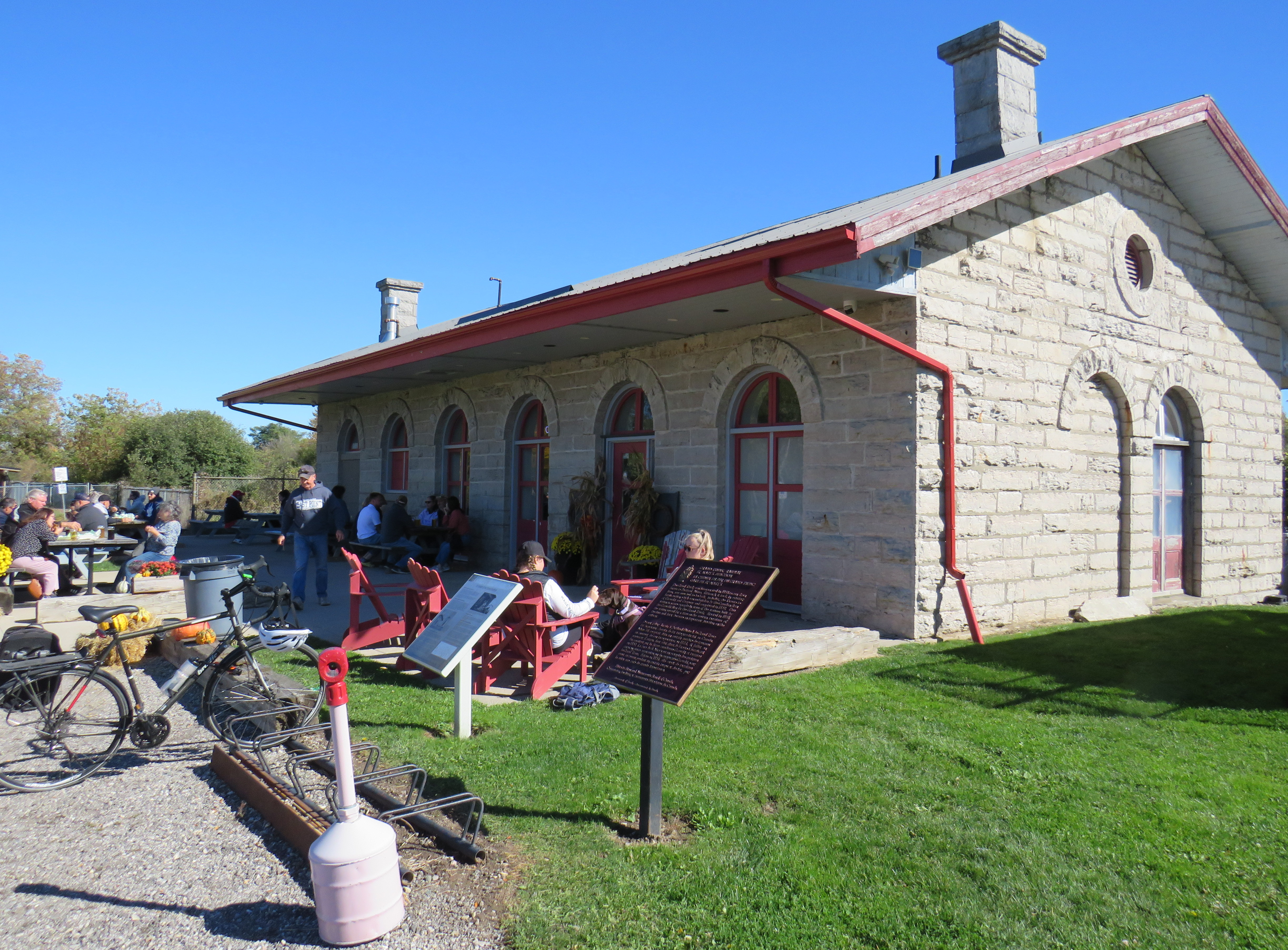
    The busy Broken Rail brewery on a Sunday afternoon. Note the federal historic plaque in front.

  • Intercity map updates for April 2025

    Intercity map updates for April 2025

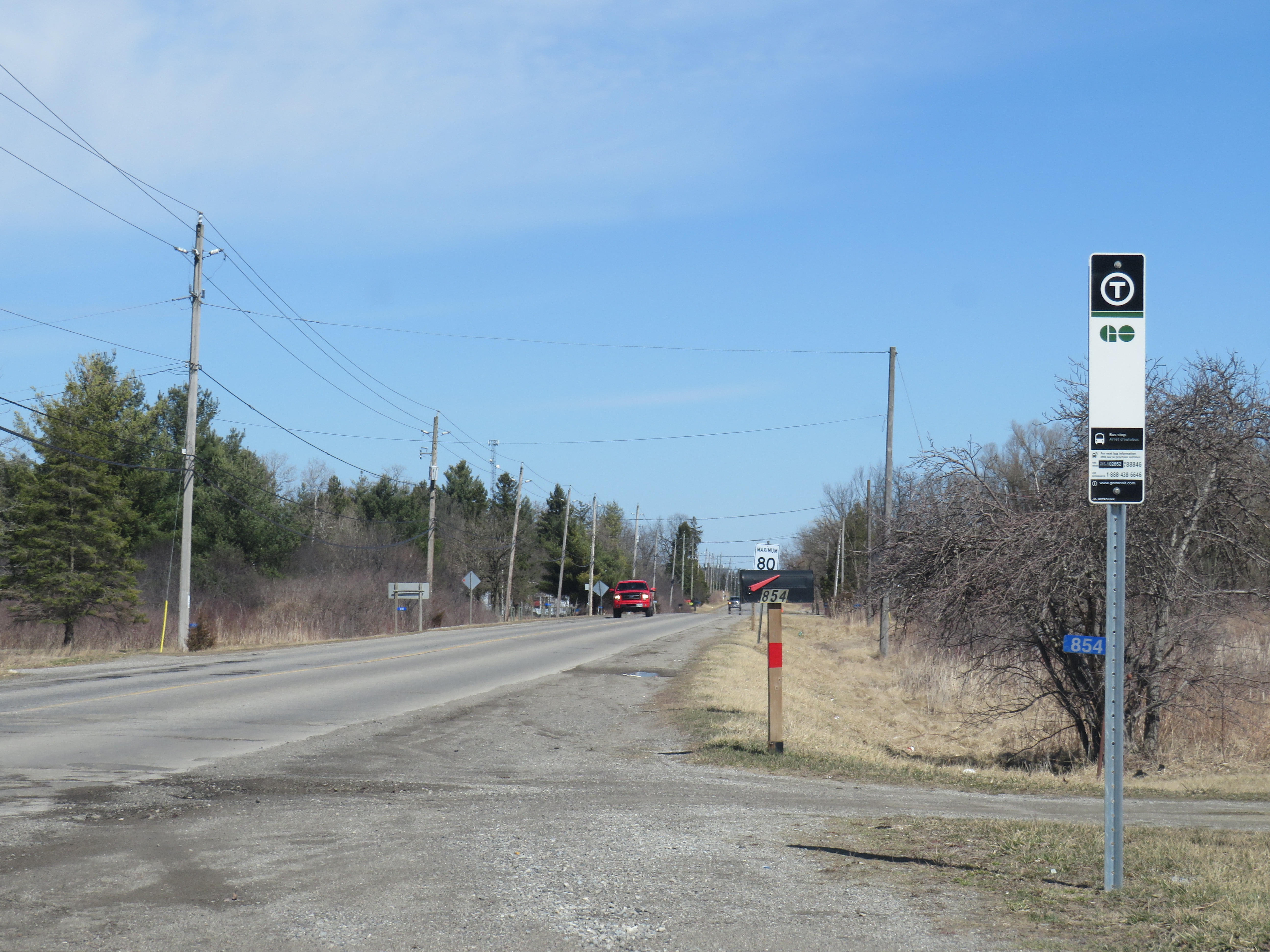
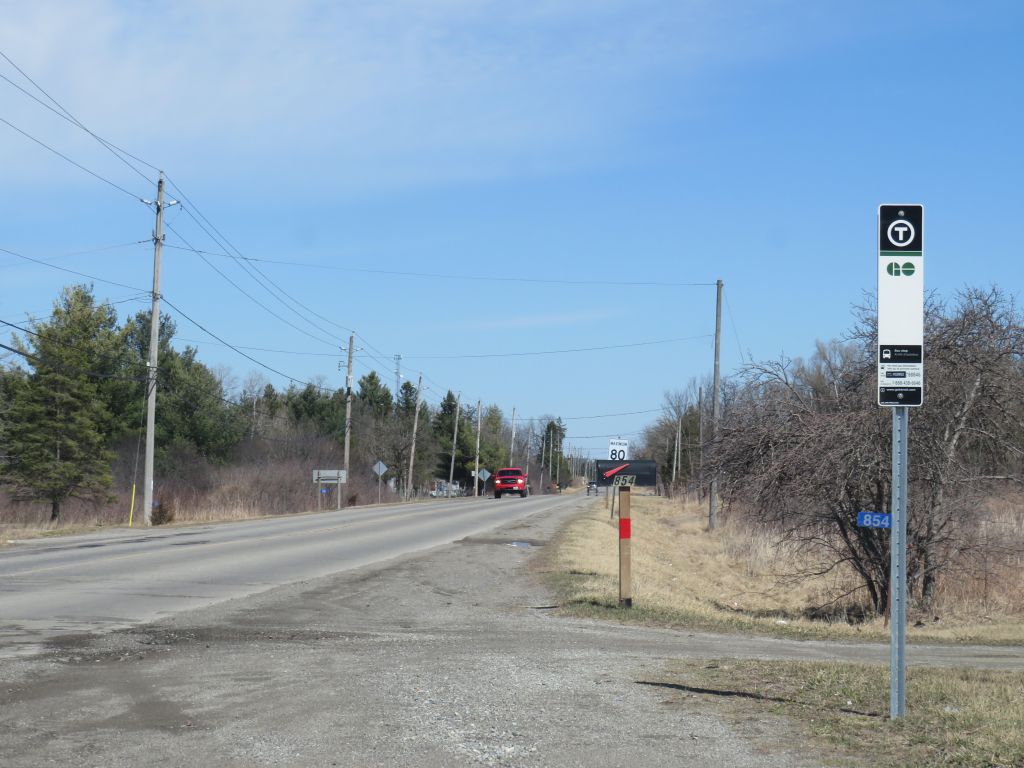
    New GO Transit bus stop on Chiefswood Road at Six Nations

    As we enter Spring 2025, there are a few significant changes in Ontario’s intercity transportation services. A new daily GO Transit route will now connect Six Nations and the Mississaugas of the Credit First Nation with Brantford, Hamilton, and Greater Toronto. A new seasonal Waterloo-Burlington weekend express could foreshadow more direct service between Kitchener/Waterloo and Hamilton in the future. Flixbus moved its Ottawa terminal stop to the VIA Rail station, joining Ontario Northland and Orleans Express.

    However, there are also some cuts, triggered by the end of the Ontario Intercommunity Transportation Grants. Grey County will terminate all GTR services with the exception of Route 1 between Dundalk, Shelburne, and Orangeville. T:GO is ending its intercommunity services outside of Tillsonburg, including routes that connect with Woodstock and London. PC Connect is cutting its rural route that serves places like Mitchell and Milverton (though routes connecting Listowel, Stratford, and St. Marys to Kitchener/Waterloo and London will continue).

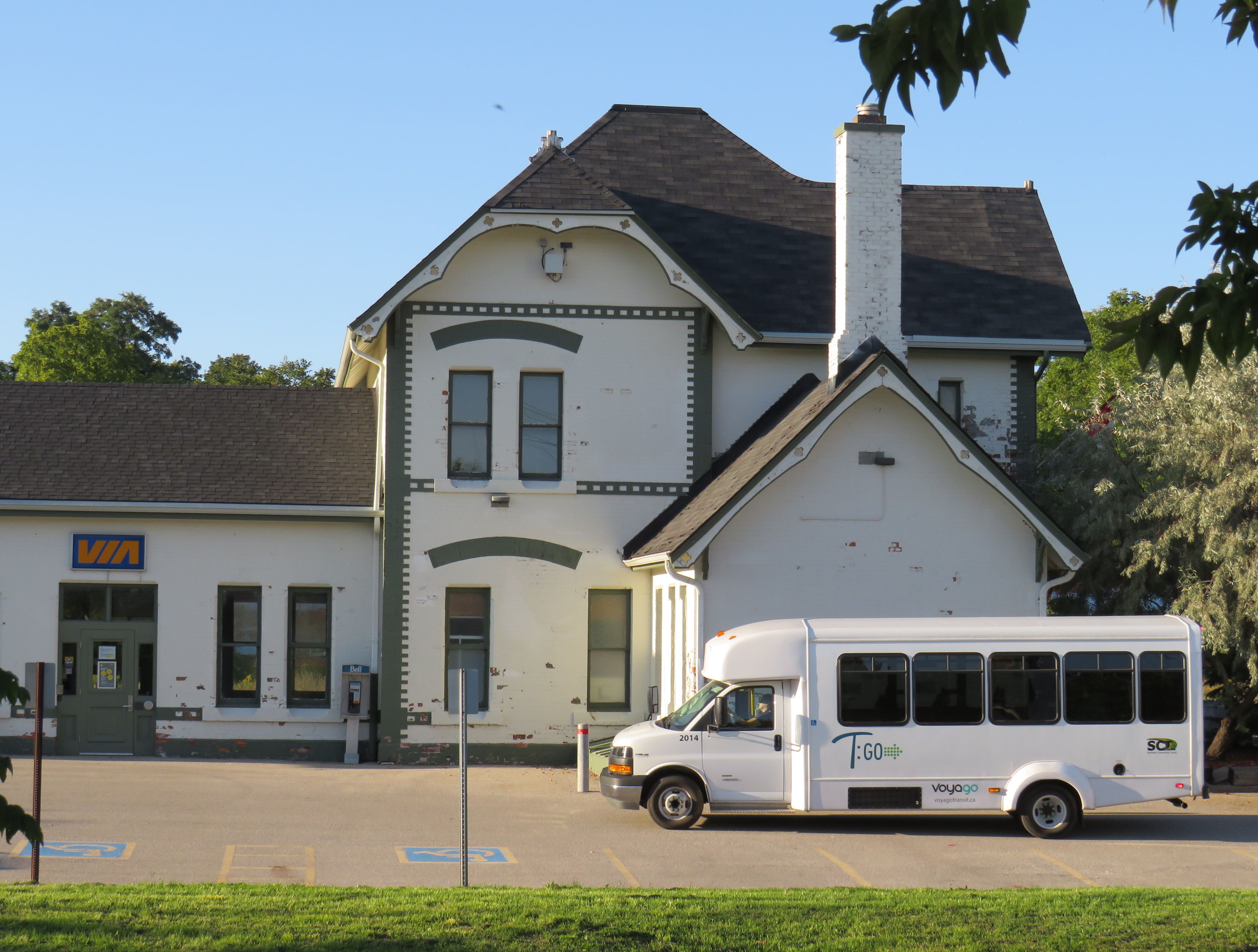
    Unfortunately, T:GO will end all intercommunity bus routes outside of Tillsonburg, including the link to Woodstock

    Recently, I provided my expertise mapping Canada’s intercity transit links to Transport Canada, which allowed me to enhance and update the interactive map. I am also working with Transport Action Canada to support their efforts advocating improved intercity transport across the country.

    I will be retiring my older Ontario and Canada intercity maps; a new version of my Canada Intercity Map for 2025 can be found here. I will make all updates to a single map for now on. The new map depicts discontinued bus routes, shown in light grey.

    Preview of the new Canada Intercity Transport Map

    As always, please contact me with feedback, corrections, or updates. It is a challenge continually maintaining a Canada-wide map given how frequently things change.

  • The long way to London

    On Friday, May 13, I embarked on a day trip through Southwestern Ontario from Downtown Toronto. I wanted to ride more of Ontario’s new intercommunity transit services and try one of the new intercity bus operators that’s filling the vacuum left by Greyhound’s departure. I started my trip at Union Station, spent some time in Kitchener-Waterloo, then continued on to London, returning home that evening.

    Between Toronto and Kitchener, there are several options. VIA Rail is the fastest and most comfortable ride, but it now only operates one train a day between Toronto and Kitchener.

    GO Transit is the most frequent option, with several weekday trains between Toronto, Brampton, Guelph, and Kitchener, and connecting buses at Bramalea GO Station for Downtown Kitchener and Waterloo. The train and bus trip via Bramalea is just under 2 hours, costing $19.40. (Weekend GO service is much slower, requiring a change of bus at Square One, with a 2 hour, 33 minute ride.)

    The traveler might also choose one of the new private carriers. FlixBus has one daily departure at 7:45 AM from Downtown Toronto (on York Street, south of Union Station), with a second 2:15 PM trip departing Thursdays through Sundays. Though FlixBus is the cheapest option — only $14.24 with tax — it is slightly slower than GO Transit’s direct train or its Bramalea bus connection, as it deals with Downtown Toronto traffic and serves Guelph on its way to Kitchener. Onex Bus also stops at Kitchener on its Toronto-London route, but it stops at the Sportsworld Terminal near Highway 401, requiring a change to Grand River Transit’s buses.

    Because of the flexibility and convenience, I choose GO Transit, switching from train to bus at Bramalea. Because of continuing construction at Bramalea Station, I had trouble finding the bus stop for the Route 30 to Kitchener and University of Waterloo, but once work is complete on the bus loop, the transfer between modes will be quite easy.

    Route 30 is a fast bus route, stopping only at the Meadowvale Business Park in Mississauga, where connections can be made to several other GO Transit bus routes as well as Miway and Brampton Transit. In Kitchener-Waterloo, the GO bus stops at Downtown Kitchener, at Wilfrid Laurier University, and at a new terminal at University of Waterloo. This is in contrast to Route 25 between Square One and University of Waterloo, which exits the highway multiple times to make local stops, and is the only weekend GO service.

    The new bus terminal at University of Waterloo, serving local GRT routes, GO Transit, and the ION LRT.

    Between Kitchener and London, however, options are much more limited. Though the GO Transit Kitchener Line was recently extended to London, this is limited to one weekday train leaving London at 5:30 AM and returning to London at 8:37 PM. There is just one VIA train between the two cities as well. Onex Bus offers up to five trips daily between Sportsworld and Downtown London.

    The other option is PC Connect, a provincially-funded intercommunity service connecting Stratford and St. Marys with Kitchener-Waterloo and London, as well as towns within Perth County with each other. From Conestoga Mall in Waterloo, I took the 2:50 PC Connect trip to Stratford and St. Marys. At St. Marys, I changed to a connecting bus for Masonville Place Mall in London. Each ride cost $12 cash. Service was friendly and on-time.

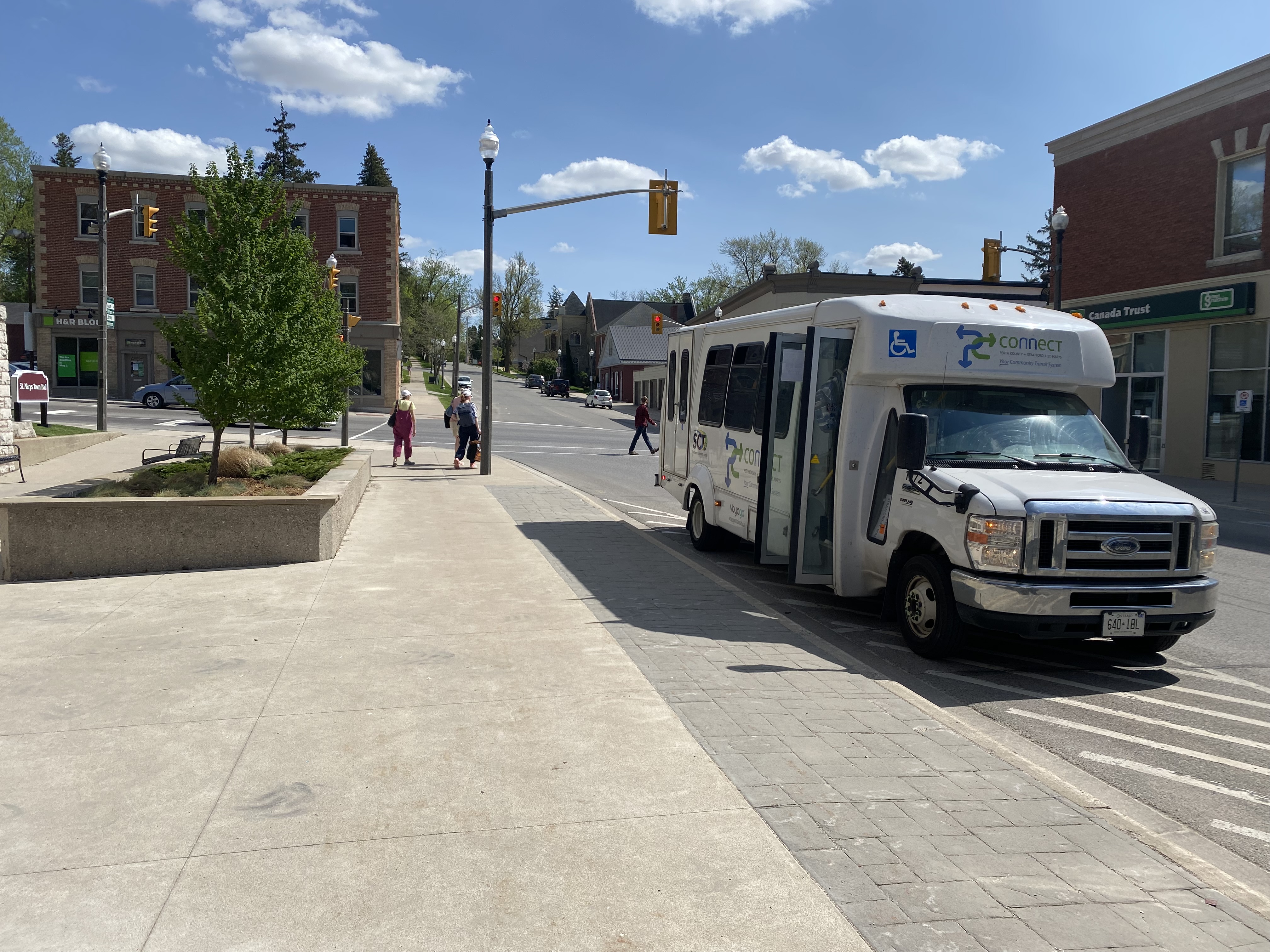
    PC Connect Bus in St. Marys

    At London, PC Connect stops on Fanshawe Park Road, adjacent to Masonville Place Mall, but a ten-minute walk from the main LTC bus terminal where connections can be made to Western University and Downtown London. (Huron Shores Area Transit, with service to Exeter and Grand Bend, stops on the north side of Fanshawe Park Road).

    With VIA Rail’s service reduced between Windsor, London, and Toronto, the only trip back to Toronto after 5PM (on a Friday, a traditionally busy travel day) was an Onex Bus departure from the downtown VIA Rail station’s parking lot at 9:15 PM to Pearson Airport (the last trip of the evening continues to Bramalea City Centre, rather than Downtown Toronto). The VIA station at least is still open at that hour, with washrooms and an indoor waiting area.

    I expected a coach bus, but instead, the 13 people waiting were greeted with a 15-seater van. Though the seats were relatively comfortable given the size of the van, passengers had to sit in tight spaces and there was no on-board lavatory like those on Greyhound or Coach Canada coaches. The one-way fare was $38.

    The 15-seat van from London to Pearson Airport

    Though the van arrived late in London (helpfully, a text was sent out to passengers), the trip to Pearson was uneventful, though it arrived about 30 minutes later than scheduled. I still had an hour’s TTC ride home to look forward to, instead of a 20 minute walk from Union Station or the old Toronto Coach Terminal.

    As a private company operating in the newly deregulated intercity coach market, it made sense for OnexBus to utilize a smaller vehicle to minimize costs (the requirement for online advance booking makes this easier). But it was not up to the standards of legacy carriers such as Ontario Northland or Greyhound.

    As more Ontarians travel and as post-secondary institutions return to full on-site learning in September 2022, it will be interesting to see how intercity transit providers and customers adapt to the new normal. I certainly would look forward to taking the train again once VIA returns to its full schedule.