Tag: Retail

  • The fall of an empire

    The fall of an empire

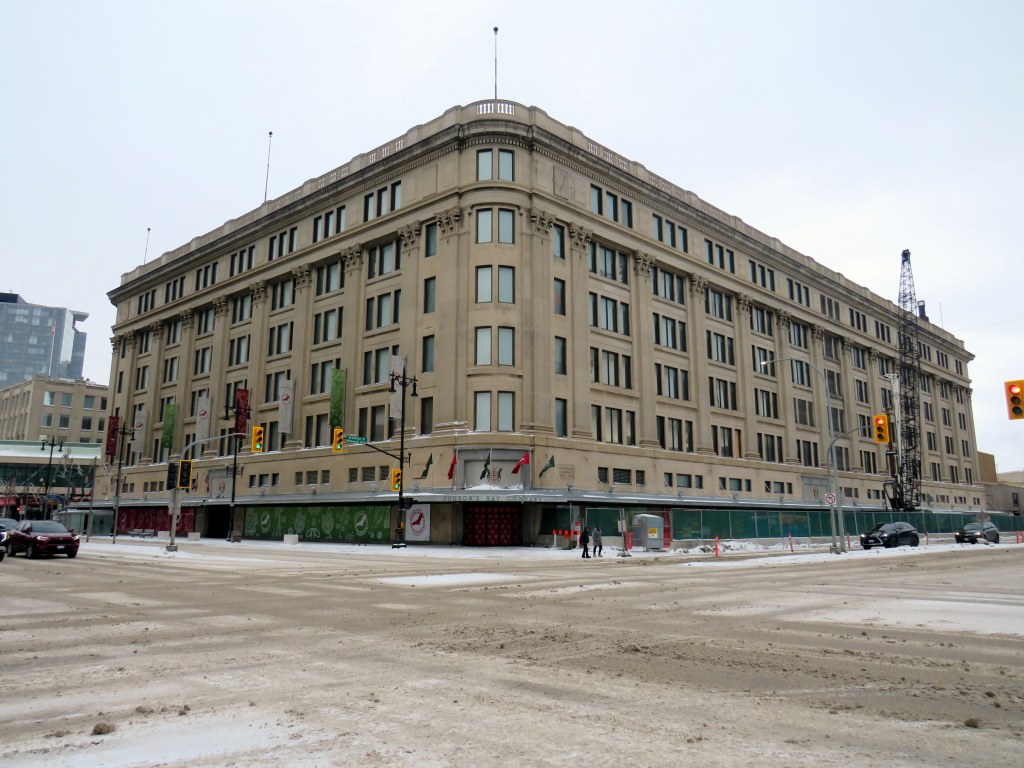
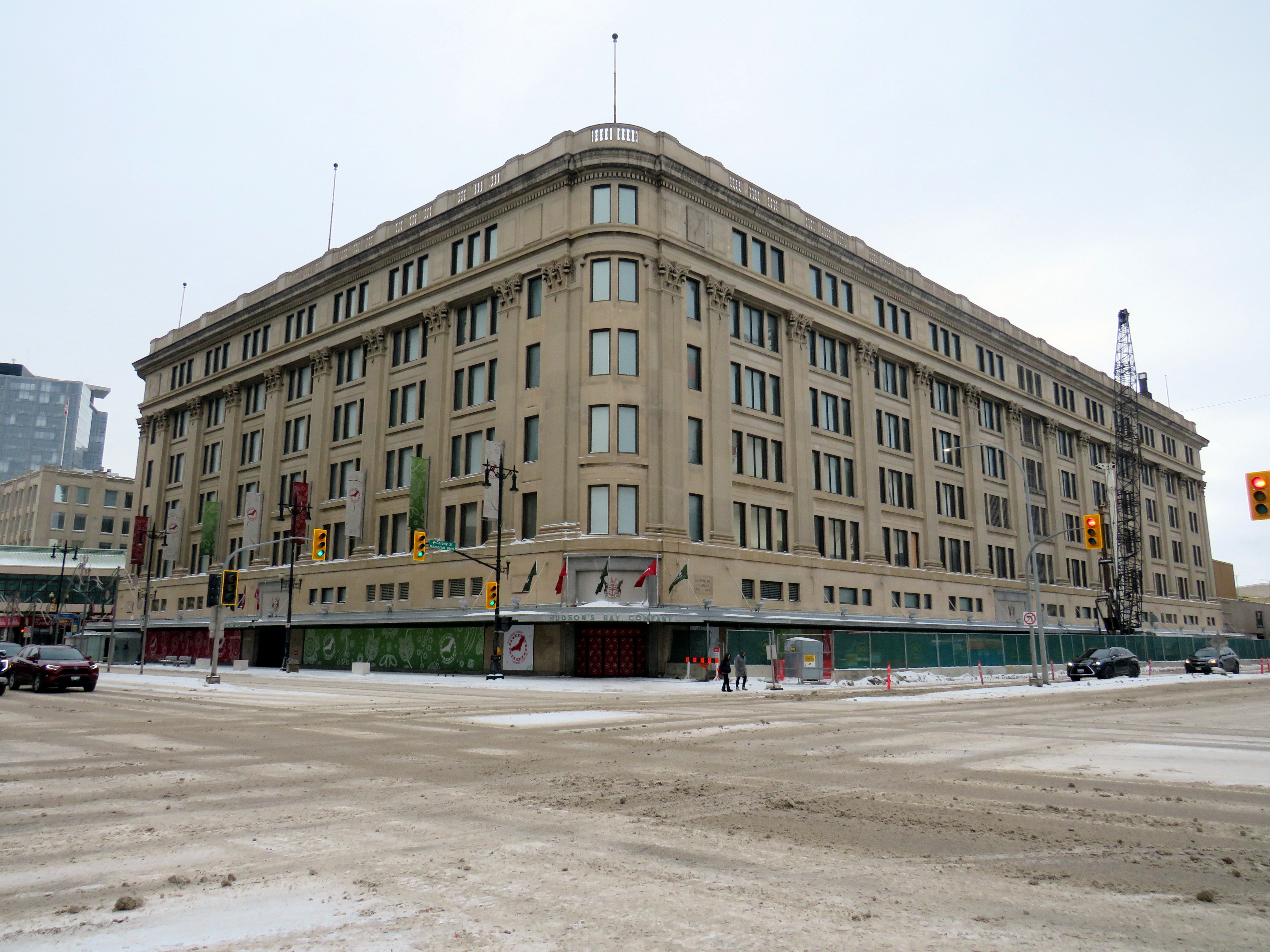
    The former Hudson’s Bay Store in Downtown Winnipeg, one of its western flagship stores. After years of decline, the store closed in November 2020 and is now being transformed into a centre for Manitoba’s First Nations.

    There’s a touch of irony that in the same year Canadian sovereignty is increasingly threatened by an American president, the Hudson’s Bay Company — one of the world’s oldest corporations — has filed for bankruptcy protection. It will likely close at least half of its 80 stores, but with no guarantee it will emerge in a healthy state, able to rebound.

    On May 2, 1670, The Governor and Company of Adventurers of England, trading into Hudson’s Bay, was given a royal charter to trade in all lands that drained into Hudson’s Bay, 3.9 million km2 of land in the heart of the North American continent, in order to compete with the lucrative French fur trade in the St. Lawrence basin. The new company had monopolistic commercial control of what was then called Rupert’s Land: the entirety of present-day Manitoba, most of Saskatchewan and Northern Ontario, a significant part of present-day Quebec, Alberta, and Nunavut, and even parts of what eventually became Minnesota and North Dakota.

    Of course, this new monopoly, which quickly became known as simply the Hudson’s Bay Company (HBC), was created without consent or consultation with the many First Nations and Inuit communities. In the early days of trade, however, HBC relied on trading with First Nations for the valuable fur trades. It established forts and factories (trading posts) throughout the northwest, establishing places such as Moose Factory and Fort Albany that remain to this day.

    In later years, HBC claimed a trading monopoly on lands draining into the Pacific Ocean; it also brought in missionaries to convert Indigenous peoples. (Its monopoly was challenged by new entrants such as the North West Company, which eventually merged with HBC after violent skirmishes over trading territorial rights.)

    HBC’s vast networks of forts and trading posts, particularly Fort Garry (now Winnipeg) led towards the full colonization of western and northern Canada. In 1870, with the decline of the fur trade HBC relinquished control of Rupert’s Land to the new Dominion of Canada, which led immediately to the creation of the Northwest Territories, followed quickly by the Red River Rebellion and the creation of the Province of Manitoba.

    HBC continued as a fur and goods trading company and it was still the only retailer in remote western and northern communities. In larger cities like Vancouver, Winnipeg, Edmonton, and Calgary, it established new department stores. In smaller communities, especially in the north, it took full advantage of its dominant position, and Northern Stores became notorious for high prices (in 1987, HBC sold off its Northern Stores division). HBC continued to exploit Canada’s natural resources — it even had an oil and gas subsidiary between 1926 and 1982.

    In 1960, HBC focused almost entirely on its department store empire, acquiring the Montreal-based Morgan’s chain, competing head-on with Eaton’s and Simpsons-Sears. In the 1970s and 1980s, it also scooped up discount chain Zellers, Simpson’s stores (after its split from Sears Canada), Ottawa-based Freimans, and Hamilton-based Robinson’s, eventually rebranding those stores as “The Bay.” Finally in 1993, it acquired Vancouver-based Woodward’s. During this time, it sold off the Northern stores and the oil company. In the late 1990s, it launched the Home Outfitters big-box chain. The Zellers chain expanded under HBC ownership, first acquiring the competing Towers discount chain in 1991 and K-Mart’s Canadian stores in 1998.

    Though the flagship stores still proudly proclaimed the May 2, 1670 incorporation date, few thought about the long and checkered history of the company. My first memories of The Bay’s retail empire were of the Simpson’s store close to where we lived in Brampton. Simpson’s was the flagship anchor of Shoppers World, a once-vibrant mall. I also knew Simpson’s from the flagship Queen Street store in Downtown Toronto, famous for its toy section, Christmas window displays, and of course, the TVO children’s program Today’s Special. (The most memorable episodes for me, a young, budding urbanist, dealt with a fictionalized closure and demolition of the store, before a heritage plaque uncovered during the move out saved the day.)

    Opening sequence of “Today’s Special,” set in the downtown Simpson’s Queen Street store

    The Shoppers World Simpson’s store, like the rest of the banner, was converted to “The Bay” in 1991. In 2007 the store closed, not long after I moved to my own apartment in Toronto. (I still have some of the chinaware I purchased at that Bay store before I moved to my own place.) But as I worked, and later lived, in Downtown Toronto, I found the Queen Street store very useful for casual clothes shopping and the occasional big-ticket item.
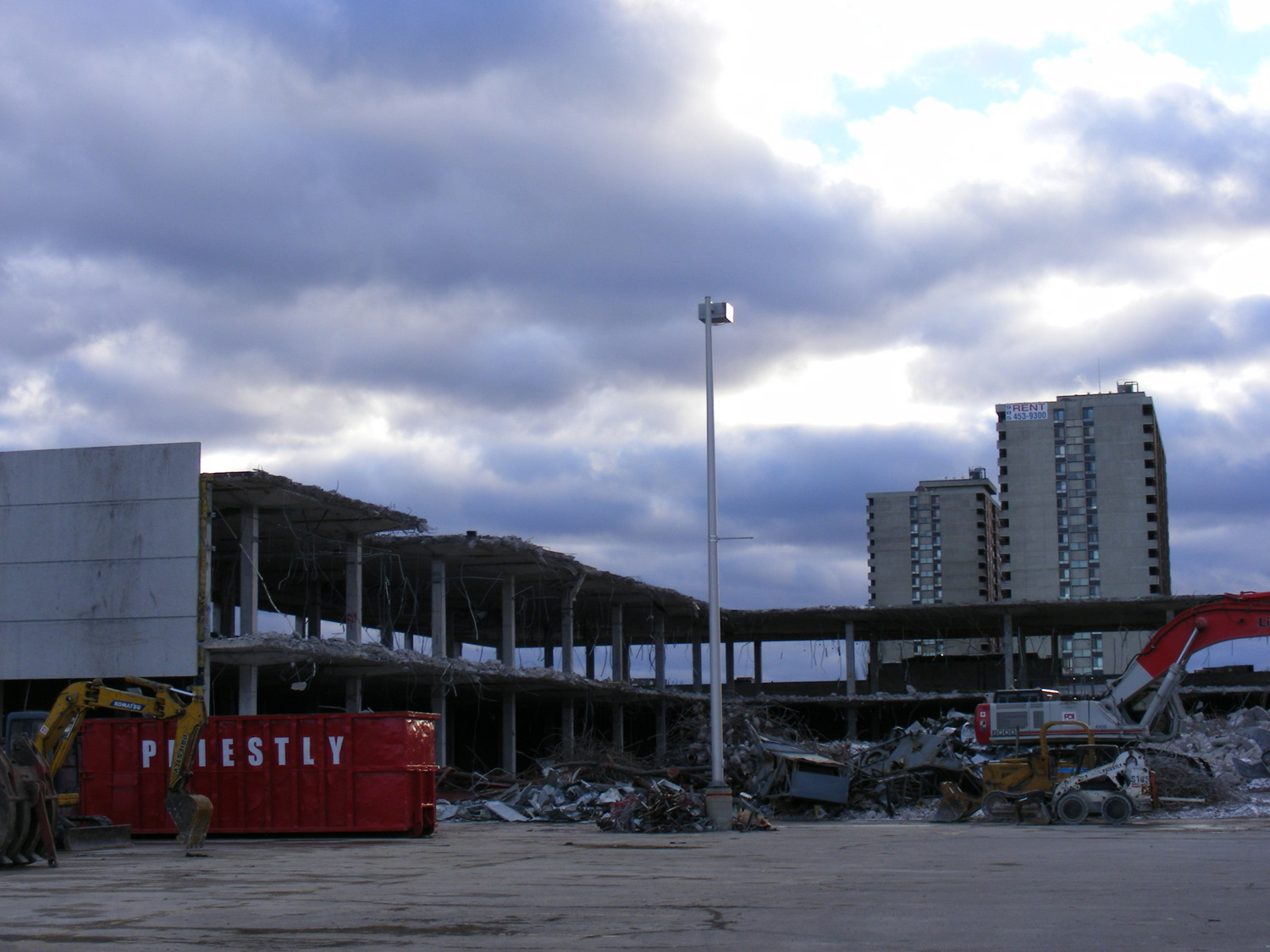
    Demolition of the Shoppers World Simpson’s/The Bay department store in 2010

    Though HBC was sold to a private equity firm in 2008, under CEO Bonnie Brooks’ leadership, there was still life in the department store, with leading stores like the Queen Street flagship upgraded. The fifth floor was a great place to browse for men’s clothes; the seventh floor had an excellent kitchenware department. HBC persisted through the bankruptcy of Eaton’s in 1997-1999 as well the wind-down of Sears Canada that began in 2012 (when it began selling the leases of its urban flagships, including former Eaton’s stores) and concluded in 2018.

    But private equity did what private equity does best: it began selling off the assets and closing down stores, just as Sears did in its last decade. The Zellers discount department store chain was discontinued, with the majority of store leases sold to the ill-fated Target Canada operation in 2011. The Home Outfitters stores were closed in 2019. Real estate was sold off, with HBC leasing back the properties. For example, the Queen Street store was sold to real estate developer Cadillac Fairview — who owns the adjacent Eaton Centre mall — for $650 million in 2014.

    In the last few years, it became clear that the department store chain was in decline. Though pandemic restrictions in 2020 and 2021 had a major effect, the downtown stores also lost office worker patronage. Suppliers were having trouble getting paid and were seizing merchandise at several stores; escalators and elevators were put out of service, and store hours were reduced at most locations.
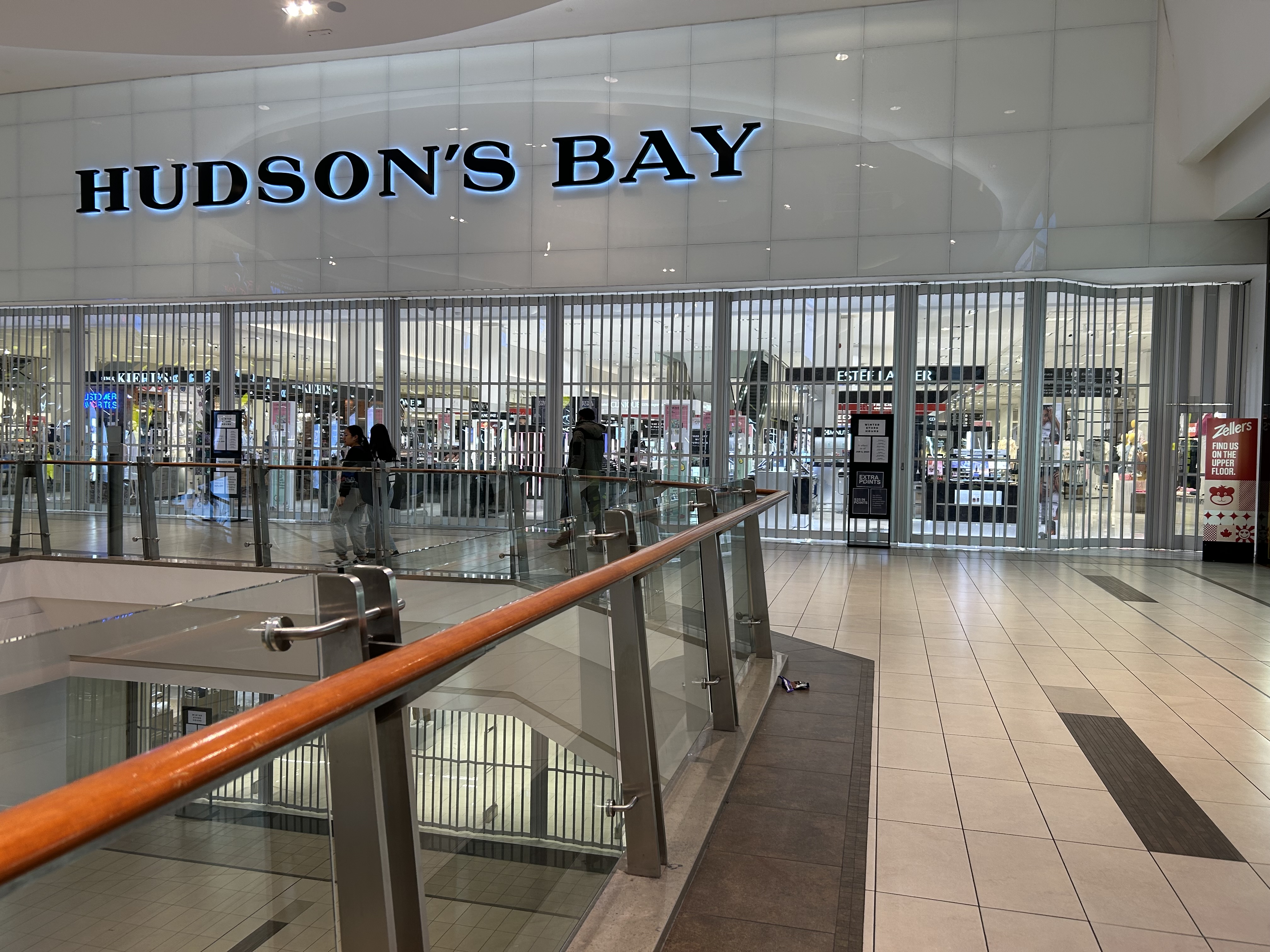
    The Hudson’s Bay store at Scarborough Town Centre closed at 7:00 on a weekday evening in March 2024, even though the rest of the mall remained open for another two hours

    The loss of Canada’s last department store is unfortunate, but it comes as no surprise given the way private equity sucks once-proud businesses dry. The evidence was impossible to miss. How could customers be lured back when escalators were blocked off, marketing non-existent, and store opening hours scaled back? Not even Sears turned off the escalators in its last years.

    I suspect, given the company’s 355-year history, a vestige of HBC will live on, especially in an era of renewed Canadian nationalist. Another business will certainly purchase the name and brand to continue selling the famous point blankets. Though the Queen Street store will certainly be redeveloped by Cadillac Fairview, strict heritage considerations will prevent its complete demolition. The Downtown Winnipeg store, closed in 2020, is already being repurposed into a new hub for Manitoba’s First Nations.

    But it will remain a true shame, as I have always felt there was still a place for a full-service department store in Canada. It only needed to be well managed, relevant, and cared for.
  • Woodbine Centre: the end of a Fantasy

    Woodbine Centre: the end of a Fantasy

    Woodbine Centre & Fantasy Fair is up for sale, again

    Growing up in Brampton in the 1980s and early 1990s, there were two favourite day trips I fondly remember.

    There were the drives to nearby Georgetown, which had one of the largest indoor playgrounds at any McDonald’s restaurant. It featured a multistorey indoor crawl maze, a spiral slide that led to a giant ball pit, a tire swing, as well as a standard McDonaldland-themed merry-go-round. A CN caboose could be rented for children’s parties. At least we’d burn off some of the calories from the burgers and fries. (There’s a video on Reddit from 1992 that shows what it looked like.)

    Then there were the trips to Fantasy Fair. When Woodbine Centre opened in 1985, it featured a unique attraction: a large indoor amusement park, complete with a historic Looff carousel (though with replica fiberglass horses), a Ferris wheel, and a train ride that wound through the attraction. The highlight for me, however, was a huge indoor playground that spanned two floors that was many times the size of the Georgetown McDonald’s playground. It had multiple slides, a mirror maze, swings, and two ball pits. There was also a McDonald’s restaurant facing Fantasy Fair, in one of the faux-Victorian storefronts that surrounded the attraction.

    Fantasy Fair Carousel, November 2024

    The mall itself was anchored by The Bay and Simpson’s, along with a Cineplex multiplex cinema, and a complete assortment of mid-market retailers. In 1991, when the Hudson’s Bay Company retired the Simpson’s brand (converting most of those stores into The Bay), it sold the redundant store to Sears Canada. A Zellers discount department store was added in the 1990s. But the mall slowly lost its pizzazz.

    Cadillac Fairview sold Woodbine Centre in 2005 to a numbered company, with real estate management firm Avison Young operating the mall. By then, many of the national retailers had left once their leases were up. The mall’s relatively isolated site, without good transit access became a liability. Changing demographics in northern Etobicoke, competition from surrounding larger malls (Bramalea City Centre, Sherway Gardens, Square One, Vaughan Mills, and Yorkdale) and new big box retail developments also took their toll.

    The Zellers store was not one of the leases picked up by ill-fated Target Canada, and it closed in 2012. Sears closed in March 2017, a few months before the entire chain was liquidated. Sport Chek closed its store in 2018.

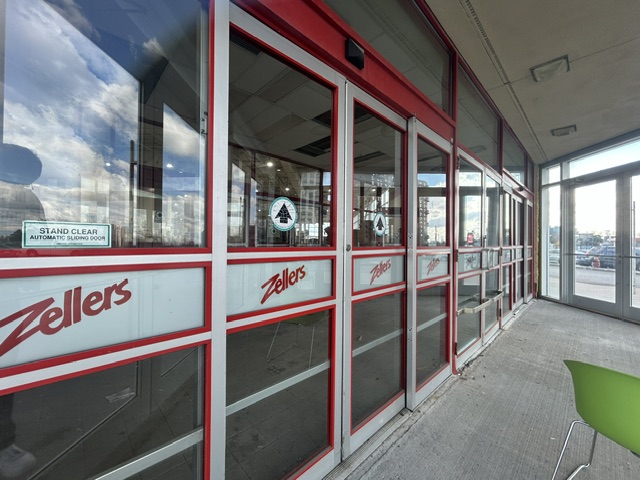
    Woodbine Centre’s Zellers store was not picked up by Target, and the parking lot-facing doors still have the defunct retailer’s logo intact

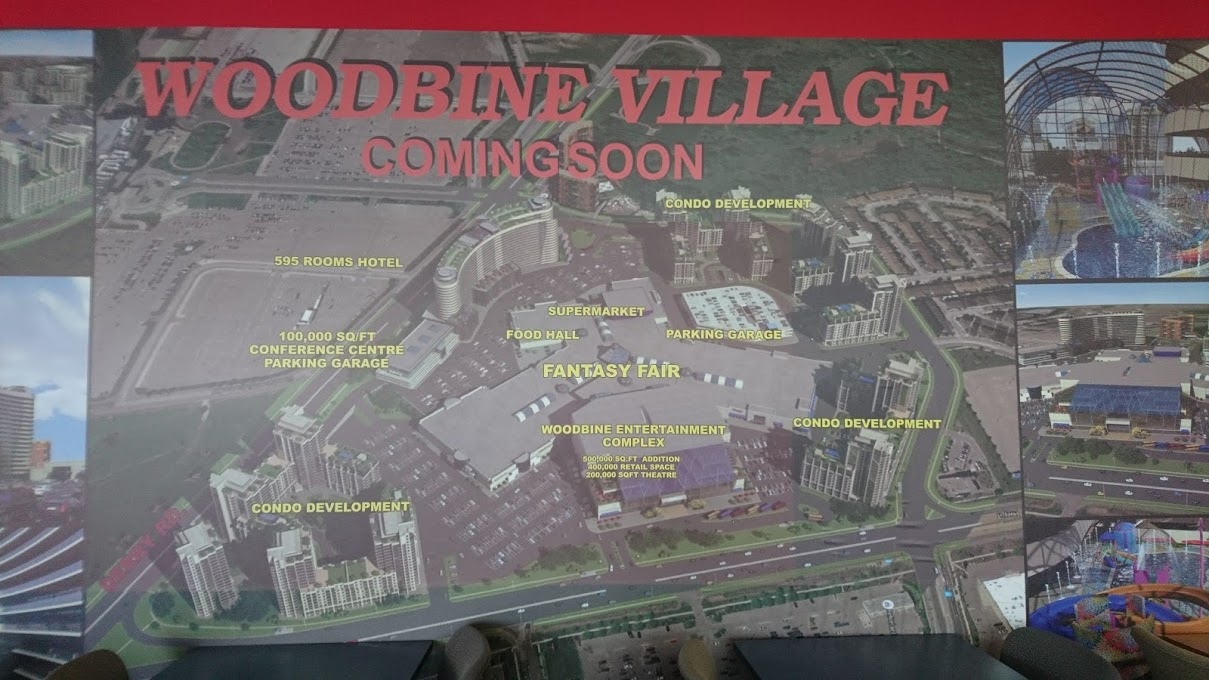
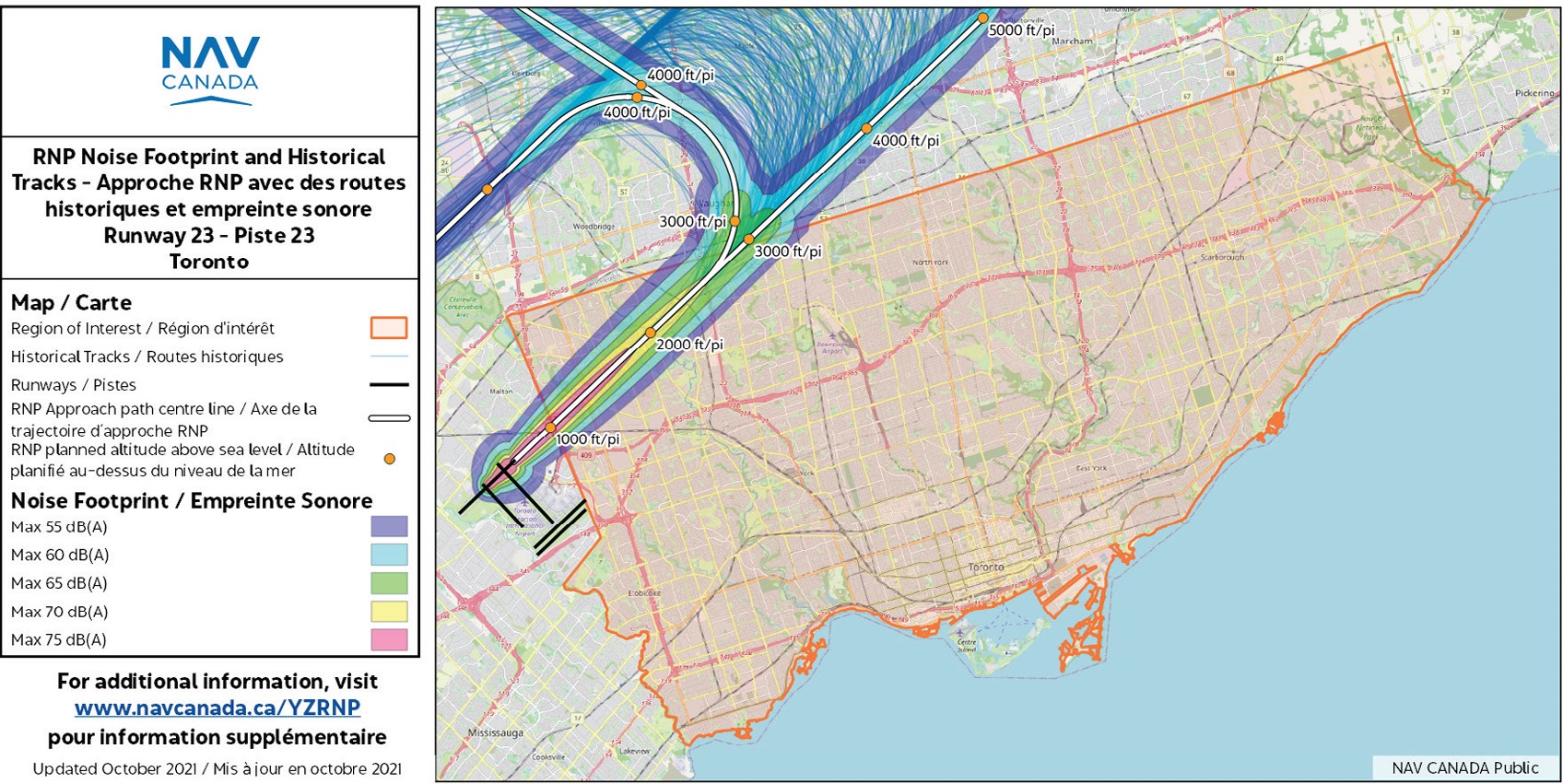
    There was an attempt to renovate the mall, as part of a grand plan to revitalize the property with a new supermarket, refreshed food court, new entertainment options, and condominium towers surrounding the shopping centre. The Woodbine Village proposal competed with the better-financed Woodbine Live plans at the nearby racetrack, which included a casino, hotel, and event hall, all of which were built or are nearing completion. Condominium development is complicated as the property, particularly the southeast corner at Highway 27 and Rexdale Boulevard, is directly below the approach for Pearson Airport’s Runway 23.

    Poster promoting “Woodbine Village” which boasts a new supermarket, condo development, hotel, and expanded Fantasy Fair including indoor waterpark
    NAV Canada map showing approach and noise contours for Runway 23, which passes directly above Woodbine Centre
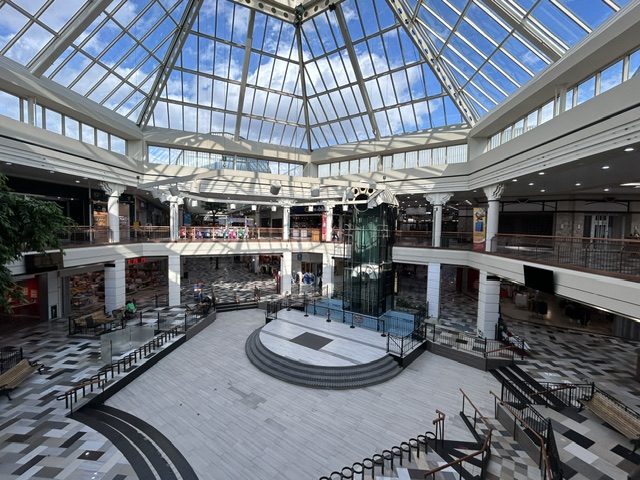
    Woodbine Centre’s central atrium, including defunct fountain below glass elevator

    After a disheartening American election result on Tuesday, November 5, I decided to turn off the newsfeeds, and out for a walk and explore Woodbine Centre again.

    Though the basic architecture remains intact, the corridor floors were given cheap new brown, grey, and beige tiles that look out of place in the post-modern interior. Much of the original green paint on the roof, walls, railings, and signs is now red and mahogany.

    Apart from the fast food offerings, there were few recognizable store names among the tenants in 2024. Apart from Hudson’s Bay, Foot Locker, Ardene, The Children’s Place, Dollarama, LensCrafters, TD Bank, and Urban Behavior, most stores were independent clothing, home décor, and furniture stores, or were cellphone vendors such as Wow Mobile, Best Buy Express, or Rogers and Bell kiosks. About 20 percent of the store fronts were vacant.

    Looking towards the old Sears store, which is now All Home Furnishings, which was having a clearance sale in November. Note the Payless Shoe Shack, a knock-off of the defunct Payless Shoe Source chain, on the left.
    Vacant faux-Victorian storefronts at Fantasy Fair

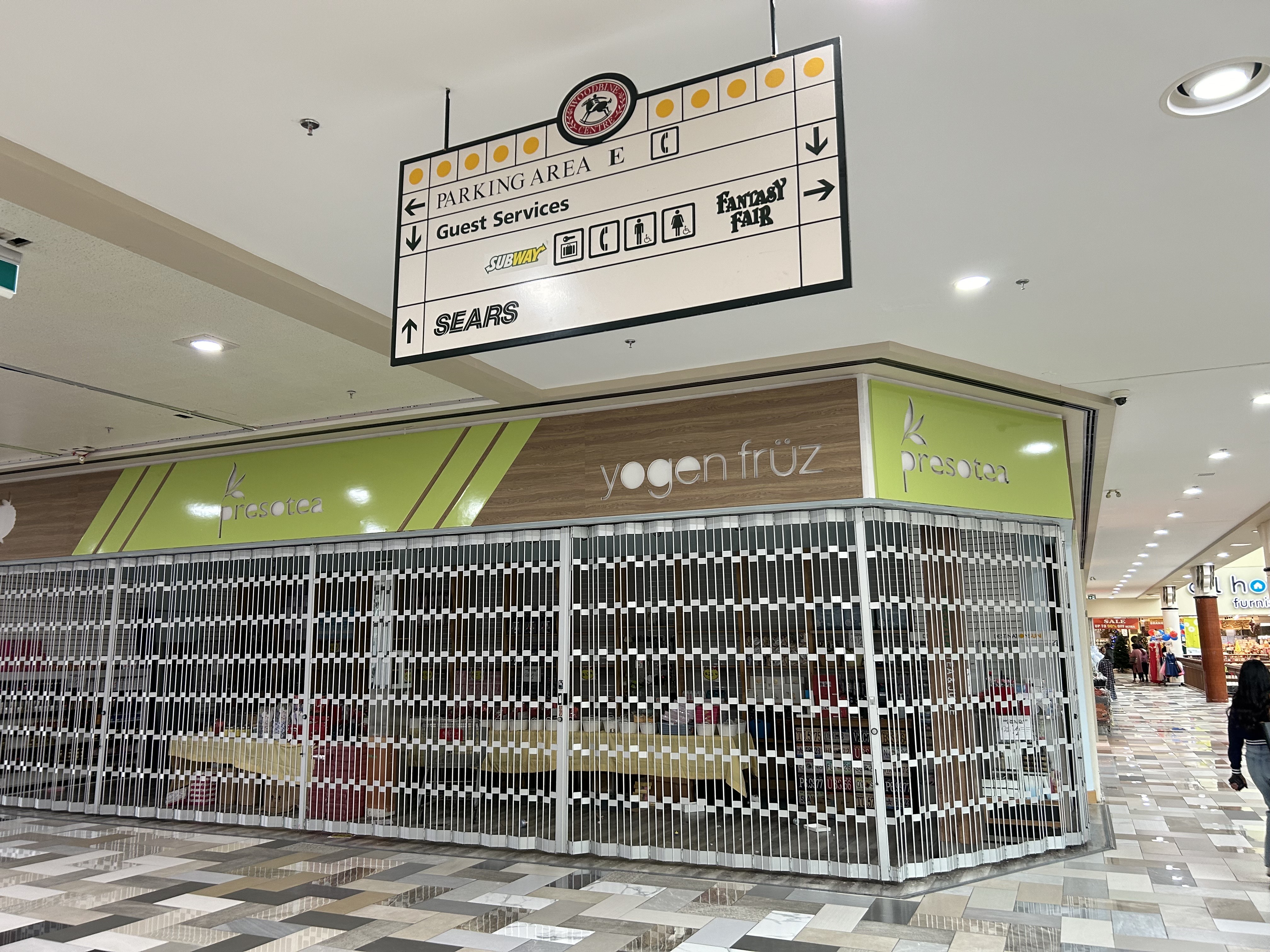
    Professional property managers are quick to update signage and keep up appearances; the management at Woodbine has clearly given up. Vacant storefronts are left exposed, rather than blocked off. Signage advertises stores that are long gone. Pot lights flicker on and off.

    Overhead sign pointing the way to Sears, which closed over seven years ago. The Subway restaurant is also gone. Behind the sign, a shuttered Yogen Fruz/Prestotea store front acts as storage.
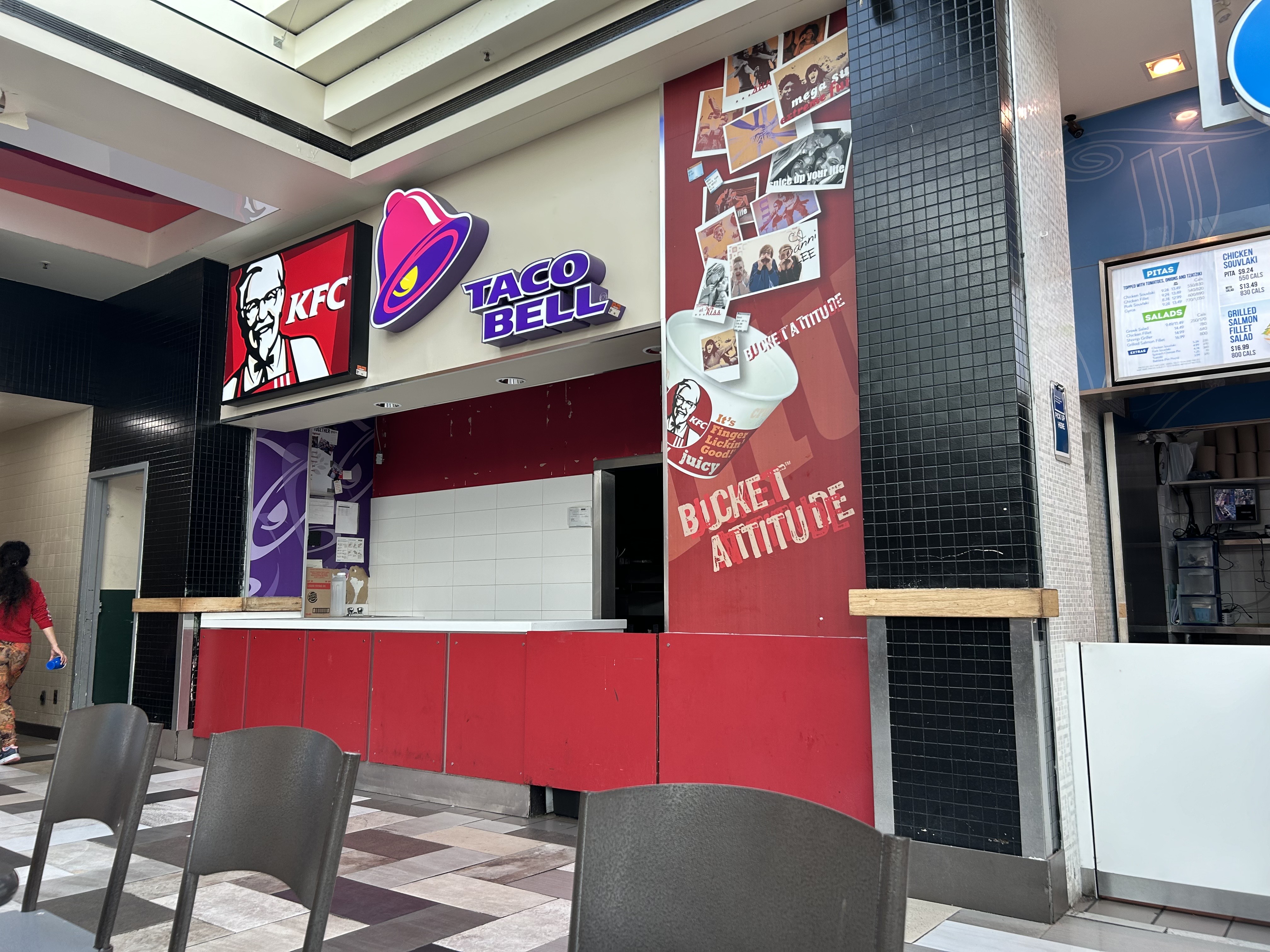
    A closed KFC/Taco Bell stall in the food court, with the signage still up and illuminated, despite the equipment taken out

    Surprisingly, Fantasy Fair was still operating, even on a Wednesday afternoon where there were few visitors. Ride attendants, dressed in red vests, looked bored, even when running the train for the lone parent and child. The Ferris wheel is now permanently closed, however, and some of the attractions look sadly decrepit.

    The railway crossing lights, bells, and gates still work at Fantasy Fair when the train passes through

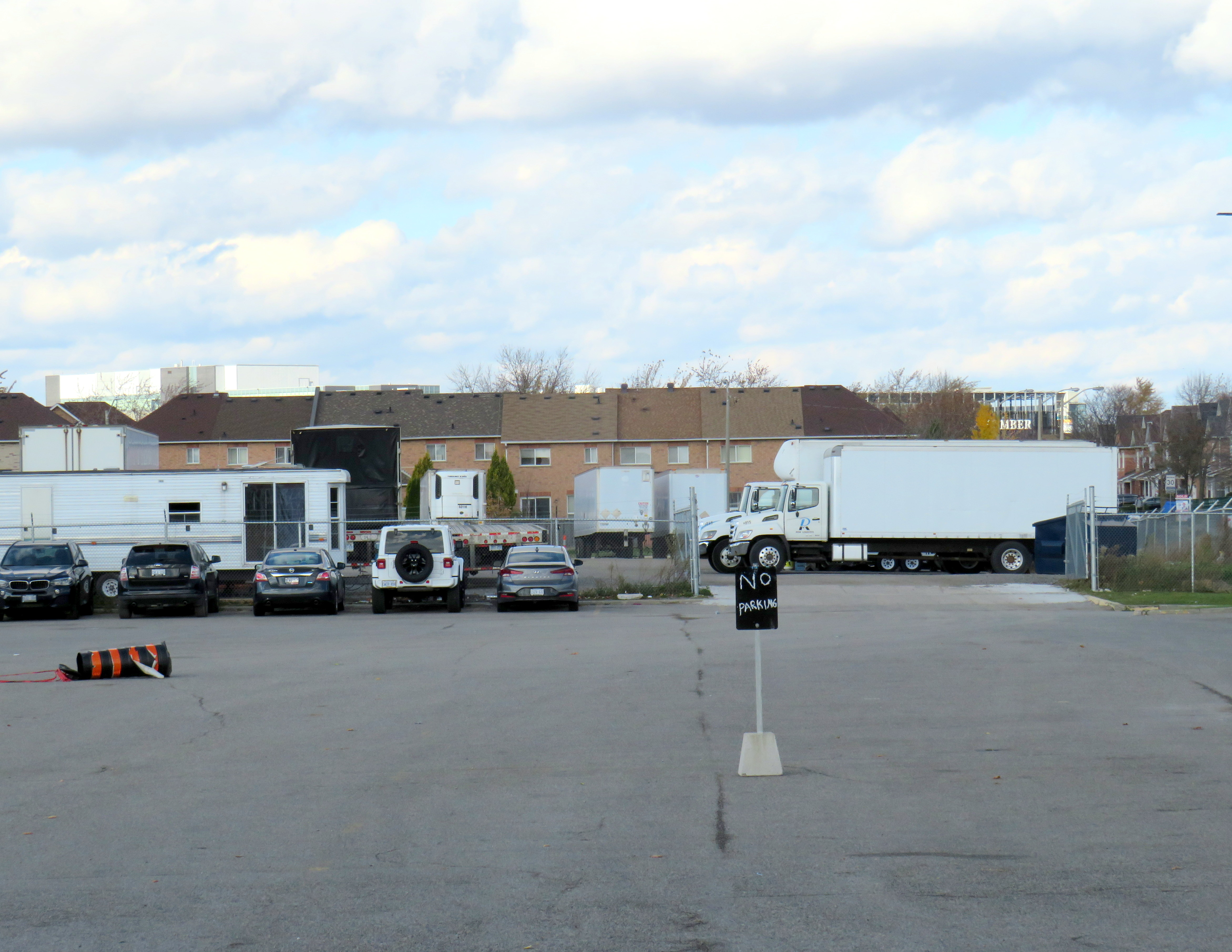
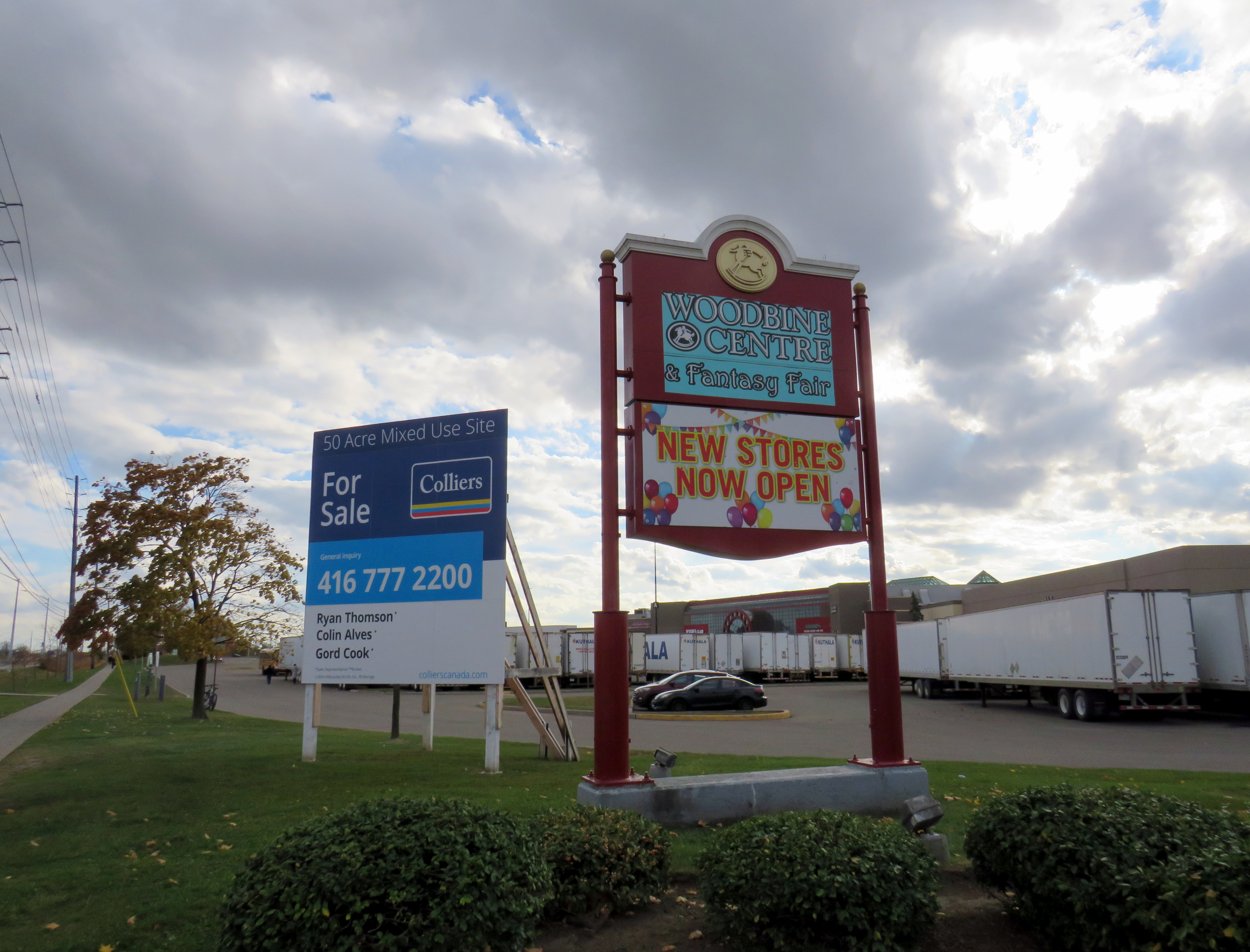
    Outside the mall, much of the parking lot is fenced off and is now used for truck and trailer storage, and the storage of overflow rental car fleets. Though the rental car parking began during the COVID-19 pandemic, when people stopped travelling, it continues to be an easy revenue stream for the mall management. The truck trailers, on the other hand, are an unsightly feature, particularly where they face Highway 27.

    Fenced-off rental cars in the Woodbine Centre parking lot
    Truck trailer parking on part of the mall parking lot

    Unfortunately, the future is not good for Woodbine Centre as a mall. Though mixed-use development remains a possibility — Humber College is within walking distance — the airport noise will continue to be a challenge for condominium sales. Transit expansion would certainly help; the nearly-complete Finch West LRT terminates nearby. Extending that two kilometres south to serve Woodbine Centre, Woodbine Racetrack/Casino, and a planned GO Transit station, could be the boost the site needs. (Of course, the mall site could have made a good location for a mega-spa, particularly with the nearby casino venue and hotels, but I digress.)

    The Humber College LRT terminus is less than a kilometre north of Woodbine Centre

    The mall’s fate will likely be decided soon. The site is up for sale again, not advertised as a shopping centre, but as a “50 acre mixed use site.”


    1992 Tenants

    Below is the list of tenants at Woodbine Centre in 1992, obtained from the 1993 Canadian Directory of Shopping Centres, published by Maclean-Hunter. Tenants still open in 2024 are bolded.

    Anchors
    Anchors: The Bay (140,000 sq.ft.), Sears (135,000 sq.ft.)

    Fashions and footwear
    Children’s Wear: Flora’s, Just Kids.
    Family Wear: Cotton Ginny. 
    Ladies’ Wear: Addition-Elle, Antel’s, Au Coton, Braemar, Braemar Petites, La Cache, The Cavery, Cotton Plus, D’Allaird’s, Dalmy’s, Emotions, Fairweather, Irene Hill, Jacob, La Jolie, Karuba, Lady Foot Locker, Limité, Lindor, Liz Porter, Mia, Northern Reflections, Ports International (Ladies), Reitmans, Ricki’s, Shirley K Maternity, Smart Set, Suzy Shier, Tabi International, Tan Jay, Tristan, Tucci Fashions. 
    Menswear: Casa Angelo, Petrocelle Vomo, Randy River, Star’s Men’s Shop, Steel, Tip Top, Tuxedo Royale.

    Unisex / Men’s & Ladies’ Wear: Benetton, Boca, Bootlegger, Canary Island Adventure & Travel Company, Le Château, Frenz Leather, Jean Machine, Levi’s 1850, Pantorama, The Pro Image, Stitches, Thriftys, Willow Ridge. 
    Footwear/Leather Goods: Agnew, Aldo, Bata, Belinda & Brother, Bentley Leathers, Calderon, Florsheim Shoes, Foot Locker, Fredelle, K. Jamson, Kinney, The Little Shoemaker, Moneysworth & Best, Naturalizer, Pegabo
    Jewellery/Fashion Accessories: Accessories For You, Ardene, The Joy of Sox, Mappins, Peoples Jewellers, Reflexions, Young’s Jewellers

    Other retailers
    Books: Classic Bookshop, Coles, Moyer’s The Teacher’s Store, Smithbooks
    Cosmetics/toiletries: Body Reform, Caryl Baker Visage, Enchante Perfumes, Merle Norman Cosmetics
    Department store/mass merchandiser: Marks & Spencer
    Drugs/health & beauty: Shoppers Drug Mart
    Electronics/Computers: Bell Canada Phone Centre, Compucentre, Majestic Sound Warehouse, Radio Shack, Safe & Sound
    Fabric & Sewing: Needle ‘n’ Thread
    Florist/Nursery: Woodbine Florists
    Furniture & Furnishings: Brass Imports, Clocks Unlimited, Diamond Furniture, Lighting Unlimited, Pictures
    Gift: A. David Soloway, China Panda, Den For Men, Jinny’s China & Gifts, Party Hut, Rafters, Le Roulet
    Grocery: Bulk Barn
    Hardware/Paint & Paper: St. Clair The Paint & Paper People
    Hobby/Craft: Lewiscraft
    Housewares: House of Knives, Pot Pourri, Shaver Centre Fine Blade, Stokes
    Music/Records & Tapes: A&A Music & Entertainment, Discus, Music World
    Optical: LensCrafters
    Pet: Aquarium Toronto
    Photo/Camera: Blacks, Japan Camera
    Restaurant and Fast Food: A & W, Abacus Cuisine, Baby O’Donuts, Dutch Treats, Jimmy The Creek, J.J. Muggs, Kentucky Fried Chicken, Kernels, London Style Fish & Chips, Los Rios, Made In Japan A Teriyaki Experience, Manchu Wok, Manfreds, McDonald’s, Mr. Submarine, New York Fries, Sbarro.
    Specialty Food & Drink: Baskin-Robbins, Laura Secord Mrs. Fields Cookies, mmmarvellous mmmuffins, Swiss Fudge, Timothy’s Coffees of the World, Yogurty’s Yogurt Discovery.
    Stationery/Card: Garfield, Grand & Toy, Hallmark. 
    Toy: Toy World. 
    Variety/Convenience: The Silver Dollar Store, United Cigar Store. 
    Dry Cleaners: Parker’s Cleaners.
    Financial/Legal: Bank of Montreal, Canada Trust
    Hairstyling/Esthetics: The Cut Above, Da Vinci, Tantastic, You’nique Hairstyling.
    Medical/Dental: Eye-Exam Centre, Procare Medical Centre, Woodbine Dental.
    Printing: K.P. Copy.
    Theatre / Entertainment: Cineplex, Orville & Wilbur Family Games, Wizard’s Castle
    Travel: Marlin Travel
    Miscellaneous: Lottery Kiosk

  • All aboard the beer train

    All aboard the beer train

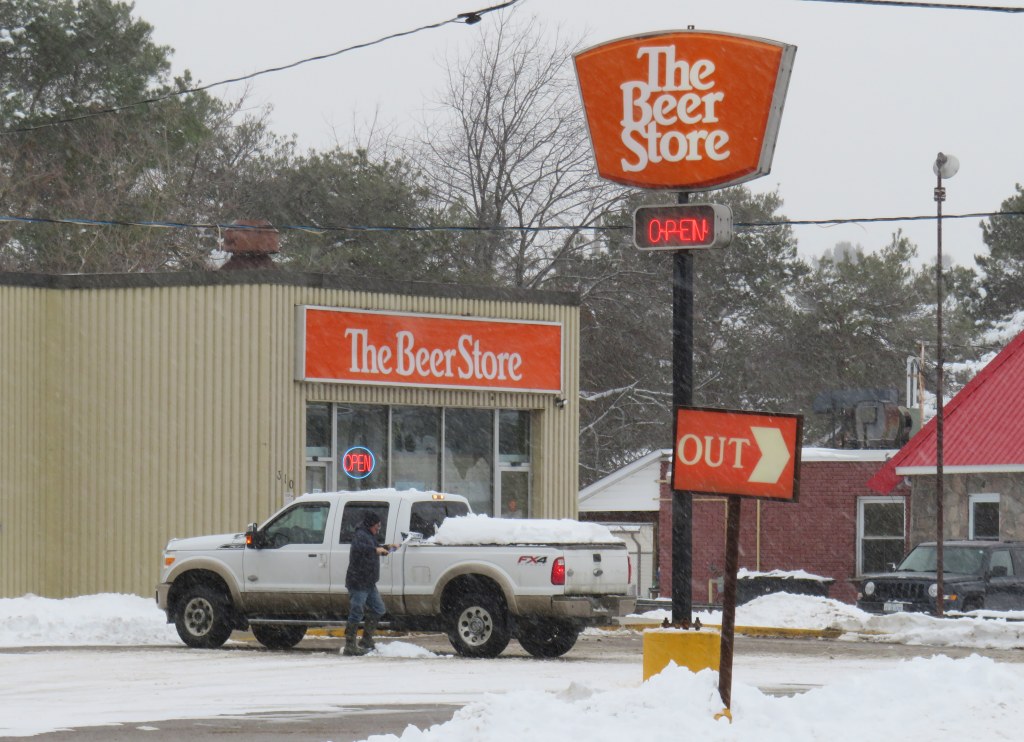
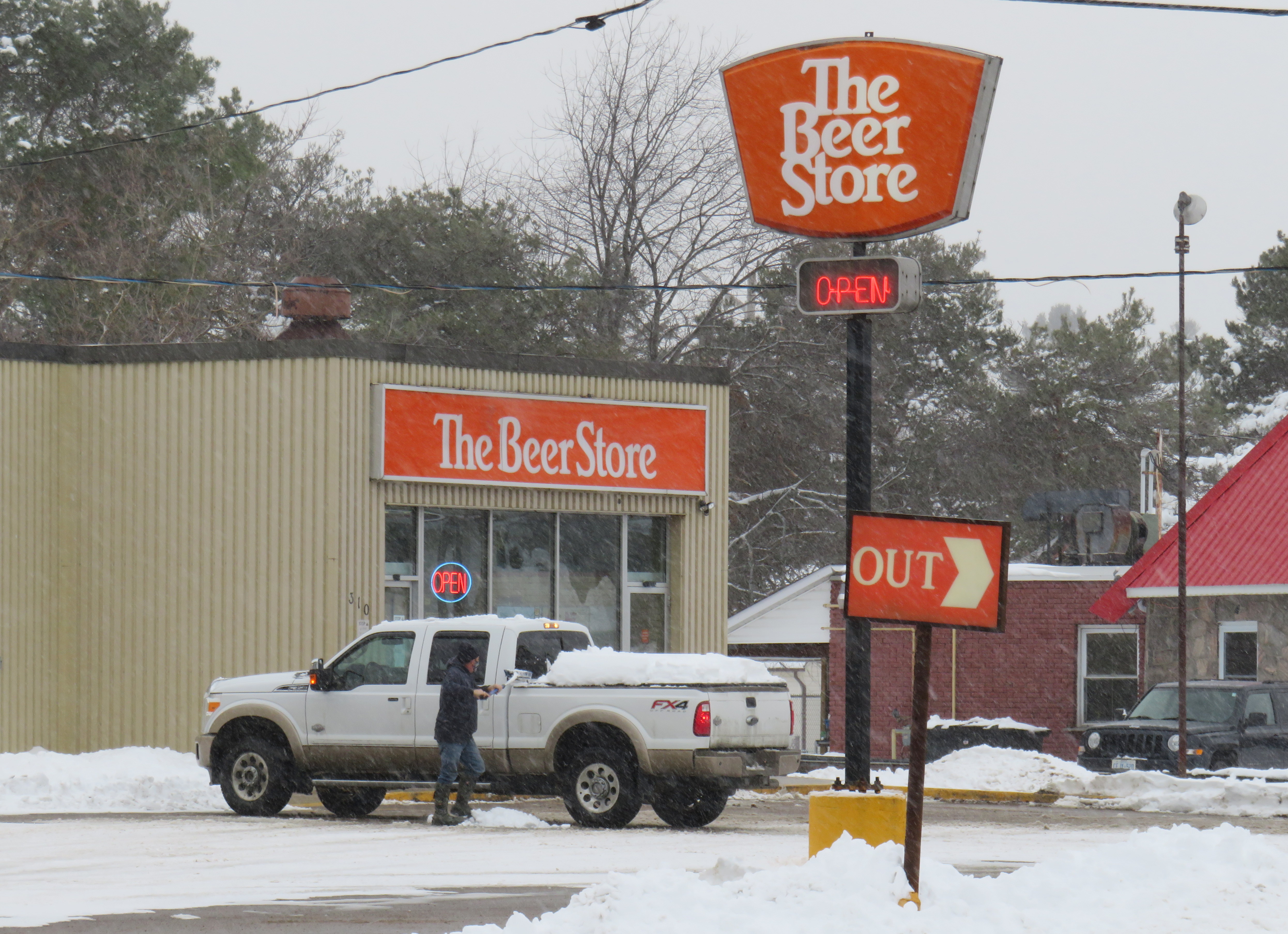
    A classic Brewers Retail Store in South River, Ontario featuring the 1980s-era branding

    While taking a geographic analysis program during my undergraduate years at university, I developed a fascination with retail geography. My 2005 Masters’ paper examined the geographic distribution of payday lenders — which combined my interests in retail geography, urban planning, and social justice. Though my career took me in a different direction, I have maintained my interest in the role of geography in the success — or failure — of retail businesses.

    Despite being one of Ontario’s oldest and most influential retailers, there is very little written about the history of The Beer Store. Contrary to common belief, The Beer Store is a private company — not a government monopoly. Following the end of prohibition in 1927, the provincial government established a crown corporation to distribute wine and spirits — the Liquor Control Board of Ontario, or LCBO. However, the province’s breweries were granted authorization to establish their own corporation — the Brewers Warehousing Company Ltd. — to distribute their own products. At first, alcoholic beverages were only permitted to be sold for at-home consumption (while customers were required to obtain licenses to purchase beer, wine, and spirits). Gradually, rules were slowly relaxed to permit drinking in hotels, restaurants, and taverns. Eventually, the company became known as Brewers Retail.

    Though the number of breweries declined since the 1930s due to consolidations and bankruptcies, Brewers Retail expanded its retail operations in the 1960s and 1970s. It produced highway maps showing all the locations where thirsty Ontarians could buy “ale & beer.” Customers, freed from having to write out and sign purchase orders by 1971, would place their order with a clerk, then wait for their case(s) of beer to roll out from the cold storage in the back. Though a self-serve store was introduced in December 1971, it proved to be an unpopular concept, especially as the beer was kept warm, rather than in a cold warehouse in the back.

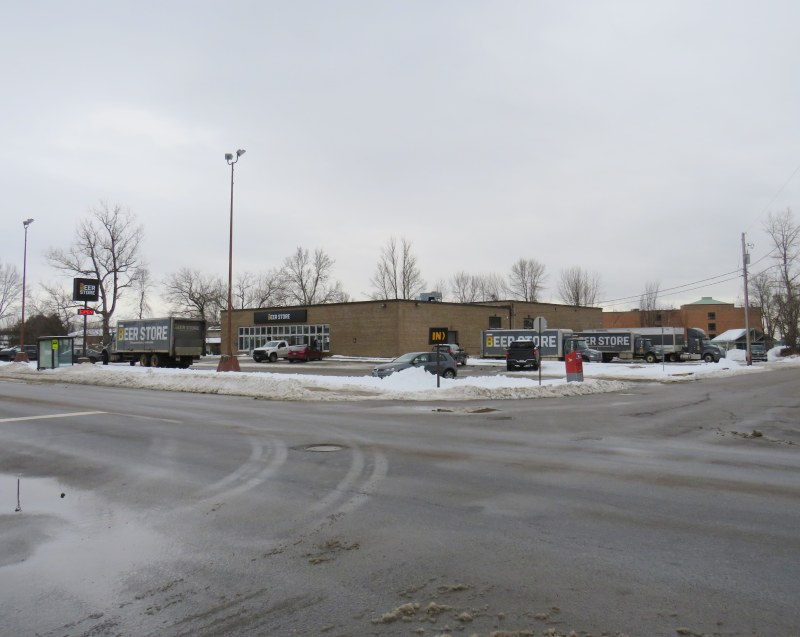
    In 1985, Brewers Retail began rebranding its stores as “The Beer Store” with bright orange signage. Two further rebrands have occurred since (it now uses a grey and black colour scheme), yet the 1980s look can still be seen at many stores, especially in northern Ontario.

    Though the rise of small independent craft breweries in Ontario, the LCBO’s expanded beer selection, and the recent moves to allow supermarkets to sell beer in limited quantities (singles and six-packs) have made it easier to purchase beer, The Beer Store remains the dominant player in the distribution of suds.

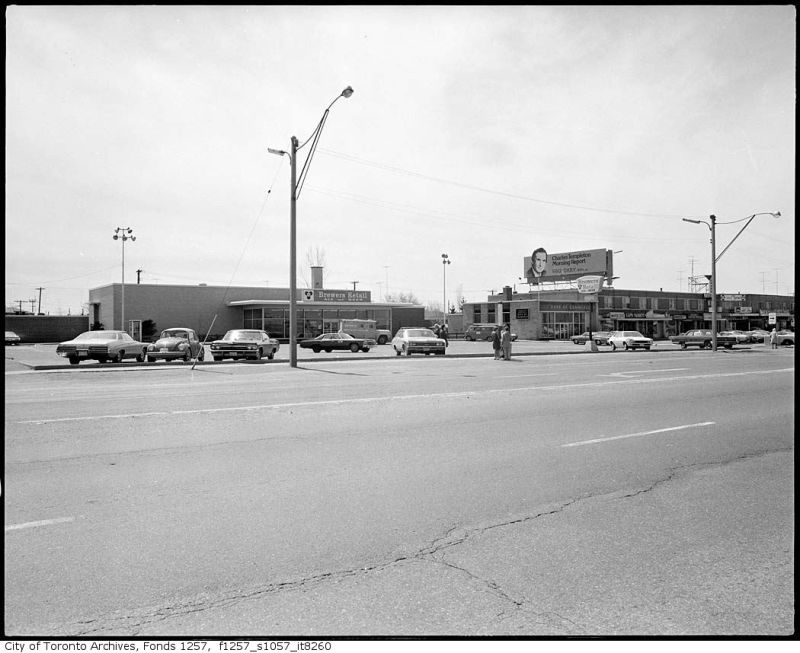
    Brewer’s Retail, Eglinton Avenue East, 1974. Though the location has seen several renovations and rebrandings, this beer store still stands near the corner of Eglinton and Brimley in Scarborough. Toronto Archives Fonds 1257, Series 1057, Item 8260.

    Not only does Brewers Retail sell direct to consumers, it also delivers bottles and kegs to businesses, so it had to establish a distribution network across the province. Most of the large breweries were located in Toronto or in southwestern Ontario, though there were smaller, regional brands such as Soo Falls Brewing and Sudbury’s Northern Brewery. Those products had to be shipped hundreds or even thousands of kilometres. Empty bottles had to be returned to the breweries for cleaning, re-labelling and refilling. Most large breweries, like Labatt’s in London and Molson’s Fleet Street plant, were located next to rail lines for easy shipping.

    This is why, in Northern Ontario, many beer stores are found adjacent to rail lines. Though rail shipments to local beer stores have ceased — with one notable exception — this legacy can still be seen, from Pembroke to Kenora.

    In some cases, such as in New Liskeard, The Beer Store is out of the way, an unusual strategy for a consumer-focused retailer. But since Brewers Retail holds a monopoly on bulk beer sales (not needing an especially visible location), and since rail access was important for the chain until the 1970s, the location makes sense.

    In larger cities, such as North Bay, Sudbury, and Sault Ste. Marie, one Brewers Retail store would handle rail shipments, distributing products to restaurants and bars and to nearby beer stores. Thunder Bay had its own dedicated distribution centre in Port Arthur, next to the railway.

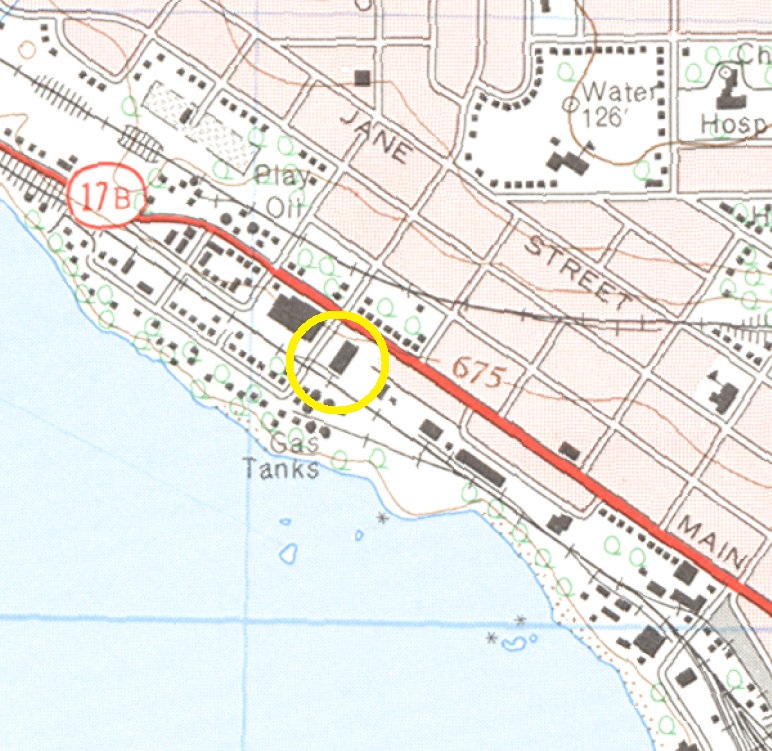
    Since the 1960s, refrigerated trucks took the place of dedicated box cars. The railway spurs are gone and the loading docks have since been covered or bricked up. Yet in many cases they remain visible, especially during this time of year, such as North Bay’s Main Street store, below.

    There were a few regional warehouses in Southern Ontario that had rail loading docks. Ottawa’s Bank Street Brewers Retail location, built in 1958, was designed by John B. Parkin and Associates and backed on to a Canadian Pacific freight spur. The warehouse was moved to a modern suburban location and the rail line was removed, though the building survives, with a beer store still operating at the front.

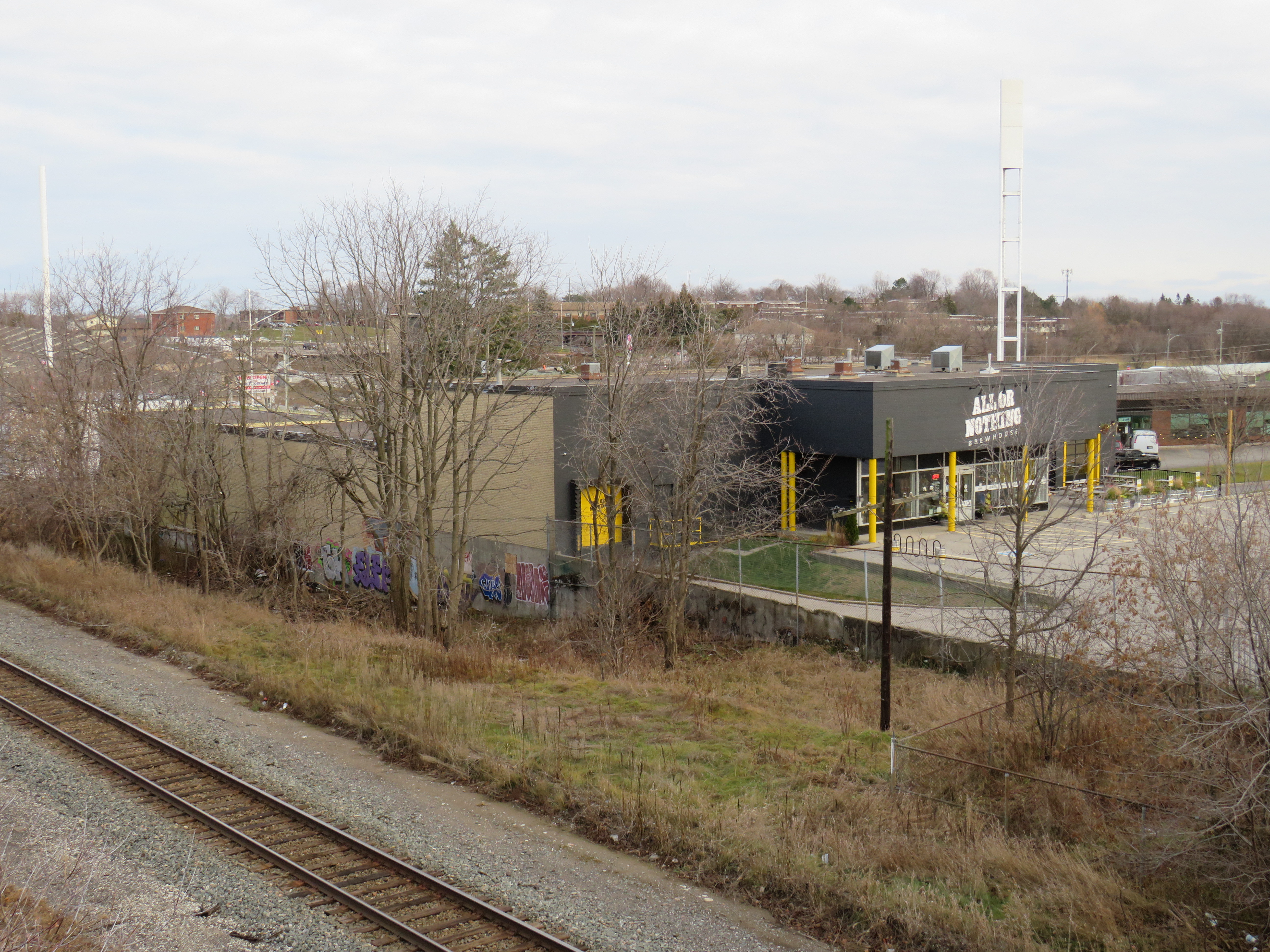
    Similarly, the Ritson Road store in Oshawa was built next to the Canadian Pacific Railway, and saw rail service in its early years as it also functioned as a regional distribution centre. The store has since moved to a new big-box plaza built on an old General Motors plant to the north, with the old location now a local craft brewery.

    In Oshawa, the old railside Brewers Retail store and warehouse is now a craft brewery. The shuttered rail docks -covered with metal sheeting – are barely visible behind the trees to the rear.

    Interestingly, one Brewers Retail store still ships beer by rail — the Cochrane, Ontario location. Mike Robin kindly sent me photographs of Ontario Northland Railway box cars parked on the beer store’s spur. This allows for beer bottles and kegs to be shipped north to Moosonee, which is accessible only by rail or by plane for most of the year.

    Cochrane Beer Store, November 21, 2020 – Courtesy Mike Robin

  • Ontario’s failed downtown malls

    IMG_0392.JPG
    Bayside Mall, formerly the Sarnia Eaton Centre, on a Saturday morning in 2013. Most stores are vacant or occupied by non-profits or independent businesses.

    The Toronto Eaton Centre, large, famous, and vital, is only one of many malls built in the downtown cores of Ontario cities between the 1960s and 1990s. From Thunder Bay to Cornwall, the construction of new enclosed shopping centres were seen as a necessary tool to keep the old city centres vibrant and relevant in the face of competition from new suburban malls. But only in the province’s two largest cities did the concept work. Elsewhere, these urban shopping complexes were left largely vacant within ten years of opening, when leases expired. When the Eaton’s department chain went bankrupt in 1997, huge voids were left behind that developers and municipalities struggled to fill.

    The Toronto Eaton Centre was opened in two phases between 1977 and 1979. It added hundreds of shops and new office space to Downtown Toronto, anchored by a new Eaton’s flagship and was connected to the Simpson’s store across Queen Street. Today, the Eaton Centre is Canada’s second largest mall (including the Hudson’s Bay/Saks Fifth Avenue building) and the Toronto region’s second most productive shopping centre in terms of sales per square metre. In Ottawa, the downtown Rideau Centre, opened in 1983, is the busiest and most productive mall in that region (Retail Council of Canada, 2016).

    But elsewhere in Ontario, downtown malls — mostly built with municipal and/or provincial government support — have been, without exception, commercial and urban development failures. Not only did they suffer from high vacancy rates, they helped to wreck the downtown cores they are located in rather than foster the economic revitalization they once promised.

    (more…)