Tag: Travels

  • I went back to Toronto

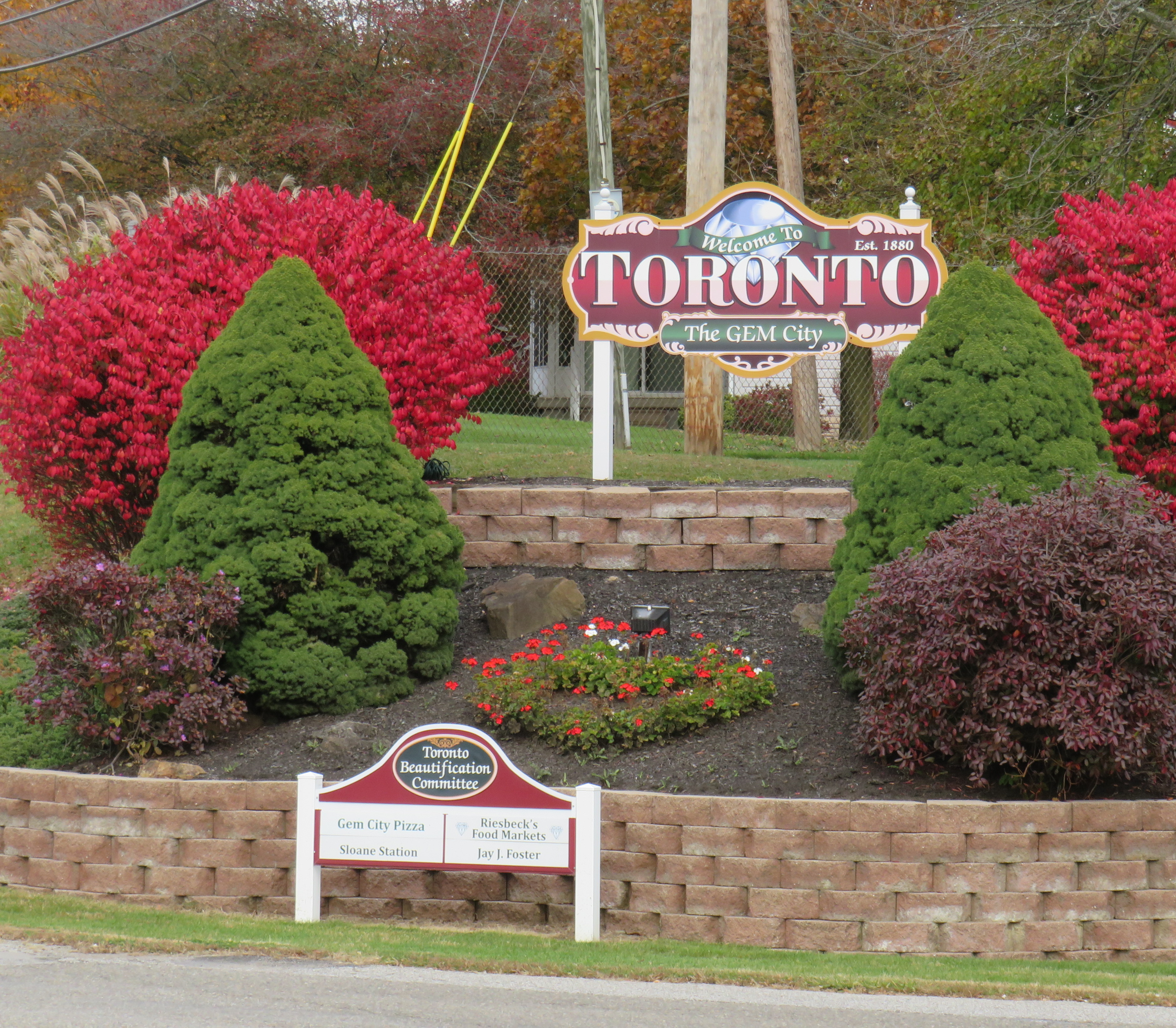
    Back in October 2012, I paid a visit to Toronto, Ohio, population 5,091. Soon after my trip to the Ohio River Valley, I wrote about my visit for Spacing Toronto. A decade later, in October 2022, I returned to Toronto while on a trip to nearby Pittsburgh.

    The small Ohio community was originally named Sloan’s Station, but when it was incorporated as a city, they chose “Toronto” because local businessman W.F. Dunspaugh, a Toronto (Ontario) native, thought his hometown was “a place worth emulating.” Toronto, Ohio is the only other city named Toronto, but other Torontos exist, including the town of Toronto, South Dakota (population 212) and the town of Toronto, New South Wales, Australia (population 5,161).

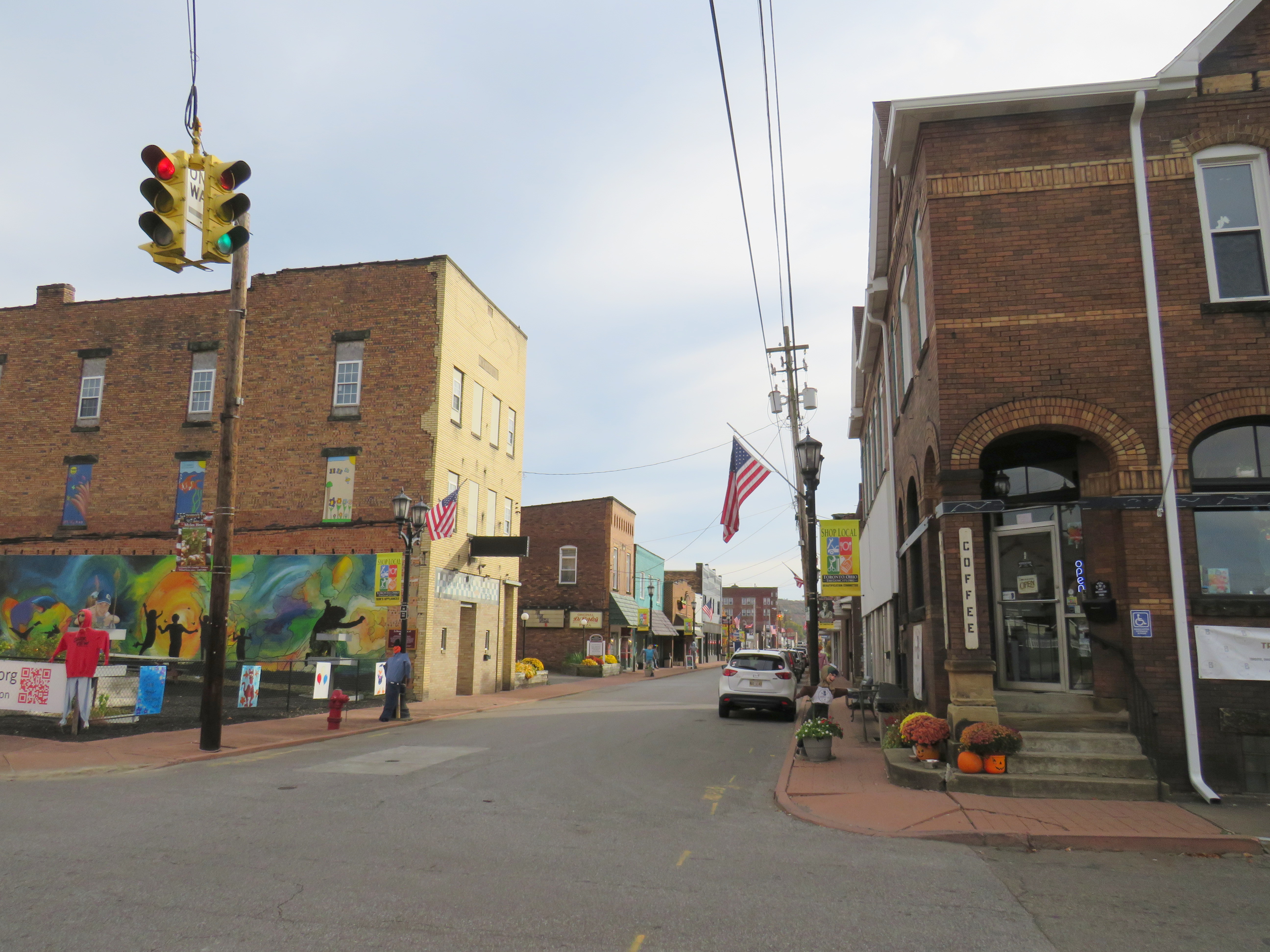
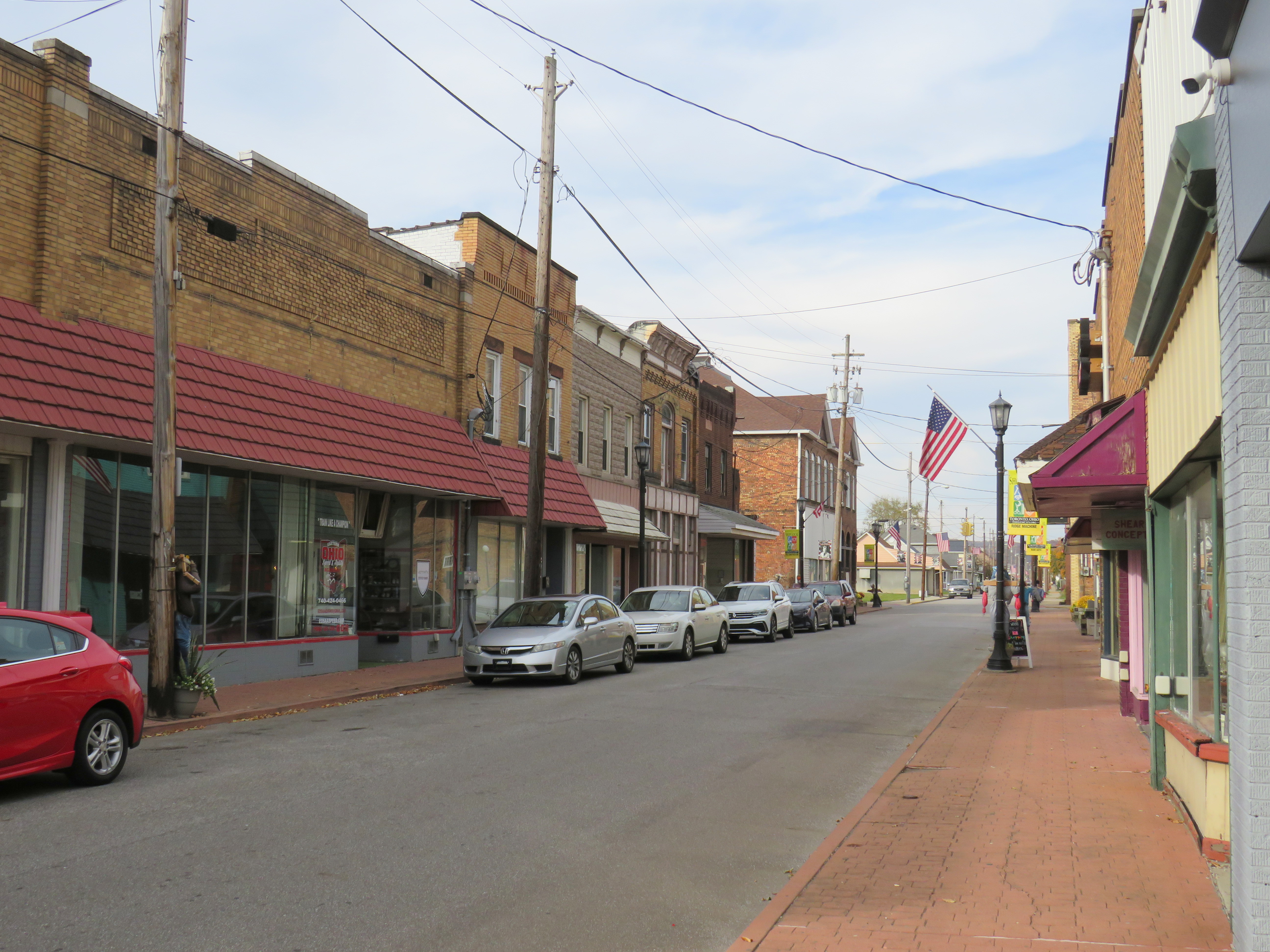
    In 2012, Downtown Toronto had only a handful of stores, including a Dollar General, a bar, pizzeria, a Hallmark gift shop, and a hair salon. Apart from the bar (which I went into ten years ago), those businesses are still there today, but there was also a new barbecue restaurant, and a coffee shop. Up the street, a disused auto shop was transformed into a pretty good taco joint. Though downtown wasn’t especially busy, the parking spots along 4th Street were mostly full.

    Downtown Toronto. A community garden sits on a vacant lot on the corner.
    4th Street, Toronto’s main street
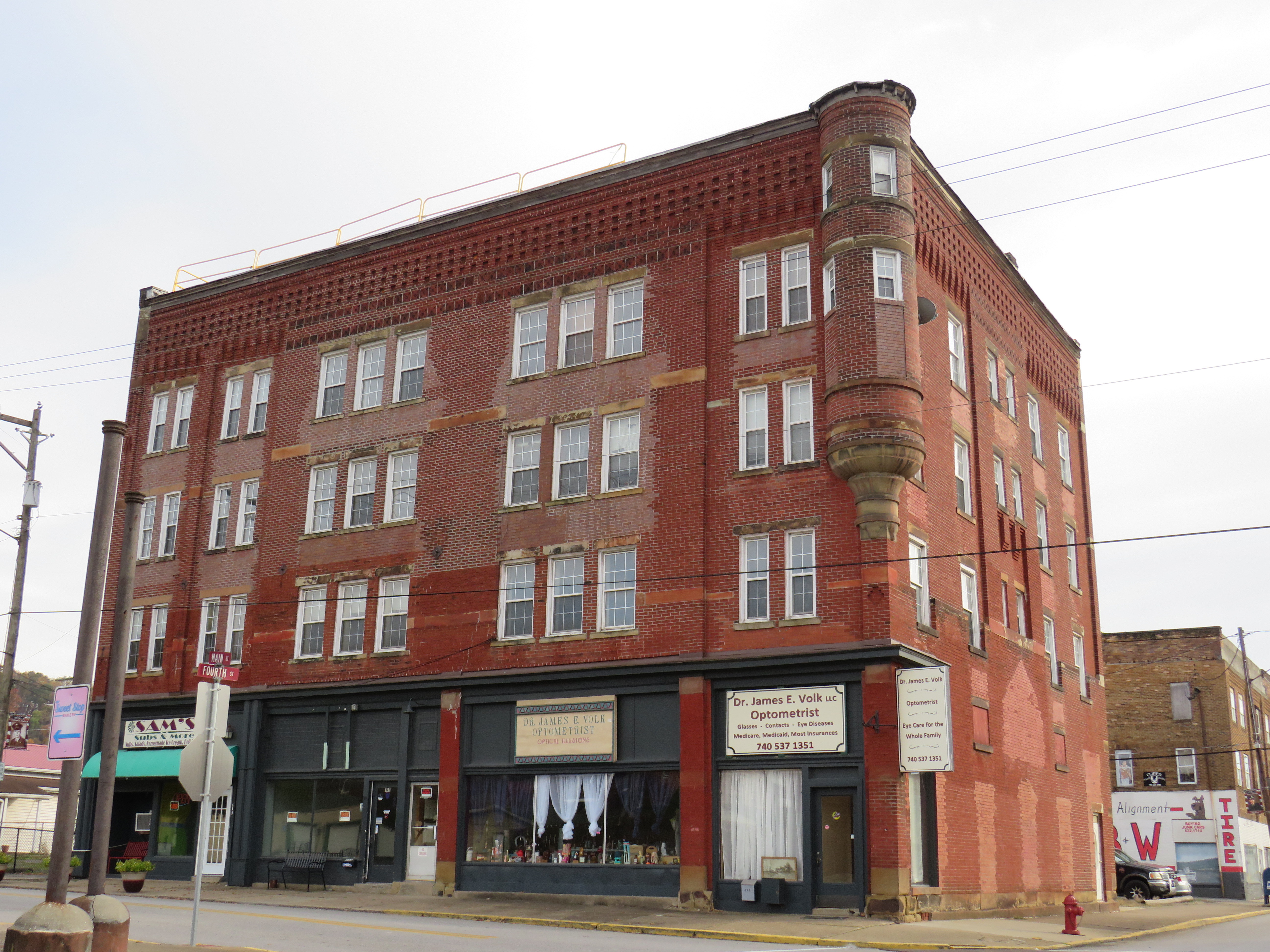
    The old hotel, now shops and apartments

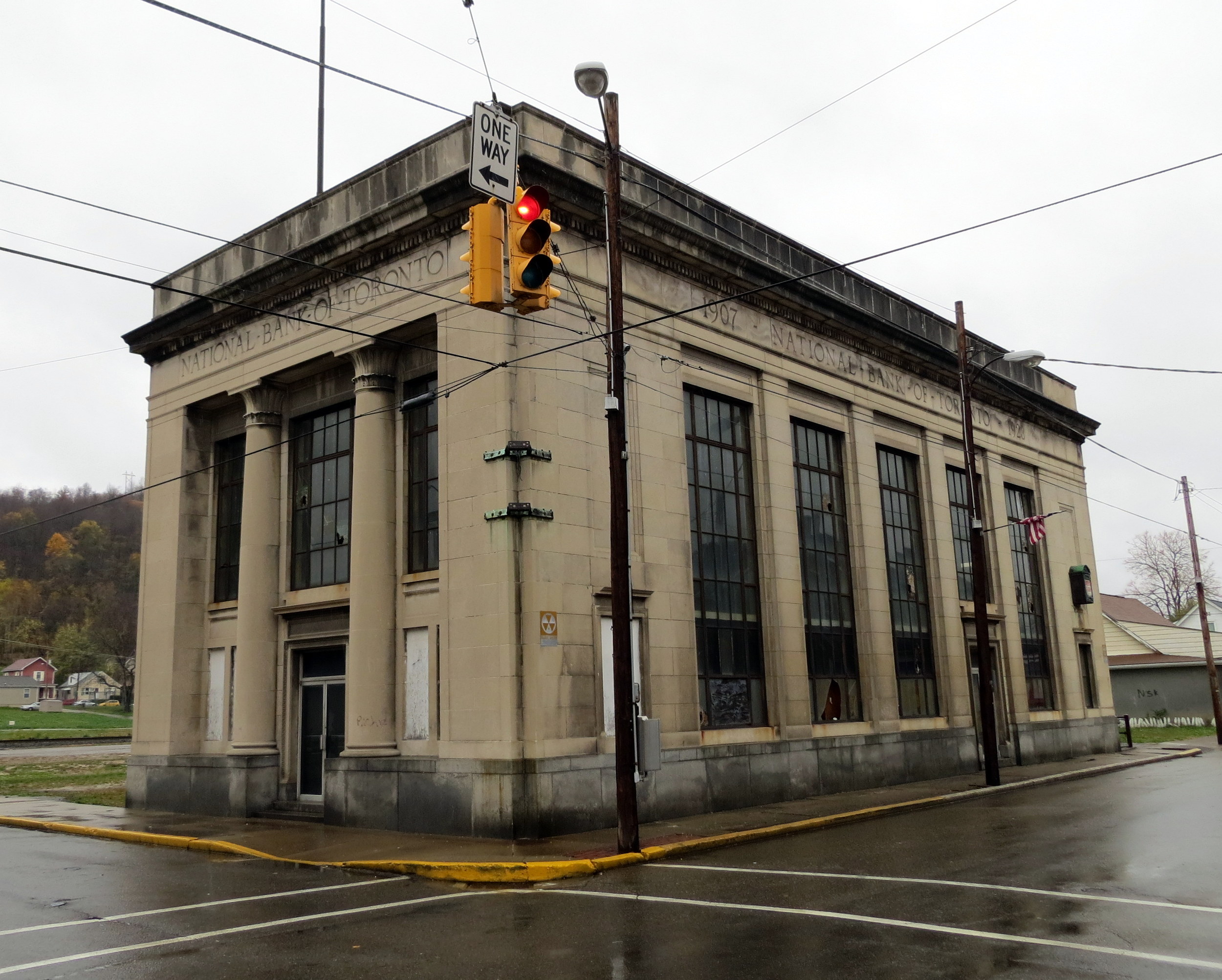
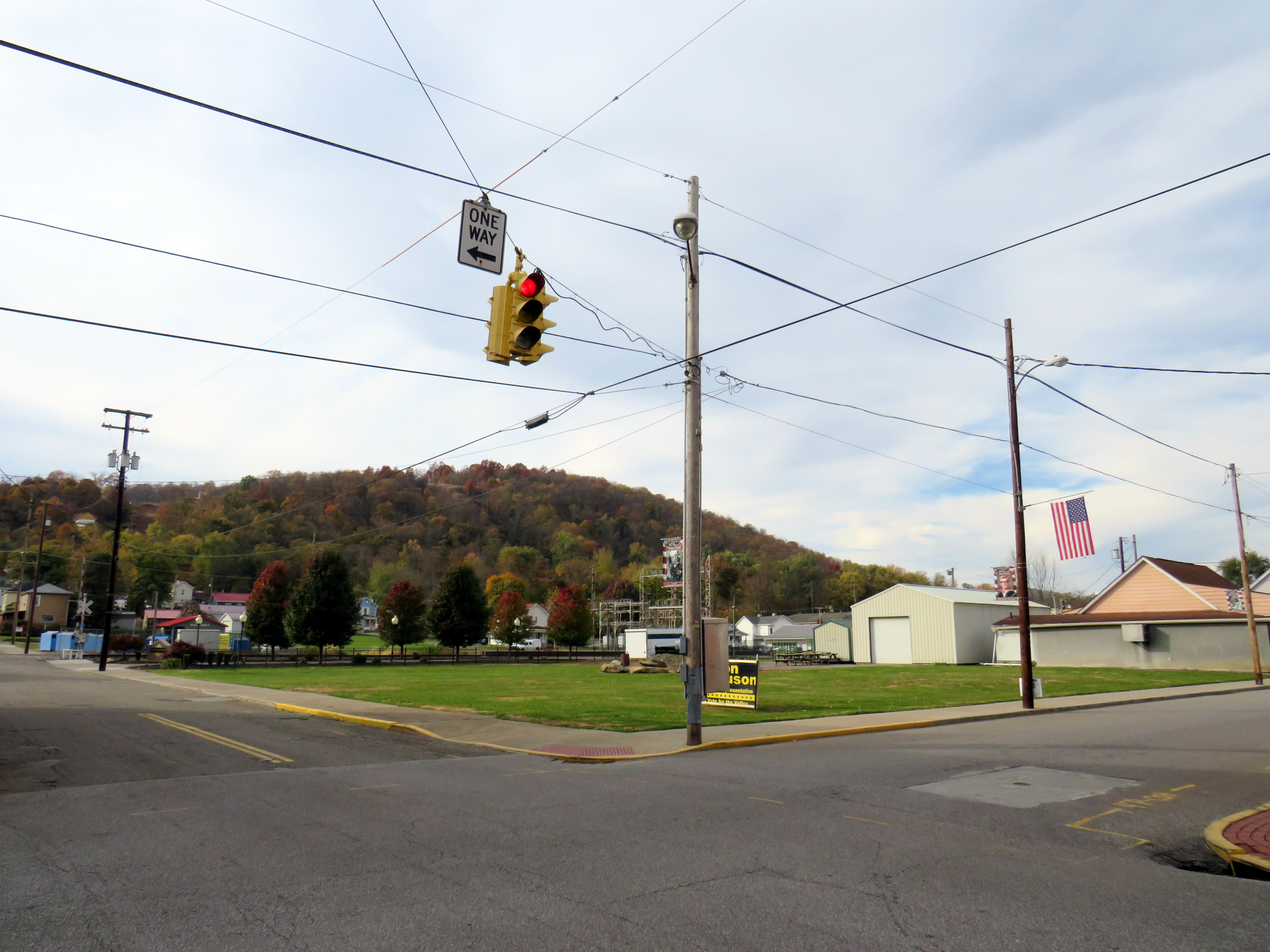
    Sadly the abandoned, yet still handsome National Bank of Toronto building was torn down a few years ago. Otherwise, Toronto continues to hold its own, with a well-kept little downtown and more places to sit and eat than before.

    Former National Bank of Toronto, October 2012
    Site of the former National Bank of Toronto, October 2022

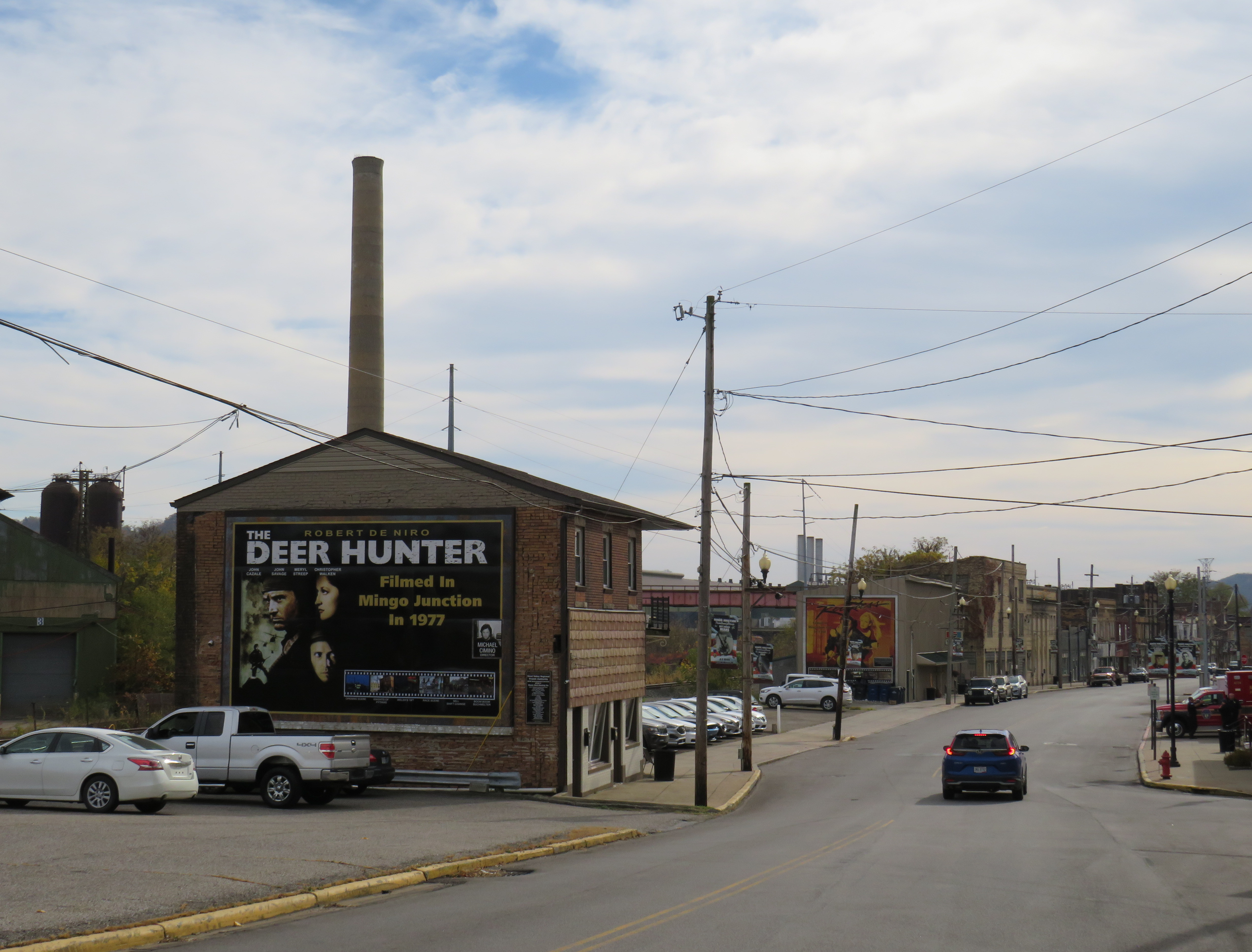
    Just a few miles to the south is the town of Mingo Junction, Ohio, one of many industrial communities along the Ohio River in Pennsylvania, West Virginia, Ohio, and Kentucky. Mingo Junction is best known as a filming location for movies including the acclaimed 1977 film “The Deer Hunter.” The town now celebrates its cinematic history with large vinyl signs displayed on the north end of Mingo Junction’s main street.

    Large sign celebrating the filming of “The Deer Hunter” in Mingo Junction, Ohio

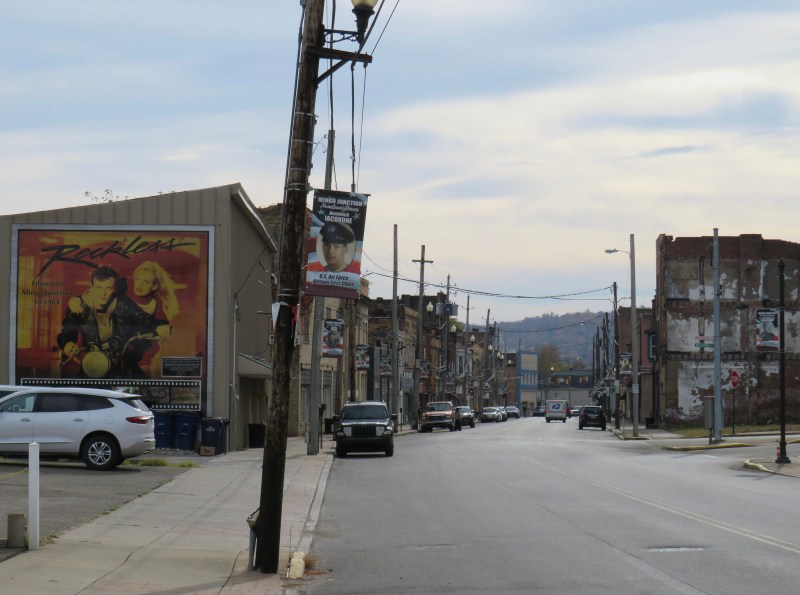
    While Toronto’s economy is based on a still-busy titanium mill, Mingo Junction is a old steel town, hit hard by the deindustrialization of northeast Ohio in the 1970s and 1980s. The condition of its Main Street

    Mingo Junction’s Main Street, bypassed by a newer expressway. Another mural celebrates “Reckless,” a 1984 film also filmed in town.
  • Goin’ to Kansas City

    IMG_5800-001.JPG
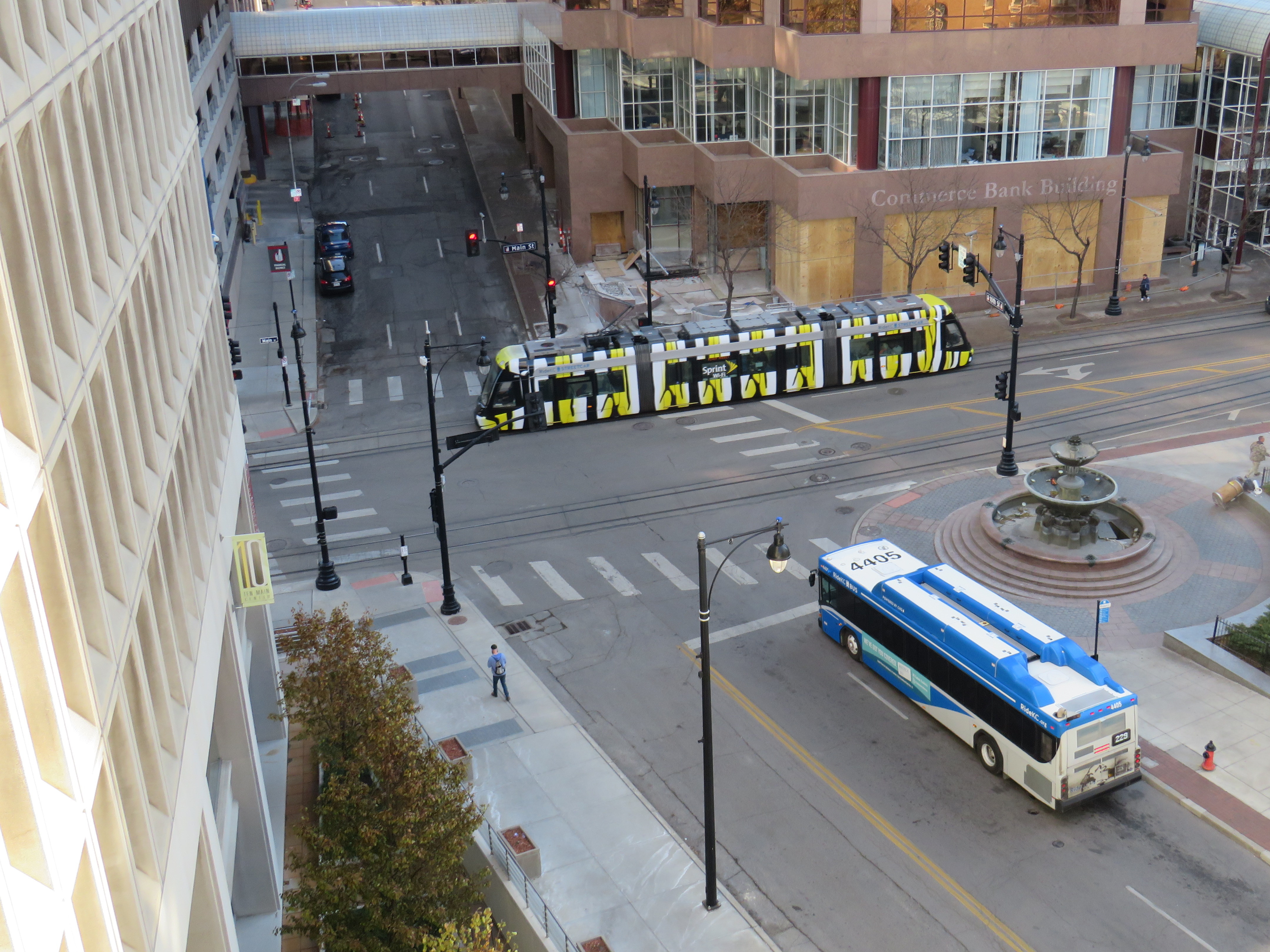
    Bus and streetcar, Downtown Kansas City

    Kansas City, Missouri made news this month when its City Council voted unanimously to include a plan for free fixed-route public transit in the next city budget. Though that budget would still have to be passed in the New Year, the mayor’s support for the measure is a promising sign. Though it will cost $8 million, local politicians support the idea as it will benefit low income riders.

    It is worth noting that Kansas City Area Transit Authority’s 2016 annual ridership was just over 14 million a year, while the cost recovery rate was just 12 percent. It would be much harder to offer free transit in Toronto. The TTC’s cost recovery rate is 68%, with transit fares bringing in over $1.2 billion a year. Though a two-hour transfer and free children’s fares were recently introduced, there’s little chance that the City of Toronto would agree to funding fare-free transit. In any case, Kansas City’s experiment will be interesting to watch.

    Kansas City was a more interesting city than I expected; I am glad I made the impromptu trip. There are a few Toronto connections, including a streetcar that traveled the continent, a restored Union Station, and a 1920s shopping plaza whose concept was imitated 80 years later in Don Mills.

    I enjoyed an evening at a jazz club at the 18th and Vine Historic District and local barbecue. Besides transit, I also got around on an electric pedal assist bike that’s part of the local bike share. It’s friendly, urban city, definitely worth a visit.
    (more…)

  • The streetcar returns to Detroit – but who benefits?

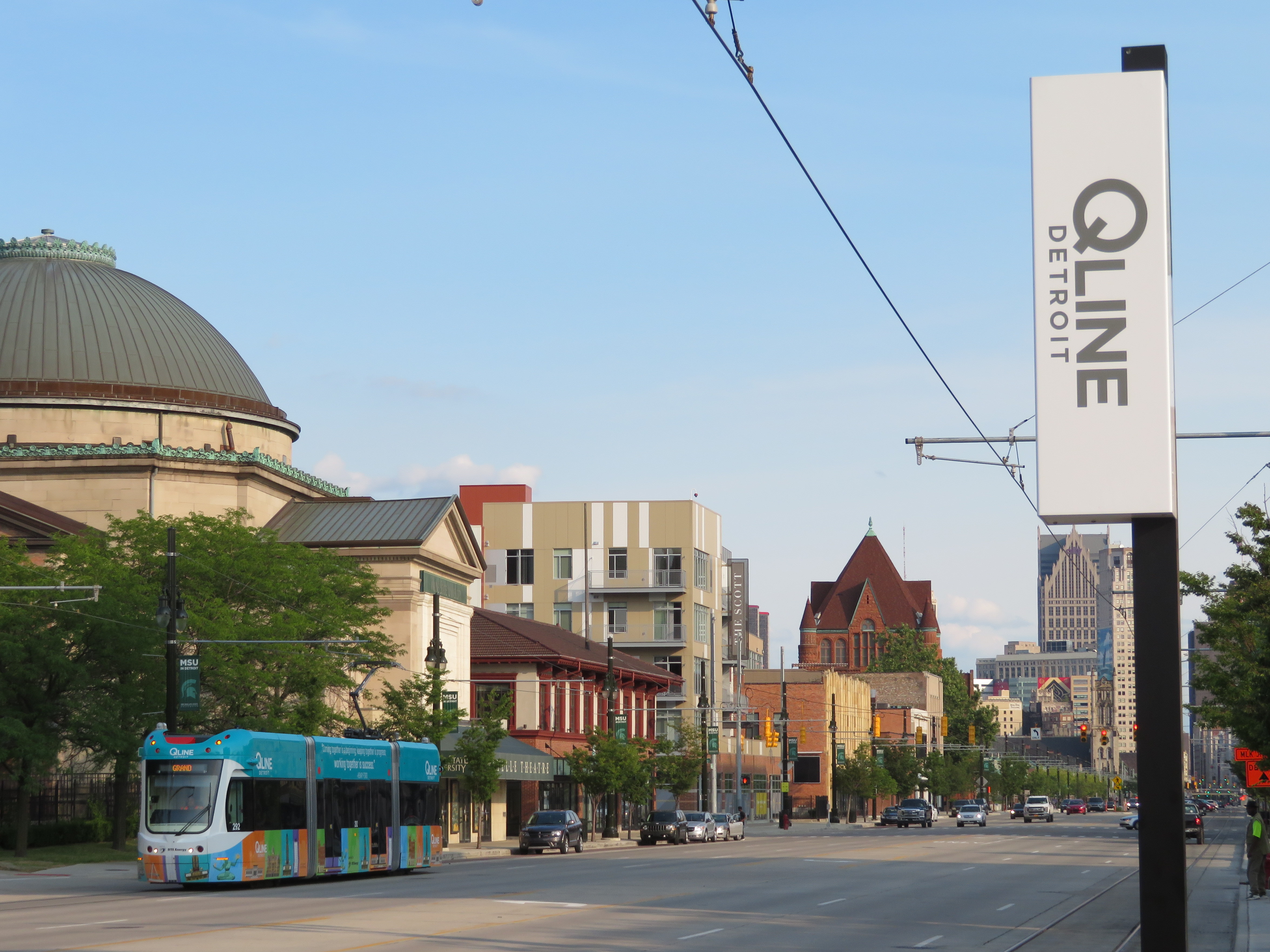
    IMG_1489-001Woodward Avenue at Mack Avenue, August 2017

    I grew up in Brampton, a suburb of Toronto. Our family could not justify long, expensive vacations, but we did make several trips to Detroit and the region, usually to visit the Henry Ford Museum and Greenfield Village. We’d stay at a hotel outside Detroit, usually one with a swimming pool. Besides the museum visit and the pool, my parents would usually include a stop at an outlet mall. We’d also drive through Detroit itself, sparking my enduring fascination with the city.

    Since my first visit in the mid-1980s, the Hudson’s Department Store has been demolished, the Michigan Central Station has been permanently closed and allowed to deteriorate, and several downtown skyscrapers have closed and been abandoned. The city itself continued to lose population as more auto plants closed in the city and surrounding suburbs, and city services declined.

    But on recent trips, on my own or with friends, we started to see the beginnings of what looked like a comeback. New downtown baseball and football stadiums, followed by new office buildings, the re-opening of the long-abandoned Book-Cadillac and Fort Shelby Hotels, the opening of the Detroit Riverwalk and Dequindre Cut multi-use paths, and new residential development Downtown and Midtown.

    On the last trip to Detroit, my wife and I stayed downtown, at a hotel in the David Whitney Building, a formerly-abandoned office tower. We walked around Downtown Detroit and Eastern Market, visited the famous Art Deco Fisher Building, and went to several museums, including the Charles H. Wright Museum of African-American History, and the Detroit Historical Museum, both of which had special exhibitions marking the 50th anniversary of the 1967 Detroit Rebellion (also known as the 12th Street Riot). We ate at great local restaurants as well.

    And I went back to the Henry Ford Museum and Greenfield Village, both of which were as fun and as interesting as I remember.

    We also took the new QLine Streetcar. It was a fun ride, and I’m happy to report that the service was well used by both residents and tourists alike. But I have some serious concerns as well.

    (more…)

  • A visit to New Glasgow, Nova Scotia

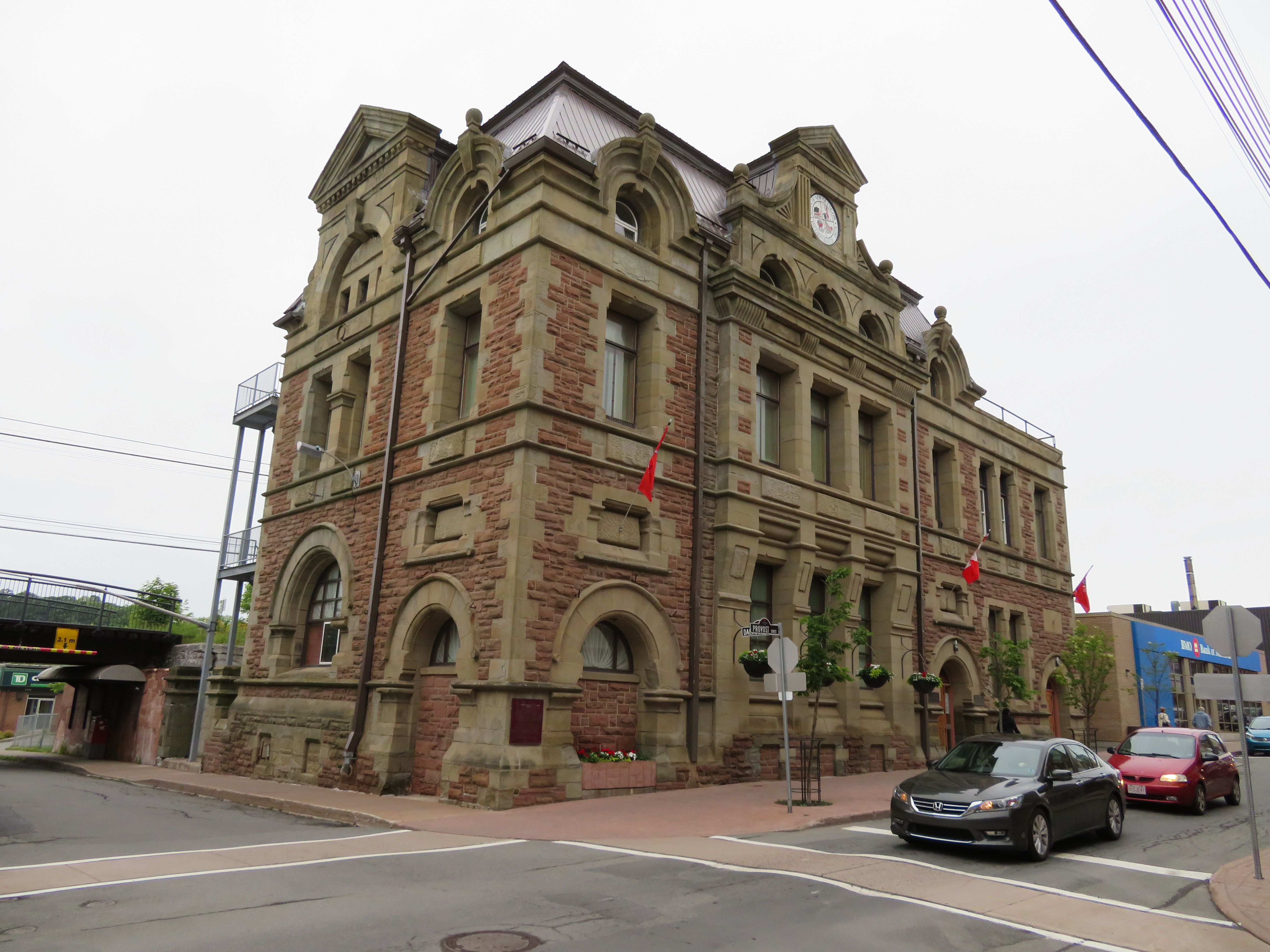
    IMG_0319-001New Glasgow City Hall

    After our wedding, we went away to Nova Scotia and Prince Edward Island. I’ve been to Halifax and the Annapolis Valley once before, in April 2004, but I’ve never been to Cape Breton (which has become one of my favourite places in Canada), or PEI.

    It was a wonderful trip. We drove the Cabot Trail, hiked several trails in Cape Breton Highlands National Park, enjoyed great meals featuring local seafood, visited restored historic sites such as the Fortress of Louisbourg, and spent some time wandering around Halifax and Charlottetown. I’ll write more on those adventures later.

    Driving through Nova Scotia on the way to Cape Breton, you must pass through Pictou County on Highway 104, part of the Trans-Canada Highway. Most travelers pass through, or stop off the highway for gas or food. But the region has an interesting history, and we visited two historic sites there which are off most tourists’ radar.

    Once an industrial powerhouse, settlements such as New Glasgow, Stellarton, and Trenton have been hit by the closures in the steel industry and in coal mining. Trenton had a large steel mill; the TrentonWorks plant produced rail cars until 2007. Coal mining was also important to both northern Nova Scotia and in Cape Breton, but today, only one surface coal mine remains in the province near Stellarton. Today, Stellarton might be most known as the hometown of and headquarters for the Sobeys supermarket chain and its parent company, Empire Corp. The town of Pictou was known for its shipbuilding industry.

    New Glasgow, which we visited, is the largest community in Pictou County, and the regional centre for central Nova Scotia. We stayed in New Glasgow overnight, as we were to take the Northumberland Ferry to PEI early the next morning.


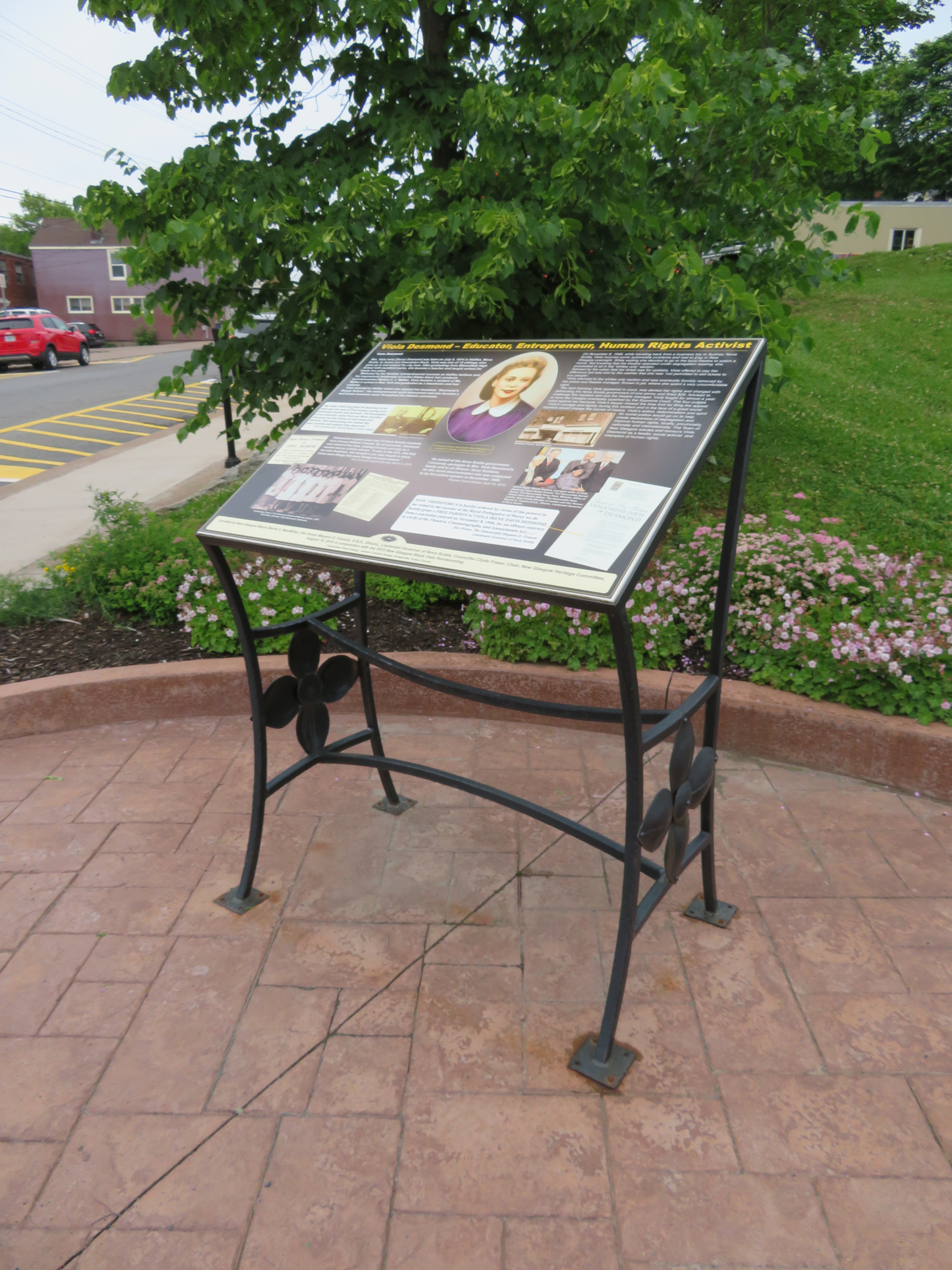
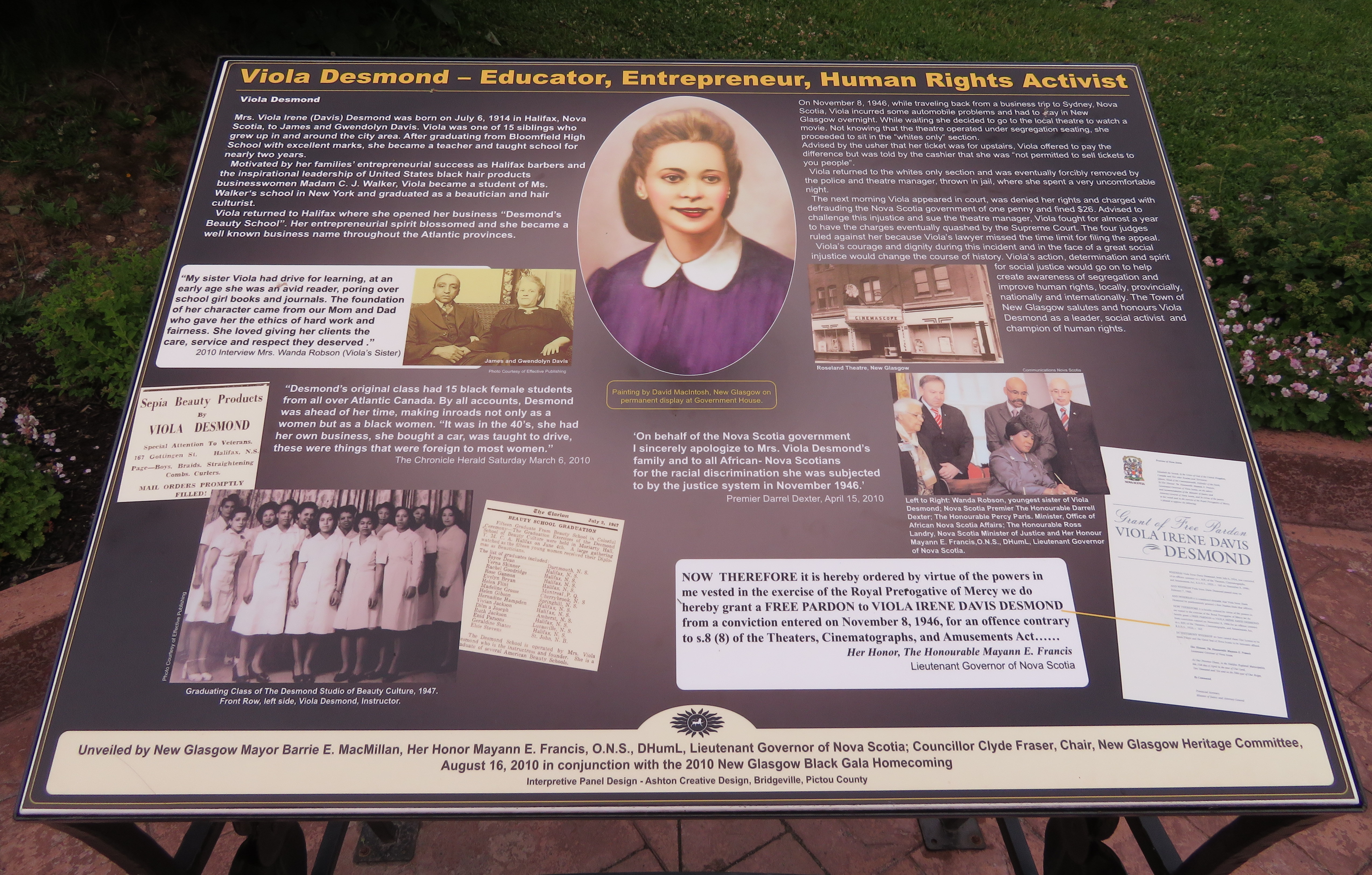
    In 1947, Viola Desmond, a successful Black entrepreneur, was removed by police from the Roseland Theatre for refusing to sit in the upper segregated seating area, but in the ‘whites only’ section. She was charged and convicted for tax evasion – the one cent difference in the provincial amusement tax between the ticket she was sold and the lower level seating. Despite this injustice, the apology and pardon from the Nova Scotia government didn’t come until 2010. That year, a plaque was unveiled in New Glasgow. Since then, there has been more recognition of this injustice and of Desmond’s importance — a new ferry was named for her in Halifax, and she will appear on the next issue of the $10 bank note.
    IMG_0318-001
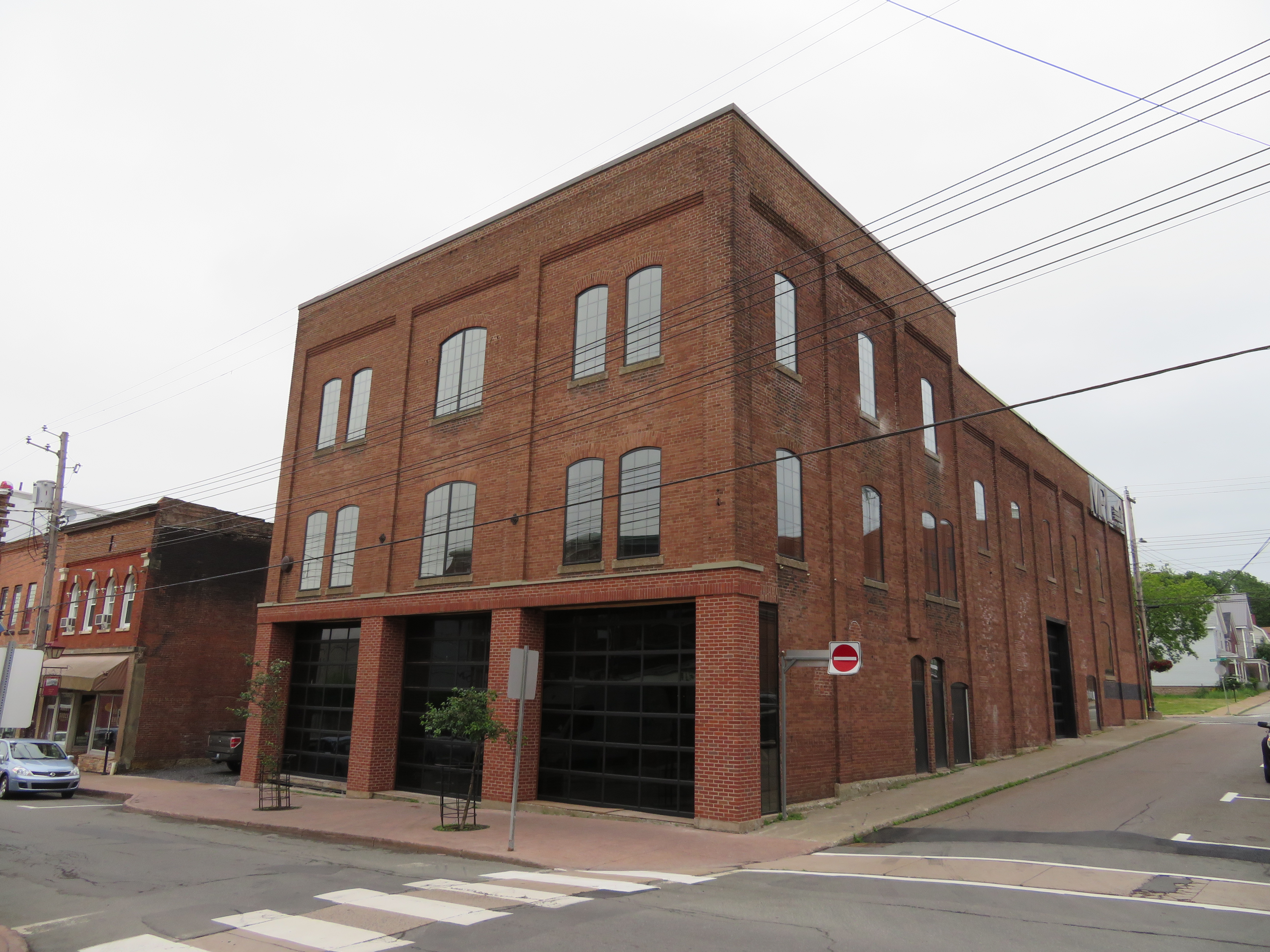
    Roseland Theatre building, June 30, 2017

    Today, the Roseland Theatre is closed (the theatre later became a club). I found the building (which is being renovated, and the marquee removed), but I had trouble finding the plaque. I found out it was located two blocks away from the theatre building, next to the public library.
    IMG_0323-001
    The plaque commemorating Viola Desmond is located two blocks away from the Roseland Theatre
    IMG_0321-001


    On May 9, 1992, sixteen miners were killed in a methane and coal gas explosion at the nearby Westray Mine. News of the explosion, and coverage of the attempted rescue efforts was one of the first major news stories I clearly remember, and the first I really understood. I was eleven when it happened. (Though I also remember the 1989 fall of the Berlin Wall, I was eight years old at the time, and I couldn’t understand the significance. Westray was the first news story that I remember and which I could understand clearly.)

    Tragically, eleven bodies remain underground. The mining company ignored unsafe working conditions, and the government was complicit in knowing about the problems but not forcing changes — the Westray mine promised jobs, not only in the mine, but in other local industries, such as TrentonWorks, which was contracted to supply rail cars for shipping coal to a nearby power generation station. The mine had lots of support at all three levels of government; this likely contributed to pressure to keep it open despite serious safety concerns. Furthermore, criminal proceedings against the company and its management were botched.
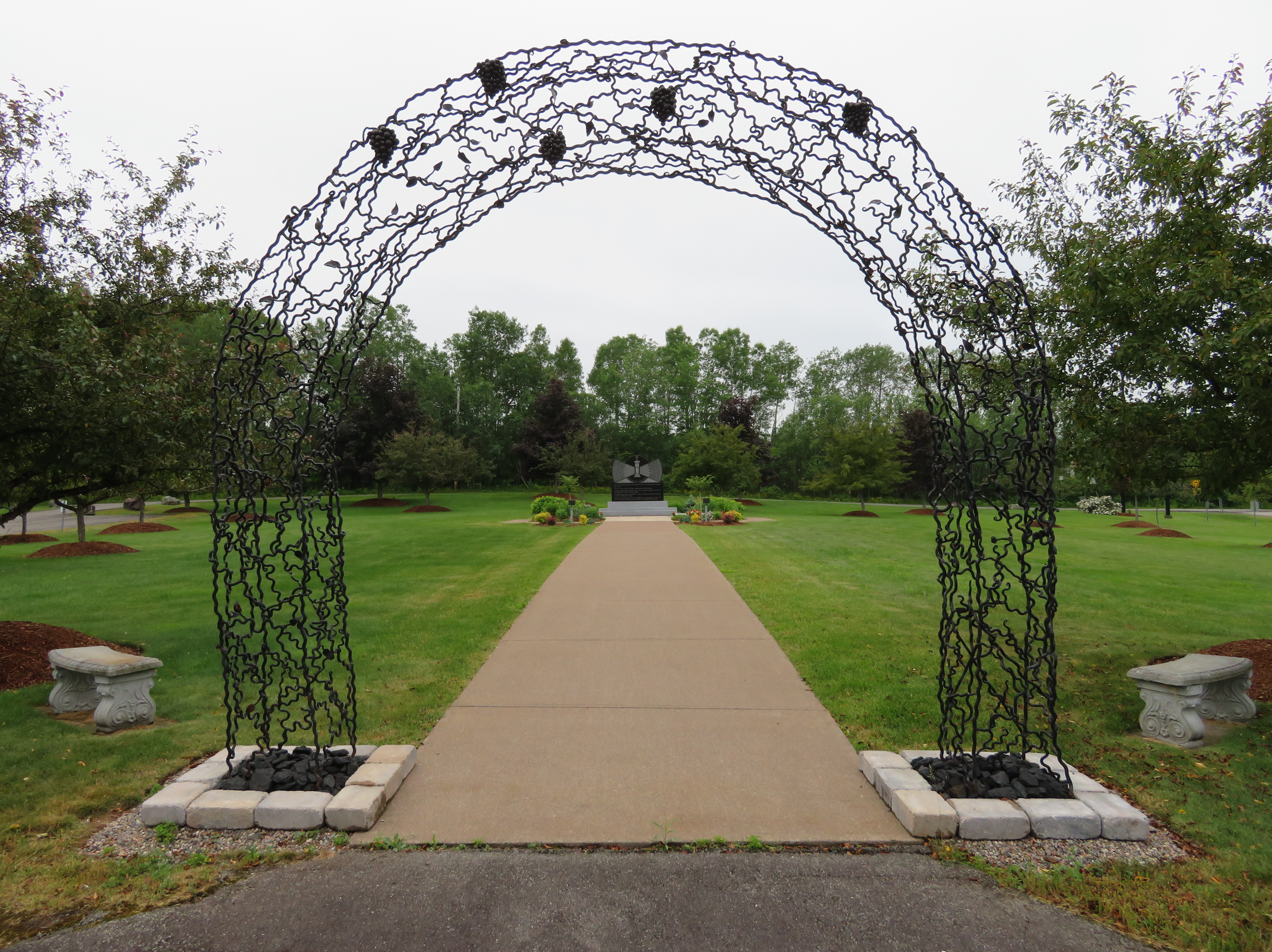
    IMG_0316-001Their Light Shall Always Shine Memorial Park, New Glasgow

    Though the main Westray Mine site and shaft were located at Plymouth, to the south of New Glasgow, the explosion took place north of Highway 104, within the city limits. Their Light Shall Always Shine Memorial Park is located close to the site. Besides a garden and a monument with all sixteen men’s names, there are several interpretative plaques on the history of the Westray Mine, the explosion, and the aftermath.