Tag: Viva

  • A welcome revision at Major Mackenize

    Earlier this year, I wrote about a major malfunction at a new Viva Rapidway station near Downtown Richmond Hill. The Major Mackenzie station on Yonge Street was built one block south of the busy east-west arterial road; passengers taking Viva buses were forced to walk from Major Mackenzie Drive south to the intersection of at the intersection of Elmwood Avenue and Hopkins Street, push a “beg button” and wait to cross to the bus platforms in the middle of Yonge.

    The reason for this unusual situation was that the Yonge Street right-of-way narrows through Downtown Richmond Hill. At Major Mackenzie Drive, northbound Viva buses must enter mixed traffic for approximately two kilometres before returning to a median busway. (The northbound traffic signal at Major Mackenzie has a dedicated transit phase that allows Viva buses to exit the median ahead of general traffic.) This required the median Viva bus stop (called a VivaStation) to be located considerably south of the intersection of Yonge Street and Major Mackenzie Drive.

    Back in February, temporary barriers and YRT transit enforcement officers were used to dissuade transit customers from Back in February, temporary barriers and YRT transit enforcement officers were used to dissuade transit customers from taking the faster and direct, yet more dangerous, route to Major Mackenzie Drive and connecting east-west buses by crossing midblock north of the platform, the faster and direct, yet more dangerous, route to Major Mackenzie Drive and connecting east-west buses.
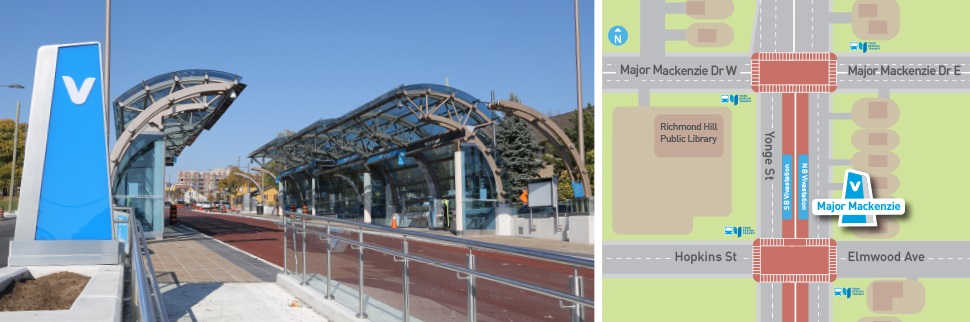
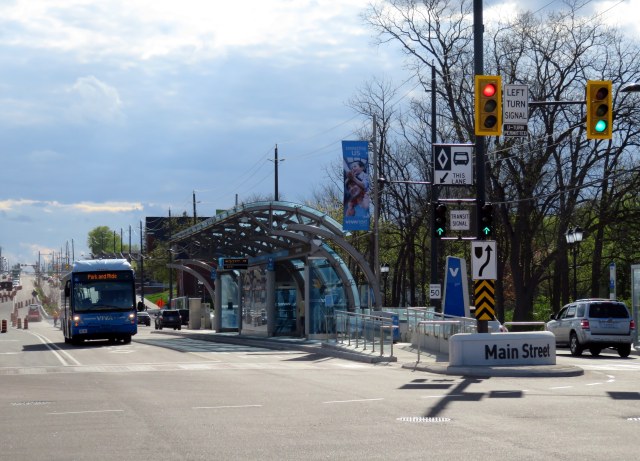
    The Major Mackenzie VivaStation and layout, February 2021

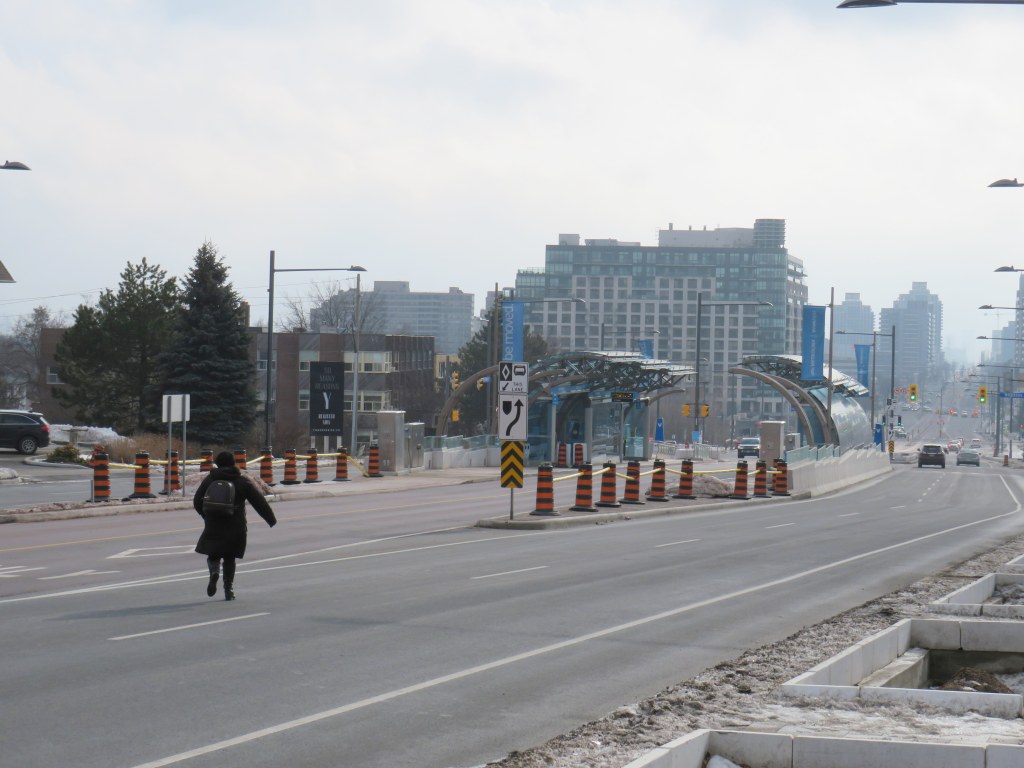
    To my pleasant surprise, York Region fixed its mistake. Though the revised station is not ideal (it is still a long walk from Major Mackenzie Drive itself), a new walkway alongside the east side of the bus right-of-way from the VivaStation to the Major Mackenzie intersection makes the transfer to and from buses on Major Mackenzie much simpler.
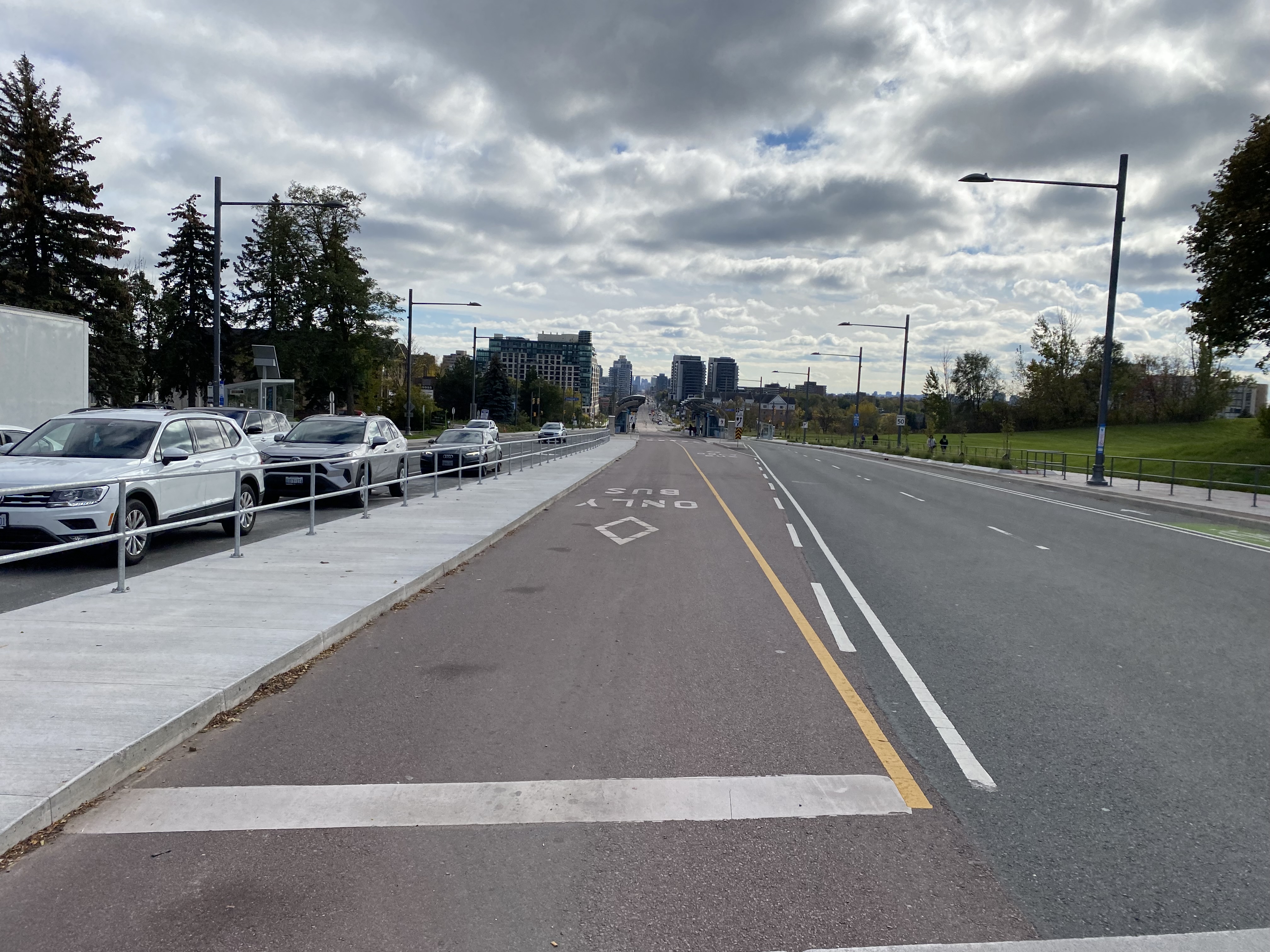
    Looking south from Major Mackenzie Drive

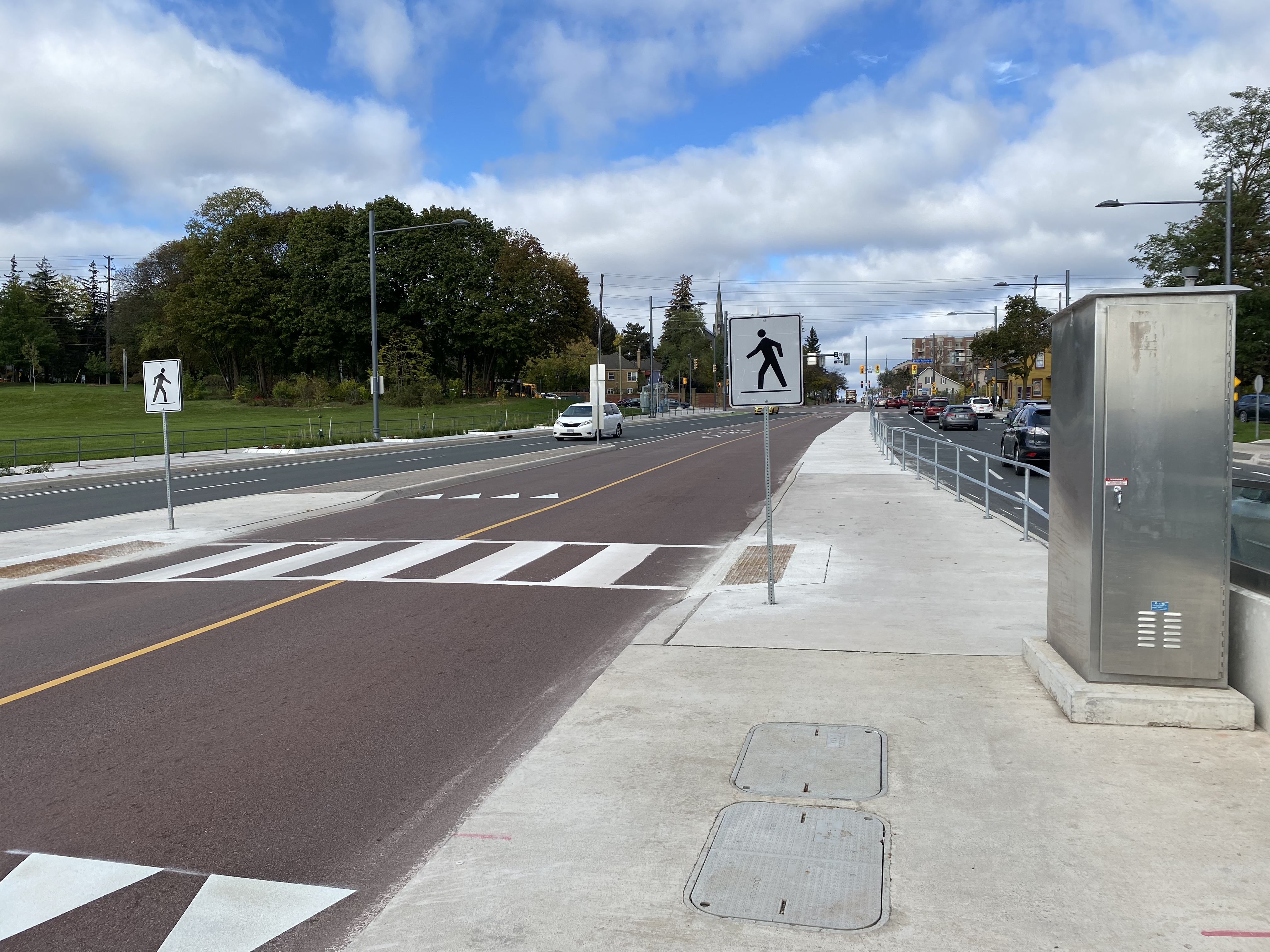
    Just north of the bus platforms, a signed crosswalk allows passengers to go from the walkway and northbound platform to the southbound platform on the west side of the bus right-of-way.
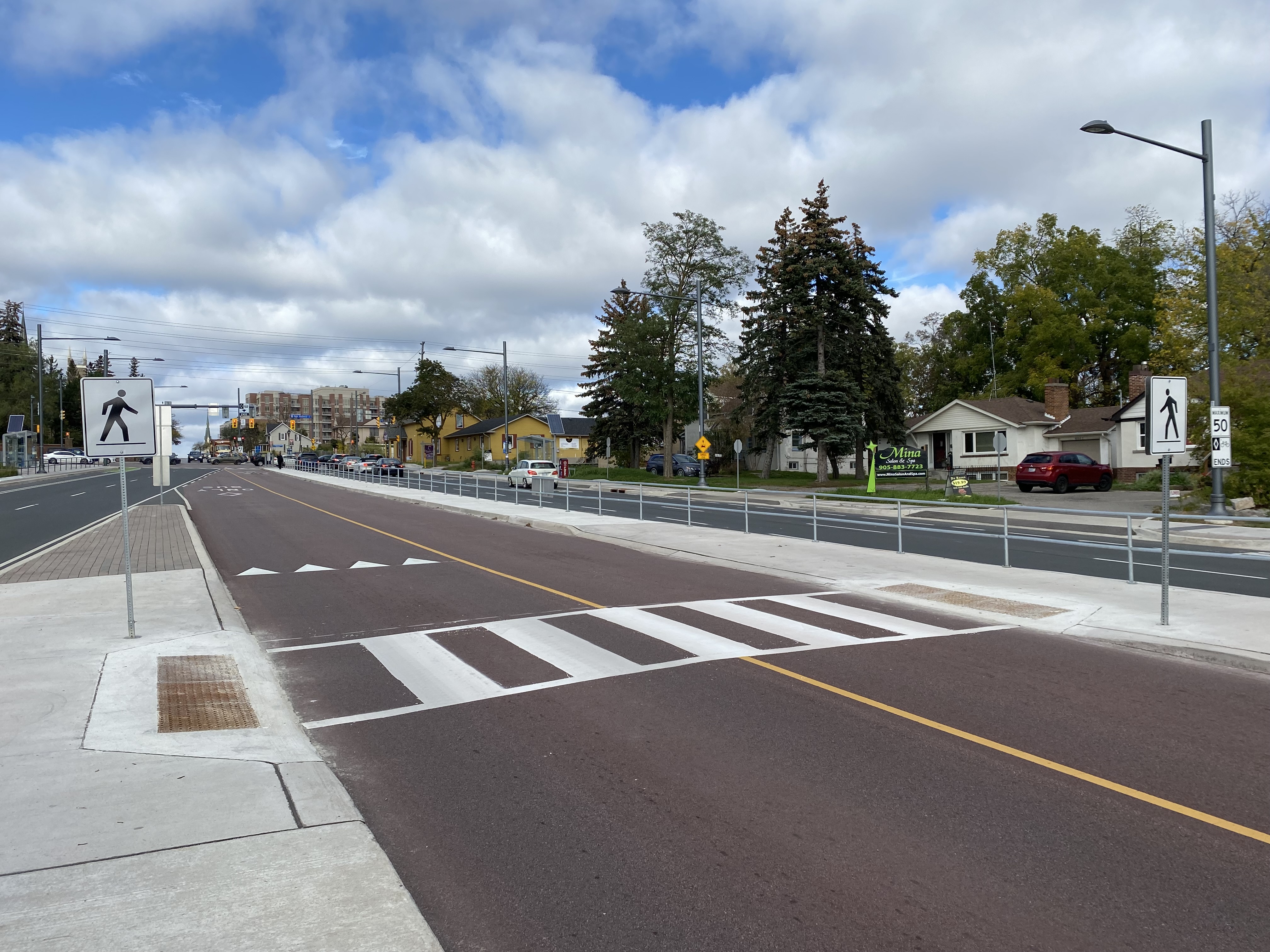
    Looking north towards Major Mackenzie Drive at the new crosswalk, which allows passengers to go between the southbound bus platform to a new walkway connecting the Major Mackenzie VivaStation to its namesake street.

    Permanent metal rails prevent passengers from crossing Yonge Street until they get to the signalized intersection at Major Mackenzie. But transit enforcement officers were nowhere to be seen on this visit, on a Friday afternoon.
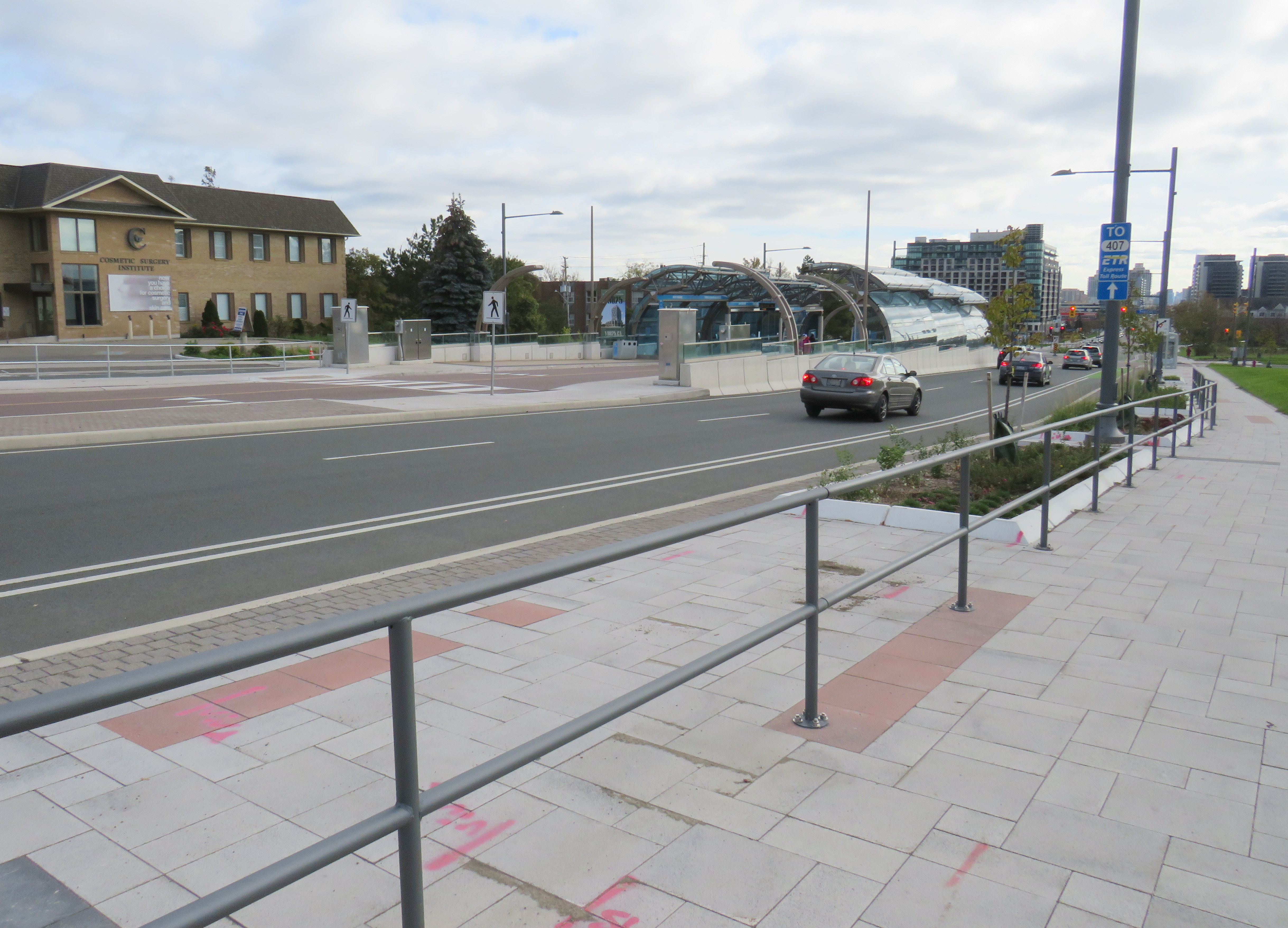
    Metal barricades deter pedestrian crossings outside of signalized crosswalks.

    Unfortunately, to make room for the walkway between the station and Major Mackenzie Drive, the northbound bicycle lane was cut, and replaced with “sharrows.” Though the new bicycle lanes on Yonge ended at Major Mackenzie (not enough room if you have to maintain four through traffic lanes through a historic town centre), this diminishes the gains cyclists made with the reconstruction of Yonge Street for the BRT lanes.

    When surface transit projects — like the Viva Rapidways — are designed to fit into existing suburban roadways, compromises to the passenger experience are made. At Richmond Hill, this meant maintaining two traffic lanes in each direction while trying to squeeze a bus rapid transit station into the roadway. This resulted in the original blunder, which should have been thought though earlier in the planning stages.

    The fix is not perfect, but it at least addresses the problems with the Major Mackenzie BRT station. Perhaps, one day, we will plan for transit, walking, and cycling first in places like Downtown Richmond Hill, rather than planning for private motor traffic first.
  • A major malfunction at Major Mackenzie Drive

    A major malfunction at Major Mackenzie Drive

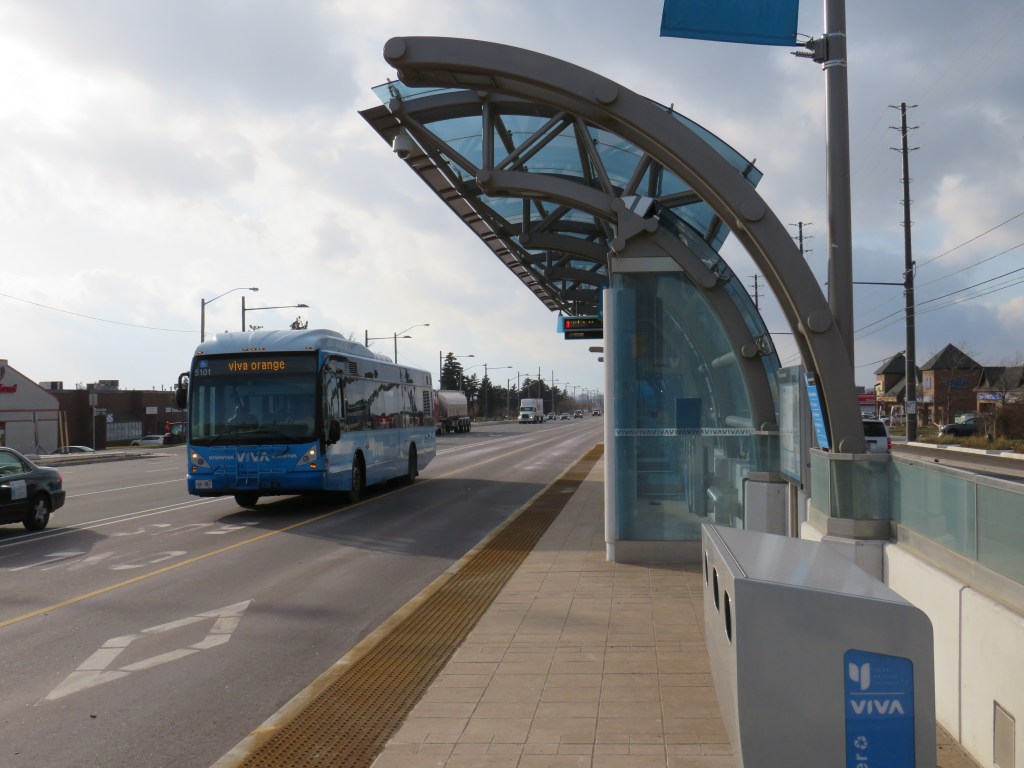
    Viva Blue buses on the new Yonge Street Rapidway, February 2021

    On December 20, 2020, the newest section of York Region’s Viva Rapidways opened for service on Yonge Street between Highway 7 and Major Mackenzie Drive. I have been critical of York Region’s rapid transit projects for several reasons: they are underutilized, they are poorly designed for pedestriansand without frequent service and convenient connecting routes, the money spent on fancy new infrastructure ends up becoming a questionable investment.

    At least the new Yonge Street Rapidway would serve York Region’s busiest transit corridor, supporting new high-density development in Richmond Hill. Unlike on Highway 7 or in Newmarket, there are no two-phase pedestrian crossings on this part of Yonge. Unfortunately, a botched connection between the new Rapidway at Major Mackenzie Drive created a new problem for the YRT/Viva transit network.

    This issue — along with the other problems with York Region’s Rapidways that I discussed previously — should be held up as lessons on what not to do when building new transit rights-of-way in street medians, be it on Hurontario Street in Mississauga and Brampton, planned BRT lines on Dundas Street in Mississauga, or Queen Street in Brampton.

    (more…)
  • Viva Rapidways: hurry up and wait

    Viva Rapidways: hurry up and wait

    IMG_6574.JPGA broken system

    When York Region Transit was formed in 2001, it promised great things for the large, growing suburban region north of Toronto. It amalgamated four local transit systems, and took over local services provided by GO Transit, and extended service to outlying communities, including Stouffville, King City, and Holland Landing. In 2005, YRT introduced Viva, a series of limited-stop bus routes along major corridors, offering distinct, comfortable buses, off-board fare payment, and signal priority to speed up service.

    Since YRT formed, Durham Region amalgamated its municipal transit systems, Brampton introduced Zum, a similar network of limited-stop bus routes, and Mississauga and Toronto rebranded and expanded their express bus routes. For a while, it appeared that York Region was leading the way in growing transit ridership in the suburbs.

    Unfortunately, by focusing on building new Rapidways in the median of Yonge Street, Highway 7, and Davis Drive while neglecting service levels, — even cutting back bus service on Viva routes — York Region has fallen behind. I also found that those Rapidways — meant to speed buses through congested arterials — are poorly designed for pedestrians and transit riders. (more…)

  • Thoughts on Newmarket’s new Rapidway (updated)

    IMG_1778-001

    Updated January 4 2017

    Effective Sunday, January 8, York Region Transit will impose new service cuts on several of its routes, including Viva Yellow, which I describe below. One bus will be removed from the route, reducing headways from every 15 minutes to every 22 minutes. Service after 10:30PM-11:00PM will also be eliminated.

    One wonders why, on one hand, there’s money to be hand to build fancy new bus infrastructure when there’s no willingness to fund transit that would make such capital expenditures useful.

    As York Region gets set to welcome the Spadina Subway extension to Vaughan Metropolitan Centre [sigh] and continues to lobby for a Yonge Subway extension to Richmond Hill, it’s worth questioning whether York Region is really committed to operating a quality transit service, and if it is serious about reducing its dependence on the single-occupant automobile.


    Original post, dated June 24, 2016

    In September, 2013, I wrote a post in Spacing Toronto called “York Region’s Rapidways: the good, the bad and the ugly.” I went out to Markham to ride the first of York Region’s VivaNext Rapidways. With the recent opening of a similar Rapidway in Newmarket, and a new Viva Route on Davis Drive, I made a trip north a few weeks ago to check it out.

    Viva is the brand used by York Region Transit for its network of limited-stop, proof-of-payment bus routes. When first launched in September, 2005, Viva was strictly a “BRT-lite” operation. Unlike regular YRT routes, the buses are fancier and more comfortable, the stops less frequent, and to speed up service, Viva operates on a proof-of-payment system where fares are purchased in advance from machines at Viva stops. and limited stops. A decade ago, all Viva corridors were supposed to be served by buses operating every 15 minutes or better, 7 days a week.

    But a few years later, the cutbacks began to happen as York Region reduced funding for transit operations. Viva Green, connecting Markham to the TTC’s Don Mills Station, became a rush hour only route. Viva Orange, connecting Vaughan to Downsview Subway via York University was cut back as well and now only operates every 30 minutes outside of rush hour. Even Viva Purple (York University – Markham) had its operating times cut back. Worse yet, YRT reduced service on connecting conventional bus routes that feed the Viva system.

    But while the region was reducing its spending on transit operations and raising fares, it was spending hundreds of millions of dollars on VivaNext, the region’s rapid transit plan. The plan calls for separated median right-of-ways on Highway 7, Yonge Street and Davis Drive, known as Rapidways, as well as two TTC subway extensions. York Region lobbied for, and got, a subway extension to Highway 7 in Vaughan which will open next year; it has also lobbied for an extension to the Yonge Subway from Finch Station to Richmond Hill. York Region, with its political clout, may just get that too.

    Spending billions of dollars on building transit, without properly funding the services that use and feed into that fancy new infrastructure is a problem. This is what’s wrong with York Region Transit.  (more…)