Author: Sean Marshall

  • All aboard the beer train

    All aboard the beer train

    A classic Brewers Retail Store in South River, Ontario featuring the 1980s-era branding

    While taking a geographic analysis program during my undergraduate years at university, I developed a fascination with retail geography. My 2005 Masters’ paper examined the geographic distribution of payday lenders — which combined my interests in retail geography, urban planning, and social justice. Though my career took me in a different direction, I have maintained my interest in the role of geography in the success — or failure — of retail businesses.

    Despite being one of Ontario’s oldest and most influential retailers, there is very little written about the history of The Beer Store. Contrary to common belief, The Beer Store is a private company — not a government monopoly. Following the end of prohibition in 1927, the provincial government established a crown corporation to distribute wine and spirits — the Liquor Control Board of Ontario, or LCBO. However, the province’s breweries were granted authorization to establish their own corporation — the Brewers Warehousing Company Ltd. — to distribute their own products. At first, alcoholic beverages were only permitted to be sold for at-home consumption (while customers were required to obtain licenses to purchase beer, wine, and spirits). Gradually, rules were slowly relaxed to permit drinking in hotels, restaurants, and taverns. Eventually, the company became known as Brewers Retail.

    Though the number of breweries declined since the 1930s due to consolidations and bankruptcies, Brewers Retail expanded its retail operations in the 1960s and 1970s. It produced highway maps showing all the locations where thirsty Ontarians could buy “ale & beer.” Customers, freed from having to write out and sign purchase orders by 1971, would place their order with a clerk, then wait for their case(s) of beer to roll out from the cold storage in the back. Though a self-serve store was introduced in December 1971, it proved to be an unpopular concept, especially as the beer was kept warm, rather than in a cold warehouse in the back.

    In 1985, Brewers Retail began rebranding its stores as “The Beer Store” with bright orange signage. Two further rebrands have occurred since (it now uses a grey and black colour scheme), yet the 1980s look can still be seen at many stores, especially in northern Ontario.

    Though the rise of small independent craft breweries in Ontario, the LCBO’s expanded beer selection, and the recent moves to allow supermarkets to sell beer in limited quantities (singles and six-packs) have made it easier to purchase beer, The Beer Store remains the dominant player in the distribution of suds.

    Brewer’s Retail, Eglinton Avenue East, 1974. Though the location has seen several renovations and rebrandings, this beer store still stands near the corner of Eglinton and Brimley in Scarborough. Toronto Archives Fonds 1257, Series 1057, Item 8260.

    Not only does Brewers Retail sell direct to consumers, it also delivers bottles and kegs to businesses, so it had to establish a distribution network across the province. Most of the large breweries were located in Toronto or in southwestern Ontario, though there were smaller, regional brands such as Soo Falls Brewing and Sudbury’s Northern Brewery. Those products had to be shipped hundreds or even thousands of kilometres. Empty bottles had to be returned to the breweries for cleaning, re-labelling and refilling. Most large breweries, like Labatt’s in London and Molson’s Fleet Street plant, were located next to rail lines for easy shipping.

    This is why, in Northern Ontario, many beer stores are found adjacent to rail lines. Though rail shipments to local beer stores have ceased — with one notable exception — this legacy can still be seen, from Pembroke to Kenora.

    In some cases, such as in New Liskeard, The Beer Store is out of the way, an unusual strategy for a consumer-focused retailer. But since Brewers Retail holds a monopoly on bulk beer sales (not needing an especially visible location), and since rail access was important for the chain until the 1970s, the location makes sense.

    In larger cities, such as North Bay, Sudbury, and Sault Ste. Marie, one Brewers Retail store would handle rail shipments, distributing products to restaurants and bars and to nearby beer stores. Thunder Bay had its own dedicated distribution centre in Port Arthur, next to the railway.

    Since the 1960s, refrigerated trucks took the place of dedicated box cars. The railway spurs are gone and the loading docks have since been covered or bricked up. Yet in many cases they remain visible, especially during this time of year, such as North Bay’s Main Street store, below.

    There were a few regional warehouses in Southern Ontario that had rail loading docks. Ottawa’s Bank Street Brewers Retail location, built in 1958, was designed by John B. Parkin and Associates and backed on to a Canadian Pacific freight spur. The warehouse was moved to a modern suburban location and the rail line was removed, though the building survives, with a beer store still operating at the front.

    Similarly, the Ritson Road store in Oshawa was built next to the Canadian Pacific Railway, and saw rail service in its early years as it also functioned as a regional distribution centre. The store has since moved to a new big-box plaza built on an old General Motors plant to the north, with the old location now a local craft brewery.

    In Oshawa, the old railside Brewers Retail store and warehouse is now a craft brewery. The shuttered rail docks -covered with metal sheeting – are barely visible behind the trees to the rear.

    Interestingly, one Brewers Retail store still ships beer by rail — the Cochrane, Ontario location. Mike Robin kindly sent me photographs of Ontario Northland Railway box cars parked on the beer store’s spur. This allows for beer bottles and kegs to be shipped north to Moosonee, which is accessible only by rail or by plane for most of the year.

    Cochrane Beer Store, November 21, 2020 – Courtesy Mike Robin

  • Finding a washroom during Toronto’s pandemic winter

    Finding a washroom during Toronto’s pandemic winter

    Sugar Beach in the wintertime

    Update December 14, 2020: With outdoor skating rinks fully opened for the season, I have added the washrooms located at each of these facilities open this winter. Though many rinks will have to be pre-booked to use (to limit crowds during the pandemic) the city has provided access to adjacent indoor washrooms. I also noted the addition of a portable toilet at Guild Park, something I commented on previously.

    Please note, though, that many portable toilets have not been kept in good service. I suggest bringing hand sanitizer on your walks in case you need to use one of these temporary facilities.


    Update November 28, 2020: I have added the list of 51 temporary portable toilets that the city has or will be adding to its parks this winter as part of an effort to encourage Torontonians to get outside for winter walks. Many of these locations are along the major ravine paths, including the Don and Humber Rivers. Most location descriptions were easy to locate, though others were quite vague. I did the best I could with the information given. I also added the toilet locations at Tommy Thompson Park, which is operated by the Toronto and Region Conservation Authority.

    There remain some critical gaps, including the absence of Guild Park in Scarborough and along the waterfront between Humber Bay Shores and Marie Curtis Park, but on the whole, this is a positive development. The city also announced new winter maintenance of additional park paths, though ideally, this service would be extended along the entire ravine network.


    As of Monday, November 23, Toronto and Peel Region will be in another lockdown. Non-essential businesses and services will close or be open only for take-out and curbside pickup. Gyms, patios, and salons will all be closed. Though we may not be able to socialize with friends and extended family, we can still go for walks, runs, and bike rides to maintain our physical and mental heath.

    But with indoor dining prohibited since October in Toronto, and most malls closing down, finding a washroom has become much more difficult. Many outdoor park washrooms are not winterized, so they must close as well. For many of us, having access to open and accessible washrooms is a necessary when leaving the home for long periods of time.

    Happily, the City of Toronto has identified over 40 park washrooms that will be open during the winter months, with the promise of more to come, including portable toilets placed in strategic locations.

    Though there is a list of washrooms open (or soon to open) on the city’s website, they are listed in alphabetical order, without easily-accessible location information. I took the liberty of mapping each park washroom location, as well as selected other city-owned public washrooms accessible seven days a week.

    Though winterized public washrooms can be found across the city, there are a few areas left unserved, including the Etobicoke waterfront between Humber Bay Shores and Long Branch, the eastern Scarborough waterfront parks, including Guild Park and the Port Union/Rouge Beach area, and northwestern Etobicoke. Ideally, every Torontonian should live within walking distance of a four-season park.

    Even with the impending lockdown, there are some other washrooms that will remain available when necessary. GO Transit has kept washrooms at its stations accessible even during the Spring 2020 lockdown. On the Lakeshore Line, stations are open seven days a week, including Guildwood and Rouge Hill. Many supermarkets have public washrooms as well.

    I hope that there will be improved four-season access to public washrooms this year, and every year going forward. Simple outdoor activity, including long walks, are one of the safest and easiest things we can do to keep ourselves happy and busy.

    I will update the map as more washroom facilities open.

  • The world’s smallest Union Station

    The world’s smallest Union Station

    Just south of St. Thomas — Ontario’s Railway City — sits a small stucco-clad shelter, just below the Sparta Road bridge. Until 1957, electric trains of the London & Port Stanley Railway would regularly pass this little, unstaffed station serving the nearby community of Union.

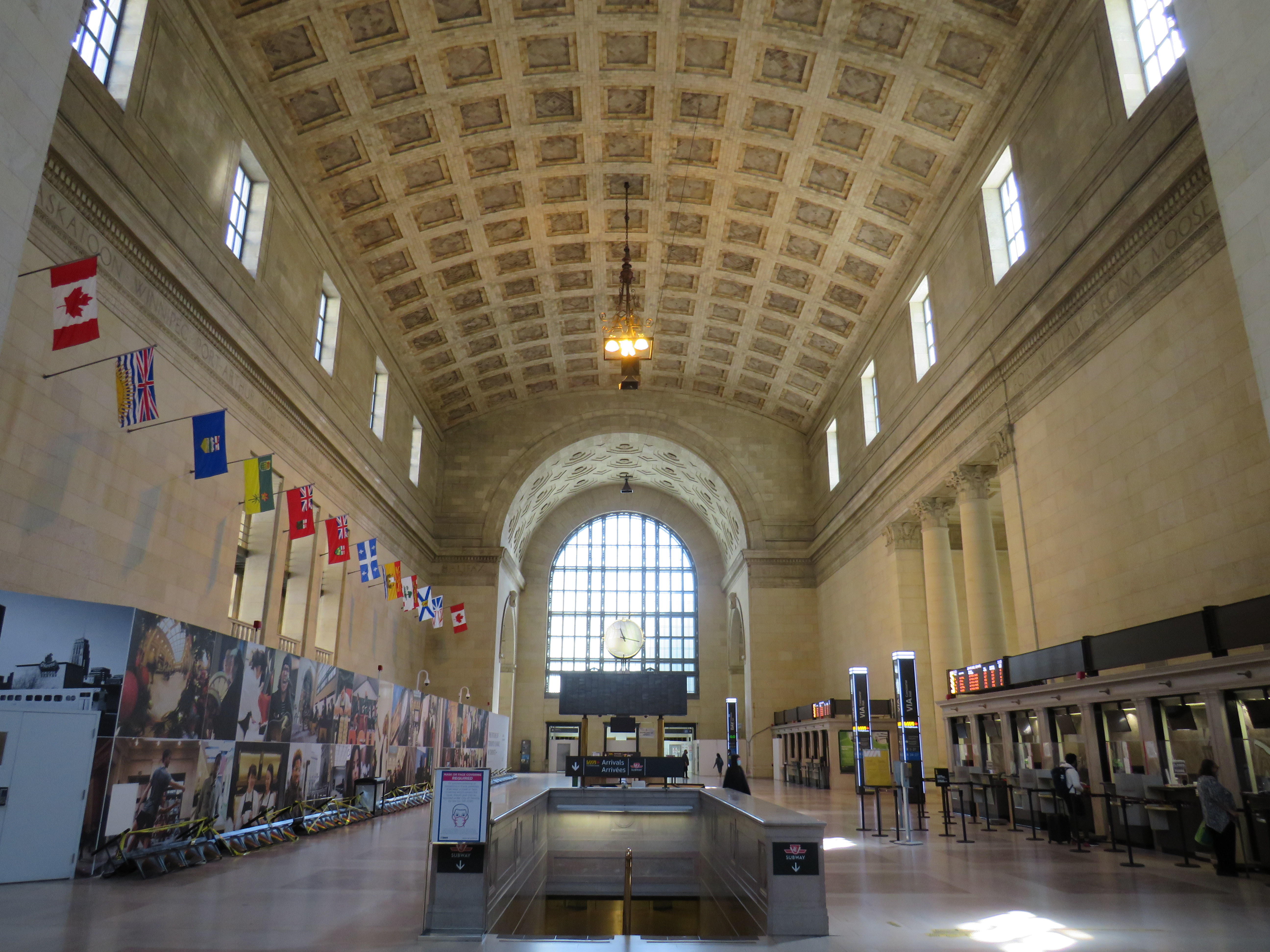
    There are dozens of union stations across North America, several of which are still in regular passenger service. Toronto’s Union Station is the continent’s second-busiest railway station, surpassed only by New York’s Penn Station. Union Stations in Chicago, Washington, and Los Angeles are among the top fifteen in Canada and the United States, while other grand union station buildings still greet rail passengers in Winnipeg, Kansas City, and Denver.

    Union Station, with Kansas City's skyline behind
    Kansas City’s Union Station, with downtown skyline backdrop

    Union stations, by definition, are passenger facilities used by two or more railways. They allowed for shared services and passenger convenience, though they required ample access to each railway’s tracks. Toronto’s Union Station, for example, was built for the Grand Trunk and Canadian Pacific Railways, which both had rail corridors following the waterfront into Downtown Toronto. Ottawa, too had a Union Station that was used by CN and CP until 1966 (and in earlier years, New York Central trains called at Ottawa’s Union Station).

    In some cases, a union station might be a small depot at the junction of two railways. The small Inglewood Station in Caledon was technically a union station as it was used by Canadian National and Canadian Pacific.

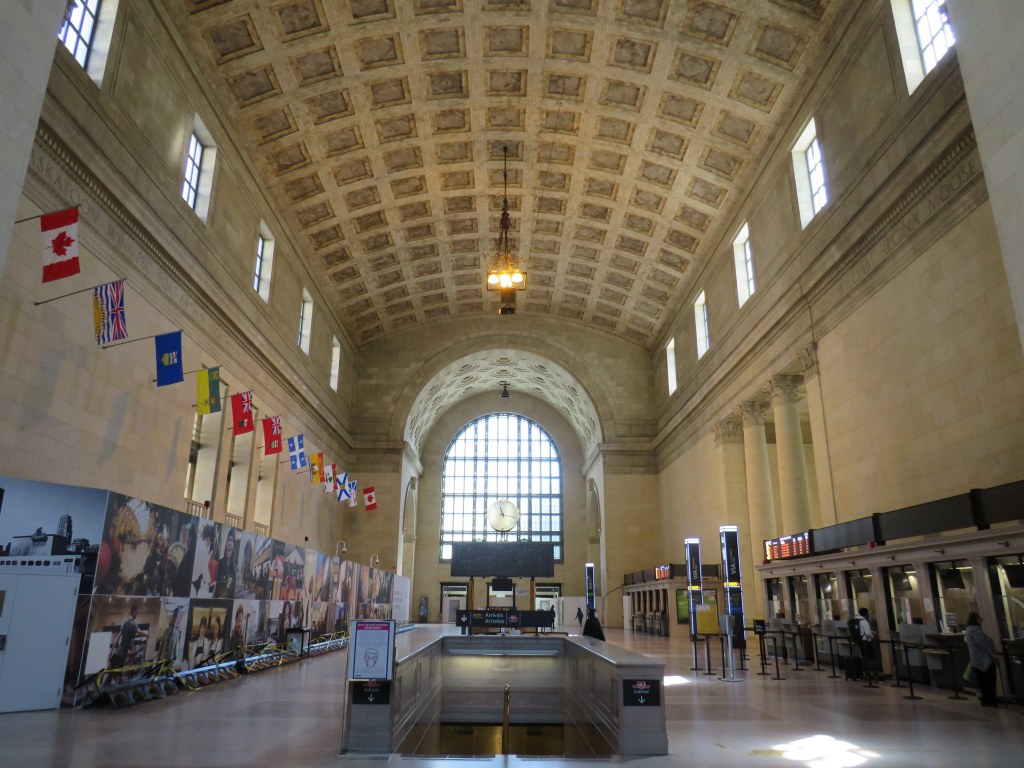
    Great Hall, Chicago’s Union Station

    Of course, the little Union Station in rural Elgin County was never a true union station. It was merely a flag stop for the L&PS, where awaiting passengers would signal their intention to board by lowering a wooden board affixed to a pole next to the station shelter.

    The L&PS Railway opened in 1856 to connect London to nearby St. Thomas and to Port Stanley, giving the growing city access to Lake Erie. In 1913, the City of London, which owned the line, upgraded and electrified the railway under the direction of then-mayor Adam Beck, who championed public hydro electricity and a proposed network of electric railways across the province.

    Though bulk freight was the railway’s bread-and-butter — it connected with a train ferry service to Ohio — the L&PS operated regular local passenger service connecting two cities, four separate railways (CN at London and the Wabash, Michigan Central, and Pere Marquette Railroads at St. Thomas), and the popular summer resorts and cottages at Port Stanley.

    With improved highways and increased auto ownership, the L&PS ceased passenger service in 1957, though there was regular bus service until the 1990s. Today, it is impossible to get between London, St. Thomas, and Port Stanley without a car. The railway was sold to CN in the early 1960s. CN used the railway to access a new Ford assembly plant as well as local industry in London and St. Thomas, but eventually ceased freight service south of St. Thomas.

    The abandoned track south of St. Thomas was acquired by the Port Stanley Terminal Railway, which today operates family-friendly excursions from the former L&PS station in Port Stanley. Though you can no longer board a train at Union, you can still watch trains go by. A restored LP&S interurban passenger car can be found at the Halton County Radial Railway museum near Rockwood.

    Passing by Union Station, riding the PTSR excursion train
  • A failure to communicate: a small, but meaningful example of the terrible messaging during this pandemic

    A failure to communicate: a small, but meaningful example of the terrible messaging during this pandemic

    On November 4, signage scattered around Allan Gardens leads visitors to locked doors

    The ongoing pandemic, to quote the prime minister, “really sucks.” Ontario has been subjected to various levels of lockdowns and restrictions for nearly eight months now as COVID-19 case counts continue to be high. Restaurants, bars, cinemas, and gyms are currently closed in Toronto, as are most other indoor venues. Many of us are — if we’re lucky — working from home, but shut off from meaningful socializing from family, friends, colleagues, and allies. Many are left unemployed with few job openings out there. Those still working in factories, warehouses, public institutions, kitchens, and stores face increased pressures without many of their supports.

    That leaves only a few outlets for selfcare: the support of immediate family, outdoor exercise, and passive entertainment such as streaming shows and movies online. Though I am working on several interesting projects here at home, I can attest that Zoom calls, Facebook chats, and occasional phone-calls are no substitute for in-person social interaction. Regular walks have been essential to my mental health, which has suffered during the pandemic. With so much construction in my neighbourhood, there has been one nearby oasis: the conservatory at Allan Gardens.

    Sadly, that’s no longer an option, and I found that out the hard way. Though it is a minor complaint given the much larger failure to control the virus here in Ontario and properly communicate important public health information and advice, it’s just a microcosm of the mixed messaging from all levels of government that we have been enduring since February.

    “Urgent notice” – anyone who continues past the signs directing visitors to the designated entrance to the Allan Gardens Conservatory is greeted with this notice indicating that the building is closed until further notice
    (more…)
  • Mapping Ontario’s transit connections

    Mapping Ontario’s transit connections

    T:GO inter-community transit van at Woodstock VIA Rail station, September 2020

    October 2021

    I made several changes to the interactive map, including a complete update of the GO Transit bus and rail network, including the most recent rail corridor extensions to Bloomington and London, and a new weekday bus route to Brock University in St. Catharines.

    Over the summer, Quinte Transit added a new route between Trenton and Belleville, Simcoe County Linx added a new route between Midland and Orillia, serving Tay Shores and Coldwater, and a new service launched between Brockville, Prescott, and Cardinal in Eastern Ontario.

    Meanwhile, several towns and cities in Southwestern Ontario remain off the map.

    The updated map can be found here.


    June 29, 2021/July 6, 2021: Beginning Monday, June 28, Rider Express, an intercity coach company based in Western Canada (which picked up several routes formerly operated by Greyhound Canada and the Saskatchewan Transportation Company), began service in Ontario. Rider Express is looking to fill some of the gaps left by the recent announcement that Greyhound will cease all domestic routes in Eastern Canada.

    That’s the good news. The bad news is that its first route in Ontario, connecting Toronto Station, Kingston, and Ottawa, replicates Megabus’ new route (which I have also added) and competes against VIA Rail’s Corridor rail service. Several of Greyhound’s daily Toronto-Ottawa buses ran through Peterborough and along Highway 7 through Eastern Ontario, leaving towns such as Norwood, Havelock, and Perth off the map. Though Peterborough is connected to Toronto by GO Transit, it is a long train and bus ride, while Greyhound offered a direct, express service to Downtown Toronto.

    Two steps forward, one step back.

    I made additional changes to the interactive map to show new GO Transit, Can-Ar Coach, Megabus, and Ontario Northland routings to the new Union Station Bus Terminal, which replaces the old GO bus terminal and the Toronto Coach Terminal on Bay Street. Meanwhile Ontario Northland moved from the now-closed Ottawa Central Bus Station to the VIA Station on Tremblay Road.

    Meanwhile, starting July 8, Orléans Express will expand into Ontario, with a new Gatineau-Ottawa-Montréal route, operating twice daily. It will join Rider Express and Ontario Northland at the VIA Rail Station in Ottawa.


    May 2, 2021: On Monday, May 3, “The Link” begins operations on two routes in Selwyn Township and Curve Lake First Nation, connecting several communities with Peterborough Transit and GO Transit at Trent University. The service, which is operated by Peterborough Transit, will run on weekdays, with five trips in each direction on both routes. Fares on “The Link” buses include a free transfer to and from Peterborough city bus routes at Trent, with direct service to downtown, major shopping centres, the hospital and Sir Stanford Fleming College.


    February 15, 2021: A few small updates, including the addition of two community routes in Muskoka District Municipality, a bus connection between North Bay and northern Quebec, and a revised bus stop location for Ontario Northland in Orillia.


    December 14, 2020: I made several updates to the interactive map, including the addition of Huron Shores Area Transit, which launches today. I made a few changes suggested by one of my readers, and added Niagara Region Transit’s on-demand service in Niagara-on-the-Lake, which replaces a fixed route that was cancelled earlier this year.


    November 9, 2020: I made several updates to the interactive map, including the addition of PC Connect in Perth County, which launches next Monday. I mapped Port Hope’s transit connection to Cobourg, as suggested by one of the readers, and corrected a few minor errors.


    October 15, 2020

    Despite the ongoing COVID-19 pandemic, several new inter-community transit services launched in Ontario during the last few months.

    Last August, T:GO began service on four routes radiating from Tillsonburg, where there was already an in-town circulator service. Mondays through Fridays, twenty-seater vans operate between Tillsonburg, Norwich, Woodstock, Ingersoll, and other communities, offering connections to Woodstock Transit, the hospital, and the VIA Rail Station.

    In September, the City of Owen Sound, Grey County, Middlesex County, the town of Strathroy-Caradoc, and Prince Edward County all launched their own services, connecting rural communities and small towns to larger centres such as London, Guelph, and Belleville. In addition, Simcoe County expanded its Linx bus service to serve Alliston and Beeton, and other services, suspended during the early days of the pandemic, resumed operations. Also this year, Niagara and Durham Regions expanded their rural on-demand transit services.

    GOST minibus at Owen Sound Transit Terminal

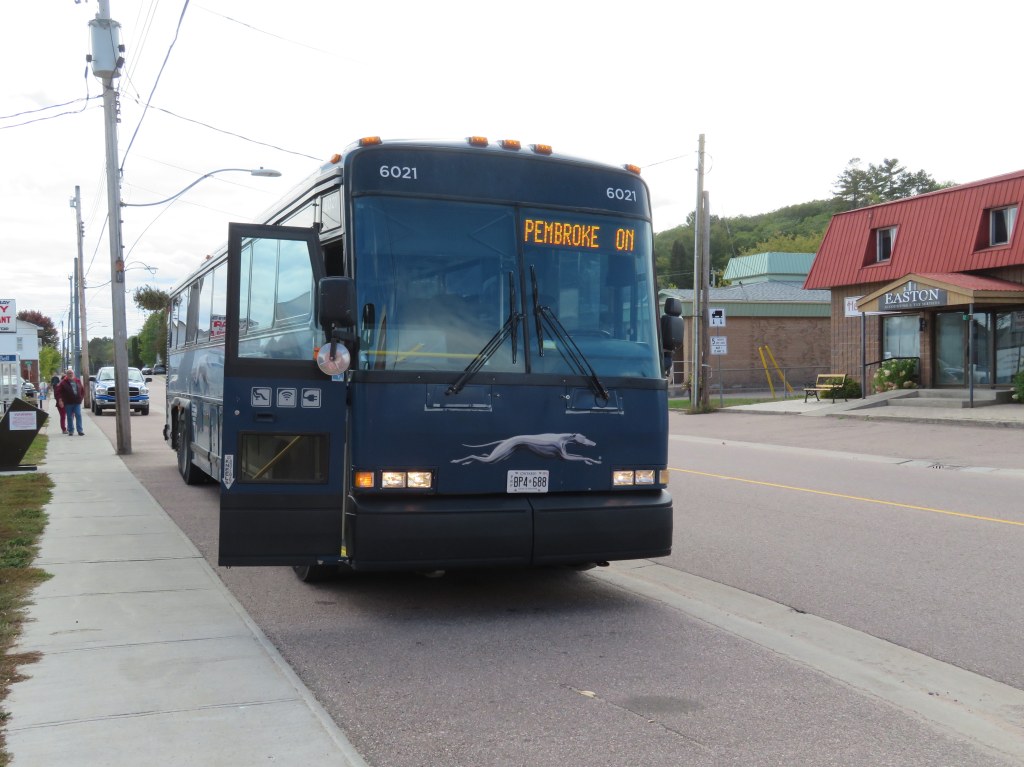
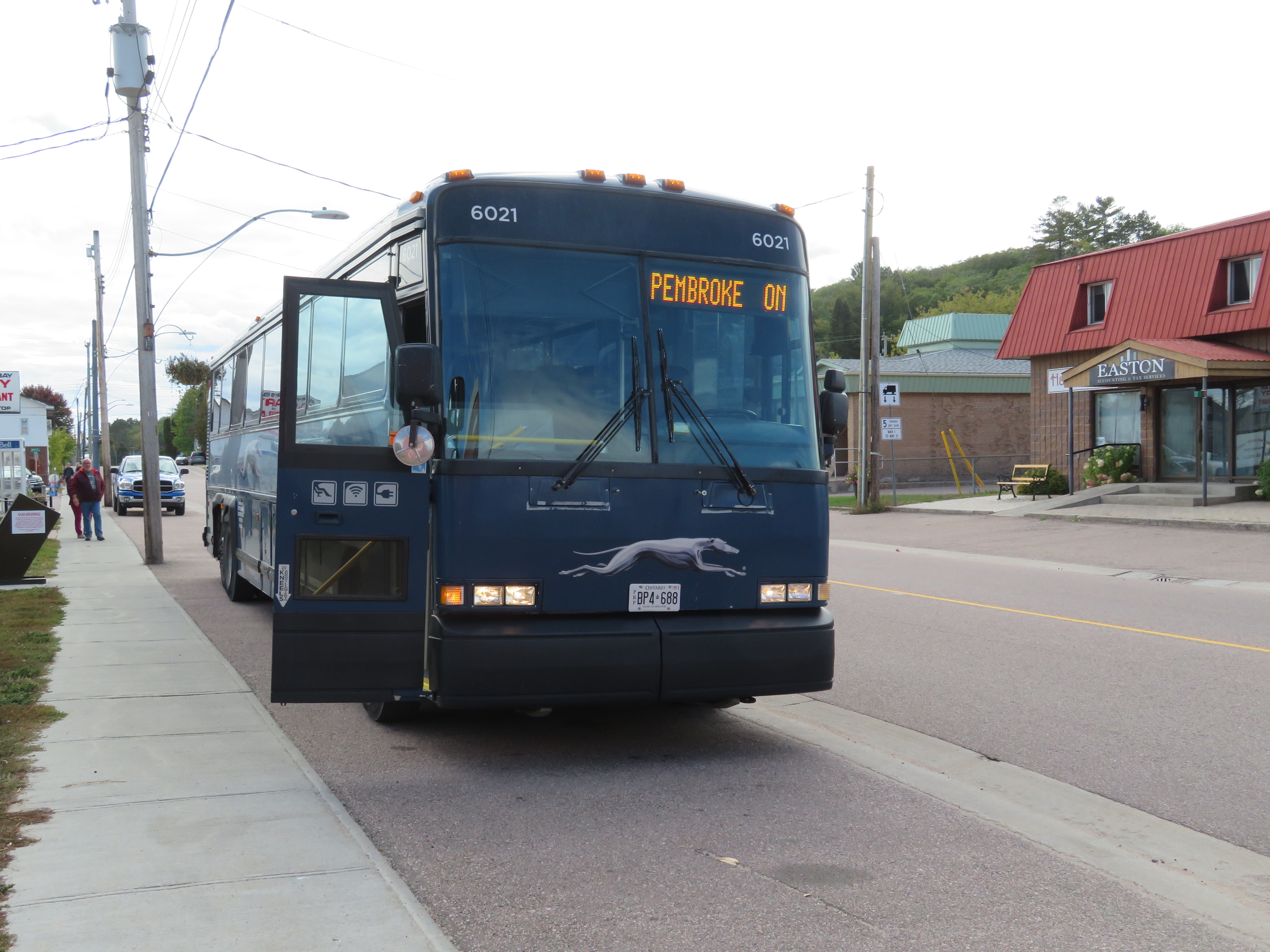
    All these new services help to fill the gaps left behind by private coach companies; these have become especially vital as Greyhound Canada suspended all operations in Ontario and Quebec this year (after abandoning Western Canada in 2018), and Coach Canada (operating as Megabus) cut service on some of its routes.

    While these new intercommunity routes help to serve local needs, there is a wide variety of service provided in rural and small town Ontario. But without provincial coordination, it is nearly impossible to keep track of them all, never mind plan a trip.

    So I went ahead and mapped them all the best I could. Clicking on each route brings up a pop-up window containing further information, including a link to each agency’s website, where available.

    Link to interactive map

    (more…)
  • Why Durham Region is going the microtransit route during the pandemic – and what it means for other transit systems

    Why Durham Region is going the microtransit route during the pandemic – and what it means for other transit systems

    Durham Region Transit and GO Transit buses meeting at Durham College/Ontario Tech University

    Previously on this site, I expressed my skepticism about Durham Region’s commitment to improving transit service. But in the five years since, the region east of Toronto has done exactly that by creating a route grid along major corridors, fusing together a network from four separate municipal systems.

    While the ongoing COVID-19 pandemic has seen transit ridership plummet across the province, followed by service cuts to match the reduced demand, Durham is doing two interesting things: firstly, it is adding additional service on its main corridors, and it is replacing twenty-five low ridership routes with on-demand transit.

    In my latest article for TVO.org, I take a closer look at Durham Region Transit’s response to shifting ridership during a pandemic and the benefits and pitfalls of microtransit as a potential solution.

  • Highway 401 revisited

    Highway 401 revisited

    Earlier in September, I paid a visit to Woodstock, Ontario, to check out one of several new intermunicipal transit services that launched across the province this year. While in Woodstock, I paid a visit to the Highway 401 interchange at Highway 59.

    In 1968-1969, London, Ontario artist Jack Chambers painted 401 Towards London No. 1, which depicts a tranquil scene from the Highway 59 overpass, looking west. The highway, just two lanes in each direction, bends slightly to the southwest as it heads towards London and Windsor. On either side, autumn trees, farm fields, and gentle hills stretch out. The only buildings visible are farm silos, and two truck terminals on the north side of the highway. Only a few vehicles on Highway 401 are visible in the scene.

    Chambers became well known for photorealism in his work. The scene in 401 Towards London No. 1 is slightly askew, as if this was a Kodachrome snapshot.

    Jack Chambers, 401 Towards London No. 1. Collection of the Art Gallery of Ontario.
    A larger version can be found here.

    Highway 401 was only fully completed between Windsor and the Quebec border in 1968, the year the painting was started, though the section between Woodstock and London was completed in 1957, bypassing an especially congested section of Highway 2. Like many interchanges built by the province in the 1950s and early 1960s, the junction of Highways 59 and 401 was an eight-ramp cloverleaf.

    A contemporary view towards London

    By the 1990s, Highway 401 was widened to six lanes. The cloverleaf interchange, like most others in Ontario, was removed and replaced by a simpler interchange. (As traffic levels increased, the danger of vehicles entering and exiting the highway with little space to merge became apparent.)

    Woodstock’s sprawl caught up to the highway, with new warehouses, motels, subdivisions, and a hospital joining the original freight terminals. Though the distant trees and hills are the same as those in Chambers’ painting, the gentle curve in the distance remains the easiest way to match the two views, fifty years apart. Highway 59 itself was downloaded by the province in 1997. To the south, the old highway is Oxford County Road 59. To the north, it is simply Norwich Street.

    Breezewood, Ontario: former Highway 59 looking north towards central Woodstock, where chain hotels, restaurants, and gas stations line the road

    As I climbed over guardrails and navigated sidewalk-less embankments and road shoulders to capture the contemporary image of Jack Chambers’ painting, I was surprised by two things. The first were fully AODA-compliant crossing treatments at the highway ramps, despite there being no safe and marked way to get to those crosswalks.

    I had to climb over the guardrail to get to this crosswalk at the westbound ramps to Highway 401

    I was even more surprised to see an engraved version of the Jack Chambers painting embedded in the guardrail. When the Ministry of Transportation Ontario (MTO) rebuilt the overpass in 2017-2018, it thoughtfully included this nod to a local artist.

    Plaque embedded in the guardrail at the Highway 59 overpass in Woodstock

    Unfortunately, given the isolation of the plaque, few will actually see it, even if thousands pass by it daily. Larger signs mark the overpass as the Constable Jack Ross Memorial Bridge, in honour of a Ontario Provincial Police officer.

    But it will always be the Jack Chambers bridge to me.

    A larger sign right above the Jack Chambers plaque commemorates a different Jack

    Though 401 Towards London No. 1 has long been one of my favourite Canadian paintings, it is not typically on display at the Art Gallery of Ontario. I would love to see this work put on permanent display, either at the AGO, or at another gallery that will appreciate the ode to Ontario’s mother road.

  • Yonge, tomorrow

    Yonge, tomorrow

    Over the past few years, I have been involved with the YongeTOmorrow project on behalf of Walk Toronto. It has been a very interesting and worthwhile experience being part of a stakeholder advisory group. Allied organizations working towards a more exciting and sustainable Yonge Street include Cycle Toronto, 8 80 Cities, and the David Suzuki Foundation.

    After several rounds of public consultations and stakeholder meetings, you can now see what the proposed changes to Yonge Street will look like.

    Rendering of proposed changes to Yonge Street , looking north towards Dundas Square. In this section, northbound traffic is permitted, with two-way cycling, and much wider sidewalks, along with new trees and improved street furniture.

    Though the selected concept is not perfect, the proposed changes will provide significant improvements to Yonge Street between Queen and College Streets. These include wider sidewalks, patio space, bike facilities, and a pedestrianized zone between Dundas Square and Edward Street, allowing for better circulation, more flexibility for special events, and a more pleasant street.

    With more high-rise development on the way (including the redevelopment of the Chelsea Hotel on Gerrard Street), it is only right that more space be given to residents, students, employees, and visitors. Compromises in the plan allow for access to parking garages, permit taxi and other vehicle drop-offs and pick-ups, as well as business deliveries.

    I encourage you to have a look and provide your feedback. The online survey is available until September 30.

  • Stranded at Bramalea GO: Metrolinx’s missed connections

    Stranded at Bramalea GO: Metrolinx’s missed connections

    Temporary bus terminal, Bramalea GO Station
    The inhospitable temporary bus terminal at Bramalea GO Station

    On Tuesday, August 25, I paid a visit to Kitchener.

    Greyhound suspended all operations in Eastern Canada on May 13, 2020 due to low ridership during the COIVD-19 pandemic. Meanwhile VIA Rail reduced its operations, including Train 85, which departed Union Station at 10:55 AM for Guelph, Kitchener, Stratford, and London. Therefore, GO Transit became the only way to get between Toronto and Kitchener-Waterloo for a day trip without a car.

    From boarding the 11:53 Kitchener Line train from Union Station, it should have taken just under two hours to get to Downtown Kitchener. Instead, because of a minor train delay, and a failure of the connecting bus to hold for transferring passengers, it took me three and a half hours.

    If we value transit users, passengers must not be left behind when making these transfers, especially when connecting between posted connections.

    (more…)
  • Opening up the streets in Toronto and Guelph

    Opening up the streets in Toronto and Guelph

    Toronto’s Danforth Avenue has been transformed with new protected bike lanes and patio spaces

    In the last few days, I visited Toronto’s Danforth Avenue and Downtown Guelph to see how municipalities can support local businesses during the ongoing COVID-19 pandemic.

    On Danforth Avenue, new interim bicycle lanes were installed between Broadview Avenue and Dawes Road, spanning three business improvement areas (Broadview Danforth, Greektown, and Danforth Mosaic). With the new bike lanes, dedicated spaces for restaurant patios were installed in the curb lanes. The new patios extended beyond restaurant storefronts, with spray-painted demarcations to mark each business’ territory. This gave businesses with limited or no indoor seating plenty of room to serve customers and recoup some of the lost business due to the pandemic.

    Where one patio space begins and where another ends: Greektown on the Danforth

    Though most curbside patio space was allocated to businesses, Muskoka chairs placed within the Destination Danforth area are free for anyone to sit, no purchase required. This helped make the setup perfect for pedestrians out for a stroll or headed to nearby businesses.

    While cyclists are thrilled to get the new bike lanes (the Bloor-Danforth lanes will soon extend as far west as Runnymede Road once construction is complete on Bloor Street West), walking along the Danforth was the best way to see the changes.

    Muskoka chairs on the left are may be used by anyone, while tables on the right allows a local restaurant to seat customers while maintaining physical distancing

    In Downtown Guelph, the intersection of Wyndham and Macdonell Streets was closed to allow restaurants, bars, and breweries to operate large open air dining areas, in what is called the Downtown Dining District. Unlike The Danforth, patio areas allocated to local businesses in Guelph are enclosed with fences or ropes, but the centre of the street is free to walk or bike through.

    The corner of Wyndham and Macdonell Streets, Guelph

    Though the Downtown Dining District will only continue through Labour Day, the area was busy on a Wednesday afternoon and early evening. Most restaurants have been able to operate entirely with outdoor seating — thanks to generous canopies and umbrellas to provide protection from the sun and rain. This provides additional protection for restaurant staff and patrons. Though Phase 3 is in effect across the province (allowing for limited indoor dining), the fresh air is preferable.

    Macdonell Street looking towards the Basilica Church of Our Lady Immaculate

    Though it took a pandemic to rethink how we use our streets, it is nice to see these changes. Perhaps Guelph could make the Downtown Dining District an annual tradition, attracting visitors from nearby cities, like Toronto, Hamilton, and Kitchener-Waterloo. Perhaps the Destination Danforth changes also become permanent as well – after all, Torontonians love open streets and festivals.