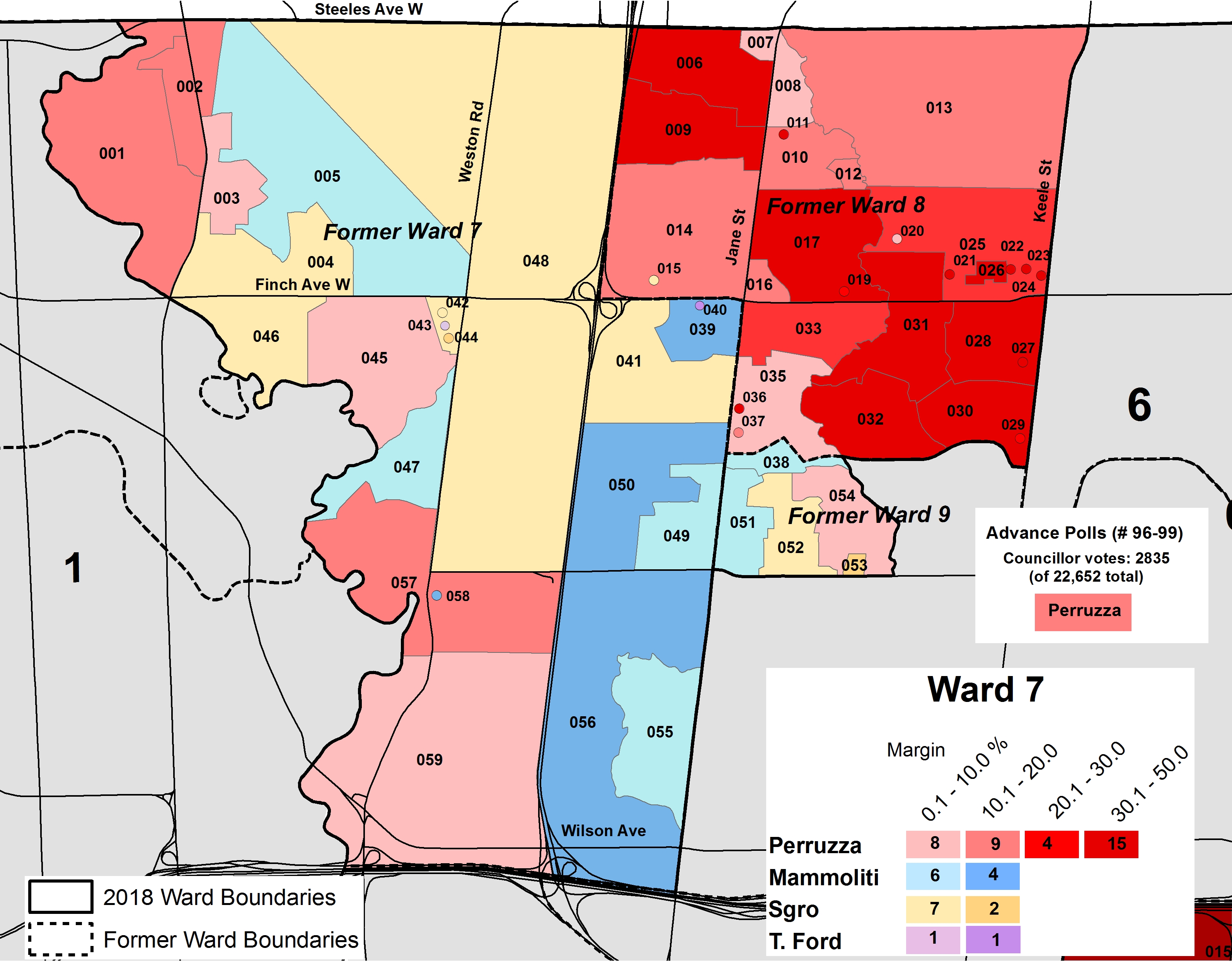
Giorgio Mammoliti, long-time Toronto City Council, is a great poster child for what’s wrong with municipal politics. Arrogant and obnoxous, Councillor Mammoliti has made a name for himself by flouting council rules and election laws, by demeaning his constituents, picking fights with other members of council, and pursuing media attention with crass stunts and outrageous comments. Toronto would be a far better place without him at City Hall. His 23 years in municipal office have made him a convincing argument in favour of term limits, but I don’t agree that it’s the best way of getting rid of troublesome politicians.
Mammoliti has been in municipal office since 1995, when he was elected to North York City Council. Before that, he was elected an MPP for Yorkview as a member of the provincial NDP. He is well-known for his socially conservative views against LGBT rights, social housing, youth recreation, and. In 1994, he voted in opposition to his party in the provincial legislature against allowing same-sex couples spousal insurance benefits.
At city hall, his attention-grabbing antics have made him well-known. In 1999, he ripped off his shirt in front of news cameras to protest a decision permitting a clothing-optional section of beach on the Toronto Islands. In 2014, Mammoliti offensively called Parkdale, a lower-income neighbourhood, a “pedophile district.”
Even though the Jane-Finch area, which is partially represented by Mammoliti, has a high proportion of visible minorities, high rates of poverty and underemployment, and poor transit access, Mammoliti has undermined rather than improved things for the community. He strongly opposes the Finch West LRT project that will provide an improved connection to the subway at Keele Street and Humber College. He has called residents of local community housing developments “cockroaches” in interviews for the Toronto Sun and alt-right Rebel Media. In a recent re-election advertisement, he posed in front of a nearby TCHC development with a sledgehammer in hand; the text of the ad read “saving our community begins with knocking down social housing. You deserve better!”
This week, the Toronto Star reported that Mammoliti missed nearly half of all council votes in 2018, the worst record among all 44 councillors. During the 2014-2018 term, he missed 43.1 percent of all votes.
The Ontario Provincial Police is investigating a failed Toronto Parking Authority land deal in Ward 7 that Mammoliti had an involvement in. Allegedly, the councillor threatened a senior city staffer to recommend that the sale go ahead in a report to council. Auditors determined that the five acre site at Finch Avenue and Arrow Road was overvalued by $2.63 million. Mammoliti was previously interested in erecting a giant flagpole on that site.
It’s not the first time he’s been under police investigation. In 2013, he held a $5000-a-table fundraiser in Vaughan, despite rules forbidding raising funds outside of election campaigns. Several prominent lobbyists were in attendance at the event, which raised $80,000. In 2014, Council docked him three months’ pay, the strictest penalty available.
The people of northwest Toronto deserve much better than Giorgio Mammoliti. But one solution championed by some political observers — term limits — isn’t the right one, even if it would finally remove such a toxic member of council.
Last month, Spacing’s John Lorinc argued that term limits would be “…the magic bullet reform that would blow open local government to new voices.” While term limits might be an easy way to get rid of Giorgio Mammoliti, it wouldn’t fully solve the incumbency advantage. Instead term limits would remove some of Council’s brightest and hardest working members, without guaranteeing a more diverse council with fresh new voices.
Name recognition does not only come from years of incumbency, it may also come from a famous family name and political connections. Many “new voices” elected to city council when an incumbent chooses not to run for re-election are councillors’ constituency assistants, often given access to contact lists and the organization built up over the years. Or they’re politicians previously elected from other levels of government. Or they’re the sons, daughters, spouses, or in one case, the nephew, of a well-known public figure.
Councillors Josh Colle, Joe Cressy, Stephen Holyday, Mike Layton, and David Shiner are the sons of previous municipal politicians. Councillor Cristin Carmicahel Greb is the daughter of former Conservative MP John Carmichael, Frances Nunziata’s brother John was a Liberal MP in the 1980s and 1990s, and Councillor Michelle Holland is married to former Liberal MPP Lorenzo Berardinetti, and is running for re-election as Michelle Holland-Berardinetti.
And there’s the Ford family.
In September 2014, Rob Ford, citing his poor health, announced that he was no longer running for mayor. His brother Doug, who was at that point councillor for Ward 2, but was not running for re-election,would run for mayor in Rob’s place. Rob and Doug’s nephew, Michael Ford, who was running for councilor, stepped aside for Rob and ran for trustee instead. Michael Ford changed his last name from Stirpe (his father’s surname) in February 2014 to take advantage of the famous Ford name.
After Rob died, Michael Ford ran in the Ward 2 by-election and won by an easy margin. And Doug Ford, taking advantage of the folksy populist image his brother Rob fostered, ran for the leadership of the Ontario PCs and became premier in 2018. Doug Ford’s father, Doug Ford Sr., was an Ontario PC MPP from 1995 to 1999.
On July 25, the week that nominations were scheduled to close (and two days before Premier Doug Ford announced his rushed and vindictive plan to cut council to 25 seats), Councillor Josh Colle (who was first elected in 2010 and served just two terms) announced that he was not going to run for re-election in his North York ward. But his father, Mike Colle, recently defeated as a Liberal MPP, would run instead. Term limits would not have stopped father and son from swapping places every eight or twelve years.
While term limits would prevent a Norm Kelly, Frances Nunziata, or Giorgio Mammoliti from spending decades on council, it would also stop popular and well-regarded representatives such as Joe Mihevc from continuing to serve their communities. Institutional memory would also be lost on Council. Councillors Gord Perks, Paula Fletcher, Michael Thompson, Paul Ainslie, and many others would also be required to leave office this year if a three-term limit were imposed. Gord Perks’ knowledge of council procedure and his defense of the Parkdale neighbourhood would be sorely missed.
Term limits also do not prevent lacklustre candidates from being elected.
In 2014, Cristin Carmichael Greb was elected in Ward 16 with only 17.4% of the vote, a 1.2% margin over her nearest competitor. This was despite the support of John Tory’s campaign. Carmichael Greb has proven to be an ineffective councillor. In Ward 5, Justin Di Ciano has made a name for himself opposing democratic measures such as ranked ballots, new ward boundaries, and supporting a questionable development proposal backed by a firm with which he has close ties. Like Mammoliti, Councillor Di Ciano has found himself under OPP investigation.
I continue to prefer other methods of limiting the power of incumbency. Ranked ballots would be a good first step. In 2014, Ward 12 incumbent Frank Di Giorgio, in office since 2000, won with only 29% of the vote in a four-way race. Ranked ballots could have made a difference there.
I also believe that all adult permanent residents, not just Canadian citizens, should be able to vote in municipal elections. As municipalities have the responsibility for delivering local services, such as police, parks and recreation, roads, transit, libraries, and water and waste services, all residents have a stake in how they are being delivered. Extending the municipal franchise could help community engagement, especially in neighbourhoods poorly represented by indifferent or antagonistic city councillors. In contrast, non-resident property owners are permitted to vote. Council voted to request the province to allow non-citizen voting in 2013, but the province was under no obligation to respond to the city’s request.
I was hoping that in 2018, Giorgio Mammoliti would finally be defeated. TDSB trustee Tiffany Ford is a promising young candidate that had a good shot of defeating him under the new 47-ward model. However, with the 25 ward boundaries imposed by Premier Doug Ford, Mammoliti will be up against more challengers, including fellow incumbent Anthony Perruzza. Perhaps Perruzza or Tiffany Ford will still be able to defeat him.
While term limits sound like a great solution for solving a problem like Mammoliti, they aren’t necessarily a great solution for improving local democracy.