Tag: Hurontario-Main

  • On Brampton’s short-sighted Hurontario-Main LRT decision

    8742719319_adb77a0b03_k
    LRT mockup at Gage Park, Brampton

    On late Tuesday night (actually, early Wednesday morning) Brampton City Council made disappointing and harmful decision by voting against the Hurontario-Main LRT, a 23.2 kilometre, $1.6-billion light rail line, whose construction costs would be fully covered by the province. This followed another marathon meeting back in July in which a final decision was delayed to allow for further study and a possible compromise.

    The mayor, Linda Jeffrey, and four councillors (Gurpreet Dhillon, Pat Fortini, Marco Medeiros, and Gael Miles) supported the project, but six councillors (Jeff Bowman, Grant Gibson, Elaine Moore, Michael Palleschi, John Sproveiri, and Doug Whillians) voted against. The final vote was 7-4 against the LRT, with Jeffrey mistakenly voting with the majority, but the 6-5 vote against a modified downtown routing in an last-minute attempt to sway opponents should be considered the true decision.

    Light rail transit will still be coming to Brampton – construction will start in 2018 – but it will terminate at Shoppers World at Steeles Avenue, with only three stops completely within Brampton’s borders. Nearly four kilometres and four stops have now disappeared, including the crucial terminal at Brampton GO Station. The map below shows the Hurontario-Main LRT route, with the eliminated sections in red. (A short section of the LRT’s route in Port Credit was eliminated due to community opposition; it would have brought light rail transit closer to Port Credit’s bustling core. The Hurontario LRT will now terminate adjacent to the Port Credit GO Station, north of Lakeshore Road.)

    The Hurontario-Main corridor was selected for LRT simply because it is one of the busiest transit corridors in the Greater Toronto Area outside the City of Toronto; it connects three GO lines and several major bus corridors, it would help urbanize south Brampton and several neighbourhoods in Mississauga. It’s part of a larger regional network, yet six city councillors in Brampton, looking out for narrow, local interests, sunk it.

    Now transit advocates elsewhere are looking to capitalize on Brampton’s loss: at least $200 million of the province’s money won’t be spend. For example, advocates in Hamilton are looking for an opportunity to expand their funded LRT network with Brampton’s cash.
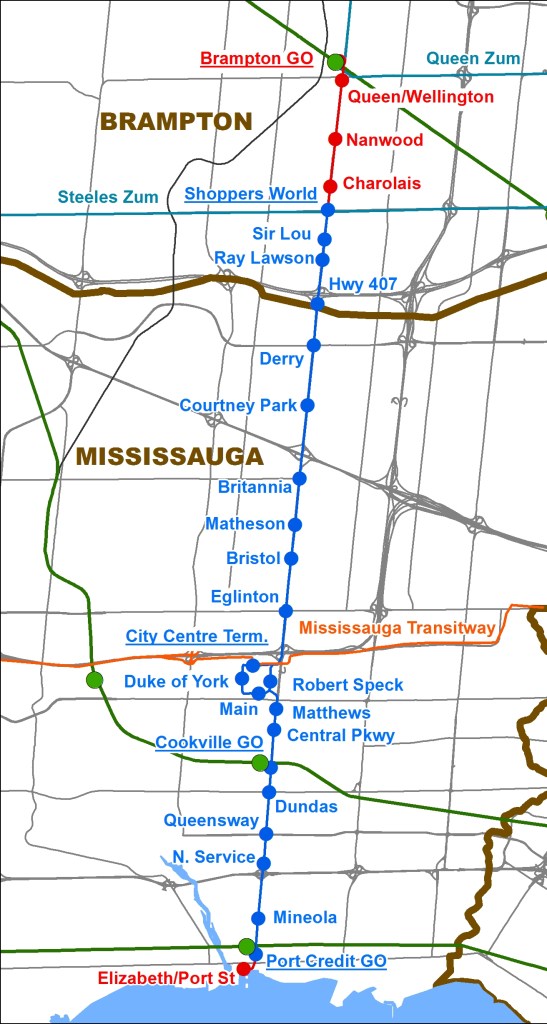
    HMLRT
    The Hurontario-Main LRT, after Tuesday’s vote. 

    The arguments against the LRT included heritage concerns (as if trams aren’t found in the centres of historic cities such as Vienna, Istanbul, Brussels, and Amsterdam), claims of low ridership (which were written about by the Toronto Star’s San Grewal), concerns about operating expenses. Some councillors suggested that Queen Street should get LRT first. Others took exception to the fact that most of the route (17.6 kilometres, 19 stops) would be in Mississauga, while only a quarter of the line would operate within Brampton (5.6 kilometres and eight stops) But one cannot dismiss the NIMBY factor – some of the biggest opponents were wealthy homeowners on Main Street. Even former Premier Bill Davis, long regarded as a friend of cities and public transit, came out publicly against the LRT. Davis will long be remembered for stopping destructive expressways, but won’t support public transit when it runs down his street.

    Opponents suggested other routes, or tunneling under Main Street. But those alternatives were more expensive, more difficult, less convenient for riders, and weren’t going to be funded by the province. These suggestions were studied by city staff and outside consultants and rejected.

    Yes, Queen Street is Brampton Transit’s busiest corridor. Yes, the ridership will be lower north of Steeles Avenue than through central Mississauga. Yes, there will be some traffic impacts on Main Street.

    But there’s no current planning study for a potential Queen Street LRT; a route hasn’t been chosen (would it go to the Spadina Subway extension to Vaughan? York Region would have to be on board), there’s no funding on the table, and the Hurontario corridor in Mississauga is a lot busier than Highway 7 in York Region. And yes, Mississauga benefits more from the LRT. But Mississauga has a larger population, a much larger transit ridership, and more jobs. By connecting to Downtown Brampton, the LRT increases mobility for the entire region, connects to the Kitchener GO line, and allows for direct transfers to the 501 Queen Zum, Brampton’s busiest bus route. It is part of a regional transit network; it would have made it a lot easier for trips, for example, between Downtown Guelph and Mississauga City Centre.

    10671927_oriToday’s news that anti-LRT councillors are now going to seek federal funds for transit expansion makes me want to tear my hair out. This image of Frank Grimes pretty much describes how I’m feeling right now.


    Just adding to my frustration, I read today that Councillor Bowman, who helped sink the Main Street section of the LRT, is now going to look for transit funding from the newly elected Liberal federal government. In the article, Bowman suggests that since Brampton elected five new Liberal MPs, helping to defeat the Conservatives, it was time to “leverage” that support. Payback, if you will. But there are no other plans to hold up, nothing that’s “shovel-ready.” There will be no ribbon-cuttings for Liberal MPs and cabinet ministers to attend anytime soon.

    If looking for money from a new federal government – one that’s so far very friendly with their provincial counterpart – it would have looked a lot better to have approved the transit that the province, and a majority of Bramptonians, wanted, and then ask for additional funds to build on that. Advocating for a potential Queen Street LRT would be a lot when there’s an existing line to connect it, and a strong transit-focused hub to anchor it.

    So, to sum up, Brampton city councillors threw away at least $200 million for a light rail project that they didn’t want, a gift-wrapped transit opportunity from the provincial Liberal government. Now they will be looking for new transit funding for alternative transit routes, which have yet to be planned, from the federal Liberal government. Good luck with that. 
     

  • Updated: The Toronto Star’s shameful reporting on the Hurontario-Main LRT

    IMG_6655

    As of Tuesday, July 28, the Toronto Star has not published any letter to the editor responding to last Tuesday’s front-page article by San Grewal questioning the ridership of the northern section of the Hurontario-Main LRT, or any corrections. I find myself very much disappointed by this. I know I was not the only reader to submit a letter to San Grewal’s poor reporting, to which I link below.

    Here is the letter that I wrote and submitted on July 21, 2015:

    Dear Editor,

    I wish to express my disappointment with the publication of a badly researched and one-sided article by San Grewal on the opposition to the Hurontario-Main LRT.

    The article starts with by getting its numbers wrong. In the second paragraph, it claims that the LRT’s capacity will be 15,000 riders per hour per direction (PPHPD). This is false. The City of Brampton’s own staff report, which recommended that council approve the funded Main Street LRT [which can be found here:http://www.brampton.ca/EN/City-Hall/meetings-agendas/PDD%20Committee%202010/20150622pis_H10.pdf], states that the maximum capacity of the LRT is 7200 PPHPD, less than half the figure Grewal claims.

    The comparison to the Sheppard Subway, which Grewal appears to take at face value, is especially inappropriate. The Sheppard Subway cost nearly $1 billion when it was constructed 15 years ago. The section of the LRT between Steeles Avenue and Downtown Brampton will be built entirely on the surface, and comprise only a short section of the corridor’s entire length. It is worth repeating that the province will be funding the entire project; any deviation from Main Street would be more expensive and will cost Brampton taxpayers more.

    The Hurontario-Main LRT is not only a transit project; it is a city-building exercise that will help direct investment and urban intensification in Brampton and Mississauga. The light rail project will connect three GO Station and several urban centres identified for growth, including Brampton’s Downtown Core.

    San Grewal’s article is misleading, one-sided and irresponsible. I expect better from the Toronto Star.

    Sincerely,

    Sean Marshall

    The original post follows:

    (more…)

  • Why Brampton’s Main Street needs the LRT

    IMG_6655

    For the first twenty-five years of my life, I lived in Brampton. I still have family and friends who live there, and while I was happy to move to a place of my own in Toronto (first in North York, later to the old City of Toronto), I still have a soft spot for my hometown, even if it is a gigantic, sprawling auto-centric suburb.  Tonight, it has the opportunity to vote for a transit project that will help to transform its long-neglected downtown core into a thriving urban centre.

    Nearly a century ago, Brampton was a small town of about 5,000 people; the junction of two railways: the Grand Trunk mainline between Toronto and Chicago, and the Canadian Pacific branch line to Orangeville, Owen Sound, and other points in Midwestern Ontario. It was the seat of Peel County, with a beautiful 1867 Italianate courthouse, with a registry office and jail behind. Brampton had all the trappings of a prosperous rural service centre, including a hospital, a Romanesque federal building, a Carnegie Library, six historic brick or stone churches, a movie and vaudeville theatre, an armoury, and a fire hall. While there were manufacturing concerns by the railway junction  – both the Hewetson Shoe Company and Dominion Skate manufactured footwear – the leading industry was horicultural. The massive Dale and Calvert greenhouse complexes exported flowers and bulbs across Canada; as a result Brampton’s nickname was “Flower Town.” Grand houses lined Main Street, showing off the town’s booming economy.

    It wasn’t until the 1950s that Brampton began the transition from a small industrial and civic centre into a suburb of Toronto. In 1960, a new mall, anchored by Steinberg’s and Woolworth’s, opened south of downtown, new schools and factories, including a large American Motors assembly plant, opened here as well. In 1974, the same year that the first GO Train departed from Brampton for Toronto, the town was amalgamated with sections of several surrounding rural townships, becoming a city of nearly 100,000. Today, Brampton has a population of nearly 600,000.

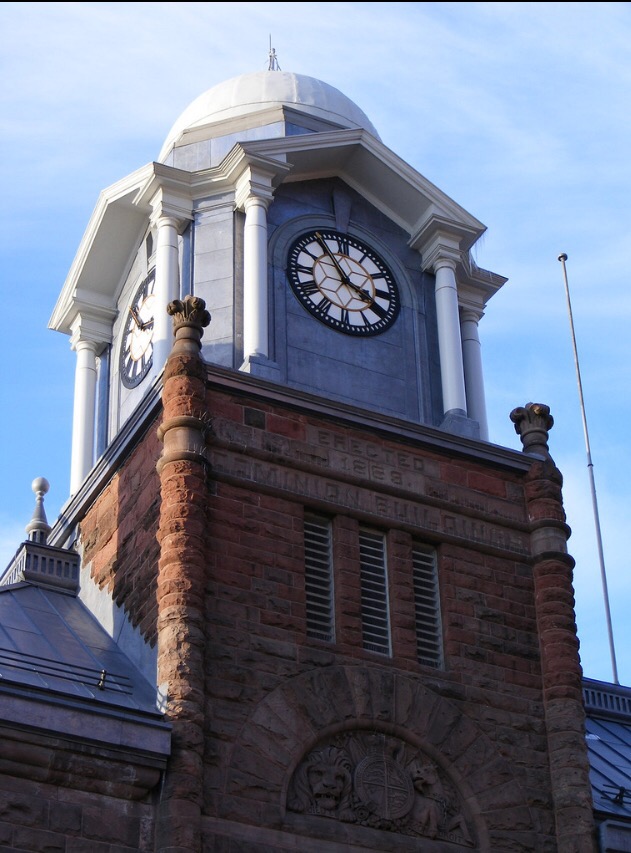
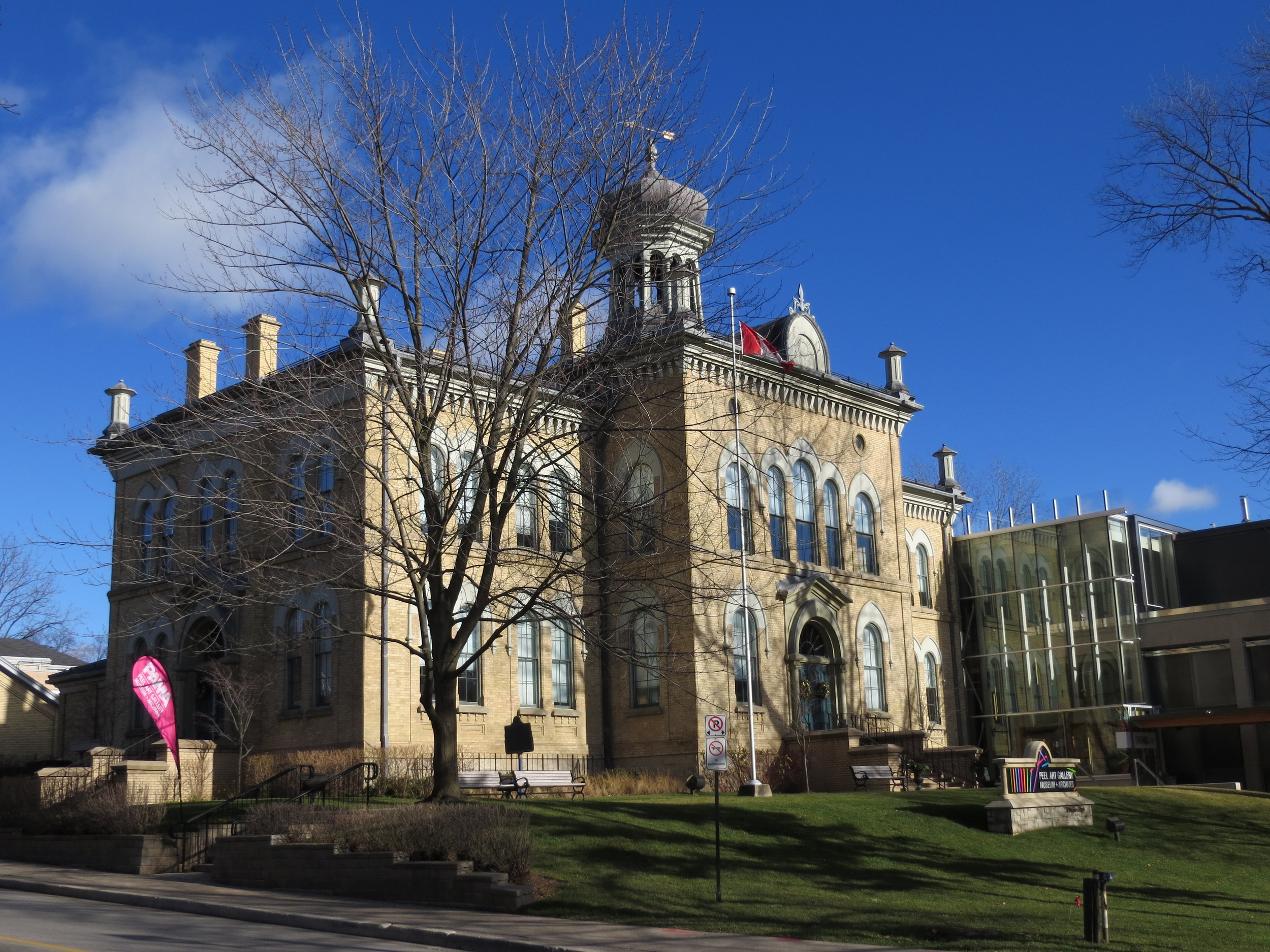
    Apart from the greenhouses, which disappeared by 1980, and the hospital, which moved across town in 2008, all of the buildings I described are still standing (or in the case of Dominion Skate, partially standing). Downtown Brampton is blessed by its collection of historic buildings; many of these structures are lovingly preserved. The old Thomas Fuller designed Dominion Building on Main Street, which later became a police station and then a pub, was renovated and now has a Starbucks. GO Transit and VIA Rail still use the 1907 Grand Trunk Station. The Hewetson Shoe Factory is now a loft commercial space, and the old county buildings were preserved and now house the innovative Peel Art Gallery, Museum and Archives.

    While there’s lots of great built heritage in Downtown Brampton, but downtown struggles with retail vacancies; condominium towers built in the last decade have had difficulty with sales. A new condo tower planned for the Dominion Skate building, right across the tracks from the GO/VIA station, did not get built; it sits in a half-demolished state, awaiting a new use. Also awaiting a reuse is the old Capitol Theatre, which closed as Brampton’s civic performing arts centre when the new Rose Theatre opened at Brampton’s historic “Four Corners” in 2006. There’s the popular Gage Park, with its 25-year old skating path (which has since been copied in Etobicoke and elsewhere), but most attempts at urban renewal have been, at best, only partially successful.

    IMG_6642Thomas Fuller’s 1889 Dominion Building, Brampton
    Tonight, Brampton City Council will hold a special meeting to decide the fate of its section a fully funded $1.6 billion light rail project proposed for the Hurontario-Main Street corridor from Port Credit to Downtown Brampton. The LRT, which will be funded entirely by the Province of Ontario, will connect three GO corridors, the urban centres of Port Credit and Brampton, several major employment clusters, and Mississauga’s modern city centre, which includes Ontario’s largest mall.

    While most of the LRT route would operate in a reserved median in the centre of the street, in Downtown Brampton, it would operate in mixed traffic on the surface. It would require no private property, though it would require eliminating some surface parking on Main Street and turn restrictions at some intersections and driveways.

    The newly-elected mayor of Brampton, Linda Jeffrey, is in favour of the project, including the planned Main Street alignment, but at least five of ten councillors are against it. Tonight’s vote will be a nail-biter, a meeting for which a record 130-plus residents are registered to depute on this item; the city is clearly divided on this project.

    Opponents claim that the project mostly benefits Mississauga, and that light rail running along Main Street would ruin its heritage character, and would threaten the Saturday farmers market, which is set up on a closed Main Street. They also argue that the removal of street parking would hurt downtown businesses. These arguments are, of course, bunk; the heavy traffic, including light trucks and frequent buses do plenty to mar Main Street’s heritage; trams and light rail trains run through historic European cities like Brussels, Amsterdam, Prague, and Istanbul; the farmers market could simply re-locate to the new Garden Square or onto Queen Street. There are four large city-owned off-street parking garages with room to spare. These arguments are convenient strawmen hiding true NIMBY attitudes.

    8228039505_d6d424f22d_oThe Peel County Courthouse, now the Peel Art Gallery, Museum and Archives (PAMA)

    It is true that most of the route passes through Mississauga; it’s also true that the larger city to the south enjoys more benefits from residential and employment growth on its portion of the corridor. Main Street follows Etobicoke Creek north of Steeles Avenue; this limits new development. However, lands between Shoppers World (which has been losing major retail tenants like The Bay and Target) and Highway 407 are prime opportunities for intensification, as is the largely-vacant Brampton Mall at Nanwood Avenue. But the intermodal connections at Downtown Brampton and the opportunity to revitalize the downtown core make up for these drawbacks.

    Last year, at a 10-1 decisive vote, City Council voted against the proposed route, ordering staff and consultants to evaluate alternative alignments.

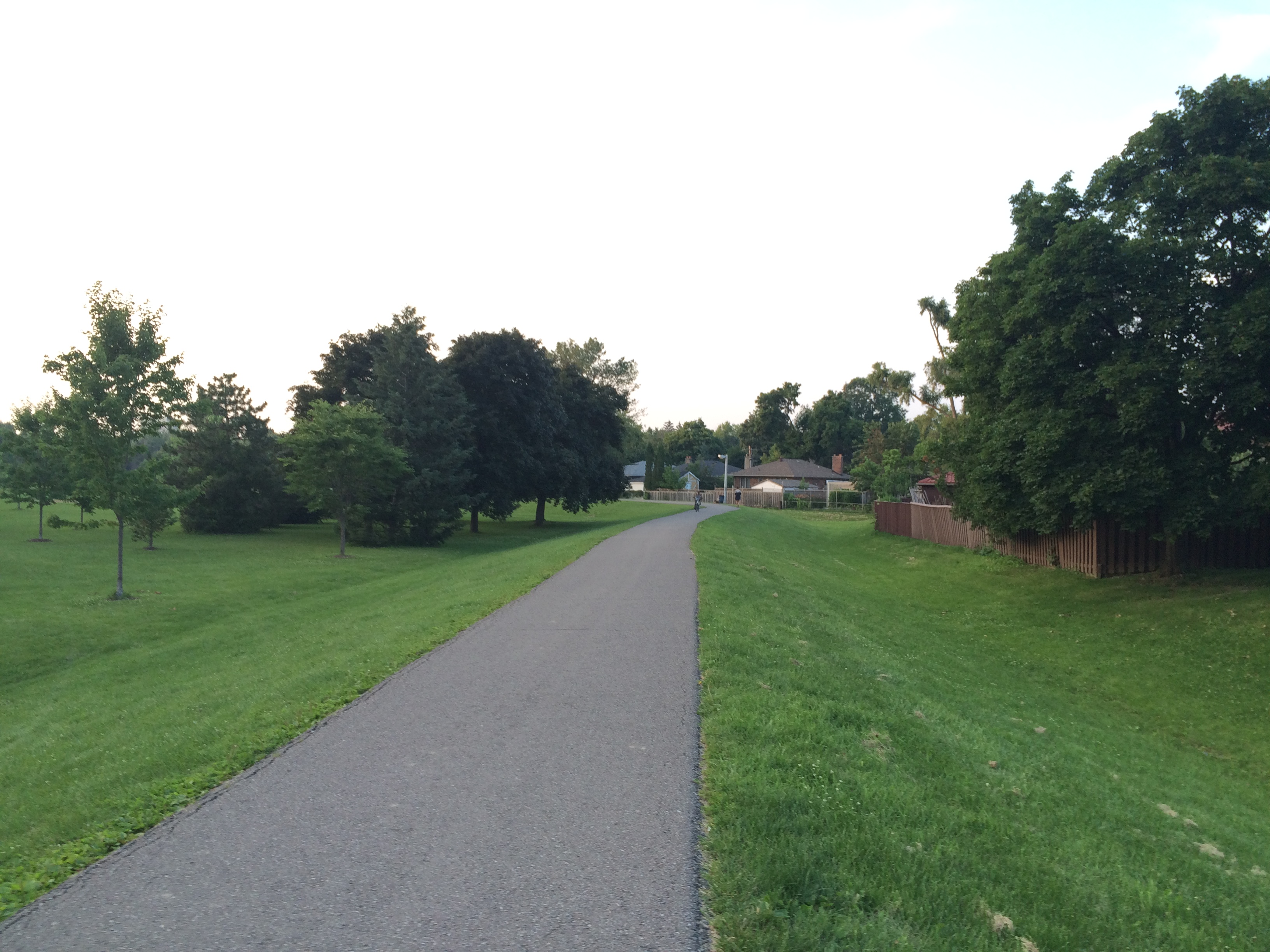
    These alternatives, nine of which were studied, included one that follows Etobicoke Creek through a floodplain and residential backyards. Other routes would have taken passengers far out of the way on McLaughlin or Kennedy Roads to reach the downtown core. A tunnel under Main Street, which would cost the City of Brampton $380 million, was looked at as well. Staff came back to Council in June with a report that evaluated all these possible alternatives and re-recommended the original surface alignment as being the most fiscally and technically responsible option and the best for transit users and for city-building.

    IMG_6675The Etobicoke Creek LRT alignment, proposed as a by-pass of Main Street

    The Hurontario-Main LRT is the boost Downtown Brampton needs. While expanded GO rail service will come, most Brampton commuters aren’t headed to Toronto’s financial core; they’re commuting to jobs elsewhere in Brampton, in Mississauga, and in other suburbs, and inter-suburb transport is lacking. Creating a higher-order transit network requires nodes, and Downtown Brampton, one of only a few historic and walkable neighbourhoods in Toronto’s suburban belt, is an ideal place for such a node. Not only is there the connection to GO and VIA trains (which would also benefit commuters to and from Mississauga, Guelph, Kitchener-Waterloo and elsewhere), but there are many opportunities for residential and employment intensification downtown, and along the Main Street corridor. Vacant storefronts that pockmark Main and Queen Streets say to me that more foot traffic is needed to revitalize these buildings. The LRT will help, not hinder, this goal.

    If Brampton votes a second time against the Hurontario-Main LRT, it will still be built, but will terminate at Steeles Avenue, four kilometres south of the downtown core. It will require a transfer to northbound buses at a third-rate shopping mall rather than at an urban transit hub with intercity rail connections. It would be a decision that Brampton will come to regret; offers of provincially funded transit don’t come around very often.

    Voting no will be, to put it mildly, a lost opportunity. Hopefully, Brampton City Council will see the sense of going with the province’s offer of a fully-funded LRT corridor.