Tag: Brampton

  • A disaster in the making

    A disaster in the making

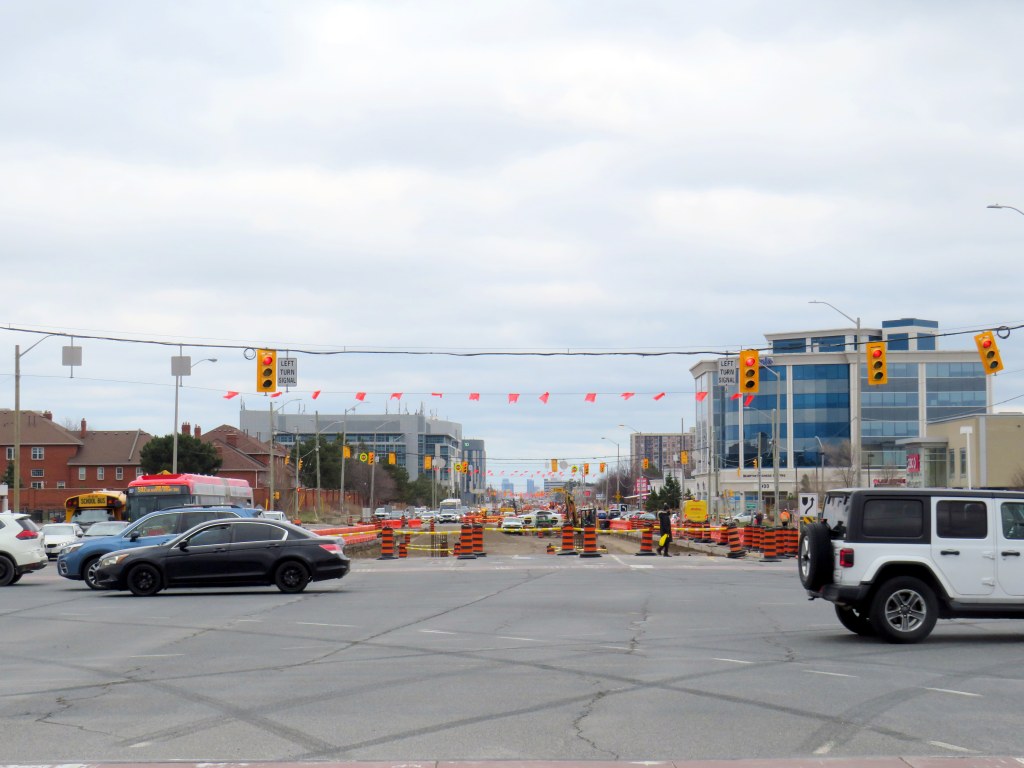
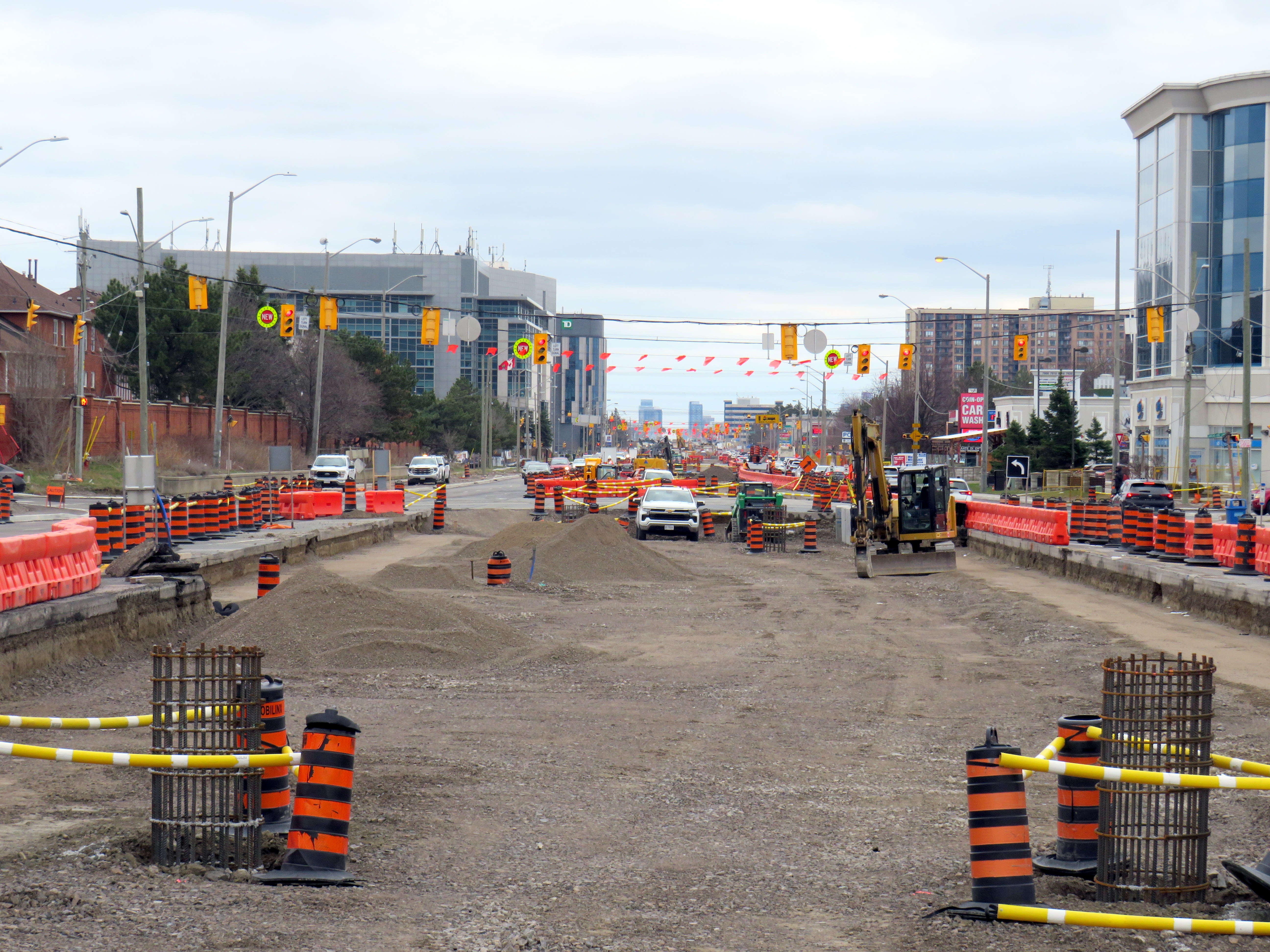
    Hurontario Street, looking south from Steeles Avenue, where the first phase of the Hurontario LRT will terminate

    The first phase of the Hurontario LRT, which will between Port Credit GO Station and Steeles Avenue in Brampton, is slowly taking shape after years of construction delays. In Spring 2026, eight years since construction started on the corridor, work on the LRT guideway into south Brampton has finally begun.

    As I wrote in detail before, a previous iteration of Brampton City Council narrowly voted against the LRT entering downtown as a surface line in 2015. This was the version selected in the provincial environmental assessment. Instead, that council voted to study alternative corridors into Downtown Brampton requiring lengthy detours, and asking for the LRT northern terminus to be on the south side of Steeles Avenue, despite a major bus exchange — Brampton Gateway Terminal — on the north side of the intersection to accommodate all options. After the 2018 election, council recommitted to a Main Street alignment (though preferring a tunnel) and asked the province to restore the terminus on the north side of Steeles pending a decision on the final four kilometres into Downtown Brampton. In early 2026, only one of the six councillors opposed to the Main Street LRT ten years ago remains in office.

    I wanted to follow up with Metrolinx to see how pedestrians would be safely accommodated at the Steeles and Hurontario intersection, given high traffic volumes, wide roads, and likely thousands of passengers switching between modes on a daily basis. Early concepts of an underground pedestrian tunnel were rejected by the province as out-of-scope, so pedestrians would have to cross both Hurontario and Steeles to make the transfer. Having no satisfactory answers despite many attempts to get an answer to this question, I took the lengthy and expensive route of submitting a freedom of information (FOI) request.

    In summary, I learned that despite multiple requests from City of Brampton officials to restore the north side stop, Metrolinx and the provincial government refused. With the financial close with Mobilinx — the private-sector consortium selected to build, operate, and maintain the LRT — imminent in early 2019, there was no interest to make the minor change to facilitate the terminal, even though the city committed to taking on the cost on its own. The province was open to other changes to the line, however, as in 2022, it unilaterally renamed the line for a former Mississauga mayor and political ally of Doug Ford.
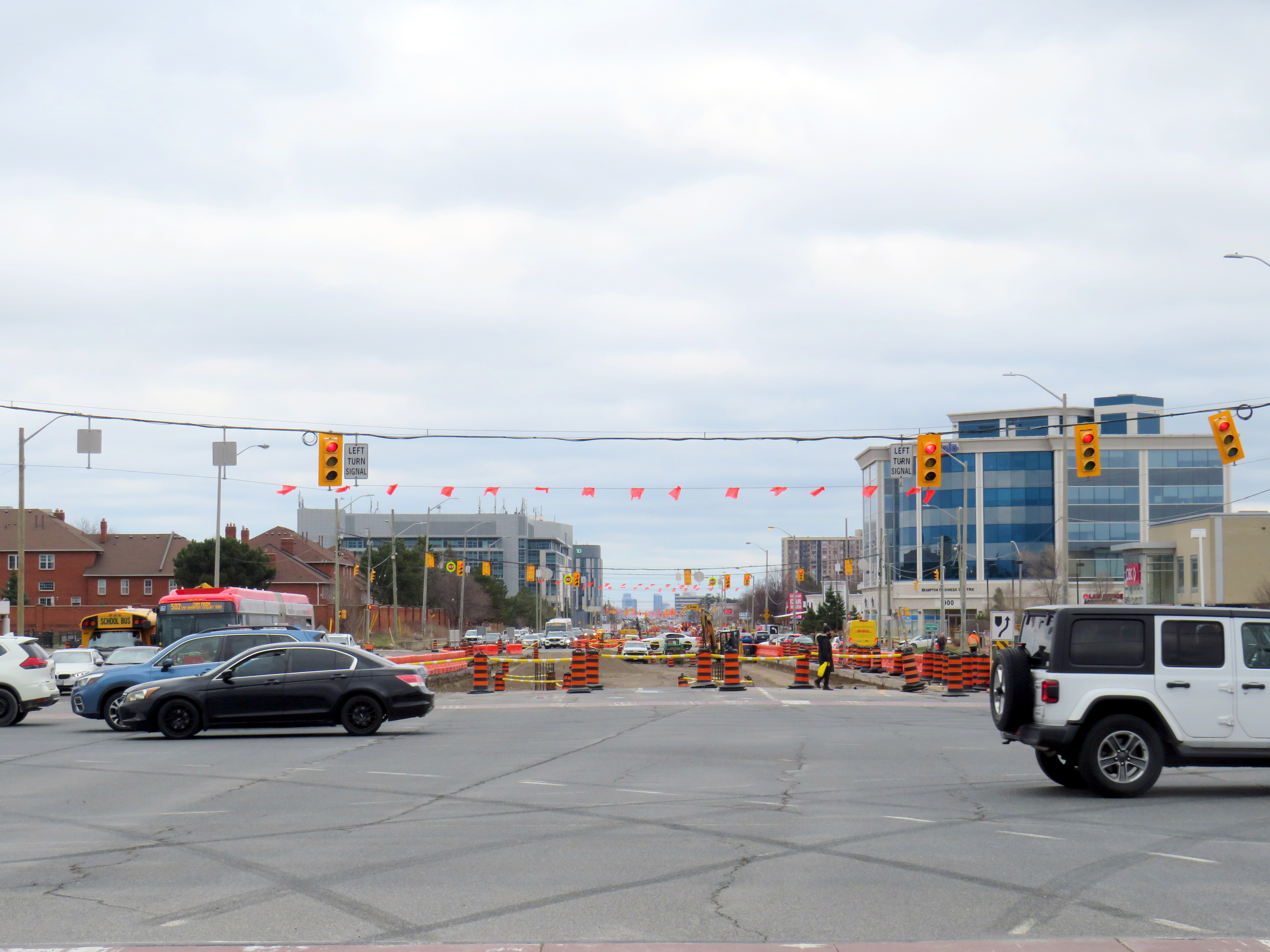
    Looking south across Hurontario Street across a very busy multi-lane intersection towards the end of the LRT

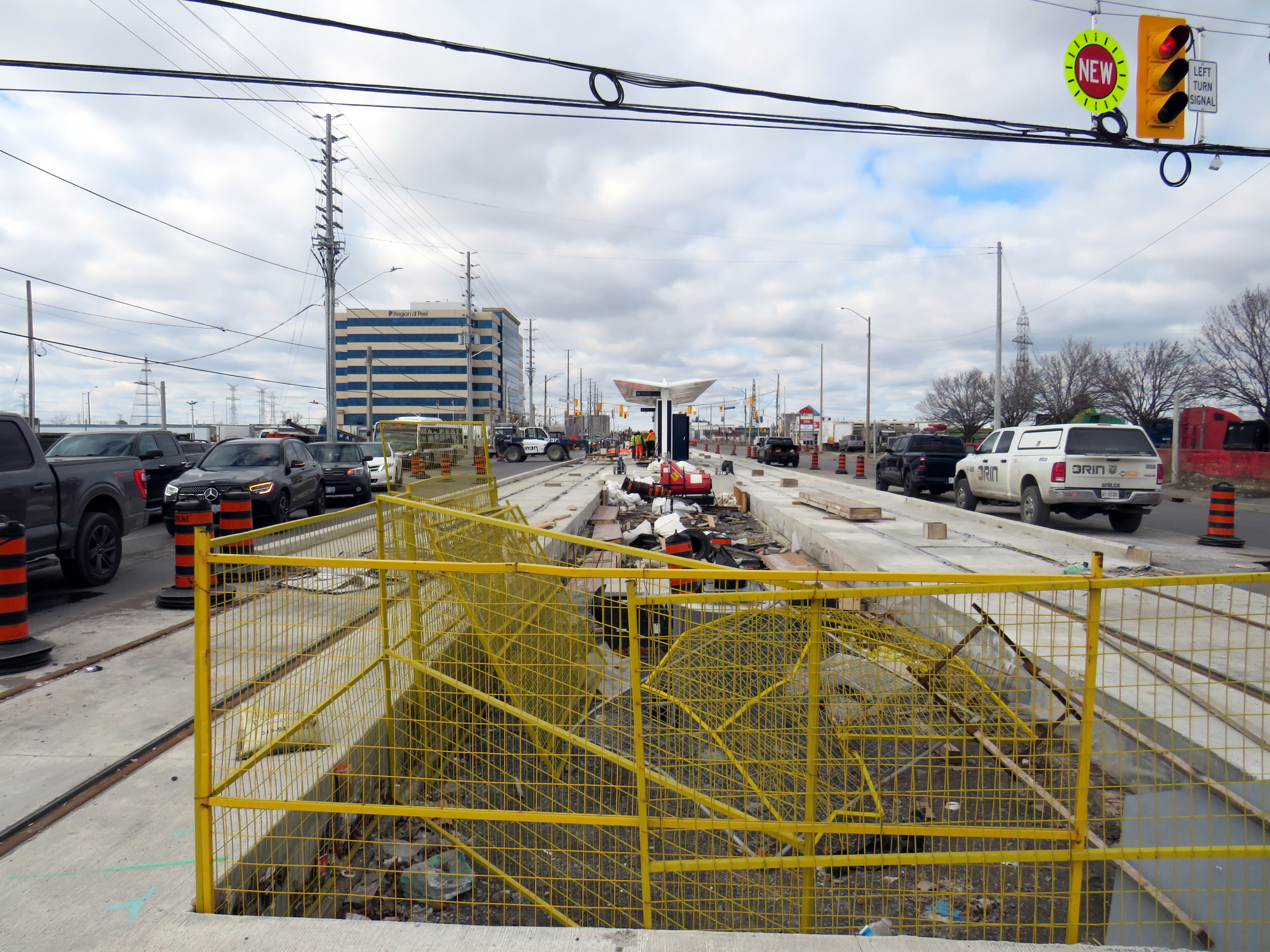
    As work at the Steeles-Hurontario intersection is now well underway, it has become visually clear the problem will be once the LRT opens. The population around the Brampton Gateway Terminal area is rapidly growing; a 40-storey condominium tower on nearby Steeles Avenue West is nearing completion, with many more highrise and mixed-use developments planned, including the eventual redevelopment of Shoppers World Mall. Already, there are dozens who cross nine-lane Steeles Avenue hourly; once passengers have to transfer from the LRT to the transit terminal on the northwest corner, there will be hundreds.

    Furthermore, once the (now-funded) Phase 2 of the LRT to Downtown Brampton is started, the intersection will have to be torn up yet again to extend the tracks across Steeles and build a new north-side stop. The province’s refusal to do this all at once is baffling, and will likely be much more expensive than if it was done right the first time.
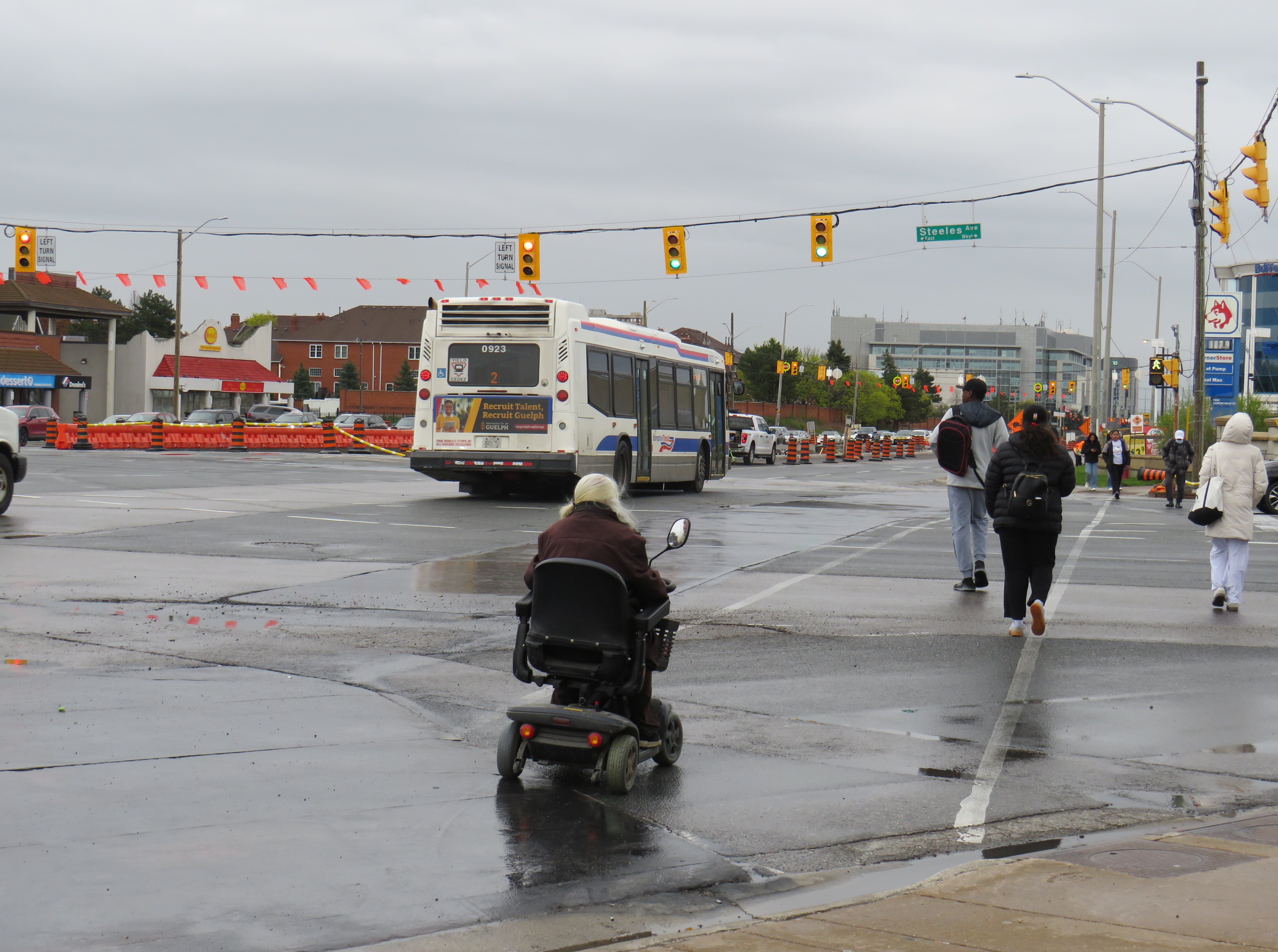
    Looking across from Gateway Terminal towards the future LRT terminus on Wednesday, May 6. Already, there are plenty of pedestrians crossing here.

    Already, the costs of the current Mobilinx contract have ballooned while construction delays pile up. The Hurontario LRT was originally supposed to open in 2024. In 2025, Mobilinx had to completely rebuild the track intersection at Topflight Drive just south of Highway 407 after track was already laid in 2023 due to construction errors. In February 2026, Global News reported that only 45 percent of the track was laid. Due to delays and problems paying contractors, the consortium’s credit rating was downgraded by Standard & Poor to BBB, which is near junk status.

    Given the multiple delays and difficulties building the LRT, work is only now at the point where the dangerous terminal location is being baked in. Even though construction errors are fixed, and the project name changed, Metrolinx has been unwilling to address the safety issue at Steeles Avenue that was raised many times. In the meantime, Metrolinx, Peel Region, and City of Brampton will have to figure out how to mitigate the potential disaster that is now in the making.
  • Caledon rethinks its transit as Brampton retrenches

    Caledon rethinks its transit as Brampton retrenches

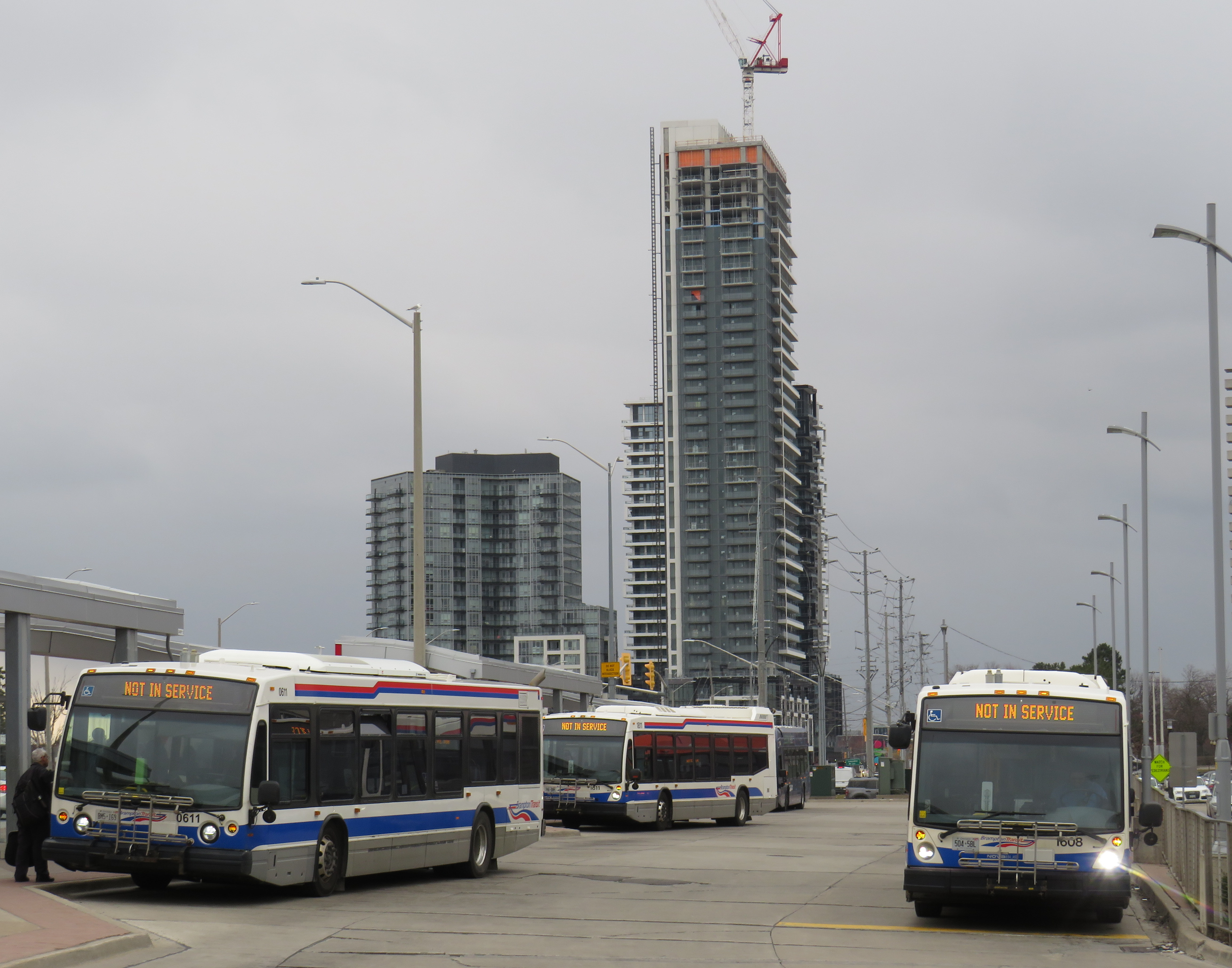
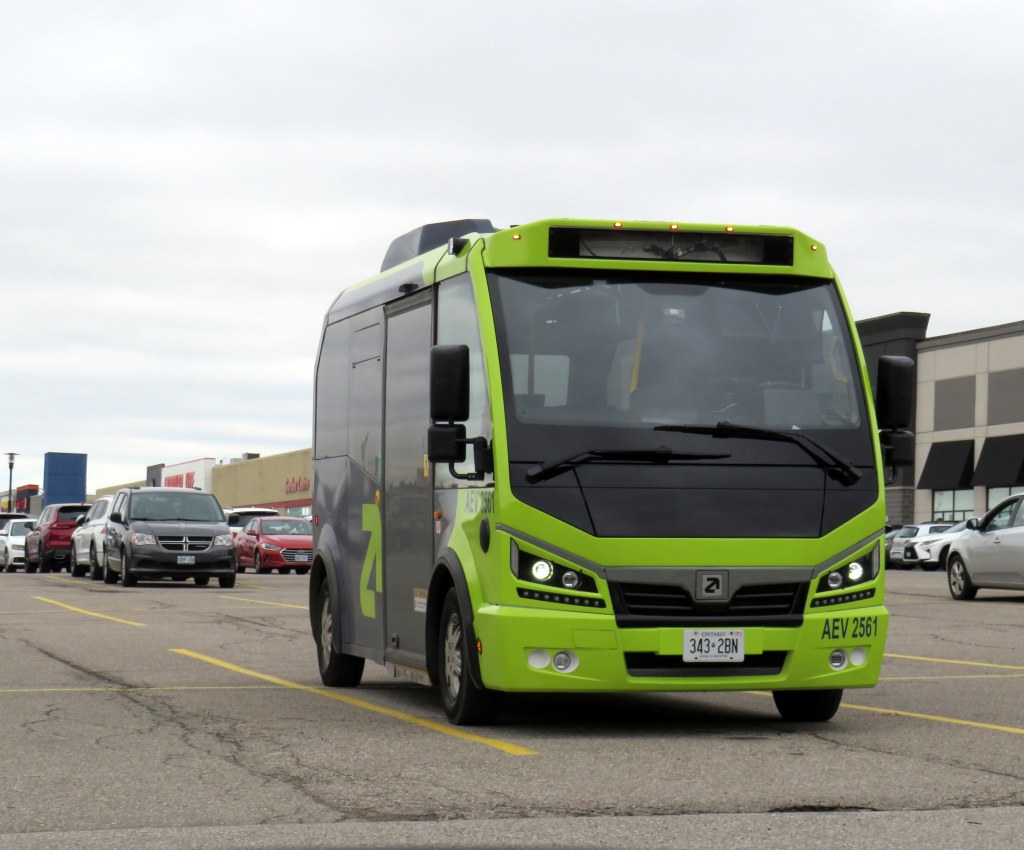
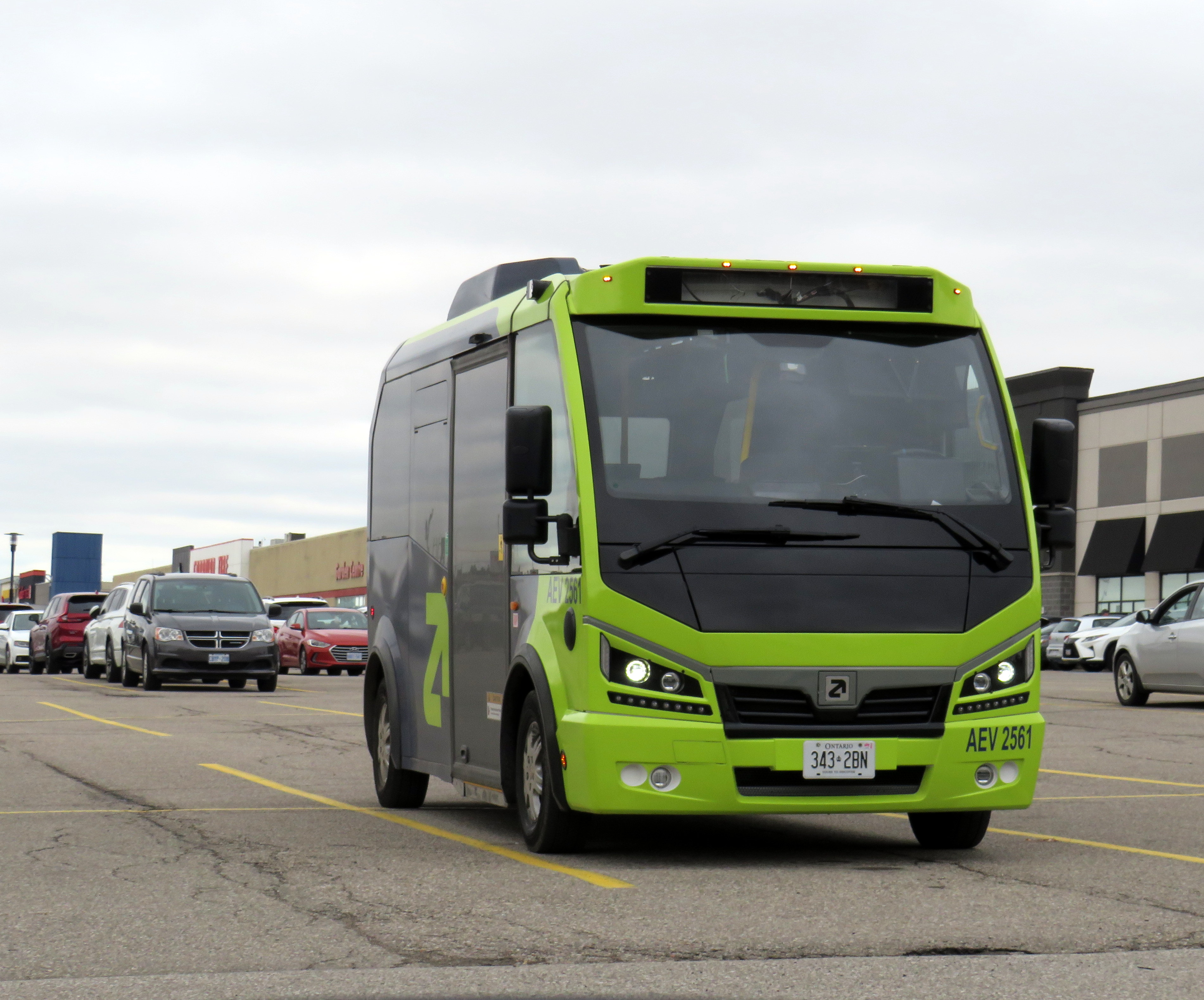
    An Argo minibus lays over at Shoppers World Brampton

    In an interesting staff report presented to Caledon Town Council, that municipality is planning to enter into a 15-month On-Demand Micro-Transit Pilot Agreement with Argo Transit, a Brampton-based provider of electric minibus services. This new on-demand transit service would replace most of the contracted Brampton Transit services in the Town of Caledon, including Routes 41, which serves Bolton, and 81, which runs along Kennedy Road north of Mayfield Road. Extensions of Route 30 Airport Road and 18 Dixie would continue under Brampton Transit, as they are limited-service extensions directly serving specific employers.

    Argo already provides on-demand service in Bradford-West Gwillimbury, replacing a fixed-route service there last year It also operates a supplemental door-to-door on-demand service in central Brampton on top of the fixed route Brampton Transit service. In Brampton, and as expected in Caledon, the same fares at Brampton’s regular service are charged, paid through a Presto card or app.

    The benefits for Caledon include new service to and within Caledon East, which is currently without transit, as well as midday, early evening, and weekend service not currently provided through Caledon’s contract with Brampton Transit. The proposed service times will be Monday to Friday from 5:30 AM to 8:00 PM, and Saturday and Sunday from 7:00 AM to 7:00 PM. If implemented, Argo service would begin October 1, 2026.

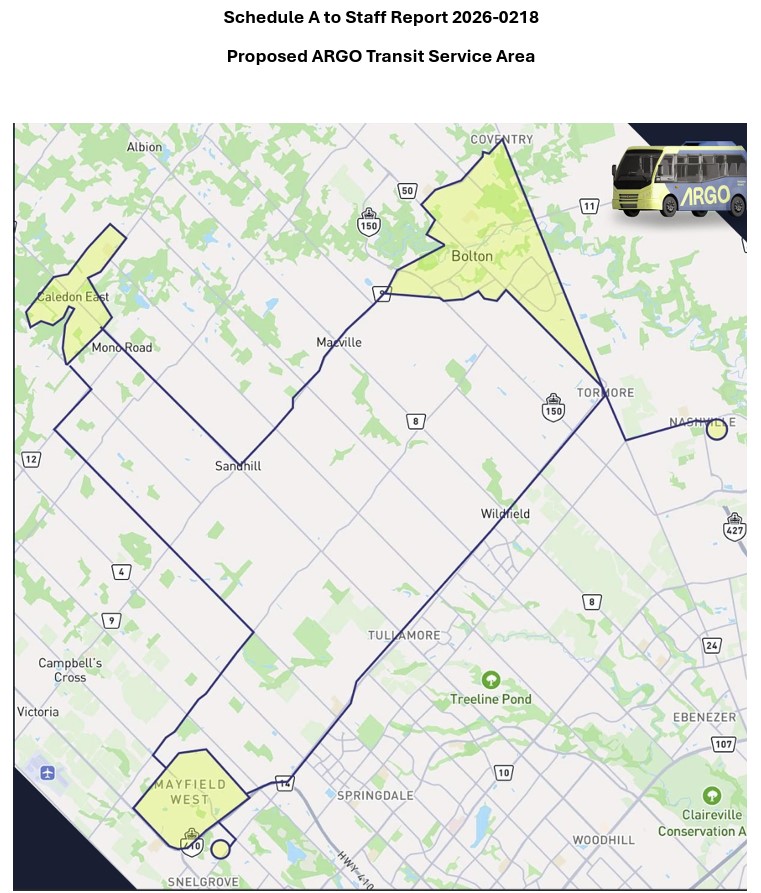
    The map, included as an appendix to the staff report, shows connections to Brampton Transit on Mayfield Road and to York Region Transit in Kleinburg.

    Map of proposed Argo service areas in Caledon, with connecting links.

    There are some questions that should be addressed before October. Currently, Route 41 provides service to employment areas in south Bolton and provides connections to several Brampton Transit and YRT routes at Highway 50 and Queen Street, with easy transfers to the TTC subway in Vaughan and Humber College in Etobicoke. Would Brampton maintain a shortened route to Mayfield Road and Highway 50 that could make this link? Would transfers be permitted to other Brampton Transit routes along Mayfield Road, including Routes 15, 18, and 30, or would stops outside the on-demand areas be restricted to those in the map?

    For Caledon, on-demand transit looks like an attractive option to replace Brampton Transit-contracted routes with low ridership and limited service hours. For it to succeed — and even build ridership for new fixed-route service in the future — connections to other transit will be necessary.

    Despite population growth, Brampton Transit ridership is in decline

    Meanwhile, Brampton Transit, after several years of dramatic ridership growth after the end of COVID-19 restrictions, is cutting back as ridership has taken a sudden dip in 2025-2026. Four minor routes — 33 Peter Robertson, 36 Gardenbrooke, 55 Elbern Markell and 56 Kingknoll — will be discontinued. These four neighbourbood routes provide local service in areas where other routes are within walking distance or operate in the opposite direction, so the effects are minor and the cuts justifiable if it keeps service going elsewhere.

    However, Route 5 Bovaird, a major local route between Westwood Mall and Mount Pleasant GO Station, will see significant cuts: in the weekday peak from 13 minutes to 20 minutes and evenings from 30 to 40 minutes, and weekend evenings from every 30 to 50 minutes. The 505 Zum route that parallels the 5 does not operate weekend evenings, resulting in very poor service along the Bovaird corridor during those times.

    This is a disappointing setback for transit in my hometown, which up to now has been a model for promoting ridership growth in a suburban edge city. For years, I have wrote about its success in growing demand by operating good service, especially to destinations well beyond its boundaries to places like York University (later the subway terminal in Vaughan), Mississauga City Centre, Humber College, and Pearson International Airport.

    It would be very unfortunate if transit were allowed to enter a “death spiral” of ridership decline, fare hikes, and service cuts in response to this dip, largely due to a decline in international student enrollment at colleges and universities. Brampton has shown before that good service, with incremental growth is a great way of boosting ridership. This means operating buses at least every 20-30 minutes at all times on major corridors like Bovaird.

  • It’s time to rethink slip lanes

    It’s time to rethink slip lanes

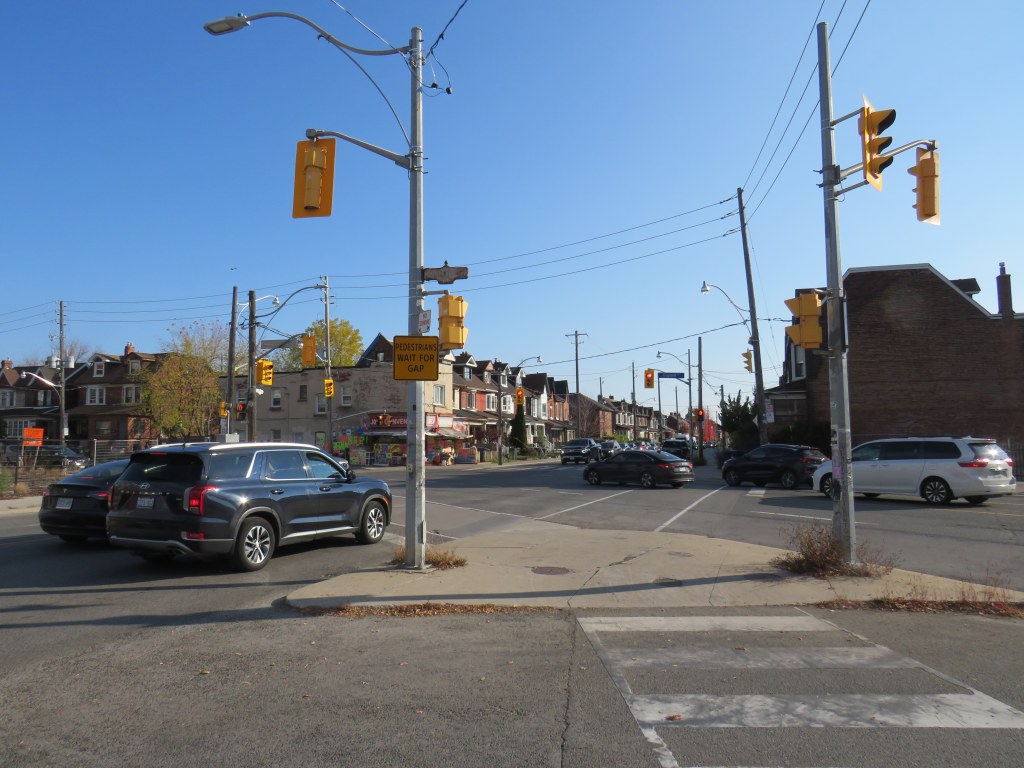
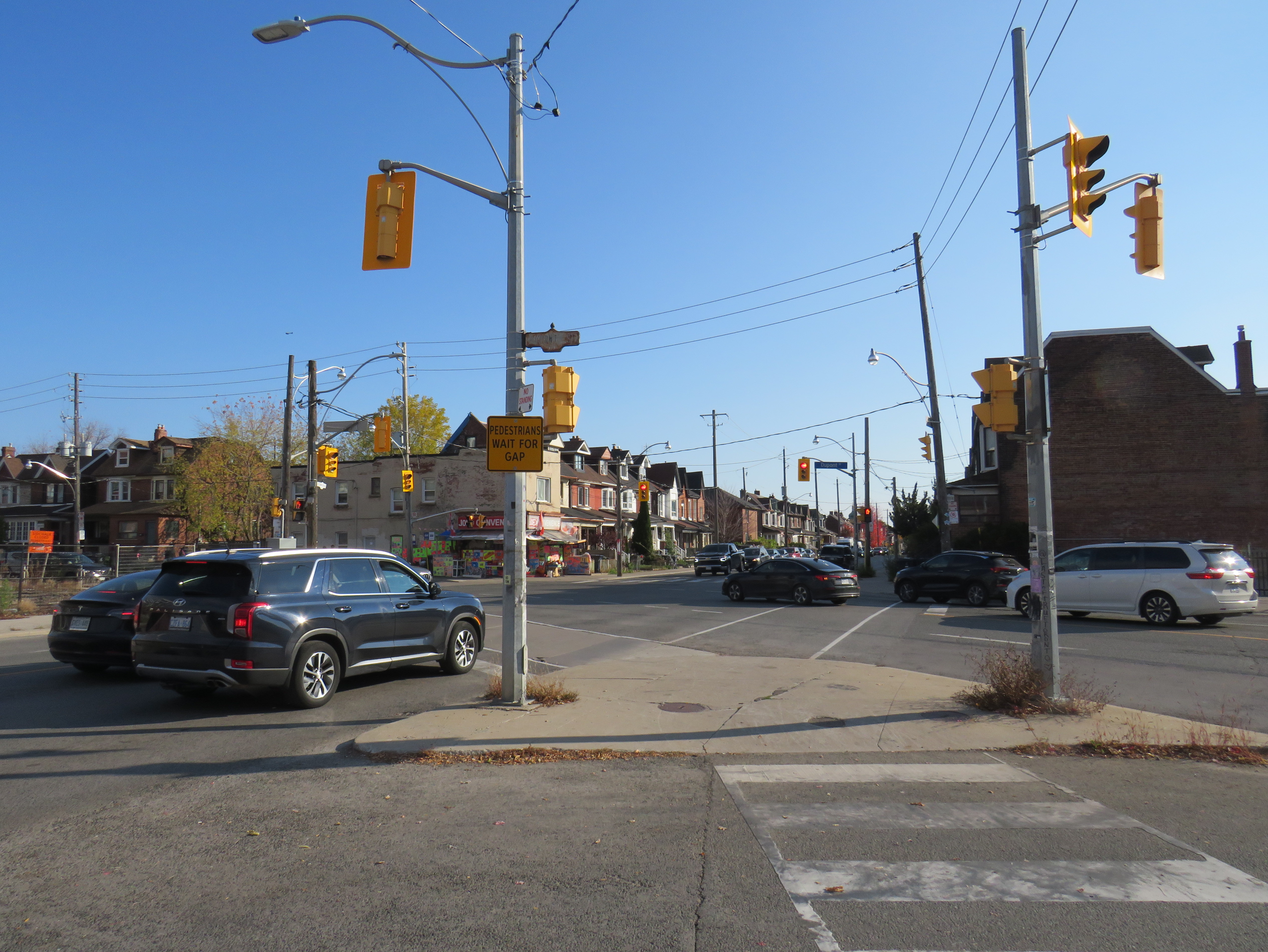
    Slip lane with small pedestrian refuge island at Dupont Street and Ossington Avenue

    There are many ways that road design acts to facilitate vehicle drivers yet impede pedestrian mobility. There’s the beg button (traffic engineers prefer the term “pedestrian call button”) that ensures maximum traffic throughput unless a pesky pedestrian or cyclist decides they want to cross the road too when the light turns green. There’s the two-phase pedestrian crossing that guarantees a long wait to cross a wide traffic artery on foot. Wide curb radii at intersections allow drivers to easily turn, yet they intrude into the crosswalk space. And there’s the slip lane, also known as a channelized right turn.

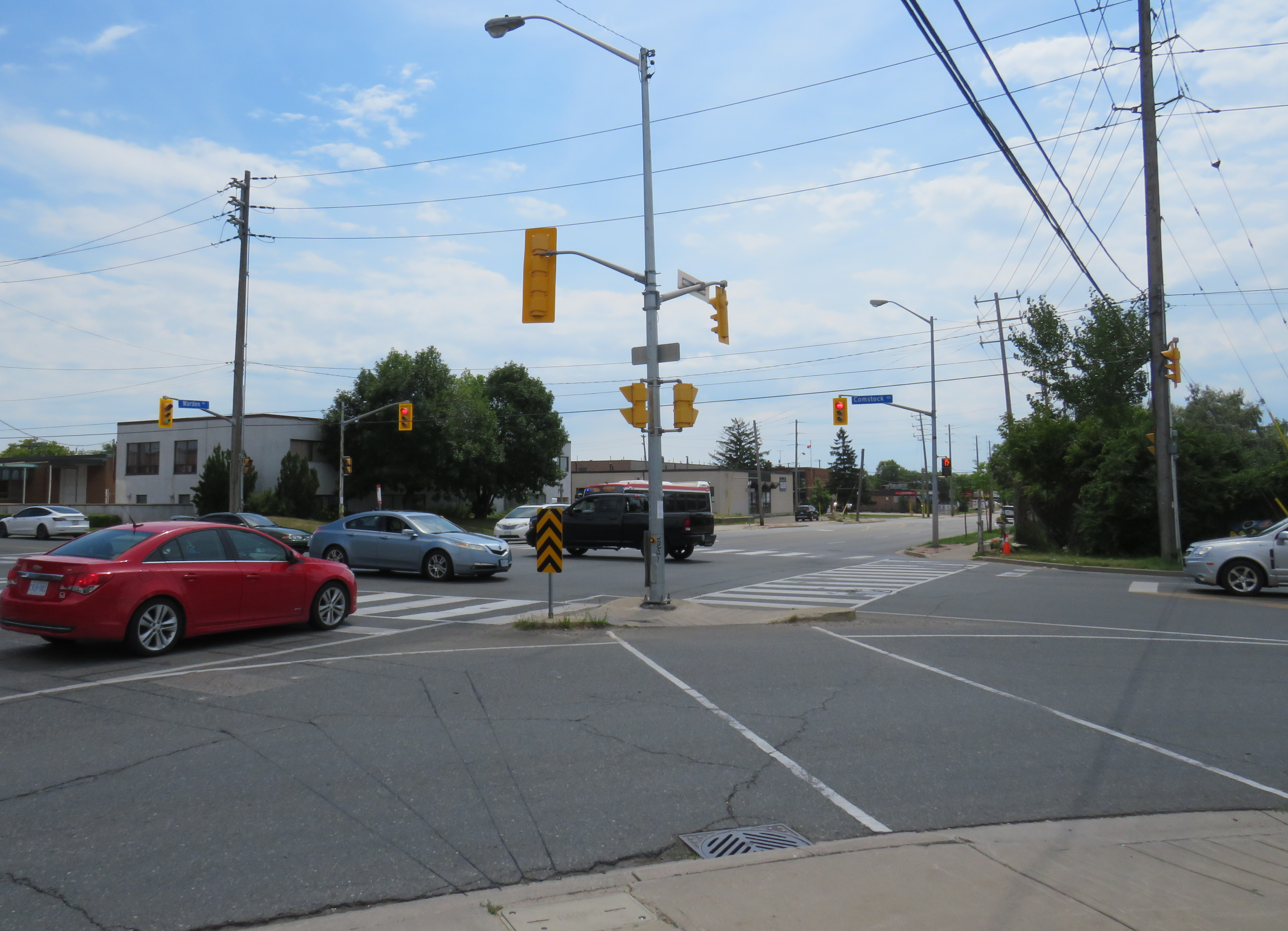
    Most slip lanes are designed to allow right-turning motor vehicles to bypass an intersection. Where an intersection may be controlled by a traffic signal or a stop sign, typically, a slip lane is only controlled by a yield sign, reminding motorists to give way to pedestrians crossing and/or oncoming traffic on the roadway being turned into. They are typically built for higher speeds, with turn radii even greater than those afforded by generous curved curbs at many urban intersections. The space left over in the triangular bit of concrete is where pedestrians must wait to cross the main roadways.

    Slip lane at Warden Avenue at Comstock Road in Scarborough features a very small island for pedestrians to wait to cross

    Occasionally, slip lanes are used to discourage or prevent certain turning movements. At shopping plaza entrances, for example, slip lanes are used to prevent left turns into or out of the driveway. They may also be used at one-way streets for the same purpose.

    Thankfully, slip lanes are not the standard in the City of Toronto. At least forty slip lanes were removed between 2005 and 2025, including Front Street eastbound at Yonge, from Coxwell Avenue southbound at Dundas Street East, and a half dozen on Danforth Road in Scarborough. In the downtown core, there are only three remaining examples that cross pedestrian pathways: from southbound Bay Street to Queen Street West, from eastbound Bloor Street to Parliament Street, and from Mount Pleasant Road to Jarvis Street. There are several other intersections in the city centre that allow some right-turning vehicles to bypass the main intersection, such as Adelaide and Richmond Streets at Jarvis, University at Front, or Parliament at Gerrard, but these still require a full turn at their start or end point, mitigating their danger.

    A map of slip lanes in Toronto, and those removed in the last twenty years, is below. This work was assisted my followers on BlueSky for their additions and corrections, and I appreciate their help.

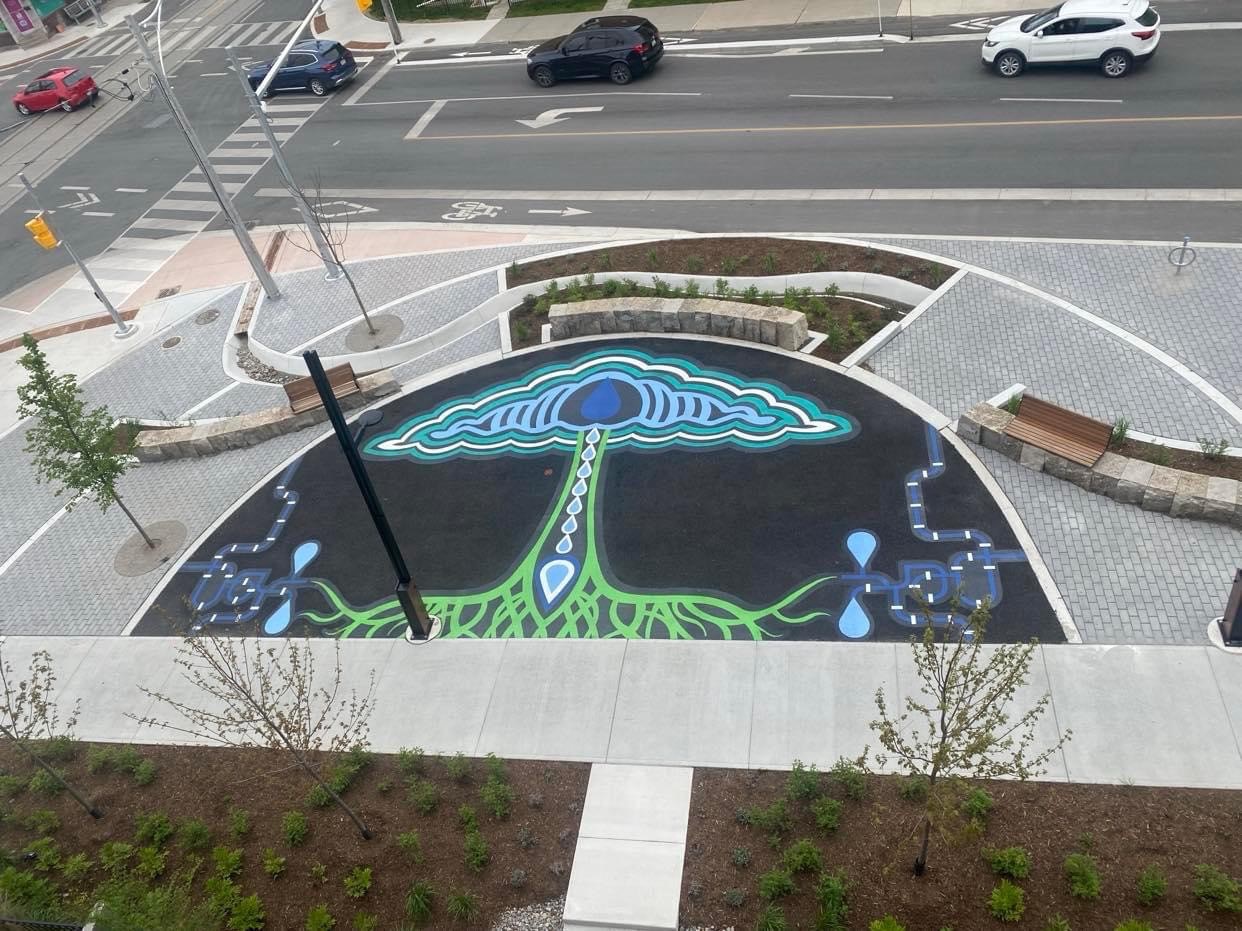
    By removing slip lanes, pedestrians and cyclists are better protected, and there can often be new space for seating, public art, or even plant life.

    Former slip lane at Coxwell Avenue and Dundas Street East
    (City of Toronto, 2025 Water Summit winner)

    Slip lanes are far more common in suburban neighbourhoods outside the City of Toronto. In Brampton and Mississauga, slip lanes are common on regional roads such as Steeles Avenue, Dixie Road, or Erin Mills Parkway. These six-lane roads are designated as goods movement corridors, and are designed for heavy traffic, including tractor-trailers. Even in Peel, though, slip lanes are being rethought. Several were removed on Bovaird Drive in Brampton two years ago (replaced by signalized crossrides), while others are being repainted to empathize the pedestrian crossing and encourage slower movements. More signage tells motorists to stop for pedestrians.

    Modified slip lane at Bovaird Drive and Main Street in Brampton. Further east, slip lanes were removed at three lower-traffic intersections and replaced by multi-use path crossings.

    Though the City of Toronto has done some good work eliminating or modifying slip lanes in the name of traffic safety and an improved pedestrian realm, there are many more that still should be examined, such as the one at Ossington and Dupont, where, unusually, pedestrians are instructed to wait for a gap, rather than motorists instructed to yield. These “wait for gap” signs are found at the entrances and exits to expressways, such as the Gardiner Expressway or Highway 401. But these, too, can be changed. At the eastbound ramp to northbound Don Valley Parkway on the Prince Edward Viaduct, a free-flowing on-ramp was changed to a signalized right turn, improving safety and comfort for pedestrians and cyclists.

    Crossing the Bay Street on-ramp to the eastbound Gardiner Expressway makes getting to the Waterfront more dangerous and uncomfortable than it should be

    Hopefully, City of Toronto staff work to correct the situation at Dupont and Ossington (there’s no reason why pedestrians should be expected to yield to traffic in this revitalizing part of the city) and continue the work to make our streets safer for all.


    If you like my work and you would like to help out with my webhosting costs (I just had to renew my ad-free WordPress subscription), consider buying me a coffee. Thank you!

  • Safer streets need more than just speed cameras

    Safer streets need more than just speed cameras

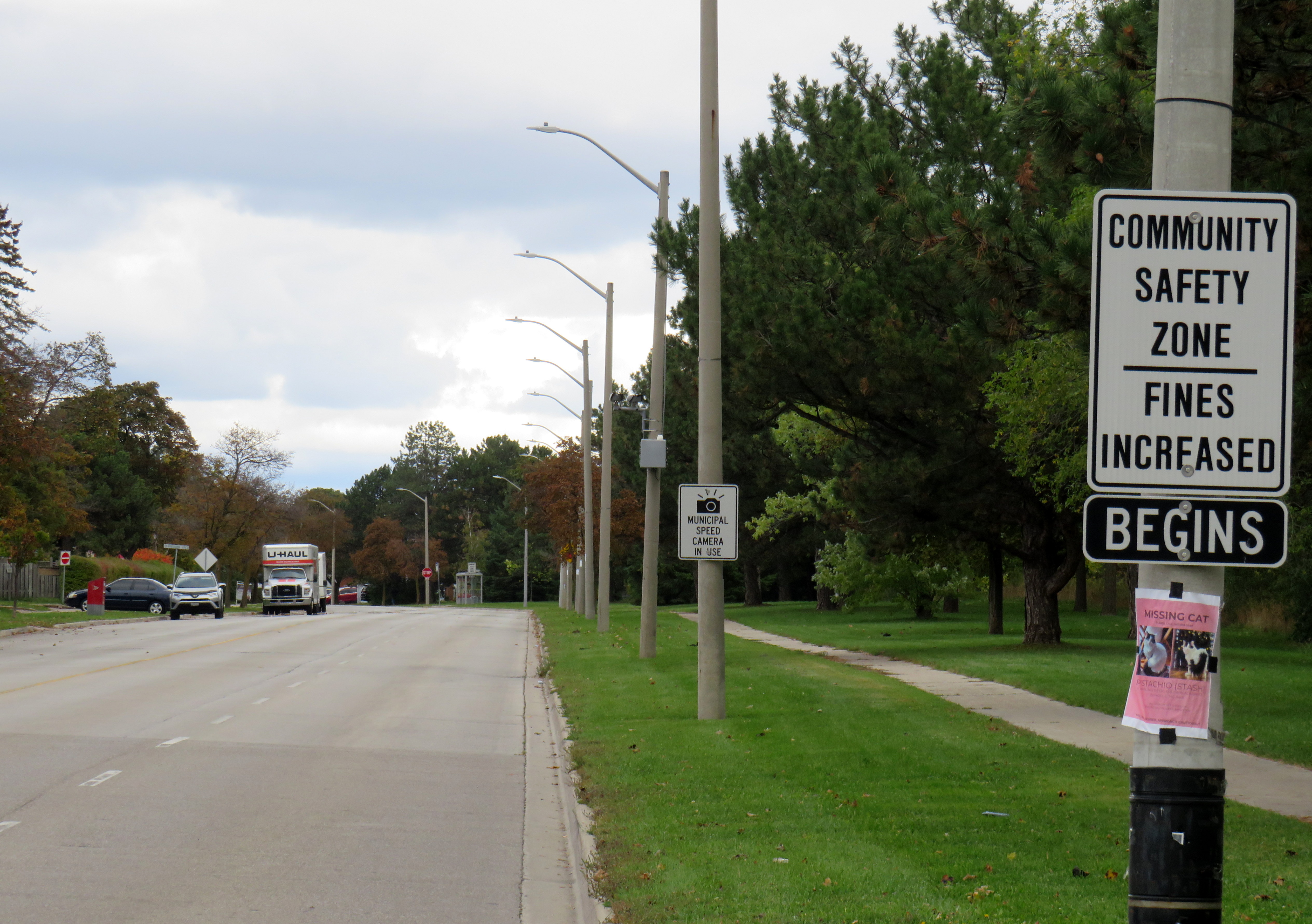
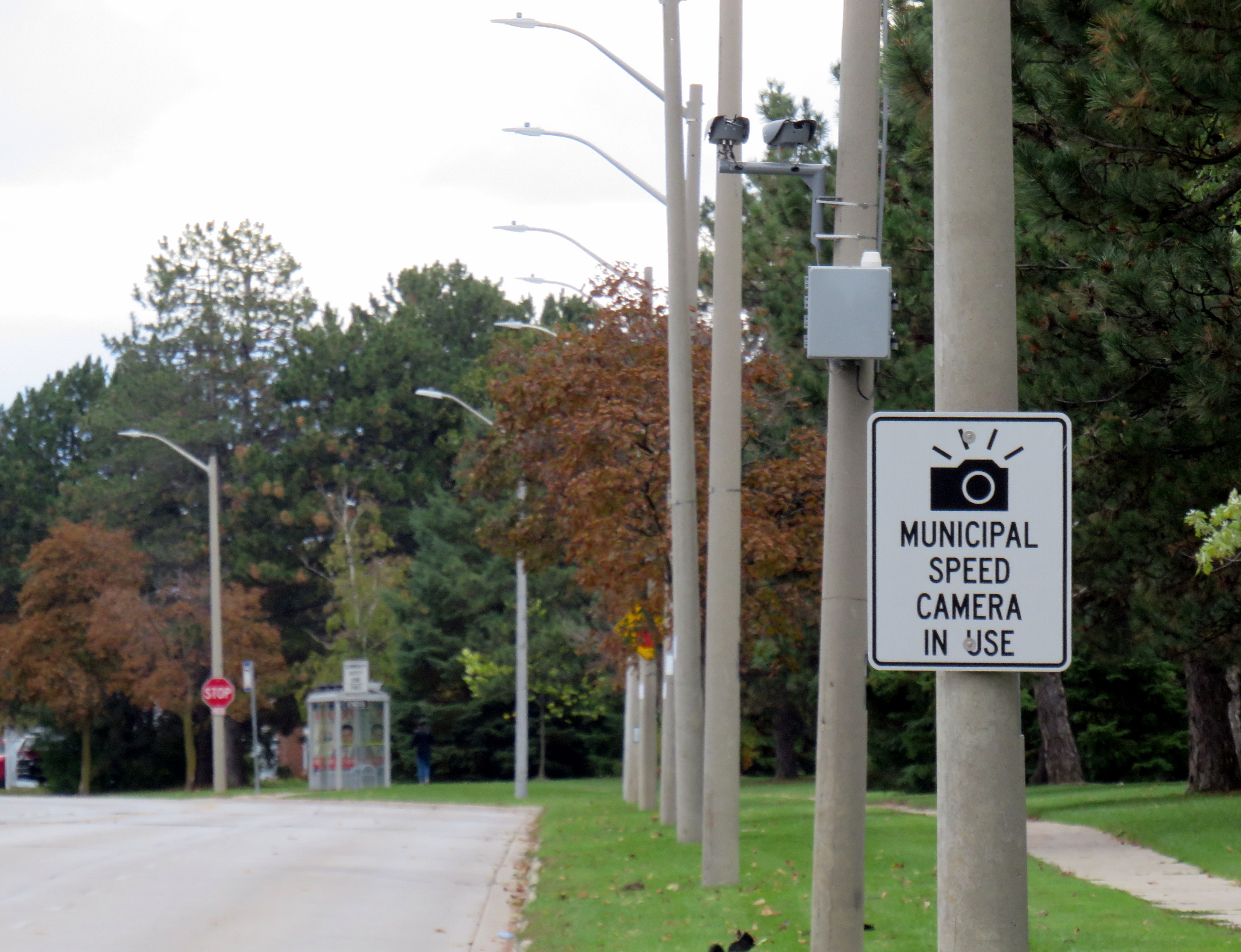
    Dearbourne Boulevard, a four-lane collector street designated a community safety zone

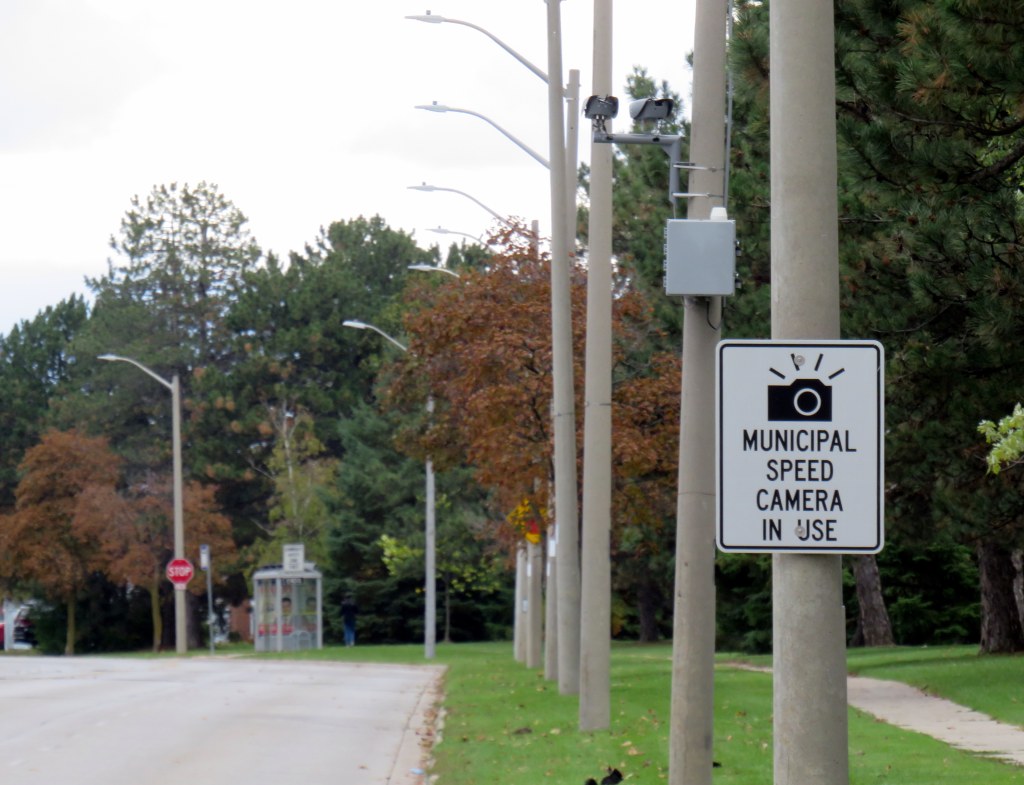
    Last week, while visiting Brampton, I came across one of the hundreds municipal speed enforcement cameras that Premier Doug Ford’s government wants to rip out across the province. The camera, on a four-lane collector street in Bramalea, is in a residential area, adjacent to several parks, including a pathway to a local public school, in an area designated a community safety zone. This is precisely the type of place that the government intended speed enforcement cameras would go when they were permitted under provincial legislation in 2019.

    In a September 2025 government press release touting the move as “protecting taxpayers,” Ford, whose government was in power when these cameras were permitted, claimed that the program became “a cash grab;” supporting quotes included those from former Liberal leader and current Vaughan mayor Steven Del Duca, a representative of the province’s municipal police unions, and a spokesperson from the right-wing Canadian Taxpayers Federation.

    If only there was a simple, effective way for taxpayers to avoid the so-called “cash grab.”

    It was interesting who was not quoted in that press release, including doctors, educators, safety advocates, and even police brass. Ontario police chiefs support automated speed enforcement. It is also worth noting most municipalities support the cameras; Vaughan is one of only a few municipalities that recently rejected the road safety program; Del Duca was joined by just two other conservative-leaning mayors.

    Of course, the arguments against the cameras, which in Toronto, were repeatedly vandalized or stolen, never held water. There were no tickets mailed out to drivers going just a few kilometres over the limit. Furthermore, speed enforcement was never a “cash grab” as the fines collected went to pay for the administration of the program, to “Vision Zero” works, such as the installation of speed cushions and improved pedestrian crossings, and to the province, which the collects the victim surcharges added to every Highway Traffic Act fine. The City of Brampton found that not only were the cameras effective in reducing speeds, they had the support of a majority of its residents.

    Municipal speed camera

    That said, while visiting Dearbourne Boulevard, I realized that speed enforcement cameras on their own are not effective in creating safer streets.

    Dearbourne Boulevard serves one of the oldest parts of Bramalea, established in the early 1960s as a self-contained satellite town, where residents were expected to drive to most destinations. After amalgamation into the City of Brampton, traffic increased and more transit became available. Nearby, several newer high-rise apartment buildings were built, walking distance to Bramalea GO Station. A bus route, 16 Dearbourne, runs along the street, connecting the neighbourhood with several shopping plazas, the GO Station, and the transit hub adjacent to Bramalea City Centre.

    Despite having low traffic and serving a residential area (an industrial area is just to the south, but it is inaccessible from Dearbourne), it is still a wide four lane street. The only traffic signal is at Bramalea Road; there are two all-way stops at Delamere Drive and Dorchester Road. At the east end of Dearbourne, the T-intersection with Balmoral Drive is controlled only be a stop sign, with two long and gentle right turn slip lanes. The speed limit is 50 km/h, and there are no speed cushions, curb extensions, or even painted buffers to indicated that drivers should go slower. In October 2022, a pedestrian was struck and seriously injured at one of the two all-way stop intersections; the driver fled the scene.

    Though to its credit, the City of Brampton has been improving many suburban streets and roads to reduce speeds and promote walking and cycling. Charolais Drive, Vodden Street, Central Park Boulevard, and Vodden Road saw traffic lanes replaced by new cycling lanes, with little pushback from residents. Dearbourne Boulevard was also slated for improvements in 2021-2022, but that work was not yet started.
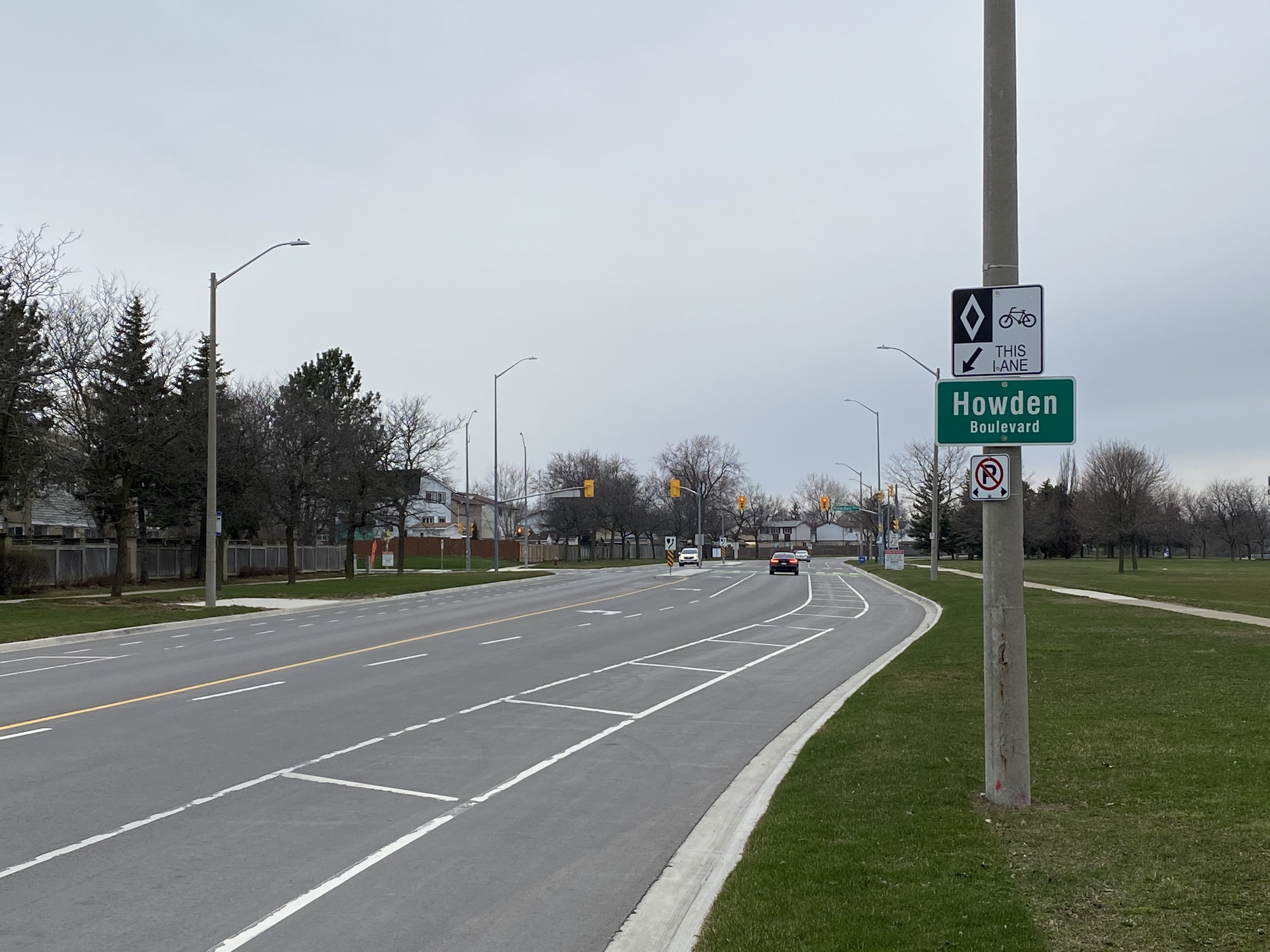
    Central Park Boulevard, Howden Boulevard, and Vodden Street were among several four-lane collector roads tamed with new cycling infrastructure in the last five years, creating a new through east-west cycle route

    Now, it might be too late. Not only will the speed camera be prohibited under a bill being rushed through the provincial legislature (going around the consultation process where concerned citizens, advocates, or safety experts could depute to MPPs), but another omnibus bill was just introduced, which if passed, would prohibit all Ontario municipalities from removing general traffic lanes to install cycling infrastructure, or even transit lanes and on-street patios.

    Given the provincial government’s increasing hostility to anything that inconveniences drivers, be it road tolls, vehicle license renewal fees, automated speed enforcement, or bike lanes, it leaves municipalities fewer options to protect their most vulnerable road users and promote sustainable and healthy transport options. Though Doug Ford claims that alternatives like flashing lights and more signs would do the trick, they do not do much to deter aggressive and dangerous drivers, unlikely to get caught.

    For streets like Dearbourne Boulevard, there are a few options. Lowering the speed limit to 40 km/h should be a first step. The redundant outer two lanes could be converted to parking-only spaces, with curb extensions and bollards at intersections. The slip lanes at Balmoral Drive should be ripped out.

    Roads designed in the 1960s and 1970s for traffic that never really materialized need to be rethought, with or without Queen’s Park’s support.

  • Downtown Brampton’s next chapter

    Garden Square, at Main and Queen Streets, will be one of the two public spaces downtown to be rejuvenated

    After nearly two decades of little change, Downtown Brampton may finally be turning the corner from being a sleepy town centre to becoming the proper hub for a city of nearly 800,000.

    The Riverwalk, an ambitious plan to enhance flood protection from nearby Etobicoke Creek and create new public space, will break ground later this year. The extension of the Hurontario LRT into Downtown Brampton, by way of a deep-mined tunnel, was approved and funded by the provincial and federal governments. There will also be a new transportation hub to accommodate additional tracks at Brampton GO Station and support Brampton Transit ridership growth. City of Brampton is also hoping to get started on a new Centre for Innovation at the corner of Nelson and George Streets; it will contain a new central library as well as space for Toronto Metropolitan University and Rogers.

    Private sector development is also waking up. The first of a new wave of mixed-use high-rise developments, Rose Garden Residences, has started construction.

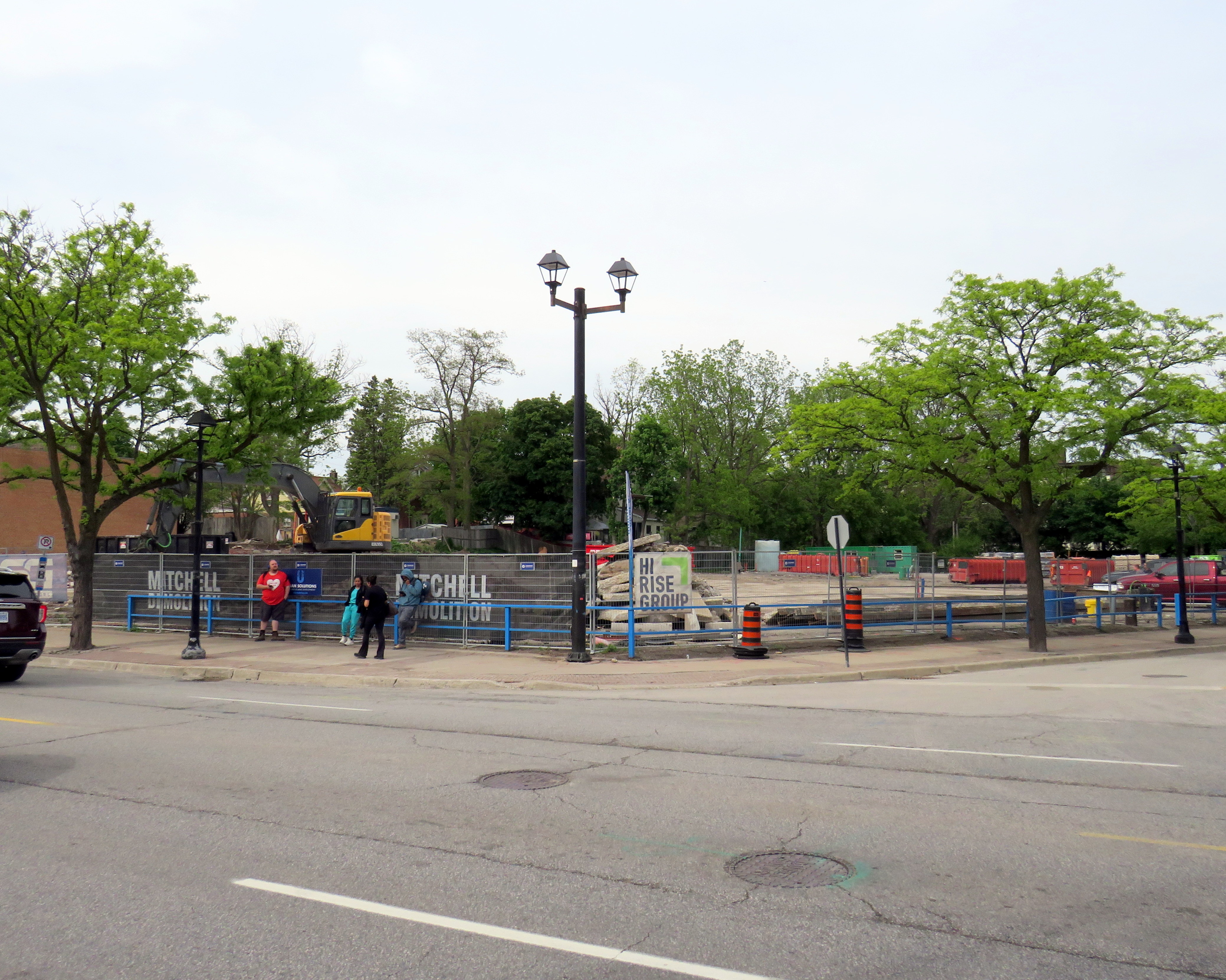
    Demolition is complete and shoring is starting at Rose Garden Residences

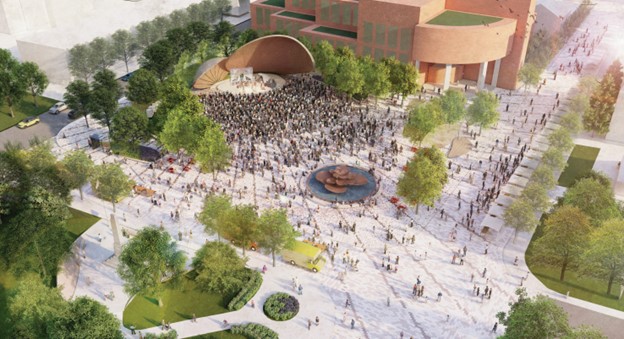
    These are exciting times for Brampton. The city, looking to attract more people to the downtown core, is planning to improve both Ken Willians Square, in front of City Hall, and Garden Square, in front of the Rose Theatre. The municipal government is looking for feedback on four proposed designs for the two square.

    For Urban Toronto, I wrote more about Brampton’s plans to rejuvenate its downtown public realm.

    Proposed design for Ken Willians Square, Downtown Brampton
  • Can you walk to City Hall?

    Can you walk to City Hall?

    Mississauga City Hall, one of the most walkable municipal buildings in Ontario

    In late March 2024, with a streak of mild, sunny days, I was eager to get outside and walk. As I have long been interested in local politics and planning issues, public transit, active transportation (especially walking advocacy), I thought I would try to get to every city, town, and township hall in the Greater Toronto and Hamilton Area (GTHA) without a car.

    This was a fun project, even if there were times I felt really frustrated at times by poor transit and long hikes. The highlight of my quest was a tour of Mississauga City Hall from Councillor Joe Horneck. Mississauga’s civic centre is one of Ontario’s most iconic — and walkable — government buildings.

    Mississauga Council Chambers

    Of the three levels of government (federal, provincial, municipal), the municipal level has the most impact on the day-to-day lives of most Canadians; it is also the closest level of government to all. Residents can depute at committee meetings, get meetings with their local councillor and city staff, and obtain building permits, marriage licenses, or pay bills at city and town halls. Therefore, they should be as accessible as possible, especially to those without cars.

    Only one GTHA town hall (Caledon) was completely inaccessible without a car, though several other town halls required long walks from the nearest transit stop, making them inaccessible to some residents. But I could get to Brock Township, the least-populated and most-rural municipality in the GTHA, thanks to Durham Region Transit’s On-Demand service, though I had some difficulty there.

    The complete list of GTHA city and town halls, along with photographs and a map can be accessed here.

    Preview of Story Map

  • Whose line is it anyway?

    Whose line is it anyway?

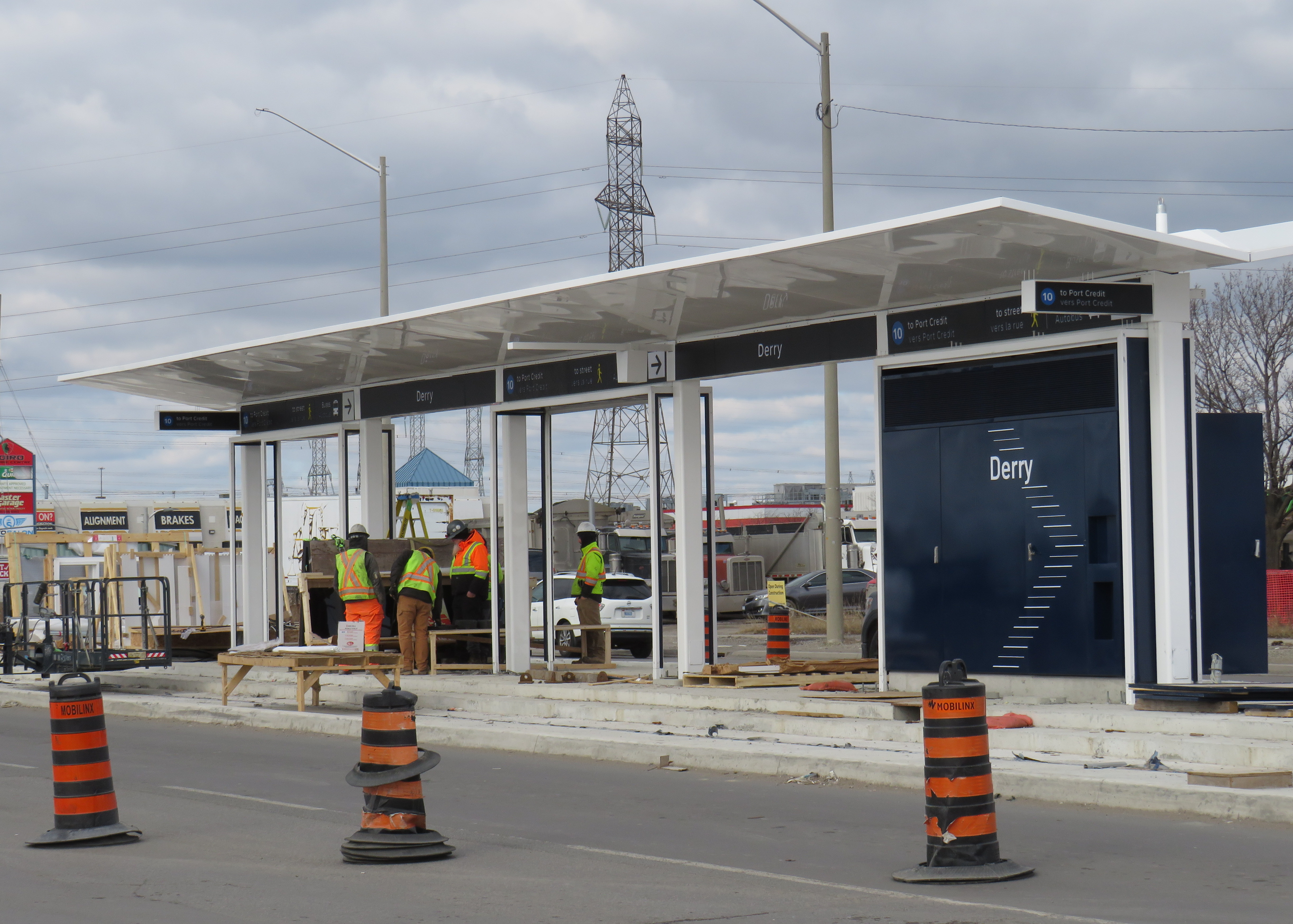
    Light rail construction on Hurontario Street at Derry Road, February 12, 2024

    Less than two weeks ago, I wrote about the politics of renaming of the Hurontario LRT for Hazel McCallion, a long-serving mayor of Mississauga and close political and personal ally of Premier Doug Ford.

    Though much of the information I received was redacted, I was able to learn that the Cities of Brampton and Mississauga had already come up with a brand for the new transit line. Metrolinx and the provincial government had to reimburse them for the costs once the Minister of Transportation intervened to force a new name upon the project, which cumulated with a love-in photo op on February 14, 2022.

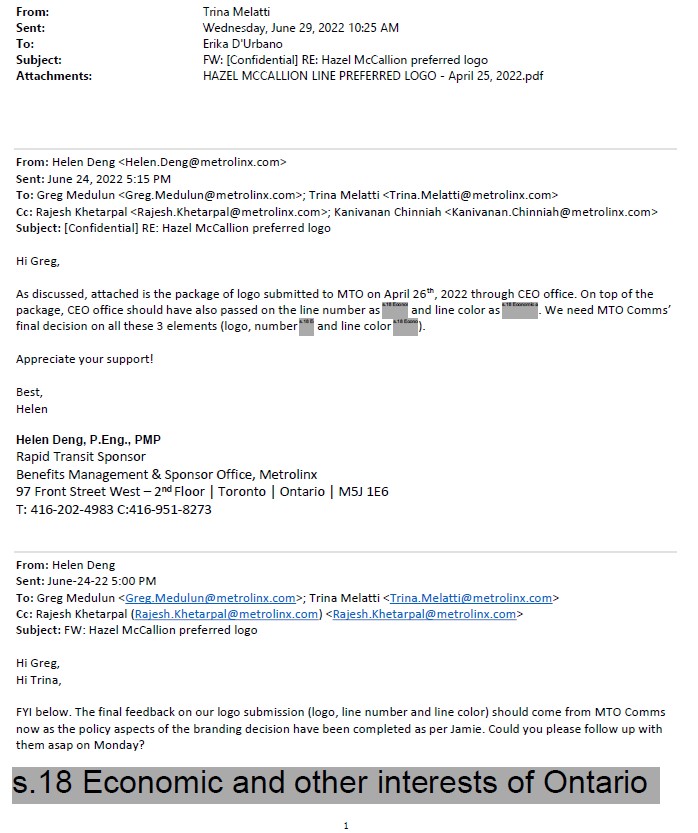
    Among the information redacted in the information package sent to me, six months after my initial Freedom of Information request, was the LRT line’s colour and number. They were redacted under Section 18(1) of the provincial Freedom of Information and Privacy Protection Act, citing economic and other interests of Ontario.

    Redacted line colour, number, and logo

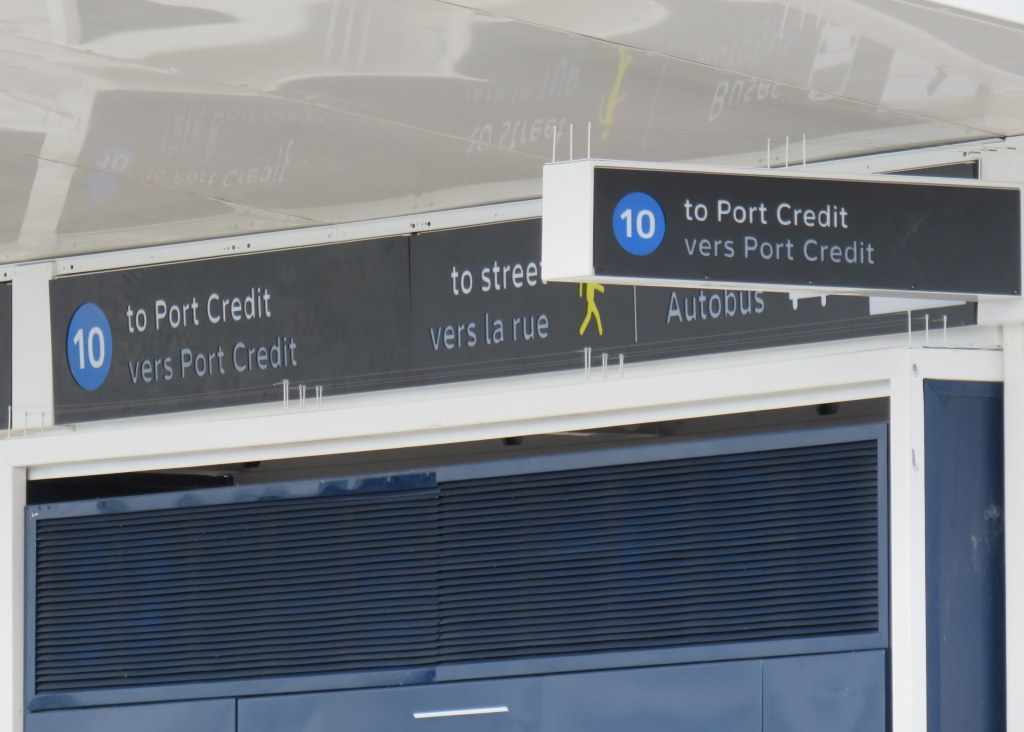
    At Derry Road, though, the secret is out. The Hurontario Line will be Line 10, represented by a bright blue colour similar to the former Line 3 Scarborough RT.

    Derry LRT station under construction

    Line 10 is a good choice for this corridor. Hurontario Street and Main Street through Mississauga and Brampton used to be part of provincial Highway 10, which was later bypassed by Highway 410 and downloaded to the two cities between the 1980s and the 2000s. It will also be the first Metrolinx-managed rapid transit project completely outside the City of Toronto, where Lines 1 through 6 are already assigned to the existing subway and the Eglinton-Crosstown and Finch West LRTs (with Line 3 reused for the Ontario Line when it opens).

    Brampton Transit and Miway currently operate bus services with that route number (10 South Industrial and 10 Bristol-Britannia), but those should be easy to change in advance of the LRT’s opening, which will take place in late 2025 or early 2026, given the construction progress so far.

    I remain puzzled and somewhat annoyed that this information was kept secret, and for what reasons. Revealing a line number and colour in a freedom of information request should not have been important. If it was to protect for another government photo opportunity, then that is now moot. Who is the Hurontario LRT for? The Doug Ford-led provincial government, or the people who will ride it?

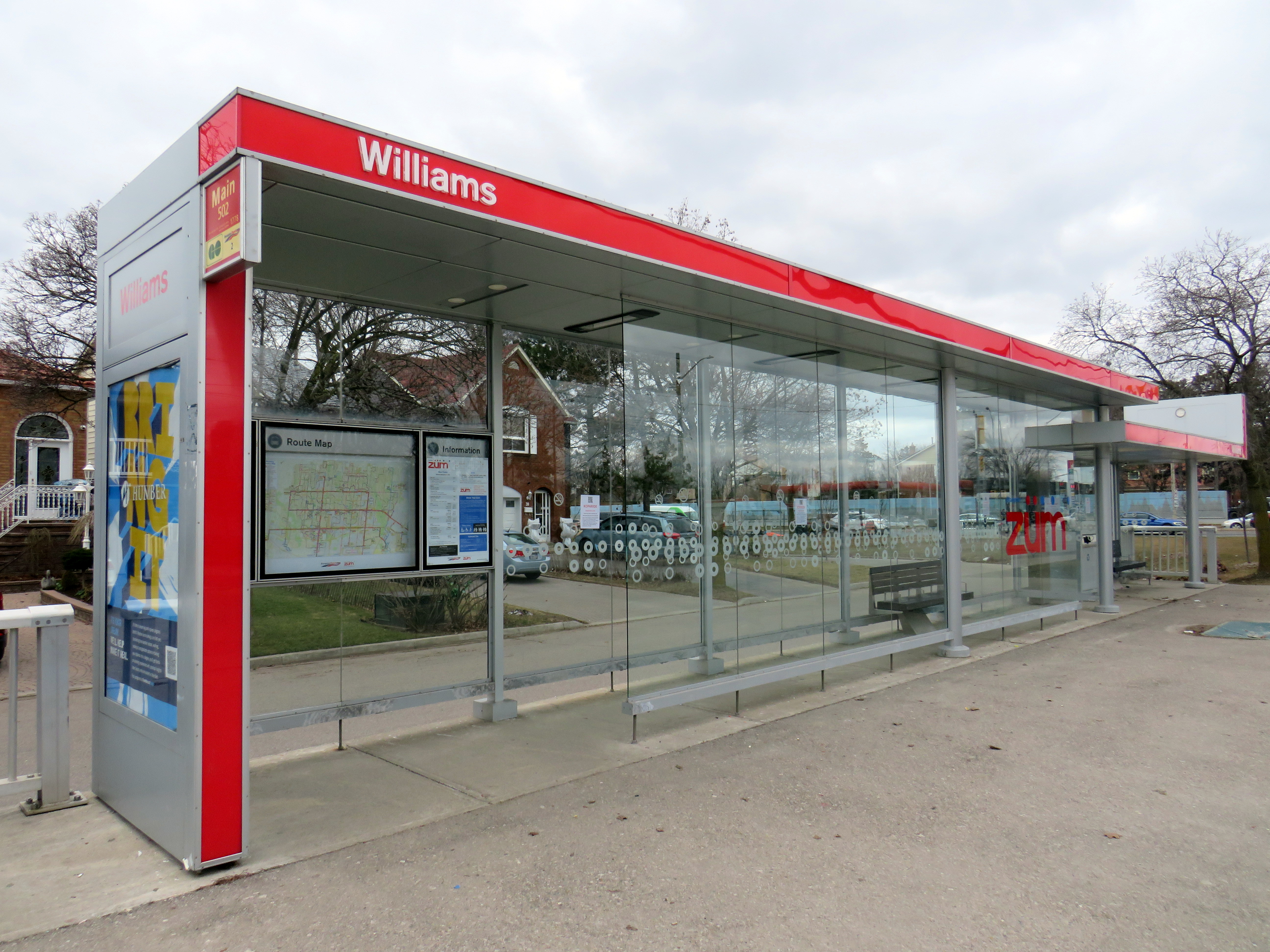
    Finally, I note that like the shelters going up for the Finch West LRT and the surface stops of the Eglinton LRT, there is very little protection from the elements at the Hurontario LRT stops, with only a canopy and a single wall supplying shade and cover from the rain or snow. Compare the Derry Road LRT stop with older Brampton Züm shelters, which include enclosed waiting areas, benches, and even winter heating.
    Brampton Züm stop with full glass enclosure, benches, and a button to activate a heater in the winter
    One more thing…

    To my longtime followers as well as my occasional readers, thank you for your interest and support. Last year’s FOI request cost me $525.00. Sadly, freedom of information isn’t free. If you like my work and want to contribute to my online mapping and webhosting costs, please consider buying me a coffee.
  • Heavy interference in a light rail transit project

    Heavy interference in a light rail transit project

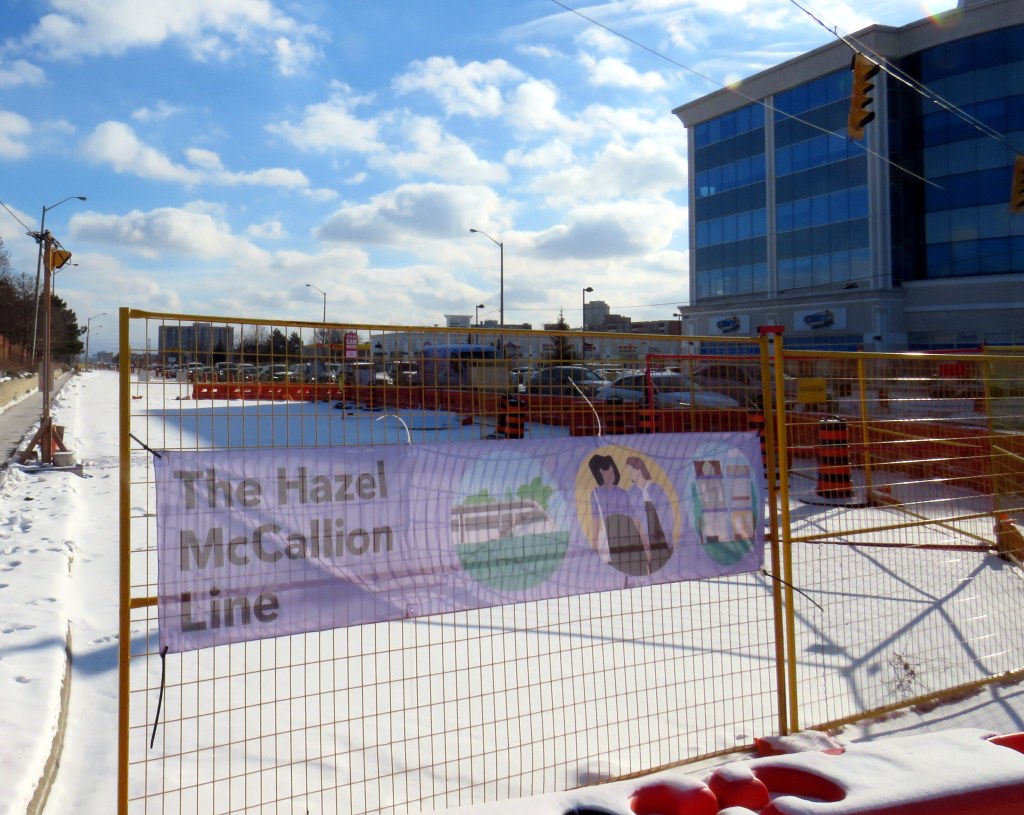
    Banner promoting “The Hazel McCallion Line” on Hurontario Street in Brampton, January 2024

    Previously on this website, I wrote about the renaming of two GO Transit stations: Oshawa and Brampton. I explained why renaming transit infrastructure is problematic, especially when they violate wayfinding standards, which call for simple, accurate, unique, and self-locating names.

    Both GO Transit stations were renamed by provincial agency Metrolinx, on behalf of the provincial government. Metrolinx operates GO Transit buses and trains, the UP Express airport link, administers the Presto fare payment system, and oversees the construction of new rapid transit projects in the Greater Toronto and Hamilton Area. The Hurontario LRT, which is currently under construction between Port Credit GO Station in Mississauga and Steeles Avenue in Brampton, is just one of many transit projects managed by Metrolinx.

    On February 14, 2022, at Cooksville GO Station, Premier Doug Ford, then Transportation Minister Caroline Mulroney, then Mississauga Mayor Bonnie Crombie, and Metrolinx CEO Phil Verster joined former Mississauga mayor Hazel McCallion announcing the name change from the Hurontario LRT to the Hazel McCallion LRT. The occasion also marked McCallion’s 101st birthday.

    Hazel McCallion with Metrolinx CEO Phil Verster, February 14, 2022 (Metrolinx photo)

    This is the first rapid transit line in North America to be named for a person, contradicting established standards for transit projects.1 Though McCallion was a formidable and popular mayor whose political career spanned seven decades, she was also very close to the Ford government in the last few years of her life. She also had many other public facilities named in her honour — a senior public school in Mississauga’s Streetsville neighbourhood, the library at University of Toronto’s Mississauga campus, the City of Mississauga’s central public library, a walkway leading to Square One Shopping Centre, and the Mississauga campus of Sheridan College. There is also the Hazel McCallion Auditorium at Mississauga Valley Community Centre and the Hazel McCallion Hall at Vic Johnston Community Centre. There was no need for yet another civic asset to be renamed for her.

    In Toronto, most former mayors have just one public asset named for them: David Crombie, Art Eggleton, June Rowlands, and Barbara Hall have parks dedicated in their honour. Mel Lastman — mayor of North York for 24 years before being elected mayor of amalgamated Toronto for another six — and Nathan Phillips have major public squares.2 In Mississauga, there was no need to rename yet another piece of civic infrastructure for the same person.

    Furthermore, there was no public consultation about the name change — even officials at the cities of Brampton and Mississauga were kept in the dark — while the name itself contravenes Metrolinx’s own naming conventions.

    In July, 2023, I submitted an access to information request to Metrolinx, the second time I went through the freedom of information process to find out more about the light rail transit project. There were several delays, and I did not receive my requested documents and communications until late January 2024.

    A deep dive into the background of the Hurontario LRT project, the person it is being renamed for, and my findings and impressions follow.

    (more…)
  • An innovation in station naming rights?

    An innovation in station naming rights?

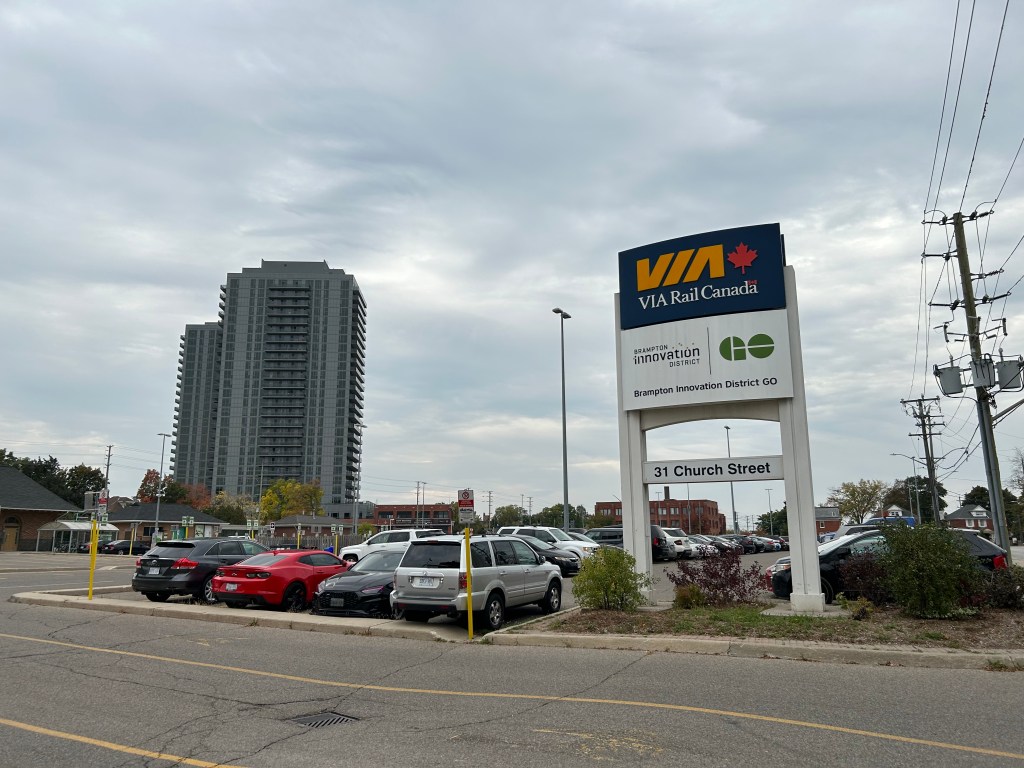
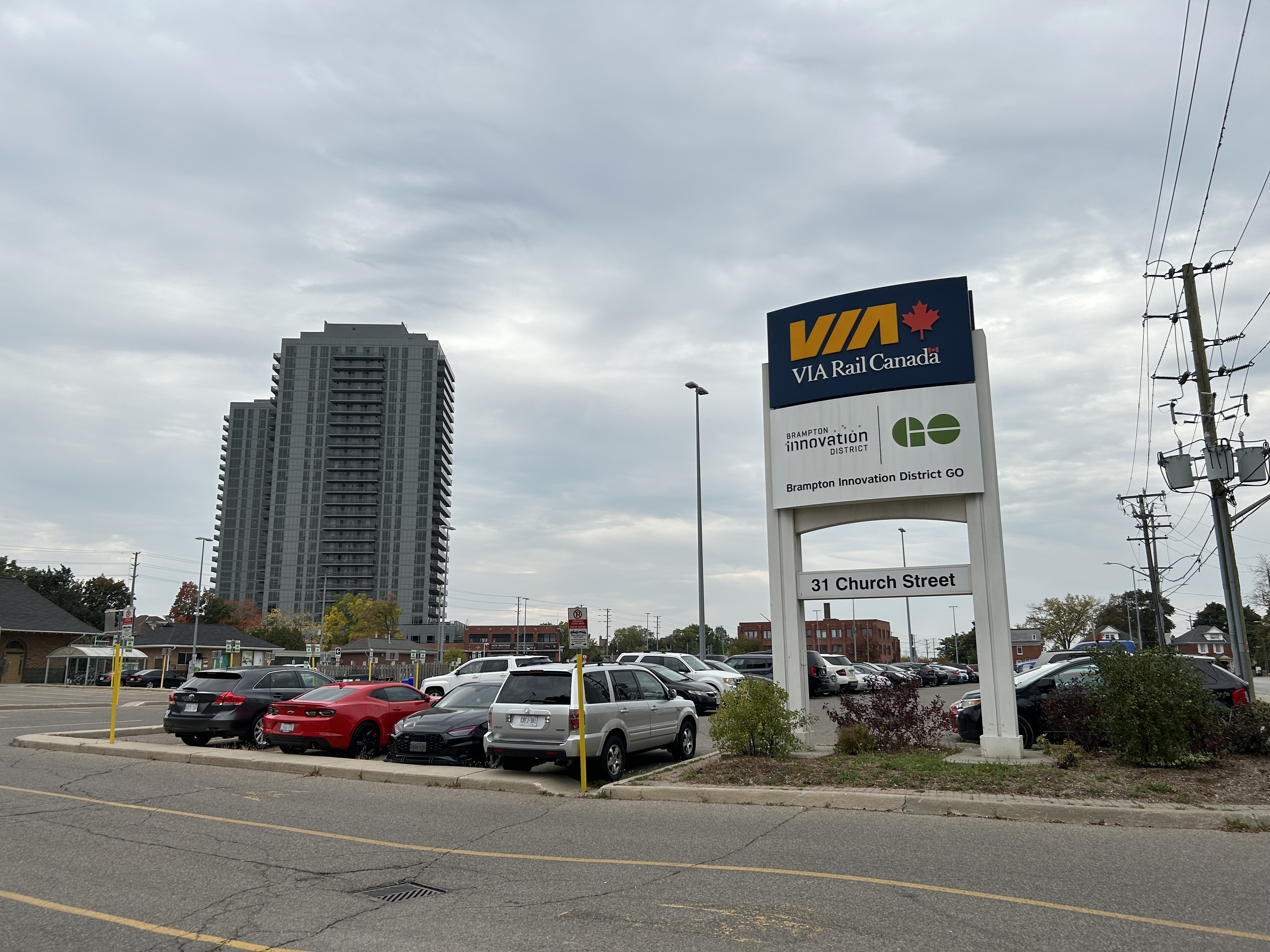
    Brampton Innovation District GO sign

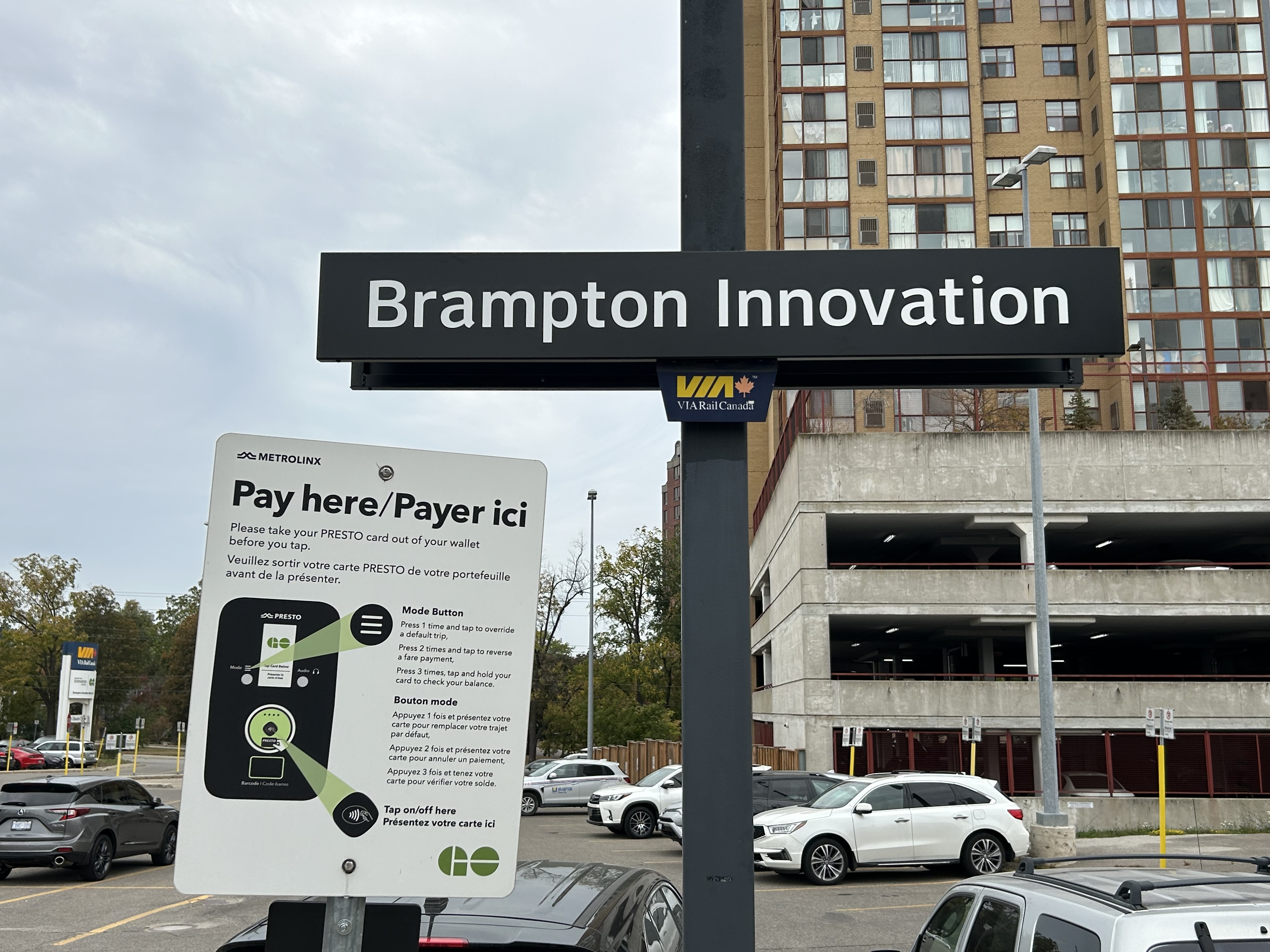
    On June 29, 2023, the City of Brampton announced a naming rights agreement with Metrolinx to rename the Brampton GO Station to “Brampton Innovation District GO” for a 10-year period. This was Metrolinx’s second naming rights agreement, after renaming Oshawa GO Station for Durham College in 2022. The name change took effect in September, with new signs installed.

    The Brampton Innovation District is a city-led project in Downtown Brampton to support higher education and entrepreneurship. It includes co-working spaces such as BHive and the Brampton Enterprise Centre incubator, the Rogers Cybersecure Catalyst, as well as partnerships with Sheridan College, Toronto Metropolitan University, and Algoma University. Rogers has committed to relocating its Brampton offices to the downtown core, while the city is planning the Brampton Centre for Innovation, which will include a new central library. There are a lot of interesting things happening in Downtown Brampton, though without the exposure more established tech hubs enjoy.

    In this context, the deal to rename Brampton GO Station makes some sense. As the June 29, 2023 press release from the City of Brampton says:

    Through increased awareness of the Brampton Innovation District, this partnership with Metrolinx will further enhance Brampton’s position as an innovation and technology event destination to host tech sector events and international delegations, and enhance Brampton’s unique ability to attract highly skilled tech talent from both Toronto and Waterloo.

    Unlike “Durham College Oshawa GO,” at least “Brampton Innovation District GO” is at the place it is named for. Having the name show up on maps, signage, and announced by GO Transit staff will raise awareness of the district’s current and future potential, especially once some of the built infrastructure, such as the Centre for Innovation, the new downtown transit hub, and the new Rogers campus, is constructed.

    The “GO Brampton” sign has been replaced by “Brampton Innovation”

    But at the same time, I still feel uneasy about renaming stations and transit lines. The new, longer names are harder to fit on maps and signage. They can lead to confusion, and in this case speak more to the city’s ambitions than what most travelers are actually looking for. It’s also interesting that the only two naming rights deals made by Metrolinx so far are with public-sector organizations: a provincially funded college, and a municipality.

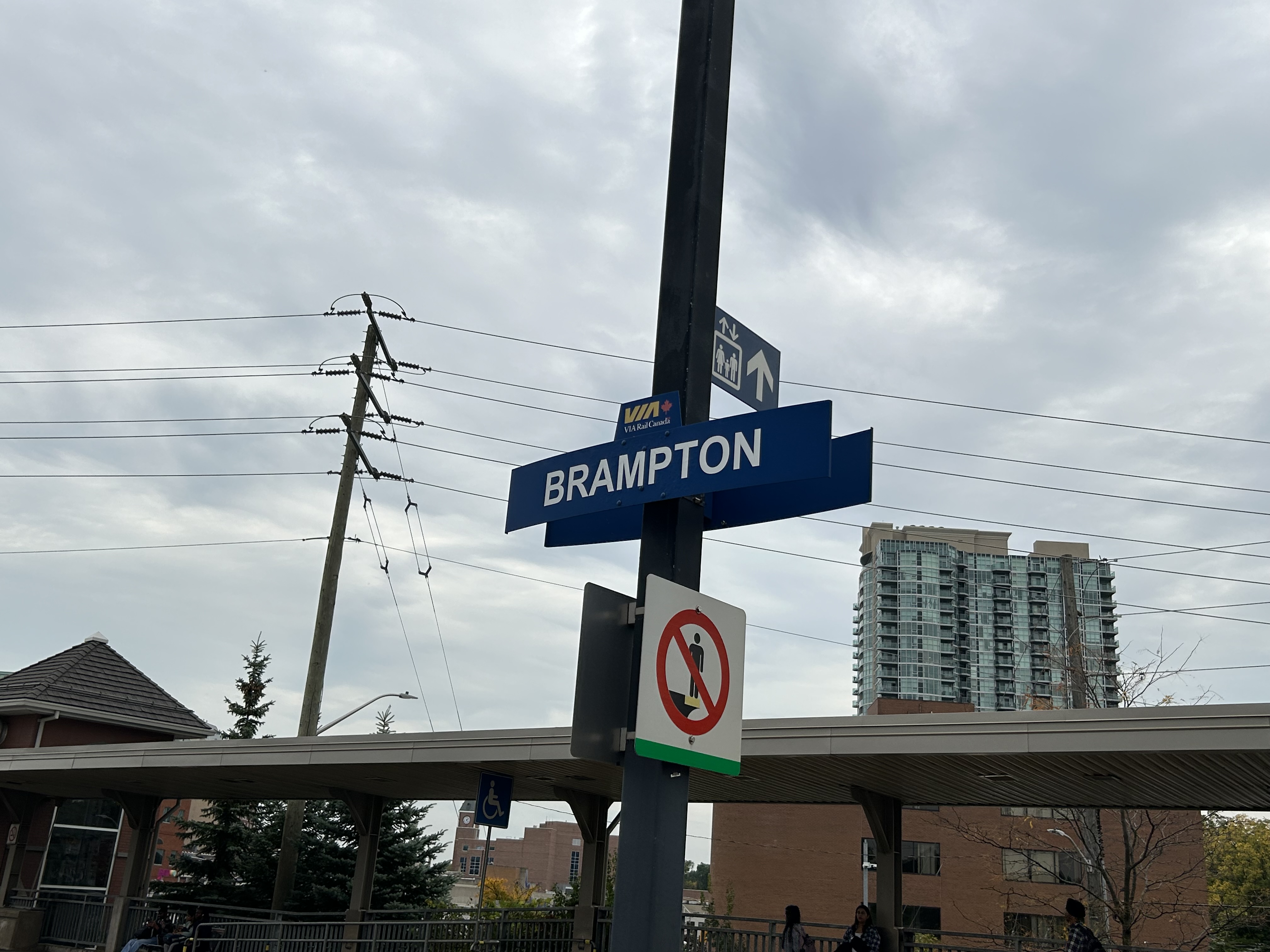
    I also note that VIA Rail, which also uses the station, still refers to it simply as “Brampton,” just as it still simply refers to “Oshawa.”

    VIA Rail still just calls it “Brampton.”
  • Brampton LRT: a second chance to get it right

    A mock-up of a Bombardier Flexity tram sits in Gage Park while a Brampton Züm bus passes by in 2013

    On Wednesday, May 10, Brampton’s Committee of Council will consider a staff report on the proposed extension of the Hurontario LRT north from Steeles Avenue to Downtown Brampton.

    This section of the LRT, planned last decade, was narrowly rejected by Brampton City Council in a 6-5 vote, with then-mayor Linda Jeffrey supporting the transit line’s construction. Unfortunately, six city councillors sided with several downtown merchants and affluent Main Street South residents (including former premier Bill Davis), who did not support a surface tram on Main Street, back in October 2015.

    Councillors who voted to reject the Main Street alignment later backed the study of slower, more indirect alternative routes, while voting to ask Metrolinx and the provincial government, which was planning the line, to terminate the LRT on the south side of Steeles Avenue to allow for their potential fantasy options. Unfortunately, Metrolinx obligated.

    In 2019, a newly elected council, led by a new mayor, Patrick Brown, was willing to revisit the LRT decision, again backing a direct Main Street alignment. City staff were directed to update the original, approved 2014 Transit Project Assessment Process (TPAP). In 2021, staff narrowed the alternatives to just two options: an all-surface alignment from Steeles Avenue to the GO station in Downtown Brampton, and an underground option between Nanwood Avenue and the rail corridor. Meanwhile, Brampton staff and elected officials tried, without success, to restore the north-side LRT terminal at Steeles Avenue/Gateway Terminal.

    Now that the 30% design work for the two options is complete, city officials must decide how to proceed, especially if they expect senior levels of government to cover the costs of this major transit project.

    The alignments

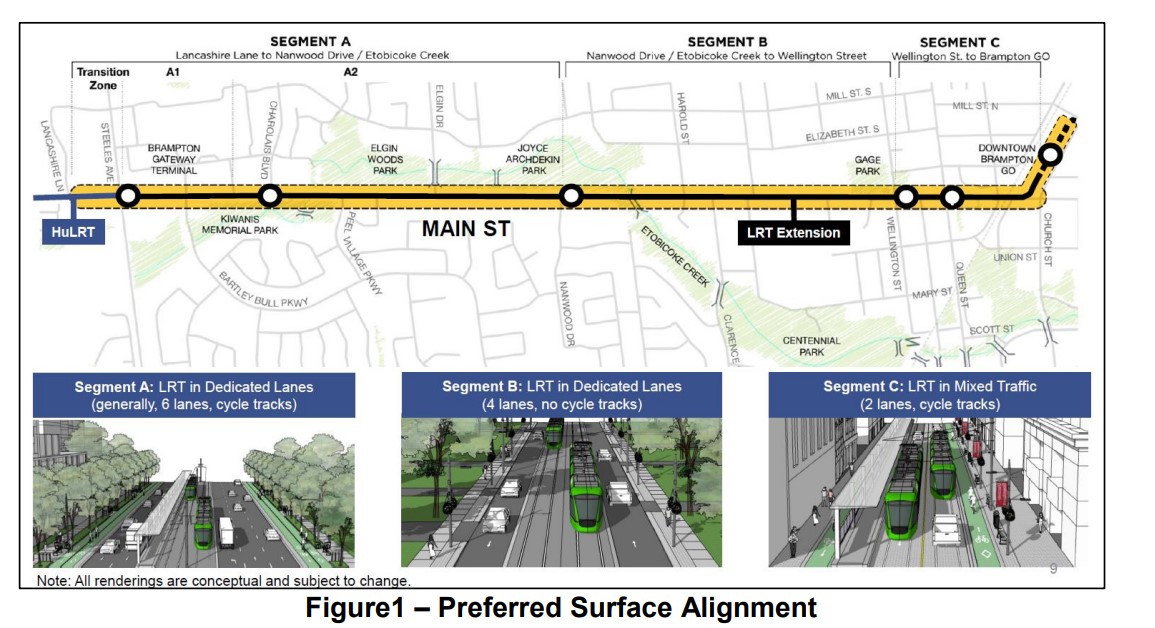
    The all-surface alignment three stops in each direction between the Gateway Terminal at Steeles Avenue and the Brampton GO Station: at Charolais Boulevard, Nanwood Drive, and split northbound and southbound stops between Wellington and Queen Streets. These stop locations match the existing 502 Züm Main stops on this section of Main Street.

    Between Nanwood Drive and Wellington Street, the LRT would operate in dedicated lanes, with general traffic in the outer two lanes. There would not be room for bicycle lanes, and left turns would be prohibited at non-signalized intersections. North of Wellington, the LRT would run in mixed traffic, with cycle tracks and widened sidewalks on both sides of the street.

    The preferred surface alignment

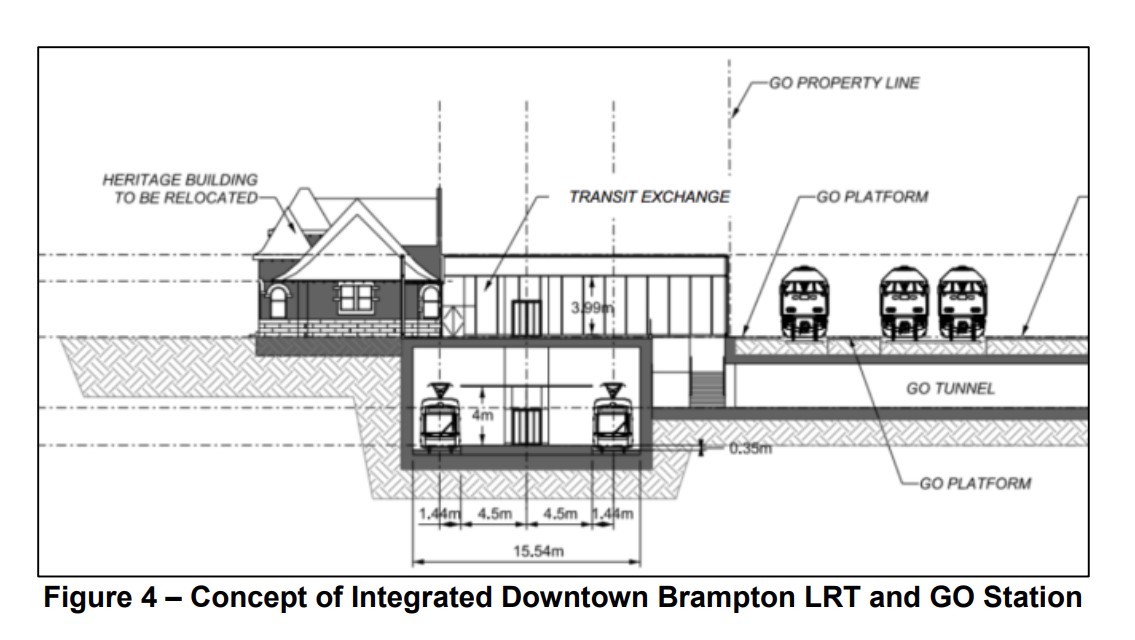
    The northern terminus would be on the GO Station property, on the west side of Main Street, in a below-grade trench. Stairs and elevators would connect the platform with the GO Station, while the historic 1907 station building would be moved to support GO train service expansion on the busy CN freight corridor. The street surface would need to be lowered by one metre for the light rail vehicles and the overhead wire to clear the railway underpass.

    Alignment of off-street surface LRT alignment on the GO Station property
    Design concept for the GO and LRT terminal

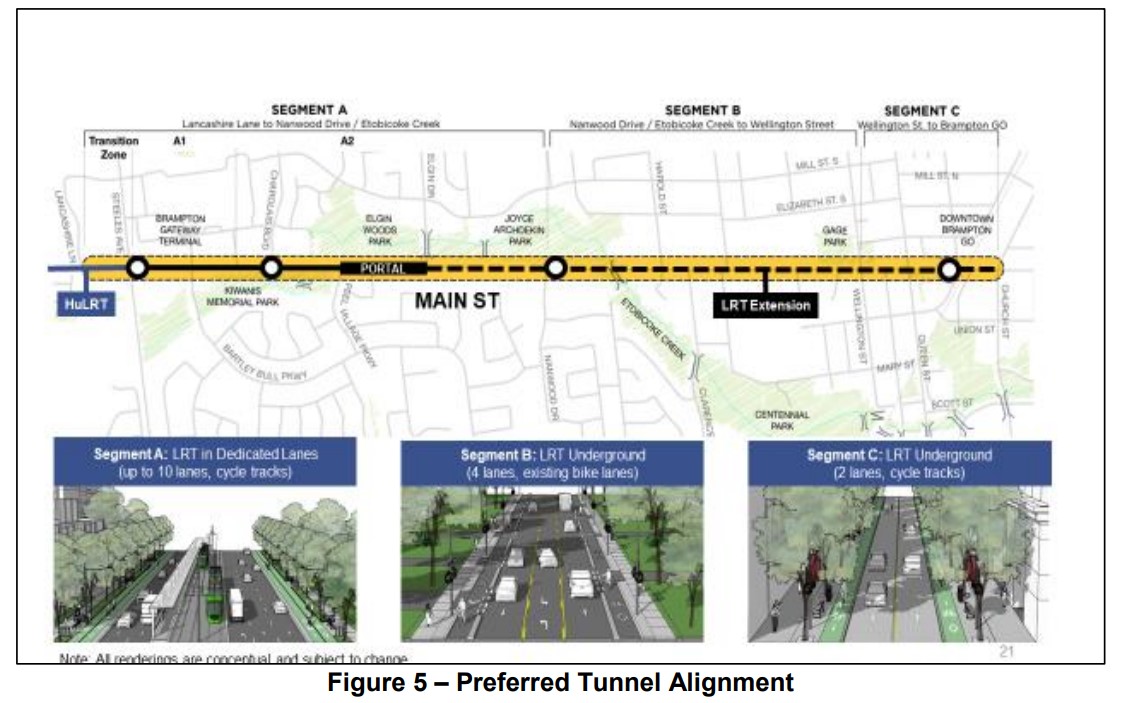
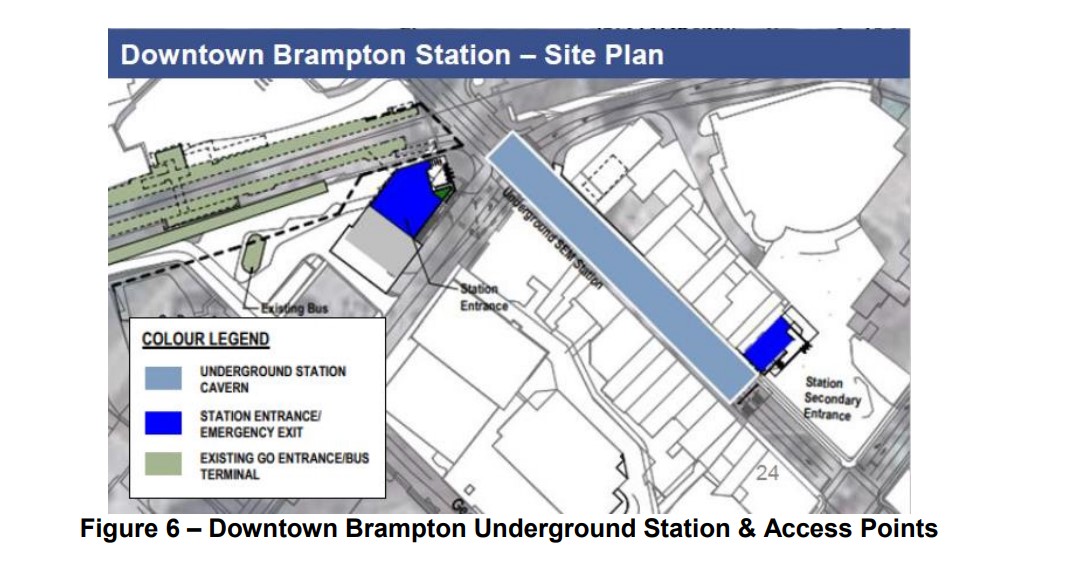
    The tunnel alignment – which was not part of the approved 2014 TPAP – includes the same surface stops at Brampton Gateway Terminal and Charolais Boulevard, and two underground stations, at Nanwood Drive and the terminal, just south of the GO Station. Between Elgin and Nanwood, the tunnel would be dug in the traditional cut-and-cover method while the portion under Etobicoke Creek and the downtown core would be constructed using the sequential excavation method.

    The tunnel portal would be located at Elgin Drive, several hundred metres south of Nanwood. The longer tunnel section is required to avoid the Etobicoke Creek floodplains. Though Nanwood Drive has no intersecting transit routes and relatively low density, the rundown Brampton Mall property would be an ideal urban development site, as would the commercial properties immediately to the south.

    The preferred tunnel alignment

    The downtown terminal station would include a primary access at the corner of Main and Nelson Streets, to provide access to the GO Station and the proposed new transportation hub, as well as a secondary entrance closer to Queen Street and Garden Square.

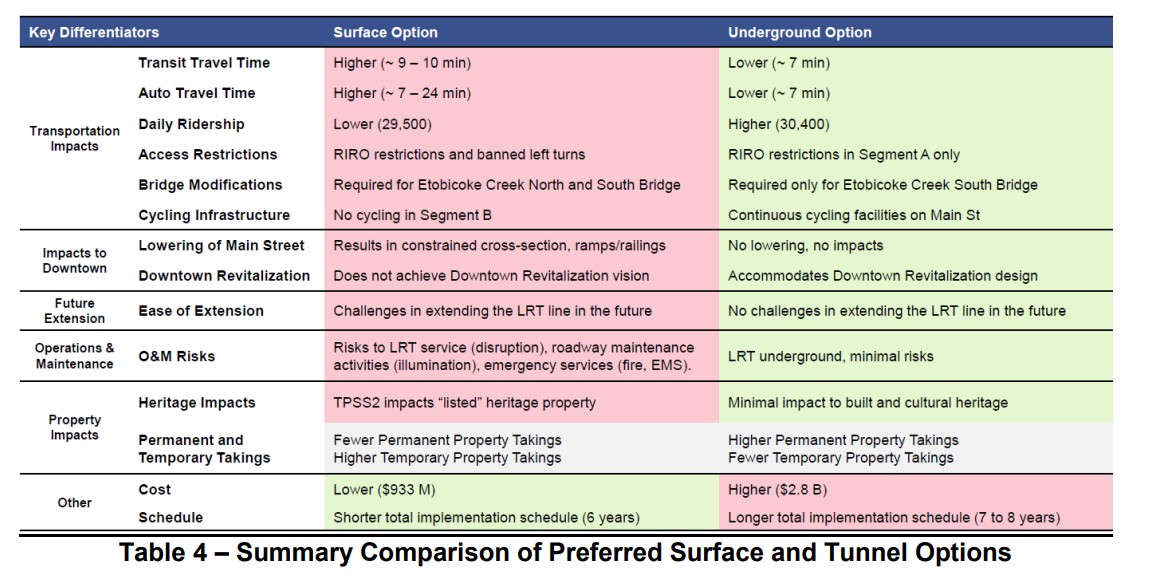
    The two options were compared, putting the tunnel alignment ahead in all categories apart from cost and schedule. The tunnel would allow for continuous cycling infrastructure on Main Street, minimize traffic impacts, while having slightly higher ridership and somewhat faster transit. The tunnel would also better satisfy homeowners and businesses along the corridor. Staff also note that the tunnel alignment, without the bend into the GO station property, would be easier to extend farther north.

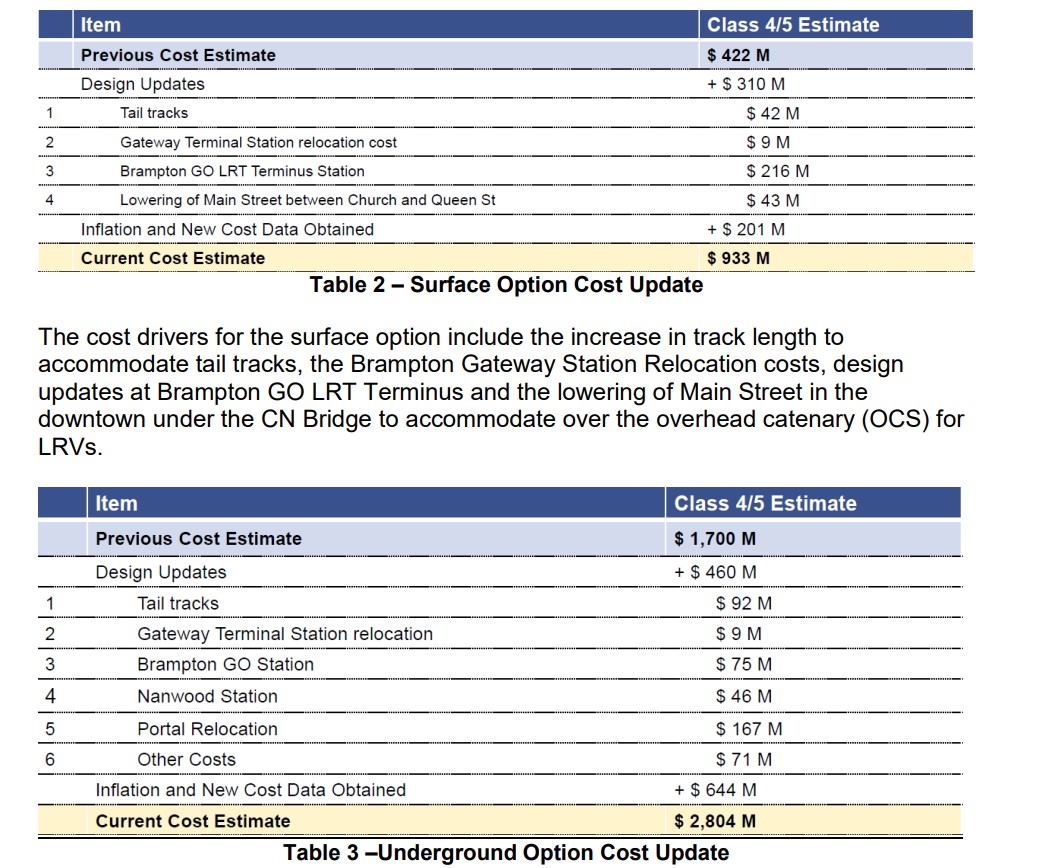
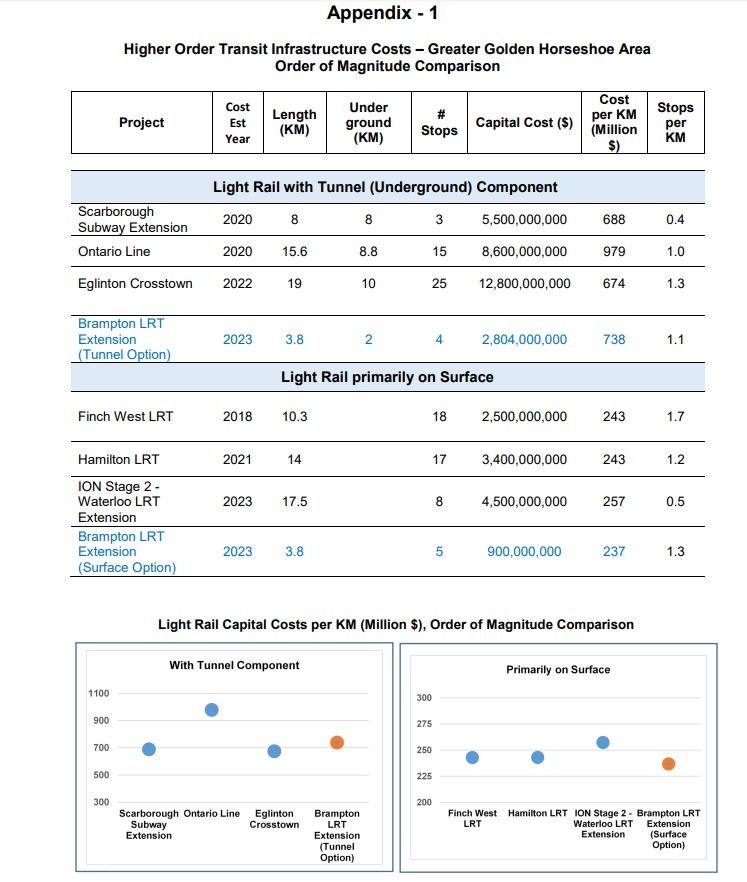
    As with other transit projects, the costs of delaying this segment of the LRT are subject to inflation. The surface alignment would cost $933 million, while the tunnel route would cost $2.8 billion. The surface option would take one to two fewer years to complete, an important consideration given Brampton’s fast-growing transit ridership and delays on other complex LRT projects, such as the Eglinton-Crosstown line.

    Cost comparisons for the tunnel and surface alignments

    The Pitch

    Towards the end of the staff report is a section called “Funding Advocacy.” Staff rightfully point out the need for the LRT extension, given the city’s and the province’s goals of directing high density development to the downtown core and other transit station areas, as well as the city’s record of continuous ridership growth and transit improvements.

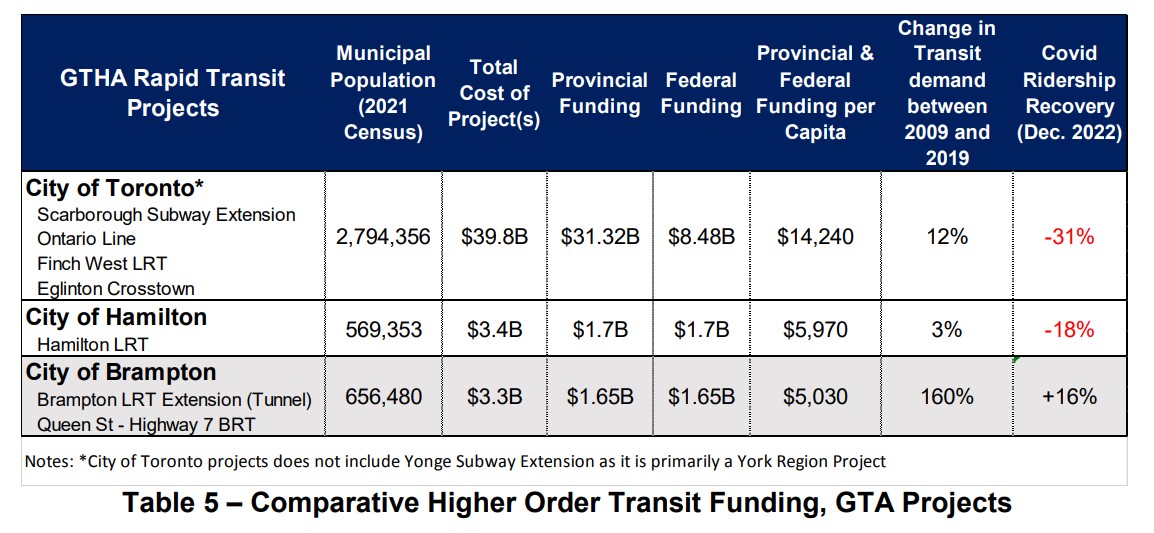
    They also point out that the funding that Brampton is seeking (for the Queen Street BRT project and the LRT, specifically the tunnel option) is comparable to other transit projects in the Greater Toronto and Hamilton Area. The table below compares the costs and funding sought for Brampton’s proposed projects to those funded and underway in Toronto and Hamilton.

    Table comparing costs, funding and system ridership for Toronto, Hamilton, and Brampton

    An appendix to the staff report compares the cost of the tunnel option with other tunnelled Ontario projects (the Scarborough Subway Extension, the Ontario Line, the Eglinton-Crosstown), and the surface alignment with other surface projects (Finch West LRT, Hamilton LRT, Ion LRT extension in Cambridge).

    Concluding thoughts

    It is still a shame that Brampton City Council put the interests of a small, but affluent, minority of voters first back in 2015-2016. Had they not prevailed, the LRT into Downtown Brampton would have been under construction right now – at the same time that critical water infrastructure is being replaced in Downtown Brampton, and we would be looking forward to it being open in just two years. However, just three of the eleven council members that voted on the LRT in 2015-2016 remain at Brampton City Hall, and two of those three councillors supported the original project.

    The arguments in favour of the tunnel are enticing: a faster transit ride though a congested part of the city, an appeal to provincial and federal governments that have historically short-changed Brampton on its infrastructure needs, in a city that will have six seats up for grabs in the next elections.

    However, a surface LRT will be quicker and much cheaper to build. I also do not see the need for further extensions northward, at least via Main Street, and even then, it would require a second tunnel portal somewhere near Vodden Street, adding at least $1 billion to future costs. The GO station terminal points towards the abandoned Orangeville-Brampton Railway, which could provide a good alignment northward from Downtown Brampton, even with a parallel cycling path.

    More than anything, I want to see the Hurontario-Main LRT completed to Downtown Brampton as soon as possible, especially as work progresses on all-day hourly train service between Toronto and Kitchener and revitalization and intensification of Downtown Brampton accelerates.

    The provincial government has signaled that they prefer the surface alignment for cost reasons (notwithstanding it spending billions of dollars on an unnecessary tunnel on Eglinton West in Etobicoke), as does the Brampton Board of Trade. It is also worth noting that this study is only at the 30% design phase, detailed engineering work may find further costs.

    The surface option was the right choice in 2015, and it remains the right choice today. This time, maybe, Brampton will get it right.