Tag: Brampton

  • A sudden drop in transit usage across the Toronto Region

    A sudden drop in transit usage across the Toronto Region

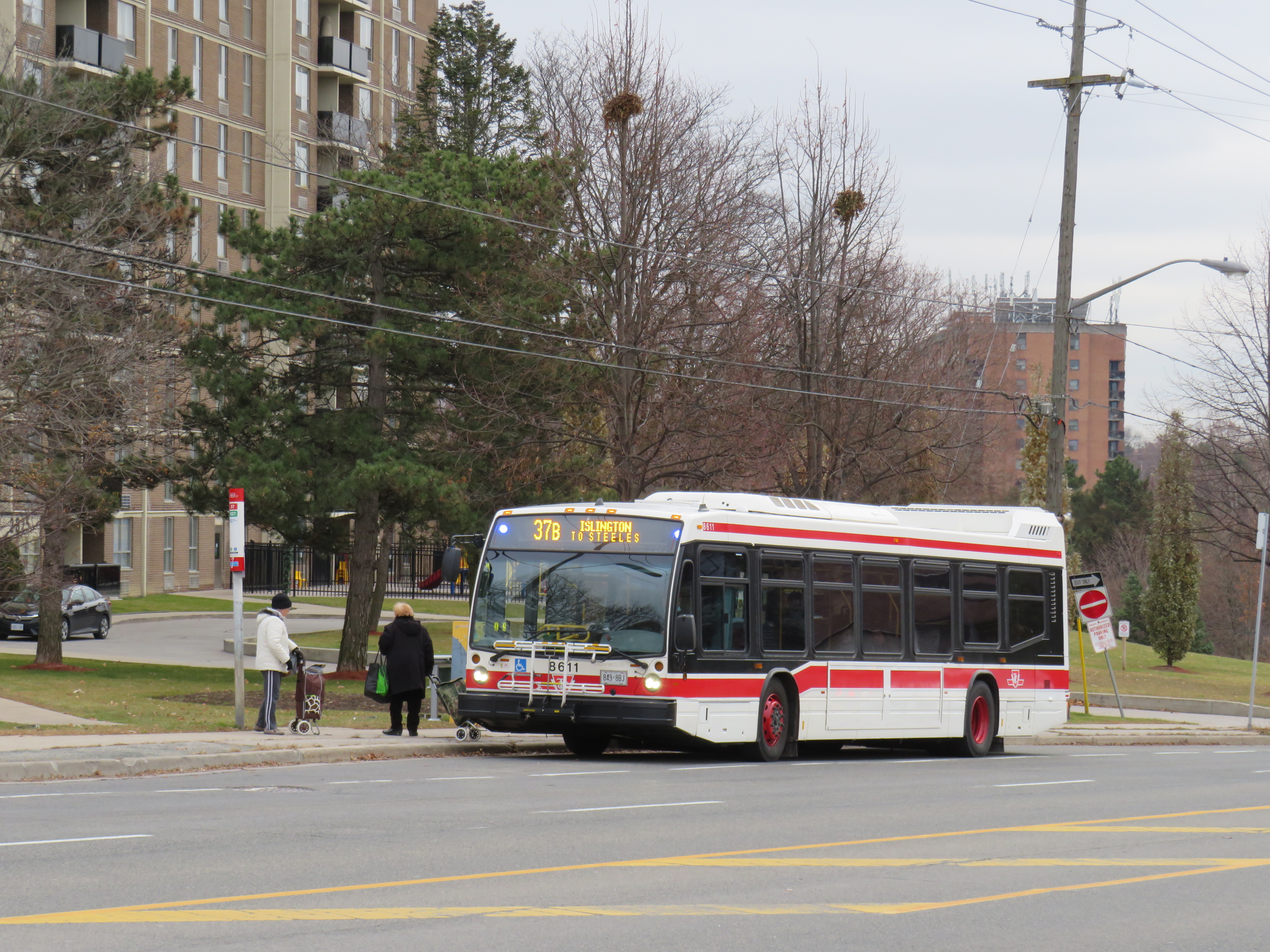
    IMG_6299-001Last week, I wrote about how several TTC routes were facing overcrowding, despite the COVID-19 pandemic, and a severe drop in system-wide ridership since early March. I shared this analysis on Spacing’s website, and Ben Spurr at the Toronto Star reported more about the story this week.

    Though detailed ridership data is not freely accessible, I wanted to see how ridership on the TTC, GO Transit, and other Greater Toronto and Hamilton Area transit agencies was faring. Helpfully, the team behind the Transit app, a trip-planning smartphone tool, made their usage data available to transit agencies, journalists, and data nerds to track transit demand during the pandemic. Although there are some limitations to using this data (more on that later), it’s an excellent metric for tracking transit ridership for dozens of major transit authorities across Canada and the United States, representing nearly every major metropolitan region.

    The numbers used to determine transit ridership demand is based on usage of the Transit app. (While Transit is one of several apps that can be used to plan trips, including Metrolinx’s own Triplinx app, Transit is my favourite). Normal usage is defined by Transit as app sessions observed on the same day of the week one year ago, averaged over three weeks and corrected for yearly growth in the corresponding transit agency. Hence, a rapidly-growing system, such as Brampton’s, can be represented accurately by the app.

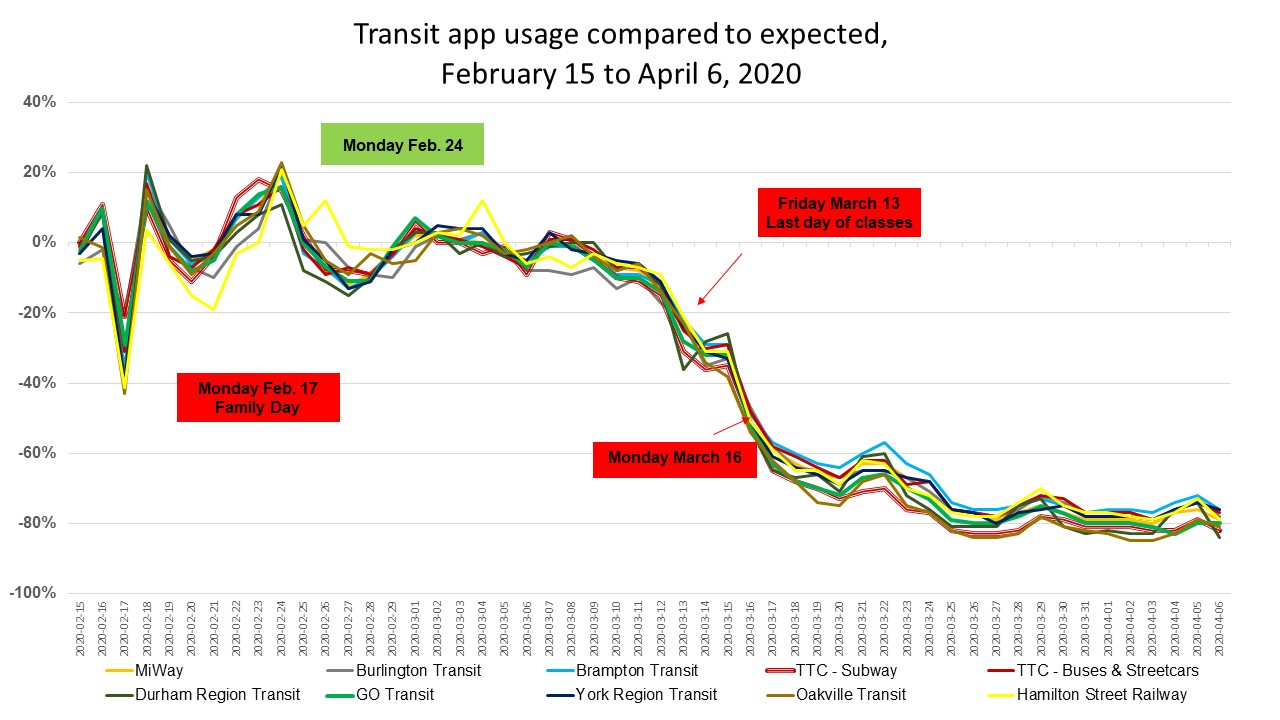
    Data was available for every transit agency in the Greater Toronto and Hamilton Area, apart from paratransit services (e.g. Wheel-Trans, Transhelp, DARTS, etc.) and Milton and Caledon Transit, the smallest fixed-route services. The graph below shows the how the usage of the Transit app fluctuated based upon the expected value, reflected as a percentage.
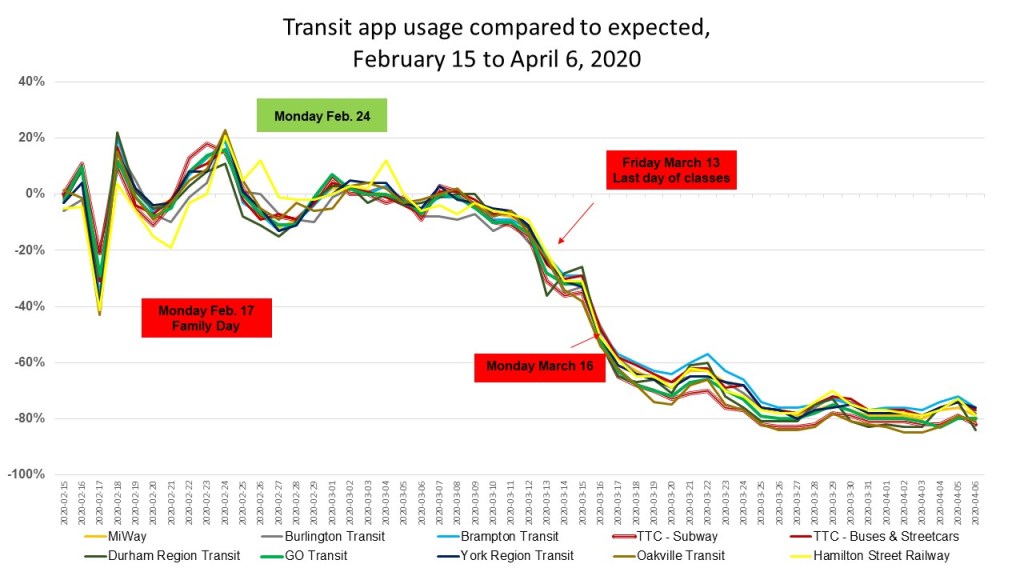
    GTHA Transit app usage from Feb 15 2020
    Transit app usage compared to expected for GTHA transit agencies, February 15 to April 6, 2020 (click for larger image)

    Note how the actual Transit app usage dropped by over 40% for every transit agency on Monday, February 17, which was Family Day, a provincial holiday in Ontario. Most transit services were operating on a weekend or holiday service, while students and many workers did not take transit. This was likely compared with normal Mondays, hence the one-day drop.

    It wasn’t until the second week of March that ridership began to decline as the number of COVID-19 cases began to surge in Canada and the United States, and governments began announcing new measures to reduce the rate of infection. On Thursday March 12, Ontario announced that public schools, scheduled to close for March Break, would stay closed for two additional weeks (the shutdown has since been extended). That day, the National Basketball League suspended the season, followed quickly by all other sports leagues. Employers began to implement contingency measures, such as work-from-home arrangements. By Monday the 16th, all restaurants were closed to sit-down clientele, and most entertainment venues closed.

    By the week of March 29, transit demand was down by 75 to 82 percent across the Greater Toronto Area. Although many workers were either laid off or were sent home to work, employees in the healthcare, personal care, logistics, essential retail service (i.e. grocery workers), and food manufacturing industries remained on the job. This is evident in the difference between the demand for the subway (-81%) and the surface network (buses and streetcars, -76%) as they serve very different employment centres. Transit’s numbers are comparable to the TTC’s own ridership estimates.

    GTA_Ridership_COVID
    Map depicting estimated drops in transit demand for GTHA transit agencies compared to expected use for week of March 29 to April 5, 2020. Data from Transit app.
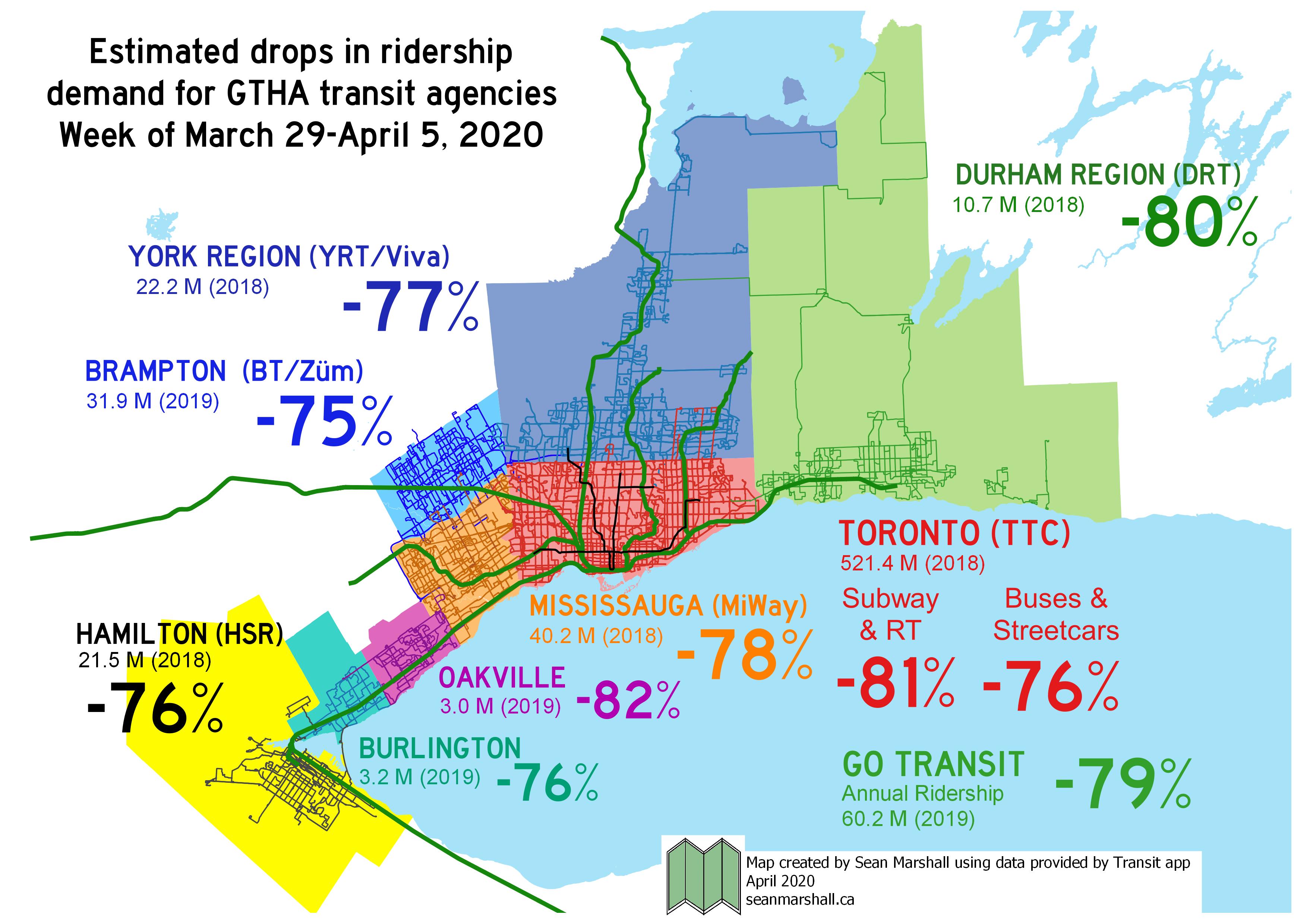
    Brampton Transit had the lowest estimated reduction in demand, at -75%. This could be for the same reasons that several bus routes in Toronto saw crowding despite a system-wide drop in ridership. Brampton’s population is relatively lower-income than many other suburban municipalities in Halton, Peel, and York Regions. Brampton also has many large food processing employers, such as Maple Lodge Farms, and many warehouses and distribution centres, including two major Amazon Fulfillment Centres. Brampton Transit connects to other major manufacturing and logistics employment areas in Mississauga, Vaughan and Toronto, including Pearson Airport.

    Oakville Transit had the greatest drop, which can be explained by two factors. The first is that Oakville, is a relatively more affluent municipality, with fewer logistics and food industry employers. Secondly, its bus network is designed entirely to connect with GO Transit’s Lakeshore Line, which feeds Downtown Toronto. Therefore, the ridership dependent on Oakville Transit is more likely to be working from home than Brampton’s.

    It must be noted that Transit’s figures are not the same as detailed ridership numbers collected by each transit agency. For example, Metrolinx cited a 90% drop in ridership across the GO Transit train and bus network, compared to Transit’s 79% estimate drop. Nonetheless, Transit’s data is a valuable metric.

    With the sudden drop in ridership, there’s also a sudden drop in revenue. While many systems, including Brampton Transit and GO Transit have made service reductions, they have been careful to ensure enough capacity remains to safely meet demand. Every system has also increased vehicle and station cleaning, and most have stopped collecting fares to protect both passengers and operators. Just like laid-off employees, students, and freelance workers, transit too will need a bailout of some kind to rebuild lost ridership and maintain safe and healthy services.

    Transit projects such as the Eglinton-Crosstown LRT, the new relief transit service for central Toronto (be it the Relief Line or Ontario Line), and GO Transit expansion must go on, as does the progress made in building ridership at suburban systems such as Brampton and Durham Region.


  • Some love for Ontario’s municipal flags

    Some love for Ontario’s municipal flags

    Flag of TorontoThe flag of the City of Toronto, designed by Renato De Santis, is an example of a very good civic flag
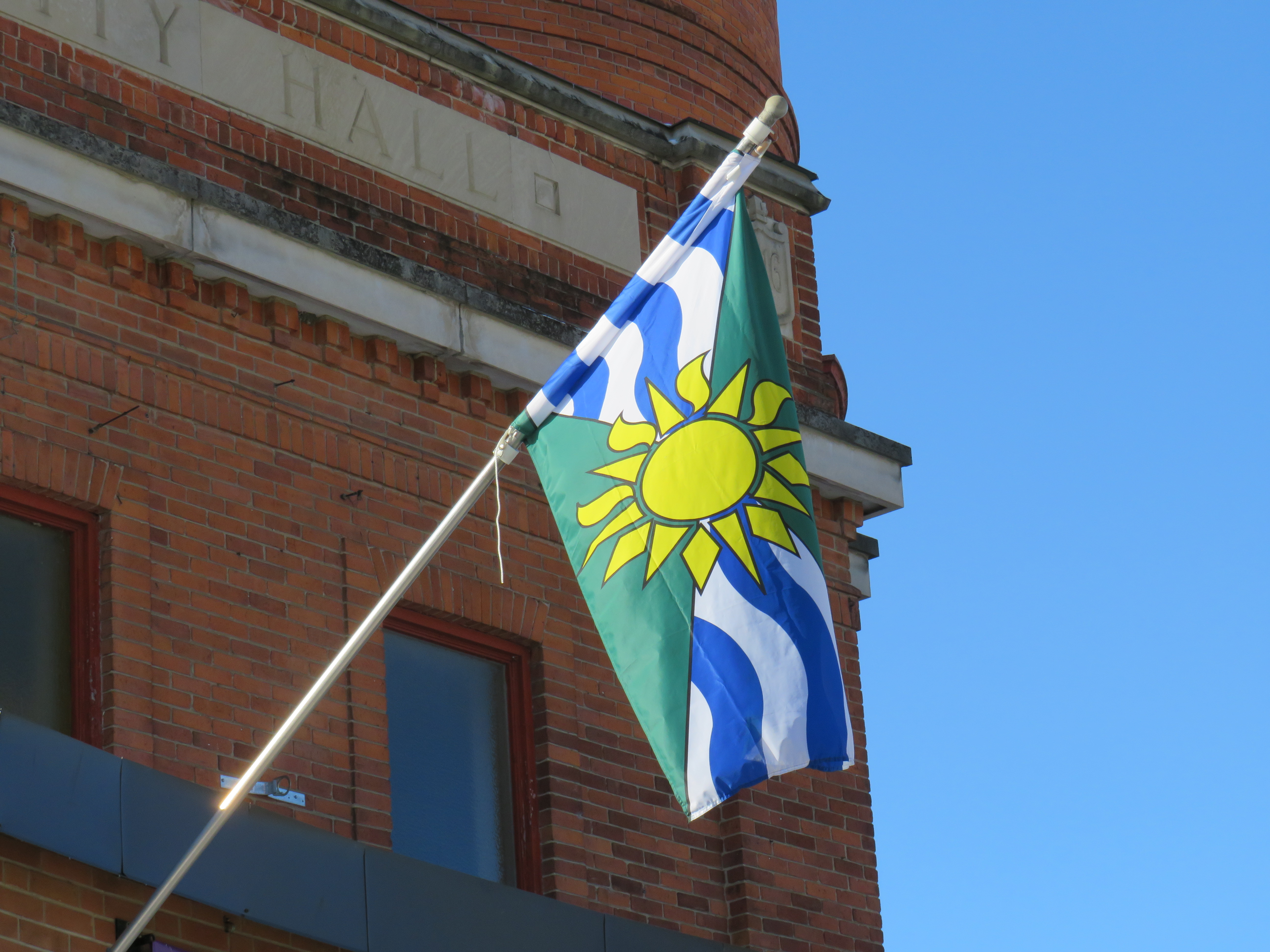


    I was in Orillia last week, mainly to check out the new Simcoe County Lynx bus system. While there, the flag flying from the Opera House (formerly the city hall) caught my attention. Most municipal flags are boring, usually consisting of the town or city’s coat of arms, shield, or logo on a plain background.

    Orillia municipal flag, with a yellow sun in the middle

    But Orillia’s flag is different. It has waving blue and white waves, with two green triangles facing the centre, and a bright yellow sun in the middle. The symbolism wasn’t difficult to figure out: the city’s position on the narrows between Lake Simcoe and Lake Couchiching, with the sun being a nod to Orillia author Stephen Leacock’s Sunshine Sketches of a Little Town, a light, humourous collection of short stories about the denizens of Mariposa, a thinly-veiled fictionalization of Orillia.

    Yet Canadian cities that boast populations twenty or thirty times that of Orillia can’t boast having such a fine flag.

    For the most part, we don’t think about state, provincial, and municipal flags, and that’s a pity. In the few cities that have an unique and powerful flag, they have become part of that city’s iconography. Unfortunately, though Toronto does have a very good civic flag, we don’t fly it like it should.

    According to the North American Vexillological Association, there are five principles for creating a good flag:

    • Keep it simple — so simple, it can be drawn by a child from memory
    • Use meaningful symbolism
    • Use two or three basic colours
    • Never use lettering or seals
    • Be distinctive or be related

    Canada’s flag, adopted in 1965, adheres to these principles perfectly. It uses just two basic colours: red and white. With a large red maple leaf in the middle, it’s easily recognizable around the world. While a child might not get the eleven-point maple leaf exactly right, it’s otherwise easy to draw from memory.

    There are, of course, exceptions to these principles.

    Maryland’s complicated state flag, based on the coat of arms of colony founder Cecil Calvert, Lord Baltimore, is distinctive and popular, nearly as common as the US flag. California’s state flag is emblazoned with the words “California Republic” but it has significant historical meaning. The flag of South Africa, adopted in 1994, has six colours, but by merging the Pan-African colours of the African National Congress with the red white and blue of Britain and the Netherlands, it represents unity in the post-apartheid era.

    Flags of Maryland, California, and South Africa, notable exceptions to the rules

    For the most part, famous and great civic flags adhere to these principles. The flags of Amsterdam, Berlin, Chicago, and Tokyo all stand out. In Chicago and Amsterdam, these flags are proudly flown from private homes and watercraft, found on t-shirts and souvenirs, and well known around the world. The bear from Berlin’s flag is almost as popular as the Ampelmännchen. Though Amsterdam’s flag’s origins go back centuries (the “x”s are actually St. Andrew’s crosses), it looks bad-ass, and on-brand for a city famous for its tolerance.

    Great civic flags: Amsterdam, Berlin, Chicago, Tokyo

    Compared to the great examples above, Ontario’s provincial flag is just bad. Compare the provincial red ensign with the flag of Manitoba, and then compare it to the Franco-Ontarien flag.

    The Ontario and Manitoba flags, British red ensigns defaced with the provincial shields, were only adopted in 1965 and 1966 as conservative reactions to the new flag of Canada. The two flags are difficult to tell apart from a distance, and they both contain the St. George’s cross (representing England) twice: once in the union flag in the canton, and again in the shield. There’s very little Ontario to be found. (At least the Manitoba flag contains a bison, a recognizable symbol of that province.)

    Meanwhile, the Franco-Ontarien flag is immediately recognizable, with the fleur-de-lis and a stylized trillium, the provincial flower, representing the French-Canadian presence in Ontario.

    Like Orillia, there are a few other civic flags in Ontario that get it right.

    Flags of Thunder Bay, Hamilton, Ottawa, and Toronto

    Thunder Bay’s flag depicts a rising sun above Lake Superior and the Sleeping Giant, a prominent natural landmark across the water. The flag of Hamilton includes a yellow cinquefoil, the badge of the Clan of Hamilton, with a steel chain with six large links representing the steel industry and the six municipalities amalgamated into the modern city. The flag of Ottawa contains the civic logo, with the points representing waterways and the Peace Tower on Parliament Hill. Finally, the flag of Toronto has an abstract depiction of Toronto’s city hall, with a maple leaf where the council chamber sits. The two towers also make a “T.”

    It’s a shame that Toronto doesn’t make more of its simple, yet great flag.

    Unfortunately, most flags look like those used by Ontario’s third and fourth largest cities.

    Mississauga’s flag violates most of the principles listed above by including the name of the place it represents, with the addition of “incorporated 1974” at the bottom. In the middle is the civic shield, with the typical trappings: a cog representing industry, a lighthouse representing a port (Port Credit), a waterwheel, a stalk of wheat, and wings, possibly representing Pearson Airport. Though Mississauga is a proud city with its own identity, this flag doesn’t appear except in front of civic buildings.

    Brampton’s flag is just the civic shield on a white background, again with similar trappings: a bushel of wheat, a plow, a steam locomotive, and a beaver. According to the city’s website, the gold colour and castle top signify the city’s relation with the small Cumbrian town of Brampton, England. The shield dates from the small rural town before post-war growth, with only a pine tree in the middle to represent the old township of Chinguacousy it merged with. There’s no recognition of Brampton’s modern identity as a multicultural city.

    But at least they’re not as bad as the worst city flag identified by the North American Vexillological Association, that of the city of Pocatello, Idaho, which manages to include the city slogan, a trademark, and a copyright notice. After some embarrassment, the city came up with a new, much better flag.

    Old Flag of PocatelloThe former flag of Pocatello, Idaho

    It would be wonderful to see Brampton and Mississauga come up with better designs. Brampton’s new logo and slogan, Flower City, better represents the city’s history and ambitions. A pretty good flag could be made out of that.

    As for Toronto, let’s embrace our flag more. It’s a fine one and far better than the province’s. As Torontonians generally think of themselves as Canadian first, Torontonian second, and Ontarian third, perhaps we should give our municipal banner more love.

  • Going for a ride on the Bolton Bus

    IMG_6666-001.JPG

    Caledon, a town of 66,000 located northwest of Toronto, is known for charming villages, fall colours, and horse farms. Its most popular landmarks include the waterfall at Forks of the Credit Provincial Park, the unique Cheltenham Badlands, and the vast Albion Hills Conservation Area. Much of the municipality lies within Niagara Escarpment and Greenbelt protected areas, with lands set aside for farms, estates, parks, and golf. That’s how many Caledonians like it.

    Despite its green reputation, Caledon is urbanizing its southeastern quadrant, filling it up with warehouses, truck terminals, and low-density residential subdivisions, all adjacent to the built-up areas of Brampton and Vaughan. Bolton, once a small village, now has a population of 20,000. New subdivisions north of Mayfield Road are indistinguishable from Brampton’s residential development.

    Though two GO Transit bus routes ran through Caledon, it had no transit system of its own. This was becoming more of a problem as new warehouses employing thousands of workers opened. GO Transit’s buses were scheduled to connect with trains to and from Downtown Toronto, not to serve reverse commuters. Though Brampton Transit operated several routes close to Caledon’s borders, it could not extend north of Mayfield Road without an agreement with the town.

    Despite Caledon’s historical resistance to public transit, its attitude slowly changed for the better.

    In May 2010, Brampton Transit’s 30 Airport Road bus was extended to the AMB (now Prologis) warehouse complex just north of Mayfield Road. This was done at the request of AMB, though the Town of Caledon had to agree to the request for service.

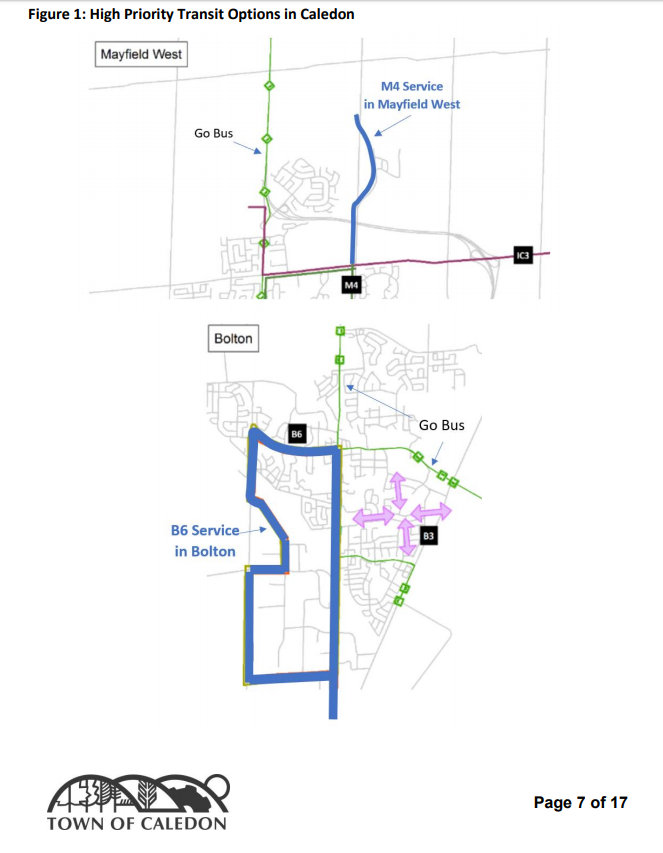
    In 2015, Caledon began to study the need for a local transit system, retaining consultants from Steer Group to evaluate and develop options for new transit services, including routes, operators, and service hours. In April 2019, the report to council recommended starting with a route on Kennedy Road in Mayfield West (contracted by Brampton Transit) and a route connecting employment areas in Bolton with Brampton Transit and YRT at Highways 7 and 50 (contracted to a third party), with a demand-response service within Bolton and an extension of a future Brampton Transit route along Mayfield Road provided within a second phase.

    Meanwhile, GO Transit announced the abandonment of Route 38 in June, citing the planned new local transit service as justification for the cut, even though it wasn’t yet setup. Though GO partially restored the service (two daily round trips to Malton GO continue, for now), it remains a short-term solution.

    The Mayfield West service — Brampton Transit Route 81 — began in September, connecting with the 502 Züm at Sandalwood Parkway. On Monday, November 11, 2019, the Bolton Route began service, contracted to Voyago. Both routes operate on 30 minute frequencies, weekday peak hours only.

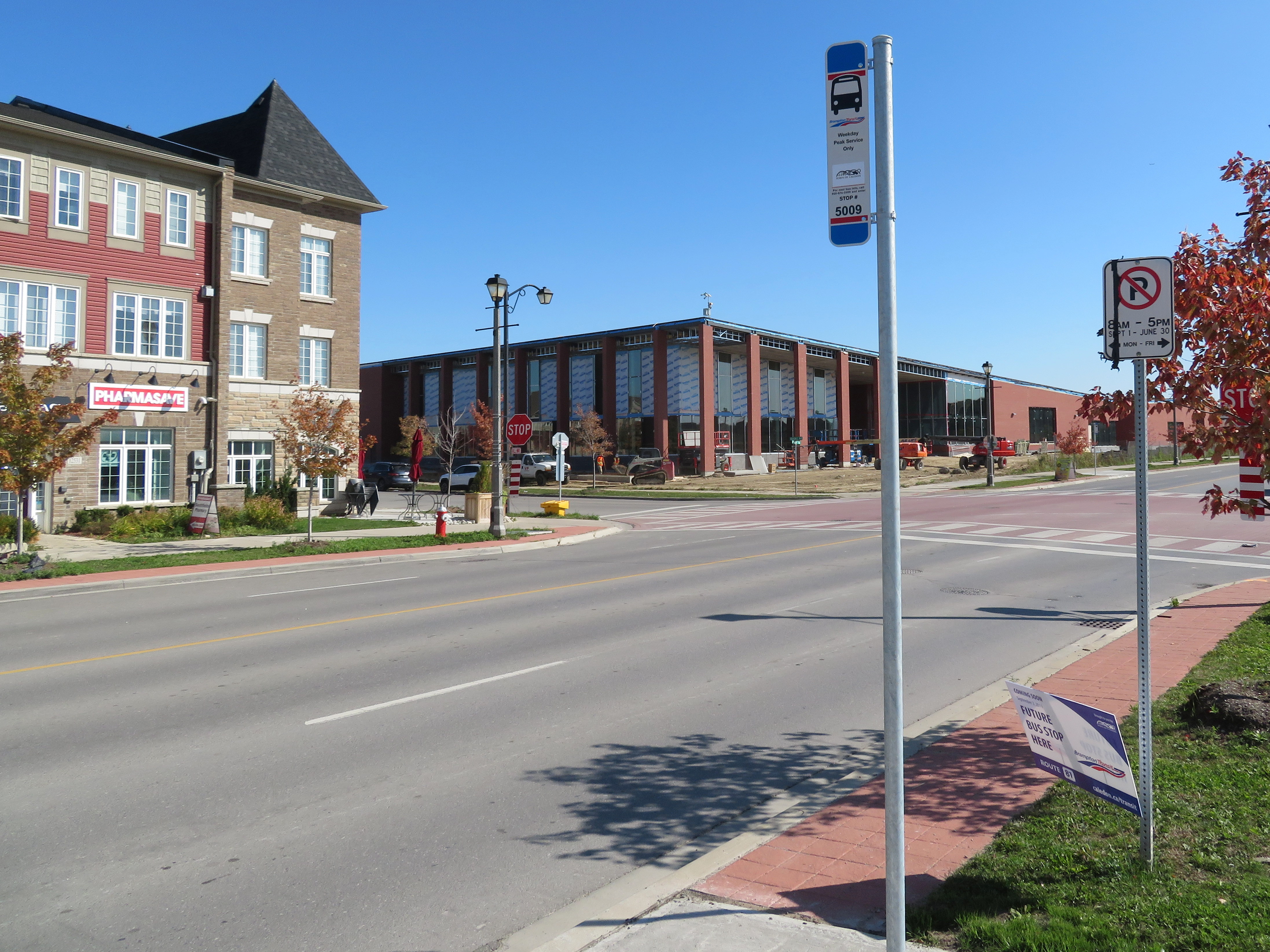
    IMG_4900-001.JPGNew Brampton Transit stop on Kennedy Road in Caledon
    The two separate agreements don’t work that well for creating a unified transit service.

    Though Route 81 and the Bolton Route both have a $4.00 cash fare, the Brampton Transit-contracted service operates on that agency’s fare structure. There’s a discount for Presto card users and a two-hour transfer valid on any other Brampton Transit route. The 80 cent co-fare to and from GO Transit also applies (Route 81 connects with the frequent 502 bus to Downtown Brampton). It’s a good deal for residents in west Caledon.

    However, the Voyago-contracted buses serving Bolton are only equipped with a fare box, and only accept $4.00 cash fares. There are no free transfers to or from connecting buses at Highways 7 and 50. (Brampton Transit routes 501 Züm, 1, 23, and 36 connect there, as does YRT route 77. It’s a few minutes’ walk to BT routes 31 and 50.)

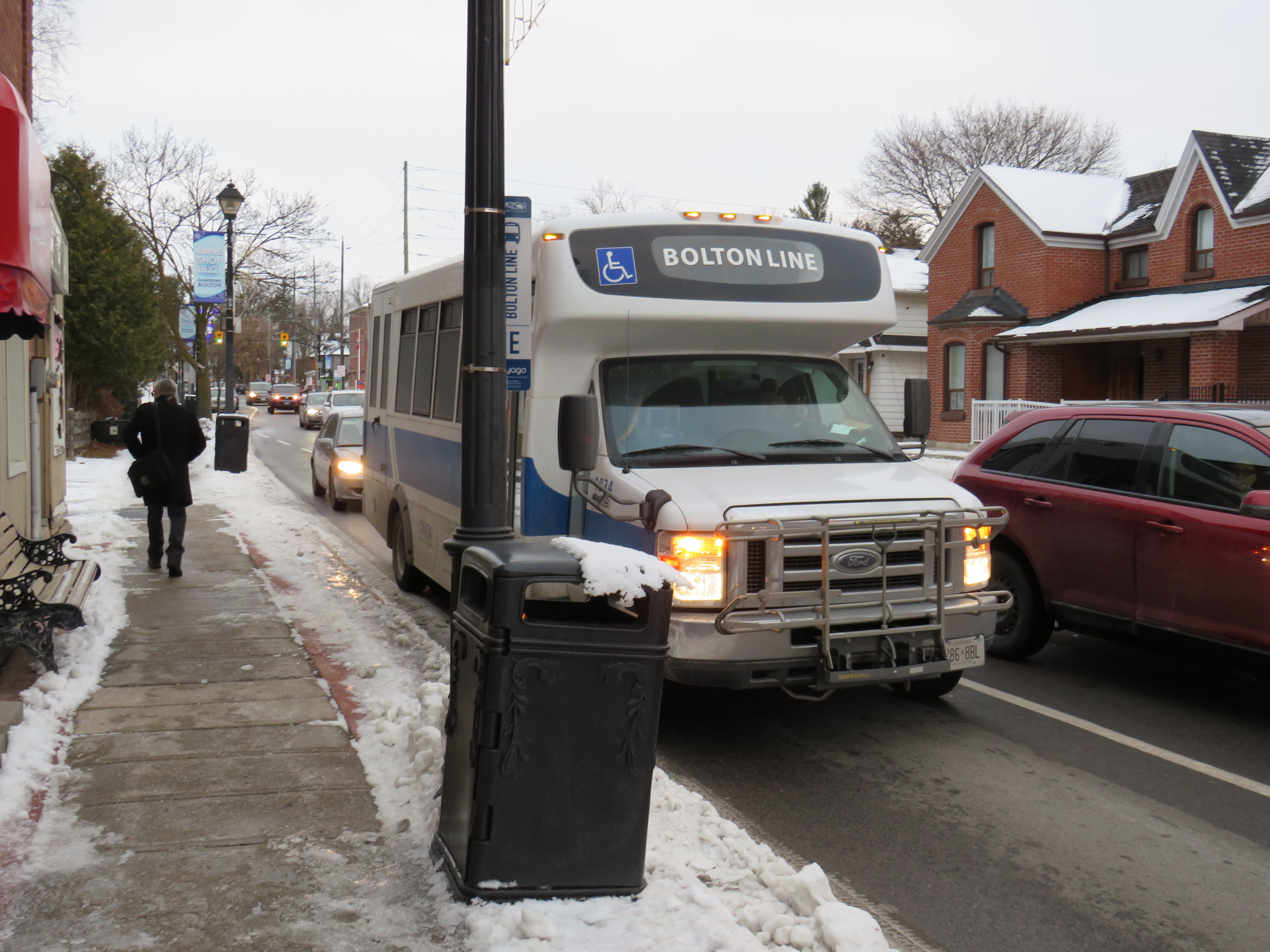
    Last week, I took the new Bolton bus to get a feel for the new service. The Bolton line operates with two minibuses with twenty seats each and a spot for mobility devices at the rear. Within Bolton, the bus makes a long loop, primarily serving the industrial area in the southwestern quadrant.

    I boarded an afternoon bus from Highway 7 at 3:26 PM and rode to Downtown Bolton. I returned on the bus leaving Bolton at 4:30 PM. I was the only passenger each way; I was told by one driver that was typical. By riding the bus, I was able to learn about some of Caledon’s challenges.

    Transit options from Caledon council reportCaledon Transit high-priority route options from the April 2019 council report
    If the Bolton Line were integrated with York Region Transit and Brampton Transit and made more stops within Brampton, it’d be a useful service, attracting many more passengers. There are several major employers on the Vaughan side of Highway 50, including XPO Logistics, Home Depot, and the Canadian Pacific Intermodal Yard. Additional stops at Major Mackenzie/Coleraine, Rutherford/Castlemore, Trade Valley/Bellechase, and Zenway/Cortrelle would make the bus more accessible and useful to residents and employers. Another stop at Queen Street (Highway 7) and Gore Road would improve connections to Route 50, which serves Humber College.

    Those additional stops would likely require a third bus, but the current route struggles to maintain a 60-minute round trip even with the limited stops currently in place. But with fare integration and local service, it could then attract more passengers, defraying the cost of the additional vehicle and operator.

    In the long term, it would be good to see more cooperation with Brampton Transit, especially as Brampton continues to develop new subdivisions and industrial lands in the northeast, in the areas bordering Caledon and Vaughan. If GO Transit goes ahead and abandons the remnant of Route 38 an express route between Bolton and Malton GO will still be necessary; ideally, that would would be a partnership between Brampton and Caledon.

    Hopefully, Caledon will continue its commitment to building a transit service within its urbanized area. Despite very low ridership at present, the potential is there as population and employment continue to grow. It will take time to tweak the service, improve connections, and build ridership that can count on affordable, reliable transit.

    It’s also time for Halton Hills — now the last GTHA municipality without local transit — to step up and follow Caledon’s lead.

  • Why transit users shouldn’t beg to cross the street

    IMG_8372.jpg

    With consistently high ridership growth over the last few years, Brampton Transit has proven to be one of the Canada’s greatest transportation success stories. The Flower City has proven that transit can be successful and popular in North American suburbs.

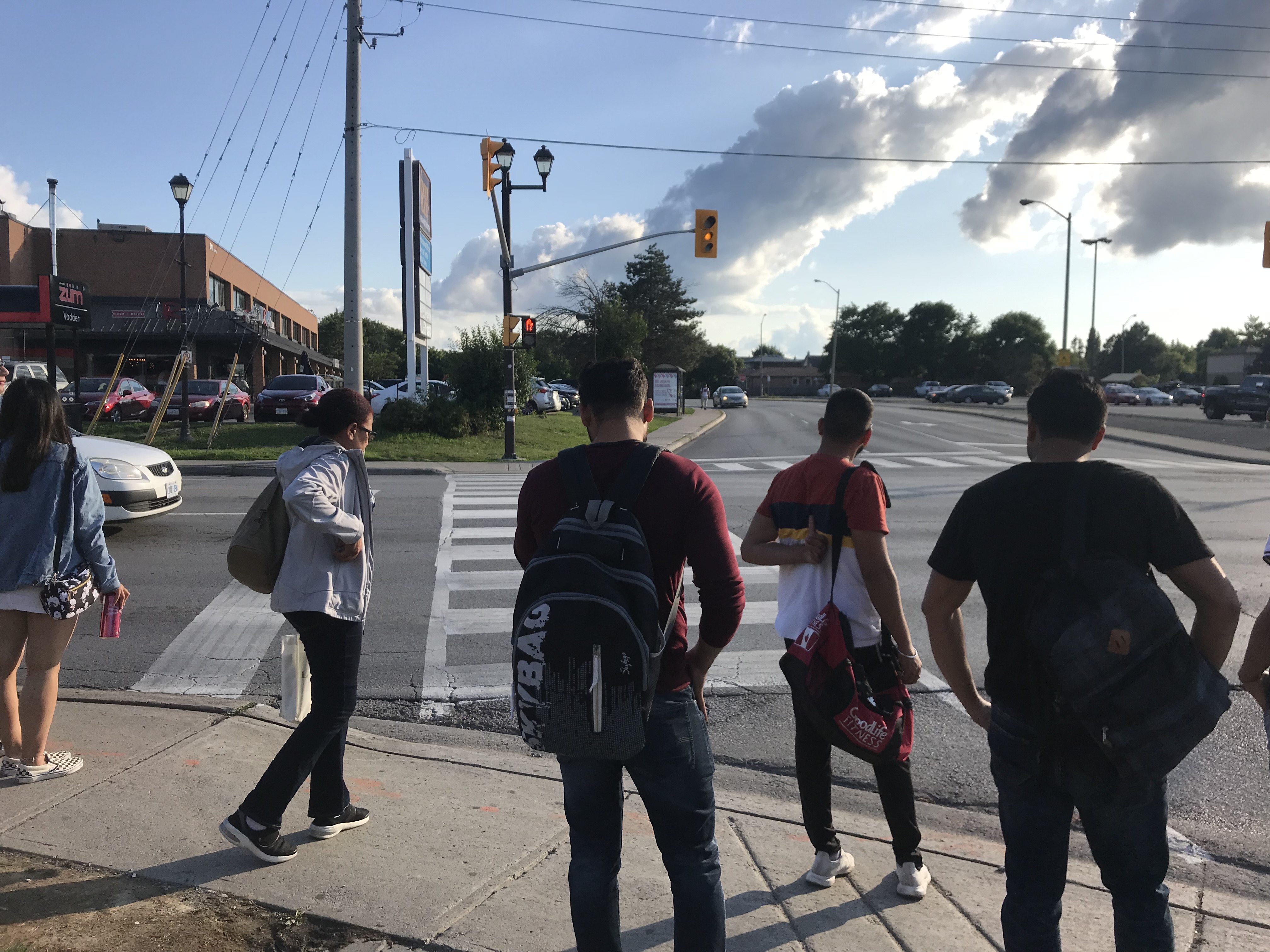
    Despite the success at improving transit and building ridership, Brampton has also prioritized motor traffic at intersection, making it unnecessarily difficult to cross the street at major bus stops. The intersection of Vodden and Main Streets, just north of Downtown Brampton, illustrates this problem.

    If the beg button is pushed in time, the walk signal to cross Main Street will appear for just seven seconds before the countdown begins, giving just 11 seconds to cross five lanes. Anyone who misses that light will have to wait over two minutes to legally cross.

    What Brampton — and cities like it — should do is remove the beg buttons at transit stops with the assumption that pedestrians will want to cross. It’s just one step towards building a transit culture and attracting new riders.

    I write more about this problem in Bramptonist.


  • The death and life of Shoppers World Brampton

    IMG_5980
    An old Target shopping cart sits in front of Shoppers World. Target, which closed in 2015, now subdivided into smaller retail units, including JYSK, Staples, and Giant Tiger

    Previously on this blog, I wrote about Shoppers World Brampton, a shopping mall that slowly declined despite being located in a high-growth suburban city. I wrote that RioCan Real Estate Investment Trust (REIT), the owners of the mall, were interested in developing the property by reducing the retail footprint and adding new residential uses. Some of those details have now been revealed.

    Shoppers World opened in 1969, on the outskirts of the Town of Brampton, which was transitioning from a county service centre and industrial town to a suburb of Toronto. The mall expanded twice: once in 1973-74, and again in 1980-81.

    In the 1980s, Shoppers World boasted a Simpson’s department store, K-Mart, two full-service supermarkets, a Pascal’s department store, two movie theatres, and even an indoor waterpark. Familiar national chains filled the halls: Thrifty’s, Grand & Toy, Coles and W.H. Smith, Smart Set, Naturalizer, Black’s, Collegiate Sports, Peoples Jewelers, and Reitman’s. Shoppers World never had the status that Square One or Yorkdale enjoyed, but it was a good mall offering just about anything you’d ever need.

    It was where I got my first paying gig: returning stray shopping carts to K-Mart for a few dollars apiece. I lived within walking distance of the mall, though I joked that the best thing about it was the bus to Square One.

    But many of those national retailers left by the mid-1990s. Square One, a 15 minute drive south, was expanding, and Bramalea City Centre had renovated and expanded as well. But when RioCan REIT purchased Shoppers World in the late 1990s, it made some long-needed improvements, including new flooring over the old terrazzo, a new food court, and removing some of the dead retail space for new big-box retailers like Canadian Tire, Staples, and Winners. When The Bay (successor to Simpson’s) closed, it was replaced by more exterior retail.

    Meanwhile, Zellers replaced K-Mart, and briefly became a Target store during the American company’s disastrous foray in the Canadian market. Rio-Can carved that into spaces for smaller retailers, including Giant Tiger. Finally, the bus terminal moved, from a distant corner facing Steeles Avenue, to a central location right at the corner of Main Street and Steeles Avenue, designed for easy transfers to the Hurontario LRT.

    ShoppersWorld

    The interior of the mall is still busy, but nearly all chains let their leases expire, with independent retailers taking over. Even so, there are many vacant storefronts.

    Earlier in October, RioCan submitted their plans to the City of Brampton, and were also presented at an open house at the mall on October 22, 2019. The redevelopment proposal includes new roads, residential towers with at-grade retail, underground parking, among other features.

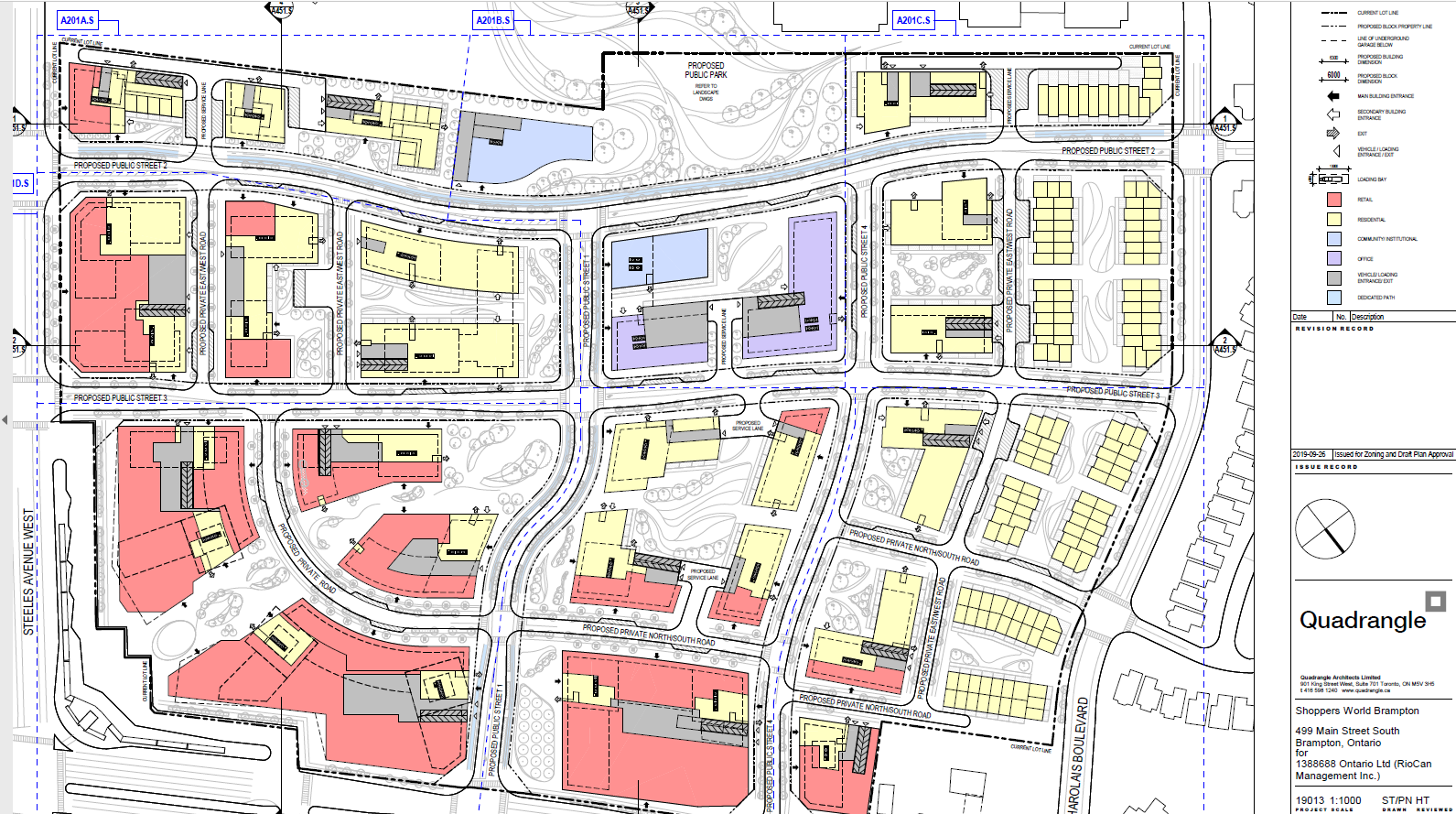
    Details from RioCan’s submission include:

    • Four new north-south and east-west public streets through the property, including multi-use paths, as several private laneways. Mill Street would continue south from Charolais Boulevard to Steeles Avenue.
    • New residential towers up to 28 storeys tall, containing 4,725 units (one, two, and potentially three-bedroom apartments)
    • 155 townhouses in the northern end of the property, towards low-rise subdivisons north of Charolais Boulevard
    • 44,647 m² (480,582 sq. ft.) of retail space integrated with the residential towers, a reduction from 62,256 m² (670,124 sq. ft.)
    • An enlarged Kaneff Park (west of the mall, between two separate existing high-rise rental tower clusters), along with new community and library space
    • New office space adjacent to the expanded park and community space
    • Most parking will be located underground
    • The Brampton Gateway terminal will remain

    Site Plan of Shoppers World Brampton redevelopmentSite plan from RioCan’s submissions to the City of Brampton. Click to enlarge.

    The first phase of the redevelopment will be 27-storey tower on the southwest corner of the site (where the abandoned Brampton Transit terminal now sits). This will be constructed before the mall itself is touched. Further phases will see the mall slowly demolished, though they are dependent on market conditions.

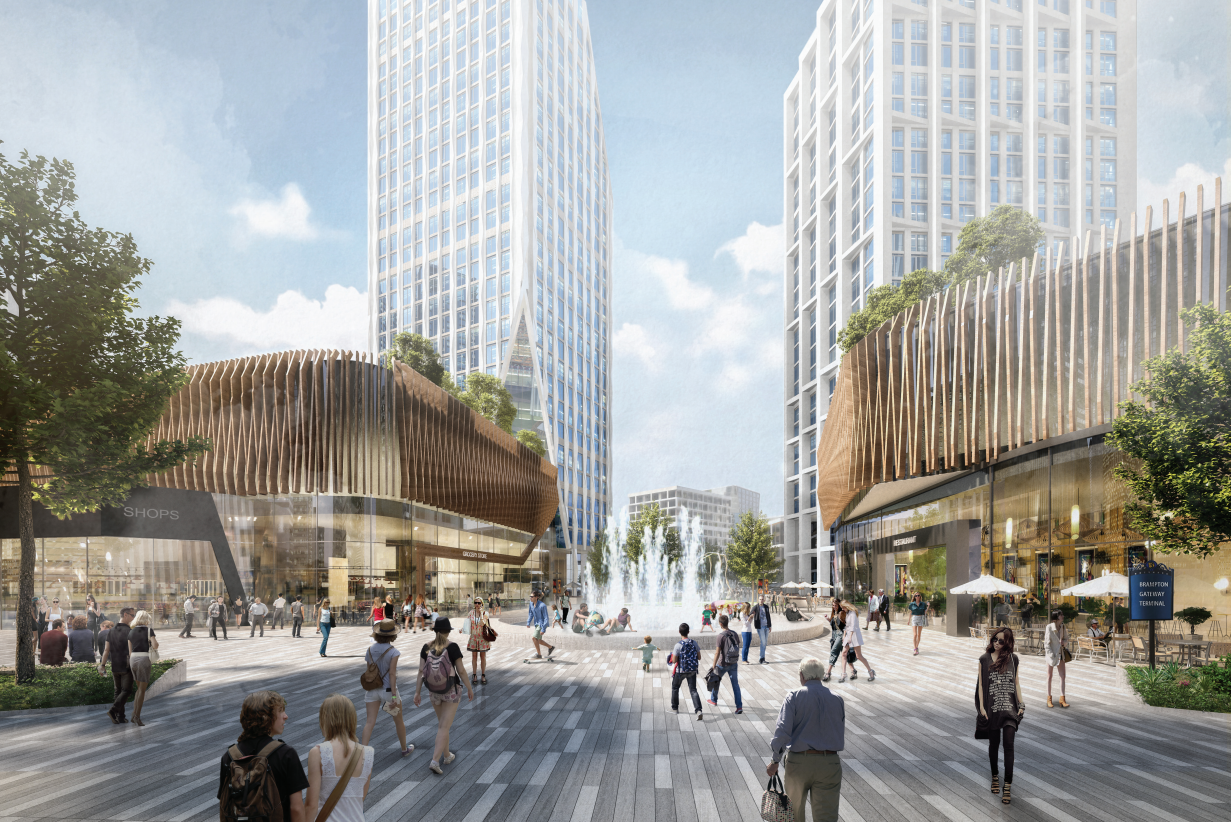
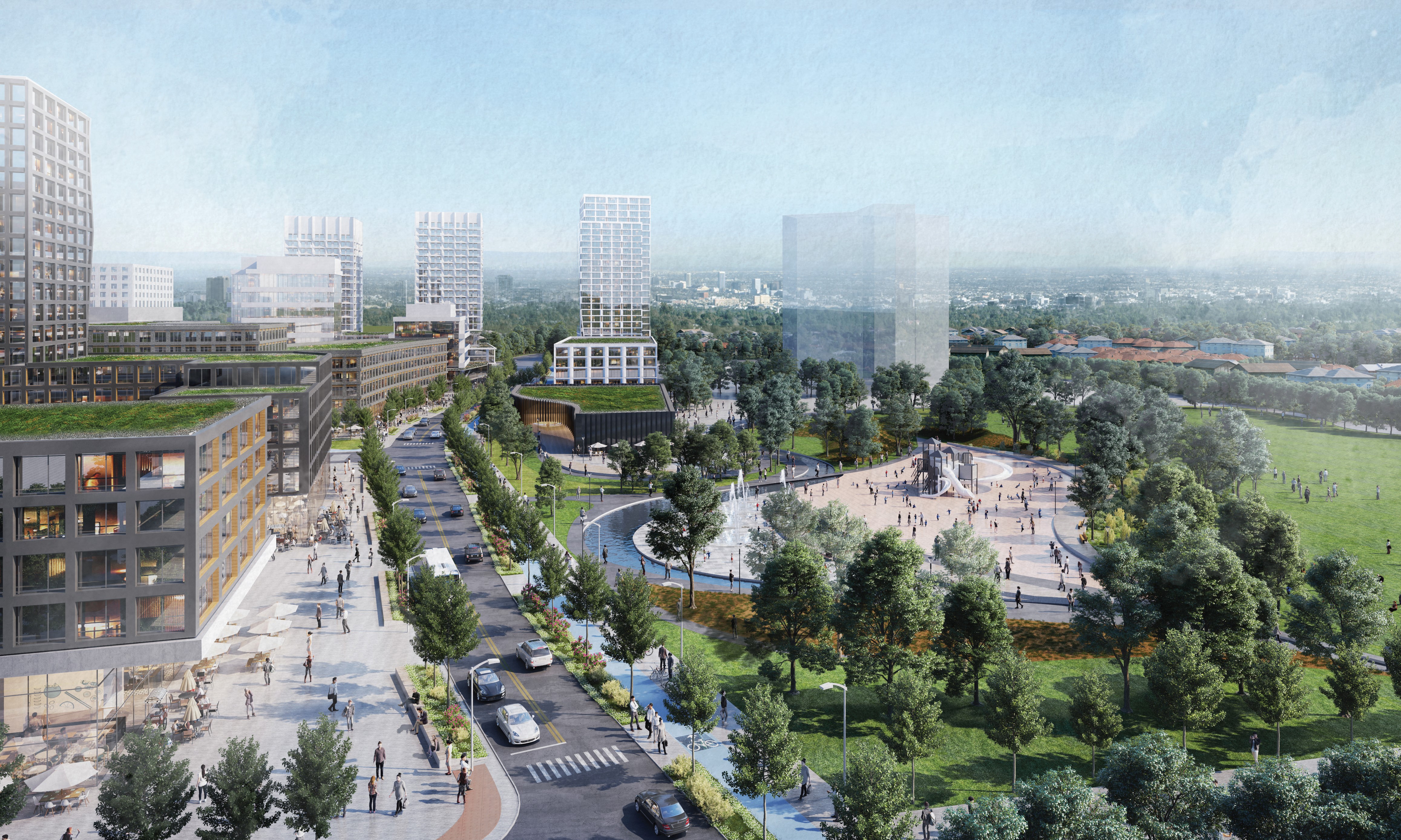
    SWB - View from terminalRendering of Shoppers World redevelopment, looking northwest from the existing Brampton Gateway Terminal

    RioCan hired Quadrangle and SvN architects to develop conceptual renderings for the development, indicating that RioCan is serious about this development. Given the City of Brampton’s own plans for urbanizing this part of the city, I am optimistic this will be built. The area already has good public transit access, with Zum express bus service to Downtown Brampton, Mississauga City Centre, Sheridan and Humber Colleges, as well as local service. This will also be at the terminus of the Hurontario LRT line (construction will begin shortly as the contract was just awarded), which may yet continue to Downtown Brampton.

    This is the largest shopping mall redevelopment in the Greater Toronto Area, following work now underway at the Galleria Mall in Toronto, and proposed for the Promenade Mall in Vaughan (though much of that mall’s structure will remain intact). As the mid-market gets squeezed by discounters, internet shopping, and high-end shopping centres, more malls of Shoppers World’s size will see similar development.

    I was surprised to see such urbanity proposed for suburban Brampton, but it may finally be the time for the Flower City to bloom. Despite my nostalgia for Shoppers World, I am excited for its future.

    SWB Rendering 1.jpgLooking south on Mill Street towards the park expansion and Steeles Avenue. The first phase tower is shown in the middle background.
     

  • The future of Downtown Brampton

    IMG_6142-001
    Metrolinx-owned houses on Railroad Street, Brampton

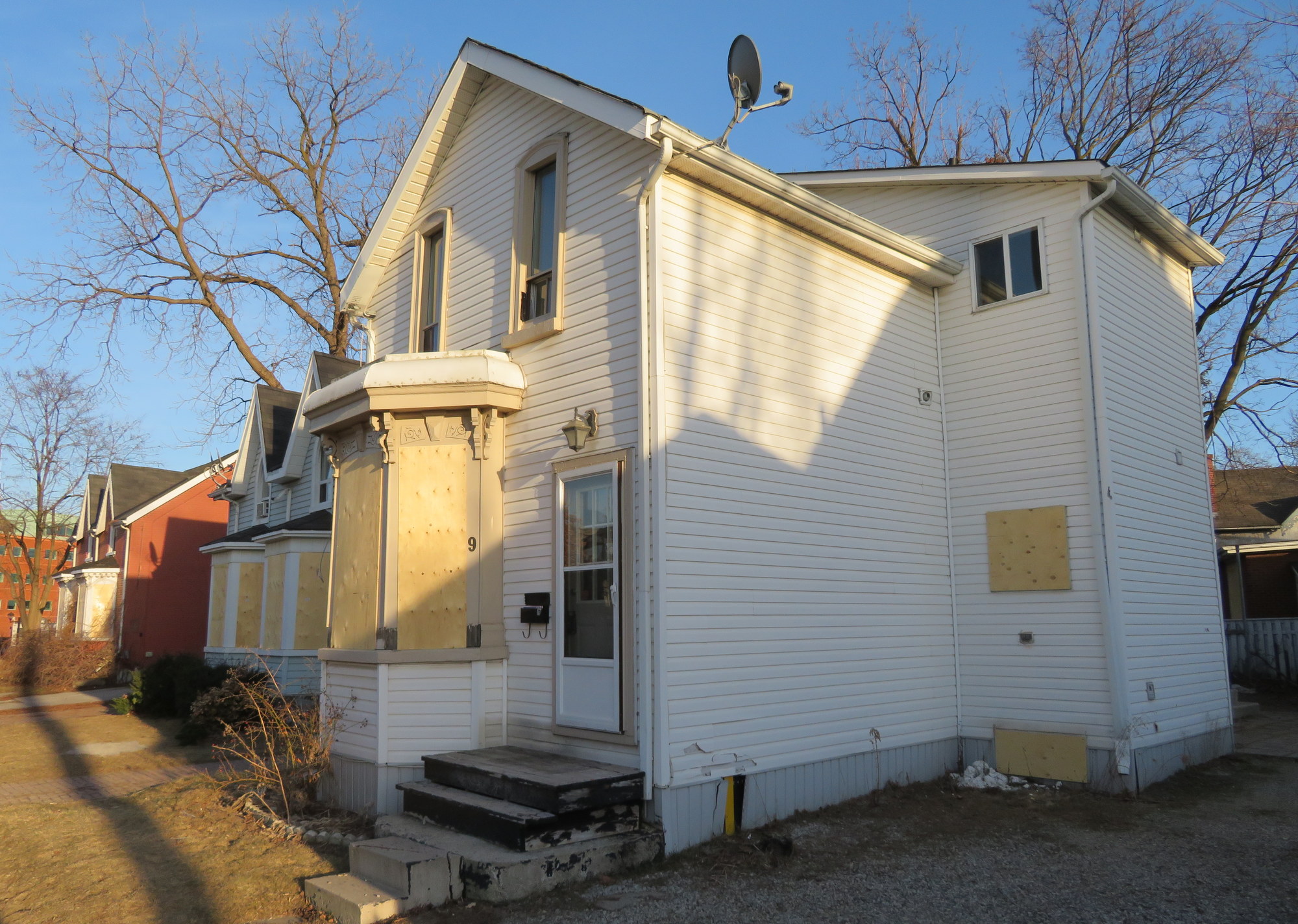
    Over the last three years, I have been following developments in Downtown Brampton, especially lands surrounding the Brampton GO Station. In April 2016, Metrolinx, the provincial agency responsible for GO Transit, began buying properties in the northwest corner of Brampton’s downtown core, including twelve houses and two low-rise office buildings. The land assembly was for a new surface parking lot, an odd choice for a transit agency that was otherwise interested in promoting compatible land use and transit connections in designated urban centres.

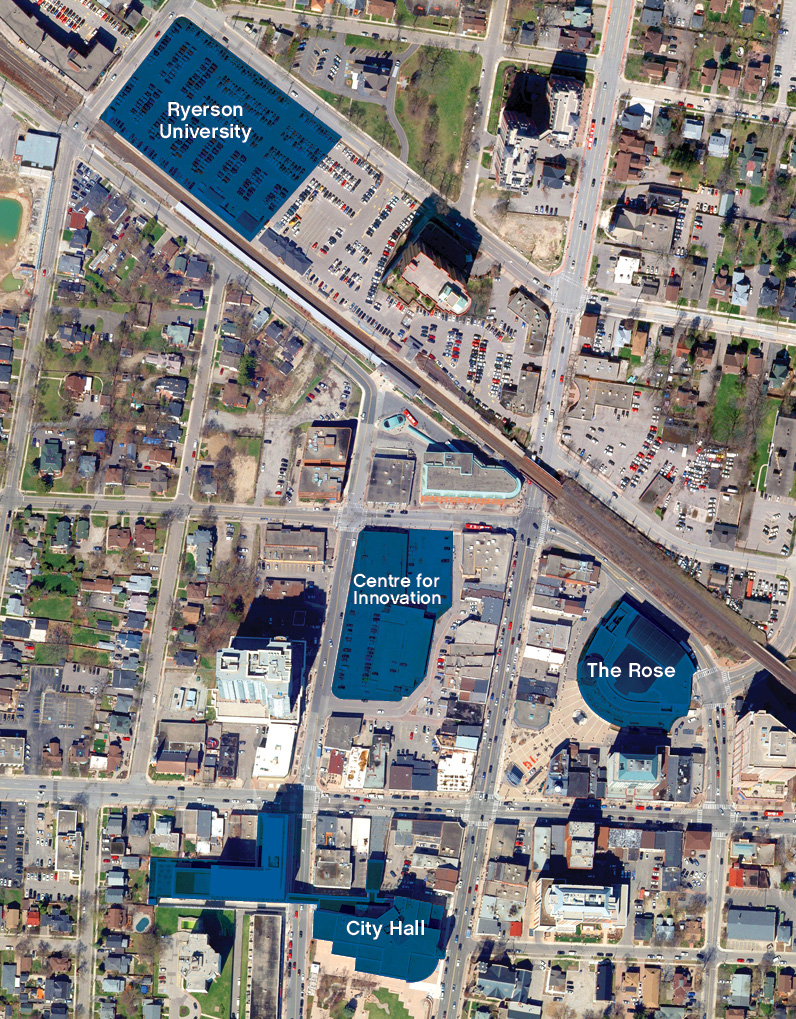
    It was later revealed that Metrolinx, Ryerson University, and the City of Brampton were working on a new downtown satellite campus, with the main academic building to be constructed on part of the GO parking lot, north of the rail corridor. While the construction of more surface parking in a downtown core was still a bad idea, at least there was a reason behind the land assembly. The new Ryerson site would make use of other city resources, such as the Rose Theatre and the planned Centre for Innovation (CFI). The CFI would include academic space and a central library, to be built on city-owned land south of the GO station and bus terminal.

    university mapPrevious plans for Downtown Brampton, including the Centre for Innovation and the Ryerson campus on the GO Transit lot. Replacement parking would be built on land assembled south of the rail corridor. 
    In October, the newly elected Conservative government cancelled provincial funding for Brampton’s Ryerson campus, as well as other suburban satellite universities planned in Markham and Milton. While Brampton and Ryerson decided to continue working on a scaled-back development including a new centre for cybersecurity, a new plan was developed for downtown revitalization. Details are available in the May 15, 2019 Committee of Council agenda.

    Here’s a simplified summary of the new plan:

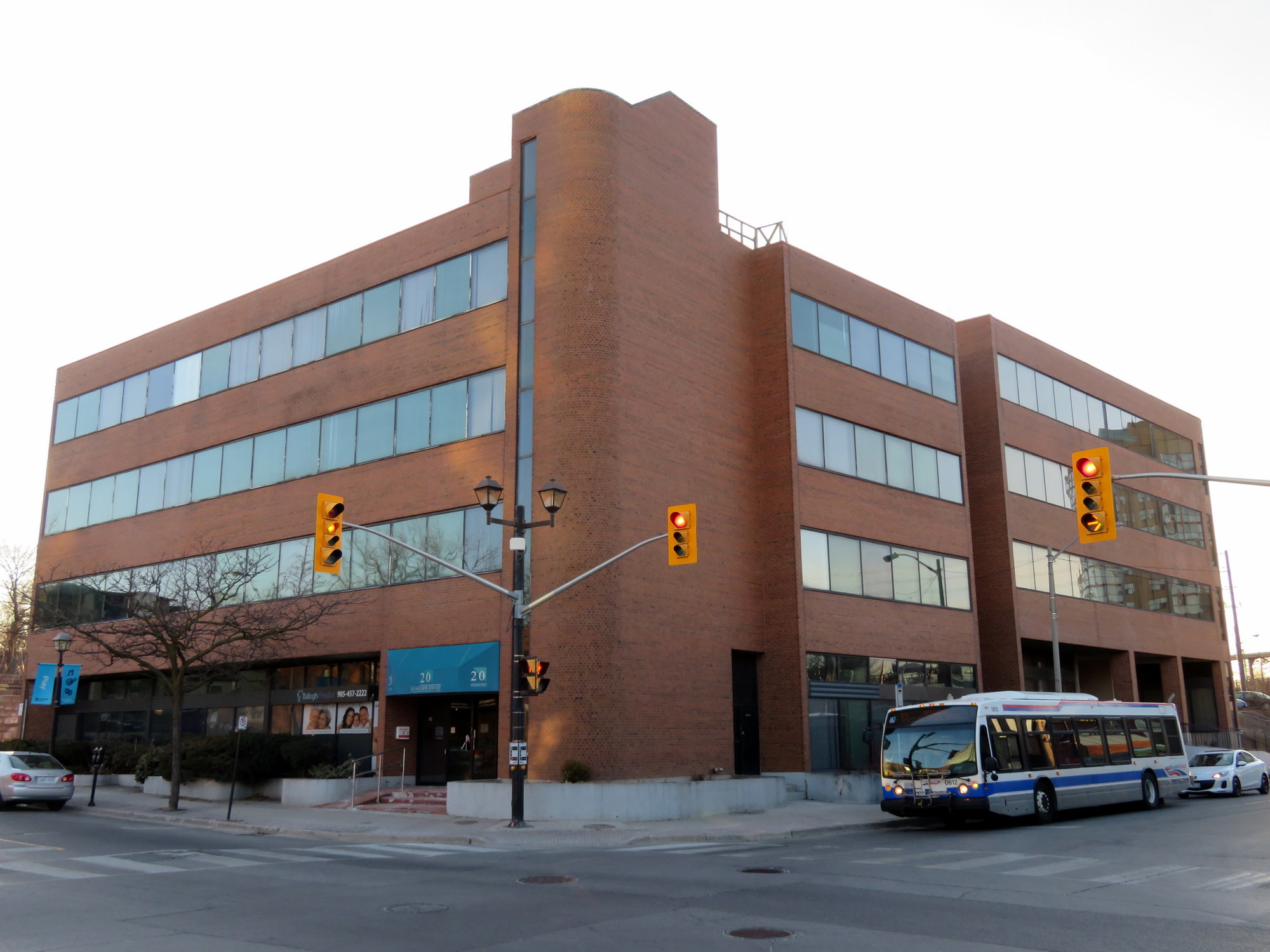
    • The CFI will now be built on the north side of Nelson Street West, between Main Street and George Street, on the site of the existing downtown bus terminal, a 6-story office building constructed in 1989, and an older two-storey commercial block. The office building, though only thirty years old, is reported to be in poor condition. The new 15,700 square metre (170,000 square feet) CFI will include the central library, education space, event space, and retail. It may also include additional floors for offices.
    • The bus terminal will be expanded, as the existing facility is too small to accommodate GO and Brampton Transit buses. There will also be room for a new third track through Downtown Brampton, essential for frequent two-way GO service between Toronto, Brampton, and Kitchener.
    • The City of Brampton will likely build a temporary terminal on the south side of Nelson Street to accommodate the demolition of the existing structures and the construction of the CFI and terminal. This land, also owned by the city, is currently occupied by a surface lot and an old commercial building that was originally a Loblaws store. Retail tenants are being evicted from all of the above properties.
    • The city is also interested in using the two office buildings purchased by Metrolinx for short-term academic and administrative purposes as the new CFI is being built.
    • The houses on Nelson, Elizabeth and Railroad Streets acquired by Metrolinx will still be torn down, but without the imminent construction of the Ryerson building, a new parking lot is no longer planned. It is possible that the block will see transit-oriented development in the long term.

    IMG_6155-001Vacated office buildings at George and Nelson Streets that may see new life under the city’s new plans
    The map below illustrates the revised downtown plans.

    It remains a shame that Metrolinx decided to buy up a whole city block and displace dozens of residents (among the properties it acquired were two heritage houses and a rooming house), especially now that the Brampton Ryerson campus is being scaled back. But the city desperately needs a central library, and happily, Ryerson remains interested in partnering with Brampton. It’s good to see that transit expansion, including a larger bus terminal and GO rail expansion, are part of the plans.

  • Why Brampton’s property taxes are high — and what it can do about it

    5533567557_8523808269_o.jpg
    To effectively reduce its residential property tax rate, Brampton must diversify its tax base

    It’s budget time for most municipalities in Ontario. Unlike cities elsewhere in the world — where municipalities can levy income, sales, and payroll taxes — places like Toronto, Ottawa, and Brampton rely on property taxes for most of their operating revenue, and they are complicated.

    Toronto homeowners enjoy the cheapest property tax rates in the Greater Toronto Area, too low in fact to properly support city services like transit, housing, or adequate snow clearance.

    Meanwhile, Brampton has some of the highest property tax rates in the city. A typical house in Brampton whose assessed value is $800,000 would be levied $8,284.73 in property taxes in Brampton. A similar house in suburban Scarborough or Etobicoke might be worth more, but the taxes on a house accessed at $1 million would be just $6,355.10.

    While freezing property taxes might be popular, it isn’t a sustainable solution to high property taxes. A property tax freeze means that the city will not collect any additional tax revenue, regardless of new development or higher property assessments; unlike income and sales taxes, property tax revenue does not grow with the economy. Commercial and industrial property tax rates are higher, but Brampton doesn’t have enough of either land use compared to housing.

    Brampton’s property tax issues are structural; tax cuts or freezes will not help. Having a diverse tax base, like Toronto’s, is a better solution, but it won’t be easy. I explain more in Bramptonist. 

  • What GO Transit service to Brampton might look like without the freight bypass

    IMG_0610-001
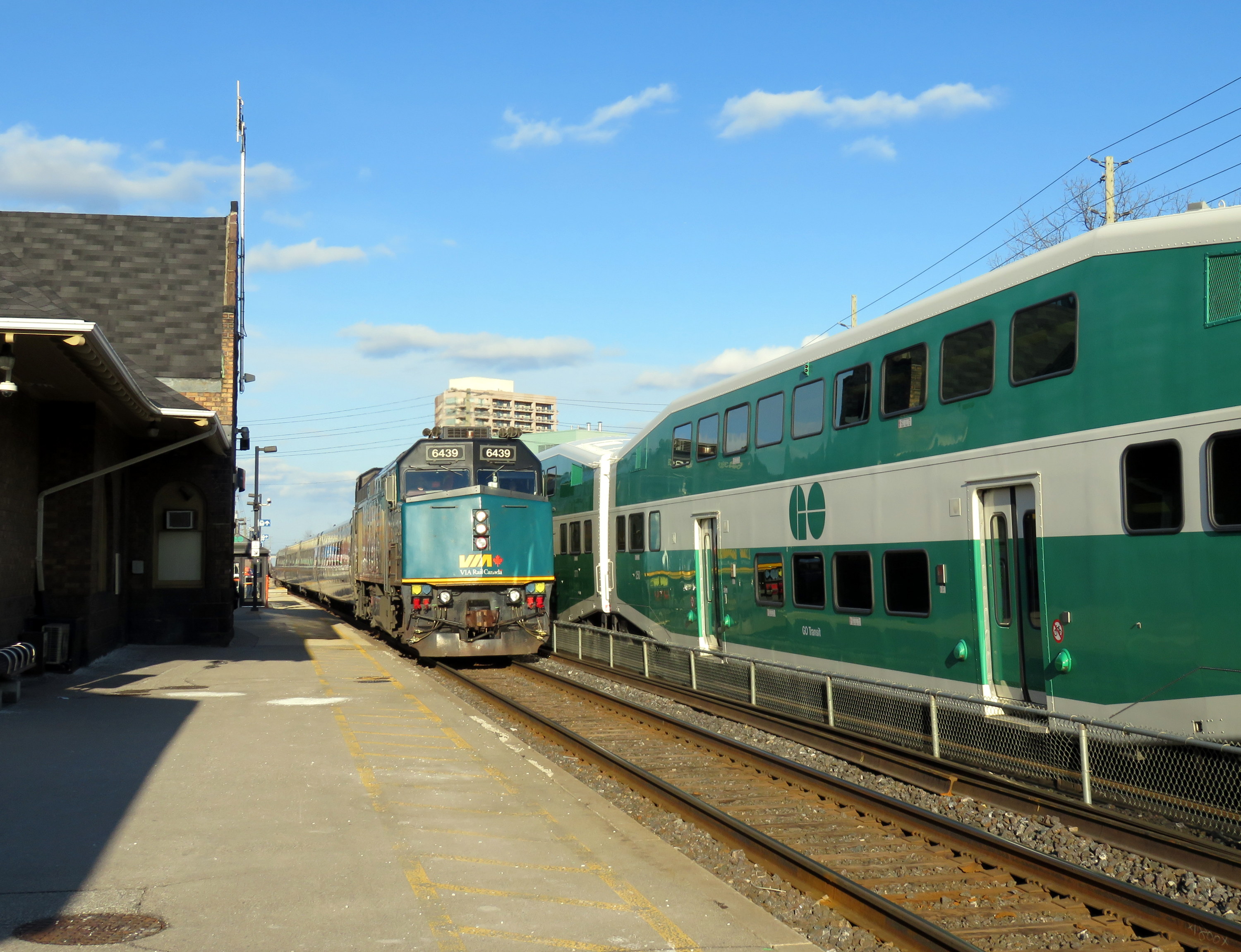
    VIA and GO trains meet at Brampton Station

    In 1967, GO Transit launched a new rail service between Pickering and Hamilton. The new commuter train service was made possible as GO just built a new freight bypass so its trains could avoid Downtown Toronto and connect to a new sorting yard in Vaughan. Today, trains on the Lakeshore Line operate as frequently as every fifteen minutes during weekdays, and every half hour on weekends. Unfortunately for Brampton, that freight bypass built in the 1960s runs right through its downtown core, limiting the number of passenger trains that can serve Brampton, Guelph, and Kitchener.

    Last December, the provincial government cancelled plans for a new freight bypass that would have diverted CN trains from a critical section of track in Brampton, allowing for frequent GO and intercity services. Around the same time, a new GO Transit schedule resulted in extreme overcrowding and extended delays on the Kitchener Line. As population and ridership grows, there are few answers and little promise of relief that the freight bypass would have provided.

    In my debut article for Bramptonist, I comment on the future of the Kitchener Line, the only GO line serving Ontario’s fourth largest city and an important commuter link to Guelph and Kitchener-Waterloo. What can Brampton expect now that the freight bypass is dead?

  • What’s next for Downtown Brampton?

    IMG_6148-001
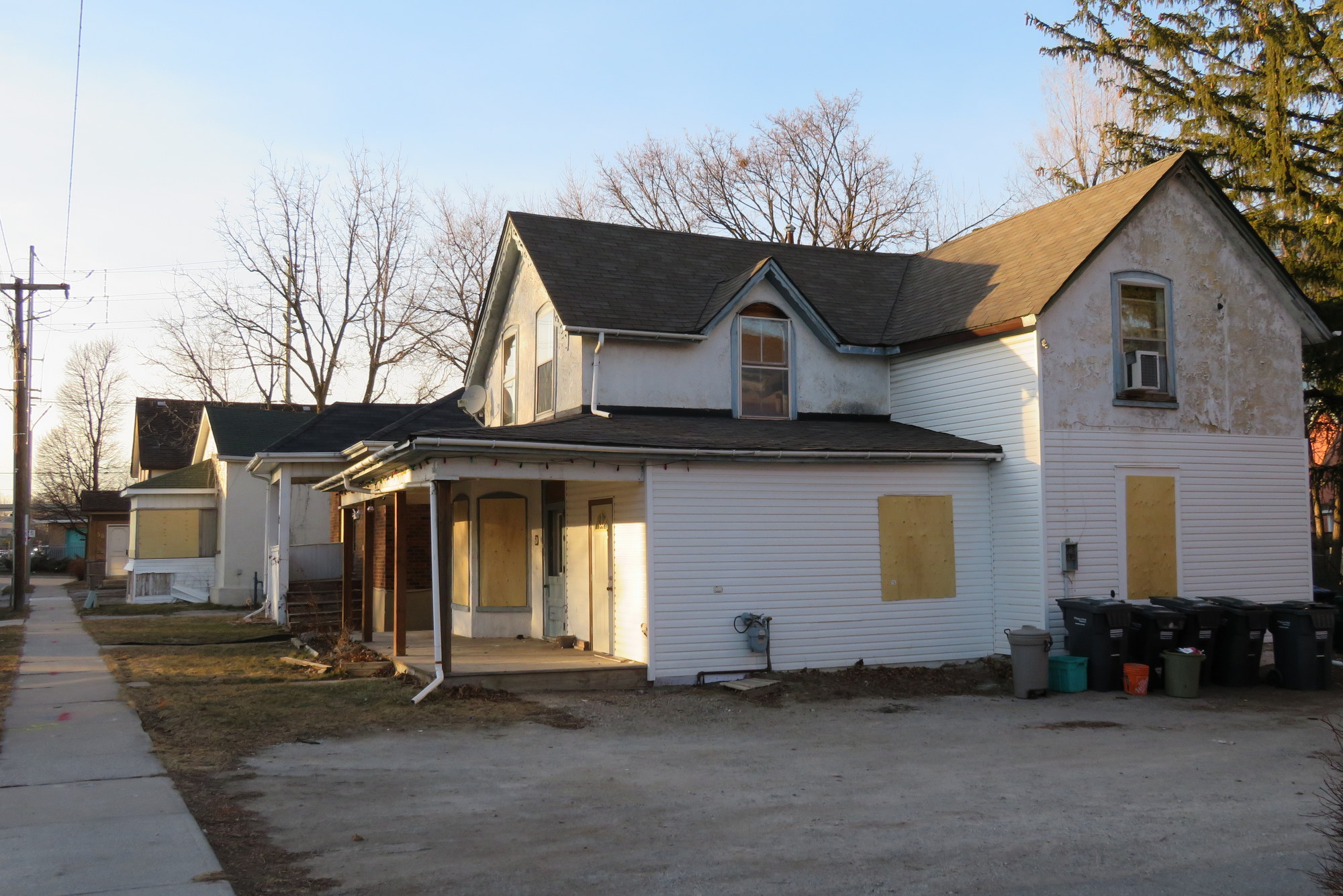
    Boarded up houses on Elizabeth Street, Downtown Brampton

    Earlier this year, the provincial government announced the location of Ryerson University’s Brampton campus, a partnership with Sheridan College, to be built on the GO Station parking lot in Downtown Brampton. Meanwhile, Metrolinx quietly purchased several houses and office buildings south of the station for new GO Transit surface parking, replacing the spots that Ryerson will build upon.

    The merits of a satellite university campus are open to debate – some smaller satellite campuses have struggled to attract students and faculty and distinguish themselves. Brampton’s the planned campus site was, by far, the best one for both the City of Brampton and Ryerson University.

    But today, the Progressive Conservative provincial government, elected in June, cancelled three planned suburban post-secondary education campuses — the York University/Seneca College campus in Markham, the Wilfrid Laurier University/Conestoga College campus in Milton, and the Ryerson University/Sheridan College campus in Brampton.

    This announcement came only one day after the October 22 municipal elections. While Toronto elected a smaller 25-ward council and returned John Tory to the mayor’s office, the voters Brampton elected former Ontario PC leader Patrick Brown as mayor, narrowly defeating incumbent Linda Jeffrey. Brown had just moved to Brampton after his campaign for the elected Peel Region Chair was cancelled at the same time Brown’s successor as PC leader, Premier Doug Ford, imposed the new 25 ward structure on Toronto. We can only speculate if the animosity between Brown and Ford was a factor in this announcement. It’s more likely that the decision to cancel the three campuses was already made, with the announcement timed to take place after the municipal elections. In any case, mayor-elect Brown’s job has already become more interesting.

    Brampton’s satellite campus, which had a 2022 opening date, would have hosted 2,000 undergraduate students. Though this is tiny compared to Ryerson’ downtown campus, which 36,000 undergraduate students currently enrolled, it was the best possible site, adjacent to the GO station, several Brampton Transit routes, the Rose Theatre, and local shops and restaurants and recreation facilities. The school would have made use of the the planned Centre for Innovation, a proposed new central library to the corner of George and Nelson Streets.

    university map
    Map of the Ryerson University campus site, the Centre for Innovation, and other downtown buildings. From the City of Brampton website.

    The York University/Seneca College campus in Markham was also strategically located, on a site adjacent to Unionville GO Station, in the mixed-use Downtown Markham development. In contrast, the Milton site was in a greenfield far from transit links. It’s fair to say that I’m not too disappointed on Milton’s behalf.

    With Brampton’s campus dead, for now, there’s still the land on the south side of the station. Three homes are already knocked down, while two office buildings and several houses are boarded up, awaiting demolition.

    Will Downtown Brampton see nothing more than additional GO Transit surface parking now that the campus is cancelled? Or will a new opportunity come along?

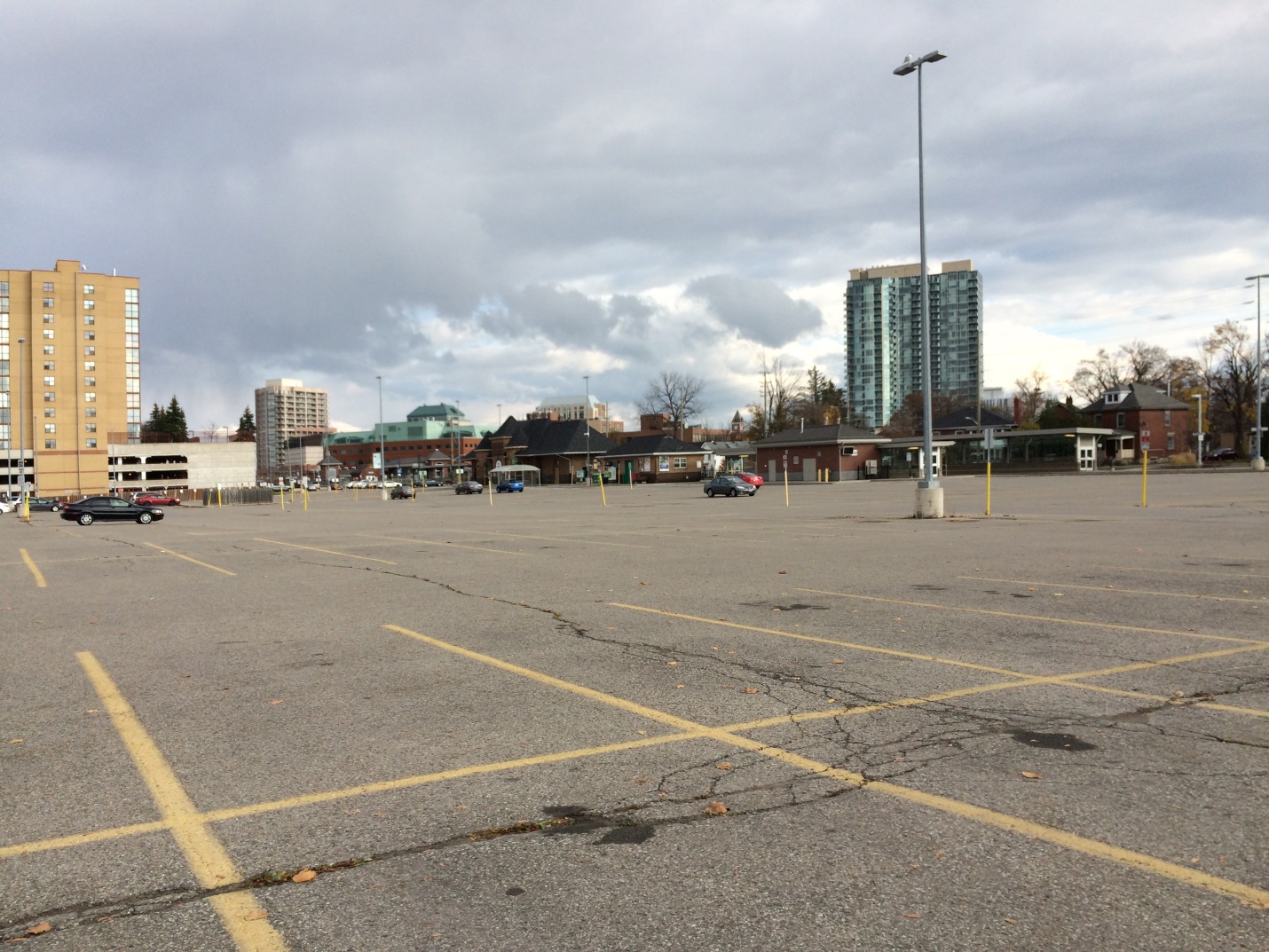
    BramptonParkingLotThe existing GO Transit lot at Brampton Station, where the Ryerson University/Sheridan College campus was planned
  • Requiem for Ontario’s regional malls

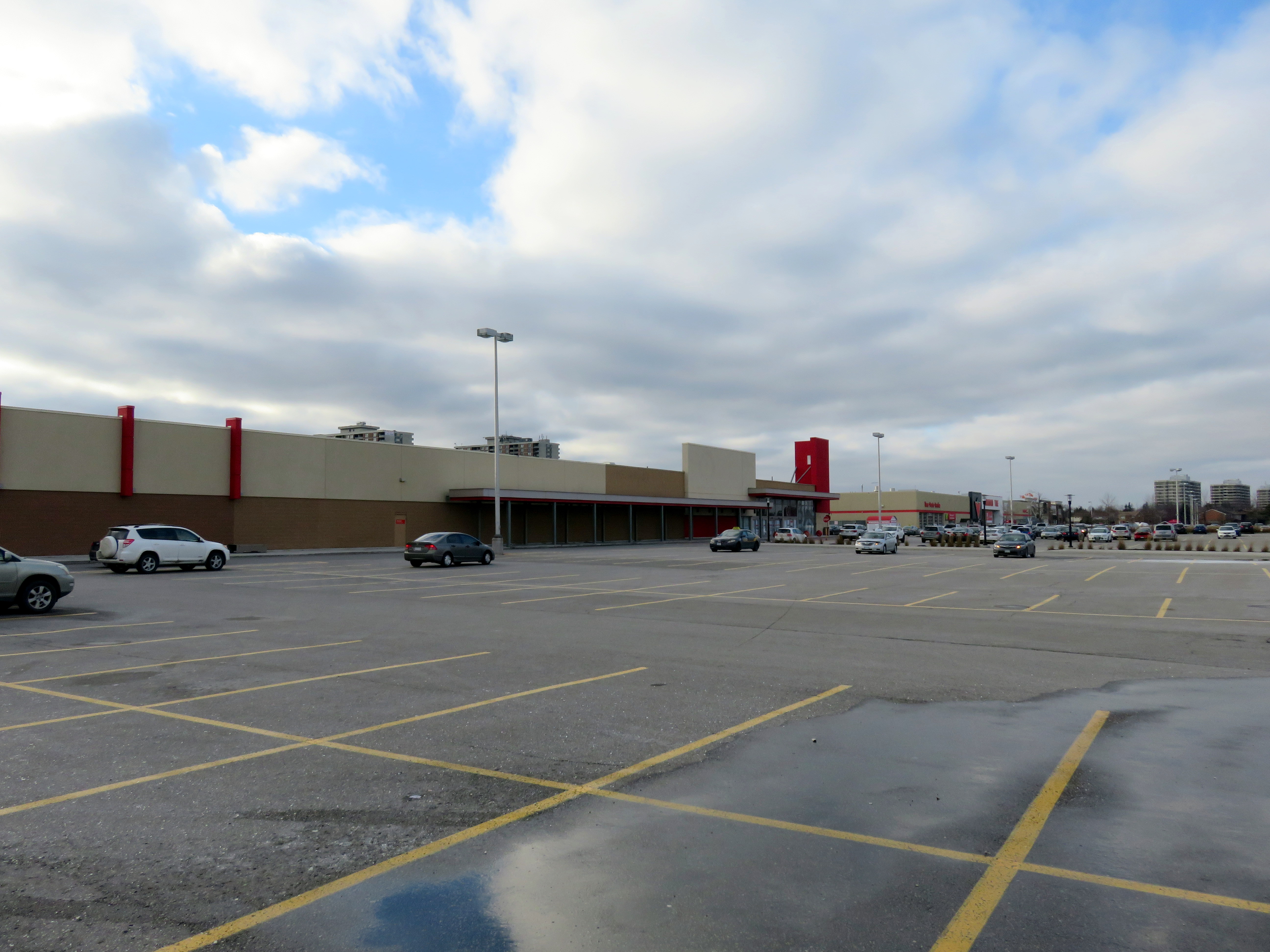
    IMG_8782-001Shoppers World Brampton, 2016, before the Target store was replaced by smaller stores, including Giant Tiger

    Recently, I wrote about the history of Ontario’s downtown malls. Most of these shopping centres, built in the 1970s and 1980s in the downtown cores across the province, failed by the end of the 1990s. The collapse of the Eaton’s department store chain and competition from larger, suburban malls and new big-box retailers drove customers away from Ontario’s downtowns. Only in Toronto and Ottawa, with large downtown office employment, residential development, and good urban transit, did these major shopping malls thrive.

    But that does not mean that all suburban shopping centres are doing well, especially after the loss of Target in 2015 and Sears Canada in 2017. For TVO, I wrote more about how smaller regional malls in Ontario are re-positioning themselves.

    The Brampton house that I grew up in was a ten minute walk from Shoppers World, which, in the 1980s, had a full line department store, Simpson’s, as well as Marks and Spencer, K-Mart (where I had my first paying gig, delivering shopping carts back to the store abandoned in nearby parks), a Pascal hardware store, and two supermarkets, Food City and A&P. Larger, more popular malls like Mississauga’s Square One and Bramalea City Centre were one bus ride away, but Shoppers World held its own, even if it was second tier. By the 1990s, though, it was clear that the mall was in decline: national retailers were leaving and there was a noticeable lack of investment in the property.

    When RioCan REIT purchased Shoppers World in the late 1990s, it made some improvements and attracted big-box retailers like Canadian Tire, Staples, and Winners. Zellers took over the K-Mart store, which was expanded. But The Bay (which replaced Simpson’s) was closed down and the store later demolished. I had left Brampton in 2006, but I was still sad to see my one-time local mall decline. Now RioCan has talked about downsizing the mall, and redeveloping part of the property. Competition from larger, stronger shopping malls, newer retail power centres, the mismanagement of several retail firms, and internet shopping have all taken their toll. Shoppers World isn’t a dead mall, but like many smaller malls, it will be adapting to changing times.

    In the TVO article, I take a look at a few other malls, like London’s Westmount Mall, in similar circumstances.

    ShoppersWorld.jpgShoppers World, 2018. Despite many store vacancies, it’s still a community hub.