Tag: North York

  • Mapping the polarized results in Ward 6 – York Centre

    Premier Doug Ford’s decision to reduce the number of councillors on Toronto City Council from 47 to 25 resulted in some very disparate new wards. New Ward 6, York Centre, combined two very different wards. On the west side of Allen Road, in old Ward 9, there are large Black and Italian communities, while on the east side of Allen Road, in old Ward 10, the population is largely Jewish, Filipino, and Russian.

    James Pasternak represented Ward 10. Previously a TDSB trustee, Pasternak was first elected in 2010 after incumbent councillor Mike Feldman retired. A conservative, Pasternak is best known for supporting a western extension of the Sheppard Subway through his ward and for opposing city funding to Pride while allowing Queers Against Israeli Apartheid to march in the annual parade.

    Maria Augimeri, who represented Ward 9, was first elected to North York City Council in 1985 and has since served on the old Metropolitan Toronto council until amalgamation in 1998. Since then, she has represented the Downsview neighbourhood on City of Toronto Council. She was nearly defeated in the 2010 election by conservative Gus Cusimano, but won with a comfortable margin in 2014. Augimeri is a New Democrat; she ran for the provincial NDP in 1987, and she has a progressive voting record on Toronto City Council.

    Augimeri sought re-election in Ward 9 under the 47-ward model, but found herself against a high-profile challenger, Louise Russo. Russo was the unintended victim of an organized crime-related shooting in 2004 and has since become an anti-violence advocate. She was Mayor John Tory’s special guest at the inaugural council meeting in 2014 just after he was elected mayor.

    Meanwhile Pasternak sought re-election in Ward 10, whose boundaries were identical under the new ward structure. His highest-profile opponent was Edward Zaretsky, an 84-year old resident who’s notable for parking his minivan in front of a pothole in protest earlier in 2018. Zaretsky has been an outspoken critic of Pasternak.

    When Bill 5 came into effect after a failed court challenge, old Wards 9 and 10 were combined in Ward 6. A small section of old Ward 9 near Jane Street and Sheppard Avenue moved to Ward 7, while the area north of Sheppard Avenue between Keele and Dufferin Streets was added from old Ward 8.

    There were only four candidates running in the new larger ward. Despite their ideological differences, Augimeri and Pasternak both described the new race against each other as “unfortunate” and “respectful.”
    2018 Election - W6

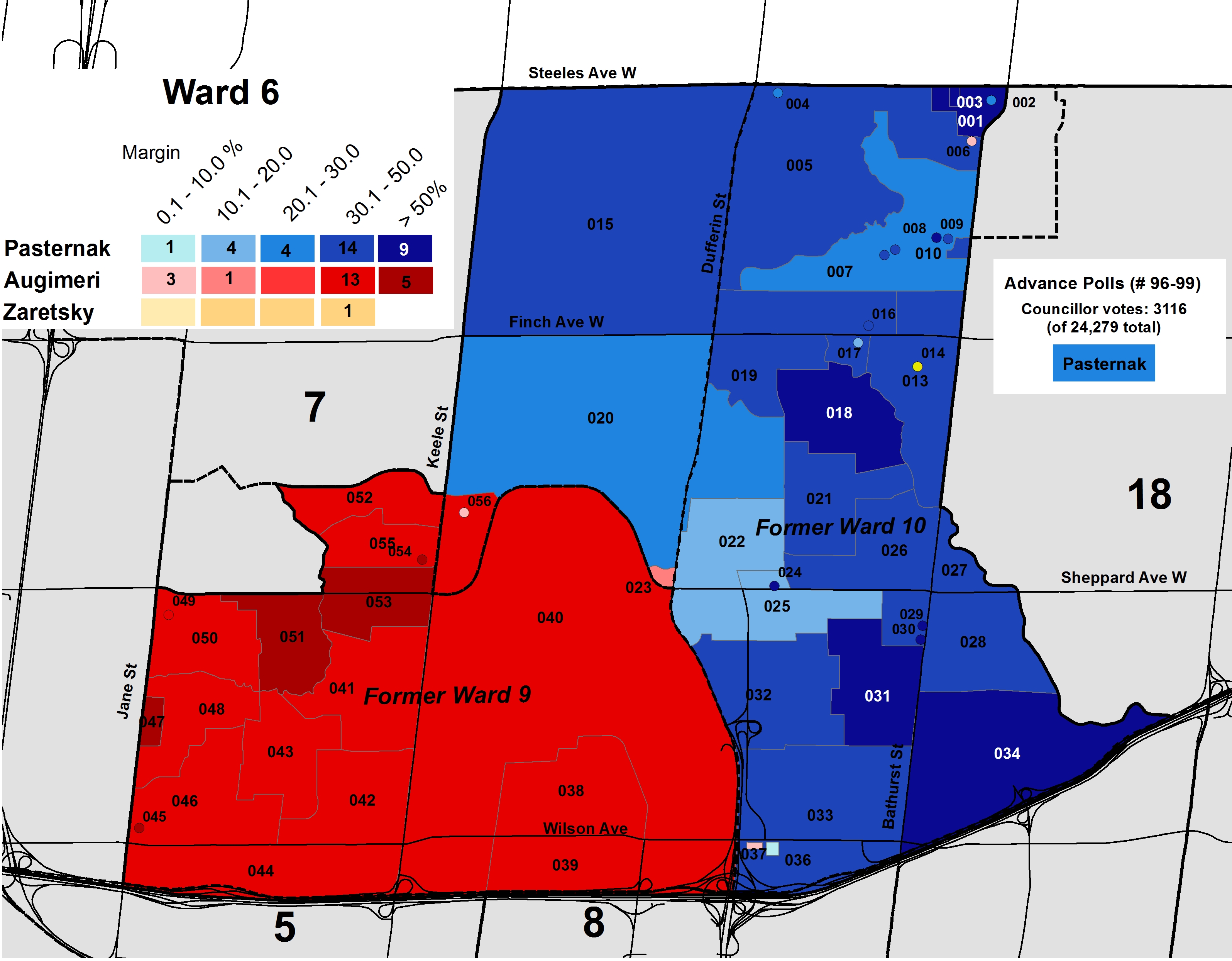
    In the end, James Pasternak won the local council race with 47.6 percent of the vote compared to Maria Augimeri’s 38.0 percent. Louise Russo got 11.2 percent (but did not place first in any polls), while Edward Zaretsky got just 3.2 percent, but placed first in Poll 14, a seniors residence.

    The map above shows the polarized electorate in Ward 6. Augimeri placed first in all 19 polls located in former Ward 9, while Pasternak placed first in all but three of the 34 polls in old Ward 10. In the 19 polls located in old Ward 9, Augimeri got 61.5 percent of the vote, while Pasternak got 18.6 percent and Russo got 18.3 percent. Meanwhile in old Ward 10, Pasternak took 64.3 percent of the vote, followed by Augimeri with 24.4 percent and Russo with 7.3 percent.

    Russo likely cut into Augimeri’s support at the polls, but her candidacy was largely squeezed out in a two-incumbent race. What ensured Pasternak’s win most of all was simply an imbalance of population: there were more voters (12,340 election-day votes) in old Ward 10 than in old Ward 9 (8156 election-day votes).

    Because of the diverse demographics and geographic configuration of Ward 6, it might be attractive to high-profile candidates looking to run for council in 2022. Who knows what might happen in four years?

    Ward 6 – York Centre
    Candidate Total Votes Percentage
    Maria Augimeri 9223 38.0
    James Pasternak 11,559 47.6
    Louise Russo 2726 11.2
    Edward Zaretsky 771 3.2
  • Return of the old guard: mapping results of Ward 17 – Don Valley North and Ward 18 – Willowdale

    When Toronto adopted a 47-ward model for the 2018 election, North York was going to get one of the three additional wards. North York Centre, the section of Yonge Street between Highway 401 and Steeles Avenue, is one of the fastest growing parts of the city. New condominium towers have gone up along the Yonge and Sheppard Subways, bringing in thousands of new residents.

    John Filion, councillor for old Ward 23, was one of Toronto’s hardest-working politicians. Not only did he have to represent thousands more residents than most of his colleagues, he also had to keep on top of dozens of planning applications. It was probably with relief that he announced his retirement in June. He endorsed two successors for the new wards comprising his old turf:  Markus O’Brien Fehr (his executive assistant) in the new Ward 28 and Lily Cheng (a local community organizer) in the new Ward 29.

    Meanwhile, it looked as though fellow council veteran Shelley Carroll was also leaving City Hall. Earlier this year, she resigned as councillor in old Ward 33 to run as a Liberal in the June provincial election, creating a potential opening in new Ward 31. Fellow Liberal Dan Fox was poised to make another run against David Shiner in Ward 30. It looked like things were going to get interesting in North York.

    But then the Progressive Conservatives were elected to Queen’s Park, and Carroll lost in Don Valley North. At the end of July, Doug Ford’s provincial government introduced Bill 5, reducing the number of wards from 47 to 25.

    The four wards drawn up for the part of North York east of Bathurst Street and north of Highway 401 was reduced from four to two. While David Shiner retired from municipal politics, it left hopeful Dan Fox without an open seat to run in. Much of former Ward 24, where Fox ran in 2014, was encompassed by Ward 17, Don Valley North. This is where Carroll was going to try to return to council.

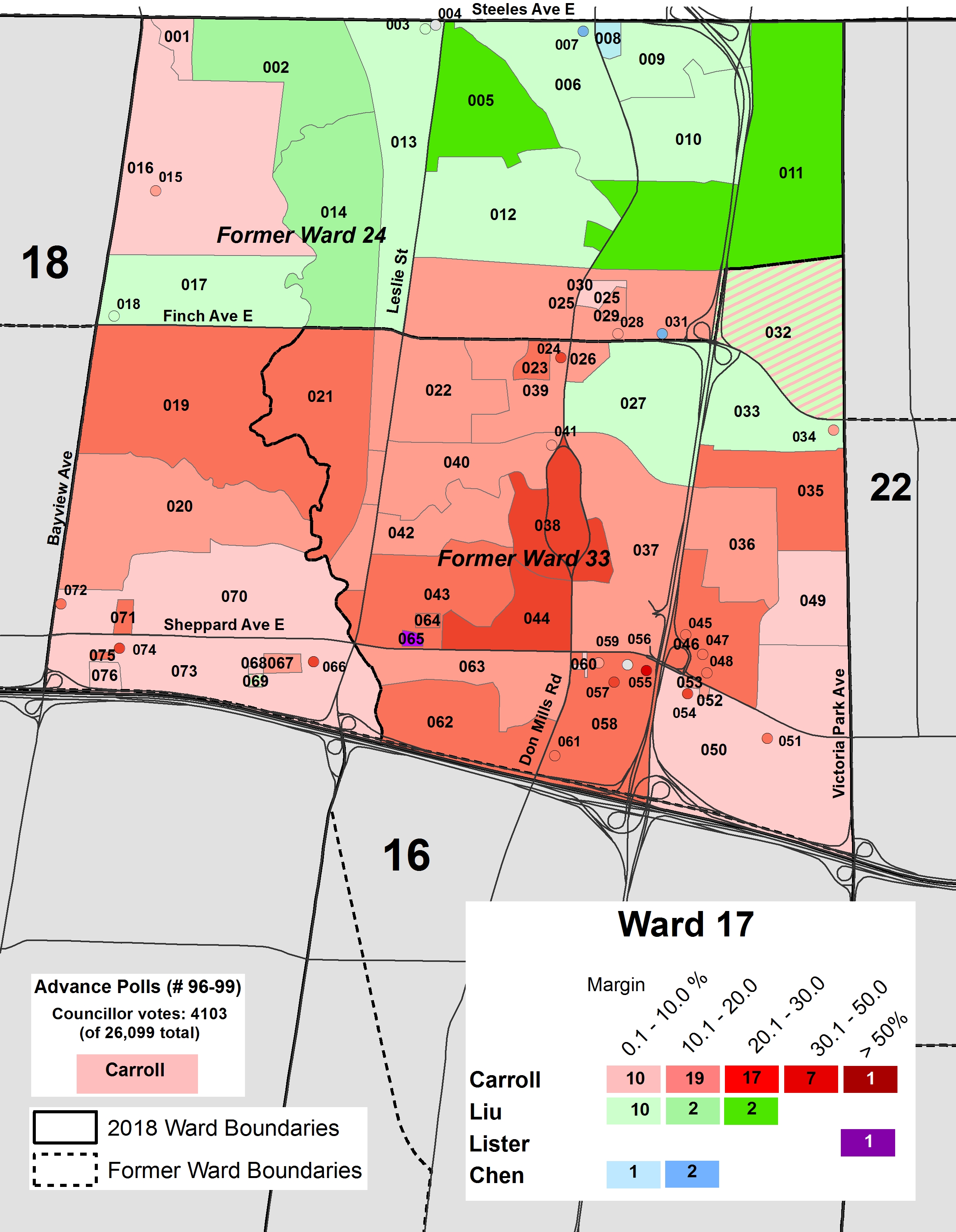
    The council appointee that replaced Carroll in old Ward 33, Jonathan Tsao, had promised not to run for re-election. Challengers to Carroll in Don Valley West included former TDSB trustee Ken Lister and anti-sex education activist Christina Liu. In total, there were eight candidates running in Ward 17.

    Carroll won easily, netting just over 40 percent of all votes cast. Liu placed second with 29 percent of the vote. Carroll did very well in the southern part of the newly enlarged ward, though Liu won 14 polls, mostly in the northwest, and tied Carroll in Poll 32.

    2018 Election - W17.jpg
    Poll-level results in Ward 17

    In Willowdale, John Filion jumped back into the race, claiming that the lack of an incumbent would allow a candidate tied to land speculators to win. While Markus O’Brien Fehr stepped aside, Lily Cheng did not.

    Other candidates in Willowdale included Norm Gardner, a former Metro councillor and police board chair; Saman Tabasinejad, the New Democratic candidate for Willowdale in the provincial election; businessman Sonny Cho; Sam Moini, a pro-Doug Ford candidate who was known for his advocacy on behalf of taxi owners and drivers; and David Mousavi, a lawyer who came in second to Filion in the 2014 election. There were 18 candidates in total.

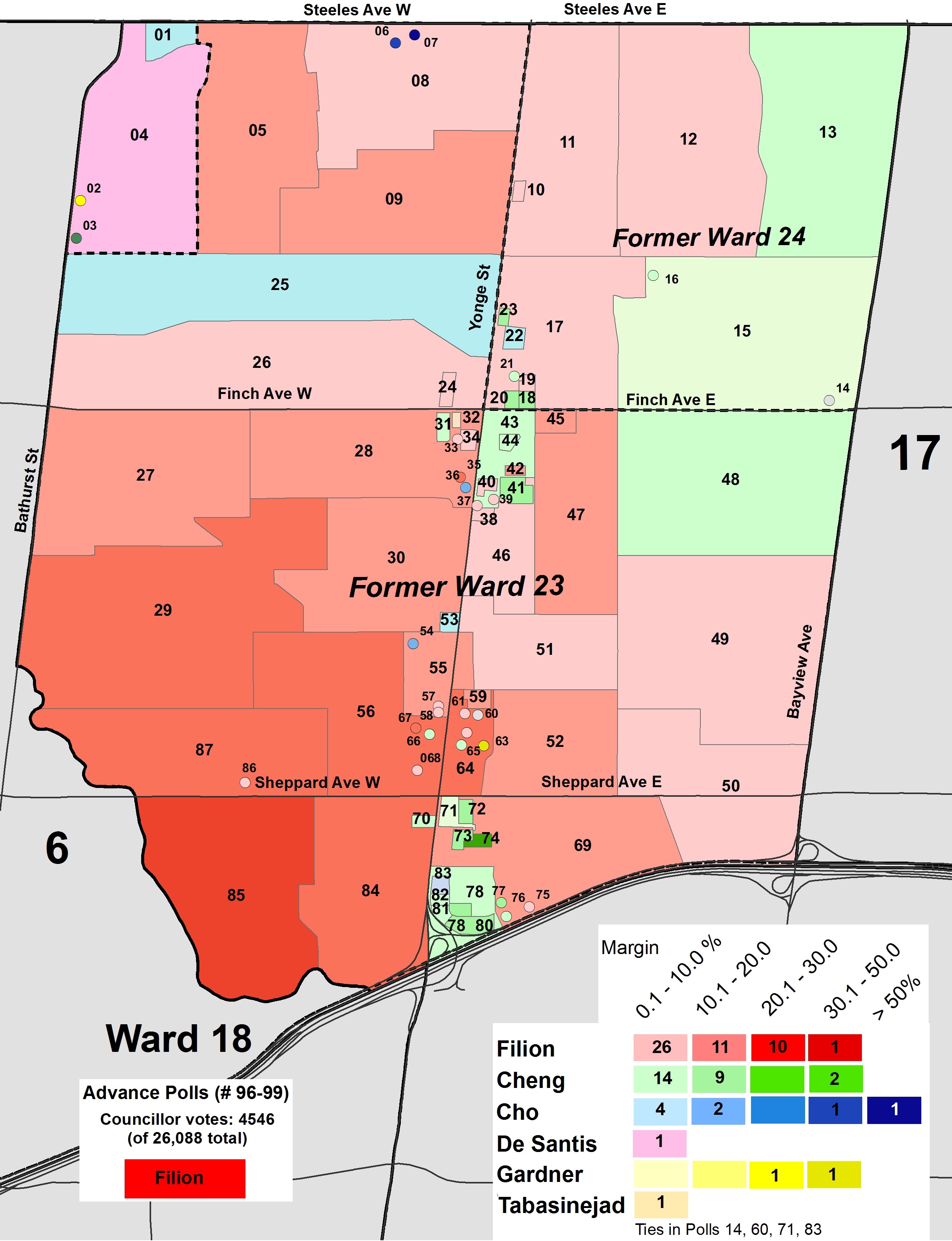
    Filion came in first place, with just 31.1 percent of the vote. Cheng placed second with 19.7 percent, and Cho came in third with 12 percent. Cheng placed first in 25 polls, especially along the Yonge Street corridor.

    While John Filion has been an effective progressive councillor, especially during the Rob Ford years, his decision to jump back in the race, threw Cheng under the metaphorical bus. Had he committed to retiring but made a strong effort to support her campaign, I believe that she would have won. Conservative candidates like Mousavi and Moini were unable to get more than 10 percent of the vote; it appears that Filion’s fears were unfounded.

    2018 Election - W18
    Poll-level results in Ward 18

    (more…)

  • Why closing Toronto’s public golf courses is a boon to the public

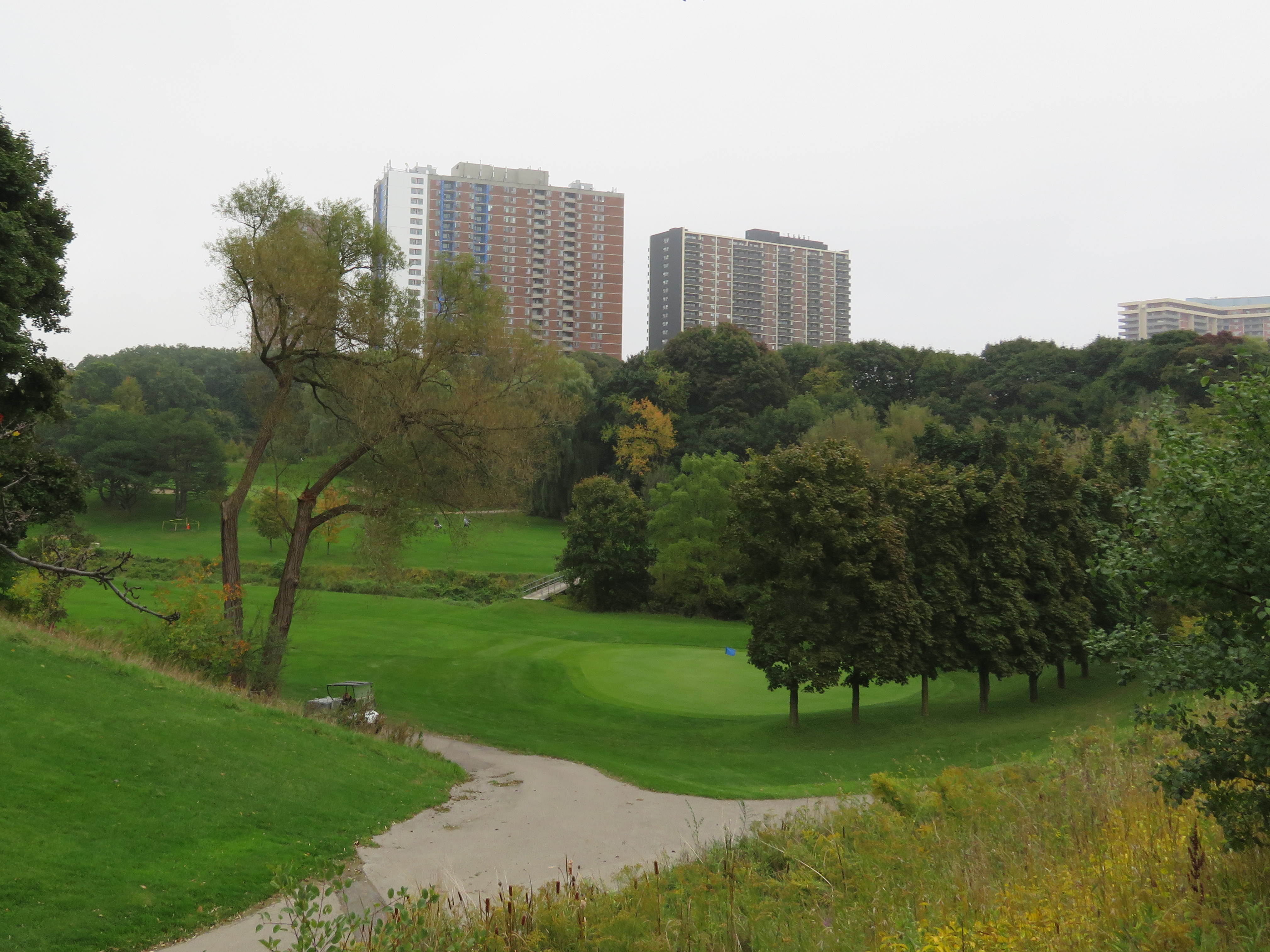
    IMG_8013-001.JPGDentonia Park Golf Course

    Yesterday, Thanksgiving Monday, mayoral candidate Jennifer Keesmaat proposed closing three of Toronto’s five municipally-owned golf courses. Keesmaat, Toronto’s previous chief planner, pointed out that the municipal golf courses operate at a loss, and that $10 million is allocated for improvements to those three courses. Furthermore, she intends to consult the local communities to best re-program the sites to address local wants and needs for the opened-up greenspace.

    The three courses are:

    • Dentonia Park Golf Course, located on Victoria Park Avenue north of Danforth Avenue, next to Victoria Park subway station, in the Massey Creek ravine.
    • Don Valley Golf Course, located in the West Don Valley near Yonge Street and Wilson Avenue, near York Mills Station. It extends under Highway 401.
    • Scarlett Woods Golf Course, located near Eglinton Avenue and Scarlett Road on the Humber River.

    Tam O’Shanter Golf Course, near Sheppard Avenue and Kennedy Road in Scarborough, and the Humber Valley Golf Course in north Etobicoke, are not mentioned in Keesmaat’s proposal.

    I’m very happy that Keesmaat has put forward this bold idea. Despite the municipal ownership of these lands, they are fenced off from residents. For example, Dentonia Park is located in a lower income neighbourhood made of many high-rise rental buildings. As Toronto continues to grow in population, greenspace reserved for golfers could be put to better uses such as sports fields (soccer and cricket, especially), playgrounds, natural wetlands and woodlands, and public paths.

    Golf is an expensive leisure activity with a large environmental footprint: the tending of golf courses require lots of water and pesticides. (Golf courses are exempted from a provincial ban on certain types of pesticides.) They may not adequately address the local community’s needs either, especially in lower income areas. Interest in playing golf is waning in North America as well. It makes sense to open up these publicly owned lands.

    Golf courses get in the way of potential linear parks. As I mentioned before, the Don Valley Golf Course blocks access to Earl Bales Park from the south. Opening up the grounds to the general public would provide a continuous path from York Mills Station to Bathurst and Sheppard and beyond. This would provide a safe and pleasant walking and cycling route across Highway 401, compared to the unpleasant and dangerous crossings at the interchanges with Yonge Street and Avenue Road.

    Dentonia Park Golf Course sits in between the path through Warden Woods and the Taylor Creek Ravine. If opened to the public, there could be a car-free path for pedestrians and cyclists all the way from Warden and St. Clair Avenues all the way downtown via the Don Valley trail system.

    Keesmaat’s plan to close money-losing, poorly-used golf courses is a great idea, much like her promise not to go ahead with the costly replacement of the eastern section of the Gardiner Expressway, instead going with the locally preferred boulevard option. Both of these ideas may not be popular with some, but they are both fiscally and environmentally sound.

  • The John Tory Way

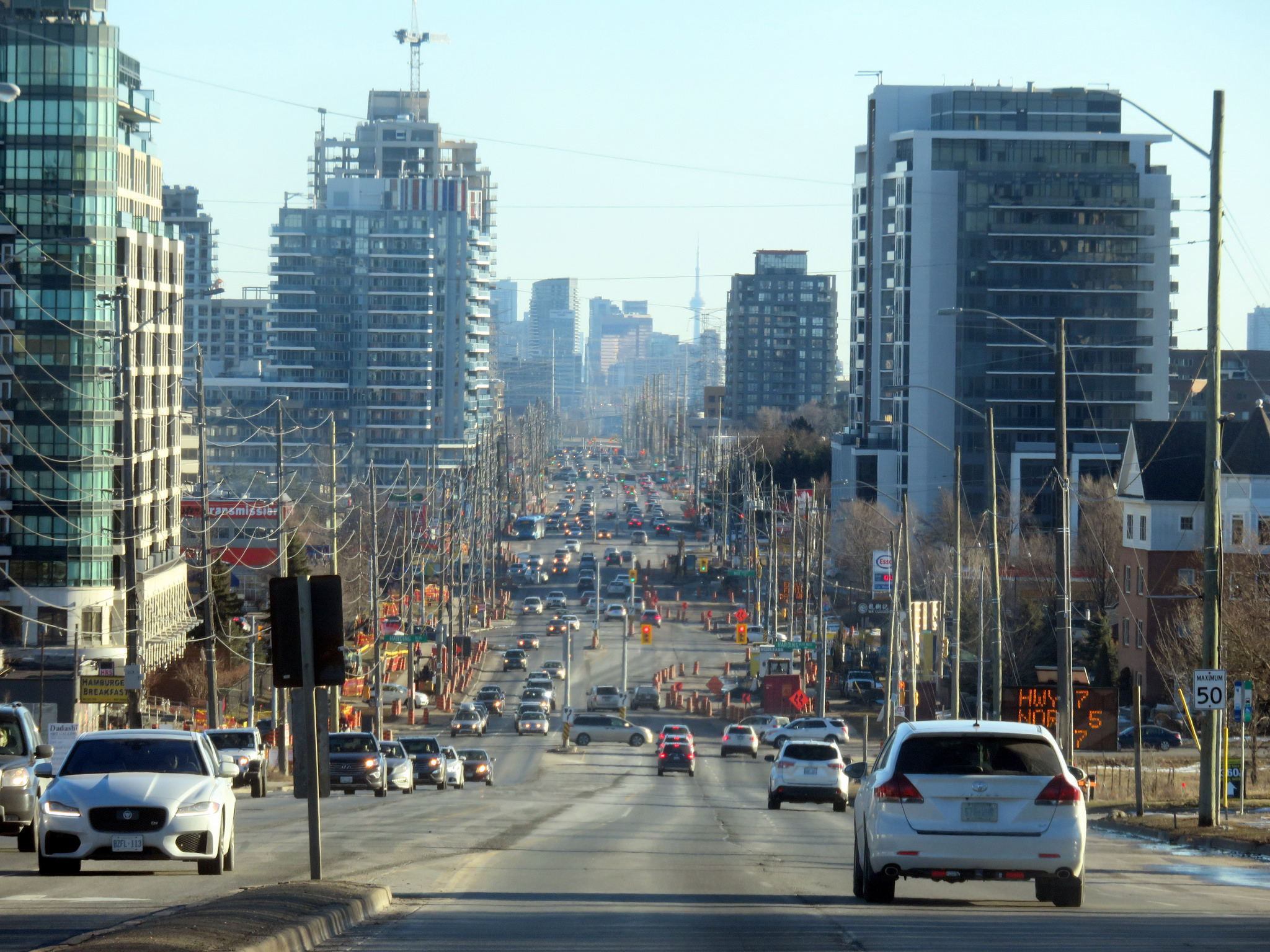
    32267768383_8c2f20d0d5_k
    Yonge Street looking south from Richmond Hill

    There’s an episode of The Simpsons where Homer Simpson changes his name to Max Power, after he’s ridiculed for sharing the name with a buffoonish television character. It’s not a great episode — it came out at the time the show was in transition from its glory years to the “Zombie Simpsons” era — but it has a few good laughs.

    There’s one good memorable quote:

    — “There’s the right way, the wrong way, and the Max Power way!”
    — “Isn’t that the wrong way?”
    — “Yeah, but faster!”

    On important transportation projects, the John Tory way is the wrong way, but costlier. We’ve seen this several times during his mayoralty.

    When it came time to replace the underused eastern section of the Gardiner Expressway, Tory and his suburban allies on council voted in favour of a more expensive “hybrid” option that maintains much of the elevated highway, instead of a cheaper at-grade option that would provide a better pedestrian realm on the Eastern Waterfront and better support new development.

    In Scarborough, Tory stubbornly supports building a one-stop subway extension that was last estimated to cost $3.35 billion dollars, instead of supporting a seven stop LRT route from Kennedy Station that would extend the existing grade-separated Scarborough RT route to Centennial College and Sheppard Avenue. A proposed SmartTrack station at Lawrence East (whose estimated construction cost has risen from $26 million to $155 million) may not be able to be built while the Scarborough RT is still in operation.

    And on February 27, Toronto’s Public Works and Infrastructure Committee (PWIC) voted against plans backed by city staff, the local councillor, John Filion, and many residents and road safety advocates, to transform Yonge Street in North York Centre between Sheppard and Finch Avenues. This section of Yonge Street is due for reconstruction, hence the opportunity to rethink the street to better serve the community.

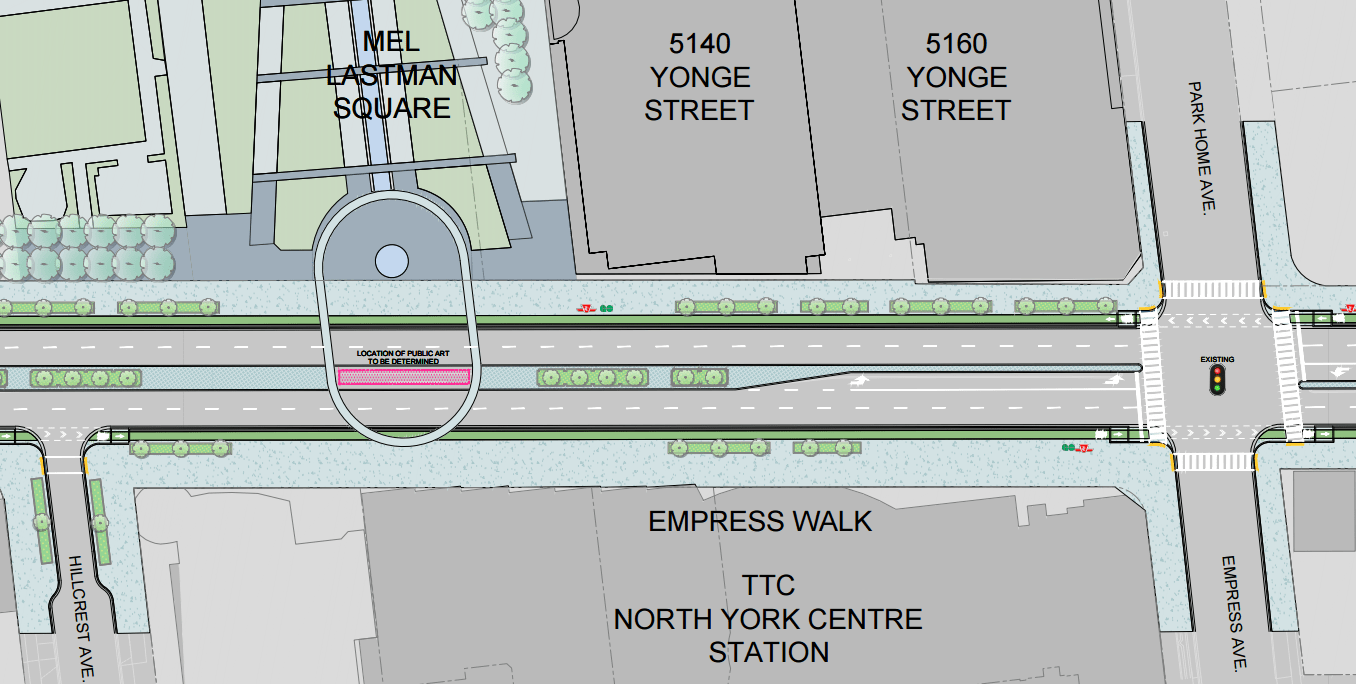
    The REimagining Yonge Street plan seeks to improve the pedestrian realm with widened sidewalks, would add new cycling infrastructure. To make room for these improvements, two traffic lanes — used for street parking outside of weekday rush hours — would be removed. This stretch of Yonge Street has seen many new condominium towers built over the last decade, and there are three subway stations serving this stretch of Yonge Street.

    Mayor Tory, who has the power to select committee chairs and members, stated his preference for the status quo on Yonge Street, suggesting that the bike lanes be moved one block west, to Beecroft Avenue. PWIC moved for this alternative option as well, even though city staff reported that the change would cost an additional $20 million.

    YongeCrossSectionYonge Street between Sheppard and Finch Avenues would have seen new separated bike lanes, wider sidewalks, and new public art. (From the EA materials.)
    The decision to maintain the status quo on Yonge Street benefits commuters outside of Toronto more than local residents, so it is puzzling why Mayor Tory has declared his support — once again — for an option that puts drivers first. Nearly three-quarters of rush-hour drivers on Yonge Street through North York come from York Region. A majority of residents take transit, walk, or cycle; they would benefit from a safer, more pleasant street. Moving the bicycle route to Beecroft Avenue serves to move cyclists out of the way of cars, rather than providing a direct route with better access to transit, shops, and homes.

    With Doug Ford focused on the Ontario Progressive Conservative party leadership race, there are — as of yet — no high-profile challengers to Mayor Tory’s re-election bid. There is no need to pander to a voting bloc angered by a so-called “war on the car” unless Tory actually supports suburban commuters over his own constituents. And this decision will only cost more money.

    Once again, Mayor John Tory has chosen the wrong way.

  • Exploring Earl Bales Park

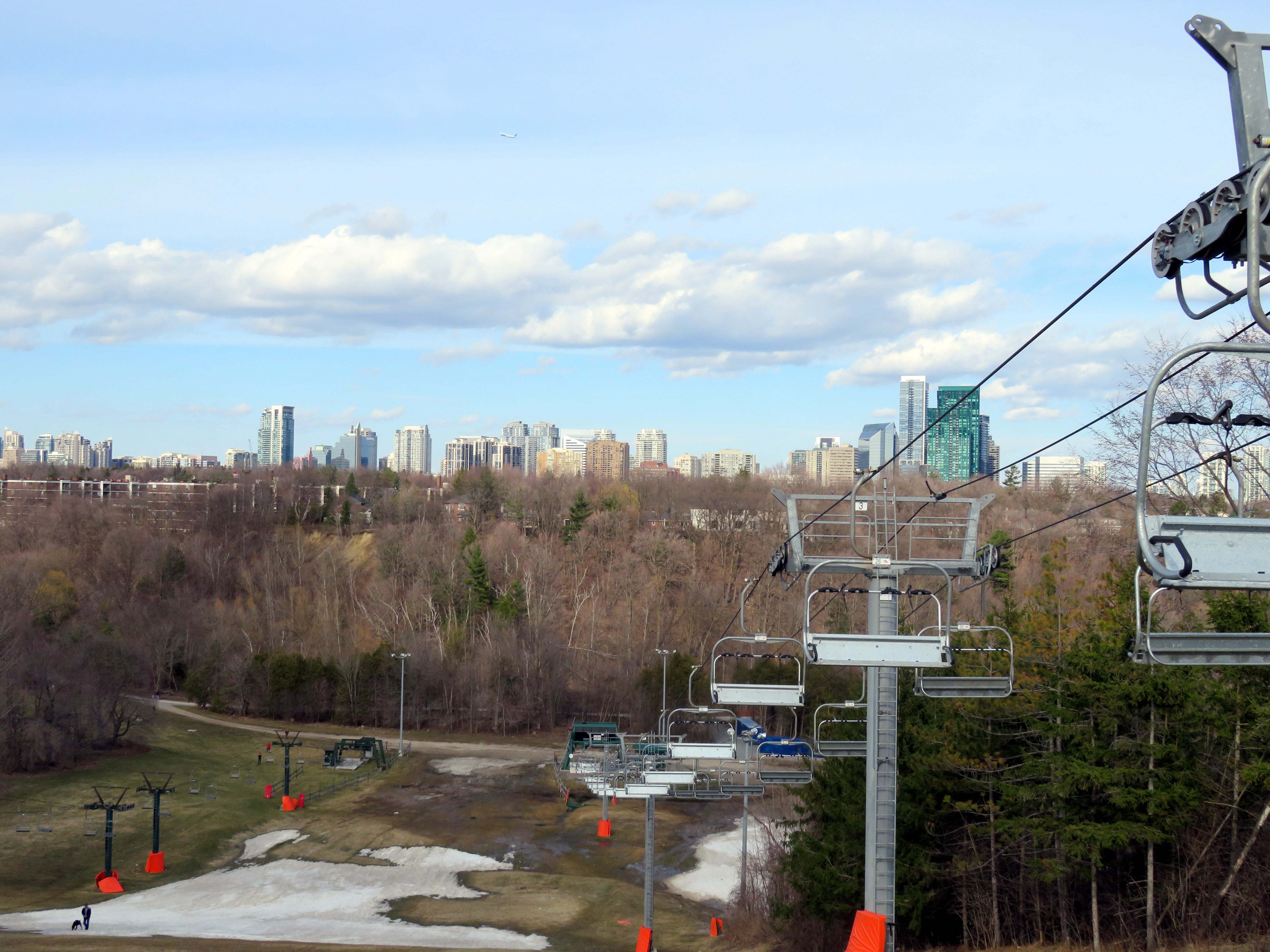
    IMG_8535-001View from the top of the ski hill at Earl Bales Park
    Last Sunday afternoon, I went for a walk around Earl Bales Park. The large, multiuse green space is located near the corner of Bathurst Street and Sheppard Avenue in North York; it also descends into the West Don Ravine. It was a delight to explore this park, but as I discuss below, it could be much better connected to the city on the south end.

    Earl Bales Park originally was a farm established in 1824 by English settler John Bales and his family; their house still stands in situ. The land later became a private golf course, and was purchased by the Borough of North York in 1975, named for one of the Baleses’ great-grandsons.

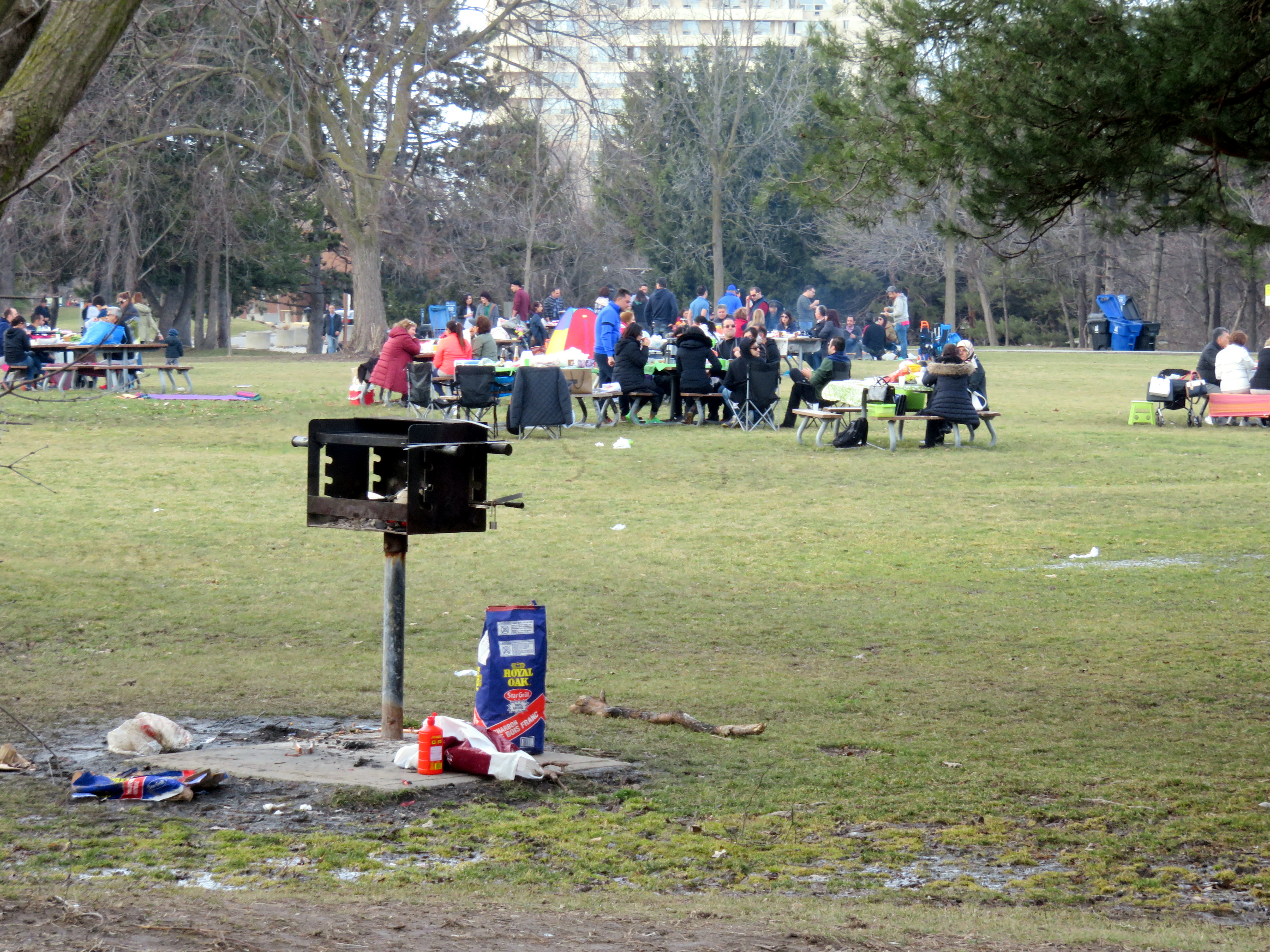
    A lot is packed into this popular green space: walking trails, playgrounds, picnic areas, a community centre, an amphitheatre, an off-leash dog park, a memorial, a seniors’ woodworking shop, and even a ski hill. Even on the first weekend of April, the park was full of picnicking families and groups; families represented a diverse cross-section of suburban Toronto.

    After English, the most commonly spoken languages I heard were Russian and Tagalog — the Bathurst Street corridor north of Highway 401 is popular among immigrants from the Philippines and Eastern Europe; many businesses and community organizations in the area cater to these communities.

    IMG_8530-001Picnicking at Earl Bales Park, April 2, 2017
    (more…)

  • Farewell to to Bathurst Manor Plaza

    IMG_3814-001

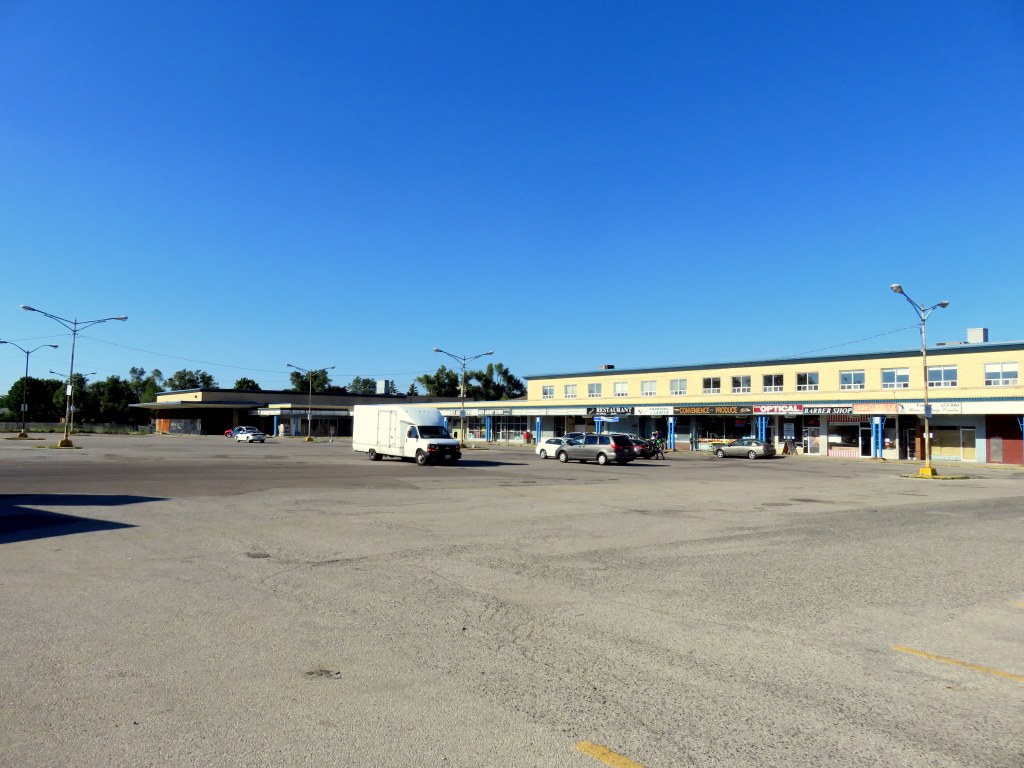
    This Sunday July 31, another suburban shopping plaza in Toronto will close for good. For over 50 years, Bathurst Manor Plaza, at the corner of Wilmington Avenue and Overbrook Place, served the local community. At its peak, it had Sunnybrook Market, a local grocery store, a Shoppers Drug Mart, LCBO, and a CIBC bank branch. It also had several clothing stores, an optician, restaurants, cleaners, an a video store. These may not be the types of businesses that would attract customers from far away, but they were the types of stores essential to the local community. It also had a gas station and service centre, which was later occupied by a kosher pizza restaurant. The plaza’s second floor houses doctors’ and dentists’ offices, lawyers, and other services.

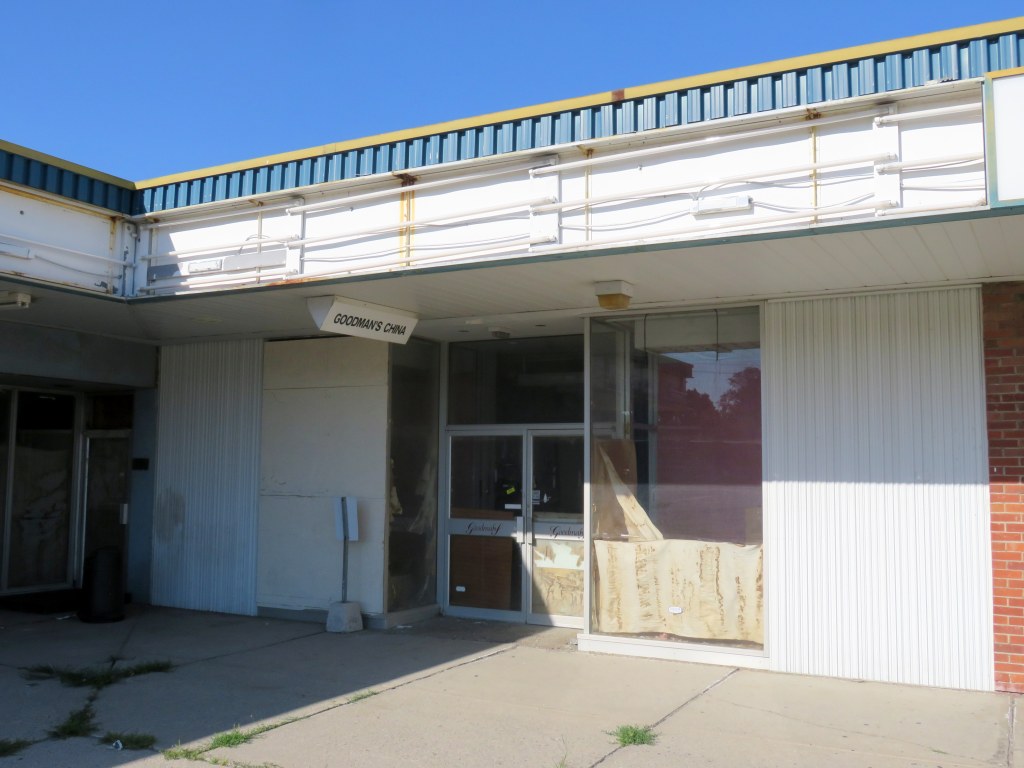
    There was also Goodman’s China and Gifts. Known for wedding registries, it was where my father would go (all the way from Brampton) to get fine crystal gifts, for my mother’s birthday or wedding anniversary, often bring my brothers and I along. I still remember friendly Mr. Goodman behind the counter, who always had a twinkle in his eye and loved seeing us kids with our father in his store. This is why I felt particularly sad visiting this plaza for the last time earlier this week.

    Canadian Jewish News has a very good article that discusses the history and future of Bathurst Manor Plaza.

    IMG_3825-001The abandoned Goodman’s China store

    (more…)

  • Mapping the 2014 Toronto election: Wards 33 and 34, Don Valley East

    With my vacation over, and back in Toronto, it’s about time to finish posting maps of the poll-by-poll results of the 2014 Toronto municipal election. In this post, I take a quick look at Wards 33 and 34, Don Valley East.

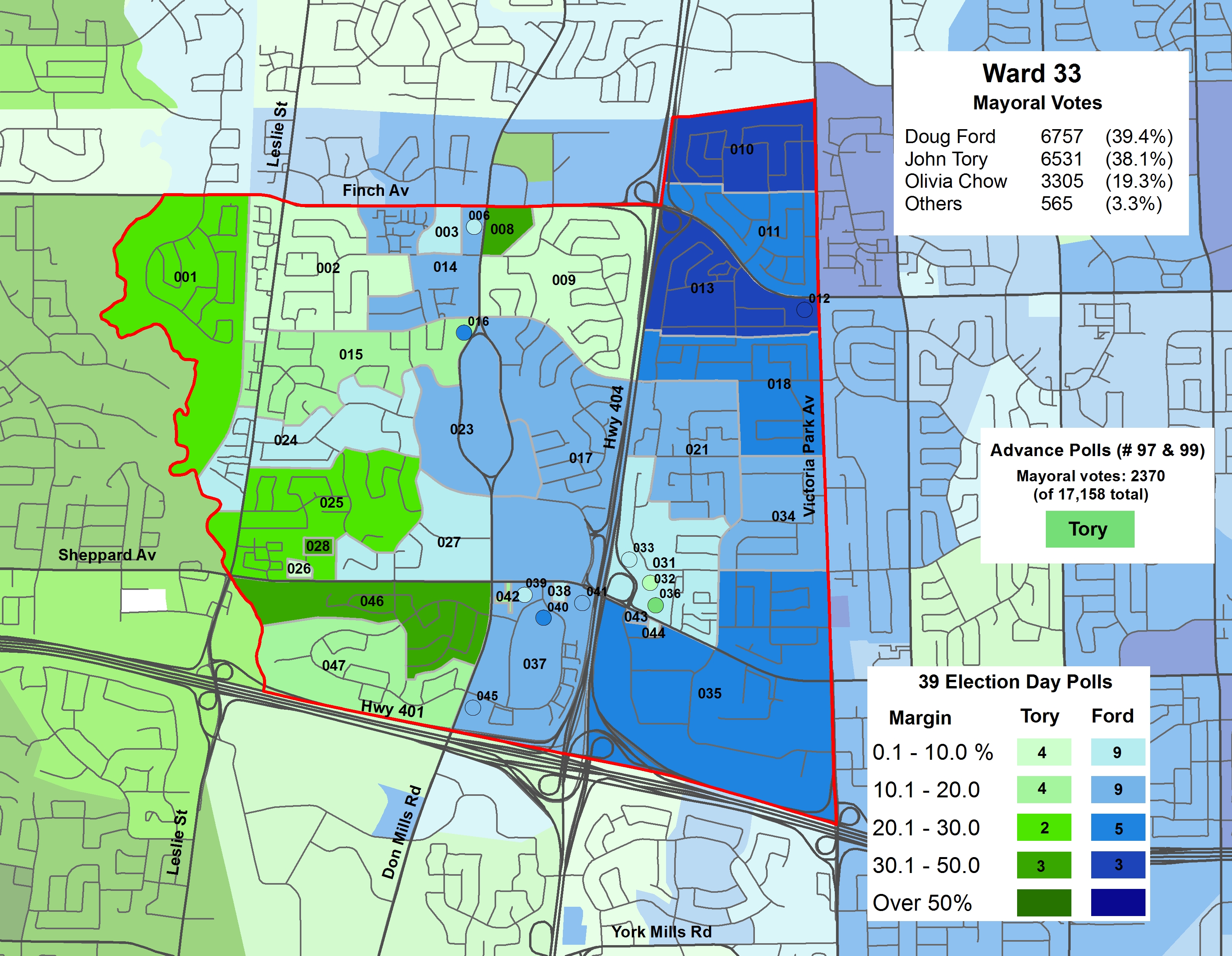
    Ward 33, in North York’s northeastern corner, is represented by centre-left veteran councillor Shelley Carroll. Ward 33 lies between Finch Avenue and Highway 401; Fairview Mall and Don Mills Station on the Sheppard subway line are close to its geographic centre. Ward 34 is represented by conservative Councillor Denzil Minnan-Wong, a municipal politician first elected in 1994 to North York City Council. Doug Ford came in first place in Ward 33, while John Tory came first in Ward 34. In both wards, Olivia Chow came in a distant third.

    Ward 33

    In Ward 33, Doug Ford won a plurality of the votes (39.4%), but by a very small margin; only 226 votes separated Ford and John Tory (who took 38.1% of the vote) in that ward. As in nearly all suburban wards, Olivia Chow came in a distant third race, netting only 19.3% of the vote there. Tory came first in most polls on the west side of the ward, closer to Yonge Street (Tory came in a comfortable first place in neighbouring Ward 24), while Ford did better in polls to the east, closer to Victoria Park Avenue and Scarborough. Condos, such as polls 008, 036, 038, and 042, picked Tory, while rental highrises went for Ford, as did single-family housing tracts east of Highway 404. Ford’s support for extending the Sheppard Subway (a money pit in this author’s opinion) was likely one factor that explains the geographic split.

    Shelley Carroll, a talented centre-left councillor and Mayor David Miller’s budget chief, was easily re-elected with 60.5% of the vote, winning all but one poll. Her nearest competitor, Divya Nayak, took 21.9% of the vote, and won only one poll, 036, a high-rise rental tower on the Don Mills “Peanut.”

    2014 Election - WARD 33 Mayor
    Poll results of the mayoral race in Ward 33

    2014 Election - WARD 33 Cllr
    Poll results of the council race in Ward 33

    (more…)

  • Mapping the 2014 Toronto election: Wards 23 and 24

    2014 Election - WARD 23 MayorPoll results of the mayoral race in Ward 23

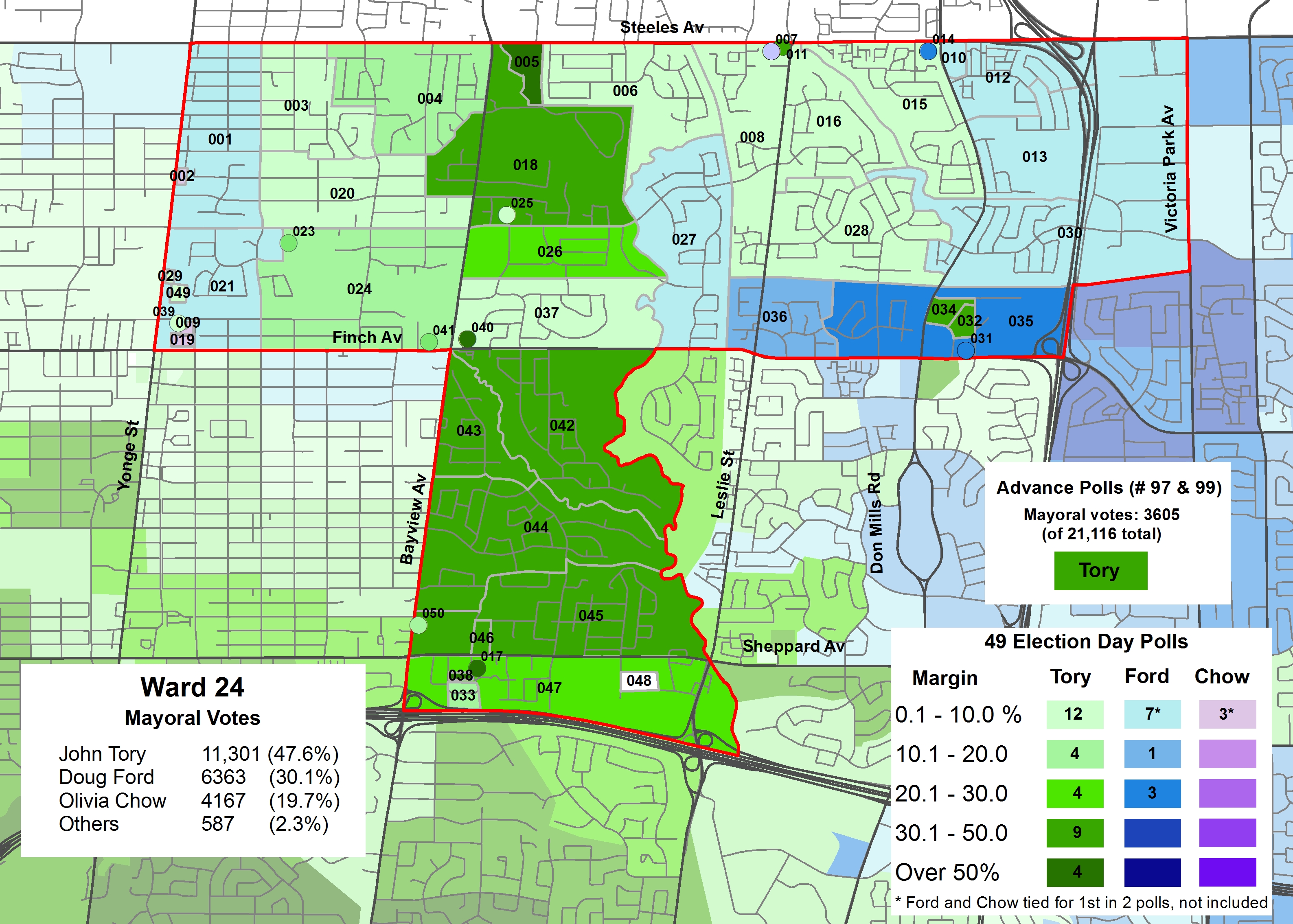
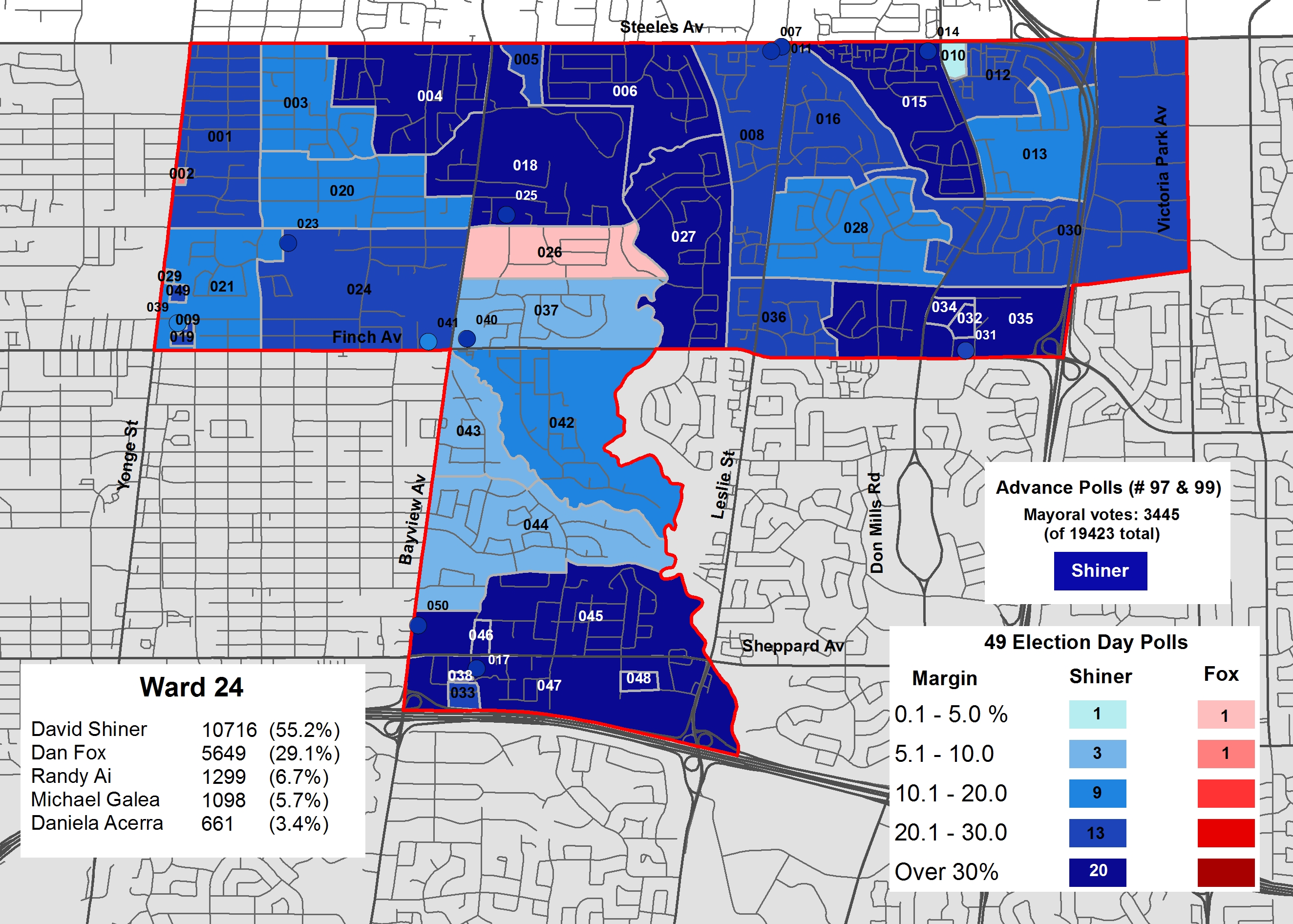
    2014 Election - WARD 24 MayorPoll results of the mayoral race in Ward 24

    There’s not a lot to say about the mayoral race in Wards 23 and 24, Willowdale. Ward 23 is Toronto’s most populated ward, with over 88,000 residents; the ward’s population grew by 11.2% in the last 5 years. The condo boom along Yonge Street between Highway 401 and north of Finch Avenue explains most of this growth. Ward 24’s population is more stable, ranging from affluent neighbourhoods near Bayview Village to low-income apartment neighbourhoods in the ward’s eastern side.

    John Tory came in first place in both wards, netting 49.0% of the vote in Ward 23, and 47.6% in Ward 24. Doug Ford came in second place in both wards, Olivia Chow coming in  third, with approximately 20% of the vote in both wards. Ford’s best result was in Poll 050 in Ward 23, a TCHC building. In Ward 24, Ford did the best in the Finch Avenue/Don Mills Road area.

    The council races were at least more interesting, if not disappointing.

    Council races

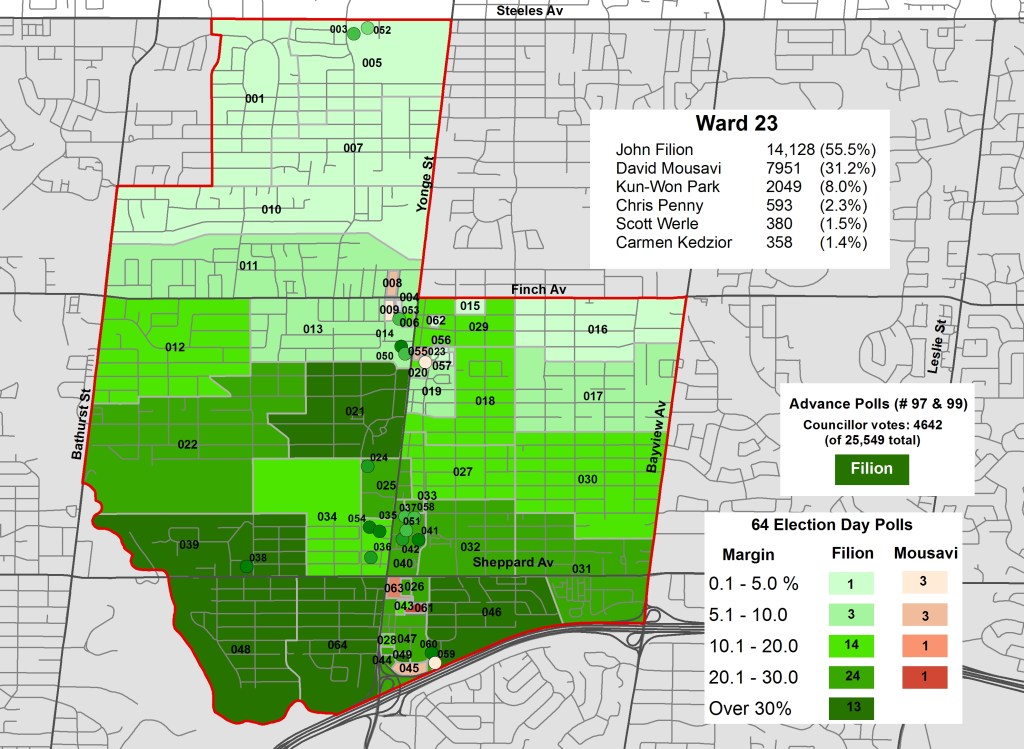
    2014 Election - WARD 23 CllrPoll results of the council race in Ward 23
    In Ward 23, David Mousavi ran against long-time incumbent John Filion, a centre-left councillor who served on North York City Council before amalgamation. Mousavi ran on Filion’s right, with a platform of low tax increases, road improvements, and the extension of the Sheppard Subway to Downsview, as well as a “fresh start” for the ward.

    John Filion, who was the Chair of the Toronto Board of Health (and champion of the disastrous “A La Cart” food vending program), was the first councillor to back John Tory’s campaign, surprising some election observers who expected that Filion might have backed Olivia Chow.

    Filion and Mousavi found themselves in a nasty race, with both campaigns accusing each other of dirty politics. In the end, though, the incumbent won; Filion took 55.5% of the vote to Mousavi’s 31.2%. David Mousavi won 8 of 64 polls, all along the Yonge Street corridor.

    2014 Election - WARD 24 CllrPoll results of the council race in Ward 24

    Ward 24 was, in my opinion, terribly disappointing, one of the biggest in the 2014 election.

    First-time candidate Dan Fox registered in February, putting together a strong team in a bid to oust David Shiner. Fox, a community activist and federal civil servant, ran to the left of Shiner, a failed Ontario PC candidate. (I got to meet Dan Fox during the campaign, I was supportive of his run, and I hope to see him run again in 2018.)

    Like Filion, Shiner first served on North York City Council; he was first elected in 1991. During Rob Ford’s term as mayor, Shiner voted with the mayor over 80% of the time, and found himself in hot water for two mini-scandals. In 2013, the Toronto Star reported that Shiner was moonlighting as a federal lobbyist for five years, on behalf of a company that dealt with the city. Also in 2013, the CBC revealed that Shiner (along with Giorgio Mammoliti, Toronto’s worst city councillor) was paying exceptionally cheap rents for an apartment in a building owned by the Greenwin-Verdiroc Group, a major city contractor.

    As his custom, Shiner didn’t even bother to campaign until very late; he officially registered as a candidate on September 5.

    Ward 24 was ripe for a change. Fox won the endorsement of the Toronto Star, NOW magazine and others. But like Ward 7, the people of ward 24 stuck with the incumbent, no matter how awful their councillor might be. Fox only won 2 polls, Shiner coasted to victory with 55.2% of the vote to Fox’s 29.1%.

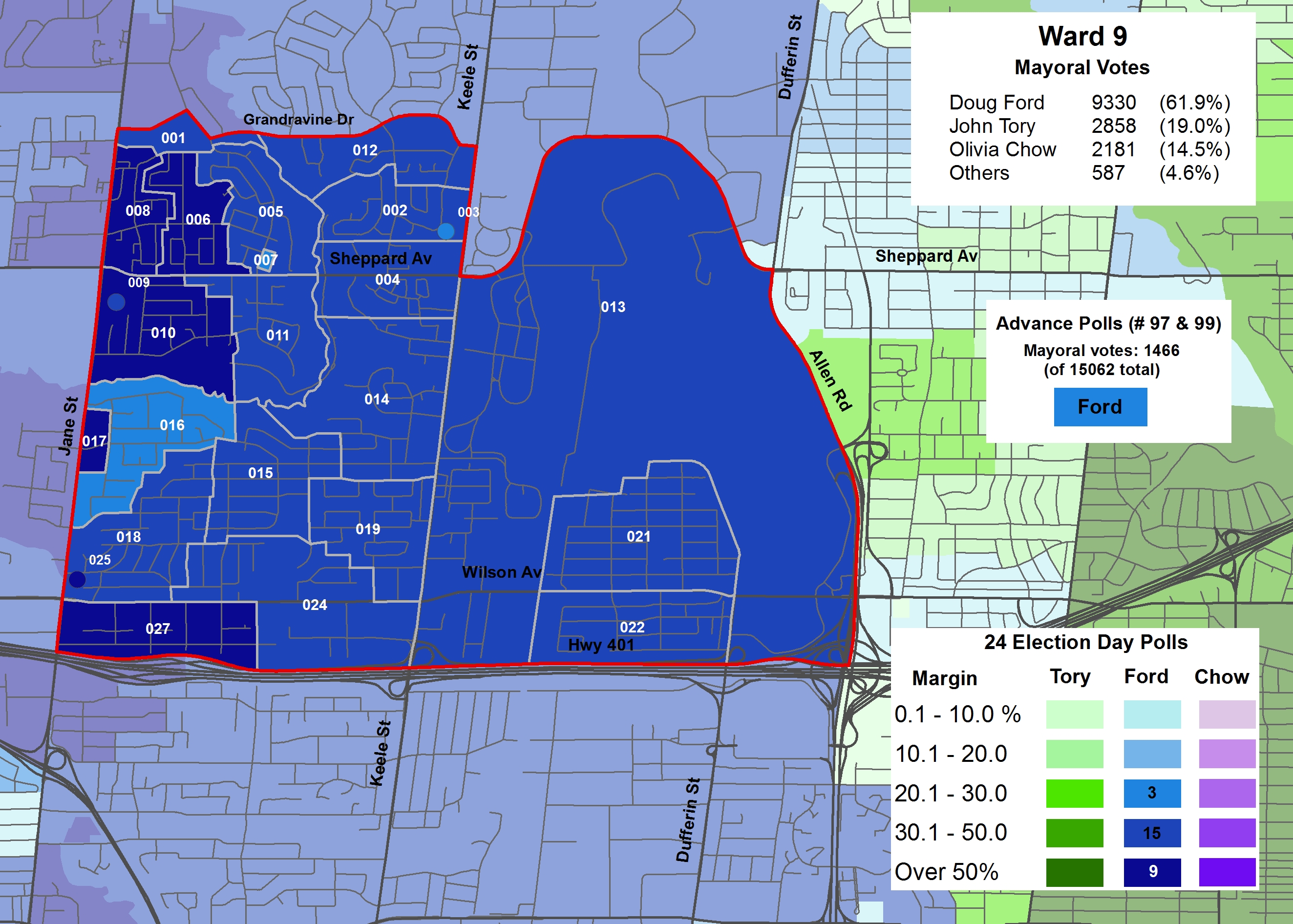
  • Mapping the 2014 Toronto election: Wards 9 and 10

    2014 Election - WARD 9 Mayor
    Poll results of the mayoral race in Ward 9

    Ward 10 Mayor
    Poll results of the mayoral race in Ward 10

    This weekend, let’s have a quick look at the 2014 election results in Wards 9 and 10, York Centre. Both wards are located north of Highway 401 in the former City of North York. Allen Road and Dufferin Street separate Ward 9 to the west and Ward 10 to the east. Ward 9 contains Downsview Park, and was my home from 2006 (when I moved from my parents’ house in Brampton) through 2011, when I sold a condo I owned there and moved closer downtown.

    Fifty-nine percent of Ward 9’s residents were born outside of Canada. Many of Ward 9’s residents are long-established Italian-Canadian families, but they are joined by immigrants from Southeast Asia, Latin America, and the Caribbean. The ward has a somewhat low average household income ($60,550 compared to the city-wide average of $87,038).

    Doug Ford won Ward 9 by a huge margin. Ford took 61.9% of the vote and came first in every poll, while John Tory was preferred by only 19.0% of the electorate; Olivia Chow only got 14.5% of the vote.

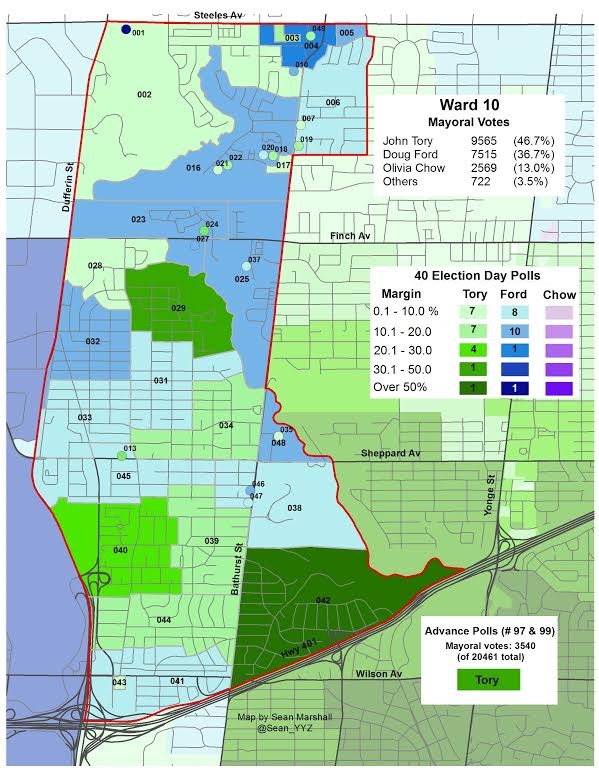
    Ward 10 is somewhat wealthier than Ward 9; it includes the affluent Armour Heights neighbourhood. Ward 10 has a large Jewish population, and it has hosts Russian-Canadian and Filipino-Canadian communities (the two largest immigrant populations in the ward). In Ward 10, John Tory came first with 46.7% of the votes (Ford got 36.7% and Chow 13.0%). Tory did best in Armour Heights, while Ford did best in areas with higher proportions of immigrants and lower incomes, especially in the high-rise residential towers at Bathurst and Steeles. The only major surprise is that despite charges of the Fords’ anti-Semitism, Doug Ford came in first in several polls located in Jewish seniors’ homes.

    (more…)