Tag: Transfers

  • Two-hour transfers are finally coming to the TTC

    IMG_3898

    At its board meeting on July 10, the Toronto Transit Commission finally approved two hour transfers for passengers paying by Presto. This is great news that has been a long time coming.

    The TTC expects that the new policy will cost $21 million a year by 2020, but it will also boost ridership by 5 million passengers. The new two-hour transfer policy will allow a passenger using a Presto card to board any vehicle or enter any subway station within two hours of the first tap without paying a second fare. This will allow anyone to make a short return trip on one fare, or make a stopover before transferring to another route. Customers of most suburban transit systems such as MiWay, Brampton Transit, and YRT have enjoyed the same privileges for over a decade.

    The policy takes effect Sunday, August 26.

    I’ve argued here before why two-hour transfers are necessary. If a passenger taps onto another vehicle on the same route, a common occurrence due to delays, short-turns, and diversions/shuttles, the Presto Card will deduct a second fare. That has happened to me several times, even when making a valid transfer between a bus and Union subway station. It’s often confusing when the TTC tells its passengers to take a paper transfer when a diversion takes place, or tells its customers not to tap again on a bus or streetcar when they’re short-turned. The new policy finally fixes those errors for good.

    However, the transfer policy does not apply to customers paying by cash, tickets, or tokens, so the old archaic paper transfer rules will still apply to many TTC customers.

    The TTC is slowly phasing out paper media and passes, but still has yet to implement daily, weekly or monthly caps that will effectively replace day, weekly and Metropasses. There will also need to be a paper Presto card equivalent developed for occasional and one-time customers, such as tourists or anyone who doesn’t want to pay the $6 fee for a plastic card. Hopefully the details of how these will be implemented will be decided and communicated in the near future.

  • Some answered questions about Toronto’s next subway extension (updated)

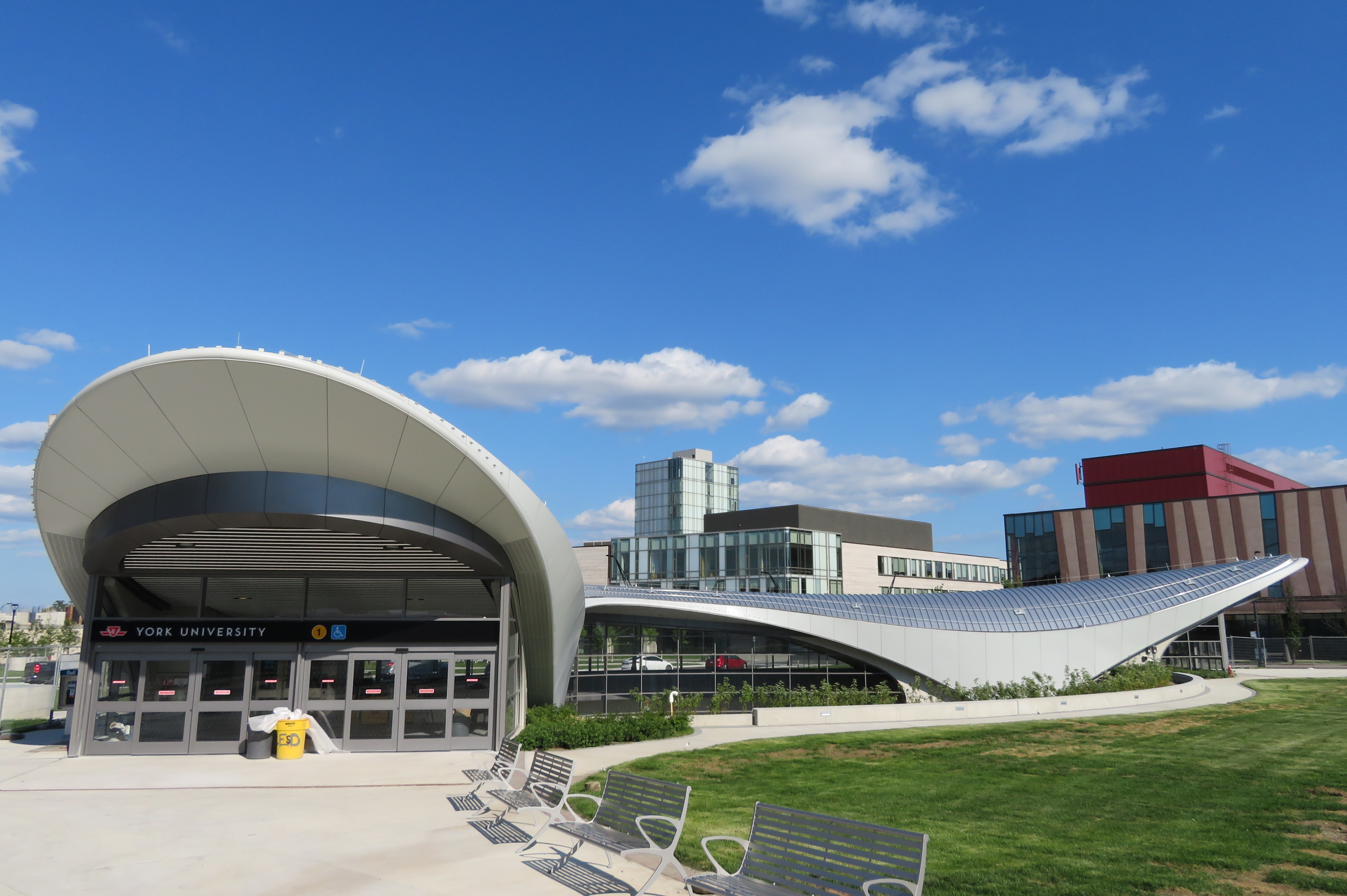
    36354175911_632dc72411_o.jpgYork University Station, August 2017

    Updated October 10, 2017

    Ten months ago, I wrote about some of the unanswered questions about the Toronto Transit Commission’s Line 1 subway extension to York University and Vaughan. At the time, I was concerned about fare integration once the subway opened, especially if suburban GO, YRT, or Brampton Transit passengers headed to York University were required to make new transfers to the subway at Vaughan Centre or Highway 407 Stations.

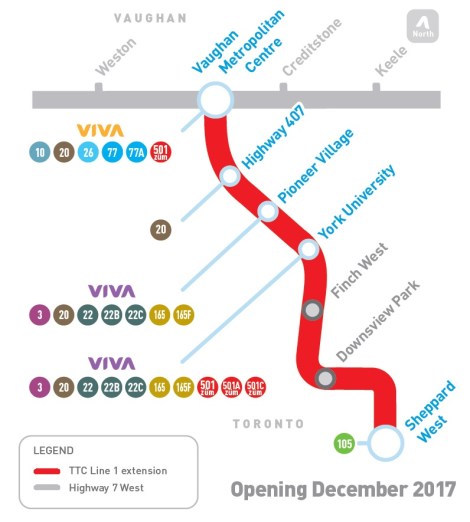
    We now know the day the six new subway stations will open: Sunday, December 17, 2017. We also know how the TTC, York Region Transit, and Brampton Transit will serve the new extension and York University. And today, we also have some indication of how GO Transit passengers will be affected by the changes.

    YRT Subway Map.jpg
    How YRT and Brampton Transit will serve the Line 1 subway extension
    (from the YRT website)

    On Friday, Premier Kathleen Wynne and Transportation Minister Stephen Del Duca will announce a new co-fare between the TTC and Metrolinx services (GO Transit and Union Pearson Express), to take effect in January 2018. (The Star previously reported that the fare change will take place as soon as the subway extension opens.)

    Transfers from GO Transit or UPX to the TTC will cost $1.50 for passengers using Presto cards, a 50% reduction from the full adult fare of $3.00. Passengers transferring from the TTC to GO or UPX will get a $1.50 fare discount. It is expected that the new co-fare subsidies will cost the provincial government $18 million a year. The fare discount will not apply to passengers using fare media other than Presto cards, including TTC tokens, Metropasses, or paper one-way tickets or day passes.

    These are similar to the co-fares offered between GO Transit and transit agencies outside the City of Toronto, including MiWay, York Region Transit, Brampton Transit, and Hamilton Street Railway. However, these co-fares are generally more generous — ranging from $0.60 in Hamilton to $1.00 in York Region.

    There was no news on reducing the fare penalty for transferring between the TTC and connecting local bus systems such as York Region Transit and MiWay.

    For many commuters, the new TTC co-fare is great news, and it represents a good first step towards proper fare integration. It helps to make GO Transit more useful for trips within the City of Toronto, and it helps suburban commuters who use the TTC for part of their trip, such as University of Toronto students, who are located too far a walk to Union Station.

    (John Tory is also claiming a victory, calling it “a step in the right direction” for his SmartTrack proposal. At this point, “SmartTrack” is little more than a GO/TTC fare agreement and a few new proposed GO stations.)

    However, this could also affect York University students as well. Previous plans for the Line 1 subway extension saw GO Transit buses serve the Highway 407 station, requiring a transfer to the subway to get to campus. York University has been long eager to remove the buses from the York Commons area, which GO and the TTC use as their campus terminals.

    York Region Transit will continue to operate many bus routes into York’s campus, on the Ian Macdonald Boulevard ring road, and Brampton Transit’s Queen Züm bus route will remain on campus. Their university-bound passengers won’t be required to transfer to the subway and pay an additional fare. But it appears, for now, that GO Transit passengers will have to make a connection, costing $1.50 each way. (This will not be the case for in the short term, see update below.) This will also apply to GO train customers on the Barrie Line who currently use York University Station, if that station closes as planned when the subway connection at Downsview Park opens.

    This will be a blow for GO Transit customers who commute to and from York University, accustomed to a one-seat ride direct to campus. But it will be an improvement for GO operations on the Highway 407 corridor, with buses no longer stuck in traffic in the Keele Street and Steeles Avenue area. It will also benefit GO Transit passengers who aren’t headed to York University. Providing good public transit is not be about giving everyone a one-seat ride.

    Despite these benefits, if GO Transit serves Highway 407 Station as planned, it will impact many passengers with a new transfer and an additional $3.00 cost per day. I’m curious what GO Transit’s messaging and final plans will be, because they have yet to communicate their new schedules and connections when the subway extension opens. Hopefully, we will learn the answers to the rest of those questions soon.


    Update: According to the CBC and Metrolinx’s Anne Marie Aikins, there are now no immediate plans to re-route GO Transit buses from York University. at least in the short term. This is a short-term solution, however, because the Highway 407 station was designed with a large terminal for GO Transit buses, and York University has been vocal about wanting the hundreds of GO and TTC buses a day out of the York Commons area.

    I don’t see this as a long-term solution, however. Hopefully Metrolinx and the TTC can figure out how to best serve York University passengers, though that should have been figured out a long time ago. After all, the subway was originally supposed to open by the end of 2015.

  • The TTC double-charged me again when I used Presto

    14840286353_4aaff50047_k.jpg
    Sugar Beach

    The weekend of May 26-27 in Toronto was a lovely one. My fiancée and I spent the Saturday and Sunday walking around Toronto, visiting some of the Doors Open sites and Harbourfront. Among the highlights were the new Daniels School of Architecture at 1 Spadina Crescent, a beautiful heritage re-use of the original Knox College (the neo-gothic building that looms over Spadina Avenue), and the Toronto Railway Museum, located at Toronto’s Roundhouse.

    After the Doors Open sites closed at 5:00 PM, we walked along the waterfront as far east as Sugar Beach, before heading west to the High Park neighbourhood for dinner. With the Bloor-Danforth Subway (Line 2) closed for maintenance between Broadview and St. George Stations, we opted to take a local bus on Queen’s Quay to Union Station, transfer to the subway there, and transfer again at St. George to Keele.

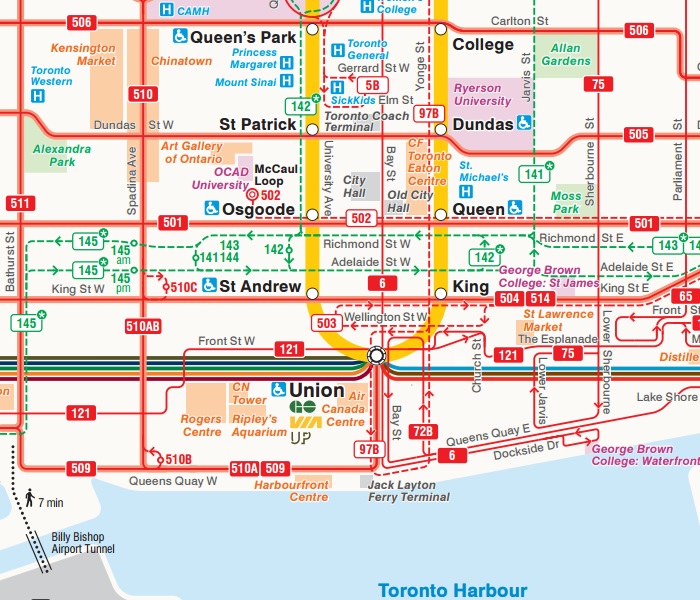
    Route 72B Pape operates between Pape Station and Union Station via Commissioners Street and Queen’s Quay, a valid and long-standing transfer with the subway at Union. The 509 and 510 streetcars serve Union via a direct, underground connection, but buses — the 6 Bay, the 72 Pape, and the 121 Fort York-Esplanade — have on-street stops at Front and Bay Streets; a transfer is required.

    Union Connections.jpg
    The surface route network at Union Station, from the 2017 TTC system map

    I made the assumption that the transfer would be recognized by Presto when we tapped on the 72B Pape bus, and again when we got into the station. That turned out to be a mistake, as I found out a few days later when I checked my Presto activity online. At 6:27 PM, the TTC $3.00 Presto fare was paid on the bus (Queen’s Quay East at Jarvis Street West Side), and again at 6:41 PM at Union Station.  (more…)

  • Suburban stations for urban needs: accessing GO Transit’s proposed new stations

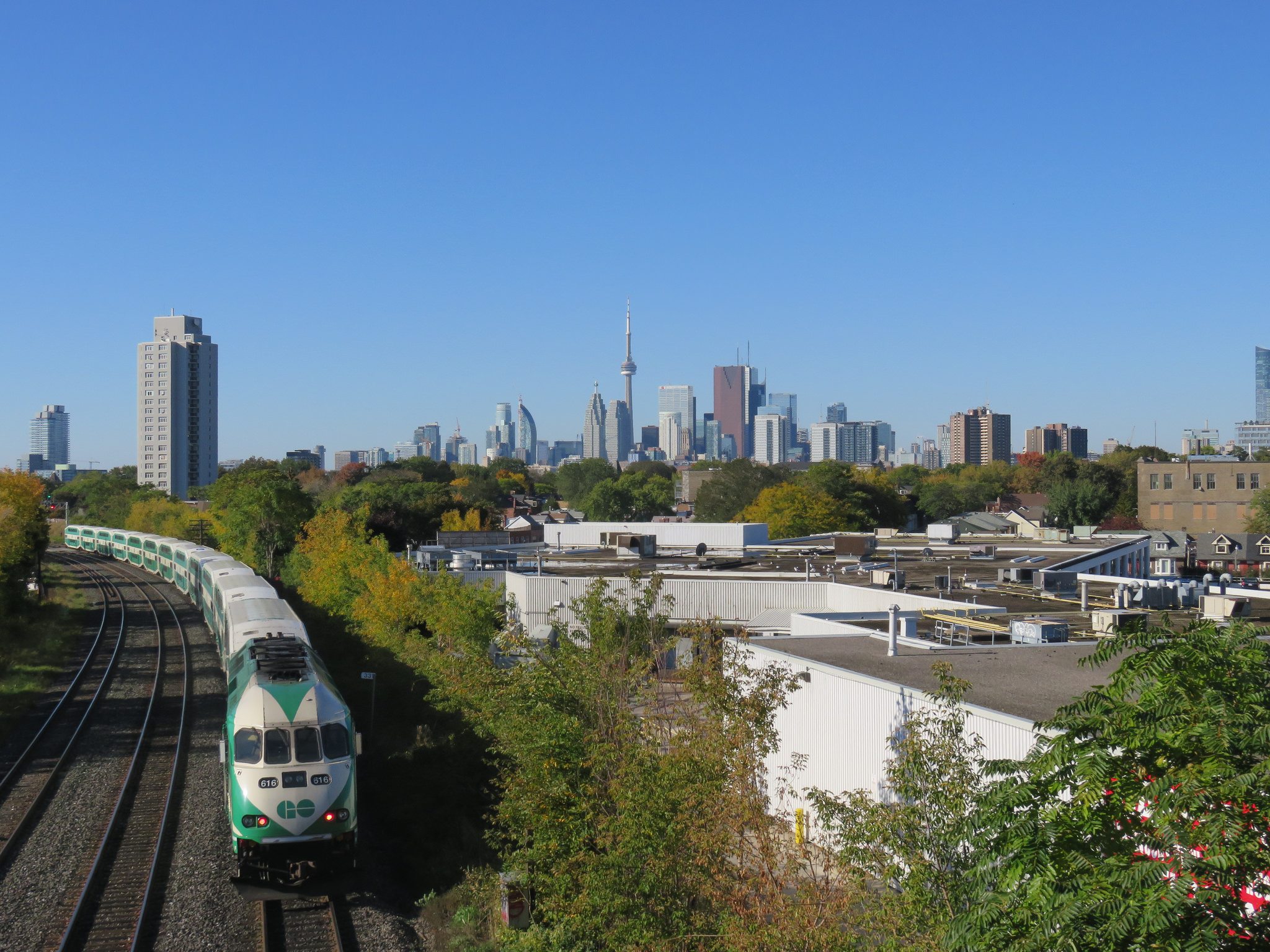
    21505188673_1d34d85175_kGO Transit train from the Pape Avenue footbridge, near the proposed site of Gerrard Station

    At its last board meeting on December 8
    , Metrolinx presented an update on the status of twelve new GO Transit rail stations, all located on existing lines. Eight of these proposed new stations are located in the City of Toronto; and six of those are station locations once promised as part of John Tory’s SmartTrack proposal. Unfortunately, the proposed new station designs (all available in this Metrolinx report) appear to be similar to existing GO stations in the suburbs, with needlessly large bus loops, PPUDOs, and parking lots. Development opportunities are limited.

    Transit connections at some proposed stations, like St. Clair West, are poor or practically non-existent. This is rather unfortunate, as SmartTrack was originally proposed as a frequent, subway-like service between Mississauga and Markham, with full TTC fare integration. Today, it’s merely six additional stations on existing GO Transit rail corridors. Without quick and seamless connections to the subway and surface TTC routes, the ability to provide any transit relief is compromised.

    I have more to say on this at Spacing Toronto.


  • Why Presto and the TTC don’t mix

    In an earlier post, I explained why the Toronto Transit Commission should ditch its archaic transfer policies and adopt a two-hour unlimited transfer system like those in Mississauga, Brampton, York Region, and elsewhere in the Greater Toronto and Hamilton Area.

    When I made the argument last year, the TTC had just introduced proof-of-payment on all streetcar lines and had just started to adopt the Presto Card for fare payments. Sometime in 2o17, the TTC will eliminate all tickets, tokens, and passes, instead relying on Presto and new limited use media (LUM) paper cards for single-ride payments and day passes. (LUMs are common on some systems that have gone to smart card technology; Montréal, for example, has the L’occasionnelle card, augmenting the plastic Opus Card.)

    About half the buses and over one third of all TTC subway stations now accept Presto as payment (for regular adult and student/senior fares, deducting the same fare as the applicable token or ticket price); according to the TTC, the full roll-out of Presto machines on the bus network is supposed to be complete by the end of the year. But the TTC likes to remind its passengers that they should carry alternative forms of payment in case Presto is not available (for example, when shuttle buses replace subway or streetcar services).

    That said, I’ve been happy with using Presto when it’s available. Presto is all-but-necessary to ride GO Transit, OC Transpo, UP Express and suburban transit agencies; with Presto, transfers and GO Transit/suburban bus co-fares are automatically figured out. I set up the autoload feature on my Presto account, so I never have to worry about not having enough funds on the card. I can always review my account, which accurately keeps track of my transit fare payments and transfers. There are times when Presto is not an option, such as when I travel to Scarborough, so I always keep a few tokens or cash for those instances.

    But on Sunday, September 18, Presto finally didn’t work for me. But I blame this on how the TTC insists on making Presto work with its interpretation of its outdated transfer policies, rather than making its fare policies work for Presto.
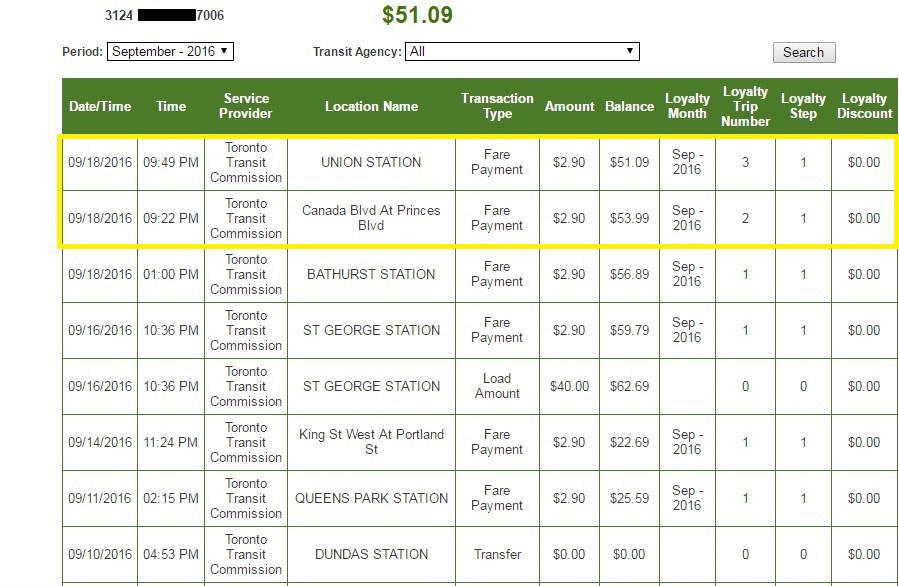
    presto-overchargeScreenshot from my Presto transaction history, September 20, 2016

    After a wonderful evening visiting the In/Future arts festival at Ontario Place, I boarded a 509 Harbourfront shuttle bus at the Exhibition Grounds at 9:22 PM. The streetcar that normally operates from the Exhibition to Union Station was not running due to maintenance in the Bay Street tunnel. The shuttle bus was equipped with a Presto machine, and I tapped my card. The bus let off its passengers at the corner of Bay and Front Streets, just outside of Union Station, and I transferred to the subway, a completely valid transfer, at 9:49PM. But that resulted in a second charge of $2.90.

    My mistake was expecting that the transfer from the 509 shuttle bus to the subway would be recognized by Presto as a valid transfer. Normally, the 509 streetcar has a direct connection to the subway platforms, without the need to pass through fare gates. Elsewhere, the transfer between streetcar and subway at downtown stations is not a problem using Presto (like the transfer from the 505 Dundas Streetcar to Dundas Station on September 10).

    Luckily, I checked my transaction history on Monday, where I caught the error. I immediately went on Twitter to complain. The TTC Helps account told me me to give TTC customer service a call, and they apologized (though reminding me that I should always get a paper transfer when paying with Presto), and promised to mail me a token to compensate. I got the token in the mail five days later, “in the interest of good public relations.” Mailing a token out is one way to refund an improper charge, but it’s not efficient.

    I will say that the TTC customer service staff are great people who sometimes deal with unreasonable customers. The agent I spoke with was very understanding and agreed with some of the specific issues that frustrated me that day.
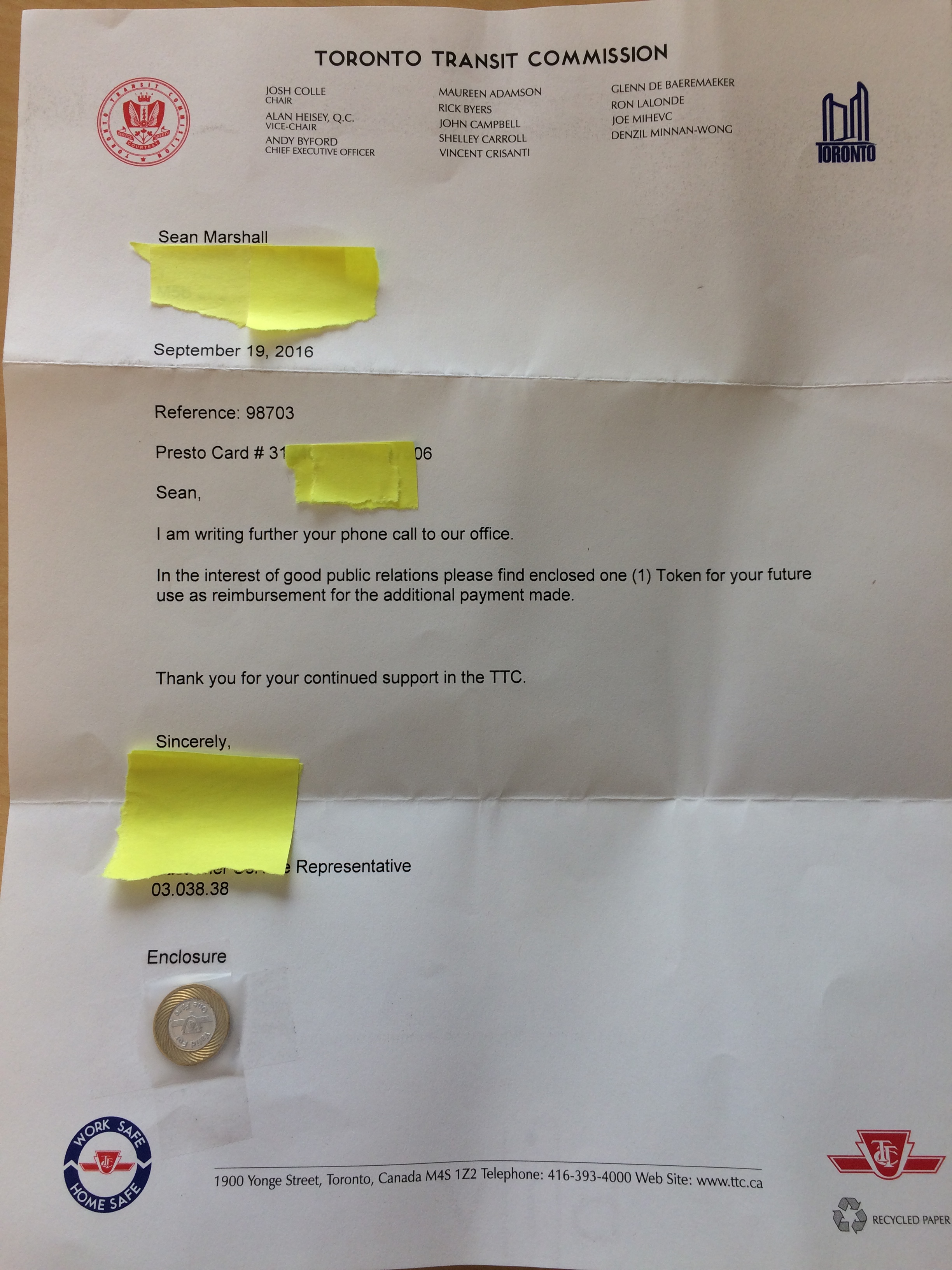
    image1-1

    Had I not checked my balance, and not immediately complained, I would not have received this refund. How many customers, acting in good faith, get double-charged using their Presto Cards and don’t even know it? The TTC’s Presto fare machines don’t provide fare balance or transaction data, unlike those used by GO or suburban transit operators (see photo below).
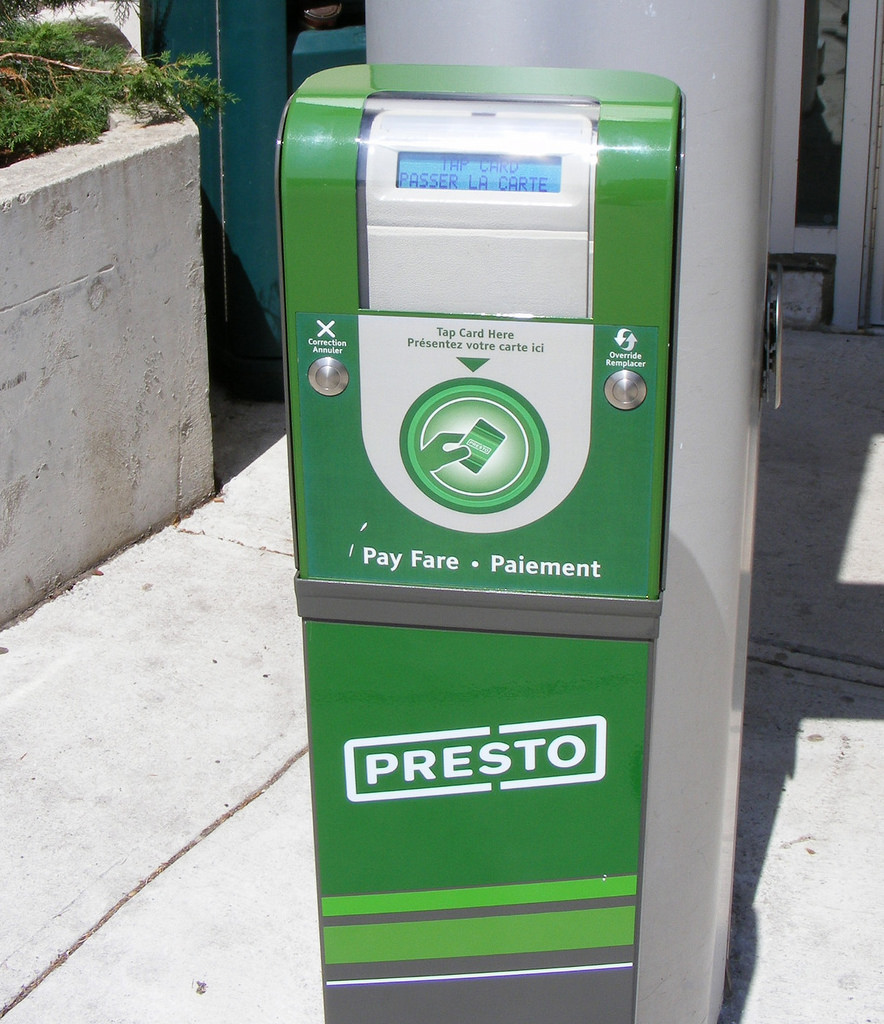
    4902983182_d89c675230_b.jpgGO Transit Presto fare machine, which displays card balance and time left to complete ride/transfer

    Even when Presto is fully rolled out, the TTC’s transfer rules are unclear and they are prone to unfair double-charges for completely reasonable one-way continuous trips.

    Last year, I warned about the troubles that could result in forcing Presto on top of the TTC’s archaic transfer system: “if a passenger taps onto another vehicle on the same route, which is quite a common occurrence due to delays, short-turns, and diversions/shuttles, the Presto Card will deduct a second fare.”

    As I mentioned before, the TTC already considered time-based transfers in 2014 as it planned for the transition to Presto for fare collection. At the time, the Commission estimated that it would cost $20 million in annual revenue, as some passengers would take advantage of making stopovers en route or quick return trips on one fare. Another excuse I heard is that the TTC is waiting for Metrolinx to finalize its regional fare integration strategy.

    But a modern transfer policy would bring the TTC in line with other transit agencies in the Greater Toronto and Hamilton Area, would make the Presto Card much easier to use, and would buy a lot of goodwill, especially if it was introduced to coincide with a fare increase. It’s also worth noting that when the TTC eliminates transfers, tickets, and passes, its customers will be required to pay $6 for a new Presto Card. It’s only right to incentivize its loyal customers to make the switch.

    I’m happy to get a token refund and acknowledgment of my predicament. But I had to notice the charge and complain, and tokens will soon be phased out. A better solution is needed.
  • It’s time for two-hour transfers on the TTC

    15102078722_2ee5e4e9e3_k

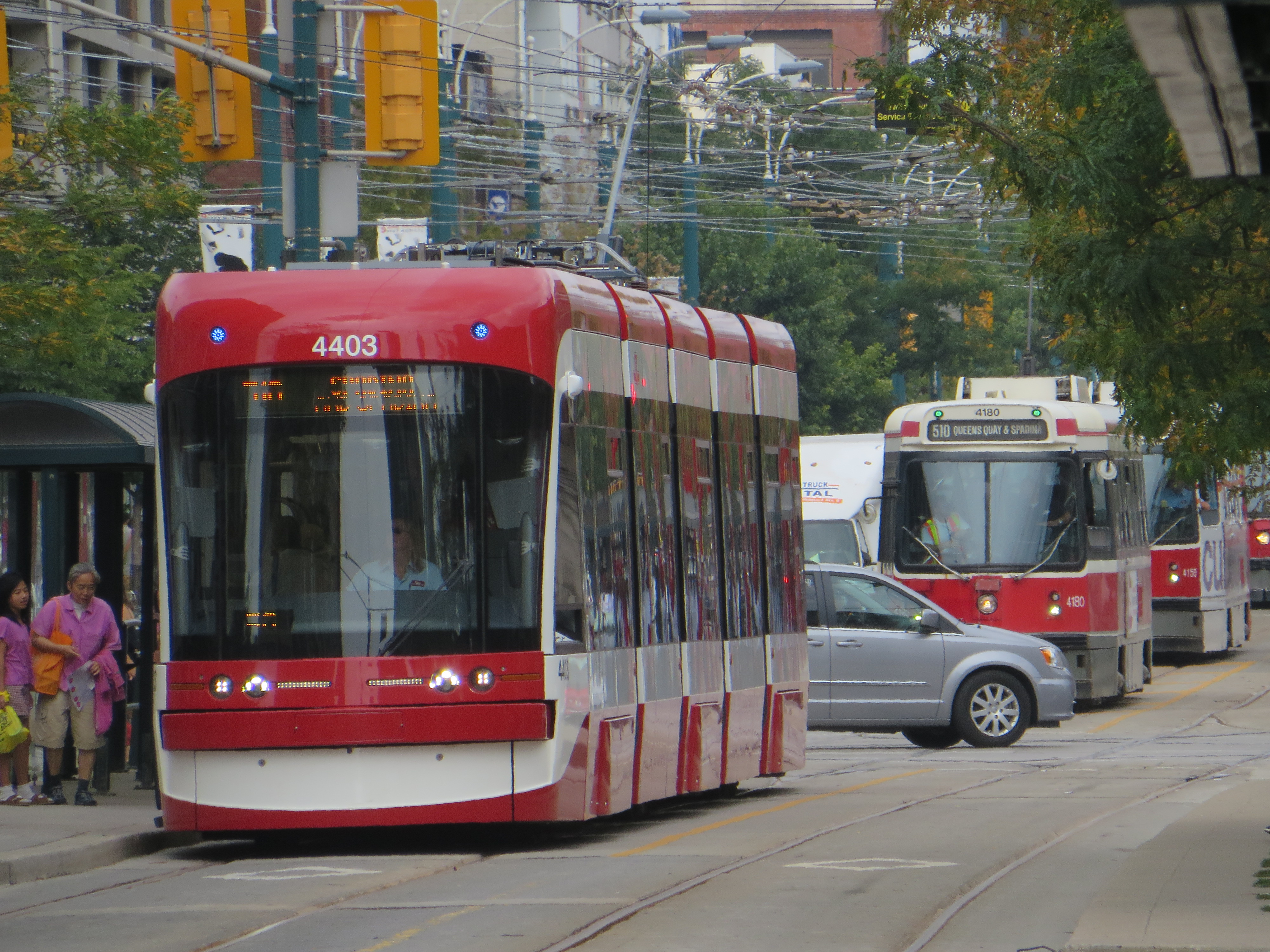
    As of Monday, December 14, all TTC streetcars will operate under a “proof-of-payment” system; allowing customers to enter through the rear doors, as they currently do on 509 Harbourfront and 510 Spadina, the two routes partially equipped with the new Bombardier low-floor streetcars. All-door loading and proof-of-payment (POP) is supposed to be in effect on streetcars on Queen Street, but in practice, operators inconsistently open the rear doors; sometimes at all stops, often just a few downtown stops, sometimes only at Yonge Street, sometimes not all.

    This new policy requires passengers to have a valid pass, transfer, or Presto card on board every streetcar; fares can continue to be paid at the front door on the older CLRVs and ALRVs; at that point a transfer must be obtained.

    TTC fare inspectors have been handing out brochures about the new policy to streetcar passengers, informing them about the upcoming change:

    The design of the new low-floor streetcars has required POP: they have four doors instead of two doors on CLRVs and three on ALRVs; the operator is in a separated cab, and normally does not interact with passengers, including fare collection and handing out transfers. At this point, at the end of 2015, all streetcars on the 509 and 510, as well as the 505 Dundas and 511 Bathurst routes were supposed to be equipped with low-floor accessible streetcars, but the many delays at Bombardier has resulted in only the twelfth new streetcar, #4413, entering service today.

    By the end of the year, all TTC streetcars (not just the new Bombardier LFLRVs) will be accepting payment by Presto Card, one small step towards the elimination of tickets, tokens and paper transfers, a process already complete at many suburban GTA transit agencies.

    But widespread adoption of Presto at the TTC will result in a few challenges unique to it, thanks to its outdated transfer policy that dates back over 100 years.

    On the TTC, transfers are only valid for continuous one-way trips, no stopovers permitted. But most other major systems in Ontario work on the time-based transfer system, that allows for stopovers, even return trips within a 90 minute period (the policy at Grand River Transit) or 120 minute period (permitted in Mississauga, Brampton, York Region, Hamilton and elsewhere). After boarding the first bus, each additional tap with a Presto card will not result in a new fare deducted until the 90 minute or two hour time limit has passed.

    The TTC will have a different policy. Paper transfers will still be required for Presto card holders if they intend to transfer to a bus (Presto readers will not be coming to the TTC’s buses for another year); but transfers to connecting streetcars and subway stations can be done by tapping the card on the new vehicle or at the subway turnstile. If it’s a valid transfer under the TTC’s rules, it will not deduct another fare. Here’s the TTC’s Brad Ross (the TTC’s amazing Head of Communications) clarifying this:

    https://twitter.com/bradTTC/status/672810002688569344

    But there’s a hiccup:

    https://twitter.com/bradTTC/status/672841401177014272
    https://twitter.com/bradTTC/status/672841244918210560

    If a passenger taps onto another vehicle on the same route, which is quite a common occurrence due to delays, short-turns, and diversions/shuttles, the Presto Card will deduct a second fare.

    There is an easy solution: two-hour transfers. It would eliminate confusion, allow for short stopovers and quick two-way trips, and solve such issues such as customers re-boarding streetcars and buses on the same route. Allowing Presto cardholders the same luxury as that enjoyed in Toronto’s suburbs would provide an incentive to passengers paying by cash and token to switch. After all, the TTC already offers a two-hour transfer on St. Clair Avenue, a pilot project left over from the construction of the streetcar right-of-way.

    The TTC already considered at time-based transfers in 2014 as it planned for the transition to Presto for fare collection. The Commission estimated that it would cost $20 million in annual revenue (thanks to lost fares stopovers and single-fare return trips), but it would by a lot of goodwill. And I doubt that the TTC would lose $20 million a year as it might attract new riders, especially during off-peak periods.

    It’s now time for the TTC to bite the bullet to make it easier to ride the rocket.