Category: Cycling

  • No exit? Yes, walk this way!

    No exit? Yes, walk this way!

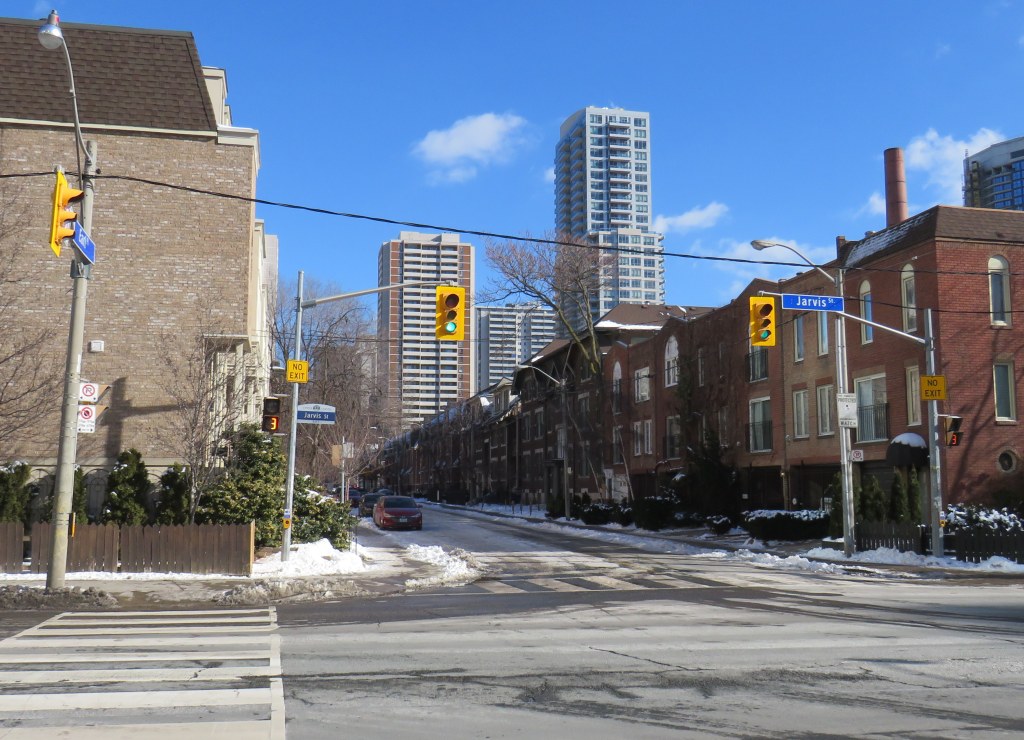
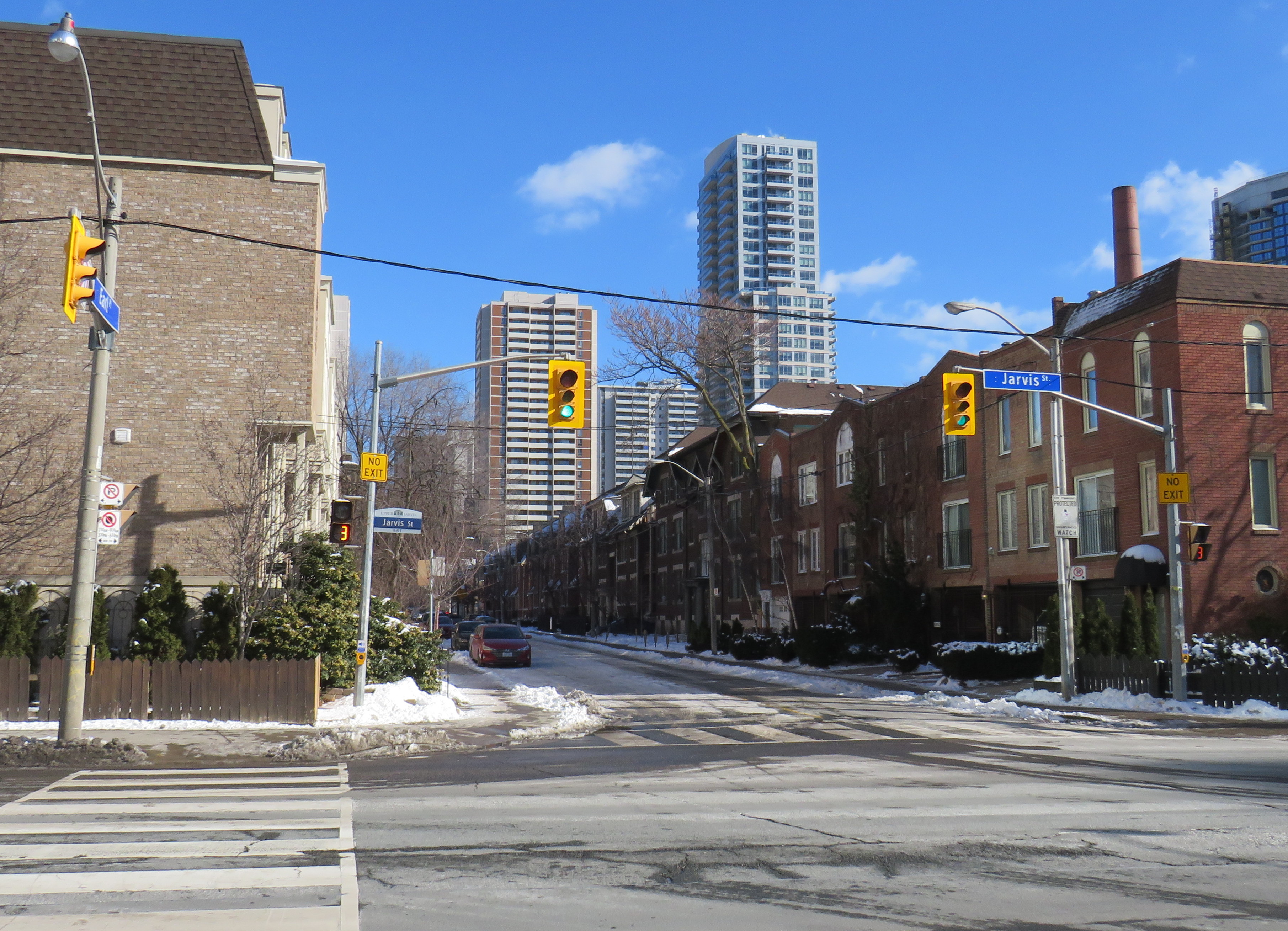
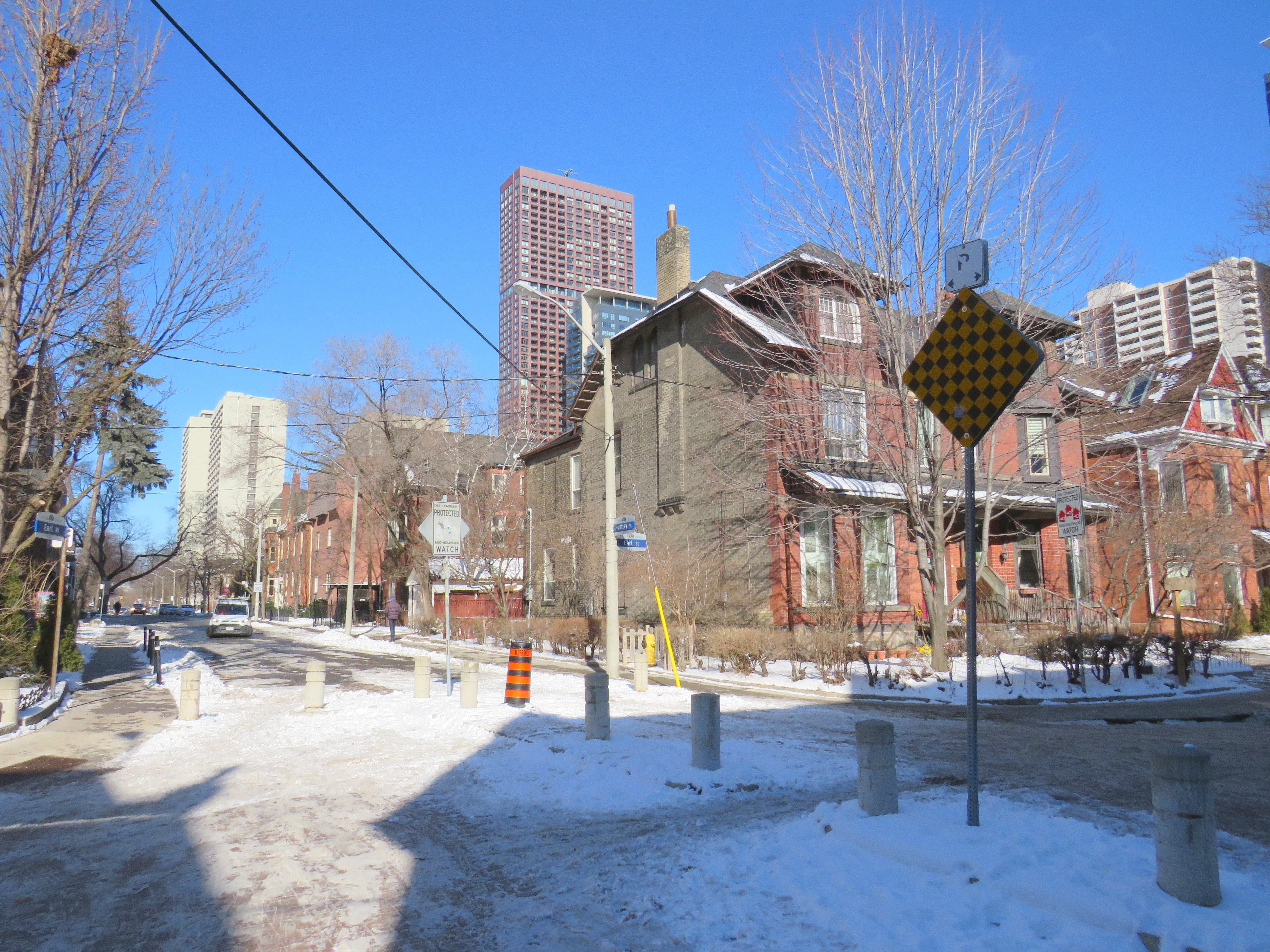
    Earl Place, where “No Exit” signs betray through access for pedestrians and cyclists

    Last week, Dylan Reid and I, both co-founders of Walk Toronto, decided to create an inventory of all instances in the city where “No Exit” signs do not apply to all road users. Though these signs are required under traffic codes and regulations, they do not reflect that in many cases, there is an exit for pedestrians. Some of those offer through passage for cyclists as well. We were inspired by a Twitter thread that expressed the frustration of getting around the city by foot, where signage is designed entirely for motorists.

    Instances where pedestrians or cyclists may continue past a “No Exit” sign include traffic calming measures meant to keep out through motor vehicles on once-continuous roads. The intersection of Earl Place, Earl Street, and Huntley Street is just one example: curbs and bollards restrict motorists from continuing through, though a narrow passage allows cyclists to continue past; sidewalks also allow through pedestrian movement.

    Earl Place and Huntley Street

    In many other cases, suburban street designs, such as cul-de-sacs, limit vehicular movement though residential subdivisions, but narrow public walkways allow pedestrians access to parklands and neighbouring streets. In other cases, changes in grade between streets allow for a staircase, but not a through roadway down a steep hill. These are common in the Swansea, Baby Point, Silverthorn, and East Toronto neighbourhoods.

    As of January 30, 2021, I have mapped over 250 misleading “No Exit” signs throughout the City of Toronto, though I know there are many more. Please send them to me via Twitter or via a direct message, and I will be sure to add your submission.

    Our goal is to convince the City of Toronto to add signage recognizing where pedestrians and cyclists do have an exit. Perhaps too, this might inspire you to get outside, and walk around the neighbourhood, checking out passageways you might have not known about.

  • Yonge, tomorrow

    Yonge, tomorrow

    Over the past few years, I have been involved with the YongeTOmorrow project on behalf of Walk Toronto. It has been a very interesting and worthwhile experience being part of a stakeholder advisory group. Allied organizations working towards a more exciting and sustainable Yonge Street include Cycle Toronto, 8 80 Cities, and the David Suzuki Foundation.

    After several rounds of public consultations and stakeholder meetings, you can now see what the proposed changes to Yonge Street will look like.

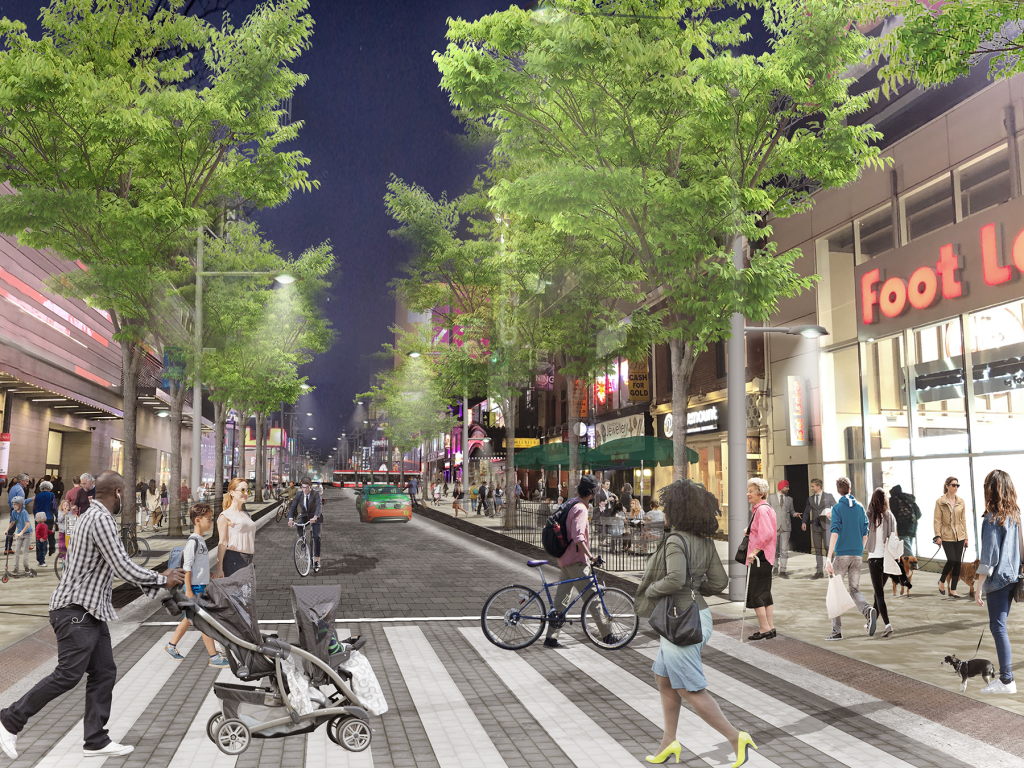
    Rendering of proposed changes to Yonge Street , looking north towards Dundas Square. In this section, northbound traffic is permitted, with two-way cycling, and much wider sidewalks, along with new trees and improved street furniture.

    Though the selected concept is not perfect, the proposed changes will provide significant improvements to Yonge Street between Queen and College Streets. These include wider sidewalks, patio space, bike facilities, and a pedestrianized zone between Dundas Square and Edward Street, allowing for better circulation, more flexibility for special events, and a more pleasant street.

    With more high-rise development on the way (including the redevelopment of the Chelsea Hotel on Gerrard Street), it is only right that more space be given to residents, students, employees, and visitors. Compromises in the plan allow for access to parking garages, permit taxi and other vehicle drop-offs and pick-ups, as well as business deliveries.

    I encourage you to have a look and provide your feedback. The online survey is available until September 30.

  • Pylons are not enough: how to make a quiet street

    Pylons are not enough: how to make a quiet street

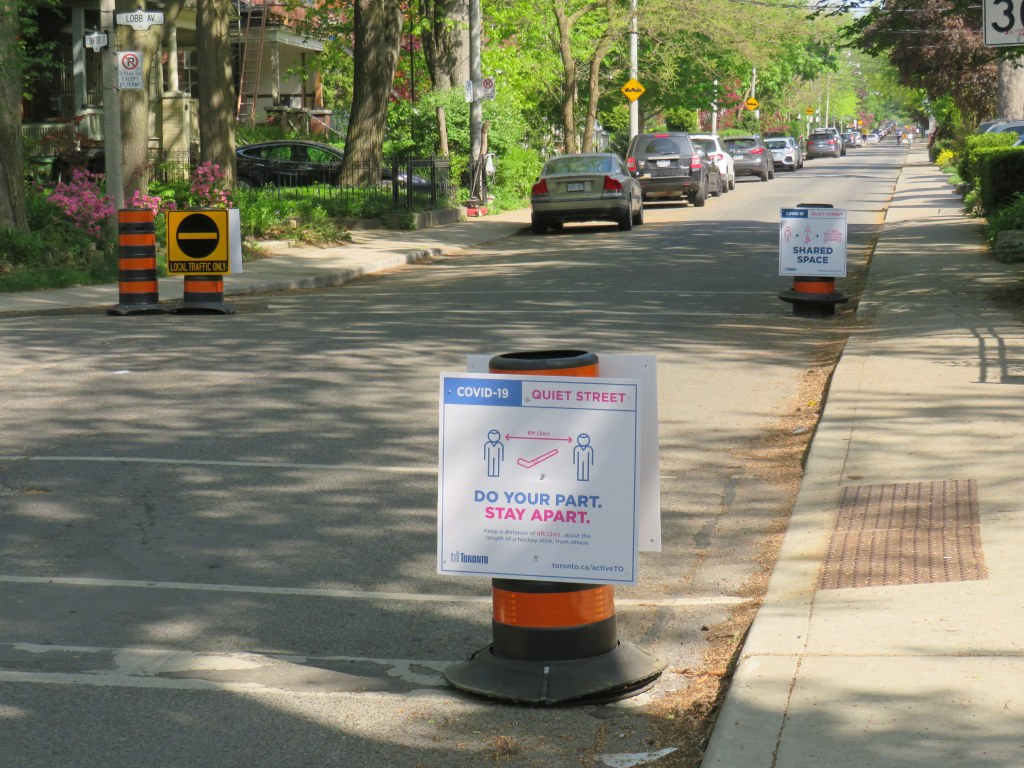
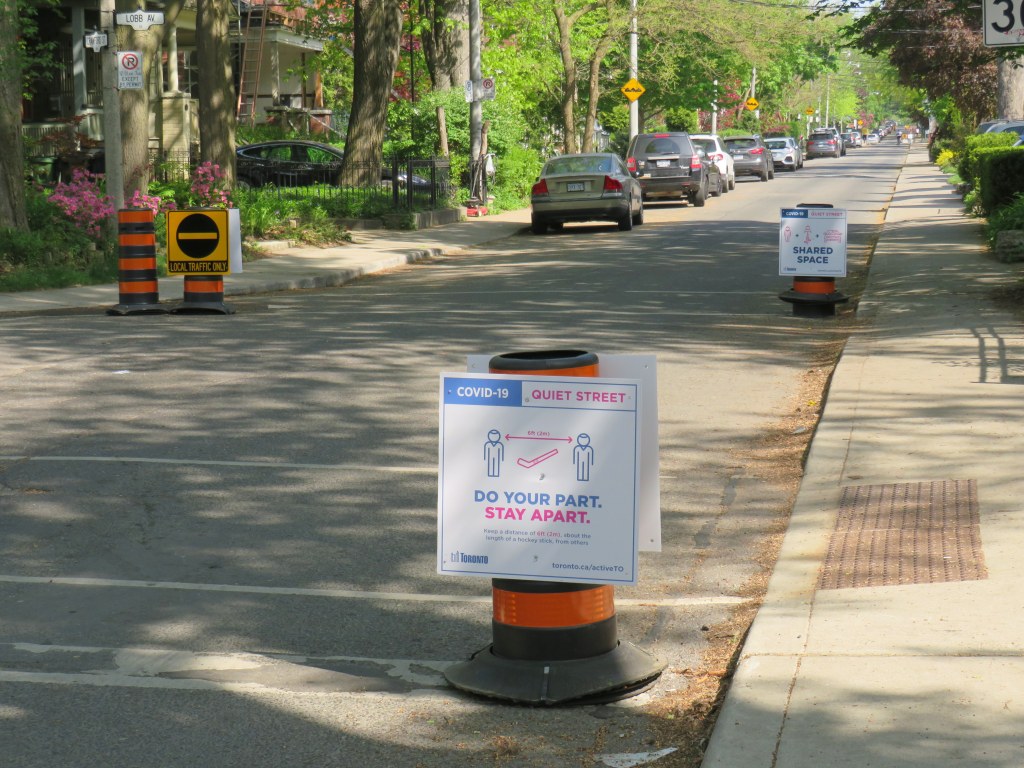
    Pylons and Quiet Street signage left in the gutter, Crawford Street, Toronto

    Toronto took its time recognizing the need for pedestrian space during the ongoing COVID-19 pandemic. It wasn’t until late April that the mayor and the medical officer of health considered limited curb lane closures to accommodate crowded sidewalks in front of supermarkets, drug stores, and other essential businesses.

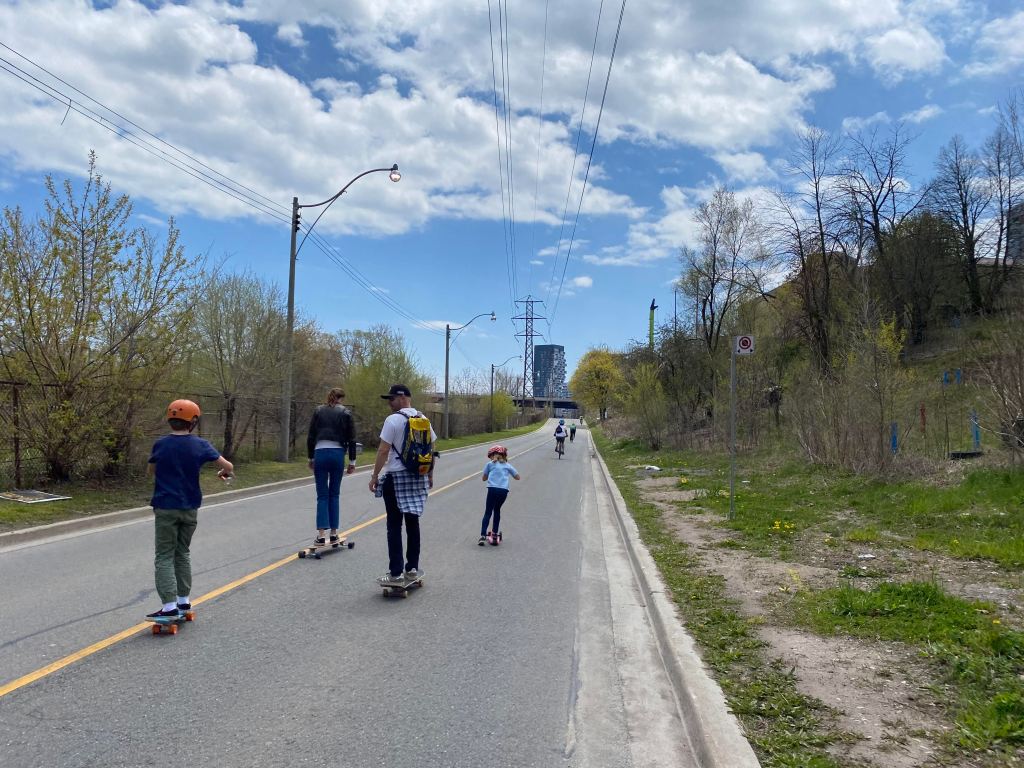
    But those curb lane closures — called CurbTO — later expanded to ActiveTO, which includes hundreds of kilometres of “Quiet Streets” for pedestrians and cyclusts and regular weekend road closures on Lake Shore Boulevard and Bayview Avenue. By June, CurbTO and ActiveTO were joined by CafeTO — which would expedite restaurant patio licences and even allow temporary patio space in parking lanes — as well as CampTO and SwimTO, programs to safely open up public pools and day camps for the summer.

    Most significantly, new cycle tracks and bike were approved by a wide margin at Council in May, including the entire stretch of Bloor-Danforth between Runnymede Road and Dawes Road.

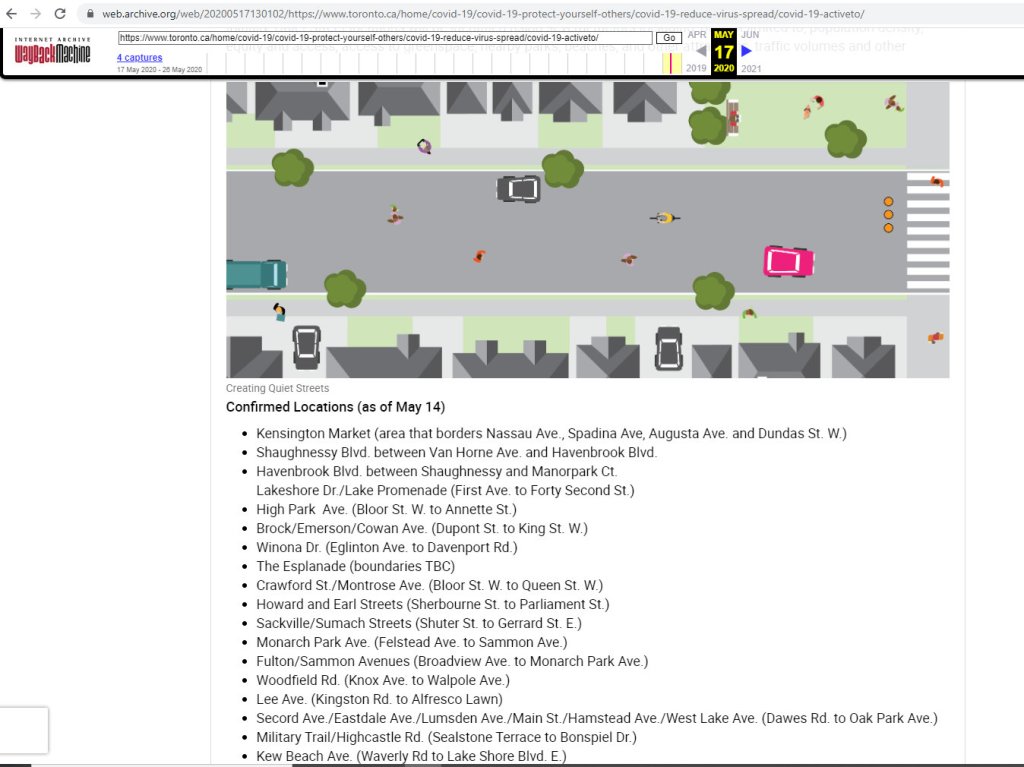
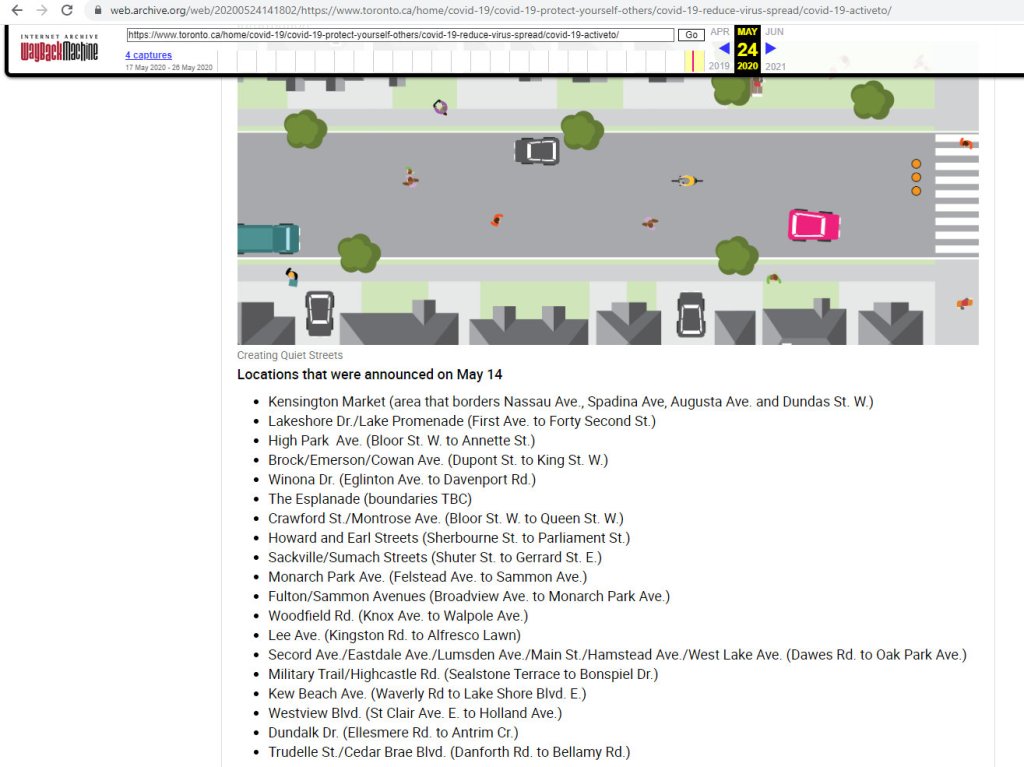
    Map of ActiveTO Quiet Streets, weekend closures, and new cycling routes

    Through the weekend road closures are closed off with metal barriers and enforced by police, the Quiet Streets are protected only by pylons and temporary signage. On Shaughnessy Boulevard, one of the first Quiet Street implementations, pylons were removed by angry motorists. Elsewhere, residents rearranged pylons to block half the street, doing more to discourage through traffic.

    In Kensington Market, pylons were moved by drivers onto the sidewalk, creating additional barriers to pedestrians, especially those with disabilities.

    Clearly, pylons are not enough.

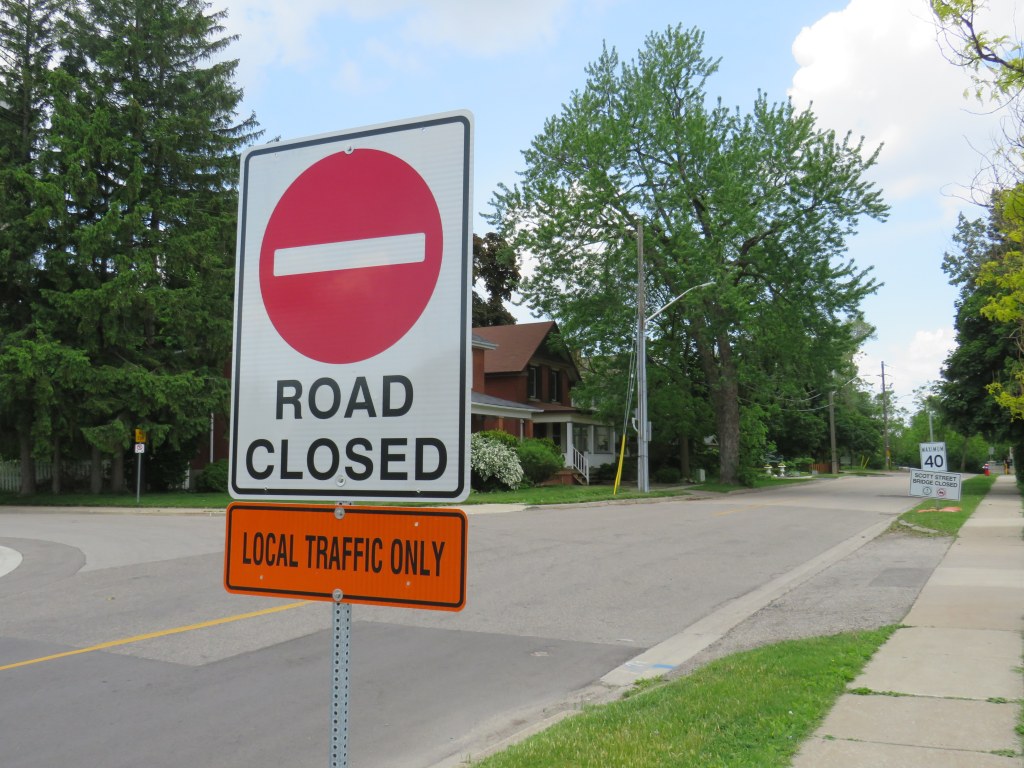
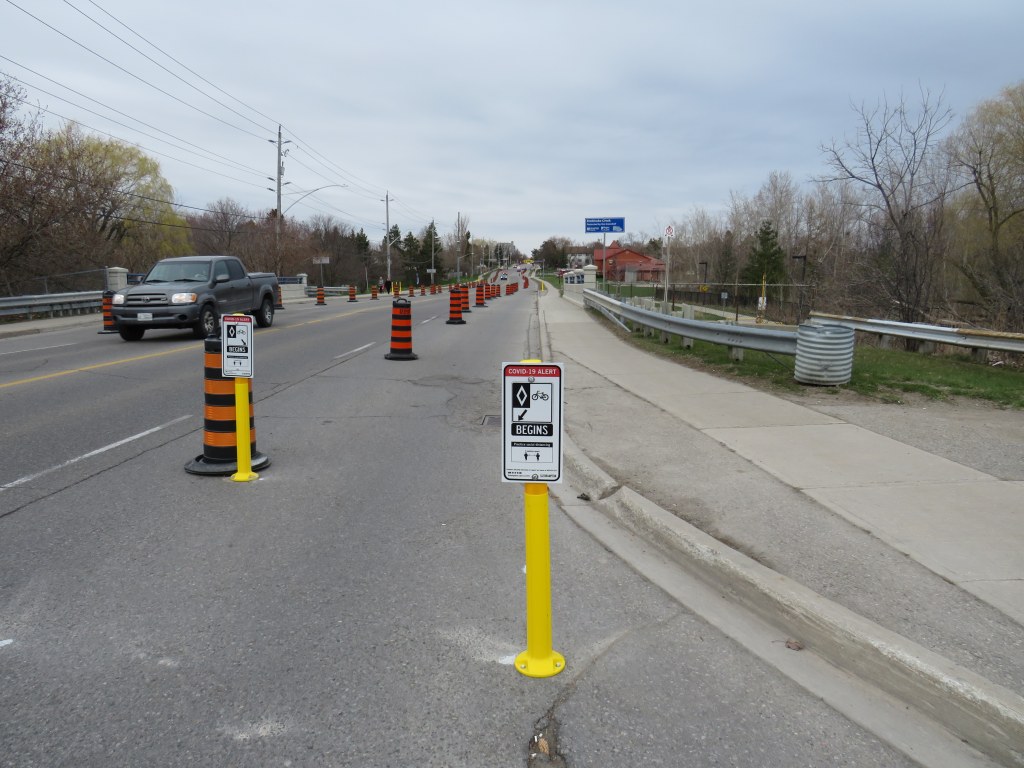
    While I was in Brampton recently, I noticed a more effective approach. On Scott Street, just east of the city’s downtown core, a narrow bridge was closed to motor traffic in order to provide a quiet and safe crossing of Etobicoke Creek to connect two sections of the Etobicoke Creek Trail. Instead of moveable pylons, rigid plastic bollards were bolted to the roadway, with a compliant “road closed” sign posted in the middle.

    Closely spaced yellow bollards on Scott Street

    Signage approaching the closed bridge was also also quite clear.

    Road closed sign on Scott Street

    I also noted that bolted bollards were also used to mark the interim bike lanes on Vodden Street and Howden Boulevard at every intersection, precluding their use by through traffic. On that early weekday afternoon, only one vehicle was illegally parked in the lane along the entire four-kilometre route. Not one pylon was out of place either.

    While Brampton was one of the first cities in Ontario to implement improved active transportation infrastructure during the COVID-19 pandemic, it has done little else since. However, Brampton has an ambitious new active transportation master plan to fix many gaps in its cycling infrastructure and expand its paths system; hopefully it will able to accelerate parts of its plan as Toronto is now doing.

    But what Brampton did right was putting in effective barriers and signage to protect its temporary walking and cycling routes. This is something Toronto could learn from.

  • A tale of two streets: Winona Drive and Shaughnessy Boulevard

    A tale of two streets: Winona Drive and Shaughnessy Boulevard

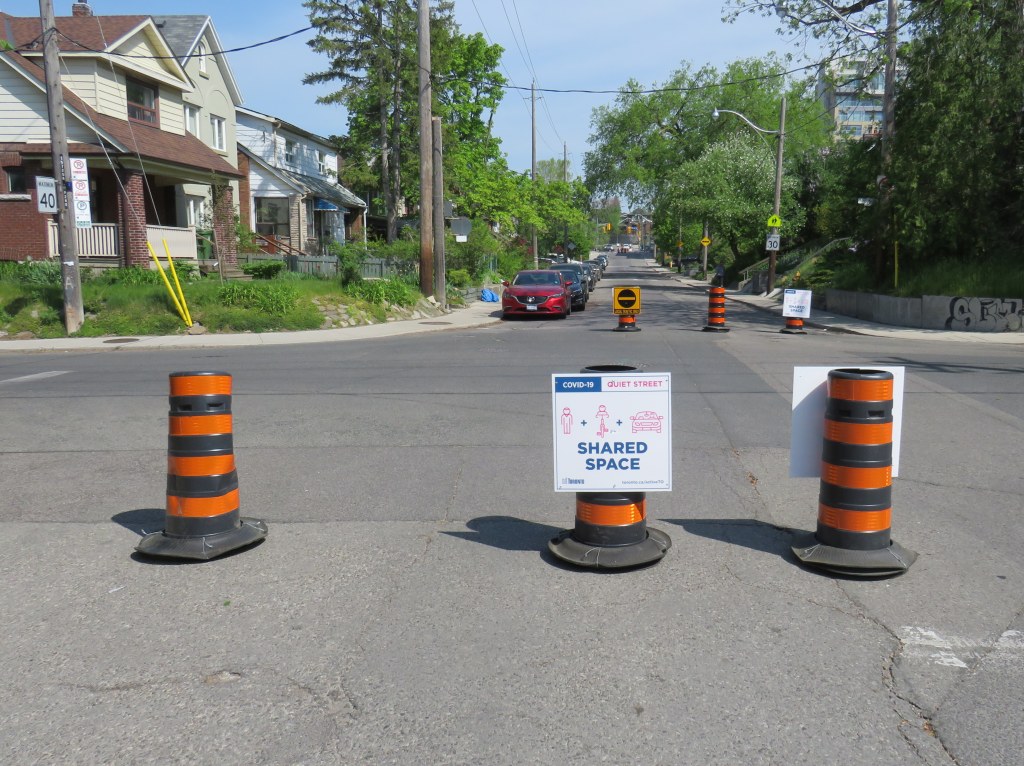
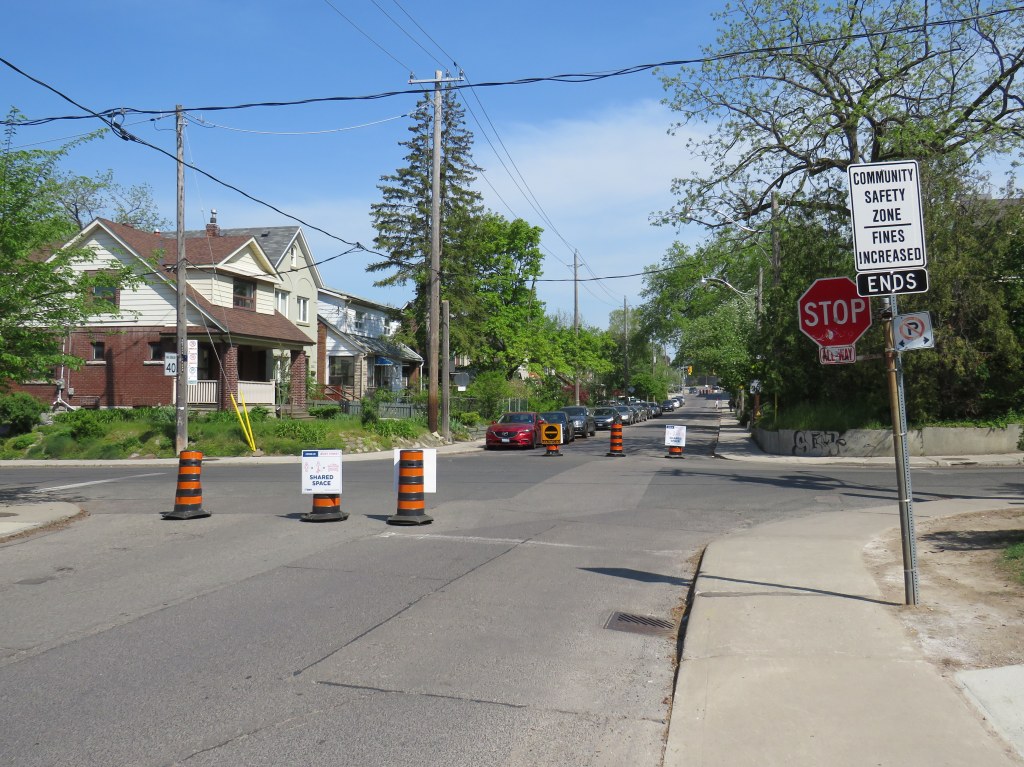
    Typical Quiet Street signage and pylon placement, Crawford Street

    Earlier this month, as part of Toronto’s long-overdue response to the ongoing COVID-19 pandemic, the city introduced ActiveTO. ActiveTO includes several measures addressing the need for safe active transportation and recreation routes as summer approaches and businesses slowly reopen.

    Current ActiveTO initiatives include weekend traffic closures of sections of Lake Shore Boulevard and Bayview Avenue to take pressure off narrow and busy multi-use paths, designating specific “quiet streets” to provide safer cycling and pedestrian corridors, and the construction of new bike lanes and cycle tracks, accelerating work on the painfully slow implementation of the city’s cycling network plan.

    One of many families enjoying the Bayview Avenue extension closure on May 16. The weekend closure provides a safe, spacious alternative to the crowded Lower Don Trail

    I visited two Toronto streets this week included in the initial list of ActiveTO quiet streets that were announced on May 14, 2020.

    On Winona Drive, the pylons and signs placed by city work crews were moved by residents to block an entire lane of traffic at each intersection. This enhances their effectiveness in reminding motorists that the space is for local traffic only and that the roadway is shared with pedestrians and cyclists.

    Winona Drive at Benson Avenue, May 25, 2020
    Close-up of relocated pylons on Winona Drive

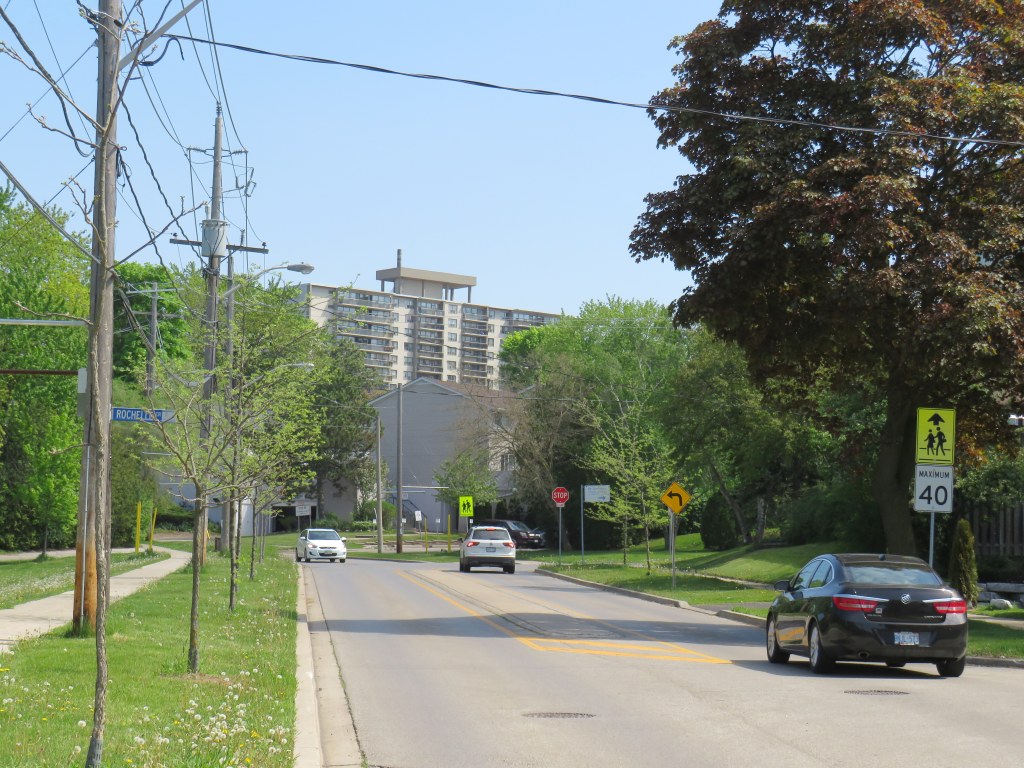
    Shaughnessy and Havenbrook Boulevards, near Sheppard Avenue and Don Mills Road, connect the densely populated Fairview Mall and Don Valley Village neighbourhoods with the Betty Sutherland Trail, part of the Don River ravine system. Though Shaughnessy is mostly fronted by comfortable, midcentury homes, it borders several apartment buildings and townhouse complexes, including several Toronto Community Housing properties.

    Shaughnessy Boulevard looking north at Rochelle Crescent

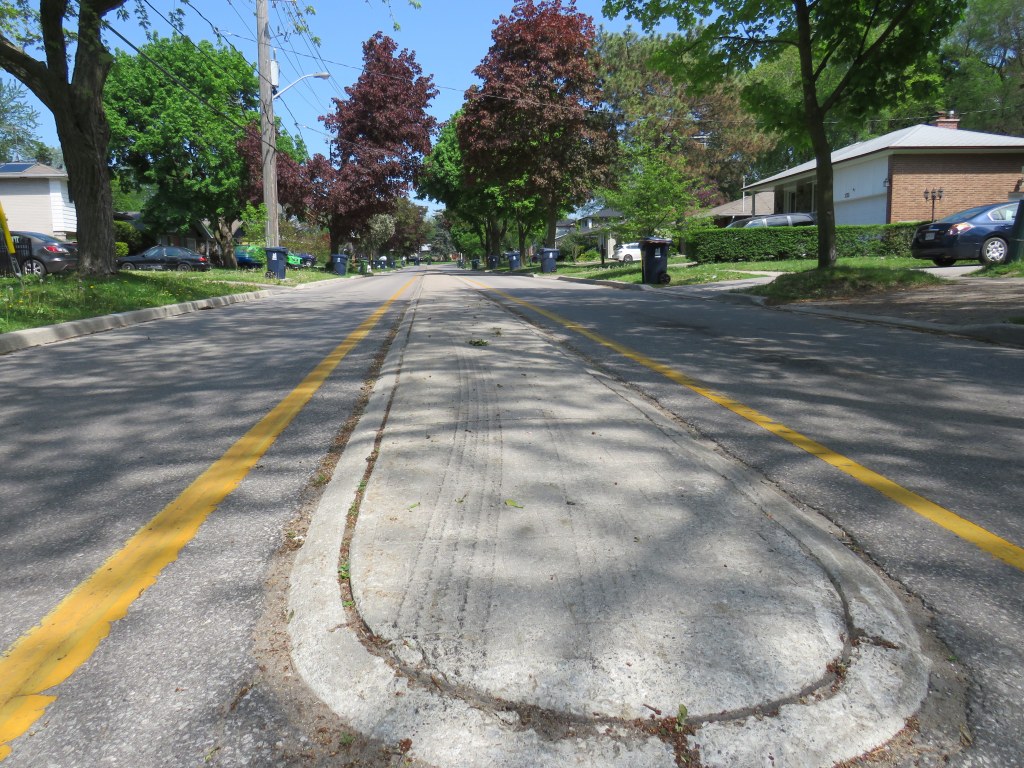
    In 2012, some road calming measures were undertaken on Shaughnessy to slow down traffic, particularly near local schools and parks. A four-lane section between Sheppard Avenue and Glenworth Road was narrowed, including a very short section of bike lanes. A shallow concrete median was added between Glenworth and Esterbrooke Avenue. However, the street remained problematic.

    The shallow median on Shaughnessy Boulevard does nothing to slow down aggressive motorists

    In a recent Toronto Star article, resident Robin Sacks noted that the street was unsafe as motorists used it as a bypass of parallel Don Mills Road. She, and many of her neighbours, supported Shaughnessy’s designation as an ActiveTO quiet street.

    Unfortunately, other residents took it upon themselves to remove the pylons and signs and complain to their local city councillor as soon as they were installed. By the weekend, they — along with concrete barriers placed in the median — were removed, and the street wiped from the city’s website.

    Councillor Shelley Carroll, a progressive, was quoted in the Star article that she felt those who objected to the traffic calming measures were on “solid ground,” as there were no community consultations before the measures were introduced. She also noted that Shaughnessy is “a safe street with ample sidewalks and, unlike denser parts of downtown, ‘no one’s having any trouble distancing.’”

    To Carroll’s credit, a consultation is planned for Wednesday, May 27. Overall, her track record has been supportive of safer streets in her community and in Toronto as a whole, so I was surprised by her comments. Hopefully, Shaughnessy, like many other suburban streets, will see improvements shortly.

    Quiet streets, if planned as a network, are helpful for encouraging active transportation, especially where wider sidewalks and cycle lanes are unable to be installed on parallel major roads (due to streetcar lines, for example), or where they can connect major parks, off-road trails, and other cycling corridors.

    To make such quiet streets permanent, curb extensions at intersections and other physical cues should be used to slow down traffic. Traffic circles and well-marked crosswalks could also take the place of four-way stops, which are easily ignored by motorists while frustrating cyclists.

    The COVID-19 pandemic has exposed severe inequities; between those who work in the logistics, healthcare, and food service industries, and those who are able to work at home; between those who have comfortable homes with access to ample green space and those who do not, and those can rely on their own automobiles, and those who must walk, cycle, or take transit. This is why expanding public space and providing safe routes to travel is so important.

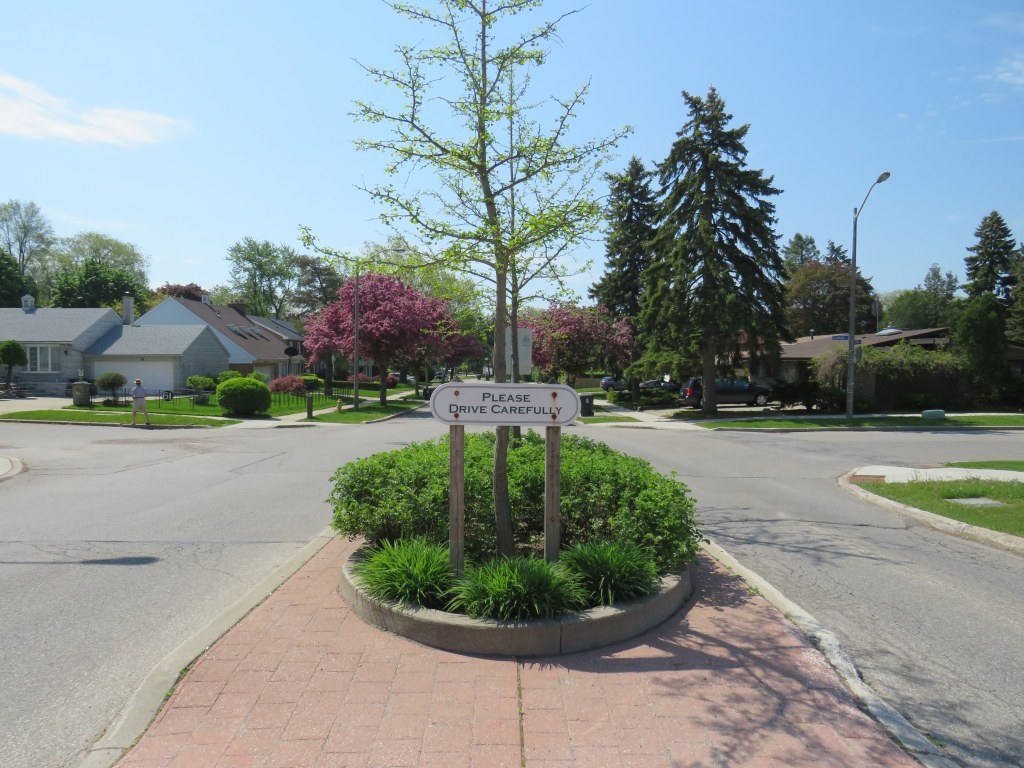
    “please drive carefully” – sign in median of Shaughnessy Boulevard

  • Room to share: How cities can make physical distancing work

    Room to share: How cities can make physical distancing work

    IMG_8405
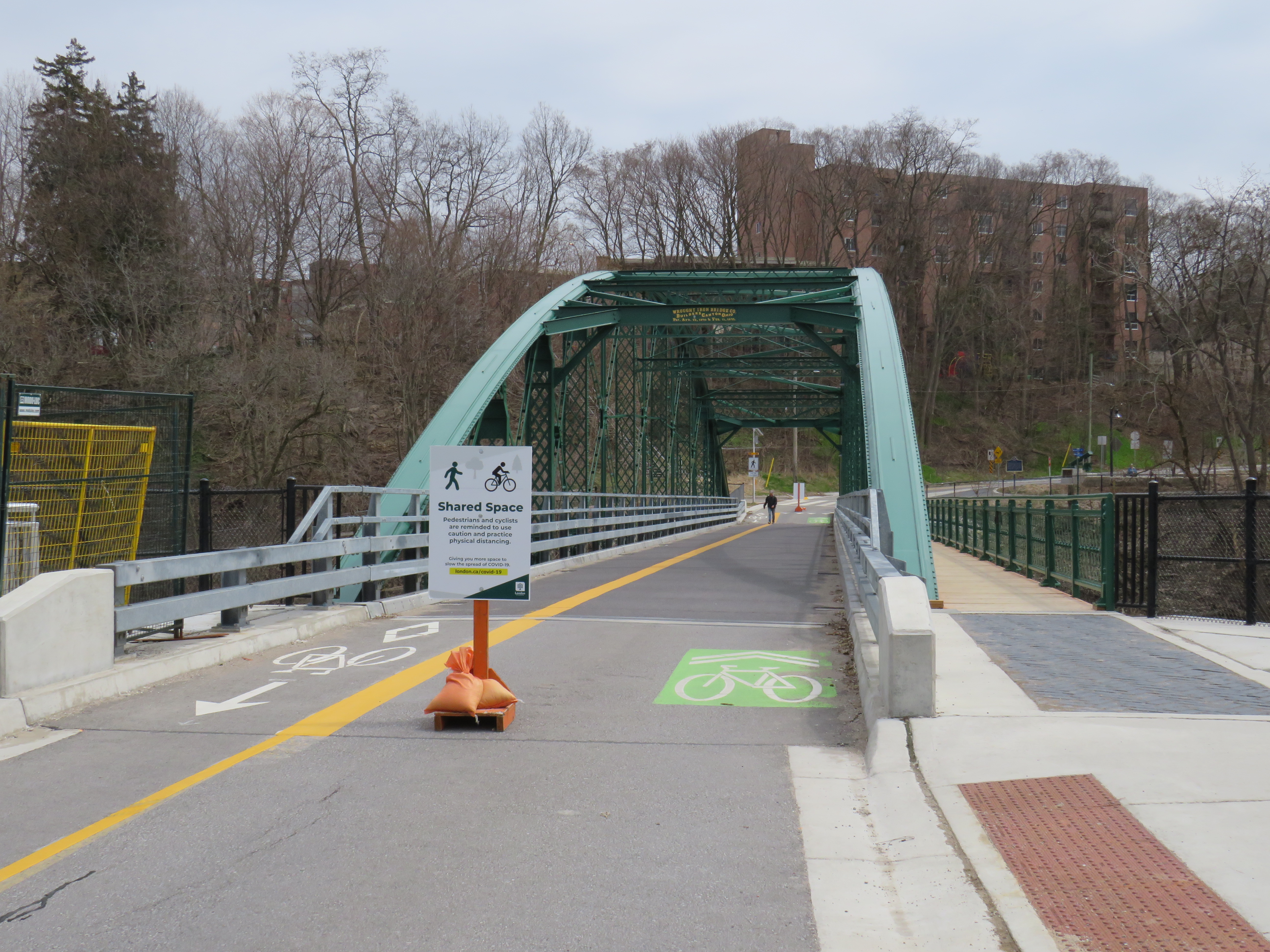
    Blackfriars Bridge open to pedestrians and cyclists in London, Ontario

    For my latest TVO article, I spoke with Councillor Shawn Menard in Ottawa, Councillor Rowena Santos in Brampton, and Ryerson University epidemiologist Anne Harris about how cities in Ontario are reallocating road space for pedestrians and cyclists during the ongoing COVID-19 pandemic, or why they may be hesitant to do so.

    In Brampton, five kilometres of new bike lanes, proposed in that city’s new transportation plan, were quickly approved as part of its response to COVID-19. This benefits both pedestrians and cyclists by reducing conflicts on sidewalks, reducing congestion on city paths, and recognizing that cycling is an increasingly important mode of transportation.

    IMG_8499-001
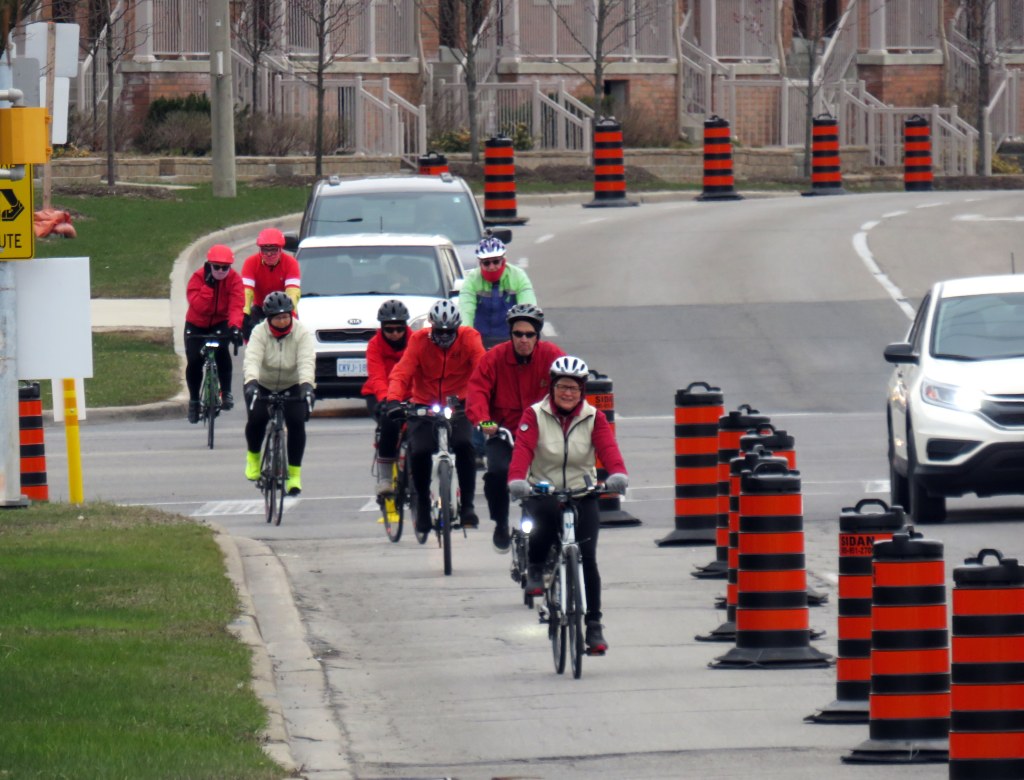
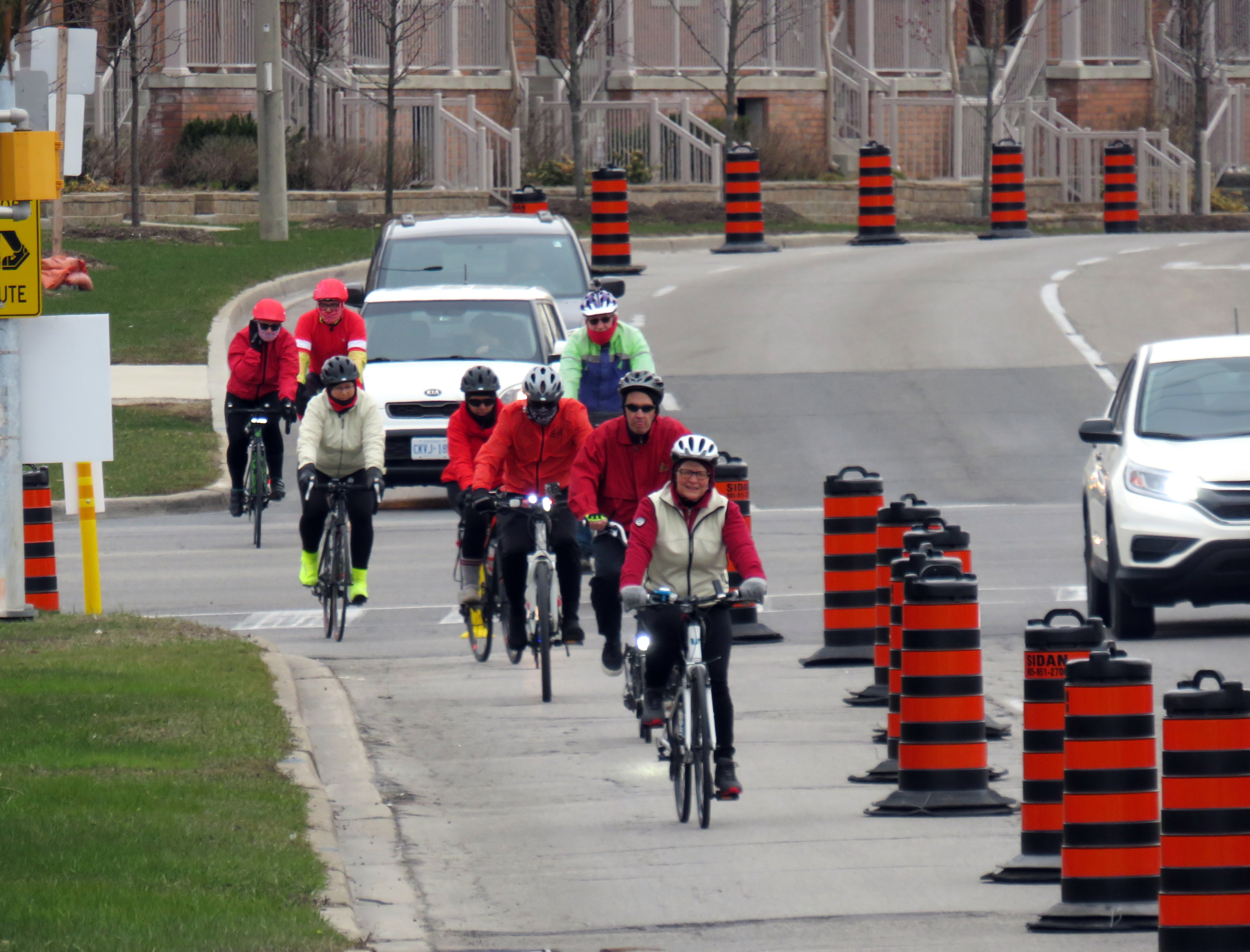
    Cyclists on Howden Boulevard, Brampton

    In Ottawa, despite resistance from the the mayor and council, Shawn Menard, who represents an urban ward just south of Parliament Hill, was able to temporarily close two lanes of traffic on a narrow bridge on a major retail street, and worked with the National Capital Commission to re-allocate a section of parkway for active transportation.

    Meanwhile in Toronto, the mayor and medical officer of health were resistant to increasing calls for sidewalk expansions in congested urban areas, including where queues formed to enter grocery stores, pharmacies, hardware stores, and LCBO outlets.

    This was one of my favourite articles I have written so far. 


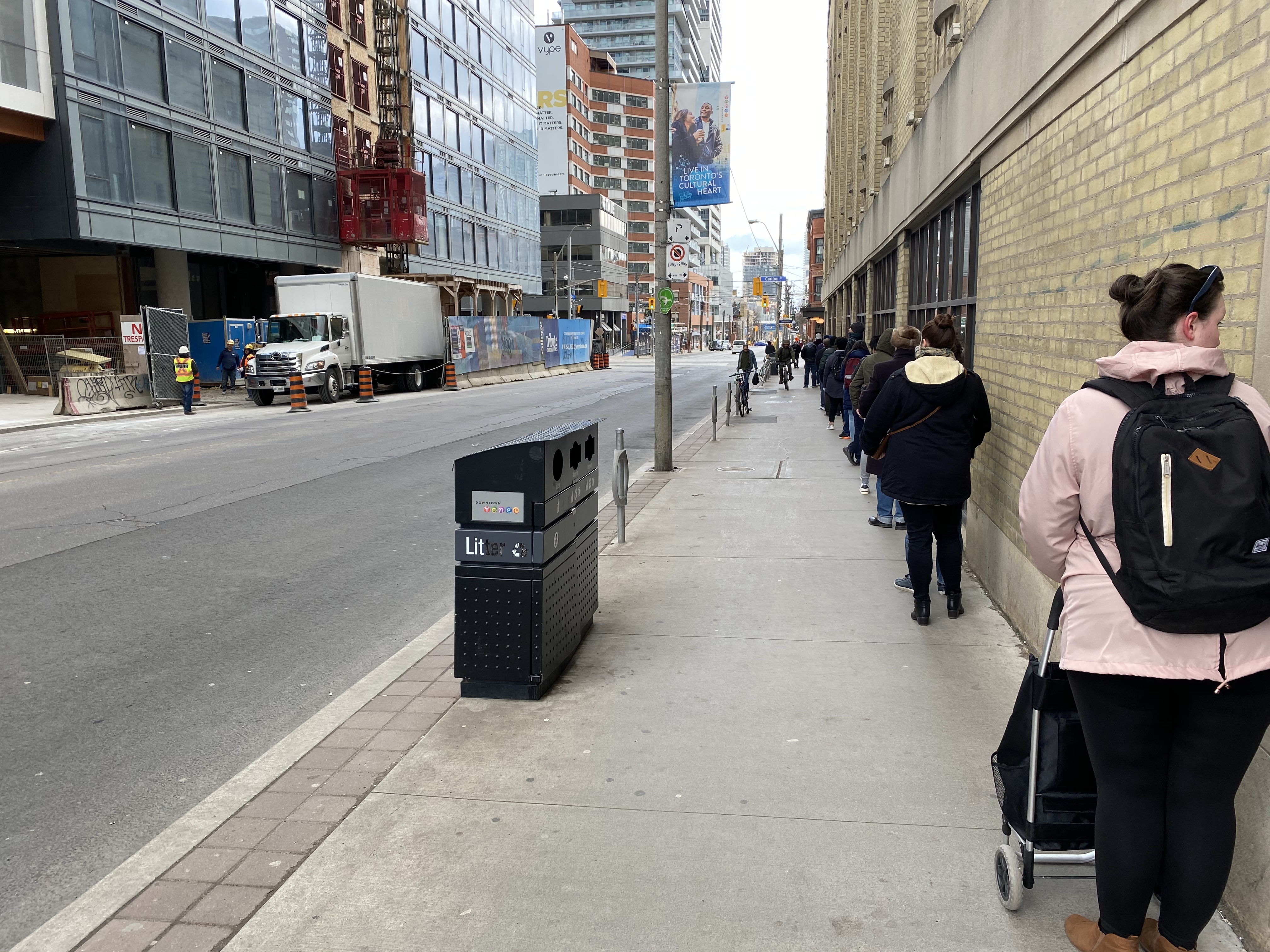
    Loblaws queue on Church Street
    Queue on Church Street at Carlton to enter Loblaws supermarket

    With Walk Toronto, I have been involved with pushing the City of Toronto to take action, especially in pinch points where store queues, construction barriers, and other obstructions have made it difficult — if not impossible — to safely practice physical distancing when walking or cycling for essential purposes, or even getting a little bit of fresh air or light exercise in dense urban areas.

    The good news is that ten problem areas — including the intersection of Carlton and Church — have finally been identified for curb lane closures, with potentially more on the way. This is a timid first step, made after weeks of advocacy, but it is welcome.

  • How to reimagine our streets during a pandemic

    How to reimagine our streets during a pandemic

    Queen Street West, late March 2020
    Nobody’s going to be flocking to the streets during a pandemic

    In an interview with local news station CP24, Mayor John Tory said that the city was considering implementing one-way directional traffic on city sidewalks as part of a response to COVID-19. This idea was considered as a measure to ensure physical distancing on Toronto’s sidewalks.

    The mayor, however, does not support the alternate solution of increasing the amount of road space given to pedestrians and cyclists. With traffic on major routes such as Yonge, Queen, and Bloor reduced, and most businesses closed, it would be easy to provide additional space for pedestrians without causing traffic congestion. According to the mayor, “it could have the unintended effect of attracting more pedestrians to busy areas, something the city is actively trying to discourage right now.”

    That’s ridiculous.

    With businesses closed, no patios to linger at, and no programming (unlike at any other street closure, whether it be Taste of the Danforth, Open Streets, Pride Week, or Buskerfest), pedestrians will not be attracted to linger and crowd sidewalks in dense urban neighbourhoods. However, they will be able to walk to work, get to essential services, exercise the dog, or get some fresh air, without having to dodge other people or sidewalk barriers, such as construction scaffolding.

    Furthermore, enforcing one-way sidewalks — the city’s only other idea — would be extremely difficult to enforce. It would  only increase the distance pedestrians would have to walk to get to work or essential services. It would go against centuries of practice, and it would encourage less-safe midblock crossings. It would be especially cumbersome for seniors and pedestrians with disabilities. 

    While Toronto continues to do nothing to protect vulnerable road users during a pandemic, other cities — including Montreal, New York, Vancouver, Denver, and Oakland— have closed entire roads to better serve pedestrians and cyclists in parks and dense urban areas. Closer to home, Kitchener and Brampton have also taken steps to to assist active transportation during this unprecedented time.

    IMG_8335-001
    King Street, Downtown Kitchener

    A decade ago, King Street in Downtown Kitchener was reconstructed with new lighting, street furniture, trees, and a rolled curb separating the narrow street with sidewalk and street parking and loading areas, which were separated from the pedestrian area by removable bollards. As a response to COVID-19, most of the parking spots were blocked off, with the bollards moved towards the roadways, quickly and easily expanding the pedestrian zone. With new residential development in Downtown Kitchener, several portions of the regular sidewalk were covered with scaffolding. The widened pedestrian clearway made it easy and safe to get around the barriers, allowing pedestrians to practice physical distancing.

    IMG_8333-001
    Bollards moved close to the street, and parking banned. It’s much easier to get around the construction scaffolding.

    Meanwhile, in Brampton, where sidewalk crowding isn’t usually a problem, the city government went ahead with a plan to close the right lanes of Howden Boulevard and Vodden Street — four-lane collector roads through residential areas — to install temporary bike lanes. This will provide a five-kilometre bikeway across the city between Etobicoke Creek and Chinguacousy Park, crossing Highway 410 at a safe location.

    Installing temporary lanes makes it easier in the future to make the lanes permanent — Vodden and Howden could use road diets after all — which could connect three north-south ravine paths and connect Downtown Brampton with Bramalea City Centre. City Council — including Mayor Patrick Brown — is committed to improving the city’s rather poor active transportation infrastructure.

    Brampton Temp Bike Lanes
    Temporary bike lanes coming to Howden Blvd. in Brampton

    While Toronto continues to drag its heels on providing safe spaces for its residents to walk and bike while being physically distant, its peer cities — and even one of its suburbs, are leading. One can only speculate about the reasoning behind Mayor Tory’s reluctance to do more.

  • Survey says… Torontonians demand safer streets

    IMG_3729A mock-up of a re-imagined Danforth Avenue, Summer 2019

    Yesterday, I met with fellow road safety advocates Keagan Gartz, executive director of Cycle Toronto, Gideon Forman from the David Suzuki Foundation, and Jessica Spieker, from Friends & Families for Safe Streets. The occasion was to publicize a new poll commissioned by the David Suzuki Foundation that gauged Torontonians’ support for action on road safety as well improvements to pedestrian and cycling infrastructure, including two projects planned for Yonge Street — YongeTOmorrow  in the Downtown Core and Transform Yonge in North York.

    Almost 90 percent of Torontonians are concerned about road safety, with close to 70 percent responding that the city is “is not doing enough.” Furthermore, 72 per cent of respondents are in favour of the changes planned for Yonge Street, and 80 percent of respondents want the city to build more protected bike infrastructure.

    On behalf of Walk Toronto, I was quoted by CBC journalist Lauren Pelley in her report, quoting the number of pedestrians killed in 2018 and 2019, noting “two pedestrian deaths this week — one in Brampton, one in Toronto — and those were both hit-and-run collisions. And it’s going to happen again, and it’s going to happen all over the city.”

    These poll results indicate an appetite for change. Hopefully Toronto City Council will take notice.

  • Addressing the Toronto Police Services Board

    IMG_2922.PNG

    Earlier today, on behalf of Walk Toronto, I made a deputation to the Toronto Police Services Board addressing the lack of traffic enforcement in the City of Toronto. After criticism from organizations such as Walk Toronto, Cycle Toronto, and Friends and Families for Safe Streets, the Toronto Police now plans to initiate a “Vision Zero enforcement team,” with the city funding the annual $1 million cost.

    As anyone who walks or cycles in the City of Toronto knows, aggressive, distracted, and careless driving is commonplace. They also know that apart from the well-publicized blitz, the Toronto Police Service (TPS) have not responded to the carnage on our streets.

    I spoke to express our disappointment of how the TPS completely failed vulnerable road users by not engaging in meaningful traffic enforcement and calling for a return to making this a priority. Similar deputations were made by John Sewell, former mayor and police critic, Keagan Gartz from Cycle Toronto, and Jessica Spieker from Families and Friends for Safe Streets.

    I found it was a bit intimidating. it was my first formal deputation in a long time, and I sat at a table in front the board, including Chief Mark Saunders and Mayor John Tory. But I did it! Next time I depute, I should find it easier.

    Mayor Tory, to his credit, convinced fellow police board members that the traffic enforcement team be made permanent, and funded from the Toronto police budget, starting in 2020. This motion passed unanimously.

    It is not enough, of course, but it’s an acknowledgement that we desperately needed. Walk Toronto and our partners will continue to push for safer streets.

    Unfortunately, Chief Saunders chose to blame airpods for the epidemic of pedestrian injuries and deaths, ignoring experts and the city’s own data:

    Chief Saunders and the board had the opportunity to ask questions of any member of the public who took the time to craft and make deputations today at Police Headquarters. Regretfully, they chose not to do so.

    Below is the complete text of my deputation to the Toronto Police Services Board. You can watch the whole meeting here (I speak just after the 1:00 mark).

    Vision Zero is an internationally recognized set of road safety tenets that aims to reduce all fatalities and severe injuries in a municipality to zero over the course of a year, while increasing safe, healthy, equitable mobility for all, especially vulnerable road users such as pedestrians.

    Road design, engineering controls and enforcement are all essential pillars for reducing road violence on our streets. Road improvements force vehicle operators to slow down and take notice, while improving the visibility and safety of vulnerable road users, especially pedestrians and cyclists.

    In the meantime, the City of Toronto has focused on reducing speed limits, adding traffic signals, and designating school safety zones and senior safety zones. But this has been more about putting up signs. Signs have no effect If there are no consequences for disobeying them.

    At Walk Toronto, we have noted the lack of police enforcement of safe speeds, red light running, illegal turns, and distracted driving. There may be the occasional well-publicized blitz, but for the most part, motorists in Toronto know that they can get away with risky and dangerous behaviour because the likelihood of being caught is negligible. At best, Toronto’s response to road violence has been reactive, rather than proactive.
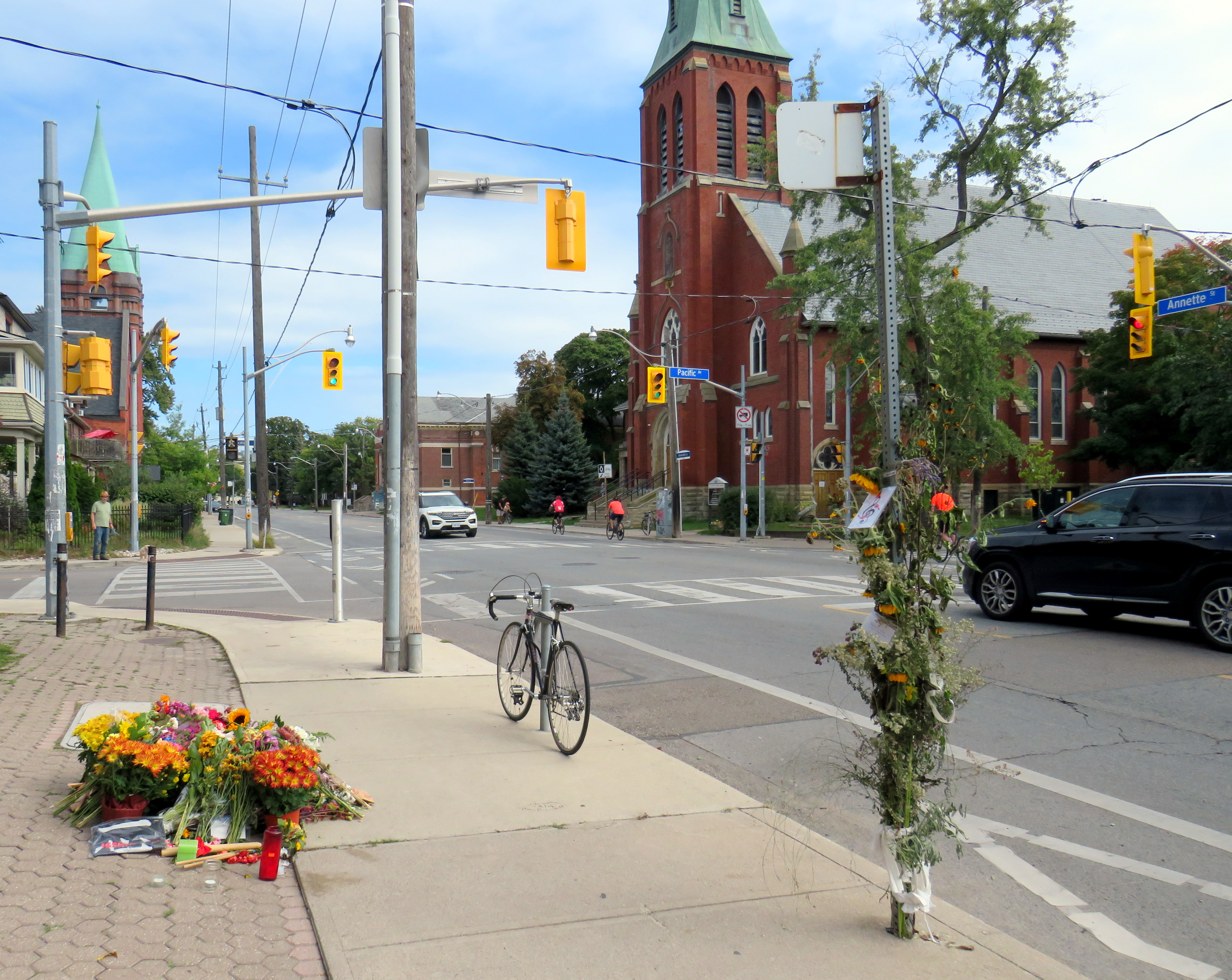
    To date, 34 pedestrians were killed on Toronto’s streets in 2019; in 2018, 42 pedestrians were killed. Not just on city streets, but on sidewalks, at bus stops, and even inside a bus shelter. Earlier this year, a home was struck in East York. Meanwhile, police are being deployed downtown not to protect pedestrians, but to ensure traffic isn’t impeded at busy intersections during rush hours.

    We were outraged – but not shocked – by a recent Toronto Star report that found that the number of traffic tickets issued dropped from 700,000 in 2010 to just 200,000 in 2018, and that there are no officers assigned to full-duty local traffic enforcement. This is despite a growing city, an ageing population, and enhanced provincial penalties for distracted, reckless, and impaired driving introduced over the last few years.

    The Toronto Police Service has failed the city’s most vulnerable road users.

    Though red-light cameras, photo radar, and automated school bus “stop” signs are useful tools, there is no substitute for old-fashioned police enforcement. Additional new dedicated officers are a good step in recognizing this failure, as long as enforcement does not target indigenous, racialized, and other communities that are already disproportionately affected by policing. In the end, we need both better designed streets and a renewed direction that the Toronto Police Service will have no tolerance for unsafe driving in Toronto.
    Thank you.

  • Biking off to Buffalo

    IMG_6241Tonawanda Rail Trail

    Back on Victoria Day weekend, I biked down to Toronto’s Union Station, loaded by wheels onto a GO train, and headed for Niagara. I have biked through Niagara before, and it is a very pleasant place for cycling, with many paved paths, quiet roads, and paved shoulders and bike lanes along many busier roads. Charming towns such as Niagara-on-the-Lake and Port Colborne offer many places for cyclists to eat, drink, and stay. If you haven’t yet done so, GO Transit’s bike train is worth checking out this year.

    It is also possible to cross the border by bike as well, where there are many great bike routes and parks worth exploring. On my last trip, this is exactly what I did.
    IMG_6143.jpg
    GO Transit’s bike train at Union Station

    Officially, cyclists may cross at three of the four bridges over the Niagara River. To the north, cyclists may cross at the Queenston-Lewiston Bridge, which connects Ontario Highway 405 with Interstate 190. However, cyclists must cross with traffic (there’s no sidewalk, and pedestrians are prohibited), an unappealing option.

    The Rainbow Bridge allows both pedestrians and cyclists, though cyclists can not use the sidewalk (which offers great view of the nearby falls),but must also ride with traffic. But the Rainbow Bridge prohibits trucks; it is easy to access from city streets in both Niagara Falls, Ontario, and Niagara Falls, New York.

    The Peace Bridge, at the end of the Queen Elizabeth Way in Fort Erie, also permits pedestrians and cyclists, though cyclists must walk their bikes on the sidewalk. A multi-year rehabilitation project closed the sidewalk, but work was recently completed and the sidewalk will open shortly. In the meantime, the Peace Bridge offers a shuttle van (I called on July 1 2019 to confirm its operation, the representative I spoke to advises to call the Peace Bridge office to request a pick up). The Peace Bridge’s website offers detailed instructions on how to access the crossing on both sides.

    The Peace Bridge is free to pedestrians and cyclists in both directions, though cyclists on the Rainbow Bridge are charged $1 (US or Canadian) to travel to Canada.

    I chose to take the Rainbow Bridge both ways. It being a long weekend, I had to wait in traffic both ways, but at least the views are decent, and it’s a flat bridge deck.

    IMG_6166Crossing the Rainbow Bridge by bike means waiting in traffic…

    IMG_6169…though at least the view is nice

    Once across in Niagara Falls, New York, it is easy to access Niagara Falls State Park, which offers great views of the Falls, and is free to enter (though there are charges for parking and for accessing the viewing tower and lower gorge trails). Cyclists are asked to dismount and walk in sections of the park, though it is a reasonable request due to the crowds.

    I then biked along the Niagara Scenic Parkway upriver towards Tonawanda. The parkway was formerly named the Robert Moses State Parkway, but it has since been tamed to improve pedestrian and cycling facilities along the Niagara River, with the road closed completely at the Rainbow Bridge, and narrowed elsewhere. I doubt the Power Broker would have approved.

    1-IMG_1624.JPGAbandoned section of the Robert Moses State Parkway under the Rainbow Bridge

    South of Tonawanda, I chose to follow a new rail trail that followed an old interurban line that connected Buffalo with Tonawanda and Niagara Falls. The International Railway Company once operated a large network of street railways in Buffalo and Niagara Falls, as well as rural lines leading as far as Hamburg and Lockport. It also once operated a tourist trolley along both sides of the Niagara River, making it a truly international operation. Interurban service ended in 1937, while the last streetcars ran in 1950.

    IMG_6244
    Tonawanda Rail Trail guide sign

    The Niagara Frontier Transportation Authority, the public successor to the IRC, retained ownership of the Tonawanda corridor, planning a spur line of the new Buffalo Metro LRT. But local opposition and a lack of funds derailed those plans; happily, it is now a wonderful trail with safe, signalized crossings at every major cross street.

    Once in Buffalo, there are many bike lanes, and lower levels of traffic. Not once was I honked at or felt threatened by motorists. The city is mostly flat, and there are many neighbourhoods and landmarks worth checking out, with great restaurants, bars, and breweries. There are many hotels and bed and breakfasts in Downtown Buffalo and in the Allentown area.

    1-IMG_1528
    Bike Lanes on tree-lined Richmond Avenue

    1-IMG_1525-001
    Symphony Circle, one of many traffic circles as part of Fredrick Law Olmsted’s parkway system developed for Buffalo

    Visiting Buffalo on a Sunday/Monday of a Canadian long weekend also meant being in town on normal working day on Monday, where commercial and institutional buildings are open to the public. The view from the observation deck at Buffalo City Hall is fantastic, while the Council Chamber is an art deco masterpiece.

    1-IMG_1594
    I had lunch in the Ellicott Square Building, which, when completed in 1896, was the largest office building in the world. The building was designed by Charles Atwood of Chicago’s D.H. Burham & Company, and its interior courtyard is spectacular. Several food vendors operate weekdays.

    1-IMG_1570-001Courtyard, Ellicott Square Building

    Buffalo is an attractive cycling destination because a back-up option exists. The NFTA buses are all equipped with bike racks; the Route 40 bus runs direct from Downtown Buffalo to Downtown Niagara Falls, New York. The Monday was cool, wet, and windy, and I was tired (I later found out I was coming down with a bad cold), so I opted to spend the extra time cycling around downtown and the Erie Canal Harbour area and take advantage of the bus service back.

    The GO Niagara bike train operates every weekend until Labour Day, and again during Canadian Thanksgiving Weekend. The Buffalo-Niagara region has a lot to offer cyclists, and it is worth your consideration.

  • Punkeydoodle’s Corners and the world’s highest numbered address

    Punkeydoodles_Corners.JPG

    Last weekend, I went for a ride in Waterloo Region, particularly in Wilmot Township, to the west of Kitchener-Waterloo. Despite some deceptively difficult hills and a strong headwind going back east, it was a very pleasant ride. Outside of Toronto, motorists seem to be quite courteous towards cyclists, with most giving me plenty of room. It helped too that many of Waterloo Region’s rural roads have paved shoulders.

    I made several stops along the way, including Castle Kilbride in Baden, a wonderfully preserved Victorian home. It was built by the Livingston family, who made their fortune in flax and linseed oil. The house, a national historic site, is now a museum operated by Wilmot Township.

    Castle Kilbride.JPGCastle Kilbride

    I biked as far west as the interestingly named hamlet of Punkeydoodle’s Corners, located at the point where Waterloo Region, Perth County, and Oxford County meet.

    Though the origin of the crossroads’ name is not known for sure, the most common theory is that a local innkeeper on the old Huron Road (an early colonization road that connected Guelph with Goderich on Lake Huron) like to sing “Yankee Doodle,” but it sounded more like “Punkey Doodle” to his patrons. The hamlet is now bypassed by Highways 7 and 8, and local business migrated to nearby New Hamburg, located on the railway.

    The Punkeydoodle’s Corners signs are commonly stolen, and one of the signs was obviously missing when I visited. But there’s one more claim to fame: the world’s highest street address number: 986039 Oxford-Perth Road.

    986039.jpg986039 Oxford-Perth Road, a private residence with what is probably the highest numbered address in the world. Road markers for Oxford County Road 24 and Perth County Road 101 are in the background. 

    In many parts of Ontario, rural addresses have a six-digit number, often known as 911 or fire numbers. In Dufferin County, for example, the first two digits refer to the road itself, with each rural road assigned an unique number. Each road is then broken down into sections, represented by the third digit. The last three digits indicate the distance — in decametres — from the beginning of the road section to the property’s entrance, with even numbers on the west or south side of the road.

    Before 911 numbers were introduced, addresses might only consist of a family or business name, rural route number and the name of the village or town with the nearest post office, or by the property’s lot and concession numbers.

    For example, 795112 3rd Line East, Mono, is the address of Mono Cliffs Provincial Park. The number 79, an odd number, has been assigned to the 3rd Line East of Hurontario Street (which runs north-south), while the third digit, 5, represents the section of 3rd Line East north of Mono Centre Road. The entrance to the park is 1.12 kilometres north of Mono Centre Road, on the west side of the road.

    This system allows emergency responders to pinpoint an address quickly and accurately. This is especially important in rural areas, where emergency personnel may be volunteers arriving in their own vehicles. In many parts of southern Ontario, rural roads may simply go by a name, or they may also have a highway or county road number, or still be known by their concession or line numbers. Urban areas, like Orangeville and Shelburne in Dufferin County, have their own numbering systems, separate from the rural 911 addresses.

    Each county may have a slightly different system, but they all have the same purpose. 986039 Oxford-Perth Road just happens to be in the far southeast corner of Perth County, hence its high number. The lowest address numbers in rural Perth County can be found in the northwest corner, near Molesworth.

    It’s worth noting that not all rural areas developed similar numbering systems. In Toronto and York Region, road addresses are based on their origin point. For east-west streets that cross Yonge Street, street numbers start on other side. For example, Yonge Street’s numbering starts at 1 Yonge Street, the Toronto Star Building, and ends at 21137 Yonge Street, where it unceremoniously disappears into the Holland Marsh.