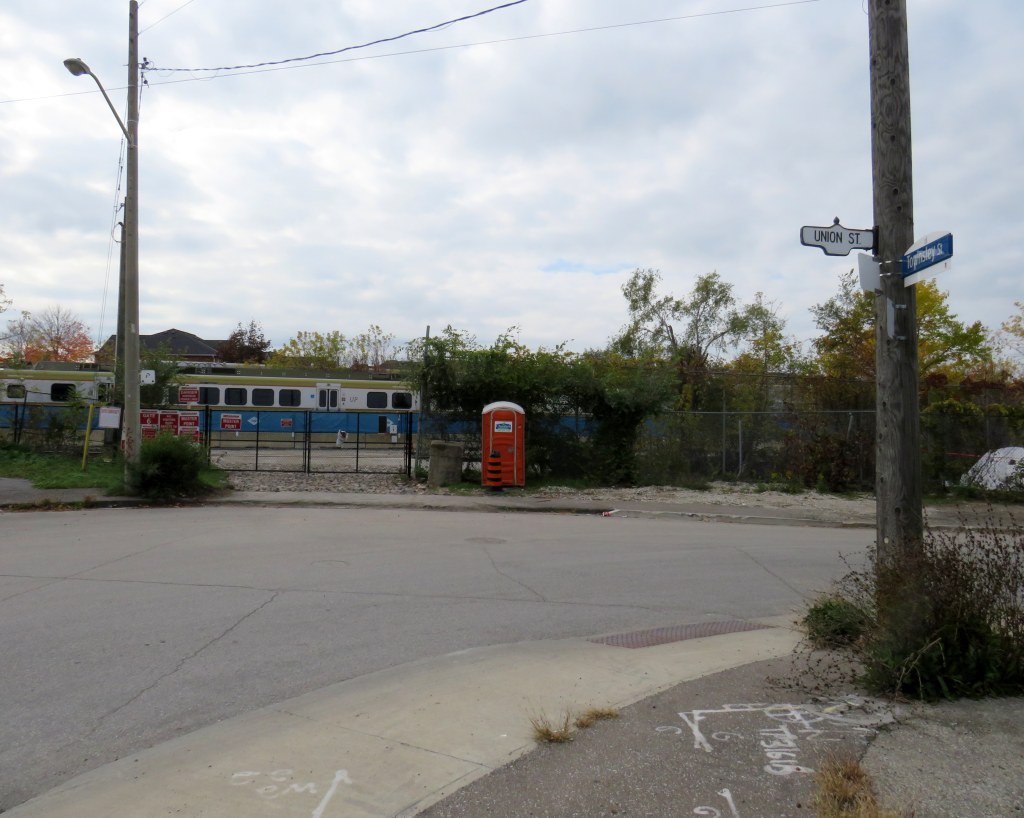
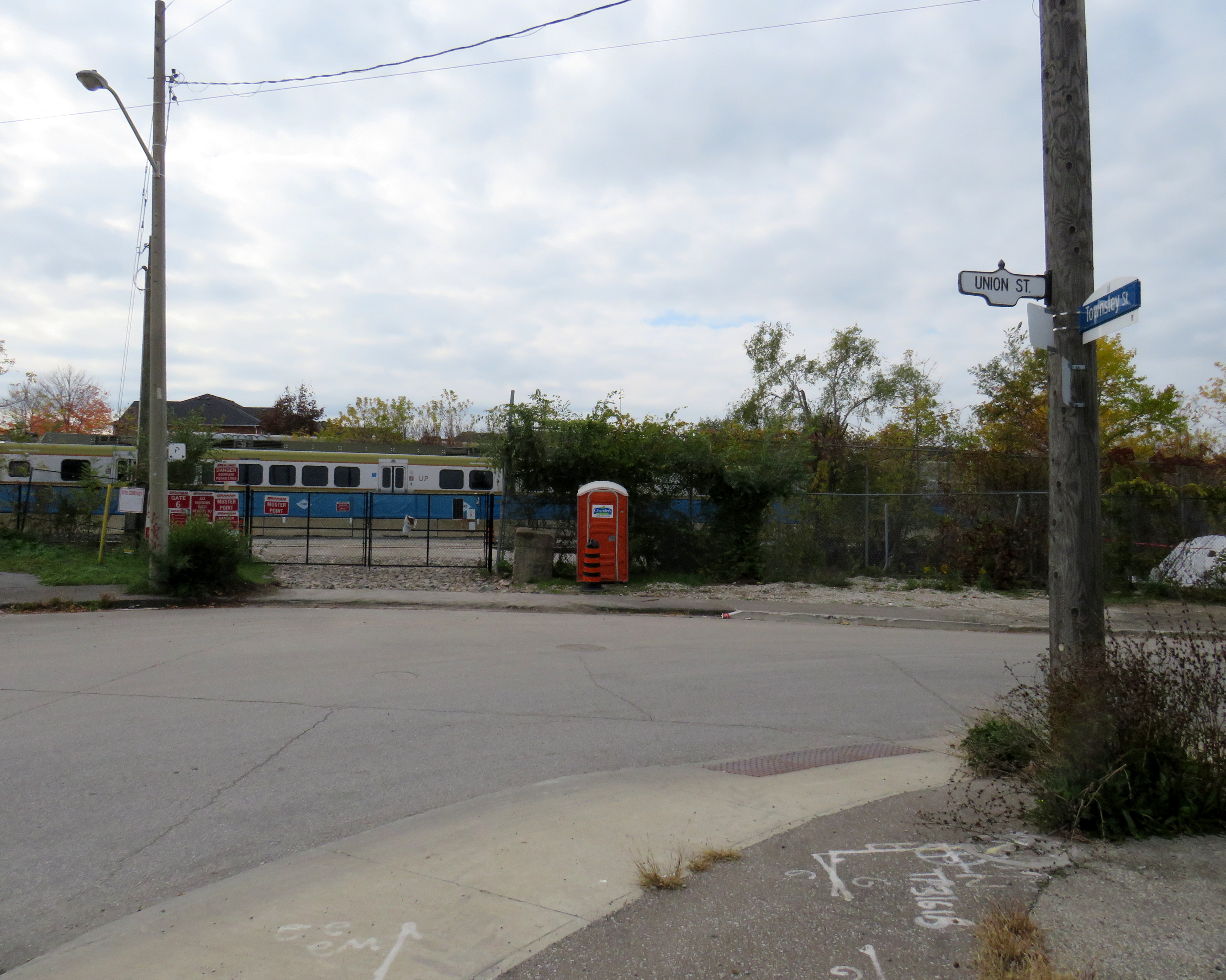
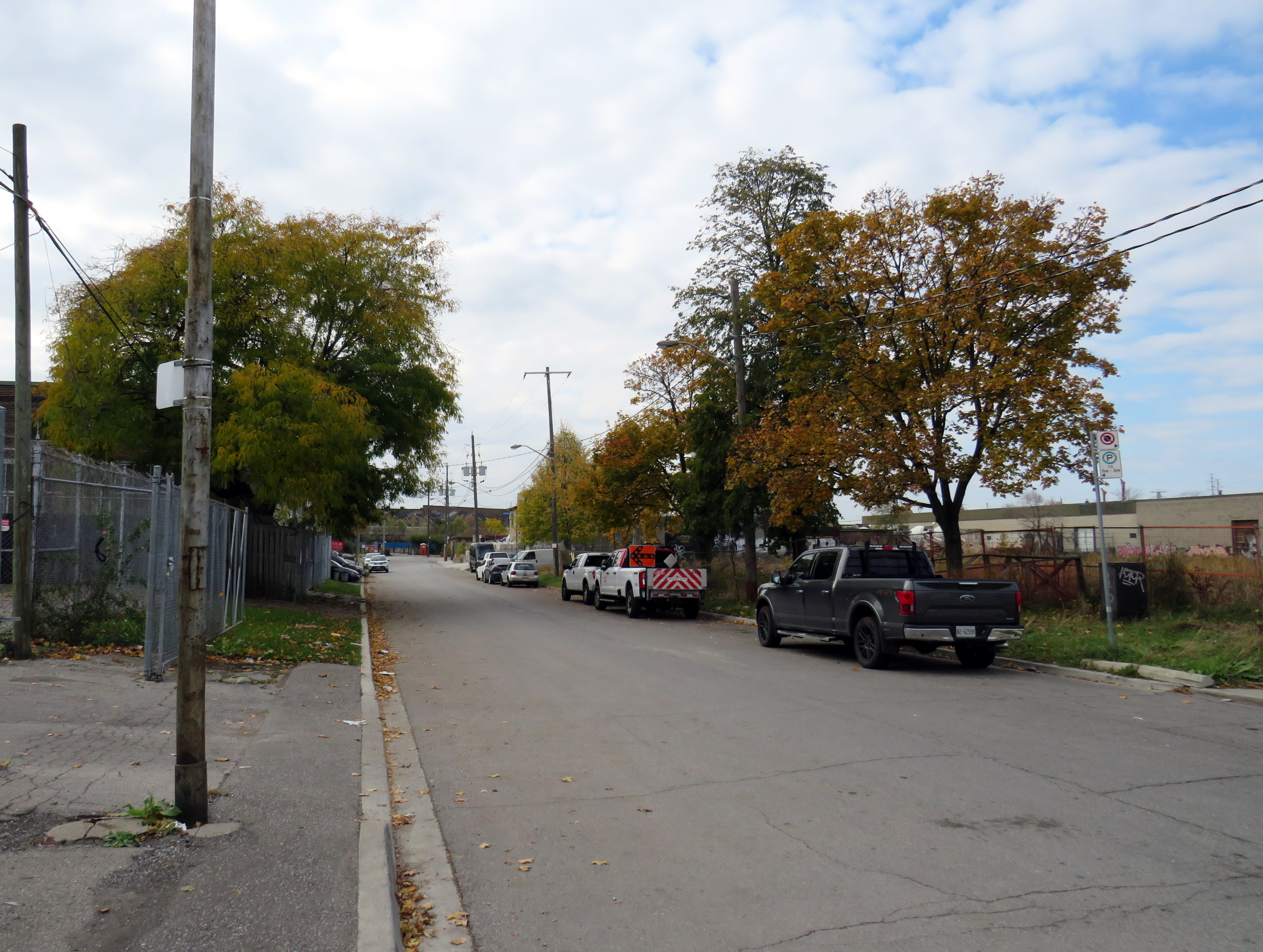
An UP Express train passes the intersection of Union and Townsley Streets
At the lonely corner of Union and Townsley Streets sits the site of St. Clair-Old Weston Road Station, one of five proposed new GO stations in the City of Toronto as part of the remnants of the SmartTrack brand. The station’s name (which will likely be revised closer to opening day) refers to the intersection of St. Clair Avenue West and Old Weston Road, one block to the east. After years of benign neglect, the northwest corner of the old City of Toronto is seeing new development.
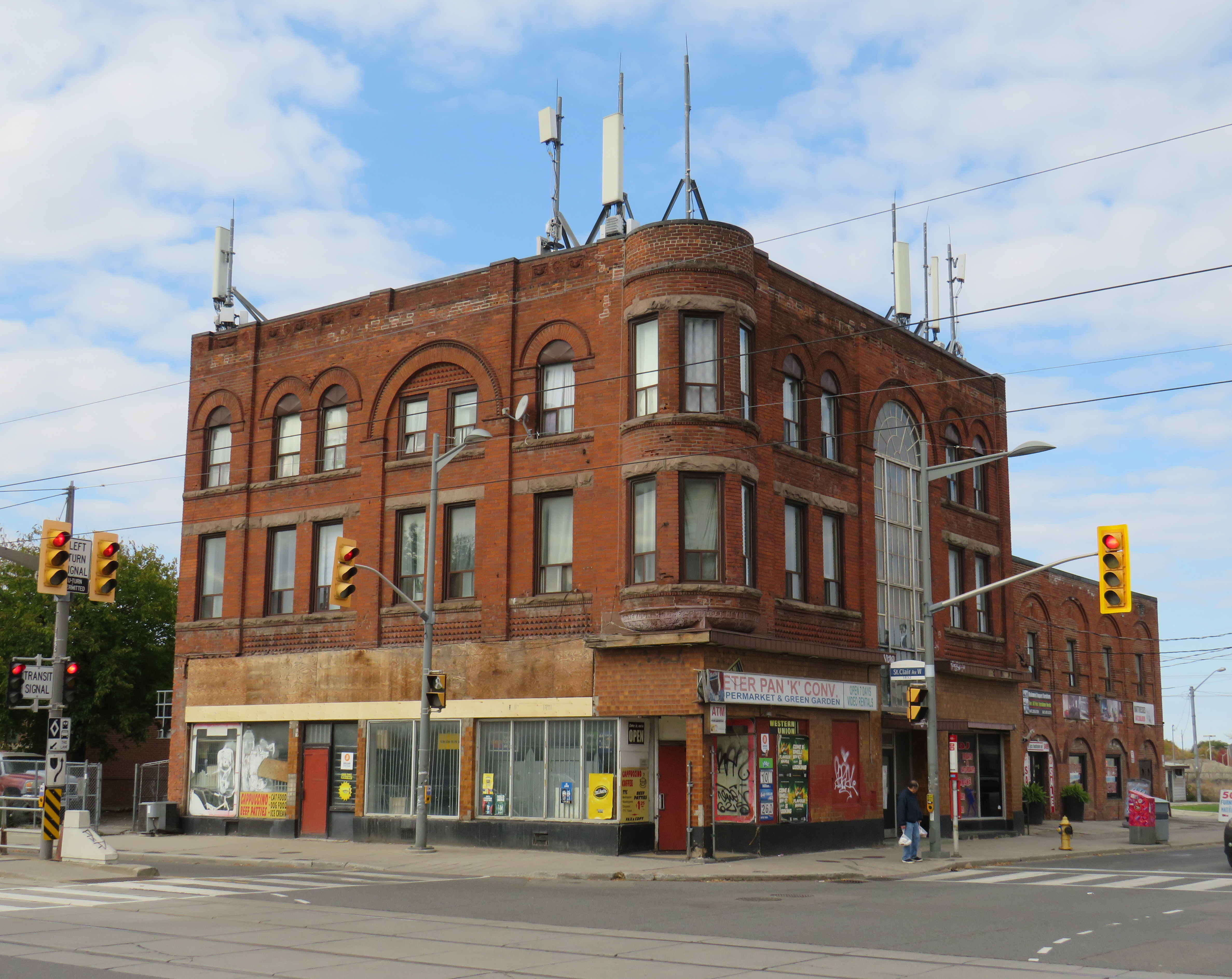
The old Heydon House Hotel stands at the corner of St. Clair Avenue and Old Weston Road
The former Ontario Stockyards and associated slaughterhouses is now a busy retail area. A large cluster of midrise and highrise development proposals are in the pipeline surrounding the station site, spurred on by a city-initiated transportation plan and the provincial major transportation transit area (MTSA) designation. More transit will be needed to serve the planned growth, and that’s where the new station comes in.
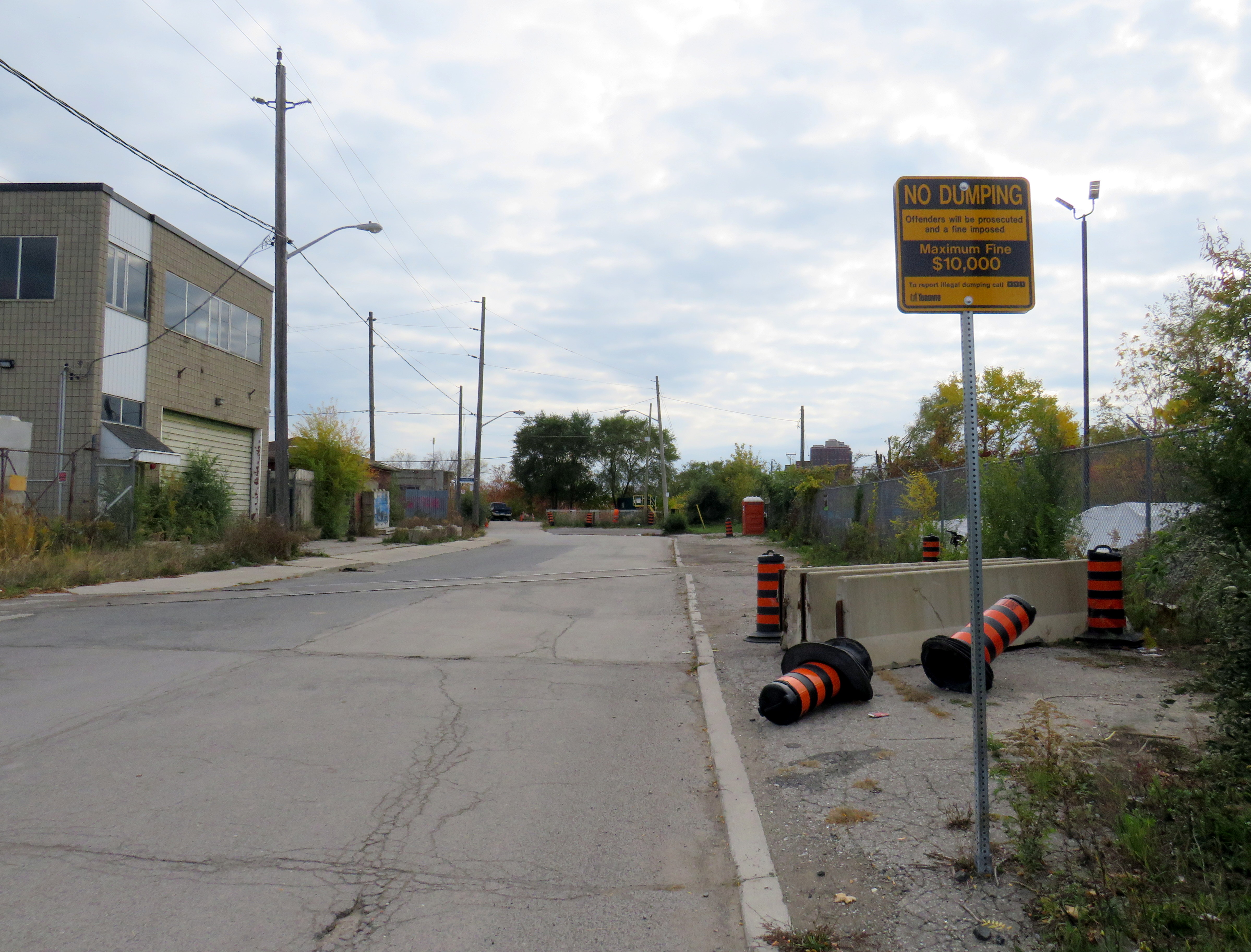
Right now, the corner of Union and Townsley is eerily quiet. At the corner of Old Weston and Townsley, a once-popular flea market was demolished, with no immediate plans for the site. The Consolidated Bottle Company plant on Union Street sits empty, awaiting future development. To the south, the Delta Bingo on St. Clair West is also the site of a planned highrise cluster. There are other proposals along Union Street to the north. But right now, it’s a great place to dump waste.
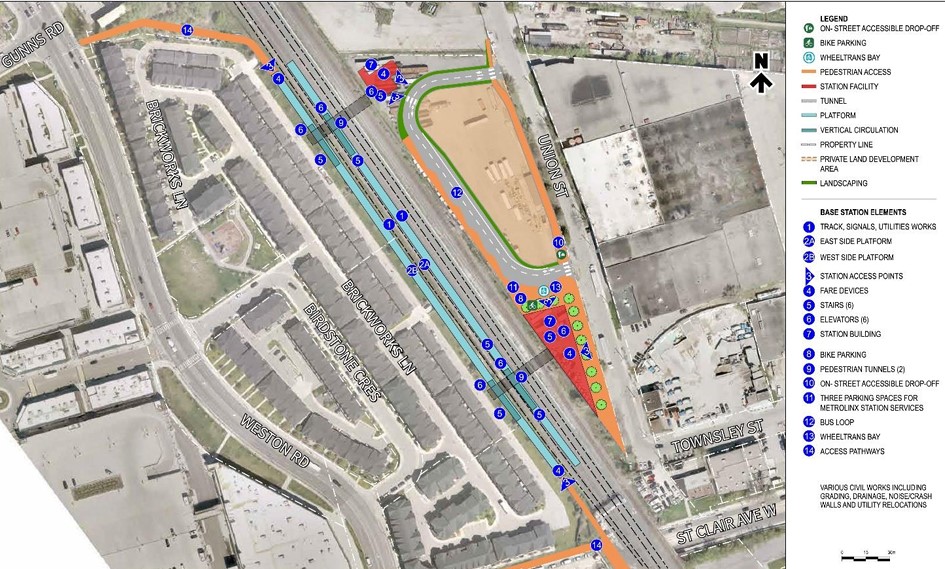
A no dumping sign and an abandoned rail spur crossing on Union StreetMissing sidewalks on Townsley Street, looking west from Old Weston RoadSt. Clair-Old Weston Station site plan
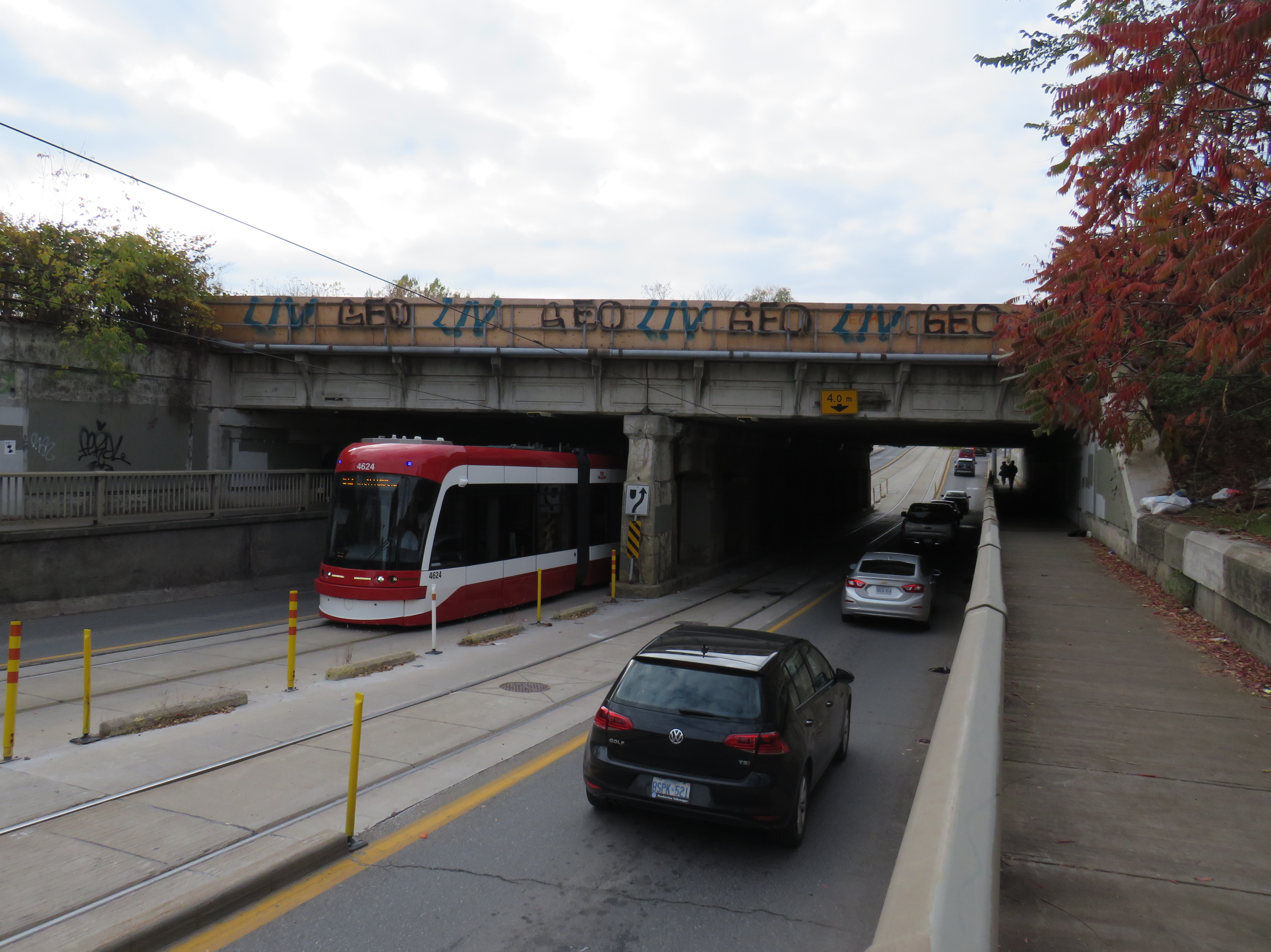
Despite the promise of new development, the station site plan leaves a lot to be desired. Connections to the nearby 512 St. Clair Streetcar will be awkward. A planned bus loop would require a diversion for nearby TTC bus routes, except the low-frequency 127 Davenport, which terminates by the old flea market site. An underpass that allows St. Clair Avenue to duck under the Metrolinx and CPKC railways will have to be rebuilt, with streetcar closures planned starting next year. Though likely not included (the street right-of-way will not be widened during the work, despite traffic congestion through this pinch point), extending walkways and even rail platforms to the south side of St. Clair would improve connections considerably and reduce walking times to several of the proposed developments. Under the current plan, train platforms would be located entirely north of St. Clair Avenue, with no direct station access from the busy arterial.
The narrow St. Clair Avenue underpass, a traffic pinch point, is due for replacement
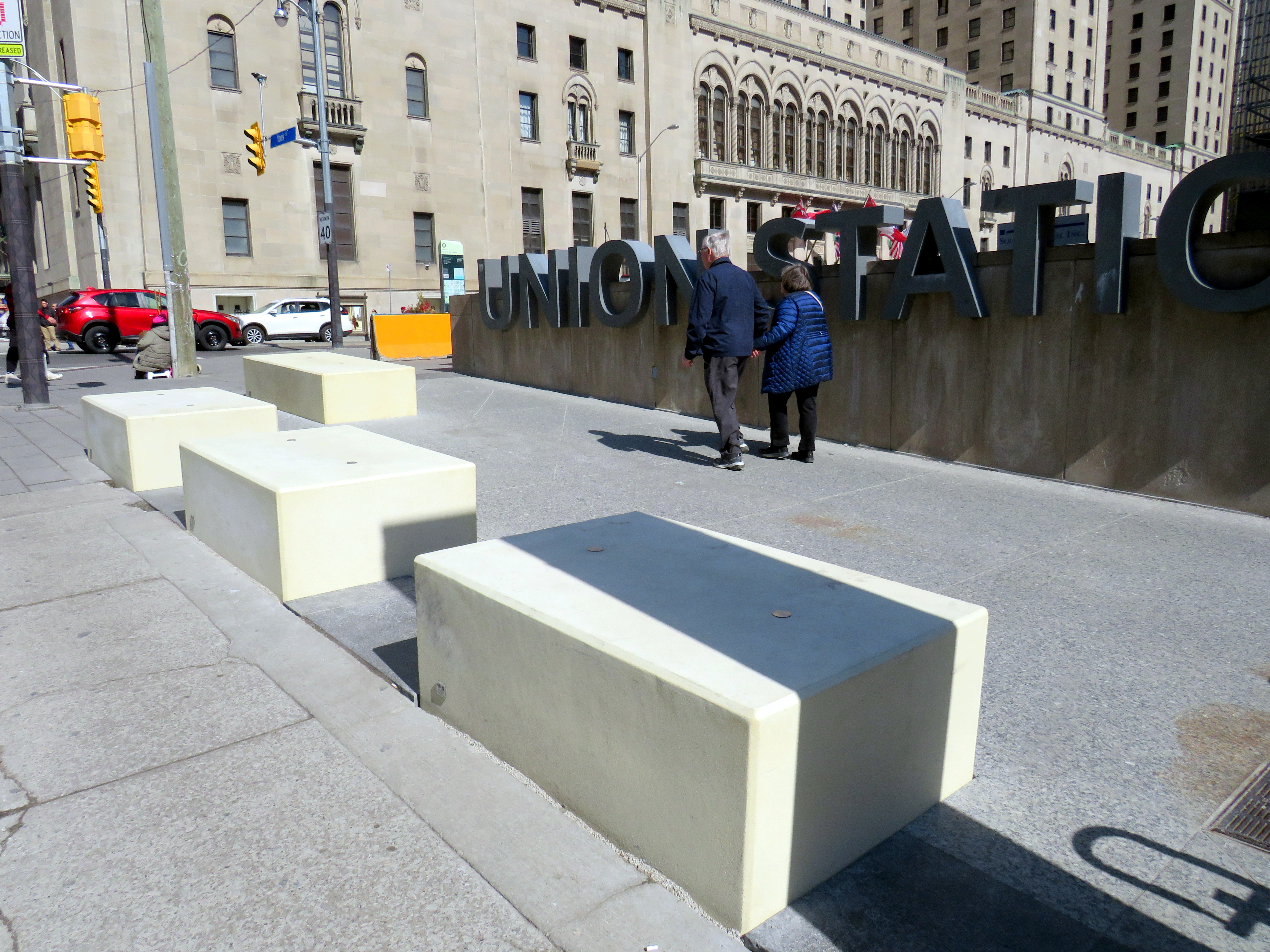
New blocks installed in front of Union Station at Front and York Streets
When I learned that Union Station was finally getting permanent bollards to replace the haphazardly-placed Jersey barriers that have sat in front of the transport hub since 2018, I was relieved. I wrote about these barriers several times on this website, criticizing their appearance and their placement, blocking the way for the thousands of people who cross Front Street every day. But when I went to see them in person, after seeing criticism online, I was dismayed.
The new permanent barriers might even be worse than the temporary obstructions they are meant to replace.
The Jersey barriers were hastily placed after a tragic attack on Yonge Street in North York, where a man intentionally drove a rented van on to the sidewalk, killing ten pedestrians and injuring and traumatizing many more.
Vehicular assaults on crowds of pedestrians are a major concern; tactics used at mass gatherings — such as the winter light show and New Years Eve events at Nathan Phillips Square and major concerts and playoff games at Skydome and Scotiabank Arena — now include blocking closed streets with heavy vehicles such as snow plows, dump trucks, and city buses. However, Union Station is the only place in the city where officials have decided that new permanent barriers were necessary.
Union Station is one of the busiest pedestrian areas in the city
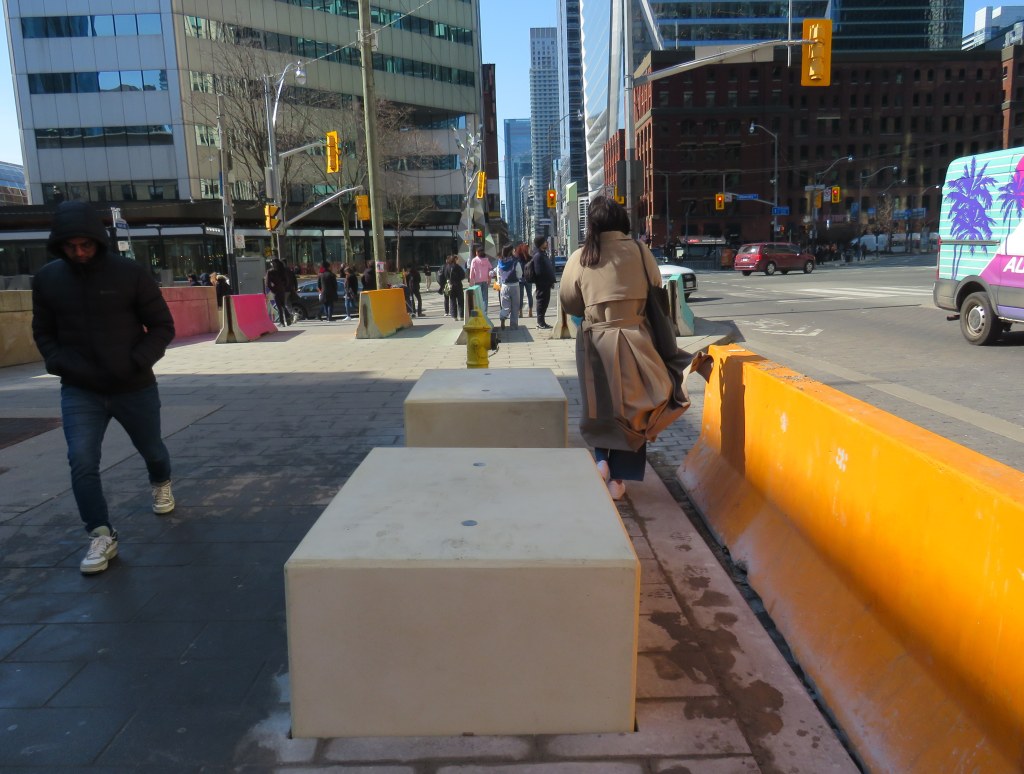
The new permanent barriers are not the sturdy, yet narrow, bollards that are used elsewhere. Instead, they are large, undecorated concrete blocks anchored into the ground and are knee-high. The plain concrete colour does not match the stone sidewalks or plaza. They are placed very close together, impeding access for those using large carts, strollers, or wheeled mobility devices. Despite all the money spent renovating Union Station, these blocks look cheap.
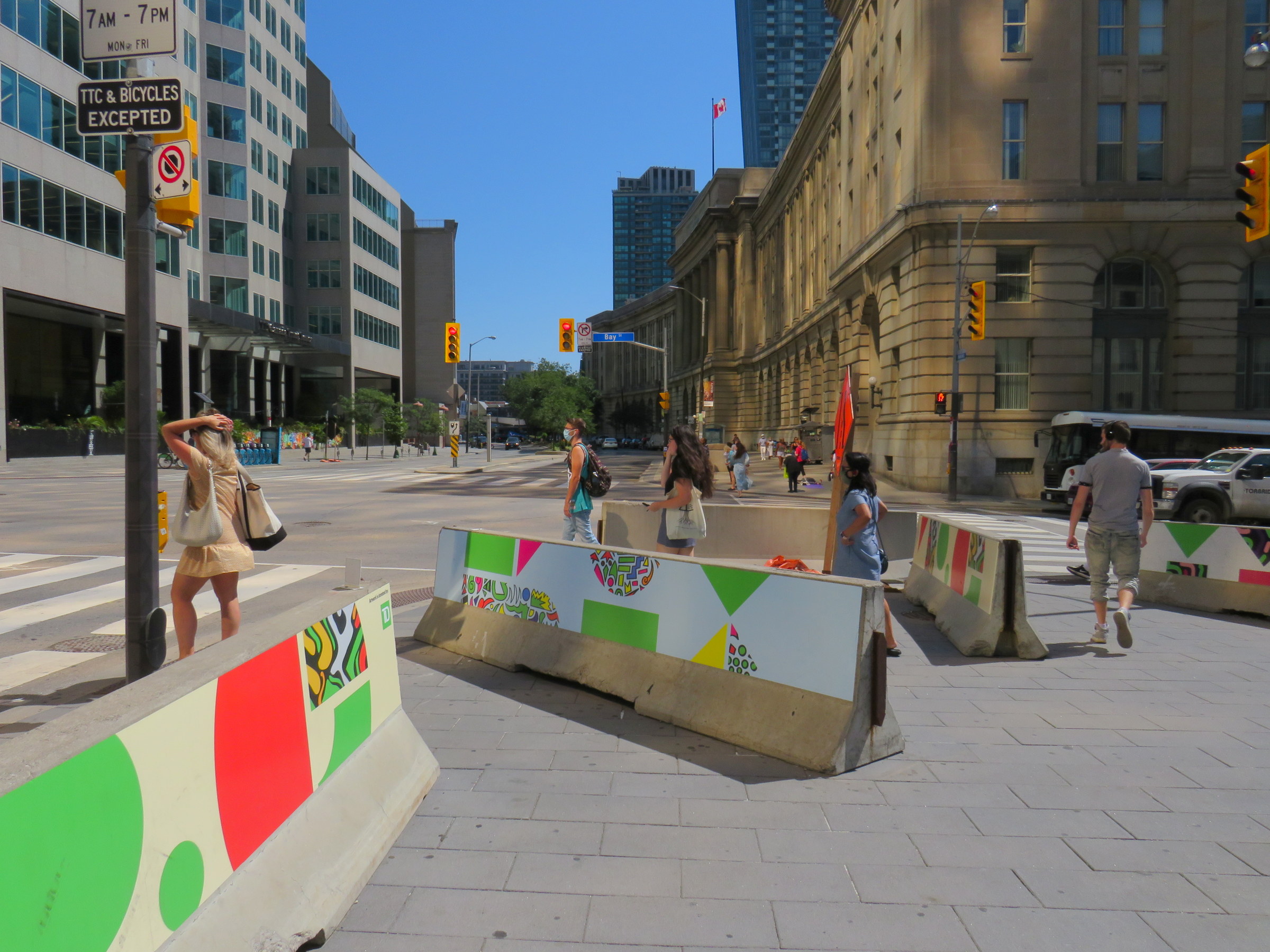
Concrete blocks at the corner of York and Front Street at Union Station
The total cost of installing the “Custom Anti-Terror Concrete Barriers,” as the city described the bid, was $2,438,238, including HST. The lowest bid, by South Central Inc., came over a $1 million cheaper than the other two bids. It is worth noting that there are no public documents that describe the city’s specifications for the contract, nor was there any public consultation before the city solicited bids.
The result? An esthetic failure and an accessibility challenge.
Video showing pedestrians going around the concrete blocks in front of Union Station
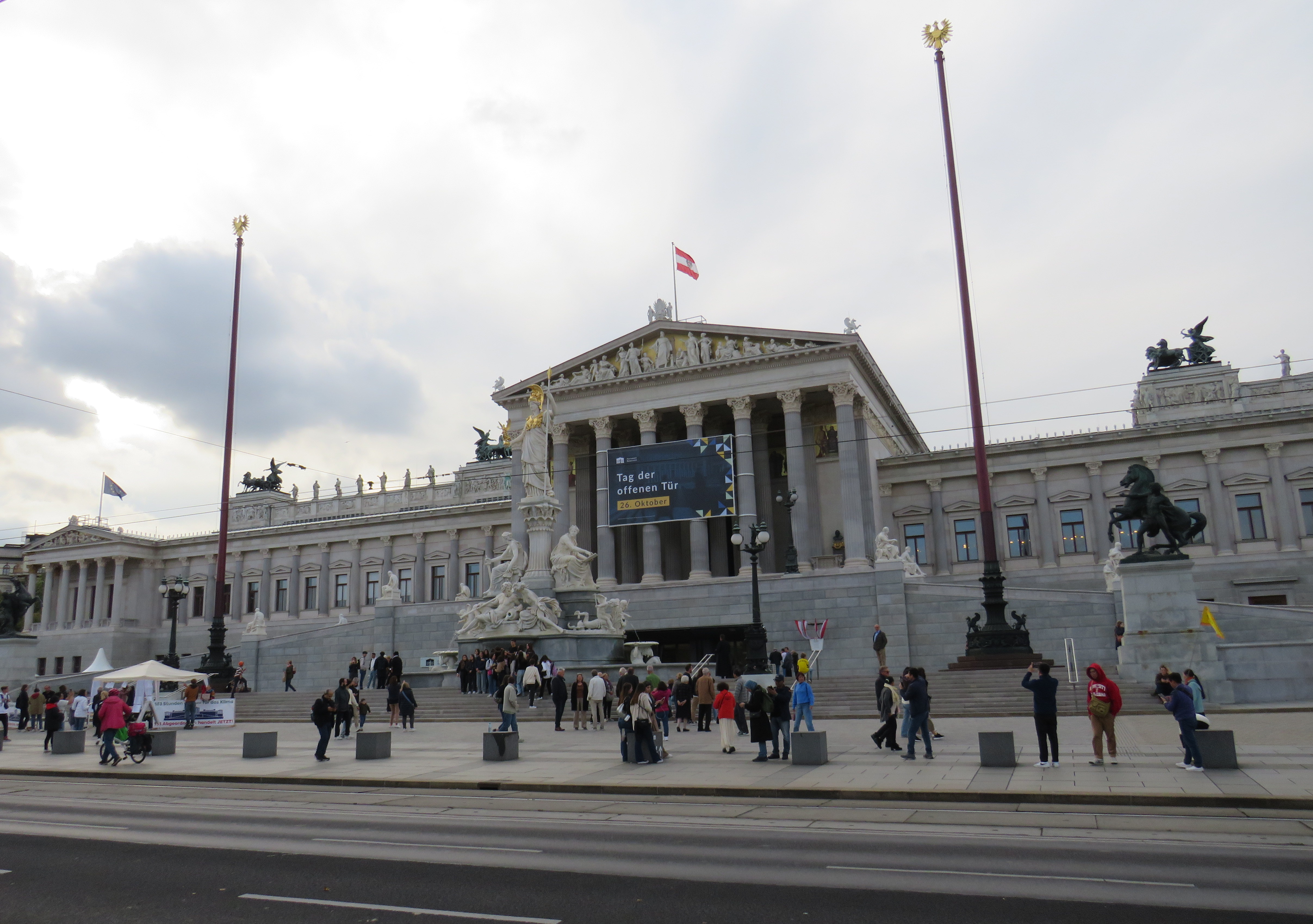
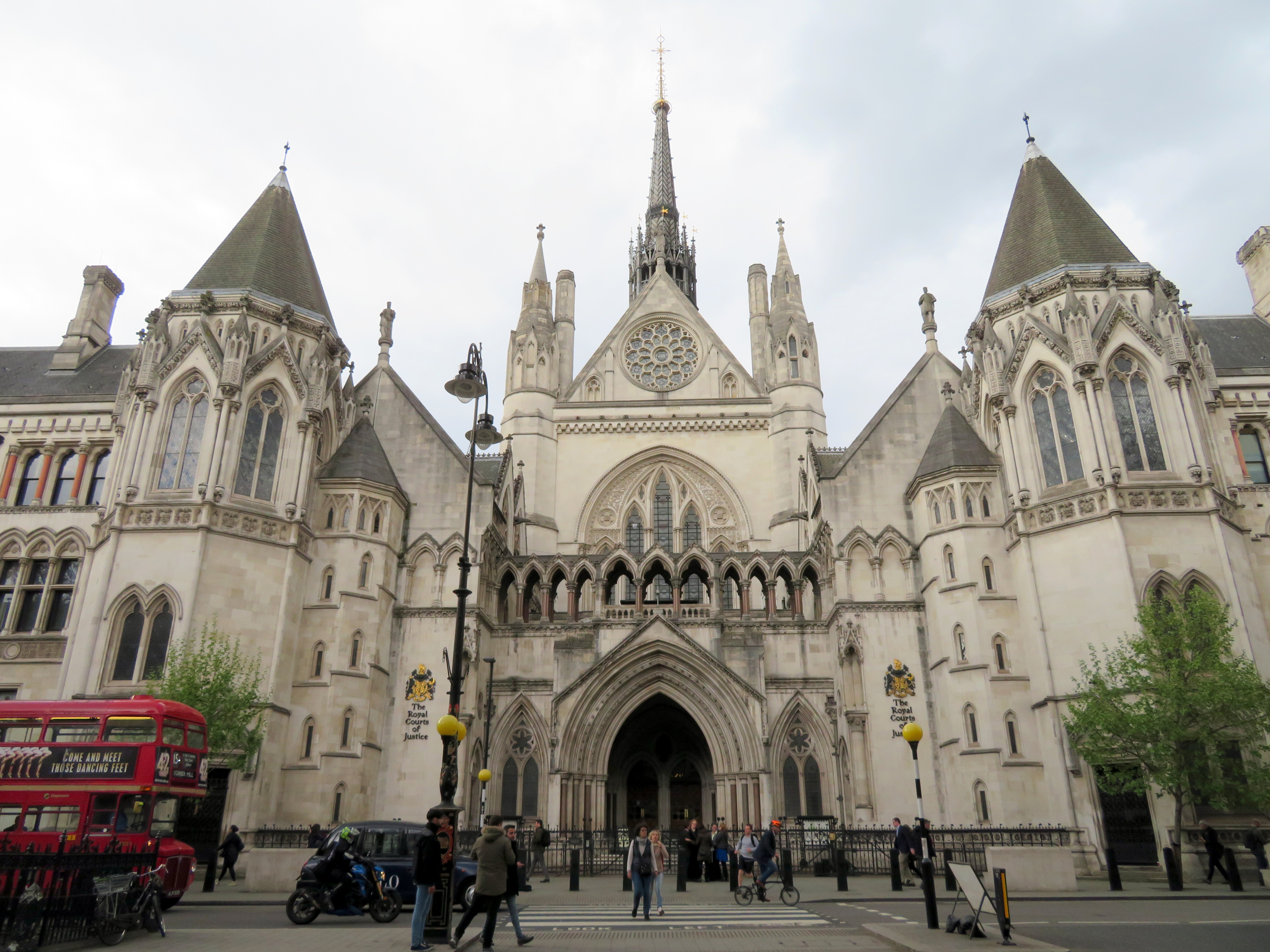
I cannot understand the city’s decision to go with these blocks where more elegant and pedestrian-friendly alternatives are typically used elsewhere. For example, the Austrian Parliament Building in Vienna, which faces the famous and busy Ringstrasse, is protected by smaller concrete bollards, which are also more widely separated, making it much more pleasant for pedestrians to get by. In Great Britain, metal bollards are common on busy commercial streets and in front of important buildings, but they are easy for pedestrians to pass, and generally blend in.
Thick concrete bollards in front of the Austrian Parliament Building, 2023Metal bollards in front of the Royal Courts of Justice in London
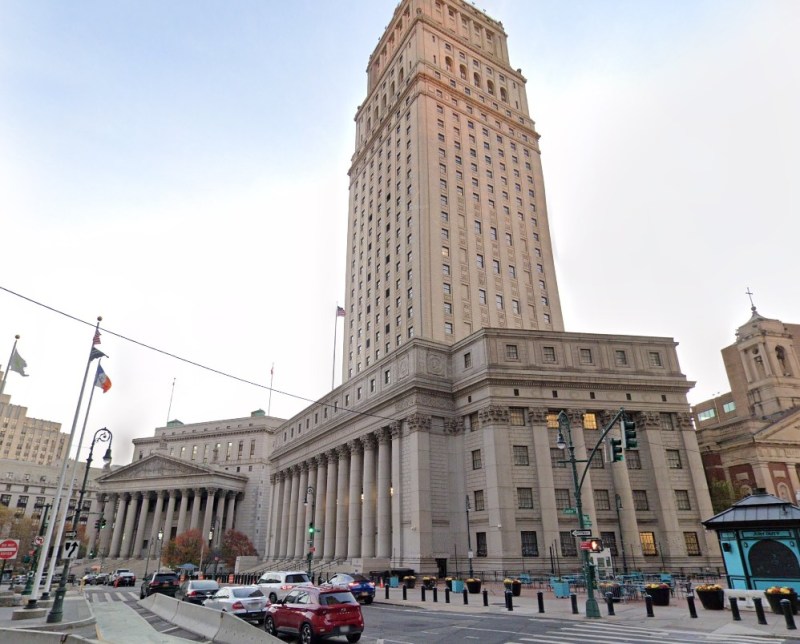
In the United States, government buildings are also protected by heavy anti-vehicular barricades (especially since the 1995 Oklahoma City bombing), but they are generally more permeable for pedestrians.
Metal bollards protect the federal courthouse in Downtown Manhattan (Google Streetview)
It is also worth noting that other popular pedestrian areas, such as the Yonge-Dundas intersection, are not protected from a potential vehicular attack — or an unintentional collision. It is beyond comprehension why the city only focused on protecting one pedestrian area, using such a poorly thought-out design. Toronto can — and should — do better.
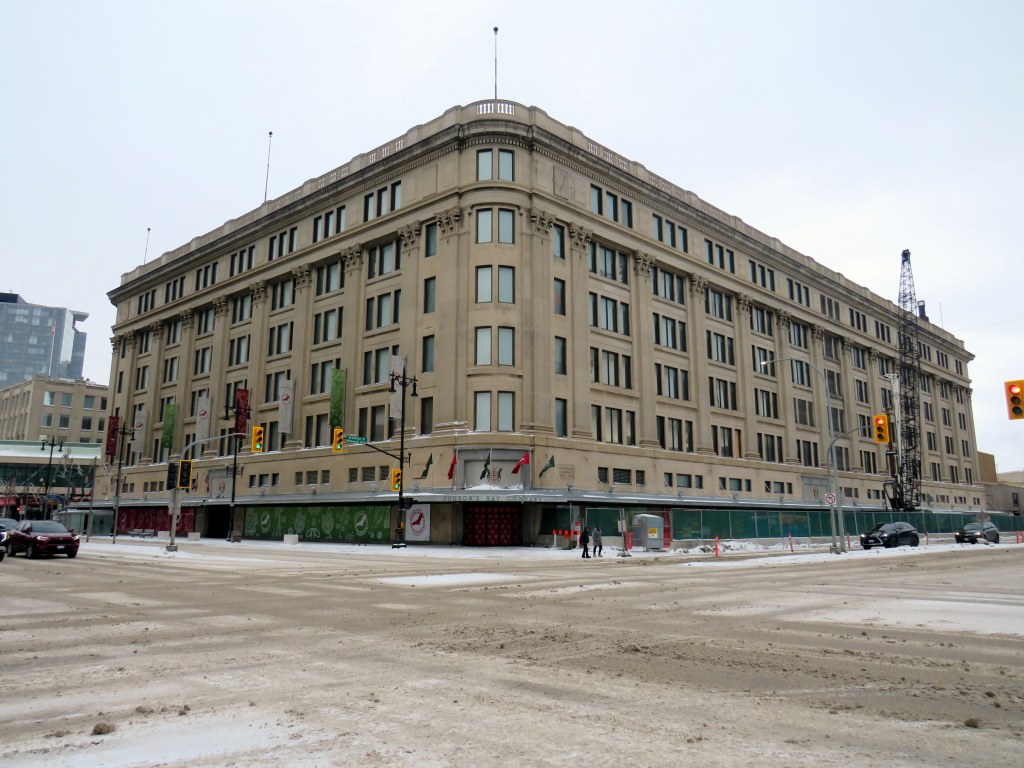
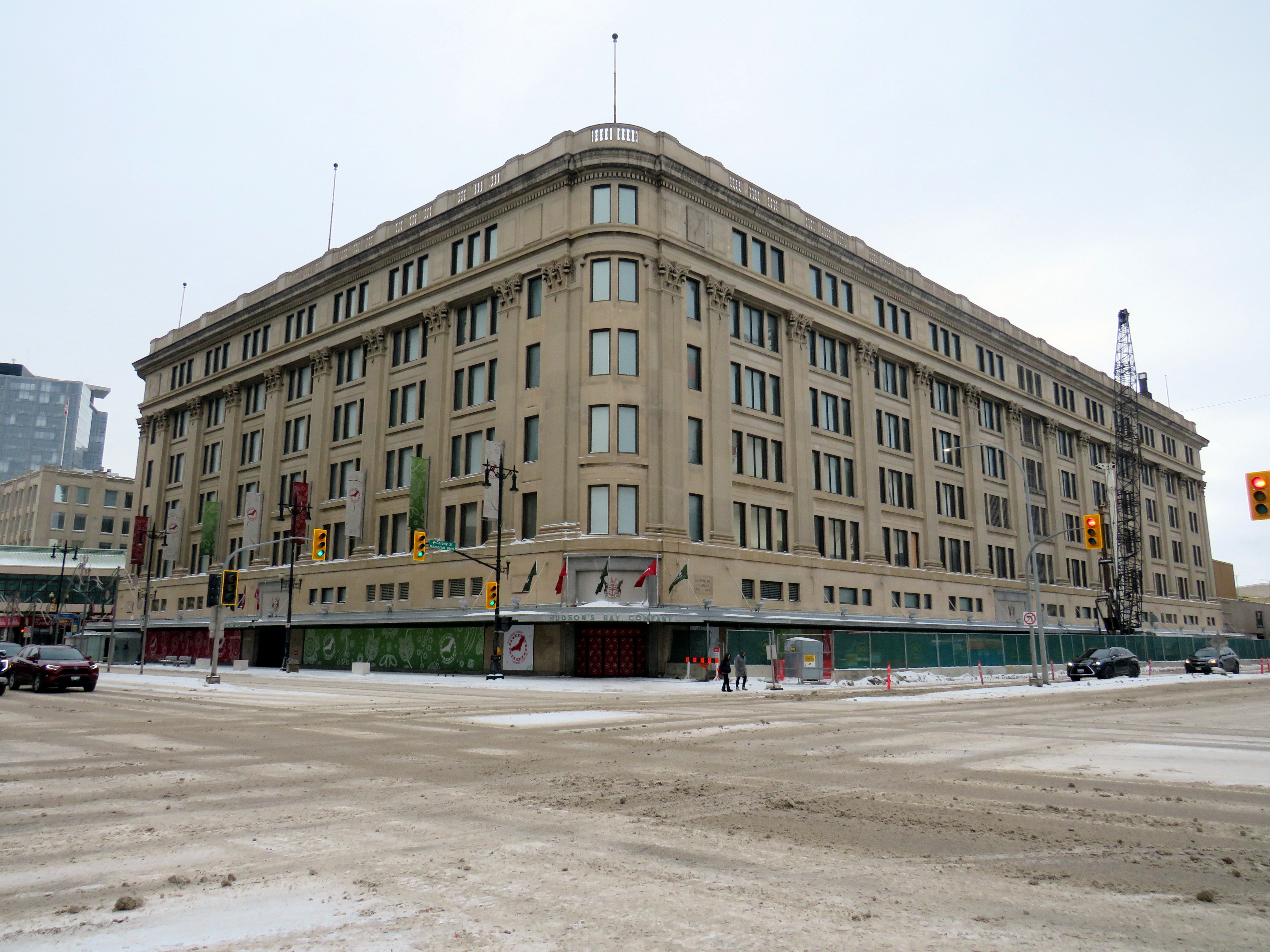
There’s a touch of irony that in the same year Canadian sovereignty is increasingly threatened by an American president, the Hudson’s Bay Company — one of the world’s oldest corporations — has filed for bankruptcy protection. It will likely close at least half of its 80 stores, but with no guarantee it will emerge in a healthy state, able to rebound.
On May 2, 1670, The Governor and Company of Adventurers of England, trading into Hudson’s Bay, was given a royal charter to trade in all lands that drained into Hudson’s Bay, 3.9 million km2 of land in the heart of the North American continent, in order to compete with the lucrative French fur trade in the St. Lawrence basin. The new company had monopolistic commercial control of what was then called Rupert’s Land: the entirety of present-day Manitoba, most of Saskatchewan and Northern Ontario, a significant part of present-day Quebec, Alberta, and Nunavut, and even parts of what eventually became Minnesota and North Dakota.
Of course, this new monopoly, which quickly became known as simply the Hudson’s Bay Company (HBC), was created without consent or consultation with the many First Nations and Inuit communities. In the early days of trade, however, HBC relied on trading with First Nations for the valuable fur trades. It established forts and factories (trading posts) throughout the northwest, establishing places such as Moose Factory and Fort Albany that remain to this day.
In later years, HBC claimed a trading monopoly on lands draining into the Pacific Ocean; it also brought in missionaries to convert Indigenous peoples. (Its monopoly was challenged by new entrants such as the North West Company, which eventually merged with HBC after violent skirmishes over trading territorial rights.)
HBC’s vast networks of forts and trading posts, particularly Fort Garry (now Winnipeg) led towards the full colonization of western and northern Canada. In 1870, with the decline of the fur trade HBC relinquished control of Rupert’s Land to the new Dominion of Canada, which led immediately to the creation of the Northwest Territories, followed quickly by the Red River Rebellion and the creation of the Province of Manitoba.
HBC continued as a fur and goods trading company and it was still the only retailer in remote western and northern communities. In larger cities like Vancouver, Winnipeg, Edmonton, and Calgary, it established new department stores. In smaller communities, especially in the north, it took full advantage of its dominant position, and Northern Stores became notorious for high prices (in 1987, HBC sold off its Northern Stores division). HBC continued to exploit Canada’s natural resources — it even had an oil and gas subsidiary between 1926 and 1982.
In 1960, HBC focused almost entirely on its department store empire, acquiring the Montreal-based Morgan’s chain, competing head-on with Eaton’s and Simpsons-Sears. In the 1970s and 1980s, it also scooped up discount chain Zellers, Simpson’s stores (after its split from Sears Canada), Ottawa-based Freimans, and Hamilton-based Robinson’s, eventually rebranding those stores as “The Bay.” Finally in 1993, it acquired Vancouver-based Woodward’s. During this time, it sold off the Northern stores and the oil company. In the late 1990s, it launched the Home Outfitters big-box chain. The Zellers chain expanded under HBC ownership, first acquiring the competing Towers discount chain in 1991 and K-Mart’s Canadian stores in 1998.
Though the flagship stores still proudly proclaimed the May 2, 1670 incorporation date, few thought about the long and checkered history of the company. My first memories of The Bay’s retail empire were of the Simpson’s store close to where we lived in Brampton. Simpson’s was the flagship anchor of Shoppers World, a once-vibrant mall. I also knew Simpson’s from the flagship Queen Street store in Downtown Toronto, famous for its toy section, Christmas window displays, and of course, the TVO children’s program Today’s Special. (The most memorable episodes for me, a young, budding urbanist, dealt with a fictionalized closure and demolition of the store, before a heritage plaque uncovered during the move out saved the day.)
Opening sequence of “Today’s Special,” set in the downtown Simpson’s Queen Street store
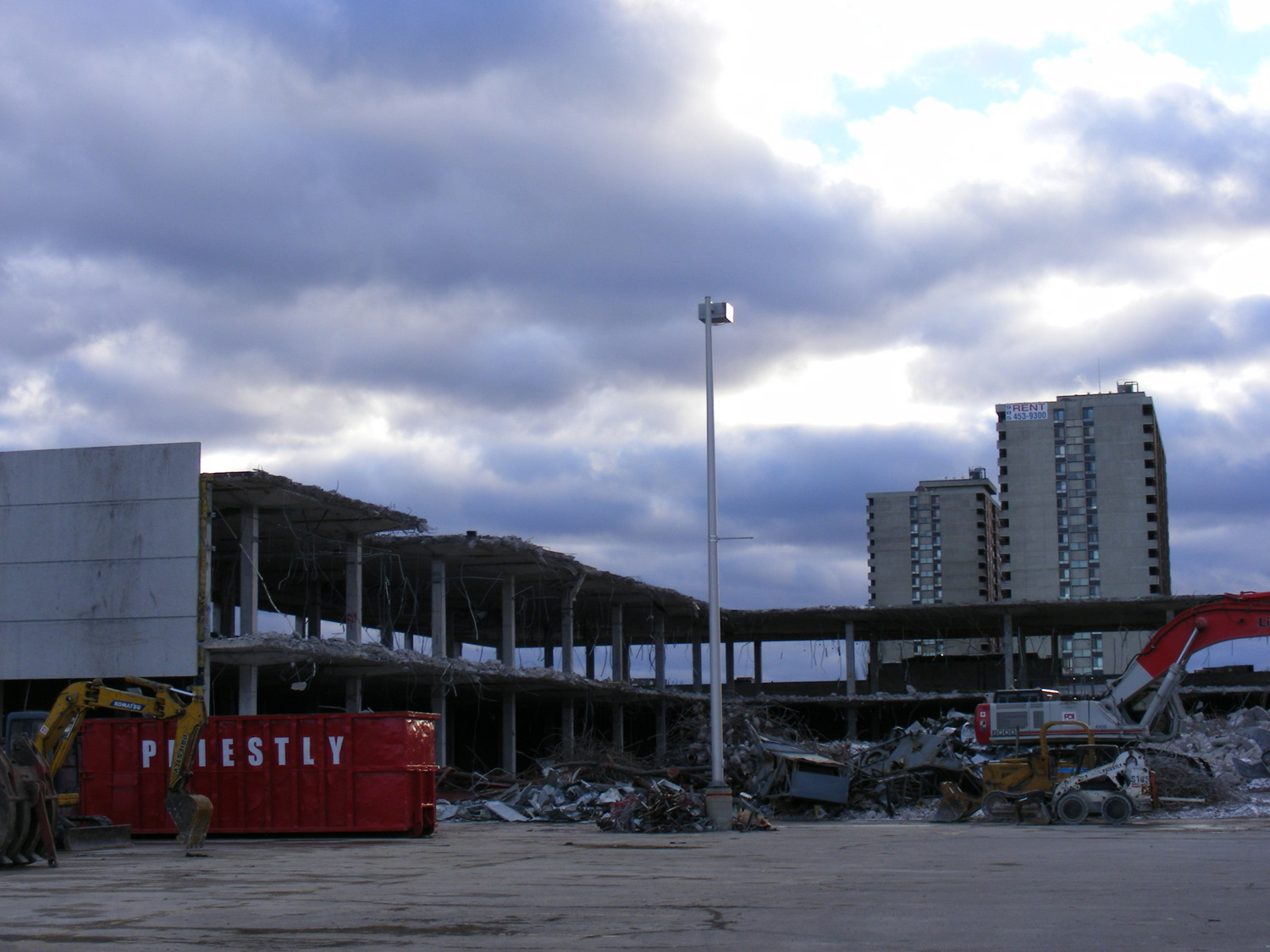
The Shoppers World Simpson’s store, like the rest of the banner, was converted to “The Bay” in 1991. In 2007 the store closed, not long after I moved to my own apartment in Toronto. (I still have some of the chinaware I purchased at that Bay store before I moved to my own place.) But as I worked, and later lived, in Downtown Toronto, I found the Queen Street store very useful for casual clothes shopping and the occasional big-ticket item.
Demolition of the Shoppers World Simpson’s/The Bay department store in 2010
Though HBC was sold to a private equity firm in 2008, under CEO Bonnie Brooks’ leadership, there was still life in the department store, with leading stores like the Queen Street flagship upgraded. The fifth floor was a great place to browse for men’s clothes; the seventh floor had an excellent kitchenware department. HBC persisted through the bankruptcy of Eaton’s in 1997-1999 as well the wind-down of Sears Canada that began in 2012 (when it began selling the leases of its urban flagships, including former Eaton’s stores) and concluded in 2018.
But private equity did what private equity does best: it began selling off the assets and closing down stores, just as Sears did in its last decade. The Zellers discount department store chain was discontinued, with the majority of store leases sold to the ill-fated Target Canada operation in 2011. The Home Outfitters stores were closed in 2019. Real estate was sold off, with HBC leasing back the properties. For example, the Queen Street store was sold to real estate developer Cadillac Fairview — who owns the adjacent Eaton Centre mall — for $650 million in 2014.
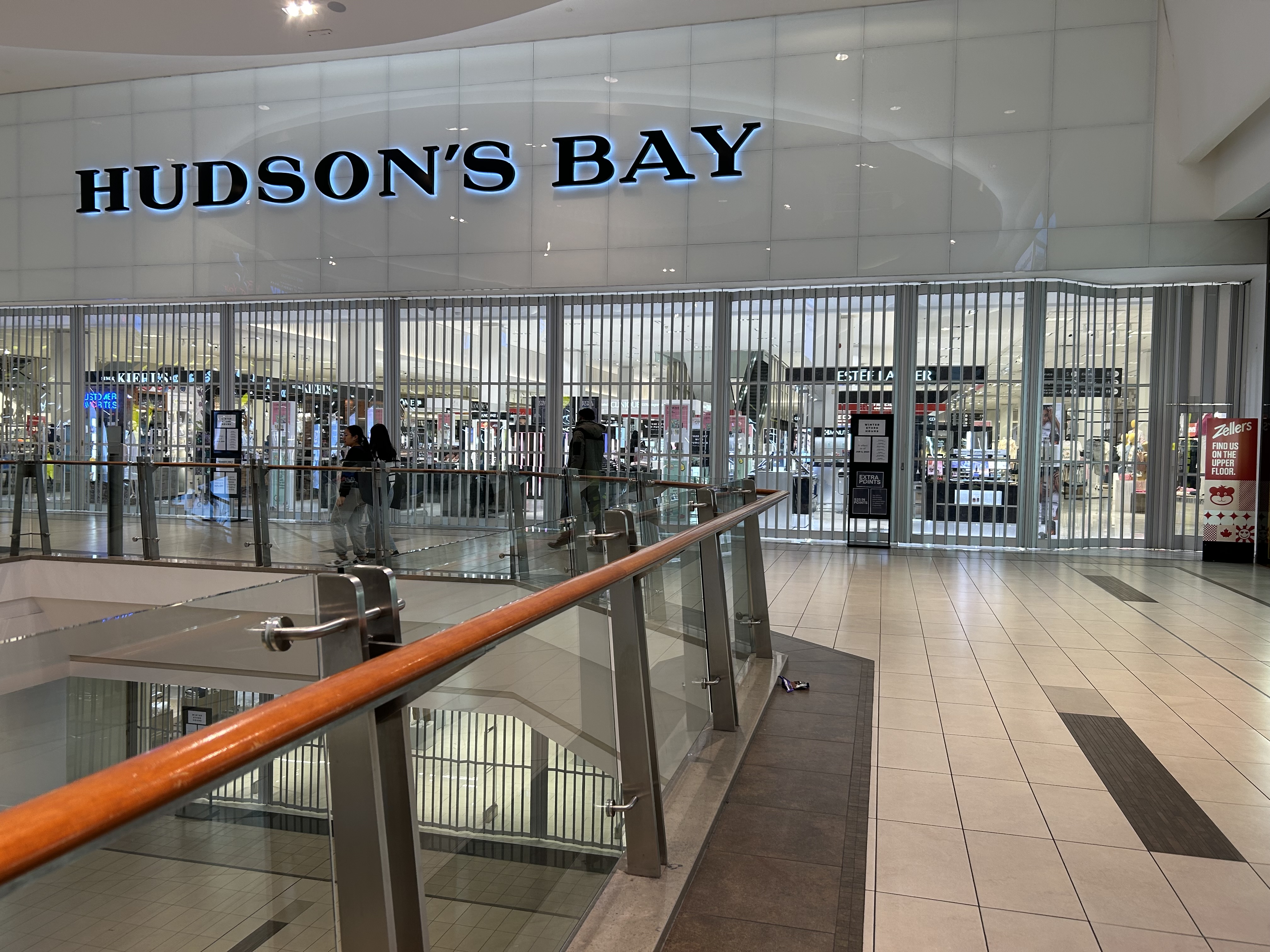
In the last few years, it became clear that the department store chain was in decline. Though pandemic restrictions in 2020 and 2021 had a major effect, the downtown stores also lost office worker patronage. Suppliers were having trouble getting paid and were seizing merchandise at several stores; escalators and elevators were put out of service, and store hours were reduced at most locations.
The Hudson’s Bay store at Scarborough Town Centre closed at 7:00 on a weekday evening in March 2024, even though the rest of the mall remained open for another two hours
The loss of Canada’s last department store is unfortunate, but it comes as no surprise given the way private equity sucks once-proud businesses dry. The evidence was impossible to miss. How could customers be lured back when escalators were blocked off, marketing non-existent, and store opening hours scaled back? Not even Sears turned off the escalators in its last years.
I suspect, given the company’s 355-year history, a vestige of HBC will live on, especially in an era of renewed Canadian nationalist. Another business will certainly purchase the name and brand to continue selling the famous point blankets. Though the Queen Street store will certainly be redeveloped by Cadillac Fairview, strict heritage considerations will prevent its complete demolition. The Downtown Winnipeg store, closed in 2020, is already being repurposed into a new hub for Manitoba’s First Nations.
But it will remain a true shame, as I have always felt there was still a place for a full-service department store in Canada. It only needed to be well managed, relevant, and cared for.
Last month, I wrote about the challenges getting around Toronto’s Union Station, Canada’s busiest transportation hub, particularly for passengers using mobility devices or carrying luggage. Only one poorly-marked elevator directly links the Great Hall and the UP Express platform with the subway station/PATH level, which is located two floors down.
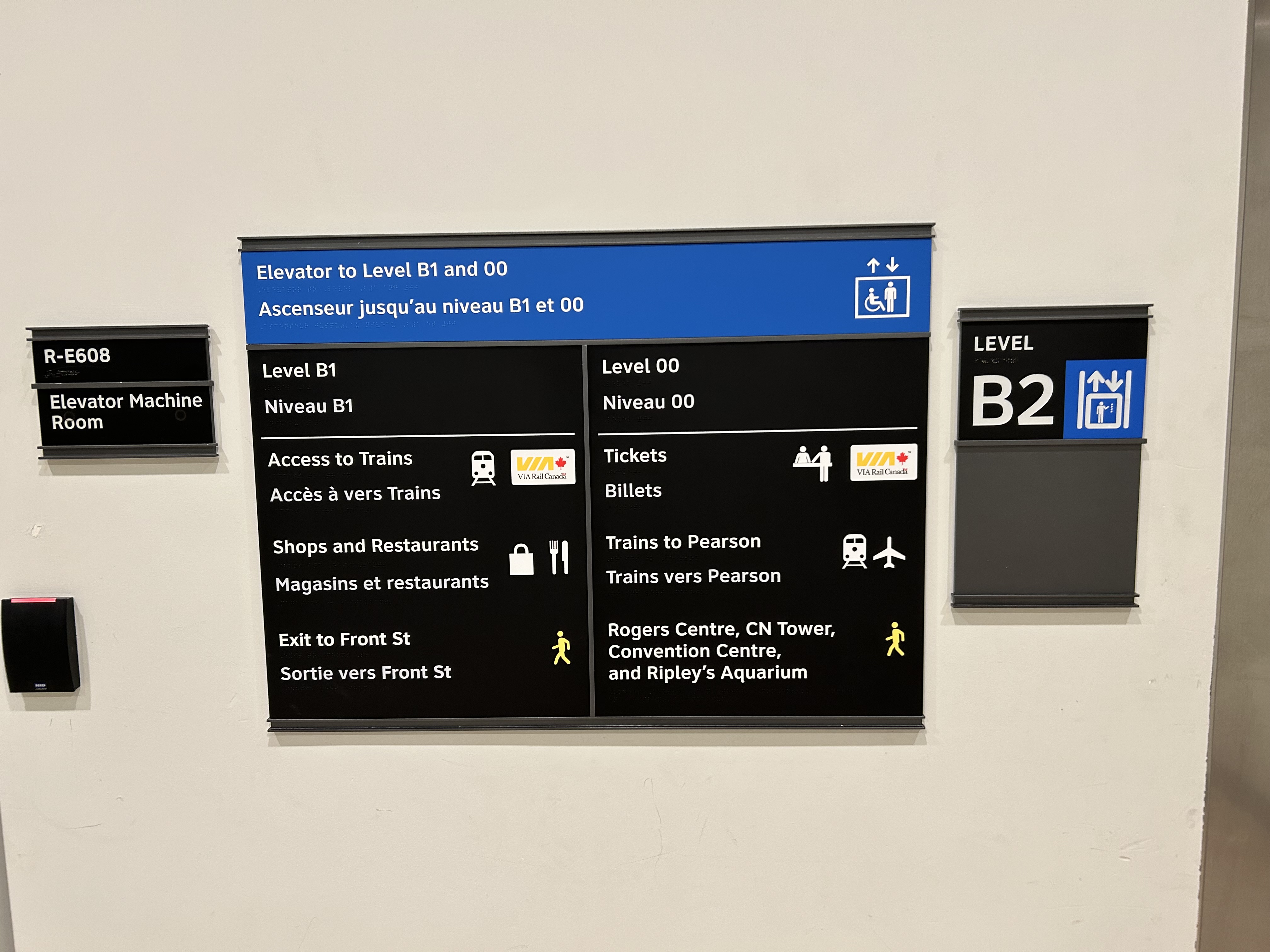
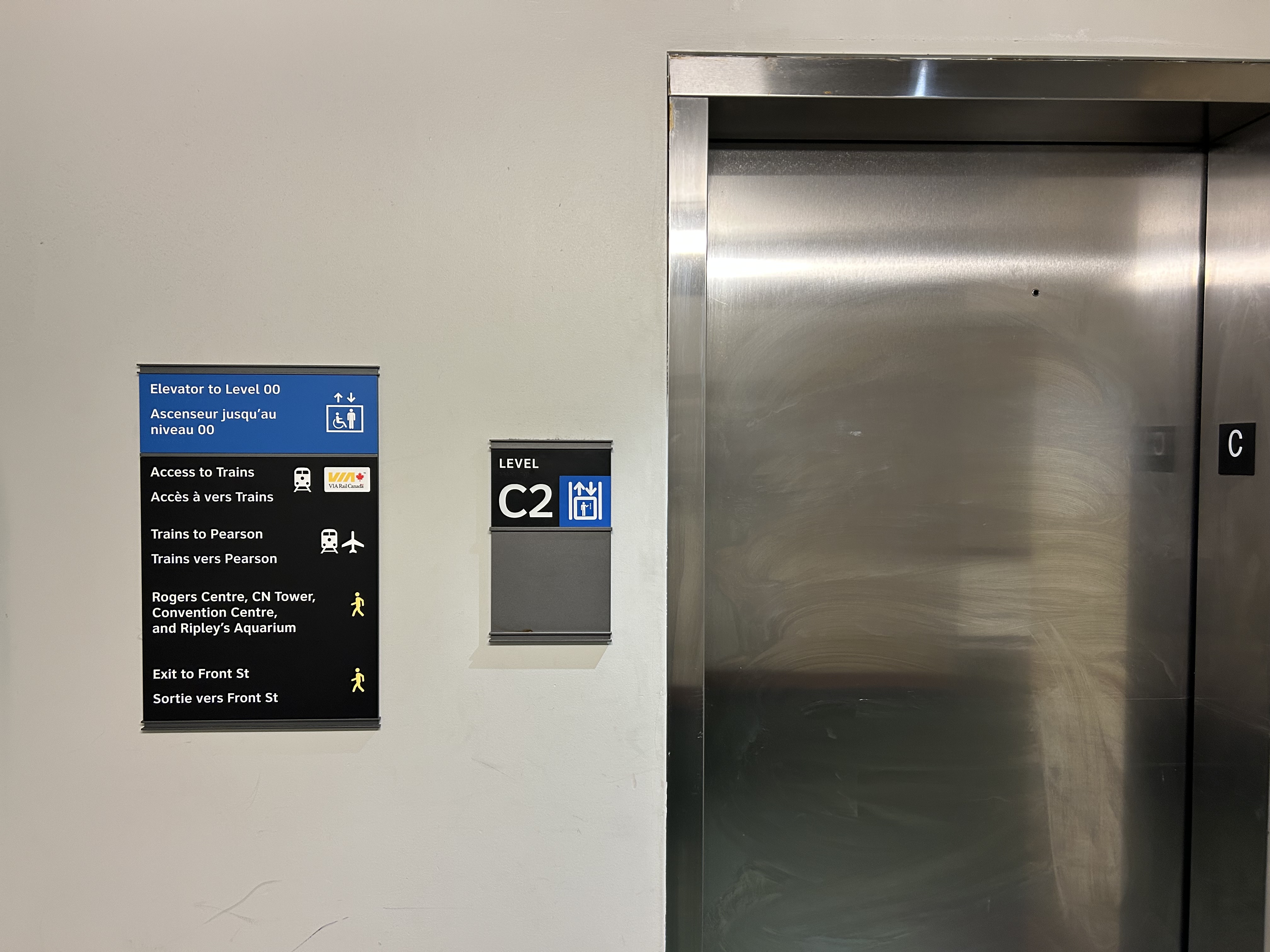
I returned to Union Station on Tuesday, January 7, to see if any improvements were made since I wrote my initial post. Somewhat surprisingly, new signs were installed beside the elevators, indicating which floor goes where.
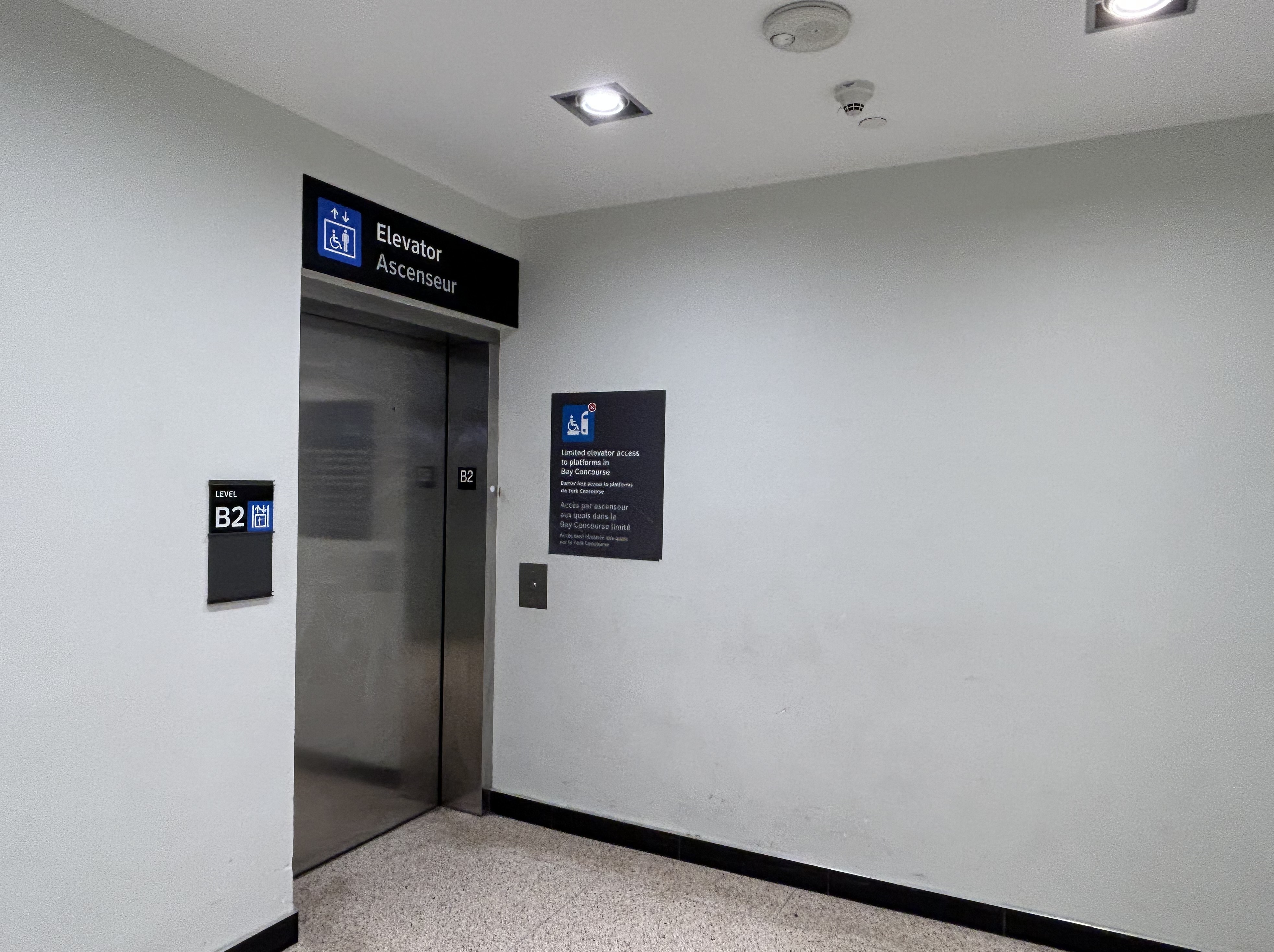
Elevator signage at B2 level (subway concourse/PATH level by Bay Street) that indicates where the other floors lead to: Level B1 for VIA trains, shops and restaurants, and exit to Front Street, and Level 00 for VIA ticketing, UP Express trains, and access to the Skywalk to Rogers Centre, CN Tower et al.In the GO York Concourse, the elevator leads to Level 00 (The Great Hall) only.
These signs are a notable improvement, but there is still no signage inside the elevator cars themselves, so the traveler must note the directory signage before entering the elevator. Furthermore, the Great Hall, the historic centrepiece of the Union Station complex, is not noted, even though it is a logical meeting place from where access to all GO, VIA, and UP Express train services can be made, or where taxis can be found right outside.
Unfortunately, the elevators themselves are still difficult to locate, and the decision to have just one slow elevator connect the Great Hall/UP Express floor with the subway station entrance remains unfortunate. There is still so much more to be done.
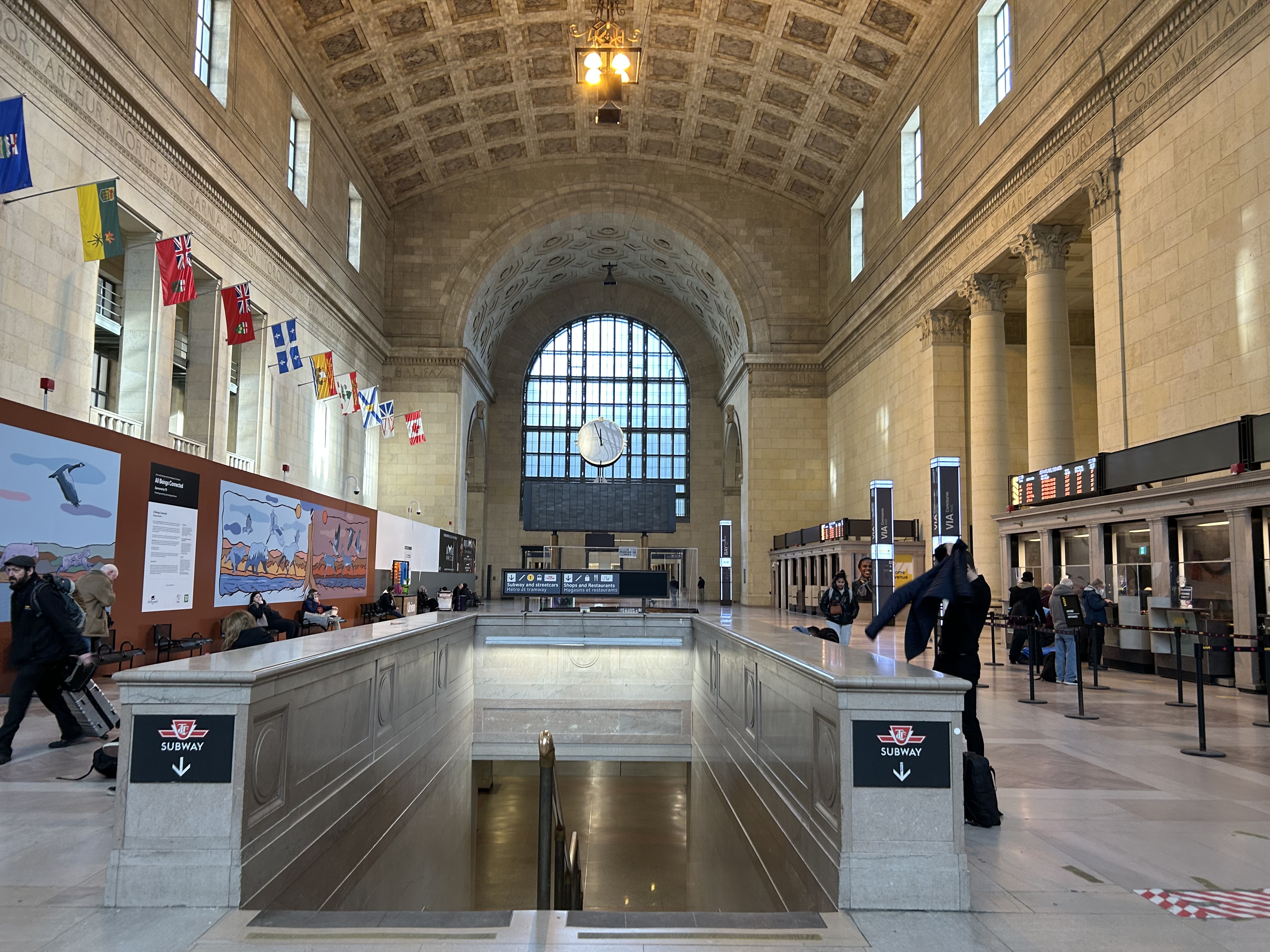
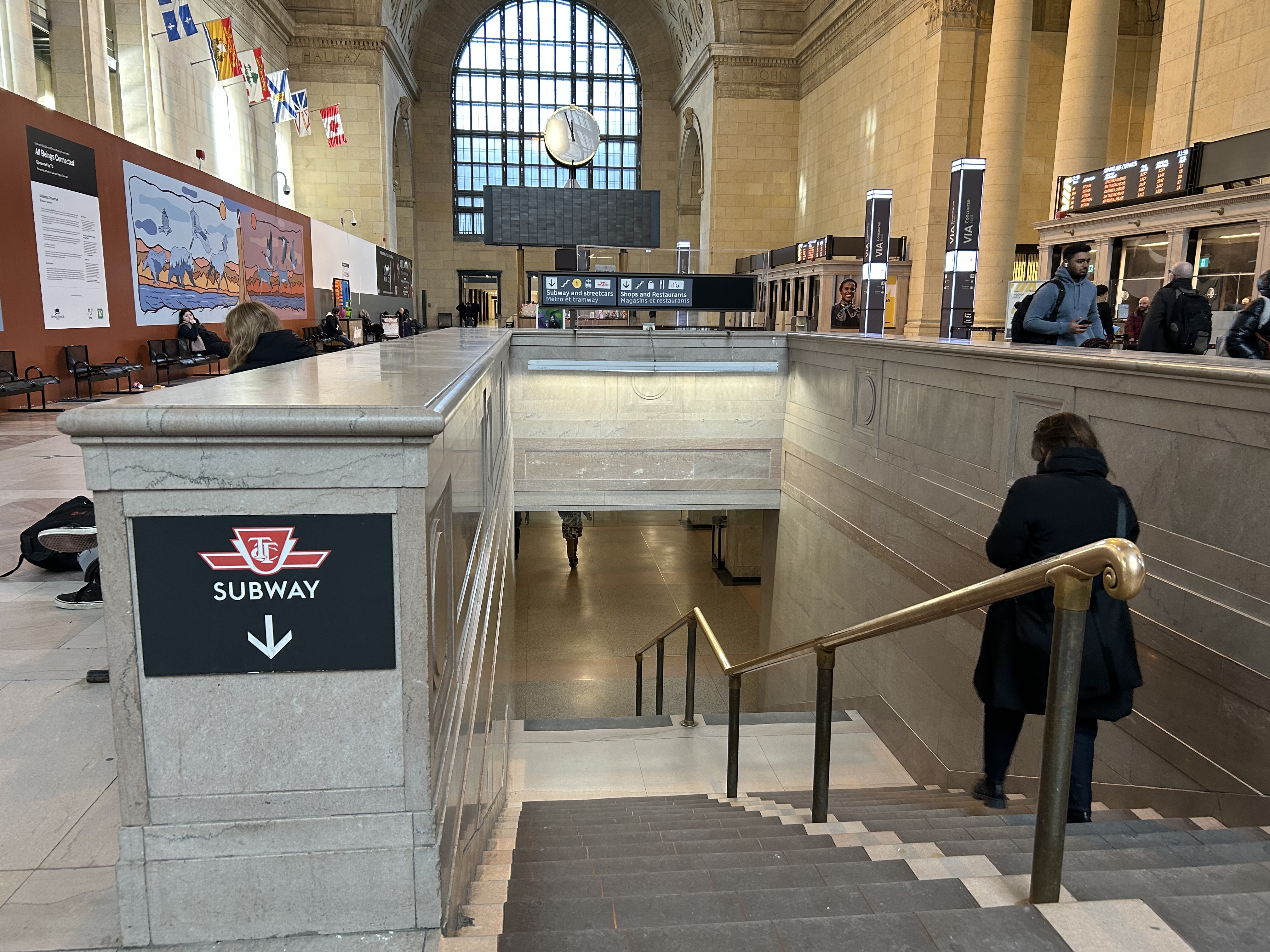
In the Great Hall, there are clear signs directing passengers towards the subway, but there are no indications on where a barrier-free passage can be found. A supplementary sign pointing towards the one elevator, located at the far end of the Great Hall, could be useful here.
Previously on this website, I discussed the problems with the unsightly, intrusive, and poorly thought-out mess of Jersey barriers plopped in front of Union Station along Front Street. They have not only been an eyesore unbefitting a signature heritage structure, but they have also been difficult for pedestrians to navigate around, especially at the corners of Front and Bay and Front and York.
Inside Union Station, however, a lot has changed in the last few years. In general, pedestrian flow within the station building has improved, especially with the opening of the GO Transit York Concourse, which provides a second access point for regional trains. Flow between subway, train, and shops is considerably improved; there are also a lot more food and retail options befitting a central transport hub.
Despite new escalators and elevators, accessibility in Union Station remains poor. Though technically, the station is fully accessible to anyone using a wheelchair or other mobility device, the wayfinding is absent in key areas. There is only one small elevator that directly connects the subway level with the Great Hall, UP Express trains, and Front Street. An accessible route is also difficult to find.
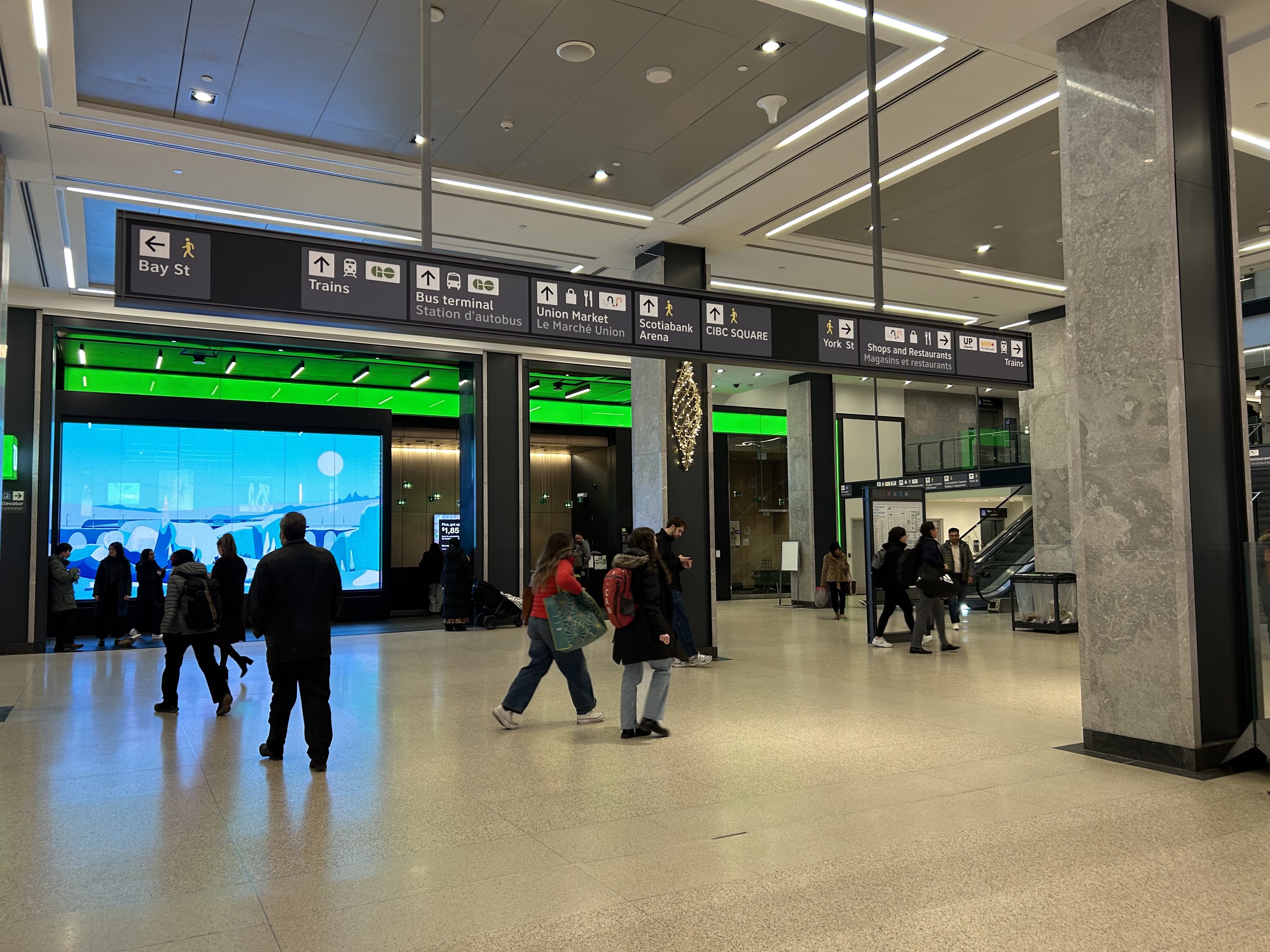
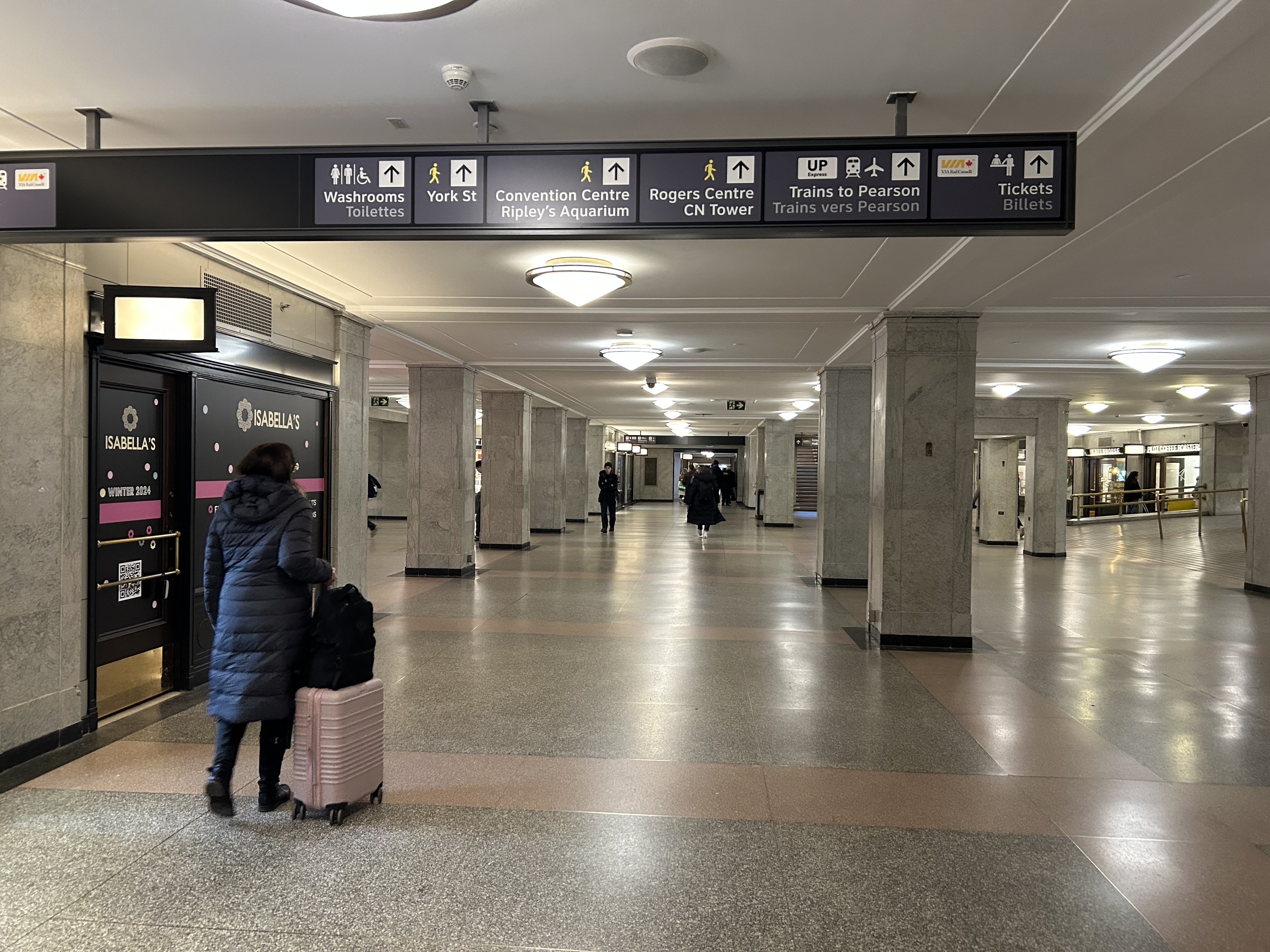
The view after entering the Union Station complex from the TTC subway. The overhead sign shows the way to GO trains, the bus terminal, the Union Market shopping area, Scotiabank Arena, CIBC Square (an office building), York Street, more shops and restaurants, and VIA and UP Express trains.
Imagine entering Union Station from the adjacent TTC subway station with a wheeled device or a mobility aid. There is a large concourse with signs leading forward towards the GO Transit York Concourse along with Scotiabank Arena, the bus terminal, and Union Station shops and food kiosks. To the left is Bay Street, and to the right are a set of escalators and stairs leading up towards VIA Rail and UP Express trains. Behind the stairs and escalators is a single elevator, hidden away.
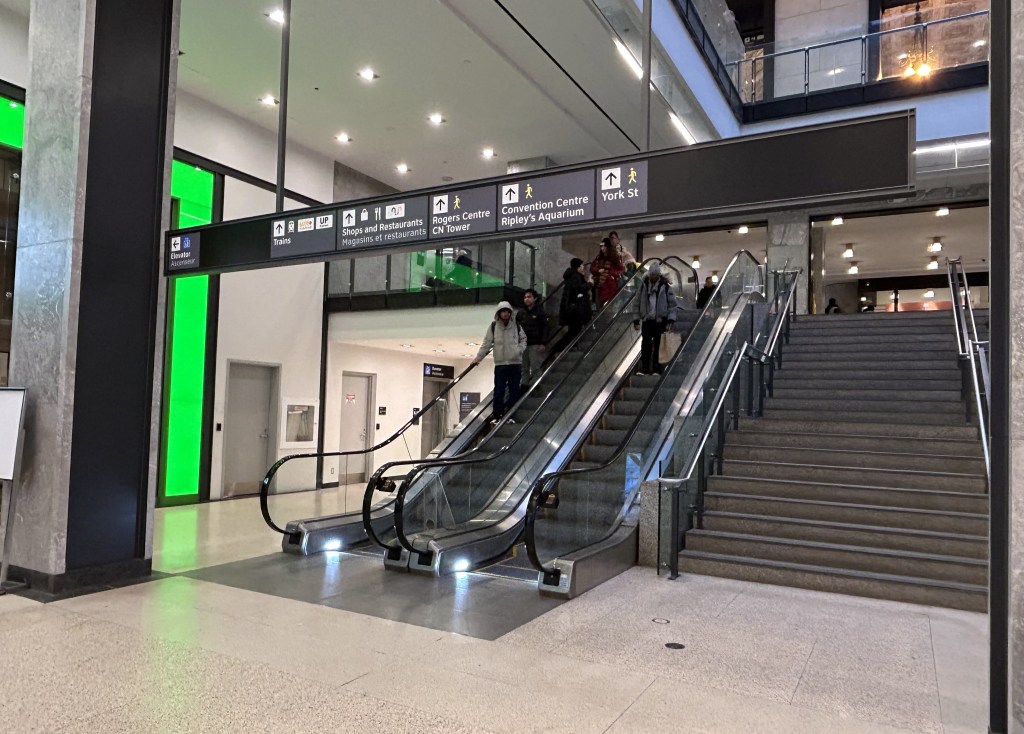
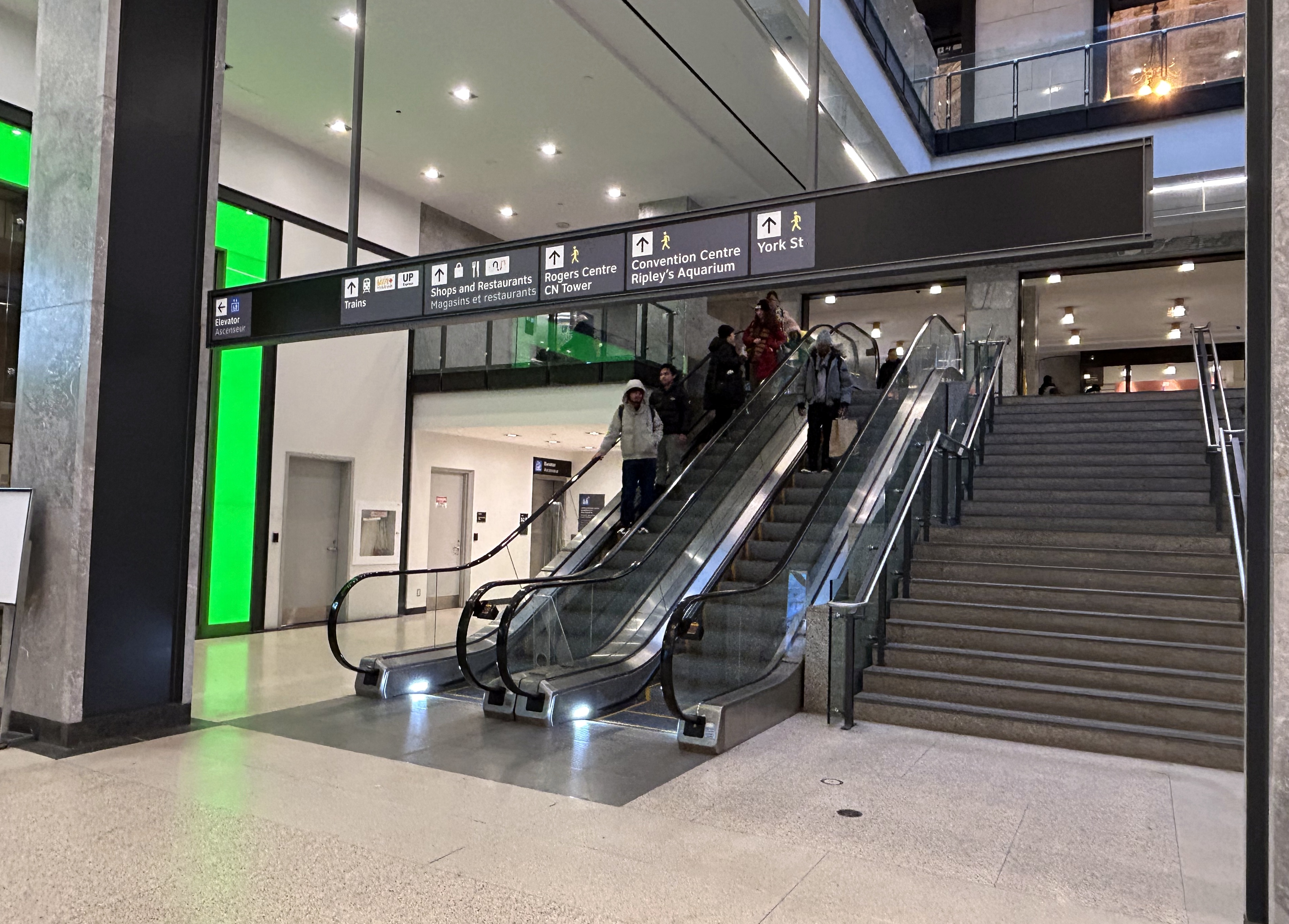
To the right is a set of escalators, stairs, and hidden behind, a poorly marked single elevator.These lead towards UP Express and VIA trains, York Street, and attractions such as the CN Tower, the Convention Centre, and Rogers Centre.
The elevator provides no information other than a sign that indicates that this is, in fact, an elevator, and this is the B2 level. This is a single, small elevator, which operates slowly.
The elevator at the B2 (subway) level
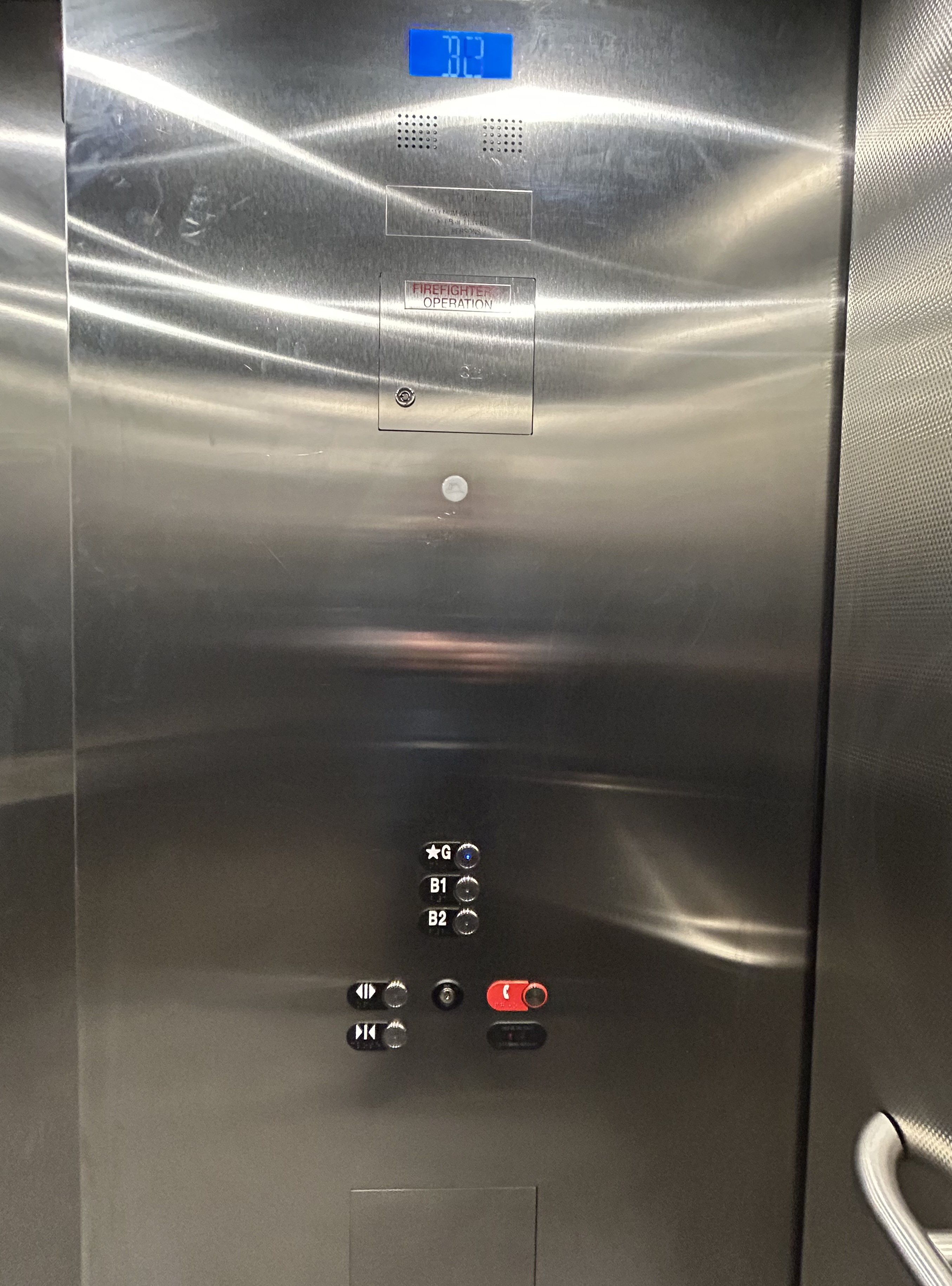
Once inside the elevator, there is no information other than buttons marked “G”, “B1”, and “B2”. There is nothing to tell the elevator user what is accessible from each floor.
Confusingly, the official Union Station map directory calls the three levels “Street Level” (G, the Heritage structure including the Great Hall, West and East Wings, along with the path towards UP Express and the Skywalk), “Lower Level” (B1, the GO York and Bay Concourses, the concourse beneath the Great Hall, and the VIA departure area) and “Retail Level” (B2, including the food court, food hall, and connections to the subway). In the elevators, the audio prompts only mention the three level names.
Inside the elevators, there is no indication what each level is, or where they lead to — the buttons and empty spaces beside them just show G, B1, and B2 levels
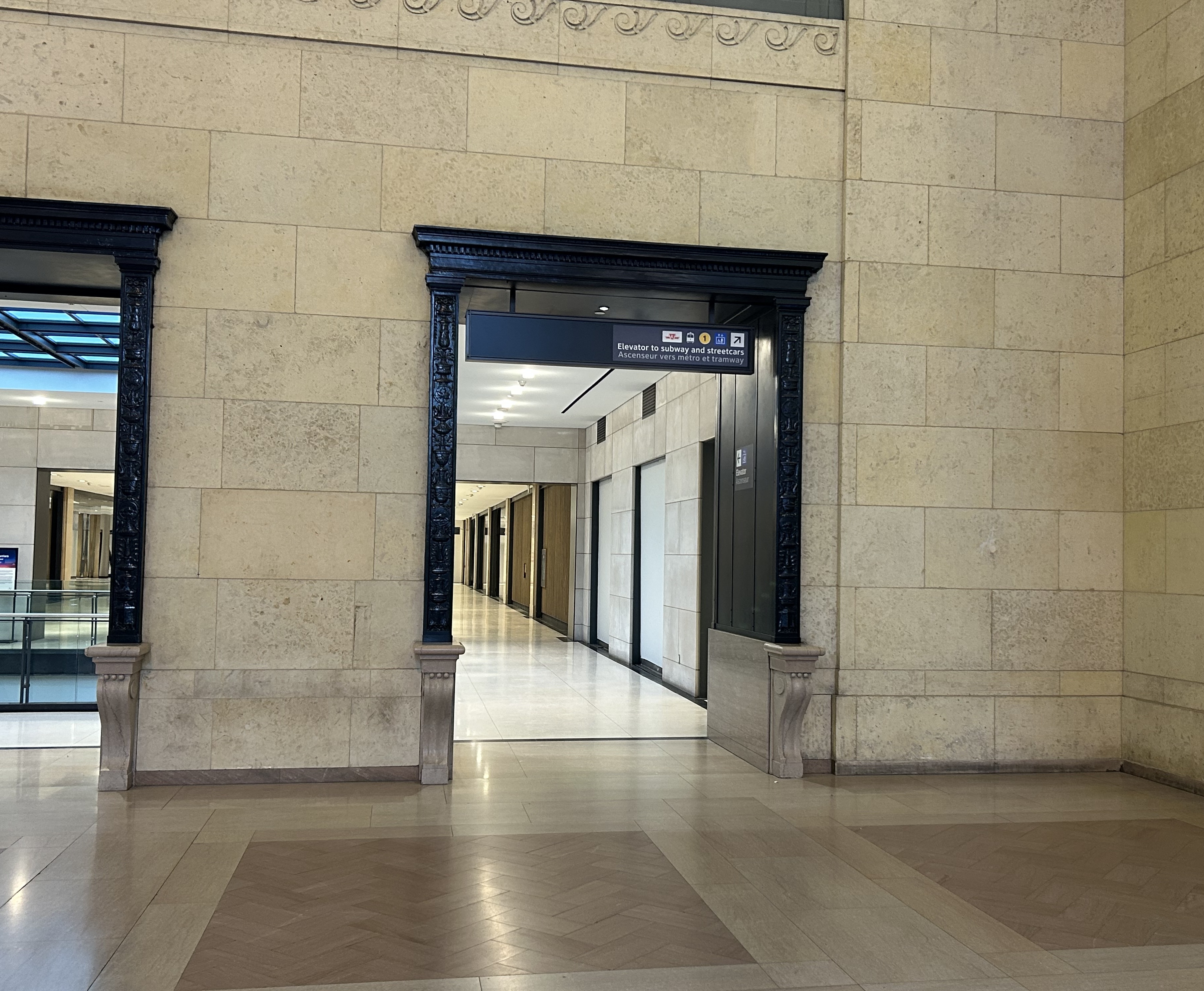
At G level, which includes the Great Hall, VIA Rail departures and business class lounge, and the passage west towards UP Express trains and the Skywalk to the CN Tower and Rogers Centre, the elevator is also hidden behind a wall.
The only elevator connecting the Great Hall, the lower concourse, and the subway level is hidden, with tiny signage directing travelers to it
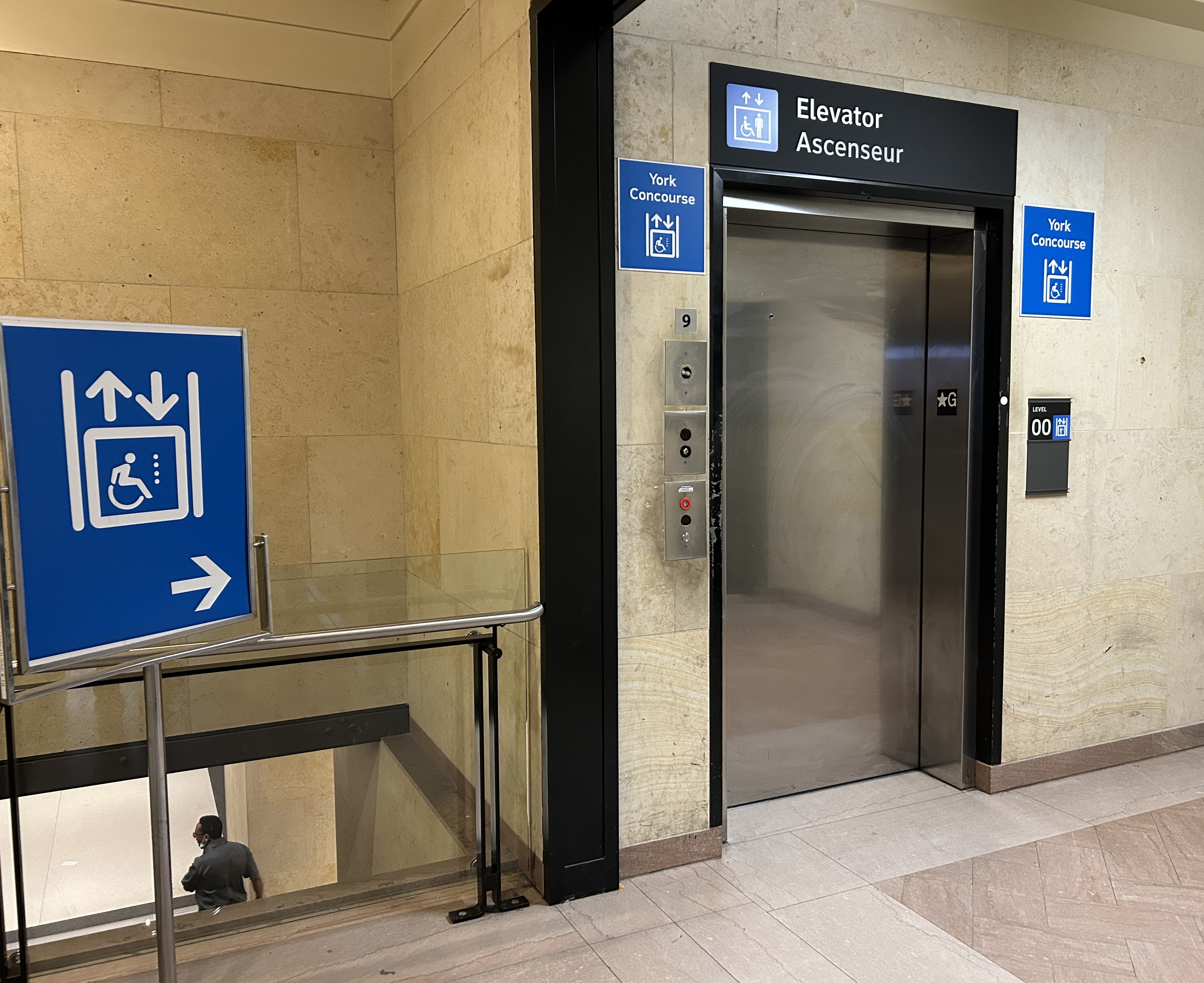
On the west side of The Great Hall, there is also an elevator, beside the stairway down to the GO Transit York Concourse. This elevator does not serve level B2.
York Concourse elevator, on the west side of Union Station’s Great Hall
If the traveler was only connecting from subway to UP Express with a heavy bag, and not using a mobility device, they might decide to take an escalator from the subway B2 level to the B1 level, the lower Union Station concourse originally intended as an arrivals area for intercity trains. However, there is no elevator or upwards escalator to be seen.
Looking west in the lower concourse, towards York Street and UP Express trains
If one knew Union Station well, they could make a lengthy detour through the ramps in the VIA Rail area to get to the Great Hall or go around through the GO York Concourse to reach the elevator or up escalator to the Great Hall. But these routes are not marked from the lower concourse area.
To show how difficult it can be to navigate the station while using a wheeled device (be it a wheelchair, stroller, or wheeled luggage), I shot this video showing how a first-time visitor getting off an UP Express train from Union Station would try to find the TTC subway entrance.
Video depicting 9-minute trip at a normal walking speed between the UP Express area and TTC subway station entrance, using first available elevators each time.
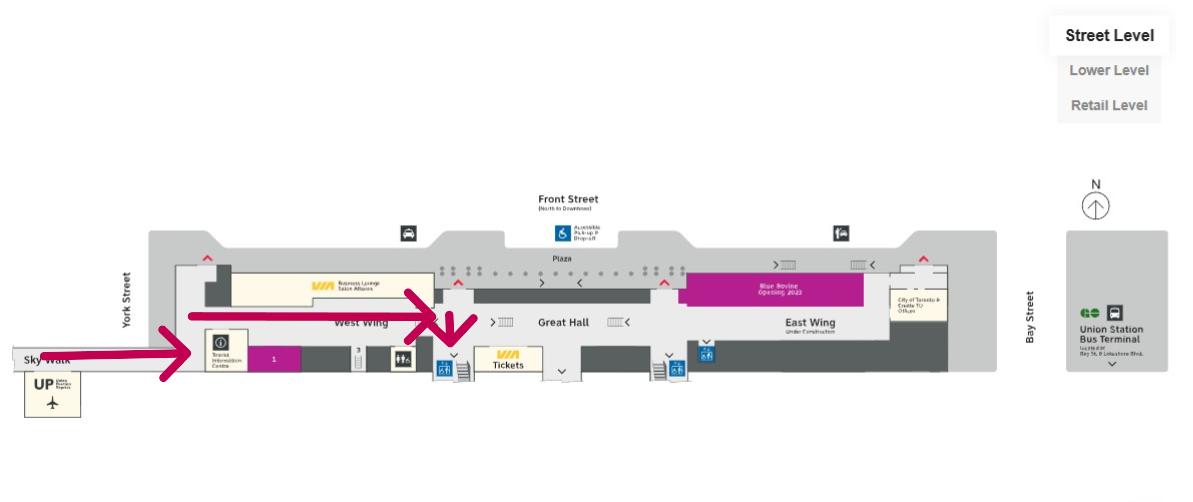
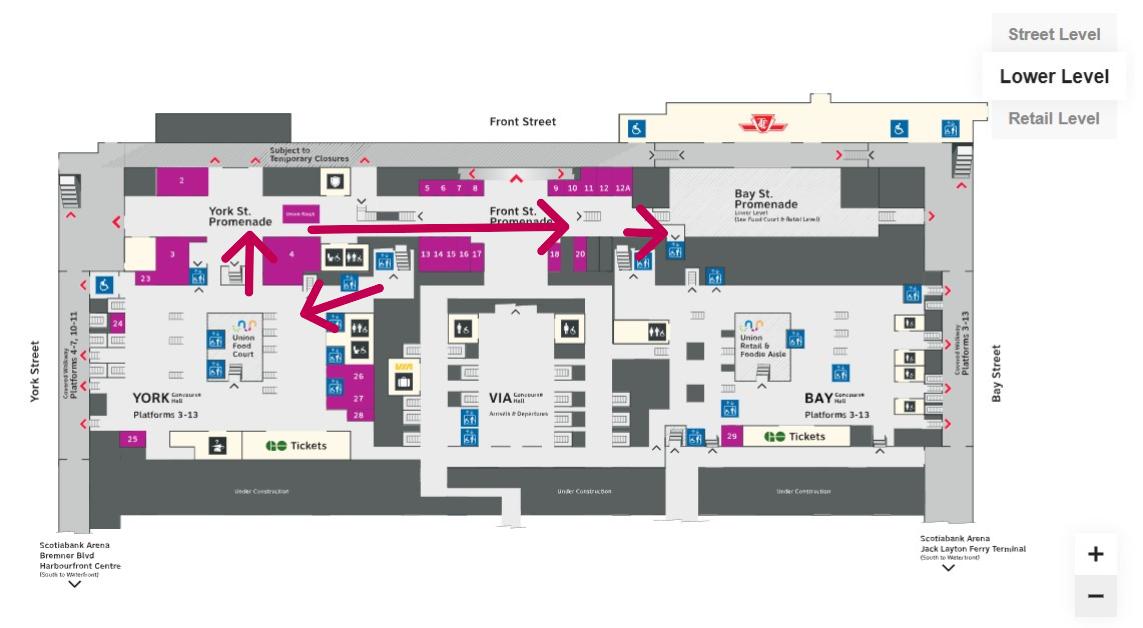
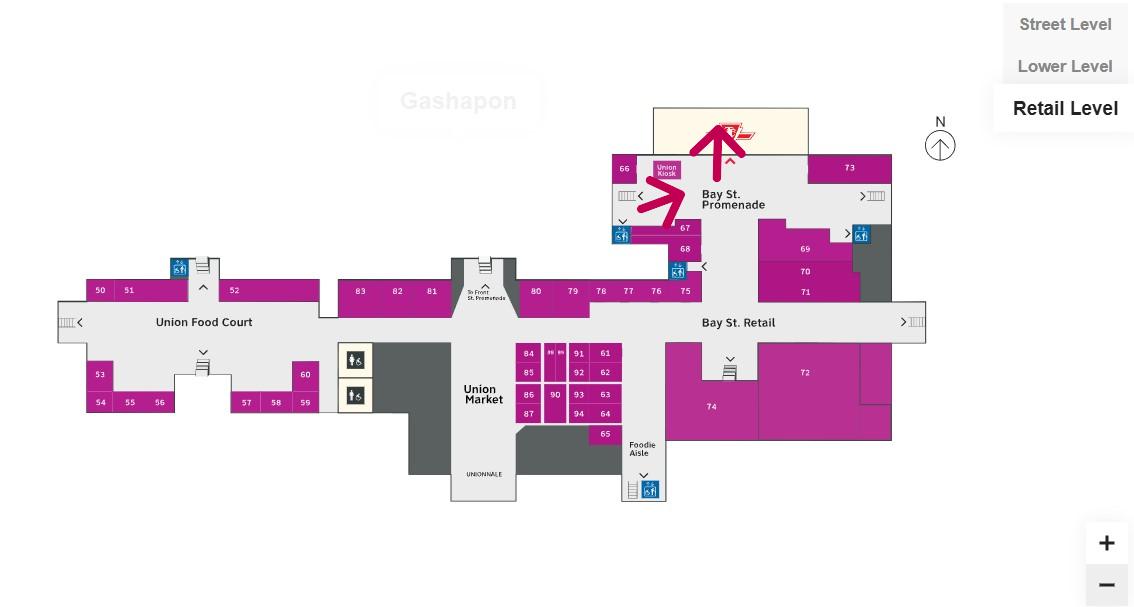
At no point was there any visible signage showing the most direct route for someone requiring a barrier-free path from UP Express to the subway. The maps below show the route I took:
Route from UP Express to the Great Hall and York Concourse Elevator (Street Level, or G). Arrows are added to mark the route I took in the video.Path through York Concourse, lower Union Station concourse (Front St. Promenade) – the B1 Level, and to the second elevator to the Bay St. Promenade (subway level). Arrows are added to mark the route I took in the video.Last part of the trip on the Retail Level (B2) to the subway station entrance. Arrows are added to mark the route I took in the video.
Whenever I travel through an international airport — Toronto Pearson is a good example — I never have to think too hard about where the accessible routes are. Escalators are easy to find. There are banks of two or three large elevators in strategic locations on the ground side of airports, connecting departure and arrival areas, as well as ground transportation facilities. As Canada’s busiest transport hub — busier than Toronto Pearson Airport even — Union Station’s elevators and escalators should be plentiful and easy to find.
I am aware that there are particular challenges at Toronto Union Station — the City of Toronto controls only the common areas, such as the Great Hall, the retail areas, and the main entrances. Metrolinx, the agency responsible for GO Transit and UP Express, controls the York and Bay Concourses, as well as the UP Express station area. VIA Rail maintains its departures area. There are also heritage elements that need to remain intact, such as the Great Hall. But these issues of ownership and heritage preservation do not excuse the difficulty of getting around with a mobility device or even a wheeled bag.
Why weren’t multiple elevators installed connecting all three levels, to improve capacity, speed, and provide redundancy in the case of an elevator outage? Why are there not easy-to-find elevators in the West Wing near the UP Express area?
Judging by the condition of the signature Great Hall itself, there is work yet to be done before Union Station is fully restored to its 1920s grandeur. It should not be too hard to improve accessibility and wayfinding as well. Not just for Torontonians, but for international travelers too.
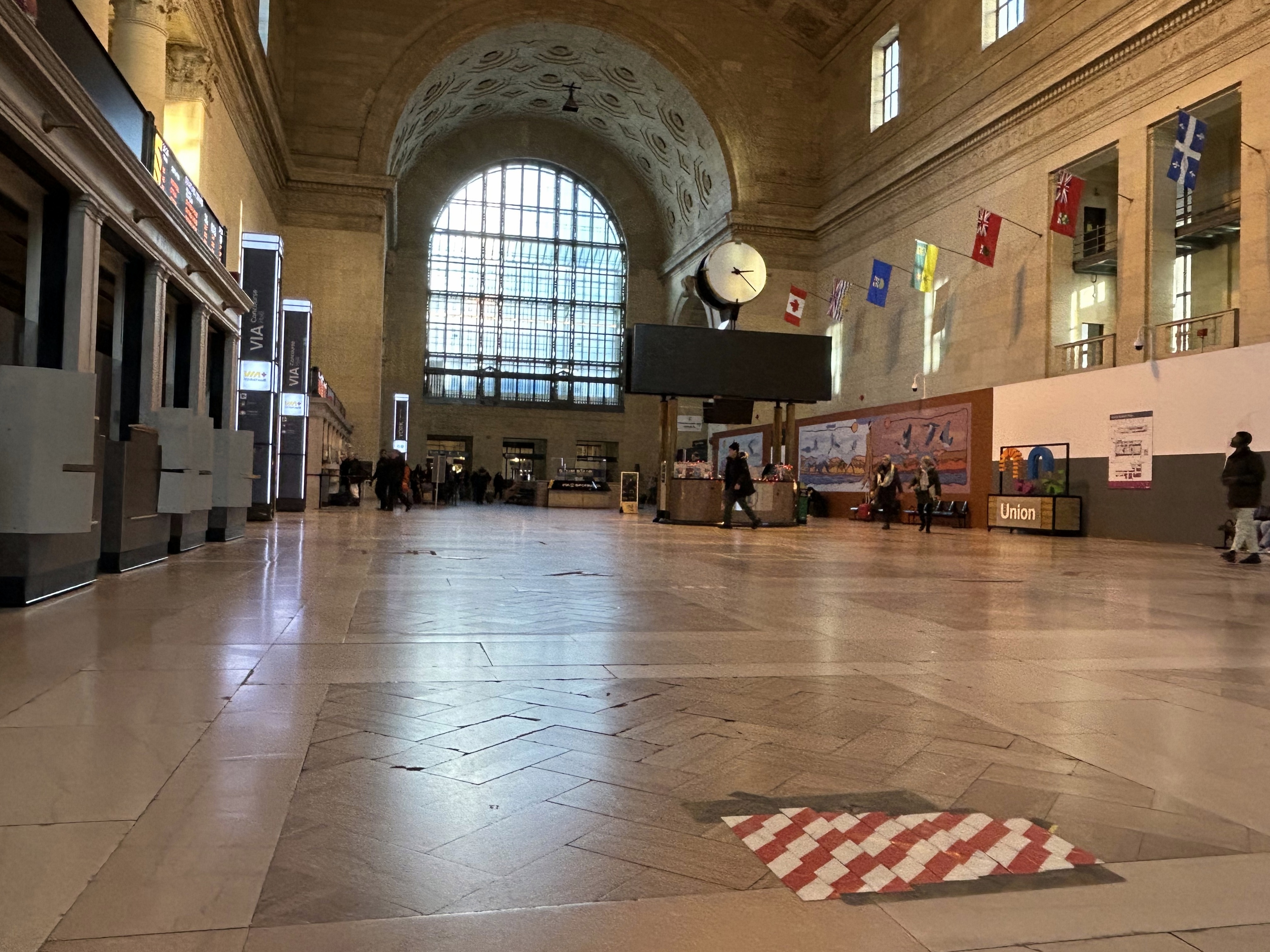
The Great Hall floor is still cracked and patched, with electrical tape covering some of the damaged sections
Woodbine Centre & Fantasy Fair is up for sale, again
Growing up in Brampton in the 1980s and early 1990s, there were two favourite day trips I fondly remember.
There were the drives to nearby Georgetown, which had one of the largest indoor playgrounds at any McDonald’s restaurant. It featured a multistorey indoor crawl maze, a spiral slide that led to a giant ball pit, a tire swing, as well as a standard McDonaldland-themed merry-go-round. A CN caboose could be rented for children’s parties. At least we’d burn off some of the calories from the burgers and fries. (There’s a video on Reddit from 1992 that shows what it looked like.)
Then there were the trips to Fantasy Fair. When Woodbine Centre opened in 1985, it featured a unique attraction: a large indoor amusement park, complete with a historic Looff carousel (though with replica fiberglass horses), a Ferris wheel, and a train ride that wound through the attraction. The highlight for me, however, was a huge indoor playground that spanned two floors that was many times the size of the Georgetown McDonald’s playground. It had multiple slides, a mirror maze, swings, and two ball pits. There was also a McDonald’s restaurant facing Fantasy Fair, in one of the faux-Victorian storefronts that surrounded the attraction.
Fantasy Fair Carousel, November 2024
The mall itself was anchored by The Bay and Simpson’s, along with a Cineplex multiplex cinema, and a complete assortment of mid-market retailers. In 1991, when the Hudson’s Bay Company retired the Simpson’s brand (converting most of those stores into The Bay), it sold the redundant store to Sears Canada. A Zellers discount department store was added in the 1990s. But the mall slowly lost its pizzazz.
Cadillac Fairview sold Woodbine Centre in 2005 to a numbered company, with real estate management firm Avison Young operating the mall. By then, many of the national retailers had left once their leases were up. The mall’s relatively isolated site, without good transit access became a liability. Changing demographics in northern Etobicoke, competition from surrounding larger malls (Bramalea City Centre, Sherway Gardens, Square One, Vaughan Mills, and Yorkdale) and new big box retail developments also took their toll.
The Zellers store was not one of the leases picked up by ill-fated Target Canada, and it closed in 2012. Sears closed in March 2017, a few months before the entire chain was liquidated. Sport Chek closed its store in 2018.
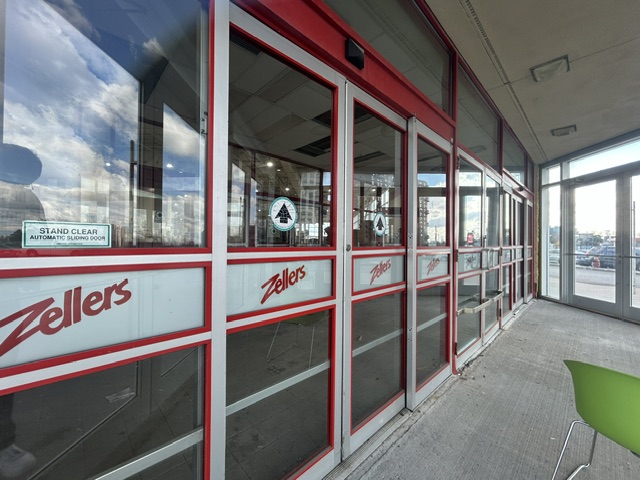
Woodbine Centre’s Zellers store was not picked up by Target, and the parking lot-facing doors still have the defunct retailer’s logo intact
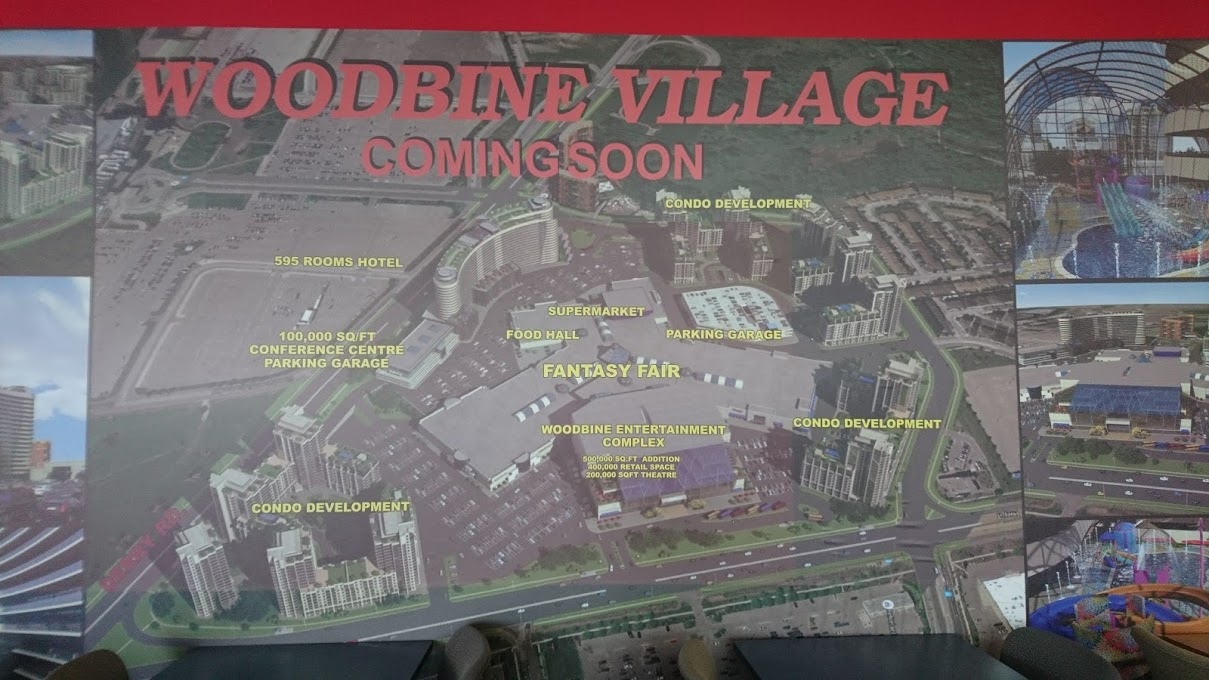
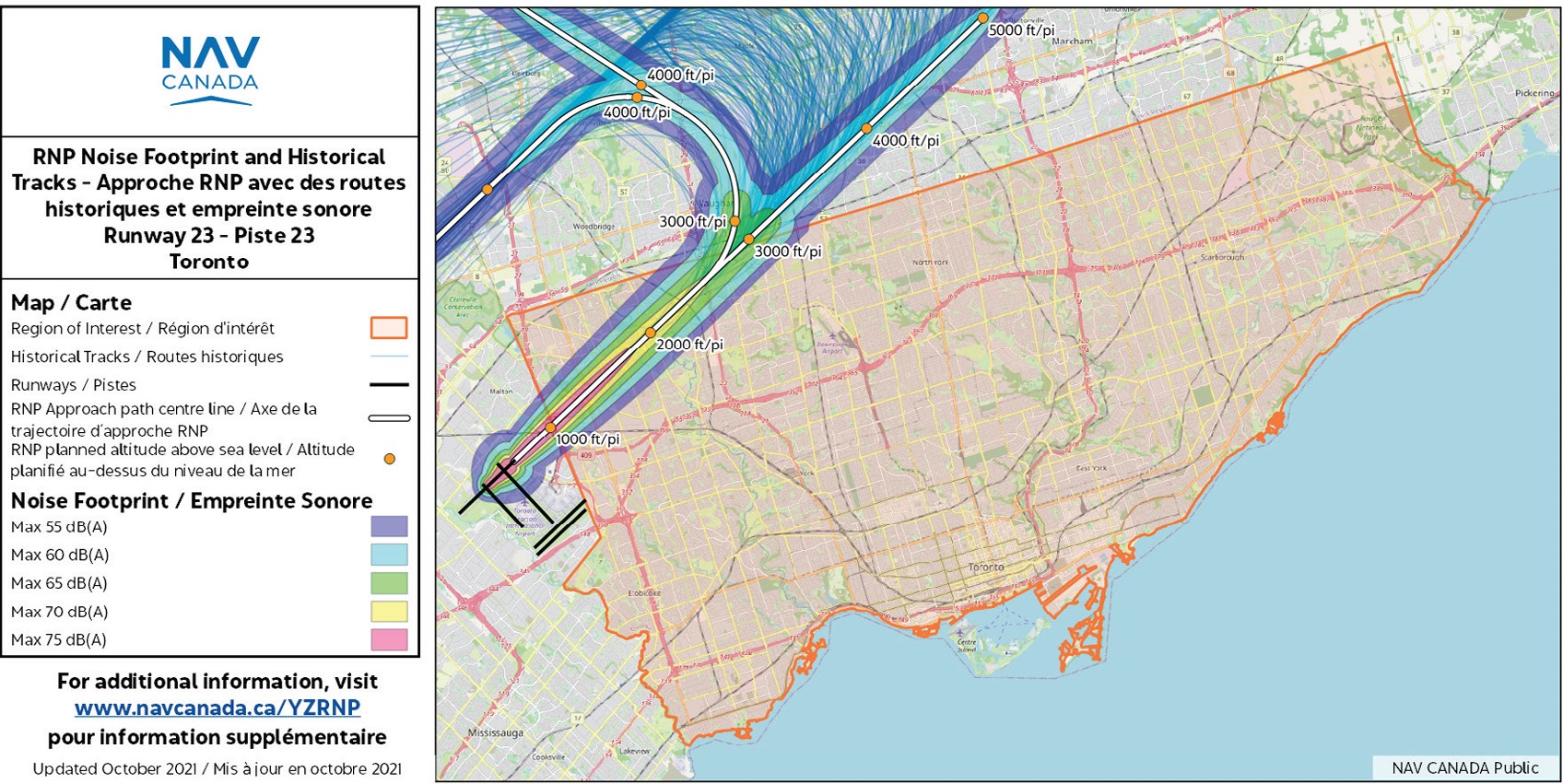
There was an attempt to renovate the mall, as part of a grand plan to revitalize the property with a new supermarket, refreshed food court, new entertainment options, and condominium towers surrounding the shopping centre. The Woodbine Village proposal competed with the better-financed Woodbine Live plans at the nearby racetrack, which included a casino, hotel, and event hall, all of which were built or are nearing completion. Condominium development is complicated as the property, particularly the southeast corner at Highway 27 and Rexdale Boulevard, is directly below the approach for Pearson Airport’s Runway 23.
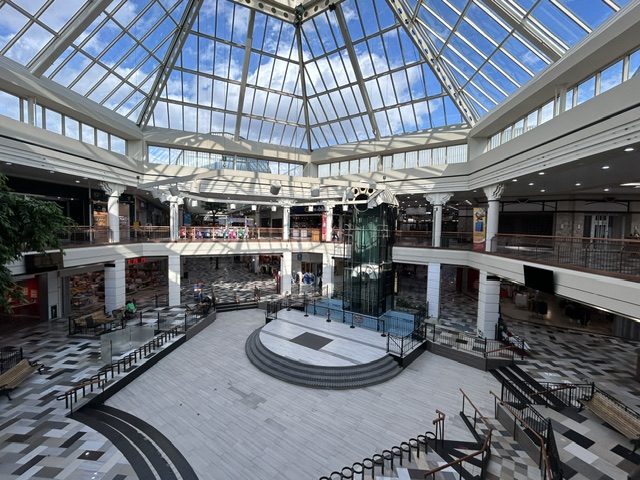
Poster promoting “Woodbine Village” which boasts a new supermarket, condo development, hotel, and expanded Fantasy Fair including indoor waterpark NAV Canada map showing approach and noise contours for Runway 23, which passes directly above Woodbine CentreWoodbine Centre’s central atrium, including defunct fountain below glass elevator
After a disheartening American election result on Tuesday, November 5, I decided to turn off the newsfeeds, and out for a walk and explore Woodbine Centre again.
Though the basic architecture remains intact, the corridor floors were given cheap new brown, grey, and beige tiles that look out of place in the post-modern interior. Much of the original green paint on the roof, walls, railings, and signs is now red and mahogany.
Apart from the fast food offerings, there were few recognizable store names among the tenants in 2024. Apart from Hudson’s Bay, Foot Locker, Ardene, The Children’s Place, Dollarama, LensCrafters, TD Bank, and Urban Behavior, most stores were independent clothing, home décor, and furniture stores, or were cellphone vendors such as Wow Mobile, Best Buy Express, or Rogers and Bell kiosks. About 20 percent of the store fronts were vacant.
Looking towards the old Sears store, which is now All Home Furnishings, which was having a clearance sale in November. Note the Payless Shoe Shack, a knock-off of the defunct Payless Shoe Source chain, on the left. Vacant faux-Victorian storefronts at Fantasy Fair
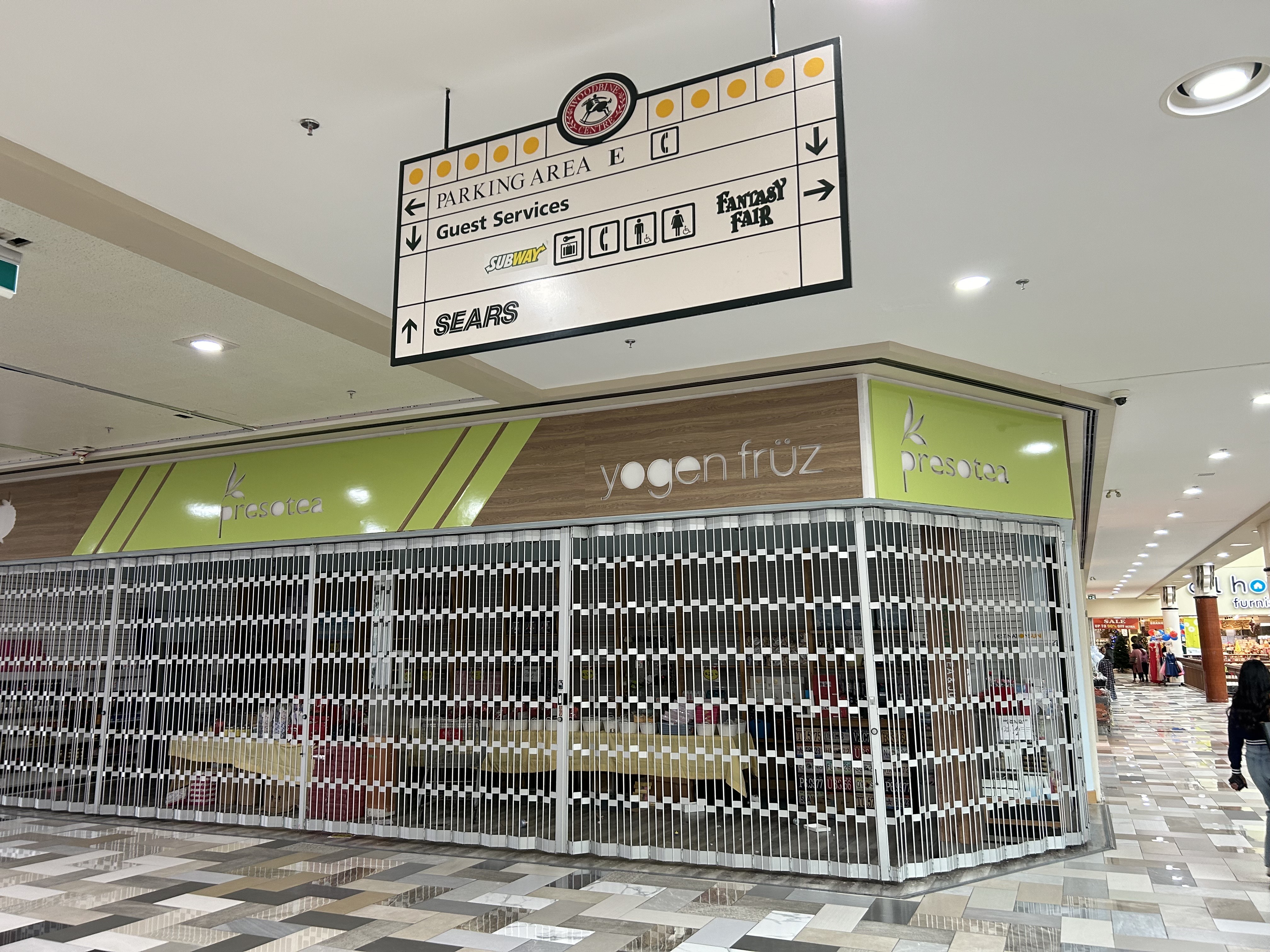
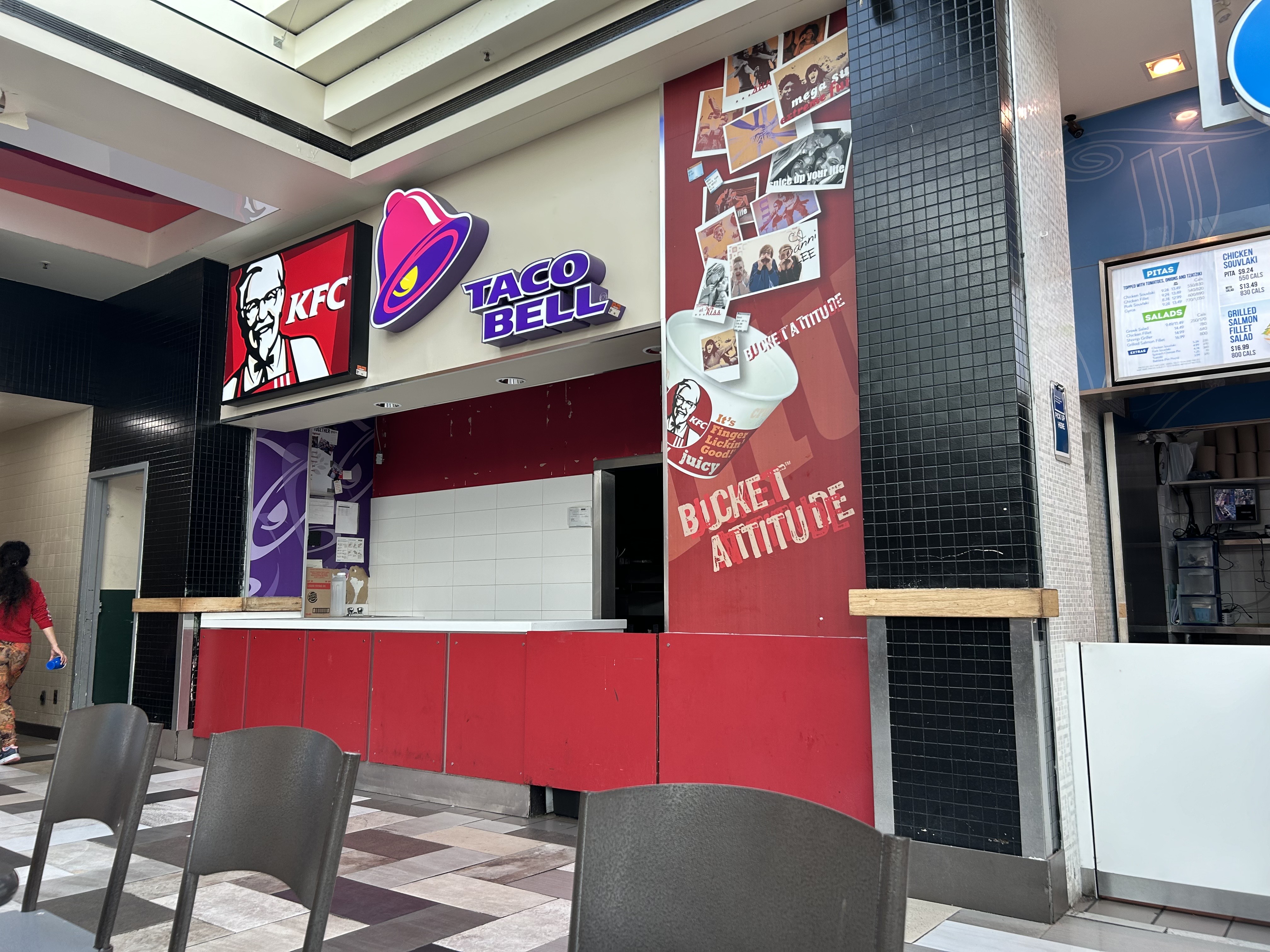
Professional property managers are quick to update signage and keep up appearances; the management at Woodbine has clearly given up. Vacant storefronts are left exposed, rather than blocked off. Signage advertises stores that are long gone. Pot lights flicker on and off.
Overhead sign pointing the way to Sears, which closed over seven years ago. The Subway restaurant is also gone. Behind the sign, a shuttered Yogen Fruz/Prestotea store front acts as storage. A closed KFC/Taco Bell stall in the food court, with the signage still up and illuminated, despite the equipment taken out
Surprisingly, Fantasy Fair was still operating, even on a Wednesday afternoon where there were few visitors. Ride attendants, dressed in red vests, looked bored, even when running the train for the lone parent and child. The Ferris wheel is now permanently closed, however, and some of the attractions look sadly decrepit.
The railway crossing lights, bells, and gates still work at Fantasy Fair when the train passes through
Outside the mall, much of the parking lot is fenced off and is now used for truck and trailer storage, and the storage of overflow rental car fleets. Though the rental car parking began during the COVID-19 pandemic, when people stopped travelling, it continues to be an easy revenue stream for the mall management. The truck trailers, on the other hand, are an unsightly feature, particularly where they face Highway 27.
Fenced-off rental cars in the Woodbine Centre parking lotTruck trailer parking on part of the mall parking lot
Unfortunately, the future is not good for Woodbine Centre as a mall. Though mixed-use development remains a possibility — Humber College is within walking distance — the airport noise will continue to be a challenge for condominium sales. Transit expansion would certainly help; the nearly-complete Finch West LRT terminates nearby. Extending that two kilometres south to serve Woodbine Centre, Woodbine Racetrack/Casino, and a planned GO Transit station, could be the boost the site needs. (Of course, the mall site could have made a good location for a mega-spa, particularly with the nearby casino venue and hotels, but I digress.)
The Humber College LRT terminus is less than a kilometre north of Woodbine Centre
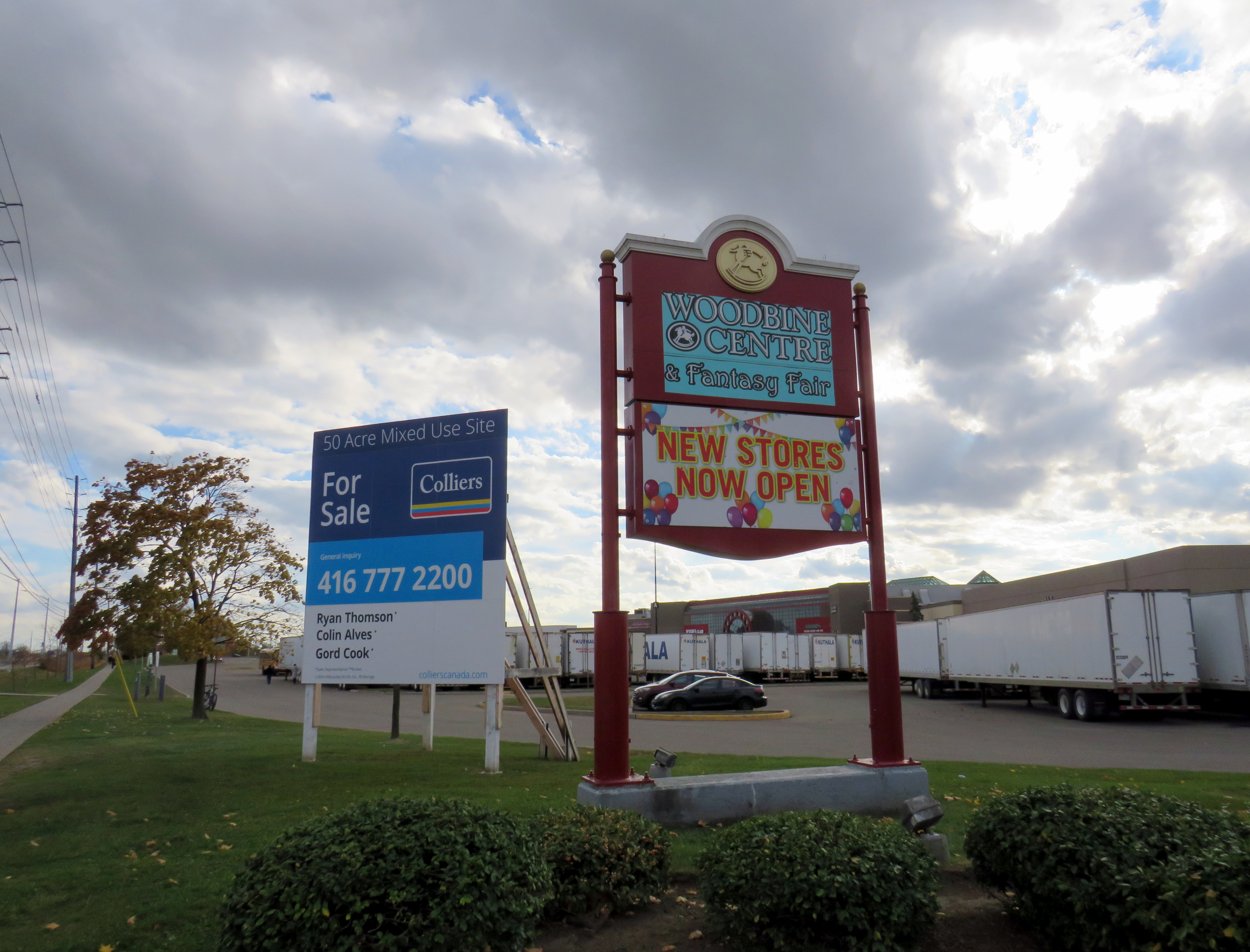
The mall’s fate will likely be decided soon. The site is up for sale again, not advertised as a shopping centre, but as a “50 acre mixed use site.”
1992 Tenants
Below is the list of tenants at Woodbine Centre in 1992, obtained from the 1993 Canadian Directory of Shopping Centres, published by Maclean-Hunter. Tenants still open in 2024 are bolded.
Anchors Anchors: The Bay (140,000 sq.ft.), Sears (135,000 sq.ft.)
Fashions and footwear Children’s Wear: Flora’s, Just Kids. Family Wear: Cotton Ginny. Ladies’ Wear: Addition-Elle, Antel’s, Au Coton, Braemar, Braemar Petites, La Cache, The Cavery, Cotton Plus, D’Allaird’s, Dalmy’s, Emotions, Fairweather, Irene Hill, Jacob, La Jolie, Karuba, Lady Foot Locker, Limité, Lindor, Liz Porter, Mia, Northern Reflections, Ports International (Ladies), Reitmans, Ricki’s, Shirley K Maternity, Smart Set, Suzy Shier, Tabi International, Tan Jay, Tristan, Tucci Fashions. Menswear: Casa Angelo, Petrocelle Vomo, Randy River, Star’s Men’s Shop, Steel, Tip Top, Tuxedo Royale.
Unisex / Men’s & Ladies’ Wear: Benetton, Boca, Bootlegger, Canary Island Adventure & Travel Company, Le Château, Frenz Leather, Jean Machine, Levi’s 1850, Pantorama, The Pro Image, Stitches, Thriftys, Willow Ridge. Footwear/Leather Goods: Agnew, Aldo, Bata, Belinda & Brother, Bentley Leathers, Calderon, Florsheim Shoes, Foot Locker, Fredelle, K. Jamson, Kinney, The Little Shoemaker, Moneysworth & Best, Naturalizer, Pegabo Jewellery/Fashion Accessories: Accessories For You, Ardene, The Joy of Sox, Mappins, Peoples Jewellers, Reflexions, Young’s Jewellers
Other retailers Books: Classic Bookshop, Coles, Moyer’s The Teacher’s Store, Smithbooks Cosmetics/toiletries: Body Reform, Caryl Baker Visage, Enchante Perfumes, Merle Norman Cosmetics Department store/mass merchandiser: Marks & Spencer Drugs/health & beauty: Shoppers Drug Mart Electronics/Computers: Bell Canada Phone Centre, Compucentre, Majestic Sound Warehouse, Radio Shack, Safe & Sound Fabric & Sewing: Needle ‘n’ Thread Florist/Nursery: Woodbine Florists Furniture & Furnishings: Brass Imports, Clocks Unlimited, Diamond Furniture, Lighting Unlimited, Pictures Gift: A. David Soloway, China Panda, Den For Men, Jinny’s China & Gifts, Party Hut, Rafters, Le Roulet Grocery: Bulk Barn Hardware/Paint & Paper: St. Clair The Paint & Paper People Hobby/Craft: Lewiscraft Housewares: House of Knives, Pot Pourri, Shaver Centre Fine Blade, Stokes Music/Records & Tapes: A&A Music & Entertainment, Discus, Music World Optical:LensCrafters Pet: Aquarium Toronto Photo/Camera: Blacks, Japan Camera Restaurant and Fast Food: A & W, Abacus Cuisine, Baby O’Donuts, Dutch Treats, Jimmy The Creek, J.J. Muggs, Kentucky Fried Chicken, Kernels, London Style Fish & Chips, Los Rios, Made In Japan A Teriyaki Experience, Manchu Wok, Manfreds, McDonald’s, Mr. Submarine, New York Fries, Sbarro. Specialty Food & Drink:Baskin-Robbins, Laura Secord Mrs. Fields Cookies, mmmarvellous mmmuffins, Swiss Fudge, Timothy’s Coffees of the World, Yogurty’s Yogurt Discovery. Stationery/Card: Garfield, Grand & Toy, Hallmark. Toy: Toy World. Variety/Convenience: The Silver Dollar Store, United Cigar Store. Dry Cleaners: Parker’s Cleaners. Financial/Legal: Bank of Montreal, Canada Trust Hairstyling/Esthetics: The Cut Above, Da Vinci, Tantastic, You’nique Hairstyling. Medical/Dental: Eye-Exam Centre, Procare Medical Centre, Woodbine Dental. Printing: K.P. Copy. Theatre / Entertainment: Cineplex, Orville & Wilbur Family Games, Wizard’s Castle Travel: Marlin Travel Miscellaneous: Lottery Kiosk
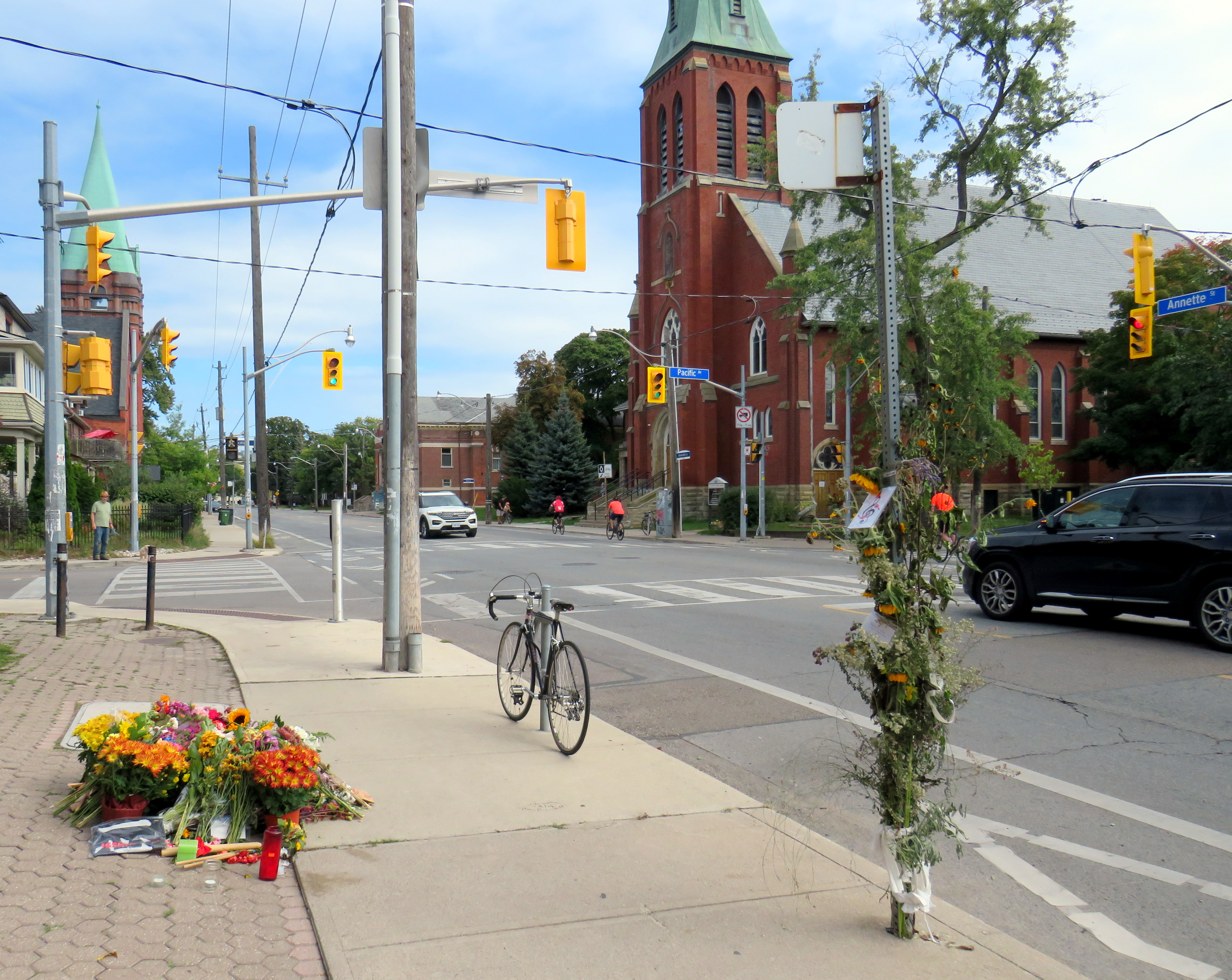
On Monday, September 23 at 8:06 PM, the driver of a 2024 Hyundai Elantra sedan travelled north on Pacific Avenue. The driver of a 2017 Hyundai Tucson crossover SUV drove west Annette Street. The two vehicles collided in the intersection with enough force that the Tucson continued into the sidewalk on the northwest corner, striking two pedestrians. A man, aged 50, was injured and taken to hospital. Julia Cleveland, 46, died at the scene.
As of Thursday, October 3, charges have yet to be laid.
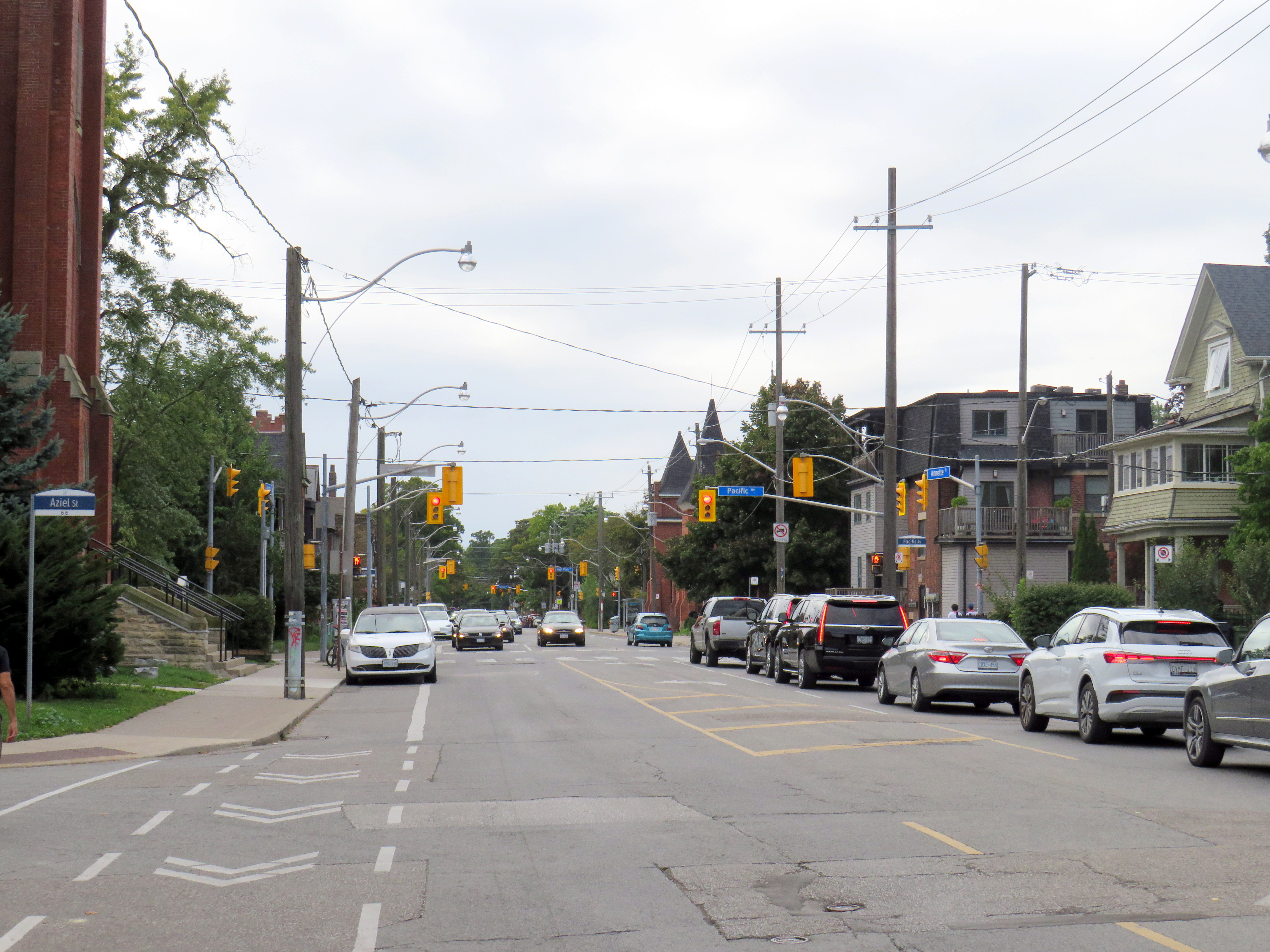
Looking west on Annette Street towards Pacific Avenue
On Saturday, September 29, I paid a visit to Annette and Pacific. A roadside memorial of flowers, cards, and tributes were laid next to the sidewalk where she and a fellow pedestrian were struck. I also took note of the streetscape, the surroundings, and driver behaviour on a Saturday afternoon.
While at the intersection, I observed many examples of distracted, aggressive and inconsiderate driving, as the video compilation depicts. Drivers intentionally drove through stale amber and solid red lights, blocked crosswalks, and swerved around slower vehicles. These motorist behaviours are commonplace.
Video shows driver behaviour at Annette Street and Pacific Avenue
I also noted many pedestrians and cyclists. There’s a No Frills grocery store on Pacific Avenue between Annette and Dundas. Two blocks east, there’s a Toronto Public Library branch. There were several families with young children, as well as older pedestrians.
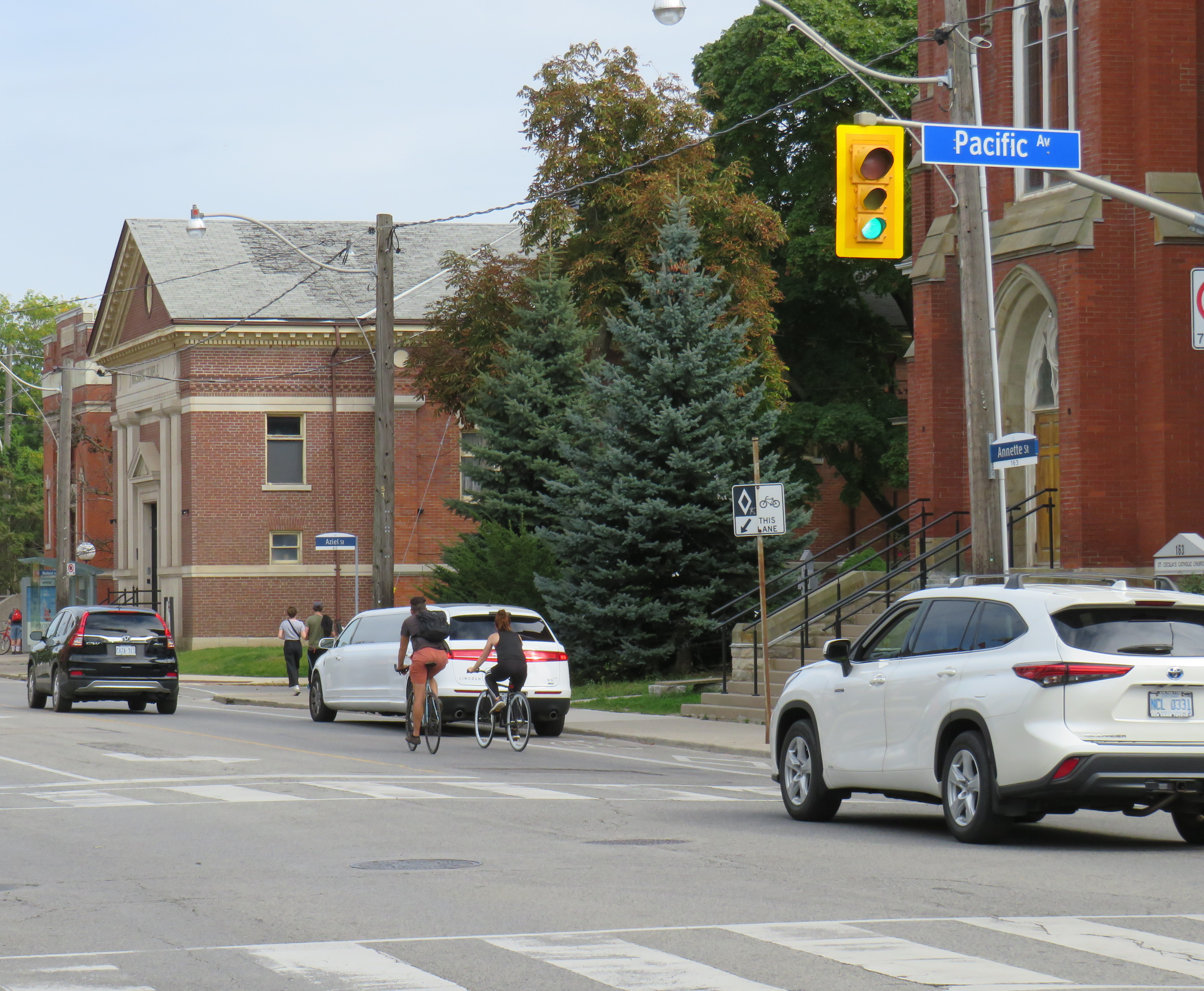
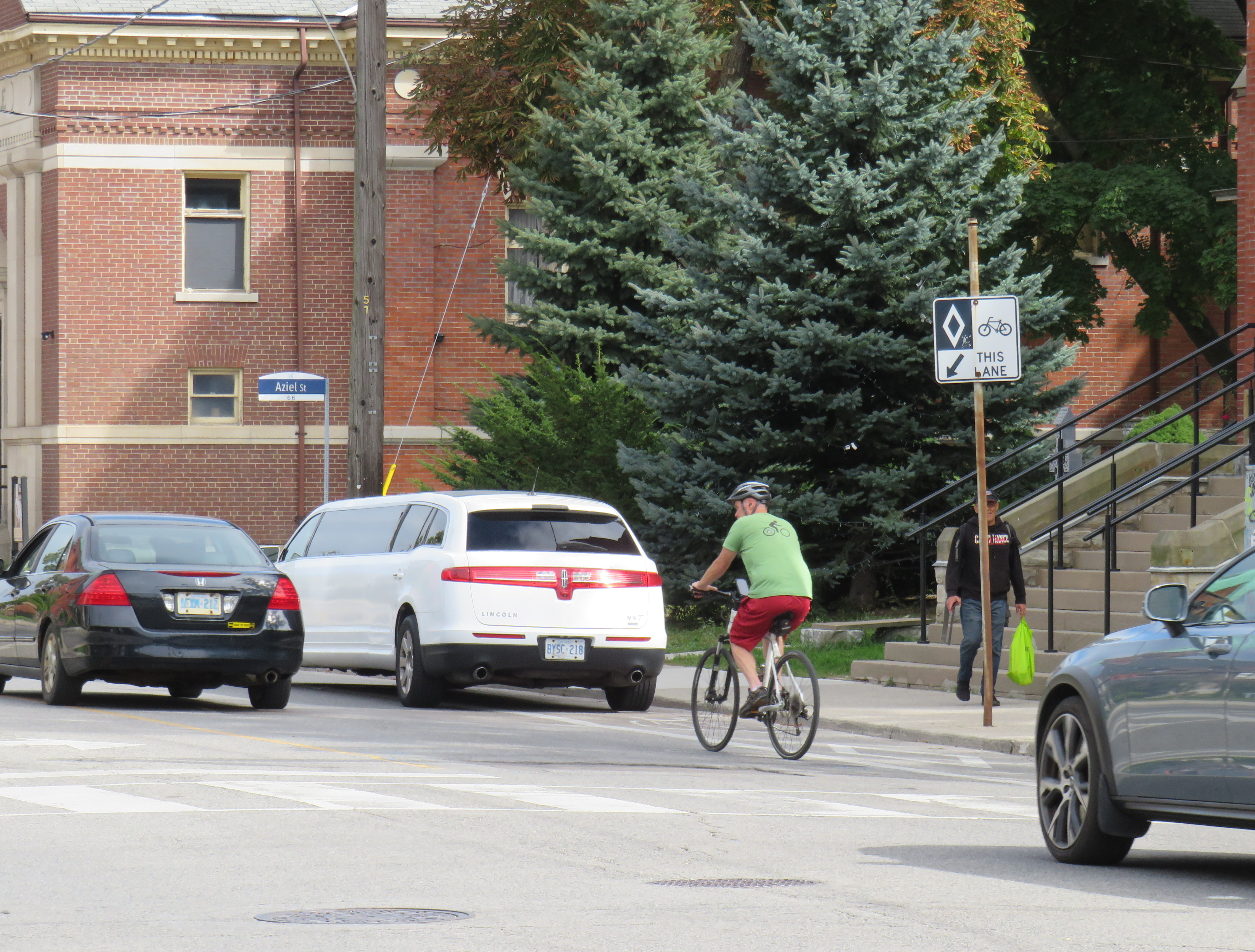
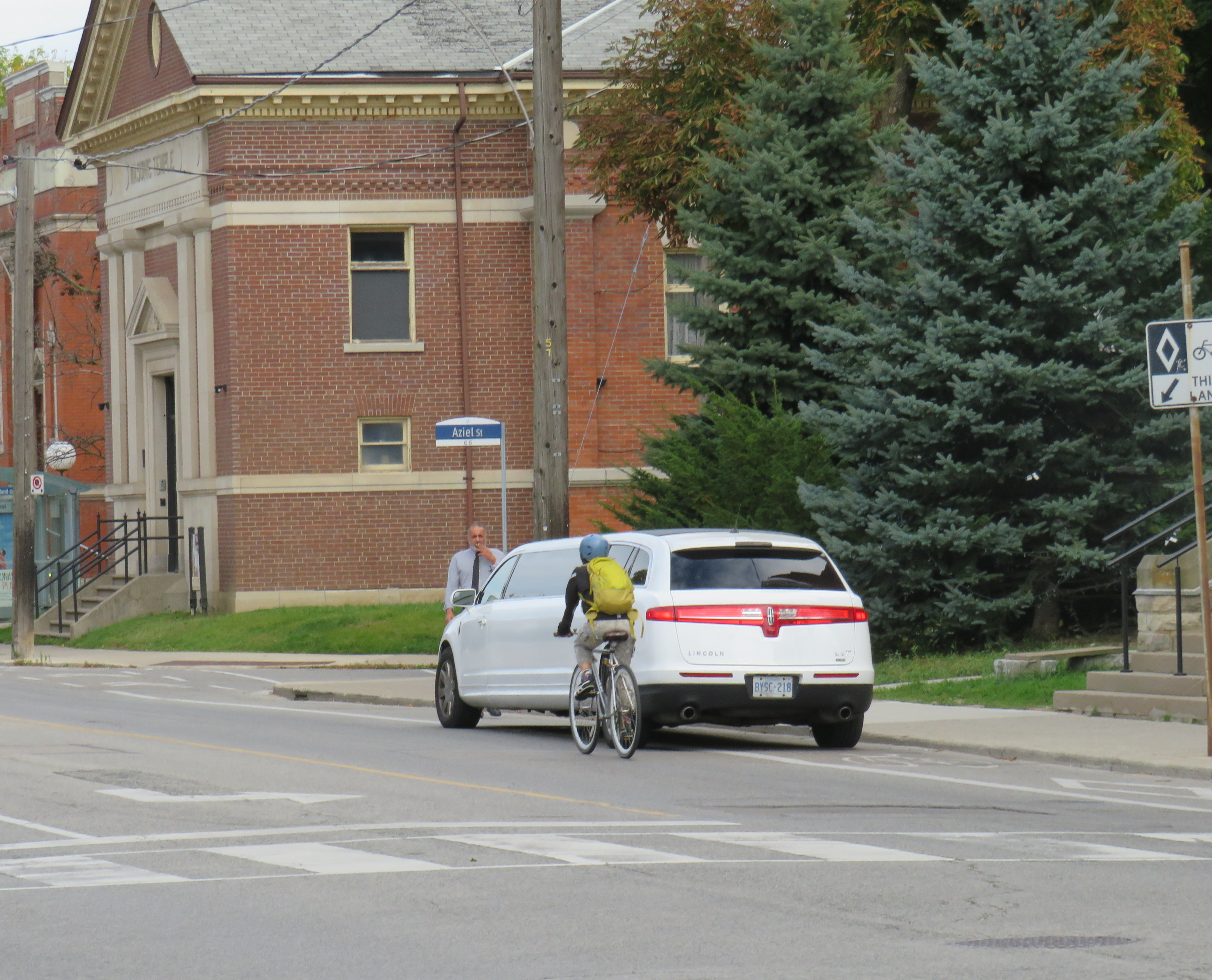
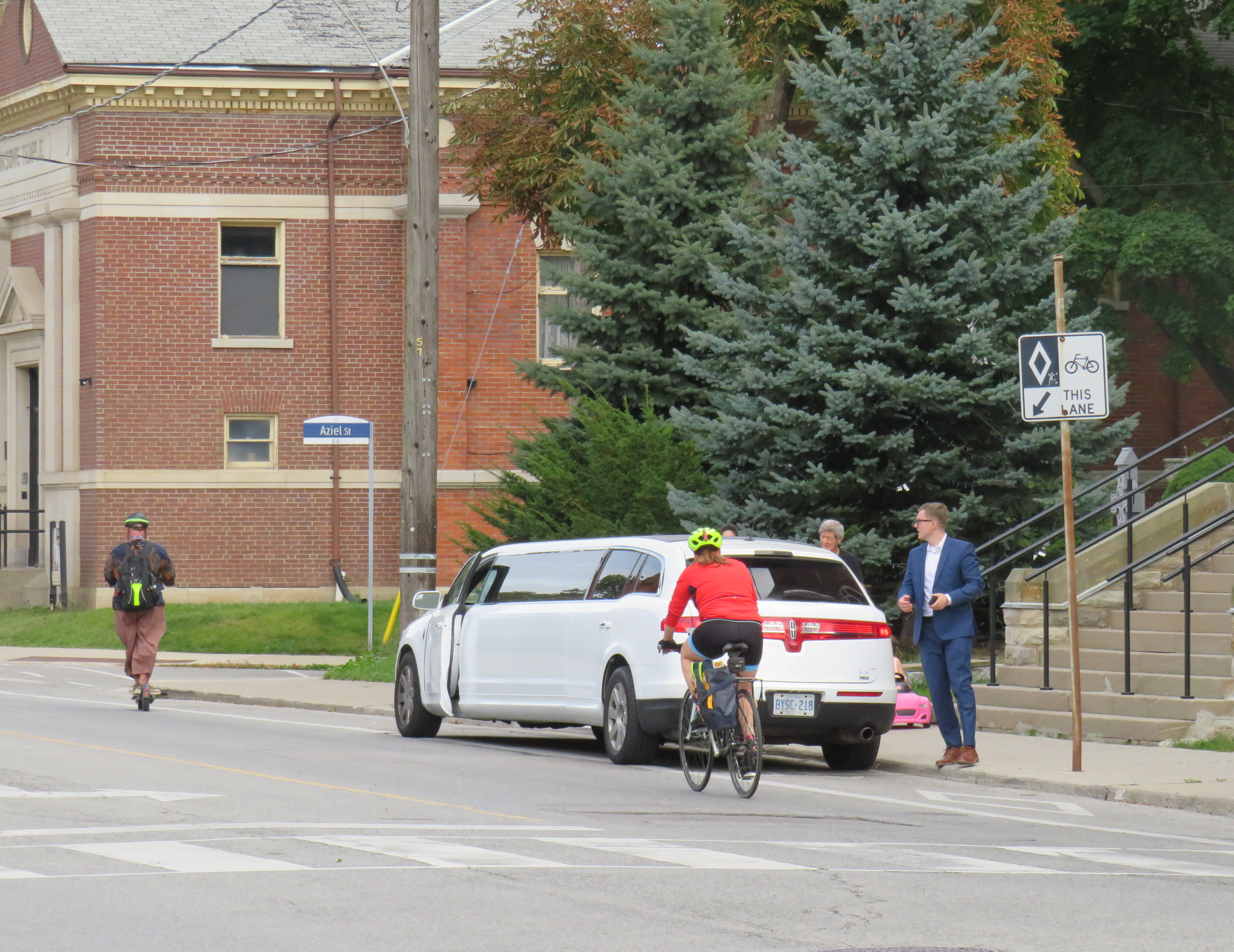
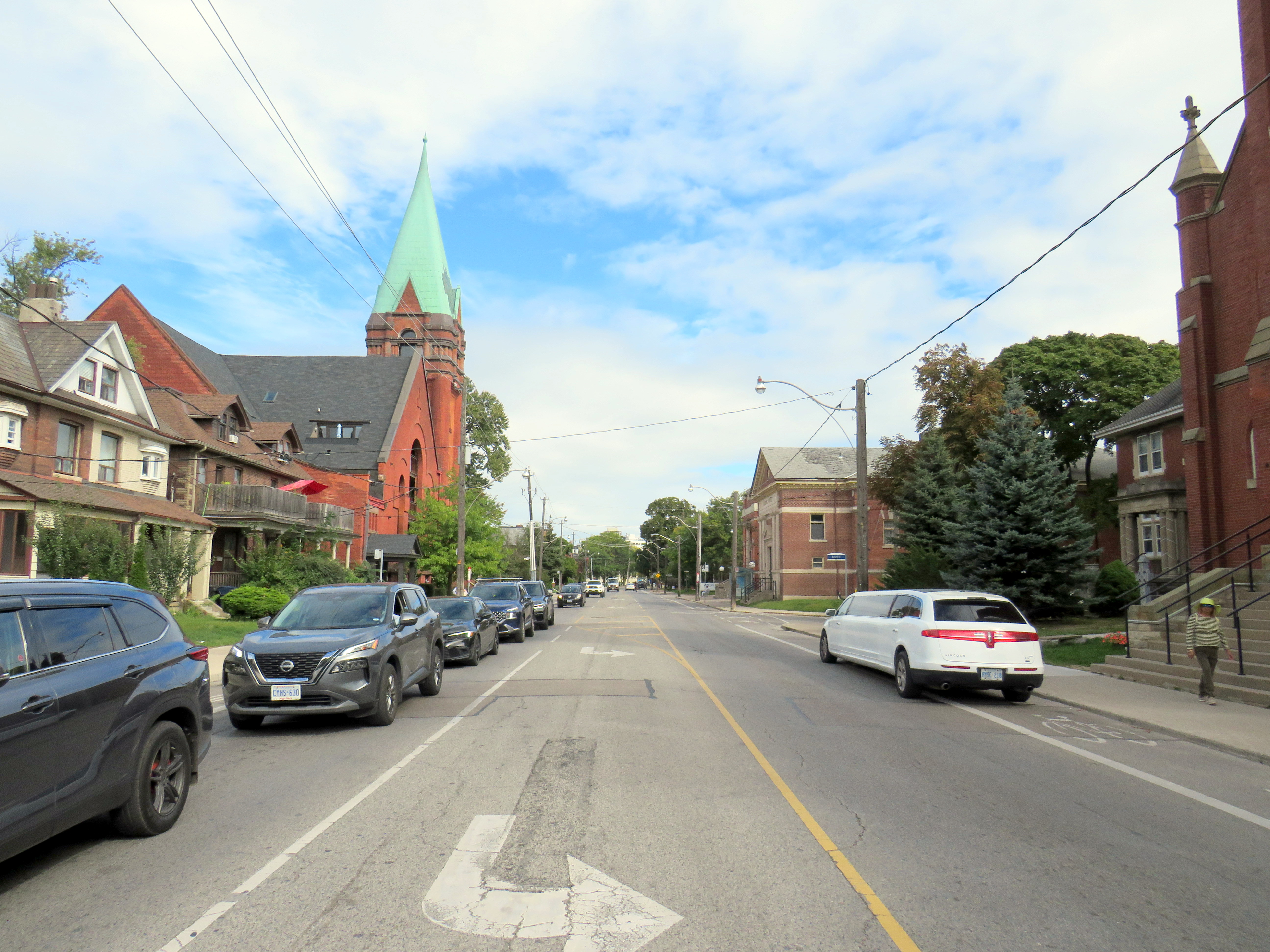
In 2008, Annette Street was reconfigured from a four-lane cross-section to include bike lanes and centre left turn lanes. Though it is a busy east-west cycling route, connecting to bike lanes on Dupont Street and Runnymede Road, the lanes are unprotected and are only marked with solid white lines and signage. The limited protection offered to cyclists was made clear when a stretch Lincoln limousine pulled out front of St. Cecilia’s Catholic Church and idled in the bike lane for over 30 minutes. Though the driver was likely waiting out front for a wedding party to emerge, I noted at least two dozen cyclists forced to merge into traffic to get around it.
Cyclists merging around a limo idling in the unprotected bike lane
The intersection itself offers minimal protection to pedestrians. Sidewalks are flush against the roadway, with very shallow curbs. There are unnecessarily wide turning radiuses at intersections. On the northwest corner of Pacific and Annette, there are metal bollards, but they are positioned to protect the small apartment building, not the sidewalk itself.
Looking east on Annette from Pacific Avenue. On the right is St. Cecilia’s Catholic church, beyond is a masonic lodge and a Toronto Public Library branch
Annette and Dupont Streets make up a useful bypass around traffic on Bloor Street to the south. There are three blocks between Pacific Avenue and the first traffic signals to the east, at Keele Street. To the west, however, there are traffic signals at the next three intersections: at High Park Avenue, Quebec Avenue, and Clendenan Avenue. Motorists might be tempted to speed through amber and red signals. Without better protection — protected bike lanes, for example, pedestrians and cyclists are especially vulnerable. Despite the 2008 road diet, the roadway has not been significantly altered.
A few days later, on Wednesday, October 2, there were two more collisions in which drivers struck pedestrians at signalized intersections, at Avenue Road and Davenport Road in Midtown Toronto, and at Islington Avenue and Finchley Road/Odell Avenue in central Etobicoke.
At Avenue and Davenport Roads, a pedestrian was struck when the drivers of three cars collided. One vehicle, a Mercedes-Benz SUV, stopped on the sidewalk after hitting a concrete pole.
Pedestrian seriously injured at Avenue Road and Davenport. Road safety improvements on Avenue Road are scheduled to start soon, which unfortunately was not soon enough to prevent another injury. Via@ARSCSafetyhttps://t.co/CspQr8isoZpic.twitter.com/MqppOVd2PV
In Etobicoke, a family of five were struck by a left-turning motorist turning from Finchley Road south onto Islington Avenue. The driver, a 77-year old woman likely visually impaired by the late afternoon sun, hit the family; the entire family — including a one-month old baby — were sent to hospital with serious injuries, while the mother was sent to a trauma centre with life-threatening injuries. Traffic signals were installed there in 2022 to help pedestrians cross Islington Avenue. Despite the new signals, locals continue to complain of drivers rushing the lights.
The problem on Toronto’s roads isn’t simply an engineering one, though protected bike lanes and physical traffic calming measures on Annette Street likely would have prevented Julia Cleveland’s death. Aggressive driving, including speeding, sudden lane changes, and red light running, along with distracted driving is increasingly a problem in Toronto and across the region. Engineering changes can help curb speeds, but there needs to be more done to rein in dangerous behaviour. That means more automated enforcement (red light and speed cameras) but also active enforcement to curb dangerous driving.
The old Doug Ford — the angry bull-in-a-china-shop we remember from 2018-2019 — is back, and it is clear that governing, in fact, has not changed him. After six years, and a rumoured early provincial election, Doug Ford will need to run on something, because there’s little to show for his promises of getting housing built, transit projects completed, and hospitals fixed. An RCMP investigation continues to look at the government’s Greenbelt land swaps, and it is rare for provincial or federal governments in Canada to get elected with a majority three times in a row. So here we are.
But after three straight days of political red meat policy announcements, the strategy has become clear: Doug Ford is “deadcatting.” Dead cat theory, popularized during the leadership of former London mayor and British prime minister Boris Johnson, is the practice of suddenly throwing down an outrageous policy or statement to divert attention away from an unpleasant topic. The shocked audience is suddenly compelled to talk about the metaphorical dead cat thrown on the table. In the United States in recent weeks, dead cats have become less metaphorical, with baseless and racist accusations against Haitian migrants in Ohio spread by Donald Trump, vice-presidential candidate J.D. Vance, and far-right commentators.
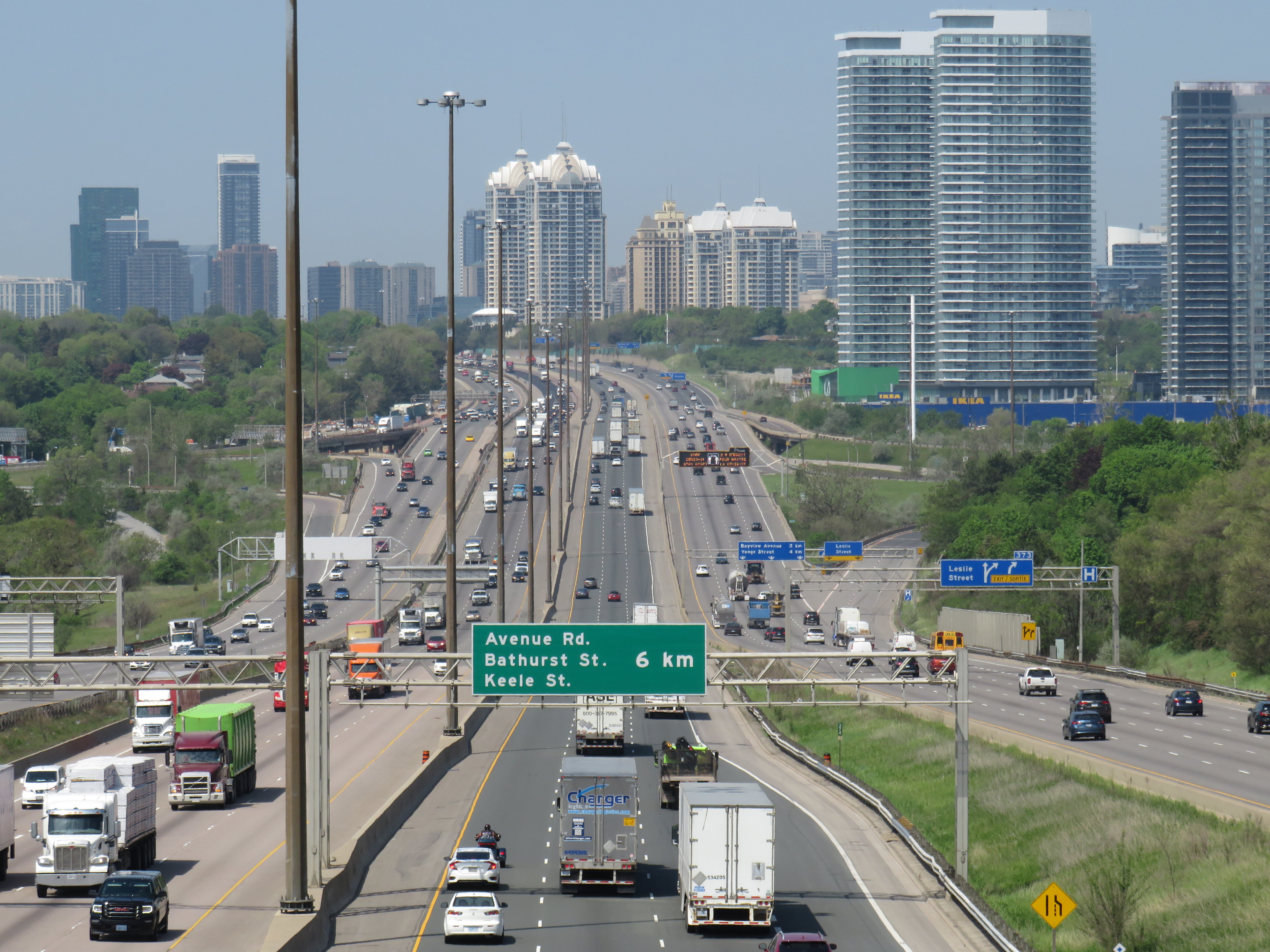
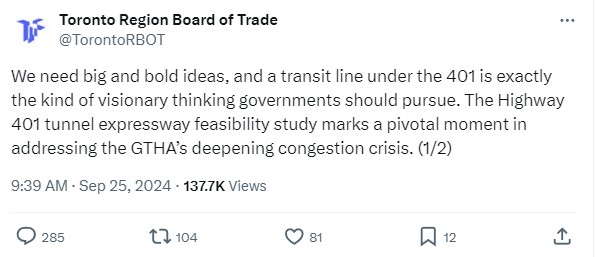
There is no way a Highway 401 tunnel will be built. Not only would it be the longest road tunnel in the world, but the long on-ramps and off-ramps required to access a deep-bore urban highway tunnel will make it completely infeasible. The proposal also completely ignores the problem of induced demand, and it won’t solve the problem of where the traffic goes when it gets off that additional highway. For these reasons, it was especially disappointing to see the Toronto and Region Board of Trade (TRBoT) endorse the idea.
There are things that can help alleviate traffic. One is ensuring that transit projects are completed, funded, and maintained. That doesn’t just mean building and completing projects like the Crosstown LRT and the Ontario Line, it’s also making sure the system remains in excellent condition to avoid problems like the persistent slow orders in the Toronto Subway. It also means making the best use of existing infrastructure, like Highway 407, for goods movement. Highway 407 passes by every major freight yard in Greater Toronto, but trucks clog Highway 401, Highway 7, and Steeles Avenue instead because of the high tolls. And it means active transportation improvements, like bike lanes and multi-use paths.
What we don’t need are more dead cats to distract us from the real problems.
No matter how you get around Toronto, it’s feels like it’s more difficult than ever
Getting around Downtown Toronto can be an exercise in frustration, whether you drive, bike, take transit, or drive. Though necessary transit and road construction projects are the cause of much of the congestion, driver behaviour, poor management, and a lack of coordination between various municipal and provincial agencies have only added to the traffic quagmire.
North-south streets such as Spadina, York, Bay, and Jarvis are jammed by drivers headed south towards the Gardiner Expressway, with lane closures near Exhibition Place only making things worse. Motorists blocking intersections make it difficult for pedestrians, cyclists, streetcars, and through traffic to get across the city centre. Ontario Line construction has closed a portion of Queen Street, while work to rebuild streetcar tracks on York and Adelaide Streets to allow 501 cars to bypass the closure is still proceeding.
GO Transit is also expanding its rail corridors to allow for more off-peak and express trains, with the long-term goal of having an electrified, frequent, regional rail network that complements and supplements the web of subways, light rail and buses throughout the region. The TTC is also addressing a backlog of state-of-good repair works throughout the subway system, resulting in slow orders, early closures, and weekend shutdowns.
Meanwhile, people still need to get to places like work, school, conferences and trade shows, concerts, sporting events, social gatherings, festivals, museums, and all the other things that make a city a city. Eventually, with improved GO corridors, the Ontario Line, and the opening of the Crosstown LRT, there will be some redundancy in the transit system that will make planned service closures easier to navigate. But for now, we are stuck with an underbuilt transportation system in a rapidly growing city.
This makes the coordination of transit closures and projects especially essential so things don’t completely fall apart. Saturday, September 21 was just one example of the failure to do so.
On Saturday September 21 and Sunday September 22, GO Transit reduced service on the Lakeshore West Line to hourly service on the entire corridor because of work at Long Branch GO Station, where the station is being completely rebuilt for accessibility improvements and future expansion. It also shut down the entire Barrie Line for various construction works along the corridor, with rail replacement buses to Union Station, stuck in traffic on the Don Valley Parkway and Lake Shore Boulevard with all other motorists getting around the Gardiner closure.
Normally, there are hourly trains as far west as West Harbour Station in Downtown Hamilton, with half-hourly service to Aldershot Station in Burlington. Between Union and Oakville, rail service is as frequent as every 15 minutes during midday and early evenings on Saturday and Sunday. Hourly train service reduced capacity on the inner Lakeshore West line by 75%.
Compounding the problem was the total closure of the Gardiner Expressway between Highway 427 and the Don River between Friday evening and Sunday morning for routine maintenance (the Gardiner and the Don Valley Parkway are regularly closed twice a year for repairs). Many people who might have otherwise driven into the city would have taken GO Transit instead, normally a very good idea. Though none of Toronto’s professional sports teams were playing at home on Saturday, there was still a Shane Gillis stand-up comedy performance at Scotiabank Arena, and a Rainbow Kitten Surprise concert at Ontario Place.
Also, to add insult, the Lakeshore East trains between Toronto and Oshawa were not through-running with the Lakeshore West trains and were operating on a modified schedule. I was travelling east of Toronto on Saturday, making a few stops in Durham Region. As I arrived back from Whitby on Saturday afternoon on a train that normally connects onward westbound train at Union Station, we were treated to the sight of the hourly Lakeshore West train just pulling out. It couldn’t have even waited 2-3 minutes to allow passengers to make the cross-platform connection. That resulted in other passengers complaining to GO staff in the concourse, who were not that helpful.
I’m on the GO Train now. The CSR on the LW train is telling people at Long Branch to not board because the train is too full, so they now have to wait an hour. Lots of people heading to Budweiser Stage and Scotiabank concerts. Very poor planning/coordination between city and MLX. https://t.co/LXNATzYwoV
Tweet from Alan Deschamps, reporting on a full GO train arriving at Long Branch at 6:21 PM on Saturday Sept 21, with the customer service ambassador (CSR) telling waiting passengers to not board and to wait for the next train in an hour
In the early evening on Saturday, a jam-packed eastbound GO train on the Lakeshore East train was not accepting any passengers at Long Branch or Mimico station because of overcrowding. Waiting passengers were told to wait an hour for the next train.
One would think that Metrolinx (GO Transit’s parent agency) and the City of Toronto would coordinate their construction schedules to avoid such problems. However, not even the City of Toronto can figure this out. Back in June of this year, the TTC replaced the 509 Harbourfront and 511 Bathurst streetcars with buses for a week for minor overhead work on Fleet Street. The timing coincided with the massive Collision tech conference at Exhibition Place, which resulted in overcrowded shuttle buses and unreliable service. Had the TTC checked with anyone at the city’s economic development office or with Exhibition Place (another city agency), this work could have easily been rescheduled.
Overloaded 509 Harbourfront bus shuttle on Queen’s Quay in June 2024
Though coordination of transit closures and construction projects with major events and parallel roadworks will not solve Toronto’s road and transit congestion problems, it will at least reduce some of the frustration of getting around. The poor customer service at GO Transit will certainly make riders question if they will be able to rely on the service in the future.
Of course, there is one measure that won’t help but still will be implemented by the provincial government later this fall: a prohibition on new bicycle lanes if they take road space from motorists. Despite blocked bike lanes, aggressive drivers, and an incomplete cycling network, it is still the most reliable and fastest mode for many shorter city trips. Along with major transit improvements and construction coordination, cycling is one of the solutions to getting around Toronto.
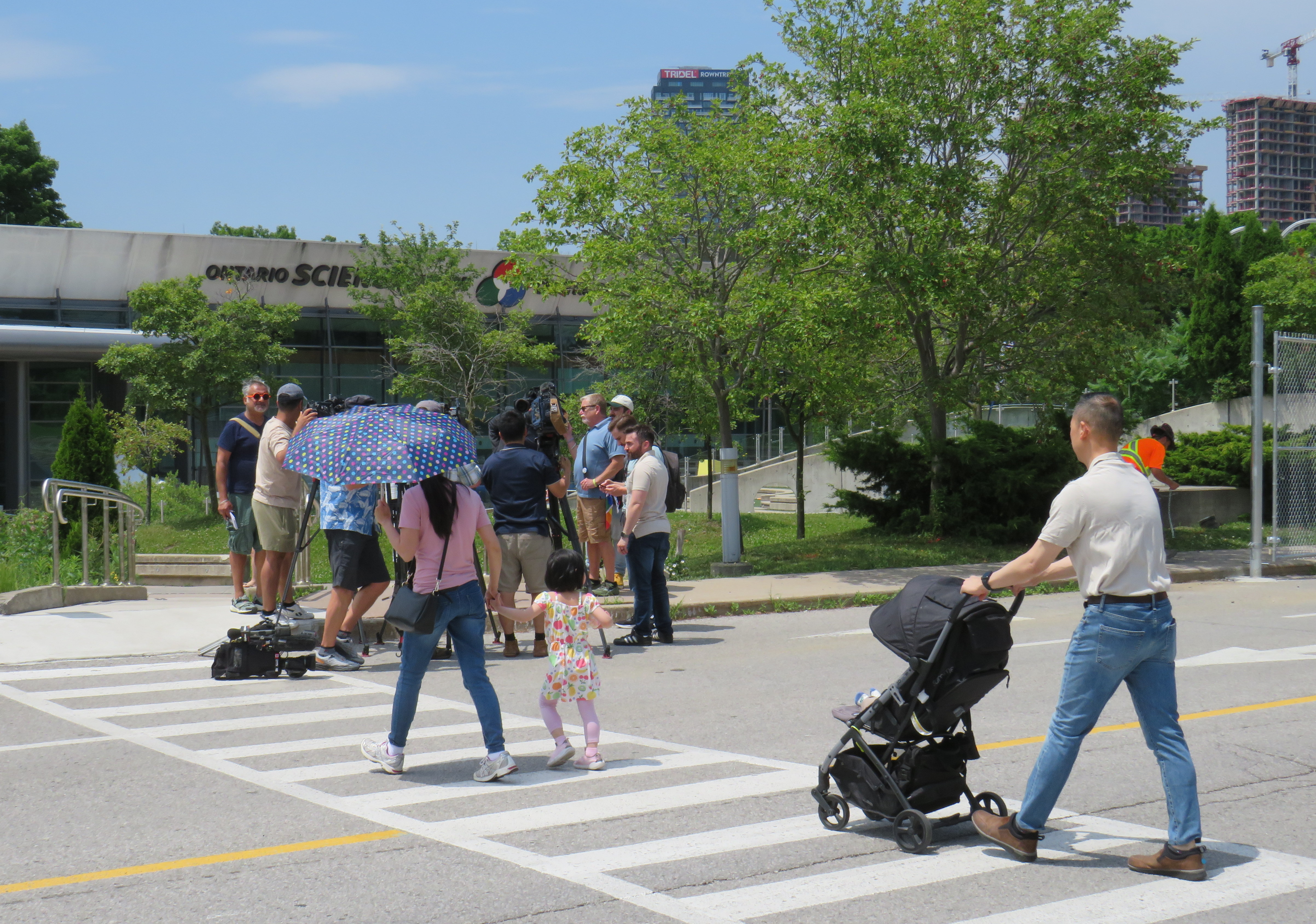
A family enters the Science Centre for the last time on Friday June 21, 2024
When I was growing up, our family would make a trip every year to the Ontario Science Centre, a 45-minute car drive from our home in suburban Brampton. Invariably, these trips would take place on the first PA day of the school year, typically on a Friday in late September or early October, when the ravine was still lush and green, with only the first hints of the changing season.
Because it was early in the school year, and since the Toronto school boards typically had different PA days than the Dufferin-Peel Catholic board, the Science Centre would be mostly empty; my father would run with my brothers and I along the corridor over the ravine between the entrance hall and the great hall. At the end of our visit would be an hour spent at the Science Arcade, the highlight of any child’s visit to the once-great institution. I marveled at Raymond Moriyama’s wonderful harmony of concrete, glass, and natural beauty as one descended into the West Don Ravine by means of glass walkways and escalators.
Later visits in high school and in my early adulthood, however, were not as great. The exhibits were getting old, and the place started feeling worn out. The Dalton McGuinty and Kathleen Wynne-led governments did not value the Science Centre enough to invest in its relevance or its long-term maintenance. Doug Ford’s PC government continued the neglect, favouring a private redevelopment of Ontario Place (closed under the previous Liberal government) with a new, downsized Science Centre to take its place.
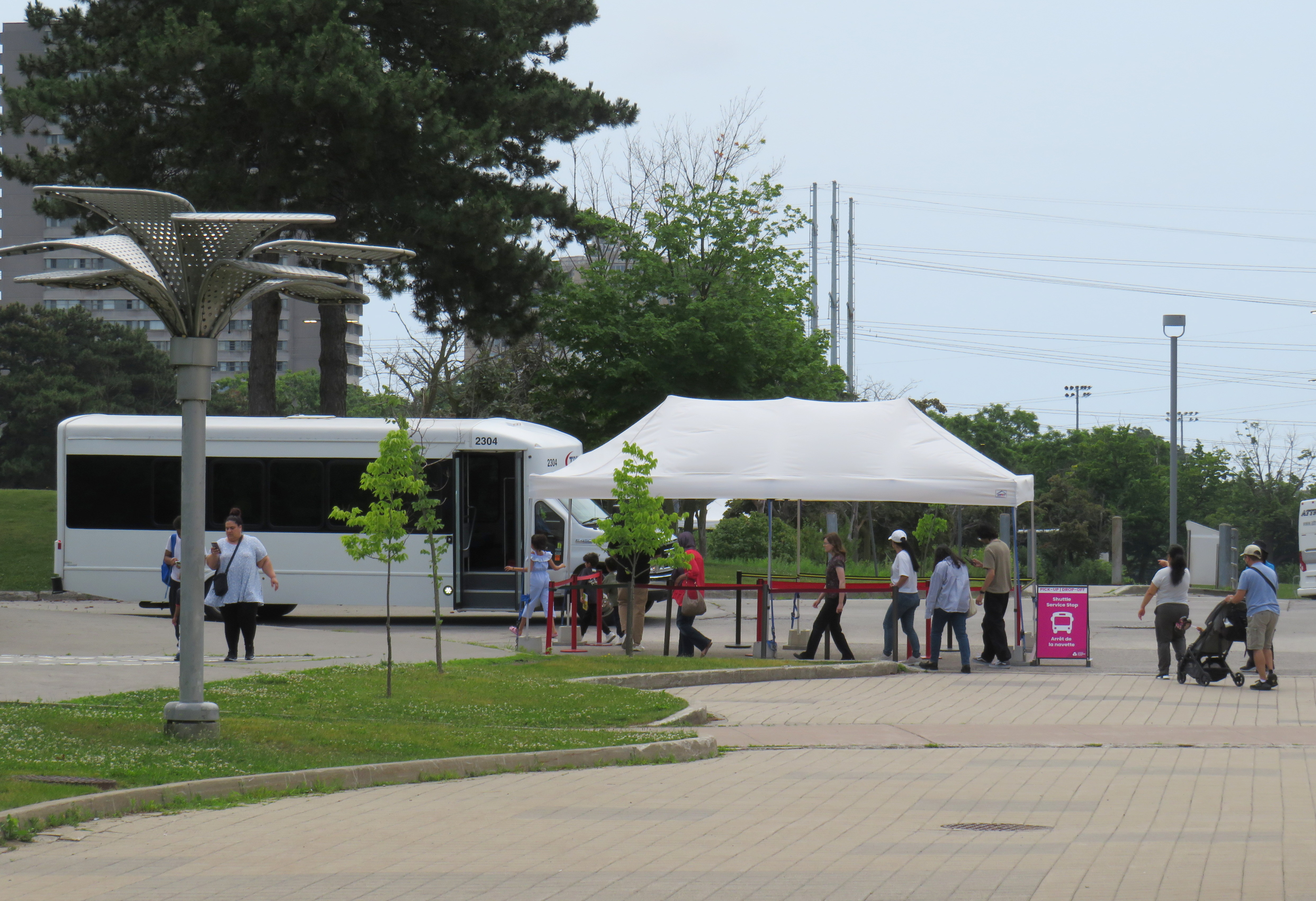
In 2022, that once-wonderful double-deck bridge between the entrance hall and the exhibition space was closed due to the risk of structural failure, with no plans to fix or restore the link. Instead, $2 million a year was spent on shuttle buses ferrying visitors between the upper parking lot (after they paid admission) and the lowest level at the bottom of the ravine. That year, the planetarium (a smaller version of the McLaughlin Planetarium that operated next to the Royal Ontario Museum until the 1990s) also closed due to deterioration.
A December 2023 report from the provincial Auditor General’s office took issue with the government’s management of the Ontario Science Centre and the flawed business case for moving it to a new location on Toronto’s waterfront, in a location much less accessible to school groups.
Loading Ontario Science Centre visitors on shuttle buses, June 21, 2024
The most recent development in which engineers warned of sections of the roof in danger of failure and collapse in a report to Infrastructure Ontario (linked in full on the CBC Toronto website) after October 31, 2024, with repairs costing between $22 million and $40 million. The immediate closure, announced on a Friday afternoon, would provide time to allow the exhibits to be removed, possibly to an interim location. However, most of the roof was found to be in good or fair condition in an the engineer’s report, making the immediate closure suspect.
The Ontario government is shutting the Science Centre today citing an engineer’s report – which does *not* say the place must close or that all work is urgent. What a betrayal. pic.twitter.com/qp21sEjYBn
Globe and Mail architecture critic Alex Bozilkovic questioning the government’s sudden closure on X/Twitter.
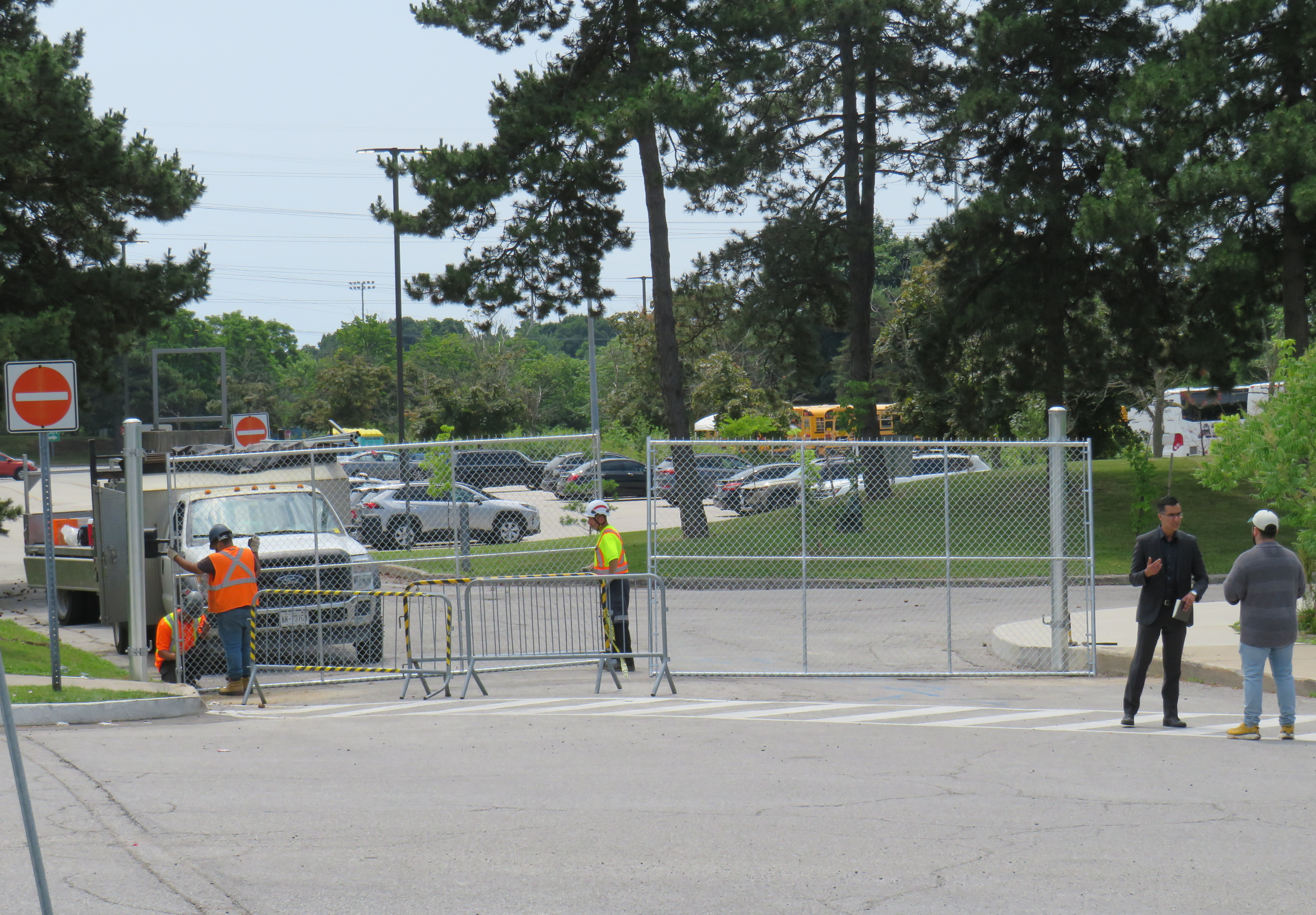
On Friday morning, gates were already being installed at the parking lot entrances to the Science Centre, before the official announcement, even before the Toronto Star published the first story about the closure on its website around noon.
Workers install rigid gates at the staff parking and bus exit at Ontario Science Centre. Local Liberal MPP Dr. Adil Shamji speaks to a reporter in front.
One cannot help but be skeptical about the sudden decision to close the Science Centre, despite the demolition by neglect by the Liberal and PC governments. Had an announcement been made, but with the closure taking effect two weeks later after the long weekend, it would have given visitors one last time to appreciate the Science Centre and its unique architecture. But that might also be the point. By making the closure a done deal without the opportunity for the community to rally to save the Ontario Science Centre, Doug Ford’s PCs have shut down debate. By the time the legislature meets again in October, their hope is that opposition to the destruction of Ontario Place and the Ontario Science Centre will have dissipated. The Friday afternoon news dump also fits this strategy.
Though I made it up on Friday to document the closure, I am sad that I did not make it for one last visit, just as with the sudden closure of the Scarborough RT last year.
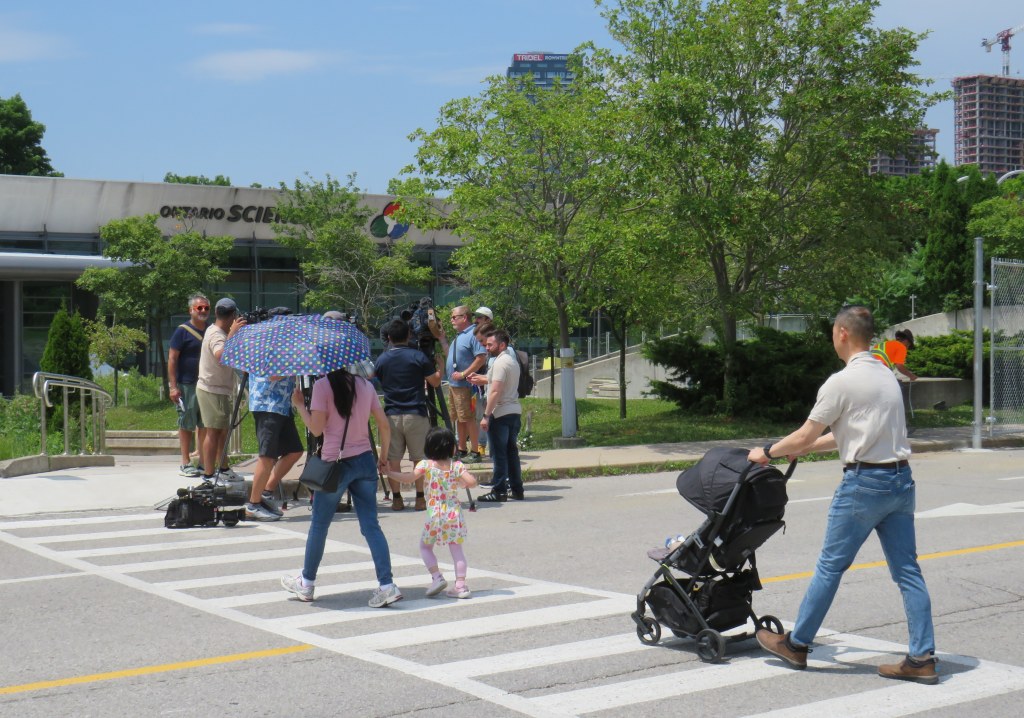
The most heartbreaking thing for me was watching a young family walk from Flemingdon Park into the Science Centre just as the news media was assembling for a press conference with Don Valley East MPP Dr. Adil Shamji and Floyd Ruskin of SaveOSC. The young child looked so excited for a day at the science centre, unaware that it would be the last day it would ever be open.