Category: Transit

  • Napanee’s precarious transit links

    Napanee’s precarious transit links

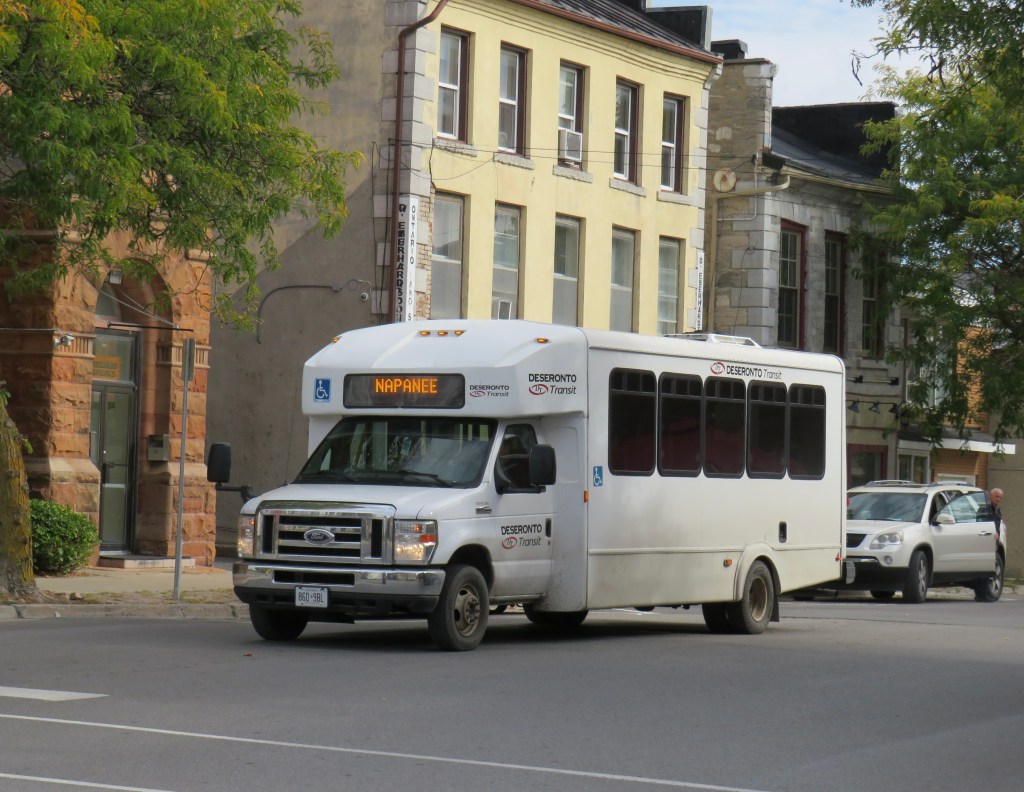
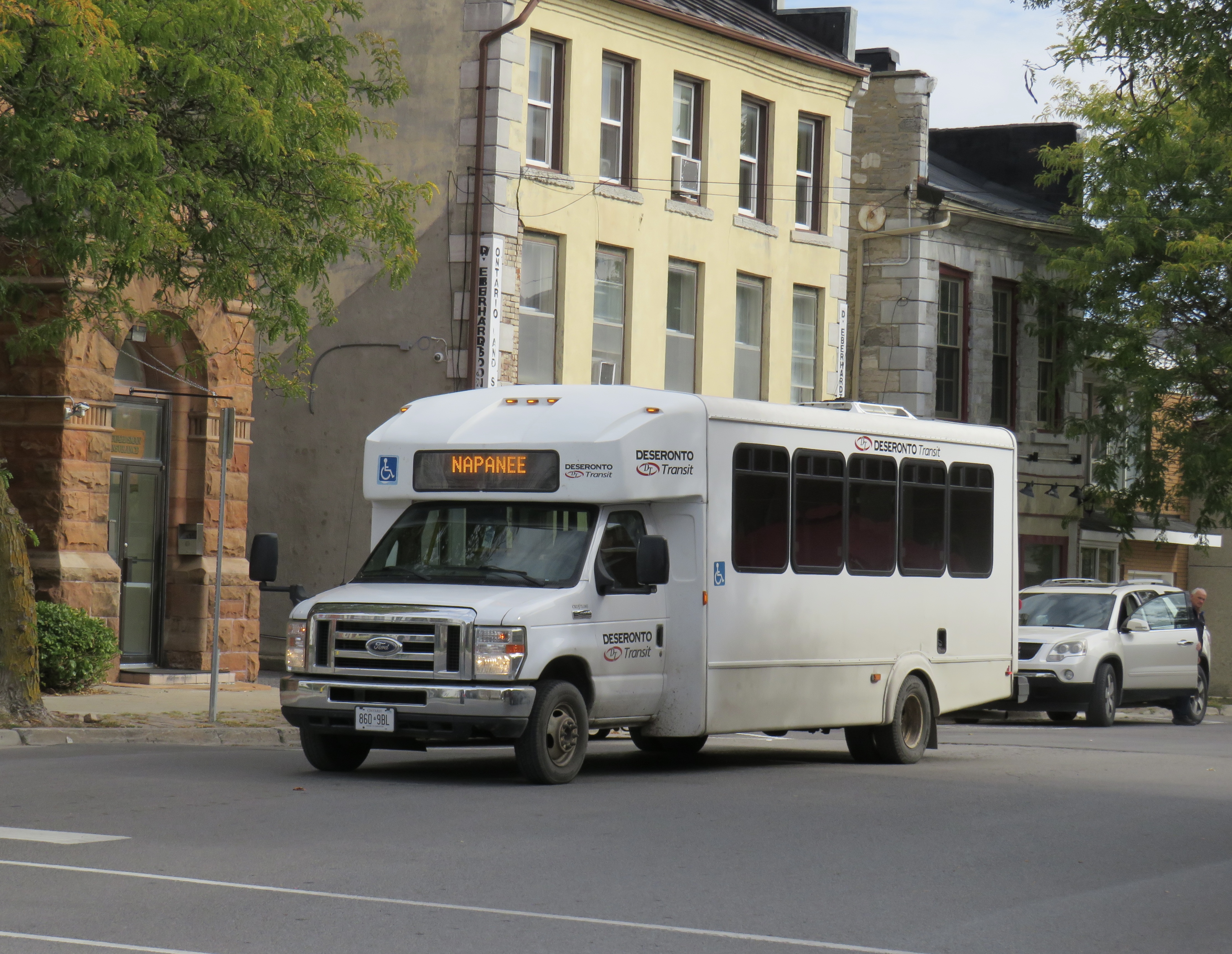
    Deseronto Transit bus in Napanee, October 2025

    A few weeks ago, I wrote about several new intercommunity transit services in Eastern Ontario. I went out to Brockville to ride River Route, which follows the St. Lawrence River between Brockville and Cardinal. I also noted the introduction of a new bus service between Kemptville and Ottawa, as well as services in Pembroke and Loyalist Township.

    Unfortunately, another Eastern Ontario service, Deseronto Transit, will come to an end on November 28, 2025. Deseronto Transit is operated by the small town located on the Bay of Quinte between Belleville and Napanee; its single route runs between these three communities, while also stopping at Tyendinaga Mohawk Territory and Shannonville.

    Early in 2025, the Town of Deseronto moved to end service by December 1, 2025, citing increasing expenses and ageing equipment and the end of provincial grant funding. As Deseronto is a very small town, population 1,750, the continued operation of a regional bus service is especially challenging. Despite the planned closure of service, it is commendable that the town was willing to give it a go, connecting its residents to employment areas in Belleville, as well as medical, educational, and shopping destinations in both Napanee and Belleville.

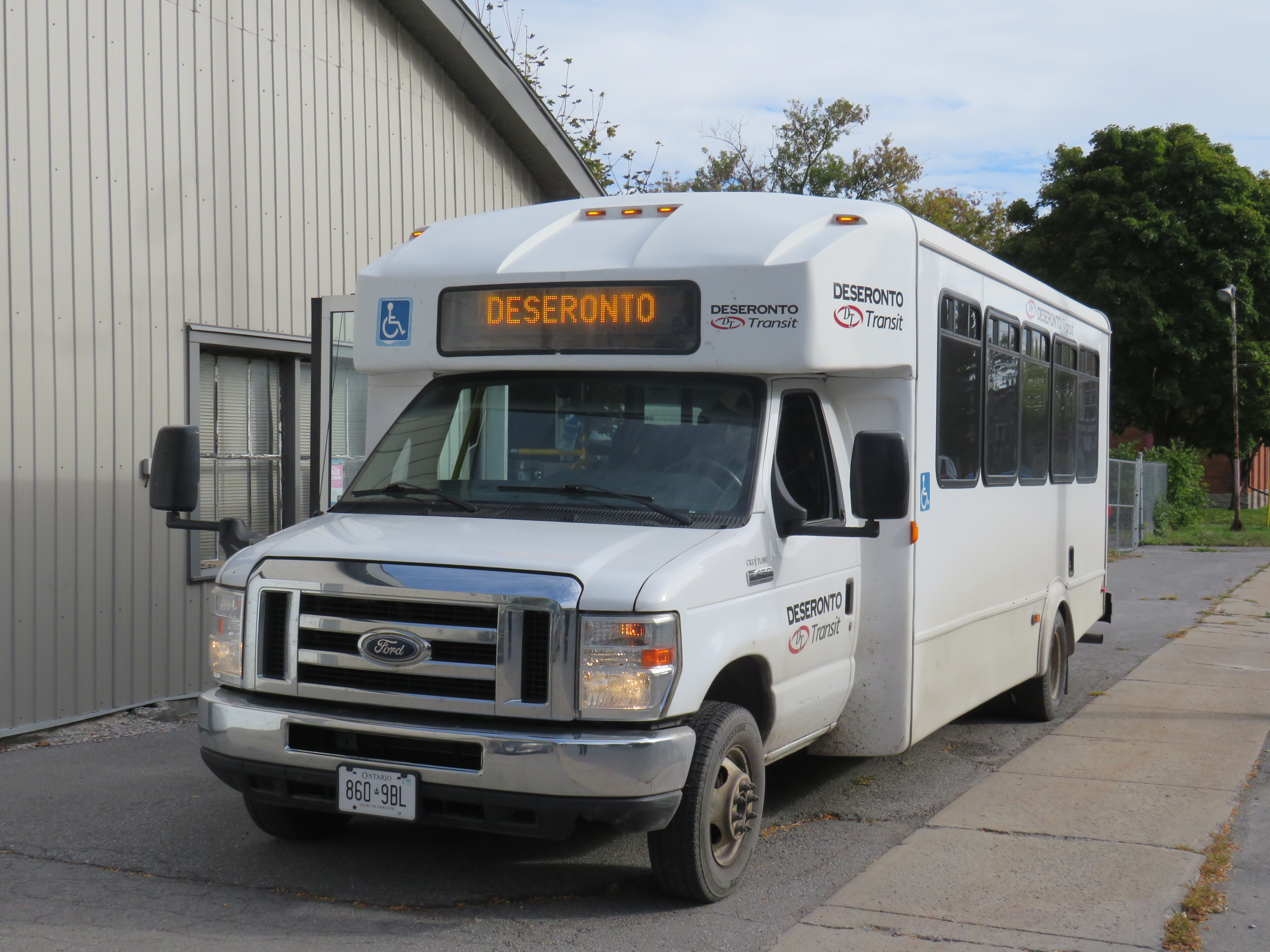
    Laying over at Deseronto Transit’s garage

    At its peak, Deseronto Transit was able to average 12-15 passengers per trip, thanks largely to its schedule and route that operates to important destinations in Belleville including Quinte Mall, Belleville General Hospital, and an industrial park in the northeast part of that city. But with the wind-down, ridership has fallen; I was one of only two passengers headed west to Belleville from Napanee and Deseronto on Friday, October 17.

    In Belleville, there are still connections to Prince Edward County (which introduced a summer weekend service in 2025) at the Downtown Terminal, and to Trenton via Quinte Transit at Loyalist College. There is also an informal on-demand service to various communities north of Belleville within Hastings County.

    One of the challenges operating small inter-community services is that they need long-term, dedicated funding, rather than a one-time grant. They also need to be publicized better, with proper bus stop signage, integrated websites, and easy connections to local transit and other intercity services.

    A smart provincial government would not only ensure that these connections are funded and maintained; it would help to better integrate, brand, and advertise inter-community services, touting their benefits to residents and visitors alike. It already does this in the Greater Toronto and Hamilton Area (GO Transit) and in Northern Ontario (Ontario Northland); there really should be more to ensure rural and small town connections are sustainable and sustained in Southern Ontario.

    Why going to Napanee is so complicated

    To get to Napanee and to take a ride on Deseronto Transit, I had to take the only weekday morning departure from Toronto: a Maple Bus trip from Yorkdale Station to a gas station drop off north of Highway 401 in Napanee. The town is also served by Megabus (on the Pearson Airport-Kingston Route) and two daily VIA Rail trains, but these all leave the city in the PM hours. Maple Bus, a new entry not yet added to my intercity map, operates several buses a day between the Toronto area and Ottawa, with stops at most cities and towns along Highway 401 between Oshawa and Brockville.

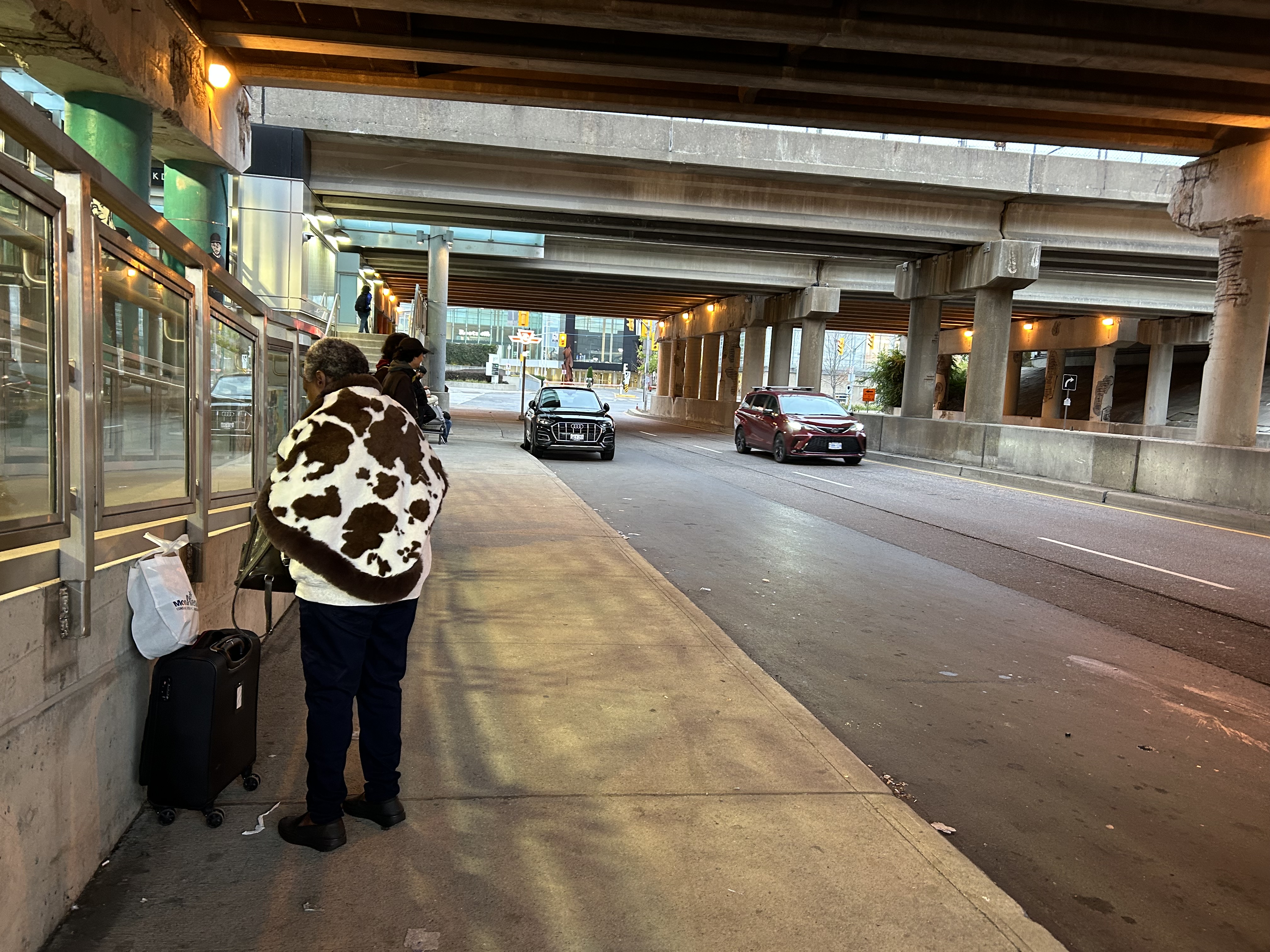
    The main Toronto stop for Maple Bus and Flixbus is the passenger pick-up/drop-off area of Yorkdale Station, a curbside stopping zone under the Allen Road/Highway 401 ramps next to Yorkdale Subway Station. GO Transit, Megabus, and Ontario Northland use a nearby purpose-built bus terminal. Though the area is sheltered from rain by the overpasses, there is only one small bench to sit at. It is not a great place to wait for a bus, especially when it is nearly 40 minutes late, as my bus was.

    Waiting under highway ramps at Yorkdale Station

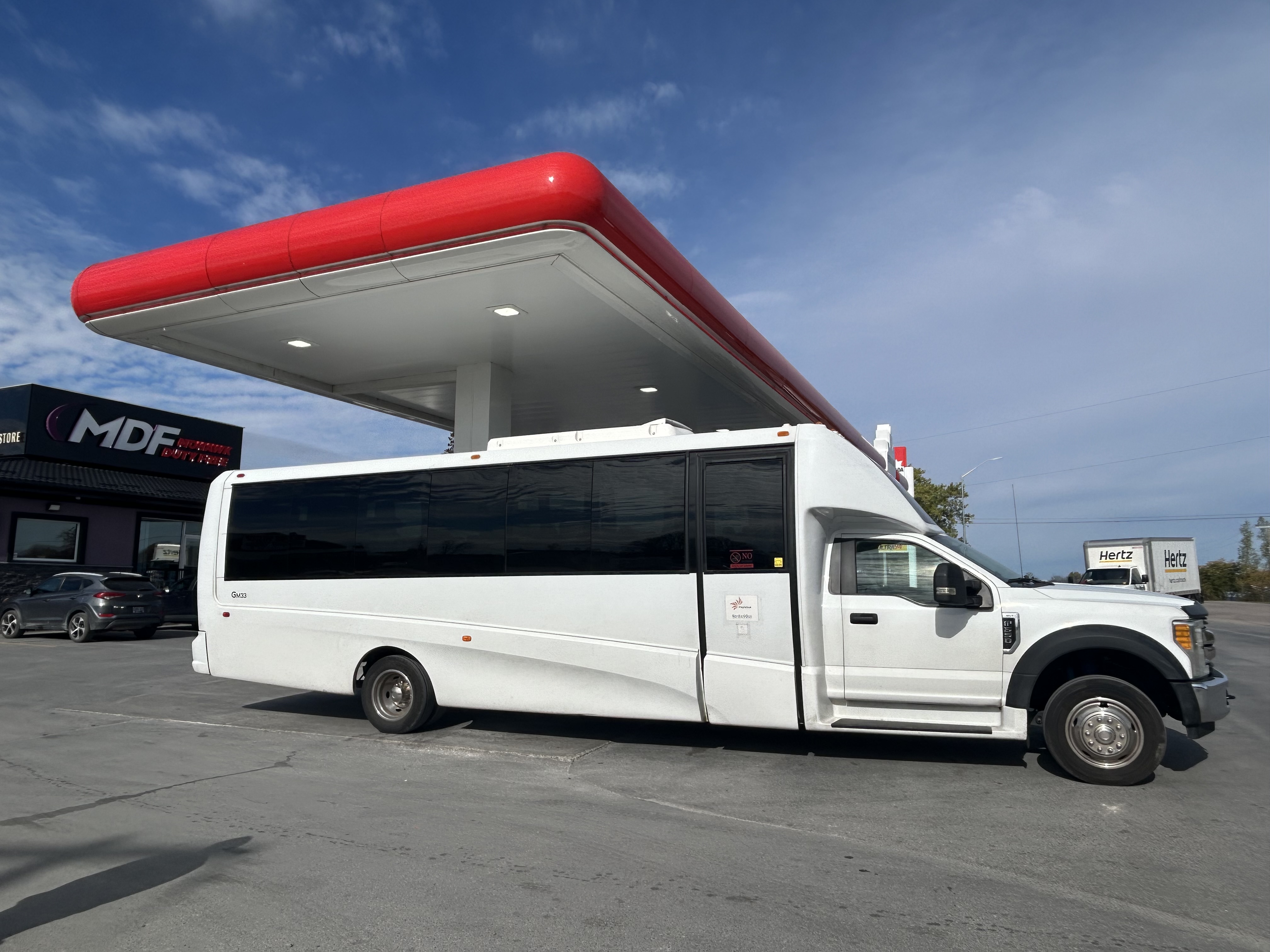
    At least the Maple Bus vehicle was comfortable. The bus assigned was a mid-sized body-on-truck-chassis coach, which sits 25 in comfortable bucket seats (I have rode in smaller, less comfortable vehicles before). However, it does not have a toilet on board, and food and beverages are not allowed to be consumed. There was a rest stop, where the driver also refueled, at Tyendinaga First Nation off Highway 401 between Belleville and Napanee. When we made this stop, we were only ten minutes from my destination.

    Maple Bus vehicle, during a rest break/refueling stop at Tyendinaga First Nation near Belleville

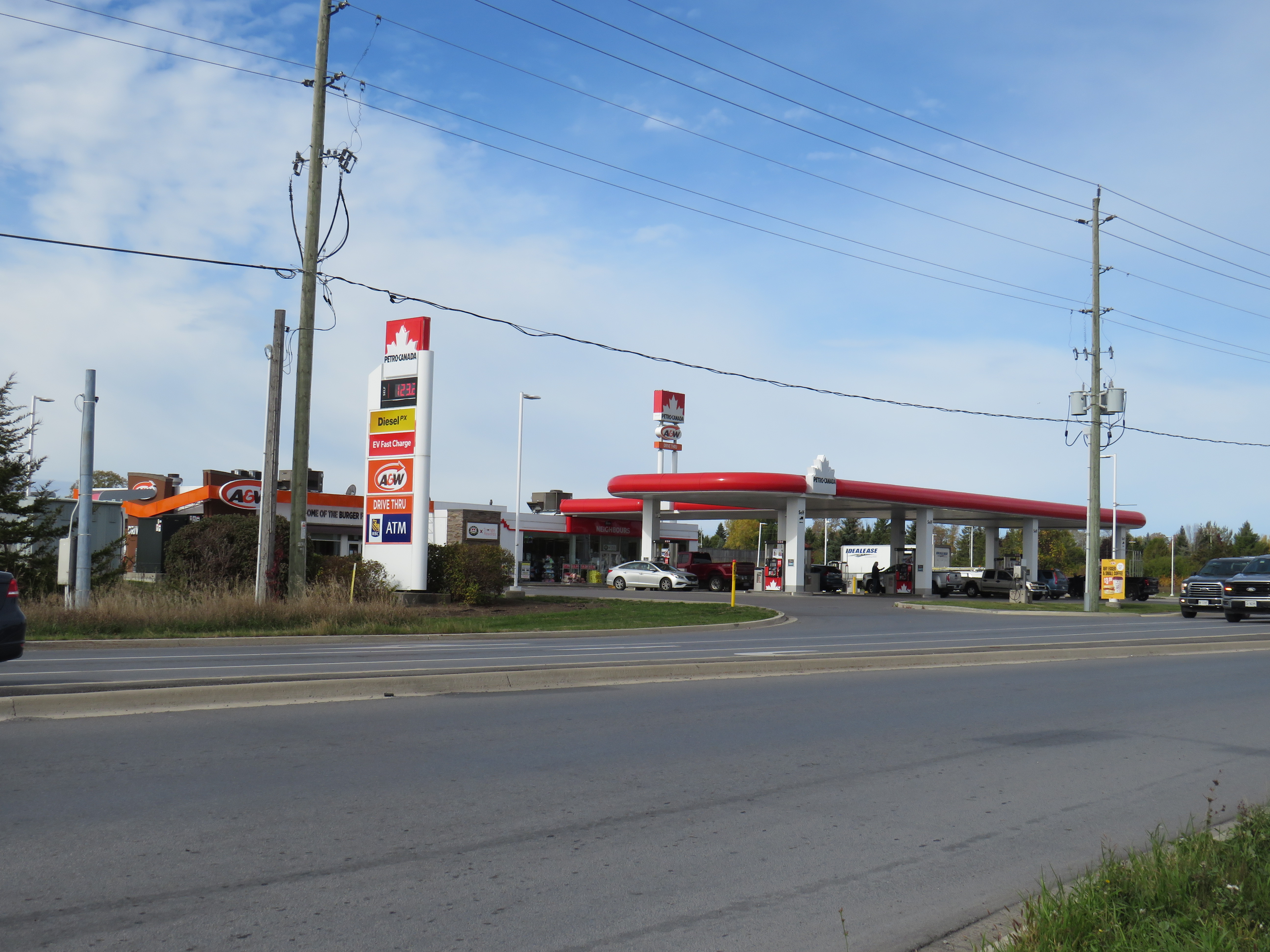
    The most challenging part was the walk from the Maple Bus stop at a Petro-Canada/A&W north of Highway 401 towards the town centre. Megabus stops across the street at a Flying J truck stop. Presumably, these bus stop locations are chosen because of their ease of access on and off the highway, and because the property operators are cooperative with the bus operators, but they make things difficult for anyone without a pre-arranged ride.

    The Maple Bus route stops at a Petro-Canada north of Highway 401

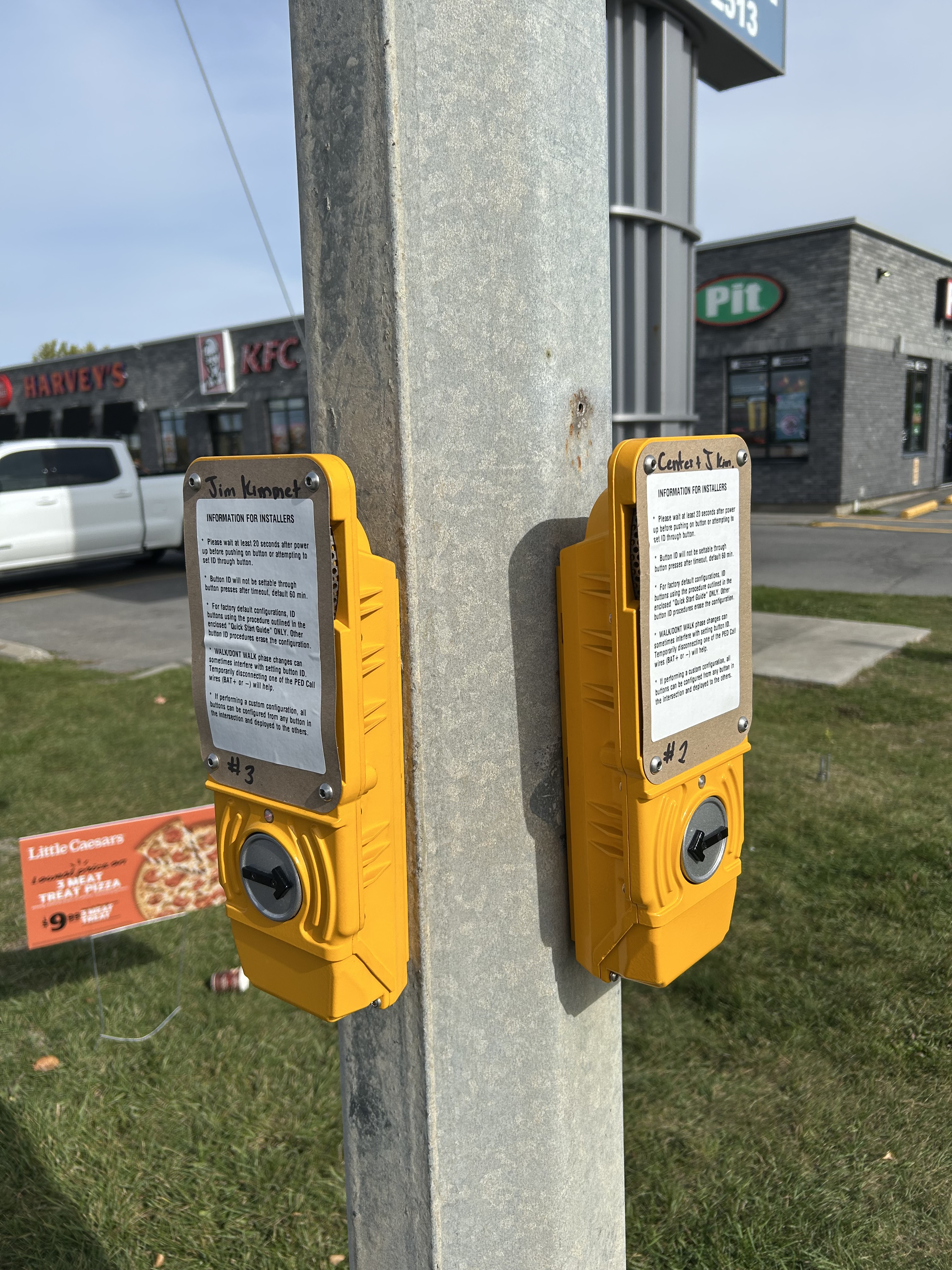
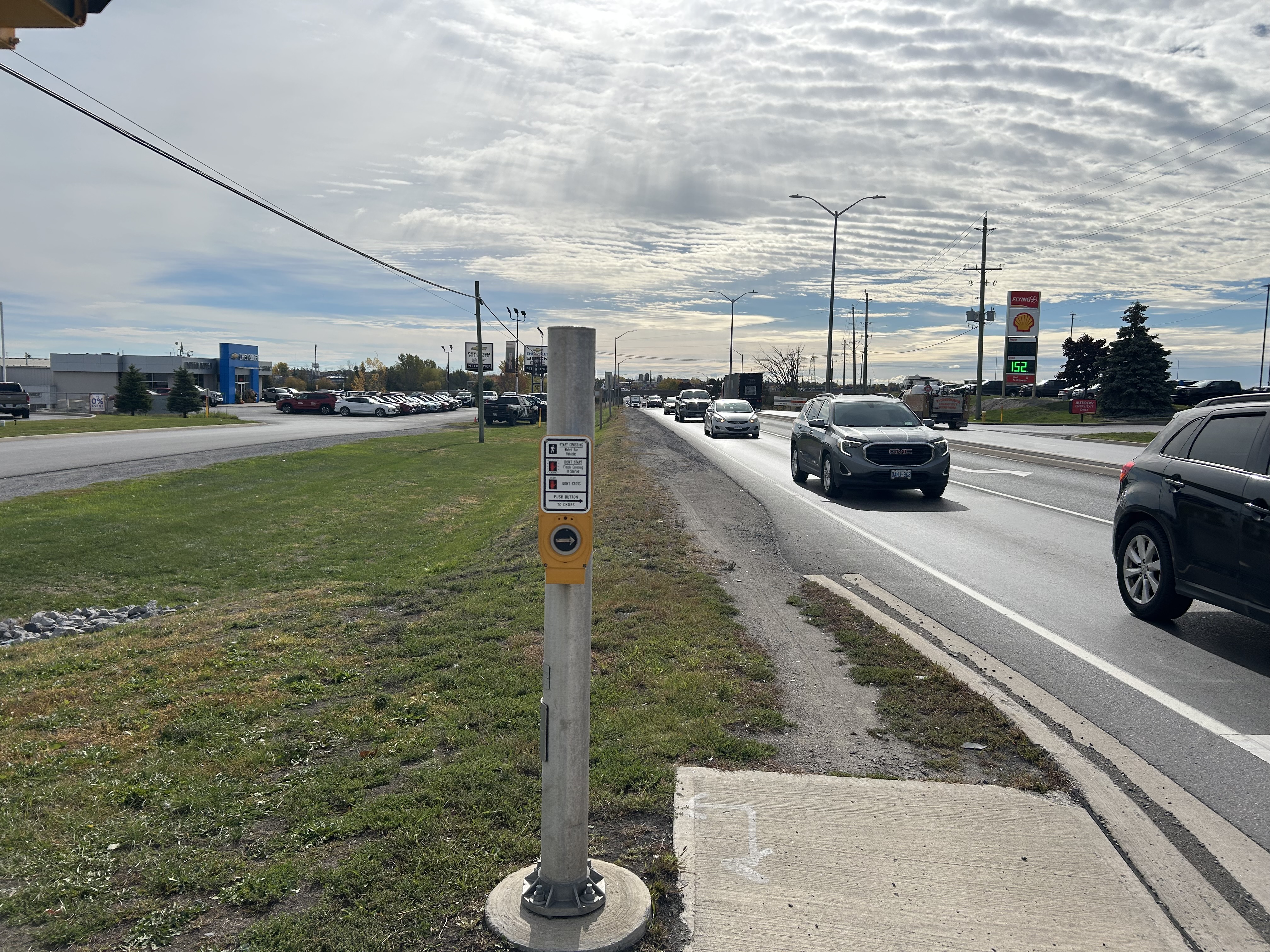
    Though there are signalized pedestrian crossings at Highway 41 and Community Road, next to the Flying J and Petro-Canada, complete with crosswalks and “beg” buttons, there are no sidewalks continuing in any direction. Many push-button panels still have their installation instructions visible, rather than a “push button to cross” message.

    Instructions for beg button installation still visible on two panels in Napanee
    A dirt path continues south where there should be a paved sidewalk. The Flying J truck stop is on the right.

    My walk south into the town centre required a precarious crossing of Highway 401 in a dark underpass alongside four lanes of traffic with very little clearance, as seen in the video below. Just further south of the interchange, there was another squeeze point at a drainage culvert. In snow, ice, or wet conditions, this would be especially dangerous.

    Navigating the walk along Highway 41 south towards Napanee

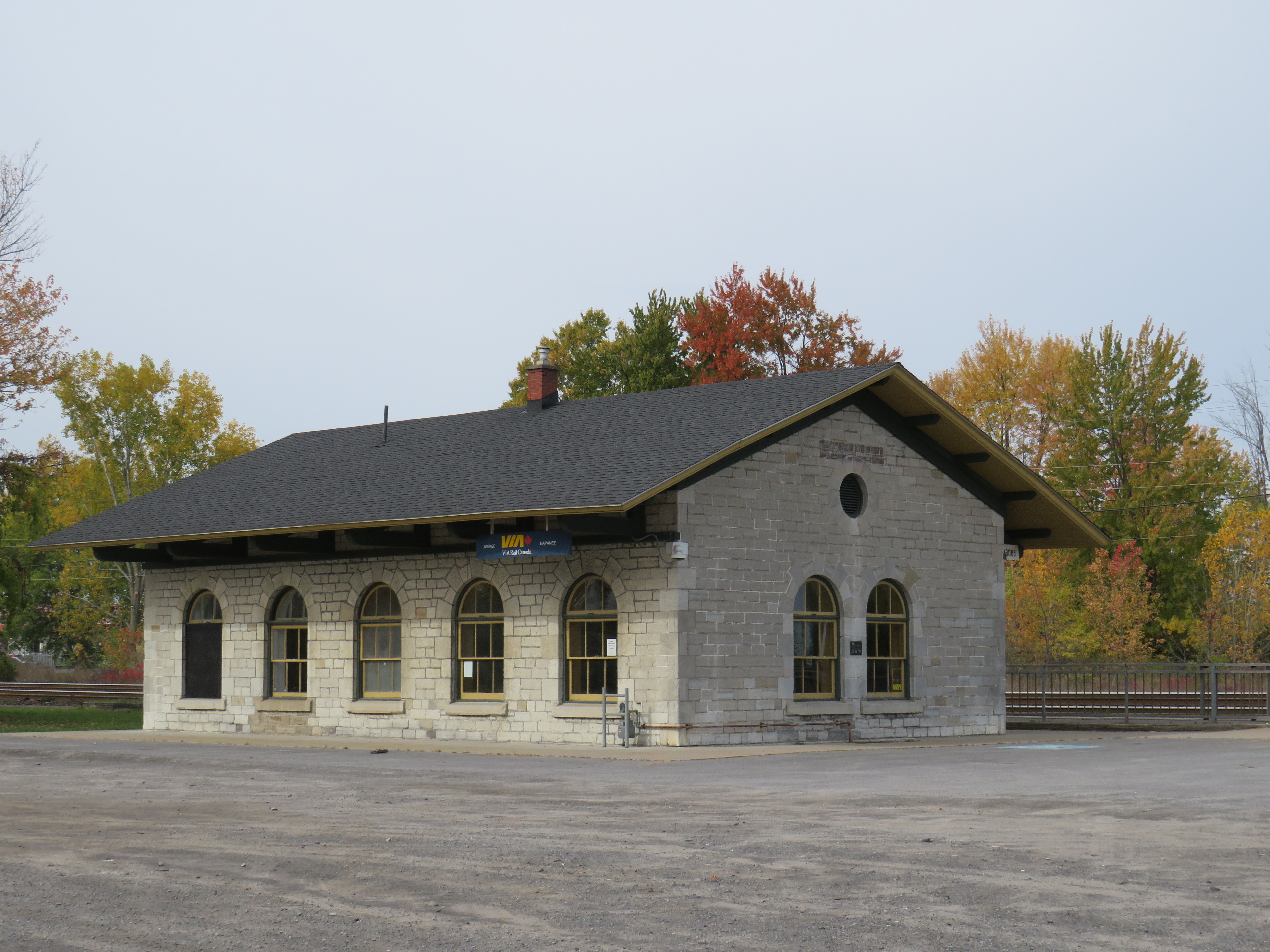
    The VIA Rail station, located at a historic Grand Trunk Railway structure, is a short walking distance to Napanee’s downtown core, and to much of the populated urban centre. However, with a very limited train schedule and higher fares, many will still opt for the bus.

    Napanee Railway Station

    Unfortunately, the last-mile problem is common with intercity bus services, where bus stops are chosen out of convenience rather than passenger access and comfort, with distant truck stops favoured in places like Napanee, Chatham, and Cornwall. In major centres such as Toronto and Ottawa, carriers will choose more central, transit-accessible stops, but in smaller cities and rural areas, passengers are left on their own.

  • New transport links in Eastern Ontario

    New transport links in Eastern Ontario

    River Route, operated by Brockville Transit, serves several communities in Eastern Ontario

    A few new transit services have come online in Eastern Ontario in the last few years. In Leeds and Grenville Counties, the River Route connects Brockville with Prescott and Cardinal. North Grenville, which includes the town of Kemptville, launched an intra-municipal on-demand service earlier this year, with a new Ottawa connection that started earlier in September.

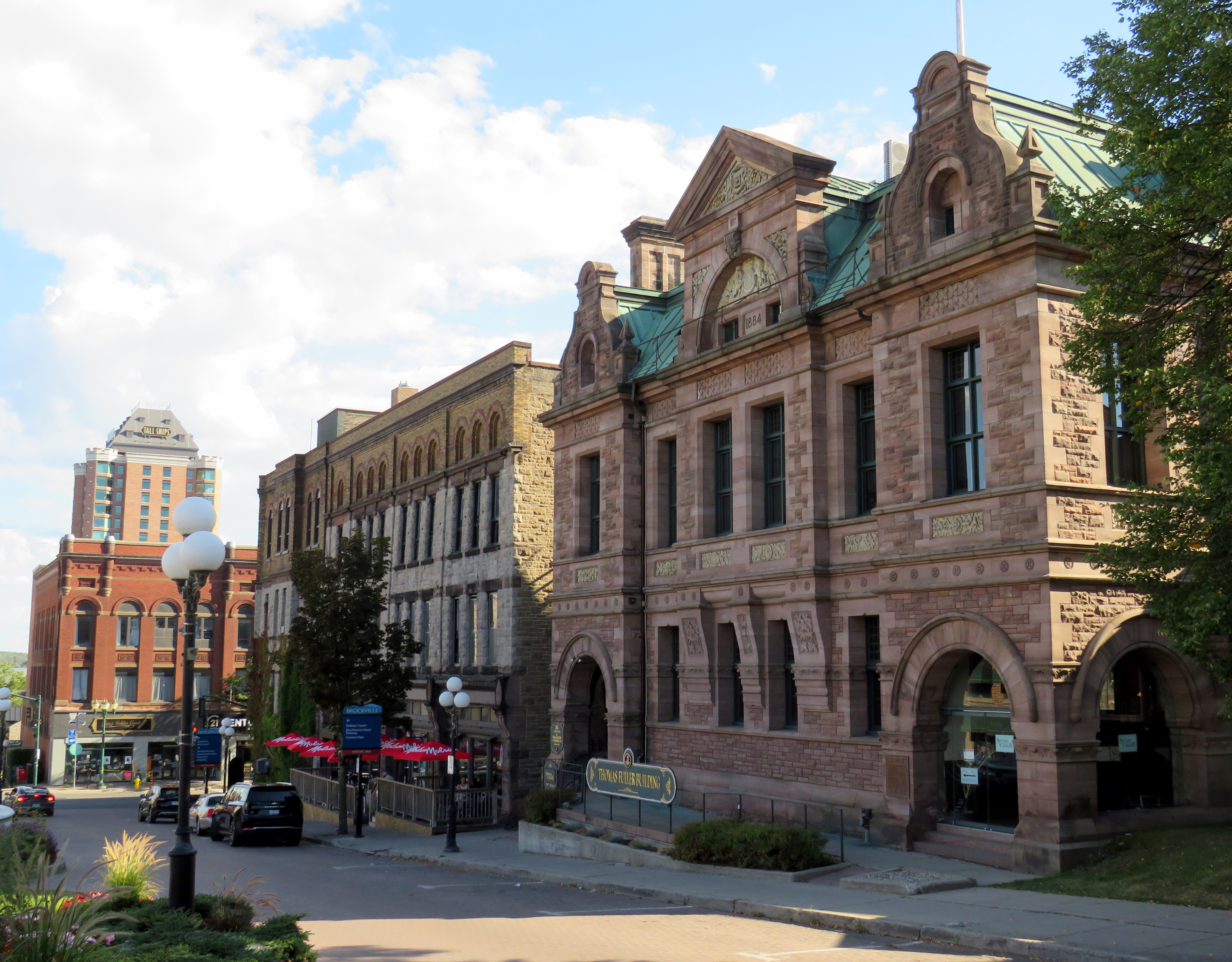
    The River Route connects with Brockville Transit in a big-box retail plaza, with timed transfers with local services to the nearby hospital, VIA Rail Station, and Brockville’s beautiful downtown core. The regular River Route fare is $5, though it includes an inbound free transfer to local Brockville Transit routes (though not the other way around). I recently travelled to Brockville and Prescott to check out the service, and I found it to be well used. Hugging the St. Lawrence River and passing through several historic towns, it might be Ontario’s most scenic regional bus route.

    Downtown Brockville

    The small city of Pembroke restored local public transit within the municipality, a weekday-only on-demand service. Unfortunately, Pembroke is only connected to neighbouring communities by a once-a-day Ontario Northland bus that runs between Sudbury and Ottawa.

    Despite these improvements, vital connections remain missing. Commuter bus services from Ottawa to neighbouring towns such as Arnprior, Almonte, Carleton Place, and Rockland have not been restored; only Kemptville, Cassleman, and Russell/Embrun, have limited weekday service again, despite the federal, provincial, and municipal governments’ push to bring civil servants back to the office up to five days a week.

    In Prescott & Russell Counties, experiments with fixed-route and on-demand transit have failed, though those came at a time when COVID-19 was still declared a public health emergency. The Town of Hawkesbury, population 10,194, is the second-largest urbanized municipality in Ontario without any inter-community transport links. (The largest is Tillsonburg, which lost its connection to Woodstock earlier this year.)

    I have made updates to my intercity transportation map to include these changes: I also added a missing service in the Lachute, Quebec region. If there any further changes that I have missed, please contact me.

  • The end of the line at Porcupine

    The end of the line at Porcupine

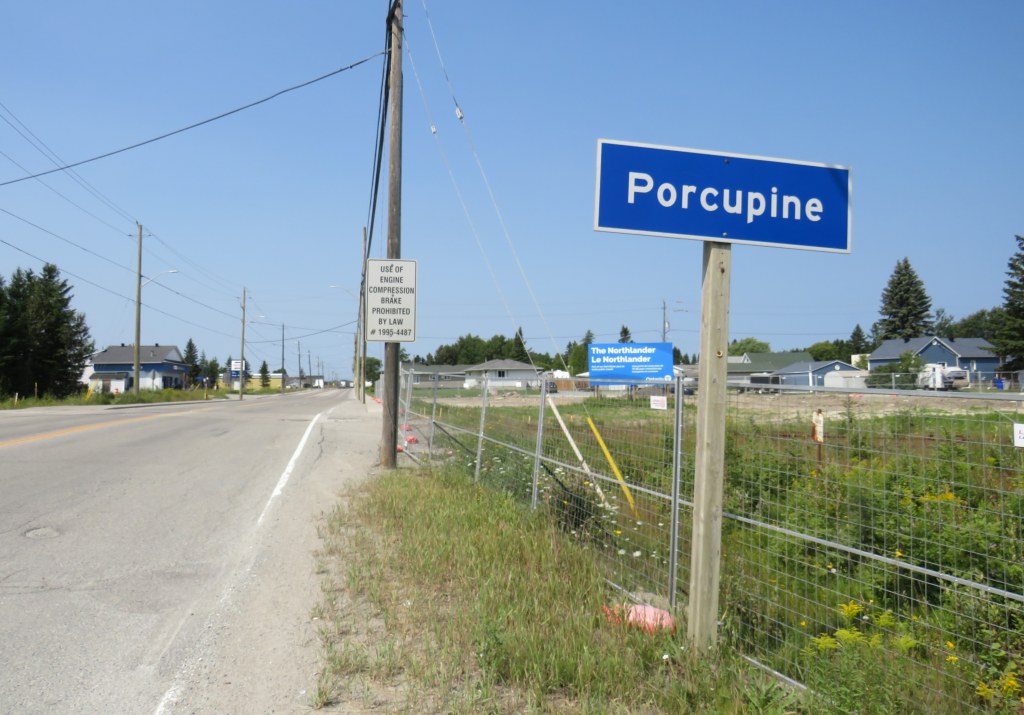
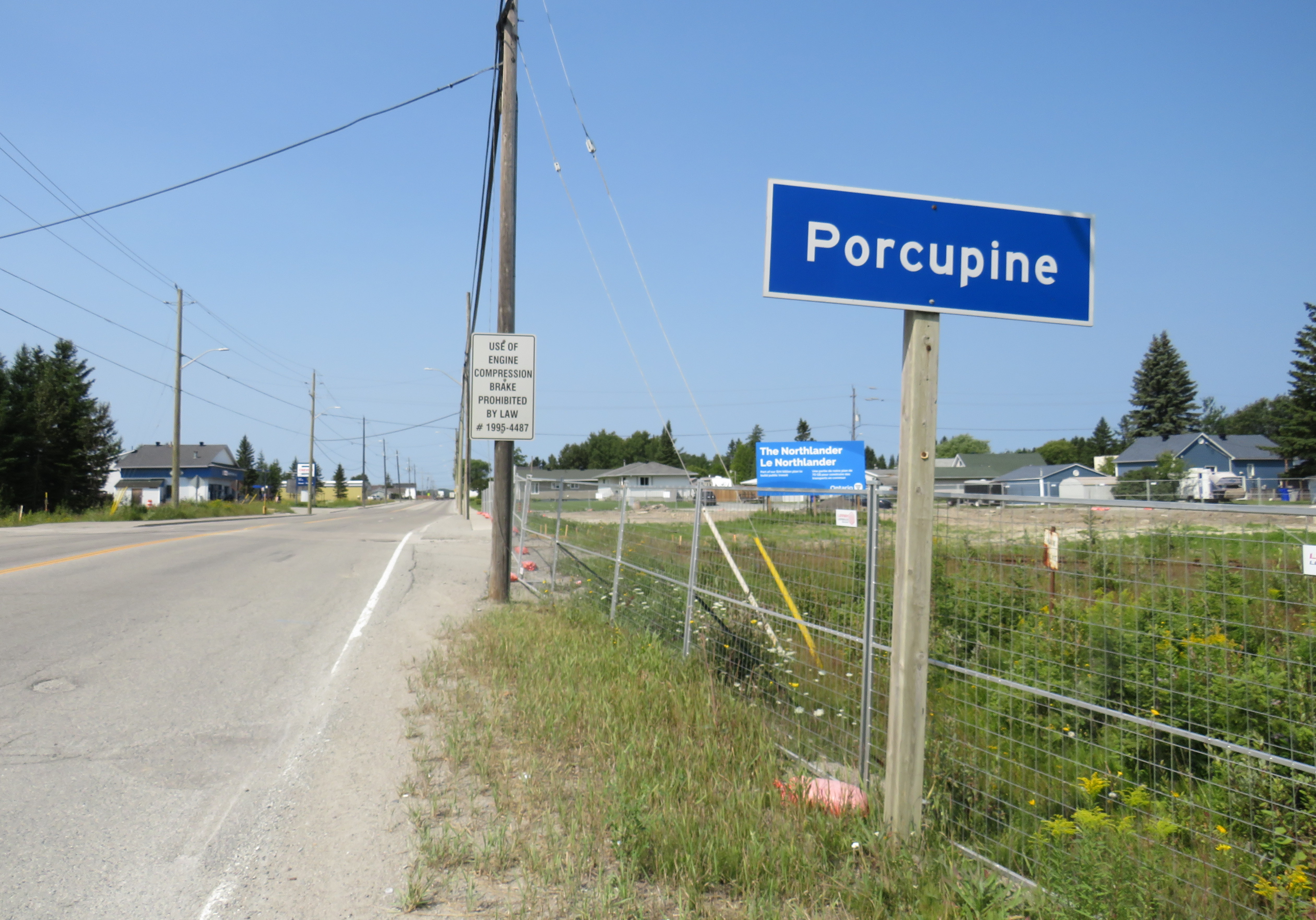
    Sign says "Porcupine" near the new Ontario Northland terminus.
    The end of the line for the restored Northlander train

    Timmins, a resource town of 40,000 in Northeastern Ontario, is known for a few things: gold mines, beer parlours, the birthplace of country musician Shania Twain, and the place where folk musician Stompin’ Tom Connors got his start. If Connors — a travelling musician who delighted small town crowds with songs about their communities (like the hard working and hard drinking times of a “Sudbury Saturday Night”) — was still around, he’d probably write and perform a new song about getting kicked off an overnight train in the sparse environs of Porcupine, Ontario. After all, the song would quickly rhyme itself.

    Porcupine is a small community of about 1,000 on the far eastern edge of the populated area in the geographically gigantic City of Timmins. Before the wave of municipal amalgamations across Ontario in the 1990s and early 2000s, Timmins was the largest city or town in the province by geographic area; it was formed through the amalgamation of the smaller City of Timmins with adjoining Mountjoy and Tisdale Townships (along with the town of South Porcupine) in the 1970s.

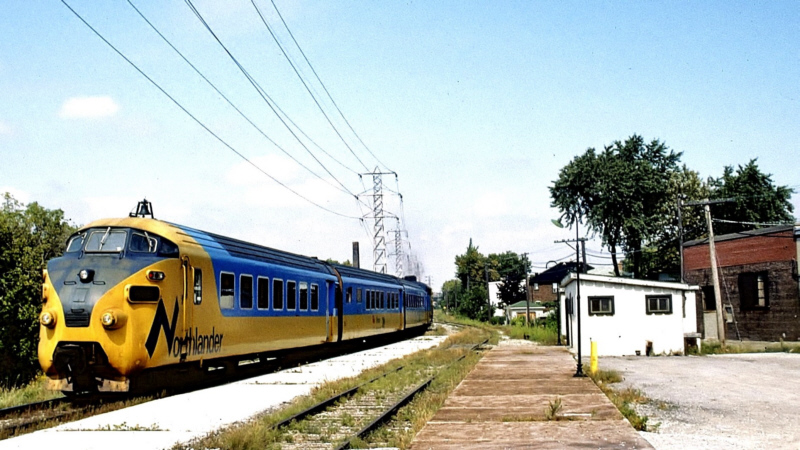
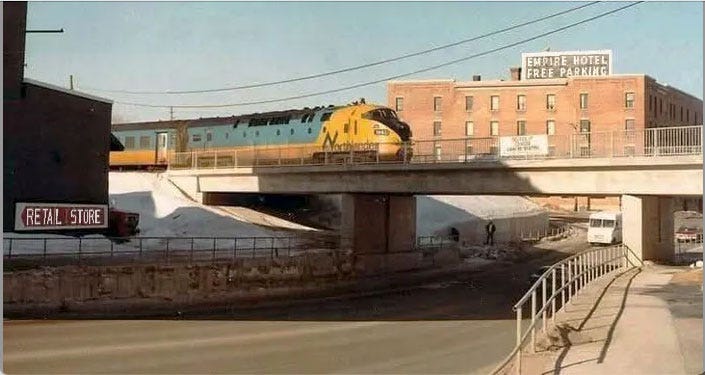
    Until 1990, when the devastating cuts to VIA Rail took place, there were two daily trains between Toronto, North Bay, and Northeastern Ontario. The Northlander, a daytime train operated by Ontario Northland Railway, terminated at a downtown station in Timmins. The Northland, a joint VIA/ONR train, ran overnight between Kapuskasing and Toronto, with a bus connection to downtown Timmins. Famously, for a short period the daytime Northlander operated using former Trans-Europ-Express (TEE) cars, purchased used from Dutch and Swiss rail operators.

    Northbound Northlander TEE set at St. Clair Avenue in Toronto, by HardHatMak on Flickr

    After 1990, Timmins was only connected by bus, with one daily bus to North Bay (and onwards to Toronto), and one bus, six days a week, to Sudbury (with connections to Toronto). The new daily overnight train — discussed earlier on this site — promises to restore a new daily trip, along with a more comfortable journey, even if sleeping accommodations will not be provided.

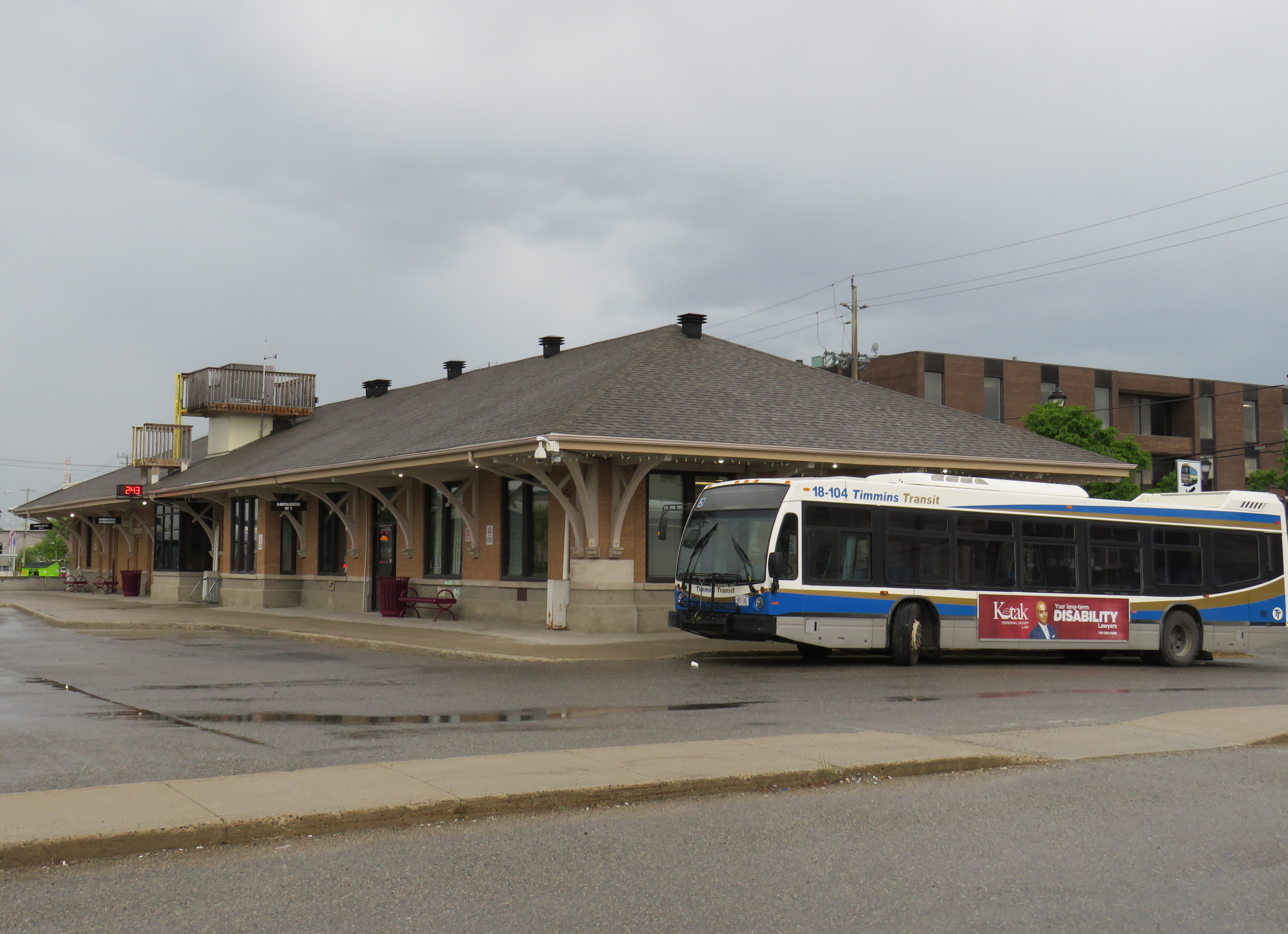
    Timmins Station with transit bus
    The Timmins Station is now a bus terminal serving local transit and Ontario Northland intercity coaches

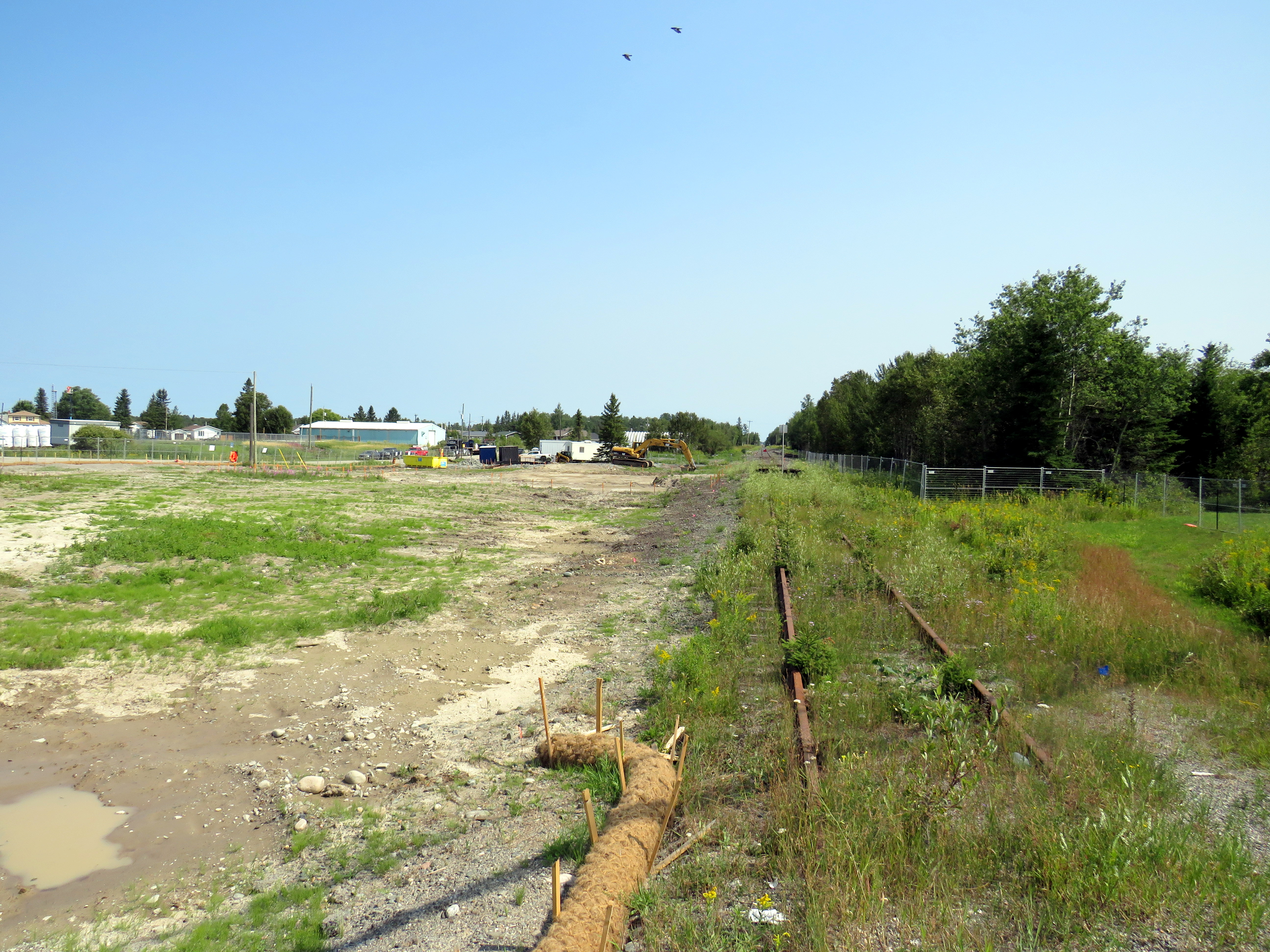
    Unfortunately, the train will not be returning to Downtown Timmins. The end of rail is at Highway 101 at Porcupine, 13 kilometres to the east. Since abandonment of the passenger rail service, the railway was torn out west of South Porcupine; the railway overpass over Algonquin Boulevard (Highway 101) near the old Timmins Station was removed last year. Ore collected at the open-pit gold mines, previously loaded onto railcars, is now sent on massive dump trucks for processing at a plant at Hoyle, east of Porcupine.

    The Northlander train departs Timmins on the now-demolished railway bridge over Algonquin Boulevard in the early 1980s

    Happily, the Timmins station building remains in use as a transit terminal and Ontario Northland coach stop; it will likely serve a bus shuttle to the new Timmins-Porcupine Station now under construction.

    The end of track at Highway 101 in Porcupine; construction has started on the new terminal station for the Northlander

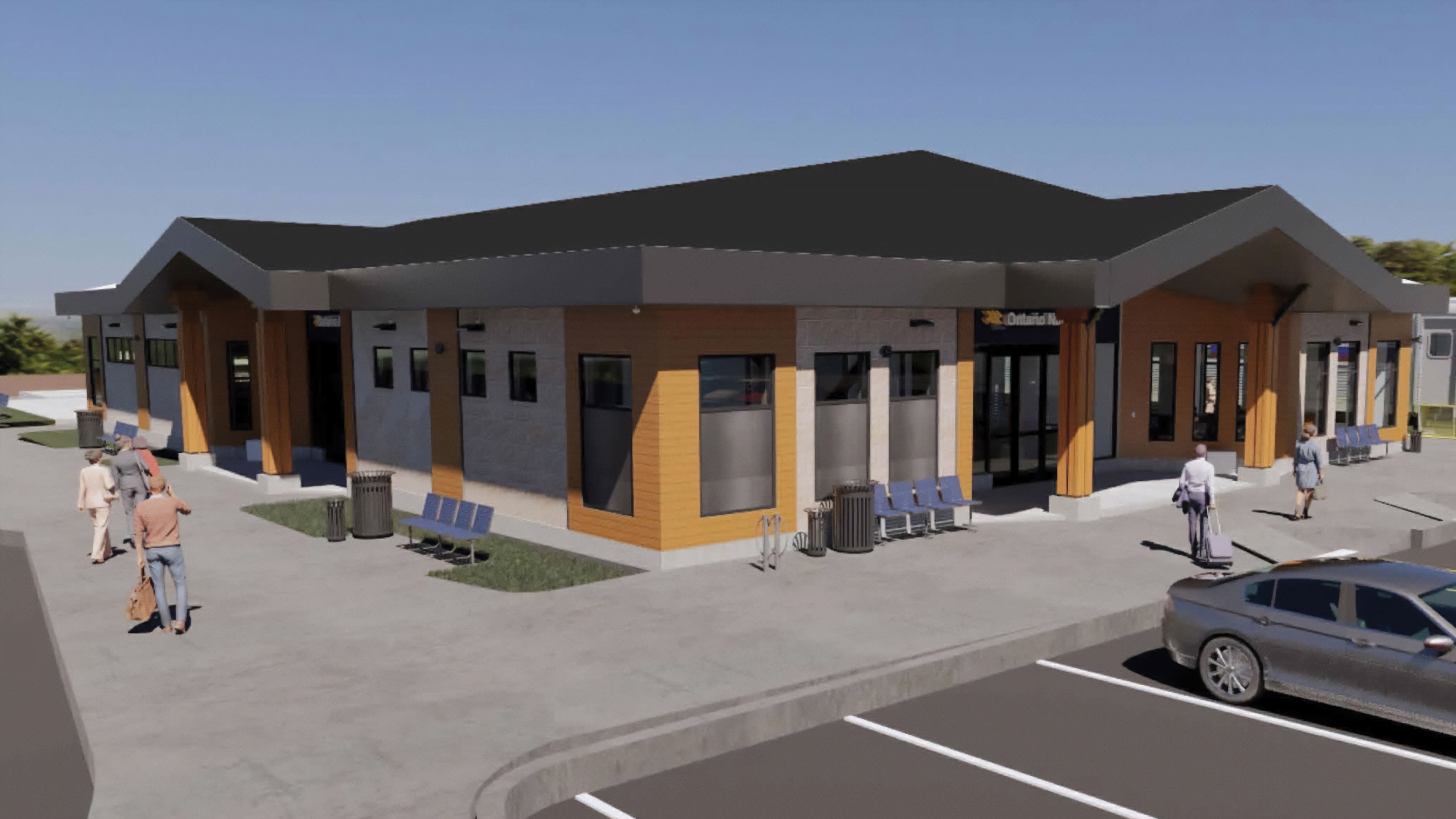
    Since I last wrote about the promised return of the Northlander, there have been a few updates. The new station building will be somewhat more substantial than first proposed; it will include washrooms, a waiting area, and a service counter for ticket sales and bus parcels. This is welcome, as there is very little around the Porcupine station site. Nearby, there are only a few dozen houses, a propane depot, a small park, and a gas station across the street.

    Rendering of new Timmins-Porcupine Station

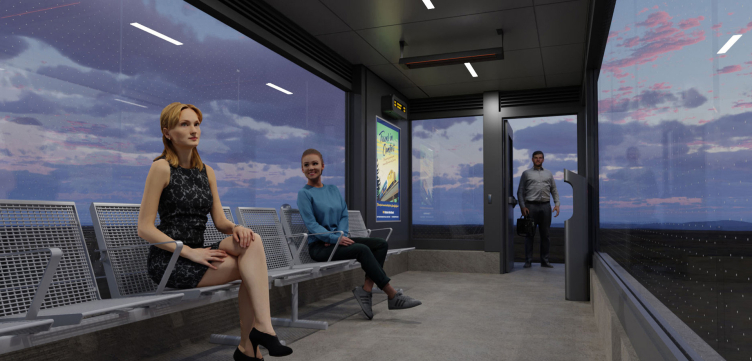
    Most other stations will still just get enclosed shelters, though at Matheson, Swastika, New Liskeard, and Temagami, the construction of new platforms is well underway. Even though there are heritage passenger stations at Matheson (which just escaped demolition), Temagami, South River, Huntsville, and Gravenhurst, there will just be shelters for Northlander passengers at these stops. Shelters depicted on the Ontario Northland website resemble those at BRT stops or GO Transit station platforms, with lighting and overhead heat.

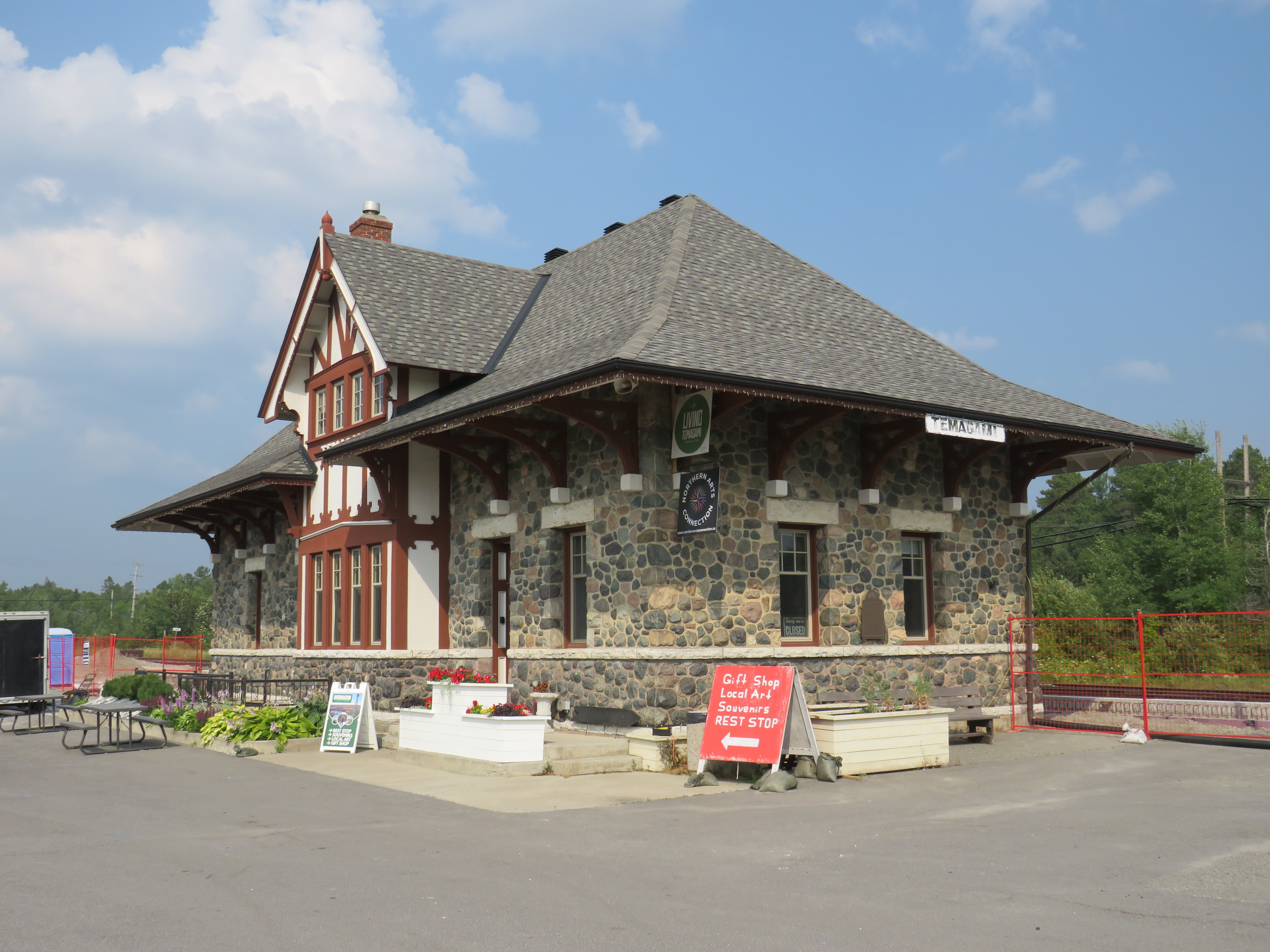
    Fencing protects the construction of a new platform beside the handsome Temagami ONR Station. The station building will not be used for passenger services; it currently hosts a café and gift shop.
    Rendering of passenger shelter for Northlander stops

    It will be nice to see the return of passenger rail to Northeastern Ontario when it launches in two years. Unfortunately, I remain unsure whether it will attract enough riders to be seen as viable after a year or two of service.

  • Why Wasaga Beach needs to be open to all

    Why Wasaga Beach needs to be open to all

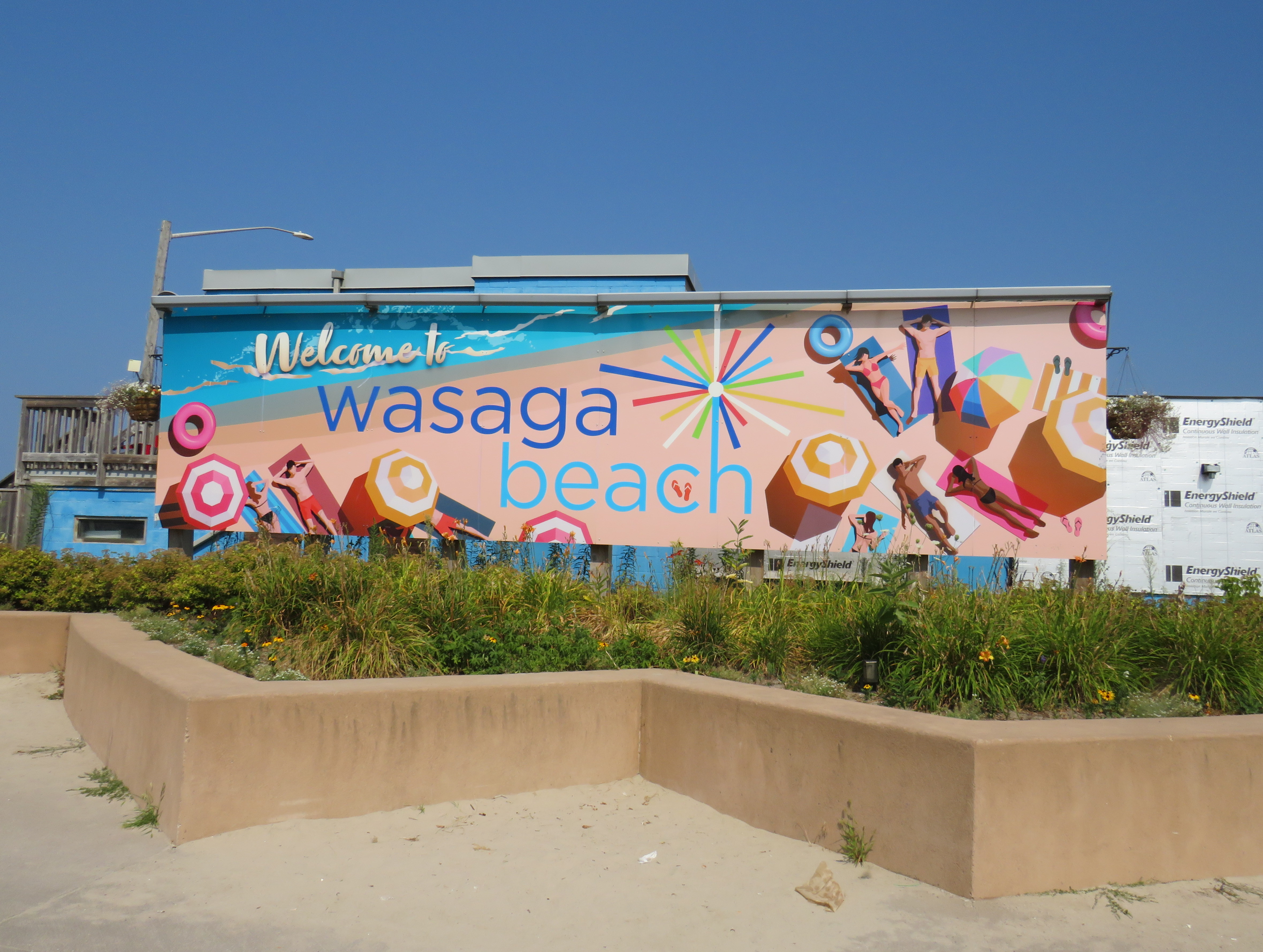
    "Welcome to Wasaga Beach" billboard

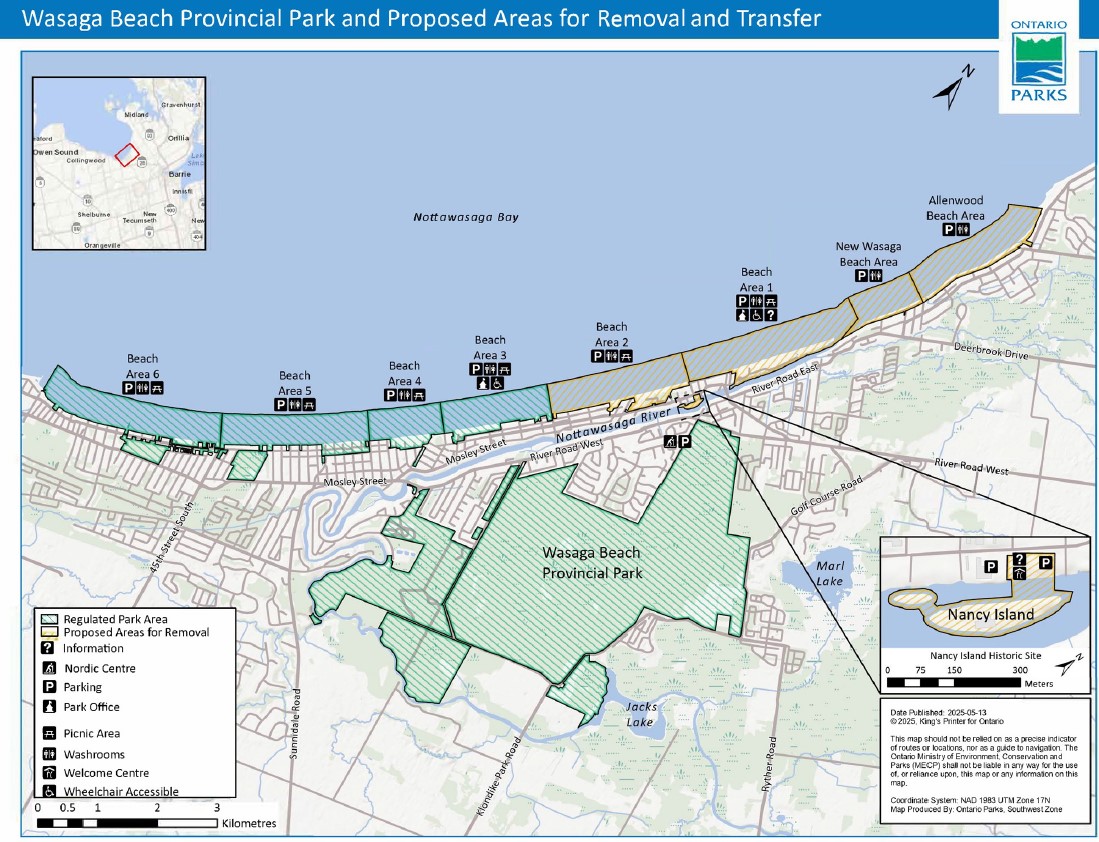
    In late July, online news outlet PressProgress reported on the provincial government’s plans to divest itself of 60 percent of the beach areas of Wasaga Beach Provincial Park, transferring the waterfront lands to the Town of Wasaga Beach. This report raised a number of concerns, including environmental issues (the beach is an important habitat for the piping plover, an endangered species of shorebird which breeds on sandy shorelines), as well as continued public access to the world’s longest freshwater beach. By amending legislation to transfer these lands from provincial to local control without future votes in the legislature, future provincial park lands could also be sold off to municipalities or to the private sector.

    Wasaga Beach Provincial Park and proposed areas for removal and transfer to the municipality

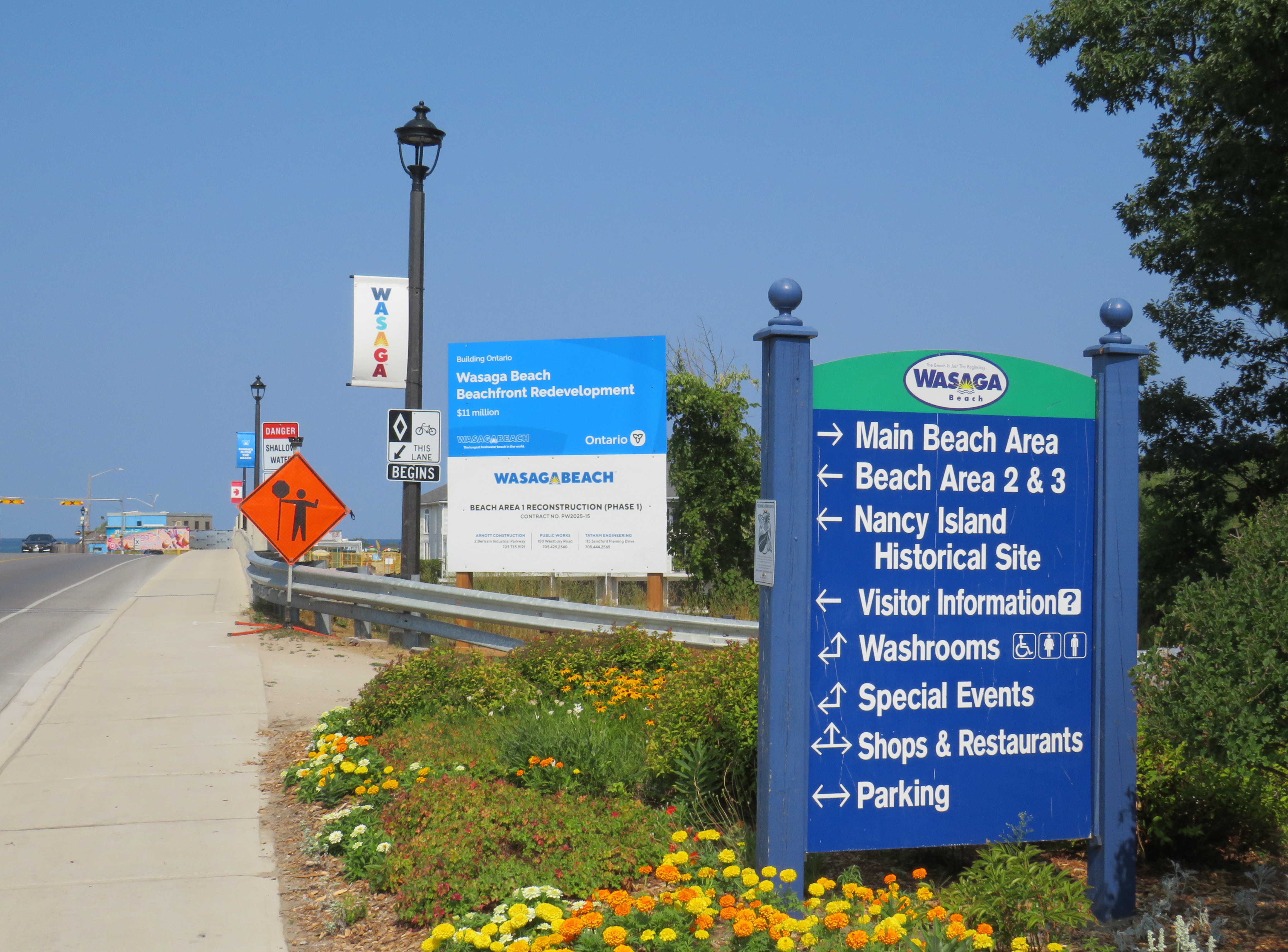
    For its part, the province claims that this will only be a one-time transfer, intended entirely to promote economic development in Wasaga Beach and Simcoe County. It is also providing money to redevelop existing commercial areas, partially destroyed by arson in 2007, and rebuilding a road that borders the beach.

    Sign touting provincial funding for Wasaga Beach's beachfront redevelopment
    Sign touting provincial funding for Wasaga Beach’s beachfront redevelopment

    Amending the Act to permit the divestment of protected lands is a bad precedent, though arguably it was already set by the privatization of much of Ontario Place for the troubled Therme spa development. The closed Ontario Science Centre grounds remain in limbo as well.

    As Shawn Micallef recently pointed out in the Toronto Star, much of Ontario’s prime lakefronts are privatized or purposely made inaccessible to outside residents — not just the popular Muskoka Lakes, but also much of the Great Lakes shores, such as in Tiny Township near Midland. The big, popular, beach areas are worth preserving and expanding, not only to meet current demand, but also provide sustainable and affordable getaways for a growing population in Southern Ontario.

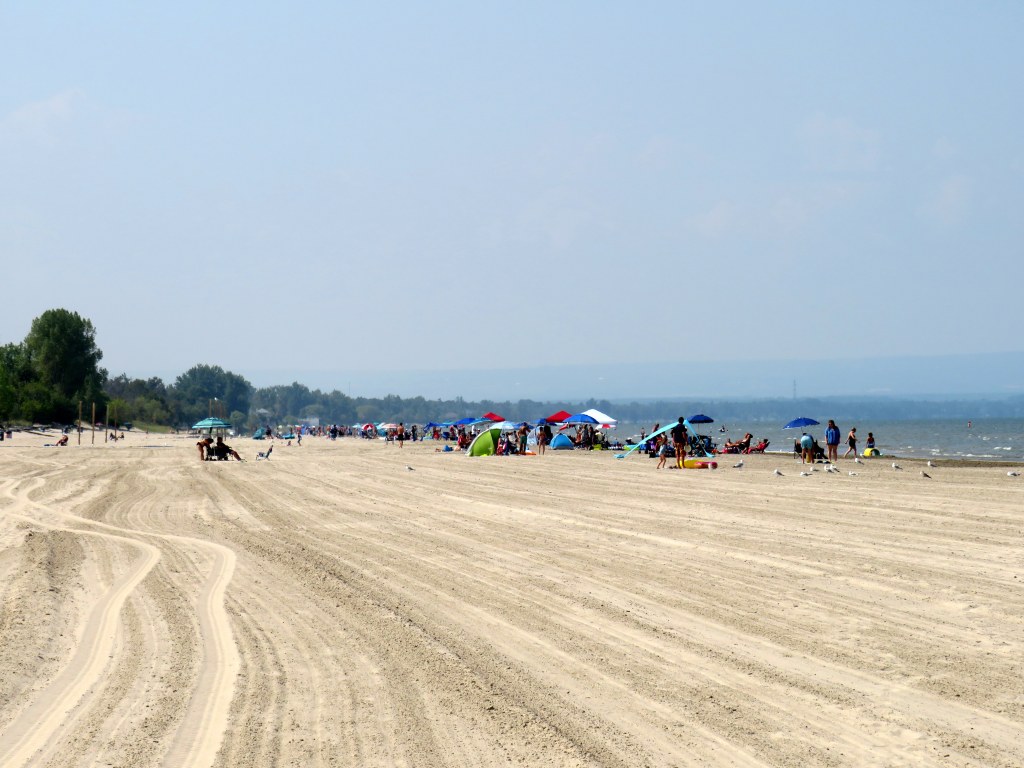
    The beautiful sand at Wasaga Beach Provincial Park on Thursday, August 14

    That demand for summer lake access brings up another challenge — how to get people to and from beach destinations. In Toronto, the lineups for the Island ferries are notorious in the summer. The compound where ferry-goers are forced to wait only adds to the inhospitable atmosphere, though temporary shade structures were added for 2025. The beach at Ontario Place, one of the cleanest on Lake Ontario, has been closed off for the controversial Therme spa construction.

    For those living in Toronto’s suburbs, or anyone looking to avoid the downtown congestion, to get to a good beach will probably mean a road trip to somewhere like Wasaga Beach, Sauble Beach, Grand Bend, Port Dover, Long Point, or Prince Edward County. Many of these places are completely inaccessible without a car, or at best, have limited bus options. Furthermore, even where there is a transit link, the best beach areas are nowhere near where the bus or train makes its stops. Even though Brampton is a straight shot up Airport Road to Georgian Bay, driving is the only reasonable way to get to Wasaga Beach (as I will get into in the second half of this post).

    Right now, Wasaga Beach and Collingwood – a four-season resort town – are connected to Toronto, Barrie, and elsewhere only by two-lane roads: Highway 26, Airport Road, and Sunnidale Road. These roads are often congested with both visitors and with regular traffic. Highway 400 up to Barrie is already being widened, but it too will face additional traffic from population growth in Simcoe County and additional leisure travel.

    If Wasaga Beach goes ahead and develops transferred provincial parklands for more intensive economic development, it will have to contend with these transportation challenges. That will mean wider roads and new highways, improved transit links, or both.

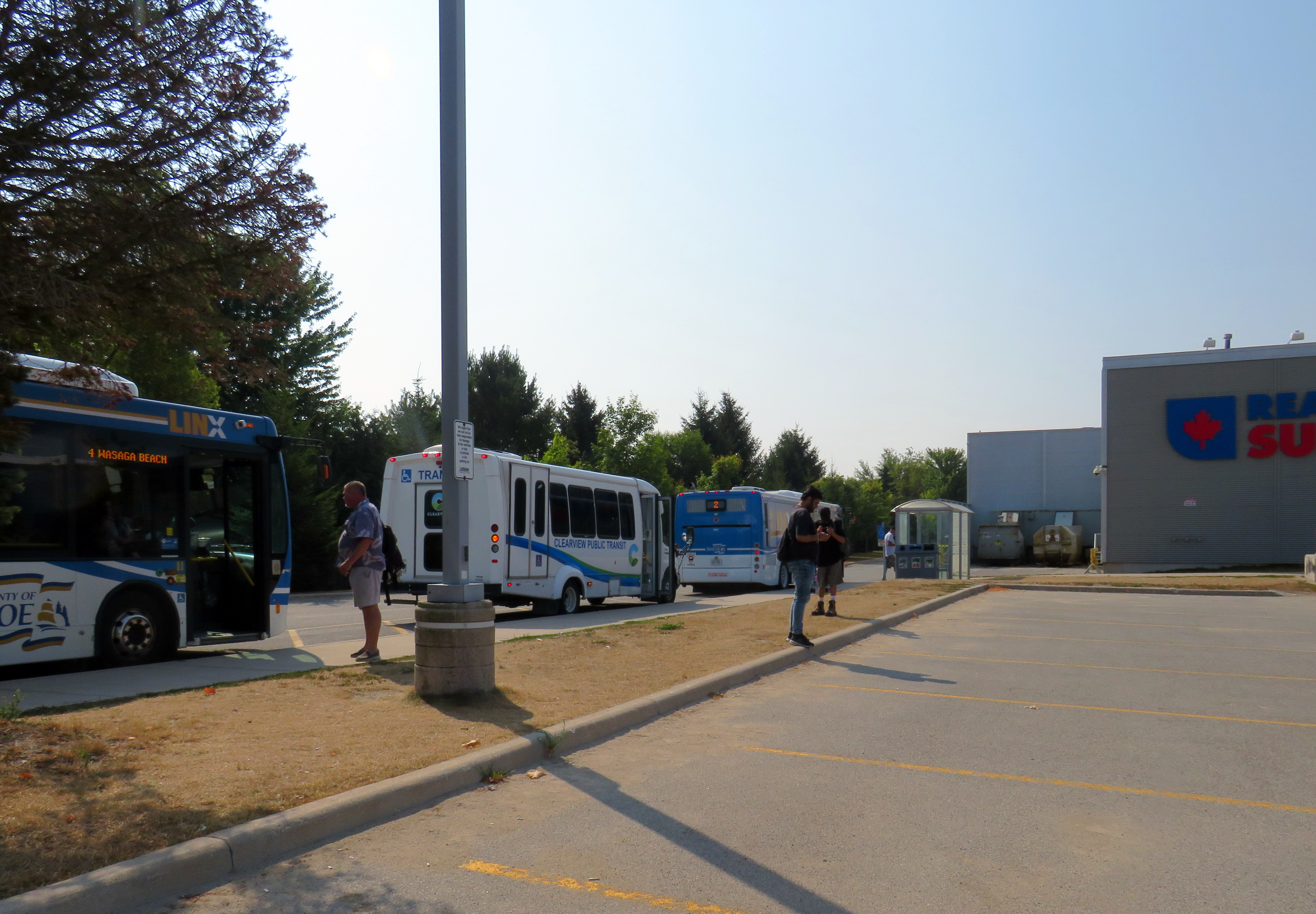
    Local and regional buses behind a Loblaws superstore parking lot in Wasaga Beach

    The way to Wasaga

    There are currently two ways of getting to Wasaga Beach without a personal vehicle or a taxi ride.

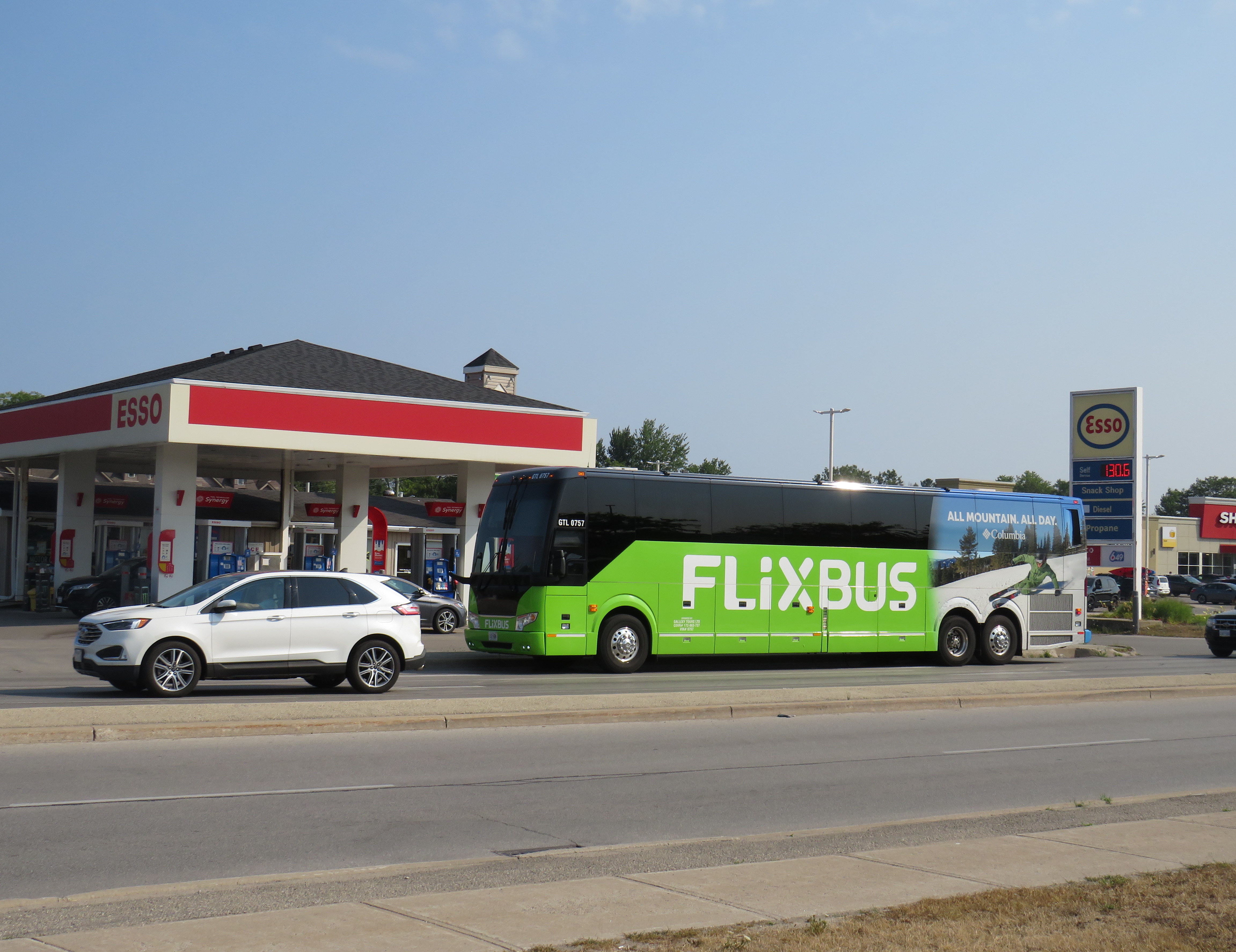
    There is one daily Flixbus coach trip from Downtown Toronto and Pearson Airport to Wasaga Beach, continuing onwards to Collingwood, Owen Sound, and Port Elgin. Northbound, the bus leaves Union Station Bus Terminal at 7:30 in the morning and arrives in Wasaga Beach at 10:00. The return bus leaves Wasaga Beach at 4:20 PM and arrives at Union Station at 6:50 PM, though traffic conditions can certainly impact those times. This bus is often nearly or completely sold out.

    Flixbus loads in front of an Esso gas station on Mosley Street at 45th Street

    A cheaper and more frequent option is Simcoe County Linx, a regional bus service provided by the County of Simcoe. Linx Route 2, which connects Wasaga Beach to Allandale Waterfront GO Station, connects with GO buses and trains as well as local Barrie Transit buses. Unfortunately, the Simcoe County Linx system has limited service hours, and routes do not necessarily connect with each other. The last buses on Route 2 leave Wasaga Beach and Barrie at 6:30 PM, and there is no weekend or holiday service. (The sole exception is Linx Route 4, which runs between Collingwood and Wasaga Beach seven days a week.)

    Both Flixbus and Simcoe County Linx stop on the west side of town, seven kilometres from the main tourist area at Beach Area 1. There are two Wasaga Beach Transit routes connecting these two points, but service is every 60-90 minutes. The limited bus options, combined with a lengthy transfer to get to the main beach areas, makes for an unpleasant trip. The early shutdown of Simcoe County Linx limits the time one can spend in Wasaga Beach, especially if it means a local bus transfer back to the west end of the town.

    Wasaga Beach Transit
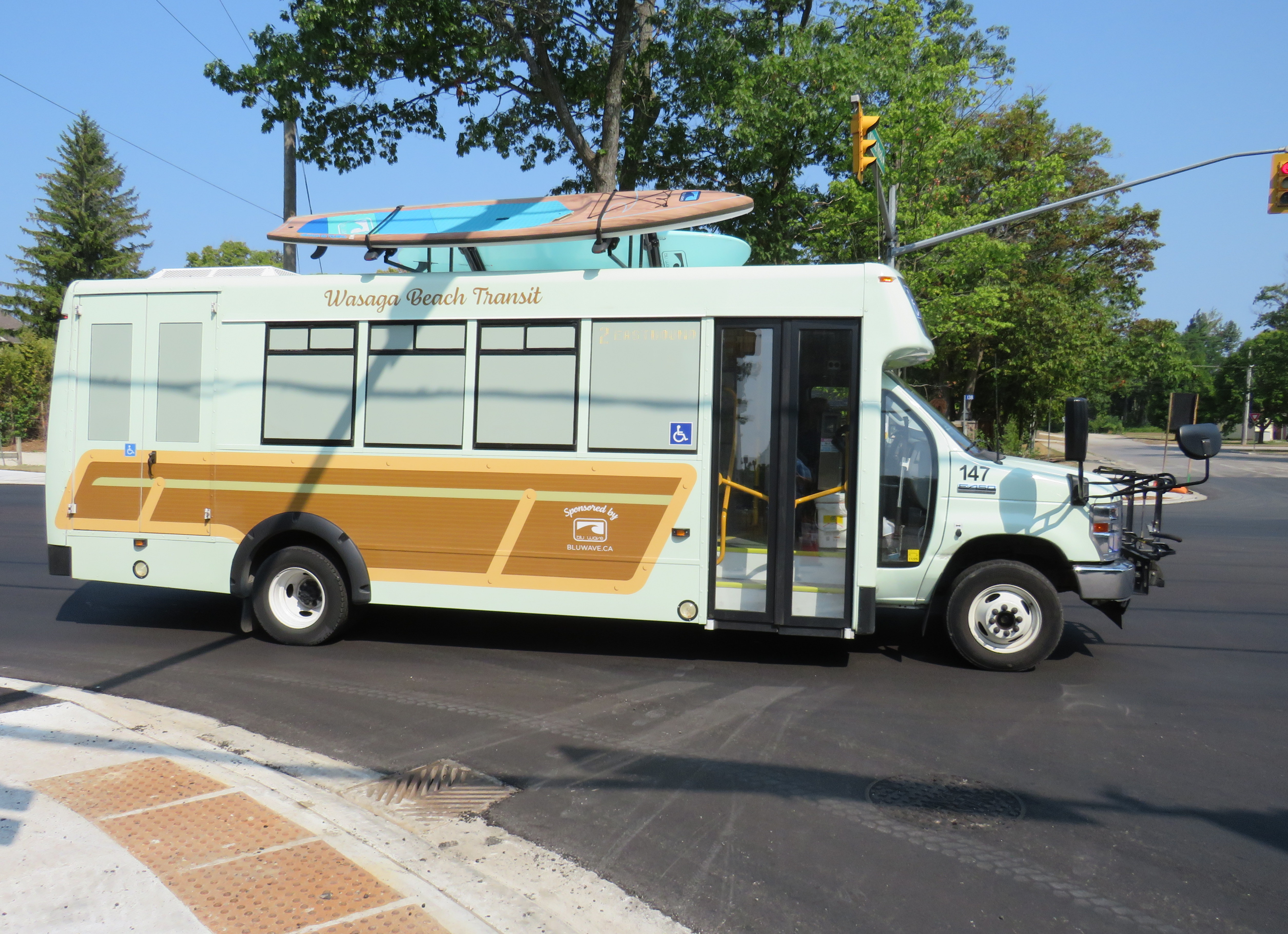
    Wasaga Beach Transit minibus, decorated with vinyl wrap and stand-up paddleboards affixed to the roof

    From Brampton or Mississauga, travellers must get to either Union Station or Pearson Airport to get the direct Flixbus service or get to the Barrie GO Corridor in order to make the transfer to Simcoe Linx. If there was only a direct bus up Airport Road from Peel Region, Wasaga Beach would be more accessible to another 1.5 million residents.

    Furthermore, the only connections to Wasaga Beach are via Airport Road from the south and via Highway 26, a mostly two-lane highway between Barrie and Owen Sound. Wasaga Beach has never had rail access, and the former Barrie-Collingwood Railway through Stayner has been torn up. Both roads are increasingly congested due to both tourist travel and regular commuter traffic; the towns of Collingwood, Wasaga Beach, and Stayner are all growing with new residential subdivisions. Costco is constructing a new retail warehouse at Mosley Street and Highway 26 on the Wasaga Beach’s west side.

    This is not just a Wasaga Beach problem. Access to most of Ontario’s other great beaches and resort towns is even more limited. Prince Edward County has a weekday-only bus service between Belleville, Bloomfield, and Picton, but it does not serve Wellington (home of the Drake Devonshire Hotel) or Sandbanks Provincial Park. Port Dover only has a weekday-only on-demand transit service accessible from Simcoe; Sauble Beach is only served by the same Flixbus route that runs through Wasaga Beach. At least Huron Shores Area Transit provides daily service to Grand Bend from both Sarnia and London.

    Port Stanley used to have regular electric train service from London — where the municipality owned the railway — until 1956. Even though bus services took over from the L&PS, the only way to get there these days is to drive.

    Though several Ontario cities have good urban beaches, accessible by transit — Ottawa’s Britannia Beach and Petrie Island, Hamilton Beach, and Toronto’s many beaches certainly count — there really should be better access for all to the great summer destinations like Wasaga Beach. That not only means protecting the land for public use and environmental preservation, but it also means providing accessible, sustainable, and equitable access by bus and rail. As Wasaga Beach and Collingwood seek to grow their populations and their economy, more transit is needed to connect residents to those additional jobs.

    To start, Simcoe County Linx should operate Route 2 evenings and weekends. In the longer term, Simcoe County, its constituent towns, and the cities of Barrie and Orillia should merge their transit systems, focusing on fare integration and facilitating easier transfers between its routes and with GO Transit. There is also room for more intercity bus services between the Greater Toronto Area — particularly Mississauga and Brampton — with Wasaga Beach and Collingwood, offering more capacity and faster, more direct options. On my way home on Thursday, August 14, it took me over four hours to get back to Toronto Union Station via Simcoe County Linx and GO Transit buses; driving takes less than half that time, even with traffic.

    Wasaga Beach is a treasure of provincial significance. It deserves to remain owned by the public and fully open to all, with better access to those who can’t or don’t want to drive.

  • Buses to the big box

    Buses to the big box

    Timmins Transit bus headed west from downtown to Wal-Mart

    Last month, I found myself intrigued by American transit consultant Jarrett Walker’s observations about the difficulties of getting to Walmart stores by public transit in US cities. On Bluesky, Walker examined the long walks through hostile environments between Walmart stores and the nearest bus stops, and it is an interesting thread.

    In many US cities, Walmarts are often some of the busiest transit destinations.Here is the typical relationship between a Walmart (far right) and its nearest bus stop (far left).Note the details of the pedestrian experience between one and the other. 1/🧵

    Jarrett Walker (@humantransit.bsky.social) 2025-07-19T18:33:32.331Z
    Jarrett Walker’s BlueSky thread on US Walmart locations

    In response, I noted the more typical experience in midsized Ontario cities. Though American and Canadian land use policies are similar in many ways, complete with the post-1990s proliferation of “big box” retail developments, there are some significant differences. For example, local transit systems will often make an effort to serve big box retail clusters, particularly Walmart stores.

    This is something we do a bit better here in Canada. Below are Google Map screenshots of four Walmarts in small Ontario cities.

    Sean Marshall (@seanyyz.bsky.social) 2025-07-19T18:48:29.558Z
    BlueSky post that shows Walmart stores and bus stops in four small Ontario cities: Orillia, St. Thomas, Belleville, and Brockville

    Walmart stores are important to transit riders, especially in smaller urban centres that have few or no other major shopping centres. Most Walmart stores now have an in-store pharmacy, carry a full selection of groceries, and have ancillary services, such as medical clinics, haircutters, and opticians. Walmart itself will typically anchor a larger commercial development with other big-box retailers such as Home Depot or Canadian Tire. These commercial developments and surrounding areas will have up to have several hundred employees, some of which may also rely on transit.

    From the 1960s to the early 2000s, regional shopping malls were often major transit hubs in mid-sized cities and suburban municipalities in Canada, typically located in space set aside in the mall parking lot. For the most part, Canadian commercial landlords were willing to provide the space; in some cases, the terminal was even right outside one of the main entrances.

    In my hometown of Brampton, for example, two of the three major transit terminals were Bramalea City Centre and Shoppers World. Mississauga’s main transit hub is at Square One mall; Hamilton has large bus loops at Limeridge and Eastgate malls, and London has transit hubs at Masonville Place and White Oaks Mall. Smaller cities and towns such as Belleville, Orillia, and Peterborough would also be sure to serve the local shopping mall with at least one route stopping on the mall property, typically in a space set aside on a mall driveway.

    Sometimes, these mall terminals become too small or too difficult for buses to get in and out of. Brampton Transit grew, the Shoppers World and Bramalea City Centre terminals were moved to larger facilities off-site with better road access, but still close to the malls. In smaller cities, where the importance of enclosed shopping malls (anchored by traditional retailers such as Sears Canada, Zellers, and Hudson Bay) declined in favour of big-box retail, often located on the urban outskirts, the buses followed where their passengers needed to go.

    St. Thomas (Railway City Transit) and Middlesex County Connect minibuses wait for passengers in front of Walmart and Real Canadian Superstore

    In St. Thomas, a small city of about 45,000 people, the main transfer point is in front of the Walmart store parking lot, meaning that every bus rider gets a one-seat ride to the SmartCentres-managed property, which also includes a Loblaws grocery store, Canadian Tire, and over a dozen smaller stores, restaurants, and banks. The recent relocation of the transit hub from a struggling downtown to the big box centre to the west — which is actually closer to the city’s geographic centre — makes sense. It now also serves as the transfer point to the regional bus service to London.

    In Brockville, another small city in Eastern Ontario, the two transfer points are in the downtown and at “Box Stores Transfer” in the northeastern corner of the municipality. The latter is also the transfer point to the inter-municipal River Route to Prescott and Cardinal. In other smaller Ontario cities, including Belleville, Chatham, Orillia, Sarnia, and Timmins, there is at least one bus route extending to the end of the urbanized area to serve the Walmart and/or other large big box retailers. Often the stop will simply be called “Walmart” or “SmartCentres.”

    Sometimes, larger cities will have transit terminals in the middle of big box parking lots. On the south end of Sudbury, GOVA’s Route 1 Mainline terminates in front of a Walmart parking lot, with connections to three local feeder routes. A similar set up can be found in the north end of Guelph. In Waterloo, a large big box complex on the edge of the region’s urban boundary, Boardwalk, was designed with a central transit hub.

    Though the examples here are all Ontario examples, the pattern generally holds across Canada, from St. John’s, Newfoundland to Nanaimo, British Columbia, though there are many exceptions. It also helps that many Canadian Walmart stores are located in shopping malls as they are in renovated and/or expanded former Woolco or Zellers stores.

    Despite these attempts to provide transit services to retailers like Walmart, these are not ideal set ups. Shopping malls were designed as pedestrian environments within large parking lots. As long as there is a convenient, safe, and short walkway to the mall entrance, transit riders could be well-served. This is much harder with contemporary big box retail, as they are designed completely different. With malls, parking lots surround a cluster of stores. Most big box developments have the stores surround gigantic parking lots. Even if walkways and bus facilities were included in the site plan, there are still long, unsheltered walks between the bus stops and store entrances.

    Trinity Common Shopping Centre at Highway 410 and Bovaird in Brampton. The red lines mark where the buses stop.

    An early attempt to create a more transit and pedestrian site plan in a big box centre was Trinity Common in Brampton, which opened in stages in the early 2000s. There were distinct roadways, complete with sidewalks and street lighting; in the centre, surrounded by restaurant pads, were several bus bays and a transit terminal office. Several busy Brampton Transit bus routes converge here rather than simply stop on the adjoining multi-use roadways. Even so, the distances between retailers — which include Canadian Tire, a Metro supermarket, Home Depot and Brampton’s only multiplex cinema — make walking unpleasant.

    But at least, unlike the American examples Jarrett Walker highlighted, there’s an attempt at doing better. Hopefully, the next generation of retail centres — mixed use developments with residential uses on upper levels — do better with incorporating the needs of pedestrians, cyclists, and transit users.

  • Deadly by design: Burnhamthorpe Road

    Deadly by design: Burnhamthorpe Road

    A dented light pole is the only indicator of a deadly collision in Mississauga City Centre

    On Saturday, June 7, around 10:20 AM, the drivers of two vehicles collided in the intersection of Burnhamthorpe Road and Kariya Drive in central Mississauga. One of the two cars that collided, a Tesla sedan, slid onto the sidewalk on the southeast corner, hitting a traffic pole, and then colliding with two pedestrians waiting at the corner to cross the street. One of the two pedestrians, a man in his forties, was killed; the other was taken to hospital with serious injuries. CBC Toronto, CP24/CTV News and the Toronto Star covered the collision.

    Unfortunately, there has been no follow-up reporting so far, and there is no press release or statement on the Peel Regional Police website.

    Screenshot of CP24 news report showing the badly damaged Tesla that crashed into two pedestrians

    A few days later, I visited the area to take note of the intersection and the surroundings.

    The intersection of Burnhamthorpe and Kariya is within the busy, urbanizing Mississauga City Centre (MCC) neighbourhood. MCC, also known as Downtown Mississauga, is the political, commercial, and cultural centre of the sprawling suburb of 750,000. The area is centred around Square One Shopping Centre, which opened in 1973, expanding several times in the next four decades to become one of Canada’s largest malls. Immediately to the west of Square One is Mississauga’s post-modern city hall, which is one of the most interesting and walkable civic centres in Ontario. Nearby is a performing arts theatre, a Sheridan College campus, several office buildings, a YMCA, central library, parks, a transit hub, as well as many high-rise residential towers. Newer residential development includes streetfront retail, oriented to the community with local restaurants, cafes, pharmacies, and grocery stores. Despite its greenfield suburban origins, Mississauga City Centre has become a true 15-minute city.

    Looking north on Confederation Parkway towards MCC
    Looking north on Confederation Parkway near Central Parkway, where MCC’s high-rise condominiums tower over older single-family homes

    The problem, though, is despite its impressive growth, MCC’s built infrastructure still has the trappings of a suburban speedway. Though some collector streets and minor arterials, like Living Arts Drive and Confederation Boulevard, are more human-scaled, with bicycle lanes, wider sidewalks, benches, and street trees, other streets have not been updated to suit the emerging urban environment. Burnhamthorpe Road is the best example of this.

    Looking east on Burnhampthorpe
    Looking east on Burnhampthorpe Road from Kariya Drive, towards Hurontario Street and the landmark Absolute condo towers

    Burnhamthorpe Road is six lanes wide, with an additional left turn lane at every intersection. Though there is a sidewalk on the south side and a designated multiuse path (MUP) on the north side, it is not a pleasant place to walk.

    Looking west on Burnhamthorpe
    Looking west on Burnhamthorpe Road, towards newly built and under-construction high-rise residential towers

    While I visited The MUP on the north side of Burnhamthorpe west of Kariya Drive was also closed off for the convenience of the builders of the Exchange District Condos development, one of many new mixed-use projects in the area. This forces pedestrians to cross the intersection to continue west, and no thought was made to closing one of the three westbound traffic lanes to provide a continuous path.

    Signs blocking path
    Multiple “sidewalk closed” bike lane detour, and “dismount and walk” signs blocking the asphalt MUP on the north side of Burnhamthorpe Road. Note that no traffic lanes were blocked to provide a continuous route for vulnerable road users.

    The intersection of Kariya and Burnhamthorpe is quite busy; at every light cycle, there were multiple pedestrians crossing here on mid Tuesday afternoon, including students walking to the mall or to home from nearby schools, couples and young families out for a stroll. (Kariya Park, named for a Japanese city that was twinned with Mississauga in 1981, is a lovely oasis.) Burnhamthorpe has a 60 km/h speed limit, though Kariya has a 40 km/h limit.

    Five pedestrians, standing where a man was struck and killed last Saturday, about to cross Burnhamthorpe Road on a Tuesday afternoon

    The corner is also a busy transfer point. Miway route 26 Burnhamthorpe is a major east-west bus corridor that connects with the TTC subway at Kipling Station; Kariya Drive is the best stop to get to Square One as Route 26 doesn’t serve the main terminal. Routes 3 Bloor and 8 Cawthra, which do continue to the City Centre Terminal, stop here as well.

    Route 26 Burnhamthorpe is one of MiWay’s busiest

    Also worth noting is that Kariya Drive is a signed school route. MCC itself does not have any elementary or secondary schools, but there are several schools within a short walk to the south of Burnhamthorpe, including Fairview Public School, Elm Drive Public School, St. Giovanni Scalabrini Catholic School, and Fr. Michael Goetz Catholic High School. The more people move into MCC, the more necessary safe walking routes will be.

    School route sign at Kariya Drive
    A school route sign with walking paths to three nearby elementary schools at Kariya Drive and Fairview Boulevard

    There is nothing particularly remarkable about the intersection of Burnhamthorpe Road and Kariya Drive itself that makes it deadly, but that is the problem here. To make walking safer and more attractive, there is much that should be done. Reducing Burnhamthorpe to four lanes in each direction, along with more street trees, could help to reduce speeds (the speed limit should also be dropped to at least 50 km/h), and with several nearby schools, parks, and YMCA, there’s a case for Burnhamthorpe to be designated a community safety zone, with increased enforcement, along with automated traffic cameras. Perhaps dedicated bus lanes could supplant the third traffic lane in each direction, as the nearby Hurontario LRT nears completion.

    Right now, drivers race through the intersection, making left turns against oncoming traffic and crossing pedestrians after the advance arrow signal disappears, as seen in the video below. Wide lanes and a 60 km/h speed limit encourage unsafe driving.

    Three motorists continue to make left turns from Kariya to Burnhamthorpe (behind the FedEx truck) after the advance turn arrow disappears and the green light for opposing traffic and walk signal turn on. Note several pedestrians waiting to cross as drivers rush through.

    To make Mississauga City Centre a complete urban hub, it needs to be safe for pedestrians and cyclists of all ages and abilities to get around. Six-lane arterials like Burnhamthorpe have no place in a dense, multi-use neighbourhood, especially when nearby Highway 403 can handle goods movement and through traffic. One death is too many.

  • BRT comes to London

    BRT median under construction on Wellington Street at South Street, London

    The City of London, Ontario has been quietly constructing a new bus rapid transit (BRT) system over the last few years, which will extend south and east of the downtown core. By the end of April 2025, the first major section of this network will begin operation.

    The Wellington Road and Fanshawe College segments are two of the four rapid transit routes originally proposed under London’s SHIFT. At first, a north-to-east line, connecting Masonville Place Mall, Western University, Downtown London, and Fanshawe College, was to be a light rail corridor, featuring a short tunnel under Richmond Street to avoid a busy freight railway crossing. A BRT line would have connected the west end of London, at Oxford Street and Wonderland Road, continued downtown, and head south towards the Victoria Hospital campus and White Oaks Mall near Highway 401. The map below shows the initial proposal.

    The original rapid transit proposal called for a light rail (orange route) connecting Western University, downtown, and Fanshawe College and a BRT (blue) corridor to the west and south of downtown

    Due to budget constraints, the project was revised to a BRT-only scheme. The Richmond Street leg, leading north to Western University, was cut when the bus tunnel under the CPKC railway and the Oxford Street intersection was deemed to cost $220 million in 2017. Business owners along Richmond Street, a busy restaurant, nightlife, and shopping district known as Richmond Row, were also opposed to the reduction in traffic lanes that the transit tunnel would have required.

    This section of Richmond Street — used by eight London Transit routes — is a severe bottleneck as it is not only a busy traffic corridor, it crosses CPKC’s mainline connecting Toronto, Windsor, and the US Midwest.

    Several buses cross Richmond Street north of Downtown London
    Several buses cross the CPKC tracks on Richmond Street north of Downtown London

    The pared-down BRT project consists of a curbside bus-only lane encircling the downtown core, following King Street, Wellington Street, Queen’s Avenue, and Ridout Street. At each turn, buses must wait for a dedicated signal to make the left turn to continue on the loop. Right now, buses do not have any signal priority, and can wait a full light cycle (up to two minutes) to get the dedicated left turn signal.

    Example of a left turn from the right curb lane in London. The dedicated transit signals allow left-turning buses to remain in the right lane without traffic conflicts.

    New enlarged shelters and long platforms allow multiple buses to pick up and drop off at each stop; most routes heading through downtown will serve at least one of these new bus stops on their routes. All buses were removed from Dundas Street, which has been re-landscaped to create a more pedestrian-friendly commercial environment called Dundas Place.

    New enlarged bus shelters along the BRT corridors; this is at Wellington and King Streets

    On April 28, Route 94, a weekday express route between Argyle Mall in London’s east end, Downtown London, and Western University, will begin operating in both directions on King Street, and will be the first route using the bus infrastructure outside the downtown loop. King Street was originally a one-way, two-lane-wide roadway east of Downtown London, but was recently widened to allow for painted bus lanes in both directions.

    Contraflow bus lane on King Street, previously a two-lane, one-way street

    Work is far from complete. Utility work and road reconstruction continues on Dundas east of Ontario Street (at the Western Fairgrounds) and on Highbury Avenue north to Oxford. Construction of the BRT median on Wellington Street/Wellington Road south is also ongoing.

    Looking south on Wellington Street at the South Thames River bridge crossing, which is being widened as part of the BRT project

    The cost of the BRT project has risen to at least $454 million, and that does not include the north or west segments. Service levels have yet to be determined, along with transit route restructuring once the east and south segments are complete. The new station shelters will not have off-board fare payment equipment, so unless policy changes, all transit riders will still have to enter the bus from the front door.

    Concept rendering of Wellington Road with new BRT median lanes near White Oaks Mall

    Entering and leaving downtown along Wellington Street, south BRT buses will still have to squeeze through an older four-lane railway underpass in mixed traffic, limiting bus throughput. The lack of a northern segment between Downtown, Western University, and Masonville Place Mall is another major downfall.

    Bottlenecks, like Richmond Street North, will limit how fast and how attractive transit will be to prospective riders

    Though it is hoped that London’s Rapid Transit project will help shape development — much in the same way Waterloo Region’s Ion LRT has — the cost-cutting will limit this potential. The Wellington Road BRT median might help improve bus reliability along a congested traffic corridor, but the lack of signal priority — plus the railway underpass bottleneck — will not help. Western University students will still have to endure a slow ride north from downtown, reducing the attractiveness of Wellington Street, currently littered with big-box stores and strip plazas, as a place to build up with private mixed-use development. Perhaps the eastern segment on King and Dundas Streets, serving the regenerating Old East Village neighbourhood, will be more successful.

  • Intercity map updates for April 2025

    Intercity map updates for April 2025

    New GO Transit bus stop on Chiefswood Road at Six Nations

    As we enter Spring 2025, there are a few significant changes in Ontario’s intercity transportation services. A new daily GO Transit route will now connect Six Nations and the Mississaugas of the Credit First Nation with Brantford, Hamilton, and Greater Toronto. A new seasonal Waterloo-Burlington weekend express could foreshadow more direct service between Kitchener/Waterloo and Hamilton in the future. Flixbus moved its Ottawa terminal stop to the VIA Rail station, joining Ontario Northland and Orleans Express.

    However, there are also some cuts, triggered by the end of the Ontario Intercommunity Transportation Grants. Grey County will terminate all GTR services with the exception of Route 1 between Dundalk, Shelburne, and Orangeville. T:GO is ending its intercommunity services outside of Tillsonburg, including routes that connect with Woodstock and London. PC Connect is cutting its rural route that serves places like Mitchell and Milverton (though routes connecting Listowel, Stratford, and St. Marys to Kitchener/Waterloo and London will continue).

    Unfortunately, T:GO will end all intercommunity bus routes outside of Tillsonburg, including the link to Woodstock

    Recently, I provided my expertise mapping Canada’s intercity transit links to Transport Canada, which allowed me to enhance and update the interactive map. I am also working with Transport Action Canada to support their efforts advocating improved intercity transport across the country.

    I will be retiring my older Ontario and Canada intercity maps; a new version of my Canada Intercity Map for 2025 can be found here. I will make all updates to a single map for now on. The new map depicts discontinued bus routes, shown in light grey.

    Preview of the new Canada Intercity Transport Map

    As always, please contact me with feedback, corrections, or updates. It is a challenge continually maintaining a Canada-wide map given how frequently things change.

  • North by northwest: a short winter jaunt

    North by northwest: a short winter jaunt

    VIA Train #1 at Hornepayne, Ontario. Normally this stop would be made overnight.

    In late January, I went on a short vacation. Many people, given the short days and cold weather, opt for warmer climes. I, on the other hand, decided to travel to the infamously cold city of Winnipeg, Manitoba. Back in November, VIA Rail offered great deals on winter travel as part of its “Black Friday” sale; a berth in a sleeping car from Toronto to Winnipeg cost $271, with meals included. Winter travel by train can be beautiful, and I had fond memories of my February 2014 trip aboard the Algoma Central Railway between Sault Ste. Marie and Hearst.

    I planned to spend two nights in Winnipeg, including taking in my first NHL game since the pandemic. The Jets were playing on Friday night against the original Winnipeg Jets, the Utah Hockey Club (which moved to Salt Lake City from Phoenix in 2024). I would then travel back east by bus, with a stopover in Kenora, flying home from Thunder Bay.

    Unfortunately, my train from Toronto was delayed by eleven hours, a new record in my rail travel setbacks. The train from Vancouver faced several setbacks due to extreme cold conditions in the Prairies and Northern Ontario, arriving in Toronto over 15 hours late, around 8AM on Wednesday morning. (VIA Rail’s communications were subpar, and though I got two emails advising of a 5:00 PM departure on Wednesday, we did not actually leave until 8:00 PM, about 10 hours late from Toronto.)

    Despite the delays, it was a very pleasant train ride across Northern Ontario in the snow. The cooked-to-order meals served aboard the Canadian, as always, were very good, and service was friendly. The lights in the dome car for our section were turned off, allowing passengers to gaze into the wilderness, even at night.

    As it turned out, I was able to cancel my first night’s stay in Winnipeg without penalty, which was fortunate as the train arrived at 7AM Friday, nearly 12 hours late. But for me, it was fortunate, as by then, coffee shops were opening up in Downtown Winnipeg. An earlier arrival, had the train made up time, would have forced me to find a 24-hour restaurant to wait at, and there aren’t any in the downtown area.

    The monument to the 1919 Winnipeg General Strike; a Corten steel replica of a toppled streetcar, covered in snow
    The monument to the 1919 Winnipeg General Strike; a Corten steel replica of a toppled streetcar across the street from Winnipeg City Hall. It was especially compelling partially buried in snow.

    Though I have been to Winnipeg several times before, this was my first time visiting the city in winter. I was pleased to see how the city embraced the short, dark, cold days. Out at The Forks, where the Assiniboine River joins the Red River, there is a lively marketplace located in former railway maintenance and freight buildings behind Union Station. The complex includes a branch of the local McNally-Robinson bookstore chain, restaurants, cafes, art shops, and other local businesses. There are plenty of tables and seating, with water dispensers and plenty of public washrooms. It is one of Canada’s great public spaces.

    An old two-story brick industrial building with a great skylight, with tables and seating below
    Inside one of the market buildings in the Forks, a former railway maintenance building

    Outside, there were Warming Huts art stations, many of which were very compelling. Ice skaters have a choice of an artificial ice rink, covered by a tent-like canopy, or getting out on to a cleared natural path along the Assiniboine River.

    Skaters on the Assiniboine River; warming huts along the ice give skaters a place to sit
    One of the Warming Huts, titled “Wrong Turn,” representing a car sinking into an icy river

    After 24 hours in Winnipeg, capped by a great hockey game in a lively arena, I made my way west towards Kenora and Thunder Bay. Kasper, which I last rode in 2019, has an early morning departure from Downtown Winnipeg, at the Balmoral bus terminal, stopping at Kenora, Dryden, and Sioux Lookout. Among the six passengers were a First Nations woman and her companion, returning home from a medical visit. Intercity buses are a lifeline. The Kasper bus was a 12-passenger van, and despite the poor winter weather conditions, it was a safe, comfortable, and friendly service.

    View out the front window of the Kasper minibus to a snow-covered highway
    Snowy conditions on the Trans-Canada Highway headed east from Winnipeg

    Taking the morning Kasper trip allowed me to spend a few hours in Kenora, population 15,000. The community on the Lake of the Woods is a popular summer vacation spot; this was my first time visiting Ontario’s most westerly city. Kasper’s Kenora stop is at a McDonalds just east of downtown; this gives passengers a chance to stretch, use the washroom, and grab food.

    Kasper minibus - a white van with the side door slid open - in a parking lot
    Kasper Minibus at the Kenora McDonald’s

    The walk from the McDonald’s back towards downtown was pleasant. I was greeted by several deer, in their winter coats, comfortable wandering in a residential neighbourhood.

    Three deer standing in the snow adjacent to a house in Kenora
    Northern white-tailed deer in their heavy winter coats

    Kenora’s downtown is small, but blessed with a solid collection of historic buildings, including the old post office (now city hall), the district courthouse, a two-storey Canadian Pacific railway station (which served VIA until 1990), and the five-story Kenrica Hotel. The hotel has seen better days — the ground floor defaced by an unfortunate 1950s-era streetfront — but it still has good bones.

    Kenrica Hotel, on the main corner in Downtown Kenora

    South of Downtown Kenora, on the lakefront, a cylindrical hotel, ten storeys high, overlooks Lake of the Woods, with a marina at its base. The hotel’s mid-century modernist form is unusual for Ontario, which makes it stand out even more.

    The Clarion Inn on Lake of the Woods

    Many towns and cities in Northern Ontario feature a roadside attraction. Sudbury has the Big Nickel, Wawa has a giant goose, and White River has Winnie-the-Pooh. Kenora’s is a giant sculpture of a muskie fish, called “Husky.”

    “Husky the Muskie” – Kenora’s roadside attraction

    Ontario Northland operates a bus six days a week between Winnipeg, Thunder Bay, Sault Ste. Marie, and Sudbury, with operator changes at Thunder Bay and Sault Ste. Marie. Between Kenora and Thunder Bay, the route alternates, with service to Fort Frances and Atikokan three days a week and to Dryden and Ignace the other three days. Passing through Fort Frances (where the bus stopped at a McDonald’s there for a rest break), I finally visited every county, district, and region in Ontario, with Rainy River District being the final one.

    Ontario Northland coach bus in a snow-covered McDonald's in Fort Frances, Ontario
    Ontario Northland bus in a snow-covered McDonald’s in Fort Frances, Ontario

    The Ontario Northland bus driver that day was exceptional; because of a winter storm, Highway 17 was closed near Batchewana Bay; as such, the bus would not continue past Thunder Bay. Though we were nearly an hour late arriving into Thunder Bay due to road conditions, the operator was willing to continue past the Thunder Bay Ontario Northland depot to drop anyone off continuing to the hospital campus. I was also able to get off the bus by my hotel.

    The Ontario Northland depot at Thunder Bay is not in a very good location, in an industrial area off Highway 61 near the Thunder Bay airport, without direct local transit connections or adjacent amenities. At least a stop at Thunder Bay Regional Health Sciences Centre (which has local transit and is near Lakehead University) is also provided.

    Google Streetview capture of a small bus station in an industrial area
    Ontario Northland Thunder Bay depot, located in an industrial area on a road without sidewalks (Google Streetview)

    Difficult winter road conditions make travel across the North a challenge; this is why professional and safe bus and train operators are so important for getting around.

  • How a transit authority has become a barrier to active mobility

    How a transit authority has become a barrier to active mobility

    Metrolinx rendering of the planned new Drury Lane pedestrian overpass in Burlington

    On the home page of Metrolinx, the provincial agency tasked with building and operating regional transit in the Greater Toronto and Hamilton Area and beyond, there is a statement under the heading “Connecting Communities.”

    The Greater Golden Horseshoe is growing, and you need to get places. Our transit projects will connect new, established and emerging communities across the Greater Golden Horseshoe.
    Metrolinx

    Unfortunately, the very same transit projects and rail corridor upgrades can serve to disconnect, rather than connect, communities. Too often, GO Transit lines are secured without regard to the neighbourhoods they run through, without simple and convenient crossings for pedestrians and cyclists. Where overpasses are provided, they are built in such a way that makes them more difficult than necessary to cross.

    A GO Transit train passes under the existing Drury Lane pedestrian overpass

    Take the example of the planned replacement of the Drury Lane pedestrian overpass in Burlington, which connects Fairview Avenue to the south and Orpha Street and a postwar residential neighbourhood to the north. With Burlington GO Station only 500 metres to the west, the pedestrian overpass provides a useful connection to GO and Burlington Transit services as well as (the station’s north end is poorly connected to the Orpha Street area, it is primarily a motor vehicle access to a large parking structure). Drury Lane continues south of Fairview Street towards Burlington’s Central Park, the city’s main library branch, and leads towards the waterfront and downtown core. Unlike Brant Street, Fairview Street, or Guelph Line, Drury Lane is relatively quiet, with painted cycle lanes.

    The planned new Drury Lane pedestrian overpass in Burlington with lengthy access ramps

    The new overpass, replacing the existing 50-year-old structure, will be taller, with longer approach ramps. Metrolinx touts the improved accessibility of the new bridge, even though it will add more time to travel times with an extra ramp segment on each end. No stairs are provided to provide a short-cut for those able to navigate steps.

    The new bridge’s increased height will provide additional clearance for the planned electrification of the Lakeshore West rail corridor.

    Existing ramps at the north (Orpha Street) end, which requires three full turns to reach the top

    A simpler solution would have to build an underpass, which would require a much shorter vertical route for pedestrians and cyclists. Indeed, the rails are on a slight embankment above street level already. A wide, well-lit underpass would improve accessibility; in fact, pedestrian underpasses are provided at nearly all GO rail station where grade separations are required as they provide quicker and easier access between platforms and the station building, parking and bus stops.

    Though it has yet to open, the Paton Road connection under the GO Barrie Line in Toronto shows how a wide pedestrian underpass could look.

    There are many other opportunities for safe and accessible pedestrian and cycling infrastructure along GO Transit corridors. The best example might be in North York, where the combination of a Metrolinx rail corridor and a twelve-lane Highway 401 make pedestrian and cyclist movement especially difficult and unsafe. At one time, it was easy (though still illegal) to cross the tracks between Floral Parkway, a residential street running east-west from Keele Street to the GO Barrie Line, to Bridgeland Road, an industrial street connecting to Caledonia Road and leading towards Yorkdale Mall.

    By the late 2000s, new fencing was put up to prevent pedestrian crossings here; this was further upgraded with reinforced chainlink fences, and more recently, a noise wall. Metrolinx knew this was a popular place to cross, but instead of providing a safe route (either a signalized and gated at-grade crossing, an overpass, or an underpass), it worked only to harden its property.

    The highly-secured Bridgeland Road/Floral Parkway crossing in 2013
    The Bridgeland/Floral crossing in January 2025, with a noise barrier completely blocking Floral Parkway from the tracks

    As new high-density residential development is nearing completion at Dufferin and Bridgeland on the site of an old Holiday Inn, as well as mixed-use development planned at Yorkdale Mall and a major hospital at Keele and Highway 401, there is even more of a need for sustainable, safe, active transport. The walk between Floral Parkway and Bridgeland Road is 49 minutes; the Highway 401 interchanges at Keele and Dufferin are also unsafe to navigate by foot or bicycle; fast moving traffic and narrow sidewalks make them unpleasant as well.

    There are many other opportunities for improved active transport connections where railways and highways impose major barriers. There are a few good initiatives, such as new multiuse path connections in Mississauga’s Port Credit neighbourhood across the QEW and Credit River; a partnership between the Ministry of Transportation, the City of Mississauga, and the Region of Peel.

    We need local and provincial officials to push for safe and accessible access across transit corridors and major highways for all users, but especially pedestrians and cyclists who are typically overlooked when these projects are planned and built.

    Though transit construction is very beneficial for the region’s growth, it is still frustrating when an agency tasked with “[connecting] new, established and emerging communities across the Greater Golden Horseshoe” fails to connect the communities its transit projects run through.