Tag: York Region

  • We came for the cow, but we had no reason to linger in Cathedraltown

    IMG_1226-001

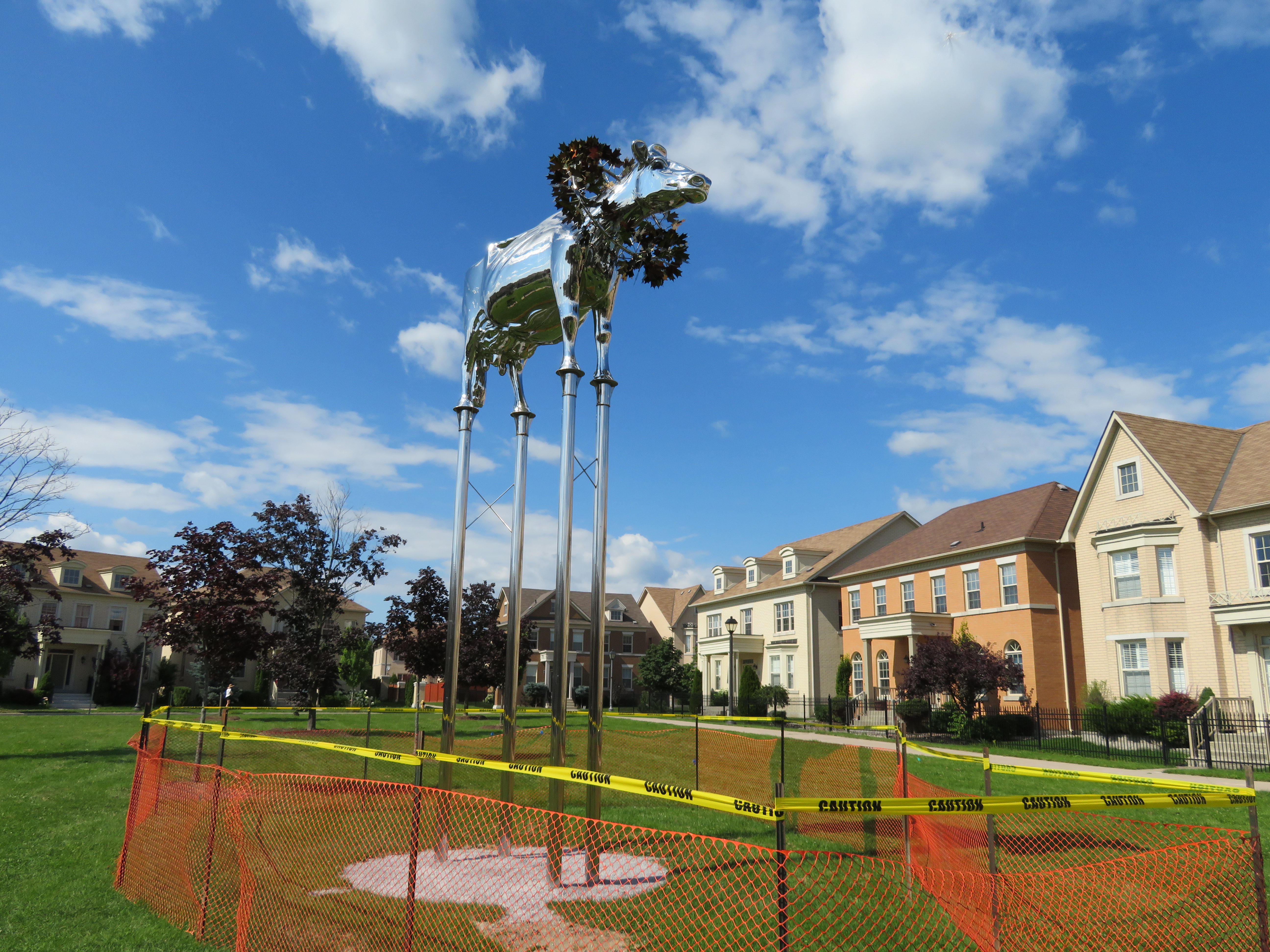
    Last weekend, a few of us visited Cathedraltown, a newer subdivision near Highway 404 and Elgin Mills Road in northern Markham. We came to see ‘Brookview Tony Charity,’ a new chrome sculpture of a prize-winning dairy cow that was once the pride of a hobby farm that was on the site before it was developed. The metallic bovine made the news as local residents opposed the sculpture, located in an otherwise empty and unremarkable Cathedraltown parkette.

    One homeowner objected as the cow, raised on stilts and wearing a prize garland, faced the nearby cathedral, likening it to the golden calf from The Ten Commandments: “I come from a Christian background and this is actually one of the worst things you can do, is to raise a calf; it’s facing the cathedral.”
    IMG_1230-001

    Ironically, the NIMBY rage only drew attention to the statue; later that week, it became a local tourist attraction. On Saturday, my wife, a good friend, and I went up to Markham to have a look at it ourselves.


    Cathedraltown

    Markham, on Toronto’s northern boundary, isn’t simply a cookie-cutter 905 suburb. The city of over 325,000 people is known for its high-technology sector, Pacific Mall and many other Chinese-Canadian shopping districts, and several heritage districts. The historic settlements of Unionville and Markham are well-preserved and vital, with interesting shops and restaurants. North of the old village of Markham, Markham Heritage Estates is a surreal subdivision dedicated to preserving old houses that would otherwise be demolished; it looks a little bit like a Tim Burton movie set.

    In recent years, Markham has tried to urbanize some of its suburban landscape. Highway 7 is lined with midrise condominium towers and office buildings. Cornell, on Markham’s eastern edge, was Canada’s first “new urbanist” subdivision, intended to promote a less car-dependent lifestyle with higher densities, local retail and mixed use development, and street-focused parks. The new Downtown Markham development, a work in progress, is a mix of office, higher-density residential, retail, and institutional development near GO Transit’s Stouffville corridor and a new VIVA bus rapid transit line.

    And then there’s Cathedraltown. Like Cornell, it’s a “new urbanist” development; it even has a main street lined with storefront. But it doesn’t quite work, at least not yet.
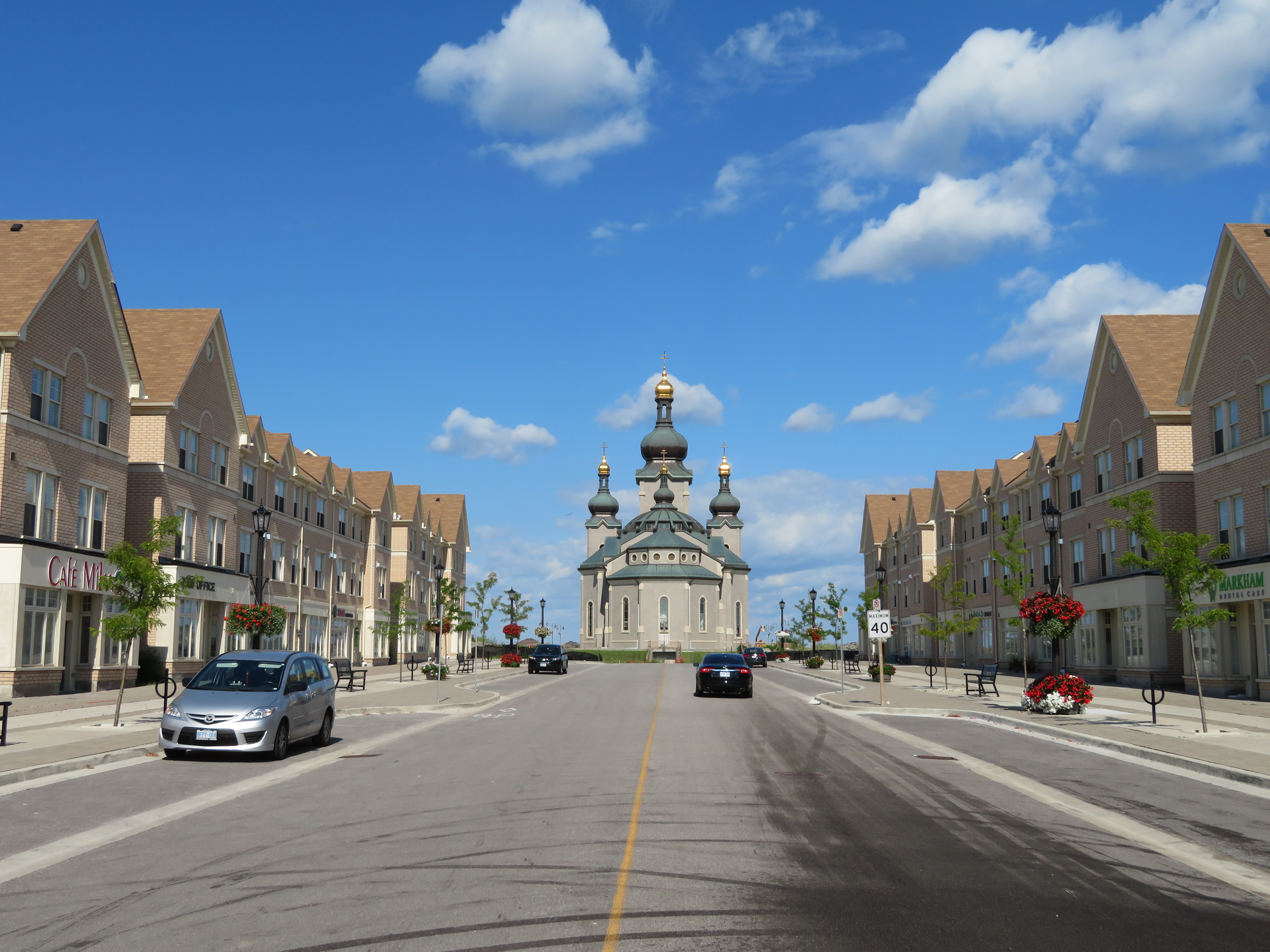
    IMG_1251-001A mostly empty Cathedral High Street

    Cathedraltown was the idea of Stephen Roman, who made a fortune in mining and had a a farm on Woodbine Avenue in Markham to build upon. The new community, on a family owned hobby farm, would have a spectacular new Slovak-Catholic cathedral as its centrepiece, with houses, parks, and stores surrounding the landmark. Stephen Roman’s daughter, Helen Roman Barber, took over the development in 1988.  The church — which remains incomplete — was opened for a while, but the building was the subject of a dispute between the development company and religious leadership and was closed from 2006 through 2016.

    Meanwhile, the residential community was slowly built around the Cathedral in the last ten years.
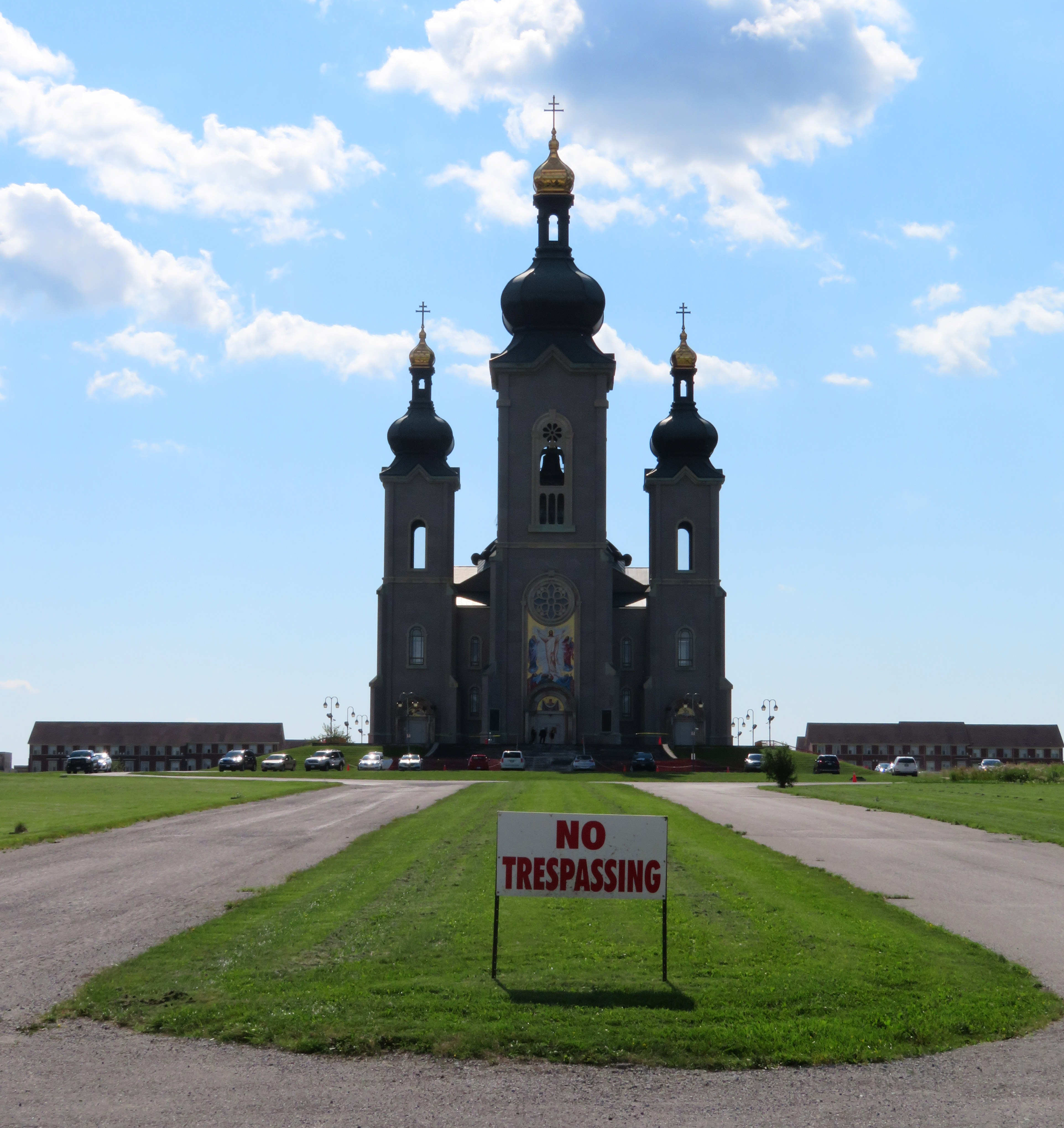
     

    IMG_1242-001A “no trespassing” sign still stands outside the recently re-opened Cathedral of the Transfiguration

    Like other “new urbanist” developments, the garages and service areas are found not on the residential streets themselves, but in back alleys. Parkettes and playgrounds face the street, rather than behind houses. Dwellings are built close together, for higher densities than traditional suburban tract housing. There are townhouses, as well as semi-detached and fully detached homes, as well as some low-rise condominium apartments.

    There’s a Main Street, which is called Cathedral High Street. It is lined with storefronts, but many are empty. Those that are occupied host dental offices, real estate agents, an insurance broker, beauty and nail salons, and after-school tutoring companies. Only one store, a nail salon, was visibly open on our visit on a Saturday afternoon.

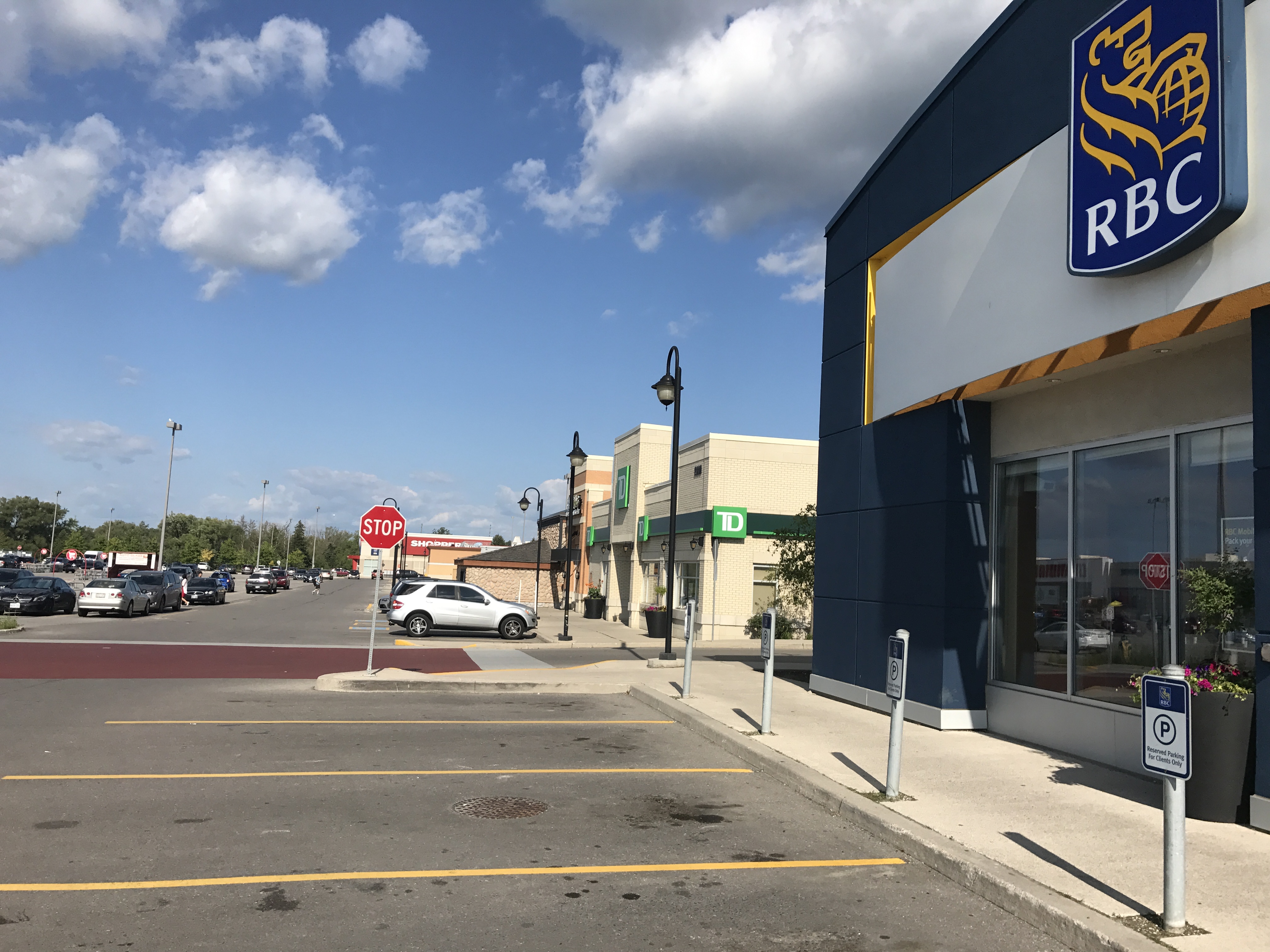
    A few thousand more residents might help. Building the retail along Woodbine Avenue itself, which gets far more traffic, might have also helped support sustainable retail. Nearby, however, is a pedestrian-unfriendly plaza on Major Mackenzie Drive that’s fully leased, anchored by banks, a Canadian Tire, a Shoppers Drug Mart, Starbucks, and Boston Pizza.
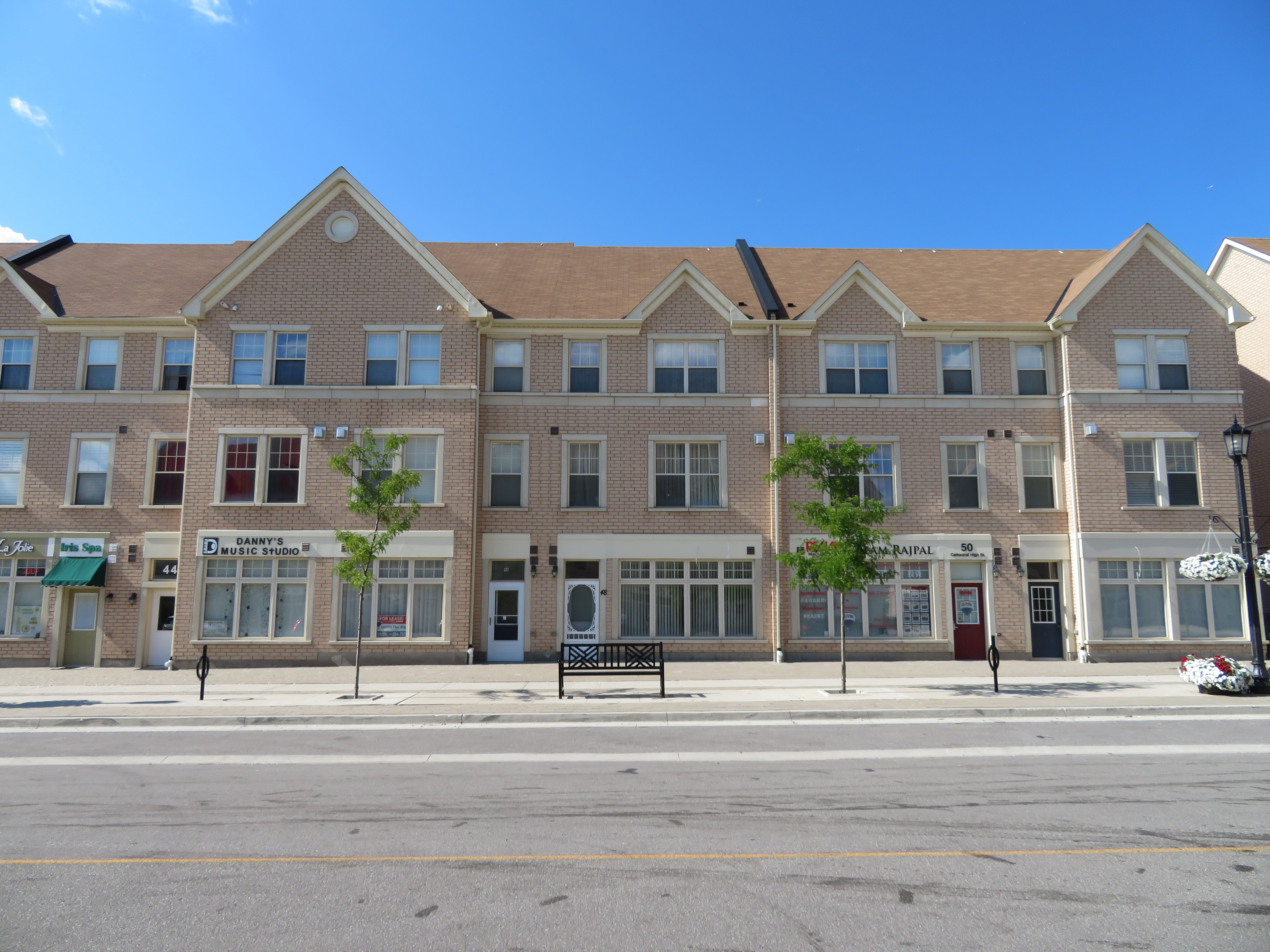
    IMG_1253-001Storefronts on Cathedral High Street…

    IMG_5598.JPGWhile a nearby auto-centric plaza is busy

    Despite its new urbanist ideals, Cathedraltown is as auto-dependent as any other suburb. Only two bus routes serve the centre of the development: York Region Transit bus routes 24 and 80. Route 24, which goes to the TTC Don Mills Subway Station, operates every 51 minutes on Saturdays, and only until about 6:30 at night (Sunday service is similar; weekday service is slightly better). Route 80, which goes west to Yonge Street, operates every 45 minutes on weekends, until about 8:00 or 9:00 PM. Getting to GO Transit trains requires a car or a YRT bus ride involving a transfer between two infrequent routes.
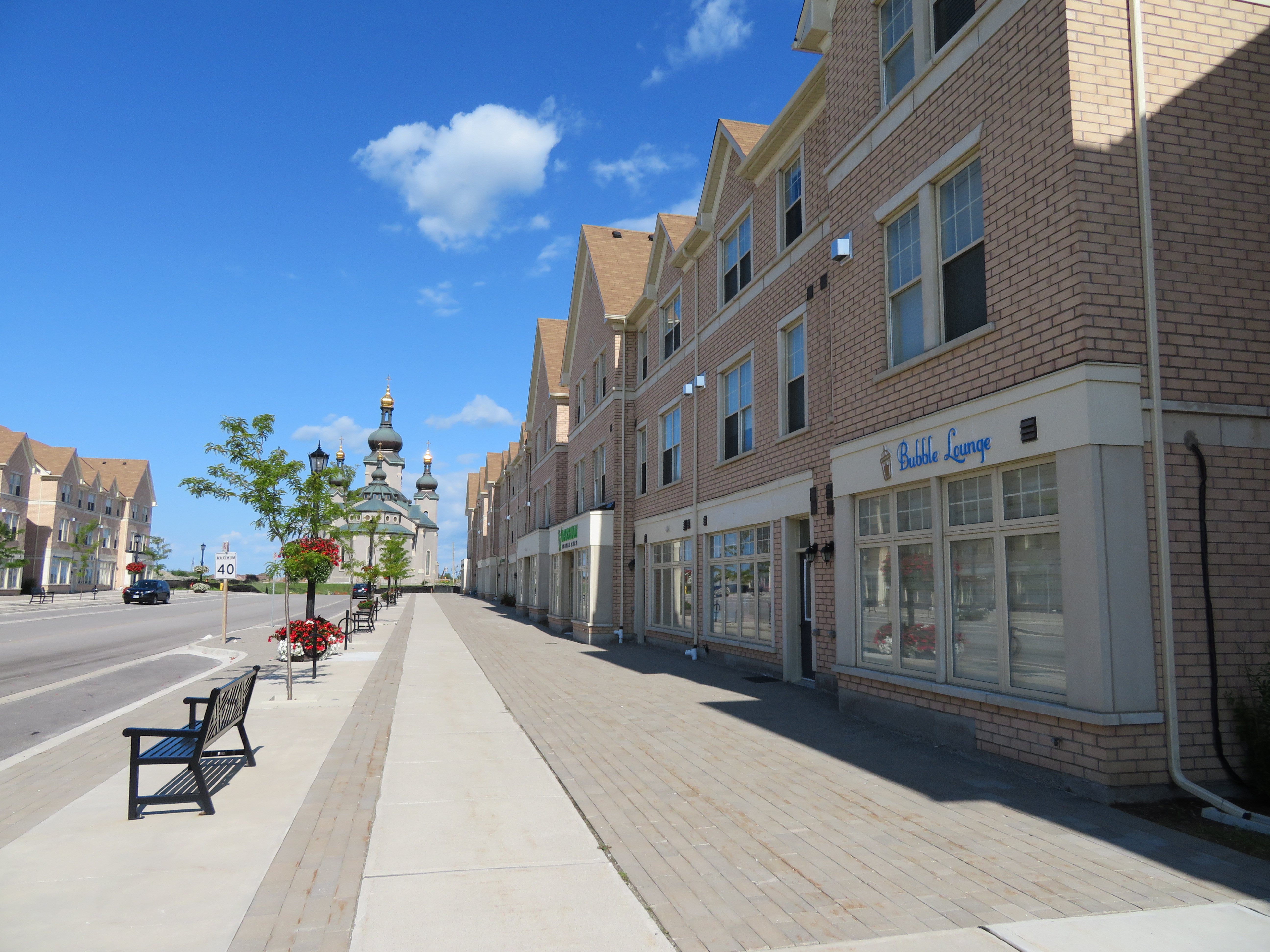
    IMG_1254-001Empty streetscape on a sunny Saturday afternoon

    Without transit, and without places to walk to (apart from a church, a few parks, and an elementary school), the ideals of new urbanism aren’t matched by reality. Unless things change drastically, it will still be a place where residents will get in their cars to go anywhere. Better transit could be a start, but so would adding more people, and jobs.
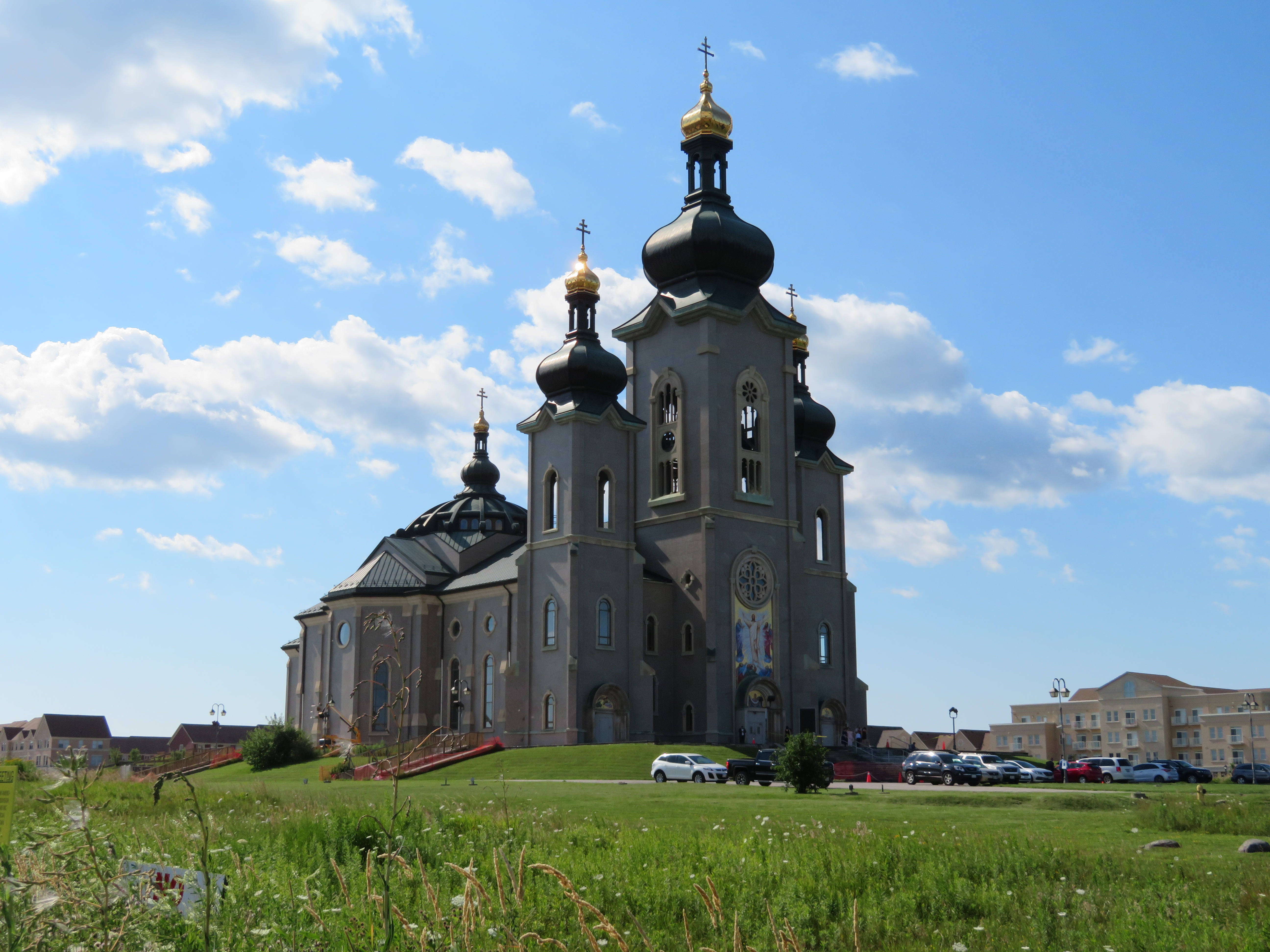
    IMG_1250-001
    Maybe one day, this community will be completed
  • GO Transit’s 404 Error?

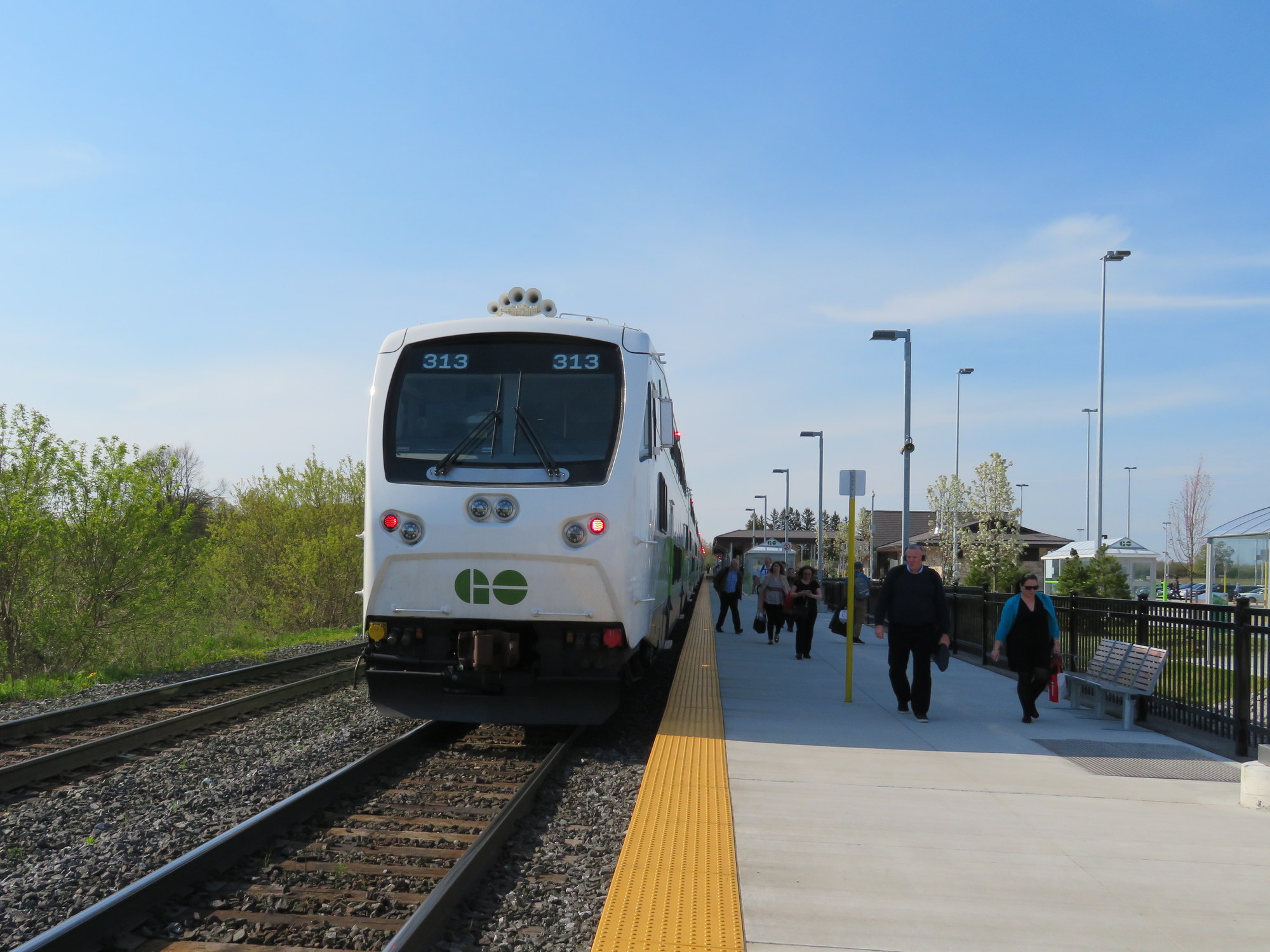
    IMG_8969-001GO Train at Gormley Station

    Previously on this blog, I wrote about how new public institutions like hospitals and university campuses are built in isolated, auto-dependent areas without regard to provincial land use policies. In St. Catharines, a new modern hospital on the city’s western outskirts replaced two urban sites, despite available opportunities that would be more accessible to at-need populations. In Orillia, Lakehead University built its campus on the edge of that small city, far from other institutions or its charming downtown core. Similar decisions are being made for new hospitals and university campuses in Niagara Falls, Windsor, and Milton.

    But Metrolinx and GO Transit, its regional transit subsidiary, often fail too to meet the provincial goals of intensification of urban centres and major transit nodes, containing urban sprawl, and promoting sustainable transportation. In Downtown Brampton, an anchor mobility hub, Metrolinx plans to build a new surface parking lot — demolishing several houses and two office buildings in the process — to satisfy commuters’ demands for free parking.

    This failure is especially evident on the newly extended Richmond Hill Line, where one new station — Gormley — opened late last year, and another — Bloomington — is now under construction. Both stations do not support any evident land use policy (both are located on the environmentally sensitive Oak Ridges Moraine); they continue GO Transit’s heritage of building stations that serve car owners, but remain largely inaccessible to pedestrians, cyclists, or local transit users.

    I recently took the train north to Gormley to inform my critique of GO Transit’s new stations. I came away even more disappointed than I had expected.

    (more…)

  • Thoughts on Newmarket’s new Rapidway (updated)

    IMG_1778-001

    Updated January 4 2017

    Effective Sunday, January 8, York Region Transit will impose new service cuts on several of its routes, including Viva Yellow, which I describe below. One bus will be removed from the route, reducing headways from every 15 minutes to every 22 minutes. Service after 10:30PM-11:00PM will also be eliminated.

    One wonders why, on one hand, there’s money to be hand to build fancy new bus infrastructure when there’s no willingness to fund transit that would make such capital expenditures useful.

    As York Region gets set to welcome the Spadina Subway extension to Vaughan Metropolitan Centre [sigh] and continues to lobby for a Yonge Subway extension to Richmond Hill, it’s worth questioning whether York Region is really committed to operating a quality transit service, and if it is serious about reducing its dependence on the single-occupant automobile.


    Original post, dated June 24, 2016

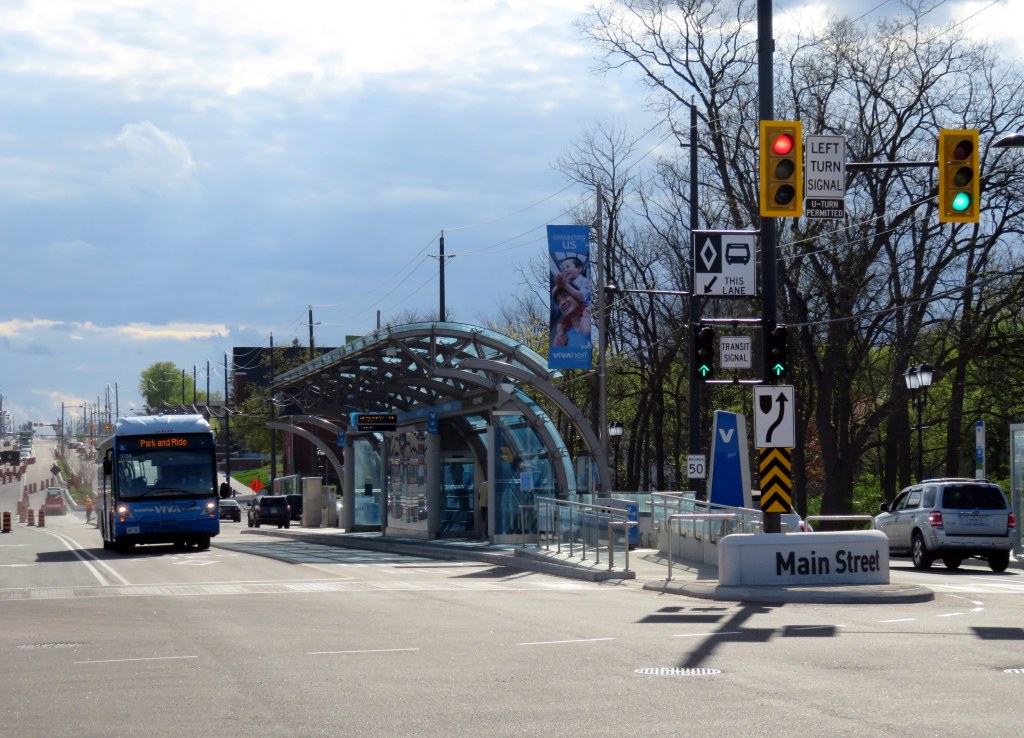
    In September, 2013, I wrote a post in Spacing Toronto called “York Region’s Rapidways: the good, the bad and the ugly.” I went out to Markham to ride the first of York Region’s VivaNext Rapidways. With the recent opening of a similar Rapidway in Newmarket, and a new Viva Route on Davis Drive, I made a trip north a few weeks ago to check it out.

    Viva is the brand used by York Region Transit for its network of limited-stop, proof-of-payment bus routes. When first launched in September, 2005, Viva was strictly a “BRT-lite” operation. Unlike regular YRT routes, the buses are fancier and more comfortable, the stops less frequent, and to speed up service, Viva operates on a proof-of-payment system where fares are purchased in advance from machines at Viva stops. and limited stops. A decade ago, all Viva corridors were supposed to be served by buses operating every 15 minutes or better, 7 days a week.

    But a few years later, the cutbacks began to happen as York Region reduced funding for transit operations. Viva Green, connecting Markham to the TTC’s Don Mills Station, became a rush hour only route. Viva Orange, connecting Vaughan to Downsview Subway via York University was cut back as well and now only operates every 30 minutes outside of rush hour. Even Viva Purple (York University – Markham) had its operating times cut back. Worse yet, YRT reduced service on connecting conventional bus routes that feed the Viva system.

    But while the region was reducing its spending on transit operations and raising fares, it was spending hundreds of millions of dollars on VivaNext, the region’s rapid transit plan. The plan calls for separated median right-of-ways on Highway 7, Yonge Street and Davis Drive, known as Rapidways, as well as two TTC subway extensions. York Region lobbied for, and got, a subway extension to Highway 7 in Vaughan which will open next year; it has also lobbied for an extension to the Yonge Subway from Finch Station to Richmond Hill. York Region, with its political clout, may just get that too.

    Spending billions of dollars on building transit, without properly funding the services that use and feed into that fancy new infrastructure is a problem. This is what’s wrong with York Region Transit.  (more…)

  • Unanswered questions about Toronto’s next subway extension

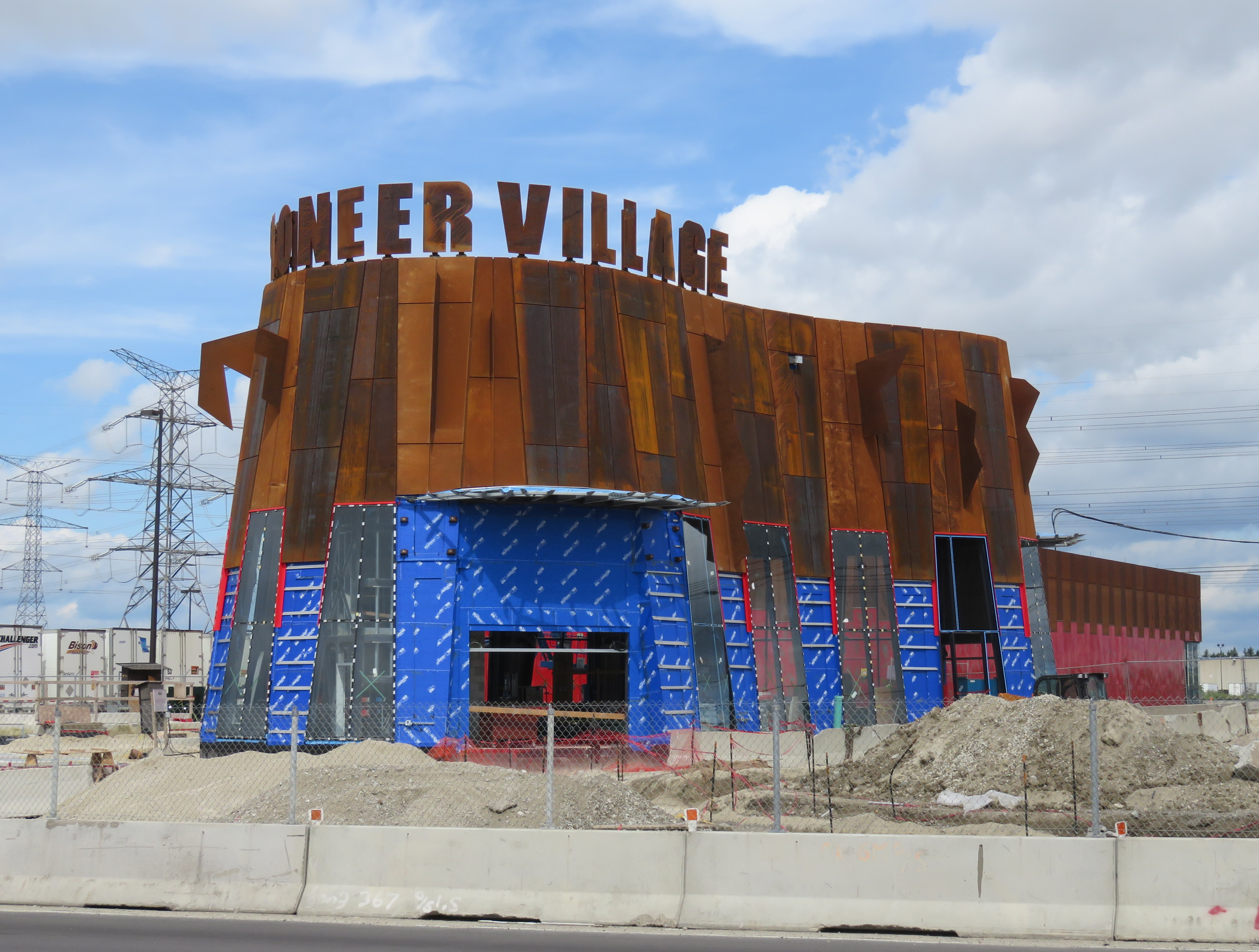
    IMG_4677-001.JPGPioneer Village Station under construction, August 2016
    Note: I posted an update to this article on October 4, 2017 

    By the end of next year, the Toronto Transit Commission (TTC) Line 1 subway extension to Vaughan will finally open, two years later than originally planned. The line will provide relief for thousands of York University students and employees and improve service to transit-starved northwest Toronto. It will terminate at Highway 7 in Vaughan, at the ambitiously (and in my view, ridiculously) named Vaughan Metropolitan Station, posing a challenge to cartographers and designers everywhere.

    When the $3.2 billion subway extension begins operating in December 2o17, it will be the first new major subway project since the opening of the five stop Sheppard Subway in 2002. It is also the first subway line to cross the City of Toronto boundary. (Coincidentally, this subway extension will cost the same as the proposed one-stop extension of Line 2 to Scarborough Centre.)

    Aside from the delays, the big price tag, and the silly Vaughan station name, there are two more issues that will arise, and which have yet to be completely figured out: how four separate transit agencies will re-route their buses once the subway opens, and the necessary question of fare integration once that happens.

    (more…)

  • On transit ridership in the GTHA

    Earlier this week, the Toronto Transit Commission (TTC) released its agenda for the next board meeting, to be held on March 23. Among the items to be discussed are updates on the delayed Line 1 subway extension to York University and Vaughan, plans for the Line 2 subway extension to Scarborough Centre, the new MiWay/GO Transit terminal at Kipling Station, the planned new 514 Cherry streetcar line and other Waterfront bus improvements, and a ridership update.

    As always, Steve Munro is on top of it all, and I encourage you to read his post.

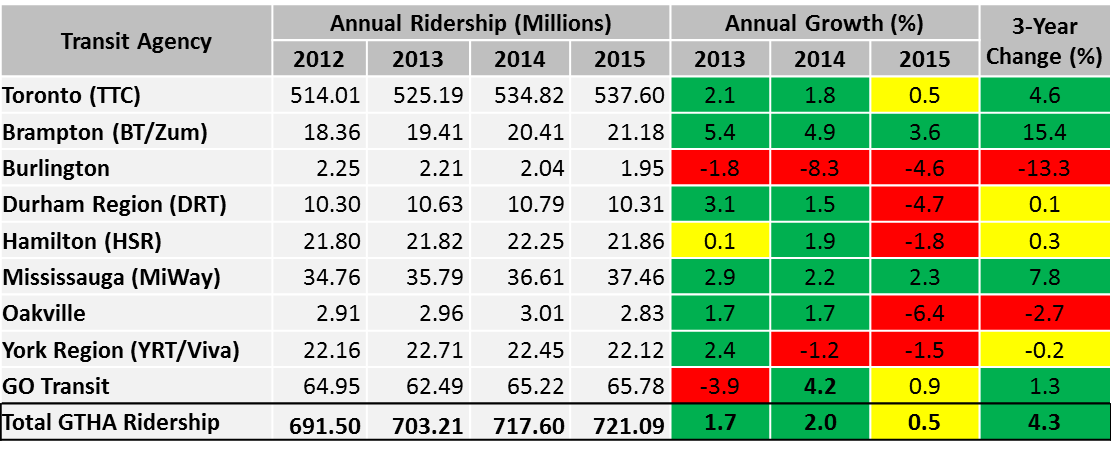
    I wanted to make a few observations about ridership, especially in Toronto’s suburbs. Growth in the TTC’s ridership has slowed down in the last three years, from a 2.1% annual increase in 2013, to a much more modest 0.5% increase in 2015.

    Ridership figures are not detailed enough to know at what times of the day ridership is changing, nor on what routes. But ridership growth has fallen (or even declined) for other major Canadian transit systems, including Vancouver, Montreal, and Ottawa. There are many causes for changes to ridership — population and employment growth or decline, fare increases, service improvements or cuts, even the cost of gas, which has been declining in the last two years. Much of the employment growth within the City of Toronto has been in the downtown core, but so has the population growth due to new residential highrises. (I’m one of thousands who live and work in or near the downtown core — my TTC use is now mostly during the evenings and weekends as I mostly walk to work).

    Hopefully, the Commission and the city don’t use this short-term trend as  an excuse to hold back on needed service improvements or projects such as the Relief Line — for one thing, many buses, streetcars and subway trains are already overcapacity, and it is impossible to know whether slower ridership increases represent a long-term trend, or a short-term blip.

    There was one table in the TTC ridership update that caught my attention. The table, on page 5, shows the ridership for every Greater Toronto and Hamilton Area transit system (though excluding Milton Transit). I reproduced that table below.

    Ridership

    GTHA transit agency annual growth rates, 2013 to 2015. Adapted from TTC 2016 Ridership Update, page 5.

    While the TTC’s ridership growth has slowed, ridership in many suburban municipalities have either flatlined or declined. Only Mississauga and Brampton show consistent, positive growth over the last three years. MiWay, previously known as Mississauga Transit, hasn’t expanded transit operations that much in the last few years, but that city continues to enjoy modest employment growth and improved connections to the airport, Brampton Transit and the TTC. It is currently building a new bus rapid transit (BRT) line, the Mississauga Transitway (more on that in a later post), and city council is backing the Hurontario LRT line, which would largely replace bus service on its busiest corridor.

    Brampton’s growth has been, by far, the most impressive. That suburban municipality is growing thanks mostly due to new sprawling subdivisions, but since in the last decade, Brampton Transit has been introducing annual system improvements, including the Zum “BRT-lite” network of limited-stop bus routes. Brampton’s ridership is now almost that of the Hamilton Street Railway (HSR). Unlike Hamilton, Brampton doesn’t have two major post-secondary educational institutions, nor a dense urban core, though it serves Humber College, York University, and two secondary Sheridan College campuses in Brampton and Misssissauga.

    In Hamilton, ridership dropped by 1.8% in 2015. Most ridership in Hamilton is concentrated in the lower city, as well as a few trip generators in the suburbs, including Mohawk Collage on the Mountain, and Lime Ridge Mall. Many parts of the lower city have been hit hard by job losses in that city’s major industries, though new subdivisions (and, to a lesser extent, downtown gentrificaton) have contributed to modest population growth. Hamilton is going ahead with a provincially-funded east-west light rail line that will connect McMaster University, Downtown Hamilton, and the east end.

    Elsewhere, transit ridership growth has been quite disappointing. Burlington Transit saw a drastic 13.3% decline over the last three years, Durham Region, which I recently visited, saw a major decrease in 2015. However, there is lots of promise in its five-year service strategies, which will improve and simplify the agency’s route structure and provide enhanced service.

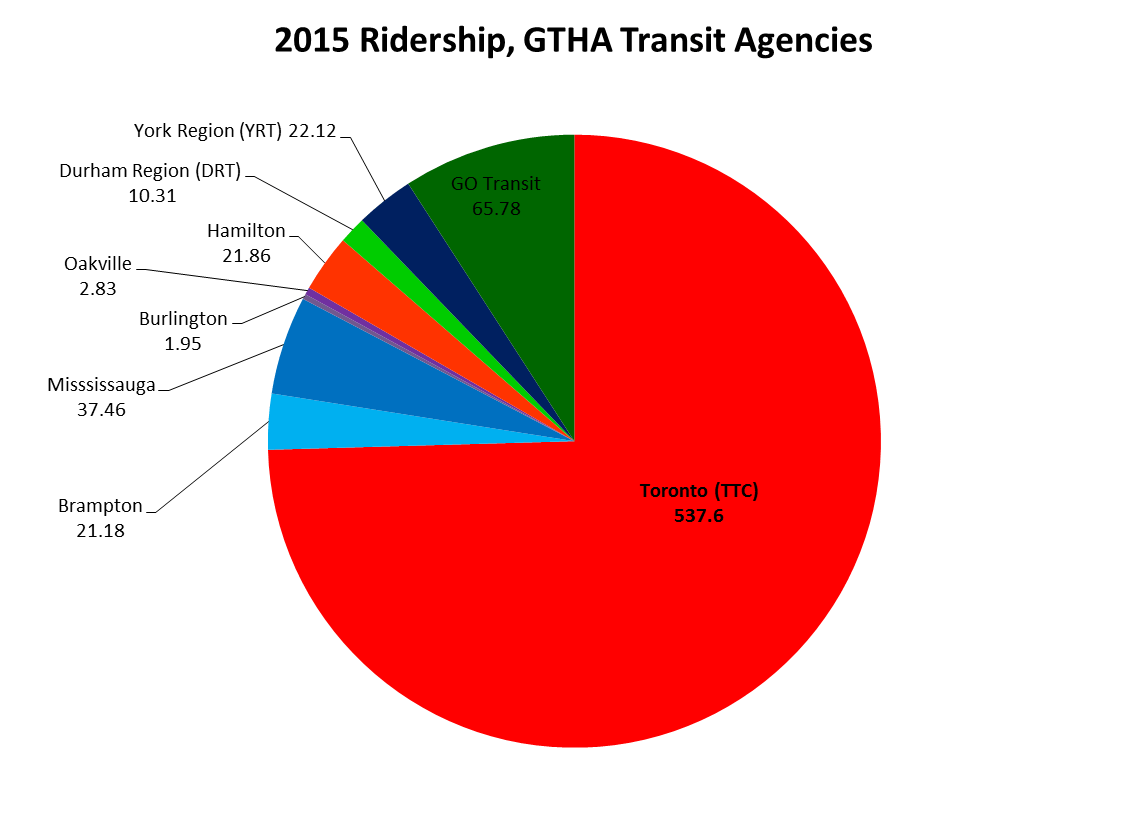
    2015 Ridership
    2015 ridership for GTHA transit agencies (Milton excluded). The TTC, with narly 75% of the region’s ridership total, dominates. GO Transit holds another 9%. 

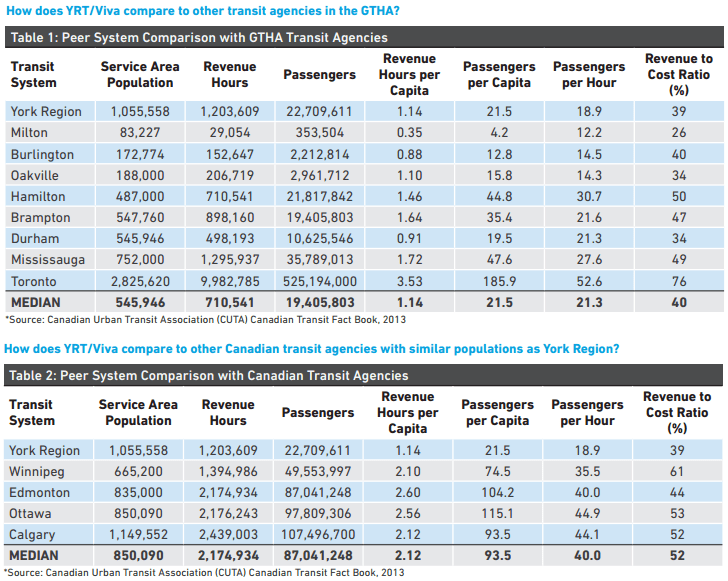
    York Region Transit, serving a population of 1.2 million, has only 1 million annual riders more than Brampton, whose population is nearly half of York’s. And despite adding new subdivisions (and a few new residential towers), ridership declined in the last two years. As illustrated in the table below, YRT’s ridership per capita is less than half of Hamilton’s or Mississauga’s.

    YRT Ridership StatsComparing York Region Transit to other Canadian transit systems, 2013. From the VRT/Viva 5 year service plan, page 7. 

    It’s interesting that despite poor transit ridership (amid York Region Council-mandated service cuts and steep fare hikes) York Region, with senior government assistance, is spending $1.4 billion on dedicated median busways on Highway 7, Yonge Street and Davis Drive. York Region will get the Spadina subway extension in 2017, and it pines for an extension of the over-burdened Yonge Subway to Richmond Hill Centre.

    In York Region, there’s a troubling disconnect between spending money on capital projects and funding the services that will use the shiny new infrastructure, or feed ridership to it. Brampton has proven that growing service, not necessarily fancy infrastructure, will grow ridership. That said, it remains disappointing that the suburban municipality with the best record for ridership growth in the Toronto region rejected a funded light rail transit line to its downtown core.