Author: Sean Marshall

  • Going for a ride on the Bolton Bus

    IMG_6666-001.JPG

    Caledon, a town of 66,000 located northwest of Toronto, is known for charming villages, fall colours, and horse farms. Its most popular landmarks include the waterfall at Forks of the Credit Provincial Park, the unique Cheltenham Badlands, and the vast Albion Hills Conservation Area. Much of the municipality lies within Niagara Escarpment and Greenbelt protected areas, with lands set aside for farms, estates, parks, and golf. That’s how many Caledonians like it.

    Despite its green reputation, Caledon is urbanizing its southeastern quadrant, filling it up with warehouses, truck terminals, and low-density residential subdivisions, all adjacent to the built-up areas of Brampton and Vaughan. Bolton, once a small village, now has a population of 20,000. New subdivisions north of Mayfield Road are indistinguishable from Brampton’s residential development.

    Though two GO Transit bus routes ran through Caledon, it had no transit system of its own. This was becoming more of a problem as new warehouses employing thousands of workers opened. GO Transit’s buses were scheduled to connect with trains to and from Downtown Toronto, not to serve reverse commuters. Though Brampton Transit operated several routes close to Caledon’s borders, it could not extend north of Mayfield Road without an agreement with the town.

    Despite Caledon’s historical resistance to public transit, its attitude slowly changed for the better.

    In May 2010, Brampton Transit’s 30 Airport Road bus was extended to the AMB (now Prologis) warehouse complex just north of Mayfield Road. This was done at the request of AMB, though the Town of Caledon had to agree to the request for service.

    In 2015, Caledon began to study the need for a local transit system, retaining consultants from Steer Group to evaluate and develop options for new transit services, including routes, operators, and service hours. In April 2019, the report to council recommended starting with a route on Kennedy Road in Mayfield West (contracted by Brampton Transit) and a route connecting employment areas in Bolton with Brampton Transit and YRT at Highways 7 and 50 (contracted to a third party), with a demand-response service within Bolton and an extension of a future Brampton Transit route along Mayfield Road provided within a second phase.

    Meanwhile, GO Transit announced the abandonment of Route 38 in June, citing the planned new local transit service as justification for the cut, even though it wasn’t yet setup. Though GO partially restored the service (two daily round trips to Malton GO continue, for now), it remains a short-term solution.

    The Mayfield West service — Brampton Transit Route 81 — began in September, connecting with the 502 Züm at Sandalwood Parkway. On Monday, November 11, 2019, the Bolton Route began service, contracted to Voyago. Both routes operate on 30 minute frequencies, weekday peak hours only.

    IMG_4900-001.JPGNew Brampton Transit stop on Kennedy Road in Caledon

    The two separate agreements don’t work that well for creating a unified transit service.

    Though Route 81 and the Bolton Route both have a $4.00 cash fare, the Brampton Transit-contracted service operates on that agency’s fare structure. There’s a discount for Presto card users and a two-hour transfer valid on any other Brampton Transit route. The 80 cent co-fare to and from GO Transit also applies (Route 81 connects with the frequent 502 bus to Downtown Brampton). It’s a good deal for residents in west Caledon.

    However, the Voyago-contracted buses serving Bolton are only equipped with a fare box, and only accept $4.00 cash fares. There are no free transfers to or from connecting buses at Highways 7 and 50. (Brampton Transit routes 501 Züm, 1, 23, and 36 connect there, as does YRT route 77. It’s a few minutes’ walk to BT routes 31 and 50.)

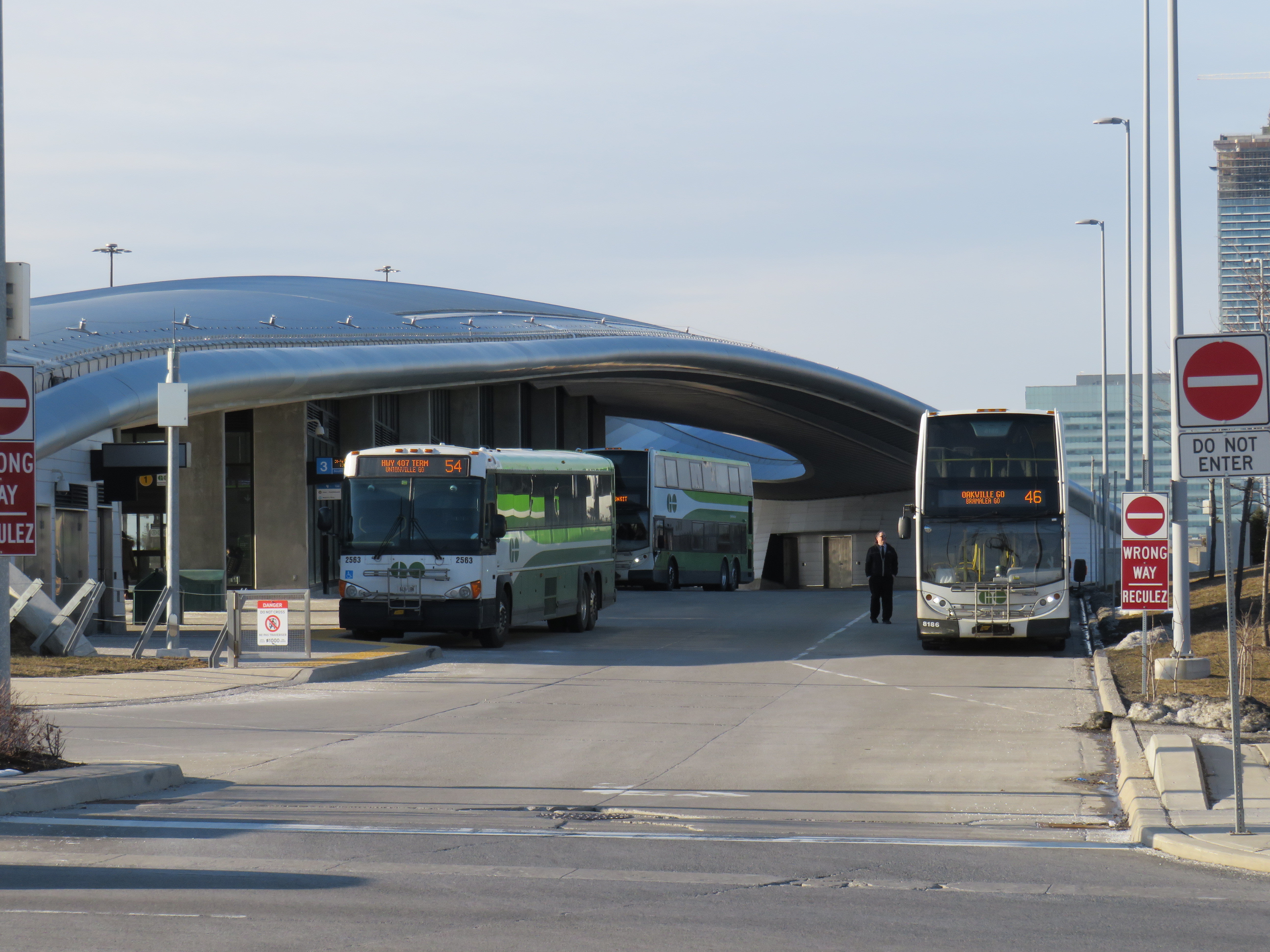
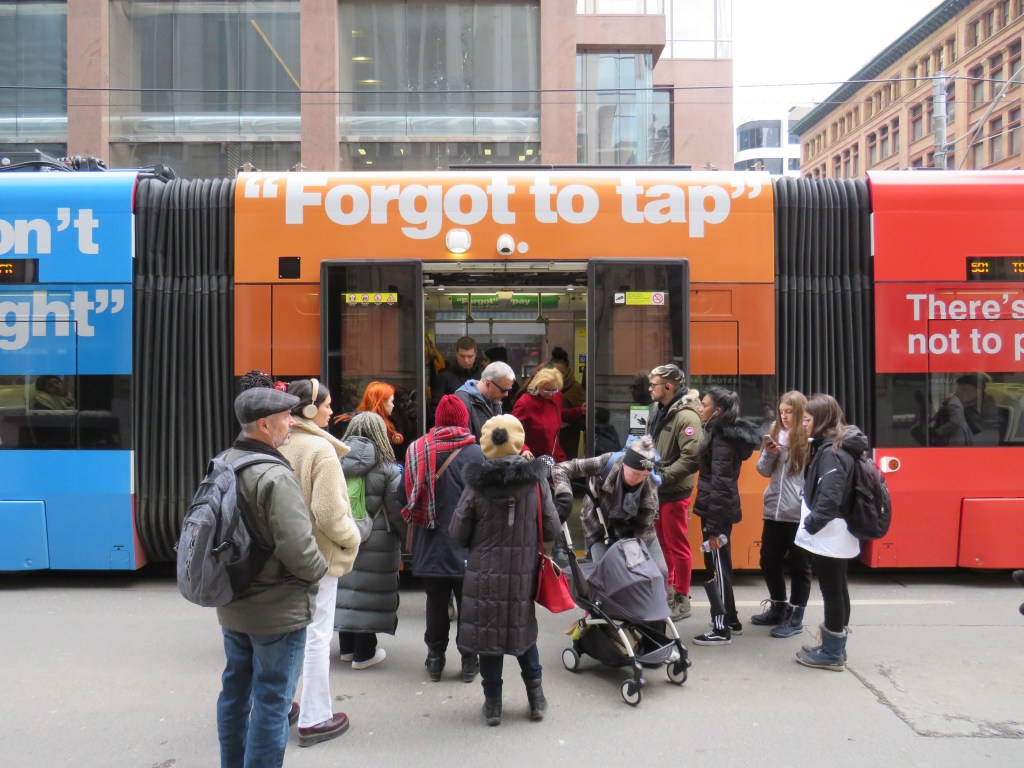
    Last week, I took the new Bolton bus to get a feel for the new service. The Bolton line operates with two minibuses with twenty seats each and a spot for mobility devices at the rear. Within Bolton, the bus makes a long loop, primarily serving the industrial area in the southwestern quadrant.

    I boarded an afternoon bus from Highway 7 at 3:26 PM and rode to Downtown Bolton. I returned on the bus leaving Bolton at 4:30 PM. I was the only passenger each way; I was told by one driver that was typical. By riding the bus, I was able to learn about some of Caledon’s challenges.

    Transit options from Caledon council reportCaledon Transit high-priority route options from the April 2019 council report

    If the Bolton Line were integrated with York Region Transit and Brampton Transit and made more stops within Brampton, it’d be a useful service, attracting many more passengers. There are several major employers on the Vaughan side of Highway 50, including XPO Logistics, Home Depot, and the Canadian Pacific Intermodal Yard. Additional stops at Major Mackenzie/Coleraine, Rutherford/Castlemore, Trade Valley/Bellechase, and Zenway/Cortrelle would make the bus more accessible and useful to residents and employers. Another stop at Queen Street (Highway 7) and Gore Road would improve connections to Route 50, which serves Humber College.

    Those additional stops would likely require a third bus, but the current route struggles to maintain a 60-minute round trip even with the limited stops currently in place. But with fare integration and local service, it could then attract more passengers, defraying the cost of the additional vehicle and operator.

    In the long term, it would be good to see more cooperation with Brampton Transit, especially as Brampton continues to develop new subdivisions and industrial lands in the northeast, in the areas bordering Caledon and Vaughan. If GO Transit goes ahead and abandons the remnant of Route 38 an express route between Bolton and Malton GO will still be necessary; ideally, that would would be a partnership between Brampton and Caledon.

    Hopefully, Caledon will continue its commitment to building a transit service within its urbanized area. Despite very low ridership at present, the potential is there as population and employment continue to grow. It will take time to tweak the service, improve connections, and build ridership that can count on affordable, reliable transit.

    It’s also time for Halton Hills — now the last GTHA municipality without local transit — to step up and follow Caledon’s lead.

  • Why transit users shouldn’t beg to cross the street

    IMG_8372.jpg

    With consistently high ridership growth over the last few years, Brampton Transit has proven to be one of the Canada’s greatest transportation success stories. The Flower City has proven that transit can be successful and popular in North American suburbs.

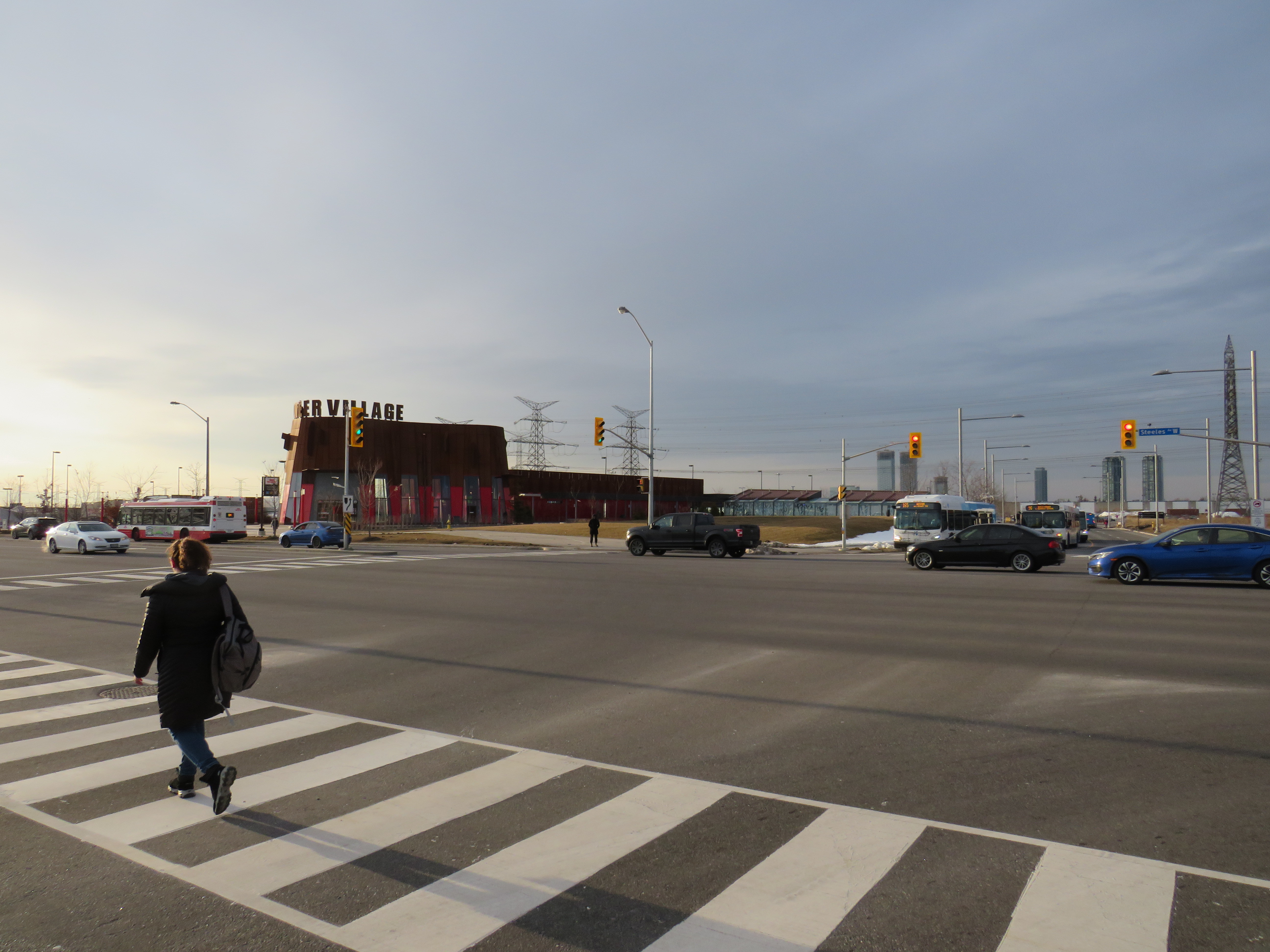
    Despite the success at improving transit and building ridership, Brampton has also prioritized motor traffic at intersection, making it unnecessarily difficult to cross the street at major bus stops. The intersection of Vodden and Main Streets, just north of Downtown Brampton, illustrates this problem.

    If the beg button is pushed in time, the walk signal to cross Main Street will appear for just seven seconds before the countdown begins, giving just 11 seconds to cross five lanes. Anyone who misses that light will have to wait over two minutes to legally cross.

    What Brampton — and cities like it — should do is remove the beg buttons at transit stops with the assumption that pedestrians will want to cross. It’s just one step towards building a transit culture and attracting new riders.

    I write more about this problem in Bramptonist.


  • Goin’ to Kansas City

    IMG_5800-001.JPG
    Bus and streetcar, Downtown Kansas City

    Kansas City, Missouri made news this month when its City Council voted unanimously to include a plan for free fixed-route public transit in the next city budget. Though that budget would still have to be passed in the New Year, the mayor’s support for the measure is a promising sign. Though it will cost $8 million, local politicians support the idea as it will benefit low income riders.

    It is worth noting that Kansas City Area Transit Authority’s 2016 annual ridership was just over 14 million a year, while the cost recovery rate was just 12 percent. It would be much harder to offer free transit in Toronto. The TTC’s cost recovery rate is 68%, with transit fares bringing in over $1.2 billion a year. Though a two-hour transfer and free children’s fares were recently introduced, there’s little chance that the City of Toronto would agree to funding fare-free transit. In any case, Kansas City’s experiment will be interesting to watch.

    Kansas City was a more interesting city than I expected; I am glad I made the impromptu trip. There are a few Toronto connections, including a streetcar that traveled the continent, a restored Union Station, and a 1920s shopping plaza whose concept was imitated 80 years later in Don Mills.

    I enjoyed an evening at a jazz club at the 18th and Vine Historic District and local barbecue. Besides transit, I also got around on an electric pedal assist bike that’s part of the local bike share. It’s friendly, urban city, definitely worth a visit.
    (more…)

  • Five years of musings

    image1
    Here I am, back in 2015

    Today, December 7, 2019, marks the fifth anniversary of my personal blog, Marshall’s Musings.

    I started this website as a place to archive the maps I was making in 2014 after the municipal election. I had mapped poll-by-poll results for each ward, showing how each area voted for mayor and councillor; a few followers on Twitter suggested I start a blog to provide a permanent home for those maps.

    After that, I kept the blog going, first mapping council votes (such as the decision to rebuild the east section of the Gardiner Expressway, but also commenting on transit issues, road safety, and local history. Occasionally I’ll write about my cycling trips or other travels, but it’s clear that transit is the most popular topic on this website.

    This blog, along with well as my occasional contributions to Spacing magazine, TVO, and Torontoist (now defunct), has provided me with some influence within Toronto’s urbanist circles. Recently, I have been invited to comment on podcasts and in person at a transit summit in Guelph. I’m thankful for those opportunities. It has been a privilege, and I will try to be mindful of that.

    Thank you!


    The five most-read posts in five years of Marshall’s Musings:

    1. GO Transit and the high cost of “free” parking (November 2015)
    2. Ontario’s failed downtown malls (February 2018)
    3. Mapping the 2018 candidates for Toronto’s 47 wards (July 2018)
    4. Not so fair-by-distance: GO Transit’s problematic fare system (November 2015)
  • Islington Avenue: deadly by design

    IMG_6266-001Memorial to 77-year old Pasquina Lapadula in front of her apartment building on Islington Avenue north of Finch

    On Thursday, November 29 at 6:30AM, Pasquina Lapadula left her Islington Avenue apartment building and crossed the street in front of her home. Soon after stepping out, she was struck and killed by the driver of an SUV traveling northbound. The driver then fled the scene. Sadder still, drivers passed the scene without stopping to help.

    Toronto police are looking for a dark coloured SUV with bright headlights and fog lights. They have yet to find the driver and lay charges.

    According to the Toronto Star, 37 pedestrians have been killed on Toronto’s streets. Of those, 24 were 60 years old or over. Since 2007, 410 pedestrians were killed on Toronto’s streets; 238 of those were aged 60 or older. November 2019 was an especially deadly month; Lapadula was the third older pedestrian killed in Toronto in just three days.

    Though blame can be laid at the driver, who despite having ultra-bright headlights and fog lights, struck Lapadula and sped away afterwards, this part of Islington Avenue, like many other suburban roads in Toronto, is deadly by design.

    IMG_6283-001Islington Avenue looking south from Aviemore Drive towards Finch Avenue

    The collision took place at Aviemore Drive in Humber Summit, in Toronto’s northwestern corner, near the boundary between the former cities of Etobicoke and North York. The area was developed in the 1960s and 1970s, when automobile-centric planning was at its peak.

    Islington Avenue is five lanes wide between intersections, including a striped middle lane that turns into left turn lanes at intersections. Sidewalks are separated by wide boulevards, and there are long distances between traffic signals.

    The road has a slight curve north of Finch Avenue, with a hill down towards the East Humber River at Finch. From Aviemore Drive, it is a 220 metre walk south to the crosswalk at Finch Avenue and 430 metres north to the traffic signals at Milady Road. Just south of Aviemore Drive are entrances to Gord and Irene Risk Park and Recreation Centre and Rowntree Mills Park.

    As the speed limit is unposted on this section of Islington Avenue, by law, vehicles may only go a maximum of 50 kilometres per hour. However, the road design encourages speeds far greater than the limit.

    IMG_6299-001TTC bus stopped in bay in front of Pasquina Lapadula’s apartment building

    As on Don Mills Road north of Finch, TTC buses stop in bus bays instead of on the street itself. These bus bays were not designed for the benefit of transit, but instead for the convenience of private motorists. Buses stopping get out of the way of traffic, and then must merge back in. (A law requiring other motorists to do so exists, but is never enforced.)

    Everything about the road design is designed for high vehicle throughput, with little consideration for pedestrian safety.

    IMG_6248-001Islington and Finch Avenues

    It is true that Pasquina Lapadula could have walked 220 metres down to Finch Avenue, and depending on her destination, another 220 metres back up the hill. The traffic signals and painted crosswalks would have provided additional safety. But the intersection of Finch and Islington itself is problematic.

    The intersection sits on a large viaduct over the East Humber River. Right turn slip lanes are found on the southwest and northeast quadrants, allowing right-turning traffic to pass by quickly while requiring pedestrians to cross an additional lane of traffic governed only by a yield sign. Buses on Finch stop at bus bays at the far side of the intersection, further lengthening the distance pedestrians must cross.

    IMG_6255-001Slip lane from Finch to Islington

    I was frustrated when two Toronto councillors advocate giving out reflective armbands for pedestrians to wear, especially as one of those councillors opposed road safety initiatives in her own ward. I was angered the Toronto Star’s editorial board ignore city data, their own reporters and columnists, and pedestrian and cycling advocates to back those two suburban councillors.

    This was especially tone deaf given the Toronto Police Service’s abandonment of traffic enforcement, the epidemic of pedestrians being killed in the last two years, and the disturbing number of hit-and-runs. Armbands would not have saved Pasquina Lapadula’s life when she was confronted by the driver of a speeding SUV, with blindingly bright headlights and fog lights.

    This is why we need real Vision Zero measures like lower speed limits, more safe pedestrian crossings, road re-engineering to slow down vehicles, complete streets, and effective police enforcement.

  • Zero vision in suburban Toronto

    IMG_3684-001

    Though the city of Toronto has made some progress towards safer streets recently, the lack of police enforcement of traffic laws, the reluctance to spend serious money on road redesign, and the attitudes of some city officials continue to be obstacles towards making Toronto a safe place to walk and cycle.

    As part of the city’s Vision Zero 2.0 Plan, City Council voted in July to reduce speed limits from 60 km/h to 50 km/h on 37 sections of arterial roadways across the city, and from 50 km/h to 40 km/h on five more roads. Councillors Ana Bailão and Jim Karygiannis moved to extend several of these sections. However, rookie councillor Cynthia Lai (Ward 23-Scarborough North) moved to amend the item to remove three sections of arterial roads in her ward:

    • Brimley Road from Sheppard Avenue East to Steeles Avenue East,
    • Markham Road from Milner Avenue to Steeles Avenue East, and
    • McCowan Road from Milner Avenue to Steeles Avenue East.

    Councillor Lai claimed that her constituents were concerned about gridlock in her ward and opposed the speed restrictions. Scarborough is especially dangerous for pedestrians as it has the most kilometres of high-speed arterial roads in the city and the longest distances between crosswalks.

    High speeds and dangerous driving are major problems in Ward 23, a part of the city that I visit a few times a month. Brimley, Markham, and McCowan Roads are designed solely for car traffic: they are lined by plazas, warehouses, and backyard fences. Traffic signals are often far apart. Markham and McCowan Roads are also high-speed thoroughfares connecting Markham to Highway 401.

    Walking along McCowan Road between Finch and Steeles earlier this year, my spouse and I encountered a pedestrian refuge smashed in by a motorist. The refuge island was protected by reflective signage, as well as metal barriers, and was installed to help pedestrians cross at a TTC bus stop, though pedestrians are not given the right of way.

    IMG_1644Smashed pedestrian refuge island on McCowan Road

    This is why it was so disappointing to see Councillor Lai organize a “Senior Pedestrian Safety Initiative” with Toronto Police at Woodside Square, a community mall at the corner of McCowan Road and Finch Avenue. Councillor Lai, her staff, and local police were “educating” seniors about pedestrian safety, while giving out reflective armbands. Councillor Lai claimed it was part of the city’s Vision Zero strategy, and she doesn’t “think we should blame anybody.”

    This was just days after a police report showed a severe decline in traffic tickets issued and extremely limited police enforcement of unsafe driving in Toronto. On the Friday before, two seniors were seriously hurt when crossing the street.

    https://twitter.com/cynthiaToronto/status/1198323383538204673

    Needless to say, Councillor Lai and the Toronto Police taken to task by road safety advocates and even fellow councillors. Jessica Spieker of Friends and Families for Safe Streets called it a “form of victim blaming.”

    Supporting Councillor Lai’s position, on Monday November 25, Councillor James Pasternak said “wearing high visibility clothing or reflective gear is a key part of keeping everyone safe, including pedestrians, construction workers, cyclists, police officers and crossing guards. Let’s make VisionZeroTO work.” Councillor Pasternak is Mayor John Tory’s handpicked chair of the Infrastructure and Environment Committee, which among its duties is ensuring the safety of Toronto’s road infrastructure.

    Vision Zero 2.0 says nothing about armbands. Instead, the plan includes reducing speeds, road design improvements, and safer crossings at TTC stops.

    Though it is always a good idea for pedestrians to be aware of their surroundings and be predictable when crossing the street, most of the responsibility falls on the city, which designs the roads, the police, who have abandoned their duty to protect road users, and drivers, who are licensed and insured to operate multi-tonne vehicles. The rash of hit-and-runs after pedestrians were struck is especially alarming.

    In Waterloo, a crossing guard performing her duties was struck and seriously injured by the driver of a F-150 truck, who then fled the scene. This was the despite the school guard wearing a reflective vest, carrying a stop sign, in a marked school crosswalk. No amount of high-visibility clothing will protect pedestrians from dangerous drivers, who in Toronto this year, killed pedestrians walking on sidewalks, and injured pedestrians in transit shelters.

    Ironically, Woodside Square itself was hit twice by drivers in the last two years. In December 2017, a motorist crashed through both sets of doors at the mall entrance closest to Shoppers Drug Mart. In February 2018, a motorist, possibly dealing with medical problems, crashed into several cars and into a Subway restaurant at the mall. High-visibility clothing would not have helped in either of those cases.

    It’s unfortunate that a city councillor will choose giving out reflective armbands over effective speed reductions, road redesign, and traffic enforcement. Hopefully, Councillor Lai will take the criticism to heart and do better for Ward 23.

    Post script: A staff report to the Infrastructure and Environment Committee in October 2019 continued the recommendation for speed reductions in Ward 23, citing minimal impacts to travel times, and the dangerous conditions on Brimley, Markham, and McCowan Roads. Staff noted that there have been 6 fatalities and 20 serious injuries incidents on those three road segments. On October 29, Council voted to lower the speed limits on Brimley, Markham, and McCowan Roads against Councillor Lai’s objections.

  • Addressing the Toronto Police Services Board

    IMG_2922.PNG

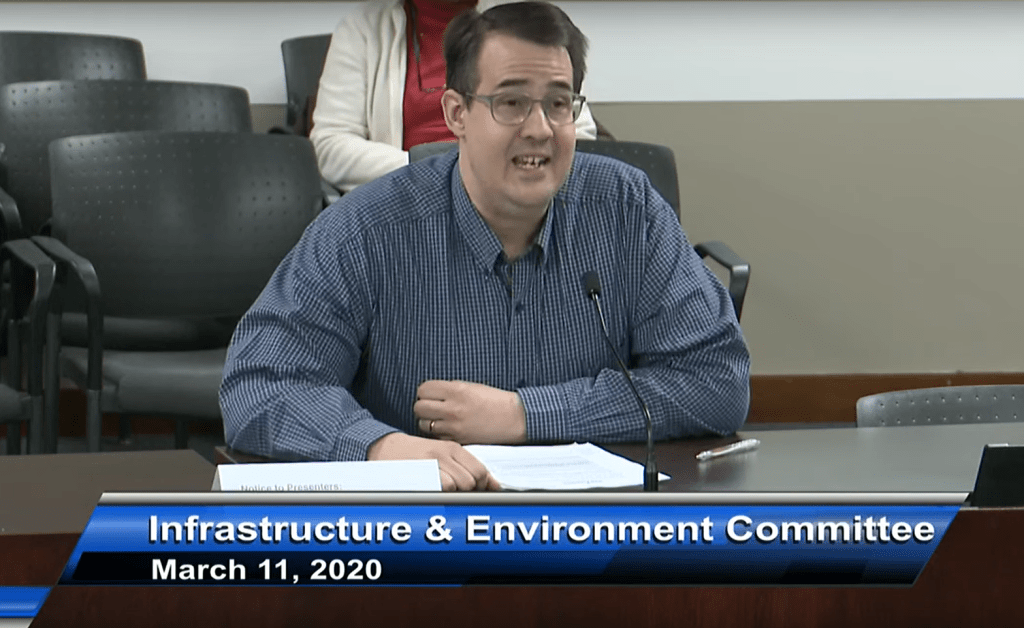
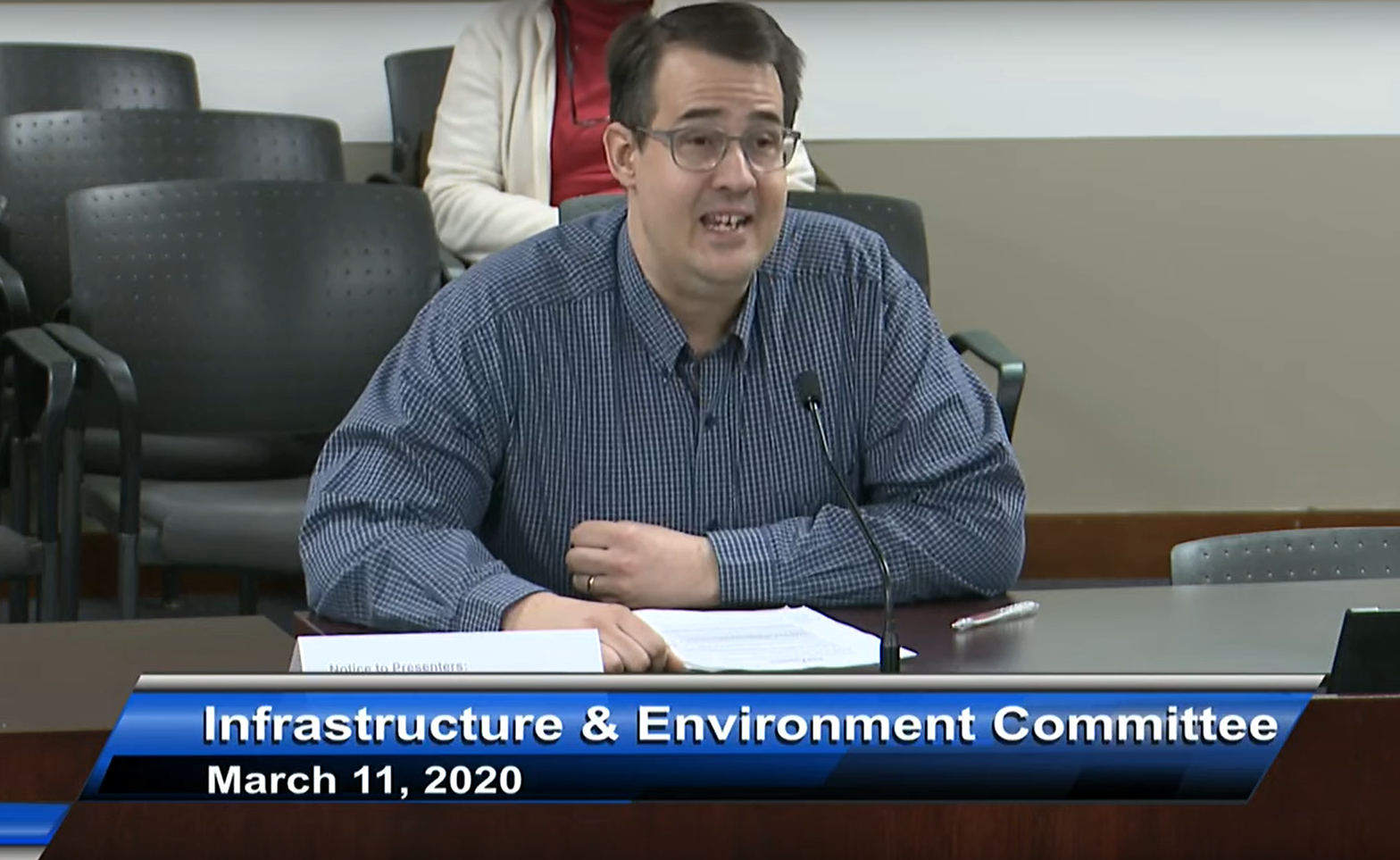
    Earlier today, on behalf of Walk Toronto, I made a deputation to the Toronto Police Services Board addressing the lack of traffic enforcement in the City of Toronto. After criticism from organizations such as Walk Toronto, Cycle Toronto, and Friends and Families for Safe Streets, the Toronto Police now plans to initiate a “Vision Zero enforcement team,” with the city funding the annual $1 million cost.

    As anyone who walks or cycles in the City of Toronto knows, aggressive, distracted, and careless driving is commonplace. They also know that apart from the well-publicized blitz, the Toronto Police Service (TPS) have not responded to the carnage on our streets.

    I spoke to express our disappointment of how the TPS completely failed vulnerable road users by not engaging in meaningful traffic enforcement and calling for a return to making this a priority. Similar deputations were made by John Sewell, former mayor and police critic, Keagan Gartz from Cycle Toronto, and Jessica Spieker from Families and Friends for Safe Streets.

    I found it was a bit intimidating. it was my first formal deputation in a long time, and I sat at a table in front the board, including Chief Mark Saunders and Mayor John Tory. But I did it! Next time I depute, I should find it easier.

    Mayor Tory, to his credit, convinced fellow police board members that the traffic enforcement team be made permanent, and funded from the Toronto police budget, starting in 2020. This motion passed unanimously.

    It is not enough, of course, but it’s an acknowledgement that we desperately needed. Walk Toronto and our partners will continue to push for safer streets.

    Unfortunately, Chief Saunders chose to blame airpods for the epidemic of pedestrian injuries and deaths, ignoring experts and the city’s own data:

    Chief Saunders and the board had the opportunity to ask questions of any member of the public who took the time to craft and make deputations today at Police Headquarters. Regretfully, they chose not to do so.

    Below is the complete text of my deputation to the Toronto Police Services Board. You can watch the whole meeting here (I speak just after the 1:00 mark).

    Vision Zero is an internationally recognized set of road safety tenets that aims to reduce all fatalities and severe injuries in a municipality to zero over the course of a year, while increasing safe, healthy, equitable mobility for all, especially vulnerable road users such as pedestrians.

    Road design, engineering controls and enforcement are all essential pillars for reducing road violence on our streets. Road improvements force vehicle operators to slow down and take notice, while improving the visibility and safety of vulnerable road users, especially pedestrians and cyclists.

    In the meantime, the City of Toronto has focused on reducing speed limits, adding traffic signals, and designating school safety zones and senior safety zones. But this has been more about putting up signs. Signs have no effect If there are no consequences for disobeying them.

    At Walk Toronto, we have noted the lack of police enforcement of safe speeds, red light running, illegal turns, and distracted driving. There may be the occasional well-publicized blitz, but for the most part, motorists in Toronto know that they can get away with risky and dangerous behaviour because the likelihood of being caught is negligible. At best, Toronto’s response to road violence has been reactive, rather than proactive.

    To date, 34 pedestrians were killed on Toronto’s streets in 2019; in 2018, 42 pedestrians were killed. Not just on city streets, but on sidewalks, at bus stops, and even inside a bus shelter. Earlier this year, a home was struck in East York. Meanwhile, police are being deployed downtown not to protect pedestrians, but to ensure traffic isn’t impeded at busy intersections during rush hours.

    We were outraged – but not shocked – by a recent Toronto Star report that found that the number of traffic tickets issued dropped from 700,000 in 2010 to just 200,000 in 2018, and that there are no officers assigned to full-duty local traffic enforcement. This is despite a growing city, an ageing population, and enhanced provincial penalties for distracted, reckless, and impaired driving introduced over the last few years.

    The Toronto Police Service has failed the city’s most vulnerable road users.

    Though red-light cameras, photo radar, and automated school bus “stop” signs are useful tools, there is no substitute for old-fashioned police enforcement. Additional new dedicated officers are a good step in recognizing this failure, as long as enforcement does not target indigenous, racialized, and other communities that are already disproportionately affected by policing. In the end, we need both better designed streets and a renewed direction that the Toronto Police Service will have no tolerance for unsafe driving in Toronto.

    Thank you.

  • A review of GO Transit’s fare structure

    IMG_8969-001

    Four years ago, I wrote about GO Transit’s problematic fare structure. Though GO Transit claims to charge passengers based upon a fare-by-distance structure, fares for travelling short distances were disproportionately high compared to long-distance rides from outer suburban stations. In 2015, I also found significant fare differences between corridors, with Kitchener Line passengers paying the most per distance traveled.

    Since my original post, some changes were made to the GO Transit fare system:

    • In 2016, a tiered fare increase was applied, with the lowest fares frozen (for example, Union Station to Mimico, Bloor, or Danforth), with fare increases between  40 and 60 cents per ride dependent on distance traveled. Those fare increases applied to Presto fares, though with a discount (11.15% less than the cash fare).
    • In January 2018, a $1.50 fare discount was introduced for Presto card users transferring between TTC and GO. However, the Ford government announced it would no longer subsidize the TTC-GO fare discount, threatening its continuation.
    • In April 2019, GO fares for trips less than 10 kilometres were reduced, with the minimum cash fare going from $5.30 to $4.40, with the minimum Presto fares reduced from $4.71 to $3.70. A passenger headed from Union Station to Exhibition Place could choose to take a local TTC streetcar fare ($3.10 with a Presto Card) or the direct GO train ride (just 60 cents more). At the same time, the cash fares for trips longer than 10 kilometres were increased by 4%, while Presto fares were increased by 3%. 

    The good news is the eventual reduction of short-distance fares have gone a long way towards flattening the fare/distance curve.

    There were also some major service changes over the last four years. Two new GO stations were opened: Downsview Park (which offers a direct connection to the new TTC subway extension to York University and Vaughan), and Gormley, a station built next to Highway 404 on the Oak Ridges Moraine. Additional trains were added to Kitchener, new peak-period trains to and from Niagara Falls were introduced, evening trains added on the Kitchener Line, and this month, weekend trains were introduced on the Stouffville Line. But connecting bus routes to Cambridge, Bolton, and between Milton and Oakville were eliminated, with other bus trips cancelled across the system. (more…)

  • Transit Summit in Guelph this Saturday, November 9

    4003585727_e8125d19a3_o.jpgCoach Canada bus to Hamilton, September 2009

    This Saturday, I will be joining fellow transportation advocates and experts in Downtown Guelph for the First Annual Transit Summit & Town Hall organized by Transit Action Alliance of Guelph (TAAG).  I’ll be speaking about the gaps in regional and intercity transit in Guelph and Southwestern Ontario.

    In the 1980s, there were direct buses from Guelph to Toronto, Brampton, Kitchener, Hamilton, Fergus and Elora, and Owen Sound. There were five VIA trains a day in each directions between Toronto, Guelph, Kitchener, and London. Though there are far more buses departing from Guelph than in the 1980s, they are mostly operated by GO Transit, all leading east towards Brampton and Mississauga. GO Transit rail service has improved, but it is still geared towards Toronto-bound commuters. Getting between Guelph and Hamilton by bus requires a transfer at Square One in Mississauga.

    I wrote about these gaps before on my own blog and for TVO. I will be speaking more about them — and possible solutions to the problem — on Saturday.

    Intercity bus links in Midwestern Ontario in 1983 and 2019.
    The 1983 map is an excerpt from Ontario Intercity Guide published by Ontario Ministry of Transportation; the 2019 is an edited version of the same image. 

    Other speakers at the Transit Summit include representatives from TTCRiders, TransportAction, and officials from the City of Guelph and Guelph Transit. The summit and town hall will be held at St. Andrew’s Presbyterian Church in Downtown Guelph on Saturday November 9 from 12:00 to 5:30 PM.

    You can register on TAAG’s website until Friday November 8.

  • The long way to Pembroke

    IMG_4409-001
    Layover at Barry’s Bay

    A few weeks ago, I went for another long-distance bus trip. I started my journey in Downtown Toronto, and continued on to Peterborough and Pembroke, before arriving in Ottawa late in the evening.  Apart from the Toronto-Peterborough leg aboard a packed, delayed bus, this was the most pleasant of all my long-distance bus trips.

    Greyhound’s Peterborough-Pembroke route only operates a few days a week, on Friday, Saturday, and Sunday. It is one of the last rural bus routes operated by Greyhound Canada as most remaining routes operate on highways between large urban centres. The bus follows Highways 28, 62, and 60, stopping at small towns such as Bancroft, Maynooth and Barry’s Bay. North of Lakefield, the route passes through the Canadian Shield, with its lakes, rocks, and trees.

    As I traveled on last Friday in September, the fall colours were almost at their peak in the Haliburton Highlands, making this an especially scenic ride. There was an informal fifteen-minute stop in Barry’s Bay, enough time to get a decent coffee and a snack.

    The view from Highway 28 near Bancroft, September 27

    At Bancroft, we passed by the old Central Ontario Railway Station. Passenger service ended in the 1950s, while the tracks were torn up in the 1980s. The station was preserved and is now a local museum. In front, a dozen citizens took part in a local climate strike that took place across Canada, part of the Global Week for Future. It was nice to see residents take part, even in small town Ontario.

    Climate strikers in Bancroft. The former railway station stands behind

    At Pembroke, I had several hours before the Ontario Northland bus departed for Ottawa. While Pembroke’s downtown core could use some TLC, it has great bones and a great collection of heritage buildings, including a late Victorian post office, its late Art Moderne replacement, the historic Renfrew County courthouse, solid commercial blocks, and a fascinating library.

    IMG_4455-001Downtown Pembroke

    IMG_4478-001.JPGIMG_4420-002.JPGPembroke’s post offices. The 1888 building, designed by Thomas Fuller, is now City Hall. The 1950s replacement, on the left, still houses Canada Post. 

    Pembroke’s public library is especially unique, as it looks like it could have been designed by Frank Lloyd Wright. Built in 1914, it was designed by Francis Conroy Sullivan, a Canadian-born architect who studied under Wright in Chicago before establishing his firm in Ottawa. Expansions and renovations have remained faithful to the Prairie Style architecture.

    IMG_4475-001Entrance to the Pembroke Public Library

    IMG_4472-001.JPGLibrary interior

    Though Pembroke was served by three different railways — the Canadian Pacific transcontinental mainline, a branch of the Canada Atlantic that operated between Montreal and Parry Sound, and the Canadian Northern — all tracks were removed by 2013, when Canadian National ripped up the Beachburg Subdivision. None of the station buildings survive, but the abandoned rights-of-way are still intact. At the west end of town, a long trestle now carries a snowmobile trail where the CN mainline once crossed the Indian River.

    IMG_4437-002Former CN trestle, Pembroke

    The removal of the CN and CP routes through the Ottawa Valley were especially unfortunate, as all through freight and passenger traffic across Canada must now pass through Greater Toronto. This was the result of cost-cutting and the loss of local rail customers, such as lumber and pulp industries. The Commonwealth Plywood plant in Pembroke still stands as a reminder of the industrial past of the Upper Ottawa Valley.

    IMG_4432-002
    Abandoned Commonwealth Plywood plant

    The last passenger train, VIA’s Canadian, called at Pembroke in 1990. But there are two daily bus trips in each direction between Ottawa and North Bay/Sudbury, one operated by Greyhound, the other by Ontario Northland. From Pembroke, I was able to take a Northland bus that left at 9:00 PM, arriving in Ottawa by 11:00 PM. This gave me plenty of time for dinner after a long walk around town.

    My trip to Pembroke made for a pleasant detour, giving me a chance to see another part of Ontario.