Category: History

  • Suburban Toronto’s transit past and future on north Yonge Street

    IMG_4846-001
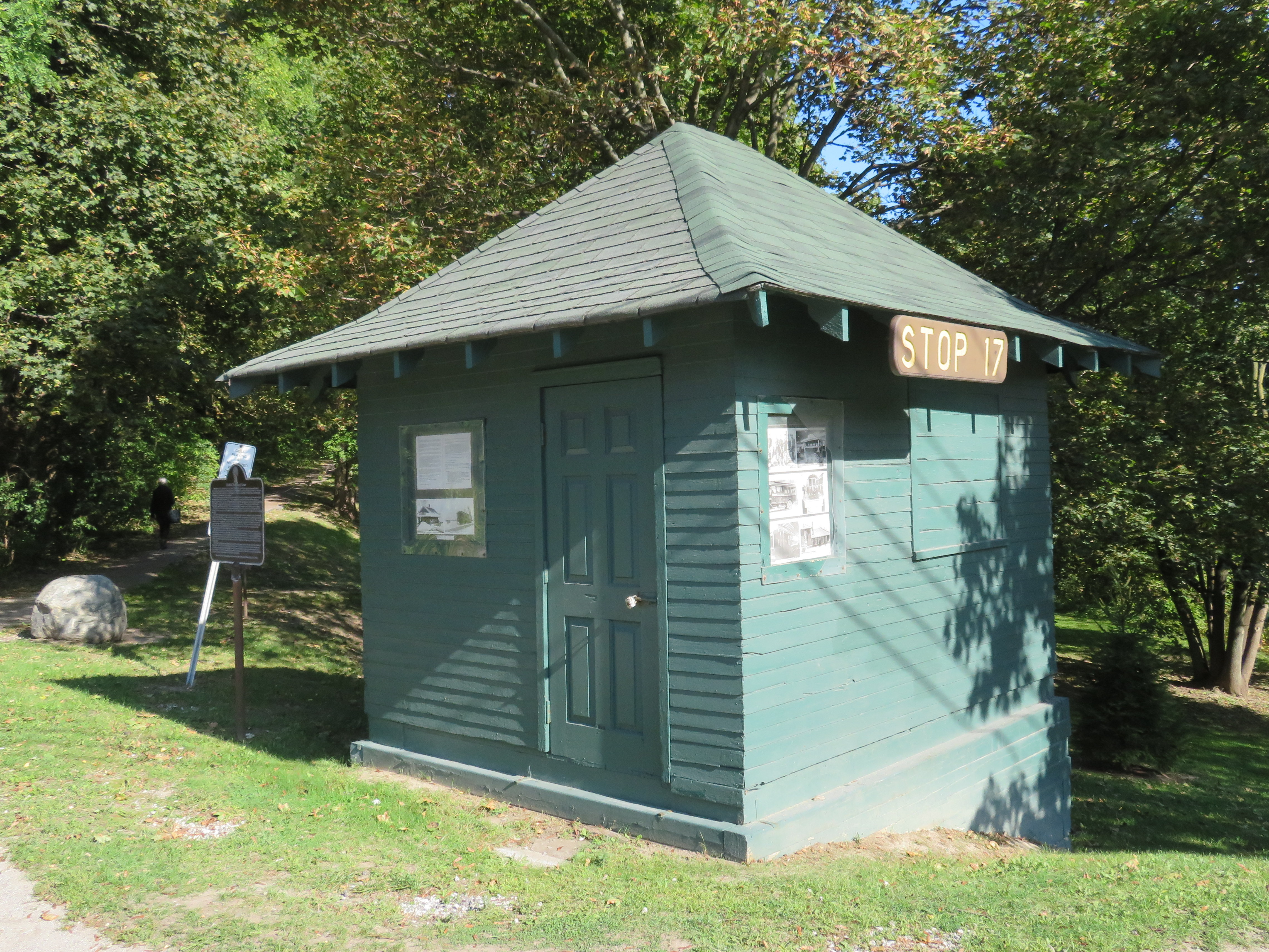
    Stop 17 shelter in Thornhill

    On Yonge Street in Thornhill, a small green hut sits beside the busy roadway at the entrance to Cricklewood Park. On the side of the small building, a wood sign says “Stop 17.” Hundreds of buses and thousands of cars pass by this hut daily, yet few may know about the transit history it represents.

    Stop 17 was a stop on the Toronto & York Radial Railway line that extended north from a terminal at Toronto’s city limits at Yonge Street and Glen Echo Avenue (now the location of a Loblaws supermarket) all the way to Sutton, via Richmond Hill and Newmarket. Electric radial service to Thornhill and Richmond Hill began in 1897. By 1908, radial service reached Lake Simcoe.

    Stop 17 was one of two stops in Thornhill, located at the present-day intersection of Yonge Street and Royal Orchard Boulevard. The TTC, the eventual owner of most of Toronto’s radial lines, closed the Lake Simcoe route in 1930. Soon afterwards, the wooden shelter was moved to a nearby golf club, where it served as a snack bar and rain shelter. (The radial line was resurrected in late 1930 as a suburban streetcar service to Richmond Hill until 1948.)
    f1568_it0441
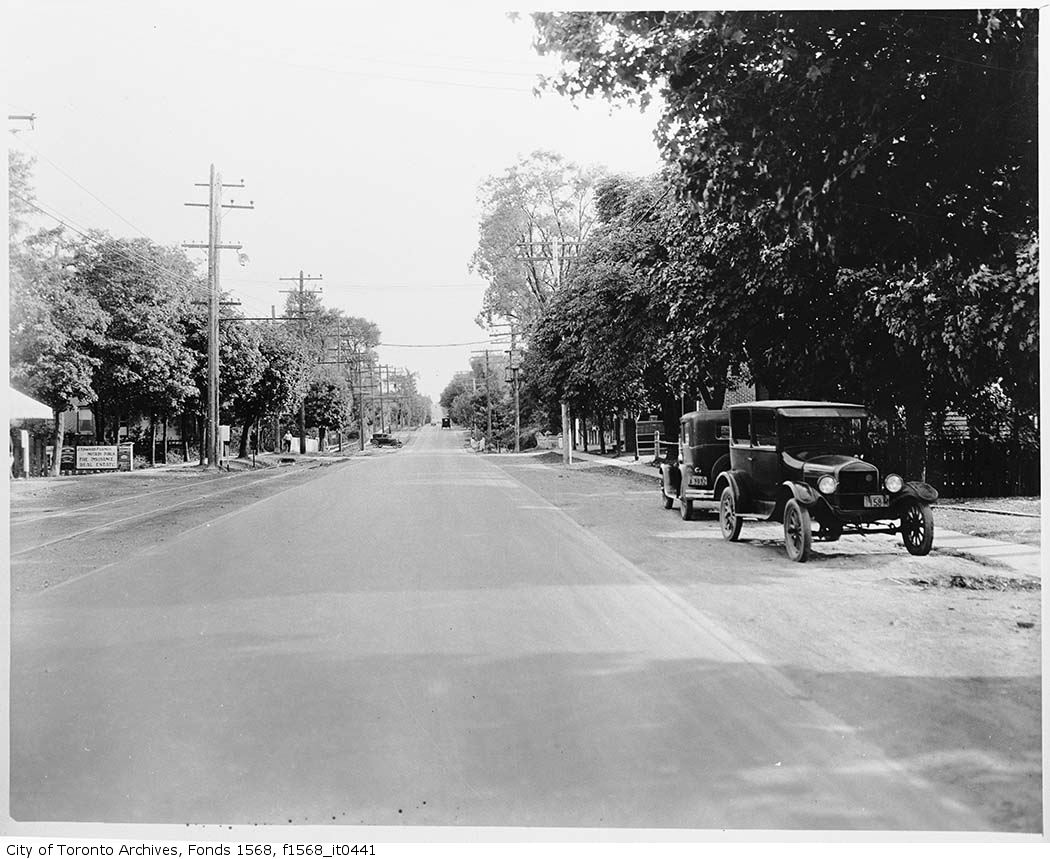
    Yonge Street looking south in Thornhill, September 1931. City of Toronto Archives, Fonds 1568, Item 441.

    In November 2000, the Stop 17 shelter was moved back to Yonge Street and restored. It stands as a historical building in Thornhill, and as a monument to early suburban transit in Greater Toronto. Only a few other structures exist from the radial railway era including the Newmarket Radial Arch, the footings of a Toronto Suburban Railway trestle over the Humber River, and a radial power station in Guelph.

    There was another Stop 17, on the Scarboro Radial Line between Toronto and West Hill.  By coincidence, it is also memorialized in the name of a variety store (Stop 17 Variety), which also sports a mural depicting a T&Y radial car stopped in front of the Scarborough High School (now R.H. King Academy).
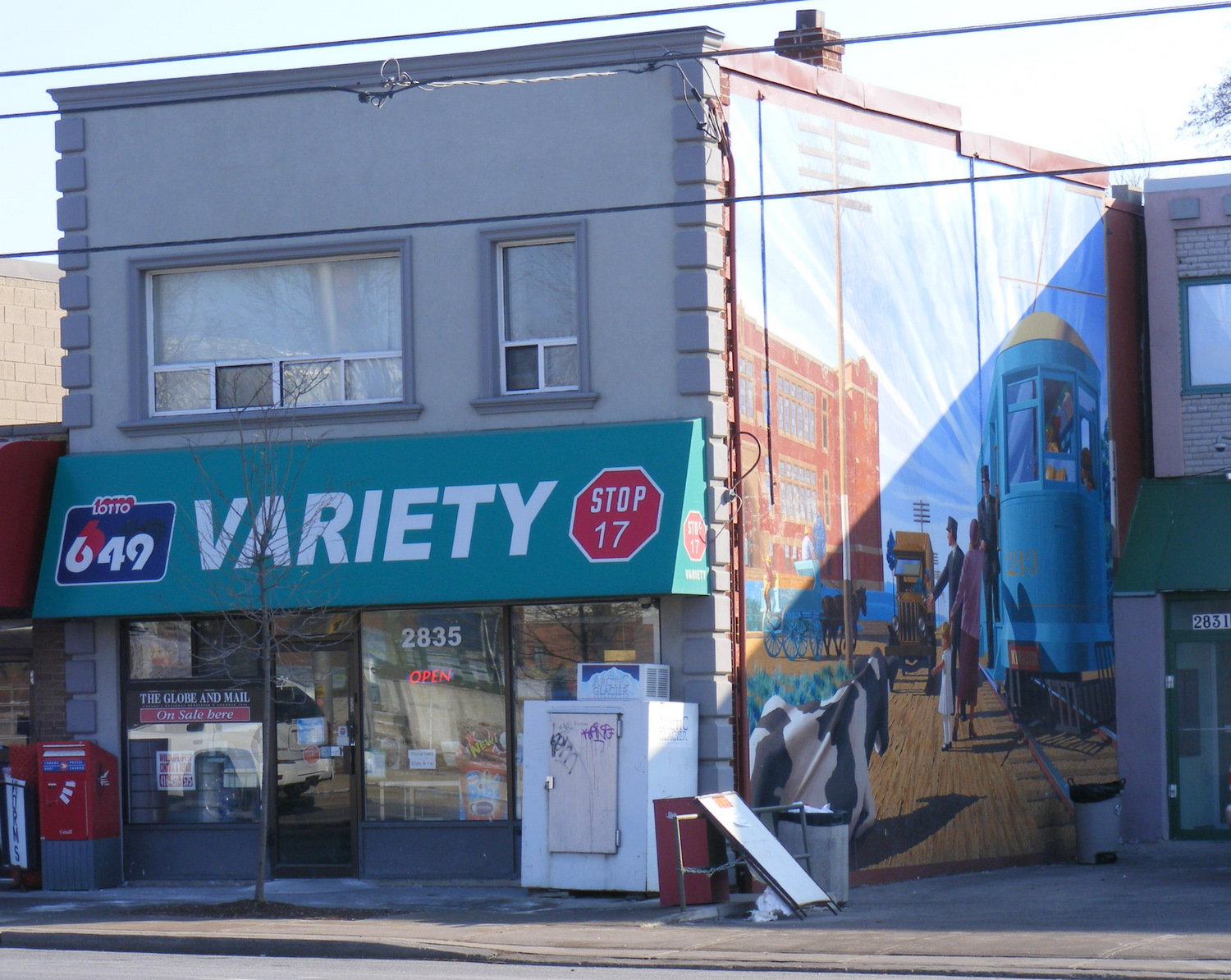
    Stop 17 VarietyStop 17 Variety on Kingston Road at St. Clair Avenue in Scarborough

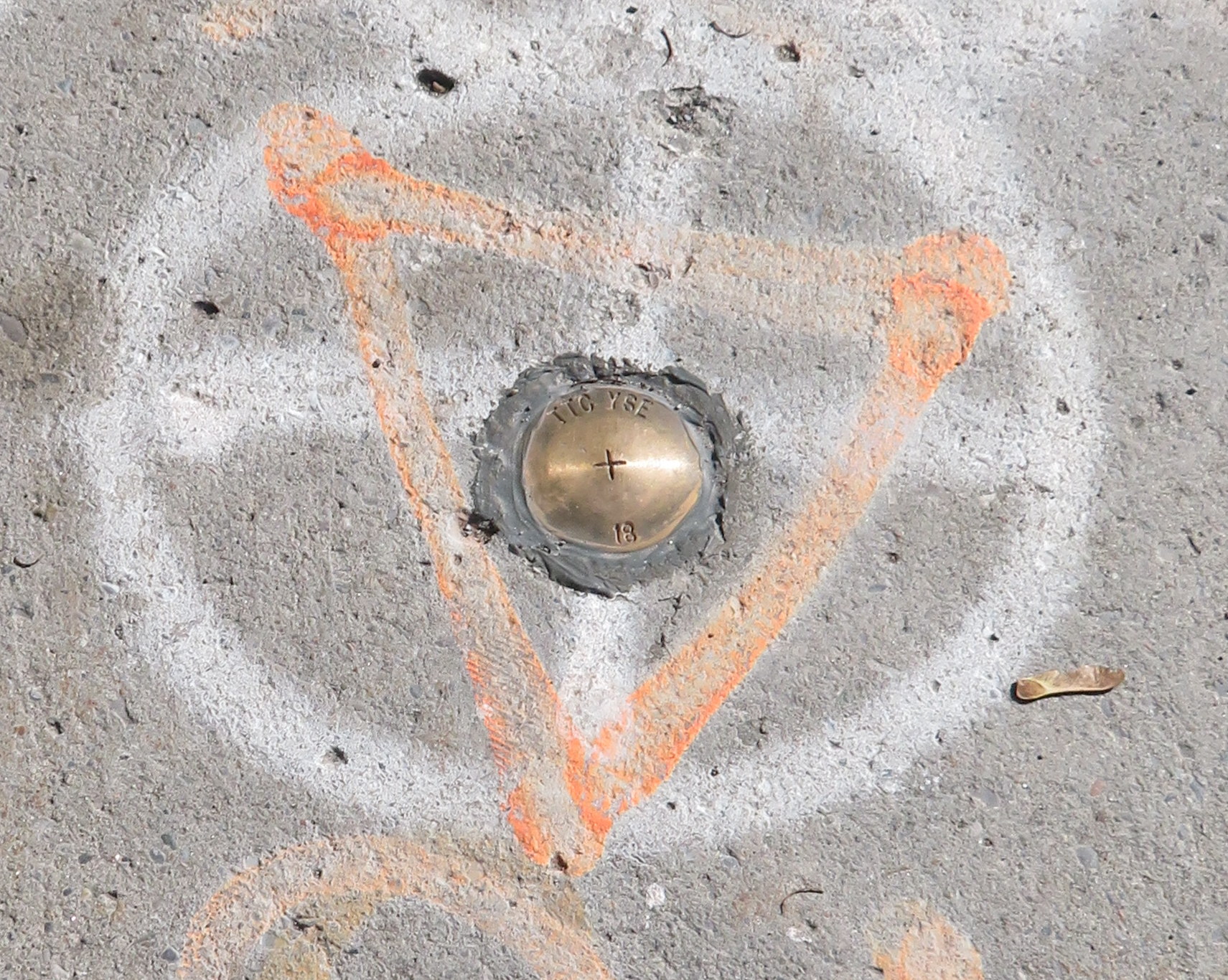
    Nearby the Stop 17 shelter in Thornhill, I noticed several markings in the sidewalk. After a closer look, I noticed that they were survey markers, indicating a location where holes were drilled for preliminary core samples for the planned Yonge North Subway Extension from Finch Station to Richmond Hill.

    One day, the subway will be extended north into York Region, a sensible project given the ridership potential, especially as Yonge Street sees urban intensification through Thornhill and Richmond Hill. The City of Toronto has been resistant to the extension, as the Yonge Subway is already operating over capacity, with a relief subway required to handle the loads.

    The politics of subway building aside, it is fascinating to find the history and future of Toronto’s suburban transit in such close proximity.
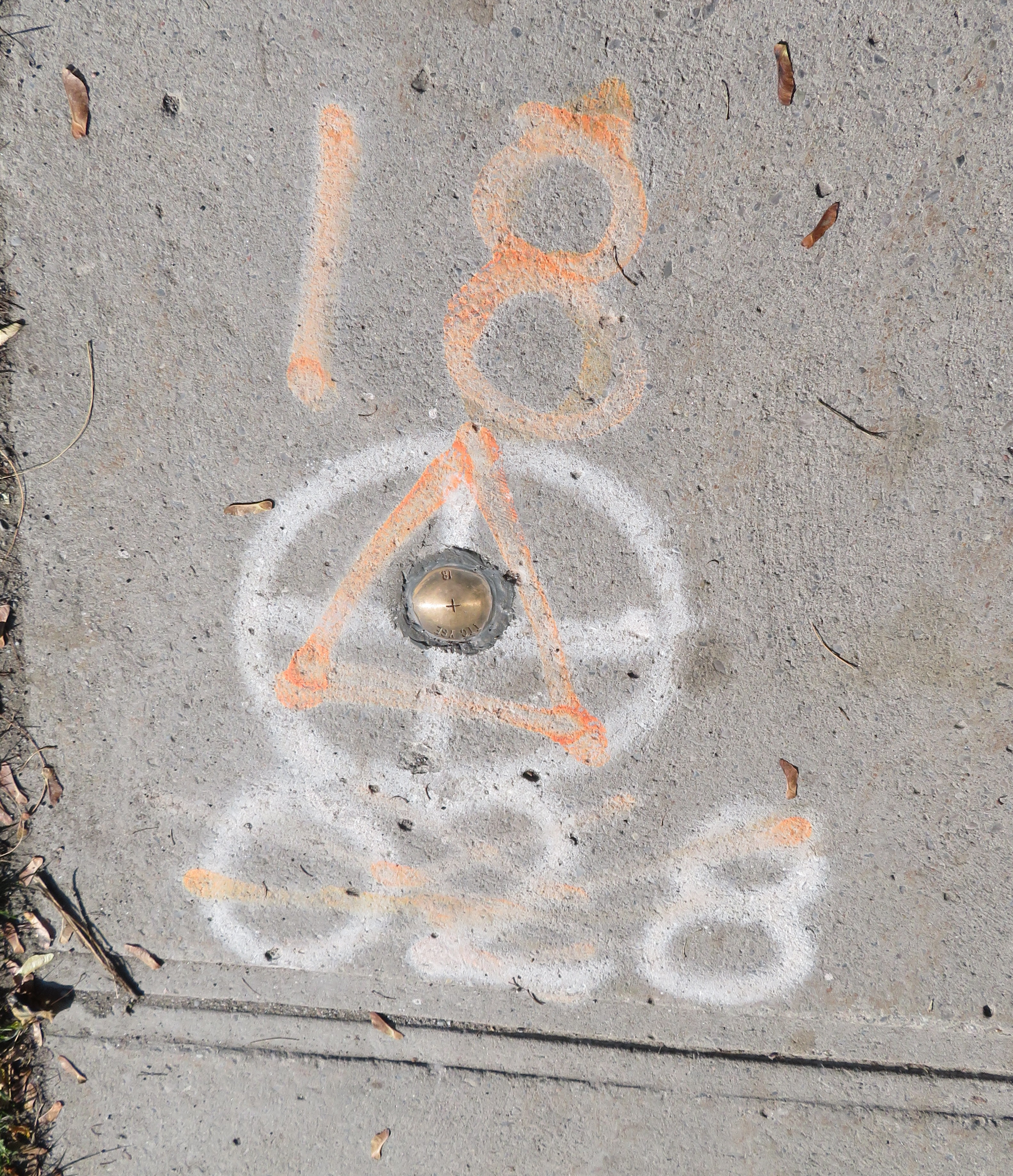
    IMG_4848-001
    Sidewalk markings on Yonge Street

    IMG_4848-002
    “TTC YSE” marker

  • The road to Paris and London

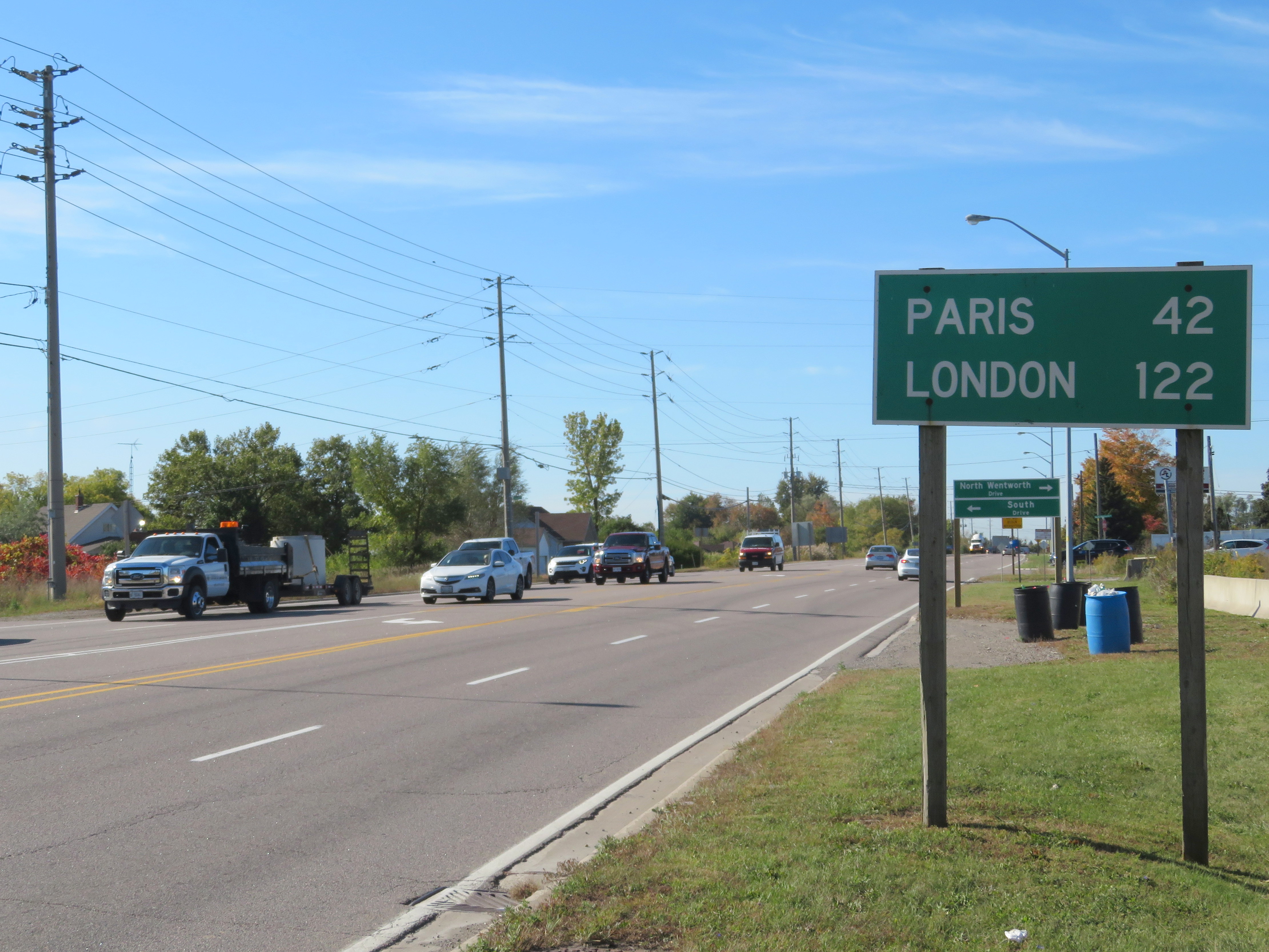
    Sign with the distance to Paris and London OntarioDistance Sign on Highway 5, Clappison’s Corners
    Early European settlers to Ontario were not very imaginative when they came up with local place names. Although some towns and townships have First Nations names (Toronto, Chinguacousy, Niagara), or named for First Nations leaders allied with the British (Tecumseh, Brant), most cities, towns, and townships were given the names of European settlements, British royals and nobility, or the names of those settlers.

    The list of Ontario towns and cities includes no less than ten world capitals: Athens, Brussels, Delhi, Dublin, London, Paris, Vienna, Warsaw, Wellington, and Zurich. Other towns and cities across the province include the names of British royalty and nobility (Cobourg, Hanover, Port Arthur, Fort William, Richmond Hill) or the towns settler arrived from. These towns can be found throughout the province.

    At Clappison’s Corners, a busy intersection outside of Hamilton, Paris and London appear on the same sign, amusing the occasional visitor. By driving west on Highway 5, Paris is just 42 kilometres away, with London an additional 80 kilometres’ drive via Highway 2.

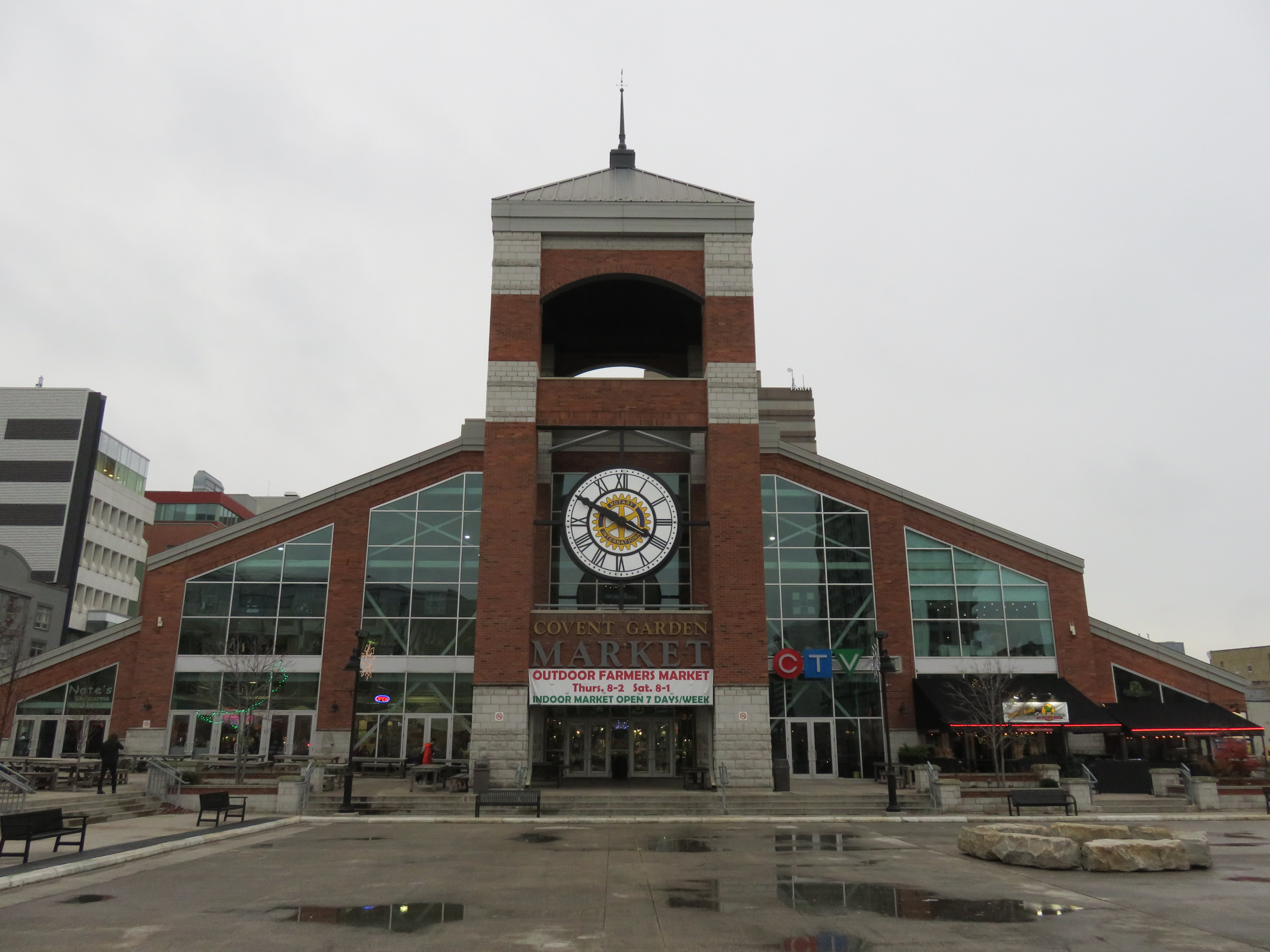
    The other Covent Garden Market, London, OntarioThe other Covent Garden Market, London

    London was named for the British city in 1793, and was chosen as the site of the new capital of Upper Canada by governor John Graves Simcoe. He felt that the interior location, on the banks of the Thames River (Simcoe named that, too), would be safe from American attack. However, York (now Toronto), became the capital. But London became the regional centre for Western Ontario, and is now the world’s second-largest London with over 350,000 residents.

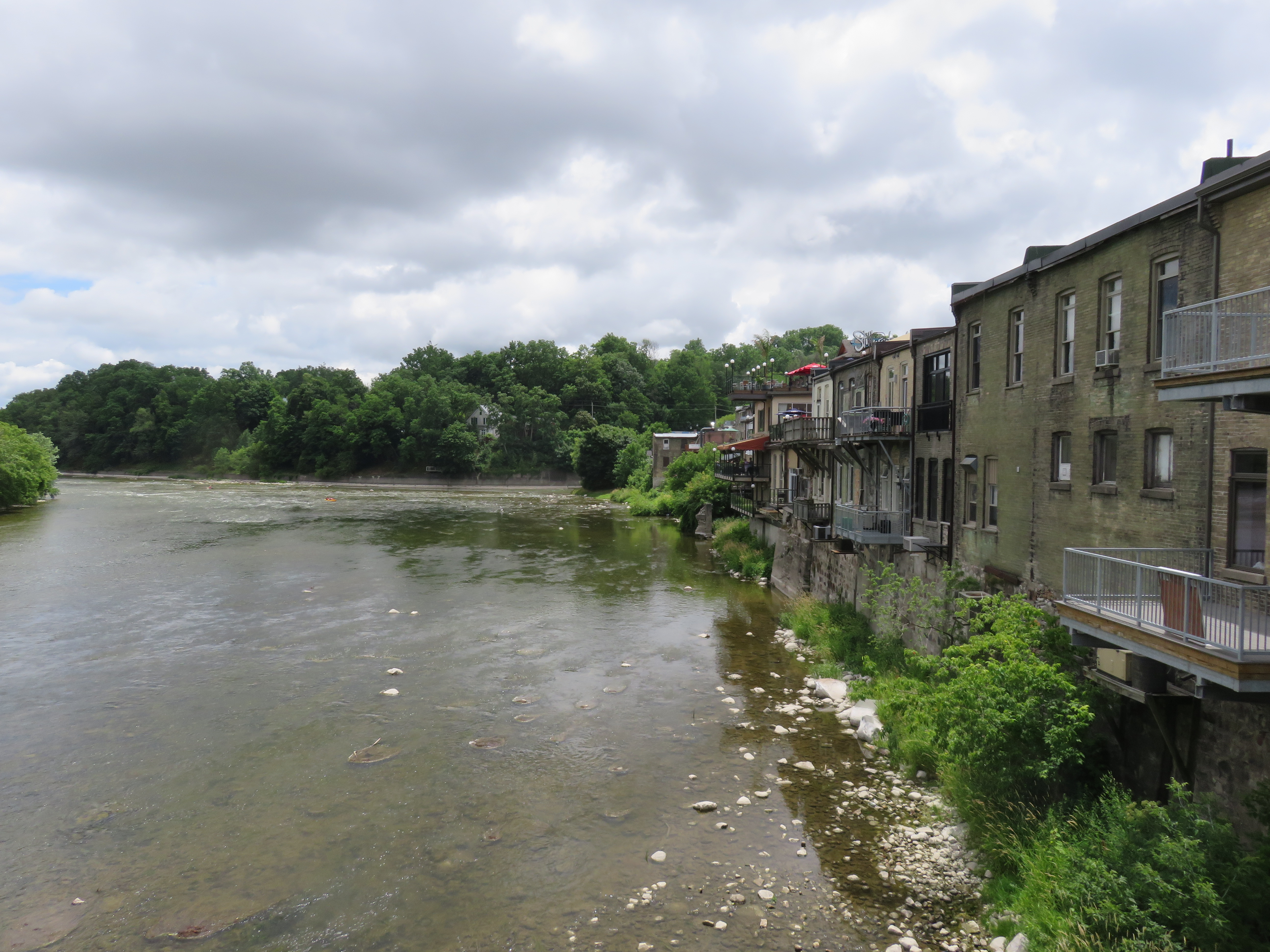
    Paris OntarioParis, Ontario’s main street backs onto the Grand River
    Paris was named in the 1840s not for the French capital, but for the large gypsum deposits in the area, used to make plaster of Paris. In 2000, the town of Paris was amalgamated with rural Brant County. The community has a population of just 12,000, the third-largest Paris (between Paris, Texas and Paris, Tennessee).

    Before the provincial government downloaded thousands of highways to local municipalities in the late 1990s, Highway 5 ran from Highway 2 (Kingston Road) in Scarborough to Highway 2 again at Paris. At Paris, a motorist could continue on Highway 2 west to London and beyond. New freeways, such as Highway 403, offered a faster trip, while local roads, such as Highways 2 and 5, were downloaded as a cost-cutting measure. Today, Highway 5 runs for just 13 kilometres connecting Highways 6 and 8.

    Today, the route to Paris and London is merely an anachronism of an earlier time, when King’s Highways covered the province and when motorists passed through many small towns on their way to places like Toronto, Detroit, and Montreal. At some point, the sign at Clappison’s Corners will be removed to make way for a new interchange. Until then, this humble monument to European settlement and rural King’s Highways will stand guard.

  • The last run of the Rogers Road Streetcar

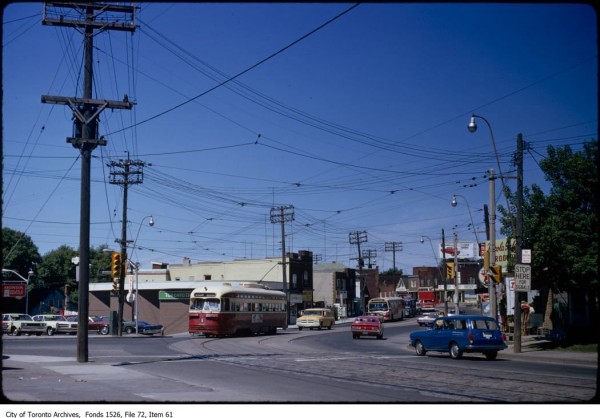
    f1526_fl0072_it0061-600x418.jpg
    Westbound Rogers Road Streetcar at Old Weston Road, 1972. Photograph from Toronto Archives – Fonds 1526, File 72, Item 61

    Forty-five years ago today, on Friday, July 19, 1974, the Rogers Road Streetcar made its last run. The route ran from a loop at St. Clair and Oakwood Avenue to Bicknell Loop, located on Rogers Road just west of Keele Street.

    The Toronto Transit Commission (TTC) had only recently abandoned its policy of eliminating the streetcar network in favour of buses and the planned Queen Street Subway. By the early 1970s, there were still nine streetcar lines in Toronto, along with two extra rush hour services.

    The TTC had to maintain a core fleet of streetcars to continue service until a new fleet could be delivered, and there was a shortage of streetcars in good condition. Despite the new commitment to continue operating a street railway, one more line would have to go. Rogers Road, the last of four streetcars operated for the Township (later Borough) of York, would be sacrificed. (It would not be the last streetcar route to disappear, however.)

    For nearly thirty years, service on Rogers Road was provided by trolley buses, a branch of the 63 Ossington route. While the TTC promised to extend the trolley bus to Jane Street (which was one of the reasons why York politicians supported the streetcar abandonment), it never happened. Instead, a shuttle bus route provided service along Alliance Avenue to Jane. Once the trolley bus network was scrapped in 1993, the TTC restructured several west-end routes. In 1994, the 161 Rogers Road bus finally provided the through service York had demanded for twenty years.

    In July 2014, before I started this blog, I wrote an article about the Rogers Road Streetcar for Spacing’s website, with the assistance of Steve Munro and author John F. Bromley. Five years later, it remains one of my favourite writing assignments.

    You can read the Spacing full article on here.

  • How the QEW made way for Ontario’s transportation innovation

    IMG_1263.JPGQueen Elizabeth Way looking east towards Dixie Road in Mississauga
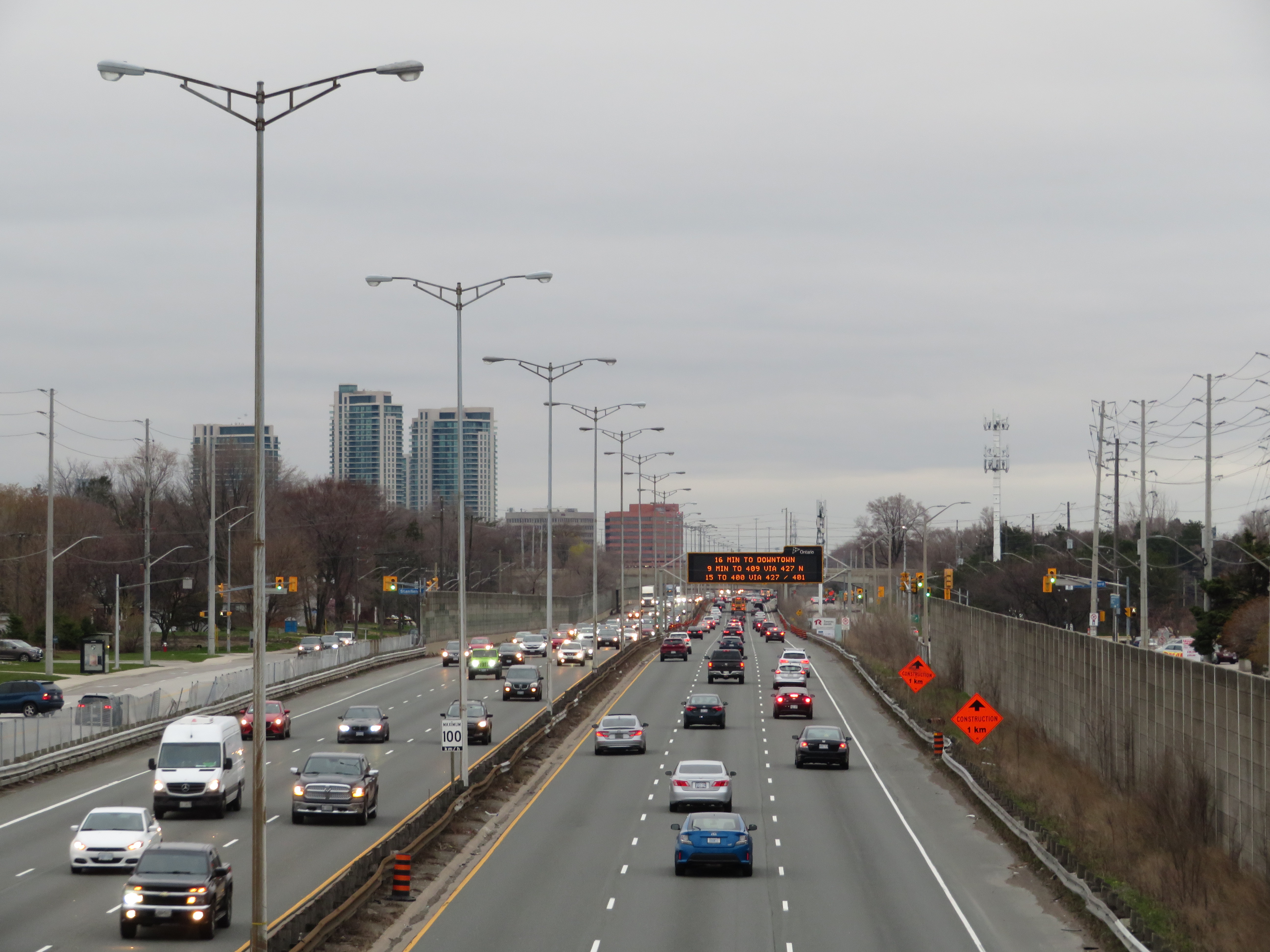
    Eighty years ago, the Queen Elizabeth Way was officially dedicated by King George VI and Queen Elizabeth (for whom it was named). The QEW, which connected Toronto with Hamilton and Niagara Falls, was not only Canada’s first superhighway, it was also the longest divided highway in North America. When it opened on June 7, 1939, it featured such innovations as continuous lighting, extensive landscaping, and Canada’s first cloverleaf interchange.

    But the QEW was not built to modern freeway standards. Despite boasting interchanges and traffic circles, it also had many signalized intersections, private driveways, as well as two lift bridges. As traffic increased after the Second World War, the QEW became known as a notorious “death trap.” Luckily, safety innovations developed by Ontario’s Ministry of Transportation and its predecessors have since made Ontario’s highways among the safest on the continent. Interestingly, the QEW is also indirectly responsible for the creation of one of North America’s most successful commuter rail systems.

    I wrote more on the history of the QEW and Ontario’s record of highway safety innovation for TVO.

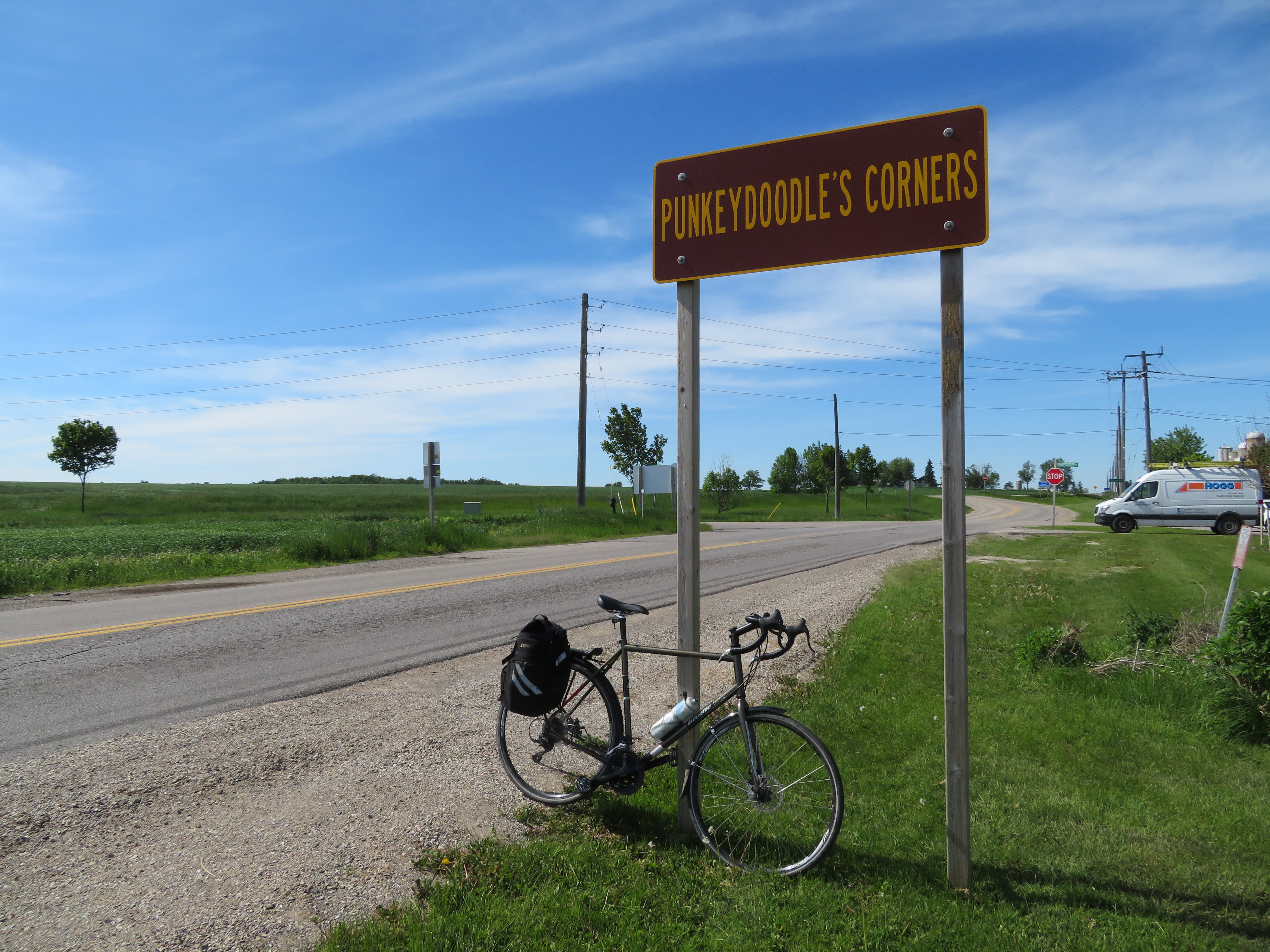
  • Punkeydoodle’s Corners and the world’s highest numbered address

    Punkeydoodles_Corners.JPG

    Last weekend, I went for a ride in Waterloo Region, particularly in Wilmot Township, to the west of Kitchener-Waterloo. Despite some deceptively difficult hills and a strong headwind going back east, it was a very pleasant ride. Outside of Toronto, motorists seem to be quite courteous towards cyclists, with most giving me plenty of room. It helped too that many of Waterloo Region’s rural roads have paved shoulders.

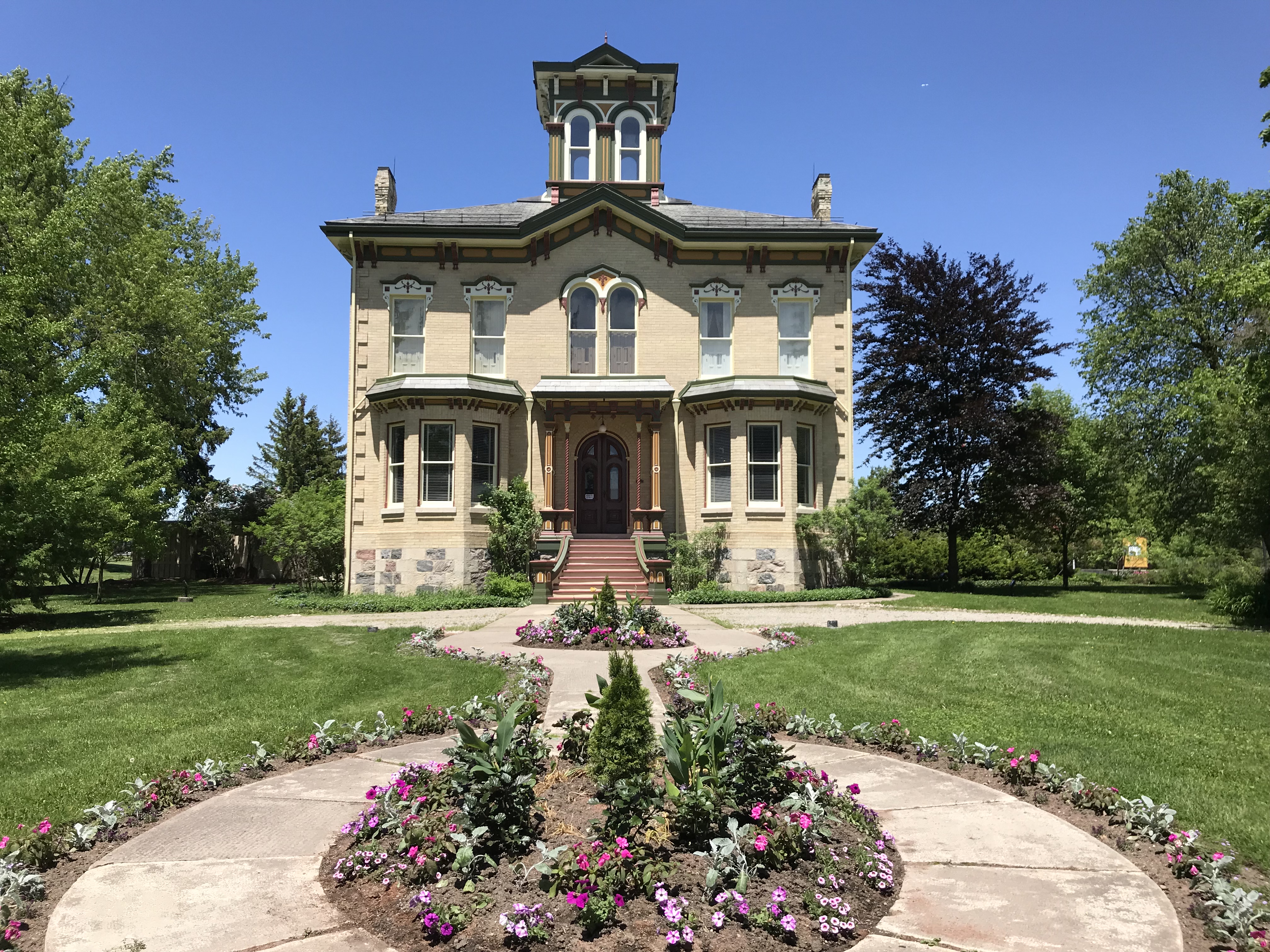
    I made several stops along the way, including Castle Kilbride in Baden, a wonderfully preserved Victorian home. It was built by the Livingston family, who made their fortune in flax and linseed oil. The house, a national historic site, is now a museum operated by Wilmot Township.

    Castle Kilbride.JPGCastle Kilbride

    I biked as far west as the interestingly named hamlet of Punkeydoodle’s Corners, located at the point where Waterloo Region, Perth County, and Oxford County meet.

    Though the origin of the crossroads’ name is not known for sure, the most common theory is that a local innkeeper on the old Huron Road (an early colonization road that connected Guelph with Goderich on Lake Huron) like to sing “Yankee Doodle,” but it sounded more like “Punkey Doodle” to his patrons. The hamlet is now bypassed by Highways 7 and 8, and local business migrated to nearby New Hamburg, located on the railway.

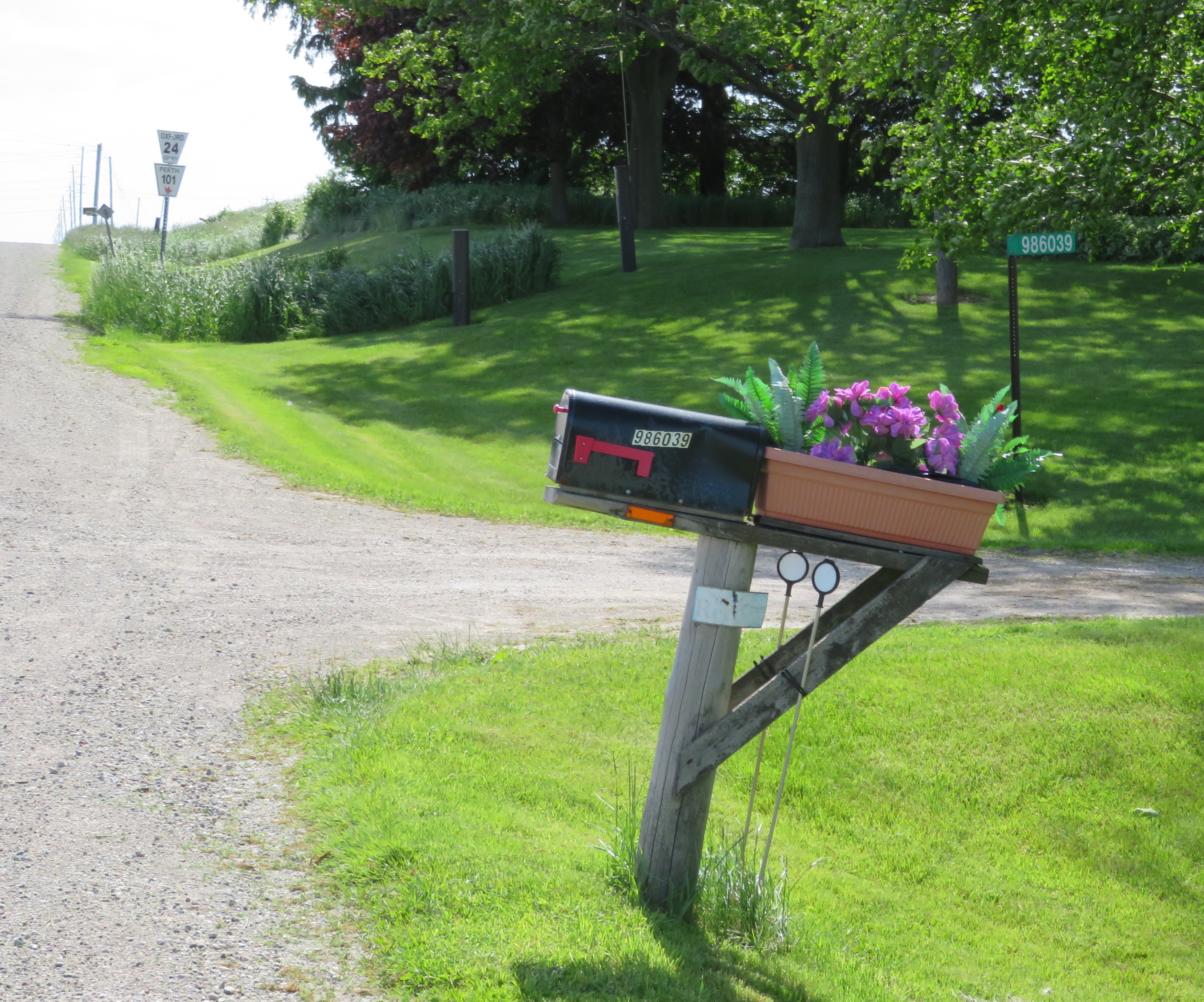
    The Punkeydoodle’s Corners signs are commonly stolen, and one of the signs was obviously missing when I visited. But there’s one more claim to fame: the world’s highest street address number: 986039 Oxford-Perth Road.

    986039.jpg986039 Oxford-Perth Road, a private residence with what is probably the highest numbered address in the world. Road markers for Oxford County Road 24 and Perth County Road 101 are in the background. 
    In many parts of Ontario, rural addresses have a six-digit number, often known as 911 or fire numbers. In Dufferin County, for example, the first two digits refer to the road itself, with each rural road assigned an unique number. Each road is then broken down into sections, represented by the third digit. The last three digits indicate the distance — in decametres — from the beginning of the road section to the property’s entrance, with even numbers on the west or south side of the road.

    Before 911 numbers were introduced, addresses might only consist of a family or business name, rural route number and the name of the village or town with the nearest post office, or by the property’s lot and concession numbers.

    For example, 795112 3rd Line East, Mono, is the address of Mono Cliffs Provincial Park. The number 79, an odd number, has been assigned to the 3rd Line East of Hurontario Street (which runs north-south), while the third digit, 5, represents the section of 3rd Line East north of Mono Centre Road. The entrance to the park is 1.12 kilometres north of Mono Centre Road, on the west side of the road.

    This system allows emergency responders to pinpoint an address quickly and accurately. This is especially important in rural areas, where emergency personnel may be volunteers arriving in their own vehicles. In many parts of southern Ontario, rural roads may simply go by a name, or they may also have a highway or county road number, or still be known by their concession or line numbers. Urban areas, like Orangeville and Shelburne in Dufferin County, have their own numbering systems, separate from the rural 911 addresses.

    Each county may have a slightly different system, but they all have the same purpose. 986039 Oxford-Perth Road just happens to be in the far southeast corner of Perth County, hence its high number. The lowest address numbers in rural Perth County can be found in the northwest corner, near Molesworth.

    It’s worth noting that not all rural areas developed similar numbering systems. In Toronto and York Region, road addresses are based on their origin point. For east-west streets that cross Yonge Street, street numbers start on other side. For example, Yonge Street’s numbering starts at 1 Yonge Street, the Toronto Star Building, and ends at 21137 Yonge Street, where it unceremoniously disappears into the Holland Marsh. 

  • The streetcars of Hiroshima: a symbol of resilience

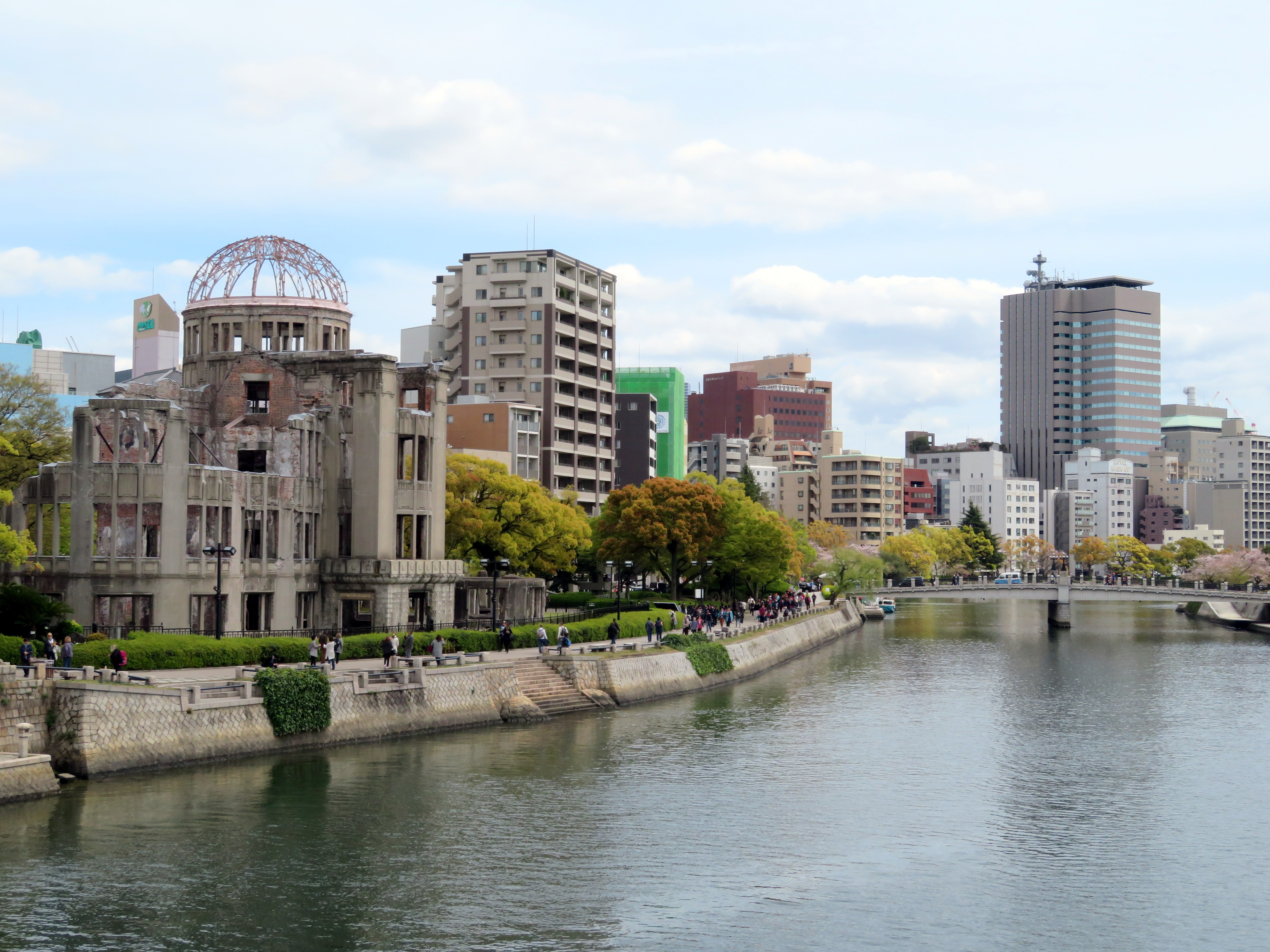
    The Hiroshima Peace Memorial (A-Bomb Dome), with modern Hiroshima rising beyond. Despite its fame, there’s so much more to the city than the memorials.

    My wife and I recently came back from an 18-day trip to Japan. It was my first time visiting the country. We stayed in three cities: Tokyo, Kyoto, and Hiroshima, though we made good use of our Japan Rail Passes and made several day trips as well.

    Despite hundreds of years of history, Hiroshima is best known as the city upon which the United States dropped the first atomic bomb on August 6, 1945, in the final weeks of the Second World War. The memorial (originally the Hiroshima Prefectural Industrial Promotion Hall, but widely known as the A-Bomb Dome) is a UNESCO World Heritage Site, and stands as a reminder of the destructive force and tragedy of modern warfare.

    Most tourists to Hiroshima may only visit the Peace Memorial Park and associated memorials, or take a ferry to Miyajima to visit Itsukushima Shrine and its famous floating gate. But what’s remarkable about Hiroshima is the city’s resilience and pride, and there is much more to see, do, and taste. For me, one of those things is the city’s streetcars.

    The Hiroshima Electric Railway, known as Hiroden for short, operates Japan’s largest street railway network, as well as many local buses and ferries. While most Japanese cities abandoned their streetcars after the Second World War, Hiroshima made a conscious decision to retain its streetcars; they are a symbol of Hiroshima’s resilience. Though 108 out of Hiroden’s 123 streetcars were damaged or destroyed, seven days after the blast, service resumed on the suburban Miyajima line.

    IMG_0264-001Map of the Hiroden streetcar network, with information in Japanese, English, Korean and simplified Chinese

    Today, Hiroden operates 271 streetcars, and it has an eclectic fleet. All streetcars are double-ended, and articulated cars operate with both an operator and a conductor. Passengers pay on exit, though customers using a farecard must tap on and off. (The city fare is a flat 180 yen, though an additional fare is charged on the Miyajima Line.)

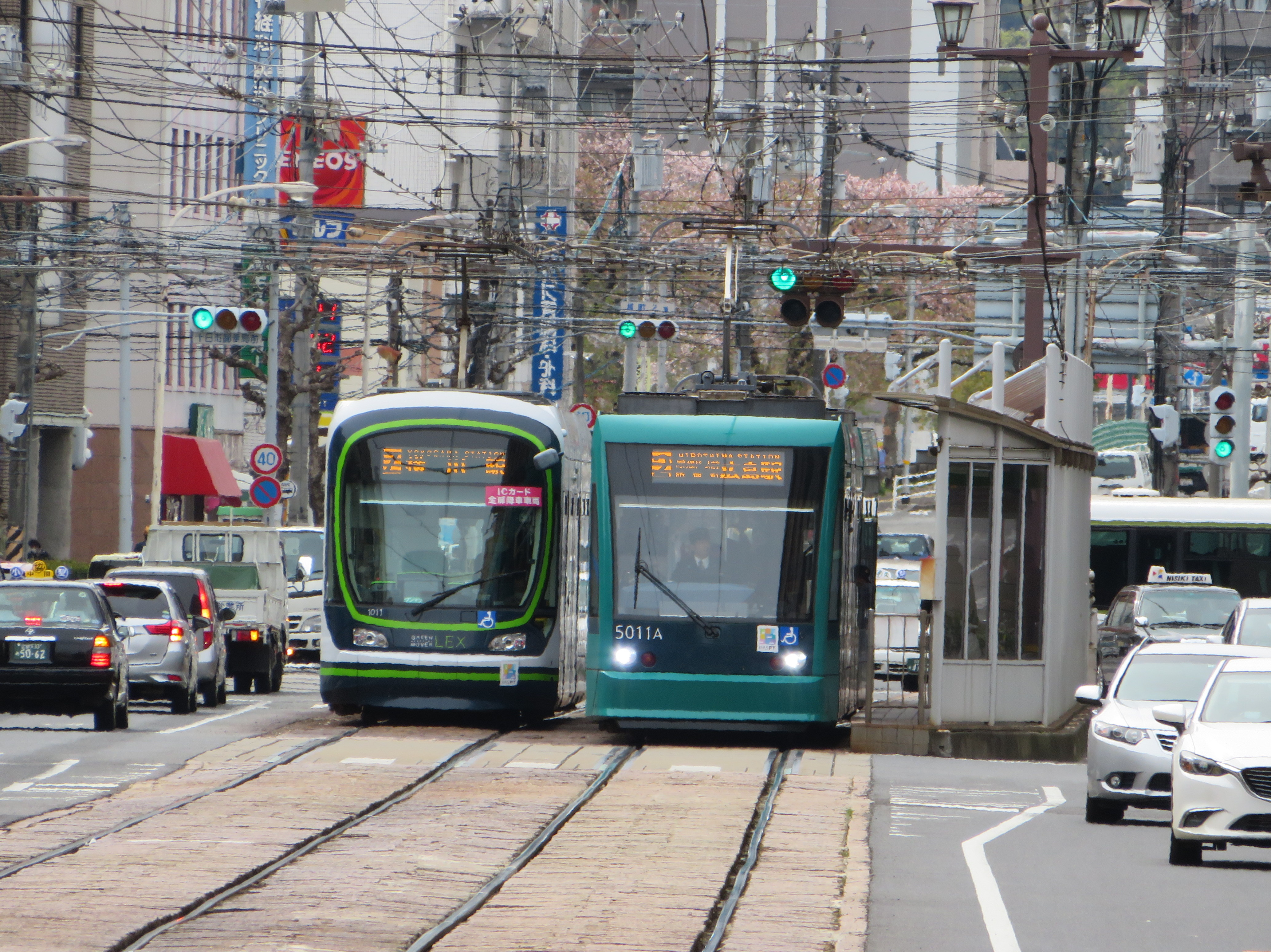
    IMG_0279-001Two newer Hiroden low-floor streetcars pass each other on Aioi-dori. 

    Among Hiroden’s assets are two vehicles (#651 and #652) that survived the atomic blast. In the 1960s and 1970s, Hiroshima purchased used streetcars from other cities that were abandoning their systems, including Kyoto, Osaka, and Kobe, some of which still operate today. New articulated low-floor streetcars augment the streetcar fleet, providing barrier-free transit. A complete description of the Hiroden fleet is available on the local transportation museum’s website.

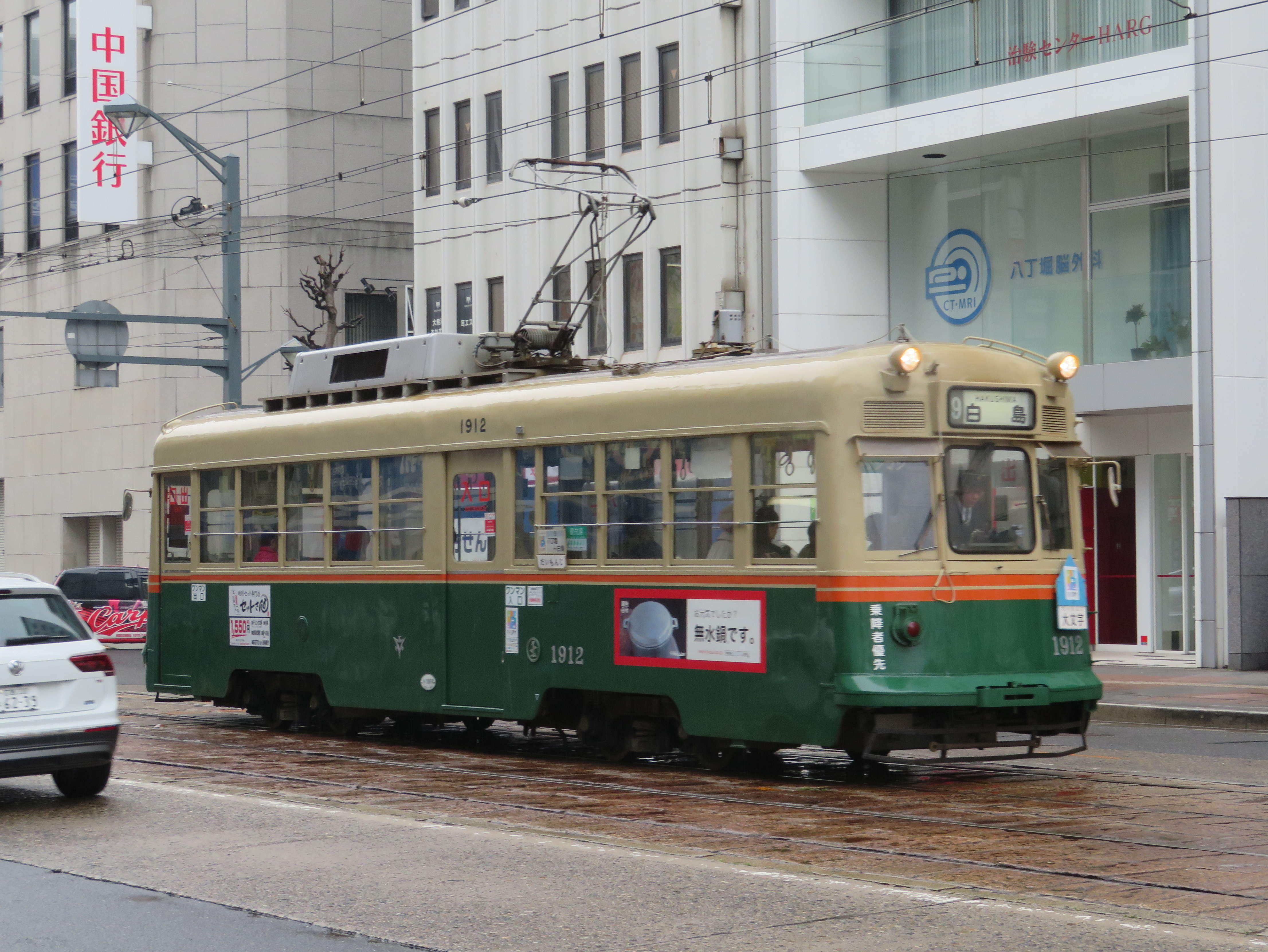
    IMG_0794-001Streetcar #1912 was built in 1957 for Kyoto’s municipal railway. It was acquired by Hiroden when Kyoto abandoned its streetcar system in 1978.

    (more…)

  • The story of Toronto’s streetcar “bull’s eyes”

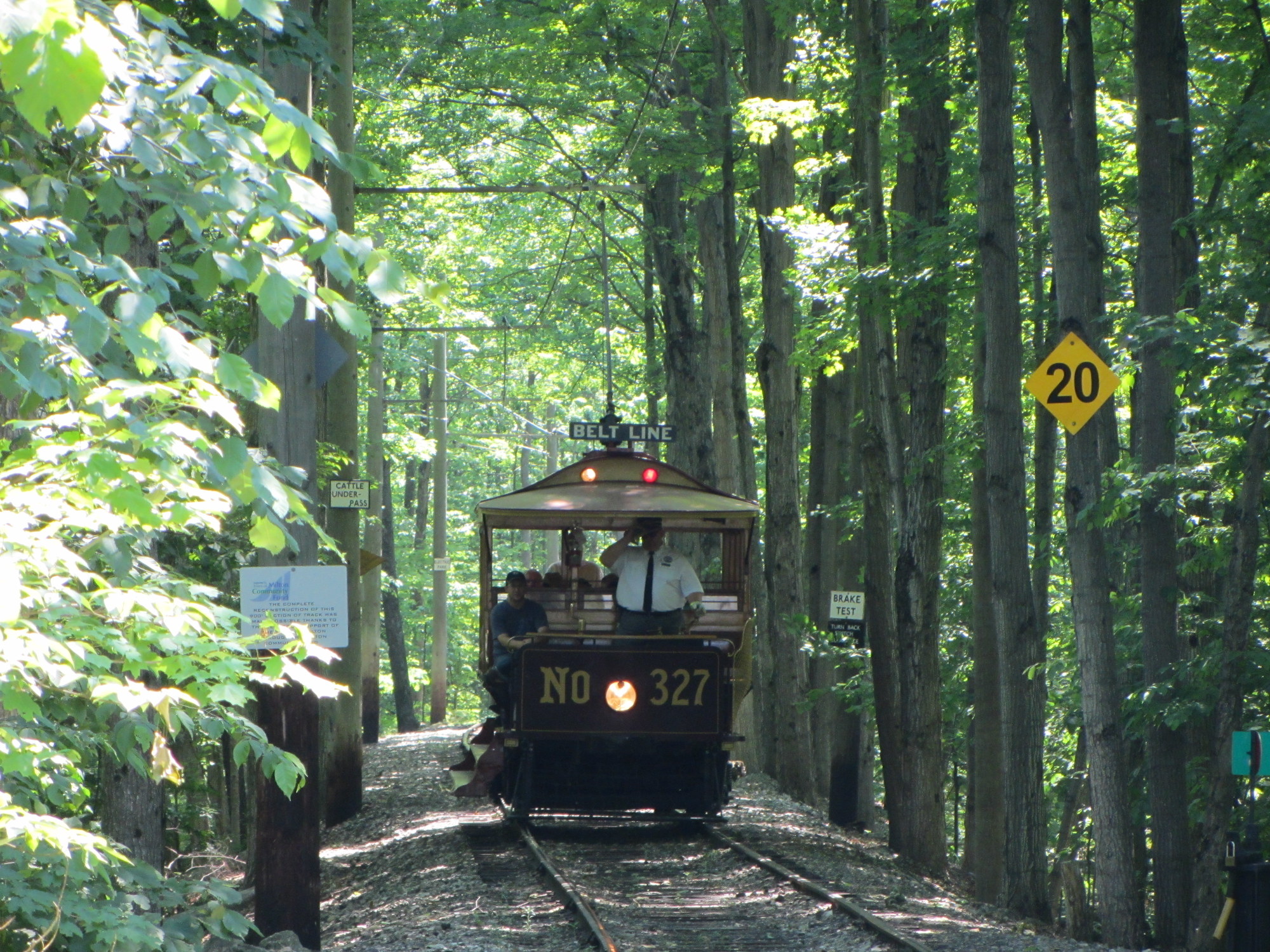
    7566316174_524a59174e_o.jpgReplica of Toronto Railway Company streetcar #327 operates at the Halton County Radial Railway museum, with the unique glass bulbs visible below the metal “Belt Line” sign. Photo taken June 2012
    In 1891, the Toronto Railway Company (TRC) was created, taking over the city’s streetcar system from its predecessor, the Toronto Street Railway. The TRC quickly began electrifying Toronto’s transit network, operating fifteen routes across the city. Electric streetcars were faster than horse-drawn trams, and passengers had difficulties figuring out which streetcar was theirs at night.

    This was a problem as many streetcar routes overlapped. For example, Dupont and Avenue Road streetcars operated on Yonge Street south of Bloor, and Belt Line and Yonge streetcars both ran on Front Street. While the TRC had metal signs on the top and sides of each streetcar to denote the route, they weren’t illuminated. With electric light still in its infancy — arc lamps were too intense while early incandescent lamps were too dull to adequately illuminate route signs — the TRC developed an ingenious solution: uniquely coloured glass bulbs mounted on the roof, lit by interior lights. These lights became known as “bull’s eyes.”

    Under this scheme, the Yonge Streetcar could be identified by one blue light, while the Broadview Streetcar could be identified with red and green lights. This system required passengers to memorize their route’s colours, and as new routes were introduced, changed, or withdrawn, it became cumbersome. Eventually, lighting technology caught up: while back-lit destination signs were possible by 1910, the TRC became hesitant to spend any capital funds to modernize its fleet or expand the streetcar railway network. The City of Toronto was forced to start its own streetcar system, the Toronto Civic Railway, to serve outlying neighbourhoods.

    Though the Ontario Railway Board (predecessor to the Ontario Municipal Board) refused to force the TRC to expand the street railway network beyond the 1891 boundaries, it ordered the TRC to install backlit route signs. These new signs were introduced in February 1913, and those unique coloured bulbs disappeared by 1915. Six years later, the TRC’s franchise was up, and the city-owned Toronto Transportation Commission came into being.

    In 1935, the TTC re-introduced “bull’s eyes” to its streetcar fleet. Officially known as an advance light, a single roof-mounted light, which gave off a blue-green hue, was designed to let waiting passengers know a streetcar was on its way. At the same time, the TTC installed dash lights, which both illuminated advertising cards and provided additional lighting, a useful safety feature.

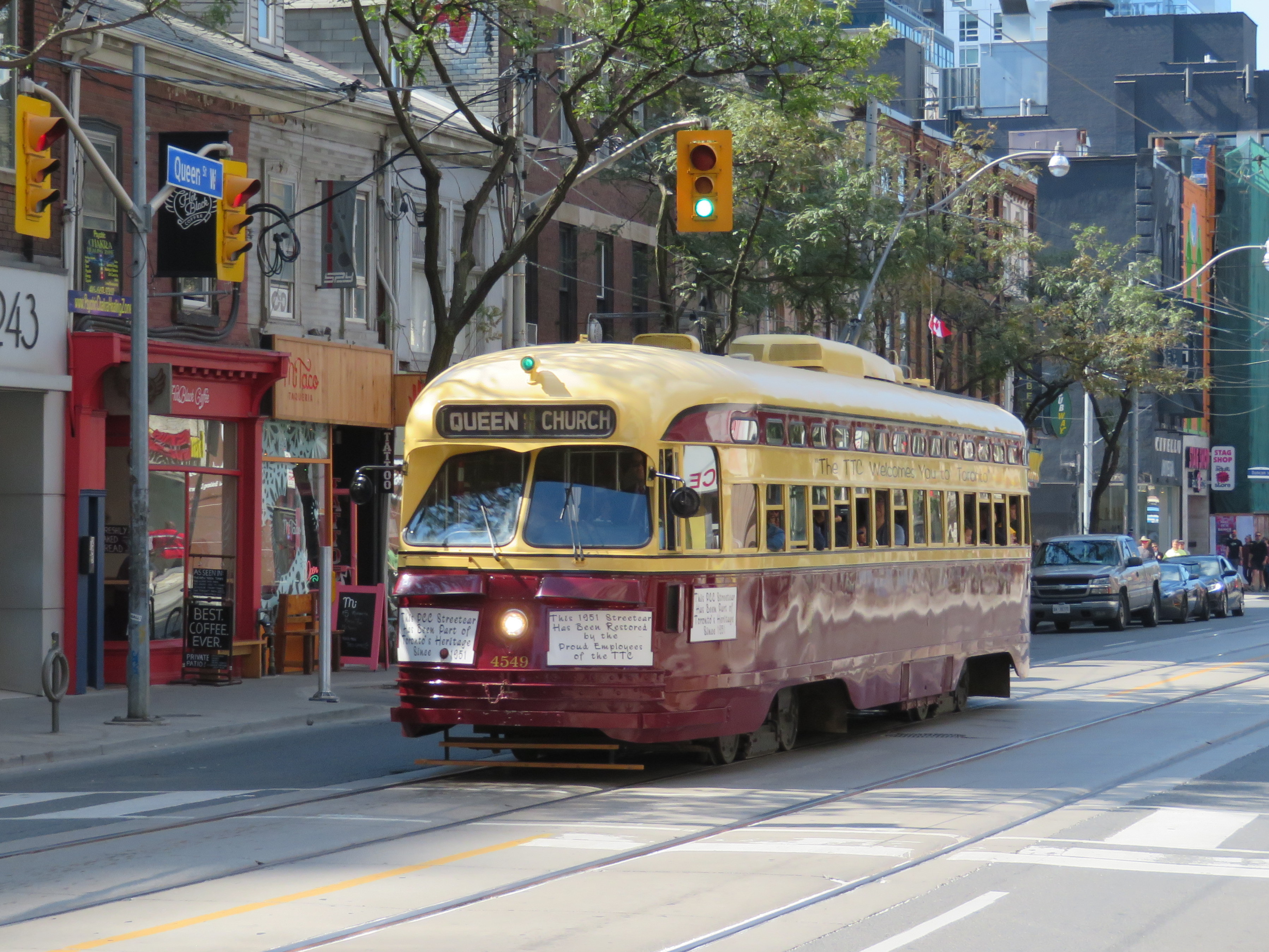
    IMG_7929-001.JPGTTC PCC Streetcar #4549 on Queen Street West in September 2018
    New PCC streetcars, which began arriving in 1938, were built with the advance lights already installed. By 1940, all streetcars, including the remaining wooden cars acquired from the Toronto Railway Company, were equipped with advance lights. After the Second World War, PCC streetcars purchased from cities such as Cincinnati, St. Louis, and Kansas City, were similarly fitted with the roof-mounted lamps.

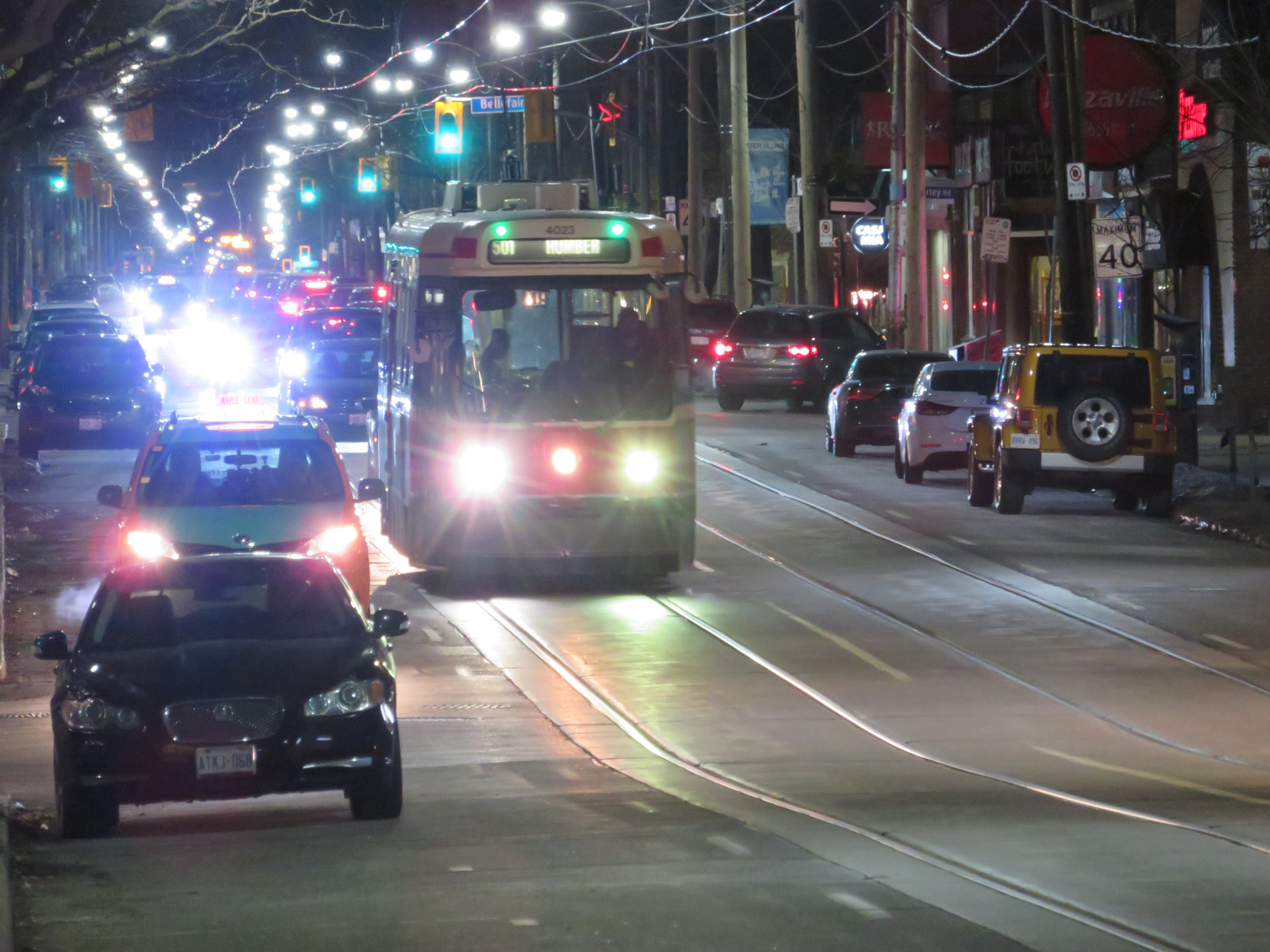
    IMG_8717-001.JPGCLRV streetcar on Queen Street East, with two blue-green advance lights above the back-lit destination sign. 
    By the 1970s, the TTC decided to maintain its street railway fleet after planning for their eventual replacement with buses and subways, and sought a replacement fleet for its ageing PCCs. The new Canadian Light Rail Vehicles (CLRVs) and Articulated Light Rail Vehicles (ALRVs) were designed with dual advance lamps, mounted within the streetcar body, immediately above the destination sign.

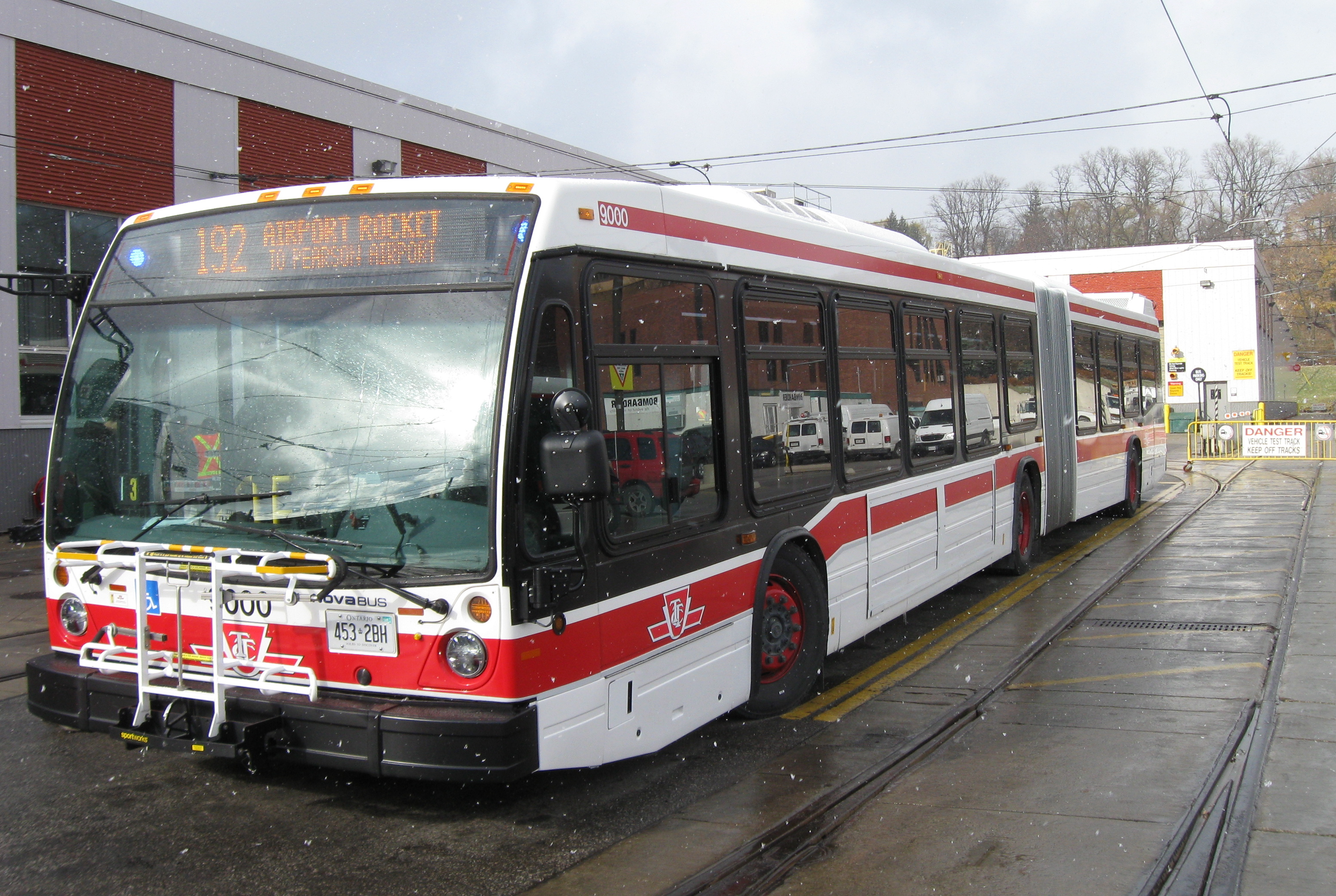
    Advance lights were introduced to TTC buses starting in the mid-1990s, as new wheelchair-accessible vehicles were added to the fleet, starting with high-floor Orion V and Nova RTS buses, and continuing with newer low-floor vehicles. Blue lights indicated that the bus was accessible. As a bonus, when combined with new digital orange LED destination signs, the bus advance lights served to further improve the visibility of approaching transit vehicles.

    11041809023_47fc64e5e7_o.jpgNova articulated bus with orange LED destination sign and blue LED advance lights indicating it is an accessible vehicle
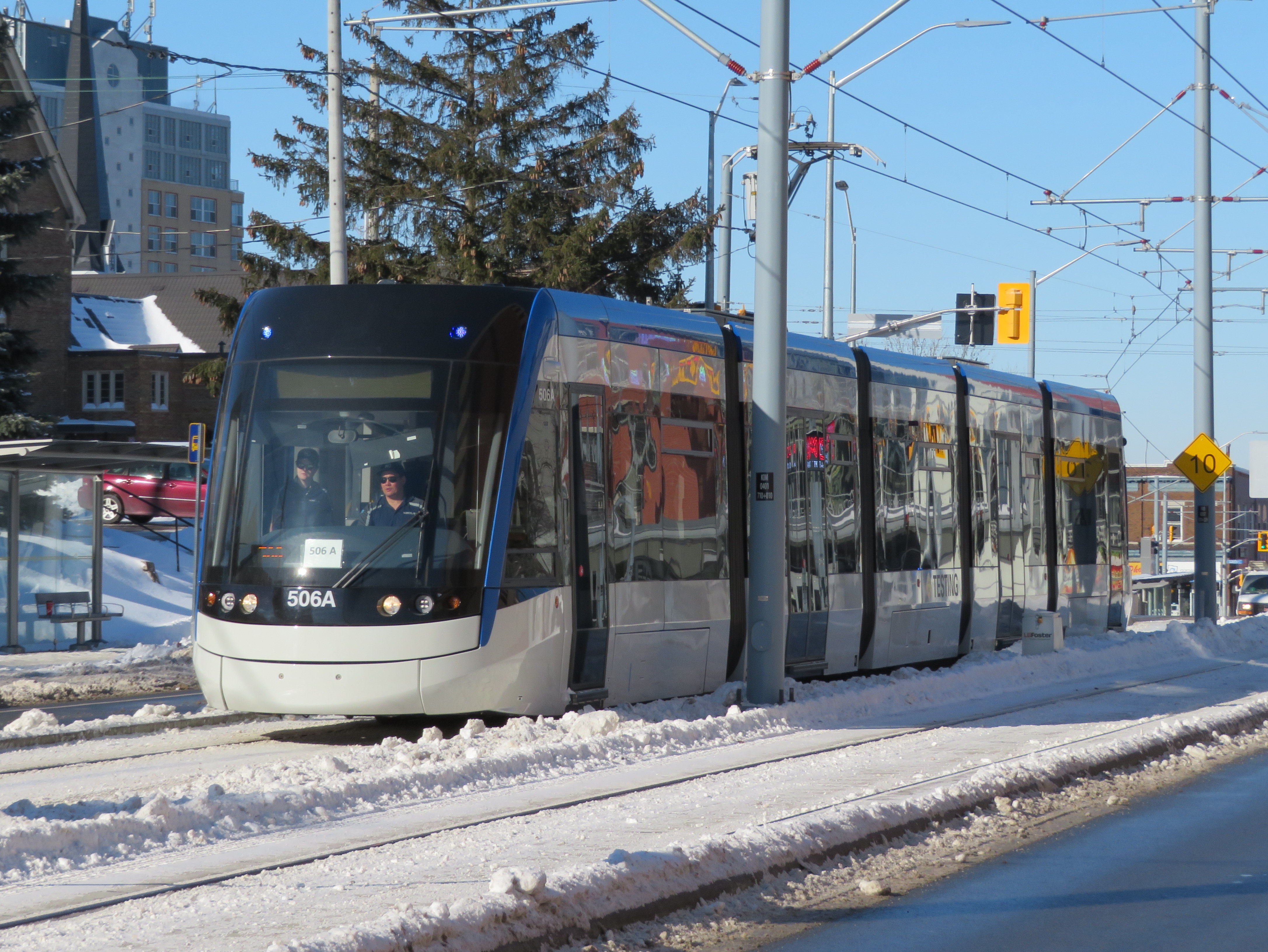
    The new Bombardier Flexity streetcars are similarly equipped with new blue LED lights, as they too are fully accessible vehicles. While blue advance lights are unique to TTC buses, the new light rail vehicles for Waterloo Region’s ION LRT, also built by Bombardier, sport similar blue lights.

    IMG_8421-002.JPGION LRT vehicle undergoing testing in Kitchener, February 2019
    Sources:
    John F. Bromley and Jack May: Fifty Years of Progressive Transit (Electric Railroaders’ Association, 1973)
    Mike Filey: Not a One-Horse Town: 125 years of Toronto and its Streetcars (Firefly Press, 1990)

  • Subways don’t always last 100 years

    IMG_7232-001
    Former Toronto Mayor Rob Ford liked to claim that subways would last one hundred years, while other “inferior” forms of transit, like light rail systems, would last only thirty.

    At the time, Ford was pushing for a subway extension to Scarborough Town Centre that would replace the Scarborough RT. The SRT opened in 1985 and nearly thirty years later, the line needed a major rebuild, including new equipment. The City of Toronto planned to replace the aging system with a modern LRT route, including a three kilometre extension with two new stations at Centennial College and at Sheppard and Progress Avenues in Malvern. The line would have been fully funded by the province, and the rebuild would have reduced the cumbersome transfer from the subway platforms.

    Of course, Rob Ford was wrong about subways lasting 100 years. While Toronto’s subway system is over sixty years old — the original Yonge Subway opened in 1954 between Union and Eglinton Stations —  only the tunnels and station structures themselves remain from that era. The Yonge Subway is on its fourth generation of vehicles. Each of the stations have been renovated with new turnstiles, tiling, signage, and elevators. The TTC is also working on a new automated signalling system, and track replacement is an ongoing program.

    Had the Scarborough RT been built as originally planned as an LRT route, there would only be the need for ongoing maintenance and new replacement vehicles. Extensions of the line would have been much easier and cheaper. The problem was that the planned route was converted — with pressure from the provincial government — to an Intermediate Capacity Transit System, a novel technology which was then being developed by the Province of Ontario. The rolling stock — nearing 30 years old — had to be replaced, and Bombardier, the successor to the provincial Urban Transportation Development Corporation, no longer built vehicles that could fit a tight turning radius between Ellesmere and Midland Stations. That’s why, after 30 years, the SRT needs a replacement.

    But you don’t have to travel far to see proof that subways don’t last a hundred years. In Rochester’s case, that city’s subway lasted only twenty-nine years before abandonment.

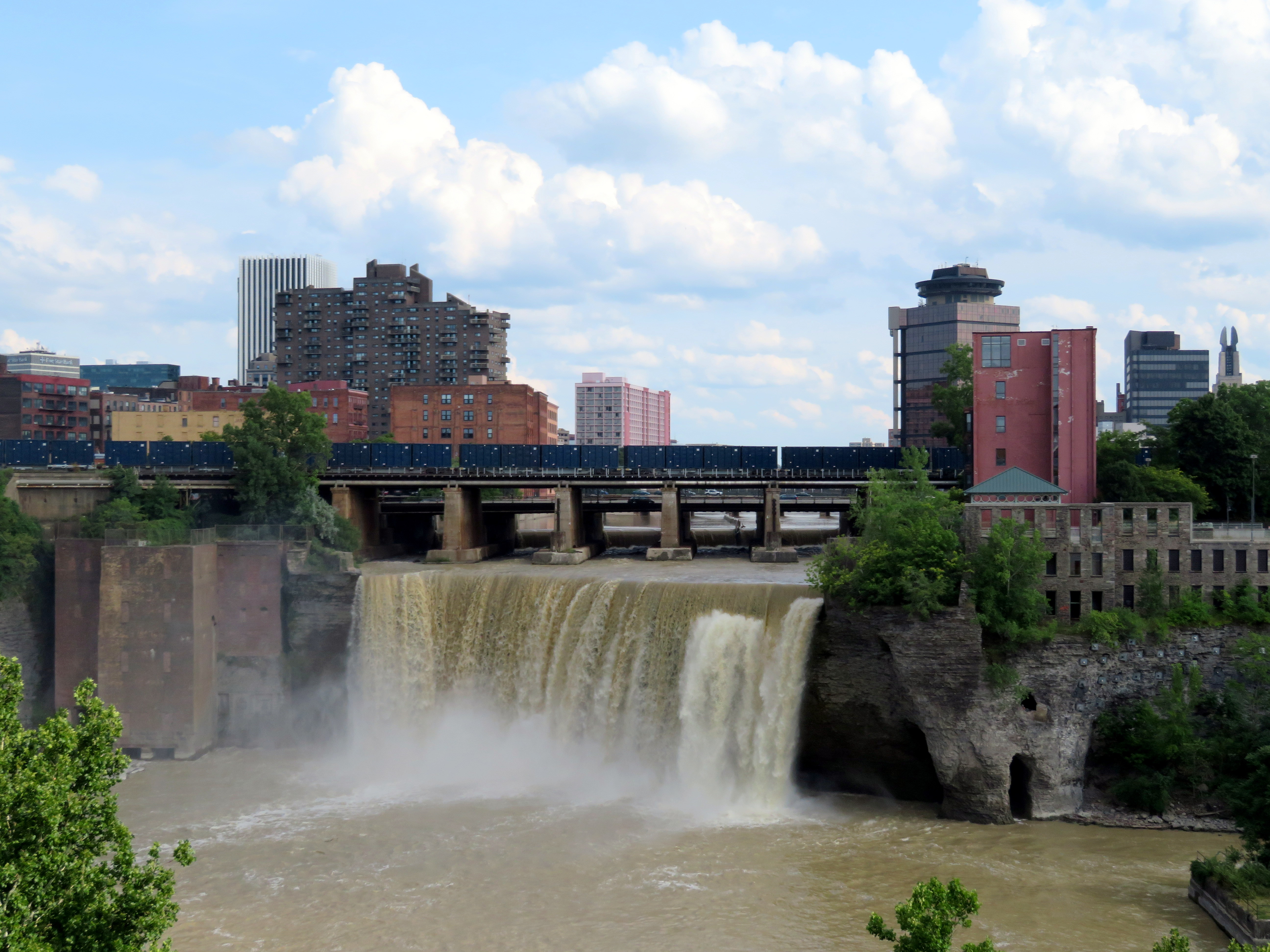
    IMG_7219-001High Falls, Rochester

    Rochester, New York is an interesting city. It’s best known as the home of Kodak and Xerox, with a few attractions that make it a worthwhile place to visit, including the George Eastman Museum and estate, The Strong Museum, and the most easterly of Frank Lloyd Wright’s classic Prairie Style houses.

    It also has America’s only fully-abandoned subway system.

    The Rochester Subway was one of three subways planned and built in mid-sized American cities after the First World War. All three, coincidentally, were designed to permit streetcars to run under city streets using abandoned canal beds.

    Cincinnati’s subway was the first to begin construction. Work began in 1919 on the path of the old Miami and Erie Canal, which once linked the Ohio River with Lake Erie at Toledo. But costs increased and construction was never completed. Today, the Cincinnati Streetcar runs on top of the abandoned subway route along Central Parkway.

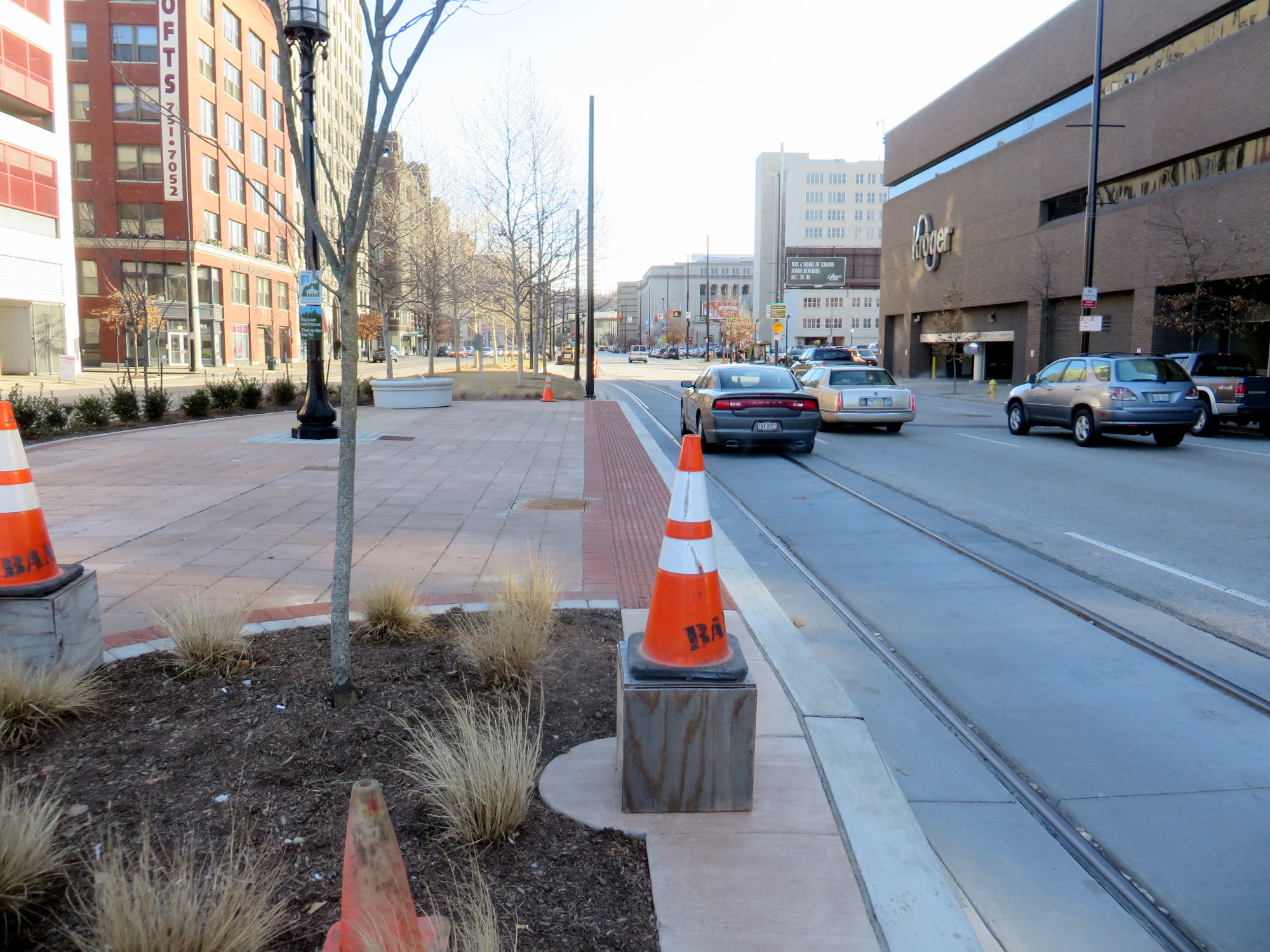
    IMG_5599-001Central Parkway in Cincinnati in January 2015, where new streetcar tracks run above the abandoned subway line
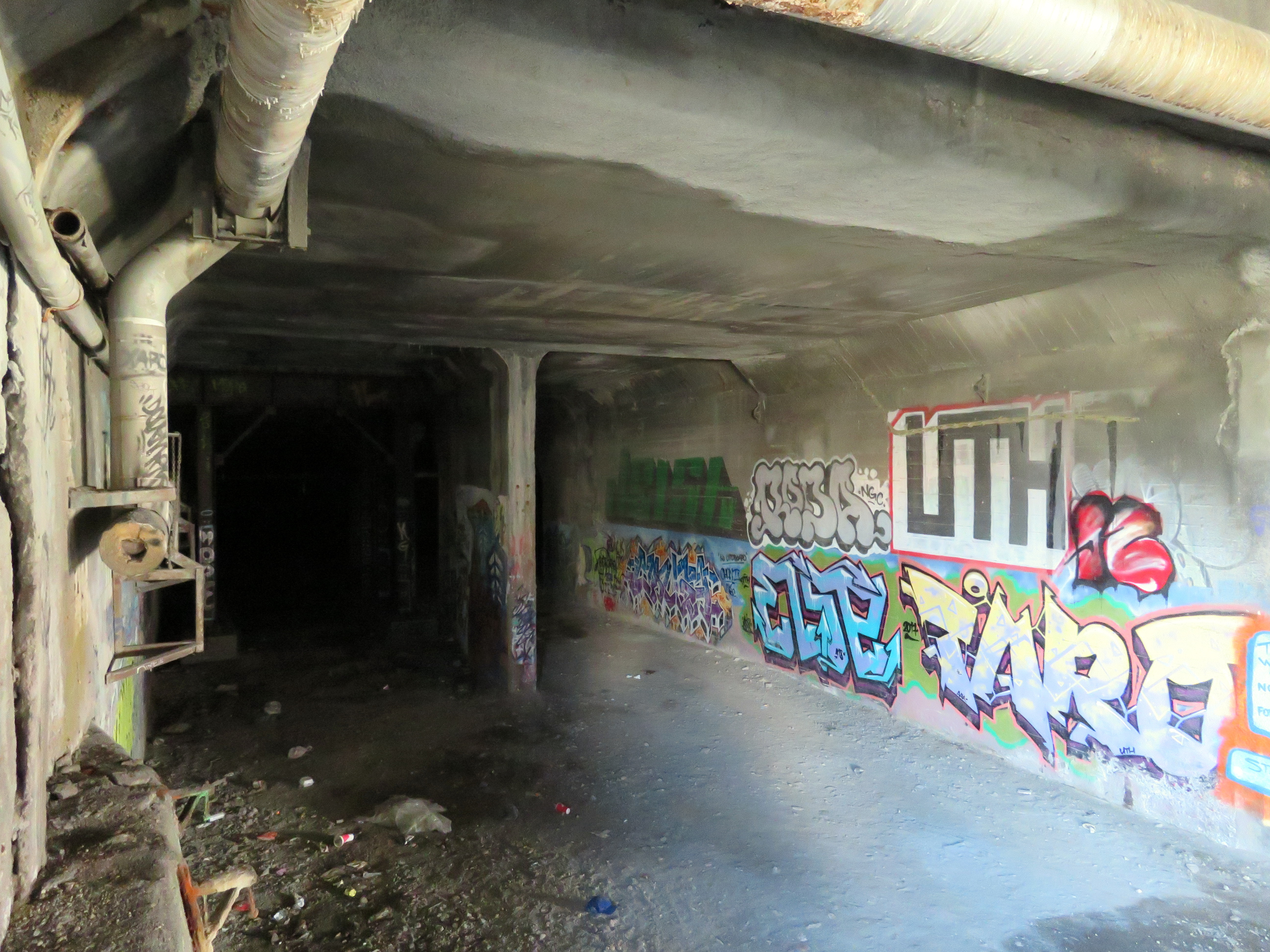
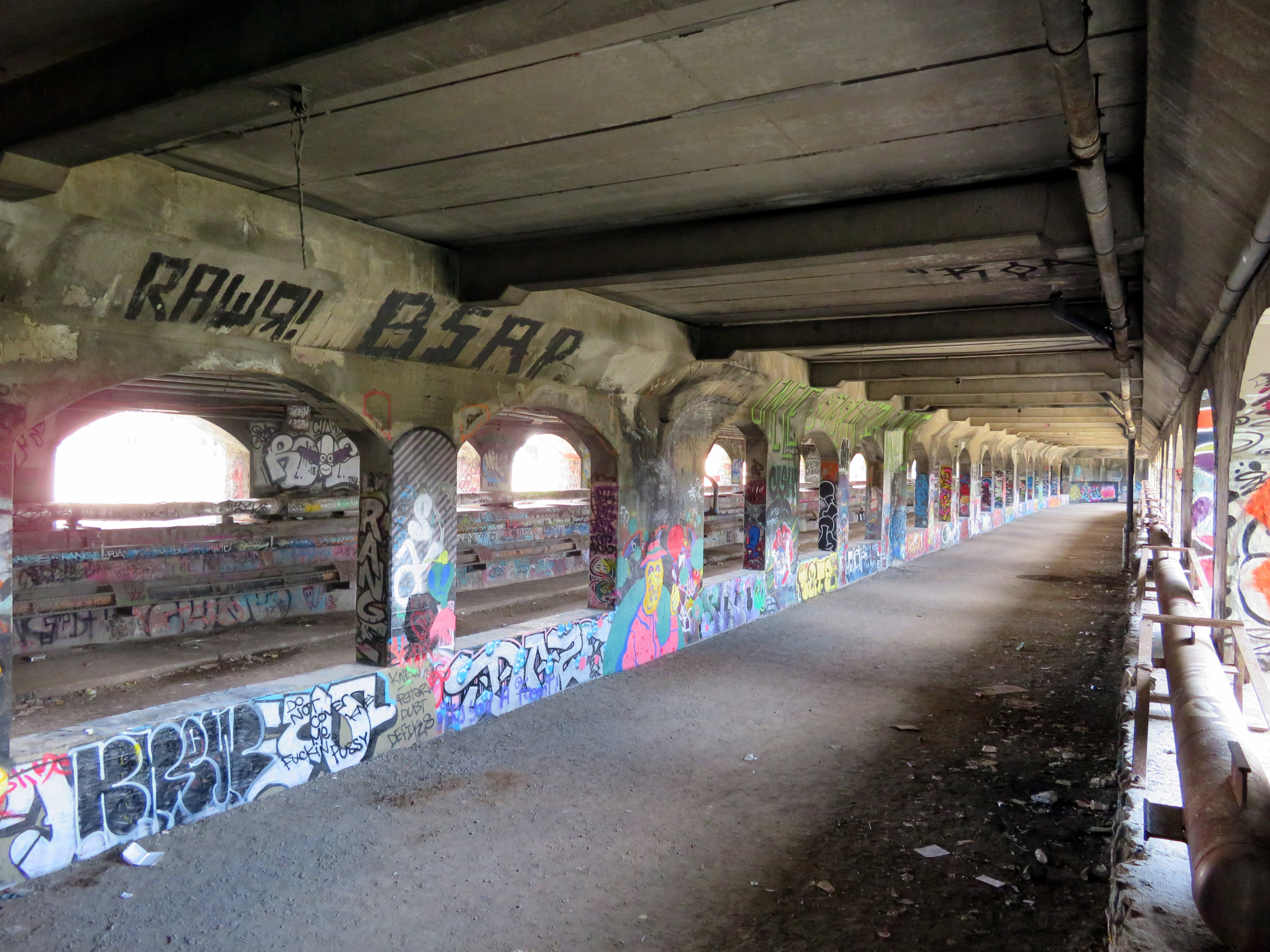
    Rochester was the second city to build a subway line in a disused canal bed. The Erie Canal was rerouted around Downtown Rochester in 1919 and the new subway line — of which less than three kilometres was below grade — was built along the old waterway. A new downtown roadway, Broad Street. was built above the old canal. Service began in 1927 and was abandoned in 1956, as streetcar service in Rochester came to an end. Suburban growth along with population decline in old central city, and the prioritization of new interstate highways, put an end to rapid transit in that city.

    Newark was the last city to build a new subway system in an old canal bed. Opened in 1935, the Newark City Subway was built between the Pennsylvania Railroad Station (which now serves Amtrak, NJ Transit commuter trains, and PATH subway trains to New York City) and northwestern suburbs. The City Subway, which operated PCC streetcars until 2001, later became the core of New Jersey Transit’s Newark Light Rail System.

    IMG_7230-001

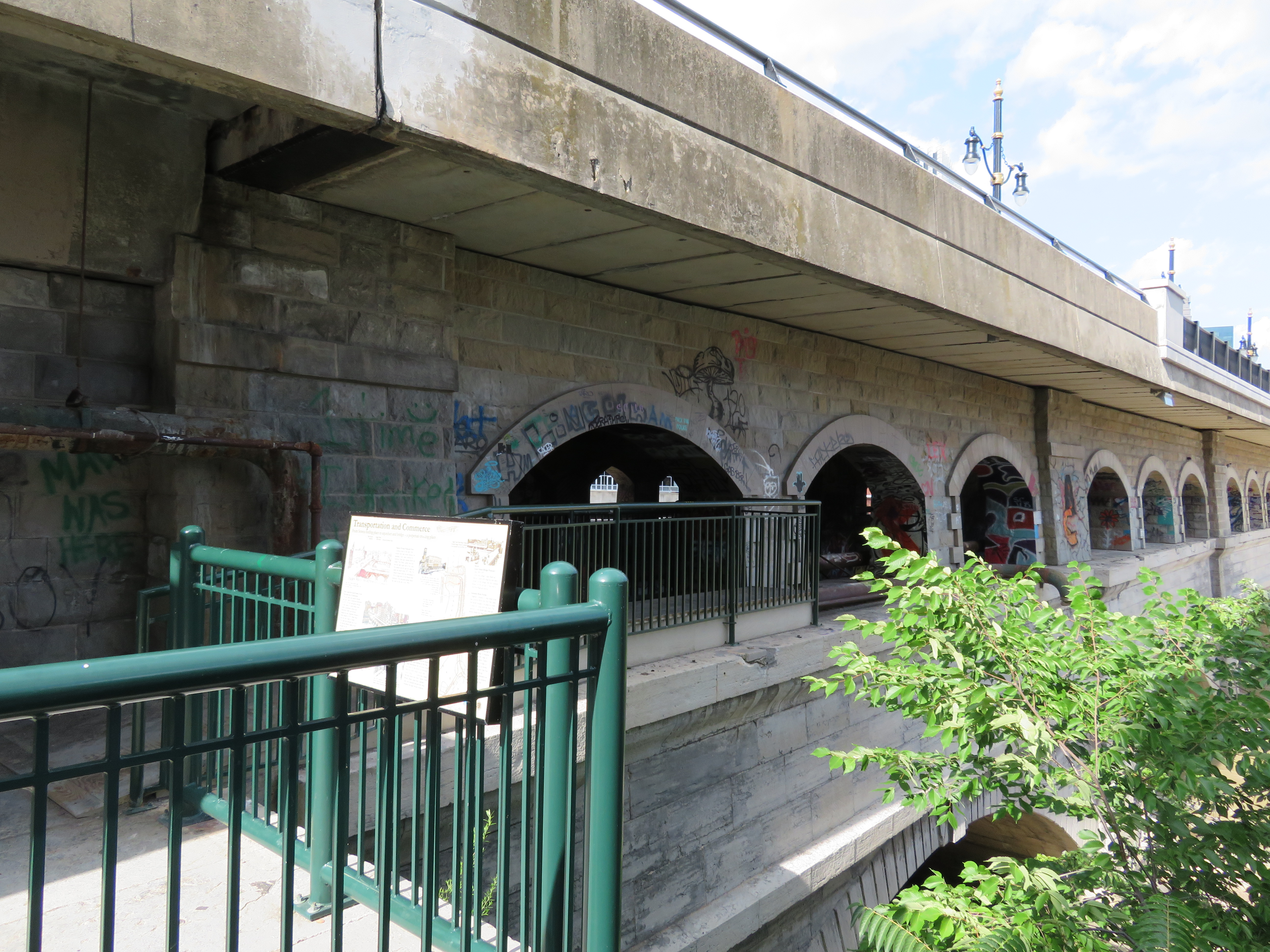
    In Rochester, several sections of the abandoned subway remain visible to the public, including both tunnel portals. Stairs leading down from the Broad Street Bridge, which spans the Genesee River and once carried the Erie Canal, allow the general public to get a glimpse of the tunnel (it is also accessible from the Genesee Riverway Trail next to Blue Cross Arena without stairs), and all the graffiti lining the walls.

    IMG_7238-001A public walkway from the Genesee Riverway at the Broad Street Bridge allows visitors to get a glimpse of the abandoned Rochester Subway
  • Ontario’s failed downtown malls

    IMG_0392.JPG
    Bayside Mall, formerly the Sarnia Eaton Centre, on a Saturday morning in 2013. Most stores are vacant or occupied by non-profits or independent businesses.

    The Toronto Eaton Centre, large, famous, and vital, is only one of many malls built in the downtown cores of Ontario cities between the 1960s and 1990s. From Thunder Bay to Cornwall, the construction of new enclosed shopping centres were seen as a necessary tool to keep the old city centres vibrant and relevant in the face of competition from new suburban malls. But only in the province’s two largest cities did the concept work. Elsewhere, these urban shopping complexes were left largely vacant within ten years of opening, when leases expired. When the Eaton’s department chain went bankrupt in 1997, huge voids were left behind that developers and municipalities struggled to fill.

    The Toronto Eaton Centre was opened in two phases between 1977 and 1979. It added hundreds of shops and new office space to Downtown Toronto, anchored by a new Eaton’s flagship and was connected to the Simpson’s store across Queen Street. Today, the Eaton Centre is Canada’s second largest mall (including the Hudson’s Bay/Saks Fifth Avenue building) and the Toronto region’s second most productive shopping centre in terms of sales per square metre. In Ottawa, the downtown Rideau Centre, opened in 1983, is the busiest and most productive mall in that region (Retail Council of Canada, 2016).

    But elsewhere in Ontario, downtown malls — mostly built with municipal and/or provincial government support — have been, without exception, commercial and urban development failures. Not only did they suffer from high vacancy rates, they helped to wreck the downtown cores they are located in rather than foster the economic revitalization they once promised.

    (more…)
  • Brampton Transit’s evolution from a laggard to a leader

    5010657604_d3cd2c355a_o.jpg
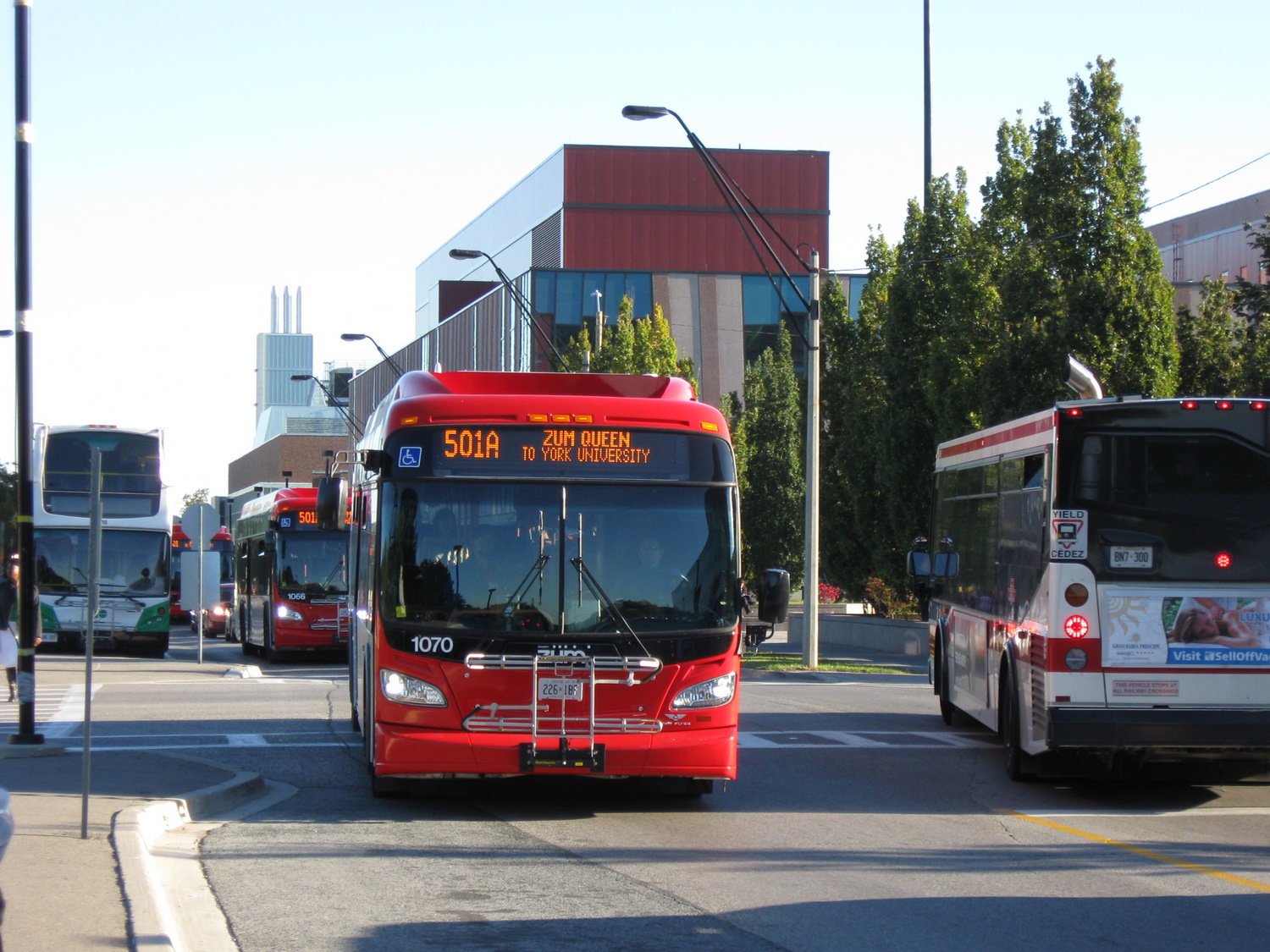
    The introduction of Brampton Transit’s Zum service in 2010, serving York University, was a major turning point for the suburban transit agency

    For TVO this week, I discuss Brampton Transit’s impressive ridership growth. In the last five years, Brampton Transit has bucked the trend of stagnant ridership numbers encountered elsewhere in the Greater Toronto Area and North America in general. I argue that Brampton’s success in improving transit ridership comes from sustained investment over many years, the move to a grid-based route structure, and the introduction of Züm, a basic network of semi-frequent, limited-stop bus routes, many of which extend outside of Brampton’s boundaries.


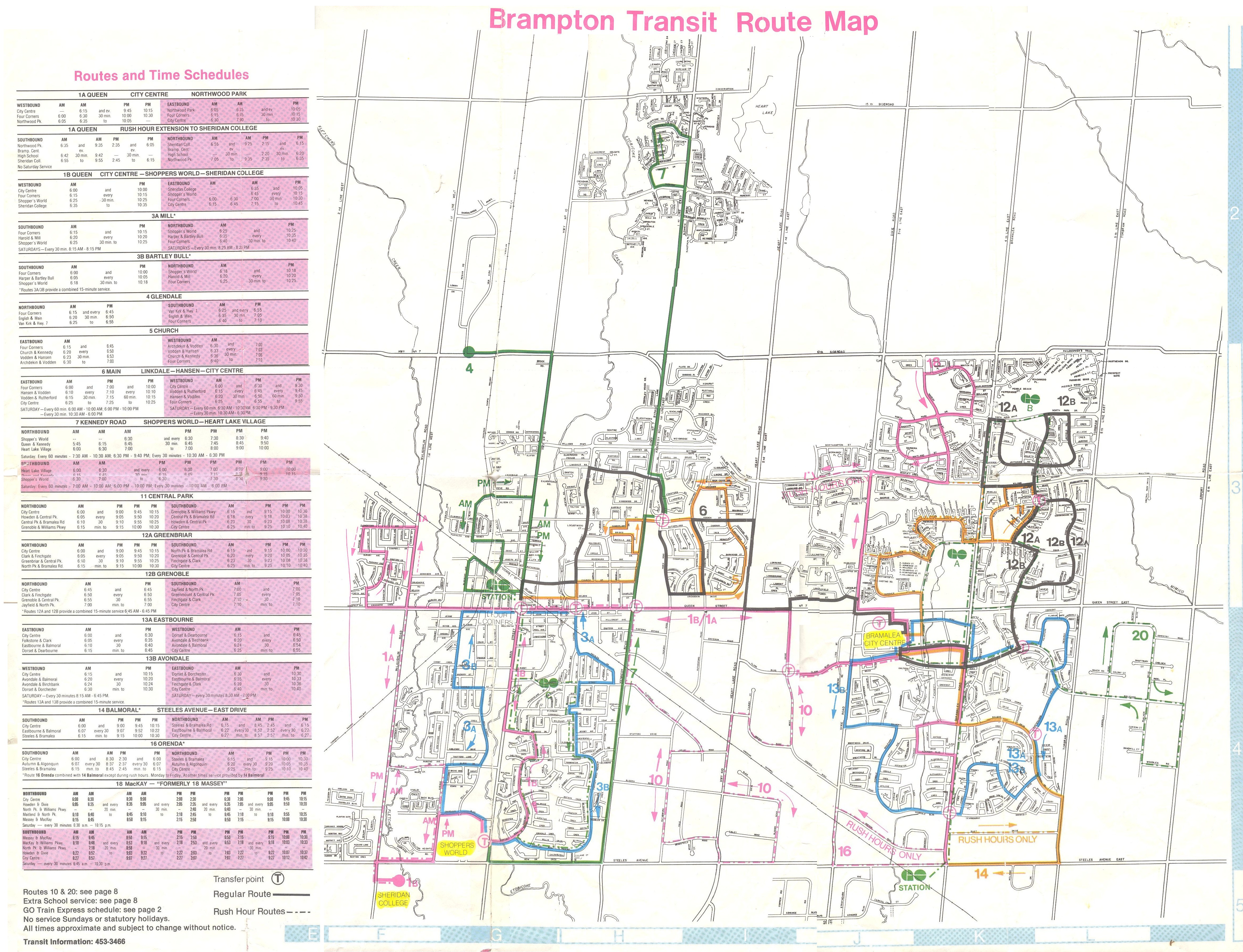
    I grew up in Brampton, and I have collected maps since kindergarten; my collection includes several old Brampton Transit maps. These maps help to illustrate the progress made since the 1980s, when the level of service provided was quite basic.

    Brampton Transit began operations in 1976 after the old Town of Brampton’s local bus service was amalgamated with the dial-a-bus service operated in Bramalea. (Brampton amalgamated with most of Chinguacousy Township in 1974, including Bramalea.) In 1980, Brampton Transit operated 14 routes, serving a community of just under 150,000 people. Buses operated no later than 9:00 or 10:00 PM, Mondays through Saturdays, and many routes operated with long, meandering loops. Apart from GO Transit, there were no connections to nearby communities.

    Brampton Transit - December 1980 front
    December 1980 Brampton Transit map

    By 1988, service was offered on Steeles Avenue to Humberline Drive in Etobicoke, where connections could be made to TTC buses on the 96 Wilson and 73 Royal York buses, but didn’t continue east to Humber College. Brampton Transit Route 14 Torbram served Westwood Mall in Mississauga, and connections to Mississauga Transit could be made at Shoppers World. But still, service levels were poor — you were lucky to get a bus every 30 minutes outside of rush hours. Permanent Sunday service wouldn’t come for another ten years. Notable are the four lettered bus routes — A, B, C, and D — that made direct connections to the four weekday GO train round trips to and from Toronto.

    Brampton Transit’s maps of the era are also historically notable because of their advertising: only one of the Burger King locations shown on the 1988 map still exists. Other restaurants advertised — the Old Beef Market, O’Henry’s, and Queen’s Pizzeria — are no longer in business.

    Brampton Transit - 1988
    September 1988 Brampton Transit Map


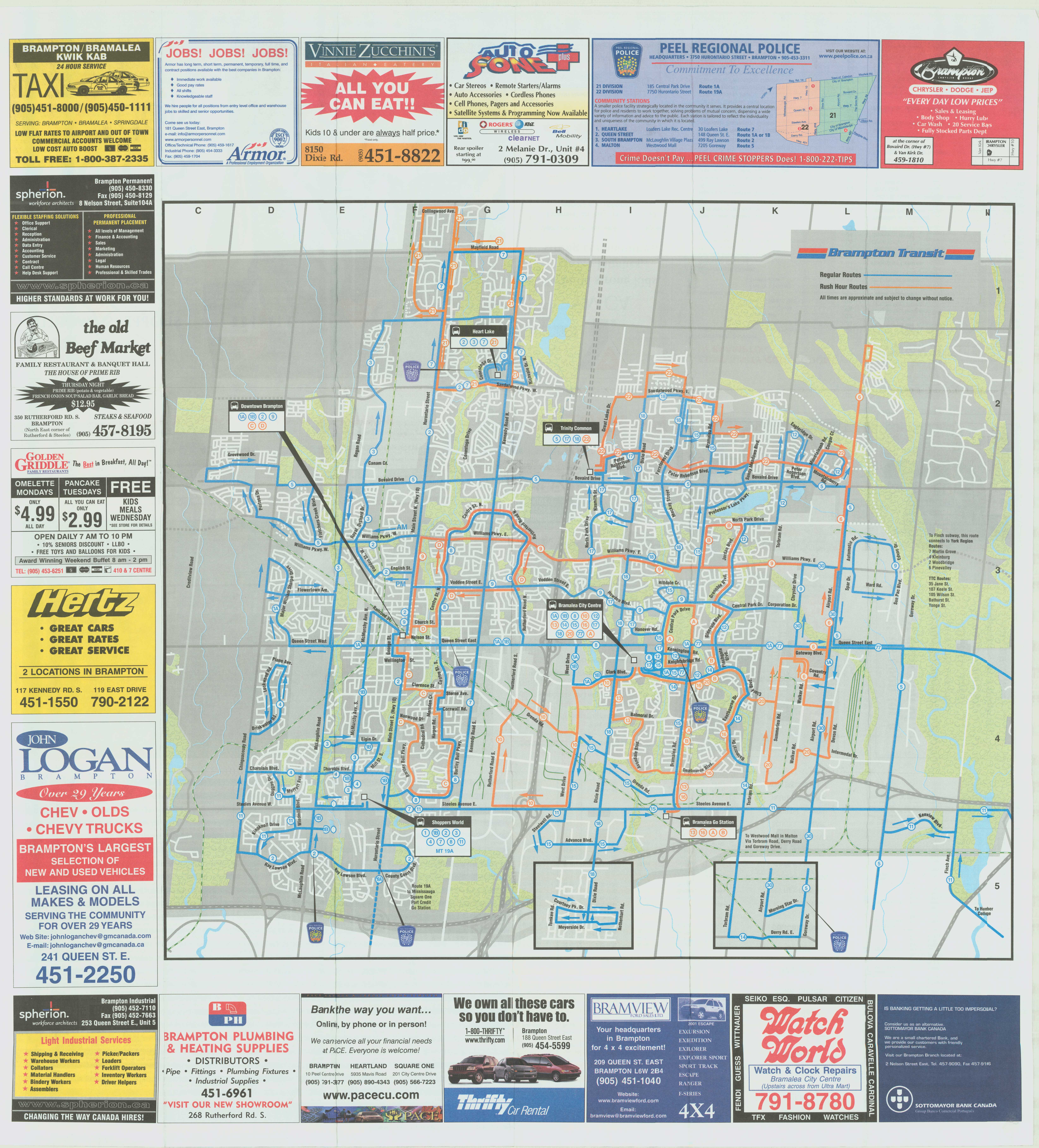
    Brampton Transit Maps published in the 1990s and early 2000s were printed on newsprint, and used only a two-colour scheme: blue for regular routes, and orange for rush-hour routes. Service to new subdivisions was often provided by way of long one-way loops, which is an inexpensive way of serving new areas, but are inconvenient and slow for potential riders.

    Notable in the 2001 map below is Route 77, launched in the 1990s as a joint Brampton Transit/Vaughan Transit route between Bramalea City Centre and Finch Station along Highway 7. Route 77 was a very slow way to get to the subway from Brampton, but it operated until Züm began service in 2010. In 2001, bus service on 11 Steeles was finally extended to Humber College’s main campus.

    Brampton Transit, 2002
    September 2001 Brampton Transit map

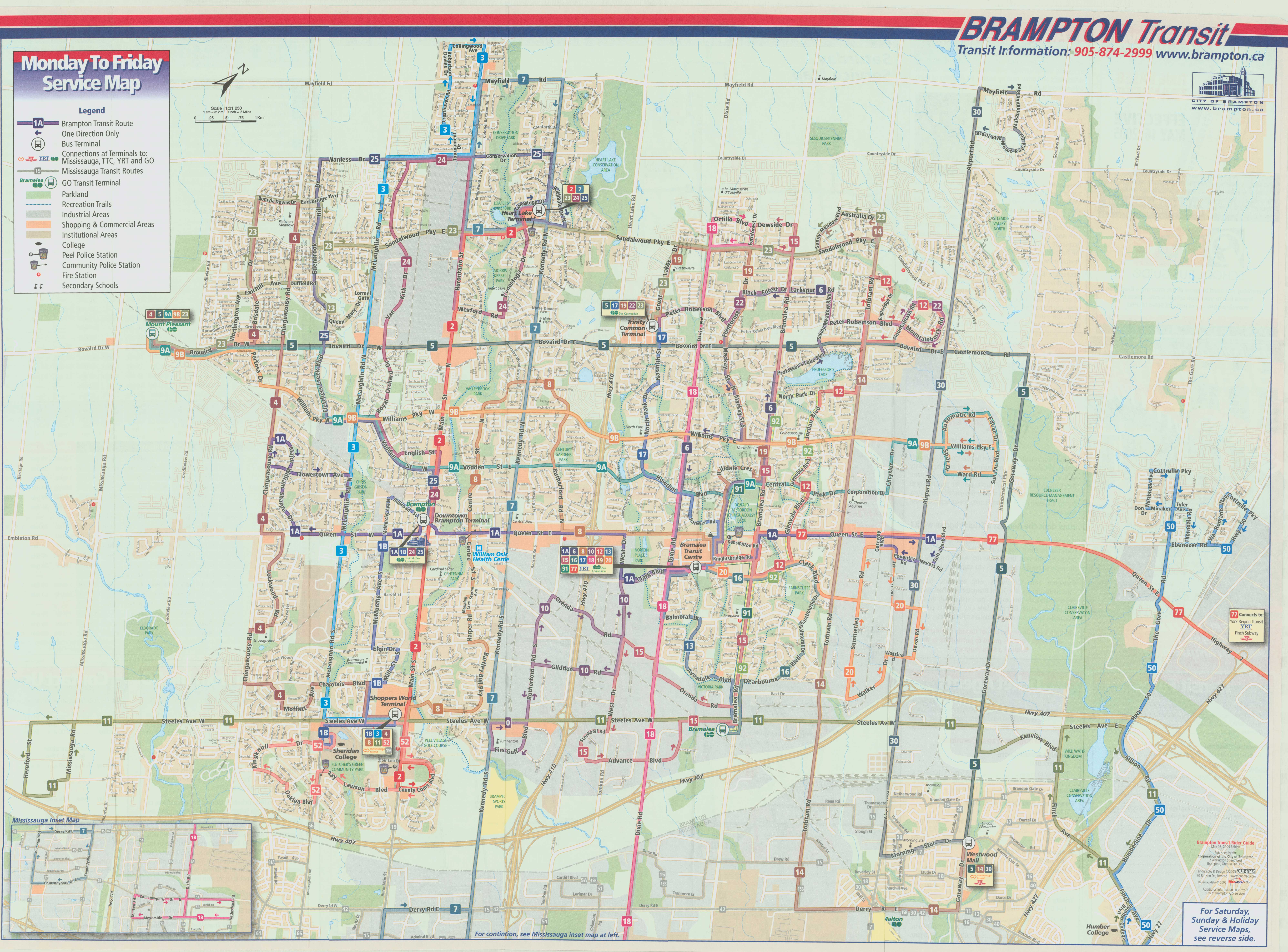
    2005 marked an important turning point for Brampton Transit, as it introduced a grid-based route system on major arterials. Route 14 Torbram, for example, no longer served Bramalea City Centre, but continued north, providing a core north-south route; many other routes were straightened, including Route 2 Main north of Downtown. Changes since May 2005 saw service frequencies improved, more local routes added, and improved connections.

    Brampton Transit - 2005 front
    May 2005 Brampton Transit map

    The current system map, dated September 2017, can be found on Brampton Transit’s website.