Tag: Pedestrian

  • Deadly by design: Supertest Road

    Deadly by design: Supertest Road

    IMG_7204-001

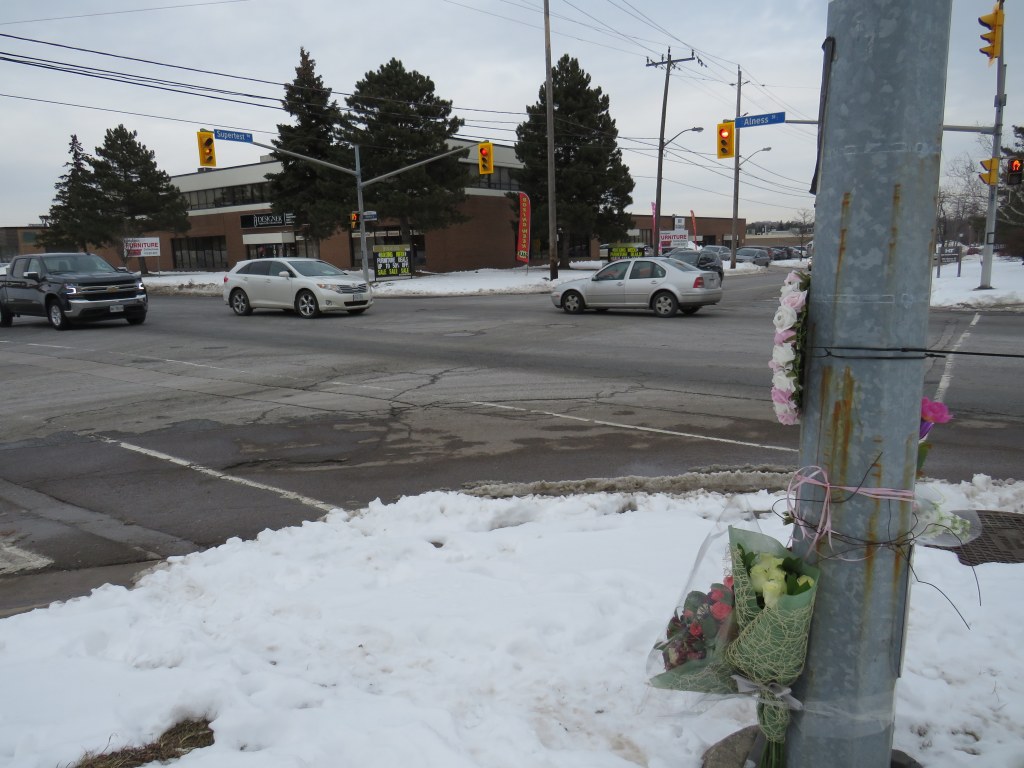
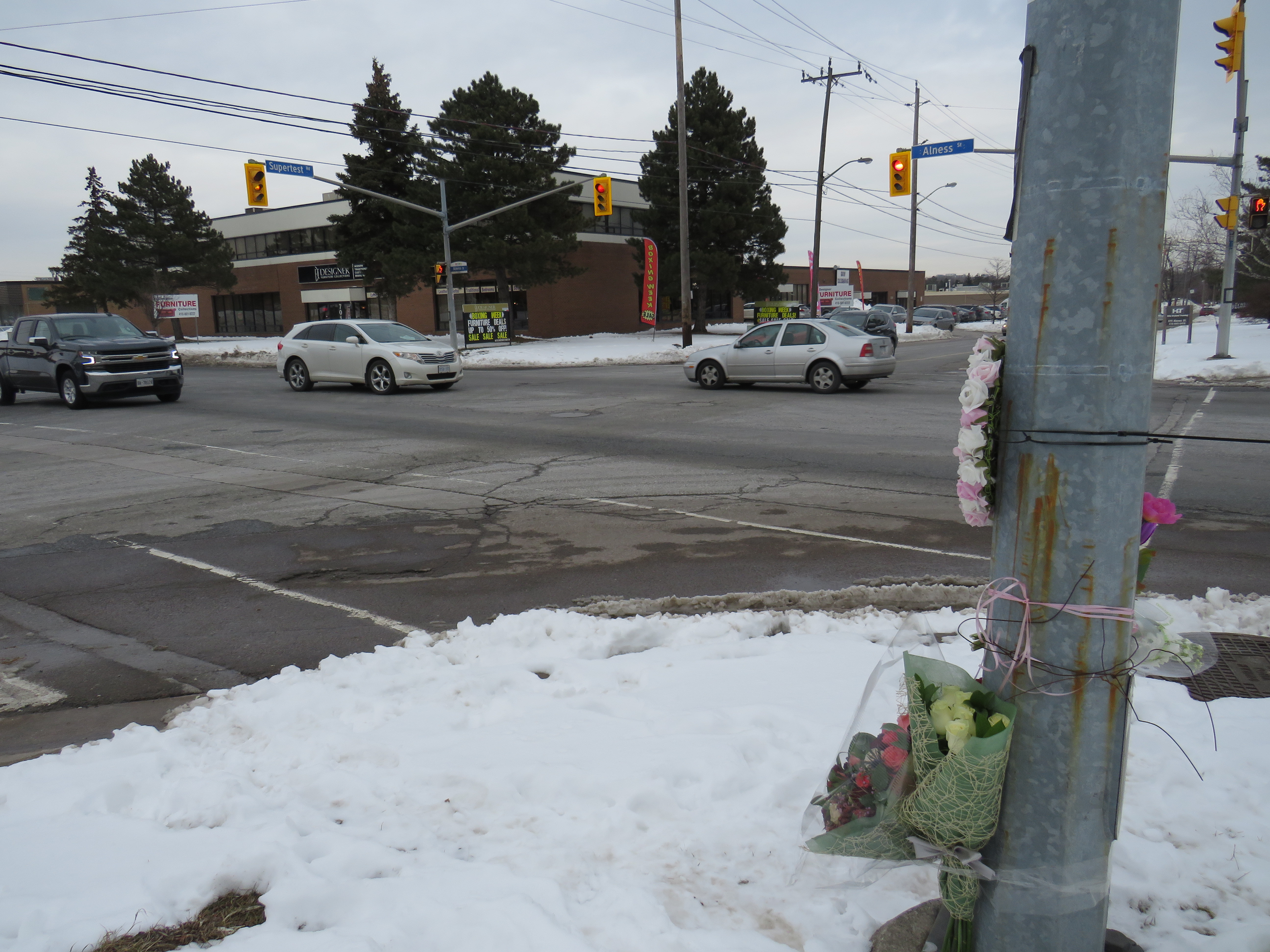
    On Tuesday, January 21, a 26-year-old woman was struck and killed by the driver of a tractor-trailer at the corner of Supertest Road and Alness Street in North York. According to police, the truck driver was making a right turn from Supertest south to Alness when he hit the pedestrian.

    Last week, I paid a visit to the intersection, located in an industrial area off Dufferin Street, just south of Steeles Avenue. It was immediately apparent that pedestrians are an afterthought in this part of the city, and tragedy was inevitable.

    The intersection of Alness and Supertest, with a makeshift memorial on the southwest cornerThe intersection of Alness and Supertest, with a makeshift memorial on the southwest corner
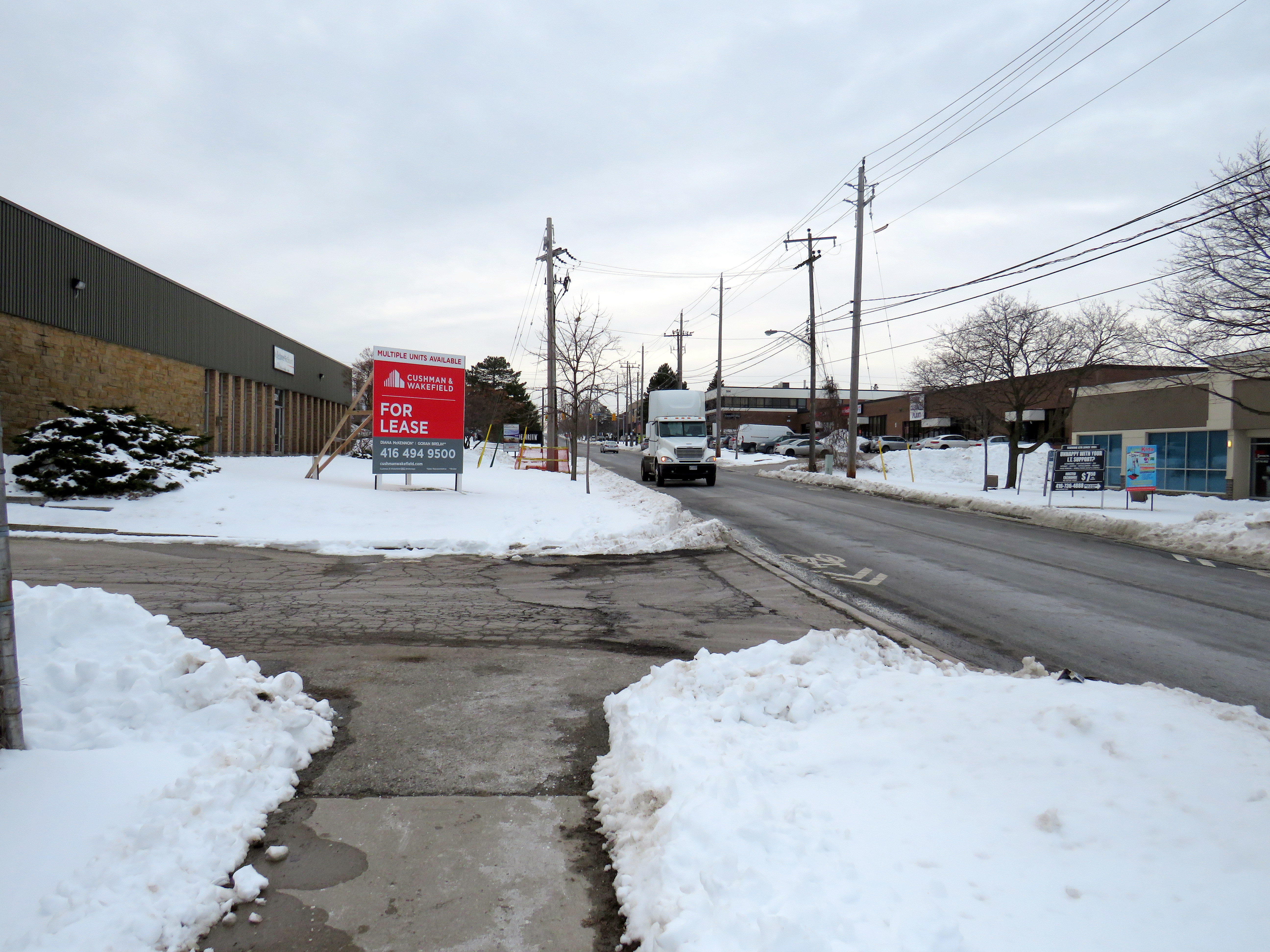
    I took the 105 Dufferin North bus from Sheppard West Station and got off at Supertest Road before walking west towards Alness Street. I pressed the beg button to cross Dufferin, but it did not work, so I crossed with the solid “don’t walk” sign. At least I had enough time to cross before traffic on Dufferin got the green light. With a bus stop at the intersection, G. Ross Lord Park to the east, and a busy supermarket on the southwest corner, there is no excuse for a malfunctioning pedestrian signal. In fact, the walk signal should appear by default.

    As I walked westward on Supertest, the lone sidewalk on the south side of the street came to an end at an industrial driveway about halfway between Dufferin and Alness. With the snow, I was forced to walk on the street, which was busy with cars and trucks. Without any sidewalk, anyone using a wheeled device would also be forced on the street.

    End of sidewalkThe only sidewalk on Supertest Road comes to an end halfway between Dufferin and Alness
    With my smartphone, I recorded my walk along the curb towards Alness Street, avoiding the snowbanks, debris, and motor traffic. It was not a pleasant walk.

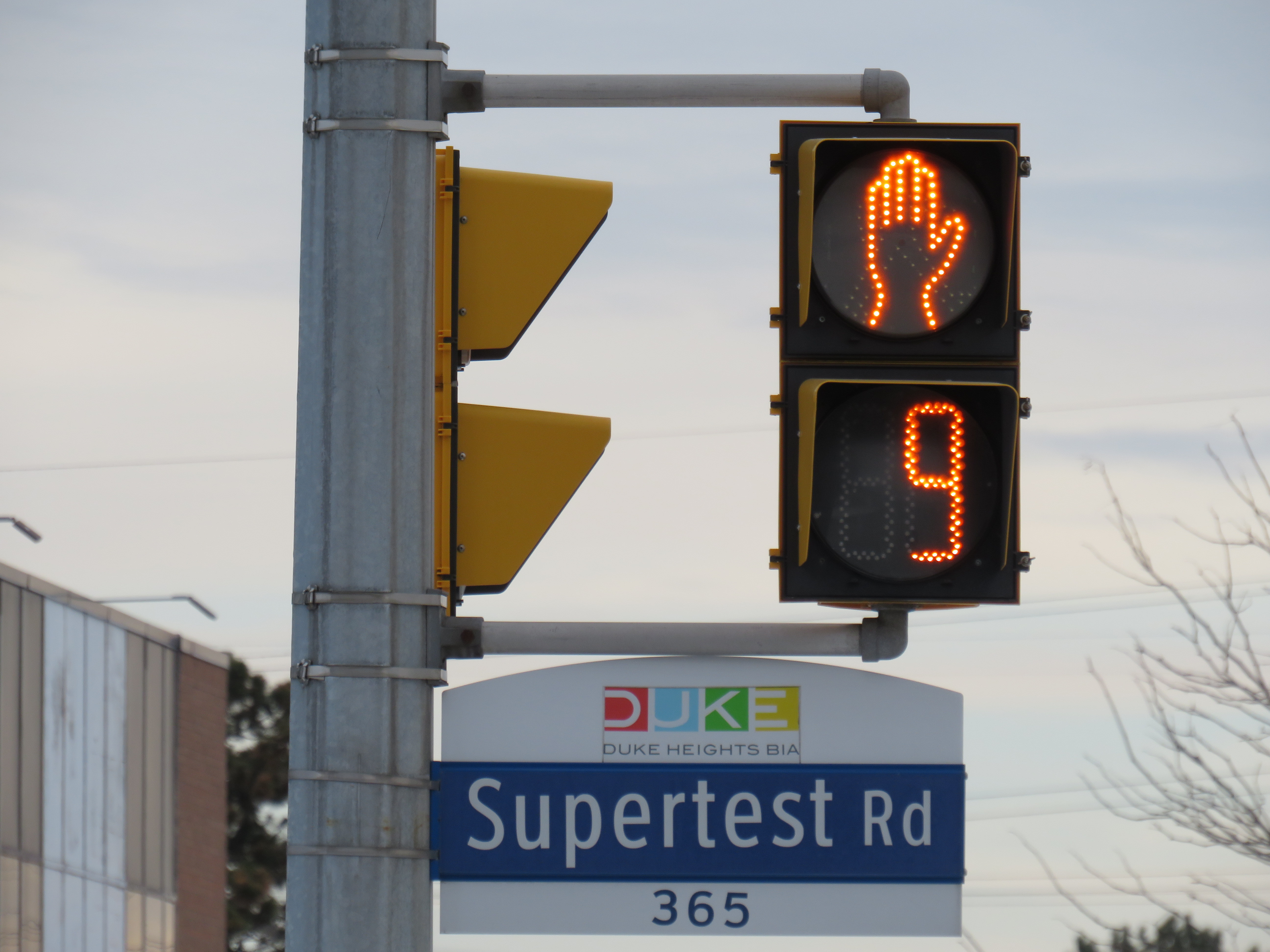
    The intersection of Supertest and Alness is a signalized intersection, with pedestrian signals and crosswalks on all four sides. Alness has a through sidewalk, but only on the east side of the street. The intersection is surrounded by a scrapyard on the southwest corner, a bank on the northwest corner, and warehouses to the east. The missing sidewalk on the south side Supertest east of the intersection resumes west of Alness.

    The traffic lights are on a timer, and walk signals automatically appear, so there are no beg buttons at Alness and Supertest. What I noticed during my visit is that motorists will regularly rush to get through an amber signal, sometimes running a red. Truck drivers make wide right turns. Though the area is not pedestrian friendly, I did note several pedestrians in the area, running errands at the bank or walking to and from several of the nearby businesses.

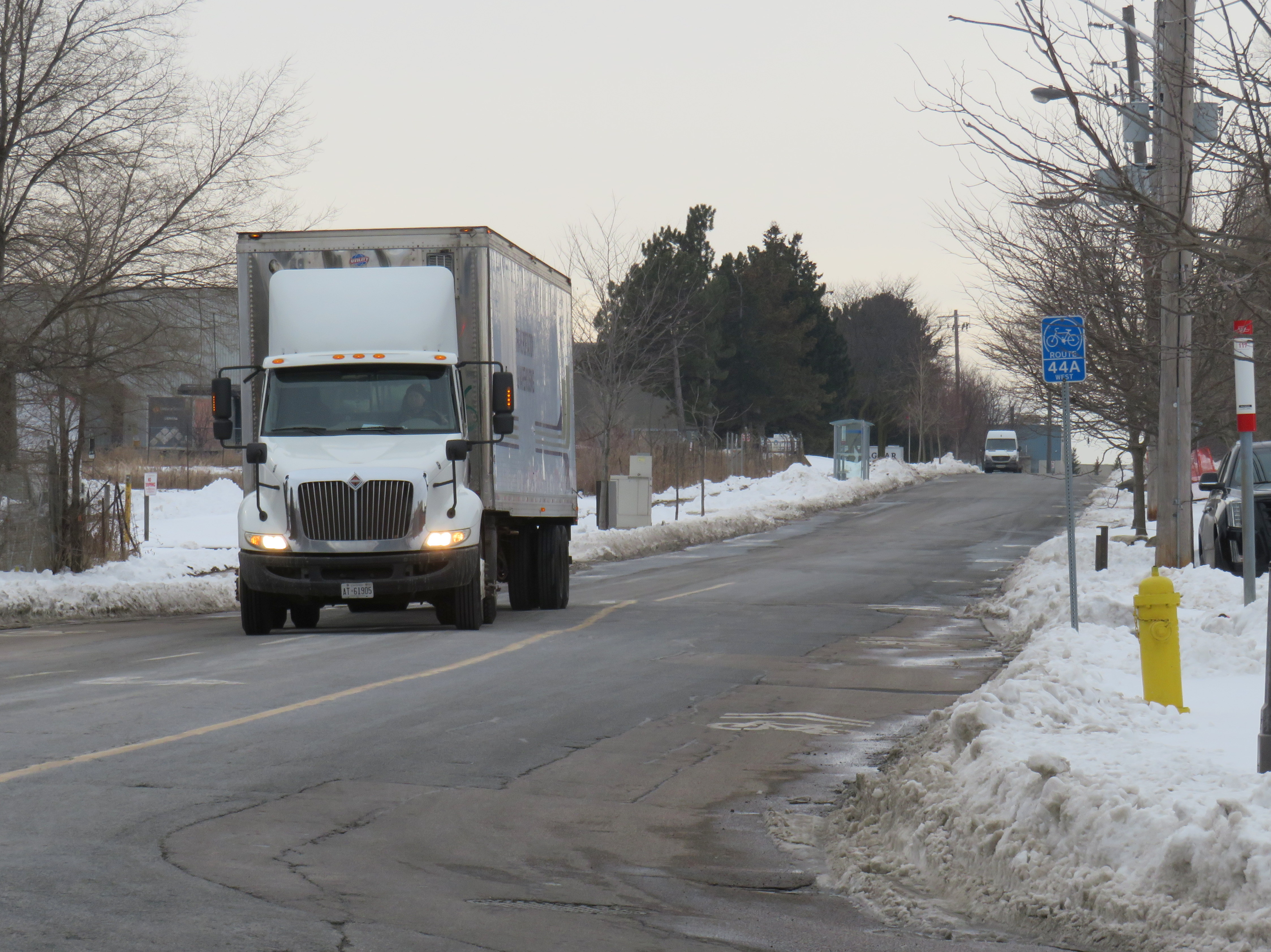
    Truck turning from Supertest to Alness

    Finally, I noted the sharrows, the signed bicycle route on Supertest Road, and the TTC stop on the north side. The cycle route is supposed to connect G. Ross Lord Park on the east side of Dufferin to Flint Road to the west and south to the Finch Corridor Recreational Trail, but it’s not an enticing place to bike. Meanwhile, the TTC stop, for the limited-service 117 Alness route, is inaccessible without a sidewalk leading to it.

    Looking west on Supertest RoadLooking west on Supertest Road, with the sharrow, TTC stop, and bike route sign on the right
    Everything about this industrial intersection was designed to fail pedestrians and cyclists. Last week, it did exactly that.

  • Survey says… Torontonians demand safer streets

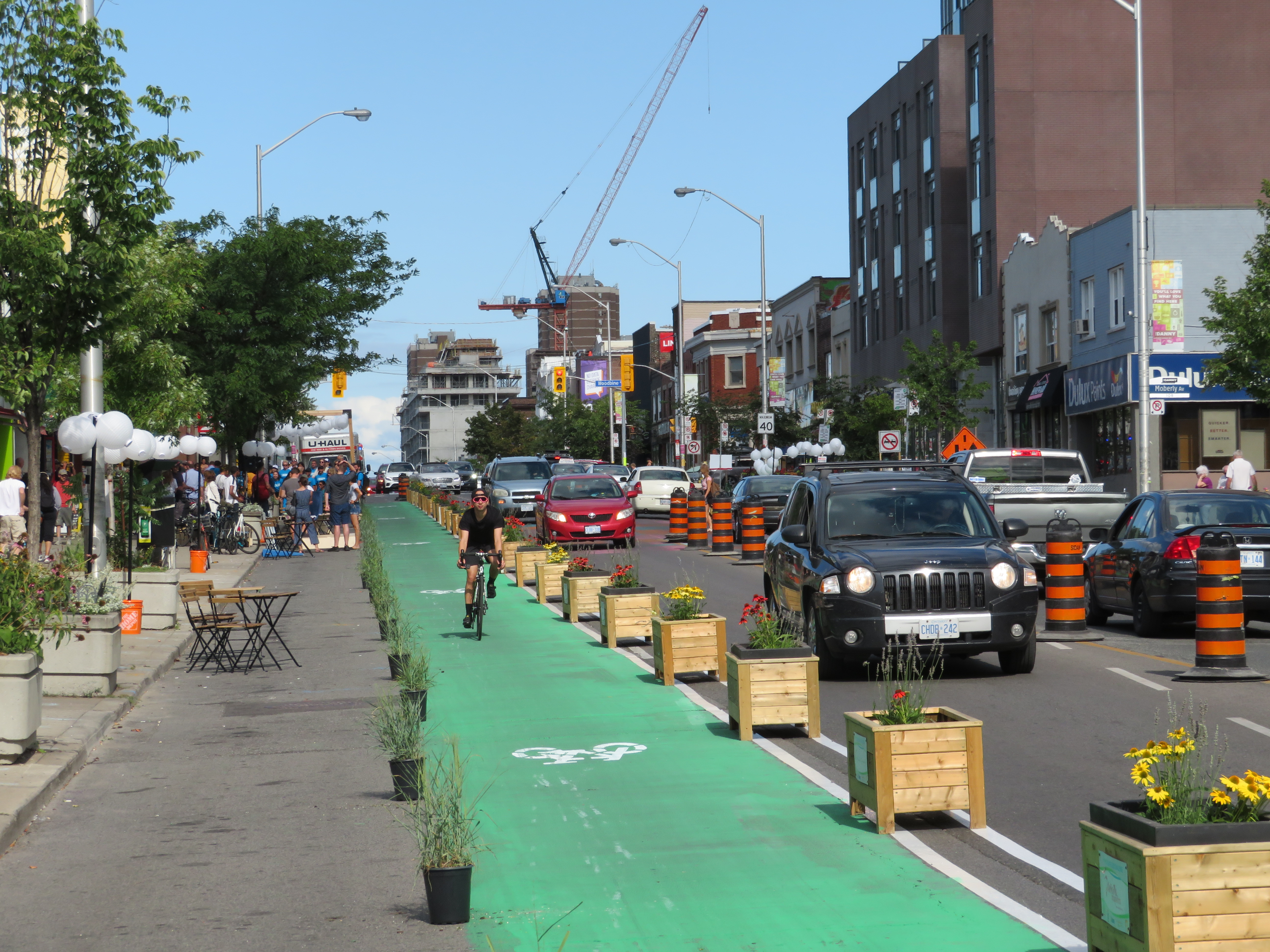
    IMG_3729A mock-up of a re-imagined Danforth Avenue, Summer 2019
    Yesterday, I met with fellow road safety advocates Keagan Gartz, executive director of Cycle Toronto, Gideon Forman from the David Suzuki Foundation, and Jessica Spieker, from Friends & Families for Safe Streets. The occasion was to publicize a new poll commissioned by the David Suzuki Foundation that gauged Torontonians’ support for action on road safety as well improvements to pedestrian and cycling infrastructure, including two projects planned for Yonge Street — YongeTOmorrow  in the Downtown Core and Transform Yonge in North York.

    Almost 90 percent of Torontonians are concerned about road safety, with close to 70 percent responding that the city is “is not doing enough.” Furthermore, 72 per cent of respondents are in favour of the changes planned for Yonge Street, and 80 percent of respondents want the city to build more protected bike infrastructure.

    On behalf of Walk Toronto, I was quoted by CBC journalist Lauren Pelley in her report, quoting the number of pedestrians killed in 2018 and 2019, noting “two pedestrian deaths this week — one in Brampton, one in Toronto — and those were both hit-and-run collisions. And it’s going to happen again, and it’s going to happen all over the city.”

    These poll results indicate an appetite for change. Hopefully Toronto City Council will take notice.

  • Why transit users shouldn’t beg to cross the street

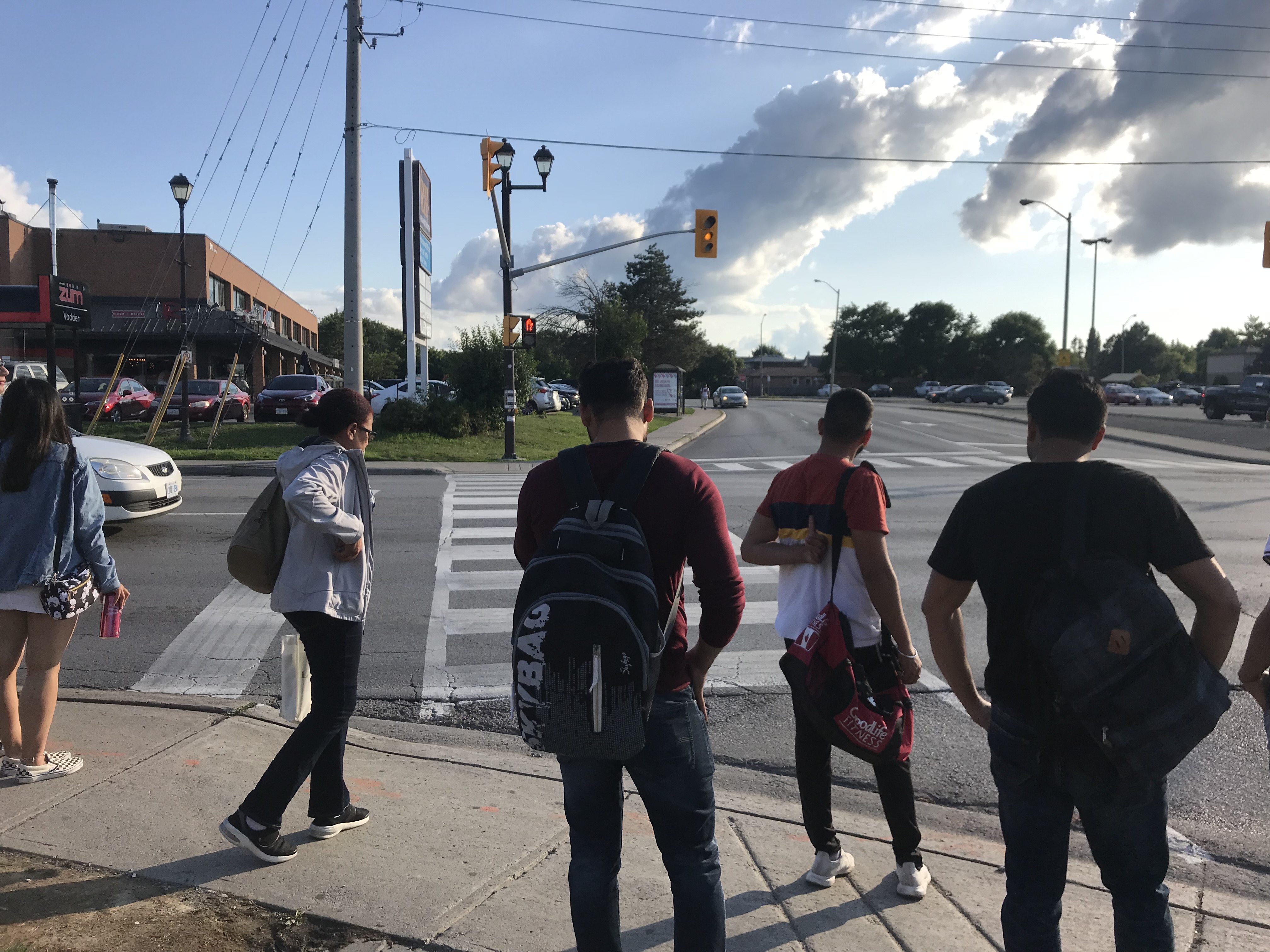
    IMG_8372.jpg

    With consistently high ridership growth over the last few years, Brampton Transit has proven to be one of the Canada’s greatest transportation success stories. The Flower City has proven that transit can be successful and popular in North American suburbs.

    Despite the success at improving transit and building ridership, Brampton has also prioritized motor traffic at intersection, making it unnecessarily difficult to cross the street at major bus stops. The intersection of Vodden and Main Streets, just north of Downtown Brampton, illustrates this problem.

    If the beg button is pushed in time, the walk signal to cross Main Street will appear for just seven seconds before the countdown begins, giving just 11 seconds to cross five lanes. Anyone who misses that light will have to wait over two minutes to legally cross.

    What Brampton — and cities like it — should do is remove the beg buttons at transit stops with the assumption that pedestrians will want to cross. It’s just one step towards building a transit culture and attracting new riders.

    I write more about this problem in Bramptonist.


  • Islington Avenue: deadly by design

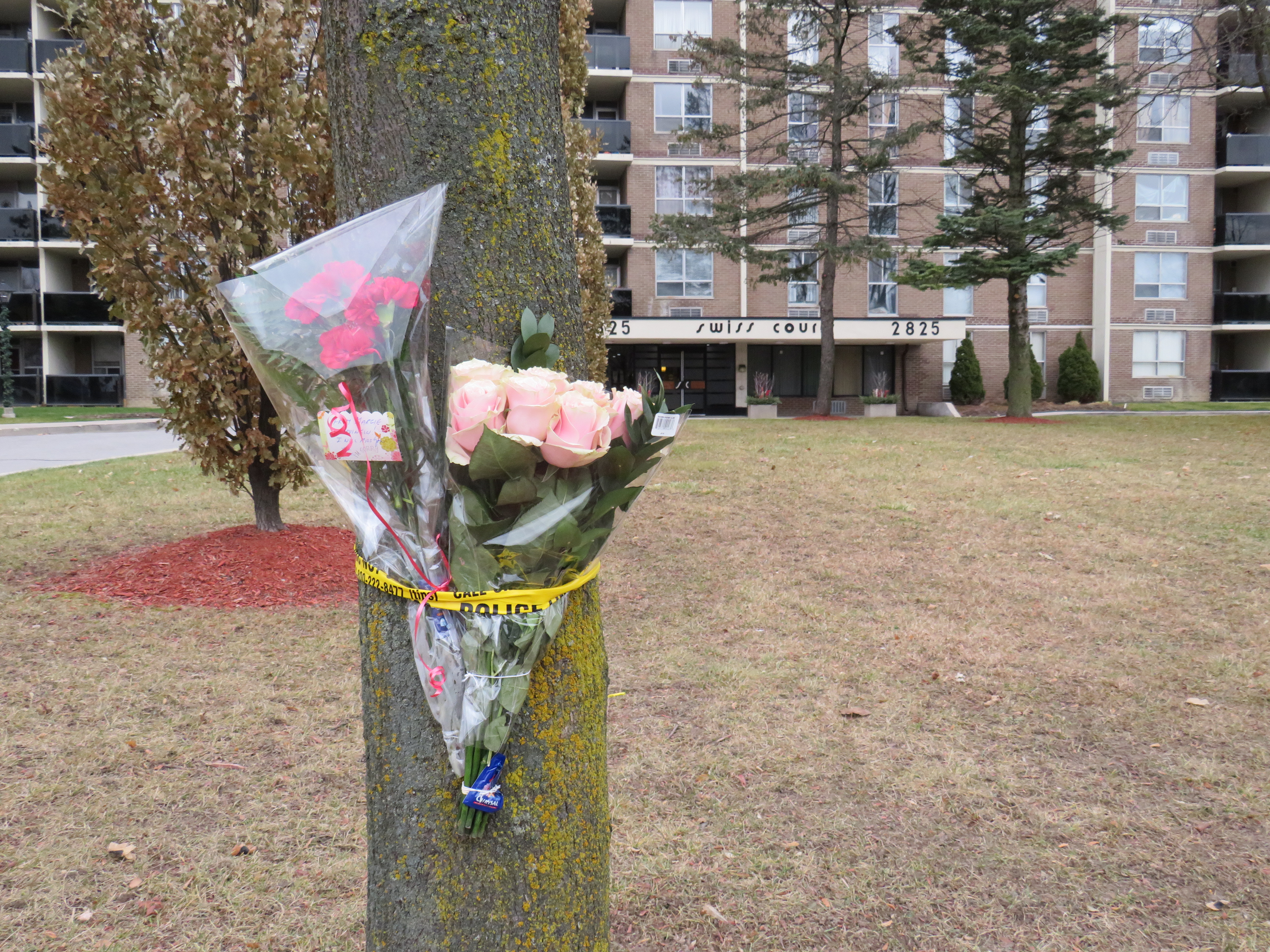
    IMG_6266-001Memorial to 77-year old Pasquina Lapadula in front of her apartment building on Islington Avenue north of Finch
    On Thursday, November 29 at 6:30AM, Pasquina Lapadula left her Islington Avenue apartment building and crossed the street in front of her home. Soon after stepping out, she was struck and killed by the driver of an SUV traveling northbound. The driver then fled the scene. Sadder still, drivers passed the scene without stopping to help.

    Toronto police are looking for a dark coloured SUV with bright headlights and fog lights. They have yet to find the driver and lay charges.

    According to the Toronto Star, 37 pedestrians have been killed on Toronto’s streets. Of those, 24 were 60 years old or over. Since 2007, 410 pedestrians were killed on Toronto’s streets; 238 of those were aged 60 or older. November 2019 was an especially deadly month; Lapadula was the third older pedestrian killed in Toronto in just three days.

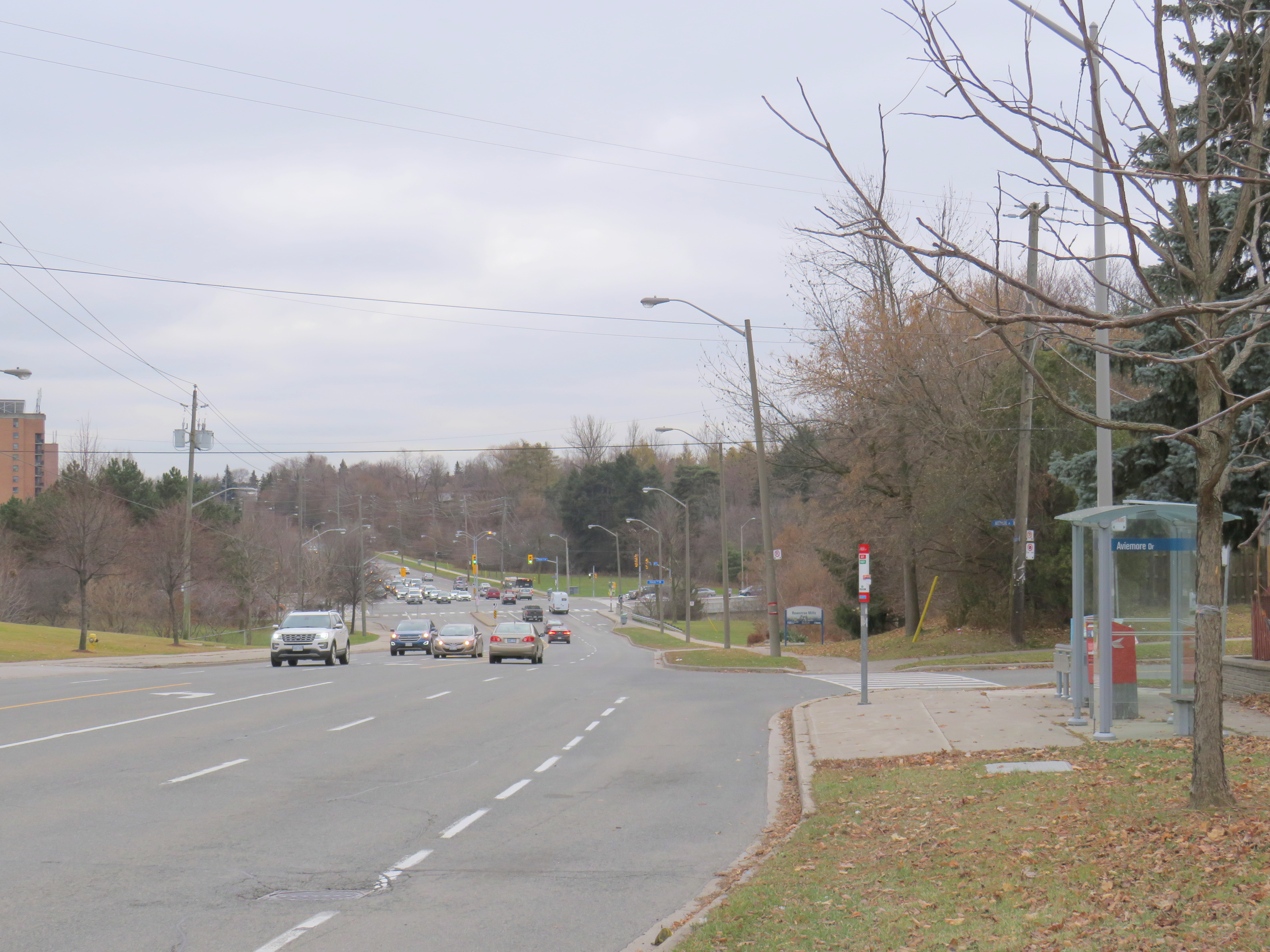
    Though blame can be laid at the driver, who despite having ultra-bright headlights and fog lights, struck Lapadula and sped away afterwards, this part of Islington Avenue, like many other suburban roads in Toronto, is deadly by design.

    IMG_6283-001Islington Avenue looking south from Aviemore Drive towards Finch Avenue
    The collision took place at Aviemore Drive in Humber Summit, in Toronto’s northwestern corner, near the boundary between the former cities of Etobicoke and North York. The area was developed in the 1960s and 1970s, when automobile-centric planning was at its peak.

    Islington Avenue is five lanes wide between intersections, including a striped middle lane that turns into left turn lanes at intersections. Sidewalks are separated by wide boulevards, and there are long distances between traffic signals.

    The road has a slight curve north of Finch Avenue, with a hill down towards the East Humber River at Finch. From Aviemore Drive, it is a 220 metre walk south to the crosswalk at Finch Avenue and 430 metres north to the traffic signals at Milady Road. Just south of Aviemore Drive are entrances to Gord and Irene Risk Park and Recreation Centre and Rowntree Mills Park.

    As the speed limit is unposted on this section of Islington Avenue, by law, vehicles may only go a maximum of 50 kilometres per hour. However, the road design encourages speeds far greater than the limit.

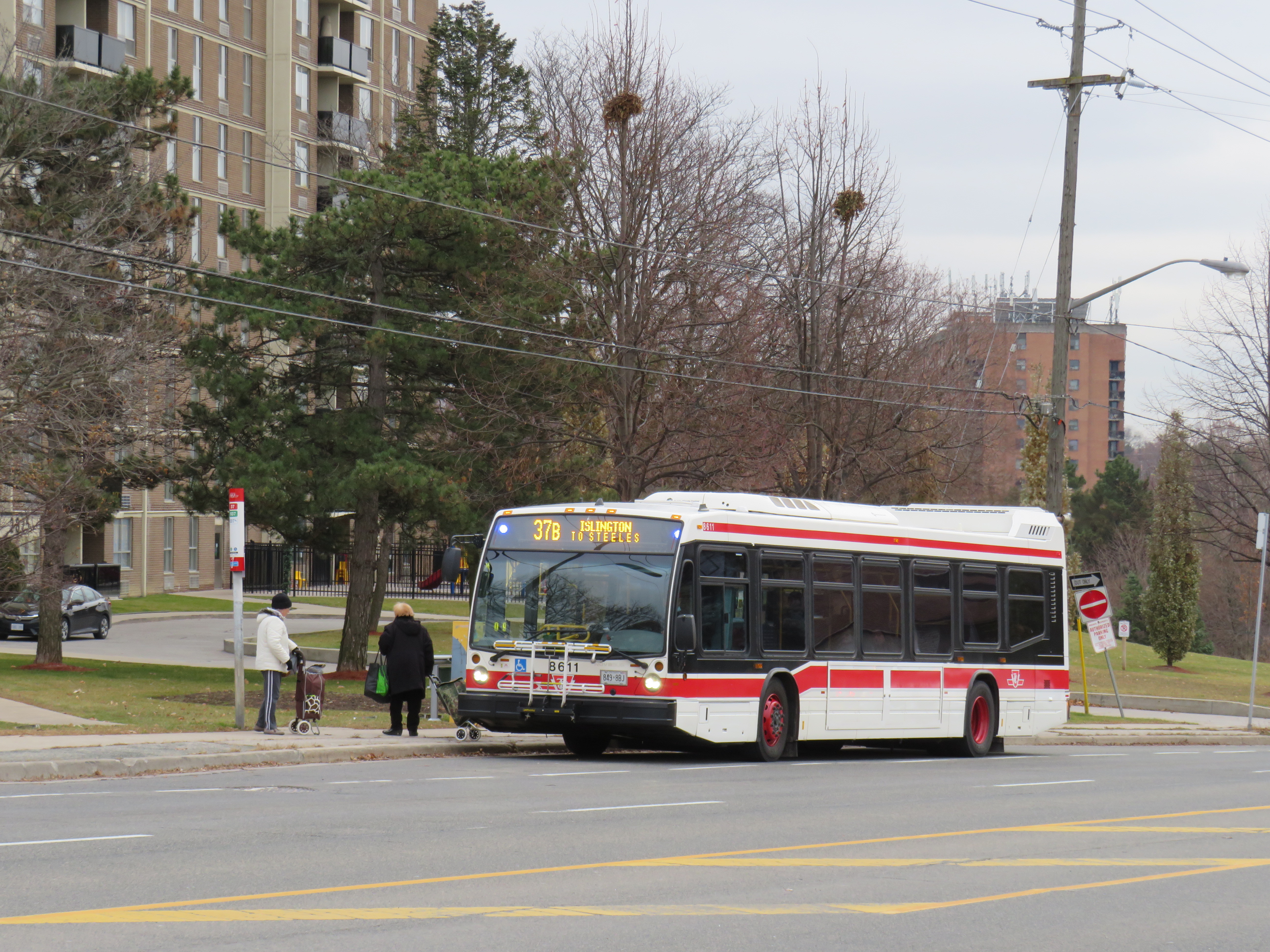
    IMG_6299-001TTC bus stopped in bay in front of Pasquina Lapadula’s apartment building
    As on Don Mills Road north of Finch, TTC buses stop in bus bays instead of on the street itself. These bus bays were not designed for the benefit of transit, but instead for the convenience of private motorists. Buses stopping get out of the way of traffic, and then must merge back in. (A law requiring other motorists to do so exists, but is never enforced.)

    Everything about the road design is designed for high vehicle throughput, with little consideration for pedestrian safety.

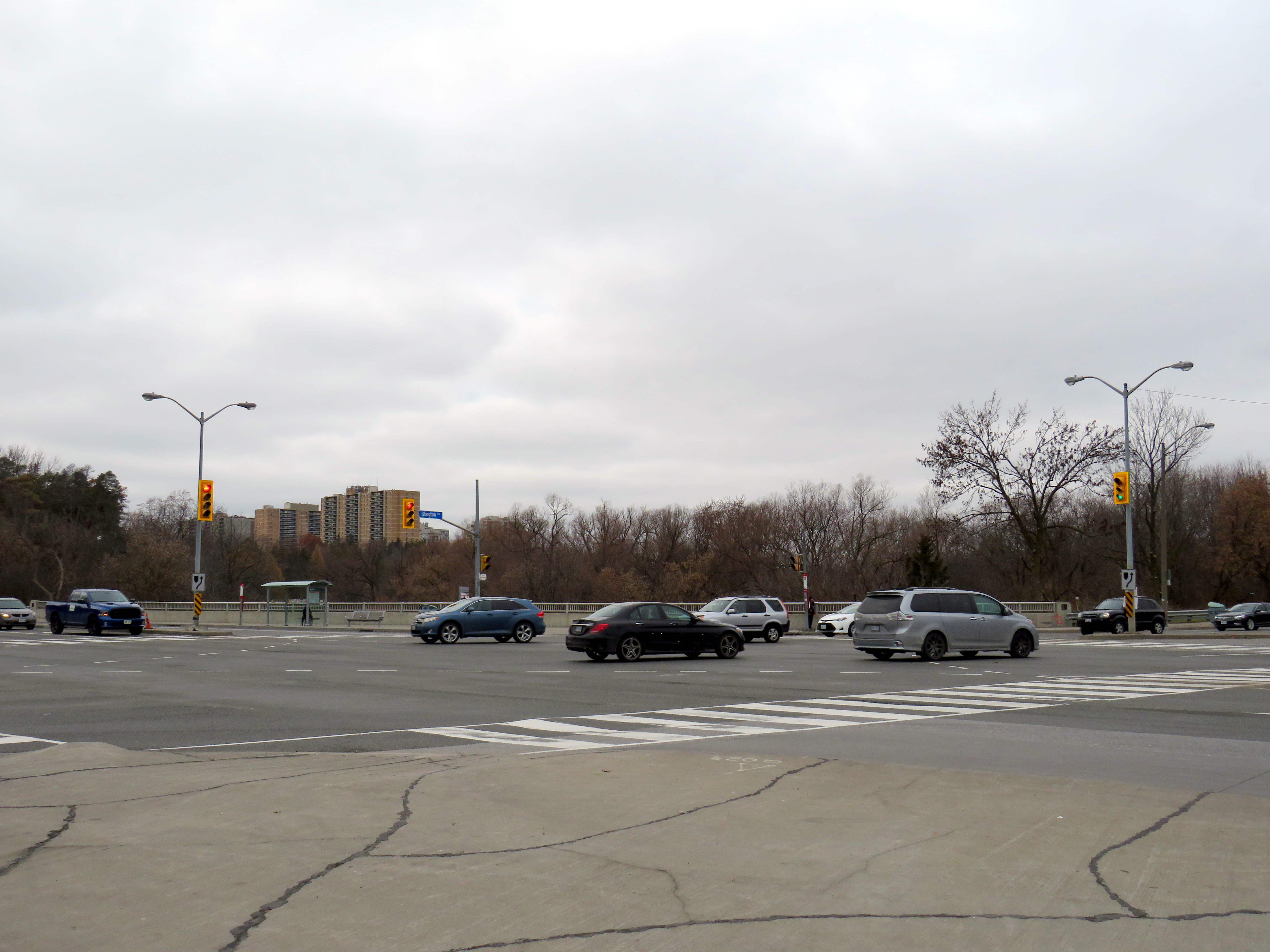
    IMG_6248-001Islington and Finch Avenues

    It is true that Pasquina Lapadula could have walked 220 metres down to Finch Avenue, and depending on her destination, another 220 metres back up the hill. The traffic signals and painted crosswalks would have provided additional safety. But the intersection of Finch and Islington itself is problematic.

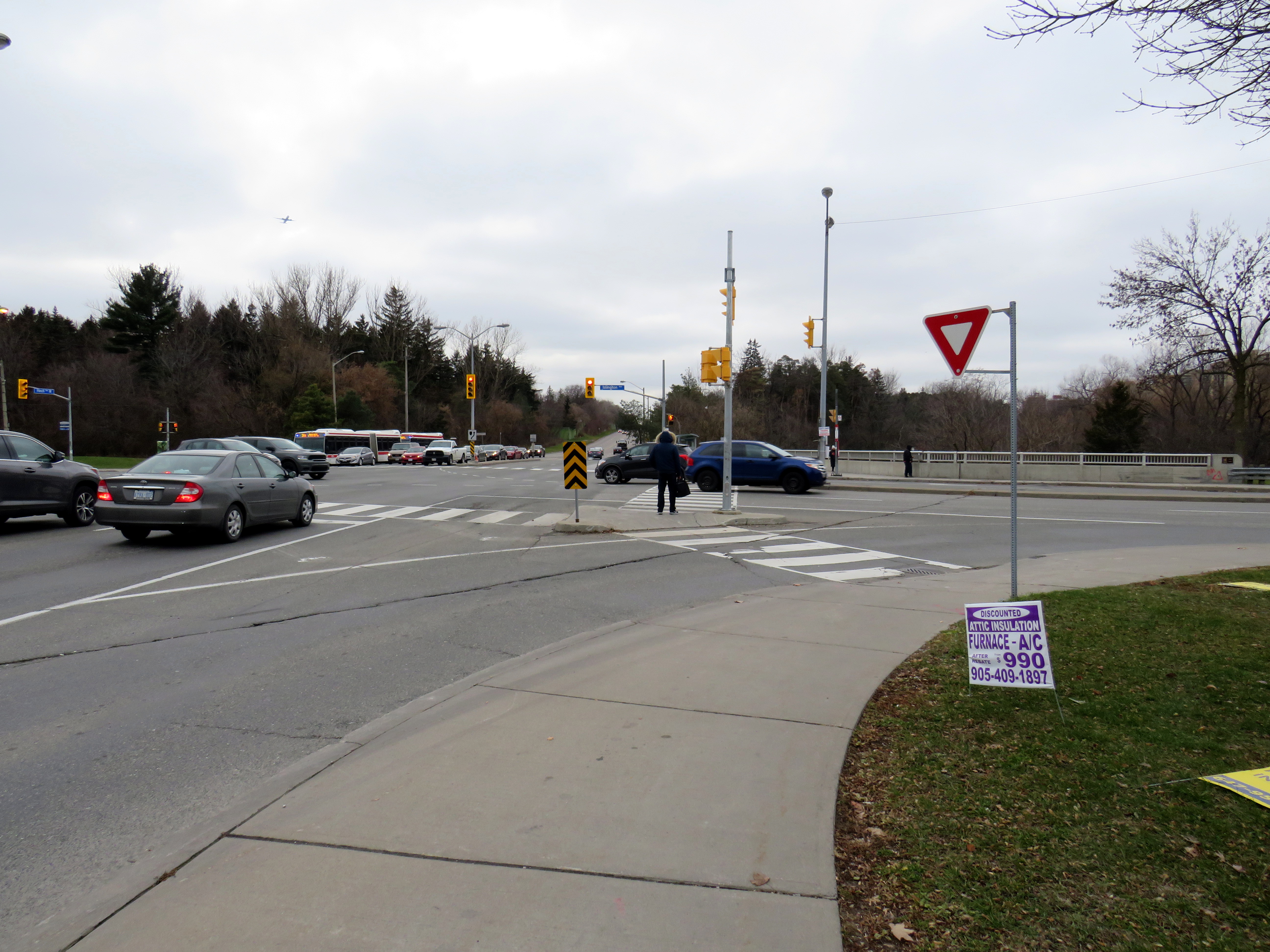
    The intersection sits on a large viaduct over the East Humber River. Right turn slip lanes are found on the southwest and northeast quadrants, allowing right-turning traffic to pass by quickly while requiring pedestrians to cross an additional lane of traffic governed only by a yield sign. Buses on Finch stop at bus bays at the far side of the intersection, further lengthening the distance pedestrians must cross.

    IMG_6255-001Slip lane from Finch to Islington

    I was frustrated when two Toronto councillors advocate giving out reflective armbands for pedestrians to wear, especially as one of those councillors opposed road safety initiatives in her own ward. I was angered the Toronto Star’s editorial board ignore city data, their own reporters and columnists, and pedestrian and cycling advocates to back those two suburban councillors.

    This was especially tone deaf given the Toronto Police Service’s abandonment of traffic enforcement, the epidemic of pedestrians being killed in the last two years, and the disturbing number of hit-and-runs. Armbands would not have saved Pasquina Lapadula’s life when she was confronted by the driver of a speeding SUV, with blindingly bright headlights and fog lights.

    This is why we need real Vision Zero measures like lower speed limits, more safe pedestrian crossings, road re-engineering to slow down vehicles, complete streets, and effective police enforcement.

  • Zero vision in suburban Toronto

    IMG_3684-001

    Though the city of Toronto has made some progress towards safer streets recently, the lack of police enforcement of traffic laws, the reluctance to spend serious money on road redesign, and the attitudes of some city officials continue to be obstacles towards making Toronto a safe place to walk and cycle.

    As part of the city’s Vision Zero 2.0 Plan, City Council voted in July to reduce speed limits from 60 km/h to 50 km/h on 37 sections of arterial roadways across the city, and from 50 km/h to 40 km/h on five more roads. Councillors Ana Bailão and Jim Karygiannis moved to extend several of these sections. However, rookie councillor Cynthia Lai (Ward 23-Scarborough North) moved to amend the item to remove three sections of arterial roads in her ward:

    • Brimley Road from Sheppard Avenue East to Steeles Avenue East,
    • Markham Road from Milner Avenue to Steeles Avenue East, and
    • McCowan Road from Milner Avenue to Steeles Avenue East.

    Councillor Lai claimed that her constituents were concerned about gridlock in her ward and opposed the speed restrictions. Scarborough is especially dangerous for pedestrians as it has the most kilometres of high-speed arterial roads in the city and the longest distances between crosswalks.

    High speeds and dangerous driving are major problems in Ward 23, a part of the city that I visit a few times a month. Brimley, Markham, and McCowan Roads are designed solely for car traffic: they are lined by plazas, warehouses, and backyard fences. Traffic signals are often far apart. Markham and McCowan Roads are also high-speed thoroughfares connecting Markham to Highway 401.

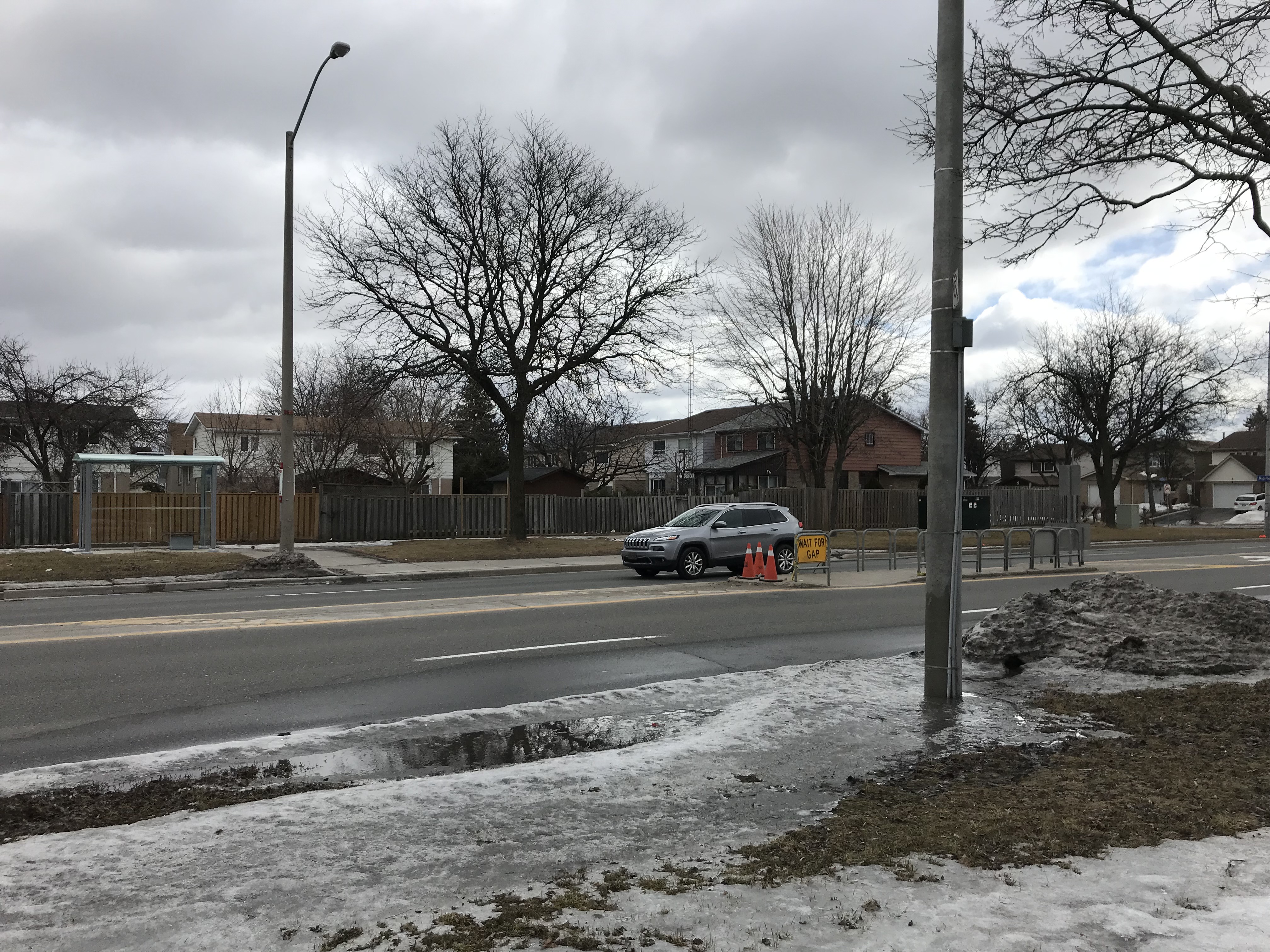
    Walking along McCowan Road between Finch and Steeles earlier this year, my spouse and I encountered a pedestrian refuge smashed in by a motorist. The refuge island was protected by reflective signage, as well as metal barriers, and was installed to help pedestrians cross at a TTC bus stop, though pedestrians are not given the right of way.

    IMG_1644Smashed pedestrian refuge island on McCowan Road
    This is why it was so disappointing to see Councillor Lai organize a “Senior Pedestrian Safety Initiative” with Toronto Police at Woodside Square, a community mall at the corner of McCowan Road and Finch Avenue. Councillor Lai, her staff, and local police were “educating” seniors about pedestrian safety, while giving out reflective armbands. Councillor Lai claimed it was part of the city’s Vision Zero strategy, and she doesn’t “think we should blame anybody.”

    This was just days after a police report showed a severe decline in traffic tickets issued and extremely limited police enforcement of unsafe driving in Toronto. On the Friday before, two seniors were seriously hurt when crossing the street.

    https://twitter.com/cynthiaToronto/status/1198323383538204673

    Needless to say, Councillor Lai and the Toronto Police taken to task by road safety advocates and even fellow councillors. Jessica Spieker of Friends and Families for Safe Streets called it a “form of victim blaming.”

    Supporting Councillor Lai’s position, on Monday November 25, Councillor James Pasternak said “wearing high visibility clothing or reflective gear is a key part of keeping everyone safe, including pedestrians, construction workers, cyclists, police officers and crossing guards. Let’s make VisionZeroTO work.” Councillor Pasternak is Mayor John Tory’s handpicked chair of the Infrastructure and Environment Committee, which among its duties is ensuring the safety of Toronto’s road infrastructure.

    Vision Zero 2.0 says nothing about armbands. Instead, the plan includes reducing speeds, road design improvements, and safer crossings at TTC stops.

    Though it is always a good idea for pedestrians to be aware of their surroundings and be predictable when crossing the street, most of the responsibility falls on the city, which designs the roads, the police, who have abandoned their duty to protect road users, and drivers, who are licensed and insured to operate multi-tonne vehicles. The rash of hit-and-runs after pedestrians were struck is especially alarming.

    In Waterloo, a crossing guard performing her duties was struck and seriously injured by the driver of a F-150 truck, who then fled the scene. This was the despite the school guard wearing a reflective vest, carrying a stop sign, in a marked school crosswalk. No amount of high-visibility clothing will protect pedestrians from dangerous drivers, who in Toronto this year, killed pedestrians walking on sidewalks, and injured pedestrians in transit shelters.

    Ironically, Woodside Square itself was hit twice by drivers in the last two years. In December 2017, a motorist crashed through both sets of doors at the mall entrance closest to Shoppers Drug Mart. In February 2018, a motorist, possibly dealing with medical problems, crashed into several cars and into a Subway restaurant at the mall. High-visibility clothing would not have helped in either of those cases.

    It’s unfortunate that a city councillor will choose giving out reflective armbands over effective speed reductions, road redesign, and traffic enforcement. Hopefully, Councillor Lai will take the criticism to heart and do better for Ward 23.

    Post script: A staff report to the Infrastructure and Environment Committee in October 2019 continued the recommendation for speed reductions in Ward 23, citing minimal impacts to travel times, and the dangerous conditions on Brimley, Markham, and McCowan Roads. Staff noted that there have been 6 fatalities and 20 serious injuries incidents on those three road segments. On October 29, Council voted to lower the speed limits on Brimley, Markham, and McCowan Roads against Councillor Lai’s objections.

  • The dangers of Don Mills Road

    IMG_3664.JPGDon Mills Road looking south towards McNicoll Avenue, North York
    On the afternoon of Tuesday July 16, a woman was struck and killed by the driver of a left-turning waste collection truck as she was crossing the street. The tragedy happened at the corner of Cliffwood Road and Barkwood Crescent, in a quiet North York residential neighbourhood. The 68-year old was the eighteenth pedestrian killed on Toronto’s streets in 2019. 

    Cliffwood Road is a typical suburban residential street in northeast North York, just south of the municipal boundary at Steeles Avenue. It meets Don Mills Road twice; at the north end, there are traffic signals, with a middle school and a plaza on the east side of the four-way intersection. On the south side, Cliffwood meets Don Mills at a three-way intersection, protected only by a a stop sign facing Cliffwood. As Cliffwood loops back on itself and has no direct connections to Steeles Avenue, it is not a useful short-cut for speeding motorists unlike many other suburban streets.

    What, in particular, contributed to this deadly crash? I paid a visit to the area to find out.

    IMG_3647.JPGThe intersection of Cliffwood Road and Barkwood Crescent, looking southeast
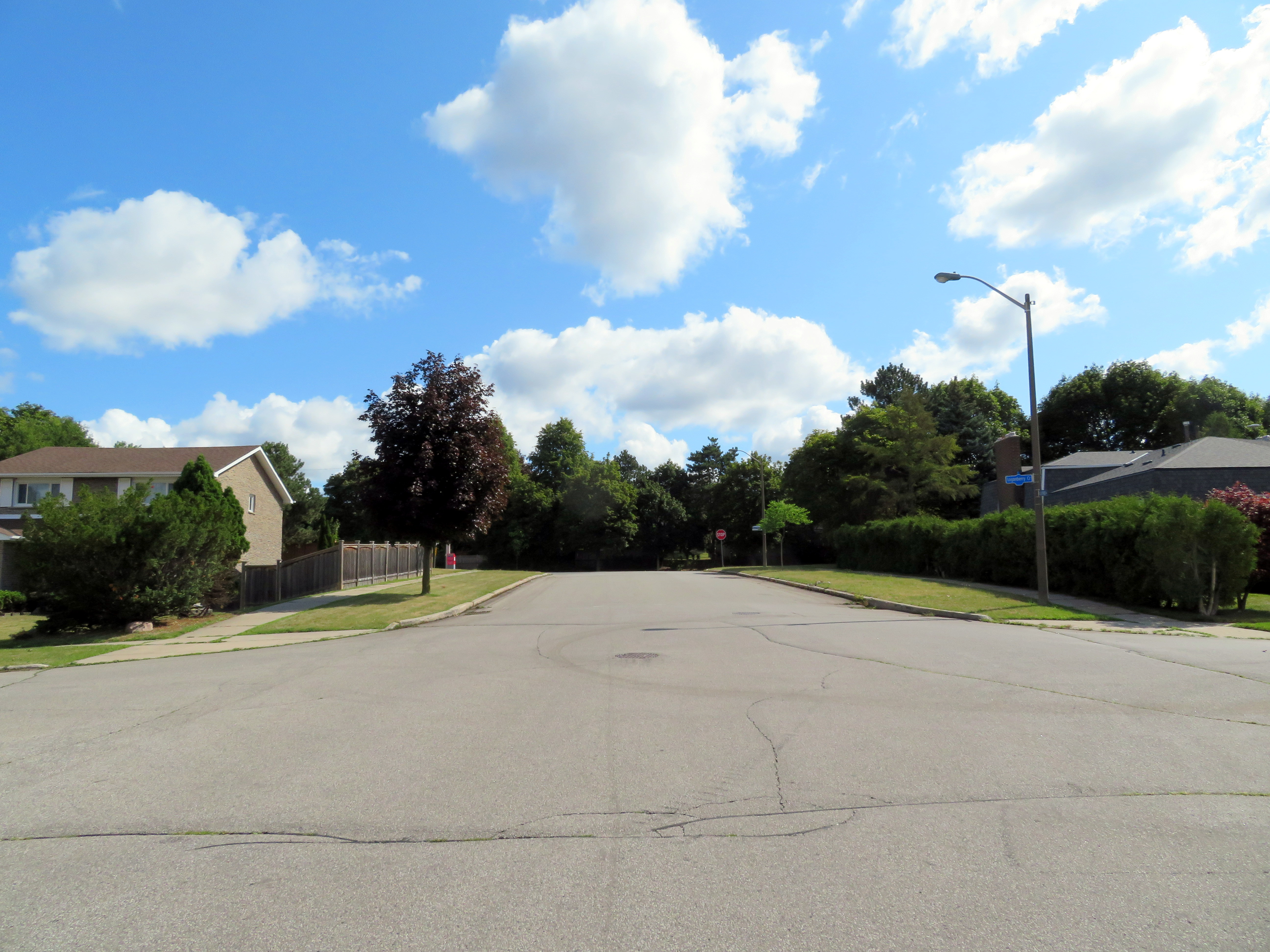
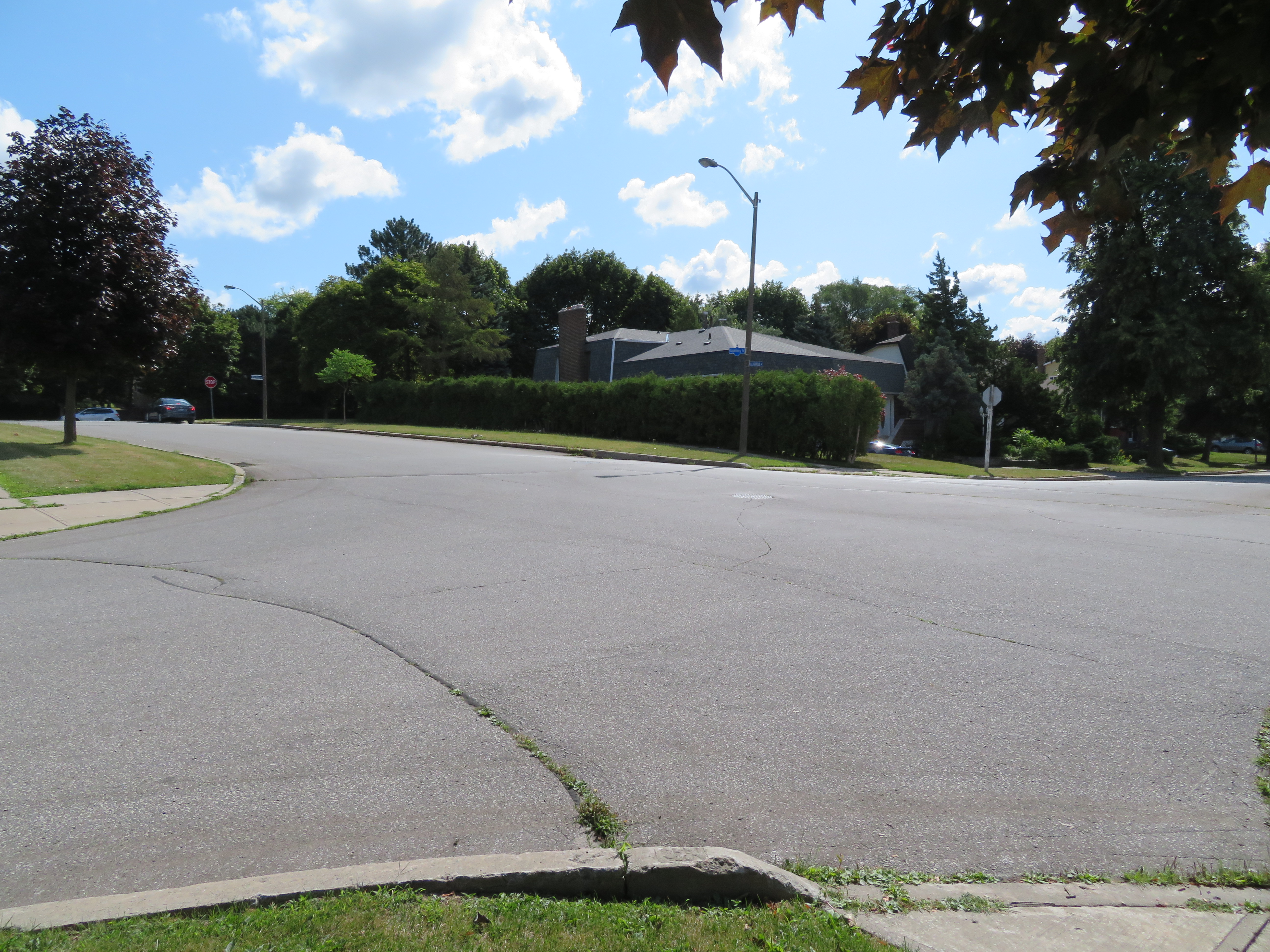
    Between Don Mills Road and Barkwood Crescent, Cliffwood Road is 12 metres wide without any lane markings or medians to separate traffic or slow vehicles turning off of busy Don Mills Road. West of Barkwood Crescent, Cliffwood Road narrows to 8.5 metres. Twelve metres is a lot of road space: Beverley Street in Downtown Toronto is the same width, but it has two driving lanes, a parking lane, and two unprotected bike lanes. The wide street width here only encourages motorists to drive fast after coming off Don Mills Road, while wide curb radii at the corners at Don Mills and at Barkwood Crescent also encourage motorists to take turns quickly.

    At Barkwood Crescent, Cliffwood Road has a speed limit of 50 km/h, the default speed limit in the City of Toronto. Closer to the schools to the north, a 40 km/h speed limit is posted, but there are no physical measures to slow down cars and trucks. Cliffwood Road, like so many other suburban streets, was built for speed, and not for local residents on foot.

    IMG_3648-001An unnecessarily large intersection at Cliffwood Road and Barkwood Crescent, and a wide approach to Don Mills Road
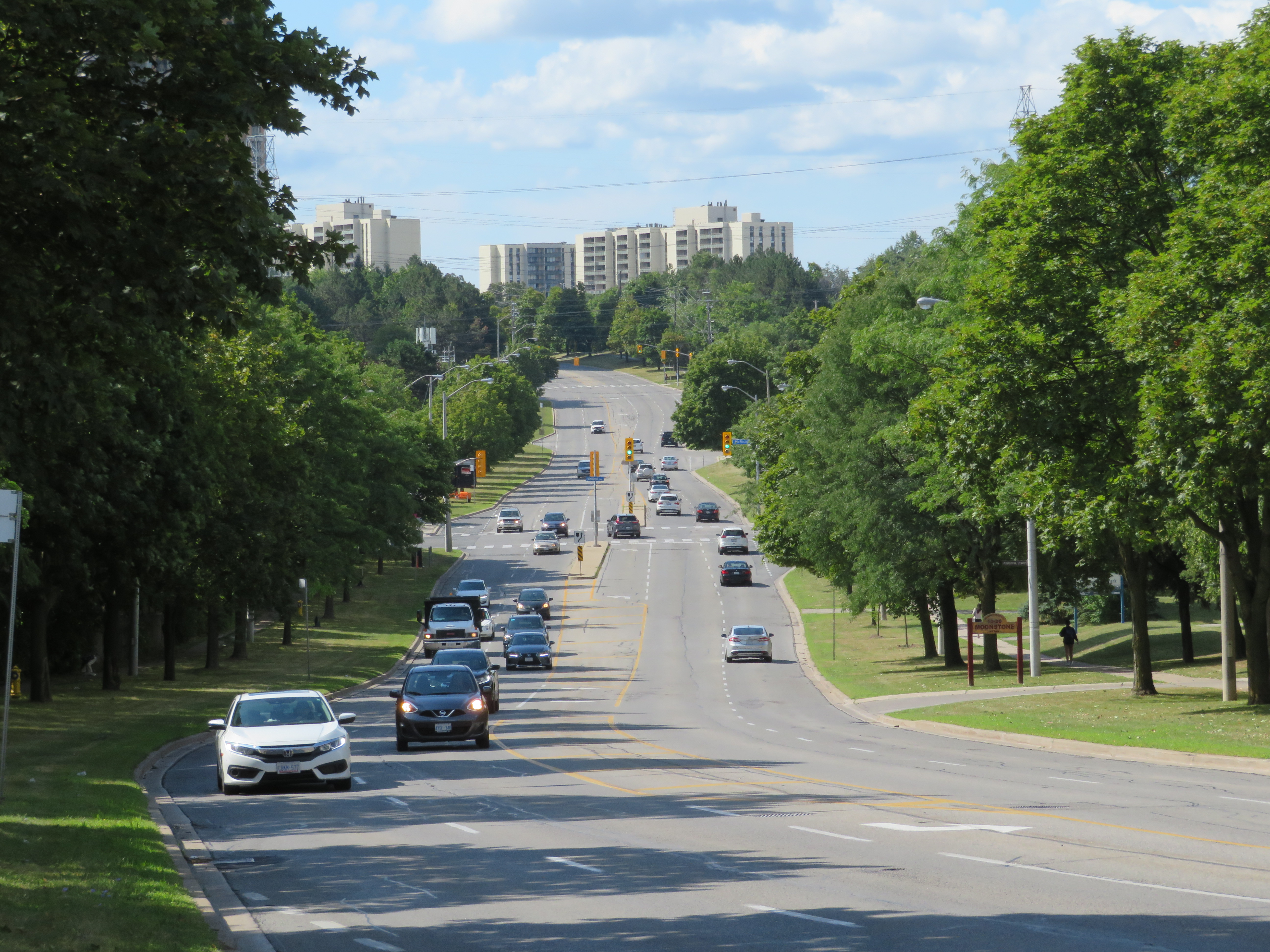
    I also noted the condition of nearby Don Mills Road, a busy thoroughfare connecting office parks in Richmond Hill and Markham with Fairview Mall to the south. Don Mills is a busy bus corridor, with both TTC and YRT buses providing frequent weekday service.

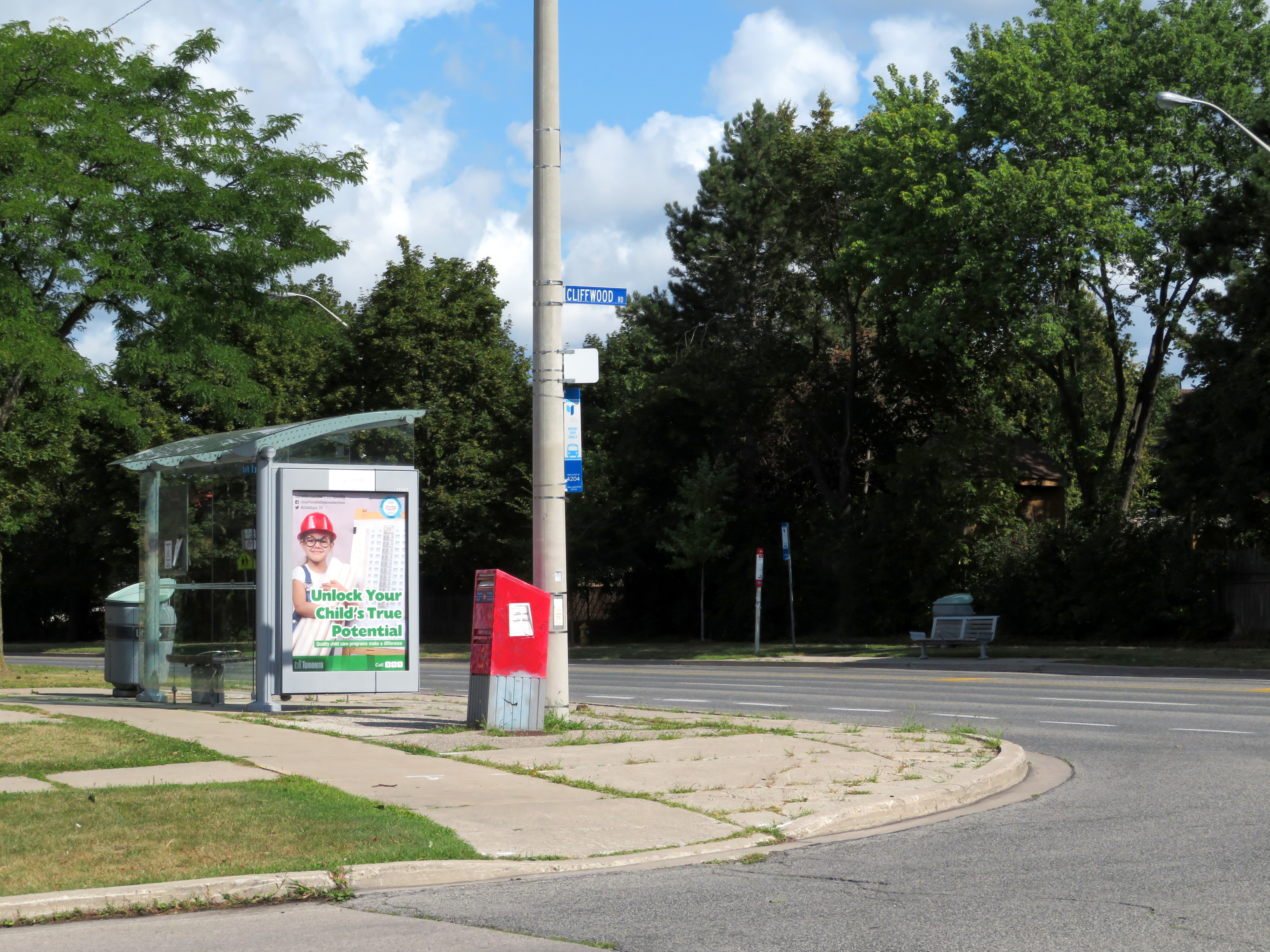
    Despite the frequent bus service, Don Mills Road is hostile to pedestrians and transit users. At the southern intersection of Don Mills and Cliffwood Roads, the nearest crosswalk is nearly 300 metres to the north, or 600 metres to the south. Understandably, most transit users will choose to cross at the nearest TTC stop, rather than walk an extra five or ten minutes twice a day, especially in inclement weather.

    In late August, a pedestrian was crossing Sheppard Avenue East in Scarborough to get to a nearby TTC bus stop when she was fatally struck by a motorist who then fled the scene. That stretch of Sheppard Avenue is flat and straight.

    IMG_3652-001The corner of Cliffwood and Don Mills Roads with bus stops
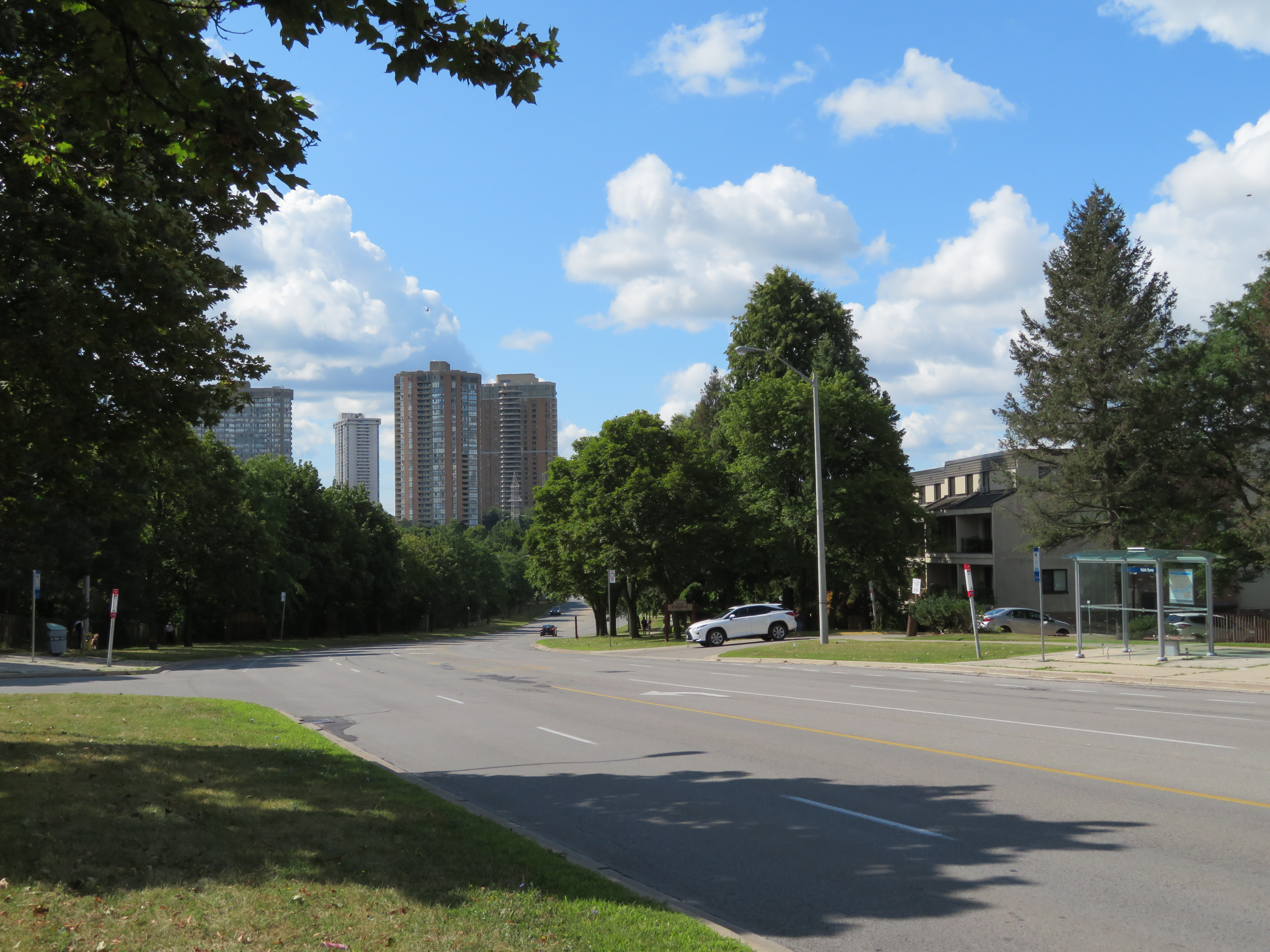
    Most area bus stops are adjacent to bus bays. Bus bays are designed to get buses out of the way of traffic while they are dropping off and picking up passengers. Once the bus is ready to leave the bus stop, it must then merge back into traffic. In addition, many of these bus bays double as right-turn lanes, increasing the distance a pedestrian must cross the street.

    Furthermore, Don Mills has several hills and curves north of Finch Avenue that makes this especially dangerous because of low visibility, making it difficult to judge how far or how fast traffic may be coming. There are five lanes plus bus bays/right turn lanes; the centre lane alternates between serving as a left turn lane or a striped buffer space between northbound and southbound traffic, which further encourages high speeds.

    IMG_3663-001.JPGBus stop at Don Mills Road and Mogul Drive, illustrating the high-speed curves
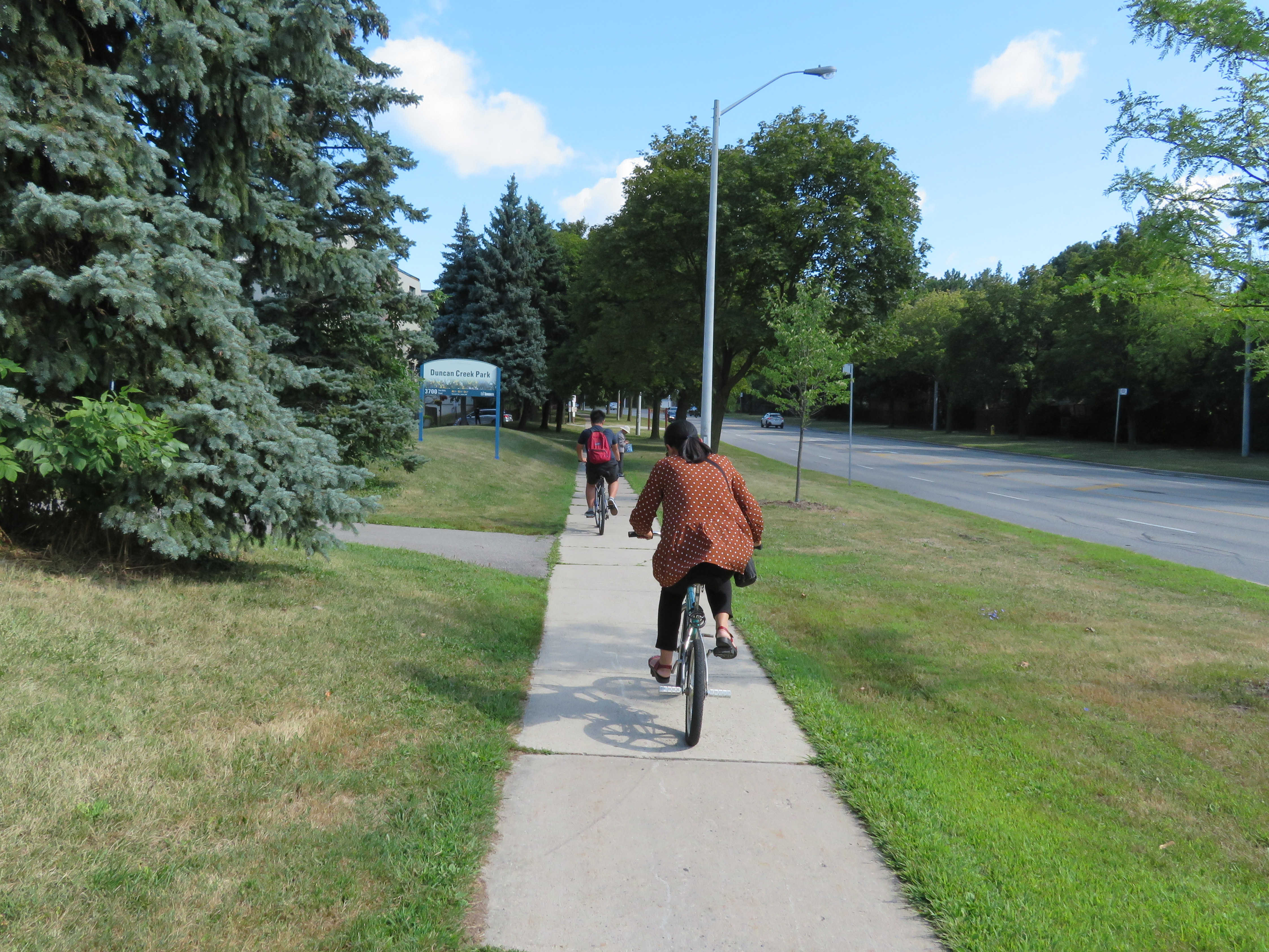
    It is no wonder too that cyclists choose the sidewalks. Despite the wide right-of-way with generous boulevards between the backyard fences and the curbs, no though has been made to improve cycling infrastructure in this part of Toronto. Separated bike lanes or a multi-use path, similar to those on Eglinton Avenue in Etobicoke, or in Peel Region, would make sense here, and along other suburban arterials.

    Cross-ride marking and signals at intersections would improve the safety for suburban cyclists and legitimize a common practice.

    IMG_3630-001Cyclists take the sidewalk on Don Mills Road
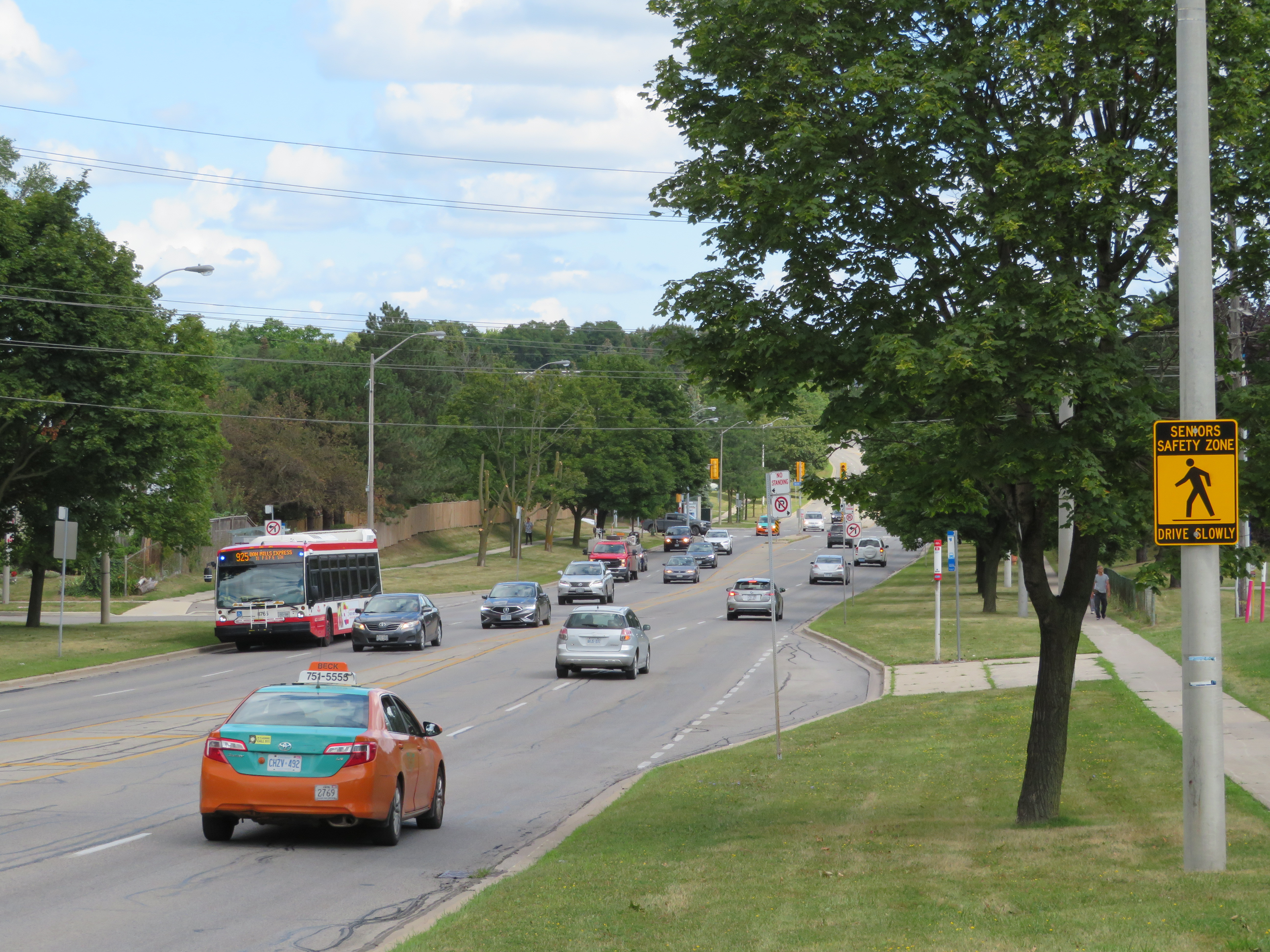
    At the end of my tour of upper Don Mills Road, I could not help but notice I was walking in a signed “Seniors Safety Zone.” As with Eglinton Avenue East in Scarborough, signs were put up but no measures were put in place to slow motorists down, and there was no sign of police enforcement of the posted limit either.

    IMG_3684-001.JPG“Seniors Safety Zone” – note the bus bay behind the sign

    There are a few things that can be done in Toronto’s suburbs to improve the safety of vulnerable road users (pedestrians and cyclists) and reduce the incidence and severity of crashes when they do happen. The installation of safer pedestrian crossings, such as traffic signals would reduce the distance required to get to a TTC stop safely. Bus bays should be eliminated with every road reconstruction project, as they do not benefit transit riders and encourage fast-moving traffic. Finally, residential streets should be narrowed, especially at intersections to slow motorists down, reduce the time a pedestrian is in the street while crossing, and improve their visibility.

    Finally, wide multi-use paths along suburban corridors like Don Mills Road would help promote active transportation and reduce conflicts between pedestrians and cyclists.

  • Dysfunction junction: the Union Station malfunction

    IMG_3583-001.JPG
    Looking west to Union Station, August 2019

    Last year, the City of Toronto hastily installed Jersey barriers in front of Union Station. This was a response to a tragic criminal act on Yonge Street in North York on April 23, 2018. A single individual drove a rented cargo van down the busy sidewalk, killing 10 and injuring 16 more before he was apprehended by police. As one of Toronto’s busiest pedestrian areas, city officials decided that the plaza in front of Union Station required special protection in the wake of the attack in North York.

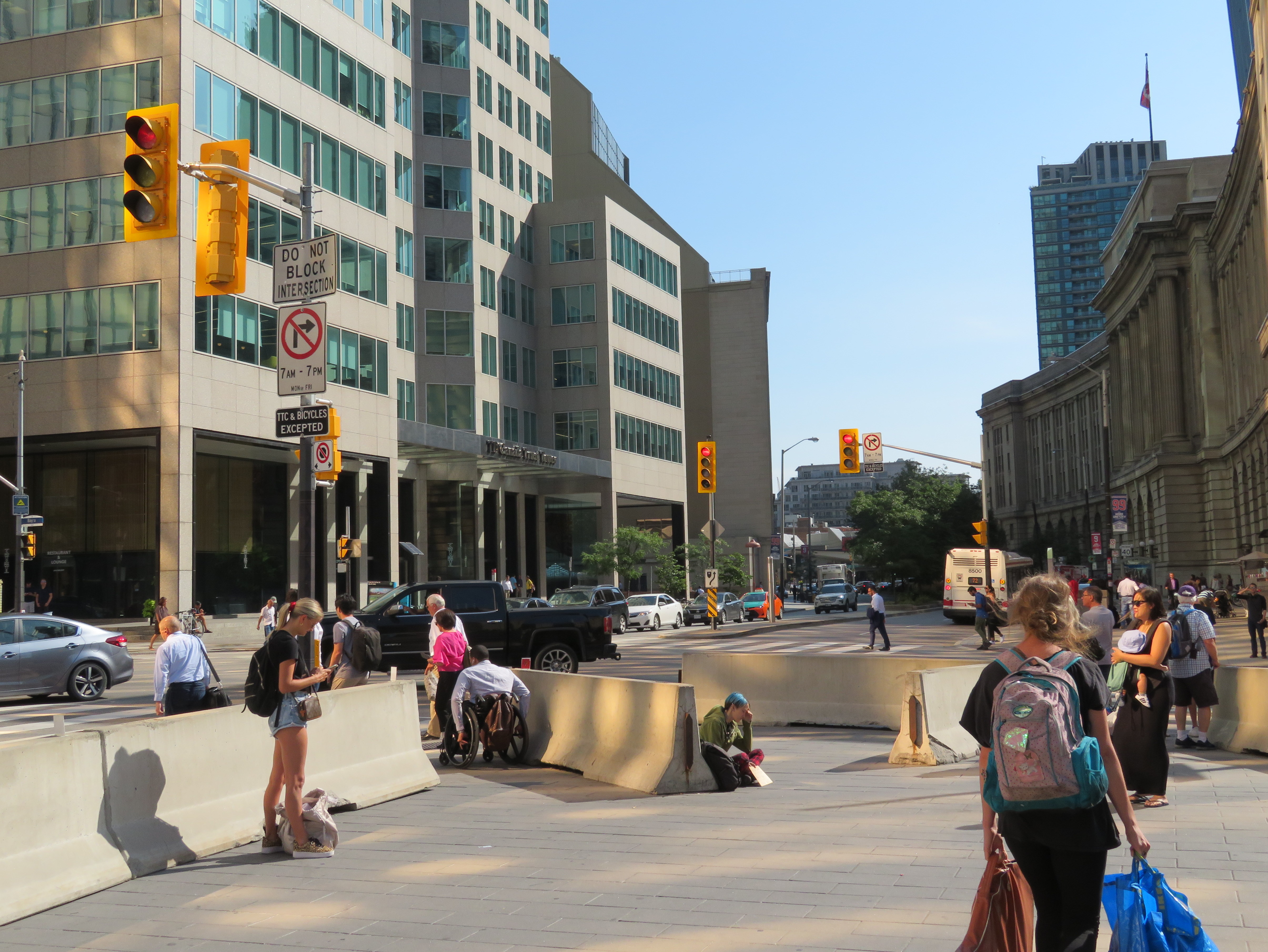
    Sixteen months later, the temporary barriers remain, needlessly restricting pedestrian flows. Temporary Jersey barriers, normally used on roadways to protect construction sites, are long and awkward for pedestrians, making it even more difficult to access some of the city’s busiest crosswalks. During peak periods, these become pinch points, making it especially difficult for anyone crossing against the flow to get through safely. Pedestrians using mobility devices, strollers, or carrying wheeled bags are especially affected.

    Afternoon rush hour crowds navigate around the Jersey barriers at Front and Bay Streets

    Union Station is adjacent to four of the ten busiest intersections in the city where pedestrian traffic was measured: Bay and King, Bay and Wellington, Front and Simcoe, and York and Wellington (traffic counts are not available for Front and Bay or Front and York/University). At Bay and Wellington, one block north of Union Station, 32,319 pedestrians crossed in an eight-hour period in 2009, compared to 16,188 cars, trucks, and buses. At York and Wellington, 32,338 pedestrians crossed in an eight-hour time period in 2017 compared to just 5,575 vehicles.

    Employment at the financial district with commuters headed to and from GO trains and the subway at Union Station, tourists, residents, and fans headed to and from games and concerts at Scotiabank Arena all contribute to the high pedestrian activity in this part of Downtown Toronto.

    IMG_3585-001.JPGJersey barriers at the southwest corner of Front and Bay Streets at Union Station
    Since the April 2018 attack, drivers have continued to mount sidewalks and crashing into bus shelters, buildings, and pedestrians. Early this morning, the driver of a stolen Range Rover crashed into a parked car on College Street, entered the sidewalk, hit a guidepost and then a transit shelter, injuring a pedestrian waiting for a streetcar. The driver then fled on foot. Other pedestrians have been injured and killed this year even when they are using signalized crosswalks correctly, and with all due care.

    At Bay and Front, despite the huge crowds of pedestrians, traffic signals favour motorists. Left turn signals make pedestrians wait longer at crossings before having to navigate around vehicles illegally blocking the crosswalk in addition to navigating the haphazardly placed Jersey barriers. The video below shows the danger of crossing this intersection.

    Motorists block the crosswalk with impunity while the left turn signal doesn’t help

    In his March 25 column in the Toronto Star, Jack “The Fixer” Lakey was not very sympathetic to complaints about the barriers, writing that “they are clearly a pain for people when foot traffic is heaviest, but we couldn’t help but think they would be effective in stopping a driver bent on another deadly attack.”

    Lakey then writes that the city is working on permanent barriers that will be “smaller, more aesthetically pleasing and easier to navigate for pedestrians,” with installation this year. It is now almost September, and nothing has been done.

    It is hard to argue against barriers in certain places to better protect pedestrians from dangerous motorists. But the Jersey barriers at Union Station are not a sufficient response. Permanent bollard-style barriers would be a definite improvement, and it is disappointing to see the city drag its heels on this.

    Meanwhile, the priority afforded to motorists at this downtown intersection, and the lack of enforcement of traffic laws makes it clear that little thought has been afforded to ensuring the safety of all road users. Dropping some road barriers on a sidewalk and calling it a day is unacceptable in a city that is supposedly committed to a Vision Zero action plan.

  • A year later, progress on Canongate Trail

    IMG_8531-001
    Canongate Trail, February 2019

    In February 2018, Duncan Xu, an 11-year old boy, was struck and killed crossing a residential street in North Scarborough on his way home from school. He was one of forty-two pedestrians unintentionally struck and killed by motorists in Toronto last year.

    Not long after Duncan’s death, I visited the neighbourhood and wrote about the tragedy.  Canongate Trail, where Duncan was struck, is a two-lane residential street. At the time, there were no traffic calming measures in place to slow down motorists, many of whom used Canongate as a shortcut around the busy intersection of Kennedy Road and Steeles Avenue. The local councillor, Jim Karygiannis, decided to unilaterally close a walkway linking the rear schoolyard with Canongate Trail, close to where Duncan was killed. Duncan used the walkway before he tried to cross the street.

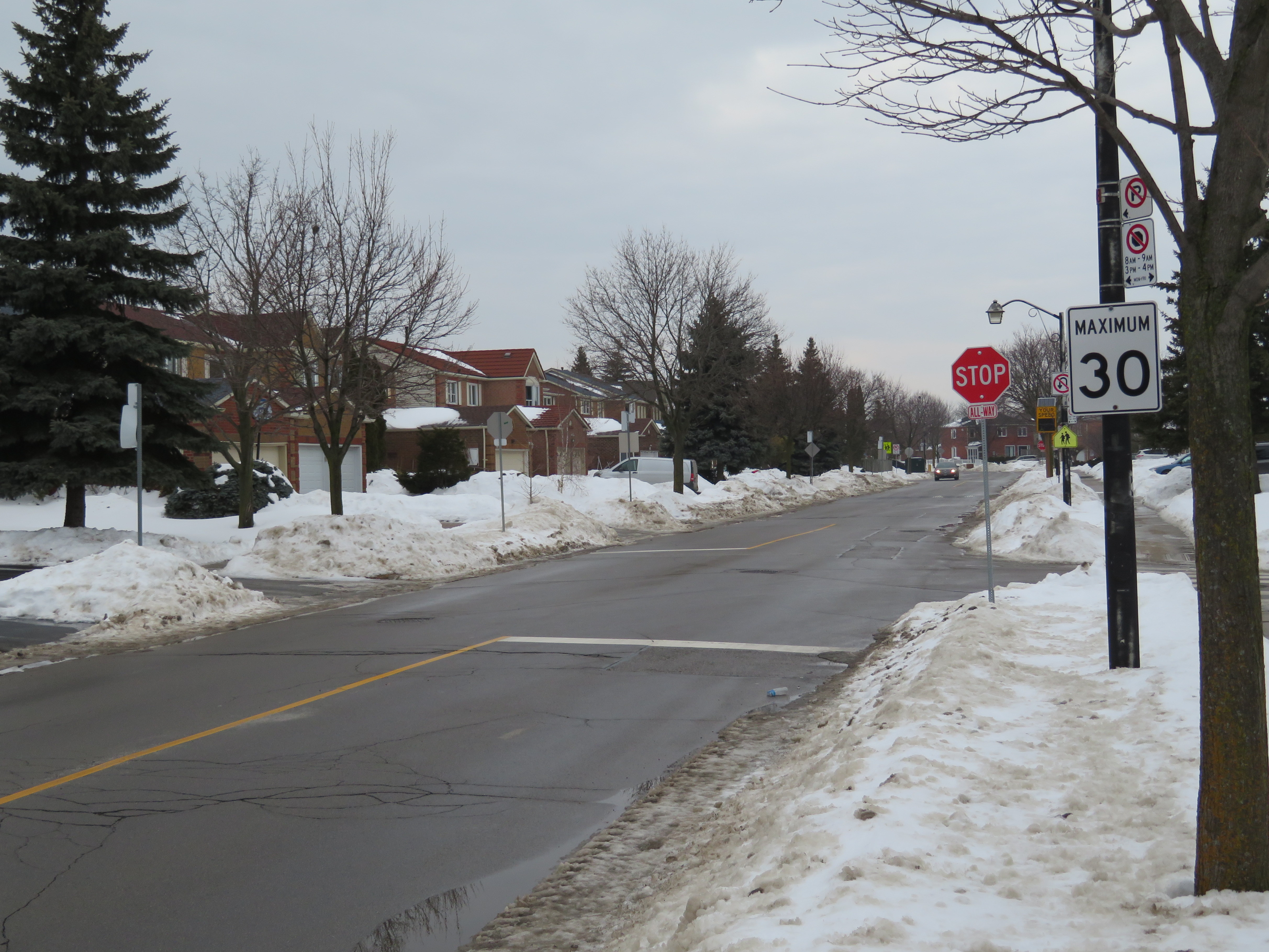
    Since then, more permanent fixes were made. At the request of Karygiannis and local residents, city staff studied both reducing speed limit and installing traffic calming measures. While staff recommended reducing the speed limit to 30 kilometres an hour, they concluded that traffic calming measures such as speed humps were unwarranted.

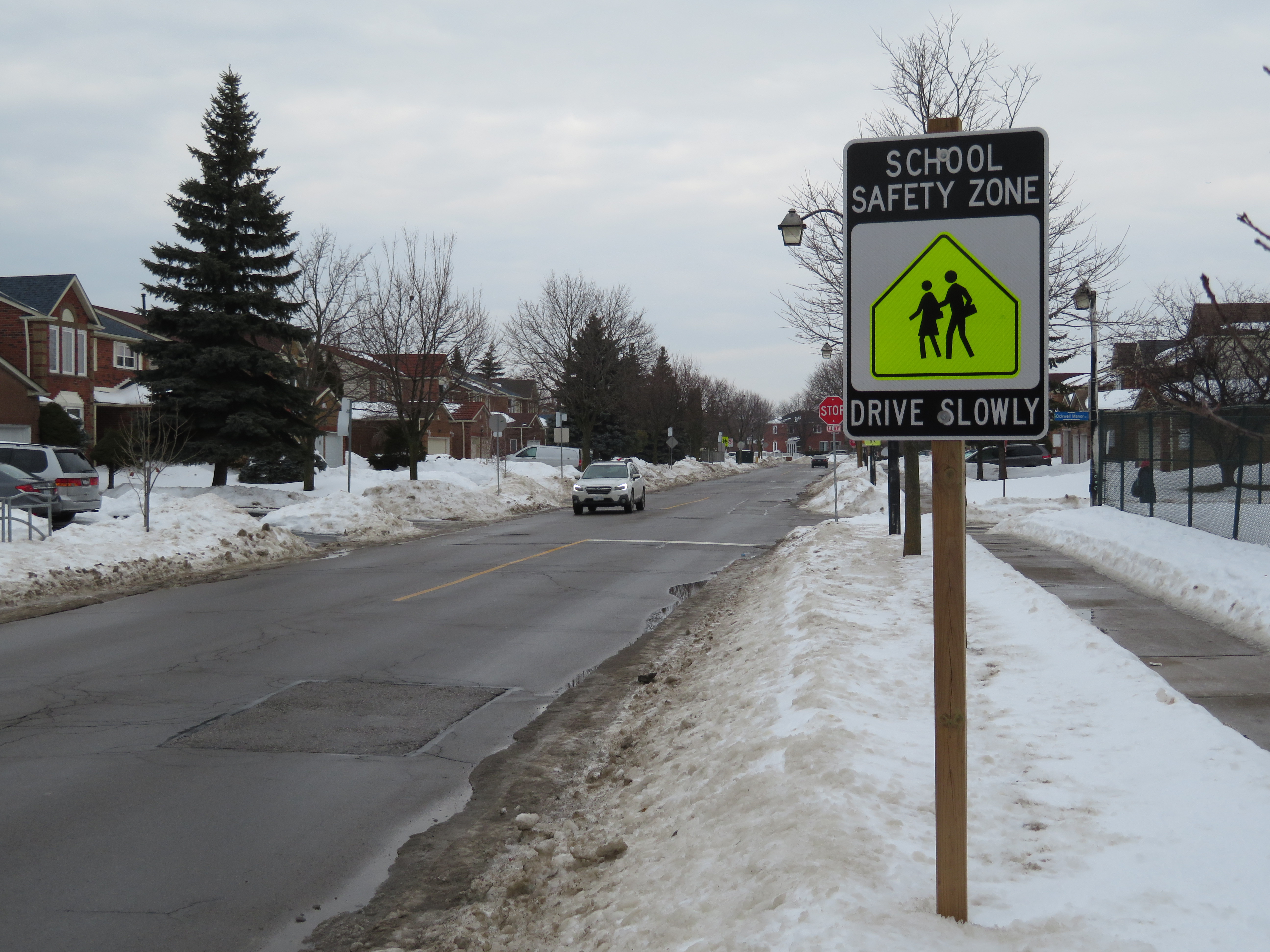
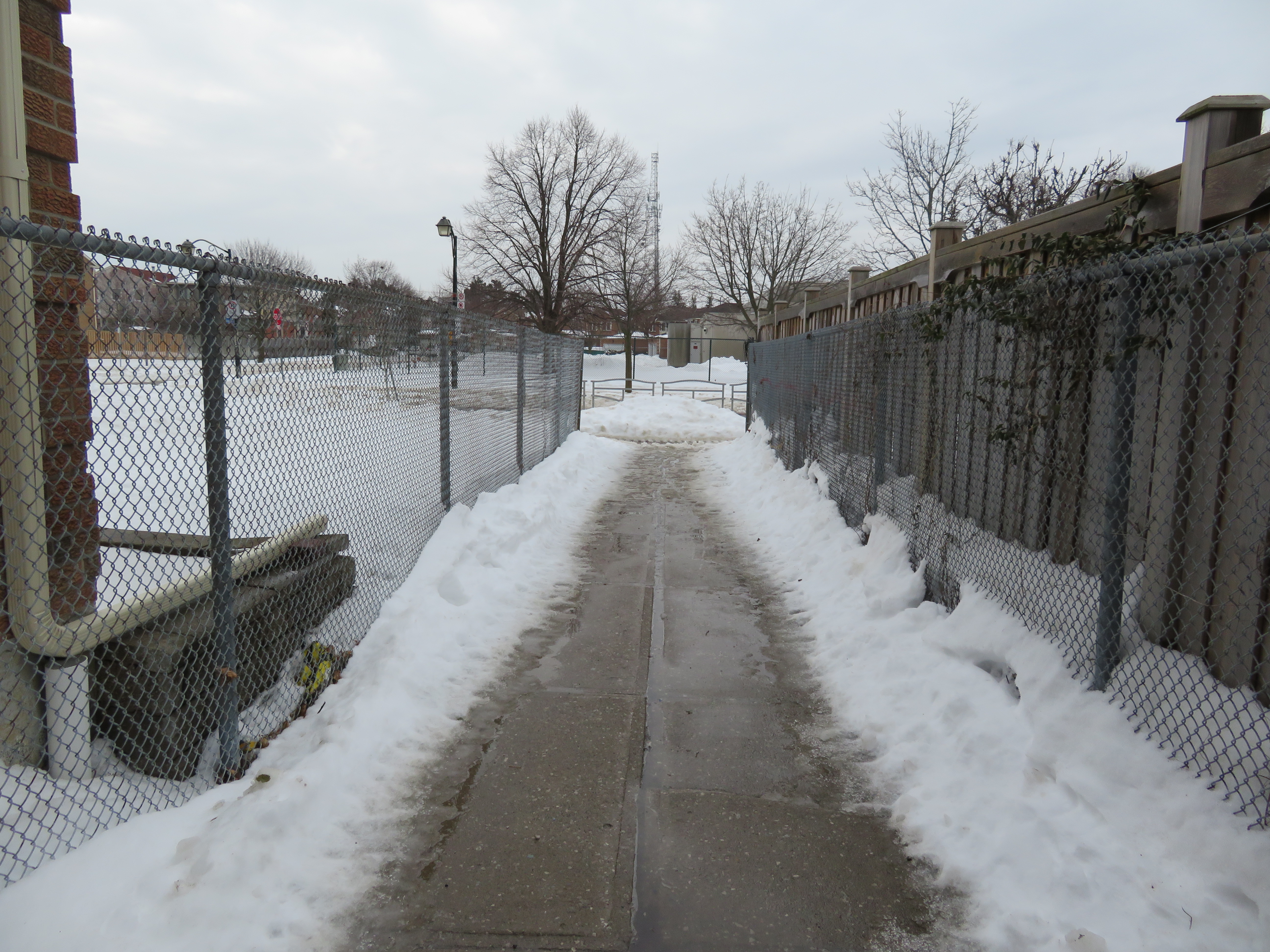
    The speed humps were added anyway, along with other measures. A new all-way stop was added at Ockwell Manor Drive, near where the walkway meets the Canongate Trail sidewalk. Beyond the point where the walkway meets the sidewalk, fencing was installed to discourage children from running into the street. These are significant improvements.

    IMG_8530-001The walkway to the school and a nearby park is reopened, with a metal barrier between the sidewalk and the roadway
    Still, more can always be done. Curb extensions or bulb-outs at intersections would be another effective traffic calming measure, narrowing the roadway, slowing down turning vehicles, and increasing pedestrian visibility while reducing pedestrian crossing distances.

    What’s most disheartening though is that it took a young child’s death for these measures to happen. All residential streets should have a 30 km/h limit and streets designed to slow motorists down, including measures such as curb extensions and speed humps. As with the “Slow Down – Kids at Play” lawn sign campaign, action only comes after a high-profile tragedy. Even then, it’s not enough.

    It’s good to see progress on Canongate Trail. But this should be the standard everywhere. We can and should do better in Toronto if we are all serious about implementing a true Vision Zero policy.

    IMG_8535-001New 30 km/h speed limit and a new stop sign on Canongate Trail, February 2019
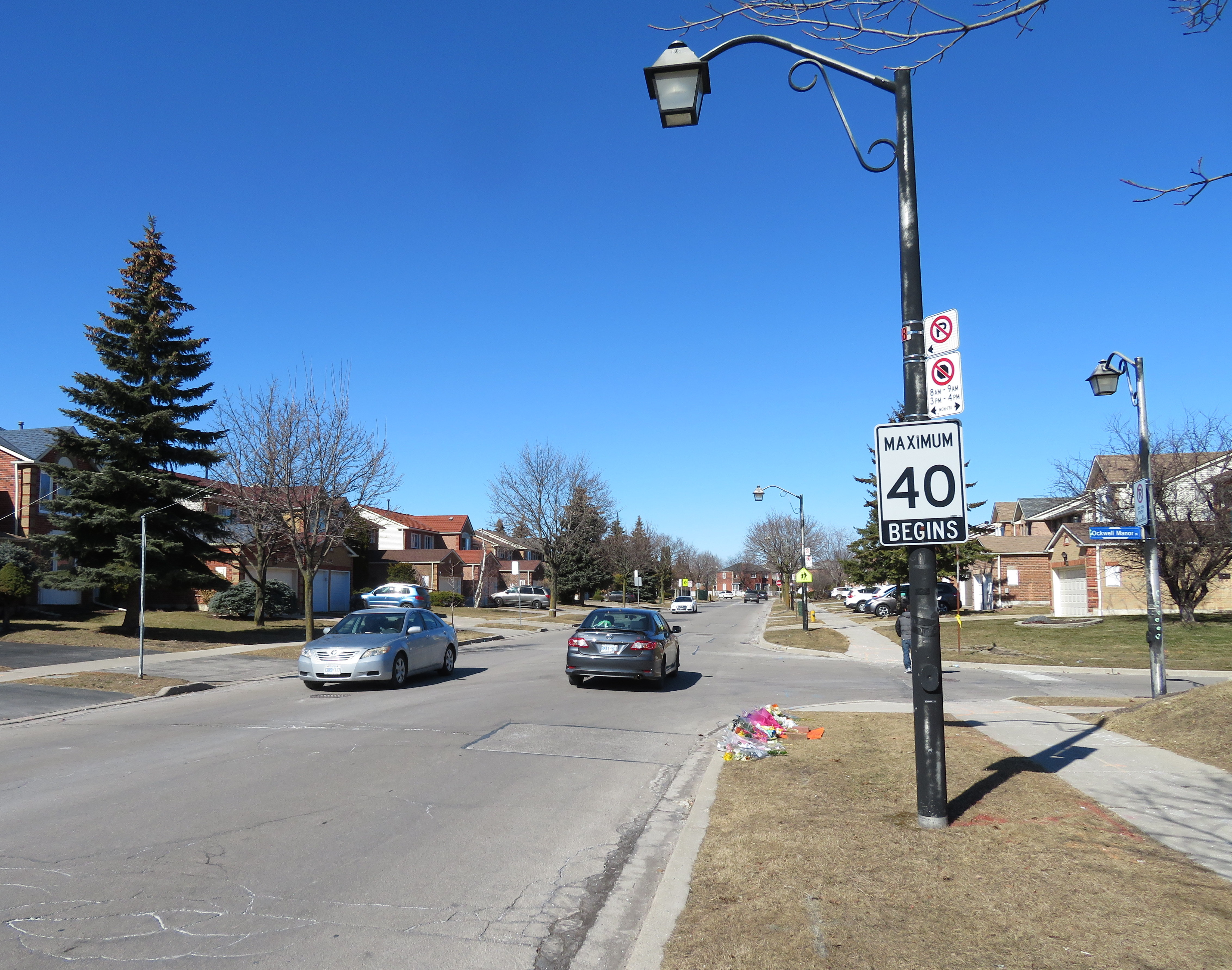
    IMG_6027-001What Canongate Trail looked like in March 2018
  • Pedestrian flags at crosswalks are not a solution

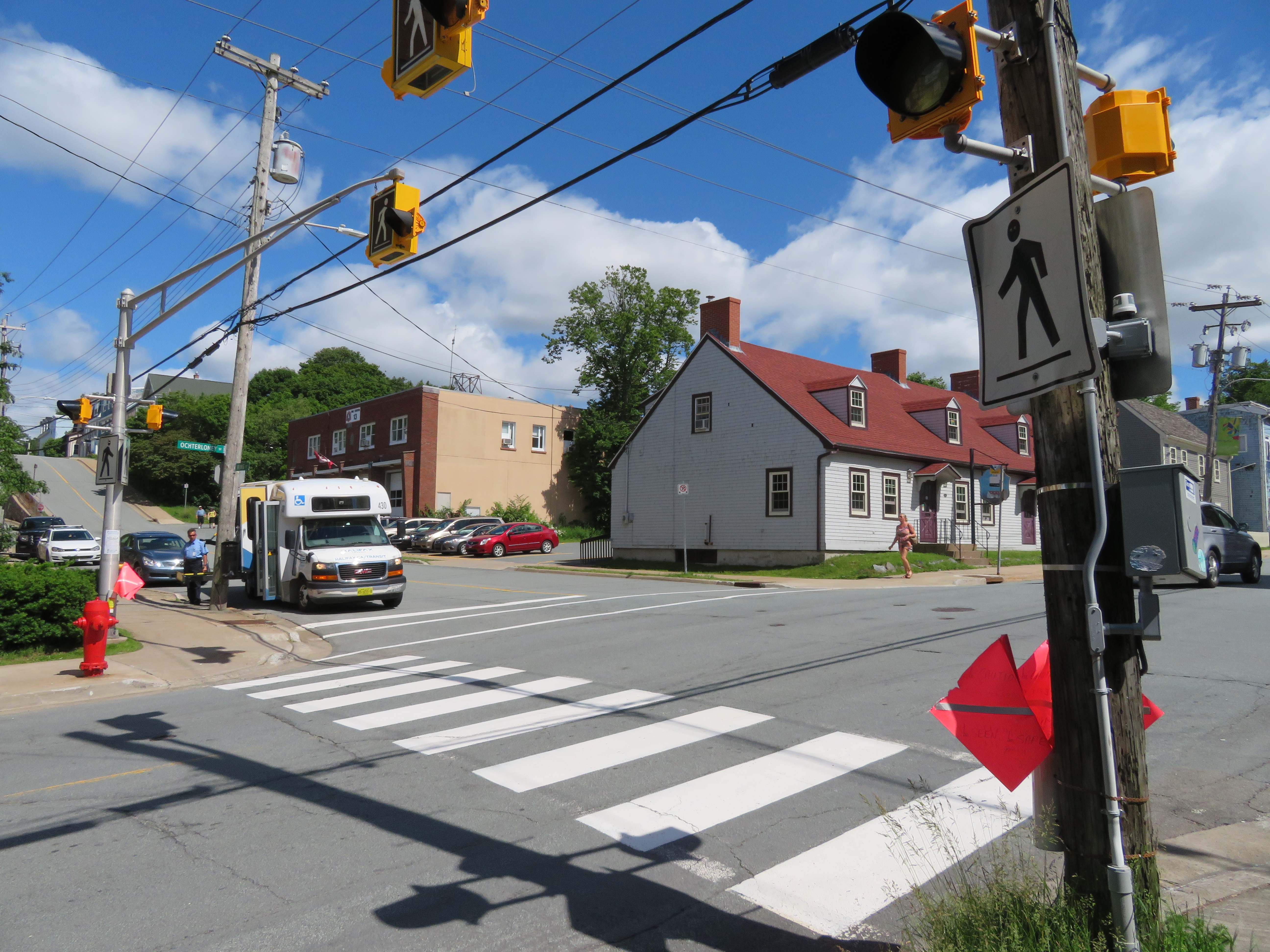
    IMG_0772-001Pedestrian crossing in Dartmouth Nova Scotia equipped with pedestrian flags

    Toronto Star article this weekend profiled three elementary school students installing pedestrian flags at local residential intersections near their school in Leaside. Pedestrian flags are not a new idea; they have been common in Halifax and other communities in Nova Scotia for several years. (I wrote about this before on my blog after visiting Halifax this past summer.)

    On the surface, it sounds like a good idea. Eleven-year old Arnav Shah describes their use in the Star: “what happens is when a pedestrian comes to cross, they look both ways, the regular stuff, maintaining eye contact with the drivers, and then they put the flag up and walk across. Not only does this make them more visible, but makes them (the drivers) more aware of the problem at hand.”

    Residents have complained about additional traffic in the neighbourhood as impatient drivers use residential streets to avoid transit construction on nearby Eglinton Avenue. Photos in the article show the flags being used at the corner of Rumsey Road and Donlea Drive, near the school. The intersection is already controlled by a four-way stop, it is located in a signed school zone, and the local speed limit is 40 km/h.

    The local councillor, Jon Burnside,  rightly praised the children for taking initative. But he added that “…it’s also a sad commentary on the state of our roads and the way people drive.” He’s right. Burnside further adds that adults “can take some cues from the kids’ creativity.”

    If we need bright flags to cross the street at a designated crosswalk because motorists wouldn’t see pedestrians otherwise, then we’ve failed to provide safe infrastructure. The adults — namely Toronto’s mayor and city council — have resisted investing in safe pedestrian and cycling infrastructure.

    The city has put up signs on wide five-lane and seven-lane roads designating them as “Seniors Safety Zones” but has done little to actually make those roads safer for the pedestrians using them. The mayor and the committee responsible for roads and infrastructure rejected making Yonge Street in North York safer and more pleasant to walk and cycle, deferring to motorists instead. And last week, it responded to a child killed while crossing the street in a residential area by closing a walkway to the school yard and not doing anything to slow down motorists speeding in a school zone.

    Simply installing flags at crosswalks for pedestrians to carry would be in line with Toronto’s ineffectual Vision Zero program. While I can admire the children’s action, I would really like to see this taken much farther by the leaders in charge.


    Correction: the local councillor quoted in the Toronto Star is Jon Burnside, not John Campbell. I regret the error

  • The wrong answer to a tragic death of a boy walking home from school

    IMG_6001-001.JPGKennedy Public School, where 11-year old Duncan Xu was in Grade 6. He was struck and killed on an adjacent residential street while walking home on Tuesday, February 27. 

    On Tuesday, February 27, around 3:30 PM, Duncan Xu, an 11-year old boy, was struck and killed by a motorist in a residential neighbourhood in north Scarborough. He was the tenth pedestrian killed on Toronto’s streets in 2018, and the second child killed on their way home from school.

    Duncan Xu was crossing Canongate Trail at Ockwell Manor Drive, near the school, when he was hit by a motorist driving north on Canongate. The intersection does not have a crosswalk, but is only 70 metres north of an intersection controlled by a four-way stop. Canongate Trail a residential street lined with houses, and has a 40 km/h speed limit. The collision occurred right in front of a school zone sign.  Despite its residential nature, Canongate Trail acts as shortcut for non-local traffic avoiding the busy intersection of Steeles Avenue and Kennedy Road.

    I visited the neighbourhood today to better understand the conditions in which a child is killed crossing the street on his way home to school, and the local councillor’s “solution” to that problem.


    Map of the neighbourhood surrounding Kennedy Public School, including the location where Duncan Xu was hit, and the walkway that will close on Monday morning.

    IMG_6027-001Looking north on Canongate Trail at Ockwell Manor Drive, where Duncan Xu was killed. A memorial is at the curb. Note the speed limit sign, as well as the school zone sign, and also the heavy traffic on Canongate. 

    In the Toronto Star, school principal Kevin Liu described the traffic on Canongate as a problem: “I think we’re getting some thorough traffic, not necessarily residents, cutting through this neighbourhood to avoid a left-hand turn at Kennedy and Steeles during rush hours.”

    The school has long had concerns about their students’ safety.  Initiatives implemented in 2017 included new turning restrictions onto Elmfield Crescent, onto which the school fronts, and parking and stopping restrictions to better manage traffic from parents dropping off and picking up their children. A crossing guard is stationed at the corner of Canongate and Elmfield.

    Canongate is wide as far as local residential streets go. There are no attempts at traffic calming, such as speed humps, bump-outs or curb extensions, or effective traffic enforcement. There are several all-way stop signs on Canongate, but these on their own are not effective in slowing down motor traffic; rolling stops are common as well. When I visited the area today, I found that motorists accelerate quickly headed northbound from the Percell Square/Canongate intersection, and the 40 km/h speed limit is often not adhered to.

    Speeding motorist passes memorial to Duncan Xu on Sunday, March 4

    Sadly, the local councillor, Jim Karygiannis (Ward 39), has not championed measures to reduce and slow down traffic on Canongate Drive, despite local concerns. Instead, the councillor decided to unilaterally close a walkway linking the rear schoolyard with Canongate Trail, close to where Duncan was killed. Duncan used the walkway before trying to cross the street.

    Duncan Xu might not have crossed the street at a crosswalk, but he would still be alive had all motorists driven with the due care and speed befitting a school zone as children are heading home.

    The walkway is a convenient route for students to walk to school. It also connects residents to a nearby park. Councillor Karygiannis claimed that he proposed it earlier, but that local residents and the school refused it. Principal Liu said that he never heard about the proposal.

    The walkway Councillor Karygiannis will unilaterally close on Monday morning after Duncan Xu’s death

    On Monday morning, Councillor Karygiannis will make a show of closing the path and put out a media advisory indicating his intent. Orange plastic netting was already placed at both entries to the path, which cuts between two houses in preparation of the closure. But this is a classic case of “Zero Vision,” rather than Vision Zero, measures to improve road safety, such as improved pedestrian and cycling infrastructure and re-engineered roads that the city is at least nominally committed to.

    Councillor Jim Karygiannis media advisory

    Media advisory from Ward 39 Councillor Jim Karygiannis’ office announcing the closure of the pathway

    Closing the walkway will only serve to reduce walking to school, and increase traffic. It will do nothing to solve the problem of fast-moving cars in a residential area, nor will it necessarily prevent children from unsafely crossing the street. It’s the type of inexpensive, easy fix that make politicians look like they’re doing something, but without making the necessary changes to prevent future fatalities.

    Traffic calming measures, such as speed humps, tighter curbs at intersections, extending the curbs out at intersections, and planters would force motorists to slow down, and would be more effective than stop signs. More should be done to discourage impatient drivers from using the residential area as a shortcut. More should be done to encourage students to walk to school, rather than discouraged by closing walkways. Walking audits would allow the community to provide input. And this should be done around every school.

    The safety of pedestrians, especially children, should not be left to half-measures.

    IMG_6036-001

    Updated map of pedestrian fatalities on Toronto’s streets.