

Imagine any retail store welcoming its customers the way the Toronto Transit Commission does these days.
This week, at least two TTC streetcars were wrapped with messages promoting the transit agency’s new aggressive anti-fare evasion campaign. Any passenger caught by fare inspectors or special constables without a valid fare is subject to a fine of up to $425.
As a regular, fare-paying passenger, I am sympathetic to the TTC’s need to balance its books — it relies on transit fares for 68 percent of its $2.14 billion operating budget — but the more aggressive fare enforcement program — including advertisements inside vehicles and stations and hiring 50 more fare inspectors in 2020 — is insulting to its customers.
Typically, businesses and public services strive to welcome their clientele and promote themselves to potential new customers. At one time, the TTC even ran television commercials, with a particular focus on promoting off-peak ridership.
Not anymore.
Customer notices on posters and on the PA system are restricted to subway closure notices, reminders about etiquette, and now warnings of $425 fines for not tapping a Presto card. Riders are no longer thanked for using the TTC. Instead, we’re subjected to poor and inconsistent service, streetcar shortages, regular weekend subway closures, fare hikes, and repeals of recent fare integration measures, along with lectures on fare payment.
Other transit and municipal politics writers, including Steve Munro, Matt Elliott, and Ben Spurr have written about the TTC’s push for stricter fare enforcement as well as the problems passengers have when paying, including malfunctioning Presto readers and fare payment machines, and overcrowded vehicles. Fare payment machines do not accept bank notes, debit, or credit cards. Though the TTC estimates that 5.7 percent of all riders engage in fare evasion, the rate on streetcars, where passengers board from all doors and tap or pay on board, is 15.9 percent.
There has been an inconsistent approach to fare enforcement, with inspectors commonly found at streetcar terminals at subway stations. There are reports and credible accusations of racial profiling by fare enforcement officers.
A friendlier and more wholesome approach would be addressing the technical problems, including the reliability of fare machines, and replacing generic Presto cards being used for child fares that other passengers — such as York University Station — are illegitimately using. There should also be a friendlier education campaign, enforcement discretion, and less aggressive behaviour towards customers, would make far more sense. If the TTC is truly interested in “disrupting” negative behaviour, it should adopt a customer service model, and address the distrust towards its officers from racialized and economically marginalized communities.
Putting aside the bad optics of the crackdown on fare evasion, transit ad wraps are an insult to transit riders. Furthermore, they are a detriment to the brand. Toronto’s streetcars are an icon of this great city; this is cheapened by gigantic ads for Starbucks, Sephora, or Scotiabank.
Inside, the large panoramic windows are obscured by perforated vinyl sheeting that is difficult to see out of. Though the vinyl wraps leave a sliver at seat level, the view is obstructed for anyone standing on a crowded vehicle.
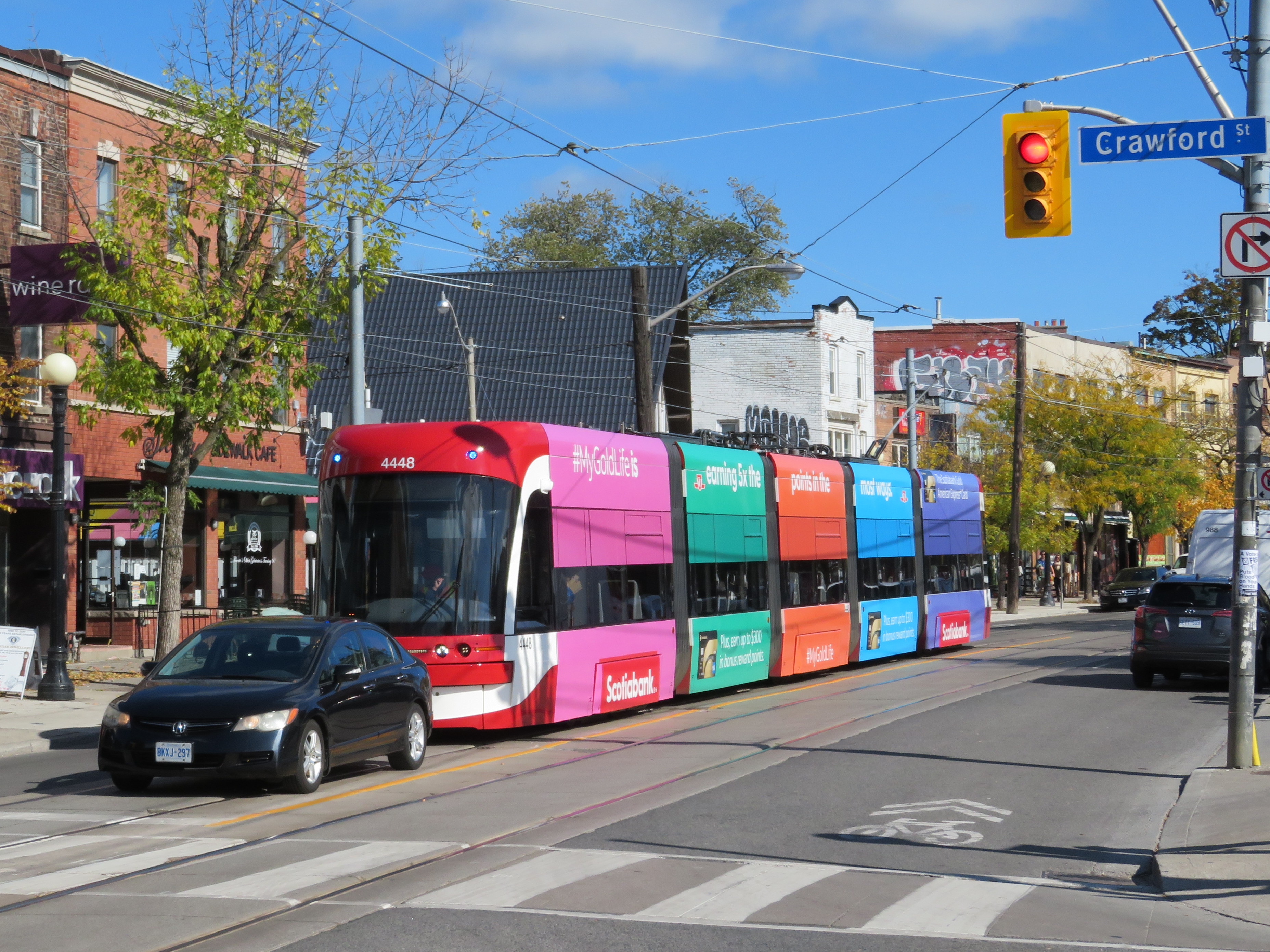
The current 12-year, $324-million contract with Pattison Outdoor brings in a total of $27 million a year. The contract includes interior and exterior transit advertising (traditional placards, posters in stations and vehicles, and wraps). In total, advertising in all forms represents 1.1 percent of the entire TTC budget, with wraps representing a small portion of that. These wraps, commissioned by the TTC itself, are part of the contact.
The streetcar wraps that scold, rather than welcome, riders are even more of an insult. What message do they send to visitors to Toronto? And what message do they send to potential riders?
Customer buy-in is about so much more than just paying one’s fare. The TTC should realize that.
 Sean Marshall
One reply on “The TTC needs customer buy-in, not a campaign of scolding its passengers”
How dare you bite the hand that slaps you? Your indigence shall be reported!
Ironically GO has acceded to the need for better customer relations, even as the TTC resorts to whipping the clientele.
Ambassadors for safety on GO Train platforms
Station ambassadors are working on rail platforms to improve safety, service and on-time departures.
Sep 21, 2023
[You may have noticed some friendly faces on GO Train platforms in recent weeks. Station ambassadors are now on platforms to improve safety and on-time performance during rush hours and special events.
From when the train is just approaching the platform to when it departs, they are walking up and down the platform, answering questions, greeting people and providing a visible presence.]
[…]
https://www.metrolinx.com/en/news/ambassadors-for-safety-on-go-train-platforms
This in part addresses my issue now being handled well by Customer Service as to a partial permanent disability I have loading my bike on GO trains. I have been granted use of the Accessibility Coach w/ bike due to an irreparable massive shoulder cuff injury. Characters are limited in these forums, so I’ll detail later. Customer Service are working at GO Transit!