
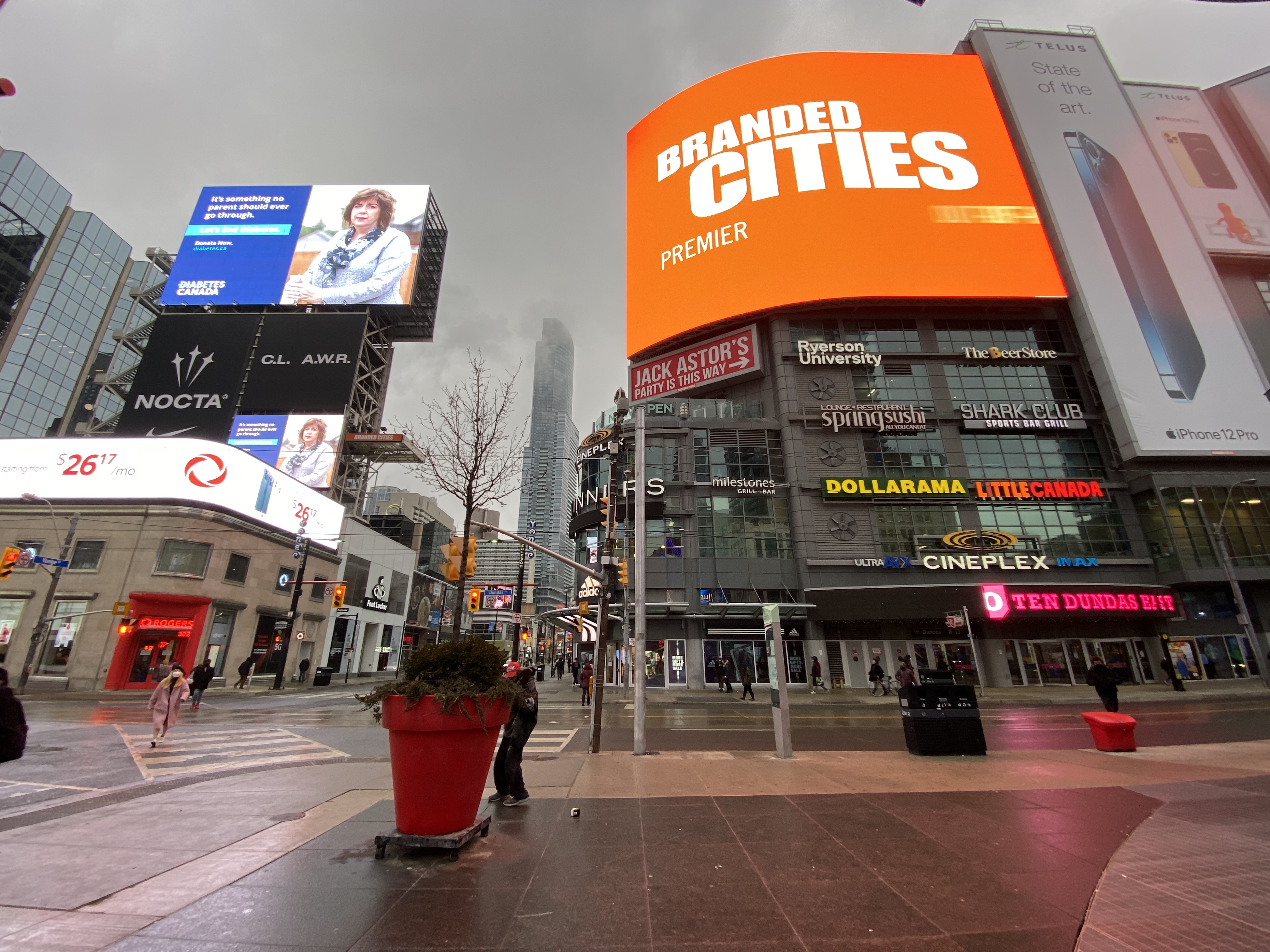
Nearly three years ago, I wrote about the complicated history of Toronto’s Dundas Street. Calls to rename the street, which honours Henry Dundas, 1st Viscount Melville, came during a time of reckoning in Canada and the United States with racism, colonialism, and our ongoing relationships with First Nations. Ryerson University (my alma mater) changed its name to Toronto Metropolitan University (TMU) in 2022, in acknowledgement of Egerton Ryerson’s role in developing Canada’s system of residential schools.
After a petition was sent to City Council on June 27, 2020 calling for the renaming of Dundas Street, given Henry Dundas’ role in delaying immediate abolition of slavery in the British Empire, city staff came back to council with a report offering four options:
- Do nothing
- Retain the legal street names with additional interpretation and recognitions
- Retain the legal street names but rename those civic assets with Dundas in their name, except TTC facilities (there are three parks and one library branch that include the Dundas name, and Yonge-Dundas Square; there are two TTC subway stations and one streetcar line that also bear the Dundas name)
- Rename the streets and all other civic assets now carrying the Dundas name (including Dundas Street East, Dundas Street West, Dundas Square, and Old Dundas Street).
In 2021, Toronto City Council voted 17-7 in favour of the fourth option, renaming Dundas Street and all associated city assets, such as the library, the two subway stations, Yonge-Dundas Square, and three city parks. At the time, the estimated cost was $8.6 million, but by Fall 2023, it had grown to $12.7 million. There was also a significant backlash to the renaming, which included several conservative city councillors.
In the end, council voted to approve a compromise that would include renaming Yonge-Dundas Square, Dundas and Dundas West subway stations, and the Jane-Dundas library, but retain the name Dundas Street itself. There would also be a public education campaign “to acknowledge the historical impact of Henry Dundas’s actions and that of slavery more generally.”
Yonge-Dundas Square would be renamed Sankofa Square, while Dundas Station, directly below, would be renamed with financial support from TMU. “Sankofa” was one of four shortlisted names considered by the Recognition Review Community Advisory Committee (CAC), which was made up of Black and Indigenous leaders, including business owners and residents along Dundas, with the participation of local city councillors.
Sankofa, a concept that originates with the Akan people of Ghana, “refers to the act of reflecting on and reclaiming teachings from the past which enables us to move forward together.” The CAC’s short list notes the concept’s connection to West Africa, which represented a major portion of the origins of Africans trafficked to the Americas — including Upper Canada — during the slave trade.

This compromise will not make anyone especially happy, but Mayor Olivia Chow will have to make many more compromises to properly address the fiscal and social crises Toronto is facing. But this is one compromise I mostly agree with. At first I thought Yonge-Dundas Square should have an Indigenous name, but after reading the background materials, I learned that the First Nations elders on the CAC preferred a name that focuses on the Black historical experience.
Until recently, few people gave the name “Dundas Street,” named over 200 years ago, much thought. Now more people are aware that there were slaves here, in Ontario, despite Governor John Graves Simcoe’s abolitionist leanings. Our understanding of history evolves as we as people evolve — this is the reason why we have historians.
Nearly three years ago, I wrote about the history of Dundas Street. It’s a really interesting one, by the way, as it continued to change and grow right up until the 1950s. In 2023, we continue to add to the history of the colonial-era road.
 Sean Marshall
3 replies on “The continuing history of Dundas Street”
I am strongly against the removal of statues and the renaming of placenames. A comparatively small number of persons in academia, media and government seemed to have outsized influence in effecting these changes that are, to say the least, both unpopular and contentious. Those radicalised on the issues of race/ethnicity/religion seemed to have lost their ability to reason from mid-2020. A moral panic spread amongst progressives believing they are pursuing some form of ‘racial reckoning’. That they seek to judge 18th Century men based on how close their beliefs and values are to our own in the 21st Century is beyond ridiculous, it is dishonest.
In fullness of time, I think what will be looked back upon is the credulity of a society led by those only too eager to shed its identity and character. David Goodwin’s ‘anywhere’ people: rootless cosmopolitans with little or no emotional attachment to this land. You rob a nation of its symbols and its inheritance (historical, cultural or political), and you create an airport hotel.
The silver lining is that the façade of historical truth claimed by activists was entirely mendacious. We are told we must ‘confront our history’ and face the truth. Well, in the case of Henry Dundas we did – the historical record didn’t provide the required evidence, but his name was removed anyway. History is only to provide proof for damnatio memoriae, not understanding.
Yet, if we today interpret Dundas differently from those in the past, is it almost certain that the judgement on Dundas by future societies will be entirely different from our own? By removing his name, we cast a final ballot on his legacy. Should our era be the final word? No.
—
If we (broadly defined) today think differently of Dundas compared to past societies, is it not logical that future societies will themselves judge Dundas differently from ourselves? Removing names, statues etc forecloses future debate and re-assessment.
Though I disagree with your comment, Tony, I appreciate the thought out reply. Cheers.
If we (broadly defined) today think differently of Dundas compared to past societies, is it not logical that future societies will themselves judge Dundas differently from ourselves? Removing names, statues etc forecloses future debate and re-assessment.