Author: Sean Marshall

  • To Stratford by Train

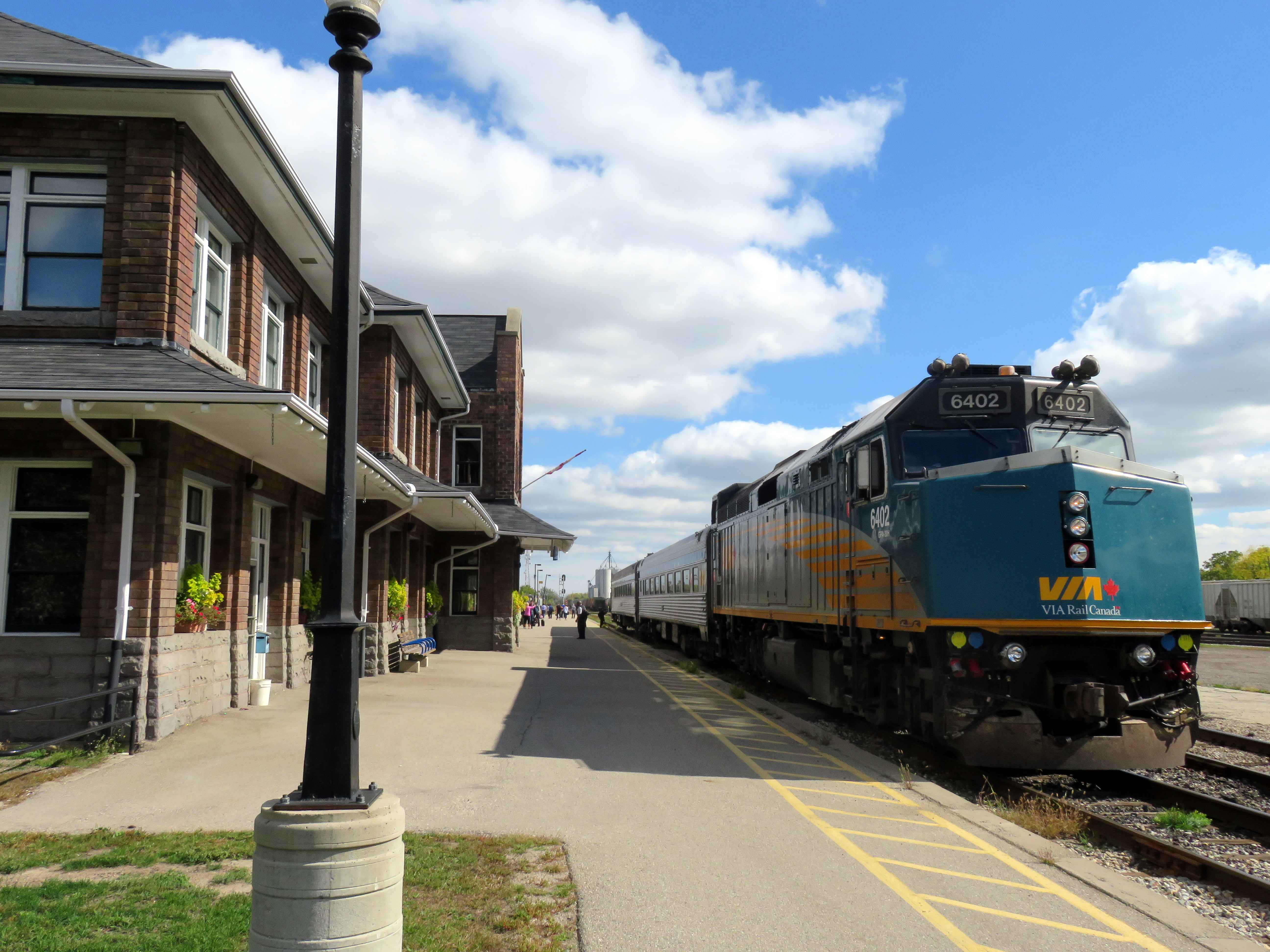
    IMG_6135-001.JPGVIA Train 85 at Stratford Station, October 8, 2016
    On Thanksgiving weekend, my partner and I made the trip out to Stratford to get away from Toronto for two days and see two shows: Macbeth and The Hypochondriac. Both plays were excellent, and we had a lovely time strolling through Stratford’s downtown and parks as well. We took the train to Stratford, unfortunately it’s not a very convenient option for festival goers, nor for anyone visiting Stratford or for those who live there.

    (more…)

  • Why Presto and the TTC don’t mix

    In an earlier post, I explained why the Toronto Transit Commission should ditch its archaic transfer policies and adopt a two-hour unlimited transfer system like those in Mississauga, Brampton, York Region, and elsewhere in the Greater Toronto and Hamilton Area.

    When I made the argument last year, the TTC had just introduced proof-of-payment on all streetcar lines and had just started to adopt the Presto Card for fare payments. Sometime in 2o17, the TTC will eliminate all tickets, tokens, and passes, instead relying on Presto and new limited use media (LUM) paper cards for single-ride payments and day passes. (LUMs are common on some systems that have gone to smart card technology; Montréal, for example, has the L’occasionnelle card, augmenting the plastic Opus Card.)

    About half the buses and over one third of all TTC subway stations now accept Presto as payment (for regular adult and student/senior fares, deducting the same fare as the applicable token or ticket price); according to the TTC, the full roll-out of Presto machines on the bus network is supposed to be complete by the end of the year. But the TTC likes to remind its passengers that they should carry alternative forms of payment in case Presto is not available (for example, when shuttle buses replace subway or streetcar services).

    That said, I’ve been happy with using Presto when it’s available. Presto is all-but-necessary to ride GO Transit, OC Transpo, UP Express and suburban transit agencies; with Presto, transfers and GO Transit/suburban bus co-fares are automatically figured out. I set up the autoload feature on my Presto account, so I never have to worry about not having enough funds on the card. I can always review my account, which accurately keeps track of my transit fare payments and transfers. There are times when Presto is not an option, such as when I travel to Scarborough, so I always keep a few tokens or cash for those instances.

    But on Sunday, September 18, Presto finally didn’t work for me. But I blame this on how the TTC insists on making Presto work with its interpretation of its outdated transfer policies, rather than making its fare policies work for Presto.

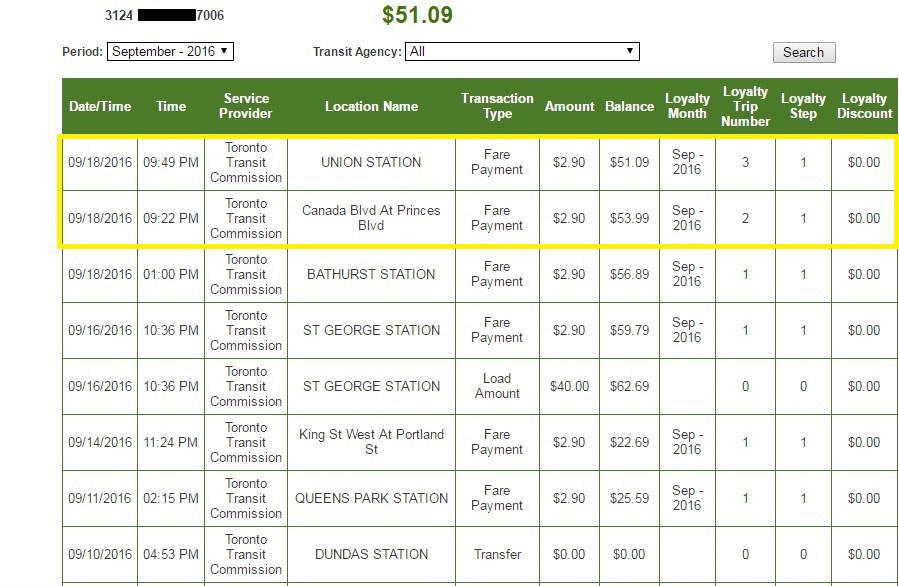
    presto-overchargeScreenshot from my Presto transaction history, September 20, 2016
    After a wonderful evening visiting the In/Future arts festival at Ontario Place, I boarded a 509 Harbourfront shuttle bus at the Exhibition Grounds at 9:22 PM. The streetcar that normally operates from the Exhibition to Union Station was not running due to maintenance in the Bay Street tunnel. The shuttle bus was equipped with a Presto machine, and I tapped my card. The bus let off its passengers at the corner of Bay and Front Streets, just outside of Union Station, and I transferred to the subway, a completely valid transfer, at 9:49PM. But that resulted in a second charge of $2.90.

    My mistake was expecting that the transfer from the 509 shuttle bus to the subway would be recognized by Presto as a valid transfer. Normally, the 509 streetcar has a direct connection to the subway platforms, without the need to pass through fare gates. Elsewhere, the transfer between streetcar and subway at downtown stations is not a problem using Presto (like the transfer from the 505 Dundas Streetcar to Dundas Station on September 10).

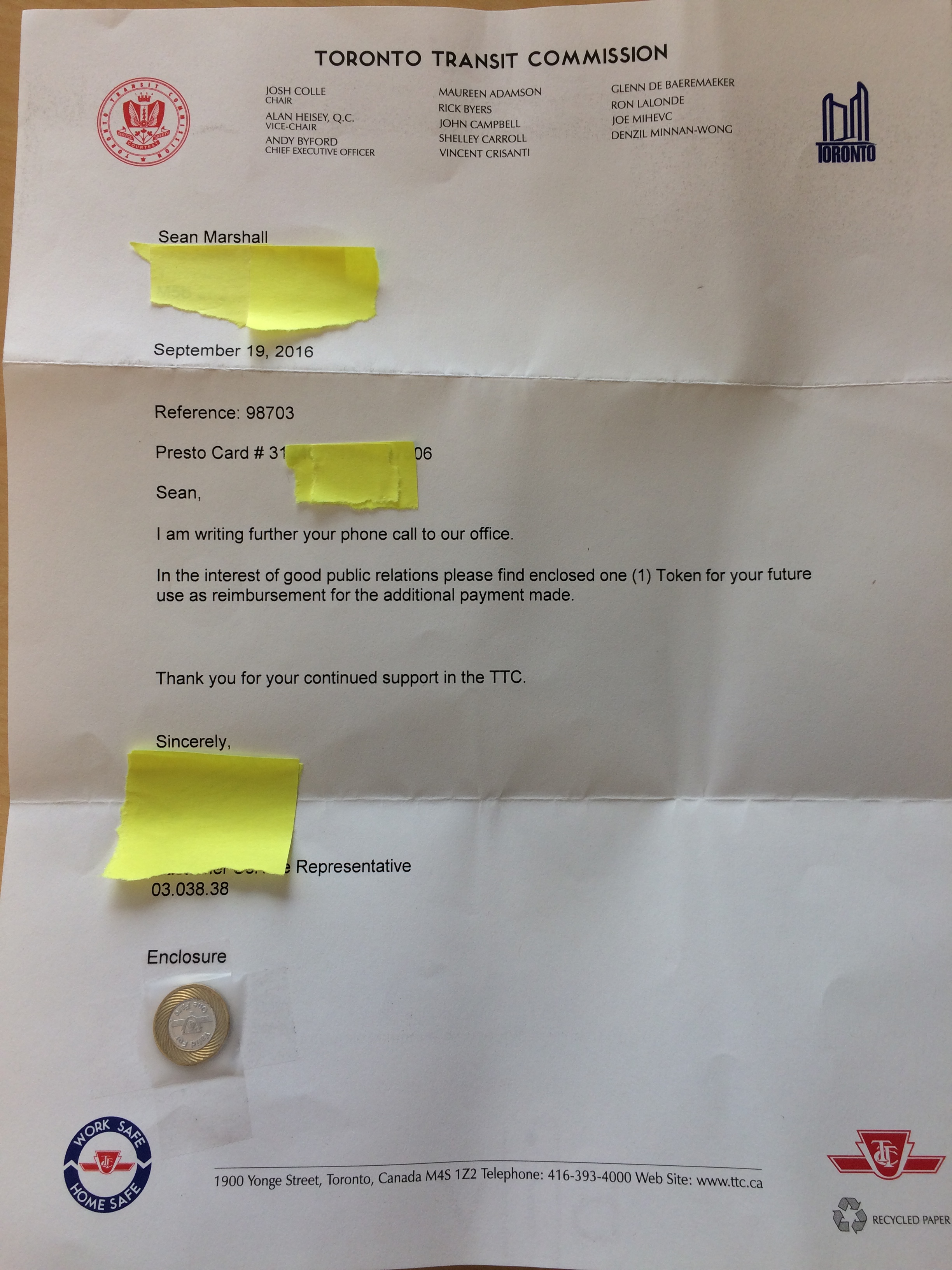
    Luckily, I checked my transaction history on Monday, where I caught the error. I immediately went on Twitter to complain. The TTC Helps account told me me to give TTC customer service a call, and they apologized (though reminding me that I should always get a paper transfer when paying with Presto), and promised to mail me a token to compensate. I got the token in the mail five days later, “in the interest of good public relations.” Mailing a token out is one way to refund an improper charge, but it’s not efficient.

    I will say that the TTC customer service staff are great people who sometimes deal with unreasonable customers. The agent I spoke with was very understanding and agreed with some of the specific issues that frustrated me that day.

    image1-1

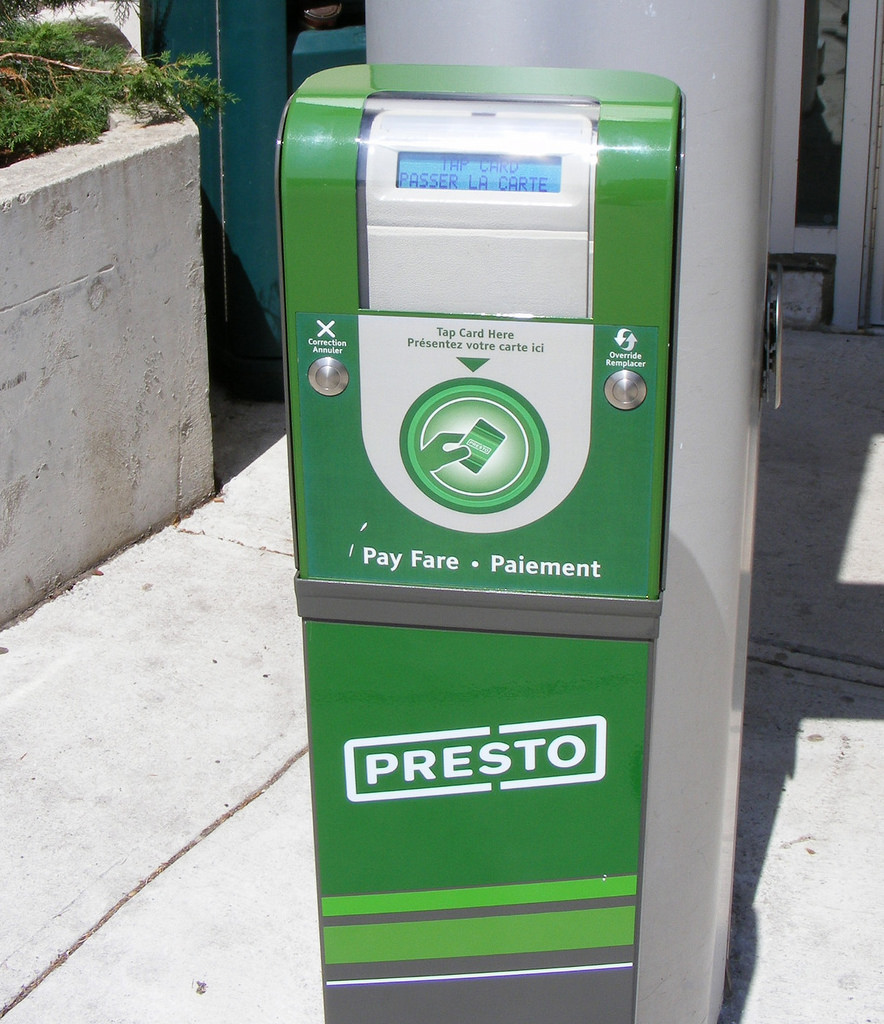
    Had I not checked my balance, and not immediately complained, I would not have received this refund. How many customers, acting in good faith, get double-charged using their Presto Cards and don’t even know it? The TTC’s Presto fare machines don’t provide fare balance or transaction data, unlike those used by GO or suburban transit operators (see photo below).

    4902983182_d89c675230_b.jpgGO Transit Presto fare machine, which displays card balance and time left to complete ride/transfer
    Even when Presto is fully rolled out, the TTC’s transfer rules are unclear and they are prone to unfair double-charges for completely reasonable one-way continuous trips.

    Last year, I warned about the troubles that could result in forcing Presto on top of the TTC’s archaic transfer system: “if a passenger taps onto another vehicle on the same route, which is quite a common occurrence due to delays, short-turns, and diversions/shuttles, the Presto Card will deduct a second fare.”

    As I mentioned before, the TTC already considered time-based transfers in 2014 as it planned for the transition to Presto for fare collection. At the time, the Commission estimated that it would cost $20 million in annual revenue, as some passengers would take advantage of making stopovers en route or quick return trips on one fare. Another excuse I heard is that the TTC is waiting for Metrolinx to finalize its regional fare integration strategy.

    But a modern transfer policy would bring the TTC in line with other transit agencies in the Greater Toronto and Hamilton Area, would make the Presto Card much easier to use, and would buy a lot of goodwill, especially if it was introduced to coincide with a fare increase. It’s also worth noting that when the TTC eliminates transfers, tickets, and passes, its customers will be required to pay $6 for a new Presto Card. It’s only right to incentivize its loyal customers to make the switch.

    I’m happy to get a token refund and acknowledgment of my predicament. But I had to notice the charge and complain, and tokens will soon be phased out. A better solution is needed.

  • Why the Gardiner Expressway remains a barrier to the waterfront

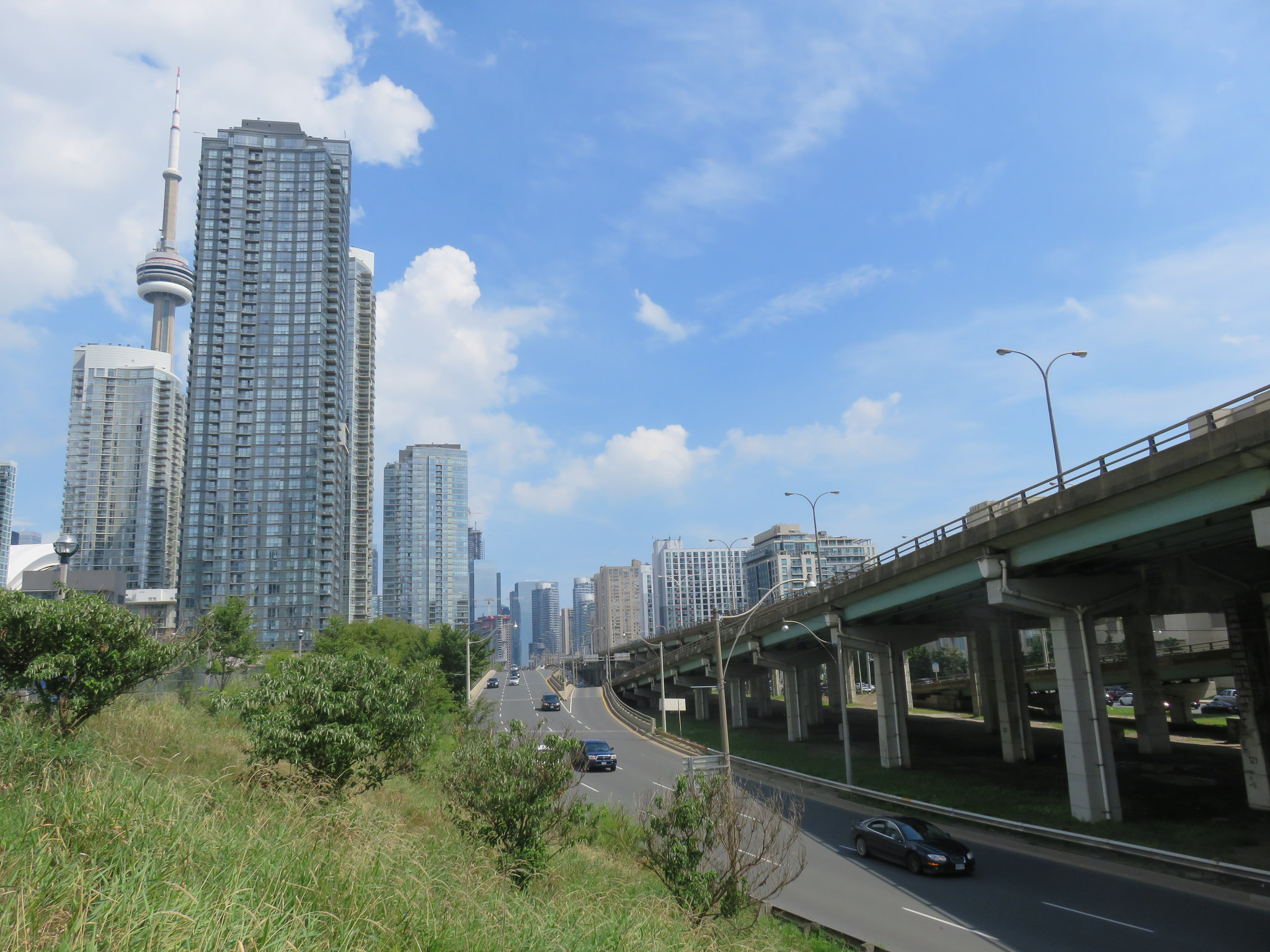
    29295828846_d05ad61318_kThe Gardiner Expressway isn’t so much a barrier to the waterfront because it’s a looming, elevated eyesore: the railway viaduct isn’t pretty to look at either. It’s a barrier to the waterfront because the roadways around the Gardiner: the on ramps, dual left turn lanes, channelized right turns, and the ground-level Lake Shore Boulevard below it, are hostile to pedestrians. Pedestrians are expected to  yield to cars and trucks at many points; there are many missing crosswalks, and where pedestrians can cross, they must wait for long waits to do so as traffic light cycles prioritize through vehicles.
    In the 1950s, when the Gardiner was planned, the waterfront was a mess of railway spur lines, warehouses, and grain silos. Downtown was several blocks north, on the other side of passenger rail yards and Union Station. So it was not the type of place — nor the era — where creating pedrestrian-friendly enviroments was deemed important.  But since then, the rail yards were redeveloped, the waterfront got new parks, cultural spaces, residents, and shops. The Gardiner Expressway hasn’t kept up.

    https://twitter.com/Sean_YYZ/status/769965846903095297

    At Spadina and Lake Shore, it took me 8 1/2 minutes to legally cross at Spadina and Lake Shore (and I’m a healthy, younger, able-bodied adult without parcels or a rolling a stroller). As pedestrians are banned from crossing east-west on the north side of the intersection, and north-south on the west side, I had to return to the corner of Spadina and Bremner/Fort York and walk on the other side. And even that was an unnecessary ordeal.

    The local councillor, Joe Cressy (Ward 20) is on it, and is working on solutions for next year. The Bentway Park will be a good addition as well (even if I haven’t warmed to the name.) But it’s a shame that as a city has grown around this area, the Gardiner remains so difficult to get around on foot.

    Read more in my latest article in Torontoist. 


  • A ride from Caledon to Guelph via the Elora-Cataract Trailway

    IMG_5393-001

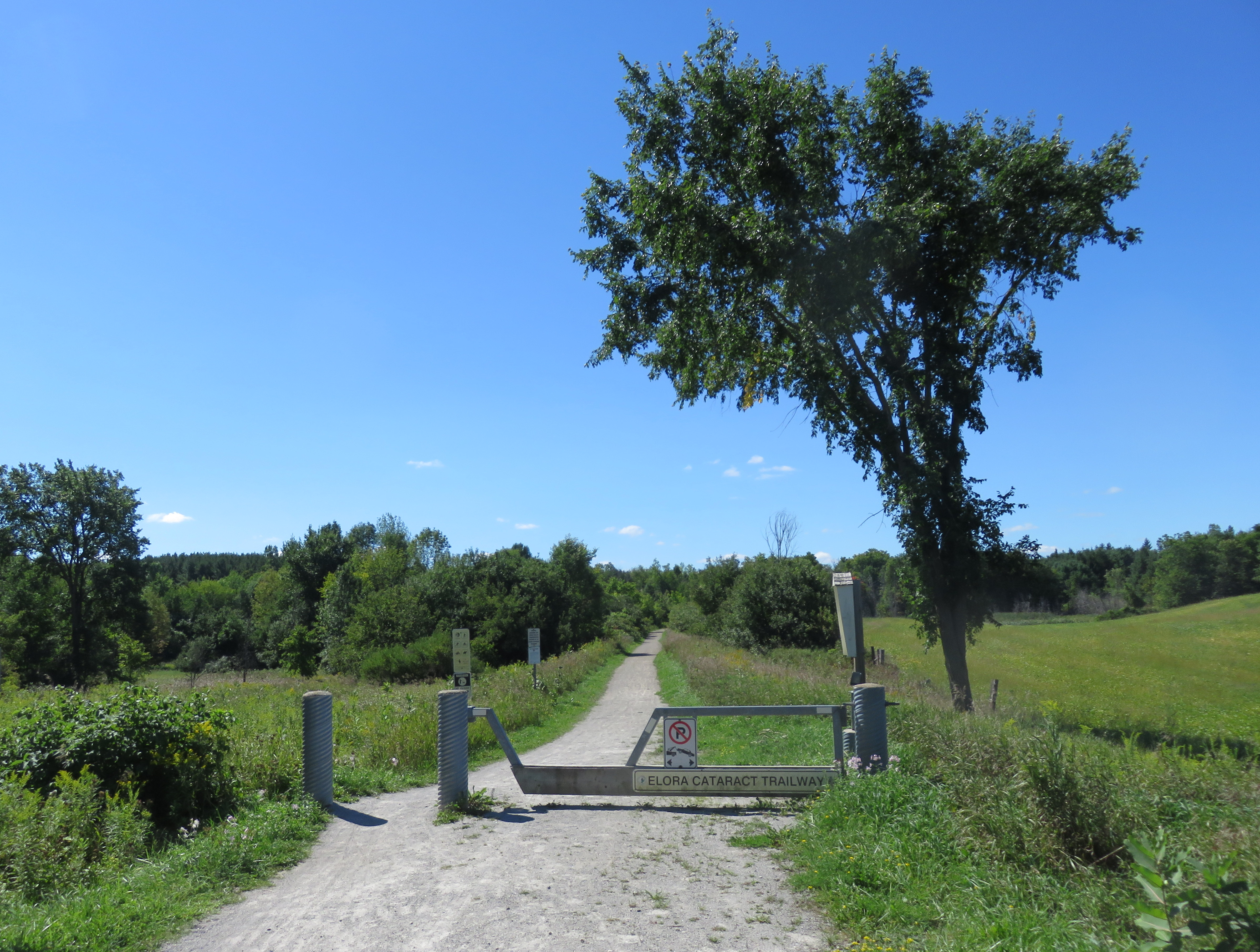
    On Friday, September 2, I went for an 80 kilometre ride between Caledon and Guelph on what turned out to be a spectacular day: sunny, a high of 23 Celsius and without too much humidity. The summer of 2016 has been exceptionally hot and muggy for long-distance rides, so I’ve done fewer of them. I was lucky to have that Friday off.

    I started my trip in Caledon Village, after taking a GO train to Brampton and transferring to GO Transit’s Route 37 Orangeville bus, which only runs on weekdays. This made the trip very difficult to do on a weekend (I would have to ride 20 kilometres up from Brampton, on busy roads, and up the Niagara Escarpment, otherwise). The racks at the front of GO buses are wonderful for getting out of town (I used GO’s bike racks on similar rides this year), but they tie you to a schedule.

    Map of my ride

    The Elora-Cataract Trailway, owned and managed by Credit Valley Conservation (Cataract to Hillsburgh), and the Grand River Conservation Authority (Hillsburgh to Elora) is one of the best rail trails that I have ever rode. The surface was in near perfect condition along the entire stretch. Wayfinding, including through a gap at Fergus, was great. Barriers at crossings keep motor vehicles out, but are not too difficult to get around for cyclists. And it’s easy enough to get to and from Guelph. But it’s not so easy to get to from Brampton/Caledon.

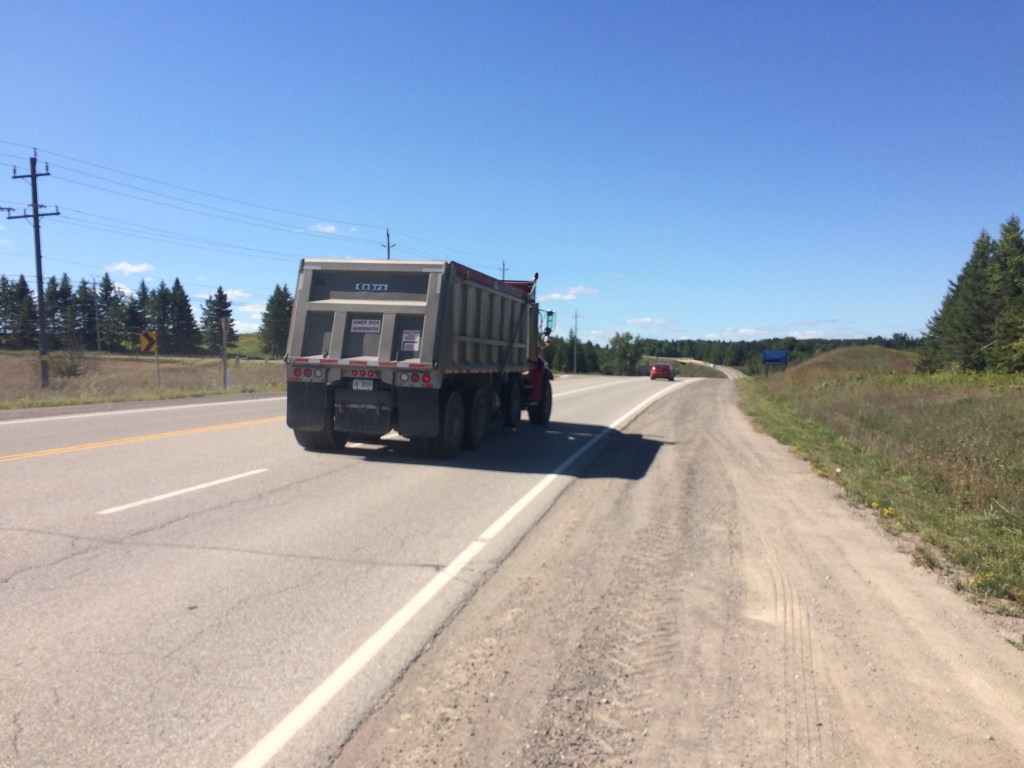
    After getting off the Route 37 bus in Caledon Village, and after a quick stop there for refreshments, I rode west along Charleston Sideroad for four kilometres to Cataract Road, the only possible route without very lengthy and hilly detours.. That was the most aggravating and dangerous bike ride in a very long time. There’s no paved shoulder, so I rode on the white line demarcating the far right side of the lane. There are several quarries nearby, and Charleston Sideroad was once known as Highway 24. There were many quarry trucks and other large vehicles, most who refused to provide the mandatory 1-metre space that the Highway Traffic Act now mandates. One quarry truck driver blared his multiple times at me, angry and unwilling to share the road.

    image1Westbound on Charleston Sideroad

    The dirt shoulder, filled with large stones and debris, is not suitable for cycling. The Region of Peel, responsible for this road, should pave the shoulders as soon as possible. Improved connections to Brampton and the Caledon Trailway should also be identified and built. But once off Charleston Sideroad, the ride quickly became one of my favourites.  (more…)

  • The controversial Judson Street zoning change

    IMG_3781-001

    Earlier this year, Etobicoke Councillor Justin Di Ciano (Ward 5) pushed for a zoning change to several industrial properties on Judson Street, adjacent to GO Transit’s Willowbrook Yards. Local residents had enough with a concrete batching operation and Dunpar Homes applied to build a townhouse development on the site.

    City staff recommended against the rezoning, which would allow townhouses to go up on land previously zoned as industrial. Metrolinx, GO Transit’s parent organization, also spoke out against the re-zoning, warning that it could impact its expansion plans, including GO RER/SmartTrack. But Councillor Di Ciano, Mayor John Tory, and most of the mayor’s allies voted against those concerns and supported the redevelopment.

    Now Metrolinx is appealing the council decision to the Ontario Municipal Board, and the City will be forced to hire external expert advice, as it went against its staff recommendations.

    You can read the Torontoist post here, where I explain the situation in more detail.


  • The subway is coming. Let’s improve Scarborough Centre

    As the readers of my blog probably know, I am not a fan of the Scarborough Subway extension. Even though the subway will be expensive and less useful than a fully-funded light rail replacement of the ageing Scarborough RT, politicians from all three major parties have backed the subway, promising “respect” and “fairness” for Scarborough.

    Neethan Shan, the New Democratic Party’s candidate in Thursday’s provincial by-election in Scarborough-Rouge River, has been pushing this messaging hard, though all three candidates — including City Councillor Raymond Cho, running for the Progressive Conservatives — are all in favour of the extension. That conveniently ignores the fact that the subway won’t even stop in Scarborough-Rouge River — though the LRT would have.

    But it’s now time to move on. Scarborough is going to get a six kilometre long, one-stop subway extension, which was confirmed by a vote at city council in July. The focus should now be on getting the best value out of the $3.2 billion project. That must include improving Scarborough Centre.

    The subway extension is currently in the environmental assessment/detailed design stage. I expect that construction will actually begin probably just before the next provincial election is called in 2018. It won’t open for another four to five years after that, in 2022 or 2023. That is plenty of time to make some necessary changes to the street grid, the built form, and the public realm.

    A few weeks ago (during a rare summer rain storm), I explored Scarborough Centre. With too many surface parking lots and a hostile road network, there’s a lot of work that has to be done to make the improve this suburban hub. Employment and residential growth is currently stagnant; that has to be addressed. All that said, there are also a lot of great community assets already in place, and there are some opportunities to make it better.

    (more…)

  • A ride from Peterborough to Uxbridge (Day 2)

    IMG_4092-001Looking west on Doube’s Trestle, between Peterborough and Omemee

    After riding the Lang-Hastings trail on Sunday July 30, I cycled from Peterborough to Uxbridge on Monday, August 1, stopping at Trent University. This is one of my favourite rides in Ontario, having done this route twice before. But this was the first time I rode west towards Uxbridge, rather than east to Peterborough.

    In total, I rode 99 kilometres that day, and given the heat (and the lack of shade), I ended up ending up a little bit dehydrated — and quite tired — at the end of the trip. There are no places to rest or buy snacks or beverages between Lindsay and Uxbridge, so it’s best to plan ahead. Bring lots of water; Lindsay is an excellent place to take a break and have a light meal. At Uxbridge, I had dinner at a local pub before loading my bike on a GO Transit bus back to Toronto.

    There are a number of great rail trails in Southern Ontario, but except in the Lindsay-Peterborough and  Kitchener-Brantford-Hamilton regions, rail trails in Ontario, where they exist, are usually disconnected from each other and difficult to access from Toronto without a car. It makes me long for Québec s Route Verte network of trails and cyclist-friendly roadways.

    (more…)

  • A ride between Peterborough and Hastings (Day 1)

    IMG_4015-001The Trans-Canada Trail crosses the Otonabee River near downtown Peterborough, next to the Canadian Pacific Railway

    During the Civic Holiday long weekend, I spent two days cycling around Peterborough and two of the rail trails that radiate out of it. Peterborough is one of my favourite places to cycle; it is my third time there on two wheels.

    On Sunday July 31, I started by taking the GO Lakeshore East Train, then transferring to the 88 Peterborough GO bus. Every GO bus is equipped with a rack that can accommodate two bicycles, and all non-peak GO trains can take two or four bicycles per coach (there are special bike coaches as well on the Niagara summer weekend service). After getting off the bus in Downtown Peterborough, and getting coffee at one of that city’s many downtown cafes, I biked out to Hastings, on the Lang-Hastings Trail, returning via (mostly) the same route, a 40 kilometre one-way trip.

    I stayed overnight in Downtown Peterborough and biked to Uxbridge via Lindsay the following day (more on that in a subsequent post), making a diversion via Trent University. That one-way trip was almost 100 kilometres in length. At Uxbridge, I had dinner and took a GO bus back to Toronto.

    (more…)

  • Mapping the Ward 2 by-election

    Ward 2 By-election
    Poll results of the 2016 council race in Ward 2

    On Monday, July 25, residents of Ward 2 (Etobicoke North) went to the polls to elect a new councillor to replace the late Rob Ford, who was elected as councillor in the 2014 general election after a disastrous four years as mayor.

    After Rob Ford’s death in March 2016, it was widely expected that the Ford family would field a candidate; it would either be former Ward 2 councillor Doug Ford or Rob and Doug’s nephew Michael Ford (née Stirpe).

    Michael Ford, then 20 years old, ran for councillor in the 2014 general election. He withdrew in September 2014 to run for the local Toronto District School Board trustee position, so that Rob Ford could run for councillor instead, abandoning his bid for re-election as Mayor of Toronto due to his poor health. Doug Ford, who originally wasn’t going to run again for municipal office, ran for mayor in Rob’s place, coming in a strong second to John Tory. I mapped those results in a previous post. 

    Right away, Michael Ford was the clear favourite to win the by-election. The Ford name is famous in north Etobicoke; Doug Ford Senior was a Progressive Conservative MPP from 1995 to 1999; Rob Ford represented Ward 2 from 2000 through 2010 before running for mayor, and winning against George Smitherman. But Michael Ford, only 22, claimed to be his own person; his brief tenure on the TDSB board has been without the buffoonery or intolerance that Rob and Doug exhibited; Michael attended the 2016 Pride Parade in 2016, something the other Fords made a point of avoiding. But Michael Ford campaigned on a platform of “customer service” — the same philosophy that made Rob Ford popular in his ward.

    There were eleven candidates running against Michael Ford. They included:

    • Entrepreneur Justin Canning, a right-of-centre candidate who made a point of saying that Michael isn’t like Rob and Doug Ford when quoted in the Toronto Star;
    • Christopher Strain, a New Democrat who managed Russ Ford’s campaign for councillor in Ward 6 in the 2014 election;
    • Chloe-Marie Brown, a volunteer and City Hall intern who sought to represent her community and bring attention to the needs of lower income residents of North Etobicoke.

    Voter turnout was low, as they often are for municipal by-elections. Only 9391 residents voted in 2016, less than half the 19,793 votes for councillor that were cast in 2014. And to no one’s surprise, Michael Ford won, with 70.0%of the vote. Justin Canning came in a very distant second, with 20.4%, Chris Strain had only 3.8% of the vote, Chloe-Marie Brown only got 1.6%.

    Michael Ford came in first place in all by two polls by wide margins, as shown in the map above. Only two polls, 020 and 024, chose Justin Canning. Poll 020 represents two condo towers on Islington Avenue at Dixon Road, while Poll 024 represents a seniors’ residence on Lawrence Avenue. Both polls voted for Rob Ford for council in 2014, but for John Tory for mayor over Doug Ford.

    Even though I am willing to give Michael Ford a chance to prove himself as city councillor (and we will see how different he truly is from his uncles), the low voter turnout and the inevitability of Ford’s win still troubles me. Perhaps the low turnout was partly due to the assumption that Ford would win this by-election; holding it in the middle of summer wouldn’t have helped either. But there was a solid choice of alternative, qualified candidates that deserved voters’ consideration. Ward 2 deserved a real contest, not another coronation.

  • That video

    With the charges against Sandro Lisi dropped, the publication ban on his case — including evidence presented at pre-trial court proceedings — was lifted. If you recall, Lisi was a friend and the driver for former mayor Rob Ford. Lisi was charged with alleged extortion, trying to get a infamous — yet almost completely unseen — video captured on a cellphone that showed Ford smoking crack and spewing obscenities at the Basso residence in Etobicoke.

    That video — the subject of an explosive story published in May 2013 by the Toronto Star and Gawker — was finally made public. You can watch it, if you like, on the Star’s website. But I’m not suggesting that you should.

    Yes, I watched it, but I almost wish I didn’t. I ended up feeling nothing but sadness. Sad for Rob Ford’s immediate family, and sad for Rob Ford. I can not stop thinking about all the people Ford hurt over the years, including himself. That sadness then turned to anger and contempt when I started to think about Ford’s enablers. And there were plenty of them.