Author: Sean Marshall

  • Mapping Toronto’s proposed new ward boundaries

    18506683800_6c96dcc66b_k

    Toronto is way overdue for ward boundary reform. Finally, in time for the 2018 election, Toronto will have reshaped ward boundaries — and probably three new wards. This will give quickly-growing Downtown Toronto and North York Centre more representation at City Council.

    Consultants retained by the City of Toronto have been tasked with reviewing the size and shape of Toronto’s wards, and providing a recommendation for new ward boundaries. Back in August 2015, an options report was released with five distinct options. After further consultation, the final report was released yesterday, May 16.

    The final report’s recommendation is similar to the “Minimal Change” option in last August’s options report, but there have been some minor tweaks to the ward boundaries. If the recommendations are approved by City Council, there will be 47 wards, up from 44. Each new ward will have an average population of 61,000, with a range between 51,800 and 72,000 (+/- 15%). These new wards are designed to last for four election cycles, and will be re-drawn again in time for the 2034 election.

    The report will be considered by the Executive Committee on May 24, 2016, which will vote on a recommendation to take to City Council on June 7, 2016. If there are no further hiccups, this gives just over two years for aspiring council candidates and city staff to prepare for the next election, which will be held on Monday, October 22, 2018.

    The recommendation brought forward is a compromise that improves representation in high-growth areas, while minimizing the loss of council representation elsewhere. It increases the number of councillors, but by a minimal amount. (Had Toronto maintained the practice of having two wards per provincial/federal riding, there would be 50 councillors.) Happily, proposals to cut the number of representatives at City Council were not a very popular idea. In terms of staffing and associated costs, each councillor costs approximately $290,000; it would therefore cost about $870,000 to add three new wards, which in my opinion, is a bargain.

    While Downtown Toronto will gain three new seats, and North York gaining one, one seat is lost in Toronto’s west end, in current wards 14, 17, 18. This probably squeezes out Cesar Palacio, a rather poor city councillor who remains in office despite strong competition in the last few elections. Otherwise, despite ward boundary shifts across most of the city, every incumbent councillor should easily find a home that’s mostly made up of their current turf.

    I created the CartoDB interactive map, linked below, for Torontoist; my full article is available there.

    I mapped the results of the 2014 election for every ward in the city — that was the primary reason why I started this blog in November 2014. That previous work should be helpful for predicting the results of the 2018 election with the new boundaries.

    https://seanmarshall1.cartodb.com/viz/5c5c1540-1b21-11e6-8cfa-0ecd1babdde5/map


  • On Toronto’s newest ten-year cycling plan

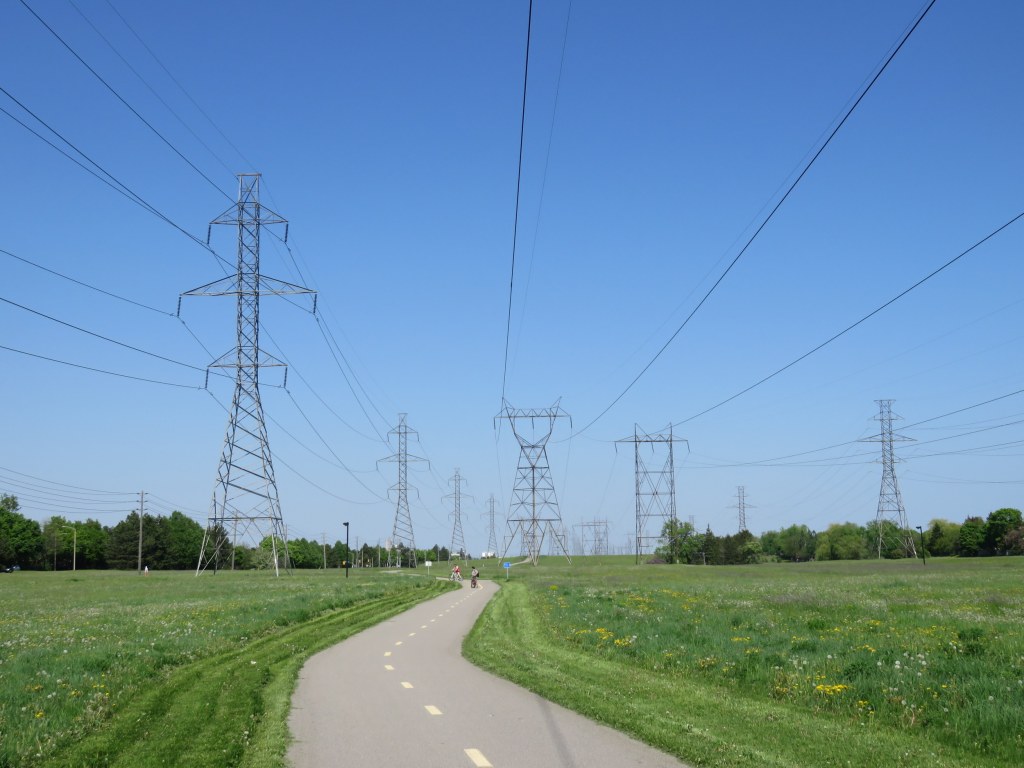
    The newly completed Finch Hydro Corridor
    The Finch Hydro Corridor

    The City of Toronto has released a new proposed Ten Year Cycling Network Plan, which establishes a minimum grid of cycling infrastructure across the entire city. It will be presented to the Public Works and Infrastructure Committee next week; city staff, who have worked long and hard on this project, consulting many stakeholders and members of the public, recommend its adoption by City Council. It will create over 500 kilometres of safer cycling routes, while connecting existing bike lanes and trails to each other. The plan would cost just over $150 million over ten years, a bargain.

    Of course, we’ve been down this road before. Only a fraction of the cycling infrastructure approved in previous plans has been built. And many new trails that were built — following hydro corridors and abandoned railways in suburban parts of the city — don’t connect to nearby ravines and parks. And railways and highways remain major barriers; there are only three places where the city’s designated cycling network crosses Highway 401.

    Last week’s Council approval of the Bloor Street bike lanes between Shaw Street and Avenue Road — a simple pilot project — didn’t look like a sure thing, even though it ended up voting 38-3 in favour.

    Deputy Mayor Denzil Minnan-Wong warned of “bike lane creep,” afraid that a safe bike route would extend to Danforth Avenue (which it should). And Councillor Stephen Holyday (Ward 3, Etobicoke Centre) ridiculously claimed cycling advocates were “trying to build a wall” around the downtown core, ignoring the fact that there’s a subway along the same corridor, which moves many times more people than two lanes of Bloor Street, and there are other options — such as the Gardiner Expressway, which we are needlessly committed to keeping up — for getting downtown with a car.

    Some of the highlights of the new plan:

    • Long distance cycling corridors, such as Bloor/Danforth from Etobicoke to Kingston Road in Scarborough, Kingston Road from the Beaches to West Hill, and Yonge Street from Downtown to Steeles Avenue.
    • New connections across railways, ravines and highways.
    • Extensions to popular off-road trails, such as the West Toronto Railpath.

    Highways are very dangerous for pedestrians and cyclists to cross: high-speed ramps are marked with signs telling pedestrians to wait for gaps. Cyclists must navigate cars quickly changing lanes and exiting freeways. And railways can create long, impenetrable barriers unless pedestrians trespass on railway property. I wrote about it at more length in Spacing.

    The worst example might be where Bridgeland Road ends on one side of the Metrolinx-owned Newmarket Subdivision (GO Transit’s Barrie Line) and Floral Parkway ends on the other side. Highway 401 conspires to make this an exceptionally bad case. Happily, this is one of the places where the city seeks to build a new bridge or tunnel to allow cyclists and pedestrians to cross safely, and I am glad to see other gaps addressed in this latest plan.


    An example of how railways and highways create barriers to active transporation

    There are four large maps (large PDF files) that show the existing cycling network and the proposed new routes. They correspond to the four community council boundaries.

    Toronto and East York
    North York
    Etobicoke-York
    Scarborough

    It’s not only important that City Council approve this new plan, it’s also crucial that proponents of active transportation keep on top of the city to actually build the new cycling infrastructure and multi-use paths and bridges. We’ve seen this play out before: council approves a great plan for cycling, for transit, for urban development, and then rests on its laurels. Let’s do better this time around.

  • The TTC’s disappearing parking lots: why this isn’t a bad thing

    IMG_6376New office development at the TTC York Mills Station parking lot

    I’ve written several times on my blog about GO Transit’s problems with free parking. The Toronto Transit Commission (TTC) also operates many parking lots — 11,000 parking spots located at 13 of its 69 subway and RT stations — but has declared many of its lots surplus to its needs. Right now, the City of Toronto’s real estate arm, Build Toronto, is in the process of selling or leasing TTC lots for residential and commercial redevelopment. The TTC, unlike GO Transit, charges for parking at all lots, and it isn’t in a hurry to build more. For the TTC, redeveloping parking lots raise money (which, in the TTC’s case, goes to the city) while they generate additional ridership.

    There’s a difference between TTC subway stations and GO Transit stations, to be sure. The TTC relies mostly on buses and streetcars, as well as walk-up traffic, to feed its rail system, while GO Transit relies mostly on suburban commuters driving to its stations. They are different models. But in urban areas like Downtown Brampton, I believe GO Transit should be much more innovative than deciding to rip down a city block to build yet another “free” surface parking lot.

    GO Transit should rethink their model, encouraging more walk-up and local transit connections as it transforms into a regional rail system. Redeveloping some of its lots is a good way to go; commuter parking garages can easily be integrated into new urban uses and make their stations more attractive places to walk and cycle.

    I have more to say about the TTC’s parking lot crunch over at Torontoist.

  • Cuba’s Hershey Train: the last interurban railway

    IMG_1305-001

    Last week, my partner-in-crime and I escaped to Cuba for a short vacation. Eschewing the all-inclusive resorts at Varadero, we decided to spend our time in Havana instead.

    Havana is a fascinating place that’s worth exploring beyond the popular spots such as the picturesque Old City, Revolution Square, and the Cristóbal Colón Cemetery; like any great city, it is best explored by foot.

    One of our highlights was getting an impromptu tour of the José Martí National Library of Cuba in Havana. The library, named for the Cuban national hero, is adjacent to Plaza de la Revolución. The Plaza also holds the seat of the Communist Government and is famous for the towering monument of Martí and the metal mural of Che Guevara.

    We met a wonderful guide, who with great pride described the library’s programs, but also the effects of the 55-year American embargo on obtaining educational materials, up-to-date computers and access to the Internet and other digital resources. We were fortunate for experiences like that, where we met interesting people and learned a bit more about the country. These were experiences that tourists staying at beachside resorts, perhaps visiting Havana on a bus tour or to see a cabaret show, sadly miss.

    But, being on vacation, we made sure to spend some time to relax and enjoy the hot — yet pleasantly non-humid — weather. So we decided to go to the beach for our last full day in Cuba. But instead of taking the tourist buses, we decided to hop on the Hershey Train, probably the last true interurban railway in the Americas.

    Interurban railways once existed all over Canada and the United States. Electrically-powered trains linked towns and cities together, providing passenger and local freight services and filling a niche between urban streetcars and long-distance steam railways. Improved roads, and increased car and truck ownership resulted in the closure of just about every interurban railway in North America, the last to close in Canada was the Niagara, St. Catharines and Toronto Railway in 1959. A few remnants of North America’s interurban lines survive as modernized commuter services, such as the South Shore Line between Chicago and South Bend, Indiana. But Cuba’s Hershey Train still looks, and operates, like the electric railways that once crisscrossed much of southwestern Ontario and the eastern United States.

    (more…)

  • Missed opportunities on the Mississauga Transitway

    IMG_0343-001Route 107 Malton Express bus on the Mississauga Transitway at Tomken Station

    After riding the UP Express back in March, the inspiration for a post on a proposed transit hub at Toronto Pearson International Airport, I went for a ride on the Mississauga Transitway.

    I first rode the Mississauga Transitway on a snowy Monday, November 17, 2014, the day it opened. At the time, only four stations were opened — Central Parkway, Cawthra, Tomken, and Dixie. On my first visit, I was unimpressed. But I decided to give it another try after the two new stations opened, on a Saturday, when I had plenty of time to check out the service, the new stations, and the environs.

    I have many thoughts and criticisms about this new piece of transit infrastructure, which will cost the City of Mississauga and Metrolinx a combined $528 million.

    mississauga_transitway_map_en-670x340Map of Mississauga Transitway, taken from the GO Transit website

    What is the Mississauga Transitway?

    The Mississauga Transitway is a bus rapid transit (BRT) project. BRT is a term used in the transit industry to describe everything from limited-stop conventional buses, perhaps with some perks like all-door boarding and queue-jump lanes sometimes called BRT-lite (Brampton Zum is a good example), to fully grade-separated, high speed bus corridors that operate like metro lines (the Ottawa Transitway and Bogota’s TransMillenio system are good examples). Other busways in Canada include the Ottawa Transitway, to be partially replaced by light rail transit, the Gatineau Rapibus corridor, York Region’s Viva Rapidways, and Winnipeg’s RT corridor.

    The Mississauga Transitway is a true BRT system, but it has several major weaknesses.

    (more…)

  • GO Transit and the high cost of “free” parking, Part II: Brampton Boogaloo

    IMG_0610-001

    GO and VIA Trains meet at Brampton Station

    September 20, 2016 update: Metrolinx has begun the process of demolishing its newly-acquired Downtown Brampton properties. It has applied for a demolition permit for 28A and 28B Nelson Street West, two semi-detached dwellings that were built in 2001. In the  City of Brampton, demolition permits for residential properties must be approved by the Planning & Infrastructure Services Committee. The permit will likely be approved at the September 26, 2016 meeting of that committee.


    On April 5, 2016, Peter Criscione at the Brampton Guardian reported on a matter that arose during the regular meeting of the City of Brampton Planning & Infrastructure Services Committee on April 4. Metrolinx, the regional transit authority that operates GO Transit and UP Express, confirmed the purchase of 1.78 acres in Downtown Brampton, land that will be used for surface parking.

    Brampton Station, served by GO Transit and VIA trains, is located in Downtown Brampton, and is adjacent to Brampton Transit’s downtown transit terminal. With local shopping, restaurants, residential areas and employment, it is one of the most walkable stations in GO Transit’s system; it has a Walk Score of 90. (Bramalea GO Station, in comparison, has a Walk Score of 22.) The options of getting to Brampton Station without a car are quite good, at least as far as most GO stations go.

    But Brampton Station’s two lots are full, and there are planned service improvements to Brampton, including eventual hourly evening and weekend rail service. Not everyone can be expected to take transit, walk, or get a ride to the station. But I find this land assembly troubling.

    According to Criscione, and noted in the minutes of the April 4 meeting [page 25-26], the properties purchased by Metrolinx include:

    • 20 Nelson Street West
    • 37 George Street North
    • 41 George Street North
    • 26 Nelson Street West
    • 3 Railroad Street (includes 3 separate parcels)
    • 28A Nelson Street West
    • 28B Nelson Street West
    • 30 Nelson Street West
    • 42 Elizabeth Street North

    The planning committee asked staff to contact Metrolinx and report on the status of its recent and pending purchases of downtown lands. It also invited Metrolinx to work with city staff and officials, as well as present their plans at a future meeting.

    The purchase of downtown lands for a parking lot is troubling, in my opinion. Downtown Brampton is a designated “anchor hub” — a major mobility hub where two or more rapid transit lines meet where transit-oriented development and intensification is encouraged. At no point do I see new surface parking lots are part of this vision, especially if buildings must be vacated and demolished to do so. And Downtown Brampton, not yet experiencing a building boom, has plenty of parking lots and garages that could be employed instead.

    The embedded Google Map below shows where these properties are located, immediately south of Brampton Station, and west of the Brampton Transit downtown terminal.


    On Friday, April 8, I visited Downtown Brampton to have a look at the properties in question.

    (more…)

  • Mapping Major League Baseball’s stadiums by walkablity, transit access

    22078160783_012aad4fb6_k

    What major league ballpark is the easiest to get to by public transit? Which stadium has the highest walk score? And where does the phrase “take me out to the ball game” absolutely require getting in a car and fighting traffic to do so?

    Over at Torontoist, I explore these questions in more detail. I created a map of all thirty major league stadiums (and the 2017 home of the Atlanta Braves). About half the stadiums are located in downtown areas or urban neighbourhoods, close to transit stations, bars, restaurants, and shopping; the other half are generally surrounded by parking lots.

    SkyDome isn’t a great ballpark, especially when the dome is closed, but in these rankings, it does really well.

  • The many challenges of creating a transit hub at Pearson Airport

    7afe7e75-d368-4472-b208-ab02c57457aa-001
    Sign in Terminal 1 at Pearson Airport. Whether we realize it or not, Pearson Airport is already a transit hub. 

    Updated April 7, 2016

    Lester B. Pearson International Airport is Canada’s busiest airport, handling 41 million passengers a year. It is not the busiest transportation hub in the Greater Toronto Area, though; Union Station is considerably busier (GO Transit alone handles 64.4 million passengers a year at Canada’s busiest station).

    Pearson Airport is located almost entirely within the City of Mississauga, but the terminals are less than a kilometre away fromthe City of Toronto’s western boundary; due to the location of the airport terminals, most passengers reaching the airport by road, or transit pass through the City of Toronto to get to it.

    The Greater Toronto Airports Authority (GTAA), the not-for-profit agency that operates Canada’s busiest airport, has expressed interest in creating a transit hub and guiding transit-oriented development around it. It’s an interesting idea, and some of the facts are compelling.

    There are approximately 300,000 jobs located at and near Pearson Airport. The airport itself hosts 40,000 employees that work for the airport authority and its contractors and tenants, including retailers, airlines, and allied services. The remaining 250,000 jobs are located in office parks and industrial areas that surround the airport, in the cities of Toronto, Mississauga, and Brampton, a very large area that extends north into Bramalea, west of Hurontario Street and south to Highway 403.

    You can read the GTAA’s report, written by the prestigious planning firm Urban Strategies Inc., and named Pearson Connects: A Multi-Modal Platform for Prosperity online as a PDF. The report claims that Pearson Airport and environs has more jobs, and more economic clout than any Canadian downtown, with the exception of Downtown Toronto. To a degree, this is true. But the size of the Airport Employment Zone, as the GTAA defines it, is much larger in size than any downtown, even Toronto’s; the jobs are mostly dispersed in warehouses, factories, and suburban office buildings difficult to reach by transit.

    In fact, Pearson Airport and its surrounding area — all 25,600 hectares  (256 square kilometres) — has fewer than 25 employees per hectare, while Downtown Toronto, one-tenth the size, has nearly 200 employees per hectare (and a growing residential population as well). Igor Dragovic calculated these figures from a recent Neptis report. The low employment densities found in business parks and warehouse districts are only partly to blame; the airport itself, with five active runways and a large land buffer, contributes to this.


    The GTAA wants to build an “airport-related multi-modal hub” that would tie together existing and planned rapid transit services, including the Kitchener RER Service, LRTs on Eglinton and Finch Avenues, the Mississauga Transitway BRT and a proposed Derry Road transit corridor.  It cites airports in Amsterdam, Frankfurt, London, and Hong Kong as examples to emulate.

    GTAA ProposedThe GTAA’s proposal for a transit hub, taken from Page 7 of the report

    The report also neglects to recognize that Pearson Airport is already a major transit hub; the problems lie in integrating the existing and proposed transit services together. And for an area the size of the GTAA’s Airport Employment Zone, that’s a very tall order.

    (more…)

  • The future… never!

    IMG_6258-001

    High speed rail: it’s an idea that has been talked about in Canada since the 1960s. But sadly, in 2016, we’re still just talking about it.

    I’m a big fan of passenger rail. I’ve rode on most of VIA’s network, from coast to coast, as well as several long distance Amtrak lines in the United States, as well as trains in Britain, Continential Europe, and China. I enjoyed riding high speed rail (HSR) trains between London, Paris, and Amsterdam, but I also appreciate a leisurely cross-country ride. In Canada, the train isn’t very fast, nor is it very reliable, but it’s a comfortable, peaceful, and social way to travel. It’s still my favourite way to travel to Ottawa or Montreal.

    Passenger rail — excepting commuter services such as GO Transit — declined in this country in the last 40 years, in terms of ridership, speed, and reliability. There are thousands of kilometres of track in Canada that hosted passenger trains only a few decades ago that are now torn up, the land sold off or turned into rail trails. In 1989, there were five trains a day in each direction through Kitchener and Stratford. Today, there are just two.

    In 1976, a year before VIA Rail Canada was formally established, the fastest trains between Toronto and Montreal, (CN Trains 66 and 67, the famous Turbo,) were scheduled to take 4 hours and 10 minutes, stopping only at Guildwood and Dorval.

    Today, the fastest train between Canada’s two largest cities, Train 68 from Toronto, takes 4 hours and 42 minutes, if it’s running on time. (It didn’t on Wednesday, March 23, arriving 41 minutes late into Montreal.) And there are only six direct trains in each direction between the two cities.

    VIA Train 68 Status - March 23 2016
    Delays, despite longer scheduled travel times, are common on the Corridor

    While commuter rail services are expanding in Toronto and Montreal, passenger service has not. Since being formed in 1977, VIA Rail suffered through several major cutbacks in 1981 and 1990, and minor cuts in 2004 and 2012; but VIA held on despite the neglect – – or complete disdain — of both Liberal and Conservative governments. Ridership fell, not because people didn’t like riding trains, but because governments didn’t want to fund rail services, nor did freight railways like hosting them. Roads were seen as investment; passenger rail an expense.

    (more…)

  • On transit ridership in the GTHA

    Earlier this week, the Toronto Transit Commission (TTC) released its agenda for the next board meeting, to be held on March 23. Among the items to be discussed are updates on the delayed Line 1 subway extension to York University and Vaughan, plans for the Line 2 subway extension to Scarborough Centre, the new MiWay/GO Transit terminal at Kipling Station, the planned new 514 Cherry streetcar line and other Waterfront bus improvements, and a ridership update.

    As always, Steve Munro is on top of it all, and I encourage you to read his post.

    I wanted to make a few observations about ridership, especially in Toronto’s suburbs. Growth in the TTC’s ridership has slowed down in the last three years, from a 2.1% annual increase in 2013, to a much more modest 0.5% increase in 2015.

    Ridership figures are not detailed enough to know at what times of the day ridership is changing, nor on what routes. But ridership growth has fallen (or even declined) for other major Canadian transit systems, including Vancouver, Montreal, and Ottawa. There are many causes for changes to ridership — population and employment growth or decline, fare increases, service improvements or cuts, even the cost of gas, which has been declining in the last two years. Much of the employment growth within the City of Toronto has been in the downtown core, but so has the population growth due to new residential highrises. (I’m one of thousands who live and work in or near the downtown core — my TTC use is now mostly during the evenings and weekends as I mostly walk to work).

    Hopefully, the Commission and the city don’t use this short-term trend as  an excuse to hold back on needed service improvements or projects such as the Relief Line — for one thing, many buses, streetcars and subway trains are already overcapacity, and it is impossible to know whether slower ridership increases represent a long-term trend, or a short-term blip.

    There was one table in the TTC ridership update that caught my attention. The table, on page 5, shows the ridership for every Greater Toronto and Hamilton Area transit system (though excluding Milton Transit). I reproduced that table below.

    Ridership

    GTHA transit agency annual growth rates, 2013 to 2015. Adapted from TTC 2016 Ridership Update, page 5.

    While the TTC’s ridership growth has slowed, ridership in many suburban municipalities have either flatlined or declined. Only Mississauga and Brampton show consistent, positive growth over the last three years. MiWay, previously known as Mississauga Transit, hasn’t expanded transit operations that much in the last few years, but that city continues to enjoy modest employment growth and improved connections to the airport, Brampton Transit and the TTC. It is currently building a new bus rapid transit (BRT) line, the Mississauga Transitway (more on that in a later post), and city council is backing the Hurontario LRT line, which would largely replace bus service on its busiest corridor.

    Brampton’s growth has been, by far, the most impressive. That suburban municipality is growing thanks mostly due to new sprawling subdivisions, but since in the last decade, Brampton Transit has been introducing annual system improvements, including the Zum “BRT-lite” network of limited-stop bus routes. Brampton’s ridership is now almost that of the Hamilton Street Railway (HSR). Unlike Hamilton, Brampton doesn’t have two major post-secondary educational institutions, nor a dense urban core, though it serves Humber College, York University, and two secondary Sheridan College campuses in Brampton and Misssissauga.

    In Hamilton, ridership dropped by 1.8% in 2015. Most ridership in Hamilton is concentrated in the lower city, as well as a few trip generators in the suburbs, including Mohawk Collage on the Mountain, and Lime Ridge Mall. Many parts of the lower city have been hit hard by job losses in that city’s major industries, though new subdivisions (and, to a lesser extent, downtown gentrificaton) have contributed to modest population growth. Hamilton is going ahead with a provincially-funded east-west light rail line that will connect McMaster University, Downtown Hamilton, and the east end.

    Elsewhere, transit ridership growth has been quite disappointing. Burlington Transit saw a drastic 13.3% decline over the last three years, Durham Region, which I recently visited, saw a major decrease in 2015. However, there is lots of promise in its five-year service strategies, which will improve and simplify the agency’s route structure and provide enhanced service.

    2015 Ridership
    2015 ridership for GTHA transit agencies (Milton excluded). The TTC, with narly 75% of the region’s ridership total, dominates. GO Transit holds another 9%. 

    York Region Transit, serving a population of 1.2 million, has only 1 million annual riders more than Brampton, whose population is nearly half of York’s. And despite adding new subdivisions (and a few new residential towers), ridership declined in the last two years. As illustrated in the table below, YRT’s ridership per capita is less than half of Hamilton’s or Mississauga’s.

    YRT Ridership StatsComparing York Region Transit to other Canadian transit systems, 2013. From the VRT/Viva 5 year service plan, page 7. 

    It’s interesting that despite poor transit ridership (amid York Region Council-mandated service cuts and steep fare hikes) York Region, with senior government assistance, is spending $1.4 billion on dedicated median busways on Highway 7, Yonge Street and Davis Drive. York Region will get the Spadina subway extension in 2017, and it pines for an extension of the over-burdened Yonge Subway to Richmond Hill Centre.

    In York Region, there’s a troubling disconnect between spending money on capital projects and funding the services that will use the shiny new infrastructure, or feed ridership to it. Brampton has proven that growing service, not necessarily fancy infrastructure, will grow ridership. That said, it remains disappointing that the suburban municipality with the best record for ridership growth in the Toronto region rejected a funded light rail transit line to its downtown core.