Category: Walking

  • A week of social distancing in Toronto

    A week of social distancing in Toronto

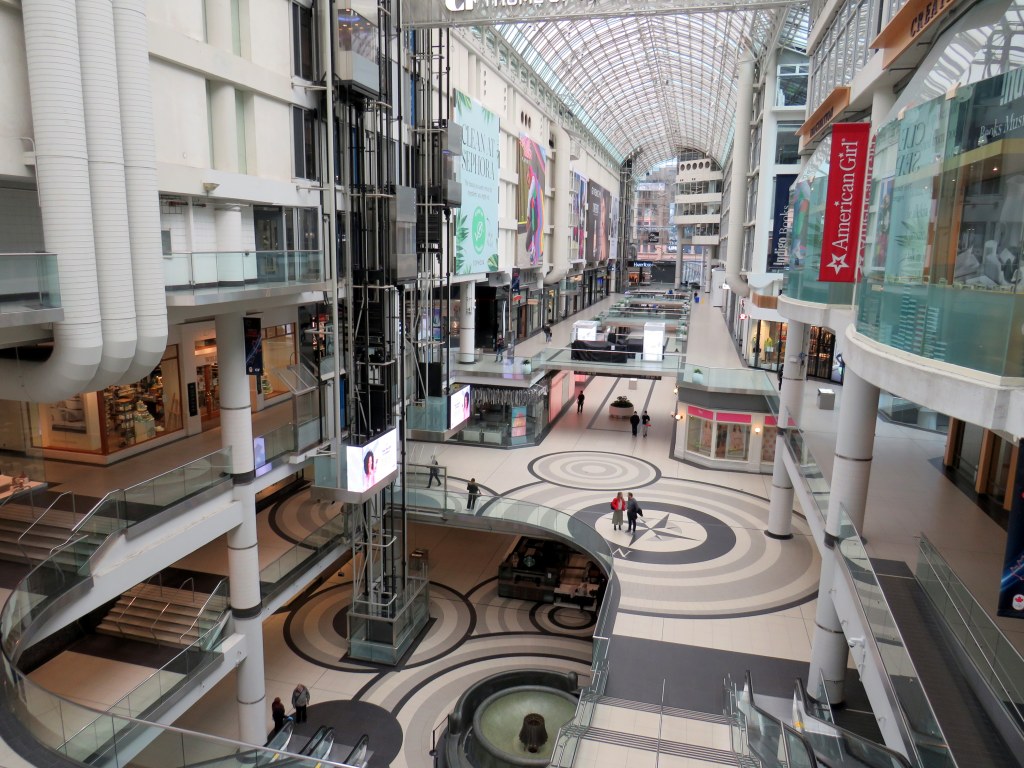
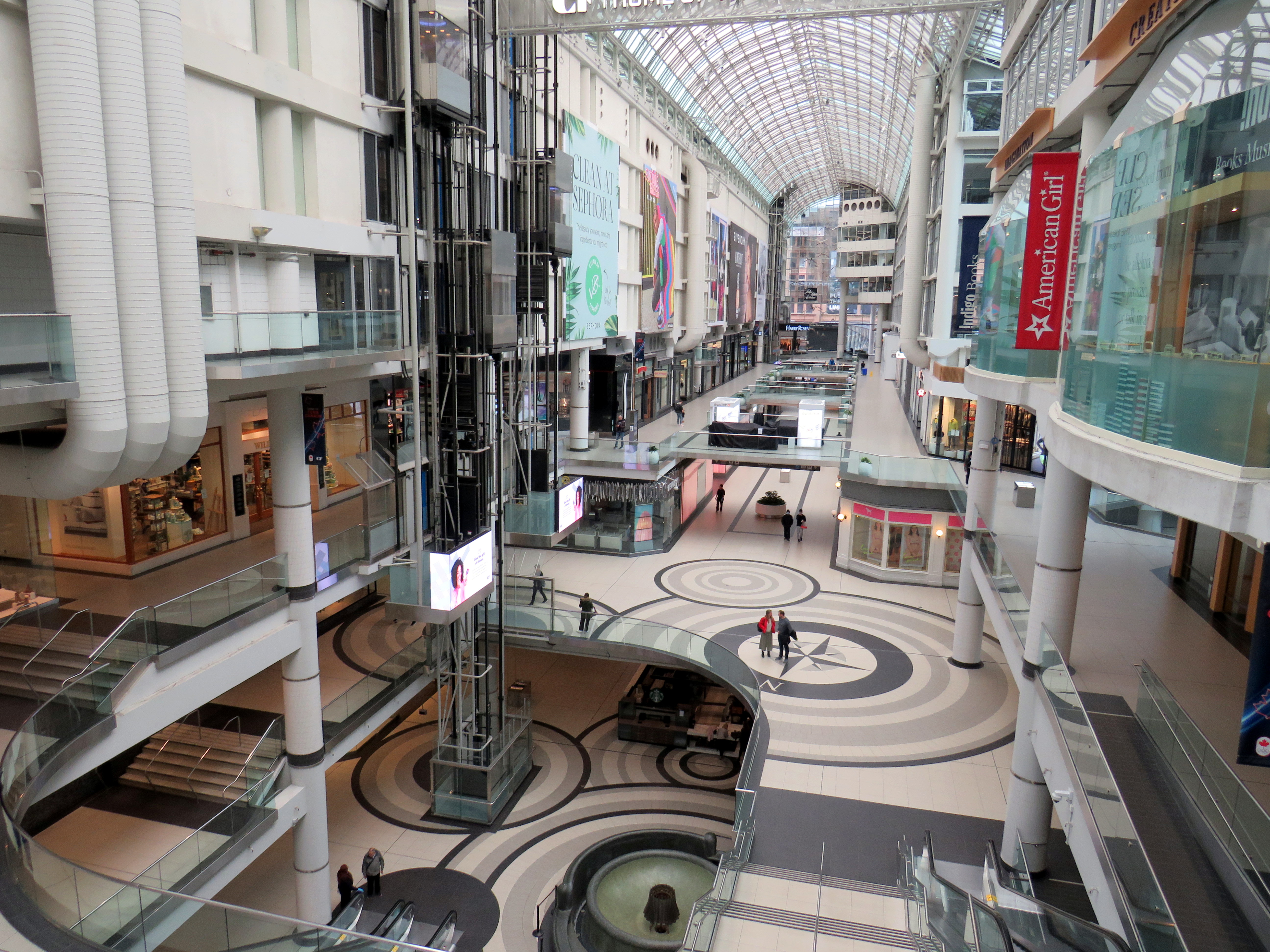
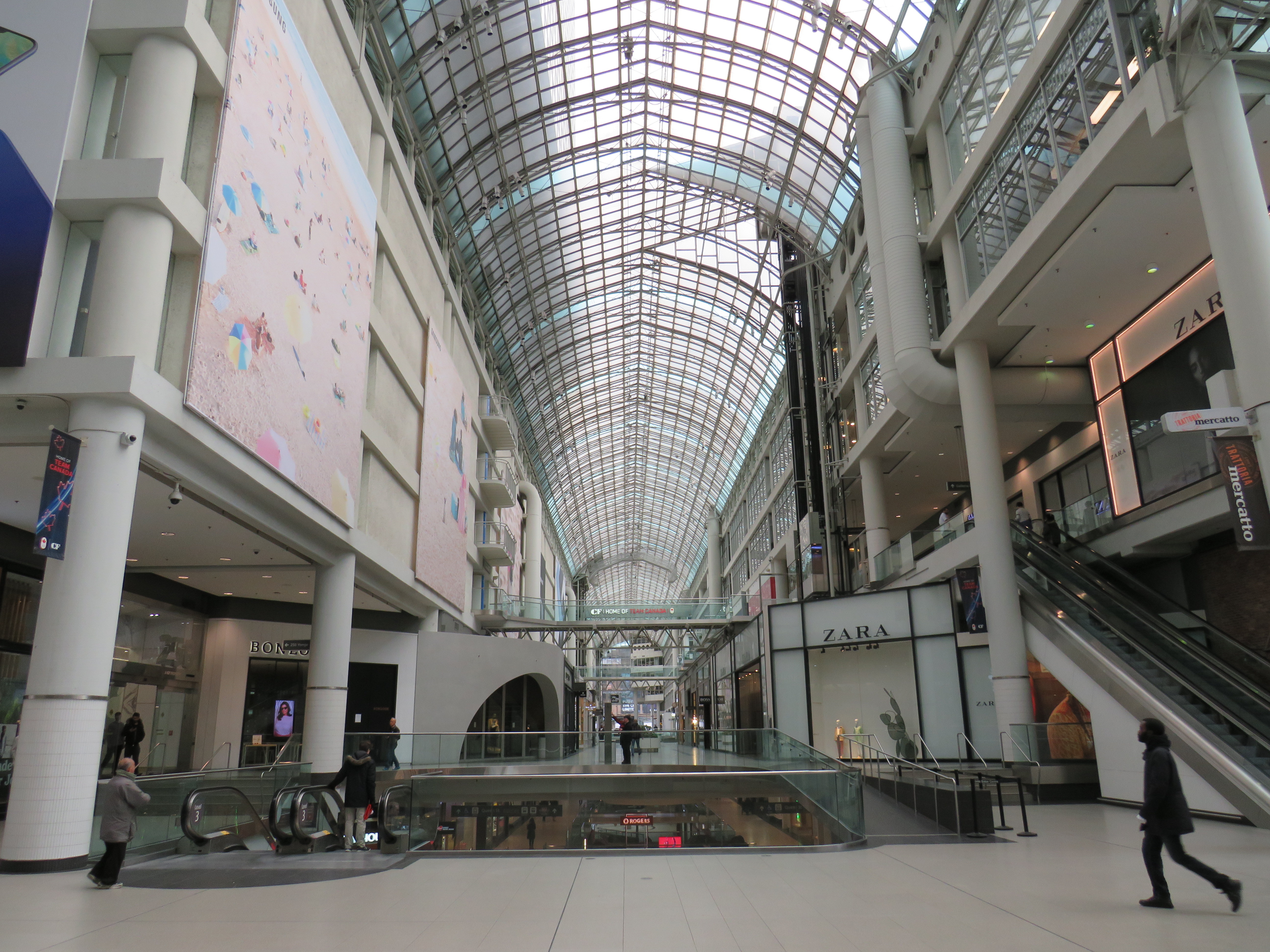
    Overlooking Eaton Centre, March 19 2020

    Ten days ago, I spent the day at City Hall and addressed the Infrastructure and Environment Committee. While I was following news of a novel coronavirus that was affecting China, Italy, and Iran, it wasn’t on my mind that day.

    What a difference a few days makes.

    On Thursday, the province announced that elementary and high schools would close for a three-week-long March Break in an effort to contain an outbreak here. One by one, universities and colleges cancelled in-class lessons, with instructors having to move the remainder of their classes online. The World Health Organization declared COVID-19 a pandemic. Travel restrictions came into place. Restaurants were asked, then forced, to close for dine-in guests. Theatres, cinemas, and some retail chains followed suit. Most office workers were now working from home. Libraries, recreation centres, and even outdoor skating rinks were all shut down.

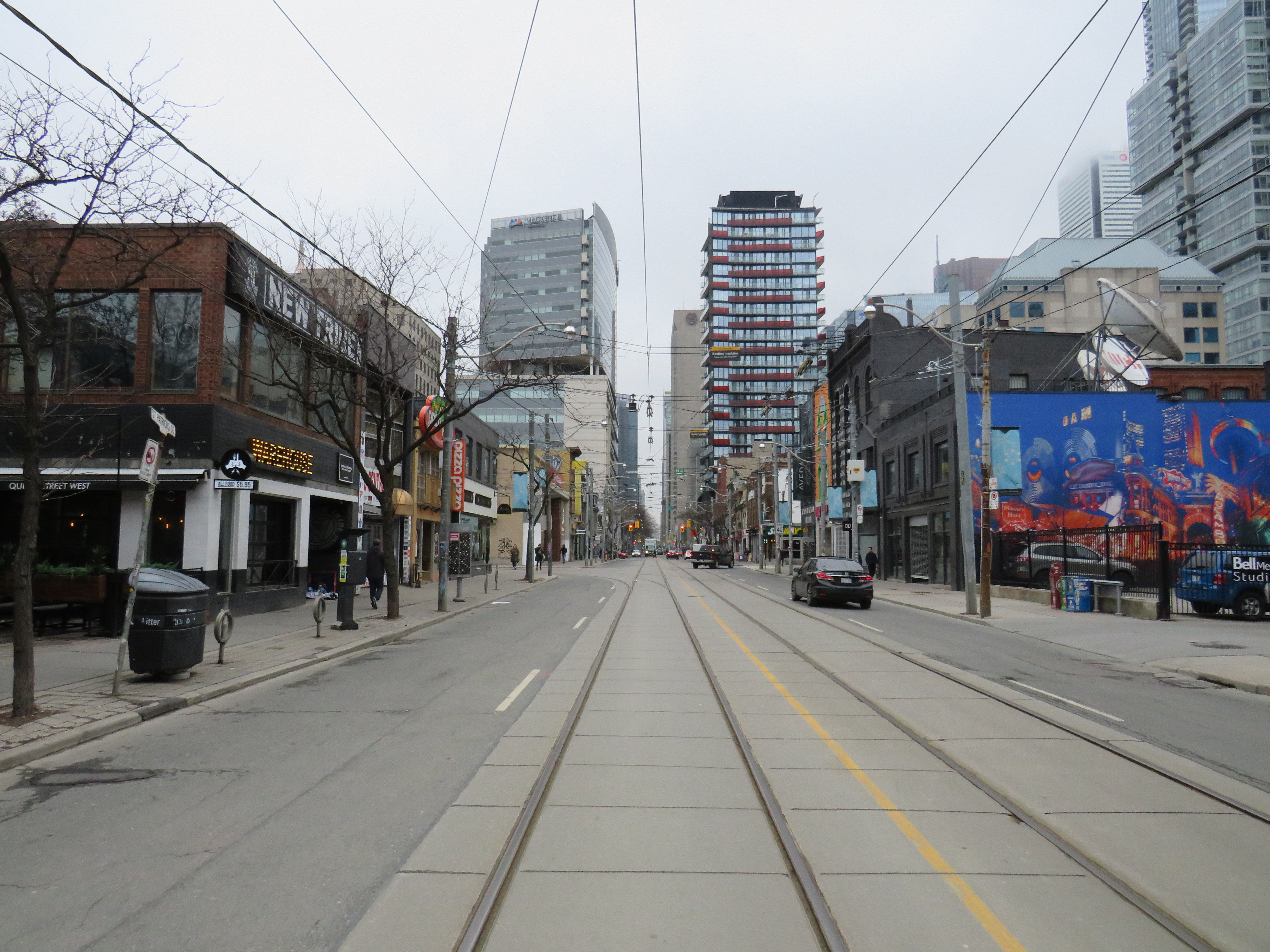
    By Monday, March 16, the city was quiet.

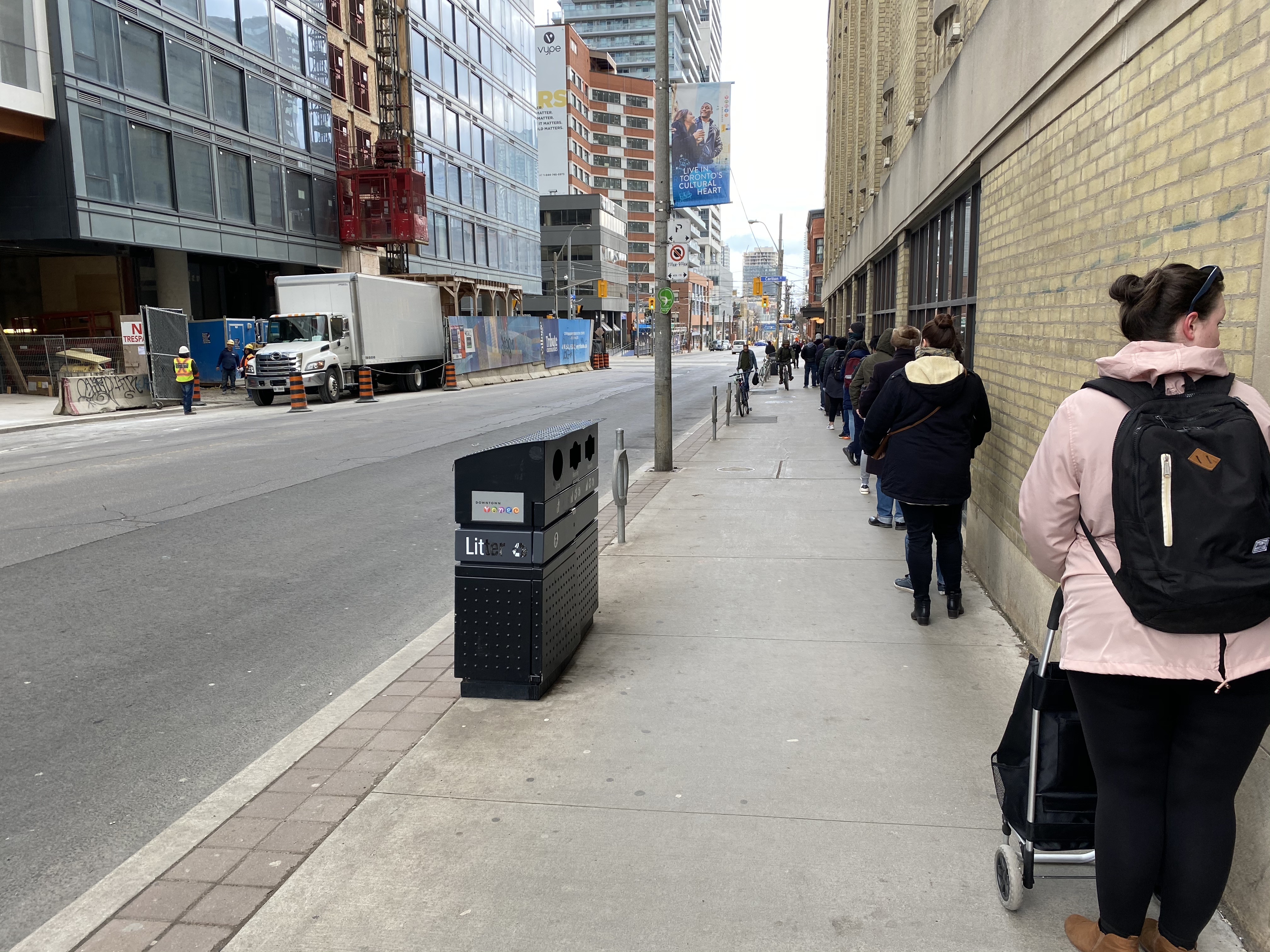
    My spouse and I live in an apartment downtown, without a car, so we’ve been going on short walks in the neighbourhood, careful to keep our distance from others (this has been tough to do in supermarkets as I pick up essential food and supplies). But I find the walks are necessary for my mental well-being. They’re also surreal.

    Though most stores in the Eaton Centre were open on Monday (Apple and Nike were among the first to voluntarily close all their retail stores), by Tuesday, nearly half were closed. On Thursday, only a handful were open, including, controversially, EB Games.)

    The last time I saw the mall so empty during daytime hours, was walking back towards Union Station to go home from Ryerson University on the afternoon of September 11, 2001.

    Eaton Centre March 19 2020Keeping distance inside Eaton Centre, Thursday, March 19, 2020

    As a condition for permitting the mall’s construction in the 1970s, the City of Toronto required permanent, twenty-four hour public access along the corridor between Shuter Street and James Street, behind Old City Hall. This concession was made because the new mall required several east-west public streets to be closed between Queen and Dundas Streets.

    As a matter of practice, most of the mall’s corridors remain open during all hours, providing access to local streets and two subway stations. The only time I encountered locked doors was during the 2010 G-20 Summit fiasco.

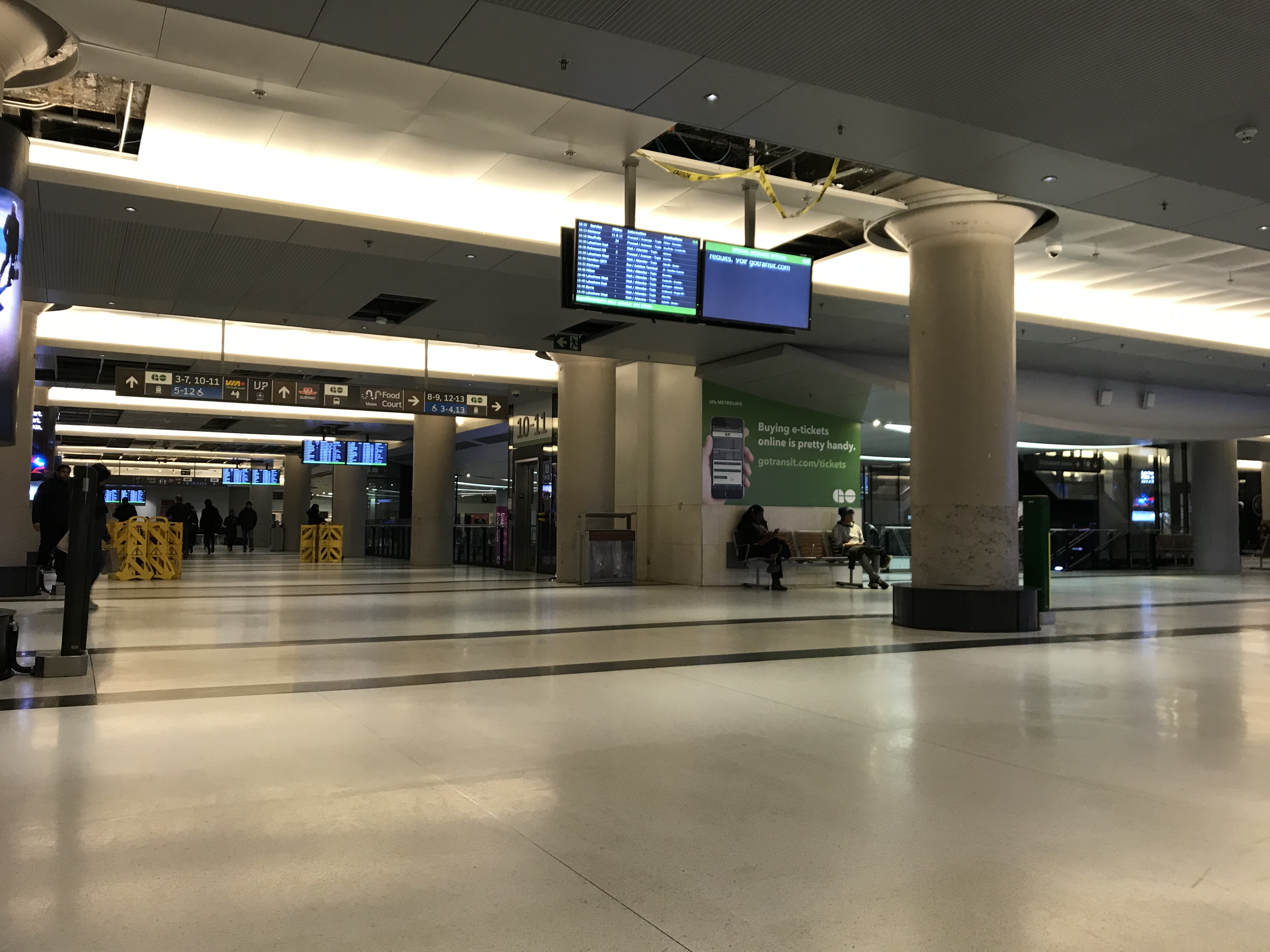
    York Concourse, March 16 2020GO Transit’s York Concourse at Union Station during the afternoon rush hour on Monday, March 16

    Meanwhile, other busy public spaces, such as the GO Transit concourse at Union Station were also eerily quiet. While it is good that most are able to heed the calls from public health officials and political leaders to stay home where possible, I hope that we can continue to build transit, and not enter another lost decade of service cuts and ignoring needs for more infrastructure.

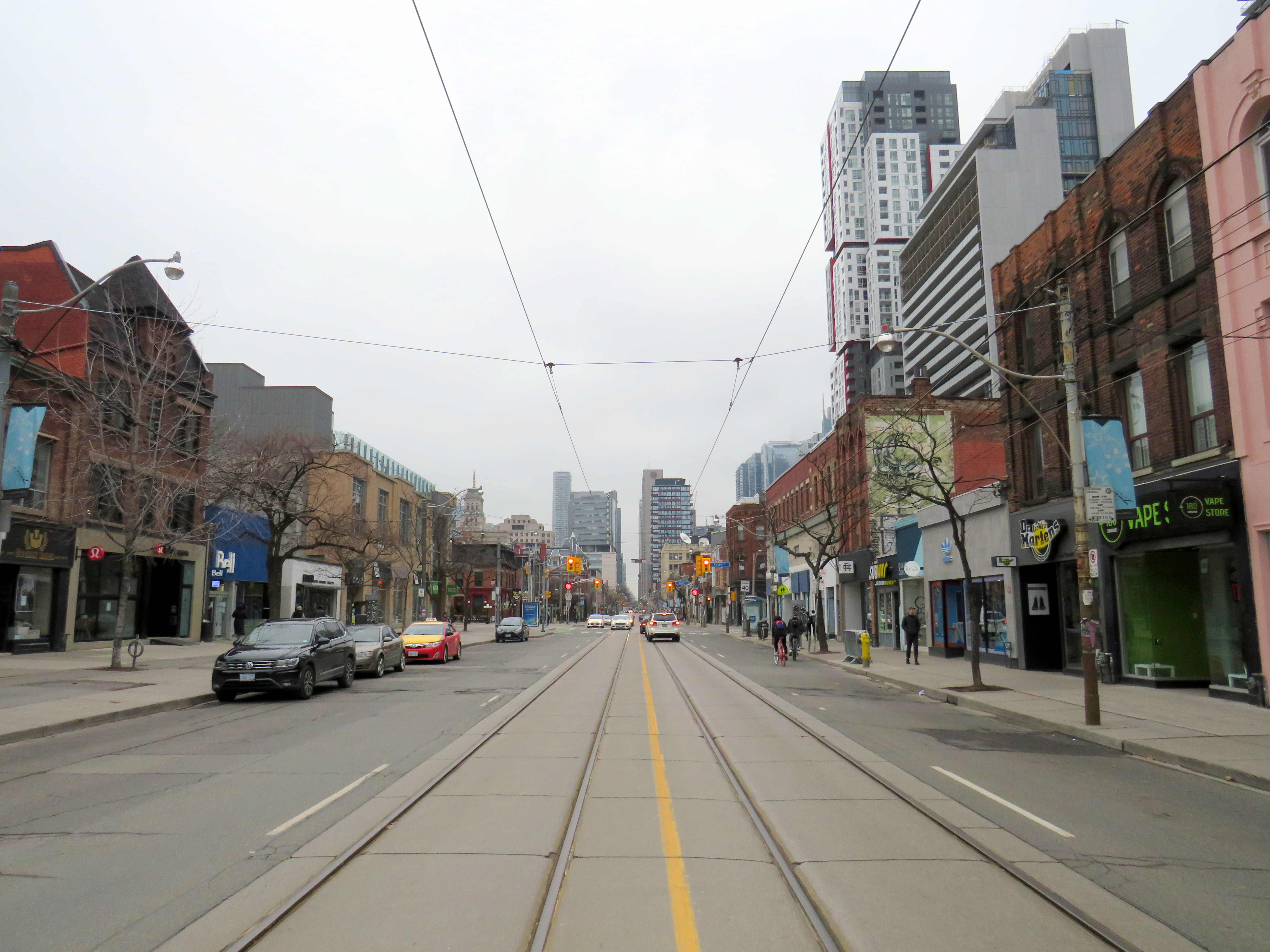
    Busy streets, like Bloor and Queen, are also quiet. With no where to go, there’s very little traffic.

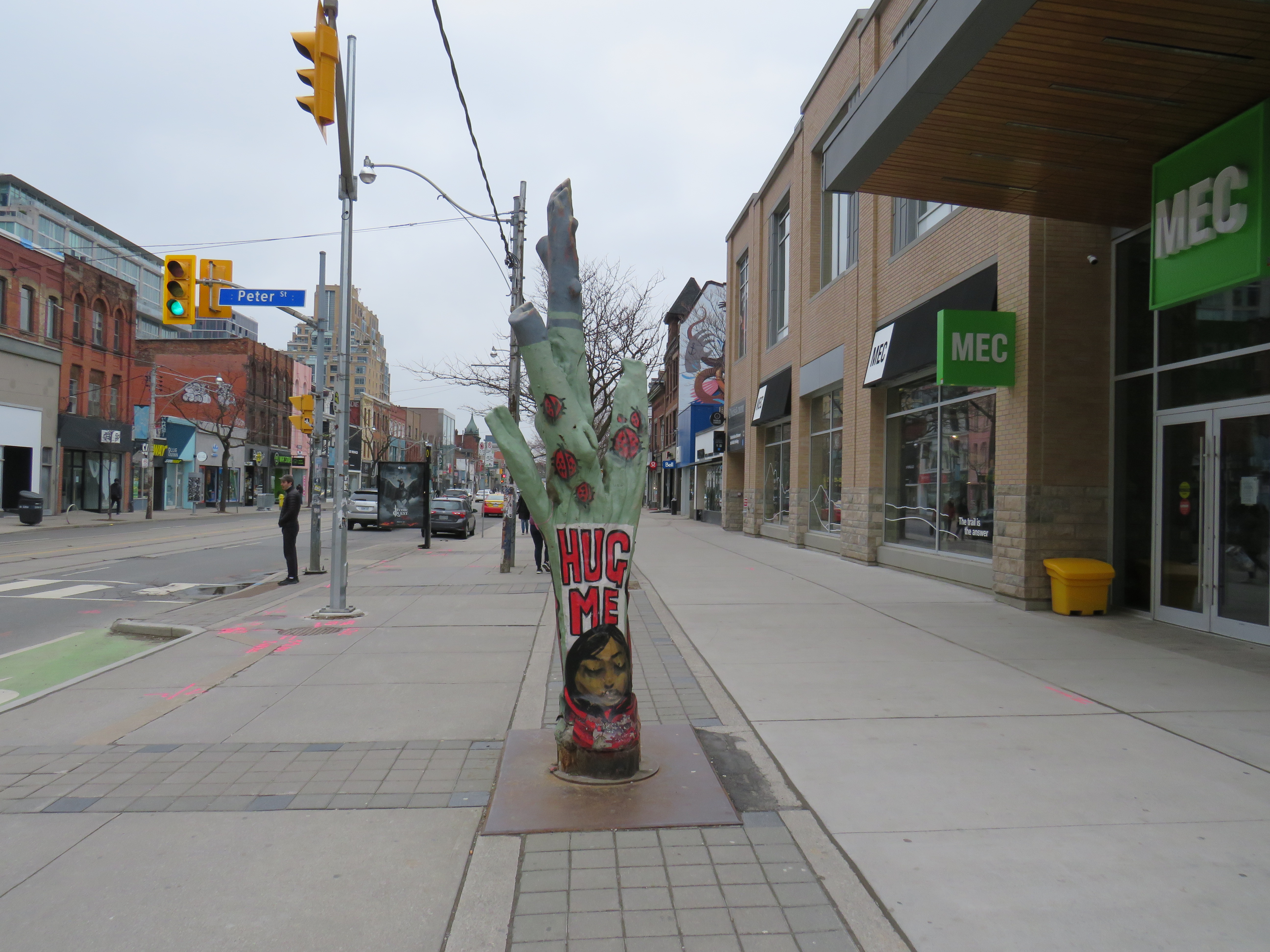
    "Hug Me" Queen Street West, March 19 2020The “Hug Me Tree” on Queen Street West

    Though I want to remain optimistic, I suspect it won’t be until the end of April at least before some of the social distancing requirements are relaxed. Though it’s tough for many of us, it is necessary to keep hospitals from being overwhelmed and the population as healthy as possible.

    We’ve been streaming more movies and television shows and playing party games remotely with family and friends online, with audio and video links to keep us engaged with each other. Sometimes on our walks, we’ll order takeout from some of our favourite independent restaurants and coffee shops.

    These are some of the little things that can be done when very little is asked of most of us.

    IMG_8066-001

  • On right turns, advocacy, and civic democracy

    On right turns, advocacy, and civic democracy

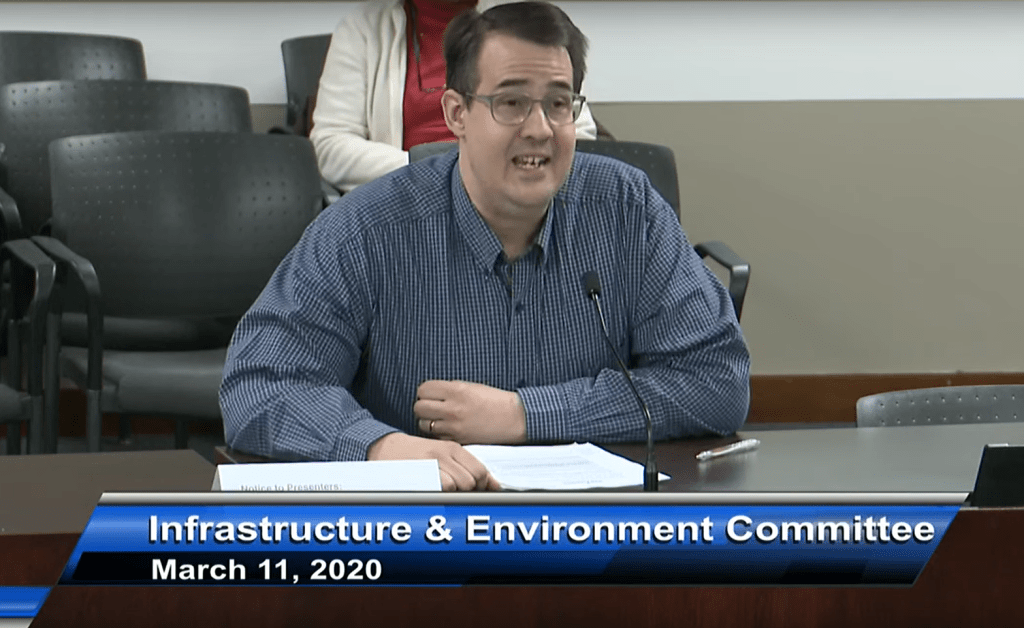
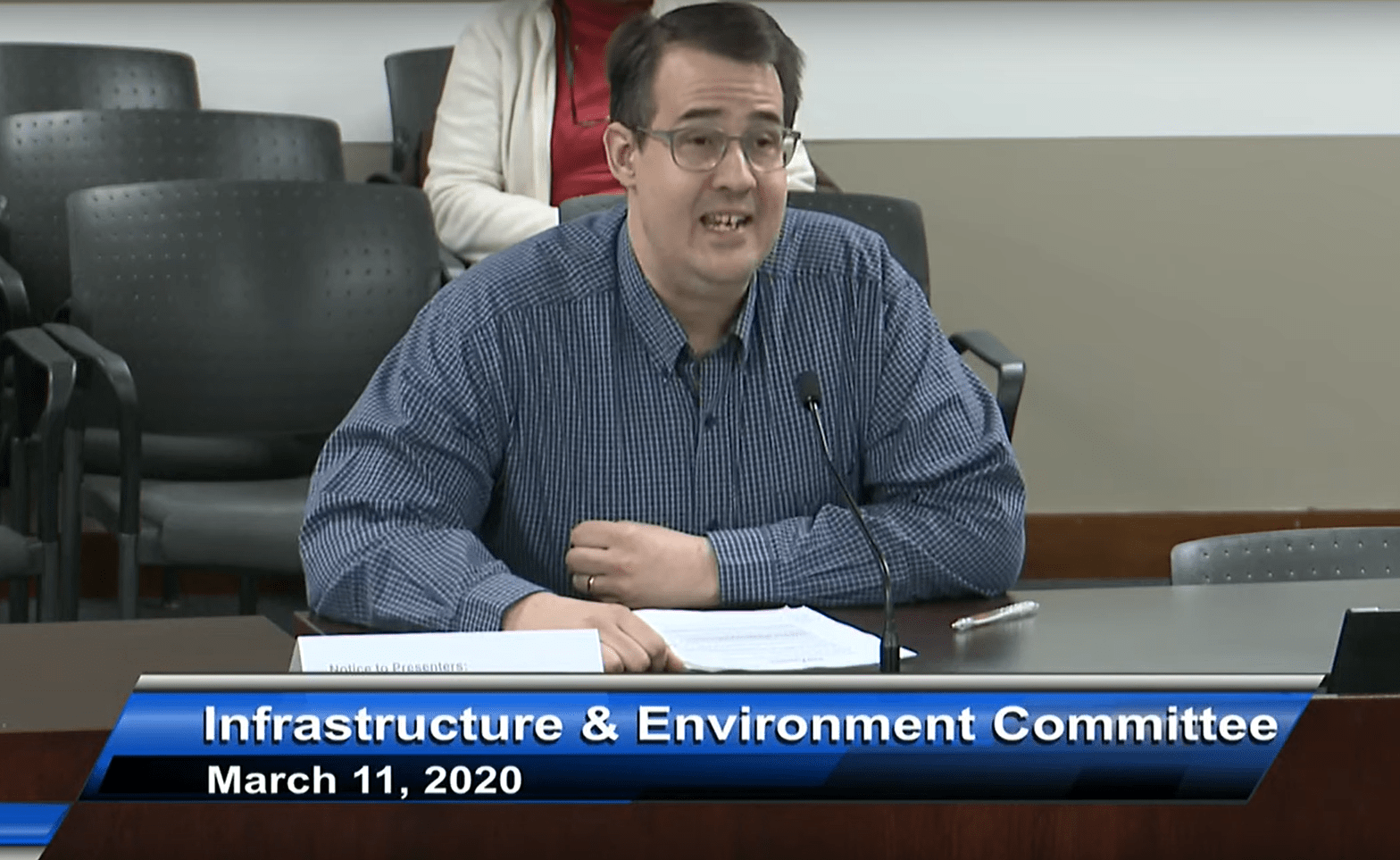
    DeputationOn Wednesday, March 11, I deputed to the Infrastructure and Environment Committee at Toronto City Hall in support of a motion by Councillor Mike Layton to have city staff examine and report back on expanding right turn on red (RTOR) restrictions in the City of Toronto.

    Though I had the time and willingness to attend the committee meeting and speak to city councillors, I attended on behalf of Walk Toronto, and the motion was primarily written by my colleague Daniella Levy-Pinto, with input from myself and several other steering committee members.

    I found myself much more relaxed deputing this time, especially compared to my deputation late last year to the Toronto Police Services Board. Taking a continuing education course on public speaking and presentations helped, as did increased confidence, and a less intimidating environment.

    Fellow advocacy group Friends and Families for Safe Streets’ Jess Speiker spoke first to the motion, at 21 minutes; I speak at the 26 minute mark.

    We argue for blanket RTOR prohibitions, rather than simply at selected intersections, for several reasons. red A citywide or neighborhood ban of right on red would eliminate the cost of creating, installing, maintaining, and replacing prohibition signs at each intersection. Too many signs create a visual overload. Furthermore, eliminating right turns on red only at selected locations is problematic in terms of predictability: some vulnerable road users will have difficulty determining what rules are in place at a particular intersection; Montreal, New York, and Mexico City already prohibit right turns on red. It’s time that Toronto seriously debate the idea, and work towards implementing such a ban.

    Meanwhile, while the city has implemented leading pedestrian signals at many intersections, their effectiveness is limited by allowing right turns during the leading pedestrian signal, when the red light is still on. Montreal, which has a slightly different implementation, allows through traffic, including cyclists, to proceed with the first few seconds of the walk signal, while turning vehicles must wait.

    Though the Infrastructure and Environment Committee adopted Councillor Layton’s motion, it also passed amendments proposed by Deputy Mayor Denzil Minnan-Wong. Minnan-Wong’s amendments asked for, among other things, a report on the impact that Vision Zero measures have on traffic conditions, and how those traffic delays and congestion have increased stress on drivers.

    So, by the deputy mayor’s logic, congestion and traffic safety measures are causing drivers to be aggressive and that is why pedestrians and cyclists continue to be killed on our streets.


    Wednesday made for a good lesson on the challenges of grassroots advocacy and participating in local democracy. Recently, City Council voted to increase security at city hall by requiring all visitors to submit to bag searches and metal detector scans, hardly a friendly sight at Toronto’s seat of governance, originally designed to be a welcoming place for all people. Although the committee meeting started at 9:30 AM, it broke for lunch at 12:30, before getting to Councillor Layton’s motion. That meant that I had to leave for lunch, line up again and go through security, before speaking around 2:00 PM. Any citizen with a day job or other commitments wishing to participate in local democracy is at a disadvantage.

    But I am glad I had the time and opportunity to speak up for something important.

  • The consequences of losing the GO-TTC discount

    The consequences of losing the GO-TTC discount

    IMG_7846-001

    When the Toronto subway system was extended by six stops to York University and Vaughan, it marked the first time the TTC’s rapid transit system extended beyond the city’s boundaries. But it also exposed a major failing of the Golden Horseshoe’s transit structure: the complete lack of fare integration.

    In 2017, the provincial government announced a new fare discount between the TTC and GO Transit, which operates the region’s commuter rail and bus network. This $1.50 fare discount, available to Presto card users, was funded by the previous Liberal government’s fledgling cap-and-trade carbon pricing scheme, with the promise of further fare adjustments (such as discounts for transferring between the TTC and other suburban transit agencies, such as York Region Transit and Miway) to come.

    With the election of the Progressive Conservatives in 2018, the cap-and-trade scheme was cancelled, and with it, the continued funding for the GO-TTC fare discount. That discount is set to come to an end on March 31, 2020. Neither the cash-strapped TTC or Metrolinx, the provincial agency responsible for GO Transit and transit planning, will step up to make up the difference.
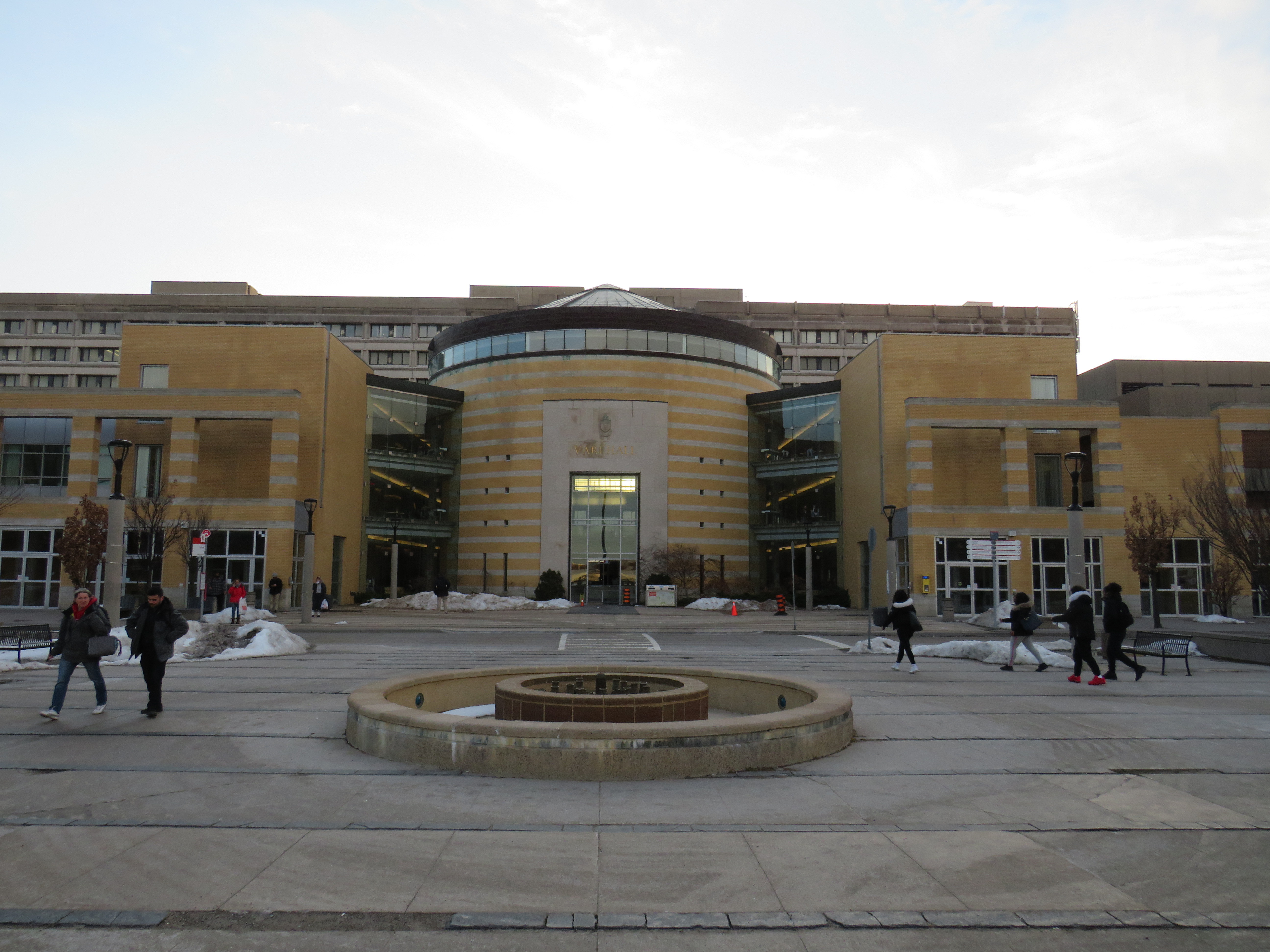
    IMG_7865-001GO Transit buses used to stop right in front of Vari Hall, in the heart of York University’s campus

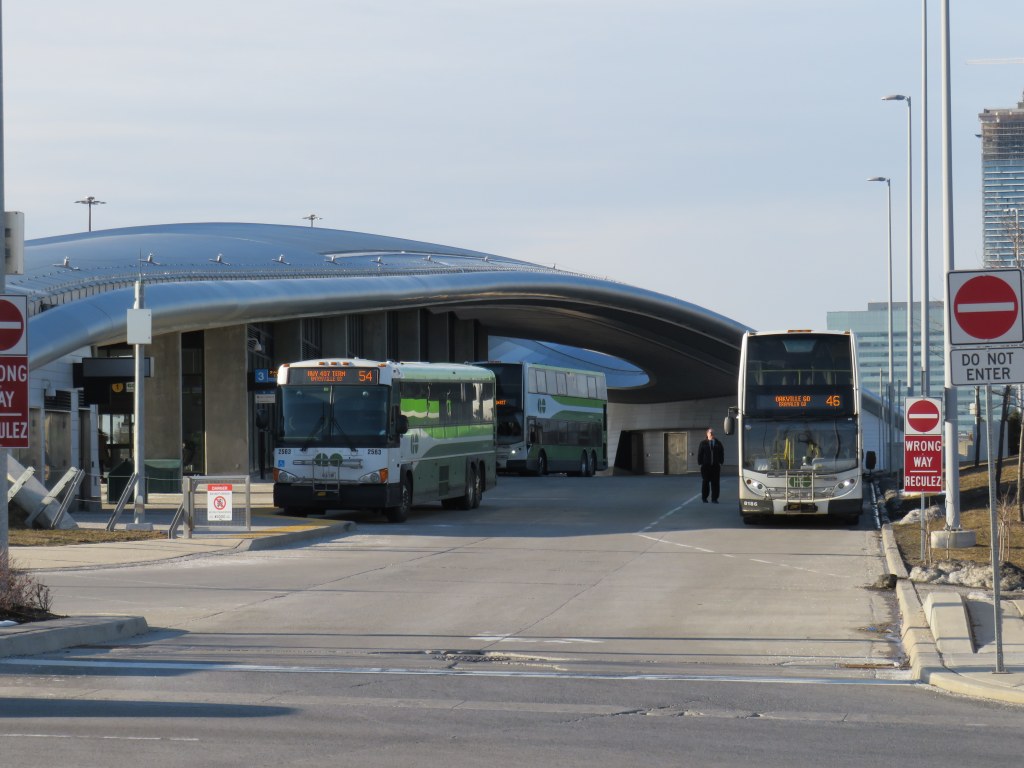
    Though many regular GO rail commuters will feel the impact of the loss of the fare discount, the impact on York University students and staff will be especially felt. That’s because the new subway extension was planned to remove GO Transit buses from the heart of the campus to a purpose-built terminal at a remote new subway station next to Highway 407. I recently wrote about the problematic fare structure on those GO buses serving Highway 407 Station. Now, those commuters going two more stops will pay $6.40 a day in TTC fares on top of those expensive GO fares.

    Unless they decide to walk to campus.

    On Thursday, March 5, I tried do just that. It was not a pleasant experience.

    https://twitter.com/Sean_YYZ/status/1235681892185206785?s=20

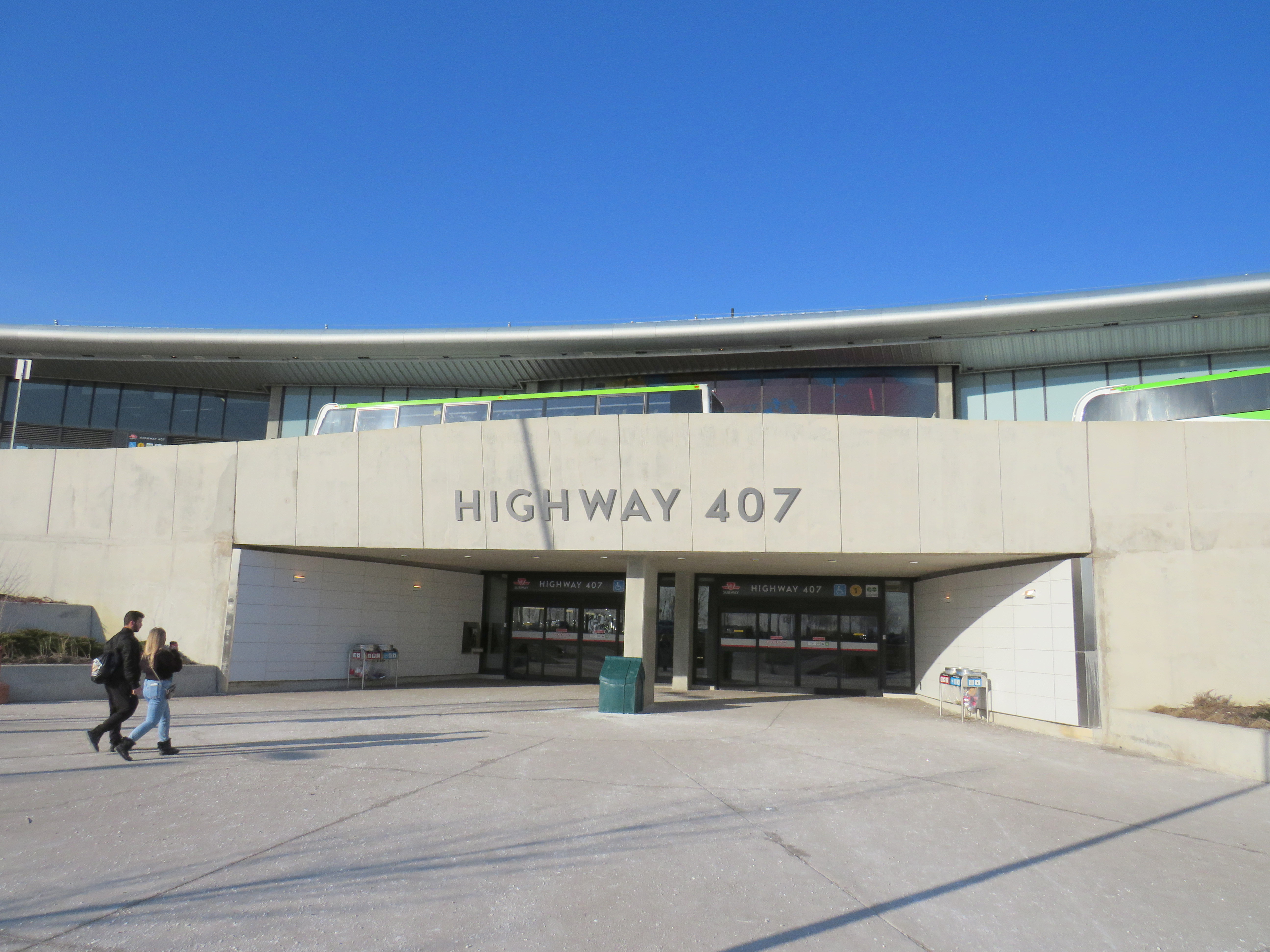
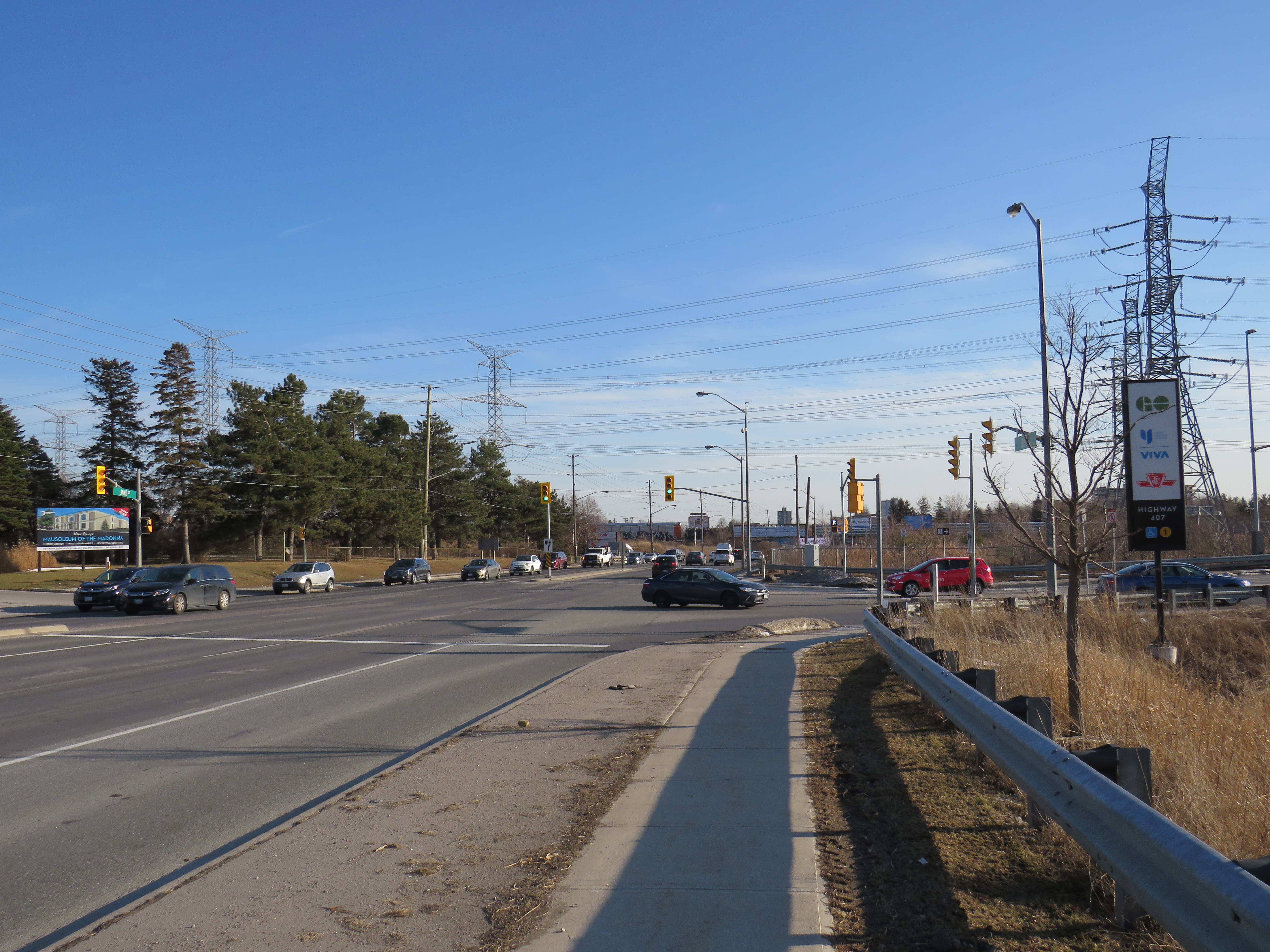
    Highway 407 Station features a large bus terminal for GO Transit and YRT buses, a passenger drop-off and pick-up area, and a commuter lot. But it was not built with pedestrians in mind. That’s understandable. The only places within a few minutes’ walk are Beechwood Cemetery across the street, a warehouse, and the employee entrance to a major UPS parcel centre.

    The main — and only authorized — entrance is on the opposite side of Jane Street, facing the passenger drop-off/pick-up area and the parking lot. It is quite clear in the design that most passengers would be transferring between bus and subway, perhaps with the idea that the fare boundary issue would be resolved by the time the station was open.
    IMG_7830-001
    Jane Street, with the entrance to Highway 407 on the right, and Beechwood Cemetery on the left

    The vertical circulation prioritizes bus-subway connections. At the bus platform level, I spotted a sign that said “to street, subway” leading to a downwards escalator. But it led me past the mezzanine level straight to the subway fare gates. I had to climb halfway up to get to the entrance doors.
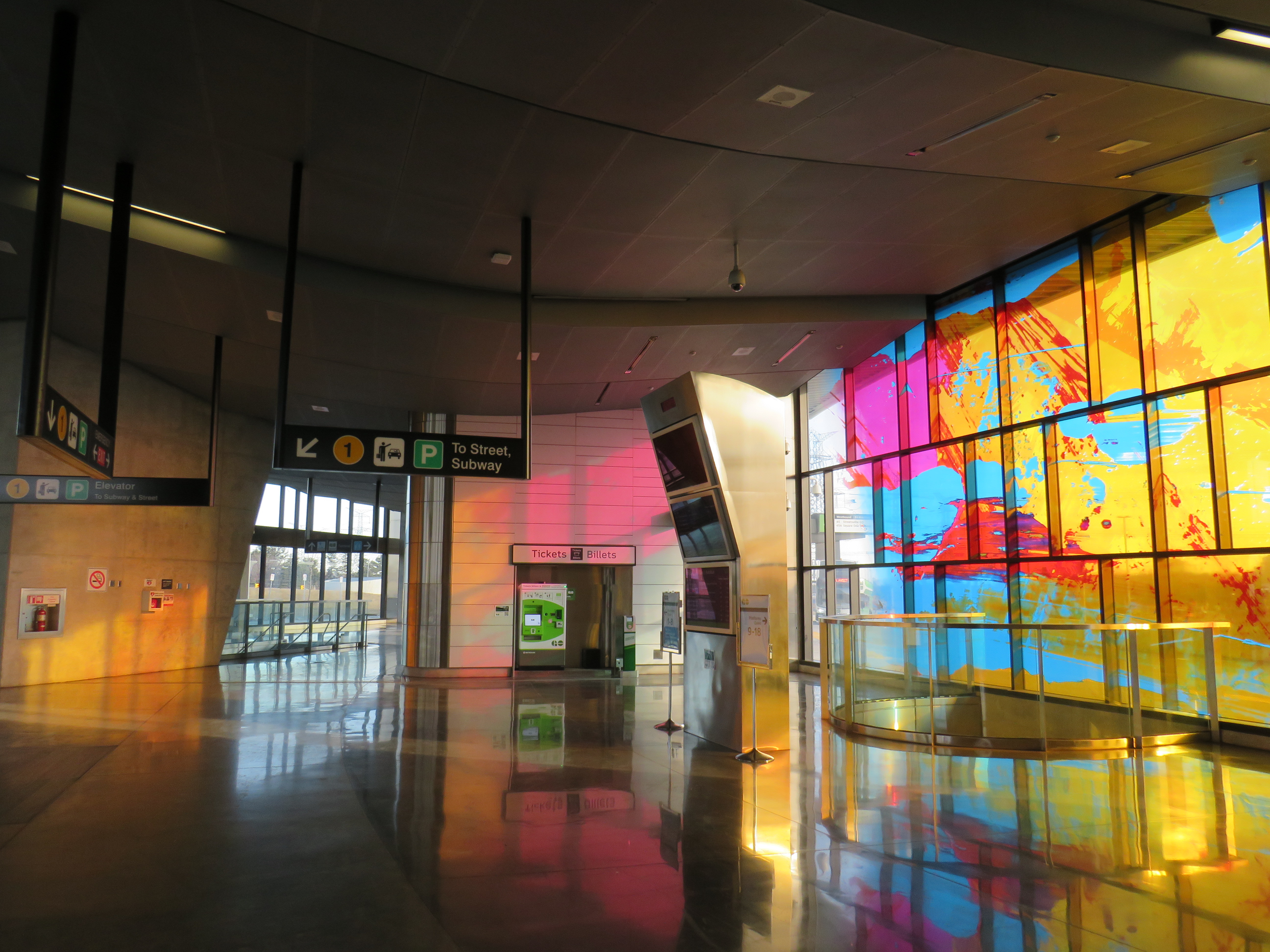
    IMG_7848-001The stained glass at Highway 407 glows in the late afternoon sun. But it doesn’t take away from a poor user experience.

    Once outside, I noted that the pedestrian path between the parking lot and the passenger waiting area was completely covered by a giant dirty snow pile. It’s clear that pedestrians are not welcome here.

    Snow left on the only legal sidewalk leading out of Highway 407 Station

    The circuitous route is designed to keep pedestrians out of the way of the buses entering and exiting the station. But I was left wondering why a shorter, direct, and snow-free route was not designed into the station plan at the beginning. It would have cut a few minutes from my efforts in leaving the station.
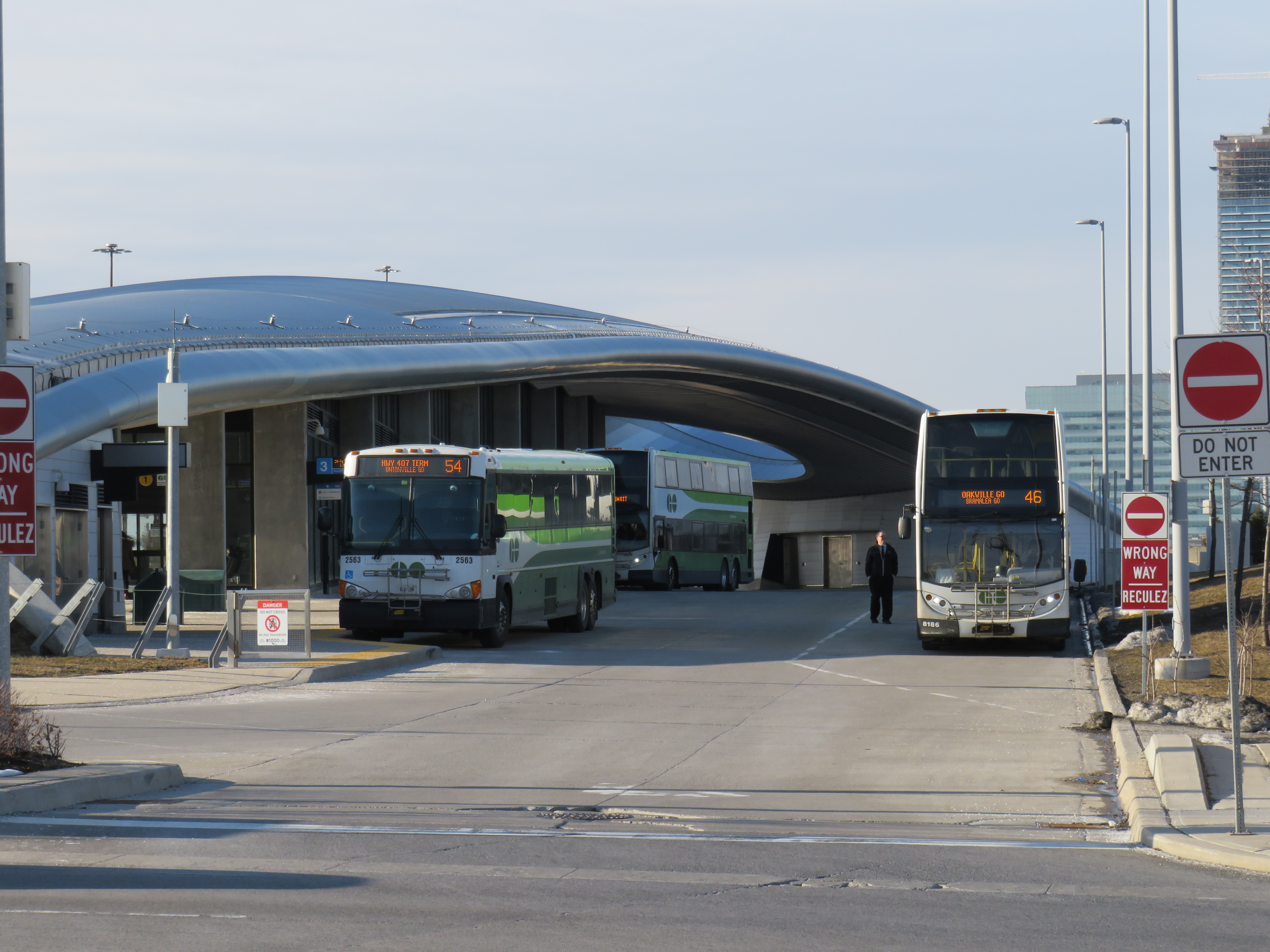
    IMG_7835-001
    Pedestrians are barred from the more direct route into the station, even though the bus terminal is not a TTC fare-paid area.

    Eventually, I made it to Jane Street, and began walking south towards Steeles Avenue and campus. The narrow sidewalk hugs Jane Street, and right into a splash zone under the CN Railway underpass.
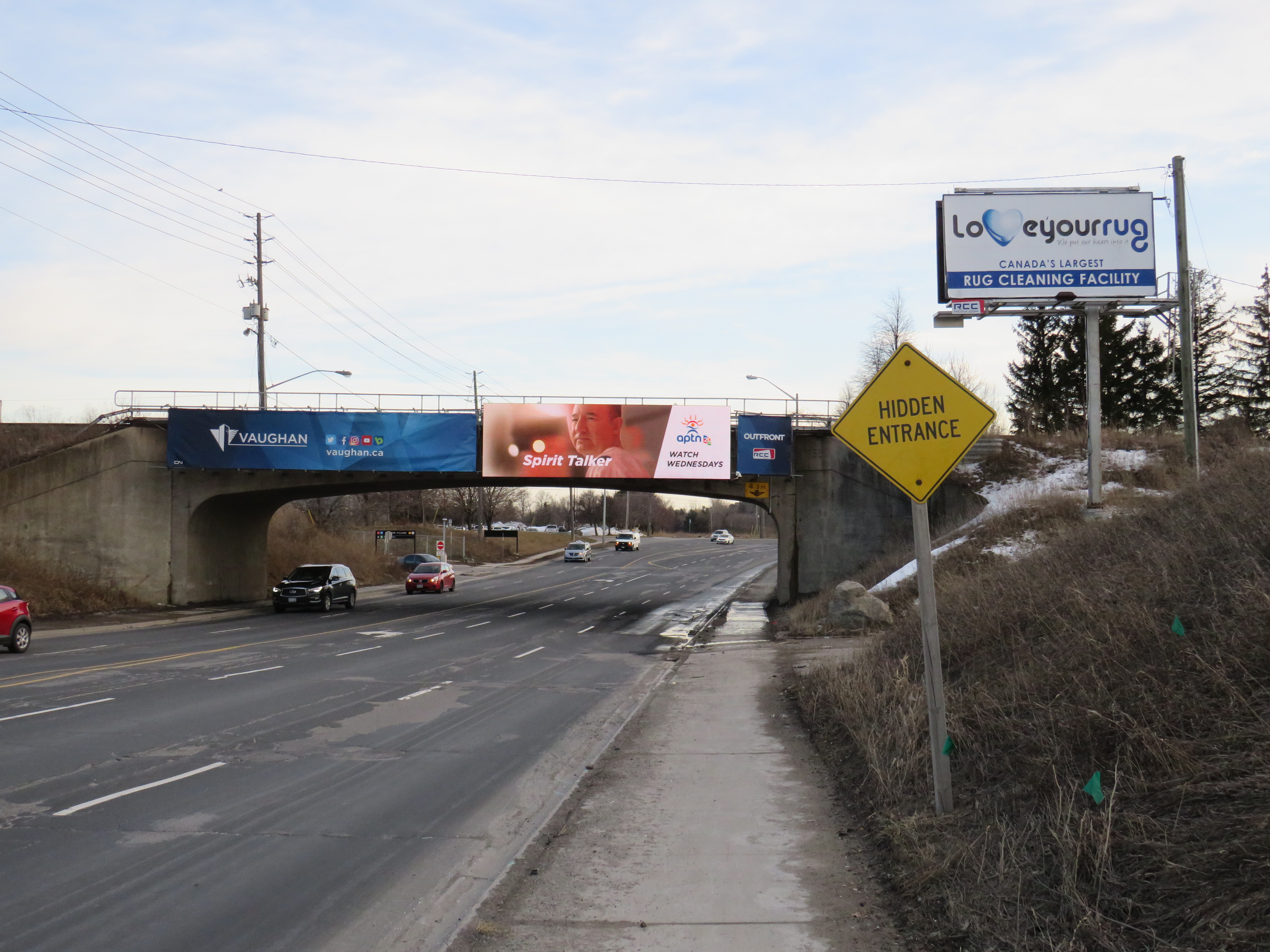
    IMG_7853-001
    An unpleasant walk along Jane Street

    After twenty-seven minutes, I made it to Pioneer Village Station, which was designed with two separate bus terminals. YRT buses use the smaller bus loop on the north side of Steeles Avenue, outside the fare-paid area. TTC buses use a larger terminal south of Steeles Avenue, on the York University lands. YRT passengers headed to campus must cross Steeles Avenue at grade as the mezzanine level underneath is fully within the TTC fare paid zone. Technically, one could transfer from GO to the YRT 20 Jane bus at Highway 407 Station (with a Presto card, it would cost only $1 each way with the YRT-GO co-fare). But it would still only get you part of the way to campus.
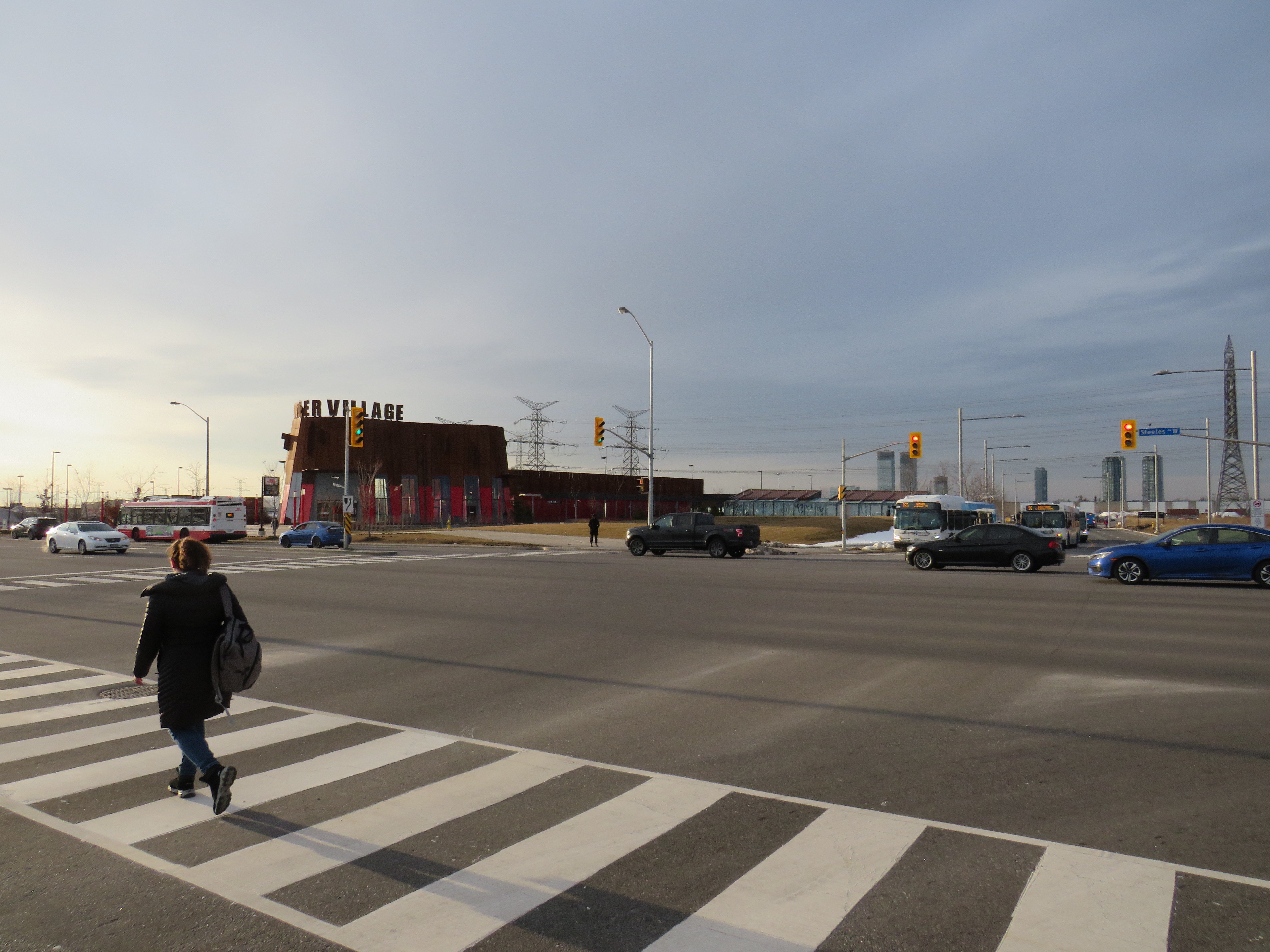
    IMG_7863-001

    After 35 minutes, I made it from the GO bus platform at Highway 407 Station to the Life Sciences Building at York University, on the northwest corner of the central campus, with another 5-10 minutes to major buildings such as Vari Hall or Scott Library. This was at a relatively quick pace (I’m an able-bodied thirty-something man), in quite pleasant weather. A rainy or bitterly cold day would be quite a different matter. Therefore, most will be forced to pay $3.20 each way (the current TTC Presto fare).

    The subway, with the major GO and YRT terminals off campus, was designed for a new fare structure where students and university staff wouldn’t be penalized for having to transfer one or two subway stops to get to the middle of campus. The most we got was a fare discount for GO Transit riders, with nothing for YRT commuters. (Only Brampton Transit continues to directly serve York University.) And now that meagre fare concession is going away, because no one wants to pay for it.

    Sadly, this is just further evidence of how we get transit so wrong in the Golden Horseshoe, despite it being the country’s economic heartland.


    Transit advocacy group TTC Riders, along with allies at York University, have been calling on Queen’s Park to continue to fund the fare discount. You can find out more here.

    I also expect that the opposition New Democrats will submit a motion in the legislature to maintain funding for the discount next week. I’ll update this post as necessary.
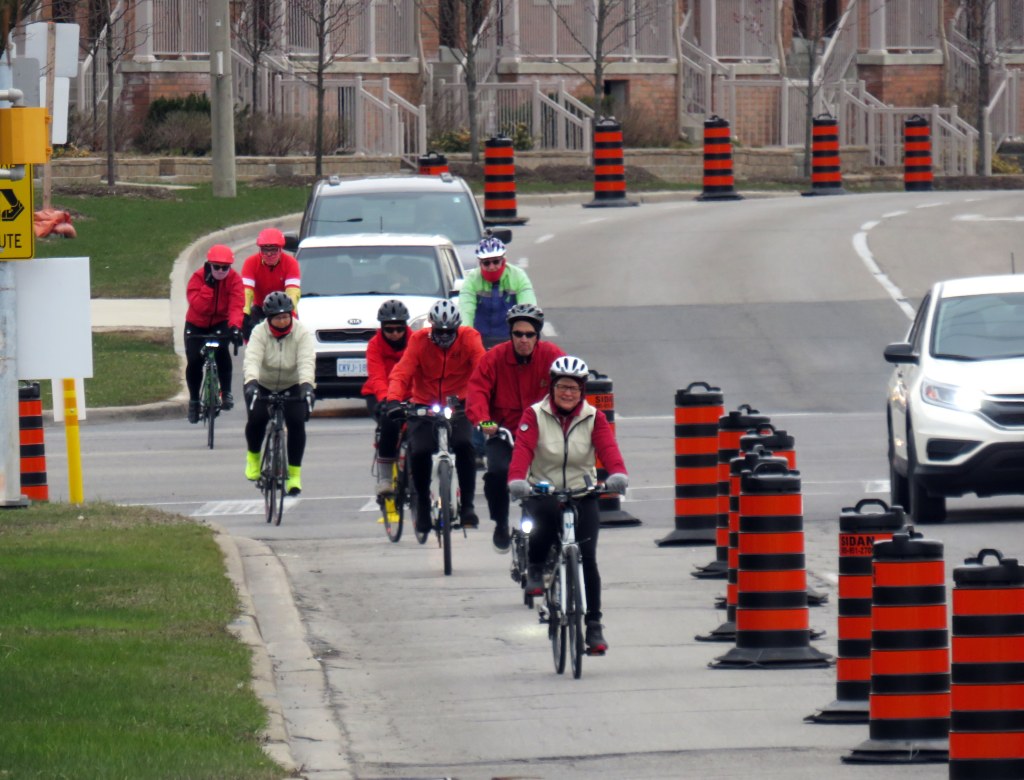
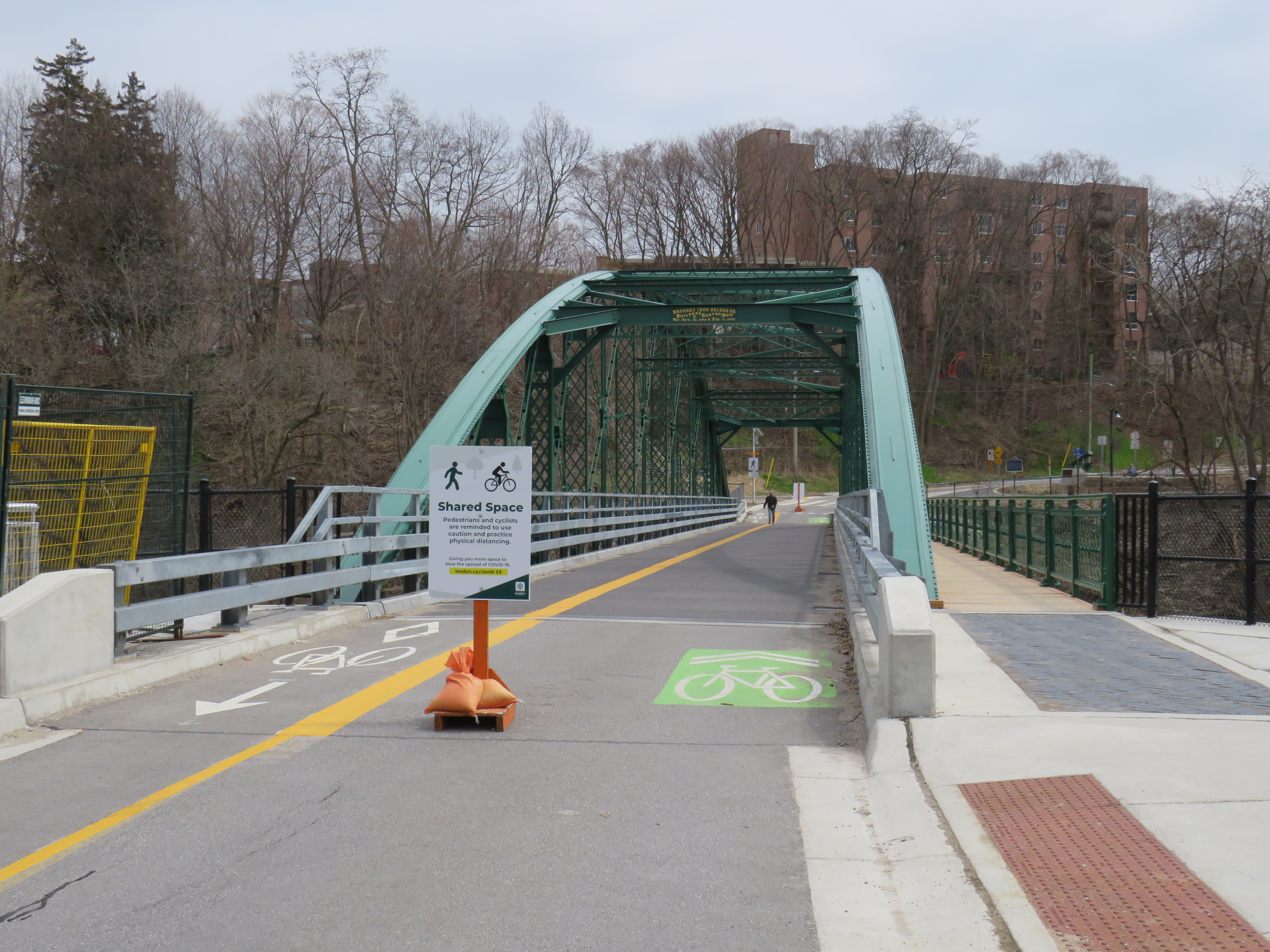
  • Viva Rapidways: hurry up and wait

    Viva Rapidways: hurry up and wait

    IMG_6574.JPGA broken system

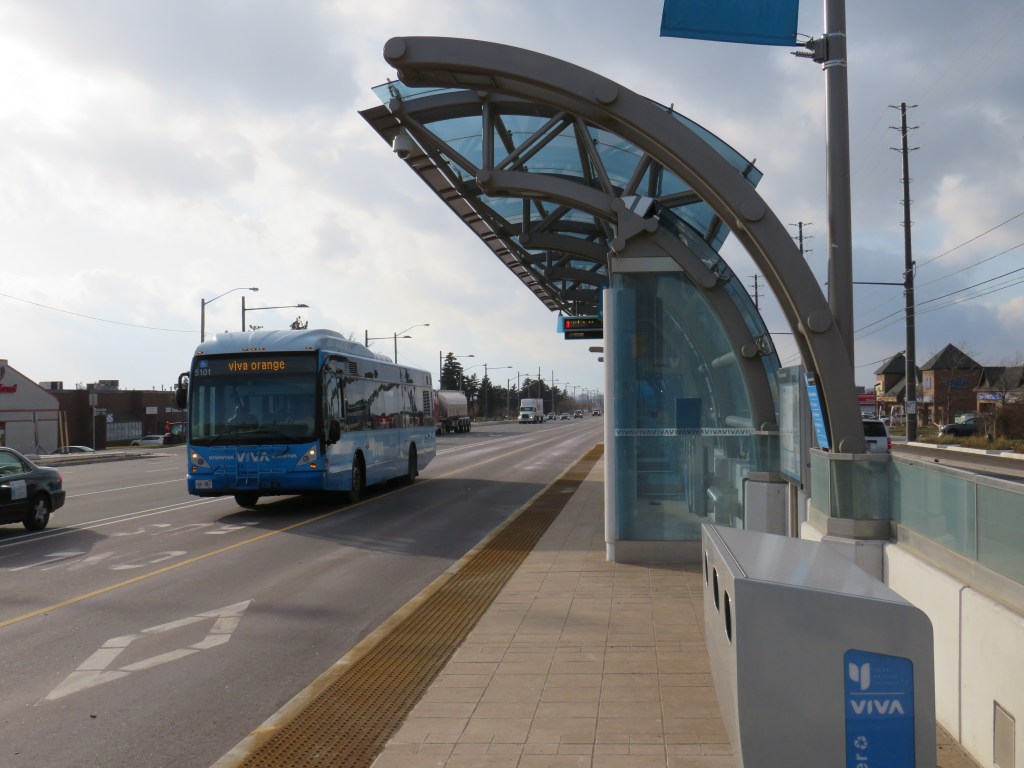
    When York Region Transit was formed in 2001, it promised great things for the large, growing suburban region north of Toronto. It amalgamated four local transit systems, and took over local services provided by GO Transit, and extended service to outlying communities, including Stouffville, King City, and Holland Landing. In 2005, YRT introduced Viva, a series of limited-stop bus routes along major corridors, offering distinct, comfortable buses, off-board fare payment, and signal priority to speed up service.

    Since YRT formed, Durham Region amalgamated its municipal transit systems, Brampton introduced Zum, a similar network of limited-stop bus routes, and Mississauga and Toronto rebranded and expanded their express bus routes. For a while, it appeared that York Region was leading the way in growing transit ridership in the suburbs.

    Unfortunately, by focusing on building new Rapidways in the median of Yonge Street, Highway 7, and Davis Drive while neglecting service levels, — even cutting back bus service on Viva routes — York Region has fallen behind. I also found that those Rapidways — meant to speed buses through congested arterials — are poorly designed for pedestrians and transit riders. (more…)

  • Deadly by design: Supertest Road

    Deadly by design: Supertest Road

    IMG_7204-001

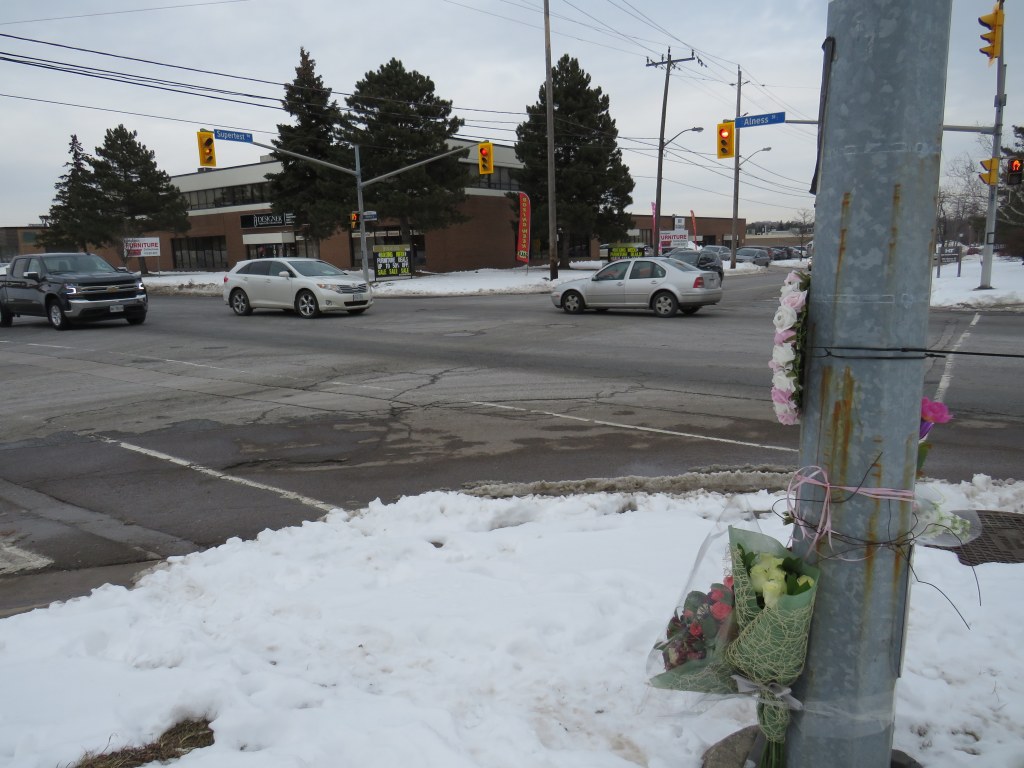
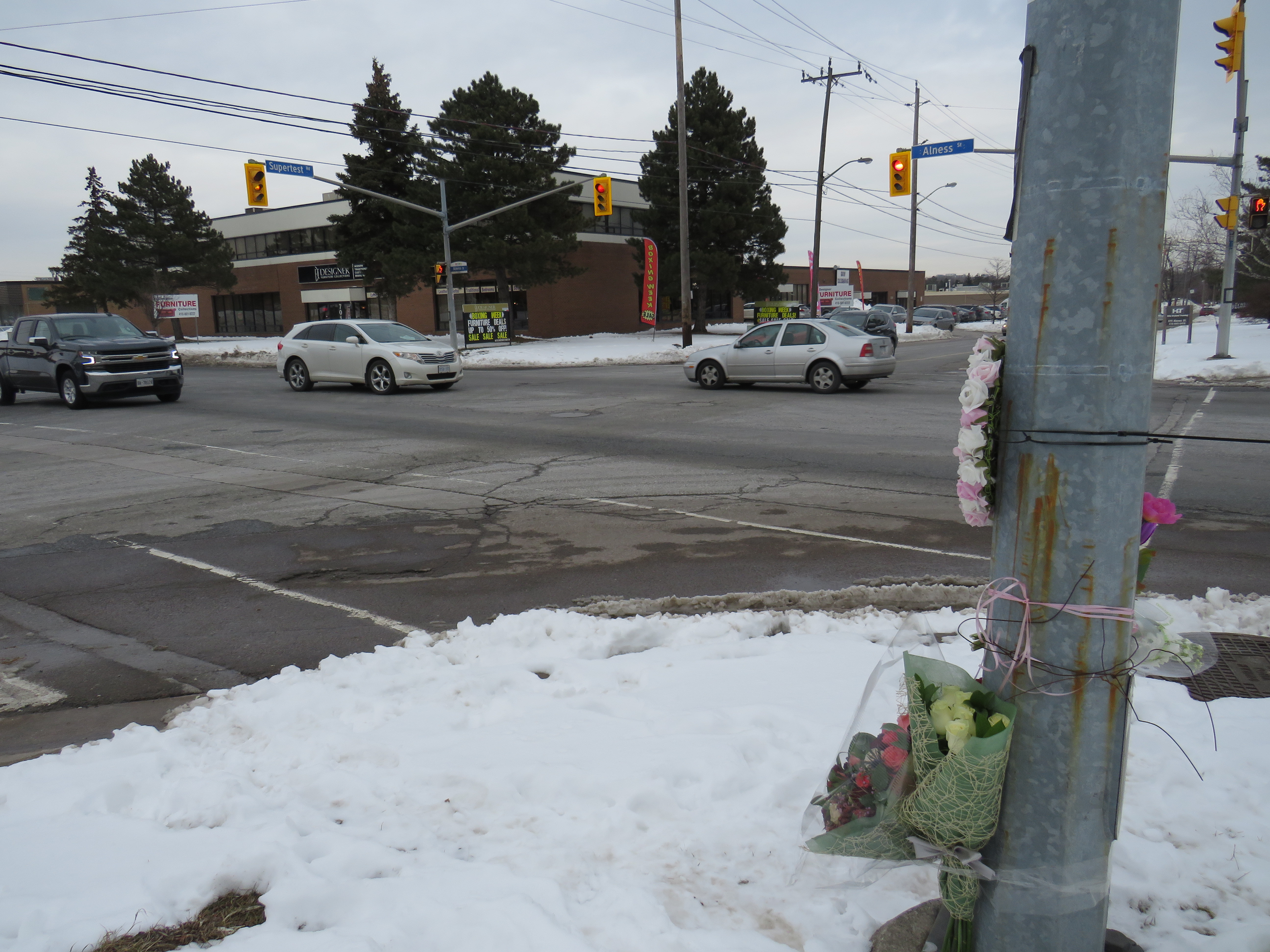
    On Tuesday, January 21, a 26-year-old woman was struck and killed by the driver of a tractor-trailer at the corner of Supertest Road and Alness Street in North York. According to police, the truck driver was making a right turn from Supertest south to Alness when he hit the pedestrian.

    Last week, I paid a visit to the intersection, located in an industrial area off Dufferin Street, just south of Steeles Avenue. It was immediately apparent that pedestrians are an afterthought in this part of the city, and tragedy was inevitable.

    The intersection of Alness and Supertest, with a makeshift memorial on the southwest cornerThe intersection of Alness and Supertest, with a makeshift memorial on the southwest corner
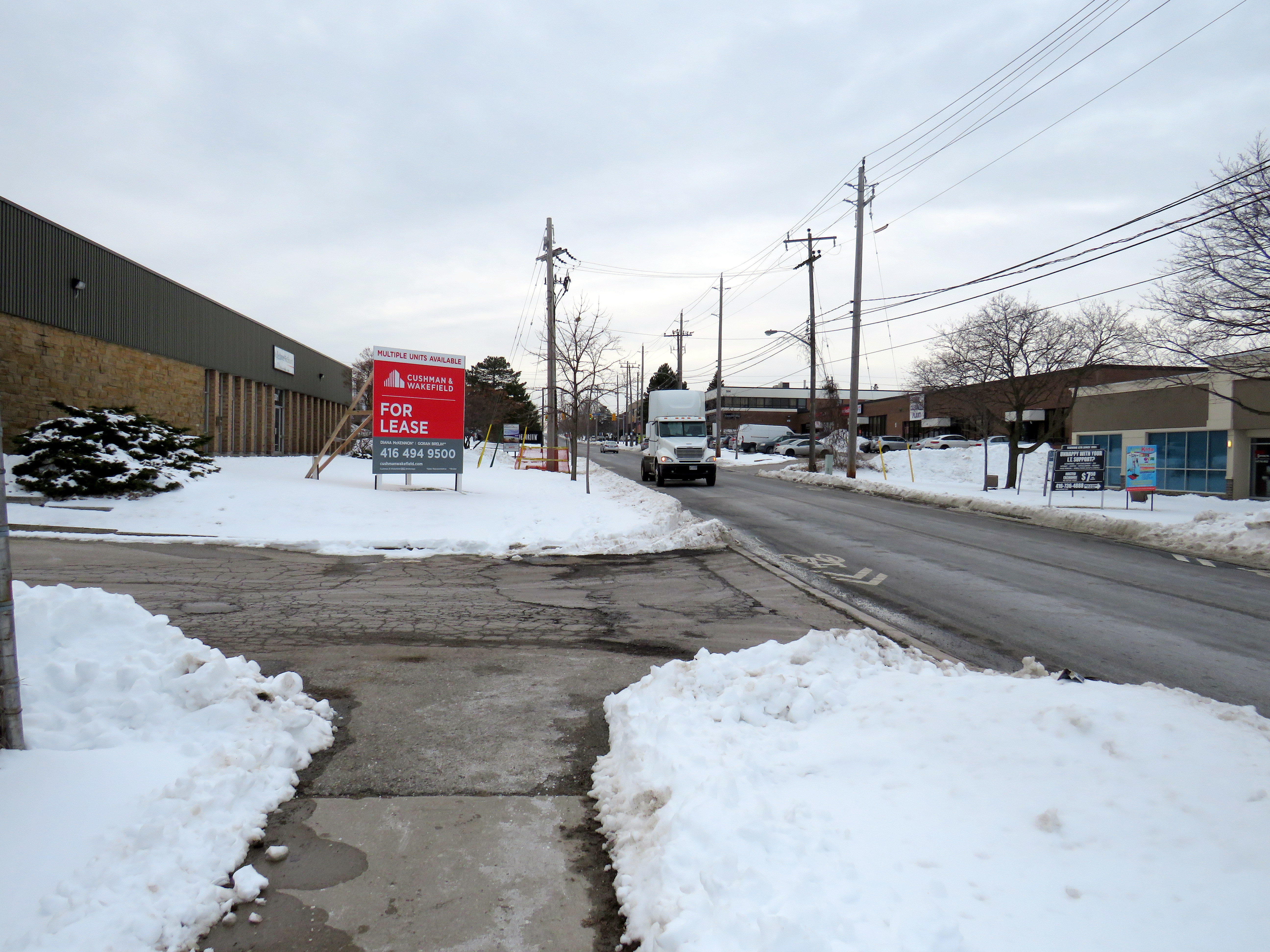
    I took the 105 Dufferin North bus from Sheppard West Station and got off at Supertest Road before walking west towards Alness Street. I pressed the beg button to cross Dufferin, but it did not work, so I crossed with the solid “don’t walk” sign. At least I had enough time to cross before traffic on Dufferin got the green light. With a bus stop at the intersection, G. Ross Lord Park to the east, and a busy supermarket on the southwest corner, there is no excuse for a malfunctioning pedestrian signal. In fact, the walk signal should appear by default.

    As I walked westward on Supertest, the lone sidewalk on the south side of the street came to an end at an industrial driveway about halfway between Dufferin and Alness. With the snow, I was forced to walk on the street, which was busy with cars and trucks. Without any sidewalk, anyone using a wheeled device would also be forced on the street.

    End of sidewalkThe only sidewalk on Supertest Road comes to an end halfway between Dufferin and Alness
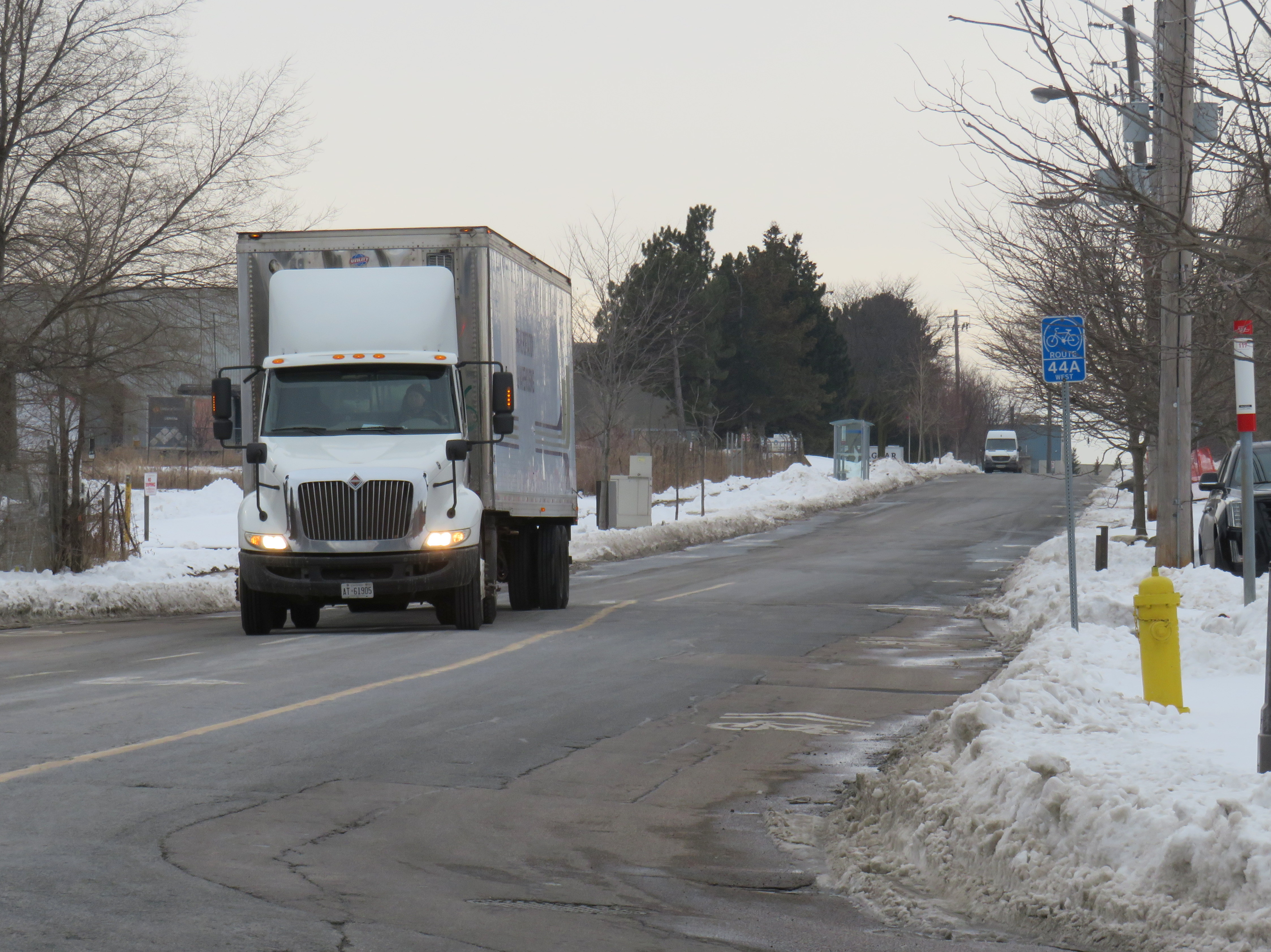
    With my smartphone, I recorded my walk along the curb towards Alness Street, avoiding the snowbanks, debris, and motor traffic. It was not a pleasant walk.

    The intersection of Supertest and Alness is a signalized intersection, with pedestrian signals and crosswalks on all four sides. Alness has a through sidewalk, but only on the east side of the street. The intersection is surrounded by a scrapyard on the southwest corner, a bank on the northwest corner, and warehouses to the east. The missing sidewalk on the south side Supertest east of the intersection resumes west of Alness.

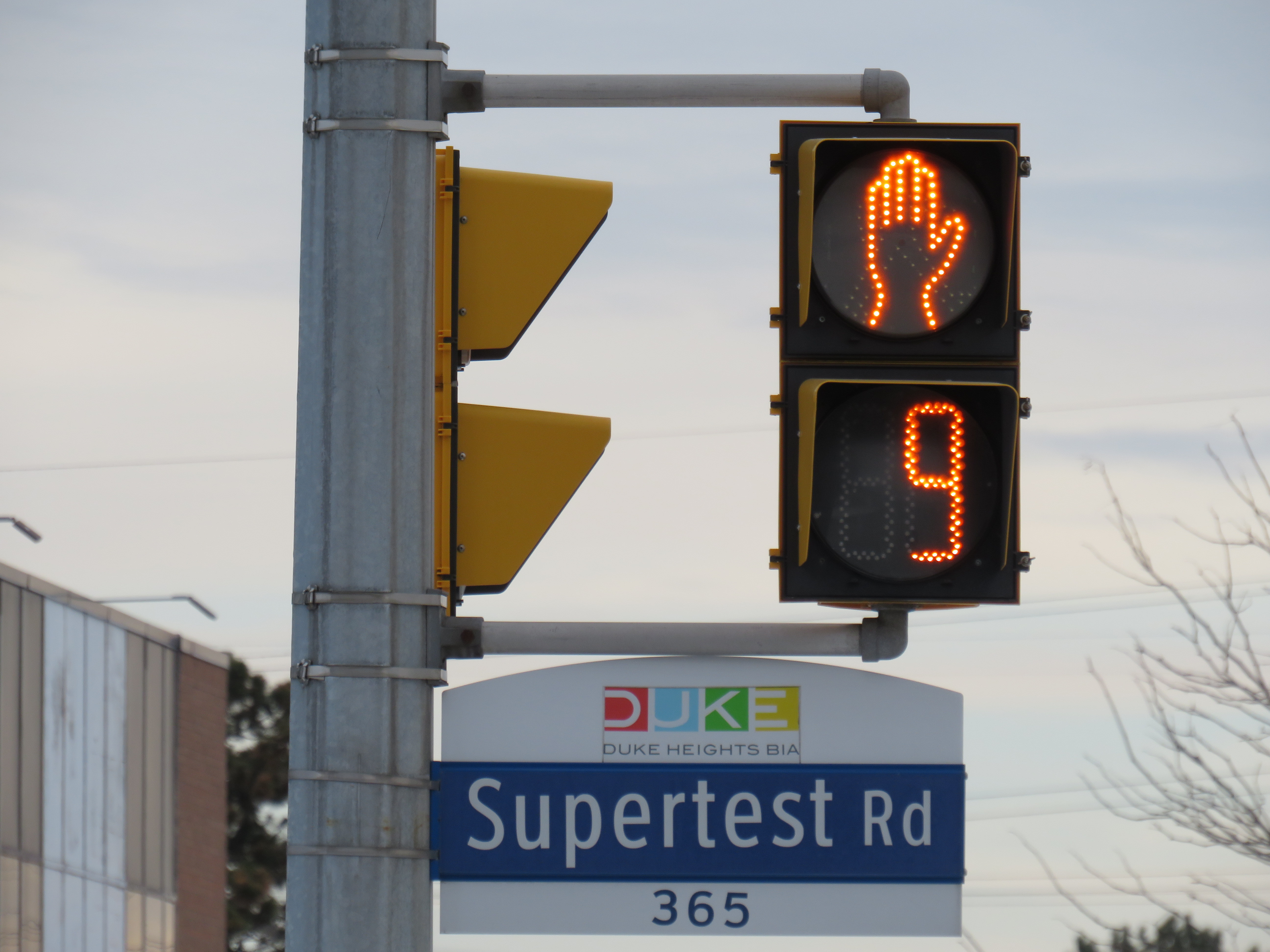
    The traffic lights are on a timer, and walk signals automatically appear, so there are no beg buttons at Alness and Supertest. What I noticed during my visit is that motorists will regularly rush to get through an amber signal, sometimes running a red. Truck drivers make wide right turns. Though the area is not pedestrian friendly, I did note several pedestrians in the area, running errands at the bank or walking to and from several of the nearby businesses.

    Truck turning from Supertest to Alness

    Finally, I noted the sharrows, the signed bicycle route on Supertest Road, and the TTC stop on the north side. The cycle route is supposed to connect G. Ross Lord Park on the east side of Dufferin to Flint Road to the west and south to the Finch Corridor Recreational Trail, but it’s not an enticing place to bike. Meanwhile, the TTC stop, for the limited-service 117 Alness route, is inaccessible without a sidewalk leading to it.

    Looking west on Supertest RoadLooking west on Supertest Road, with the sharrow, TTC stop, and bike route sign on the right
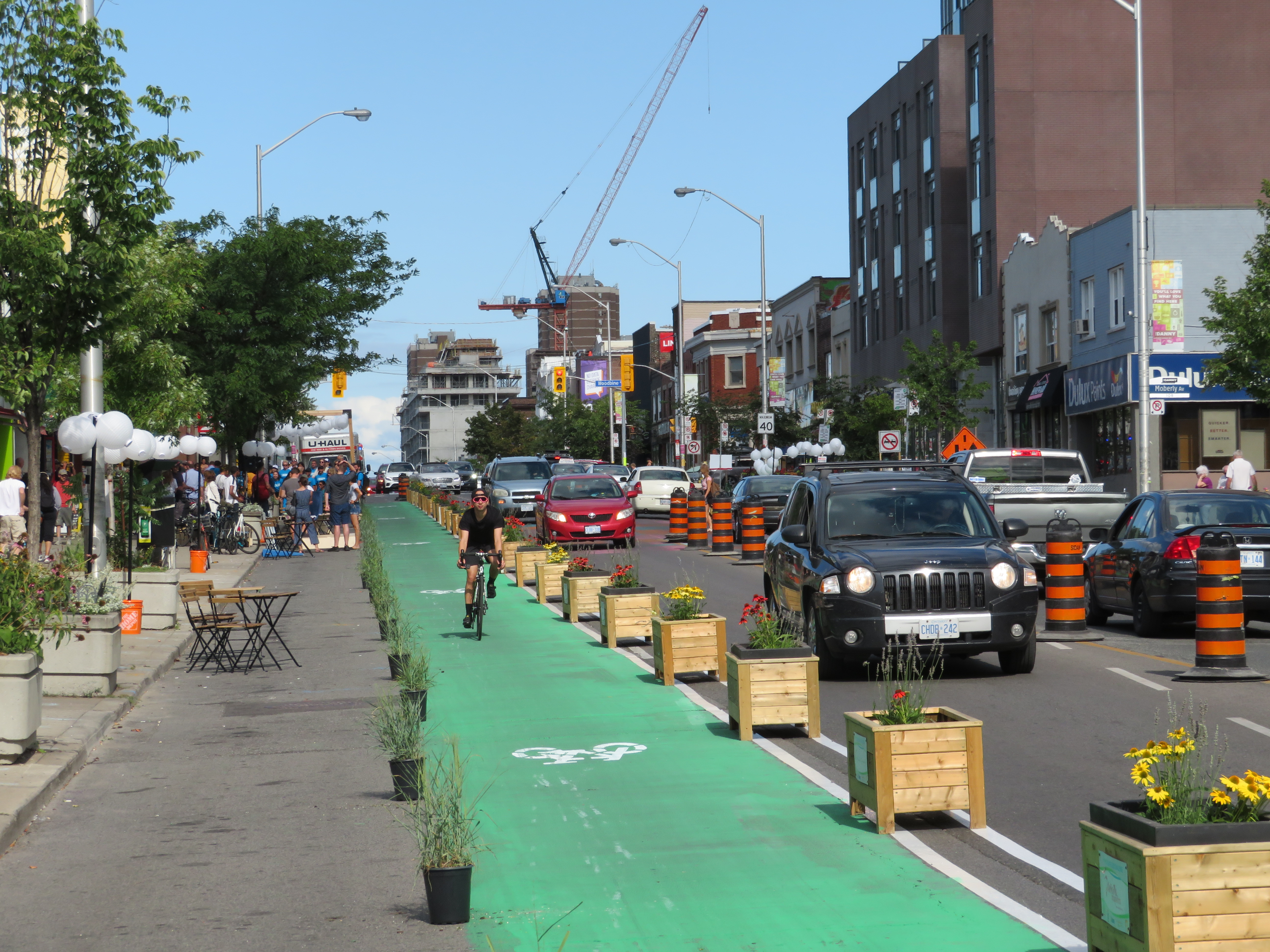
    Everything about this industrial intersection was designed to fail pedestrians and cyclists. Last week, it did exactly that.

  • Survey says… Torontonians demand safer streets

    IMG_3729A mock-up of a re-imagined Danforth Avenue, Summer 2019
    Yesterday, I met with fellow road safety advocates Keagan Gartz, executive director of Cycle Toronto, Gideon Forman from the David Suzuki Foundation, and Jessica Spieker, from Friends & Families for Safe Streets. The occasion was to publicize a new poll commissioned by the David Suzuki Foundation that gauged Torontonians’ support for action on road safety as well improvements to pedestrian and cycling infrastructure, including two projects planned for Yonge Street — YongeTOmorrow  in the Downtown Core and Transform Yonge in North York.

    Almost 90 percent of Torontonians are concerned about road safety, with close to 70 percent responding that the city is “is not doing enough.” Furthermore, 72 per cent of respondents are in favour of the changes planned for Yonge Street, and 80 percent of respondents want the city to build more protected bike infrastructure.

    On behalf of Walk Toronto, I was quoted by CBC journalist Lauren Pelley in her report, quoting the number of pedestrians killed in 2018 and 2019, noting “two pedestrian deaths this week — one in Brampton, one in Toronto — and those were both hit-and-run collisions. And it’s going to happen again, and it’s going to happen all over the city.”

    These poll results indicate an appetite for change. Hopefully Toronto City Council will take notice.

  • Why transit users shouldn’t beg to cross the street

    IMG_8372.jpg

    With consistently high ridership growth over the last few years, Brampton Transit has proven to be one of the Canada’s greatest transportation success stories. The Flower City has proven that transit can be successful and popular in North American suburbs.

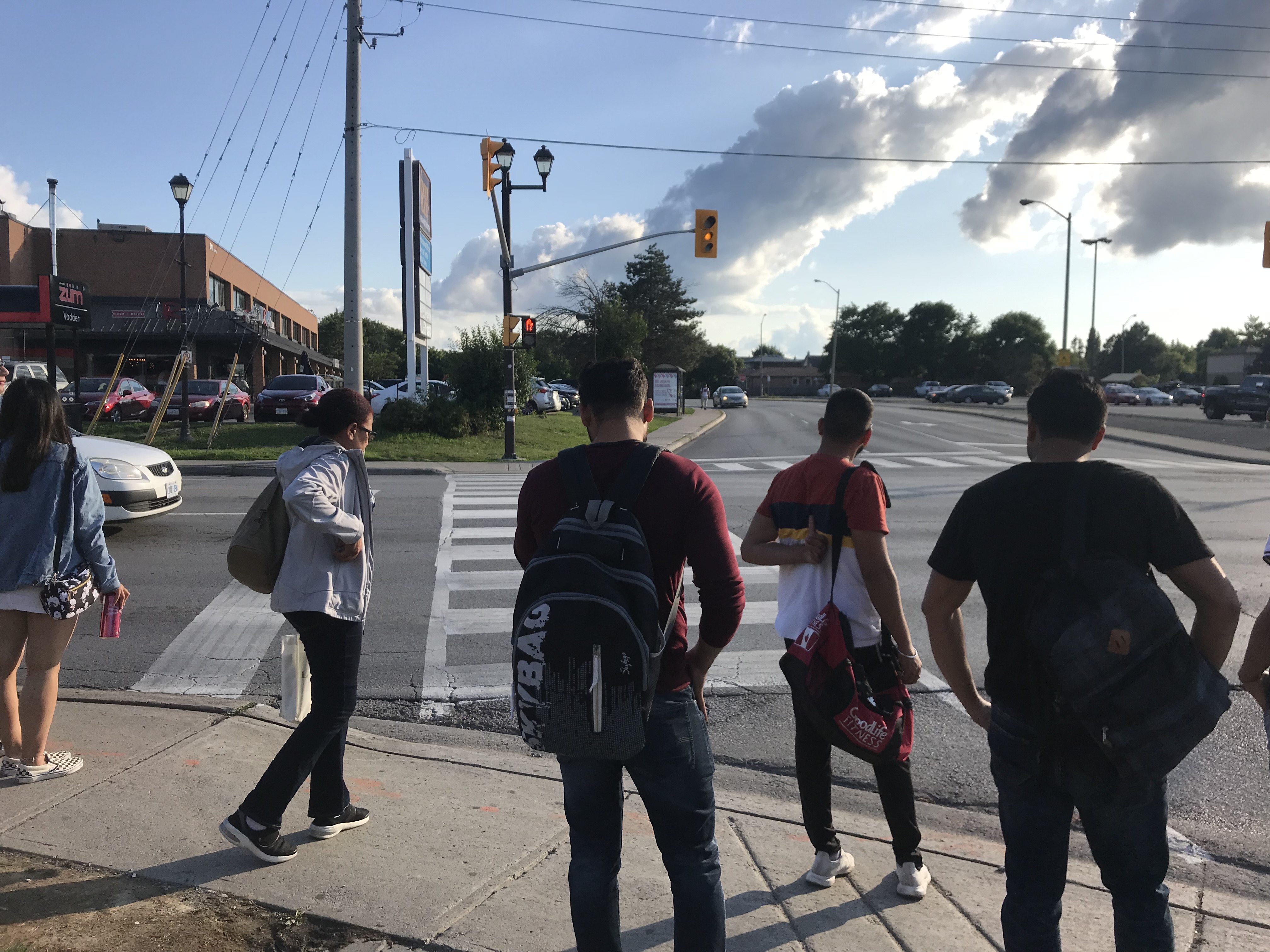
    Despite the success at improving transit and building ridership, Brampton has also prioritized motor traffic at intersection, making it unnecessarily difficult to cross the street at major bus stops. The intersection of Vodden and Main Streets, just north of Downtown Brampton, illustrates this problem.

    If the beg button is pushed in time, the walk signal to cross Main Street will appear for just seven seconds before the countdown begins, giving just 11 seconds to cross five lanes. Anyone who misses that light will have to wait over two minutes to legally cross.

    What Brampton — and cities like it — should do is remove the beg buttons at transit stops with the assumption that pedestrians will want to cross. It’s just one step towards building a transit culture and attracting new riders.

    I write more about this problem in Bramptonist.


  • Islington Avenue: deadly by design

    IMG_6266-001Memorial to 77-year old Pasquina Lapadula in front of her apartment building on Islington Avenue north of Finch

    On Thursday, November 29 at 6:30AM, Pasquina Lapadula left her Islington Avenue apartment building and crossed the street in front of her home. Soon after stepping out, she was struck and killed by the driver of an SUV traveling northbound. The driver then fled the scene. Sadder still, drivers passed the scene without stopping to help.

    Toronto police are looking for a dark coloured SUV with bright headlights and fog lights. They have yet to find the driver and lay charges.

    According to the Toronto Star, 37 pedestrians have been killed on Toronto’s streets. Of those, 24 were 60 years old or over. Since 2007, 410 pedestrians were killed on Toronto’s streets; 238 of those were aged 60 or older. November 2019 was an especially deadly month; Lapadula was the third older pedestrian killed in Toronto in just three days.

    Though blame can be laid at the driver, who despite having ultra-bright headlights and fog lights, struck Lapadula and sped away afterwards, this part of Islington Avenue, like many other suburban roads in Toronto, is deadly by design.

    IMG_6283-001Islington Avenue looking south from Aviemore Drive towards Finch Avenue

    The collision took place at Aviemore Drive in Humber Summit, in Toronto’s northwestern corner, near the boundary between the former cities of Etobicoke and North York. The area was developed in the 1960s and 1970s, when automobile-centric planning was at its peak.

    Islington Avenue is five lanes wide between intersections, including a striped middle lane that turns into left turn lanes at intersections. Sidewalks are separated by wide boulevards, and there are long distances between traffic signals.

    The road has a slight curve north of Finch Avenue, with a hill down towards the East Humber River at Finch. From Aviemore Drive, it is a 220 metre walk south to the crosswalk at Finch Avenue and 430 metres north to the traffic signals at Milady Road. Just south of Aviemore Drive are entrances to Gord and Irene Risk Park and Recreation Centre and Rowntree Mills Park.

    As the speed limit is unposted on this section of Islington Avenue, by law, vehicles may only go a maximum of 50 kilometres per hour. However, the road design encourages speeds far greater than the limit.

    IMG_6299-001TTC bus stopped in bay in front of Pasquina Lapadula’s apartment building

    As on Don Mills Road north of Finch, TTC buses stop in bus bays instead of on the street itself. These bus bays were not designed for the benefit of transit, but instead for the convenience of private motorists. Buses stopping get out of the way of traffic, and then must merge back in. (A law requiring other motorists to do so exists, but is never enforced.)

    Everything about the road design is designed for high vehicle throughput, with little consideration for pedestrian safety.

    IMG_6248-001Islington and Finch Avenues

    It is true that Pasquina Lapadula could have walked 220 metres down to Finch Avenue, and depending on her destination, another 220 metres back up the hill. The traffic signals and painted crosswalks would have provided additional safety. But the intersection of Finch and Islington itself is problematic.

    The intersection sits on a large viaduct over the East Humber River. Right turn slip lanes are found on the southwest and northeast quadrants, allowing right-turning traffic to pass by quickly while requiring pedestrians to cross an additional lane of traffic governed only by a yield sign. Buses on Finch stop at bus bays at the far side of the intersection, further lengthening the distance pedestrians must cross.

    IMG_6255-001Slip lane from Finch to Islington

    I was frustrated when two Toronto councillors advocate giving out reflective armbands for pedestrians to wear, especially as one of those councillors opposed road safety initiatives in her own ward. I was angered the Toronto Star’s editorial board ignore city data, their own reporters and columnists, and pedestrian and cycling advocates to back those two suburban councillors.

    This was especially tone deaf given the Toronto Police Service’s abandonment of traffic enforcement, the epidemic of pedestrians being killed in the last two years, and the disturbing number of hit-and-runs. Armbands would not have saved Pasquina Lapadula’s life when she was confronted by the driver of a speeding SUV, with blindingly bright headlights and fog lights.

    This is why we need real Vision Zero measures like lower speed limits, more safe pedestrian crossings, road re-engineering to slow down vehicles, complete streets, and effective police enforcement.

  • Zero vision in suburban Toronto

    IMG_3684-001

    Though the city of Toronto has made some progress towards safer streets recently, the lack of police enforcement of traffic laws, the reluctance to spend serious money on road redesign, and the attitudes of some city officials continue to be obstacles towards making Toronto a safe place to walk and cycle.

    As part of the city’s Vision Zero 2.0 Plan, City Council voted in July to reduce speed limits from 60 km/h to 50 km/h on 37 sections of arterial roadways across the city, and from 50 km/h to 40 km/h on five more roads. Councillors Ana Bailão and Jim Karygiannis moved to extend several of these sections. However, rookie councillor Cynthia Lai (Ward 23-Scarborough North) moved to amend the item to remove three sections of arterial roads in her ward:

    • Brimley Road from Sheppard Avenue East to Steeles Avenue East,
    • Markham Road from Milner Avenue to Steeles Avenue East, and
    • McCowan Road from Milner Avenue to Steeles Avenue East.

    Councillor Lai claimed that her constituents were concerned about gridlock in her ward and opposed the speed restrictions. Scarborough is especially dangerous for pedestrians as it has the most kilometres of high-speed arterial roads in the city and the longest distances between crosswalks.

    High speeds and dangerous driving are major problems in Ward 23, a part of the city that I visit a few times a month. Brimley, Markham, and McCowan Roads are designed solely for car traffic: they are lined by plazas, warehouses, and backyard fences. Traffic signals are often far apart. Markham and McCowan Roads are also high-speed thoroughfares connecting Markham to Highway 401.

    Walking along McCowan Road between Finch and Steeles earlier this year, my spouse and I encountered a pedestrian refuge smashed in by a motorist. The refuge island was protected by reflective signage, as well as metal barriers, and was installed to help pedestrians cross at a TTC bus stop, though pedestrians are not given the right of way.

    IMG_1644Smashed pedestrian refuge island on McCowan Road

    This is why it was so disappointing to see Councillor Lai organize a “Senior Pedestrian Safety Initiative” with Toronto Police at Woodside Square, a community mall at the corner of McCowan Road and Finch Avenue. Councillor Lai, her staff, and local police were “educating” seniors about pedestrian safety, while giving out reflective armbands. Councillor Lai claimed it was part of the city’s Vision Zero strategy, and she doesn’t “think we should blame anybody.”

    This was just days after a police report showed a severe decline in traffic tickets issued and extremely limited police enforcement of unsafe driving in Toronto. On the Friday before, two seniors were seriously hurt when crossing the street.

    https://twitter.com/cynthiaToronto/status/1198323383538204673

    Needless to say, Councillor Lai and the Toronto Police taken to task by road safety advocates and even fellow councillors. Jessica Spieker of Friends and Families for Safe Streets called it a “form of victim blaming.”

    Supporting Councillor Lai’s position, on Monday November 25, Councillor James Pasternak said “wearing high visibility clothing or reflective gear is a key part of keeping everyone safe, including pedestrians, construction workers, cyclists, police officers and crossing guards. Let’s make VisionZeroTO work.” Councillor Pasternak is Mayor John Tory’s handpicked chair of the Infrastructure and Environment Committee, which among its duties is ensuring the safety of Toronto’s road infrastructure.

    Vision Zero 2.0 says nothing about armbands. Instead, the plan includes reducing speeds, road design improvements, and safer crossings at TTC stops.

    Though it is always a good idea for pedestrians to be aware of their surroundings and be predictable when crossing the street, most of the responsibility falls on the city, which designs the roads, the police, who have abandoned their duty to protect road users, and drivers, who are licensed and insured to operate multi-tonne vehicles. The rash of hit-and-runs after pedestrians were struck is especially alarming.

    In Waterloo, a crossing guard performing her duties was struck and seriously injured by the driver of a F-150 truck, who then fled the scene. This was the despite the school guard wearing a reflective vest, carrying a stop sign, in a marked school crosswalk. No amount of high-visibility clothing will protect pedestrians from dangerous drivers, who in Toronto this year, killed pedestrians walking on sidewalks, and injured pedestrians in transit shelters.

    Ironically, Woodside Square itself was hit twice by drivers in the last two years. In December 2017, a motorist crashed through both sets of doors at the mall entrance closest to Shoppers Drug Mart. In February 2018, a motorist, possibly dealing with medical problems, crashed into several cars and into a Subway restaurant at the mall. High-visibility clothing would not have helped in either of those cases.

    It’s unfortunate that a city councillor will choose giving out reflective armbands over effective speed reductions, road redesign, and traffic enforcement. Hopefully, Councillor Lai will take the criticism to heart and do better for Ward 23.

    Post script: A staff report to the Infrastructure and Environment Committee in October 2019 continued the recommendation for speed reductions in Ward 23, citing minimal impacts to travel times, and the dangerous conditions on Brimley, Markham, and McCowan Roads. Staff noted that there have been 6 fatalities and 20 serious injuries incidents on those three road segments. On October 29, Council voted to lower the speed limits on Brimley, Markham, and McCowan Roads against Councillor Lai’s objections.

  • Addressing the Toronto Police Services Board

    IMG_2922.PNG

    Earlier today, on behalf of Walk Toronto, I made a deputation to the Toronto Police Services Board addressing the lack of traffic enforcement in the City of Toronto. After criticism from organizations such as Walk Toronto, Cycle Toronto, and Friends and Families for Safe Streets, the Toronto Police now plans to initiate a “Vision Zero enforcement team,” with the city funding the annual $1 million cost.

    As anyone who walks or cycles in the City of Toronto knows, aggressive, distracted, and careless driving is commonplace. They also know that apart from the well-publicized blitz, the Toronto Police Service (TPS) have not responded to the carnage on our streets.

    I spoke to express our disappointment of how the TPS completely failed vulnerable road users by not engaging in meaningful traffic enforcement and calling for a return to making this a priority. Similar deputations were made by John Sewell, former mayor and police critic, Keagan Gartz from Cycle Toronto, and Jessica Spieker from Families and Friends for Safe Streets.

    I found it was a bit intimidating. it was my first formal deputation in a long time, and I sat at a table in front the board, including Chief Mark Saunders and Mayor John Tory. But I did it! Next time I depute, I should find it easier.

    Mayor Tory, to his credit, convinced fellow police board members that the traffic enforcement team be made permanent, and funded from the Toronto police budget, starting in 2020. This motion passed unanimously.

    It is not enough, of course, but it’s an acknowledgement that we desperately needed. Walk Toronto and our partners will continue to push for safer streets.

    Unfortunately, Chief Saunders chose to blame airpods for the epidemic of pedestrian injuries and deaths, ignoring experts and the city’s own data:

    Chief Saunders and the board had the opportunity to ask questions of any member of the public who took the time to craft and make deputations today at Police Headquarters. Regretfully, they chose not to do so.

    Below is the complete text of my deputation to the Toronto Police Services Board. You can watch the whole meeting here (I speak just after the 1:00 mark).

    Vision Zero is an internationally recognized set of road safety tenets that aims to reduce all fatalities and severe injuries in a municipality to zero over the course of a year, while increasing safe, healthy, equitable mobility for all, especially vulnerable road users such as pedestrians.

    Road design, engineering controls and enforcement are all essential pillars for reducing road violence on our streets. Road improvements force vehicle operators to slow down and take notice, while improving the visibility and safety of vulnerable road users, especially pedestrians and cyclists.

    In the meantime, the City of Toronto has focused on reducing speed limits, adding traffic signals, and designating school safety zones and senior safety zones. But this has been more about putting up signs. Signs have no effect If there are no consequences for disobeying them.

    At Walk Toronto, we have noted the lack of police enforcement of safe speeds, red light running, illegal turns, and distracted driving. There may be the occasional well-publicized blitz, but for the most part, motorists in Toronto know that they can get away with risky and dangerous behaviour because the likelihood of being caught is negligible. At best, Toronto’s response to road violence has been reactive, rather than proactive.

    To date, 34 pedestrians were killed on Toronto’s streets in 2019; in 2018, 42 pedestrians were killed. Not just on city streets, but on sidewalks, at bus stops, and even inside a bus shelter. Earlier this year, a home was struck in East York. Meanwhile, police are being deployed downtown not to protect pedestrians, but to ensure traffic isn’t impeded at busy intersections during rush hours.

    We were outraged – but not shocked – by a recent Toronto Star report that found that the number of traffic tickets issued dropped from 700,000 in 2010 to just 200,000 in 2018, and that there are no officers assigned to full-duty local traffic enforcement. This is despite a growing city, an ageing population, and enhanced provincial penalties for distracted, reckless, and impaired driving introduced over the last few years.

    The Toronto Police Service has failed the city’s most vulnerable road users.

    Though red-light cameras, photo radar, and automated school bus “stop” signs are useful tools, there is no substitute for old-fashioned police enforcement. Additional new dedicated officers are a good step in recognizing this failure, as long as enforcement does not target indigenous, racialized, and other communities that are already disproportionately affected by policing. In the end, we need both better designed streets and a renewed direction that the Toronto Police Service will have no tolerance for unsafe driving in Toronto.

    Thank you.