Tag: GO Transit

  • Unanswered questions about Toronto’s next subway extension

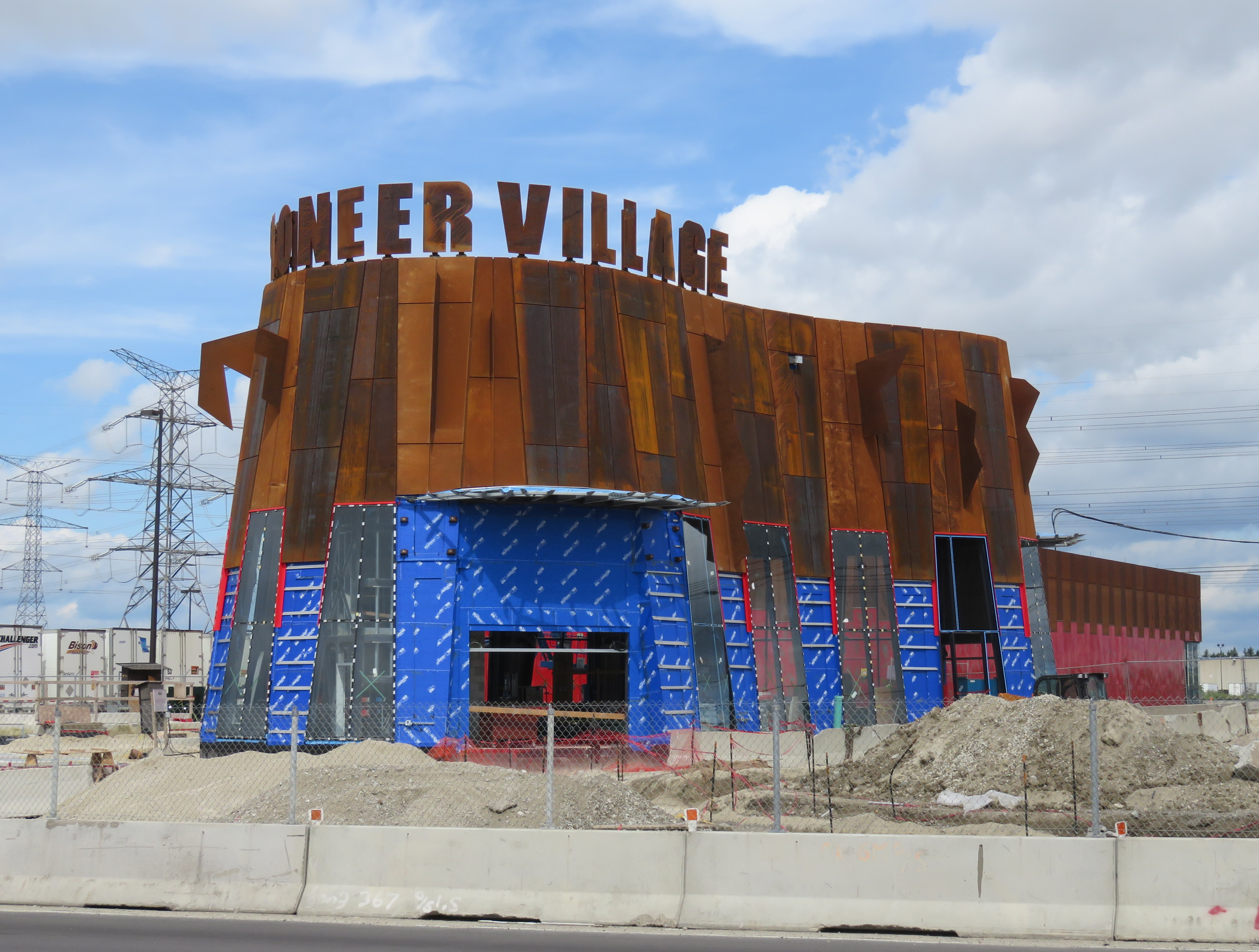
    IMG_4677-001.JPGPioneer Village Station under construction, August 2016

    Note: I posted an update to this article on October 4, 2017 

    By the end of next year, the Toronto Transit Commission (TTC) Line 1 subway extension to Vaughan will finally open, two years later than originally planned. The line will provide relief for thousands of York University students and employees and improve service to transit-starved northwest Toronto. It will terminate at Highway 7 in Vaughan, at the ambitiously (and in my view, ridiculously) named Vaughan Metropolitan Station, posing a challenge to cartographers and designers everywhere.

    When the $3.2 billion subway extension begins operating in December 2o17, it will be the first new major subway project since the opening of the five stop Sheppard Subway in 2002. It is also the first subway line to cross the City of Toronto boundary. (Coincidentally, this subway extension will cost the same as the proposed one-stop extension of Line 2 to Scarborough Centre.)

    Aside from the delays, the big price tag, and the silly Vaughan station name, there are two more issues that will arise, and which have yet to be completely figured out: how four separate transit agencies will re-route their buses once the subway opens, and the necessary question of fare integration once that happens.

    (more…)

  • GO Transit’s Grimsby problem

    IMG_6615-001.JPG
    The Bruce Trail near Fifty Road, November 6, 2016

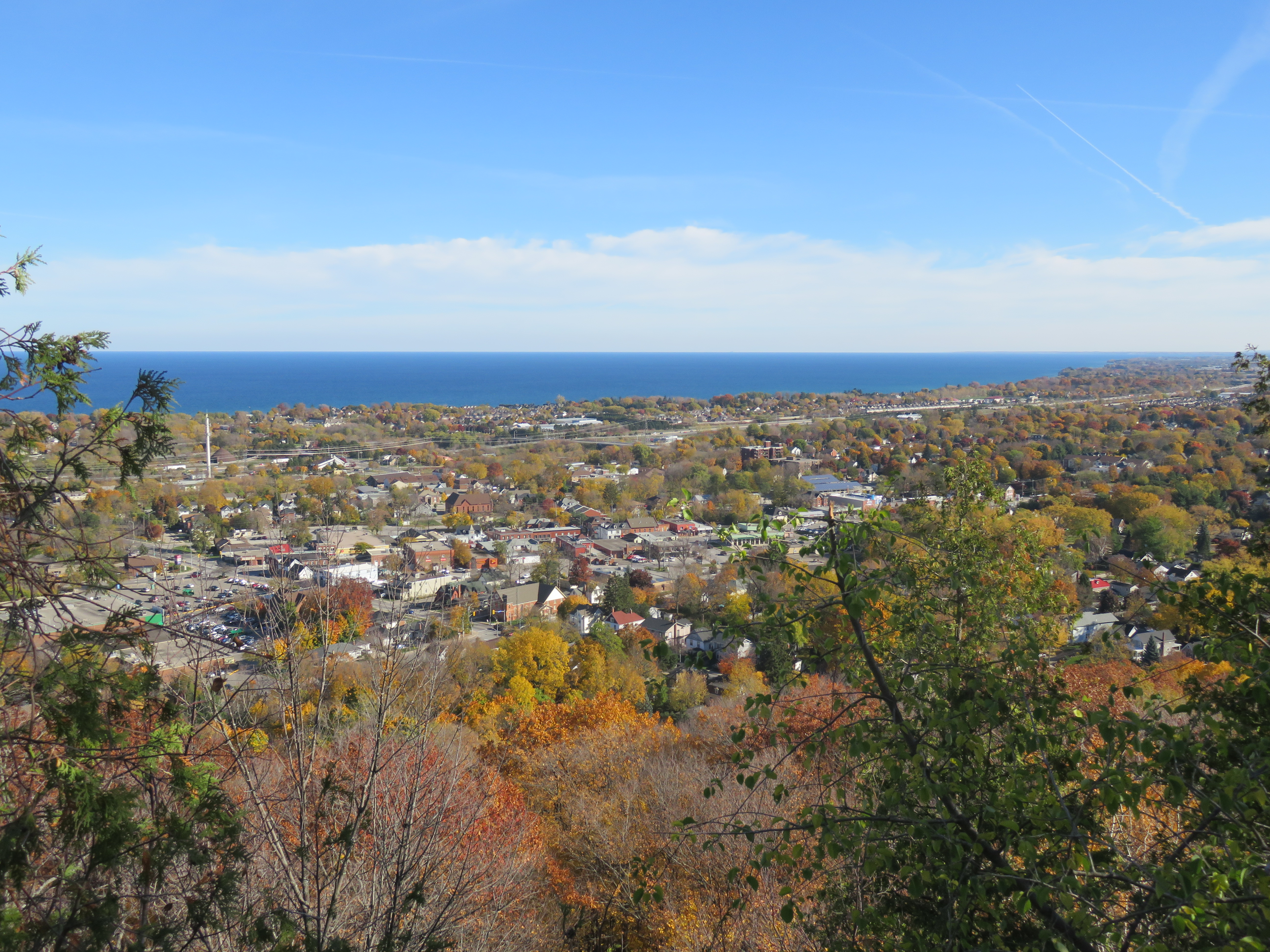
    On Sunday, November 6, I took advantage of an unseasonably warm November day to go hiking on the Bruce Trail. I started in Grimsby and hiked for 23 kilometres west to the Stoney Creek Battlefield Monument in Hamilton. The hike was lovely as there was still some fall foliage left to enjoy, and the views above the Escarpment over Niagara vineyards and Lake Ontario were spectacular.
    img_6559-001
    View of Downtown Grimsby and Lake Ontario from the top of the Niagara Escarpment

    In order to do this six hour, one-way hike, I took the train to Grimsby, and began my trip from there (enjoying a coffee and snack at a great local coffee shop first). Upon arriving at Stoney Creek, I took a Hamilton Street Railway bus downtown for dinner before taking a GO bus back to Toronto.
    IMG_6650-001.JPG
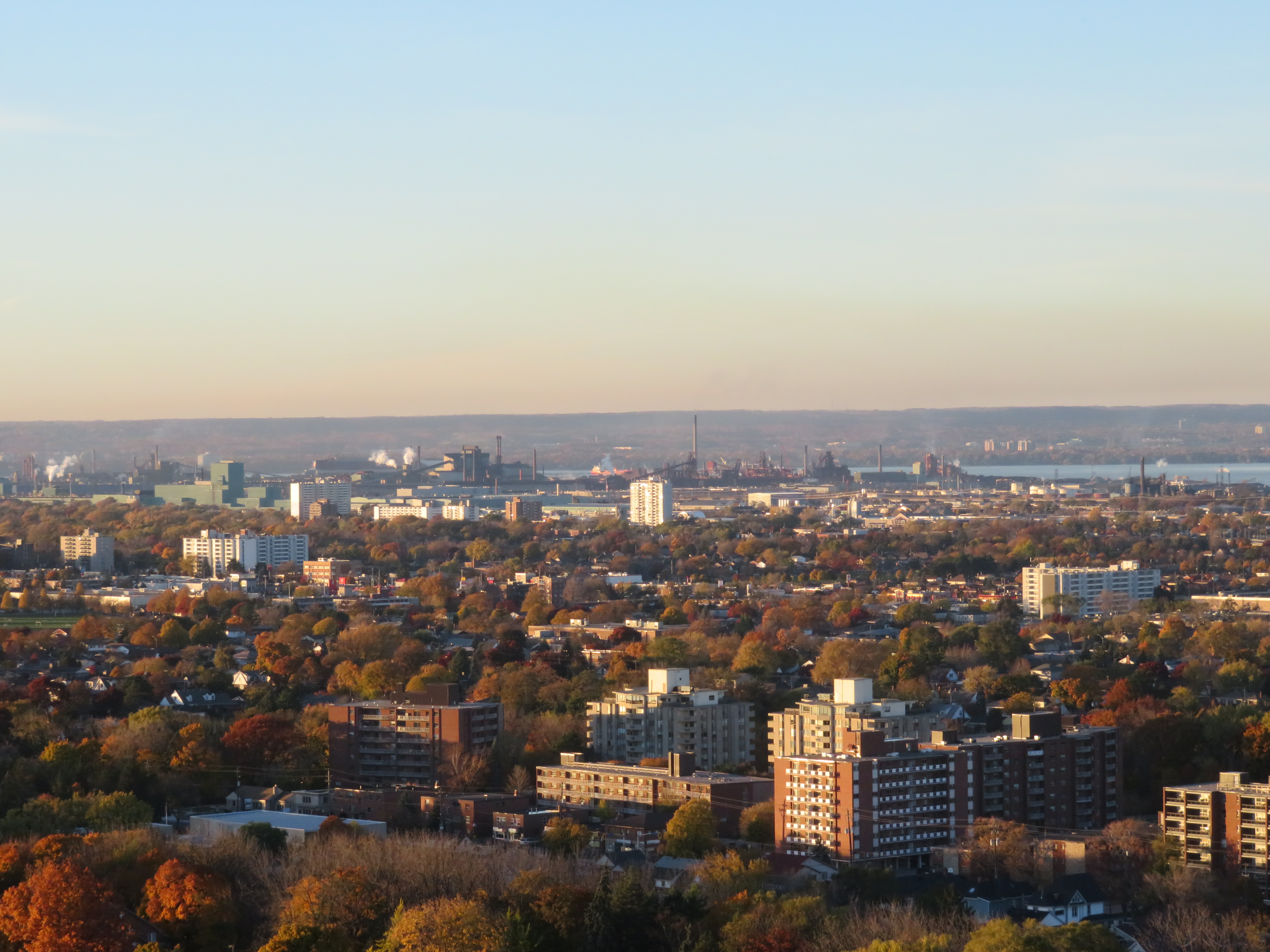
    View from the lookout at Devil’s Punch Bowl Conservation Area towards Hamilton Harbour
    img_6686-001
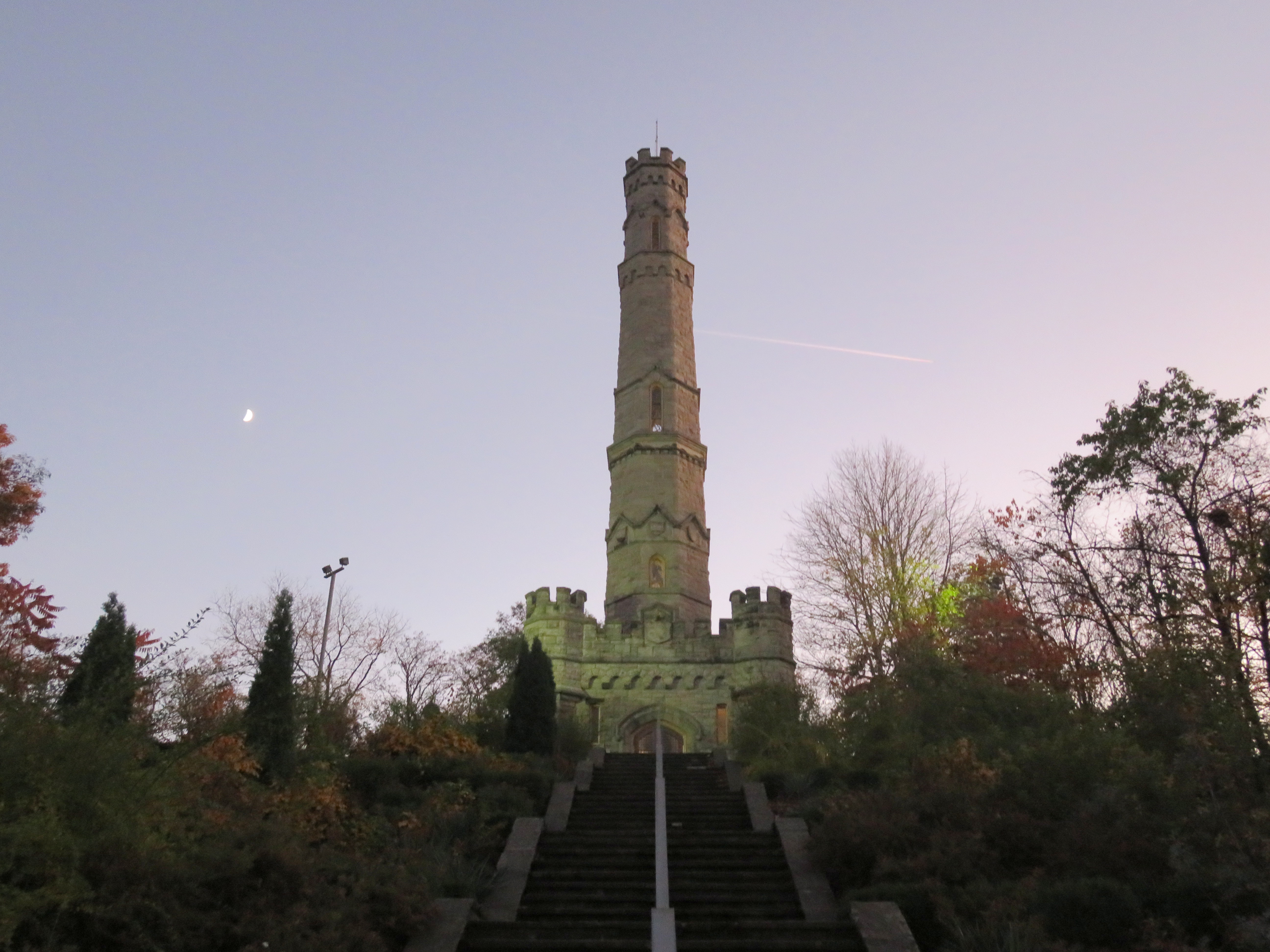
    The Stoney Creek Battlefield Monument, where I ended my hike as the sun began to set


    When I go for a bike ride or a hike, whether it be a solo trip or a hike with friends, I like to plan the trip in advance, and to think about the transportation options for getting there. And so I come once again to thinking about Grimsby, GO Transit, VIA Rail, and local transit.

    There is currently only one train each way between Toronto and Niagara Region — Amtrak’s Maple Leaf, which is operated by VIA crews on the Canadian side of the border. The Maple Leaf takes 12 hours and 30 minutes to get from Toronto’s Union Station to New York’s Penn Station, including a stop at the border for customs and immigration checks. Other delays, such as freight traffic and even ship traffic on the Welland Canal, make this train commonly late for Niagara passengers headed to Toronto in the evening. There was once a second daily VIA train between Toronto and Niagara Falls, scheduled to serve commuters, but it was cut by the Stephen Harper-led Conservative government in 2012.
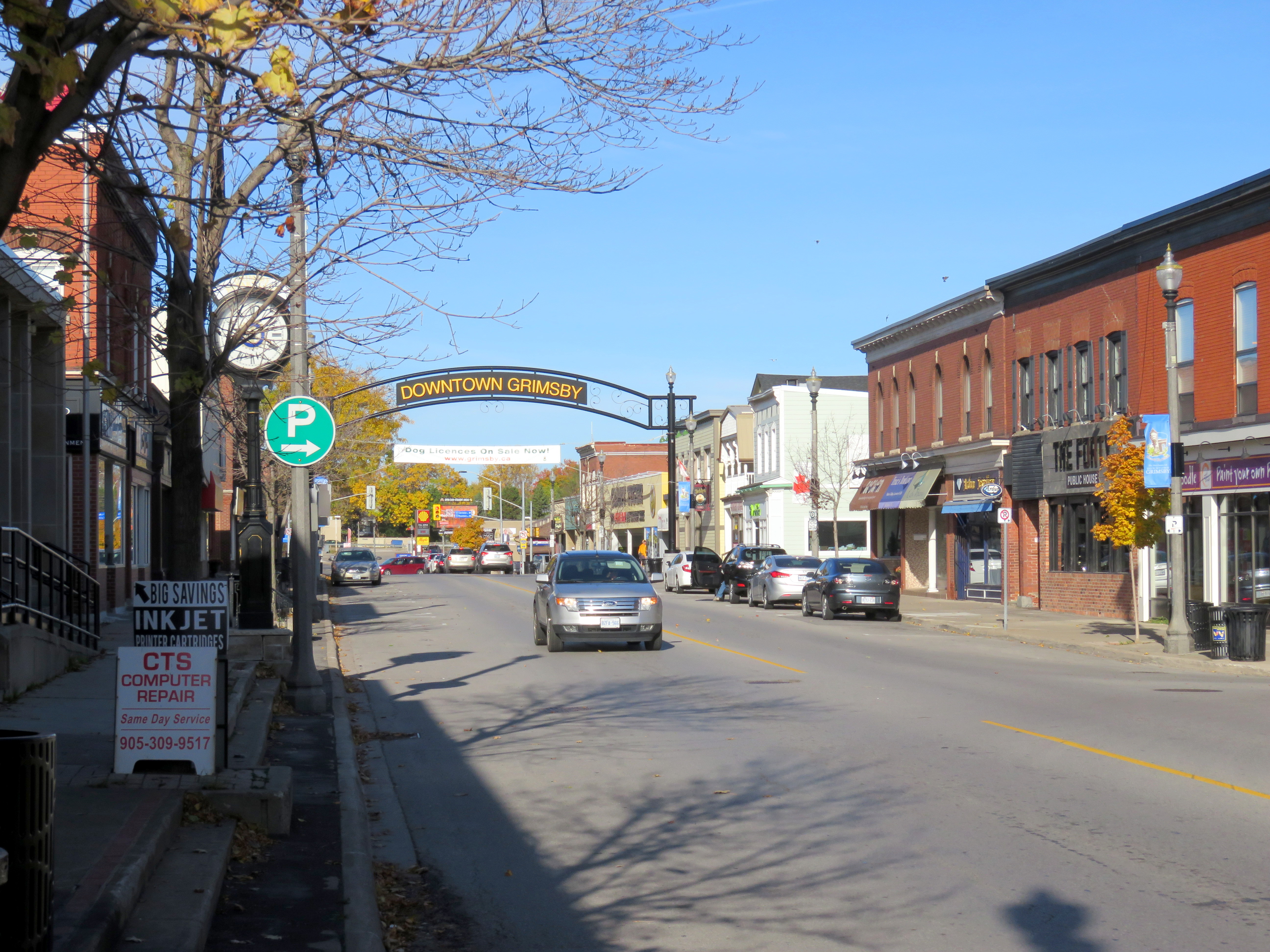
    img_6547-001Downtown Grimsby

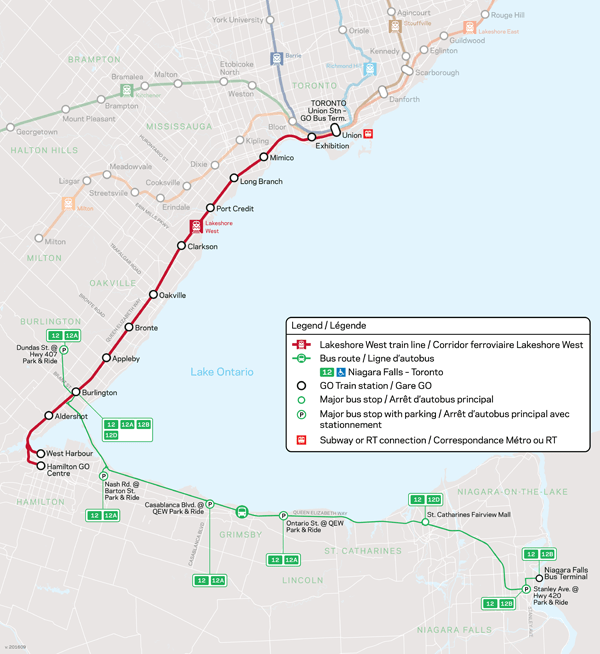
    GO Transit operates a summer weekend train service between Toronto and Niagara Falls, making stops at Port Credit, Oakville, Burlington, and St. Catharines, but not at Grimsby. GO Transit also operates a year-round bus service — Route 12 — that follows the QEW between Burlington GO Station and Downtown Niagara Falls, stopping at several park and ride lots and at Fairview Mall in St. Catharines, a secondary hub for local transit in that city.

    The Maple Leaf Train leaves Union Station at 8:20 AM, 7 days a week, and arrives at Grimsby just after 9:30 AM, stopping only at Oakville and Aldershot. Taking GO Transit, it takes nearly two hours to get to the park and ride at Casablanca Boulevard, including the transfer time at Burlington Station.
    niagara_bus_600
    GO Transit Route 12

    The Grimsby Amtrak/VIA station is located on Ontario Street, at a site picked by the Great Western Railway in 1853. It is a mere 5-10 minute walk to Downtown Grimsby, located in the centre of that community’s population. The GO Transit park and ride is located at the west end of town, at Casablanca Boulevard. The planned GO Transit Rail Station is located nearby. The bus stop and proposed rail station is located 3.5 kilometres from Downtown Grimsby, or a 45 minute walk.
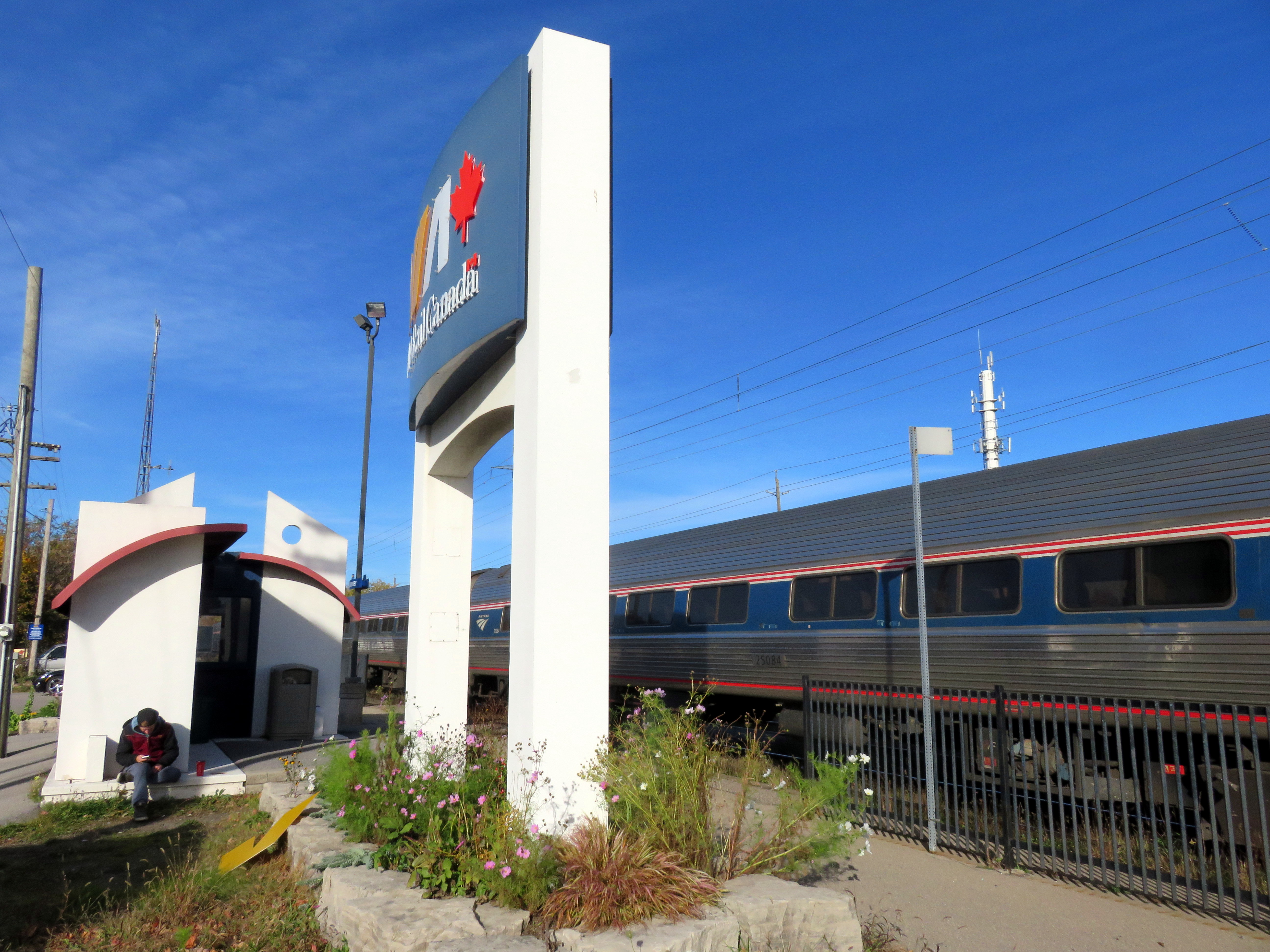
    img_6544-001Grimsby Station

    The current railway station at Grimsby consists of only a small shelter and indoor waiting area, along with a small parking lot for VIA customers. The platform is small, about one rail car’s length. The VIA Rail Canada sign is almost as large as the station building itself. But for me, the railway station’s location was far more convenient than the GO bus stop at Casablanca Boulevard.

    A new station at Casablanca Boulevard offers several advantages for GO Transit: easy access to the Queen Elizabeth Way, plenty of undeveloped land for a parking lot, and room for a platform for GO Transit’s 10-car and 12-car trains. But the location is not friendly for customers who wish to walk or cycle to the train, and without a local transit system, it’s inaccessible for many potential Grimsby commuters unless they were to take a taxi, get a ride, or drive their own car.
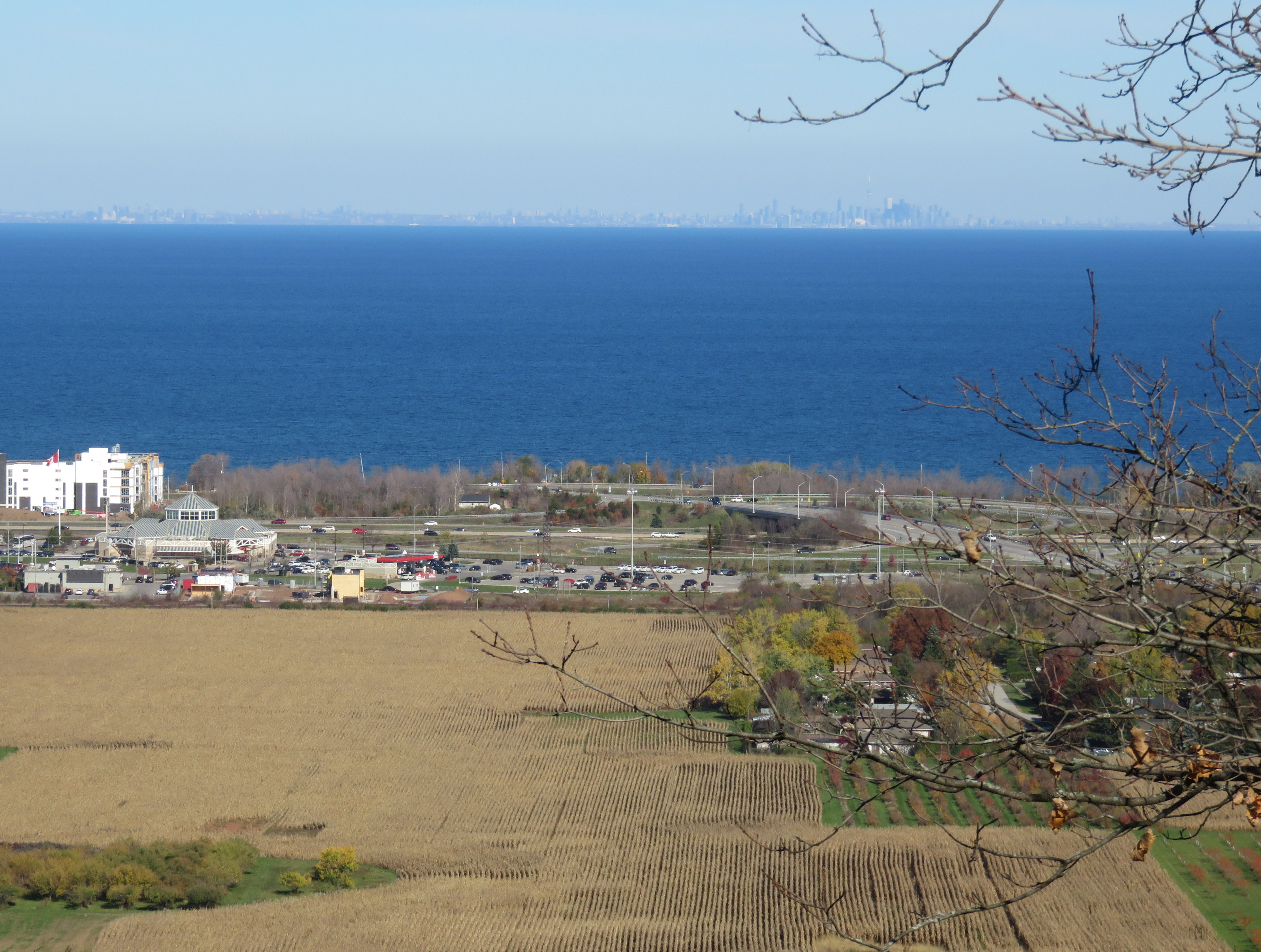
    img_6595-001
    Overlooking the QEW/Casablanca Boulevard interchange and the proposed location of the Grimsby GO Station. GO buses serve the park-and-ride lot in the middle ground. Note the clear view across the lake to Toronto.

    I have argued here before that GO Transit has an unfortunate record of catering to motorists while mostly ignoring the needs of many of its current and potential customers. GO Transit’s need for large parking lots often precludes locating stations in more urban locations. By providing ‘free’ parking, GO forces all passengers to subsidize those who drive alone to its stations.

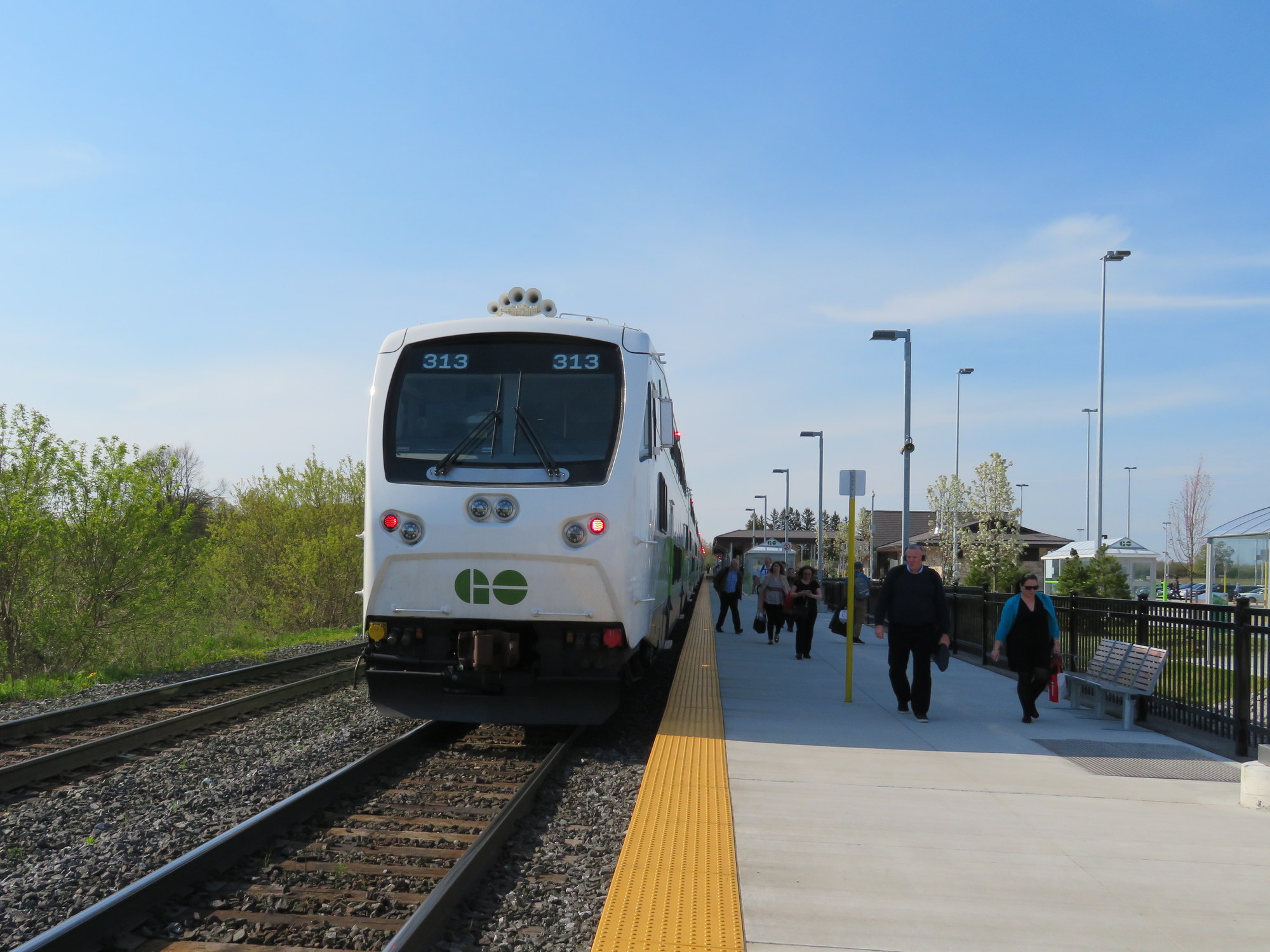
    Of course, GO Transit is going to build Grimsby Station at Casablanca Boulevard; it was announced earlier this year as part of a GO service expansion project. But a useful local transit system, scheduled to connect with GO trains and buses, offering fare integration, can mitigate this problem. Transit riders shouldn’t be told to take a hike.
  • Ridership has tripled on UP Express, but we can do even better

    19008325386_9c321ac7ab_k

    When UP Express — Toronto’s rail link to Toronto Pearson International Airport – -launched on June 6, 2015, the one-way fare between Union Station and Pearson Airport was set at $27.50, or $19.00 with a Presto card. At the time, Metrolinx, the provincial agency charged with planning and integrating transportation services in the Greater Toronto and Hamilton Area and the parent agency of GO Transit, expected that ridership would hit 5,000 passengers a day in a year. But after its launch, ridership sunk instead. 

    By January 2016, only an average of 1,967 passengers a day rode UP Express, so Metrolinx cleaned house and lowered the fares. The one-way cash fare was reduced from $27.50 to $12, and from $19 to $9 with a Presto card, and fares between Union and Bloor and Weston stations were reduced to match the GO Transit fares for the same trips. Since the new fare structure was introduced, UP Express ridership has more than tripled. By June 2016, the daily average ridership increased to 7,657.

    Despite the ridership growth, and the utility of the rail service for local residents near Bloor and Weston Stations, there’s still more that can be done to make the most of the $456 million spent to build the line.

    The airport region is a major employment centre, yet is difficult to serve by public transit. Fare integration between UP Express, GO Transit, MiWay and Brampton Transit could be an important a first step in creating a full regional rail network, a concept that Mayor John Tory pitched as “SmartTrack.”

    Airport LinksTransit connections at Pearson Airport. UP Express, if it offered fare integration with the TTC, MiWay and Brampton Transit, would be an invaluable part of the Toronto area’s transit network

    UP Express’s ridership increase is a good news story. But there’s so much more utility that can be leveraged.

    I discuss the UP Express ridership trends further in Torontoist

  • A ride from Peterborough to Uxbridge (Day 2)

    IMG_4092-001Looking west on Doube’s Trestle, between Peterborough and Omemee
    After riding the Lang-Hastings trail on Sunday July 30, I cycled from Peterborough to Uxbridge on Monday, August 1, stopping at Trent University. This is one of my favourite rides in Ontario, having done this route twice before. But this was the first time I rode west towards Uxbridge, rather than east to Peterborough.

    In total, I rode 99 kilometres that day, and given the heat (and the lack of shade), I ended up ending up a little bit dehydrated — and quite tired — at the end of the trip. There are no places to rest or buy snacks or beverages between Lindsay and Uxbridge, so it’s best to plan ahead. Bring lots of water; Lindsay is an excellent place to take a break and have a light meal. At Uxbridge, I had dinner at a local pub before loading my bike on a GO Transit bus back to Toronto.

    There are a number of great rail trails in Southern Ontario, but except in the Lindsay-Peterborough and  Kitchener-Brantford-Hamilton regions, rail trails in Ontario, where they exist, are usually disconnected from each other and difficult to access from Toronto without a car. It makes me long for Québec s Route Verte network of trails and cyclist-friendly roadways.

    (more…)

  • Shortsighted short-turns at Bramalea GO

    IMG_2321-001Bramalea GO Station

    Earlier this week, I took a train from Union Station to Bramalea, as I was preparing for a walk that I will hosting on Sunday exploring Canada’s first satellite city.

    Bramalea Station opened in 1973 when the Georgetown GO train service — GO Transit’s second commuter rail line — was inaugurated. The station is located at the southwest corner of Steeles Avenue and Bramalea Road, surrounded by factories, warehouses and busy roads and highways.

    There’s little to fault GO Transit for locating its station where it is. In 1973, GO was still in its infancy, launching its first rail services along the Lakeshore Line in 1967. It wasn’t anything more than a commuter rail service, offering downtown-bound commuters an alternative to driving all the way in; free and ample parking was part of that successful model. In 1967, GO Transit was created to reduce the need to upgrade provincial highways; it allowed Downtown Toronto to become a bustling global financial centre without needing huge parking lots and garages and more freeways feeding into it; .

    The GO station is located in Bramalea’s south end, next to the CN mainline, surrounded by land designated for industrial development since 1959, when work began on that new suburb. The station is located near a waste-to-energy plant (an incinerator), and is located under Pearson Airport’s flight paths. Since GO insists on providing free parking to its customers, Bramalea (unlike, say, Downtown Brampton) isn’t a bad place to put lots of parking spots; in total, Bramalea has 2,377 parking spots. And since Bramalea Station is adjacent to Highway 407, it’s a major transfer point for GO bus routes to York University, Hamilton, Guelph and Kitchener.

    But like too many GO stations, Bramalea is needlessly hostile to pedestrians and cyclists, and is even hostile for many local transit users. As Metrolinx, the agency responsible for GO Transit, pursues Regional Express Rail (RER), it has a responsibility to improve Bramalea Station. As it exists right now, Bramalea is a terrible transit terminal.

    (more…)

  • The TTC’s disappearing parking lots: why this isn’t a bad thing

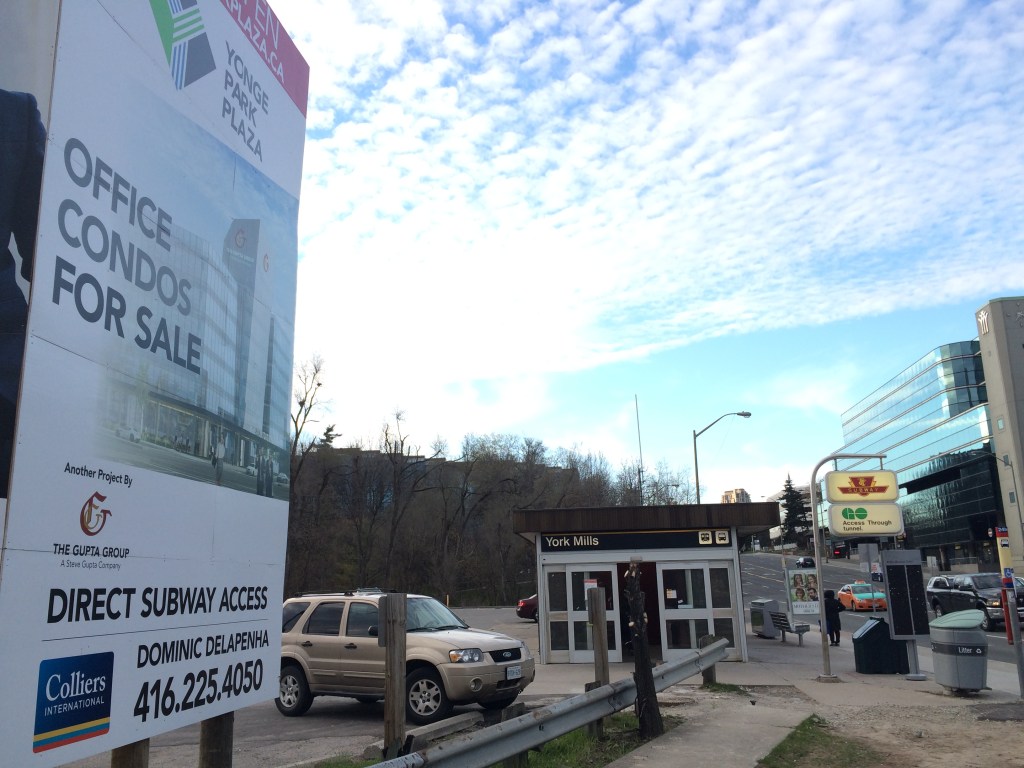
    IMG_6376New office development at the TTC York Mills Station parking lot
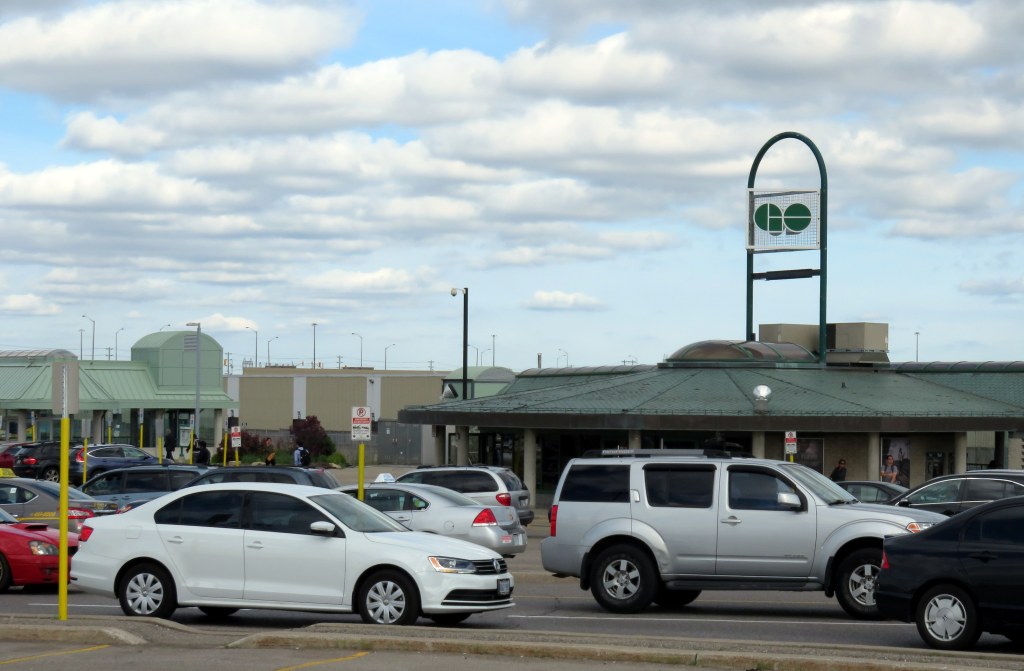
    I’ve written several times on my blog about GO Transit’s problems with free parking. The Toronto Transit Commission (TTC) also operates many parking lots — 11,000 parking spots located at 13 of its 69 subway and RT stations — but has declared many of its lots surplus to its needs. Right now, the City of Toronto’s real estate arm, Build Toronto, is in the process of selling or leasing TTC lots for residential and commercial redevelopment. The TTC, unlike GO Transit, charges for parking at all lots, and it isn’t in a hurry to build more. For the TTC, redeveloping parking lots raise money (which, in the TTC’s case, goes to the city) while they generate additional ridership.

    There’s a difference between TTC subway stations and GO Transit stations, to be sure. The TTC relies mostly on buses and streetcars, as well as walk-up traffic, to feed its rail system, while GO Transit relies mostly on suburban commuters driving to its stations. They are different models. But in urban areas like Downtown Brampton, I believe GO Transit should be much more innovative than deciding to rip down a city block to build yet another “free” surface parking lot.

    GO Transit should rethink their model, encouraging more walk-up and local transit connections as it transforms into a regional rail system. Redeveloping some of its lots is a good way to go; commuter parking garages can easily be integrated into new urban uses and make their stations more attractive places to walk and cycle.

    I have more to say about the TTC’s parking lot crunch over at Torontoist.

  • GO Transit and the high cost of “free” parking, Part II: Brampton Boogaloo

    IMG_0610-001

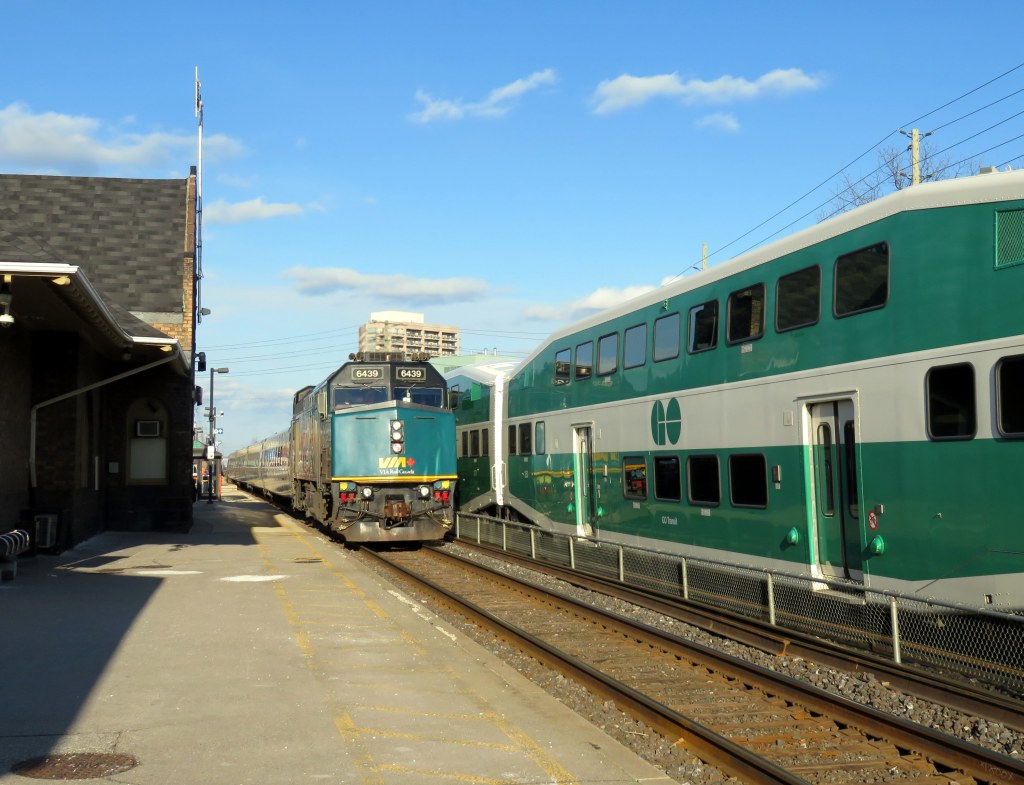
    GO and VIA Trains meet at Brampton Station

    September 20, 2016 update: Metrolinx has begun the process of demolishing its newly-acquired Downtown Brampton properties. It has applied for a demolition permit for 28A and 28B Nelson Street West, two semi-detached dwellings that were built in 2001. In the  City of Brampton, demolition permits for residential properties must be approved by the Planning & Infrastructure Services Committee. The permit will likely be approved at the September 26, 2016 meeting of that committee.


    On April 5, 2016, Peter Criscione at the Brampton Guardian reported on a matter that arose during the regular meeting of the City of Brampton Planning & Infrastructure Services Committee on April 4. Metrolinx, the regional transit authority that operates GO Transit and UP Express, confirmed the purchase of 1.78 acres in Downtown Brampton, land that will be used for surface parking.

    Brampton Station, served by GO Transit and VIA trains, is located in Downtown Brampton, and is adjacent to Brampton Transit’s downtown transit terminal. With local shopping, restaurants, residential areas and employment, it is one of the most walkable stations in GO Transit’s system; it has a Walk Score of 90. (Bramalea GO Station, in comparison, has a Walk Score of 22.) The options of getting to Brampton Station without a car are quite good, at least as far as most GO stations go.

    But Brampton Station’s two lots are full, and there are planned service improvements to Brampton, including eventual hourly evening and weekend rail service. Not everyone can be expected to take transit, walk, or get a ride to the station. But I find this land assembly troubling.

    According to Criscione, and noted in the minutes of the April 4 meeting [page 25-26], the properties purchased by Metrolinx include:

    • 20 Nelson Street West
    • 37 George Street North
    • 41 George Street North
    • 26 Nelson Street West
    • 3 Railroad Street (includes 3 separate parcels)
    • 28A Nelson Street West
    • 28B Nelson Street West
    • 30 Nelson Street West
    • 42 Elizabeth Street North

    The planning committee asked staff to contact Metrolinx and report on the status of its recent and pending purchases of downtown lands. It also invited Metrolinx to work with city staff and officials, as well as present their plans at a future meeting.

    The purchase of downtown lands for a parking lot is troubling, in my opinion. Downtown Brampton is a designated “anchor hub” — a major mobility hub where two or more rapid transit lines meet where transit-oriented development and intensification is encouraged. At no point do I see new surface parking lots are part of this vision, especially if buildings must be vacated and demolished to do so. And Downtown Brampton, not yet experiencing a building boom, has plenty of parking lots and garages that could be employed instead.

    The embedded Google Map below shows where these properties are located, immediately south of Brampton Station, and west of the Brampton Transit downtown terminal.


    On Friday, April 8, I visited Downtown Brampton to have a look at the properties in question.

    (more…)

  • The many challenges of creating a transit hub at Pearson Airport

    7afe7e75-d368-4472-b208-ab02c57457aa-001
    Sign in Terminal 1 at Pearson Airport. Whether we realize it or not, Pearson Airport is already a transit hub. 

    Updated April 7, 2016

    Lester B. Pearson International Airport is Canada’s busiest airport, handling 41 million passengers a year. It is not the busiest transportation hub in the Greater Toronto Area, though; Union Station is considerably busier (GO Transit alone handles 64.4 million passengers a year at Canada’s busiest station).

    Pearson Airport is located almost entirely within the City of Mississauga, but the terminals are less than a kilometre away fromthe City of Toronto’s western boundary; due to the location of the airport terminals, most passengers reaching the airport by road, or transit pass through the City of Toronto to get to it.

    The Greater Toronto Airports Authority (GTAA), the not-for-profit agency that operates Canada’s busiest airport, has expressed interest in creating a transit hub and guiding transit-oriented development around it. It’s an interesting idea, and some of the facts are compelling.

    There are approximately 300,000 jobs located at and near Pearson Airport. The airport itself hosts 40,000 employees that work for the airport authority and its contractors and tenants, including retailers, airlines, and allied services. The remaining 250,000 jobs are located in office parks and industrial areas that surround the airport, in the cities of Toronto, Mississauga, and Brampton, a very large area that extends north into Bramalea, west of Hurontario Street and south to Highway 403.

    You can read the GTAA’s report, written by the prestigious planning firm Urban Strategies Inc., and named Pearson Connects: A Multi-Modal Platform for Prosperity online as a PDF. The report claims that Pearson Airport and environs has more jobs, and more economic clout than any Canadian downtown, with the exception of Downtown Toronto. To a degree, this is true. But the size of the Airport Employment Zone, as the GTAA defines it, is much larger in size than any downtown, even Toronto’s; the jobs are mostly dispersed in warehouses, factories, and suburban office buildings difficult to reach by transit.

    In fact, Pearson Airport and its surrounding area — all 25,600 hectares  (256 square kilometres) — has fewer than 25 employees per hectare, while Downtown Toronto, one-tenth the size, has nearly 200 employees per hectare (and a growing residential population as well). Igor Dragovic calculated these figures from a recent Neptis report. The low employment densities found in business parks and warehouse districts are only partly to blame; the airport itself, with five active runways and a large land buffer, contributes to this.


    The GTAA wants to build an “airport-related multi-modal hub” that would tie together existing and planned rapid transit services, including the Kitchener RER Service, LRTs on Eglinton and Finch Avenues, the Mississauga Transitway BRT and a proposed Derry Road transit corridor.  It cites airports in Amsterdam, Frankfurt, London, and Hong Kong as examples to emulate.

    GTAA ProposedThe GTAA’s proposal for a transit hub, taken from Page 7 of the report

    The report also neglects to recognize that Pearson Airport is already a major transit hub; the problems lie in integrating the existing and proposed transit services together. And for an area the size of the GTAA’s Airport Employment Zone, that’s a very tall order.

    (more…)

  • On transit ridership in the GTHA

    Earlier this week, the Toronto Transit Commission (TTC) released its agenda for the next board meeting, to be held on March 23. Among the items to be discussed are updates on the delayed Line 1 subway extension to York University and Vaughan, plans for the Line 2 subway extension to Scarborough Centre, the new MiWay/GO Transit terminal at Kipling Station, the planned new 514 Cherry streetcar line and other Waterfront bus improvements, and a ridership update.

    As always, Steve Munro is on top of it all, and I encourage you to read his post.

    I wanted to make a few observations about ridership, especially in Toronto’s suburbs. Growth in the TTC’s ridership has slowed down in the last three years, from a 2.1% annual increase in 2013, to a much more modest 0.5% increase in 2015.

    Ridership figures are not detailed enough to know at what times of the day ridership is changing, nor on what routes. But ridership growth has fallen (or even declined) for other major Canadian transit systems, including Vancouver, Montreal, and Ottawa. There are many causes for changes to ridership — population and employment growth or decline, fare increases, service improvements or cuts, even the cost of gas, which has been declining in the last two years. Much of the employment growth within the City of Toronto has been in the downtown core, but so has the population growth due to new residential highrises. (I’m one of thousands who live and work in or near the downtown core — my TTC use is now mostly during the evenings and weekends as I mostly walk to work).

    Hopefully, the Commission and the city don’t use this short-term trend as  an excuse to hold back on needed service improvements or projects such as the Relief Line — for one thing, many buses, streetcars and subway trains are already overcapacity, and it is impossible to know whether slower ridership increases represent a long-term trend, or a short-term blip.

    There was one table in the TTC ridership update that caught my attention. The table, on page 5, shows the ridership for every Greater Toronto and Hamilton Area transit system (though excluding Milton Transit). I reproduced that table below.

    Ridership

    GTHA transit agency annual growth rates, 2013 to 2015. Adapted from TTC 2016 Ridership Update, page 5.

    While the TTC’s ridership growth has slowed, ridership in many suburban municipalities have either flatlined or declined. Only Mississauga and Brampton show consistent, positive growth over the last three years. MiWay, previously known as Mississauga Transit, hasn’t expanded transit operations that much in the last few years, but that city continues to enjoy modest employment growth and improved connections to the airport, Brampton Transit and the TTC. It is currently building a new bus rapid transit (BRT) line, the Mississauga Transitway (more on that in a later post), and city council is backing the Hurontario LRT line, which would largely replace bus service on its busiest corridor.

    Brampton’s growth has been, by far, the most impressive. That suburban municipality is growing thanks mostly due to new sprawling subdivisions, but since in the last decade, Brampton Transit has been introducing annual system improvements, including the Zum “BRT-lite” network of limited-stop bus routes. Brampton’s ridership is now almost that of the Hamilton Street Railway (HSR). Unlike Hamilton, Brampton doesn’t have two major post-secondary educational institutions, nor a dense urban core, though it serves Humber College, York University, and two secondary Sheridan College campuses in Brampton and Misssissauga.

    In Hamilton, ridership dropped by 1.8% in 2015. Most ridership in Hamilton is concentrated in the lower city, as well as a few trip generators in the suburbs, including Mohawk Collage on the Mountain, and Lime Ridge Mall. Many parts of the lower city have been hit hard by job losses in that city’s major industries, though new subdivisions (and, to a lesser extent, downtown gentrificaton) have contributed to modest population growth. Hamilton is going ahead with a provincially-funded east-west light rail line that will connect McMaster University, Downtown Hamilton, and the east end.

    Elsewhere, transit ridership growth has been quite disappointing. Burlington Transit saw a drastic 13.3% decline over the last three years, Durham Region, which I recently visited, saw a major decrease in 2015. However, there is lots of promise in its five-year service strategies, which will improve and simplify the agency’s route structure and provide enhanced service.

    2015 Ridership
    2015 ridership for GTHA transit agencies (Milton excluded). The TTC, with narly 75% of the region’s ridership total, dominates. GO Transit holds another 9%. 

    York Region Transit, serving a population of 1.2 million, has only 1 million annual riders more than Brampton, whose population is nearly half of York’s. And despite adding new subdivisions (and a few new residential towers), ridership declined in the last two years. As illustrated in the table below, YRT’s ridership per capita is less than half of Hamilton’s or Mississauga’s.

    YRT Ridership StatsComparing York Region Transit to other Canadian transit systems, 2013. From the VRT/Viva 5 year service plan, page 7. 

    It’s interesting that despite poor transit ridership (amid York Region Council-mandated service cuts and steep fare hikes) York Region, with senior government assistance, is spending $1.4 billion on dedicated median busways on Highway 7, Yonge Street and Davis Drive. York Region will get the Spadina subway extension in 2017, and it pines for an extension of the over-burdened Yonge Subway to Richmond Hill Centre.

    In York Region, there’s a troubling disconnect between spending money on capital projects and funding the services that will use the shiny new infrastructure, or feed ridership to it. Brampton has proven that growing service, not necessarily fancy infrastructure, will grow ridership. That said, it remains disappointing that the suburban municipality with the best record for ridership growth in the Toronto region rejected a funded light rail transit line to its downtown core.

  • The upshot of the new, lower UP Express fares

    24281427544_ddb67d604d_k

    Earlier this month, I commented on the poor ridership numbers of UP Express, Metrolinx’s airport rail link between Toronto’s Pearson International Airport and Union Station. I suggested that despite the embarrassing ridership figures, UP Express (UPX) was no white elephant. I argued that instead, the rail service could be a useful transit link for residents of North Etobicoke, Weston, Mount Dennis, and West Toronto.

    Later today, Metrolinx’s Board of Directors is expected to approve a major fare reduction for UPX slashing fares by over 50 percent. The Globe and Mail broke the story yesterday; today the Toronto Star has more details.

    The one-way cash fare between Union Station and Pearson Airport will drop from $27.50 to $12.00; the fare charged to Presto cards will drop from $19.00 to $9.00. Fares between Union Station, Bloor and Weston will drop to the equivalent GO fares. (The 2016 GO Transit fare from Bloor to Union Station is $5.30, or $4.71 with Presto; from Weston, it is $5.65, or $5.02 with Presto).

    The UPX fare between Union Station and Pearson will still be priced at a premium compared to the equivalent GO Transit fare — the cash fare from Union to Malton Station is $7.70, or $6.84 with a Presto card.

    Interestingly, before UPX was launched, Metrolinx conducted studies on potential ridership and fares. One study, by Steer Davies Gleave, that some UPX trains might even at capacity by August. You can read Metrolinx’s market research and ridership studies (with some details redacted) here. Obviously, there weren’t enough well-heeled business travellers willing to ride UPX for $27 each, or even enough local residents willing to pay $19 with their Presto card.

    This change in pricing makes UPX much more attractive for commuters in the Junction/Junction Triangle neighbourhood, as well as those living in Weston. The lower fares should help increase ridership between Pearson Airport and Union Station as well. It’s a good start, but it isn’t enough.

    Last year, I commented on GO Transit’s “fare by distance” structure, which charges disproportionately high fares for short distances, and very inexpensive fares for long commutes.  While GO offers co-fares to suburban transit agencies, it offers no such fare integration with the TTC. GO Transit offers free parking at suburban rail stations, burying the cost of building and maintaining its parking lots into the fares of every passenger, whether they need parking or not.

    The charts below show the single ride and Presto fares, per distance travelled in 2016, with the new UPX fares. Per distance travelled, a GO Transit fare to Union Station to Exhibition, Bloor, and Danforth is more expensive than going from Toronto to Pearson Airport via UP Express.
    2016CashFares 2016PrestoFares

    Metrolinx is in the midst of developing a new fare integration strategy, so hopefully these concerns will be addressed. Once the TTC completely rolls out Presto at all subway stations and on all buses, it will be technically simple to adopt a GO-TTC co-fare, and UPX should be part of this as well. There are tens of thousands of jobs at the airport and in the surrounding offices and industrial parks. With proper fare integration with TTC, Miway and Brampton Transit (all of which serve Terminal 1), UPX could become much more useful to many more commuters.

    Lowering UP Express fares is a good start, a welcome acknowledgement that the rosy forecasts of business travellers crowding the airport trains were never reached. But lowering fares isn’t enough: with proper fare integration, UP Express can offer far more utility than simply being an airport rail link.