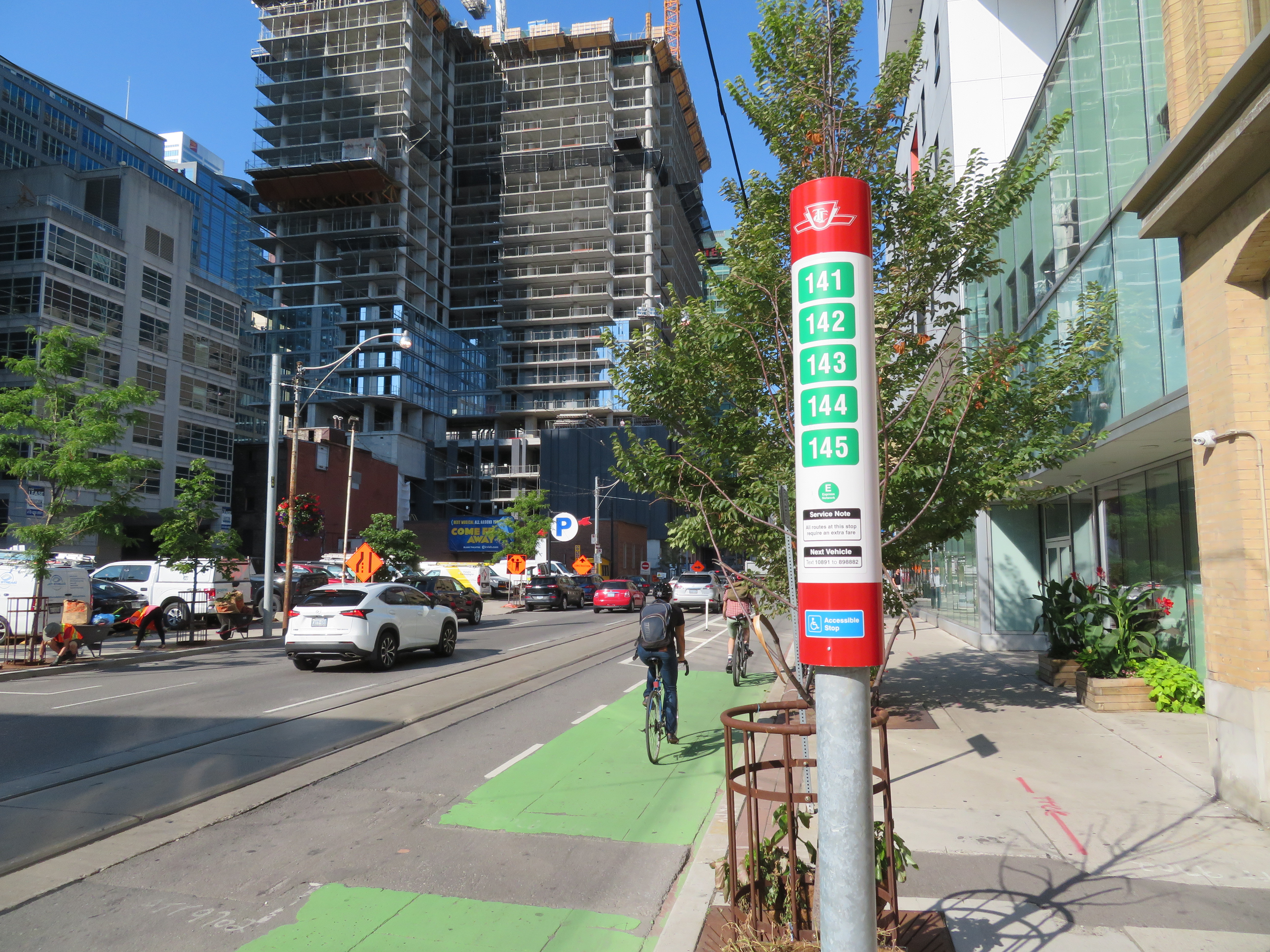
TTC stops have improved with the addition of route numbers, but this bus stop is deceiving
In the last few years, the TTC has made significant improvements in its maps, signage, and wayfinding standards. It also introduced new streetcar and subway fleets, retrofitted elevators into older stations (all but one streetcar line and a majority of subway stations are now fully accessible), and opened a new subway extension. Though overcrowding, bunching, and weekend closures continue to be aggravations, it is important to recognize where the TTC has improved.
Specific changes to TTC wayfinding include a new simplified system map, better signage at subway stations, introducing standard signage for diversions, scheduled closures and construction notifications, and revising the classic TTC bus stop.
However, two recent changes represent an unfortunate departure from these improvements. (more…)
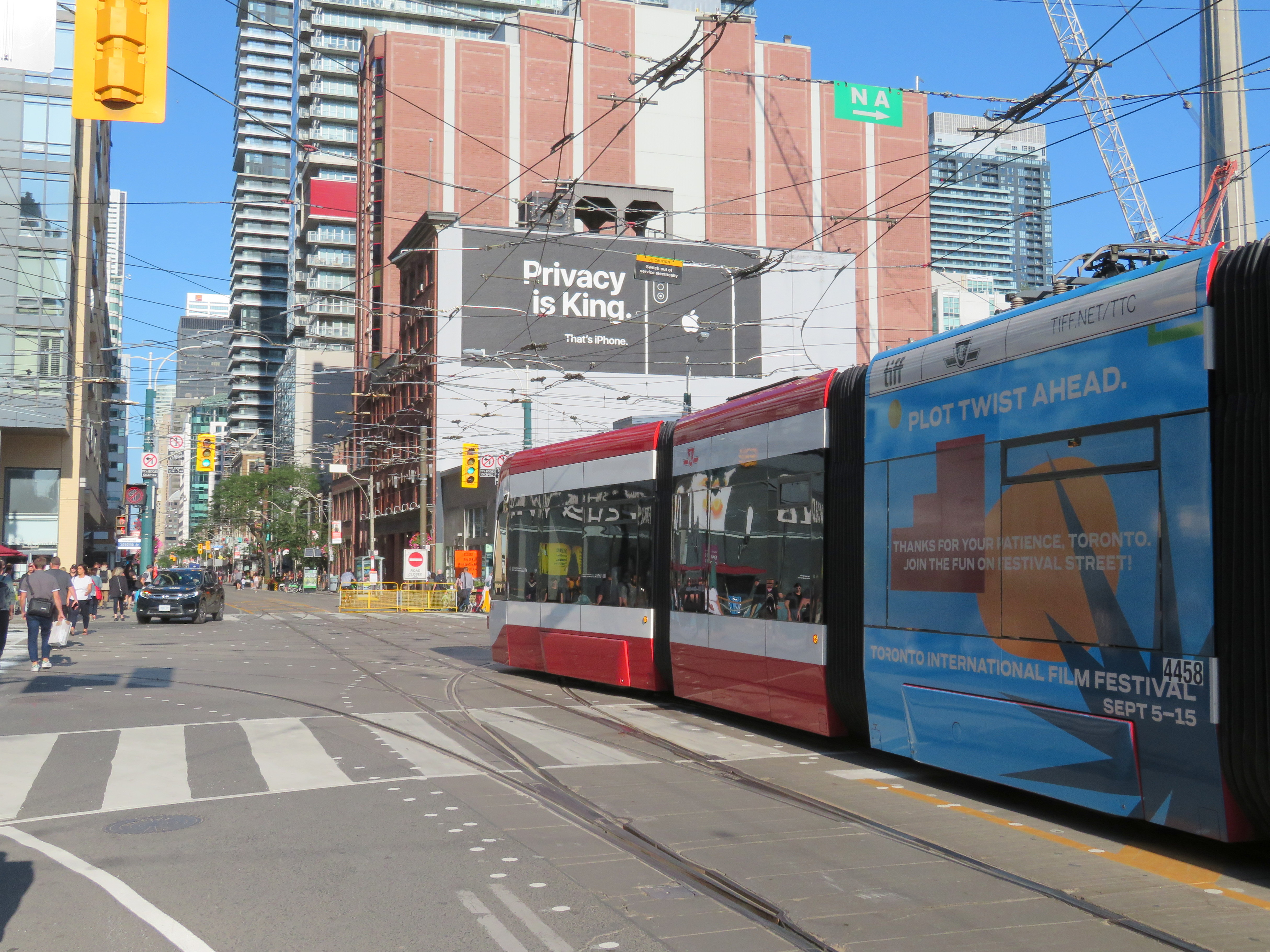
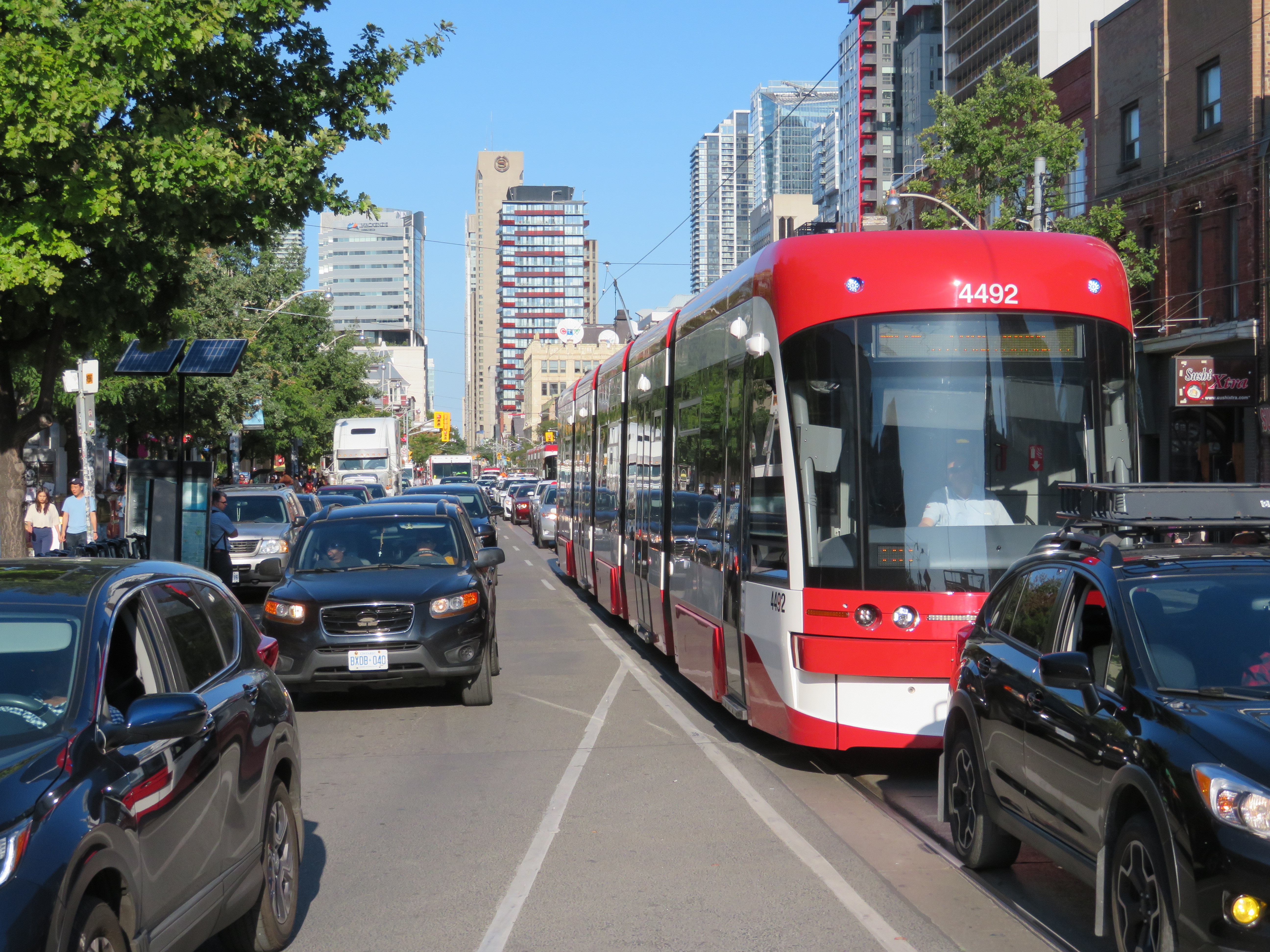
504 King Streetcar diverting onto Spadina on Thursday, September 5
For the sixth year in a row, King Street between University and Spadina Avenues was closed for four straight days. This closure was for the Toronto International Film Festival (TIFF) “Festival Street,” which took place between Thursday September 5 and Sunday September 8. In addition, King Street was closed during the afternoon rush hours the following Monday and Tuesday for “Red Carpet Events.”
TIFF has been recognized among the world’s most important film festivals, and one where the public has the opportunity to take part (albeit at increasingly inaccessible prices for many screenings). It offers tremendous economic and cultural value to Toronto. It compliments and helps to support many other annual film festivals, such as Hot Docs and Inside Out.
But TIFF’s clout and influence has also led to entitlement, with “Festival Street” being the most disruptive result. While King Street is closed off to traffic during the film festival, it has severe effects for the 84,000 daily riders of the 504 King Street, as well as riders on the busy 501 Queen and 510 Spadina cars.
501 Queen and 504 King Streetcars stuck in traffic westbound at Queen and Spadina
Several major TIFF screening locations are located on or near King Street West, including Roy Thomson Hall, the Princess of Wales Theatre, the TIFF Bell Lightbox, and two blocks north, the Scotiabank Cinemas. Industry parties and galas are held at nearby hotels and restaurants. It’s natural that King Street would be a hub of activity for the film festival. But it is also the third busiest transit route in Toronto, after the Yonge-University and Bloor-Danforth subways.
The King Street Pilot, which began in late 2017, prohibits through motor vehicle traffic on King Street between Jarvis and Bathurst Streets through the downtown core, though all vehicles are permitted to use King Street for short segments. Despite spotty enforcement, the pilot project allowed the TTC to operate much more reliably through the busy corridor, with an increase of capacity and ridership. In early 2017, daily ridership on the 504 King was 72,000. By March 2018, it grew to 84,000. In April, council voted to make the pilot permanent. This will allow for streetscape improvements along the corridor and wider sidewalks, with improved physical measures to further restrict through traffic.
Cliffwood Road is a typical suburban residential street in northeast North York, just south of the municipal boundary at Steeles Avenue. It meets Don Mills Road twice; at the north end, there are traffic signals, with a middle school and a plaza on the east side of the four-way intersection. On the south side, Cliffwood meets Don Mills at a three-way intersection, protected only by a a stop sign facing Cliffwood. As Cliffwood loops back on itself and has no direct connections to Steeles Avenue, it is not a useful short-cut for speeding motorists unlike many other suburban streets.
What, in particular, contributed to this deadly crash? I paid a visit to the area to find out.
The intersection of Cliffwood Road and Barkwood Crescent, looking southeast
Between Don Mills Road and Barkwood Crescent, Cliffwood Road is 12 metres wide without any lane markings or medians to separate traffic or slow vehicles turning off of busy Don Mills Road. West of Barkwood Crescent, Cliffwood Road narrows to 8.5 metres. Twelve metres is a lot of road space: Beverley Street in Downtown Toronto is the same width, but it has two driving lanes, a parking lane, and two unprotected bike lanes. The wide street width here only encourages motorists to drive fast after coming off Don Mills Road, while wide curb radii at the corners at Don Mills and at Barkwood Crescent also encourage motorists to take turns quickly.
At Barkwood Crescent, Cliffwood Road has a speed limit of 50 km/h, the default speed limit in the City of Toronto. Closer to the schools to the north, a 40 km/h speed limit is posted, but there are no physical measures to slow down cars and trucks. Cliffwood Road, like so many other suburban streets, was built for speed, and not for local residents on foot.
An unnecessarily large intersection at Cliffwood Road and Barkwood Crescent, and a wide approach to Don Mills Road
I also noted the condition of nearby Don Mills Road, a busy thoroughfare connecting office parks in Richmond Hill and Markham with Fairview Mall to the south. Don Mills is a busy bus corridor, with both TTC and YRT buses providing frequent weekday service.
Despite the frequent bus service, Don Mills Road is hostile to pedestrians and transit users. At the southern intersection of Don Mills and Cliffwood Roads, the nearest crosswalk is nearly 300 metres to the north, or 600 metres to the south. Understandably, most transit users will choose to cross at the nearest TTC stop, rather than walk an extra five or ten minutes twice a day, especially in inclement weather.
In late August, a pedestrian was crossing Sheppard Avenue East in Scarborough to get to a nearby TTC bus stop when she was fatally struck by a motorist who then fled the scene. That stretch of Sheppard Avenue is flat and straight.
The corner of Cliffwood and Don Mills Roads with bus stops
Most area bus stops are adjacent to bus bays. Bus bays are designed to get buses out of the way of traffic while they are dropping off and picking up passengers. Once the bus is ready to leave the bus stop, it must then merge back into traffic. In addition, many of these bus bays double as right-turn lanes, increasing the distance a pedestrian must cross the street.
Furthermore, Don Mills has several hills and curves north of Finch Avenue that makes this especially dangerous because of low visibility, making it difficult to judge how far or how fast traffic may be coming. There are five lanes plus bus bays/right turn lanes; the centre lane alternates between serving as a left turn lane or a striped buffer space between northbound and southbound traffic, which further encourages high speeds.
Bus stop at Don Mills Road and Mogul Drive, illustrating the high-speed curves
It is no wonder too that cyclists choose the sidewalks. Despite the wide right-of-way with generous boulevards between the backyard fences and the curbs, no though has been made to improve cycling infrastructure in this part of Toronto. Separated bike lanes or a multi-use path, similar to those on Eglinton Avenue in Etobicoke, or in Peel Region, would make sense here, and along other suburban arterials.
Cross-ride marking and signals at intersections would improve the safety for suburban cyclists and legitimize a common practice.
Cyclists take the sidewalk on Don Mills Road
At the end of my tour of upper Don Mills Road, I could not help but notice I was walking in a signed “Seniors Safety Zone.” As with Eglinton Avenue East in Scarborough, signs were put up but no measures were put in place to slow motorists down, and there was no sign of police enforcement of the posted limit either.
“Seniors Safety Zone” – note the bus bay behind the sign
There are a few things that can be done in Toronto’s suburbs to improve the safety of vulnerable road users (pedestrians and cyclists) and reduce the incidence and severity of crashes when they do happen. The installation of safer pedestrian crossings, such as traffic signals would reduce the distance required to get to a TTC stop safely. Bus bays should be eliminated with every road reconstruction project, as they do not benefit transit riders and encourage fast-moving traffic. Finally, residential streets should be narrowed, especially at intersections to slow motorists down, reduce the time a pedestrian is in the street while crossing, and improve their visibility.
Finally, wide multi-use paths along suburban corridors like Don Mills Road would help promote active transportation and reduce conflicts between pedestrians and cyclists.
Westbound Rogers Road Streetcar at Old Weston Road, 1972. Photograph from Toronto Archives – Fonds 1526, File 72, Item 61
Forty-five years ago today, on Friday, July 19, 1974, the Rogers Road Streetcar made its last run. The route ran from a loop at St. Clair and Oakwood Avenue to Bicknell Loop, located on Rogers Road just west of Keele Street.
The Toronto Transit Commission (TTC) had only recently abandoned its policy of eliminating the streetcar network in favour of buses and the planned Queen Street Subway. By the early 1970s, there were still nine streetcar lines in Toronto, along with two extra rush hour services.
The TTC had to maintain a core fleet of streetcars to continue service until a new fleet could be delivered, and there was a shortage of streetcars in good condition. Despite the new commitment to continue operating a street railway, one more line would have to go. Rogers Road, the last of four streetcars operated for the Township (later Borough) of York, would be sacrificed. (It would not be the last streetcar route to disappear, however.)
For nearly thirty years, service on Rogers Road was provided by trolley buses, a branch of the 63 Ossington route. While the TTC promised to extend the trolley bus to Jane Street (which was one of the reasons why York politicians supported the streetcar abandonment), it never happened. Instead, a shuttle bus route provided service along Alliance Avenue to Jane. Once the trolley bus network was scrapped in 1993, the TTC restructured several west-end routes. In 1994, the 161 Rogers Road bus finally provided the through service York had demanded for twenty years.
In July 2014, before I started this blog, I wrote an article about the Rogers Road Streetcar for Spacing’s website, with the assistance of Steve Munro and author John F. Bromley. Five years later, it remains one of my favourite writing assignments.
On the CBC radio program Metro Morning on March 28, Toronto Mayor John Tory spoke about his concerns regarding Premier Doug Ford’s plans to upload the city’s subway system, as well as Ford’s intentions to build new subway extensions to Richmond Hill and Scarborough Centre, bury the Eglinton West LRT, and start the long-planned Relief Line. Instead of a conventional subway, the Relief Line envisioned by the province would use a “new technology,” despite planning and engineering underway for a subway, using an existing subway yard for Relief Line train storage.
But Tory, who has been passive so far about the province’s plans, was hopeful that the unspecified new technology proposed for the Relief Line would be a “fantastic bonanza” for Toronto, but he added that he didn’t know for sure what would come of the new plan.
Mayor Tory tells @metromorning he's prepared to hold out hope that the province's unspecified new tech for the Relief Line is a "fantastic bonanza for us. But I don't know."
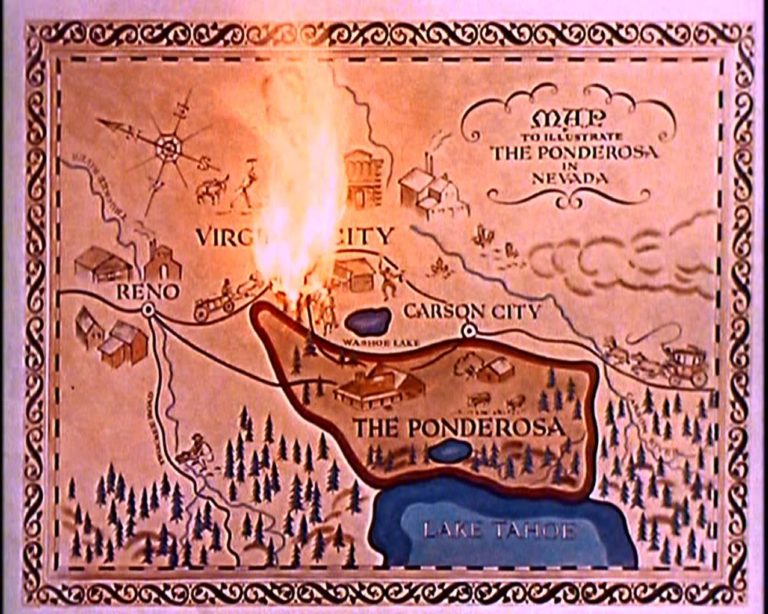
It is curious that Tory called this hostile takeover a “fantastic bonanza.” Bonanza was a long-running Western television show, starring Lorne Greene as the patriarch of the Cartwright family, owners of a vast ranch on Lake Tahoe. Bonanza was famous for its theme music and opening credits, which featured a burning map of the Cartwrights’ Ponderosa ranch before introducing the cast.
Opening theme for Bonanza
Bonanza’s burning map is a great metaphor for Toronto’s transit planning. Newly elected mayors and premiers burn the maps left behind by their predecessors, and time is wasted on new feasibility studies and engineering reports, ready just in time for someone else to get elected with yet another idea. Plans come and go, but hardly anything ever gets built.
There’s plenty of blame to go around. After a prolonged spurt of subway construction in the 1950s, 1960s and 1970s, momentum was lost. In the 1980s, Bill Davis’ Progressive Conservatives insisted on a novel linear-induction rail system for Scarborough, rather than the light rail project already underway. The Liberals, under David Peterson, proposed several subway lines, though it was scaled back under NDP Premier Bob Rae. In 1994, work started on the first phases of the Eglinton and Sheppard subways. When Mike Harris’ government was elected in 1995, they cancelled Eglinton, filling in a hole already dug for the tunnel boring machines.
There was new hope in 2003, when a new Liberal provincial government was elected, and David Miller, an urban progressive, became mayor of Toronto. While the province’s top priority was the extension of the Spadina Subway to York University and Vaughan, it was willing to help fund major improvements to GO Transit, along with new light rail systems in Ottawa, Kitchener-Waterloo, Hamilton, and Mississauga-Brampton. It also committed to Miller’s proposed Transit City LRT network, including a fully grade-separated replacement of the ageing Scarborough RT.
There were valid criticisms of Transit City — there were too many transfers to get around the top of the city, there was no Relief Line, and a few of the proposed lines, like parts of the Jane and Don Mills LRTs, were too difficult to build as surface rail projects. But because of Miller, the Eglinton-Crosstown LRT is well underway, and preliminary work continues on Finch Avenue West.
Work would have also started on the Scarborough RT replacement and expansion and the Sheppard East LRT, had Rob Ford not been elected in 2010, promising “subways, subways, subways” and burning the transit maps for which new projects were planned and being built. Seven funded LRT stops in Scarborough became three unfunded subway stops. Overestimating Rob Ford, and hoping to keep seats in Scarborough, the Liberal government folded to his demands, and work stopped on the LRT replacement.
Rob Ford’s disastrous term was followed by John Tory’s twin obsessions of SmartTrack and an austerity agenda, at a time when the Yonge and Bloor-Danforth subways were overwhelmed by demand caused by a growing population and a booming economy — hardly the conditions that demanded low spending on civic services and infrastructure and yet another half-baked transit plan.
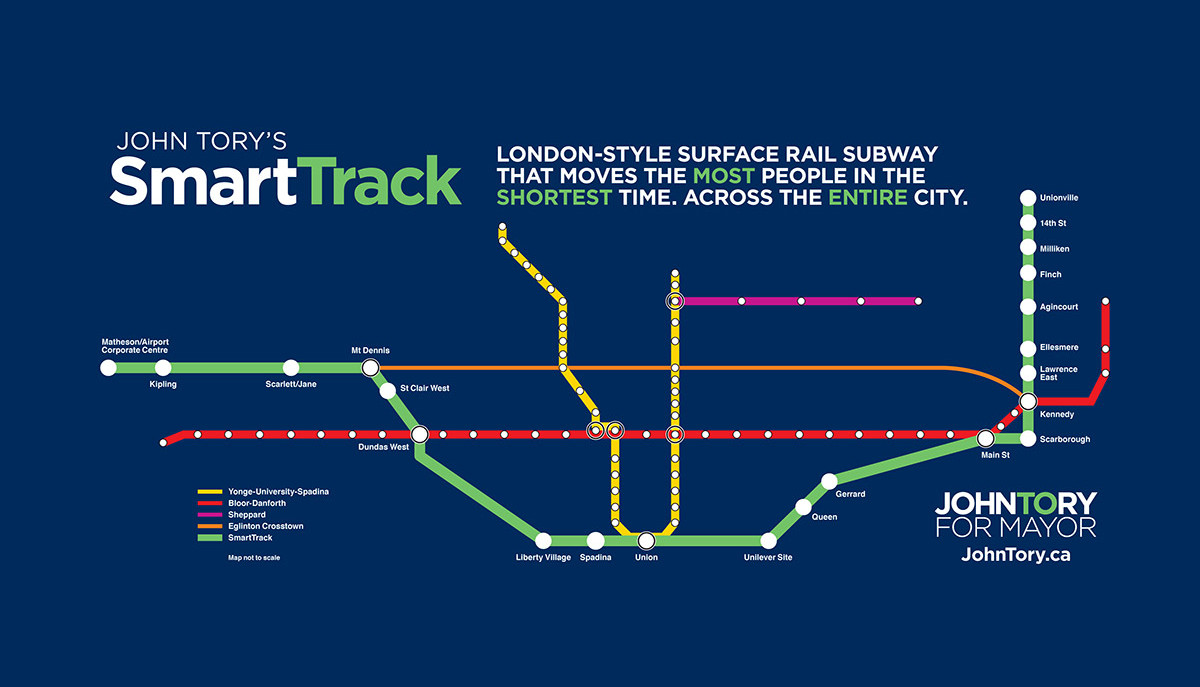
SmartTrack map from the 2014 John Tory campaign
Tory promised that it would only take seven years to build SmartTrack, which would mostly use existing railway infrastructure, along with a new section of track in Etobicoke, on land already sold off for development. Tory’s insistence on SmartTrack further delayed momentum on the Relief Line. Though Tory remained committed to the Scarborough subway extension over the approved and funded LRT, it was reduced to a single stop as costs ballooned, while the subway and SmartTrack threatened to cannibalize each other. We don’t hear much about SmartTrack anymore, but at least Tory has come around on the Relief Line.
But Doug Ford’s latest musings make it clear why the planned subway upload is so dangerous.
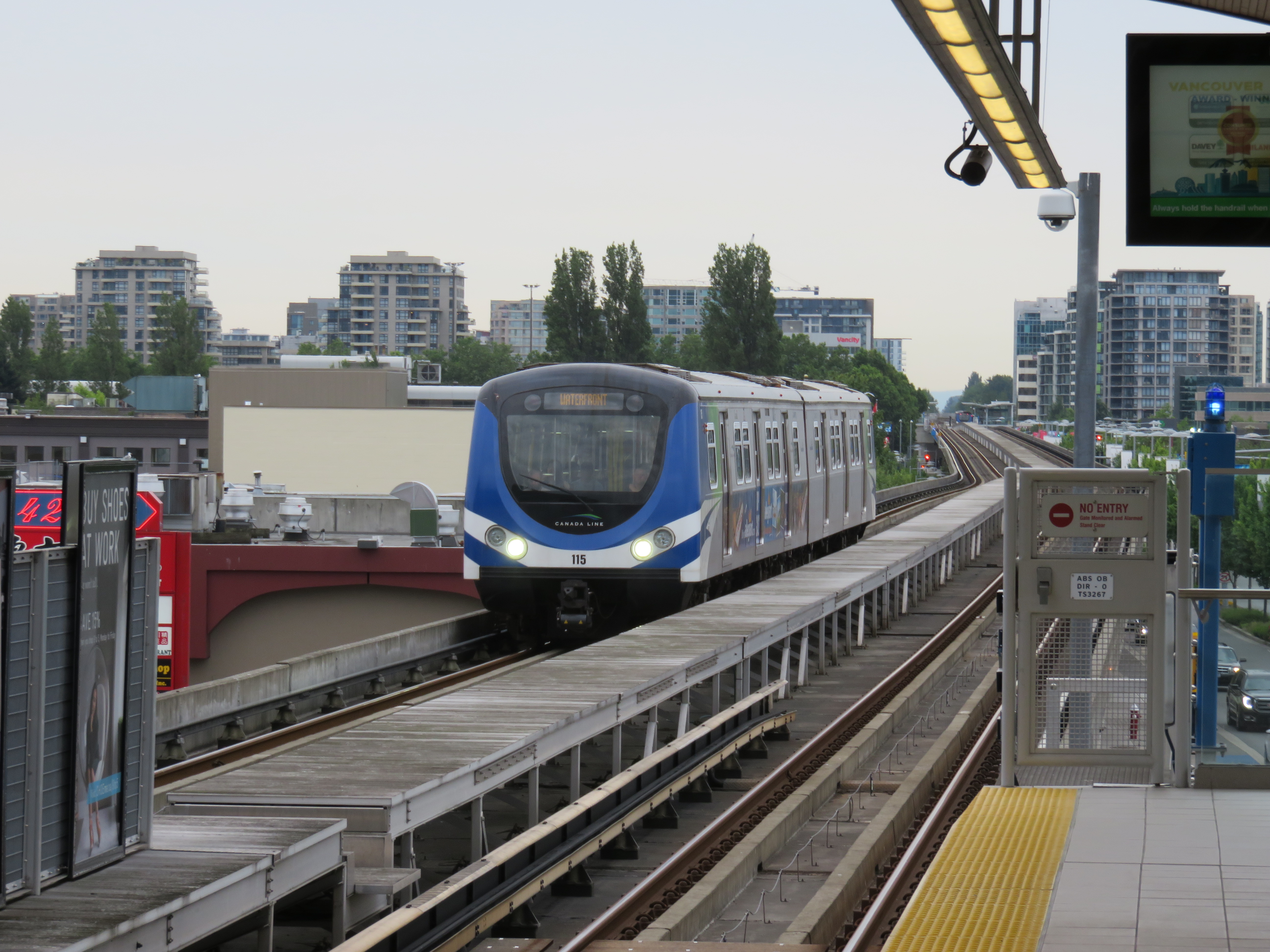
Canada Line in Richmond, British Columbia
So what now for the Relief Line?
Despite the inevitable Simpsons monorail jokes (Doug Ford did promise a monorail on Toronto’s waterfront when he was a city councillor in 2011), the new technology the province is considering is likely an automated light metro line, similar to the Canada Line in Vancouver. The Canada Line links Vancouver’s city centre with the international airport and the suburb of Richmond. It was built as a private-public partnership (P3) project, in which a private company was contracted to design, build, and operate the line. It’s an attractive option for a conservative government: P3s promise to be cheaper to build and operate than a conventional public project.
But the Canada Line has problems. Though trains are frequent, it was built too small to accommodate growth. The outer terminals at Vancouver airport and Richmond-Brighouse are both single track/single platform. Station platforms are too short — only 40 metres long — to increase train sizes. And as many stations are underground, it’s too expensive to extending platforms to fit larger trains. Some relief is coming, but even then, the maximum capacity of the Canada line is 15,000 persons per direction per hour, far less than Vancouver’s SkyTrain lines or Toronto’s subway. If this is the route Toronto takes, it won’t be long before the Relief Line itself will need relief.
Once again, I fear that Toronto will continue to spin its wheels thanks to the Ford circus. And it’s a shame — though sadly not surprising — that Mayor Tory isn’t fighting back.
Replica of Toronto Railway Company streetcar #327 operates at the Halton County Radial Railway museum, with the unique glass bulbs visible below the metal “Belt Line” sign. Photo taken June 2012
In 1891, the Toronto Railway Company (TRC) was created, taking over the city’s streetcar system from its predecessor, the Toronto Street Railway. The TRC quickly began electrifying Toronto’s transit network, operating fifteen routes across the city. Electric streetcars were faster than horse-drawn trams, and passengers had difficulties figuring out which streetcar was theirs at night.
This was a problem as many streetcar routes overlapped. For example, Dupont and Avenue Road streetcars operated on Yonge Street south of Bloor, and Belt Line and Yonge streetcars both ran on Front Street. While the TRC had metal signs on the top and sides of each streetcar to denote the route, they weren’t illuminated. With electric light still in its infancy — arc lamps were too intense while early incandescent lamps were too dull to adequately illuminate route signs — the TRC developed an ingenious solution: uniquely coloured glass bulbs mounted on the roof, lit by interior lights. These lights became known as “bull’s eyes.”
Under this scheme, the Yonge Streetcar could be identified by one blue light, while the Broadview Streetcar could be identified with red and green lights. This system required passengers to memorize their route’s colours, and as new routes were introduced, changed, or withdrawn, it became cumbersome. Eventually, lighting technology caught up: while back-lit destination signs were possible by 1910, the TRC became hesitant to spend any capital funds to modernize its fleet or expand the streetcar railway network. The City of Toronto was forced to start its own streetcar system, the Toronto Civic Railway, to serve outlying neighbourhoods.
Though the Ontario Railway Board (predecessor to the Ontario Municipal Board) refused to force the TRC to expand the street railway network beyond the 1891 boundaries, it ordered the TRC to install backlit route signs. These new signs were introduced in February 1913, and those unique coloured bulbs disappeared by 1915. Six years later, the TRC’s franchise was up, and the city-owned Toronto Transportation Commission came into being.
In 1935, the TTC re-introduced “bull’s eyes” to its streetcar fleet. Officially known as an advance light, a single roof-mounted light, which gave off a blue-green hue, was designed to let waiting passengers know a streetcar was on its way. At the same time, the TTC installed dash lights, which both illuminated advertising cards and provided additional lighting, a useful safety feature.
TTC PCC Streetcar #4549 on Queen Street West in September 2018
New PCC streetcars, which began arriving in 1938, were built with the advance lights already installed. By 1940, all streetcars, including the remaining wooden cars acquired from the Toronto Railway Company, were equipped with advance lights. After the Second World War, PCC streetcars purchased from cities such as Cincinnati, St. Louis, and Kansas City, were similarly fitted with the roof-mounted lamps.
CLRV streetcar on Queen Street East, with two blue-green advance lights above the back-lit destination sign.
By the 1970s, the TTC decided to maintain its street railway fleet after planning for their eventual replacement with buses and subways, and sought a replacement fleet for its ageing PCCs. The new Canadian Light Rail Vehicles (CLRVs) and Articulated Light Rail Vehicles (ALRVs) were designed with dual advance lamps, mounted within the streetcar body, immediately above the destination sign.
Advance lights were introduced to TTC buses starting in the mid-1990s, as new wheelchair-accessible vehicles were added to the fleet, starting with high-floor Orion V and Nova RTS buses, and continuing with newer low-floor vehicles. Blue lights indicated that the bus was accessible. As a bonus, when combined with new digital orange LED destination signs, the bus advance lights served to further improve the visibility of approaching transit vehicles.
Nova articulated bus with orange LED destination sign and blue LED advance lights indicating it is an accessible vehicle
The new Bombardier Flexity streetcars are similarly equipped with new blue LED lights, as they too are fully accessible vehicles. While blue advance lights are unique to TTC buses, the new light rail vehicles for Waterloo Region’s ION LRT, also built by Bombardier, sport similar blue lights.
ION LRT vehicle undergoing testing in Kitchener, February 2019
Sources:
John F. Bromley and Jack May: Fifty Years of Progressive Transit (Electric Railroaders’ Association, 1973)
Mike Filey: Not a One-Horse Town: 125 years of Toronto and its Streetcars (Firefly Press, 1990)
In February 2018, Duncan Xu, an 11-year old boy, was struck and killed crossing a residential street in North Scarborough on his way home from school. He was one of forty-two pedestrians unintentionally struck and killed by motorists in Toronto last year.
Not long after Duncan’s death, I visited the neighbourhood and wrote about the tragedy. Canongate Trail, where Duncan was struck, is a two-lane residential street. At the time, there were no traffic calming measures in place to slow down motorists, many of whom used Canongate as a shortcut around the busy intersection of Kennedy Road and Steeles Avenue. The local councillor, Jim Karygiannis, decided to unilaterally close a walkway linking the rear schoolyard with Canongate Trail, close to where Duncan was killed. Duncan used the walkway before he tried to cross the street.
Since then, more permanent fixes were made. At the request of Karygiannis and local residents, city staff studied both reducing speed limit and installing traffic calming measures. While staff recommended reducing the speed limit to 30 kilometres an hour, they concluded that traffic calming measures such as speed humps were unwarranted.
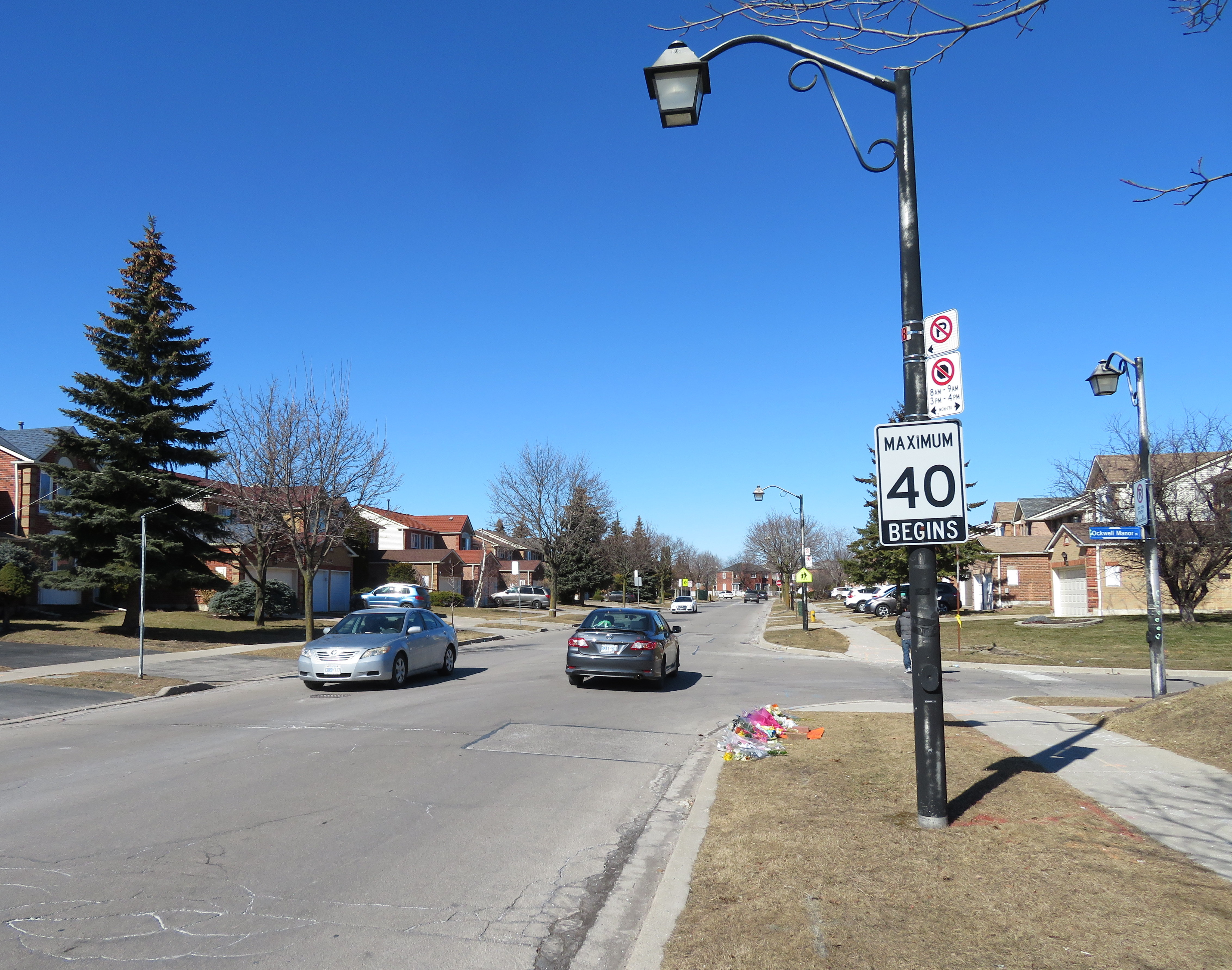
The speed humps were added anyway, along with other measures. A new all-way stop was added at Ockwell Manor Drive, near where the walkway meets the Canongate Trail sidewalk. Beyond the point where the walkway meets the sidewalk, fencing was installed to discourage children from running into the street. These are significant improvements.
The walkway to the school and a nearby park is reopened, with a metal barrier between the sidewalk and the roadway
Still, more can always be done. Curb extensions or bulb-outs at intersections would be another effective traffic calming measure, narrowing the roadway, slowing down turning vehicles, and increasing pedestrian visibility while reducing pedestrian crossing distances.
What’s most disheartening though is that it took a young child’s death for these measures to happen. All residential streets should have a 30 km/h limit and streets designed to slow motorists down, including measures such as curb extensions and speed humps. As with the “Slow Down – Kids at Play” lawn sign campaign, action only comes after a high-profile tragedy. Even then, it’s not enough.
It’s good to see progress on Canongate Trail. But this should be the standard everywhere. We can and should do better in Toronto if we are all serious about implementing a true Vision Zero policy.
New 30 km/h speed limit and a new stop sign on Canongate Trail, February 2019
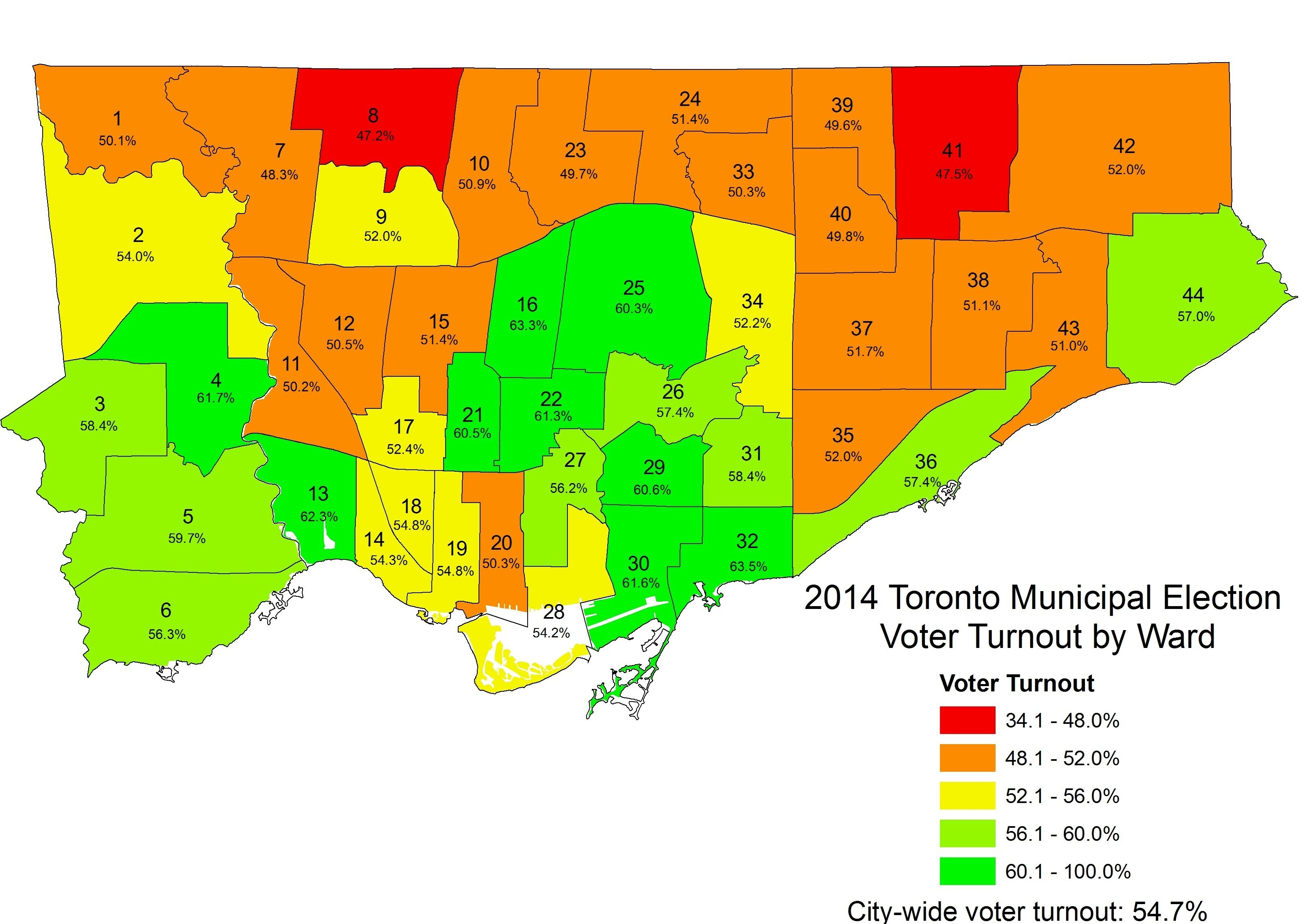
2014 was a watershed year for municipal voter turnout in Toronto. After a disastrous four years of Rob Ford as mayor, 54.7 percent of all eligible voters went to the polls, electing John Tory. That was the highest voter turnout in decades, even higher than 1997, when Torontonians elected Mel Lastman to lead a newly amalgamated City of Toronto. In 2010, when Rob Ford was elected mayor, turnout was 50.4 percent, compared to 39.3 percent in 2006 and 38.3 percent in 2000.
Four years ago, the mayoral race was especially competitive. Progressive Olivia Chow was the initial front-runner against Ford, but Tory (who previously ran for mayor in 2003) pulled ahead as Chow’s campaign floundered. Late in the campaign, Rob Ford dropped out due to health concerns, so his brother Doug took his place. Among the three frontrunners, Tory got 40.3 percent of the vote, while Doug Ford took 33.7 percent. Chow only got 23.1 percent. Voters also elected seven new councillors that year, and returned Rob Ford to Ward 2.
After two elections in which over half the number of eligible voters took part, in 2018 voter turnout fell to just 40.9 percent. This was hardly surprising. John Tory cruised to victory despite a challenge by former chief planner Jennifer Keesmaat, while a sudden reduction in the number of wards confused voters and crushed the hopes of many council hopefuls and their supporters.
Though 769,000 electors voted in this mess of an election, voter turnout varied across the city. In Ward 23, Scarborough North, only 34.1 percent of eligible voters turned out to the polls. In Ward 7, Humber River-Black Creek, just 34.6 percent of electors voted. Ward 10, Spadina-Fort York, had the third worst turnout, with just 34.8 percent.
Areas with the highest voter turnout were Midtown and east end Toronto. Ward 14, Toronto-Danforth had the highest turnout, where 49.2 percent of electors cast a vote. It was followed by Ward 15 and Ward 12 (both of which had 48.5 percent turnout) and Ward 19, where 48.4 percent of electors went to the polls.
Wards 12, 14, 15, and 19 had interesting and competitive council races. In Ward 14, the race featured two progressive incumbents, while Ward 19 was one of just two races in which an established city councillor was not running for re-election. Wards 12 and 15 also had competitive races. However, in Ward 4, Gord Perks won re-election easily.
Yet Ward 23 had an open council race in which no incumbent was running. And Ward 7 was one of the most interesting and important races of 2018; this is where Giorgio Mammoliti was finally defeated after years of campaign violations, buffoonery, and embarrassments.
Voter turnout has consistently been low in Toronto’s northwest and northeast corners. In 2014, Ward 8 and Ward 41 (which made up parts of new Wards 7 and 23) had the lowest numbers of electors casting a vote. Turnout was highest in more affluent neighbourhoods, especially in places like Midtown Toronto, the Kingsway neighbourhood in Etobicoke, and in Toronto’s East End. What surprised me mostly was the poor turnout in Ward 10 in 2018.
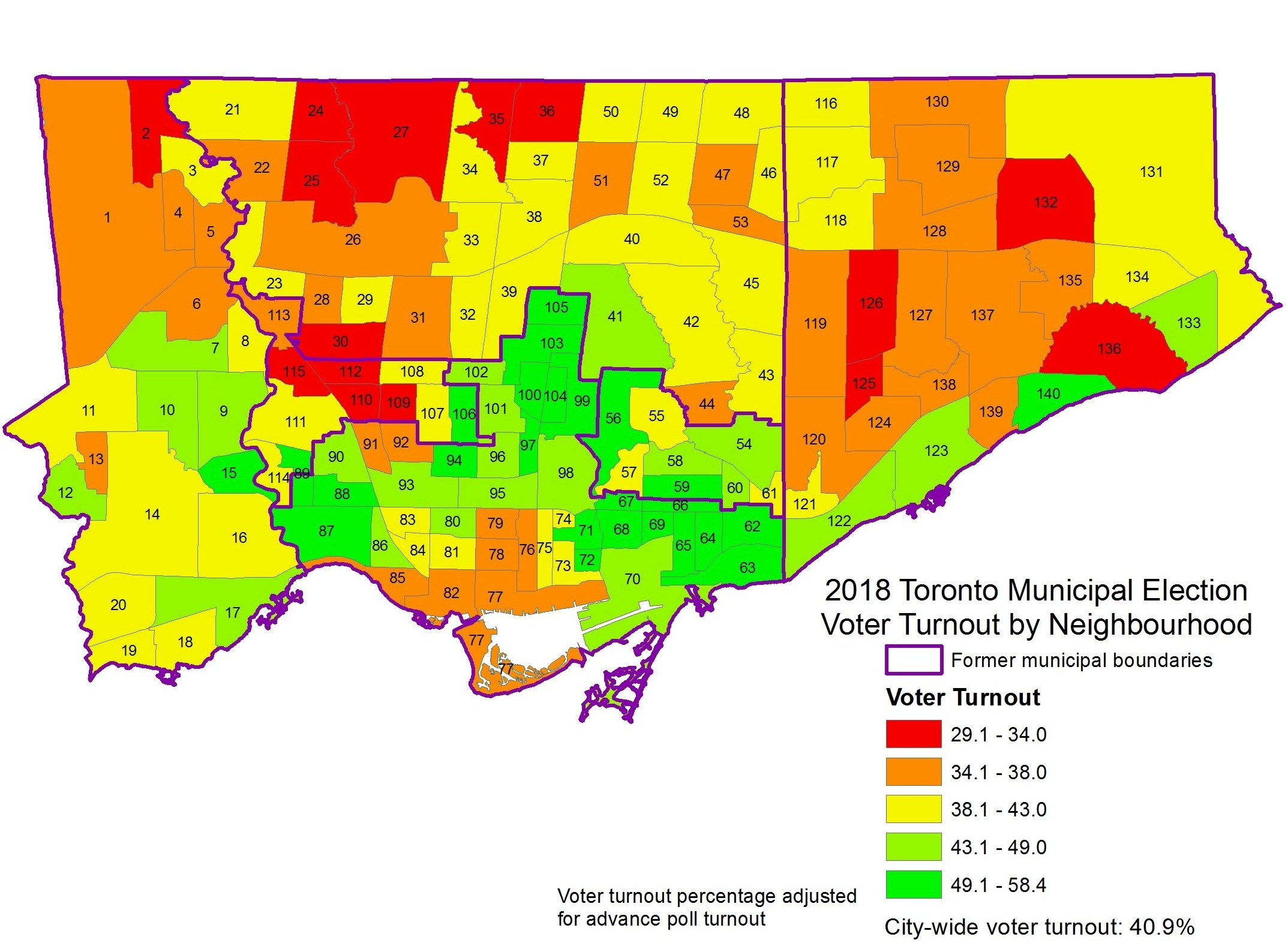
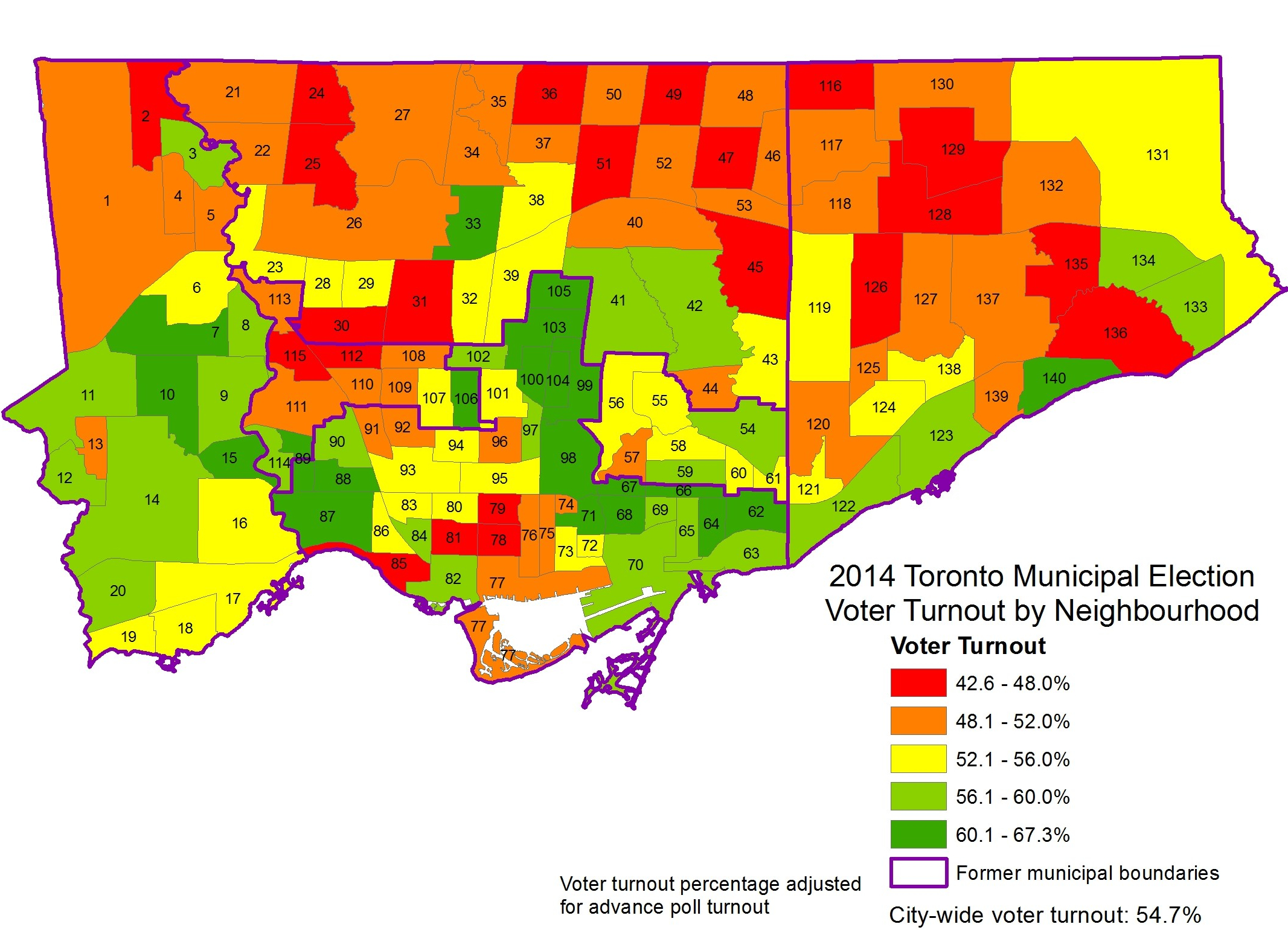
The difference in voter turnout across the city is more apparent at the neighbourhood level. With the poll-level results available through Toronto’s Open Data Catalogue, I allocated the poll results to each of Toronto’s 140 neighbourhoods, while adjusting the numbers based on the number of votes cast in the advance polls in each ward. The map below shows voter turnout at the neighbourhood level in 2018.
What is immediately apparent is that voter turnout is highest in many neighbourhoods surrounding Toronto’s downtown core, while turnout is lowest in the former City of York, in northwestern Toronto and parts of Scarborough. Areas of high voter turnout tend to be affluent neighbourhoods with high levels of home ownership. These neighbourhoods include the Kingsway, Lawrence Park, Leaside, Cabbagetown, Rosedale, Forest Hill, Swansea, the Beaches, and Leaside. Many of these areas also have active residents’ associations. With Ryerson professor Myer Siemiatycki, I looked at the results of previous municipal election voter turnouts in a report published by the Maytree Foundation.
Downtown, areas with major condominium developments also have lower turnout, especially in places like the Waterfront, CityPlace, Liberty Village, and the Bay Street corridor. These areas are more likely to have younger residents and many renters. Engaging voters both in downtown condos and those living in the inner suburbs remains a challenge. While voter turnout was much higher in 2014 across the city, the same basic patterns are evident. 2014 voter turnout by neighbourhood (alternate version available here)
At the end of 2014, despite some disappointing results in that year’s municipal election, I was feeling optimistic about 2018. In 2014, there were a number of great candidates running for city council, and I expected many would try again in 2018. After council finally approved the recommended 47 ward model for the 2018 election, I was excited. Downtown, which was badly underrepresented under the 44 ward model, would get three additional wards. Vacancies left by departing councillors, including Mary-Margaret McMahon and John Filion, would further improve the chance for fresh new voices to join city council. At least eight wards across Toronto would not have an incumbent running.
Of course, we all know what happened to that dream.
Downtown tends to elect some of Toronto’s hardest-working and most progressive councillors. They’re hard-working out of necessity: old Ward 27 had the largest population in the city, and all four old downtown wards struggled with pressures caused by massive new development and social concerns, especially as older, affordable housing stock is replaced by new condominiums. (Similar pressures exist in North York Centre and Midtown.)
The last council term
In 2014, four councillors were elected downtown. Mike Layton was re-elected in Ward 19, which ran from Dovercourt Road in the west to Bathurst Street in the east, including Exhibition Place, Fort York, and the Mirvish Village redevelopment site at Bathurst and Bloor. Layton was first elected to council in 2010. Layton is the son of respected long-time councillor and federal NDP leader Jack Layton.
Joe Cressy was elected in old Ward 20, which was located between Bathurst Street and University Avenue, and included the Annex, University of Toronto, the Entertainment District, City Place, and much of the waterfront. The previous elected councillor in Ward 20 was Adam Vaughan, who resigned in 2014 to run in a federal by-election in Spadina-Fort York. He is now the Liberal MP for Spadina-Fort York. A long-time political activist, Cressy is the son of former city councillors Gordon Cressy and Joanne Campbell.
Kristyn Wong-Tam was re-elected in Ward 27, which included Rosedale, Yorkville, the Church-Wellesley Village, Ryerson University, and Moss Park. A local business owner and an advocate for both LGBTQ and Asian-Canadian community issues, Wong-Tam was first elected in 2010.
Pam McConnell was re-elected in Ward 28, which included Cabbagetown, Regent Park, the St. Lawrence Neighbourhood, much of the Financial District, and the Distillery District. She was first elected as a Metro councillor in 1994. She is credited for many local improvements, including the Regent Park redevelopment and the revitalized Berczy Park. Sadly, McConnell died in 2017. She was replaced by council appointee Lucy Troisi in a controversial vote.
The promise of new representation
At the beginning of 2018, with three new wards, each of the seven downtown races were starting to shape up.
Mike Layton planned to run for re-election in Ward 19, whose boundaries were similar to the ward he was first elected to in 2010. Joe Cressy planned to run in new Ward 24, and Kristyn Wong-Tam planned to run in Ward 22. Despite her promise not to run for election after her appointment, Lucy Troisi registered to run in Ward 23, against former Liberal provincial cabinet minister and 2010 mayoral candidate George Smitherman. Also running in Ward 23 were Megan Willson, an entrepreneur and community organizer; Khuram Aftab, a local convenience store owner; and Walied Khogali Ali, a progressive community activist in Regent Park and St. Jamestown.
Ward 20 had an especially crowded field of candidates, with eleven council hopefuls. Among the most prominent was local TDSB trustee Ausma Malik, a rising political star. Malik, like other Muslim women and men, faced targeted attacks during the 2014 municipal election. Her win was one of a few bright spots in a nasty campaign season. Malik was backed by many progressives, including Layton and Cressy.
Other high-profile candidates included businessman, transit advocate, and naval reserve officer Kevin Vuong; lawyer April Engelberg; former television journalist and Conservative Karlene Nation; disgruntled restaurateur Al Carbone; second-time candidate Dean Maher, founder of two local neighbourhood associations; and Sabrina Zuniga, federal Conservative candidate for Spadina-Fort York in the 2015 election. Late to register was Han Dong, a local Liberal MPP defeated in the June provincial election. Dong’s entry into the race was supported by former councillor and Liberal MP Adam Vaughan.
Candidates in Ward 21, which encompassed Corktown, the Distillery District, and St. Lawrence Market, included Jennifer Hollett, a former broadcaster and provincial NDP candidate in University-Rosedale; and Suzanne Kavanagh, past president of the St. Lawrence Neighbourhood Association and advocate for local public spaces, including Toronto’s waterfront.
In Ward 25, which included the Yorkville and Church-Wellesley neighbourhoods, there were several well-known candidates, featuring several activists within the local LGBTQ movement. These included Chris Moise, a local Toronto District School Board trustee; Niki Ward, director of the 519 Community Centre; and Ryan Lester, a director of development with the Canadian Centre for Diversity and Inclusion, and former director at Egale Canada.
Downtown voters were spoiled by choice, and there were many worthy and qualified candidates.
But then, of course, Doug Ford seized control of the Ontario Progressive Conservative Party and won the provincial election in June. One of his first acts was to unilaterally cut Toronto City Council to just 25 wards, with the promise to invoke the Notwithstanding Clause of the Charter of Rights and Freedoms to get it past any legal challenge.
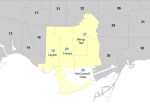
The four downtown wards and their representatives, 2014-2018
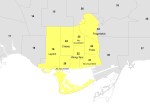
The six downtown wards and where each incumbent registered
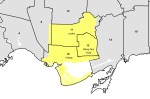
The three wards under the 25-ward structure, and where each incumbent decided to run. The old four wards highlighted in yellow
Seven downtown wards were reduced to just three. Councillor Joe Cressy decided to run in Spadina Fort-York, while Mike Layton registered in University-Rosedale. Kristyn Wong-Tam ran in Toronto Centre, along with appointed councillor Lucy Troisi.
Many allied progressive candidates, including Ausma Malik and Jennifer Hollett, withdrew their candidacies. Chris Moise decided to run for re-election as TDSB trustee, which he won. Other candidates who withdrew included Han Dong,
Ward 10
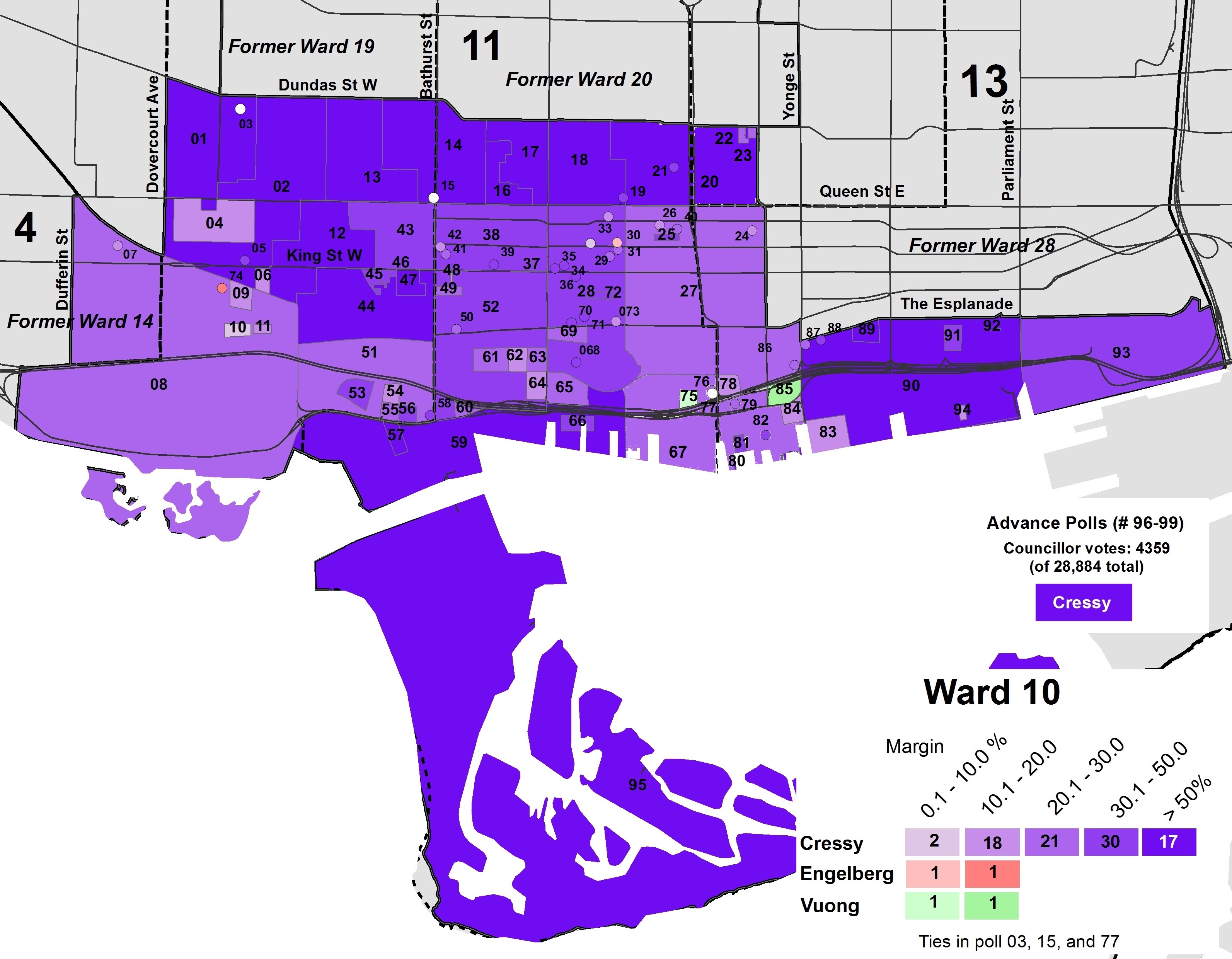
There were 14 candidates running in Ward 10, Fort York-Spadina, including Joe Cressy, April Engelberg, and Kevin Vuong. Cressy won with 55.8 percent of the vote, with Engelberg coming in second place with 11.6 percent and and Vuong with 10.5 percent. Cressy placed first in all but seven polls, most of which were condominium buildings in the Harbourfront and Liberty Village neighbourhoods. The top three candidates all supported the King Street Pilot, while Al Carbone got a mere 1.8 percent of the vote.
Poll results in Ward 10
Ward 11
The new Ward 11 was a very different ward from the one in which Mike Layton had run in 2010 and 2014. Only a fraction of old Ward 19 was included in University-Rosedale, which includes neighbourhoods such as the Annex, Yorkville and Rosedale, areas previously represented by Councillors Cressy and Wong-Tam. Layton was challenged by Niki Ward and by latecomer candidate Joyce Rowlands, an occupational health nurse, writer, and policy consultant, and the daughter of former City of Toronto mayor June Rowlands.
Despite the change in ward boundaries, Layton won easily with 69.6 percent of the vote, while Rowlands placed second with 13.2 percent, and Ward in third with 9.1 percent. Layton came first in every poll, but Rowlands did best in Rosedale, almost winning Polls 027 and 029. This was the same area in which Wong-Tam had the least support in 2014.
Poll results in Ward 11
Ward 13
The new Ward 13, Toronto Centre, had much more of former Ward 28 than Councillor Wong-Tam’s old Ward 27. The Rosedale and Yorkville sections of Ward 27 became part of new Ward 11. While Ward 13 is geographically smaller than old Ward 27 (the only instance of this happening under the 25-ward model), it still has a larger population, and has many different challenges than the old ward, as it now includes St. Jamestown, where hundreds remain displaced after a fire, and Regent Park, which is still undergoing redevelopment.
Wong-Tam won with 50.3 percent of the vote, with other high-profile candidates doing quite poorly. George Smitherman got just 15.2 percent of the vote, while Lucy Troisi, the Ward 28 incumbent, got just 8.6 percent. Wong-Tam placed first in all but seven polls, while Troisi didn’t place first anywhere. It’s clear by the poll results map below that Wong-Tam’s support was lowest in St. Jamestown and in the Regent Park neighbourhoods while strongest in old Ward 27 and the area south of Queen Street.
This speaks to the challenges for many councillors elected to new, larger wards. At least Kristyn Wong-Tam is one of Toronto’s most effective and hardest-working councillors, so Ward 13 is in good hands.
Poll results in Ward 13
Conclusion
Downtown Toronto is fortunate to have experienced, dedicated, and hard-working councillors, but concentrating all the work in just three wards is unfortunate. Not only is the population of central Toronto growing faster than most other parts of the city, it has additional needs: an increasing share of the city’s employment that requires additional infrastructure such as a Relief Line Subway, and pressing social needs especially as new development downtown squeezes out affordable rental housing and the institutions that support marginalized people.
I also think of all the great people running for council who never got a fair shot at running for council. Though re-electing Councillors Cressy, Layton, and Wong-Tam is the best result especially considering the circumstances, I was excited by many of the new voices who put their names forward in good faith earlier in 2018. Hopefully, they remain active in the community and get a fair chance in the future.
In the penultimate post in my series examining the results of the 25 council races in the October 2018 municipal election here in Toronto, I take a look at the results in Ward 4, Parkdale-High Park and Ward 9, Davenport in Toronto’s west end.
Neither of the two ward-level results were surprising. Ward 4 returned progressive councillor Gord Perks to City Hall, while in Ward 9, there wasn’t much of a contest: centrist Ana Bailão was easily re-elected.
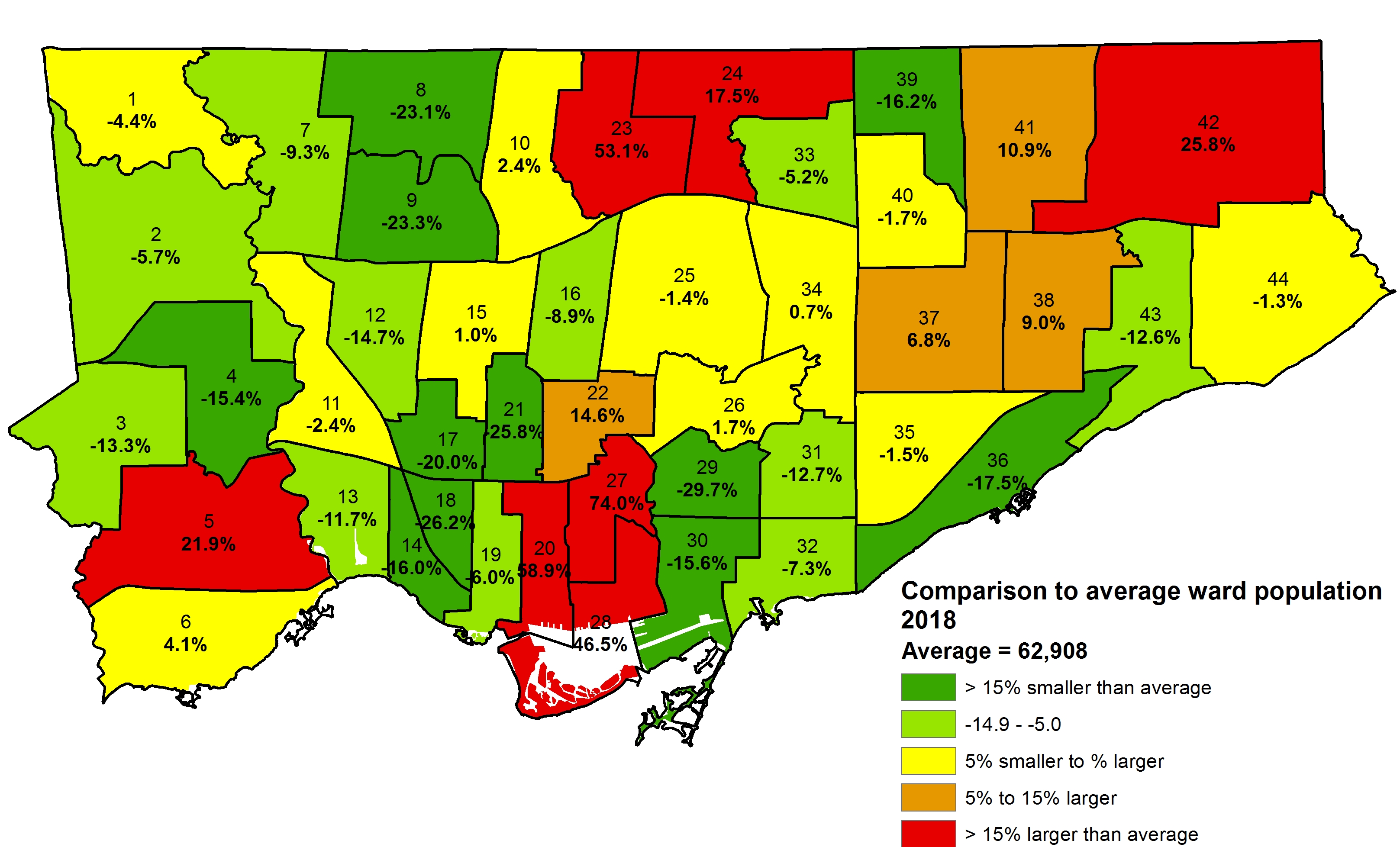
At the start of 2018, once the 47 ward boundaries were confirmed, it looked as though Bailão was going to be in one of the most interesting council races. The west end of the old City of Toronto — old Wards 14, 17, and 18 — had low population growth compared to many other parts of the city, including northeast Scarborough, North York Centre, Humber Bay Shores, and Downtown. These new ward boundaries were designed to improve representation as the old 44 wards were based on federal ridings drawn in the 1990s. Even with three new wards, the west end would lose a seat on council. The way the boundaries were drawn, it meant that Bailão, elected in Ward 18, would be up against Cesar Palacio, elected in Ward 17.
Differences in 2018 ward populations under the old 44-ward model. Toronto’s west end was one of several areas over-represented by the outdated boundaries.
Under the 47-ward model, it would have been the only race in which two incumbents would have ran against one another and Bailão would have had the advantage.
Palacio, a conservative, was vulnerable in the last few elections, challenged by progressive candidates Alejandra Bravo and Jonah Schein, with Palacio narrowly winning in 2010. With the new boundaries extending south to Bloor Street (the area south of Bloor shifting to join old Ward 14 represented by Gord Perks), Palacio’s base in the north half of his old ward would not have been enough — areas that voted for Bravo in 2014 would have certainly voted for Bailão in a two-candidate race.
After Bill 5 was introduced and confirmed into law, things changed. Sarah Doucette, a progressive councillor representing old Ward 13 (Swansea, Bloor West Village and part of the Junction) withdrew from the race when her ward was joined with Ward 14 (Parkdale and Roncesvalles).
Doucette, who was first elected in 2010, said that she wasn’t interested in serving on a 25 ward council. A councillor well-known for her local community activism, Doucette would have represented a much larger area, and would have run against Gord Perks, someone she describes as a friend. For his part, Perks said that “Doucette deeply embodied the values of decency and community at city council. It’s a crime that we’re losing her.”
Meanwhile, Perks, who was running, still had several opponents in the new larger ward. They included David Ginsberg, owner of several restaurants and a coffee shop near Trinity-Bellwoods Park; Kalsang Dolma, a Parkdale-based artist and community activist; and Evan Tummillo, a property manager who ran against Doucette in 2014. Tummillo was endorsed by the Toronto Sun, while the Toronto Star endorsed Perks.
In neighbouring Ward 9, Cesar Palacio quietly dropped out of the race in late September, only a few days before the new post-Bill 5 nomination deadline. This was a surprise, as he and Bailão had known that they would run against each other for a very long time. Only four other candidates had registered, none of whom enjoyed wide name recognition. Had Palacio withdrawn earlier, it is possible that a progressive candidate would have taken a shot at running against centrist Bailão.
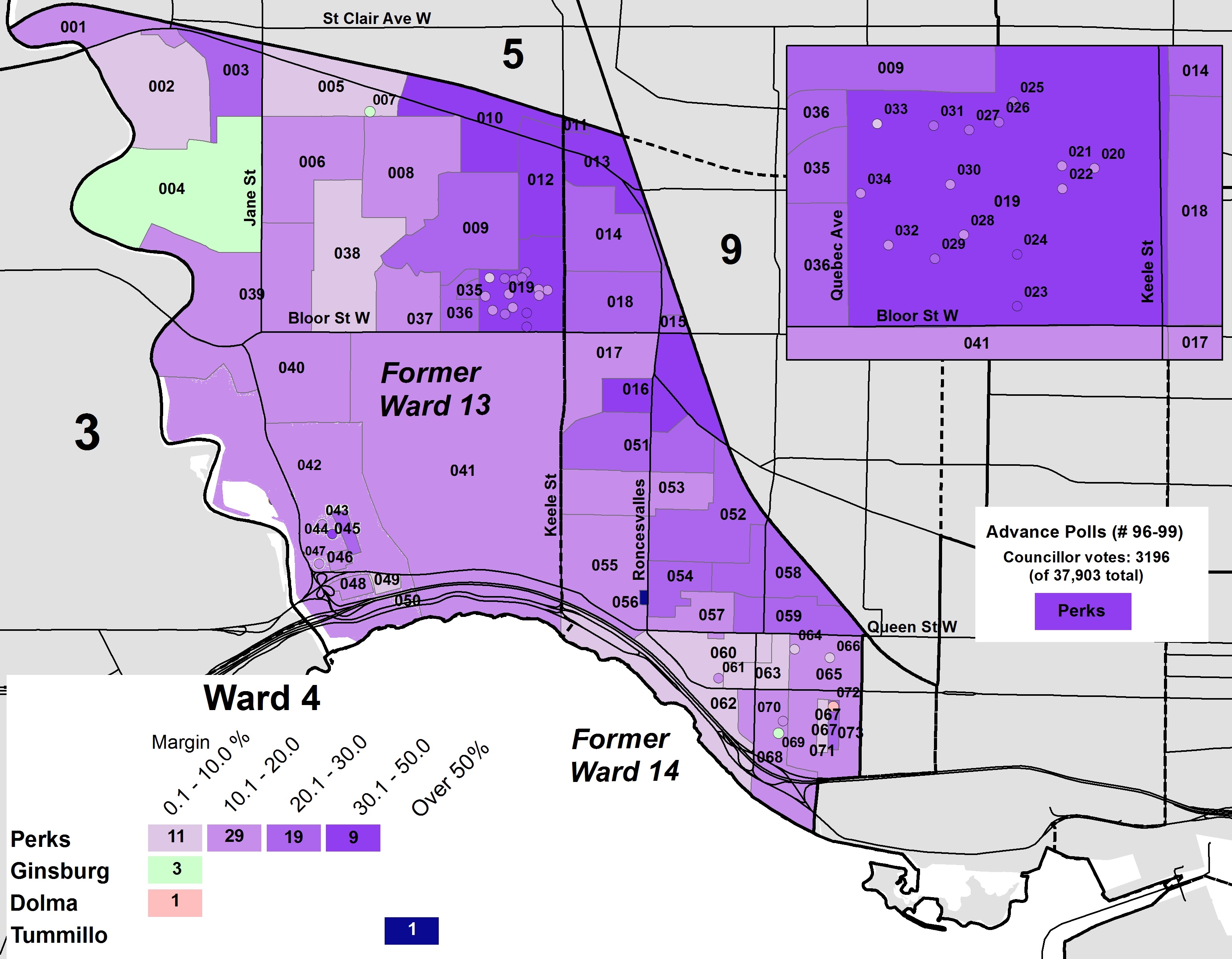
In Ward 4, Perks easily won re-election, taking 44.5 percent of the vote and placing first in all but five polls. Ginsberg placed a respectable second, with 21.6 percent. Ginsberg did best in the affluent Baby Point neighbourhood in former Ward 13, while Dolma did quite well in a few Parkdale polls, placing first in one. Tummillo got just 6.2 percent of the vote, coming first in just one poll, a seniors’ residence on Roncesvalles Avenue.
Poll-level results for Ward 4
Meanwhile, in Ward 9, Ana Bailão got the highest winning margin of any council candidate, taking 83.6 percent of the vote. As the councillor in the old City of Toronto most allied with Mayor John Tory, Bailão has since been named to the executive committee and chair of the new planning and housing committee. Perks, on the other hand, was shut out of Tory’s inner circle.
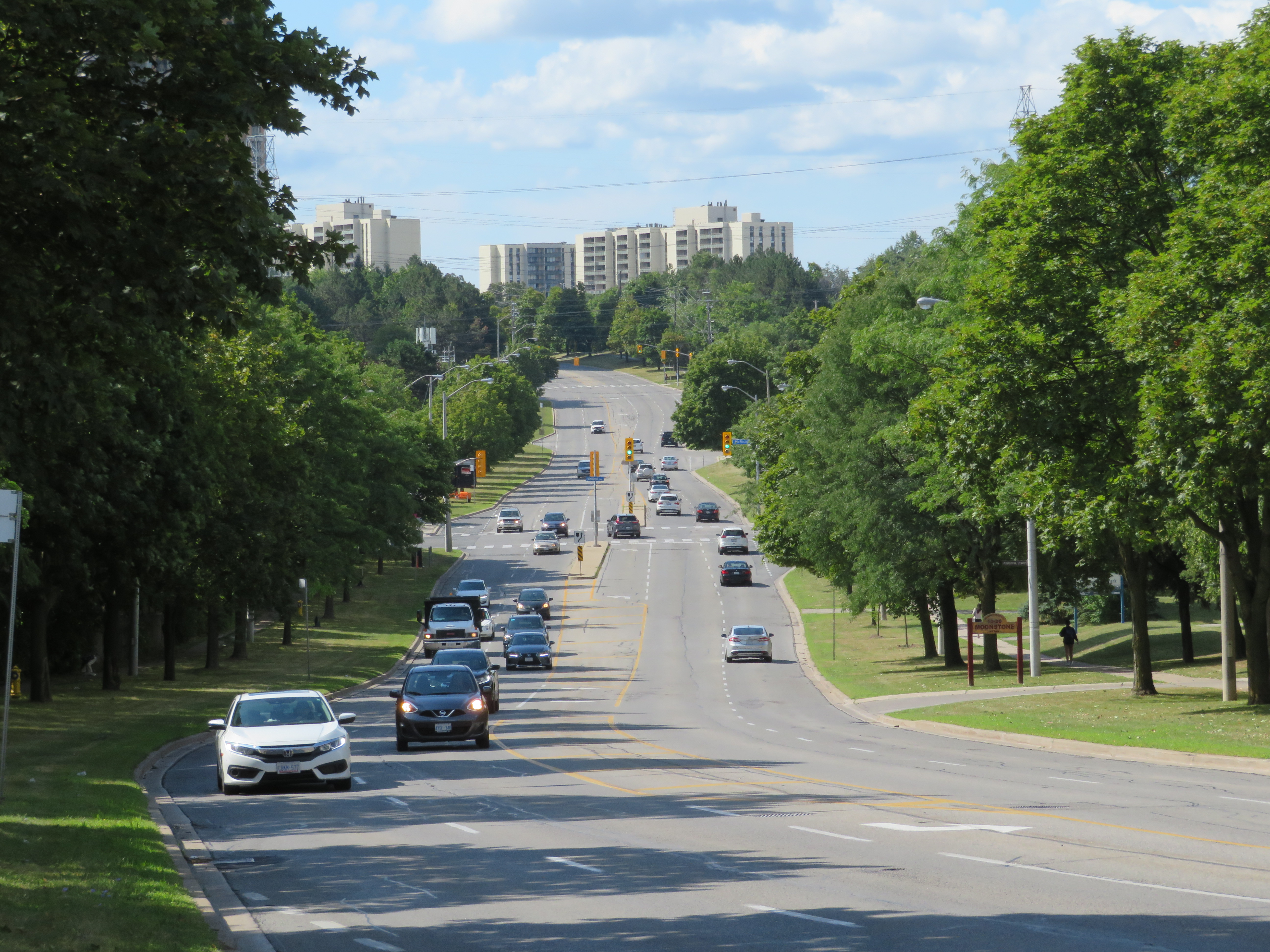 Don Mills Road looking south towards McNicoll Avenue, North York
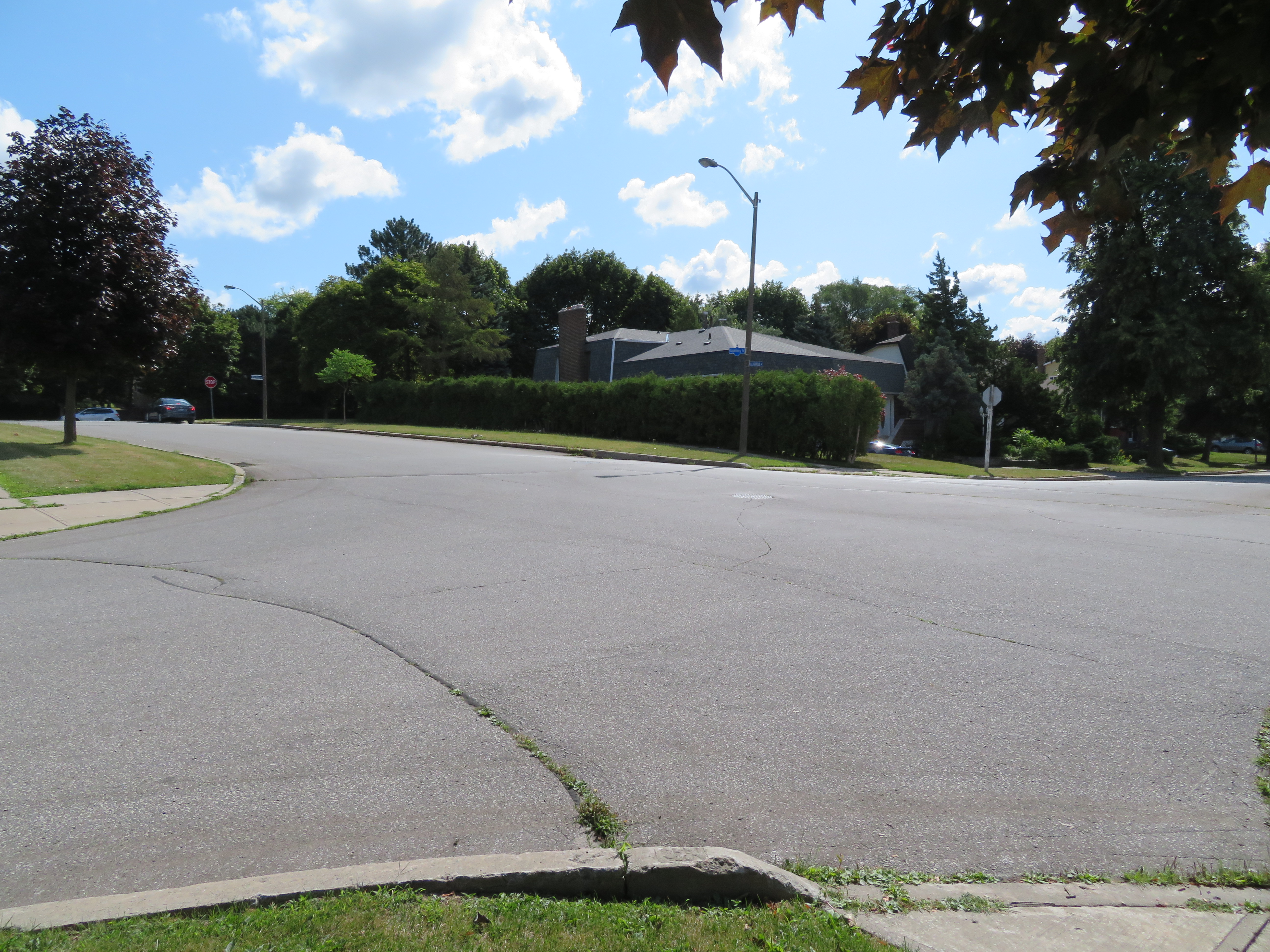 The intersection of Cliffwood Road and Barkwood Crescent, looking southeast
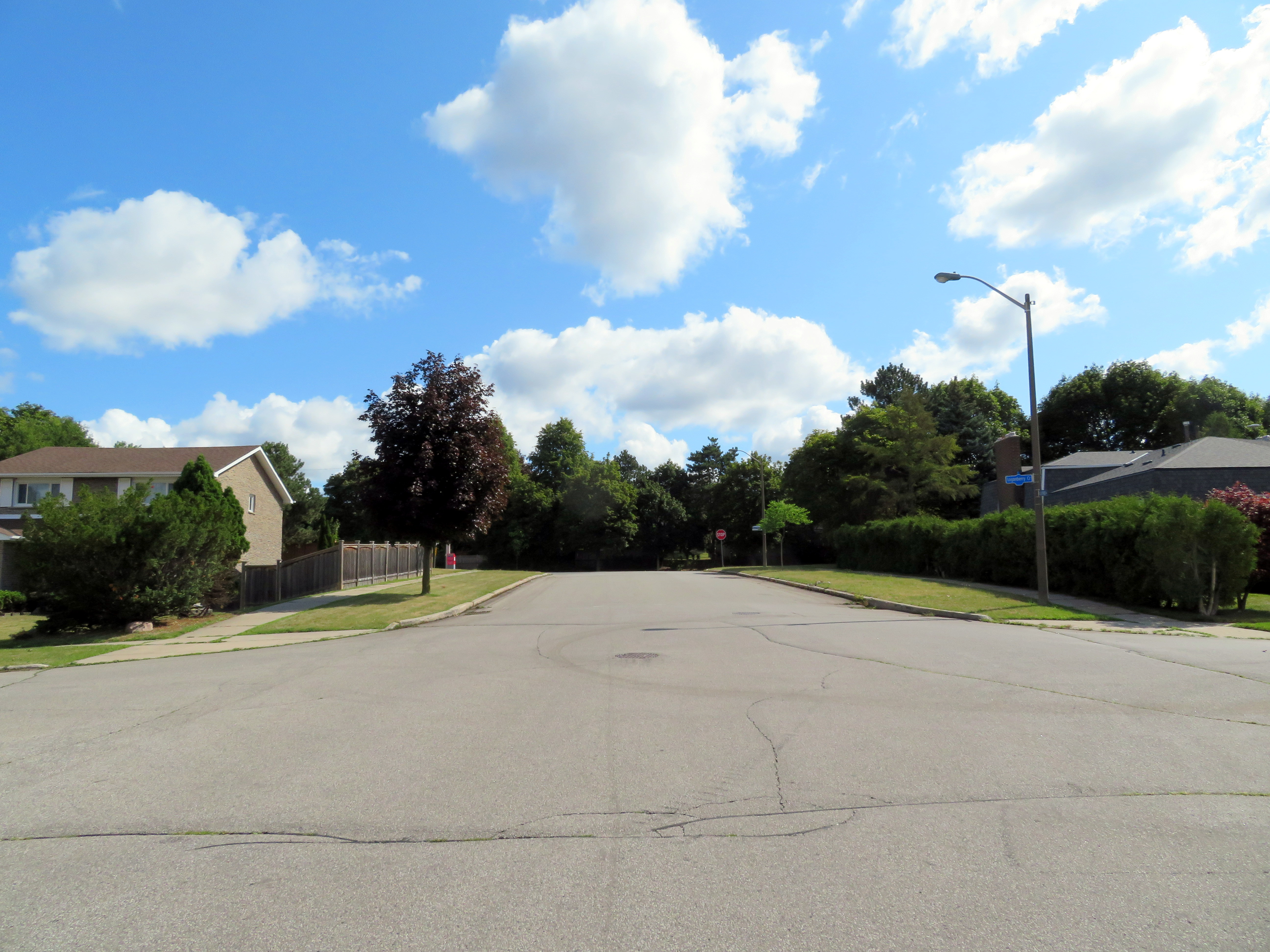 An unnecessarily large intersection at Cliffwood Road and Barkwood Crescent, and a wide approach to Don Mills Road
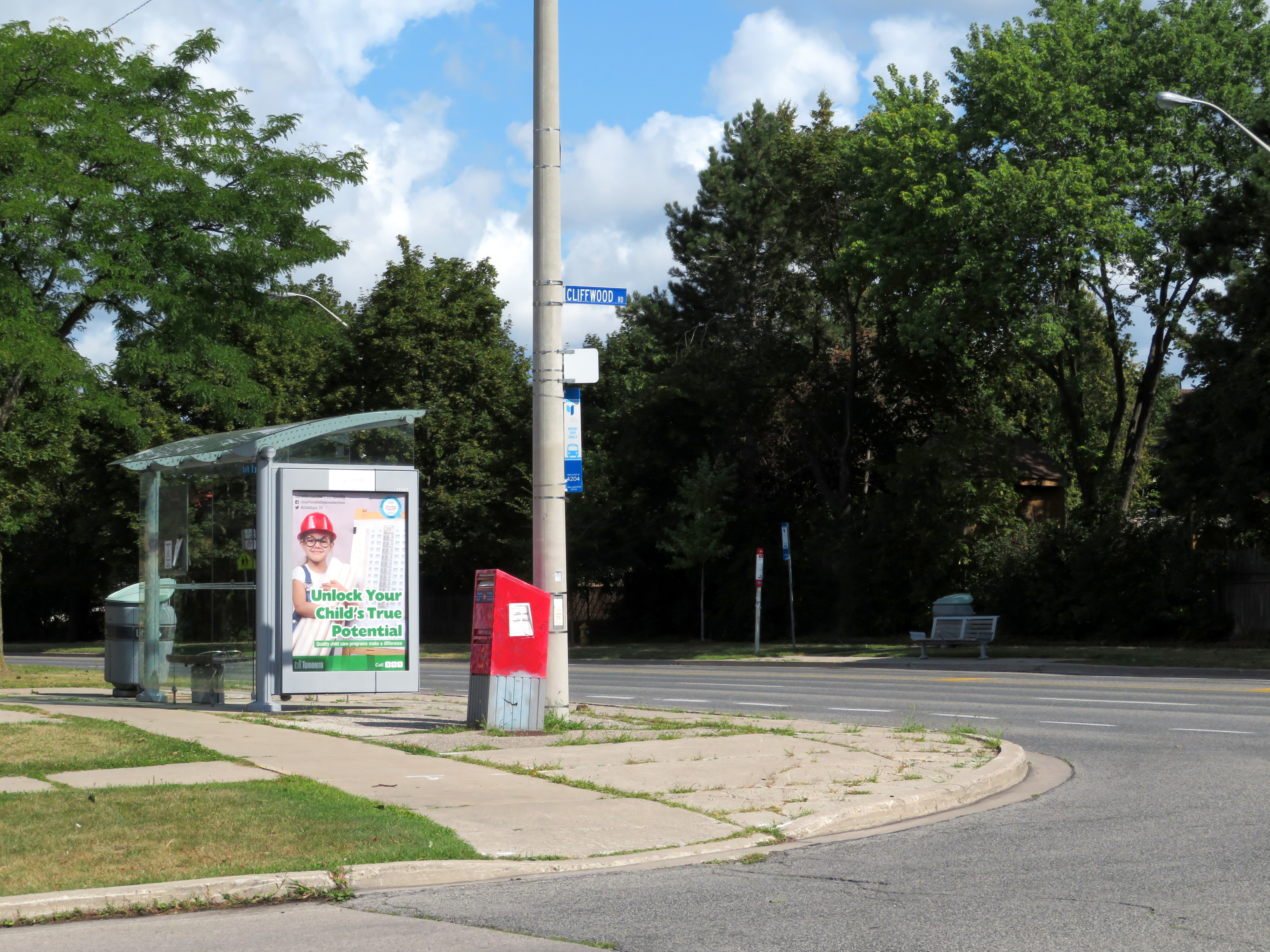 The corner of Cliffwood and Don Mills Roads with bus stops
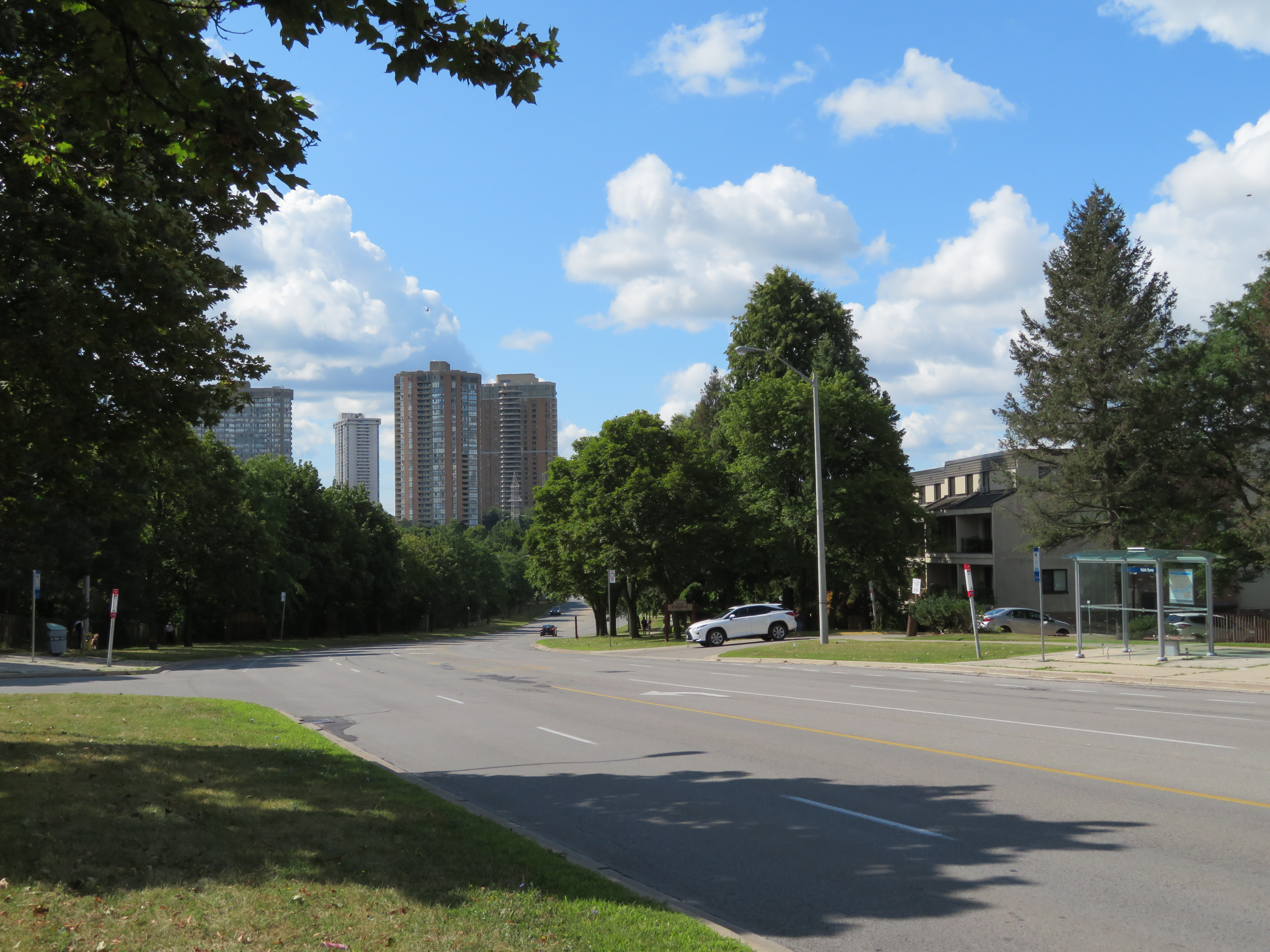 Bus stop at Don Mills Road and Mogul Drive, illustrating the high-speed curves
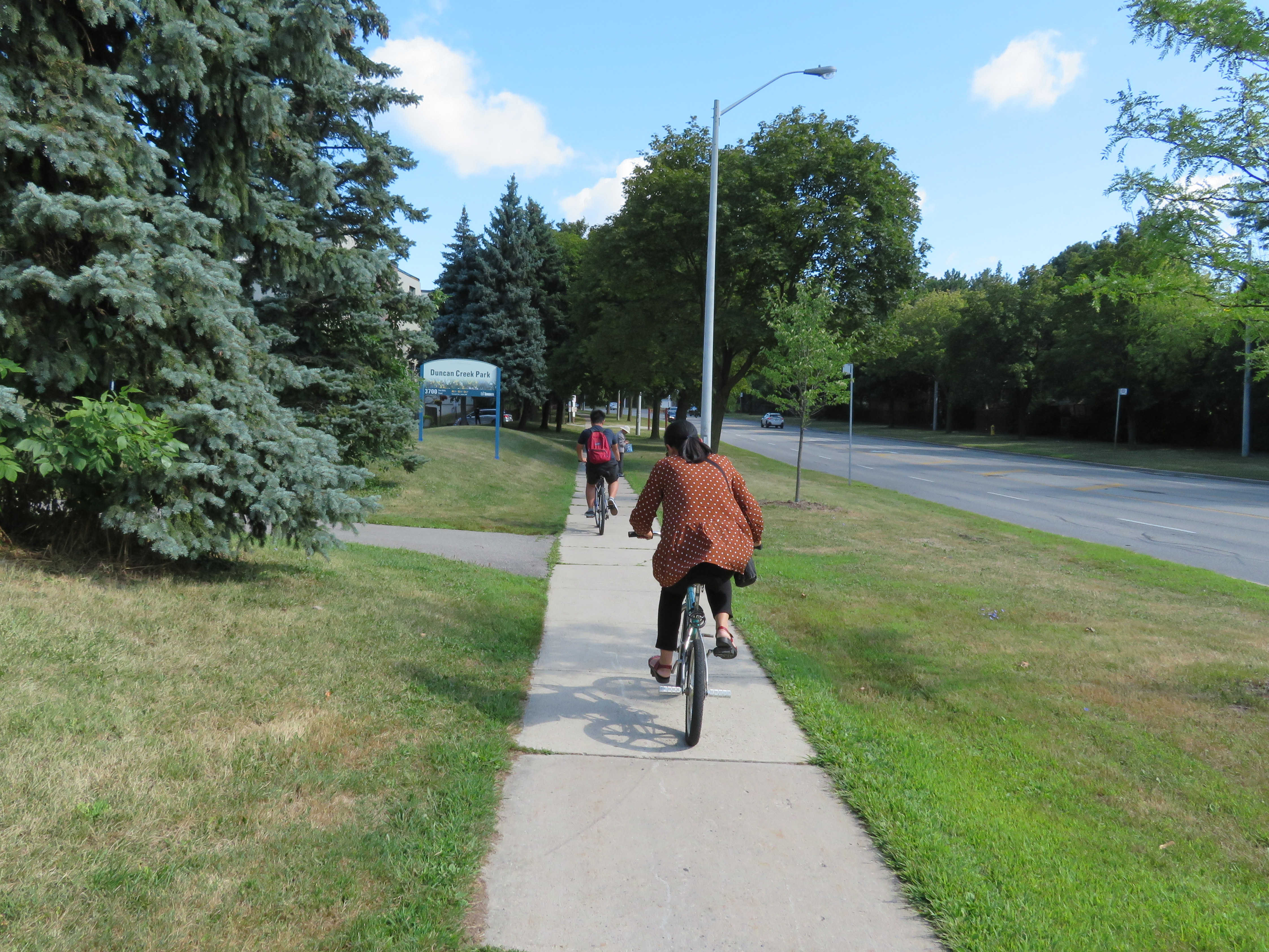 Cyclists take the sidewalk on Don Mills Road
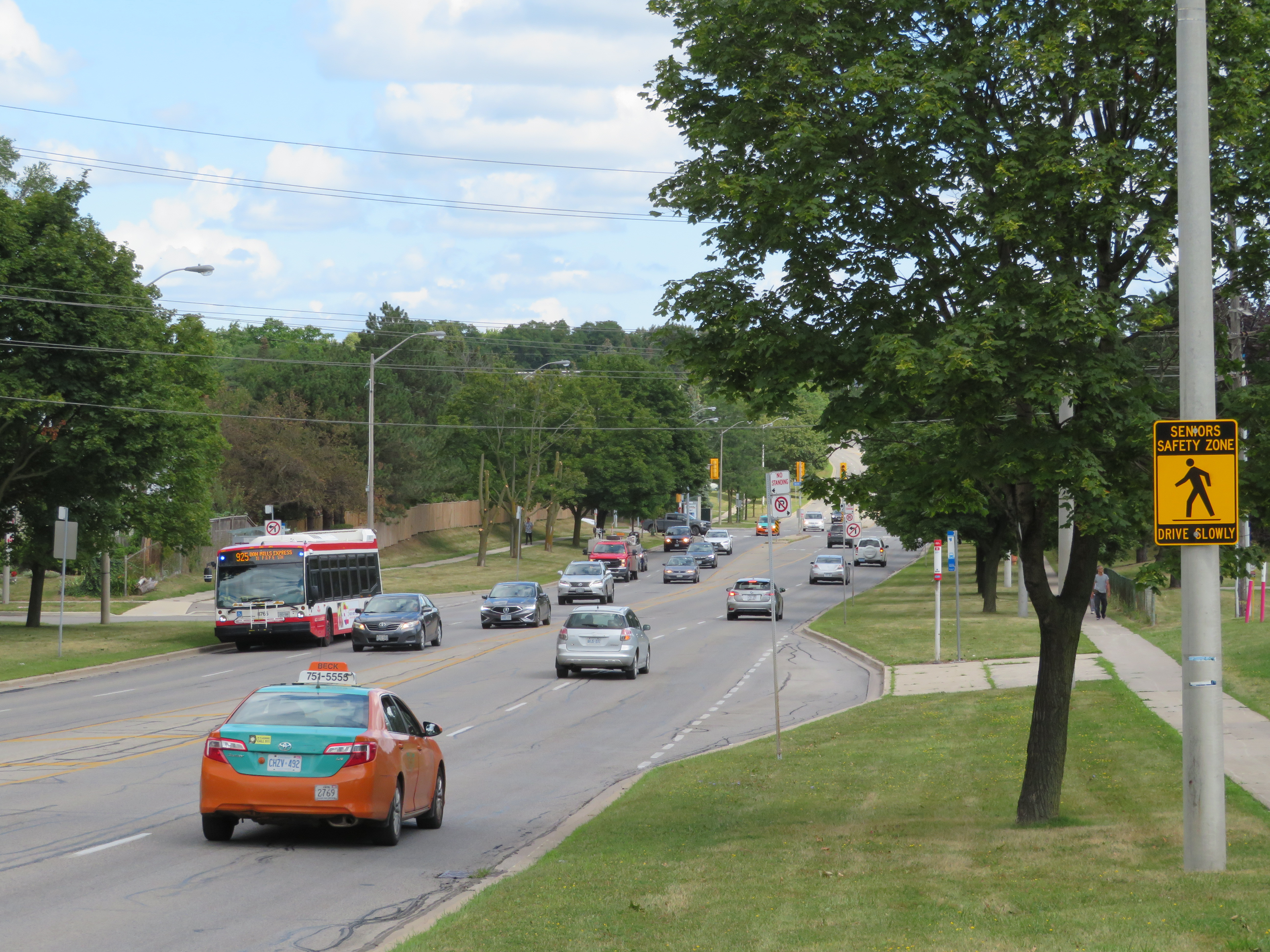 “Seniors Safety Zone” – note the bus bay behind the sign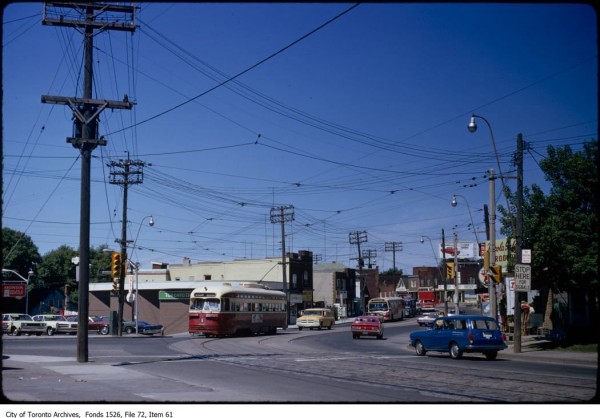
 SmartTrack map from the 2014 John Tory campaign
 Canada Line in Richmond, British Columbia
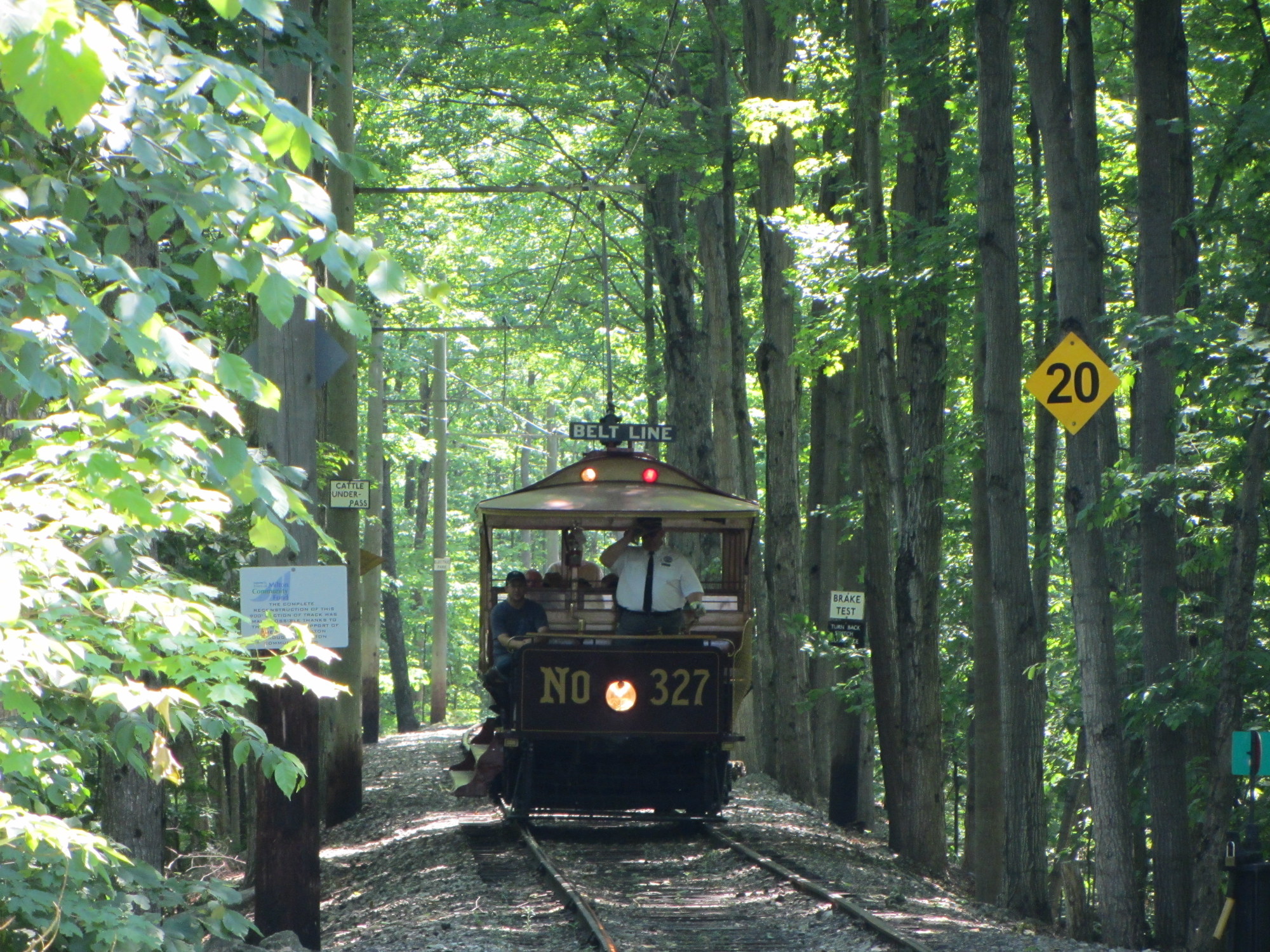 Replica of Toronto Railway Company streetcar #327 operates at the Halton County Radial Railway museum, with the unique glass bulbs visible below the metal “Belt Line” sign. Photo taken June 2012
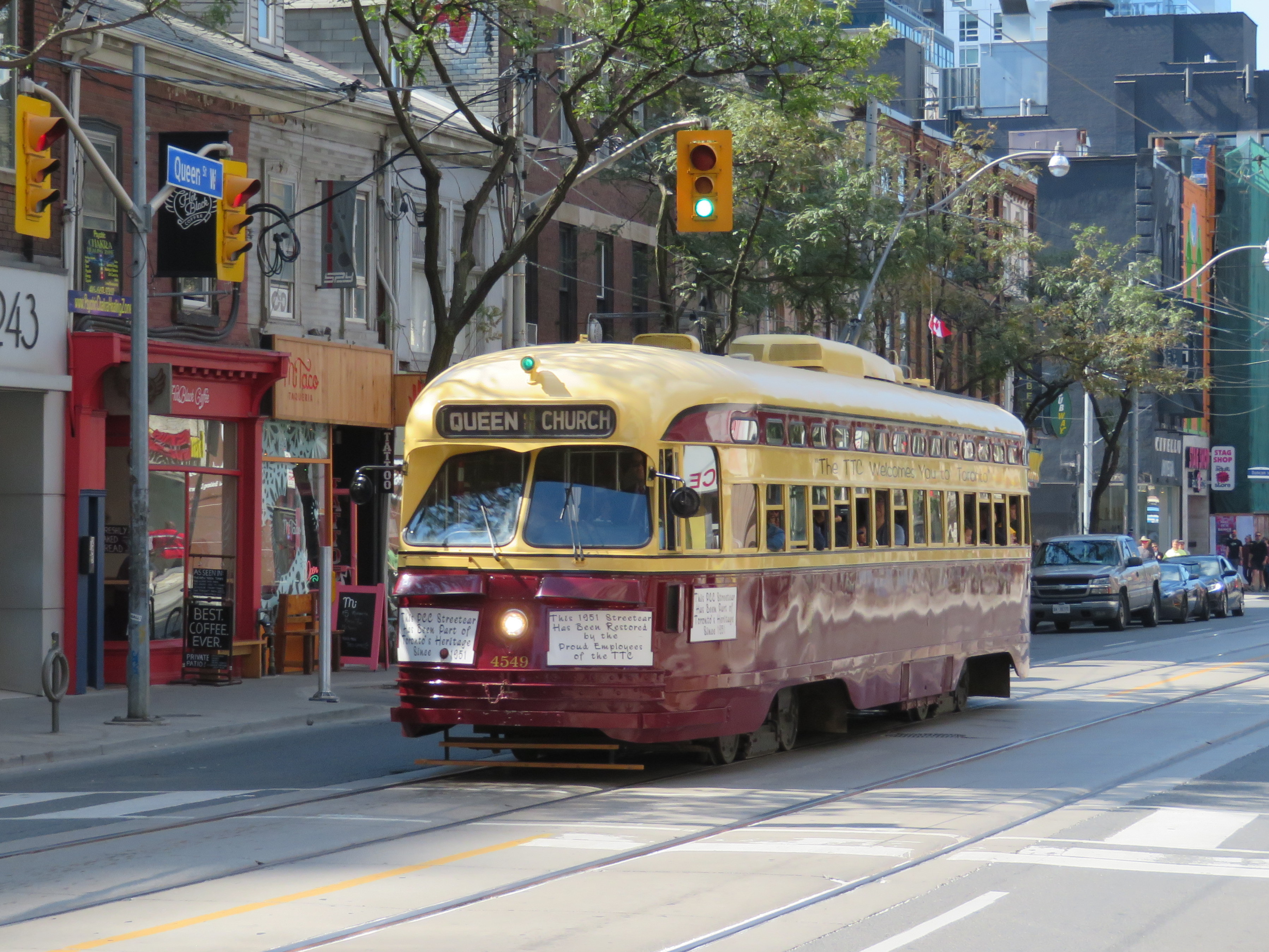 TTC PCC Streetcar #4549 on Queen Street West in September 2018
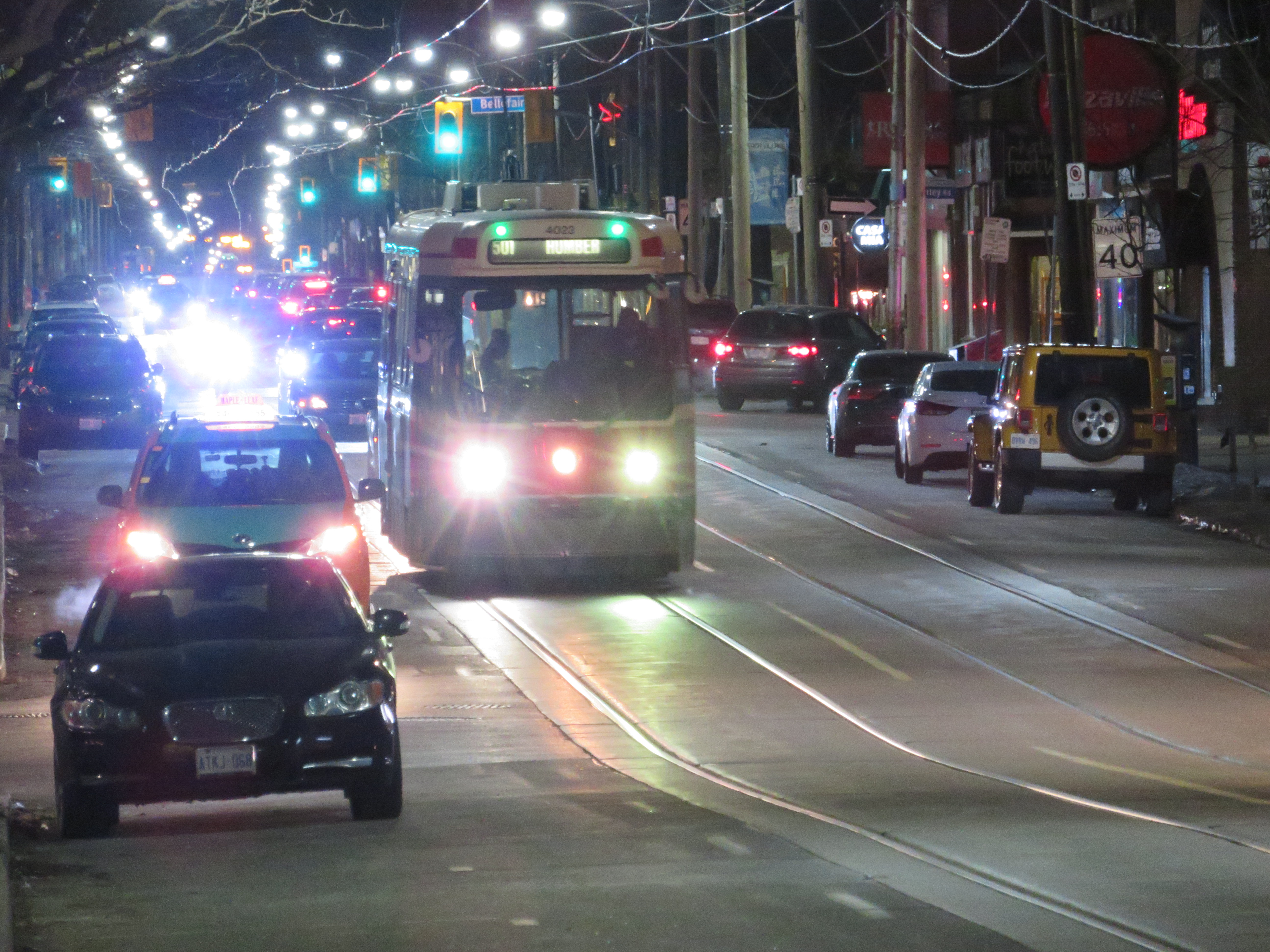 CLRV streetcar on Queen Street East, with two blue-green advance lights above the back-lit destination sign.
 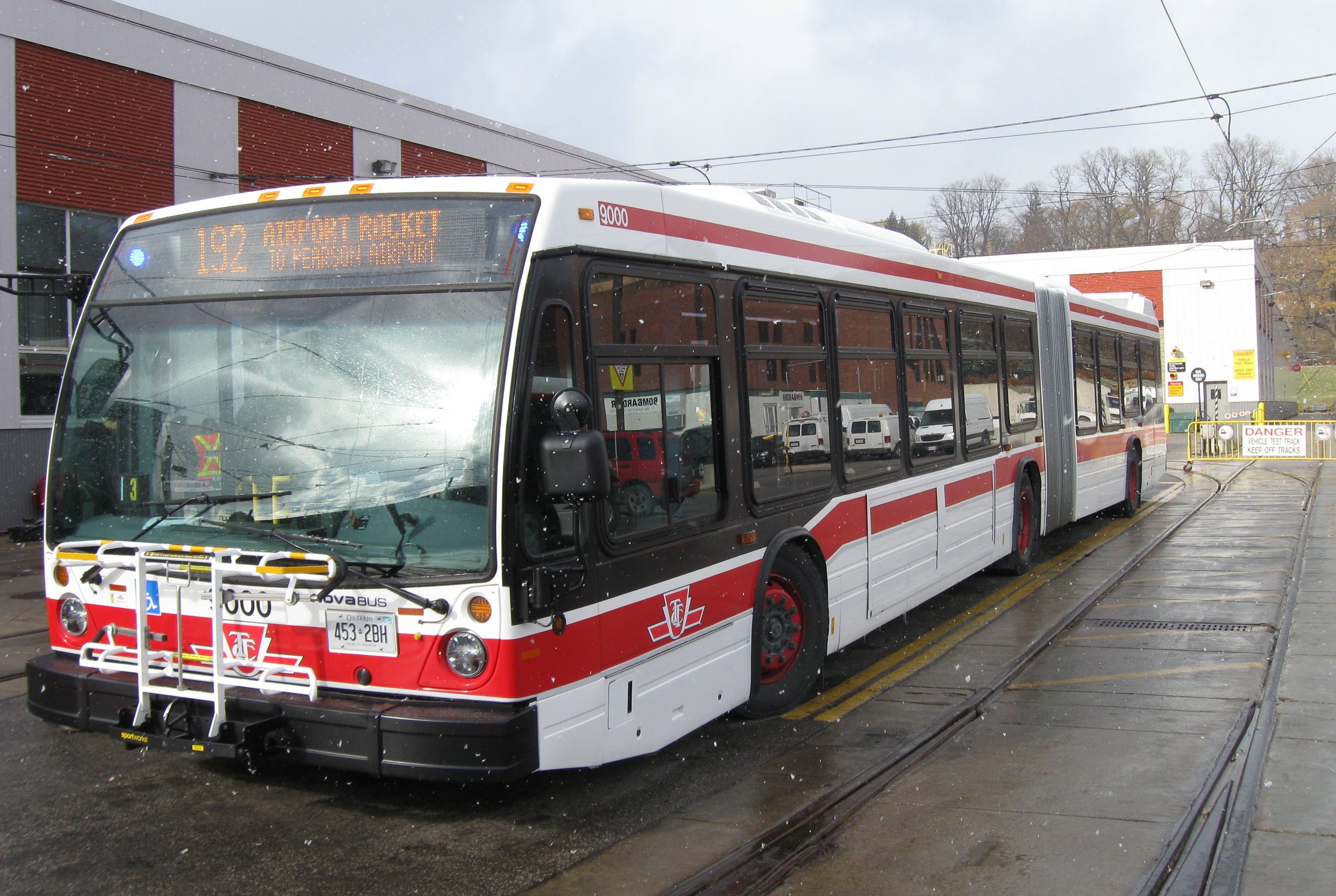 Nova articulated bus with orange LED destination sign and blue LED advance lights indicating it is an accessible vehicle
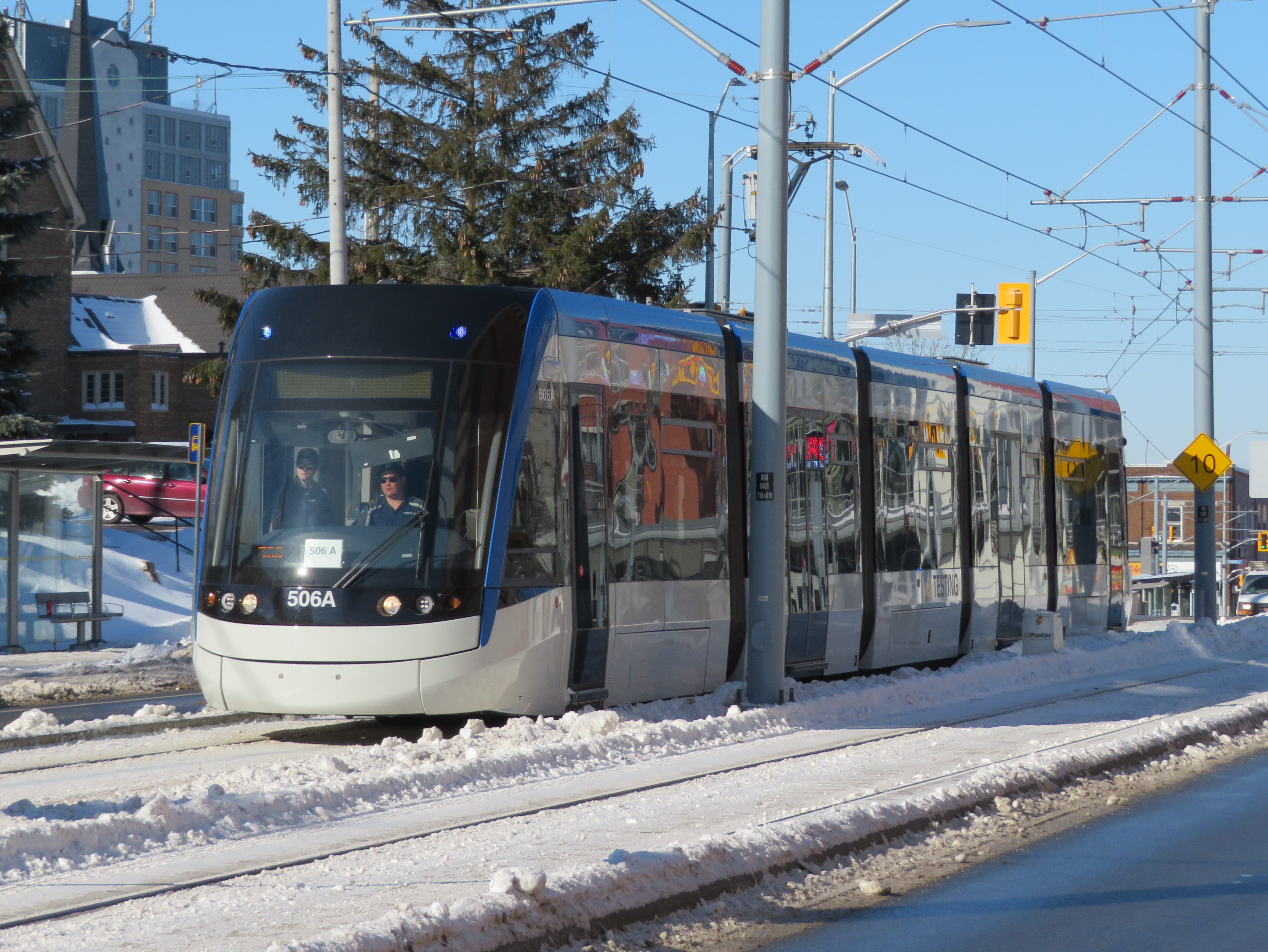 ION LRT vehicle undergoing testing in Kitchener, February 2019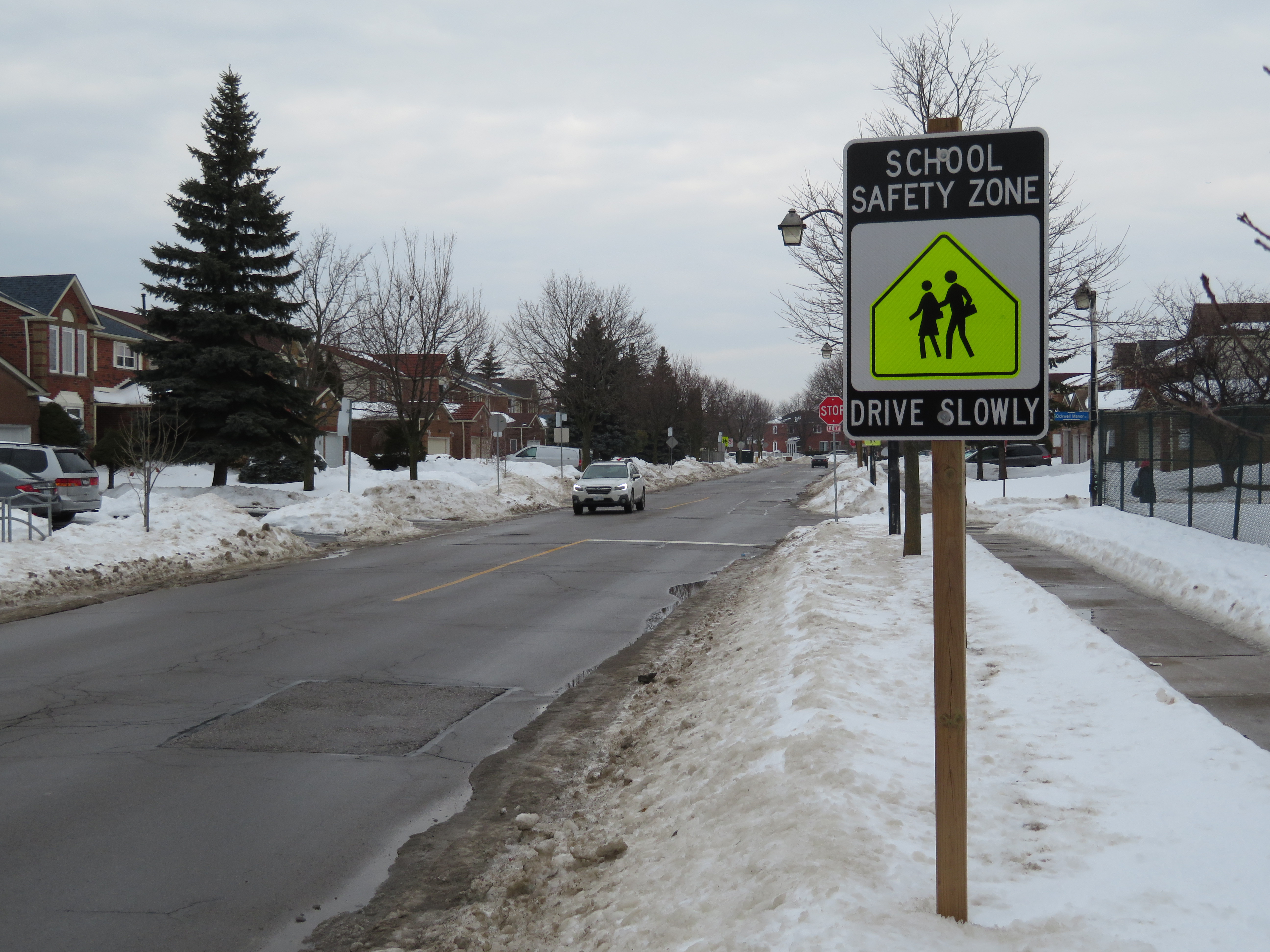
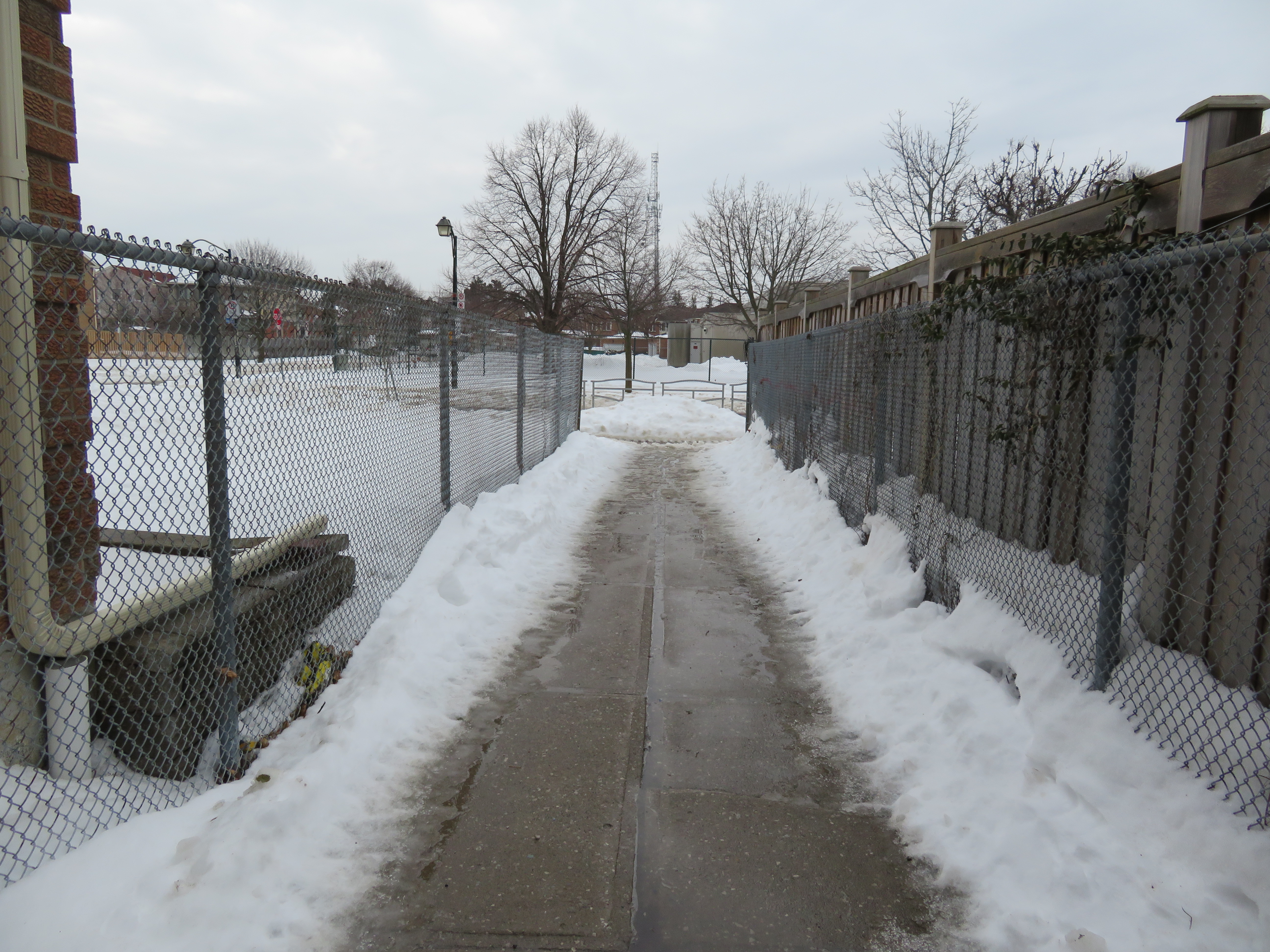 The walkway to the school and a nearby park is reopened, with a metal barrier between the sidewalk and the roadway
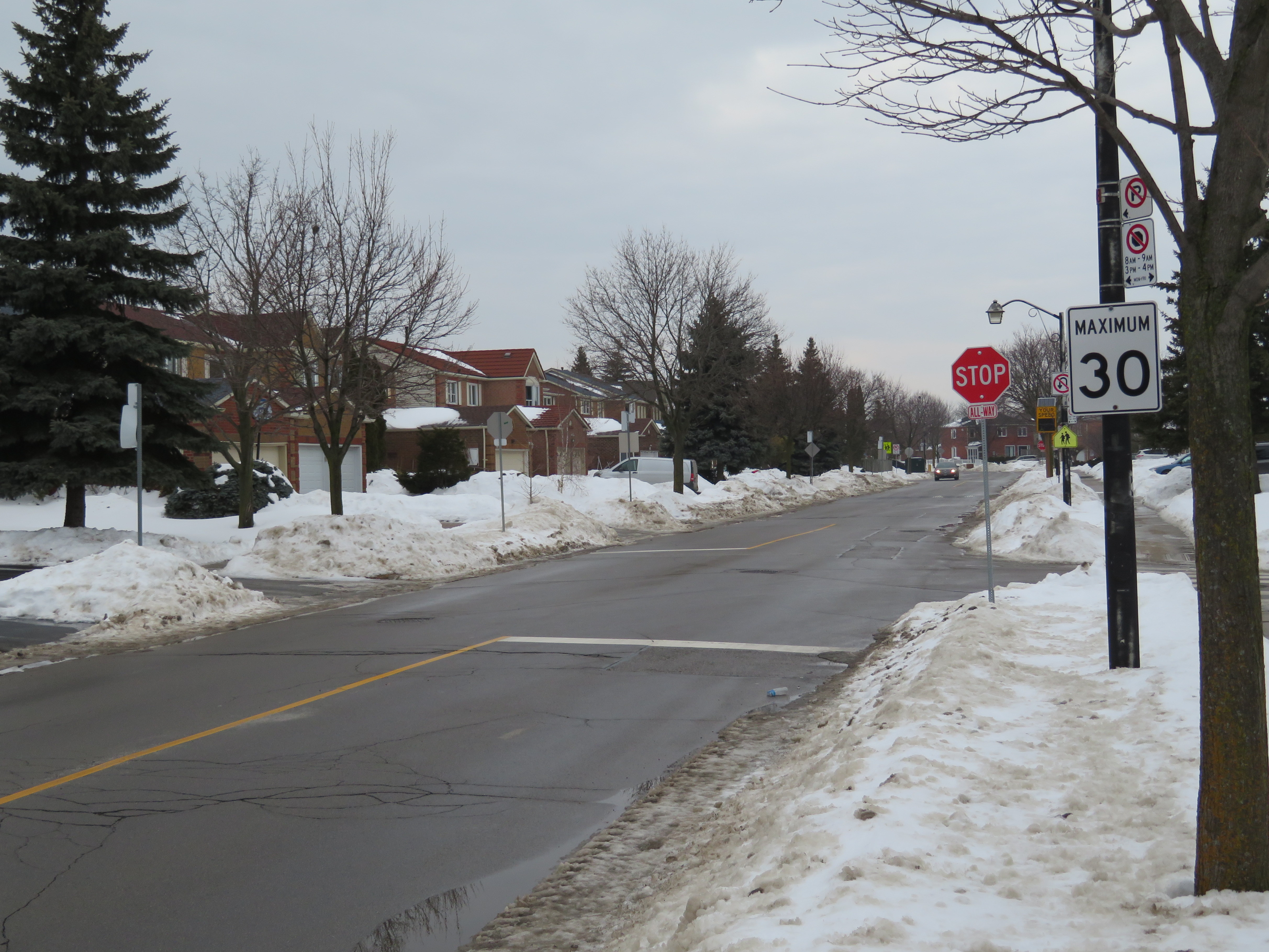 New 30 km/h speed limit and a new stop sign on Canongate Trail, February 2019
 What Canongate Trail looked like in March 2018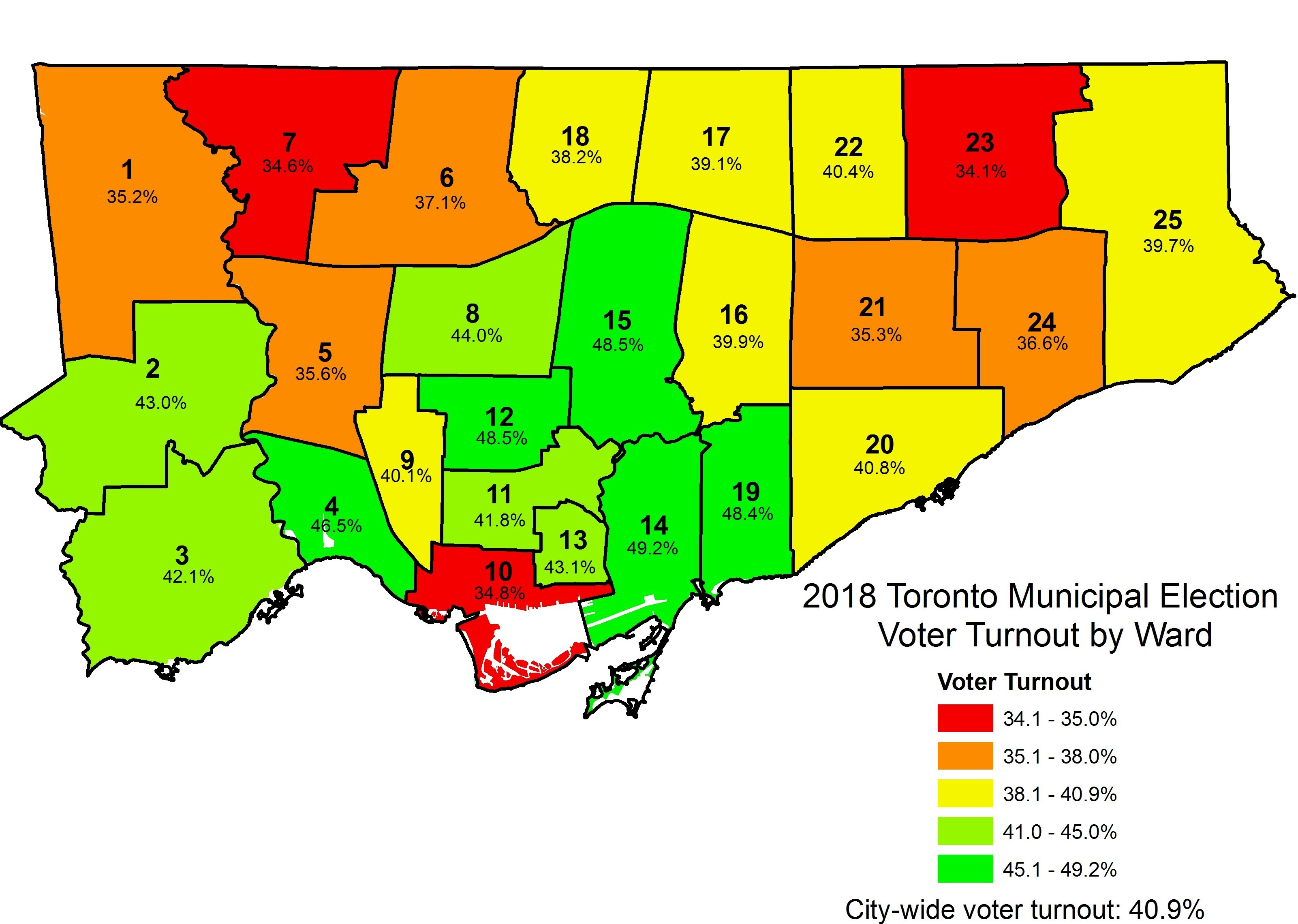
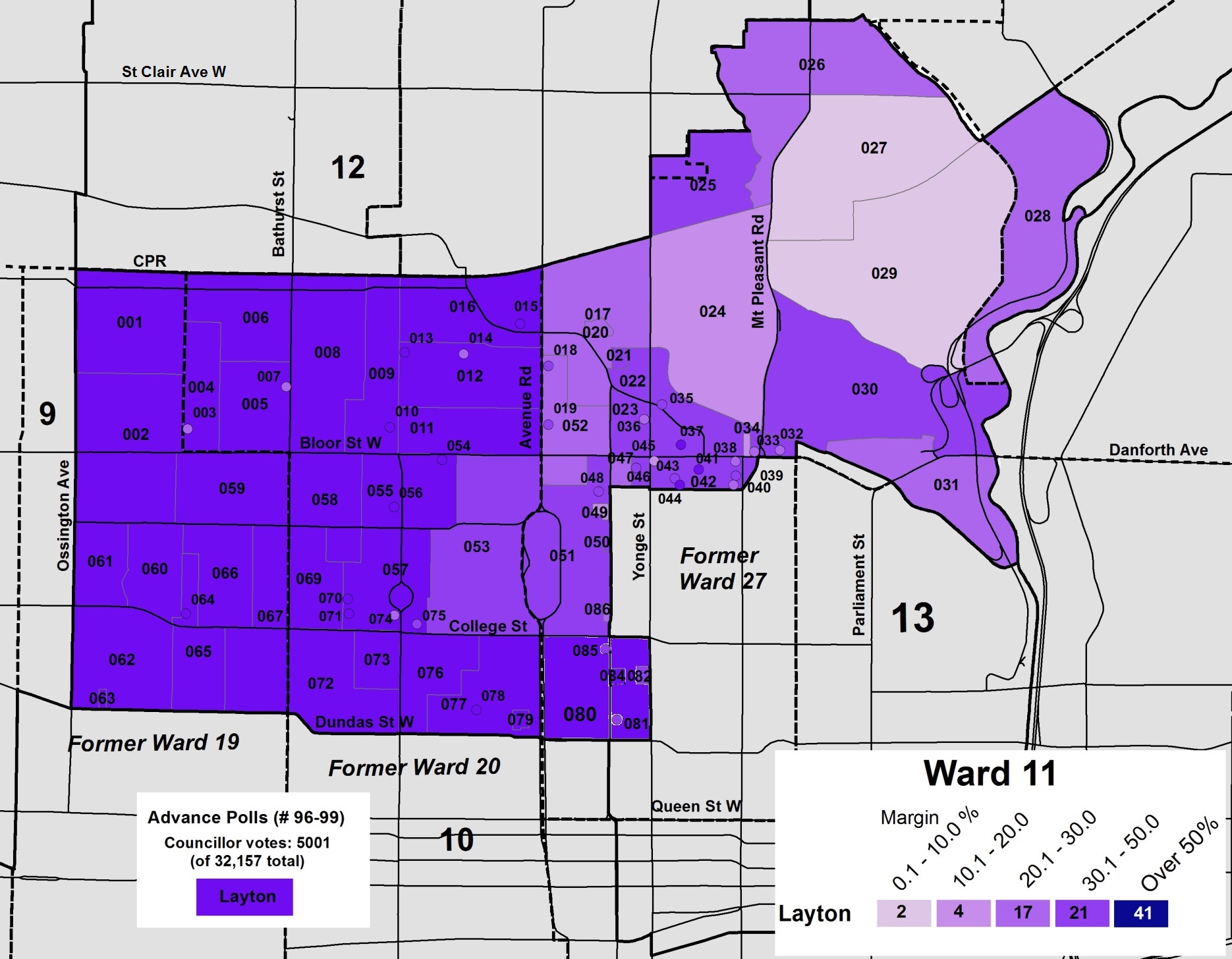 Poll results in Ward 11
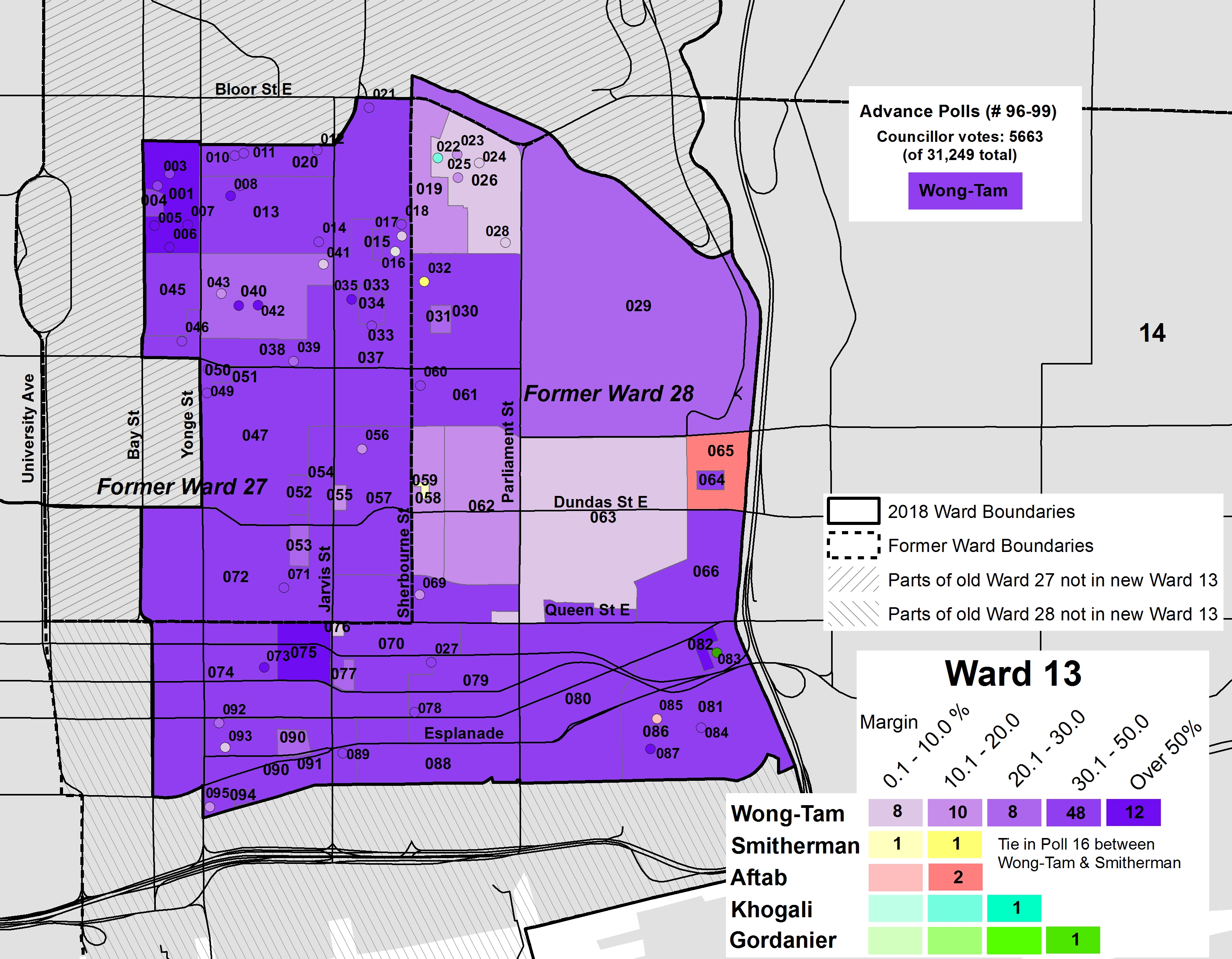 Poll results in Ward 13