
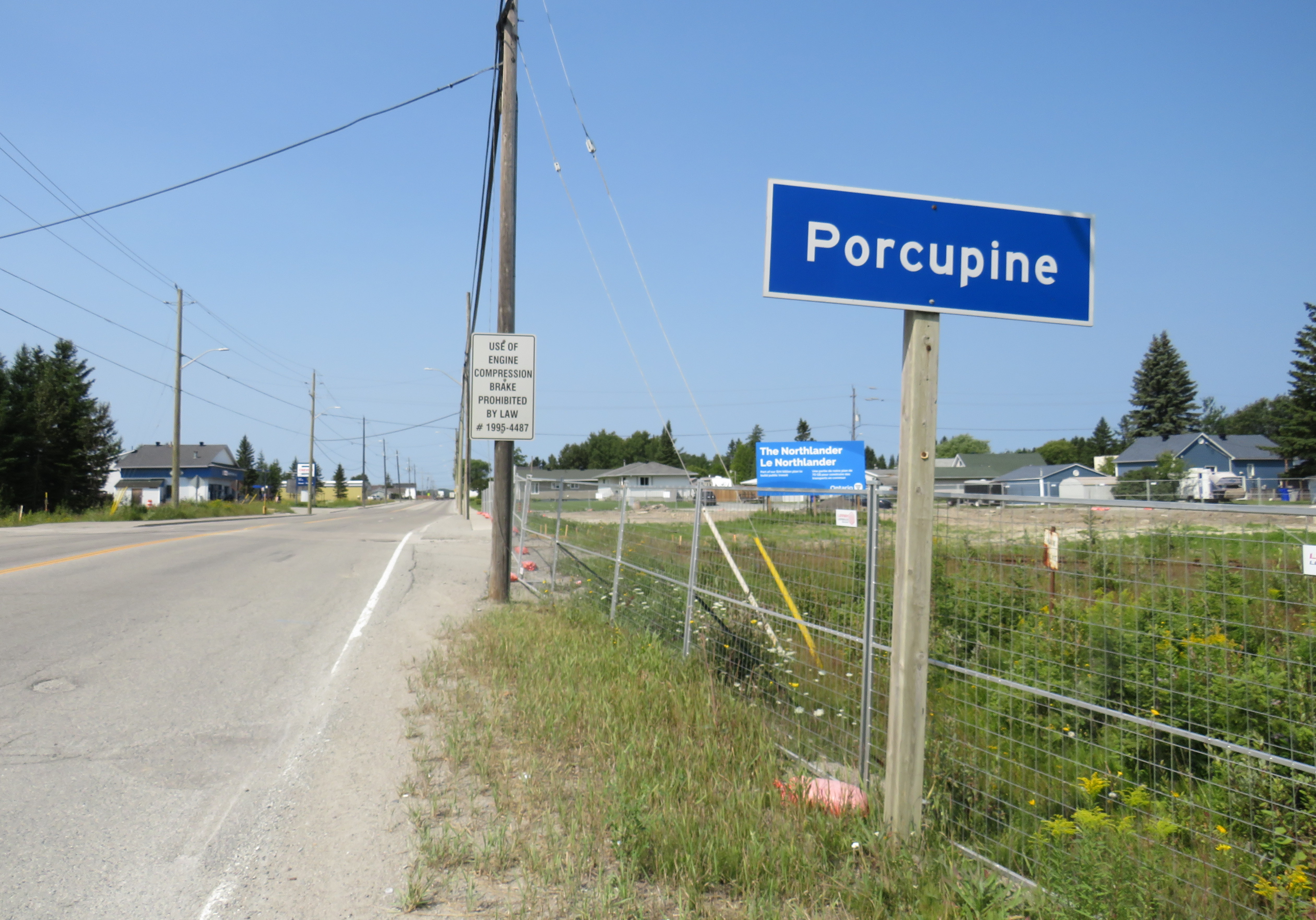
Timmins, a resource town of 40,000 in Northeastern Ontario, is known for a few things: gold mines, beer parlours, the birthplace of country musician Shania Twain, and the place where folk musician Stompin’ Tom Connors got his start. If Connors — a travelling musician who delighted small town crowds with songs about their communities (like the hard working and hard drinking times of a “Sudbury Saturday Night”) — was still around, he’d probably write and perform a new song about getting kicked off an overnight train in the sparse environs of Porcupine, Ontario. After all, the song would quickly rhyme itself.
Porcupine is a small community of about 1,000 on the far eastern edge of the populated area in the geographically gigantic City of Timmins. Before the wave of municipal amalgamations across Ontario in the 1990s and early 2000s, Timmins was the largest city or town in the province by geographic area; it was formed through the amalgamation of the smaller City of Timmins with adjoining Mountjoy and Tisdale Townships (along with the town of South Porcupine) in the 1970s.
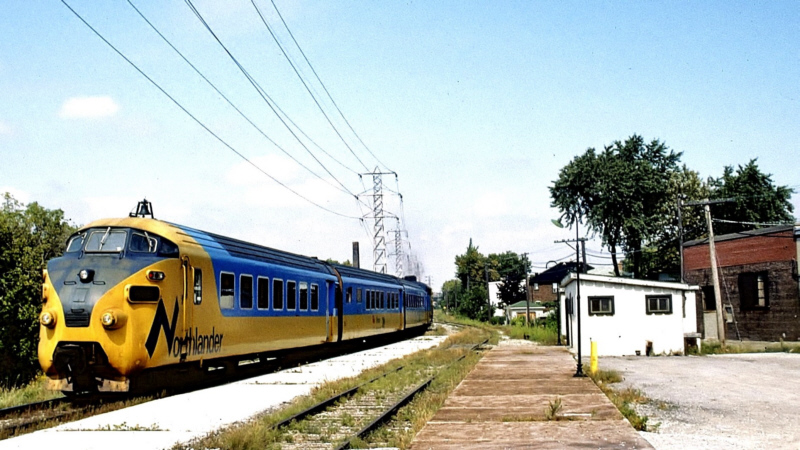
Until 1990, when the devastating cuts to VIA Rail took place, there were two daily trains between Toronto, North Bay, and Northeastern Ontario. The Northlander, a daytime train operated by Ontario Northland Railway, terminated at a downtown station in Timmins. The Northland, a joint VIA/ONR train, ran overnight between Kapuskasing and Toronto, with a bus connection to downtown Timmins. Famously, for a short period the daytime Northlander operated using former Trans-Europ-Express (TEE) cars, purchased used from Dutch and Swiss rail operators.
After 1990, Timmins was only connected by bus, with one daily bus to North Bay (and onwards to Toronto), and one bus, six days a week, to Sudbury (with connections to Toronto). The new daily overnight train — discussed earlier on this site — promises to restore a new daily trip, along with a more comfortable journey, even if sleeping accommodations will not be provided.
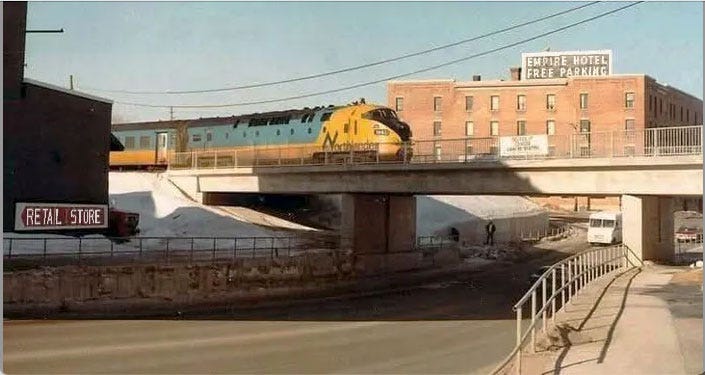
Unfortunately, the train will not be returning to Downtown Timmins. The end of rail is at Highway 101 at Porcupine, 13 kilometres to the east. Since abandonment of the passenger rail service, the railway was torn out west of South Porcupine; the railway overpass over Algonquin Boulevard (Highway 101) near the old Timmins Station was removed last year. Ore collected at the open-pit gold mines, previously loaded onto railcars, is now sent on massive dump trucks for processing at a plant at Hoyle, east of Porcupine.
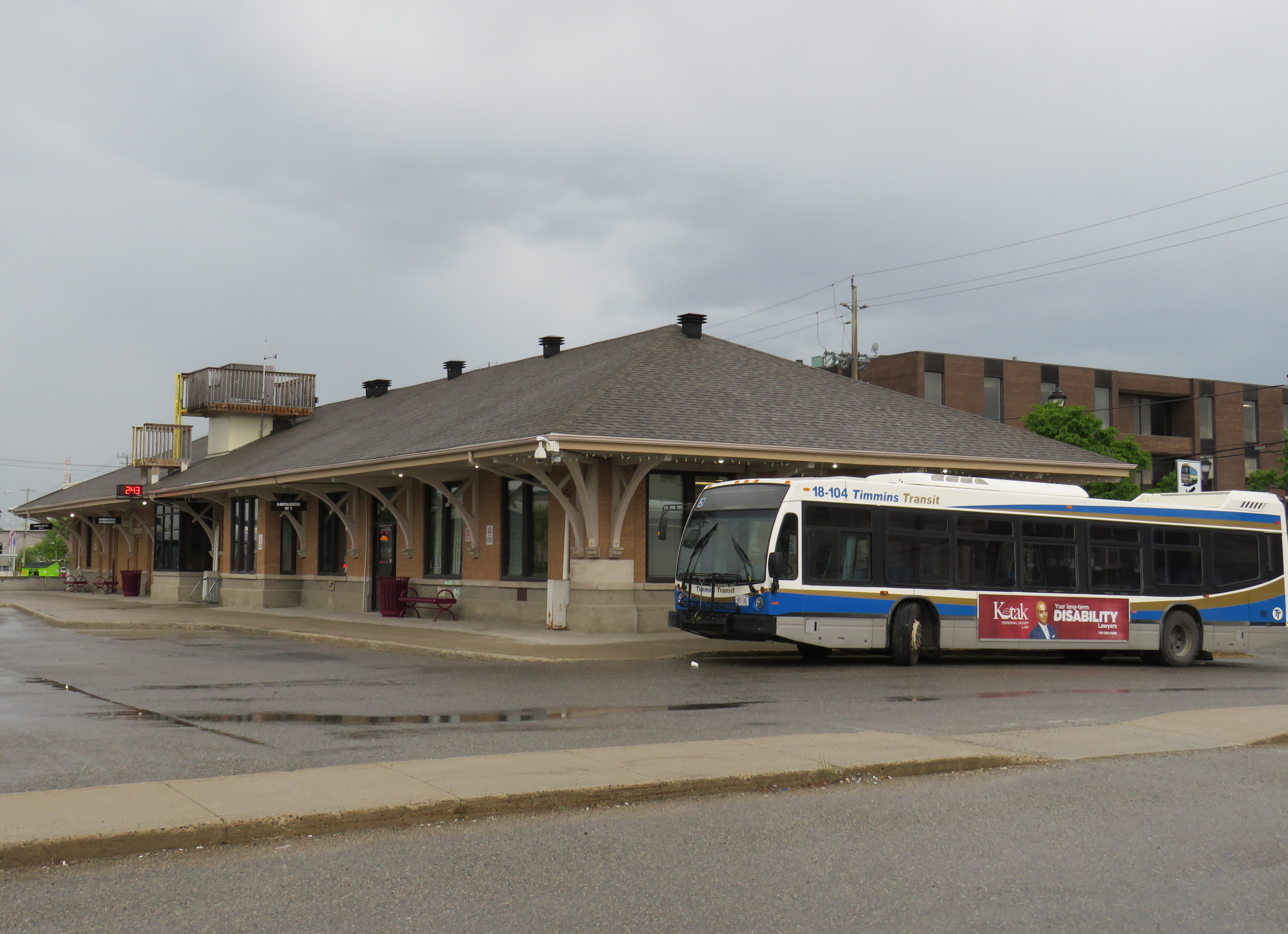
Happily, the Timmins station building remains in use as a transit terminal and Ontario Northland coach stop; it will likely serve a bus shuttle to the new Timmins-Porcupine Station now under construction.
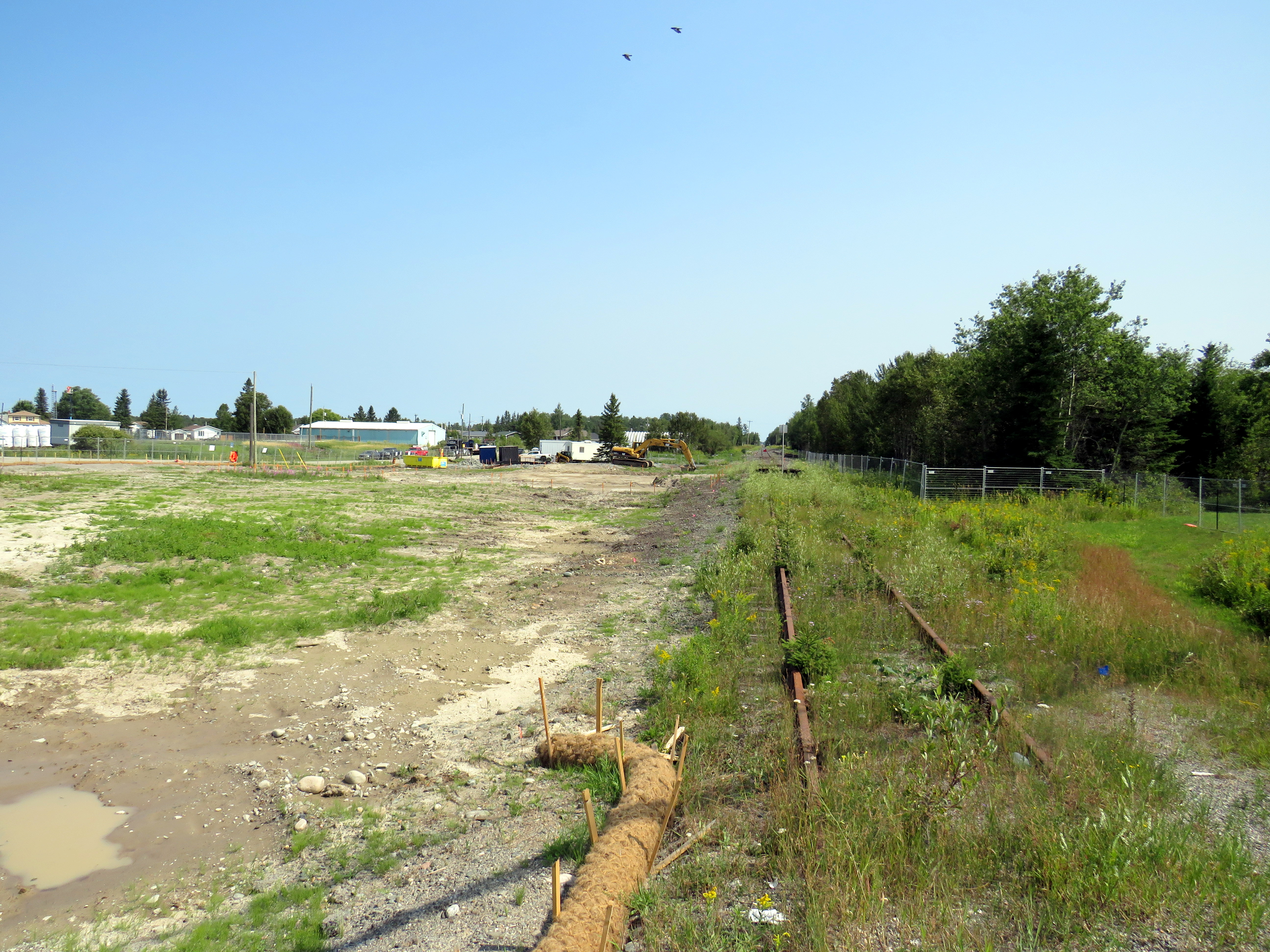
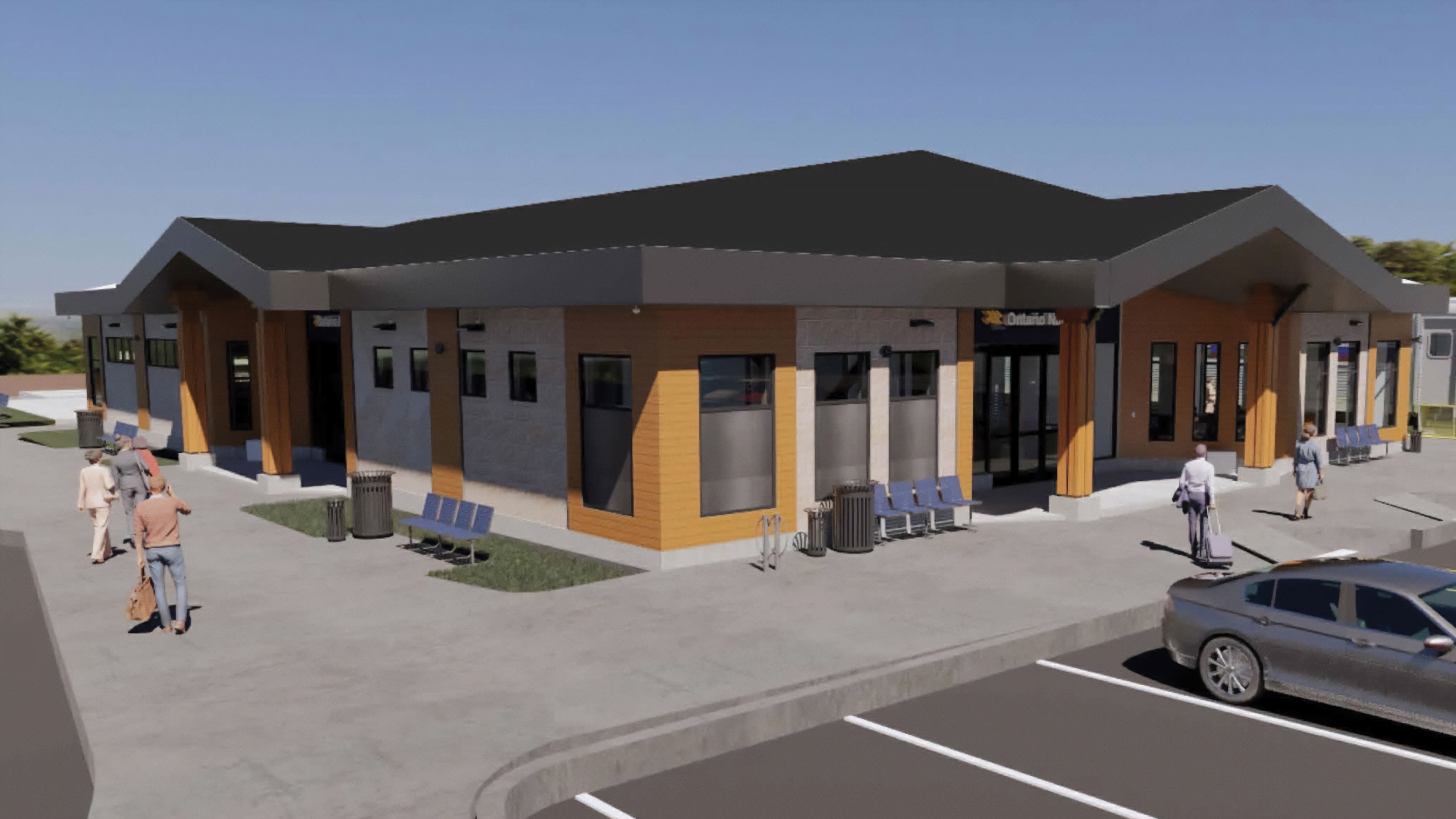
Since I last wrote about the promised return of the Northlander, there have been a few updates. The new station building will be somewhat more substantial than first proposed; it will include washrooms, a waiting area, and a service counter for ticket sales and bus parcels. This is welcome, as there is very little around the Porcupine station site. Nearby, there are only a few dozen houses, a propane depot, a small park, and a gas station across the street.
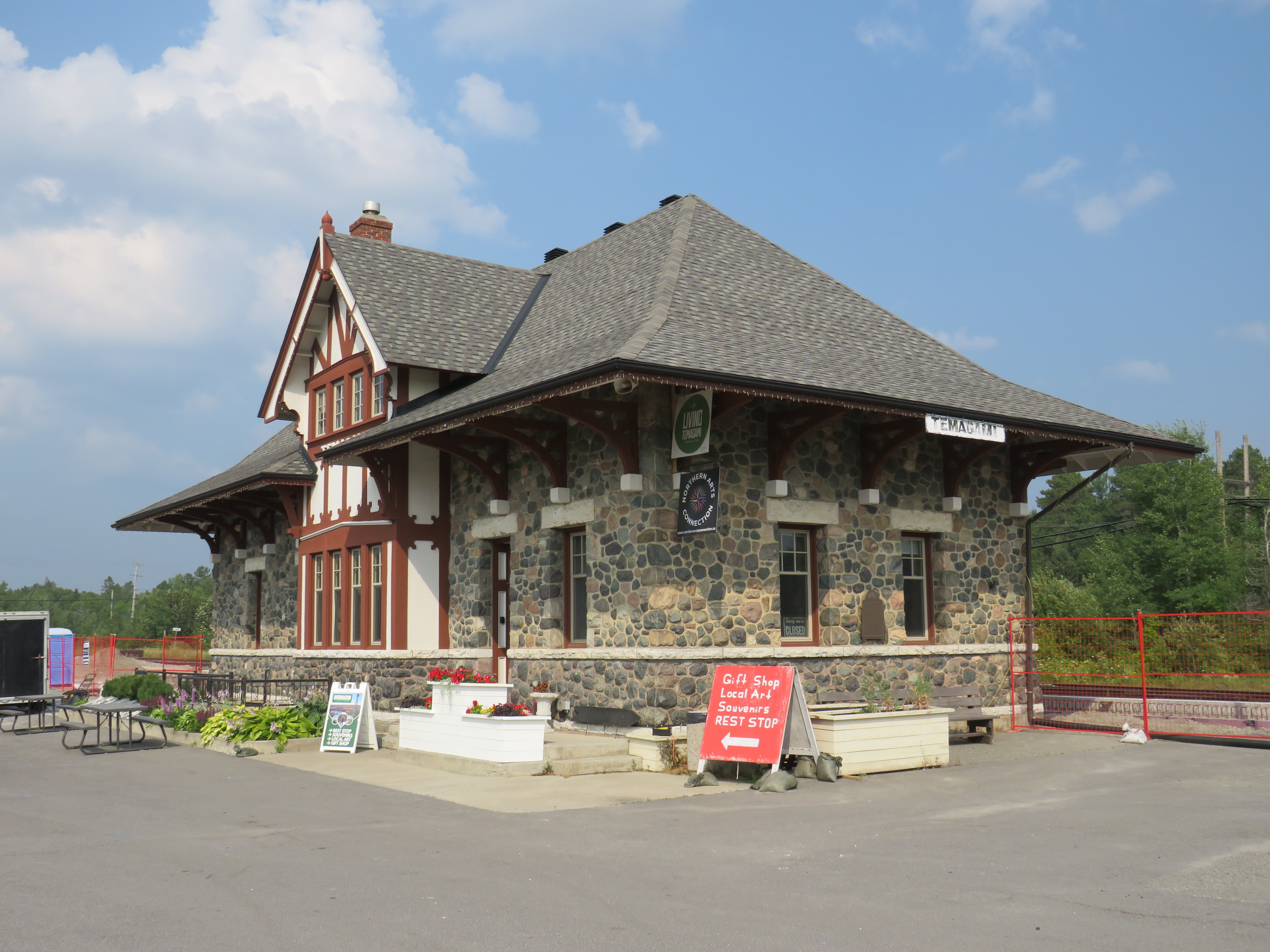
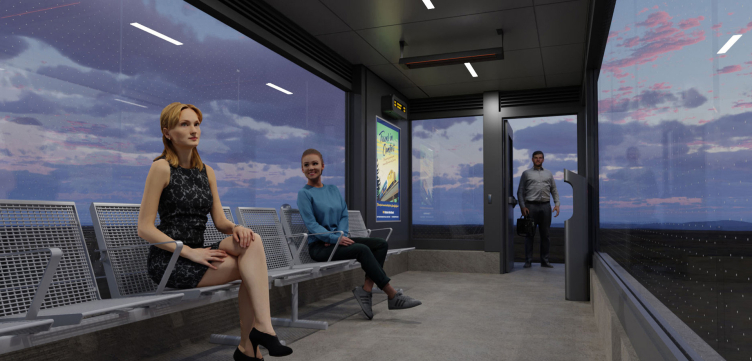
Most other stations will still just get enclosed shelters, though at Matheson, Swastika, New Liskeard, and Temagami, the construction of new platforms is well underway. Even though there are heritage passenger stations at Matheson (which just escaped demolition), Temagami, South River, Huntsville, and Gravenhurst, there will just be shelters for Northlander passengers at these stops. Shelters depicted on the Ontario Northland website resemble those at BRT stops or GO Transit station platforms, with lighting and overhead heat.
It will be nice to see the return of passenger rail to Northeastern Ontario when it launches in two years. Unfortunately, I remain unsure whether it will attract enough riders to be seen as viable after a year or two of service.
 Sean Marshall
2 replies on “The end of the line at Porcupine”
I hope the woman shown in the train shelter is visiting during the summer otherwise it might be a little cool outside !
Actually dressed like that in he summer she will have great fun meeting with Northern Ontario black flies
Great recap regarding the history of the Northlander, and some of the progress being made at the Timmins-Porcupine station and elsewhere along the line.
However I’d like to know what your definition of viable is in terms of ridership. Based on the UIBC, we can assume the province’s is just over 40,000.
Fun fact: Three years prior to the Northlander’s cancellation, Ontario Northland published an interesting quote in its annual report regarding it’s passenger rail operation between Cochrane and Toronto.
The IBI Group, in its July 2009 report “Rail Division Sustainability Plan”, indicated that “annual traffic on the Northlander of 35,000 passengers is excellent under the circumstances”, after comparing population base, train frequency and train speeds of the Northlander versus the VIA Rail Ottawa-Montréal corridor. “Generating some 35,000 annual passenger trips out of a total market base population of 200,000 (north of Toronto) is an acceptable performance in terms of indicating support of the service by actually using it.”
https://ontarionorthland.ca/sites/default/files/corporate-document-files/2009-10ar_eng.pdf#page=26
This was inspite of the antiquated equipment being used, a train schedule that competed with Ontario Northland’s motor coach division and the company’s decision to bypass important population centres at the time (Richmond Hill, Beaverton, Iroquois Falls, Powassan, etc.) or not to provide a connecting shuttle service to Barrie and Orillia from Washago station.
https://northerntracks.blog/the-northlander