Tag: Northern Ontario

  • The end of the line at Porcupine

    The end of the line at Porcupine

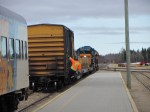
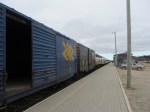
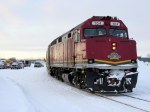
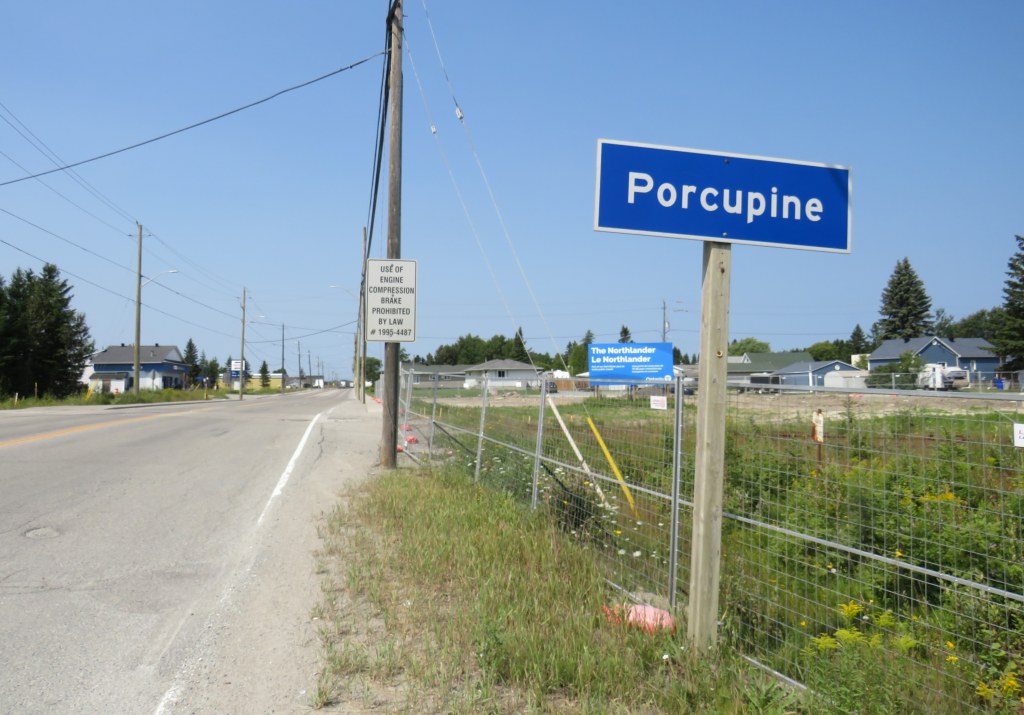
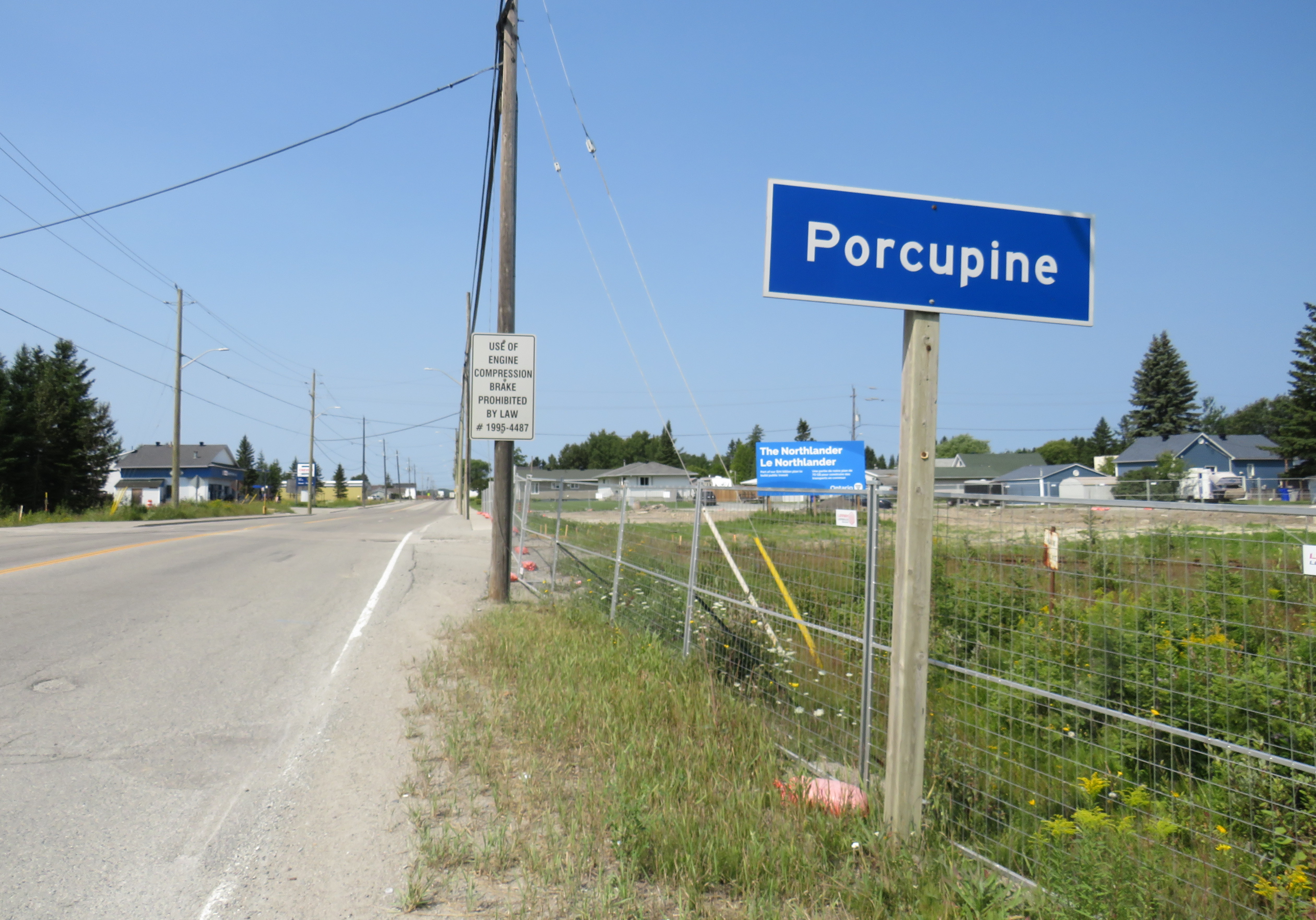
    Sign says "Porcupine" near the new Ontario Northland terminus.
    The end of the line for the restored Northlander train

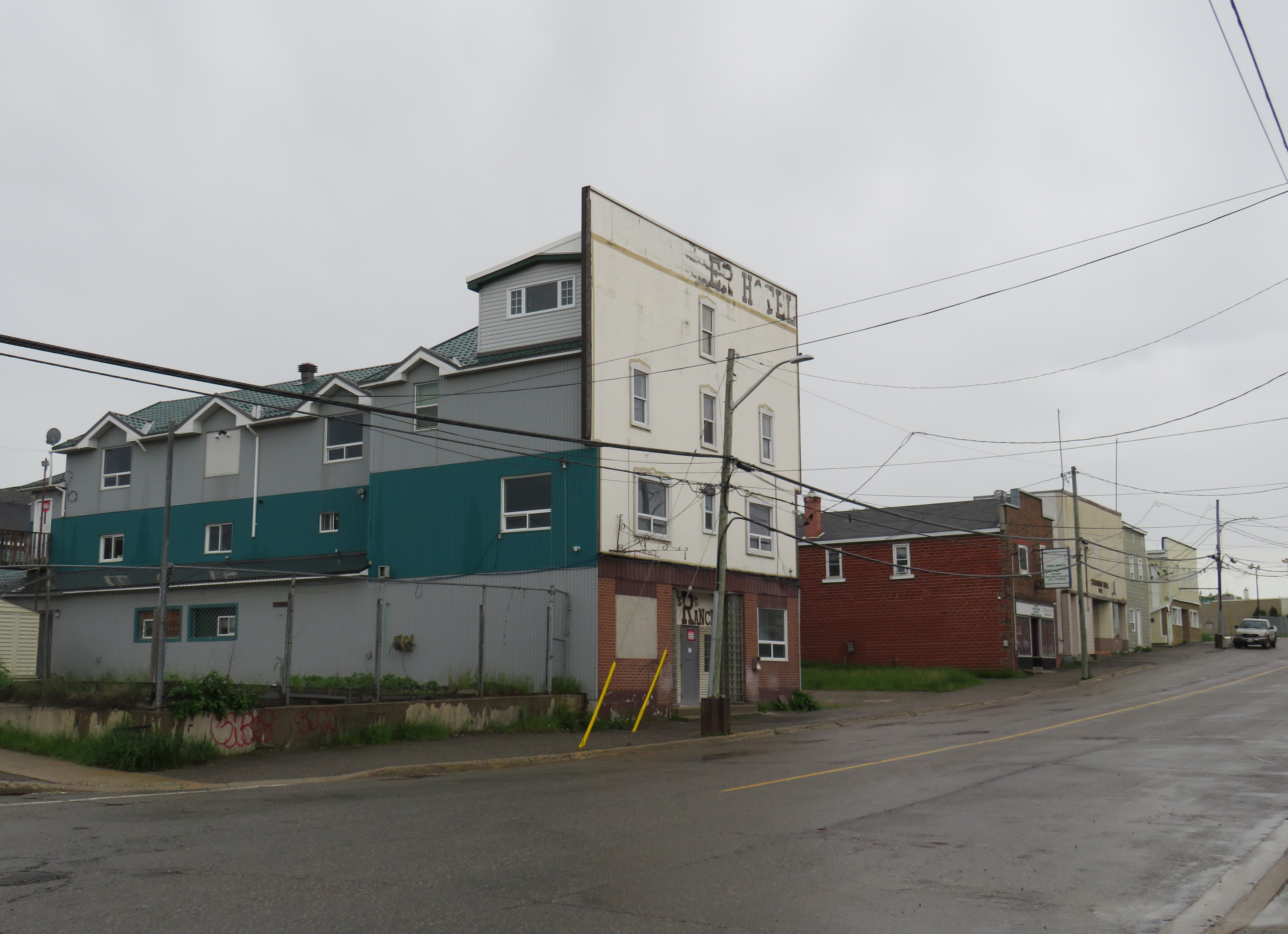
    Timmins, a resource town of 40,000 in Northeastern Ontario, is known for a few things: gold mines, beer parlours, the birthplace of country musician Shania Twain, and the place where folk musician Stompin’ Tom Connors got his start. If Connors — a travelling musician who delighted small town crowds with songs about their communities (like the hard working and hard drinking times of a “Sudbury Saturday Night”) — was still around, he’d probably write and perform a new song about getting kicked off an overnight train in the sparse environs of Porcupine, Ontario. After all, the song would quickly rhyme itself.

    Porcupine is a small community of about 1,000 on the far eastern edge of the populated area in the geographically gigantic City of Timmins. Before the wave of municipal amalgamations across Ontario in the 1990s and early 2000s, Timmins was the largest city or town in the province by geographic area; it was formed through the amalgamation of the smaller City of Timmins with adjoining Mountjoy and Tisdale Townships (along with the town of South Porcupine) in the 1970s.

    Until 1990, when the devastating cuts to VIA Rail took place, there were two daily trains between Toronto, North Bay, and Northeastern Ontario. The Northlander, a daytime train operated by Ontario Northland Railway, terminated at a downtown station in Timmins. The Northland, a joint VIA/ONR train, ran overnight between Kapuskasing and Toronto, with a bus connection to downtown Timmins. Famously, for a short period the daytime Northlander operated using former Trans-Europ-Express (TEE) cars, purchased used from Dutch and Swiss rail operators.
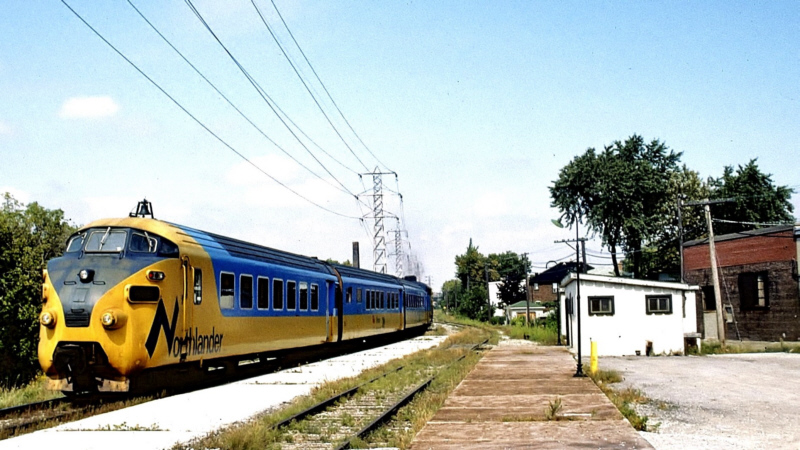
    Northbound Northlander TEE set at St. Clair Avenue in Toronto, by HardHatMak on Flickr

    After 1990, Timmins was only connected by bus, with one daily bus to North Bay (and onwards to Toronto), and one bus, six days a week, to Sudbury (with connections to Toronto). The new daily overnight train — discussed earlier on this site — promises to restore a new daily trip, along with a more comfortable journey, even if sleeping accommodations will not be provided.
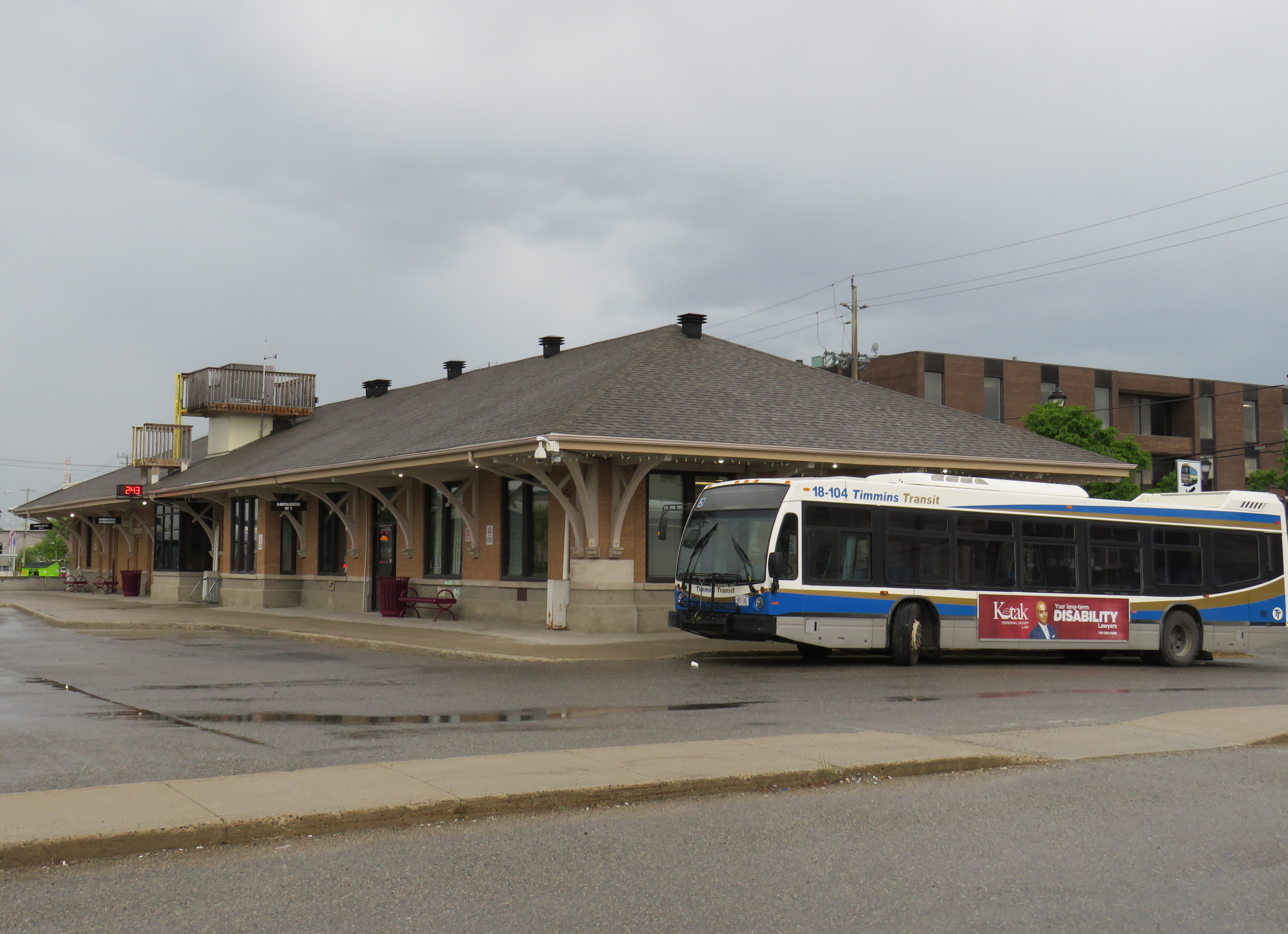
    Timmins Station with transit bus
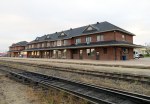
    The Timmins Station is now a bus terminal serving local transit and Ontario Northland intercity coaches

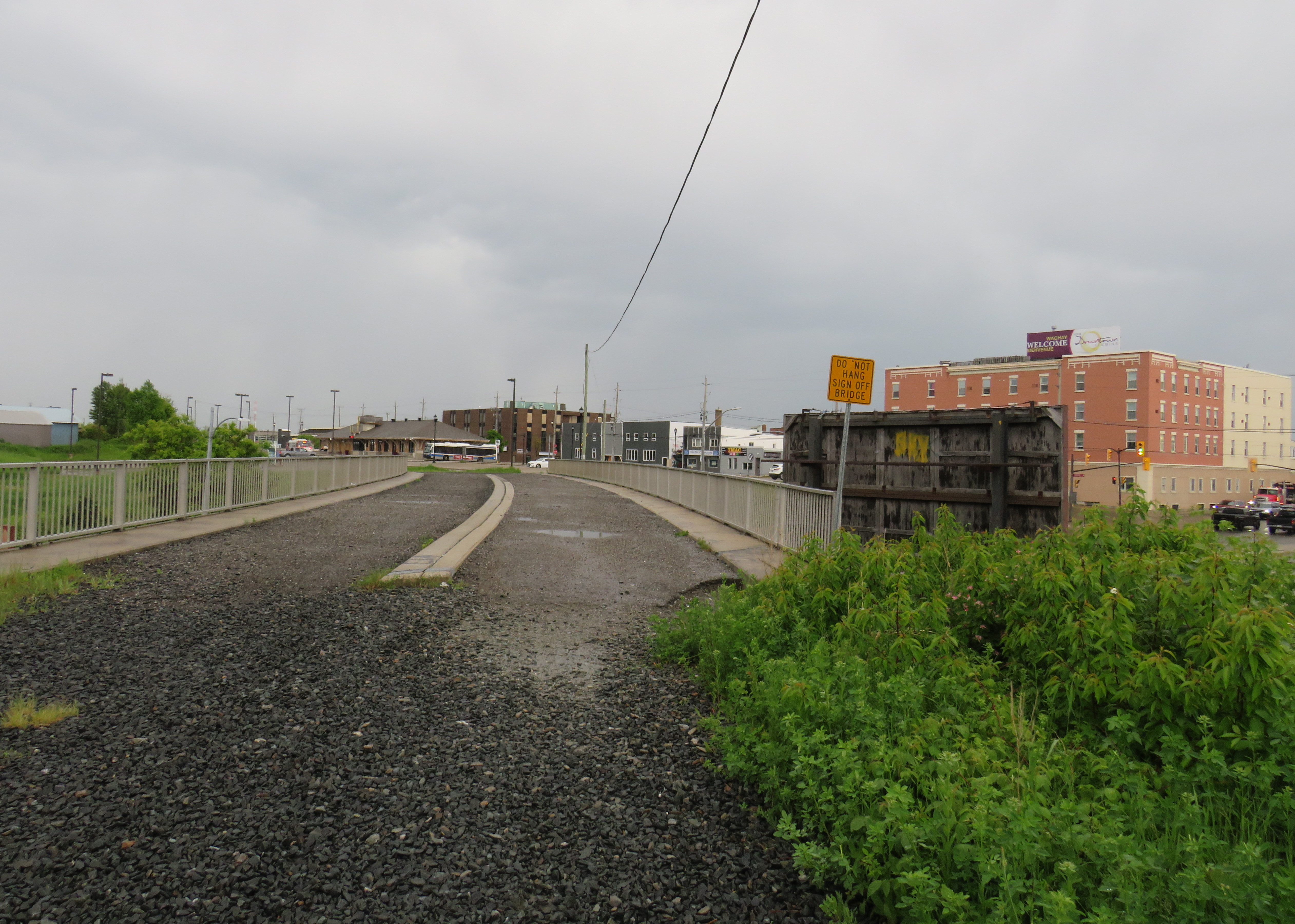
    Unfortunately, the train will not be returning to Downtown Timmins. The end of rail is at Highway 101 at Porcupine, 13 kilometres to the east. Since abandonment of the passenger rail service, the railway was torn out west of South Porcupine; the railway overpass over Algonquin Boulevard (Highway 101) near the old Timmins Station was removed last year. Ore collected at the open-pit gold mines, previously loaded onto railcars, is now sent on massive dump trucks for processing at a plant at Hoyle, east of Porcupine.
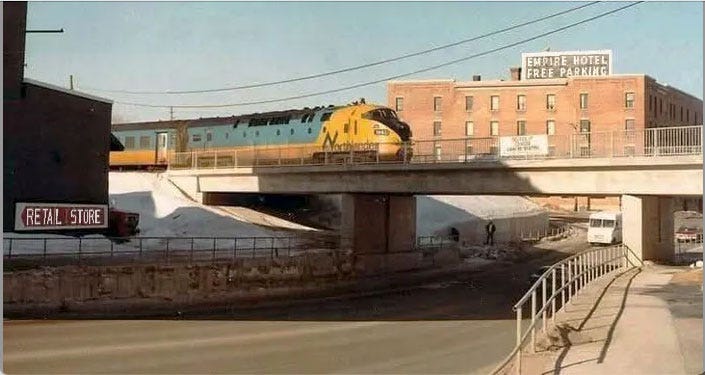
    The Northlander train departs Timmins on the now-demolished railway bridge over Algonquin Boulevard in the early 1980s

    Happily, the Timmins station building remains in use as a transit terminal and Ontario Northland coach stop; it will likely serve a bus shuttle to the new Timmins-Porcupine Station now under construction.
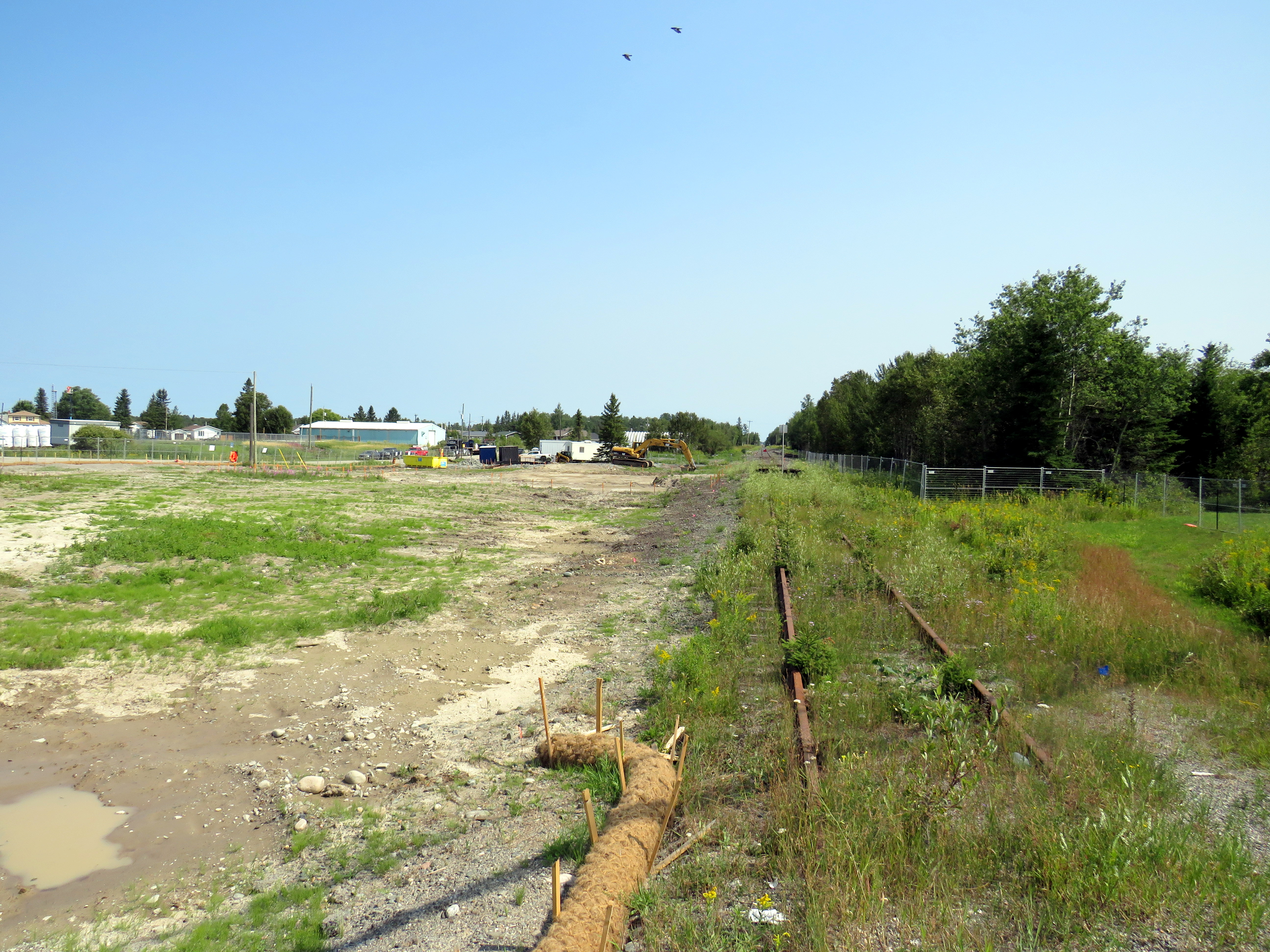
    The end of track at Highway 101 in Porcupine; construction has started on the new terminal station for the Northlander

    Since I last wrote about the promised return of the Northlander, there have been a few updates. The new station building will be somewhat more substantial than first proposed; it will include washrooms, a waiting area, and a service counter for ticket sales and bus parcels. This is welcome, as there is very little around the Porcupine station site. Nearby, there are only a few dozen houses, a propane depot, a small park, and a gas station across the street.
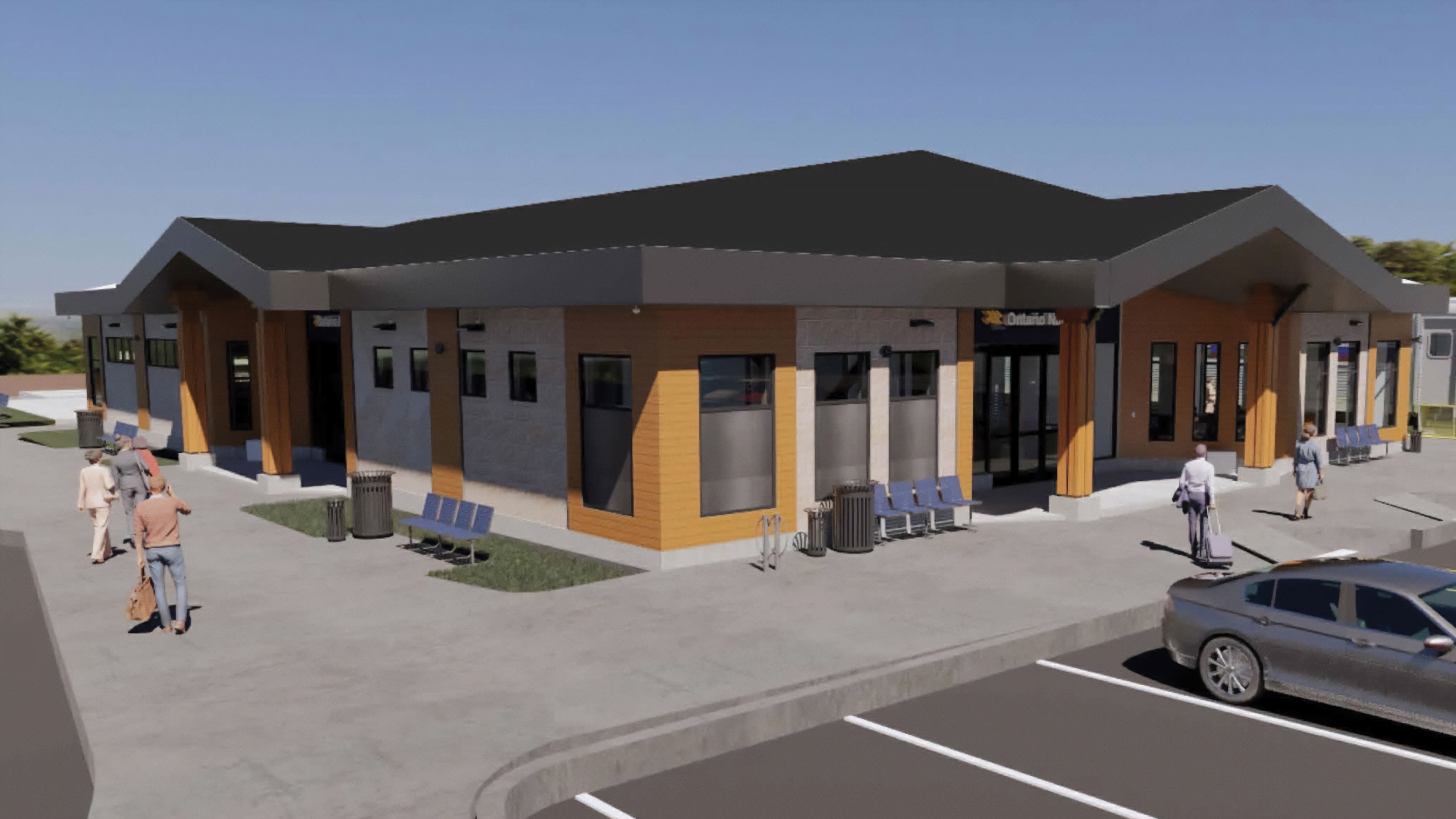
    Rendering of new Timmins-Porcupine Station

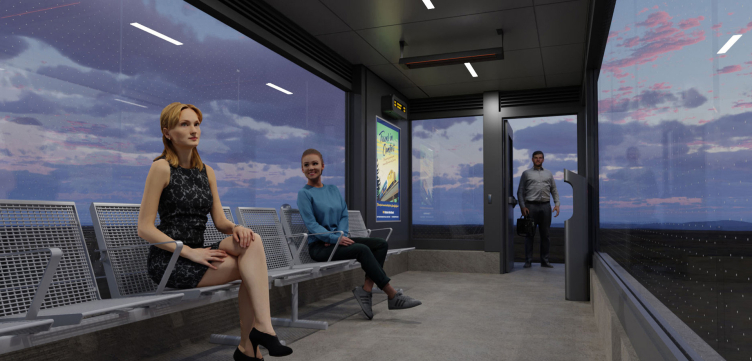
    Most other stations will still just get enclosed shelters, though at Matheson, Swastika, New Liskeard, and Temagami, the construction of new platforms is well underway. Even though there are heritage passenger stations at Matheson (which just escaped demolition), Temagami, South River, Huntsville, and Gravenhurst, there will just be shelters for Northlander passengers at these stops. Shelters depicted on the Ontario Northland website resemble those at BRT stops or GO Transit station platforms, with lighting and overhead heat.
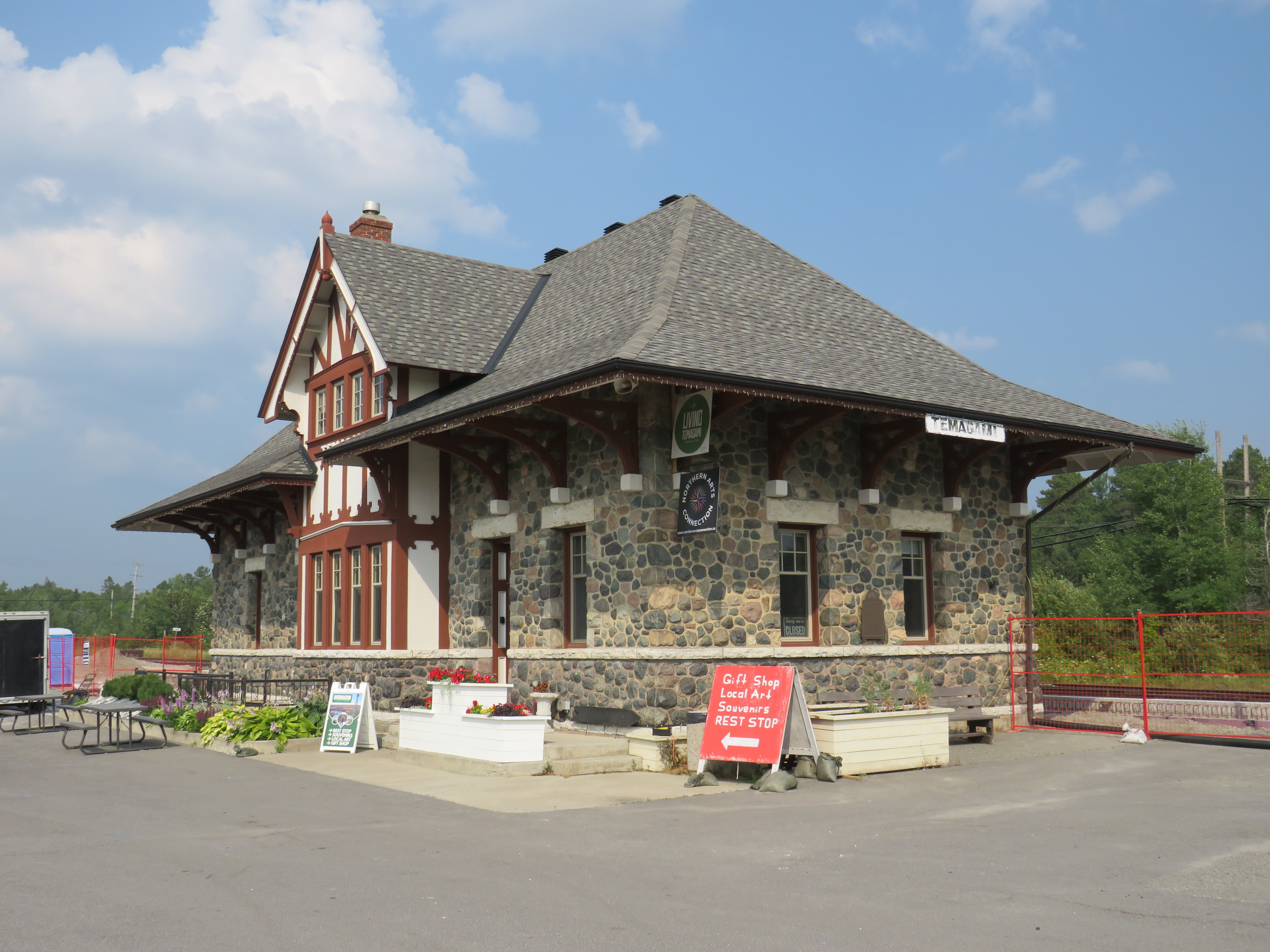
    Fencing protects the construction of a new platform beside the handsome Temagami ONR Station. The station building will not be used for passenger services; it currently hosts a café and gift shop.
    Rendering of passenger shelter for Northlander stops

    It will be nice to see the return of passenger rail to Northeastern Ontario when it launches in two years. Unfortunately, I remain unsure whether it will attract enough riders to be seen as viable after a year or two of service.
  • North by northwest: a short winter jaunt

    North by northwest: a short winter jaunt

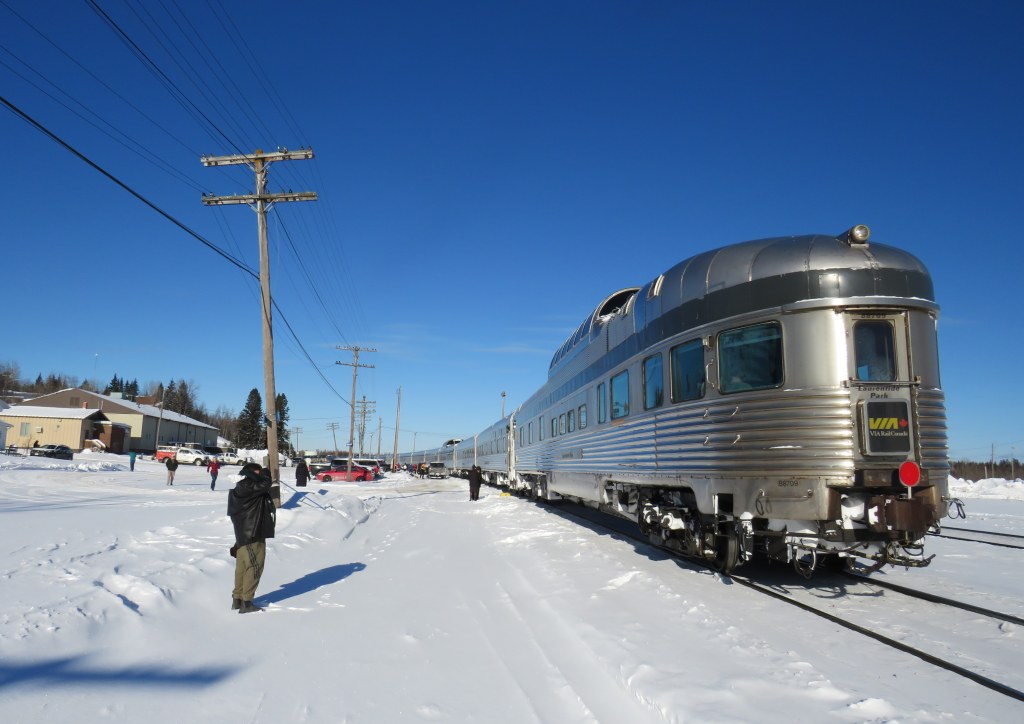
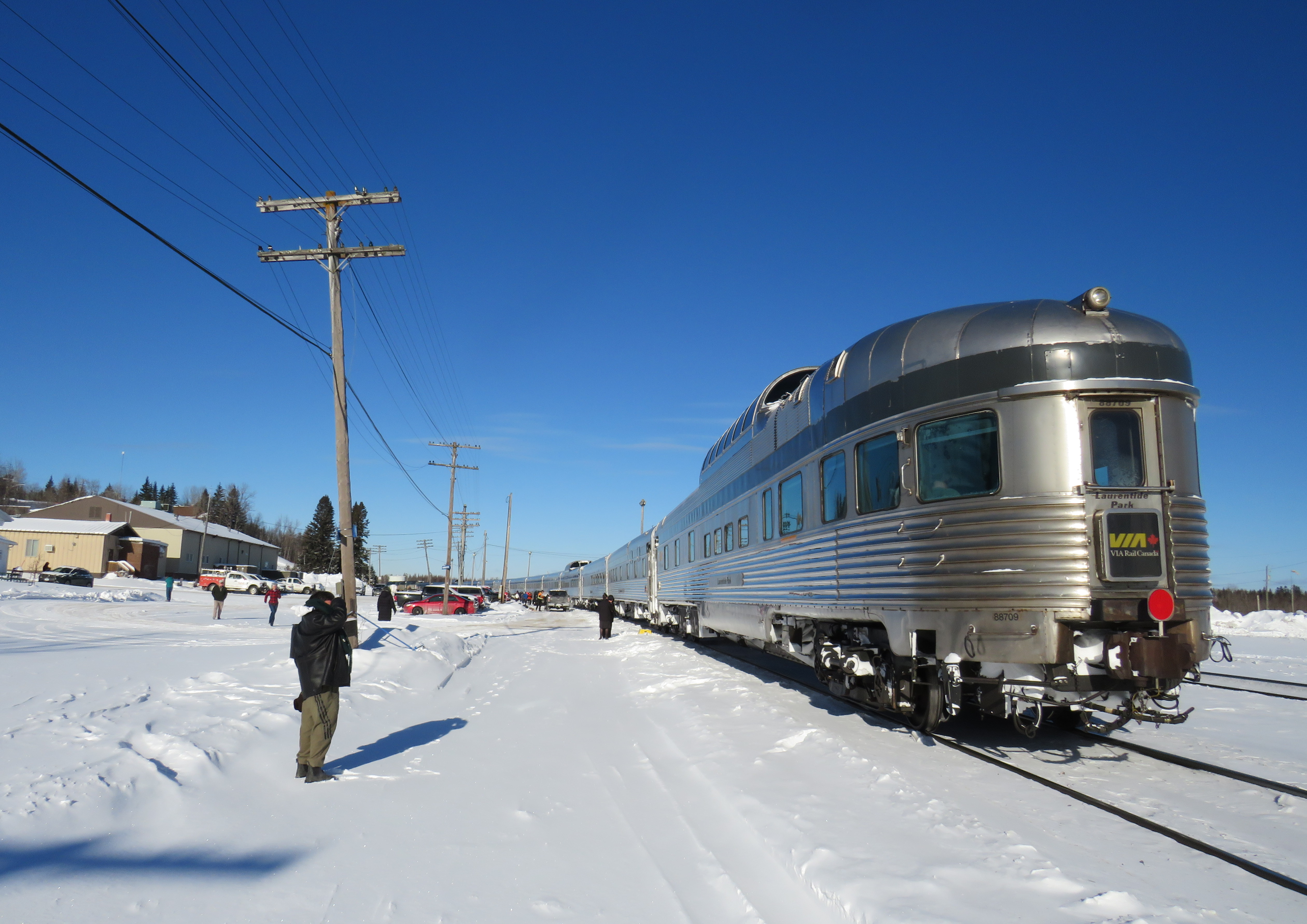
    VIA Train #1 at Hornepayne, Ontario. Normally this stop would be made overnight.

    In late January, I went on a short vacation. Many people, given the short days and cold weather, opt for warmer climes. I, on the other hand, decided to travel to the infamously cold city of Winnipeg, Manitoba. Back in November, VIA Rail offered great deals on winter travel as part of its “Black Friday” sale; a berth in a sleeping car from Toronto to Winnipeg cost $271, with meals included. Winter travel by train can be beautiful, and I had fond memories of my February 2014 trip aboard the Algoma Central Railway between Sault Ste. Marie and Hearst.

    I planned to spend two nights in Winnipeg, including taking in my first NHL game since the pandemic. The Jets were playing on Friday night against the original Winnipeg Jets, the Utah Hockey Club (which moved to Salt Lake City from Phoenix in 2024). I would then travel back east by bus, with a stopover in Kenora, flying home from Thunder Bay.

    Unfortunately, my train from Toronto was delayed by eleven hours, a new record in my rail travel setbacks. The train from Vancouver faced several setbacks due to extreme cold conditions in the Prairies and Northern Ontario, arriving in Toronto over 15 hours late, around 8AM on Wednesday morning. (VIA Rail’s communications were subpar, and though I got two emails advising of a 5:00 PM departure on Wednesday, we did not actually leave until 8:00 PM, about 10 hours late from Toronto.)

    Despite the delays, it was a very pleasant train ride across Northern Ontario in the snow. The cooked-to-order meals served aboard the Canadian, as always, were very good, and service was friendly. The lights in the dome car for our section were turned off, allowing passengers to gaze into the wilderness, even at night.

    As it turned out, I was able to cancel my first night’s stay in Winnipeg without penalty, which was fortunate as the train arrived at 7AM Friday, nearly 12 hours late. But for me, it was fortunate, as by then, coffee shops were opening up in Downtown Winnipeg. An earlier arrival, had the train made up time, would have forced me to find a 24-hour restaurant to wait at, and there aren’t any in the downtown area.

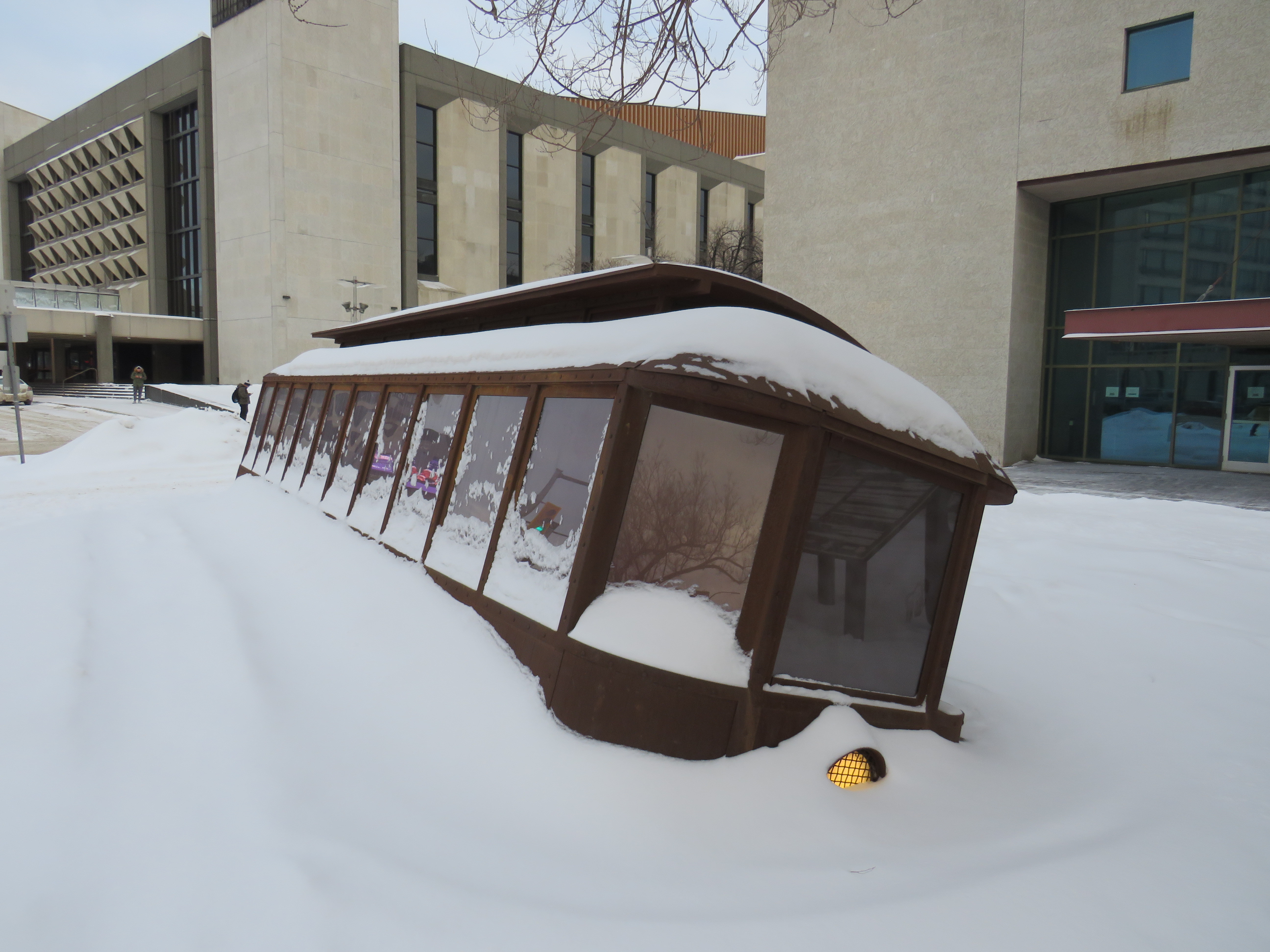
    The monument to the 1919 Winnipeg General Strike; a Corten steel replica of a toppled streetcar, covered in snow
    The monument to the 1919 Winnipeg General Strike; a Corten steel replica of a toppled streetcar across the street from Winnipeg City Hall. It was especially compelling partially buried in snow.

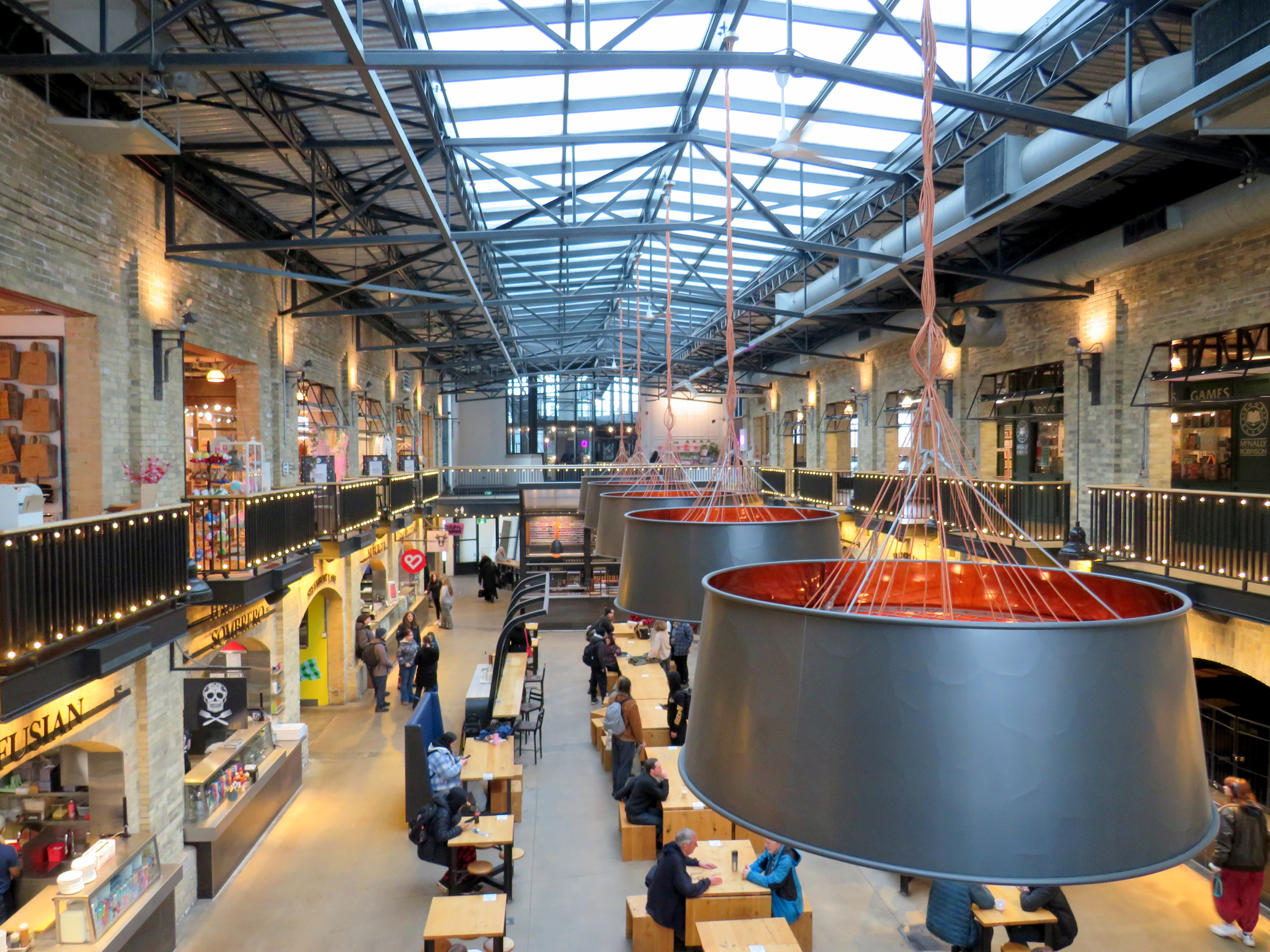
    Though I have been to Winnipeg several times before, this was my first time visiting the city in winter. I was pleased to see how the city embraced the short, dark, cold days. Out at The Forks, where the Assiniboine River joins the Red River, there is a lively marketplace located in former railway maintenance and freight buildings behind Union Station. The complex includes a branch of the local McNally-Robinson bookstore chain, restaurants, cafes, art shops, and other local businesses. There are plenty of tables and seating, with water dispensers and plenty of public washrooms. It is one of Canada’s great public spaces.

    An old two-story brick industrial building with a great skylight, with tables and seating below
    Inside one of the market buildings in the Forks, a former railway maintenance building

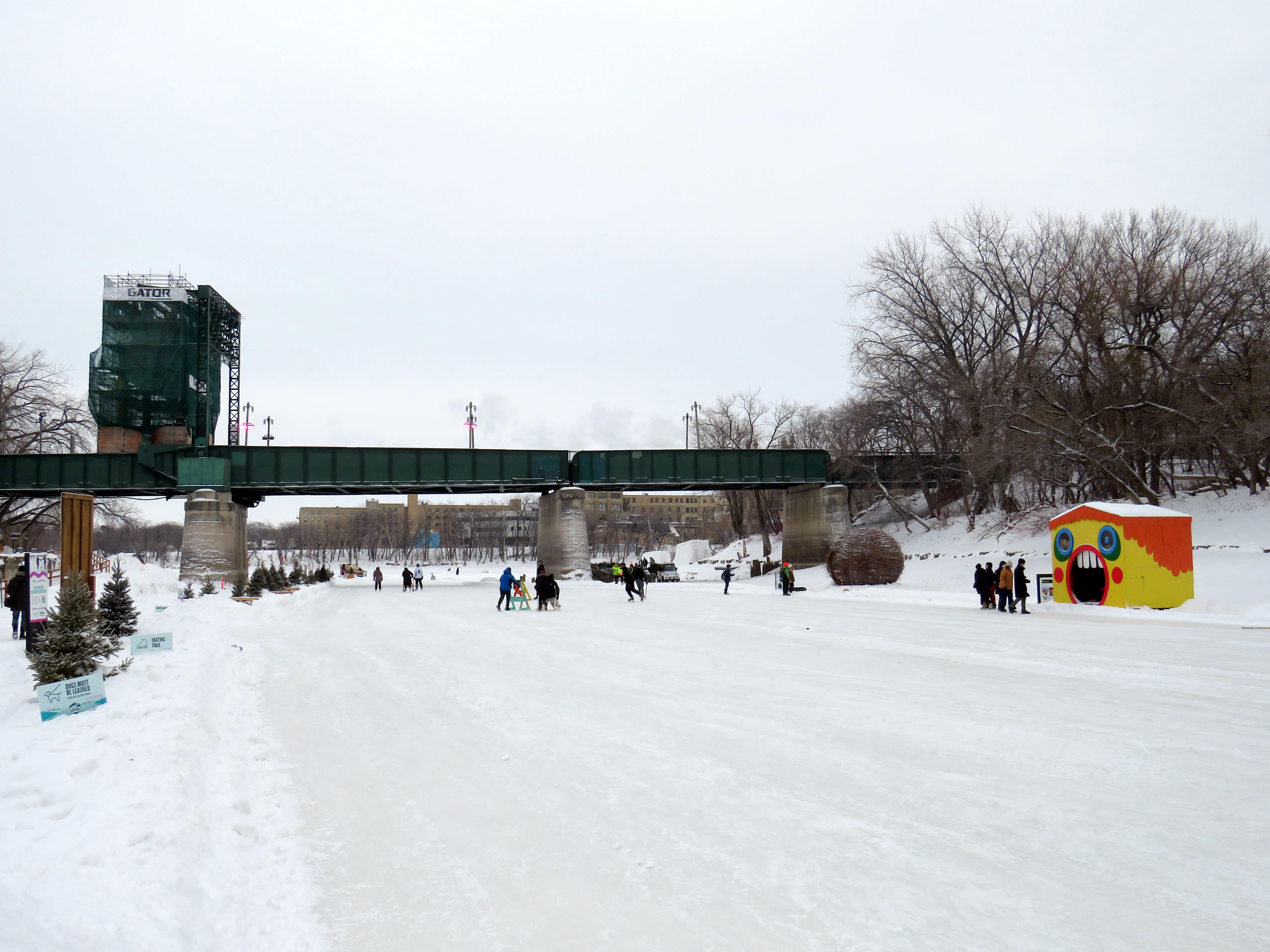
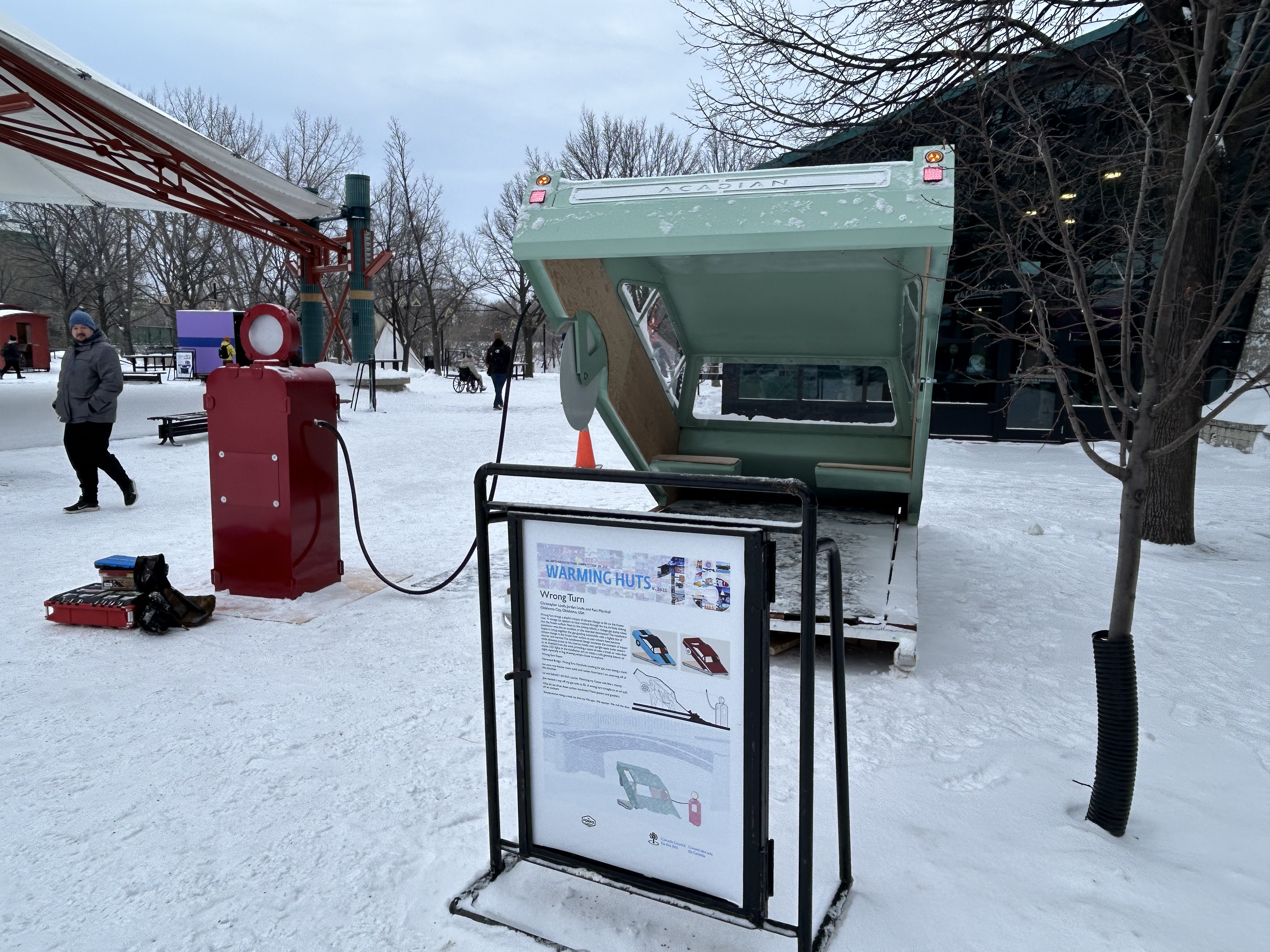
    Outside, there were Warming Huts art stations, many of which were very compelling. Ice skaters have a choice of an artificial ice rink, covered by a tent-like canopy, or getting out on to a cleared natural path along the Assiniboine River.

    Skaters on the Assiniboine River; warming huts along the ice give skaters a place to sit
    One of the Warming Huts, titled “Wrong Turn,” representing a car sinking into an icy river

    After 24 hours in Winnipeg, capped by a great hockey game in a lively arena, I made my way west towards Kenora and Thunder Bay. Kasper, which I last rode in 2019, has an early morning departure from Downtown Winnipeg, at the Balmoral bus terminal, stopping at Kenora, Dryden, and Sioux Lookout. Among the six passengers were a First Nations woman and her companion, returning home from a medical visit. Intercity buses are a lifeline. The Kasper bus was a 12-passenger van, and despite the poor winter weather conditions, it was a safe, comfortable, and friendly service.

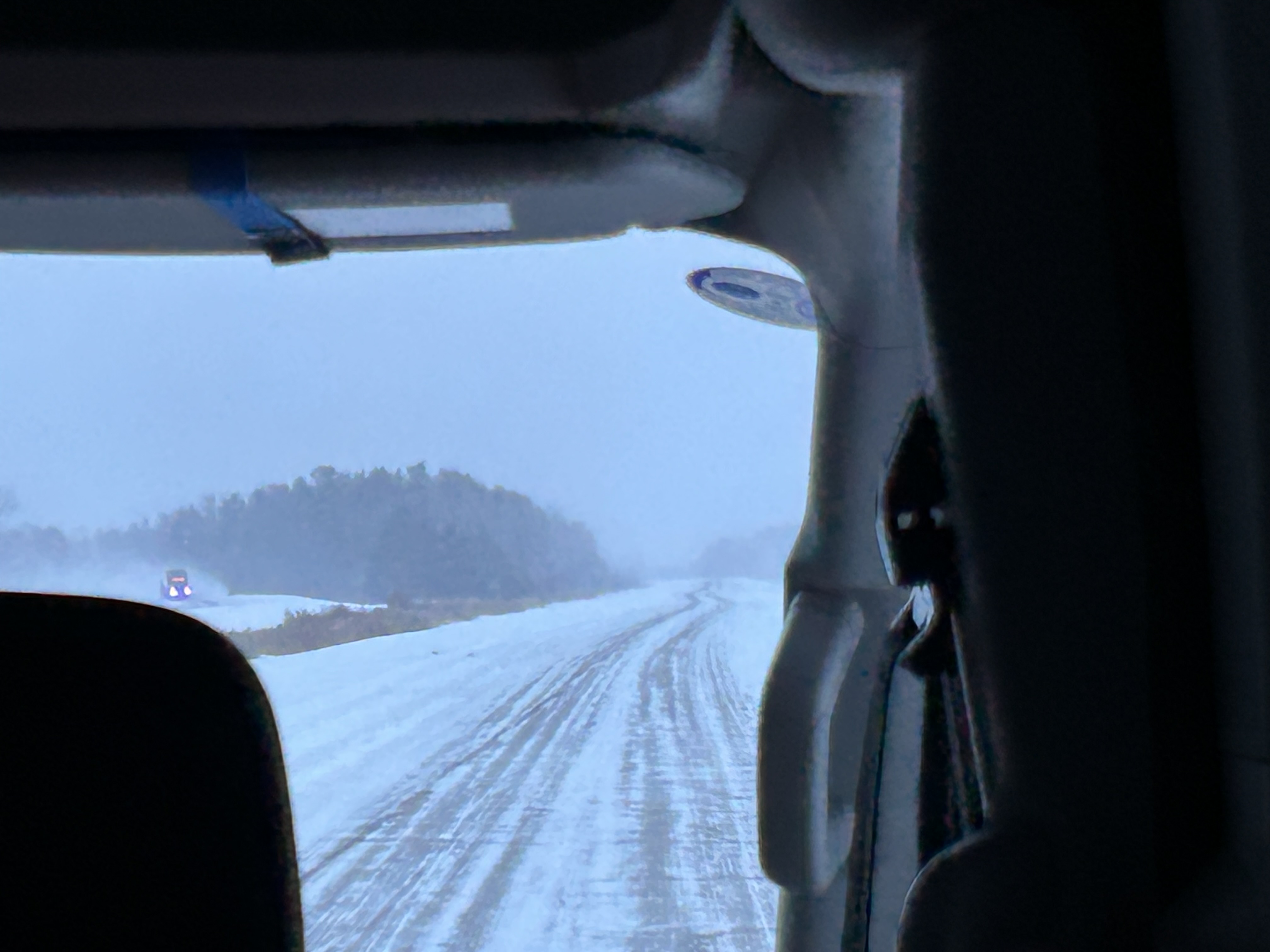
    View out the front window of the Kasper minibus to a snow-covered highway
    Snowy conditions on the Trans-Canada Highway headed east from Winnipeg

    Taking the morning Kasper trip allowed me to spend a few hours in Kenora, population 15,000. The community on the Lake of the Woods is a popular summer vacation spot; this was my first time visiting Ontario’s most westerly city. Kasper’s Kenora stop is at a McDonalds just east of downtown; this gives passengers a chance to stretch, use the washroom, and grab food.

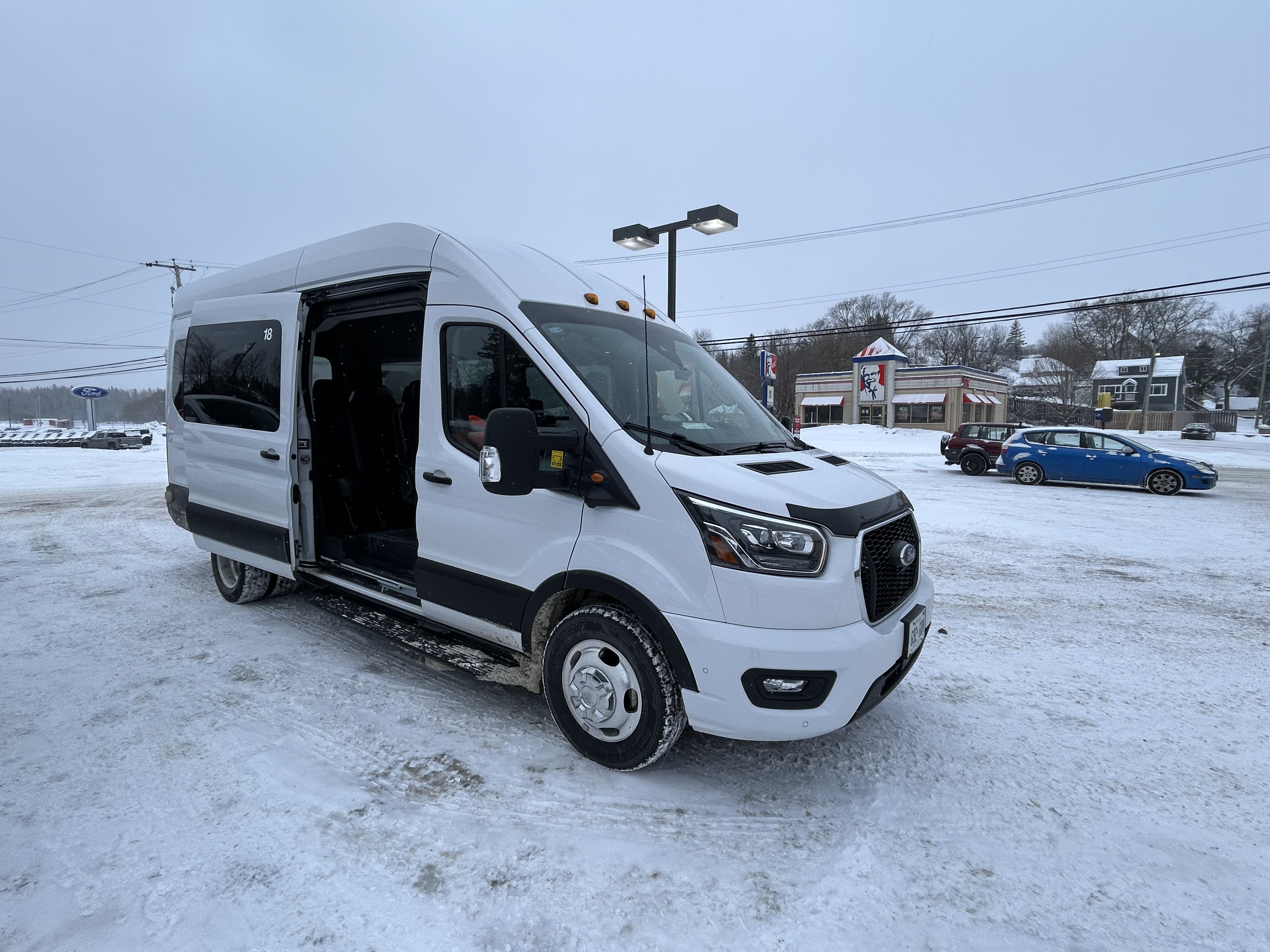
    Kasper minibus - a white van with the side door slid open - in a parking lot
    Kasper Minibus at the Kenora McDonald’s

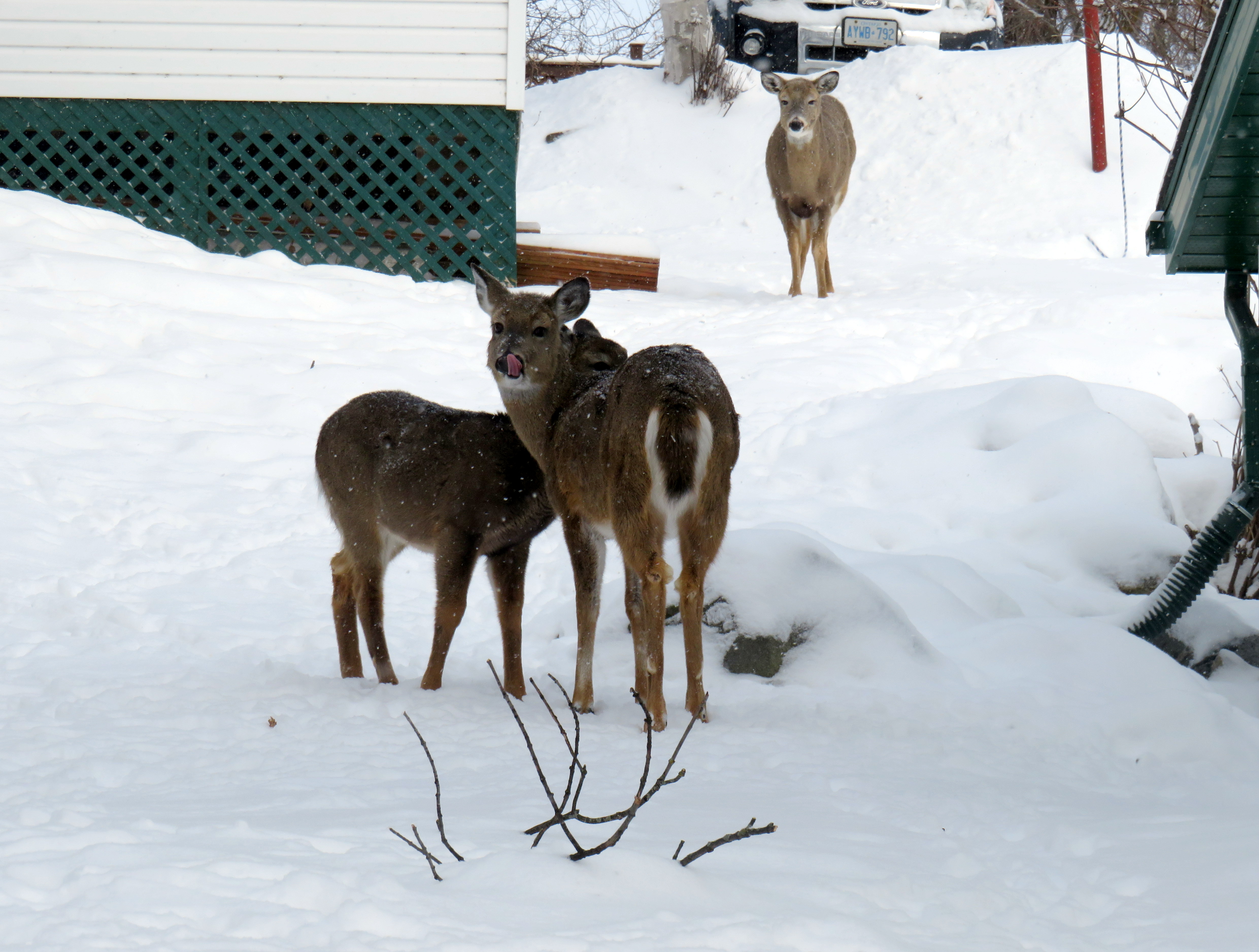
    The walk from the McDonald’s back towards downtown was pleasant. I was greeted by several deer, in their winter coats, comfortable wandering in a residential neighbourhood.

    Three deer standing in the snow adjacent to a house in Kenora
    Northern white-tailed deer in their heavy winter coats

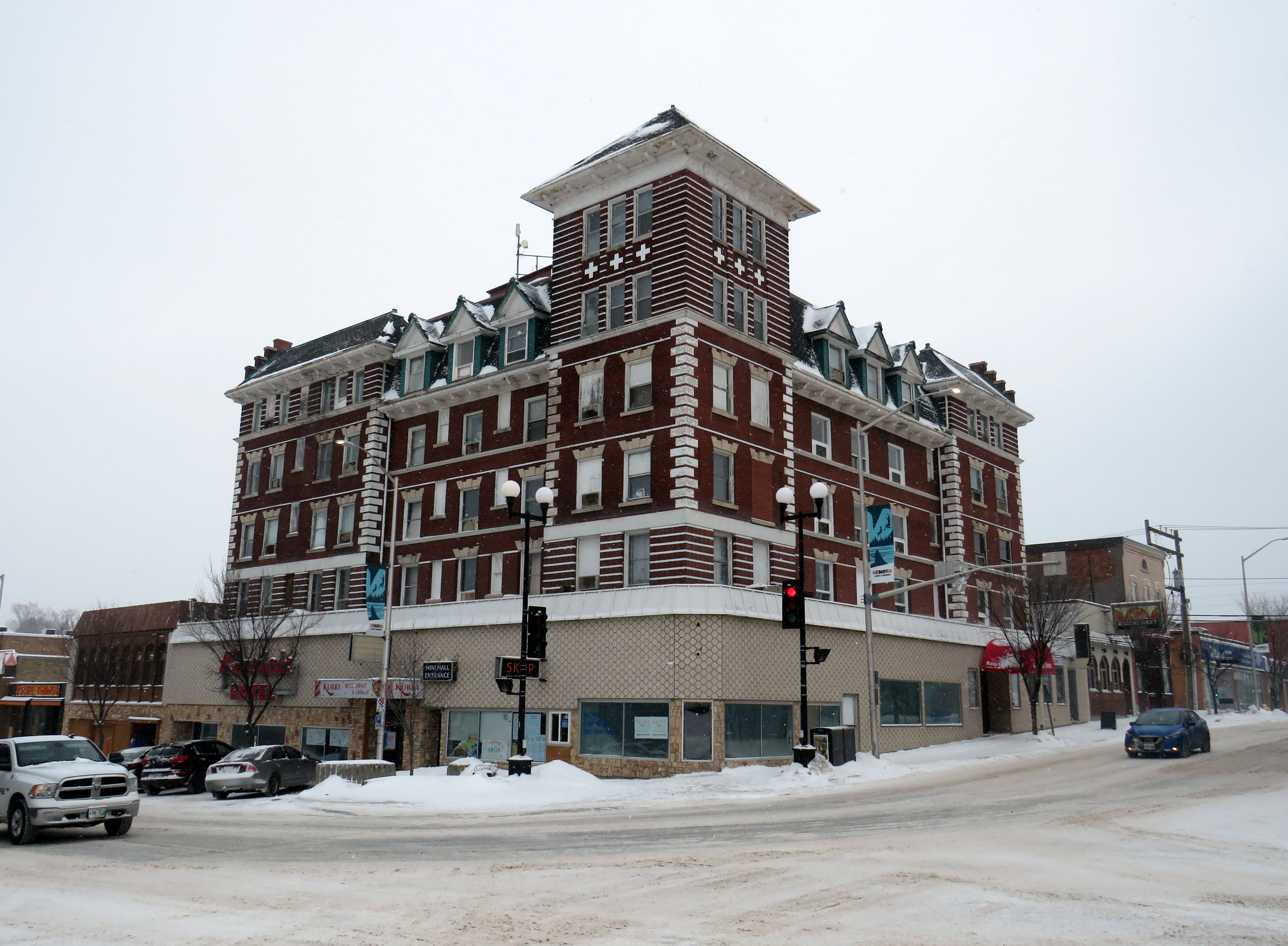
    Kenora’s downtown is small, but blessed with a solid collection of historic buildings, including the old post office (now city hall), the district courthouse, a two-storey Canadian Pacific railway station (which served VIA until 1990), and the five-story Kenrica Hotel. The hotel has seen better days — the ground floor defaced by an unfortunate 1950s-era streetfront — but it still has good bones.

    Kenrica Hotel, on the main corner in Downtown Kenora

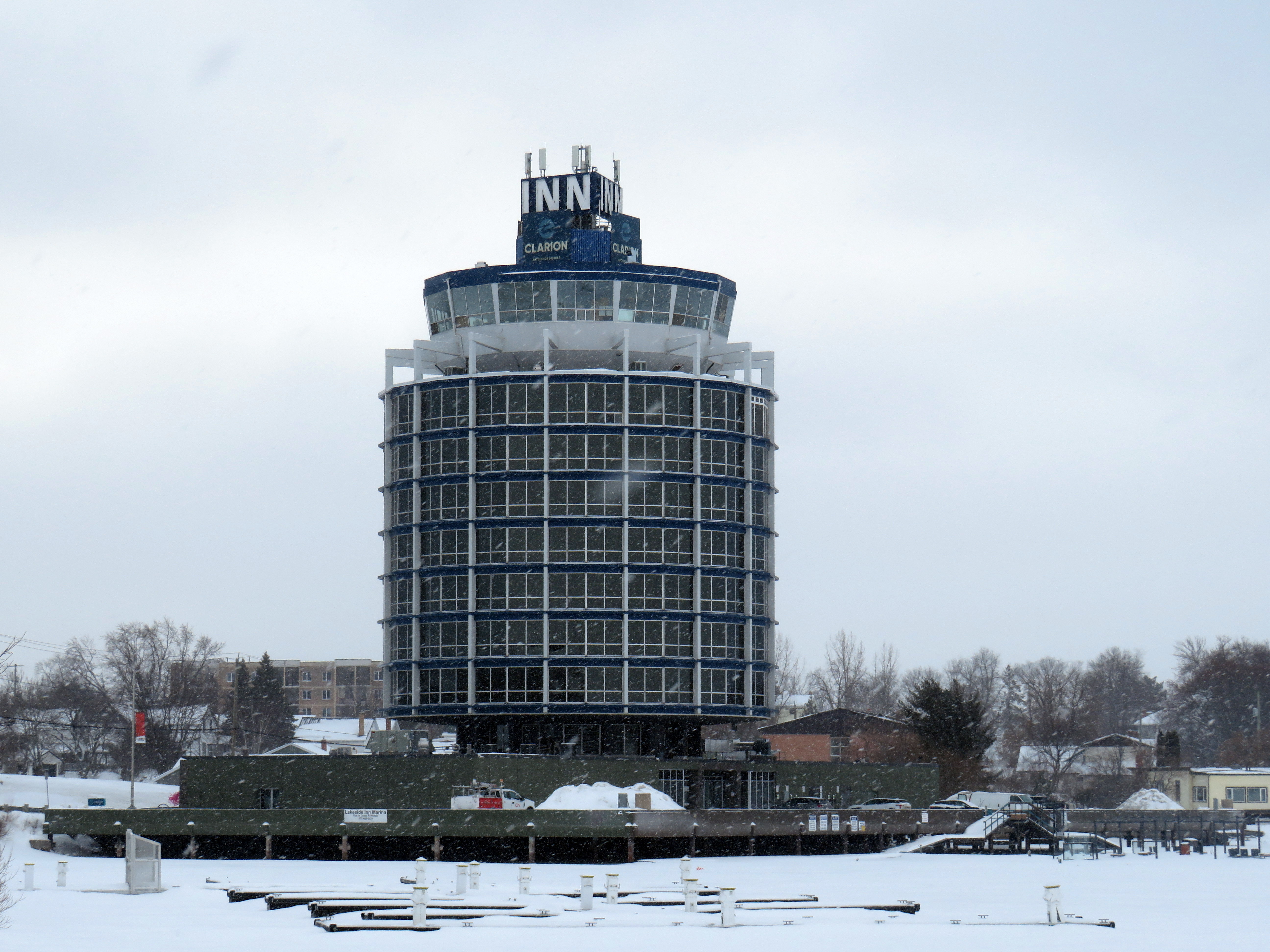
    South of Downtown Kenora, on the lakefront, a cylindrical hotel, ten storeys high, overlooks Lake of the Woods, with a marina at its base. The hotel’s mid-century modernist form is unusual for Ontario, which makes it stand out even more.

    The Clarion Inn on Lake of the Woods

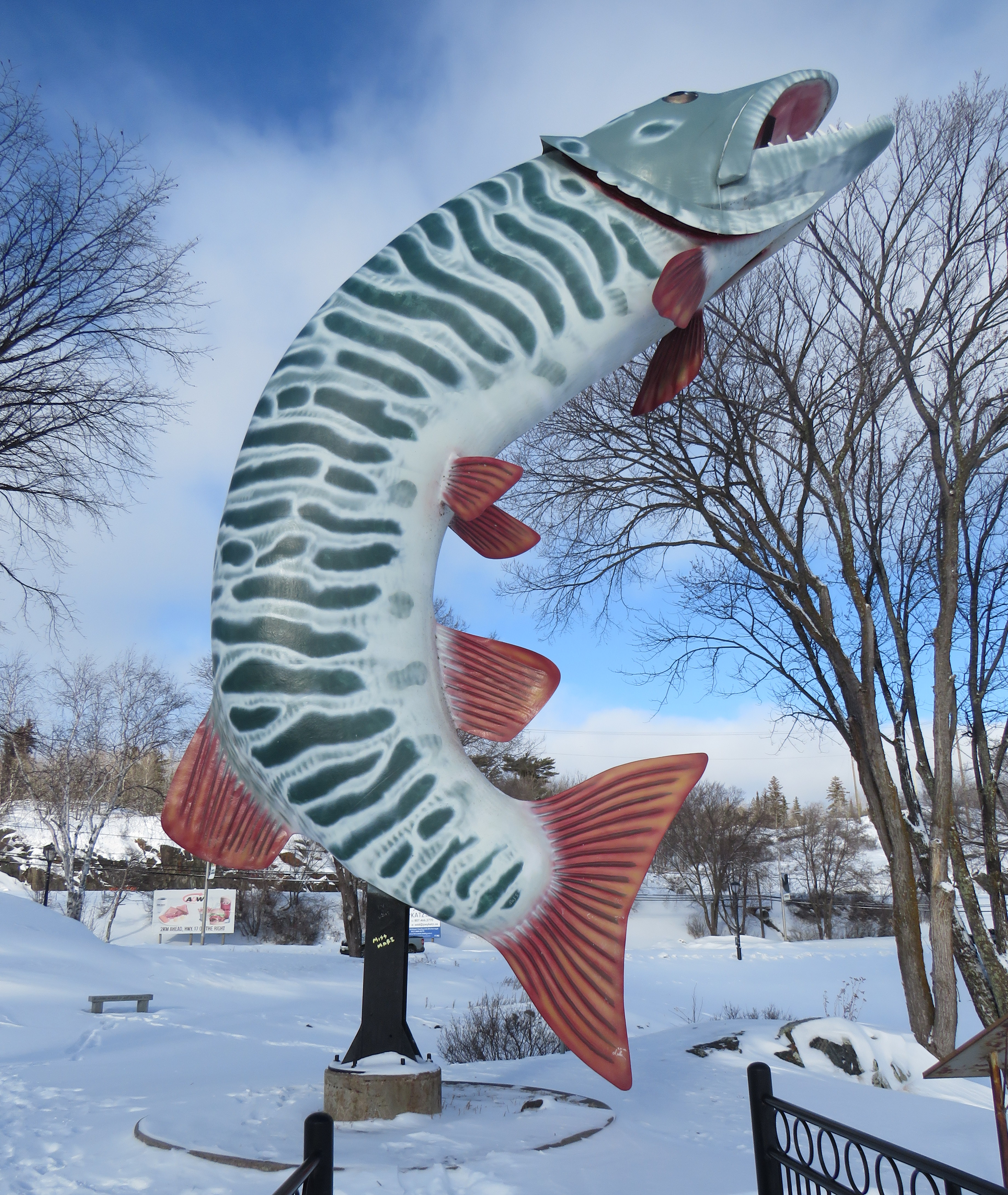
    Many towns and cities in Northern Ontario feature a roadside attraction. Sudbury has the Big Nickel, Wawa has a giant goose, and White River has Winnie-the-Pooh. Kenora’s is a giant sculpture of a muskie fish, called “Husky.”

    “Husky the Muskie” – Kenora’s roadside attraction

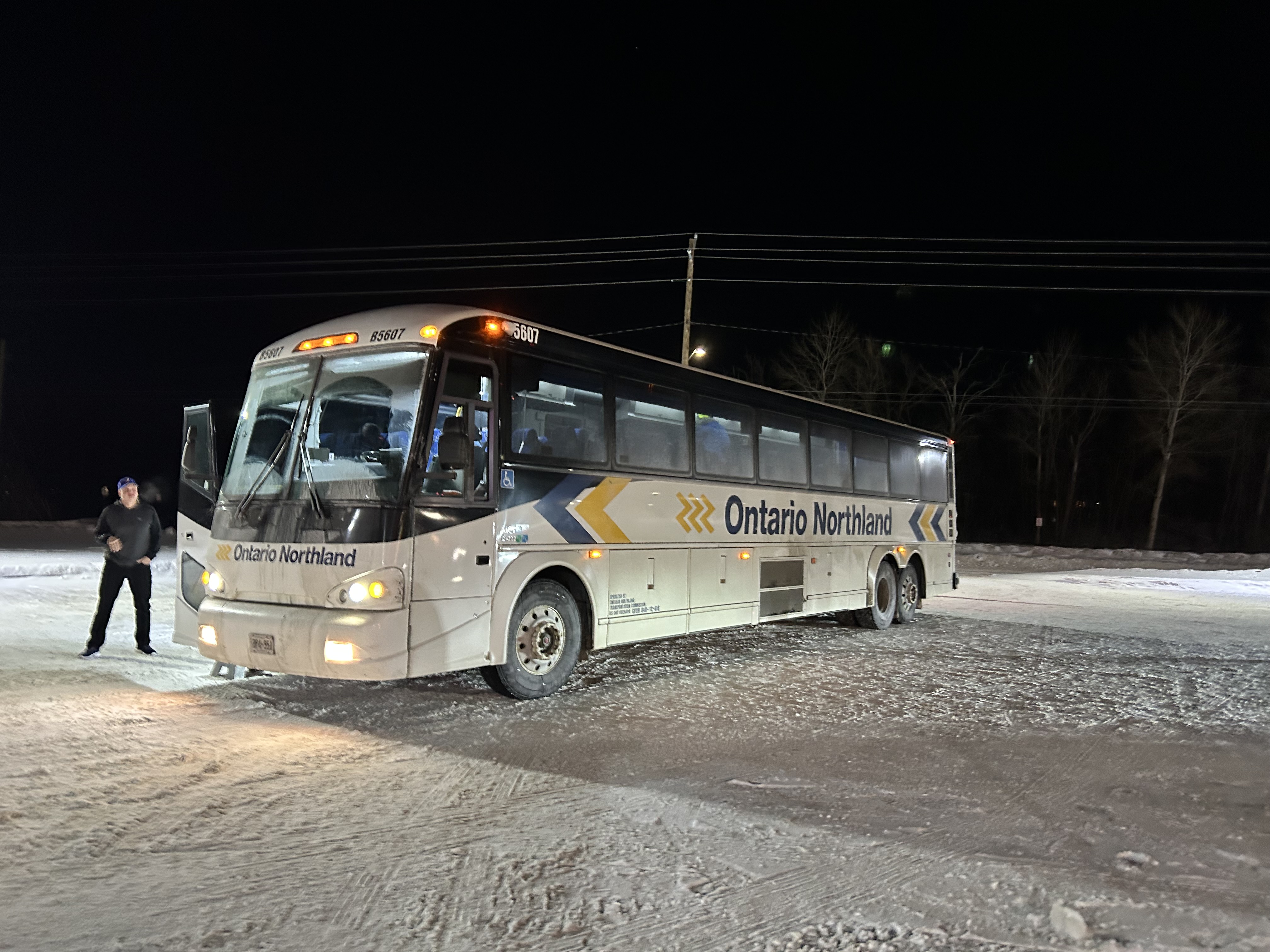
    Ontario Northland operates a bus six days a week between Winnipeg, Thunder Bay, Sault Ste. Marie, and Sudbury, with operator changes at Thunder Bay and Sault Ste. Marie. Between Kenora and Thunder Bay, the route alternates, with service to Fort Frances and Atikokan three days a week and to Dryden and Ignace the other three days. Passing through Fort Frances (where the bus stopped at a McDonald’s there for a rest break), I finally visited every county, district, and region in Ontario, with Rainy River District being the final one.

    Ontario Northland coach bus in a snow-covered McDonald's in Fort Frances, Ontario
    Ontario Northland bus in a snow-covered McDonald’s in Fort Frances, Ontario

    The Ontario Northland bus driver that day was exceptional; because of a winter storm, Highway 17 was closed near Batchewana Bay; as such, the bus would not continue past Thunder Bay. Though we were nearly an hour late arriving into Thunder Bay due to road conditions, the operator was willing to continue past the Thunder Bay Ontario Northland depot to drop anyone off continuing to the hospital campus. I was also able to get off the bus by my hotel.

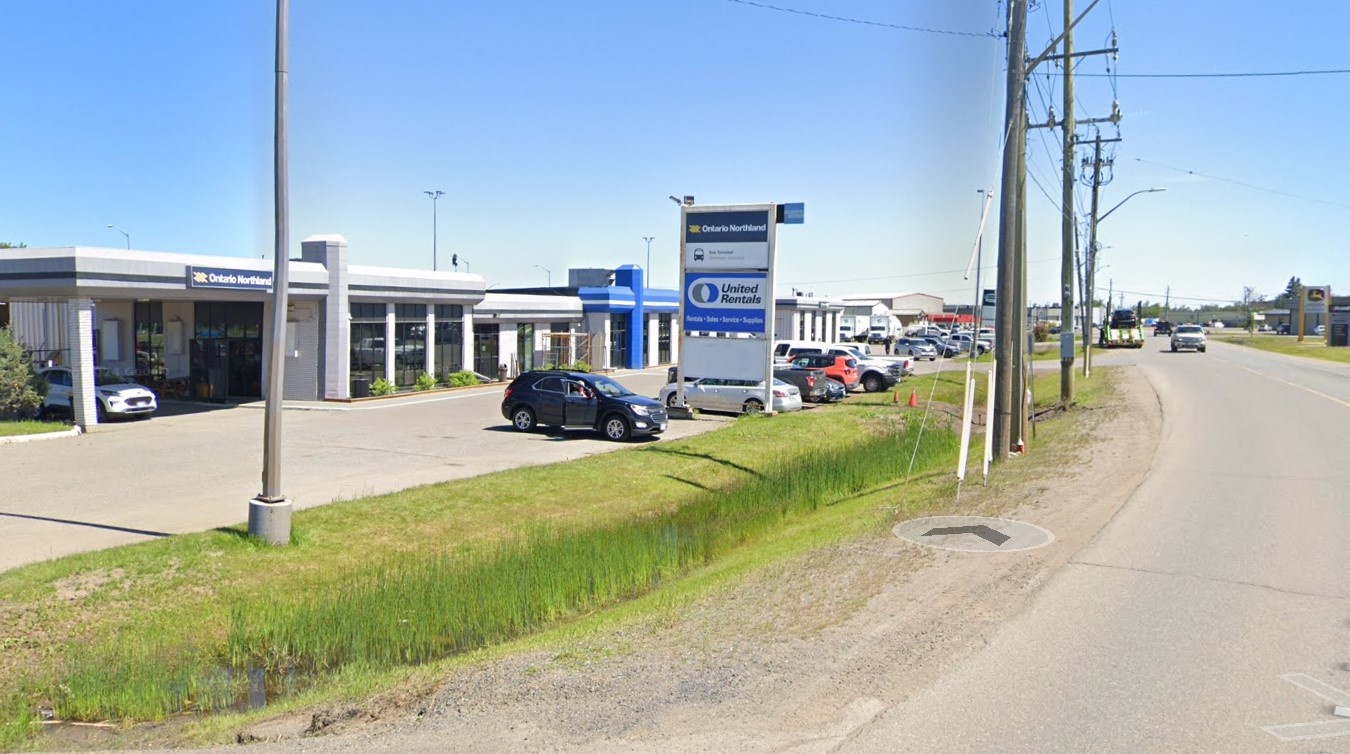
    The Ontario Northland depot at Thunder Bay is not in a very good location, in an industrial area off Highway 61 near the Thunder Bay airport, without direct local transit connections or adjacent amenities. At least a stop at Thunder Bay Regional Health Sciences Centre (which has local transit and is near Lakehead University) is also provided.

    Google Streetview capture of a small bus station in an industrial area
    Ontario Northland Thunder Bay depot, located in an industrial area on a road without sidewalks (Google Streetview)

    Difficult winter road conditions make travel across the North a challenge; this is why professional and safe bus and train operators are so important for getting around.

  • The train is returning to Timmins (sort of)

    The last train left Timmins Station in 1990. Today, it serves as a bus terminal for local and Ontario Northland buses

    Northeastern Ontario got an early Christmas gift from the provincial government on December 15, 2022. On that day, the province announced the purchase of three new trainsets for the restoration of passenger rail service to North Bay, Timmins, and points in between.

    Prior to 1990, there were two daily trains between Toronto and Northeastern Ontario: the daytime Northlander, which ran between Toronto, North Bay, and Timmins daily except Saturdays, and the daily overnight Northland, which continued north to Cochrane and Kapuskasing, with a bus connection to Timmins.

    The Northland, which was operated with VIA equipment, was cut as part of a devastating slash to VIA’s budget by the federal Progressive Conservative government. Other trains cut in 1990 included the daily train services from Toronto, Ottawa, and Montreal to Sudbury, Thunder Bay, Winnipeg, and Vancouver. The remaining train service between Cochrane and Northern Quebec soon followed.

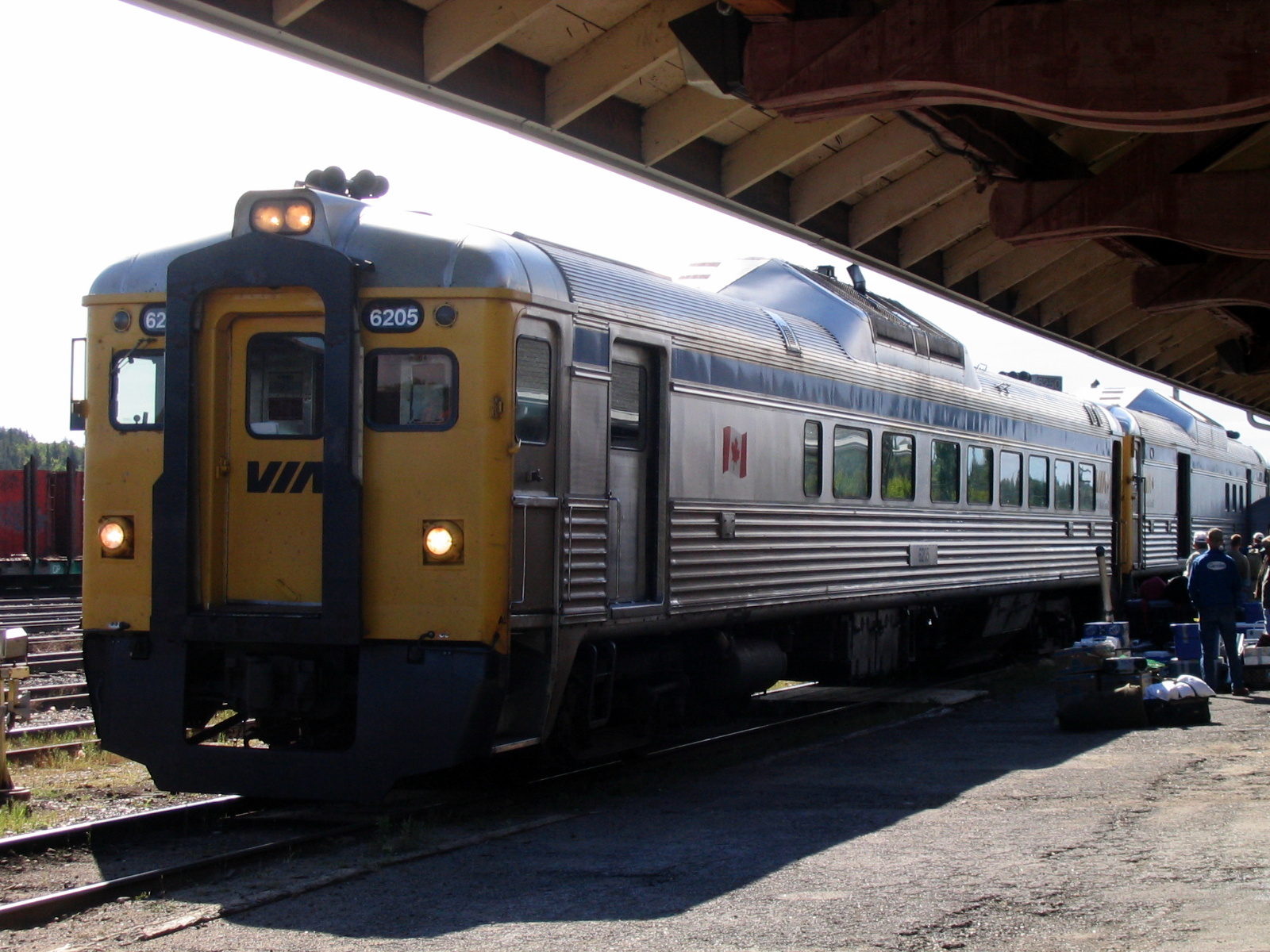
    The only train service left in Northern Ontario were remote services still provided by VIA Rail (the local Sudbury-White River RDC train and the transcontinental Canadian, reduced to three days a week and rerouted on the more remote CN mainline), Algoma Central between Sault Ste. Marie and Hearst, the Polar Bear Express/Little Bear service to Moosonee, and the 6 days/week Northlander service between Toronto and Cochrane, which was re-routed from Timmins (though a bus connection at Matheson was maintained).

    A railway overpass, completed shortly before its abandonment, crosses Highway 101 (Algonquin Avenue) towards Downtown Timmins, with the station building in the distance. A Timmins Transit bus lays over at the terminal.

    With the passenger service gone, the tracks through the urban areas of Timmins were quickly removed. The old railway right-of-way in Schumacher, a mining town just east of Downtown Timmins, became the new route of Highway 101, bypassing the old main street, hastening Schumacher’s decline. The station in Timmins was repurposed as a bus terminal for Ontario Northland and Timmins Transit.

    The old route of Highway 101 through Schumacher

    In 2012, the Northlander, which used refurbished former GO Transit single-deck railcars, was cut by the provincial Liberal government, citing declining ridership and high subsidies ($400 per passenger). The train also required an auxiliary power unit, as Ontario Northland used only freight locomotives.

    The southbound Northlander arriving at Gravenhurst in 2012. The auxiliary power unit is immediately behind the locomotive.

    The new trainsets will be the first time in generations that Ontario Northland won’t be using second-hand passenger cars. In the 1970s, Ontario Northland acquired used Trans-Europe Express (TEE) trainsets from Nederlandse Spoorwegen. Though the cars were modern by Canadian standards, the motive power proved unsatisfactory in winter weather and were replaced by older EMD FP7 engines. In 1992, the ageing TEE cars were replaced by the refurbished GO Transit cars.

    Ontario Northland TEE trainset with original power unit at the far end, 1981. Photo by Barry Lewis, photo attained via Wikimedia Commons.

    Like the old TEE trainsets, the new Siemens trainsets will operate in a semi-permanent configuration, with a Siemens Charger locomotive at one end and a combined passenger/control car at the other end, similar to how the new VIA Rail trains will operate. The Siemens Charger locomotives are used by several passenger services in North America, including Amtrak, Brightline, and VIA, while the Siemens Venture cars are very similar to those being delivered to VIA.

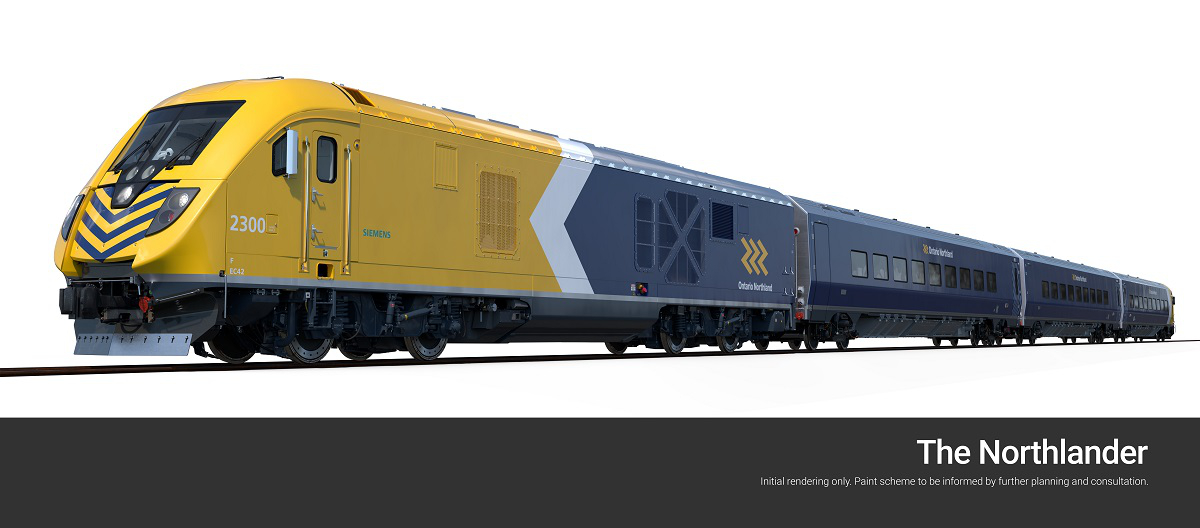
    The proposed paint scheme, depicted in a government release below, evokes the old TEE paint scheme, with the modern colours used by Ontario Northland.

    Rendering of the new Northlander trainsets (Ontario Government press release, 17 December 2022)

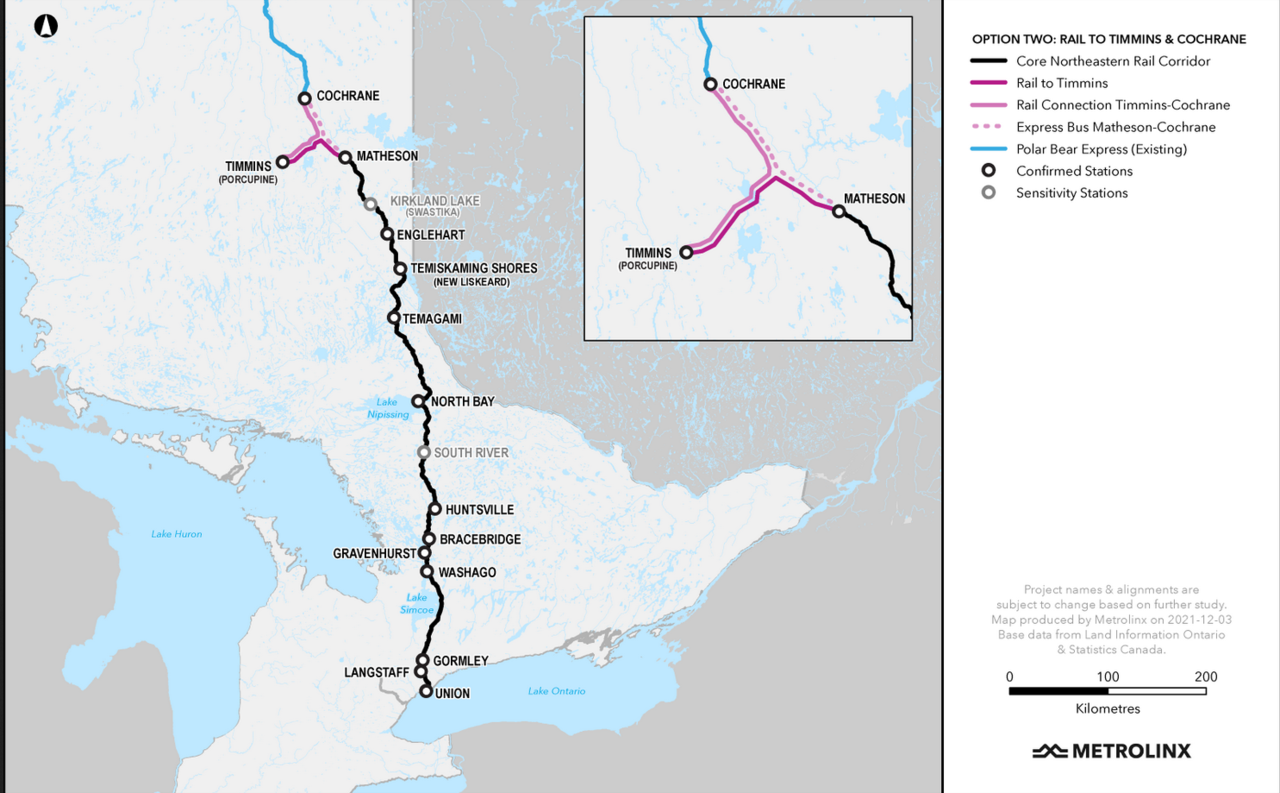
    The revived Northlander service will operate between Toronto and Timmins, with a rail or bus connection to Cochrane, the southern terminal of the Polar Bear Express train to Moosonee. There will be new train stops north of Toronto at Langstaff GO Station (where there are connections to York Region Transit and frequent GO buses on the Highway 407 corridor) and Gormley, a station site with far less connectivity.

    Map of the proposed Northlander service, from the Updated Business Case

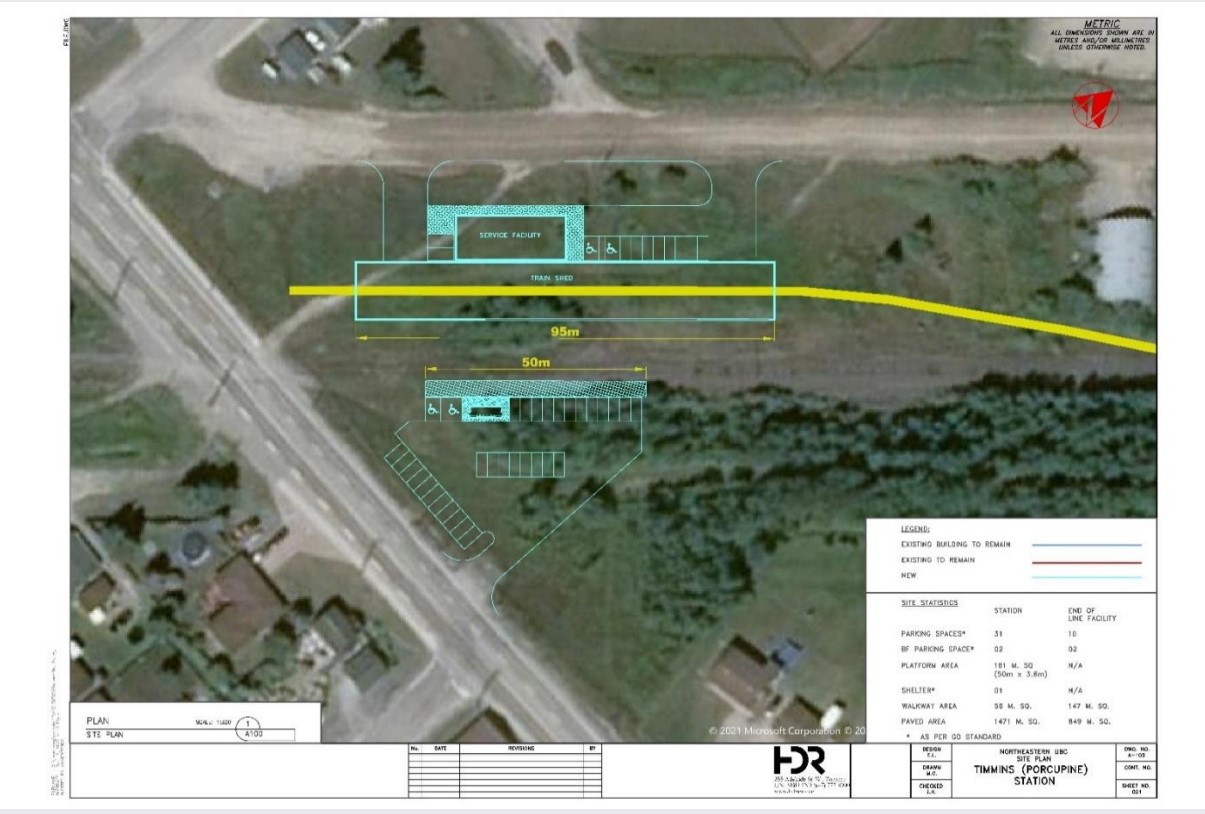
    The trouble, however, is the Timmins terminus. Though the new Siemens trainsets are double-ended and will not require a wye to change directions, most of the track in Timmins has been torn up. As explained earlier, the track into downtown has been partially built upon, and the current end of track is 13 kilometres to the east of central Timmins, on Highway 101 in the small community of Porcupine.

    Schematic of the proposed Timmins Station and service shed from the Updated Business Case. Highway 101 is at bottom left.

    This is where the new station is projected to be built.

    Looking towards the end of track on Falcon Street, Porcupine

    The Porcupine area has local transit service, a Timmins Transit bus that serves Schumacher, South Porcupine, and Porcupine every 30-60 minutes. The proposed station site is about the same driving distance from the city centre as Timmins Airport, which offers direct air service to Pearson and Toronto Island airports.

    According to the business case, the estimated annual ridership for the restored rail service by 2041 is 39,220 to 60,110. Assuming a train in each direction, six days a week, this will mean only 63 to 96 passengers per train, the capacity of just two coach buses, at only a marginally faster speed than the existing Ontario Northland motor coach service. A significant benefit of rail over bus is the reliability in winter conditions, certainly important for Northern Ontario, bus without significant investment in the track infrastructure, it is hard to find much in the way of improvements to the intercity network as a whole. Restoration of the Northlander still does not support travel to Sudbury, the largest community in Northeastern Ontario with the most important medical centre in that part of the province.

    At least the Northlander will get new, reliable equipment for once that will be easier to maintain and obtain parts for. As it is essentially the same equipment as VIA and Amtrak’s new fleets, should the Northlander fail to meet even the meagre ridership projections in the business case documents, the equipment will certainly find new use elsewhere.

    I wish I could be more upbeat about the future of passenger rail in Northern Ontario, an area that deserves reliable, useful intercity transport. The purchase of new rolling equipment is a positive development, but without significant improvements to track speeds, a more convenient Timmins terminus, and a complete transport plan for the entire region that can help build train ridership and support communities elsewhere in Northern Ontario, the renewed Northlander will suffer the same fate as the last iteration.

    Correction: the Cochrane-Senneterre train lasted a little bit longer past the 1990 VIA Rail cuts.

  • The north needs roads

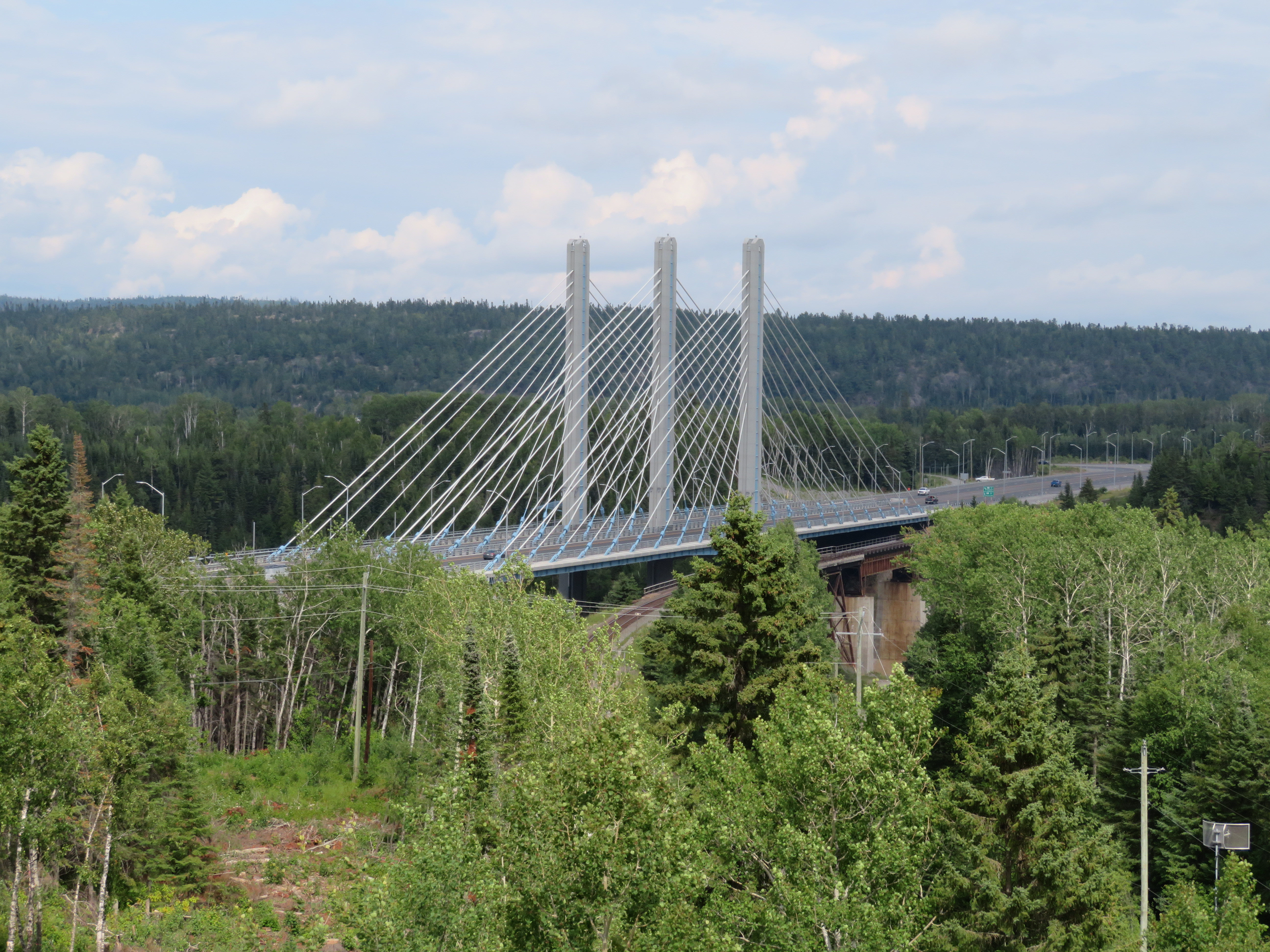
    IMG_2905.JPGNipigon River Bridge, August 2019

    In January 2016, a bridge over the Nipigon River failed. Located roughly 100 kilometres northeast of Thunder Bay, it formed part of the Trans-Canada Highway. The only east-west link between Western and Eastern Canada was severed, with the only detour through the United States.

    Climate change, road safety, and access to remote First Nations communities are some of the unique challenges facing Northern Ontario, where highways are especially important. Though highways fall under provincial jurisdiction, the federal government has a role in funding infrastructure and economic development.

    I examine these issues in more detail in my latest article on TVO’s website.

  • Trekking across Northern Ontario

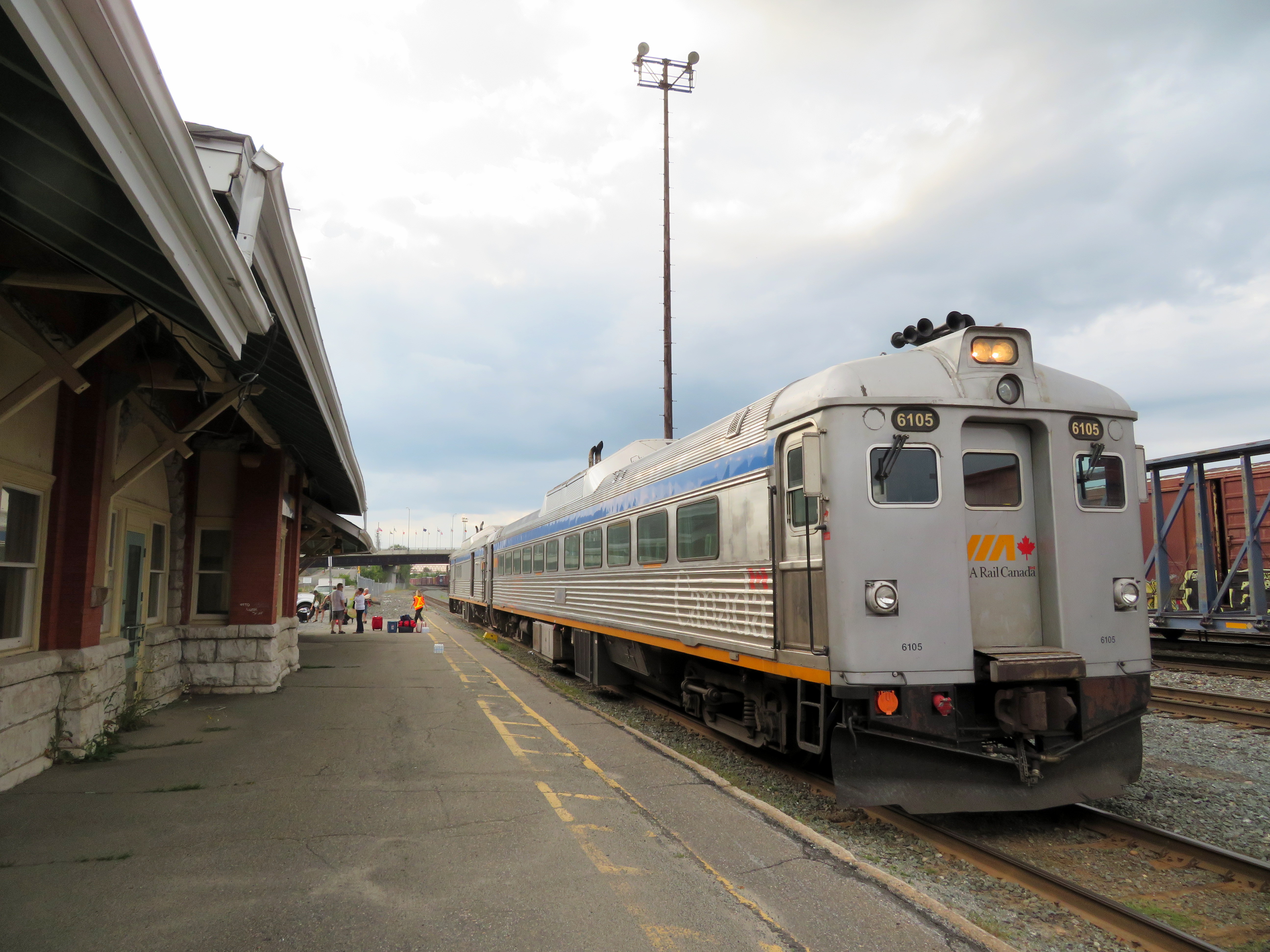
    IMG_2761-001.JPGVIA RDC train about to depart Sudbury for White River
    Last month, I embarked on a journey from Toronto to Thunder Bay, a distance of over 1,300 kilometres. My journey took me nearly three days as I opted to travel by bus and rail, rather than by car or by air. Though I had to take three separate trips to accomplish it (an Ontario Northland bus, a VIA Rail RDC train, and a Kasper Transportation mini-bus), it was a very interesting trip.

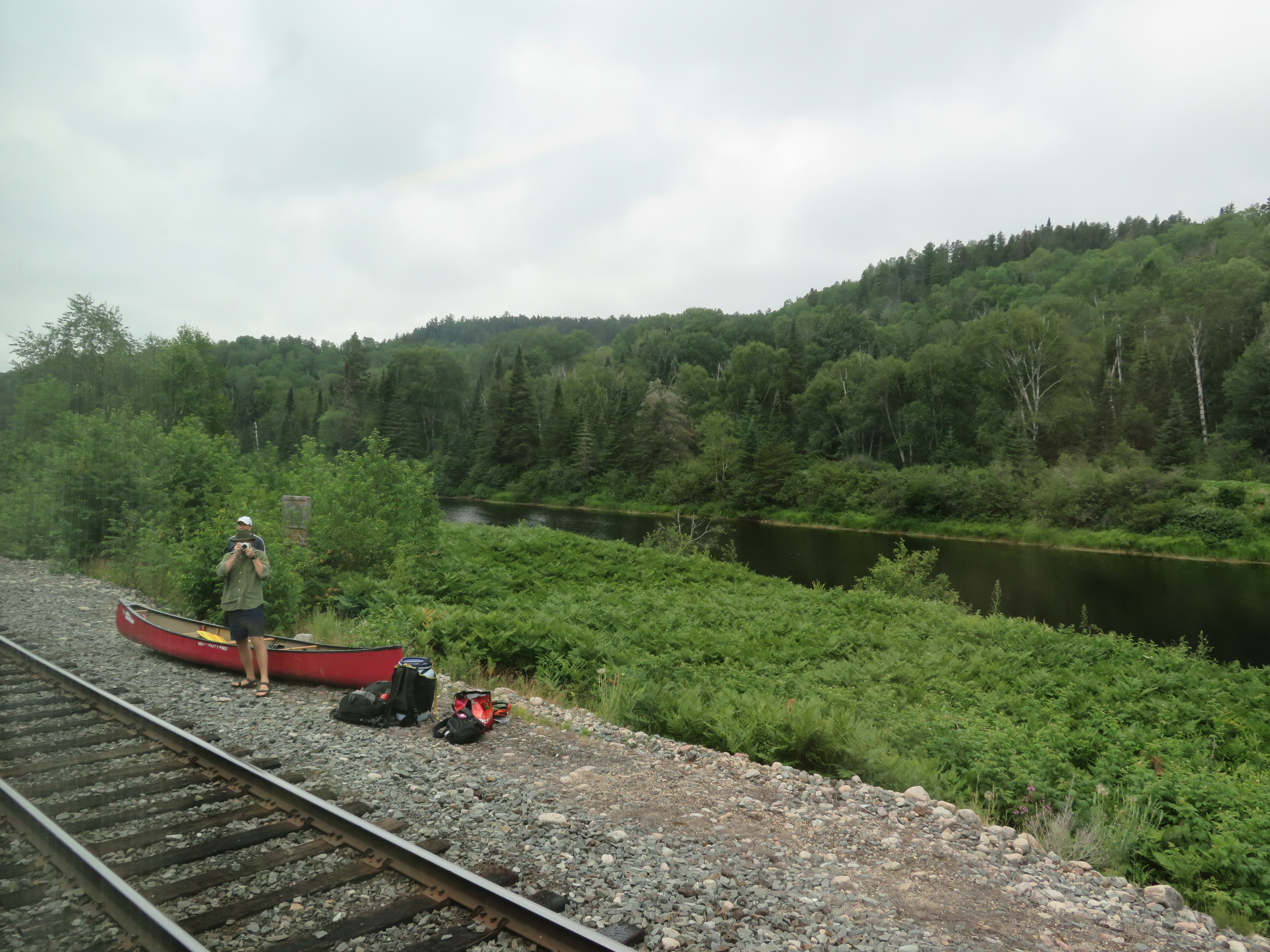
    IMG_2768.JPGUnloading a canoe from the RDC on the Spanish River, northwest of Sudbury
    Once I arrived in Thunder Bay, I rented a car. Though I know Northeastern Ontario quite well, I had yet to visit Northwestern Ontario (a brief stop in Sioux Lookout on VIA’s Canadian notwithstanding). There are several beautiful provincial parks within a short drive of Thunder Bay, and the city itself has a few interesting sights. Highway 17 along the Lake Superior shoreline is probably Ontario’s most scenic drive.

    Travelling without a car has its challenges, especially as the traveler is at the mercy of sudden schedule changes, traffic delays, and other hiccups, but it is still possible to get across Northern Ontario even after Greyhound’s withdrawal from Western Canada and Northern Ontario last year.

    I wrote about my experience for TVO.

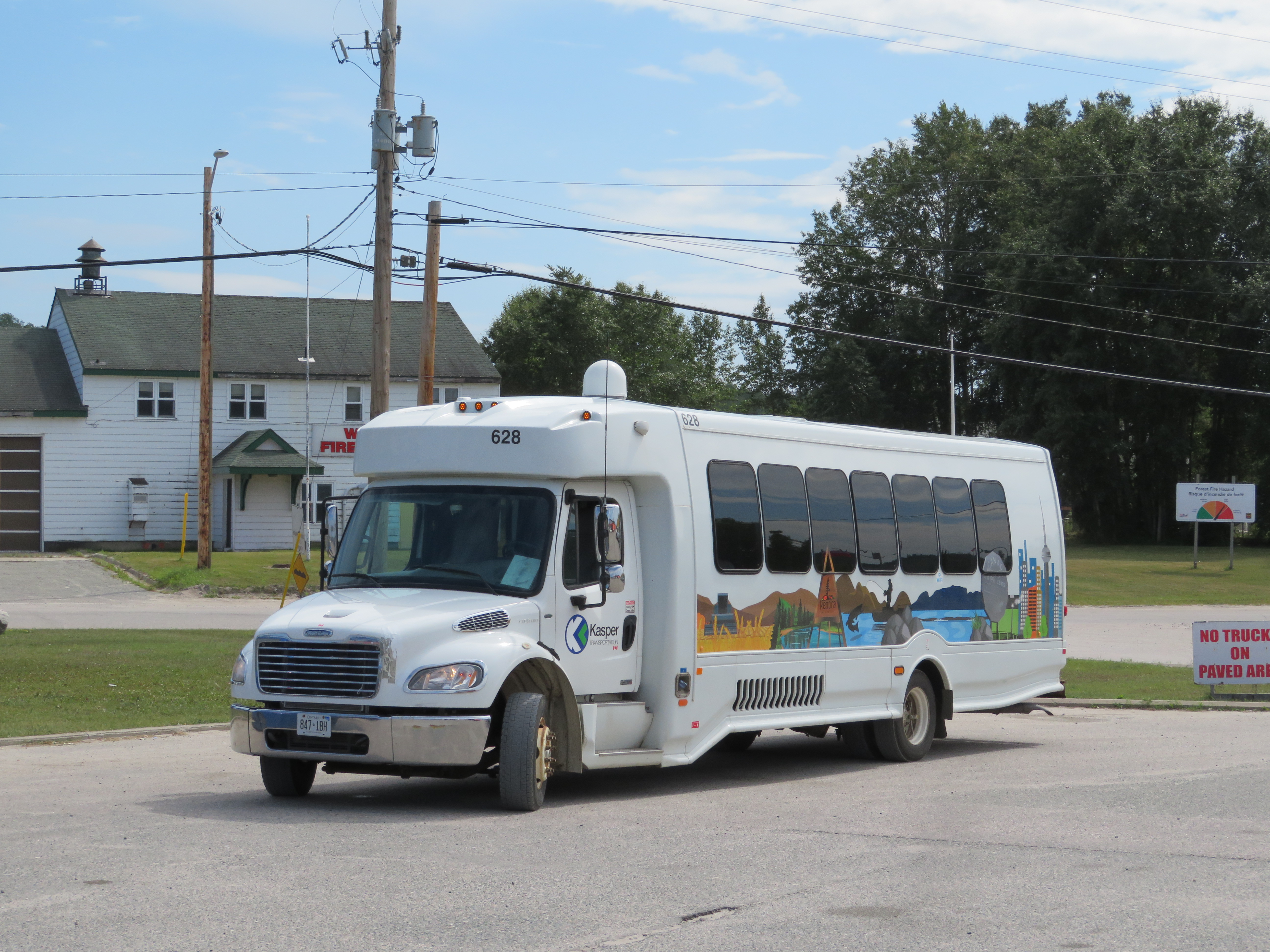
    KasperBusWhiteRiver.JPGKasper Transporation bus at White River – filling the gap left by Greyhound
  • Passenger trains of Northern Ontario

    6876541686_61533293ef_o.jpg
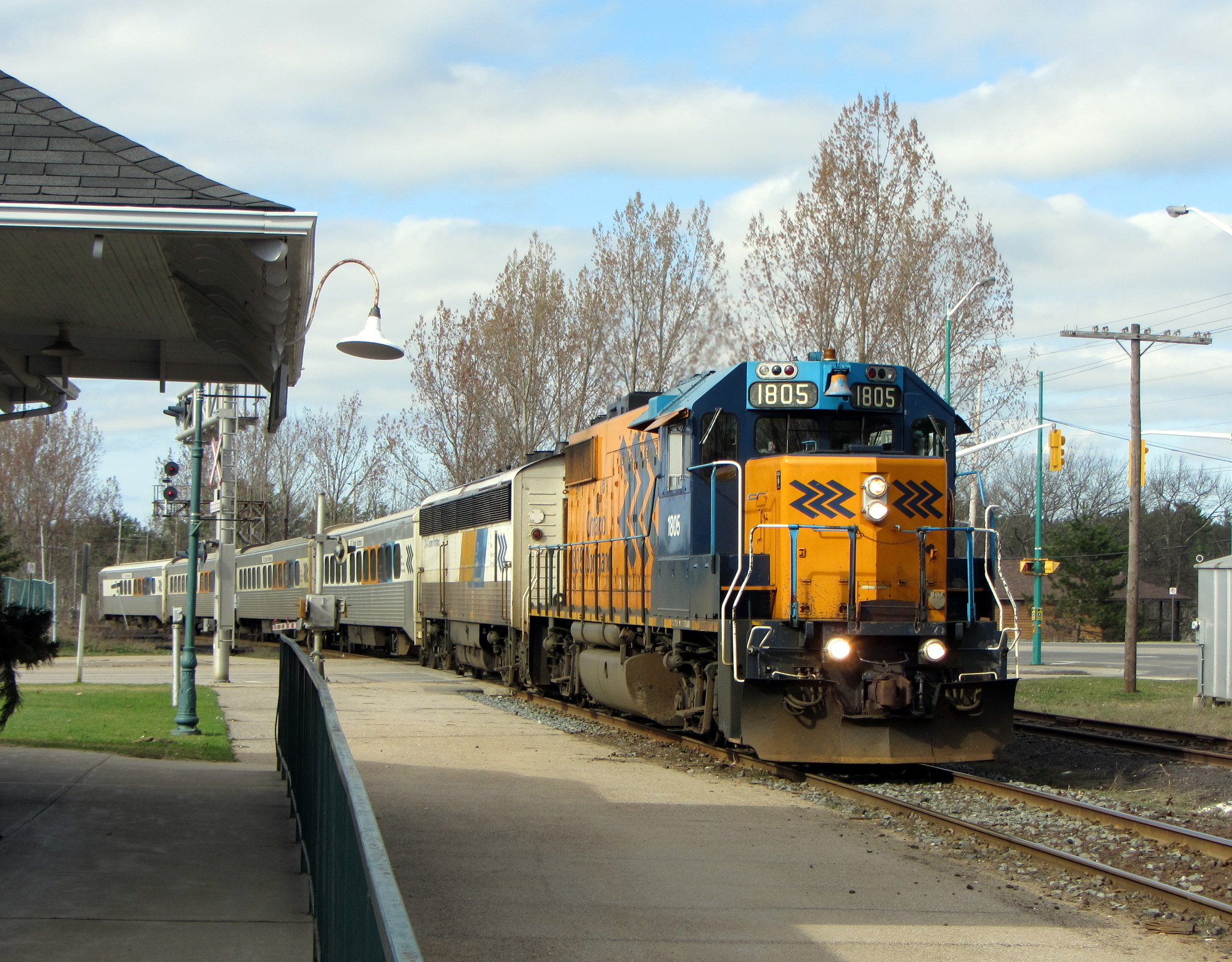
    Southbound Northlander train arriving at Gravenhurst, March 2012

    In a few weeks, I will travel from Toronto to Thunder Bay by bus and by train, stopping at cities and towns like Sudbury, Chapleau, White River, Marathon, and Schreiber. I expect to write about the experience and the challenges of getting around Northern Ontario without a car. At one time, it was possible to take just one bus or train from Toronto or Ottawa to Thunder Bay. Now, the same trip can only be done in three separate segments.

    Greyhound Canada, which once ran four daily bus trips between Toronto and Winnipeg, reduced service to just two daily trips in 2009, and then to just one trip in 2015. Greyhound pulled out completely from Western and Northern Canada in October 2018, cutting all its bus routes between Whitehorse, Vancouver, and Sudbury.

    According to the joint Canadian National/Canadian Pacific railway schedule of 1976, there were daily passenger trains connecting Montreal, Ottawa, and Toronto with North Bay, Sudbury, Thunder Bay, Timmins, and Kapuskasing. There was also a daily train between Sudbury and Sault Ste. Marie, and there were trains to Fort Frances, and several trains a week through the wilderness in Algoma District.

    Most of those trains are now gone. The CP Sudbury-Sault Ste. Marie train lasted just one more year, before being eliminated in 1977. The 1990 cuts to VIA Rail resulted in the loss of the daily Canadian through Thunder Bay, Sudbury, and North Bay, and the end of direct rail service to Timmins and Kapuskasing. The Canadian, now operating on the less scenic and less-populated CN mainline, ran just three times a week, with only a shuttle service on the most remote section of the CP route between Sudbury and White River.

    21589509683_e1c3df65b0_o
    VIA Rail RDC stopped at Cartier, Ontario on its way to White River

    In 2012, the Liberal provincial government announced the elimination of the Northlander, a daily train operated by Ontario Northland between Toronto, North Bay, and Cochrane. This decision was made with the intention of “modernizing” Ontario Northland, the provincial Crown corporation that operates freight and passenger rail and coach buses in northeastern Ontario. In 2014, the federal Conservative government cancelled the subsidy to run thrice-weekly Algoma Central Railway’s passenger train between Sault Ste. Marie and Hearst. (A popular excursion train still operates to Agawa Canyon.)

    Though I was too young to travel on my own when the devastating 1990 VIA Rail cuts were made, I was able ride the Northlander and the Algoma Central Railway passenger trains while they were still operating.

    With a friend from Calgary, I rode the Northlander from to Toronto to Cochrane and back, in May 2012. We continued to Moosonee near the shores of James Bay coast on the Polar Bear Express, which continues to operate. I made a second trip on the Northlander from Cochrane to Toronto in September 2012.

    Ontario Northland continues to operate a freight railway, scheduled coach buses, and the Polar Bear Express, a mixed train between Cochrane and Moosonee. There are no all-season roads to Moosonee, so the train remains a lifeline for the James Bay community. We also took that train in May 2012.

    In February 2014, after learning that Canadian National (owner of Algoma Central) was planning on discontinuing the local ACR passenger service, a friend and I made the trip to Sault Ste. Marie to ride the train all the way to Hearst and back. It was an especially memorable ride because of the deep snow, as well as the opportunity to take photographs from the vestibules between the rail cars. We traveled with a group of snowmobilers from Wisconsin (their Ski-Doos were in a baggage car) as well as local residents heading to their cabins.

  • Where, exactly, is Northern Ontario?

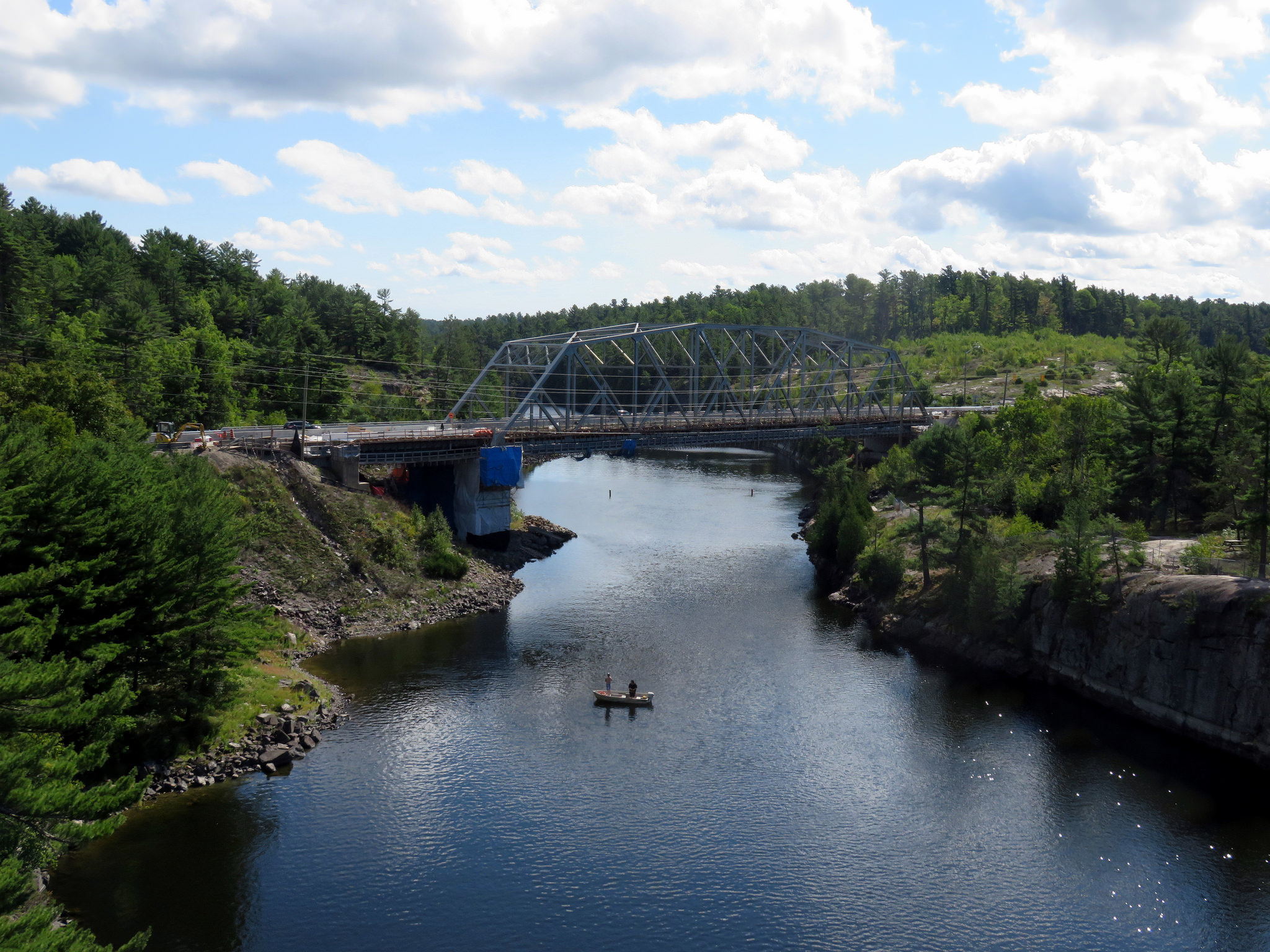
    29496350986_0f43c86857_k.jpgThe French River at Highway 69, where Northern Ontario truly begins

    Last week, the leaders of the three major provincial parties (Liberals, Progressive Conservatives, and the New Democrats) met in Parry Sound, at a debate dedicated to issues specific to Northern Ontario. It was the second of three debates scheduled ahead of the June 7, 2018 general election.

    But is Parry Sound, a town that’s only a two hour’s drive north of Toronto (when free of weekend Cottage Country traffic) really a part of Northern Ontario? That depends on who you ask. Even government agencies disagree. In my opinion, though, Parry Sound isn’t in Northern Ontario, even though the district it’s located in shares some characteristics of this vast part of the province.

    Despite living my entire life in the Greater Toronto Area, I have an affinity for Northern Ontario, particularly the northeastern part of the province. My father’s hometown is Timmins, one of my siblings lives in Sudbury, and I have visited both cities many times. I made a trip up to Sault Ste. Marie to ride the Algoma Central Railway passenger train between Sault Ste. Marie and Hearst and back before it was cancelled, and I still lament the loss of the Northlander, Ontario Northland Railway’s passenger train between Toronto and Cochrane that was terminated in 2012. I even made it all the way to Moosonee, on the James Bay coast.

    The northern part of this province covers a huge area — over 800,000 square kilometres, larger than France, Belgium, and the Netherlands combined — but has a population of just over 750,000. It is even crossed by a time zone boundary. Despite my connection to the region, I had yet to make a proper visit to Thunder Bay and Northwestern Ontario (I finally paid a visit in August 2019).

    The North includes many First Nations communities accessible only by plane or ice road. Other communities, with names like Dryden, Kapuskasing, Iroquois Falls, and Kirkland Lake, were established to serve mines or pulp mills — resulting in a very different economic landscape than the agricultural and industrial south. In recent decades, many of those mines and mills have closed, eliminating many towns’ only major employer.

    In a province dominated by the urban centres in the Greater Golden Horseshoe, Ottawa, and London, it’s too easy to ignore the North.

    So how do people actually define Northern Ontario?

    Traditionally, Northern Ontario begins at the French River, Lake Nipissing, and at the Mattawa River. North Bay, which calls itself the “Gateway to the North” sits right on this line. For administrative purposes, this includes the entirety of Sudbury and Nipissing Districts, which extend south of the French and Mattawa Rivers, and includes most of Algonquin Park. It also includes Manitoulin Island, which can only be reached year-round from the north, through Sudbury District.

    The Canadian Shield, the defining landscape of most of Northern Ontario, starts further south. Driving north from Toronto on Highways 400 or 11, the shield starts about where Simcoe County ends and Muskoka District starts. But the Canadian Shield also encompasses large sections of the City of Kawartha Lakes and Peterborough, Hastings, Frontenac, and Lanark Counties and the entirety of Haliburton County.

    NOntarioThe various definitions of Northern Ontario, including the county, regional and district boundaries. 

    But the provincial and federal governments both have special economic development funding programs whose boundaries take a more liberal definition of Northern Ontario. FedNor, the Government of Canada’s economic development agency, includes Parry Sound and Muskoka Districts. The Northern Ontario Heritage Fund Corporation, a provincial agency, includes Parry Sound District, but not Muskoka District.

    Whether Parry Sound and Muskoka are considered part of Northern Ontario is very much a political question. In 2004, the newly elected Liberal government chose to remove Muskoka from the areas eligible for provincial grants meant for northern communities — Muskoka being a reliable Progressive Conservative seat, and the riding of the previous PC premier, Ernie Eves.

    Parry Sound District, while not, in my view, part of Northern Ontario, at least shares some similar characteristics with neighbouring Sudbury and Nipissing Districts. It includes many isolated communities, and apart from the Town of Parry Sound itself, it has a very sparse population. Muskoka, on the other hand, is more urbanized with three larger towns, and is much more popular for recreation, particularly during the summer. Muskoka also has a regional government — the District Municipality — while much of Parry Sound District’s land is unorganized — meaning lands without any municipal government.

    And if one considers Muskoka to be part of Northern Ontario, why not also include Haliburton County, which also has a sparse population and is relatively isolated from the urbanized south? A line needs to be drawn somewhere, and there is no valid reason why Muskoka should ever be considered a part of Northern Ontario. There might be a case for Parry Sound District, but definitely not cottage country.