
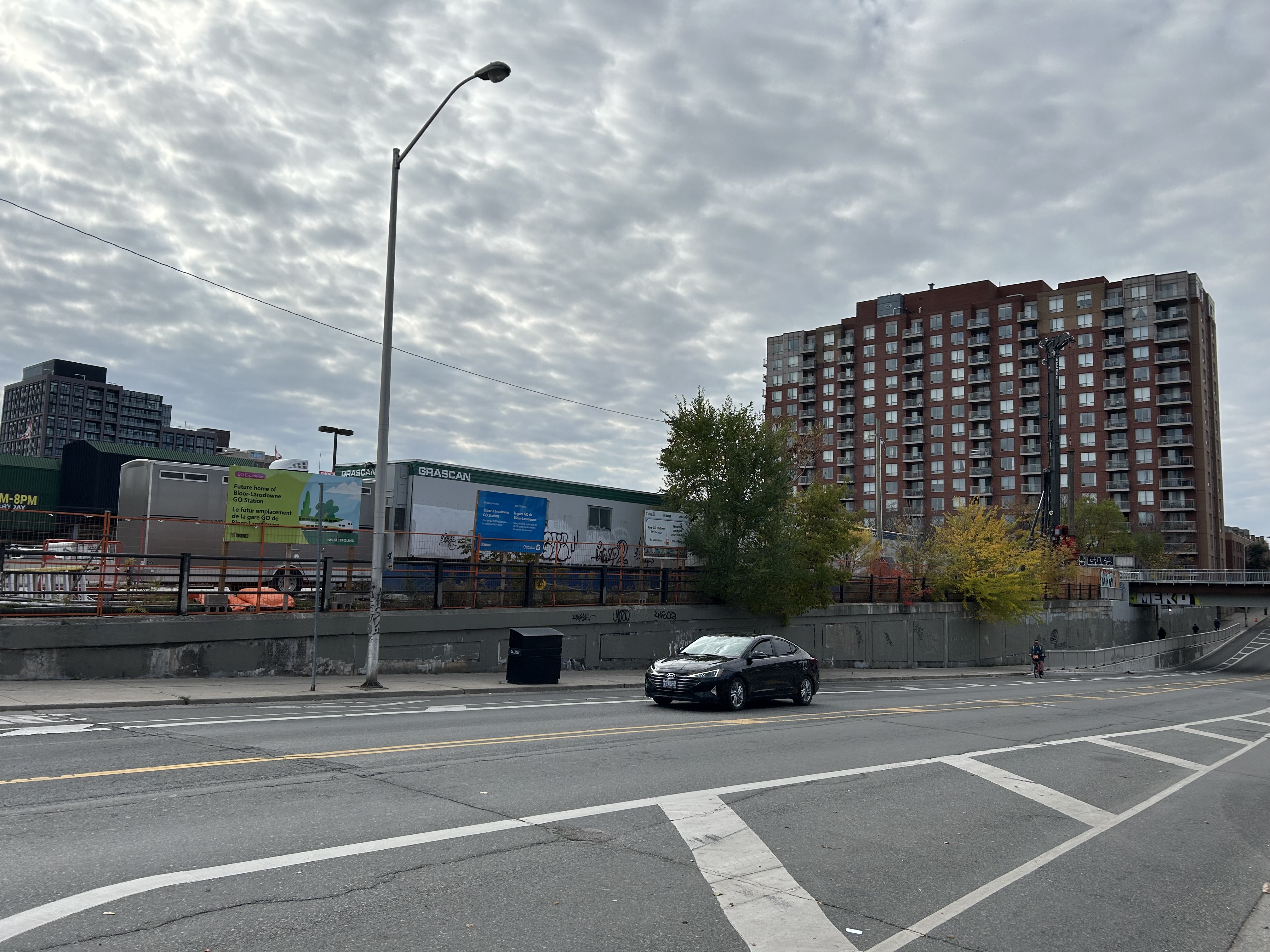
Bloor-Lansdowne Station, one of five “SmartTrack” stations planned for existing GO Transit rail lines in the City of Toronto, is located just south of Bloor Street West on the GO Barrie Line, and south of the Davenport Diamond grade-separation. The purpose of this new two-platform GO station is to provide a new connection between GO trains and the TTC subway, similar to existing stations like Bloor/Dundas West, Danforth/Main Street, or Downsview Park. Unfortunately, it will not be an easy transfer.
When GO Transit began operations on the Lakeshore Line in 1967, it was built on a shoestring, meant to be a three-year experiment to see if commuter rail would work in the growing Greater Toronto Area. Stations were built cheaply, with asphalt platforms with bus shelters, constructed on easily purchased land for suburban parking lots. At stations like Long Branch and Danforth, connections to TTC subways and streetcars were on-street; most connections would be made at Union Station. When the Georgetown (now Kitchener) Line opened in 1974, Bloor Station was accessed only by narrow stairways down to the sidewalk, with a 4-5 minute walk to Dundas West Station (a direct subway connection is finally nearing completion). Newer GO rail stations, like Kipling (1980-1981), Kennedy (GO platform opened 2005), and Downsview Park (2015), were built with direct intermodal connections, befitting GO’s increasing importance. When it opens on November 16, Mount Dennis GO/UP station will have a direct connection to the future Line 5 Crosstown LRT.
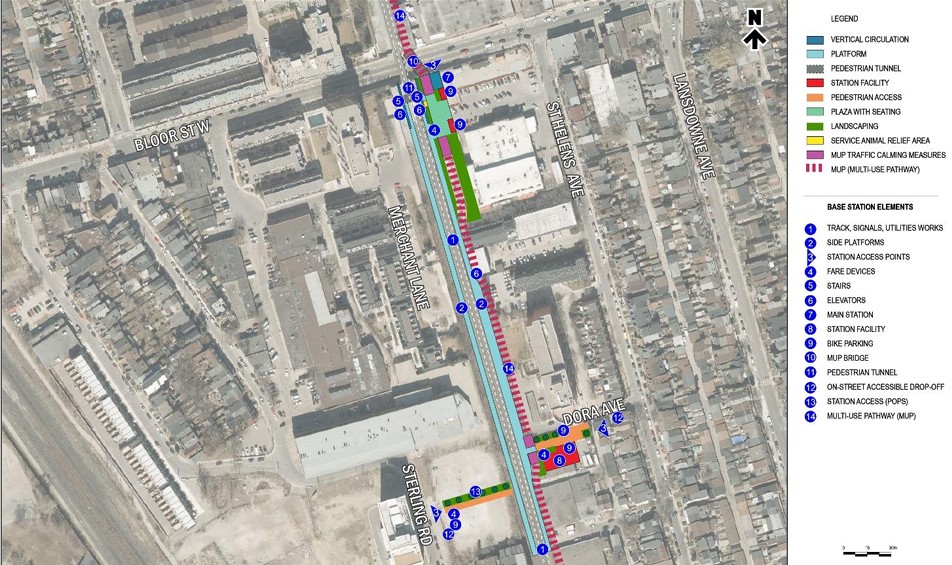
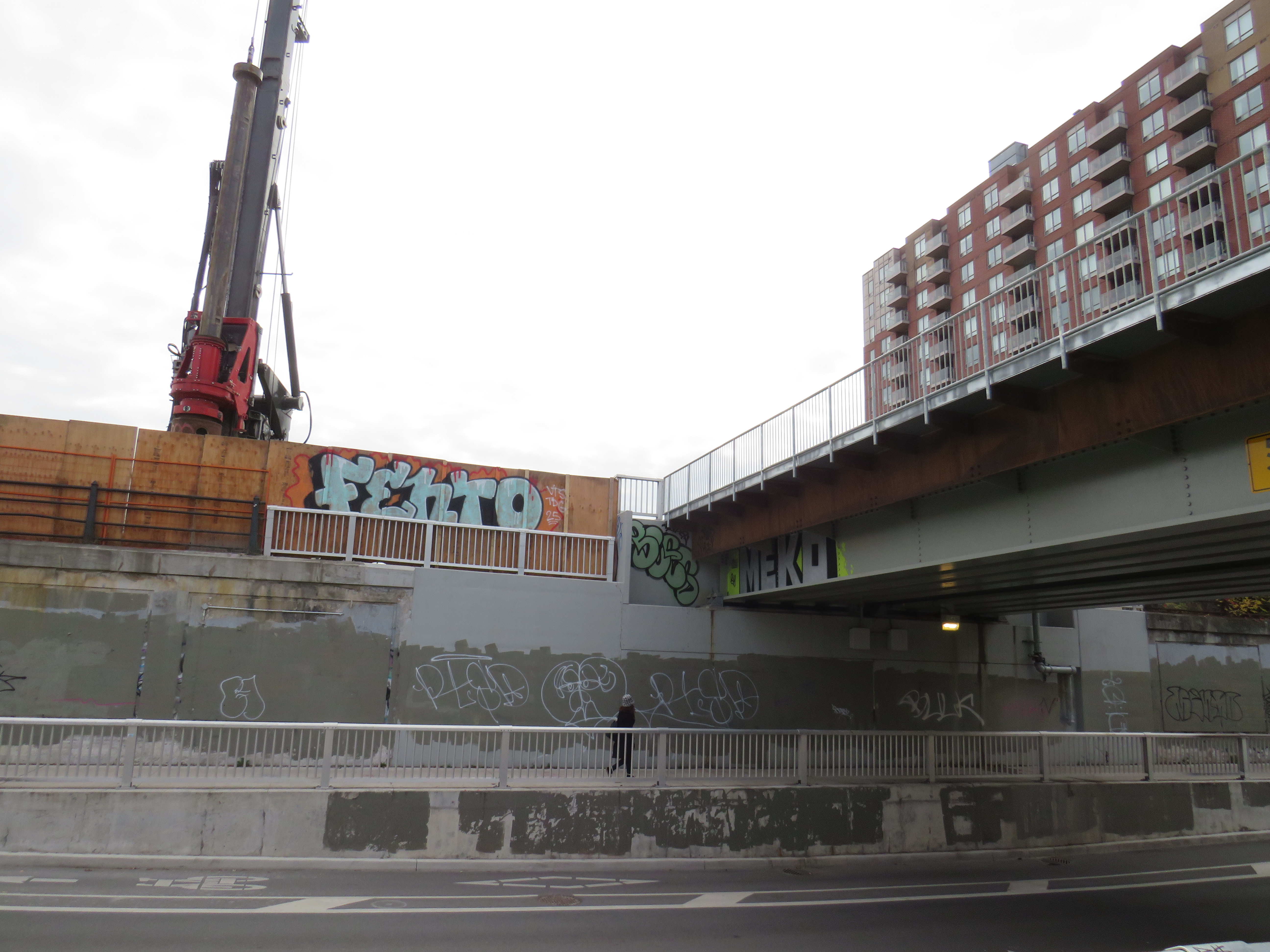
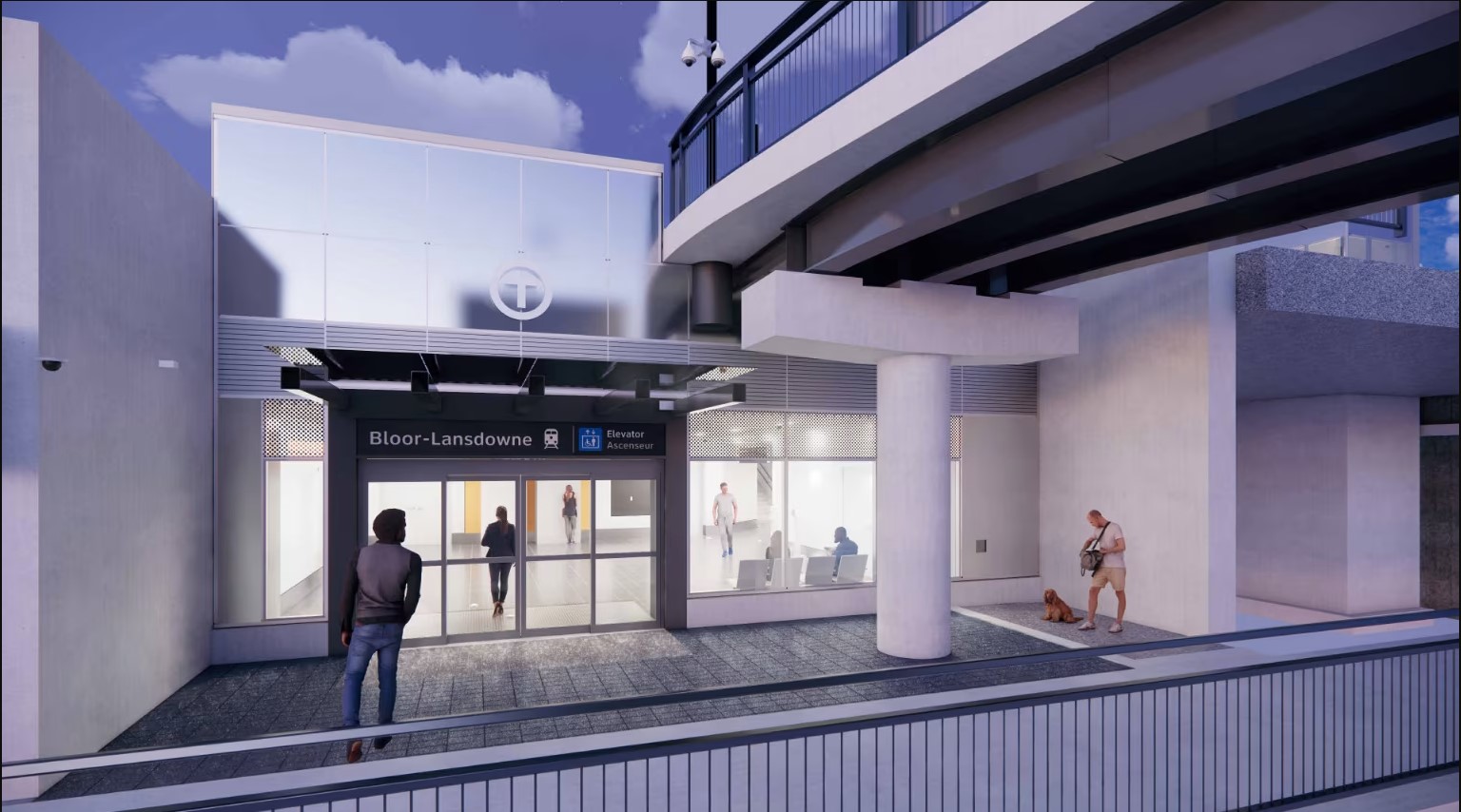
But Bloor-Lansdowne, located next to a former Value Village, will feature a subway-train transfer worse than the current connection between Bloor GO and Dundas West subway station. It took me nearly 7 minutes to get from the Lansdowne subway platform to the planned main entrance below the rail overpasses, including waiting at the Bloor-Lansdowne intersection for a walk signal, and crossing an unsignalized intersection at St. Helens Avenue. (See video below.)
The construction of a new pedestrian overpass connected with the long-delayed Davenport Greenway will provide a slightly more pleasant walking path between the subway and GO train, avoiding a busy signalized intersection. But it will not reduce walking times or the amount of time without shelter from the elements.
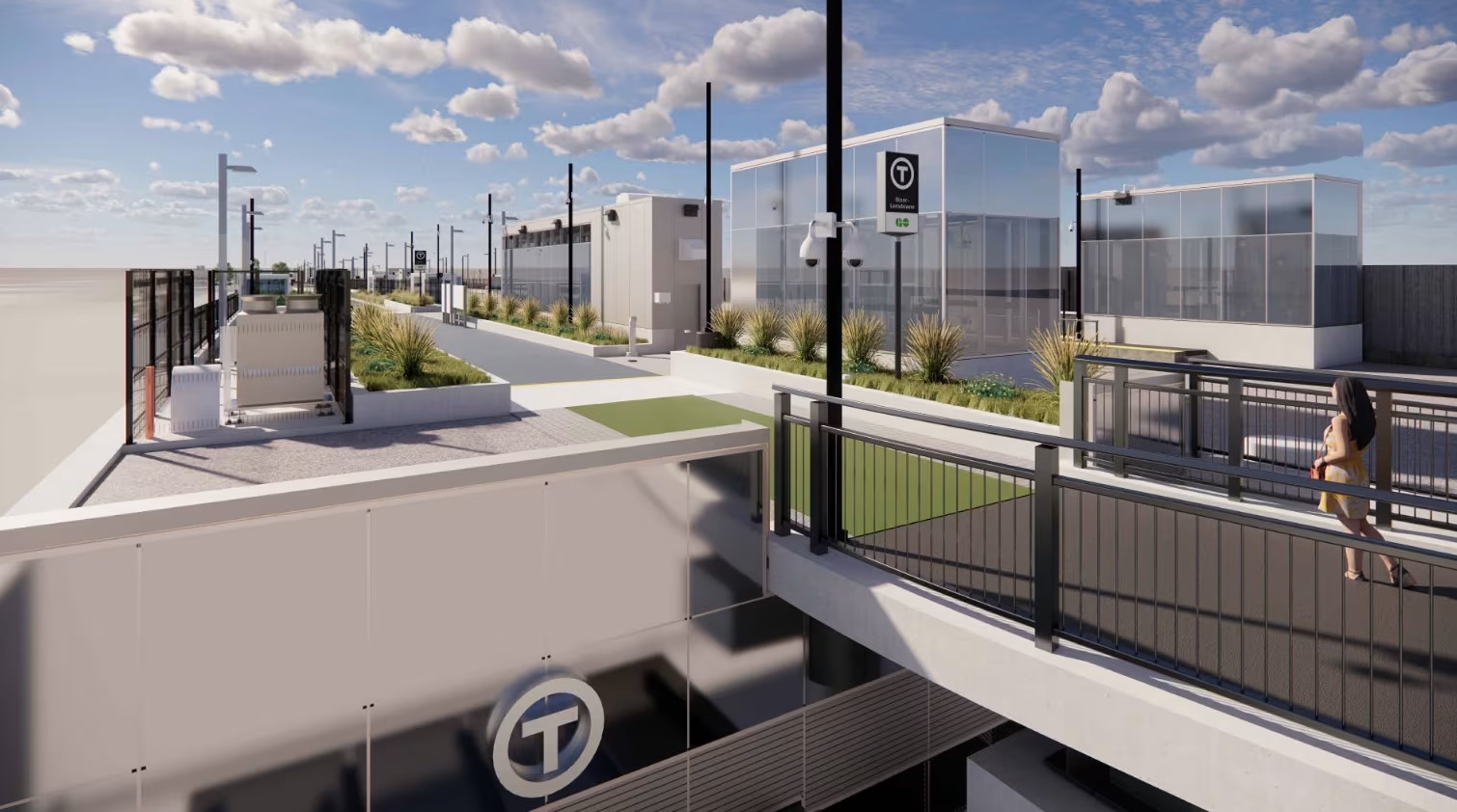
Granted, for some commuters, Bloor-Lansdowne will significantly reduce travel times, especially for those travelling between parts of York Region and western Toronto. But nearby Bloor Station on the GO Kitchener Line will have much better TTC connections and more frequent service with both GO and UP Express service and will be a much more attractive route towards Downtown Toronto. Compared to the benefits to riders on the 39/939 Finch East — the TTC’s busiest bus corridor — that Finch-Kennedy Station will offer, or the benefit of King-Liberty’s GO and UP Express service to riders in Liberty Village, Parkdale, and West Queen West with King-Liberty, Bloor-Lansdowne has limited ridership potential.
Back to The revenge of SmartTrack
 Sean Marshall