On Saturday, October 28, the Toronto Transit Commission (TTC) held open houses at three of the six new subway stations set to open on December 17, 2017 when the Line 1 subway is extended to York University and Vaughan. It was a fun afternoon with friends, checking out the architecture and the layout of Vaughan Metropolitan Centre,* Highway 407, and Pioneer Village Stations.
Some of the station architecture was stunning, and I came away feeling much less skeptical about Vaughan’s commitment to building a new urban district around its station. Most stations along the subway corridor will be well-used. However, I remain critical about the issue of transfers between transit agencies, and the usefulness of at least one station.
Ten months ago, I wrote about some of the unanswered questions about the Toronto Transit Commission’s Line 1 subway extension to York University and Vaughan. At the time, I was concerned about fare integration once the subway opened, especially if suburban GO, YRT, or Brampton Transit passengers headed to York University were required to make new transfers to the subway at Vaughan Centre or Highway 407 Stations.
We now know the day the six new subway stations will open: Sunday, December 17, 2017. We also know how the TTC, York Region Transit, and Brampton Transit will serve the new extension and York University. And today, we also have some indication of how GO Transit passengers will be affected by the changes.
How YRT and Brampton Transit will serve the Line 1 subway extension
(from the YRT website)
Transfers from GO Transit or UPX to the TTC will cost $1.50 for passengers using Presto cards, a 50% reduction from the full adult fare of $3.00. Passengers transferring from the TTC to GO or UPX will get a $1.50 fare discount. It is expected that the new co-fare subsidies will cost the provincial government $18 million a year. The fare discount will not apply to passengers using fare media other than Presto cards, including TTC tokens, Metropasses, or paper one-way tickets or day passes.
These are similar to the co-fares offered between GO Transit and transit agencies outside the City of Toronto, including MiWay, York Region Transit, Brampton Transit, and Hamilton Street Railway. However, these co-fares are generally more generous — ranging from $0.60 in Hamilton to $1.00 in York Region.
There was no news on reducing the fare penalty for transferring between the TTC and connecting local bus systems such as York Region Transit and MiWay.
For many commuters, the new TTC co-fare is great news, and it represents a good first step towards proper fare integration. It helps to make GO Transit more useful for trips within the City of Toronto, and it helps suburban commuters who use the TTC for part of their trip, such as University of Toronto students, who are located too far a walk to Union Station.
(John Tory is also claiming a victory, calling it “a step in the right direction” for his SmartTrack proposal. At this point, “SmartTrack” is little more than a GO/TTC fare agreement and a few new proposed GO stations.)
However, this could also affect York University students as well. Previous plans for the Line 1 subway extension saw GO Transit buses serve the Highway 407 station, requiring a transfer to the subway to get to campus. York University has been long eager to remove the buses from the York Commons area, which GO and the TTC use as their campus terminals.
York Region Transit will continue to operate many bus routes into York’s campus, on the Ian Macdonald Boulevard ring road, and Brampton Transit’s Queen Züm bus route will remain on campus. Their university-bound passengers won’t be required to transfer to the subway and pay an additional fare. But it appears, for now, that GO Transit passengers will have to make a connection, costing $1.50 each way. (This will not be the case for in the short term, see update below.) This will also apply to GO train customers on the Barrie Line who currently use York University Station, if that station closes as planned when the subway connection at Downsview Park opens.
This will be a blow for GO Transit customers who commute to and from York University, accustomed to a one-seat ride direct to campus. But it will be an improvement for GO operations on the Highway 407 corridor, with buses no longer stuck in traffic in the Keele Street and Steeles Avenue area. It will also benefit GO Transit passengers who aren’t headed to York University. Providing good public transit is not be about giving everyone a one-seat ride.
Despite these benefits, if GO Transit serves Highway 407 Station as planned, it will impact many passengers with a new transfer and an additional $3.00 cost per day. I’m curious what GO Transit’s messaging and final plans will be, because they have yet to communicate their new schedules and connections when the subway extension opens. Hopefully, we will learn the answers to the rest of those questions soon.
Update: According to the CBC and Metrolinx’s Anne Marie Aikins, there are now no immediate plans to re-route GO Transit buses from York University. at least in the short term. This is a short-term solution, however, because the Highway 407 station was designed with a large terminal for GO Transit buses, and York University has been vocal about wanting the hundreds of GO and TTC buses a day out of the York Commons area.
I don’t see this as a long-term solution, however. Hopefully Metrolinx and the TTC can figure out how to best serve York University passengers, though that should have been figured out a long time ago. After all, the subway was originally supposed to open by the end of 2015.
I came away disappointed by Cathedraltown. Despite a dense built form, and a main street lined with storefronts, it did not live up to the new urbanist promise: it was still a very car-centric subdivision, without the retail, nor the density required to make it a walkable community. The central focus is a Slovak-Catholic cathedral, recently re-opened after lengthy dispute between the development company and religious leadership. “No trespassing” signs still stand in front of the imposing church. Transit connections are poor, making a car virtually necessary to get even to nearby employment areas.
Mount Pleasant, in Brampton, fares somewhat better, despite some similar issues to Cathedraltown. What distinguishes it though are superior transit connections, and a better-programmed central focus.
Satellite view of Mount Pleasant via Google Maps
Mount Pleasant started off as a small settlement between Brampton and Georgetown, where Highway 7 and 3rd Line West (later Creditview Road) crossed the Canadian National railway line between Toronto and Guelph. For most of its existence, it was little more than a collection of houses, two churches, a motel and a service station. By the 1960s, the local trains no longer served the flag stop there, and Highway 7 — now Bovaird Drive — bypassed the hamlet on a new railway overpass in the 1960s, also severing Creditview Road.
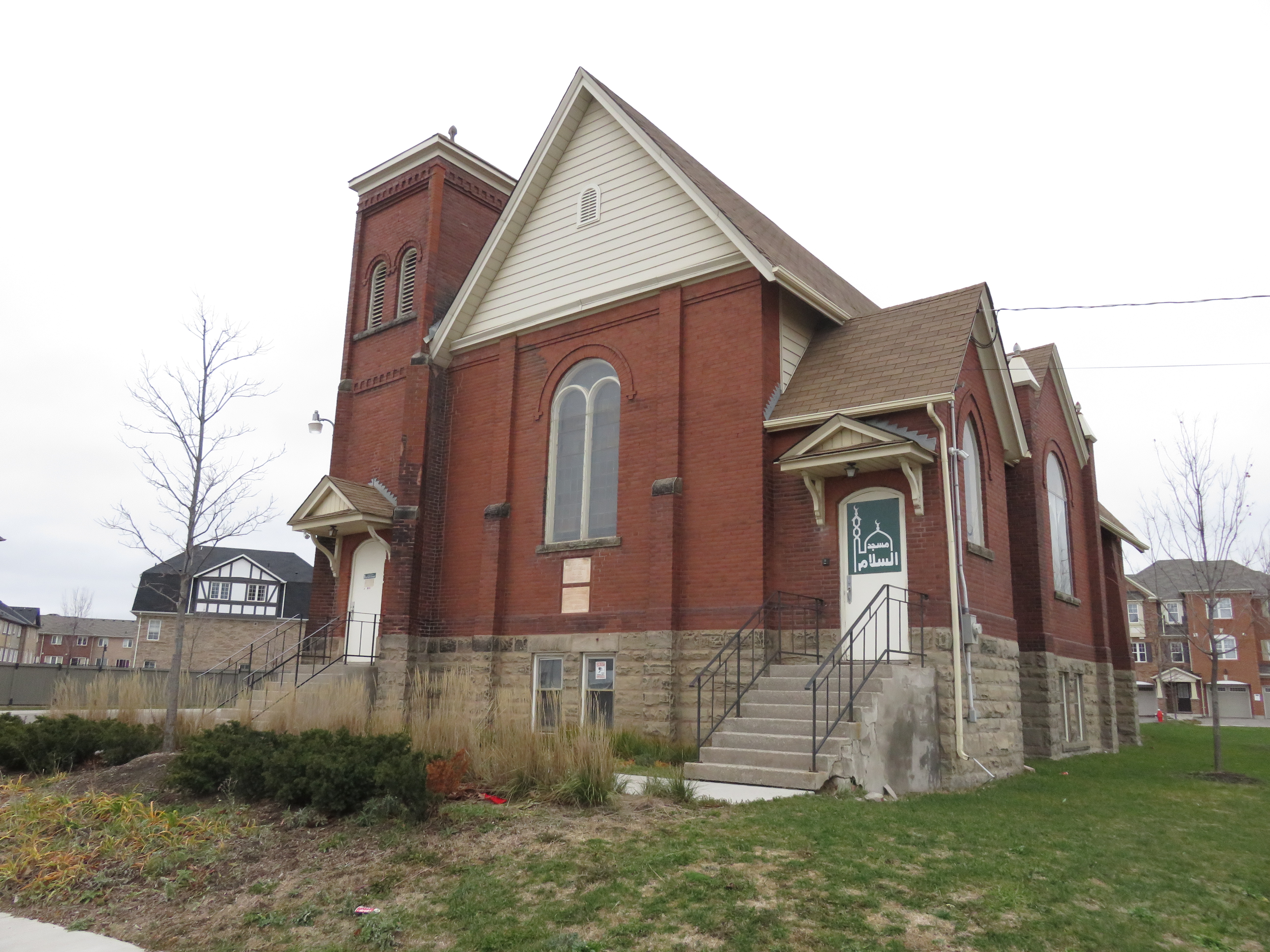
A few buildings — two houses and a former Presbyterian church, now a mosque — remain at the former crossroads. New subdivisions now surround the historical community.
Mount Pleasant’s old Presbyterian church is now a mosque.
Mount Pleasant GO Station opened in 2006, just as northwest Brampton was transforming from farmland to new subdivisions. The GO Station was built like any other in Toronto’ suburbs: a large parking lot, bus loop, and pick-up and drop-off area, with easy access to Bovaird Drive. But on the north side of the tracks, the City of Brampton, and the developer, Mattamy, tried something different.
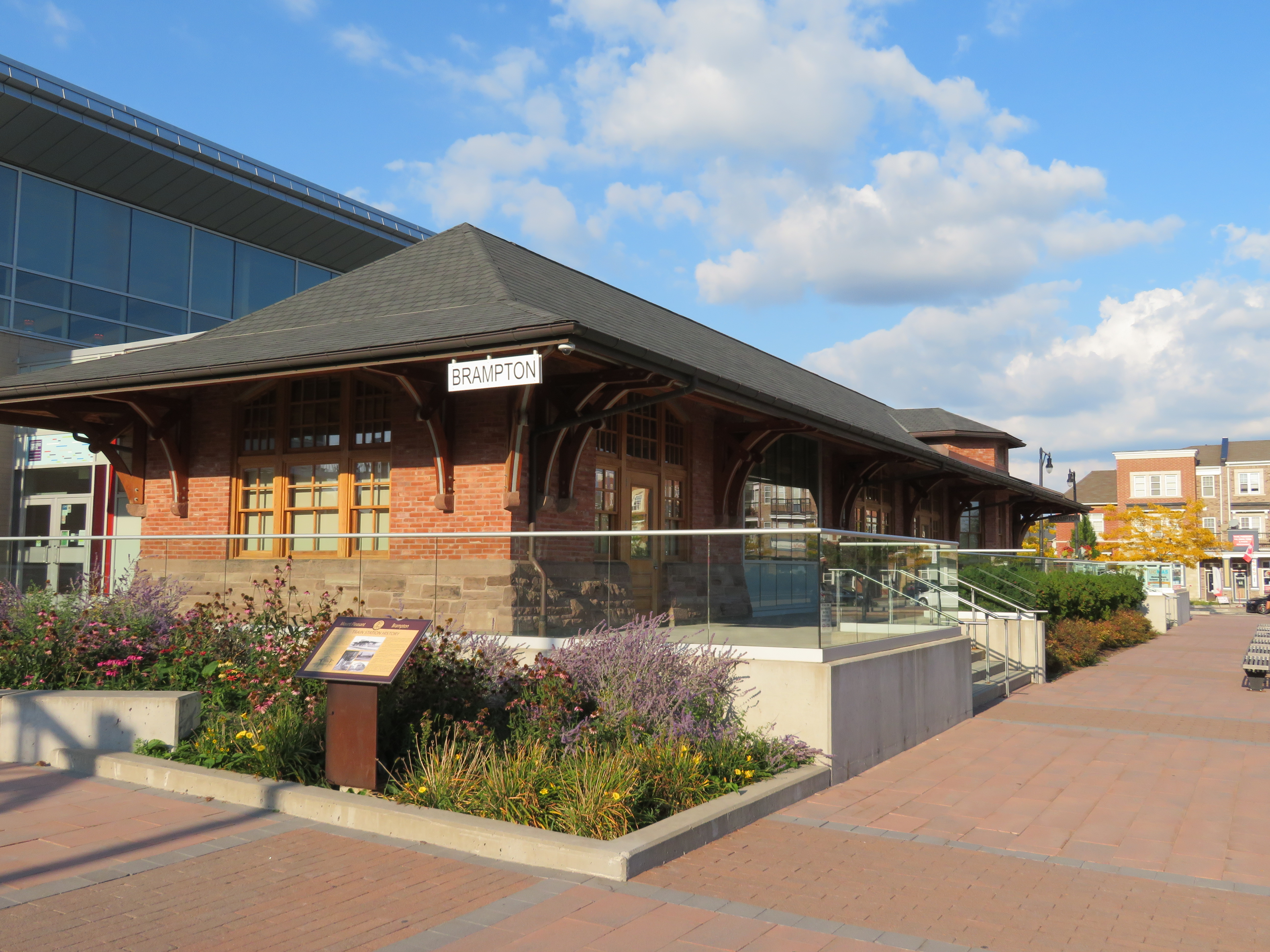
At the core, the City of Brampton built a new library branch that incorporates the dismantled Canadian Pacific Railway station that used to stand on Queen Street in Downtown Brampton. (The station was moved in 1980 to a then-rural site on Creditview Road when it was threatened by demolition by the CPR. But the station building was left to rot before heritage conservationists carefully dismantled the structure.) Behind the library is a public school. In front, there’s a public square that includes a small playground, as well as a reflecting pond that’s a skating rink in the winter.
The Brampton Public Library incorporates the former Brampton CPR Station, rebuilt here at Mount Pleasant Village
To the west of the square are several low-rise apartment buildings, the sort of “missing middle” housing needed in Toronto’s established urban neighbourhoods. To the east are several retail/residential blocks, the sort of mixed use buildings that are uncommon in new subdivisions. The storefronts are all mostly occupied with businesses serving the local neighbourhood, such as hair salons and spas, a convenience store, a dentist’s office, and a restaurant. To the south are entrances to the GO Station and the bus loop for GO and Brampton Transit buses.
I grew up in Brampton, a suburb of Toronto. Our family could not justify long, expensive vacations, but we did make several trips to Detroit and the region, usually to visit the Henry Ford Museum and Greenfield Village. We’d stay at a hotel outside Detroit, usually one with a swimming pool. Besides the museum visit and the pool, my parents would usually include a stop at an outlet mall. We’d also drive through Detroit itself, sparking my enduring fascination with the city.
Since my first visit in the mid-1980s, the Hudson’s Department Store has been demolished, the Michigan Central Station has been permanently closed and allowed to deteriorate, and several downtown skyscrapers have closed and been abandoned. The city itself continued to lose population as more auto plants closed in the city and surrounding suburbs, and city services declined.
But on recent trips, on my own or with friends, we started to see the beginnings of what looked like a comeback. New downtown baseball and football stadiums, followed by new office buildings, the re-opening of the long-abandoned Book-Cadillac and Fort Shelby Hotels, the opening of the Detroit Riverwalk and Dequindre Cut multi-use paths, and new residential development Downtown and Midtown.
On the last trip to Detroit, my wife and I stayed downtown, at a hotel in the David Whitney Building, a formerly-abandoned office tower. We walked around Downtown Detroit and Eastern Market, visited the famous Art Deco Fisher Building, and went to several museums, including the Charles H. Wright Museum of African-American History, and the Detroit Historical Museum, both of which had special exhibitions marking the 50th anniversary of the 1967 Detroit Rebellion (also known as the 12th Street Riot). We ate at great local restaurants as well.
And I went back to the Henry Ford Museum and Greenfield Village, both of which were as fun and as interesting as I remember.
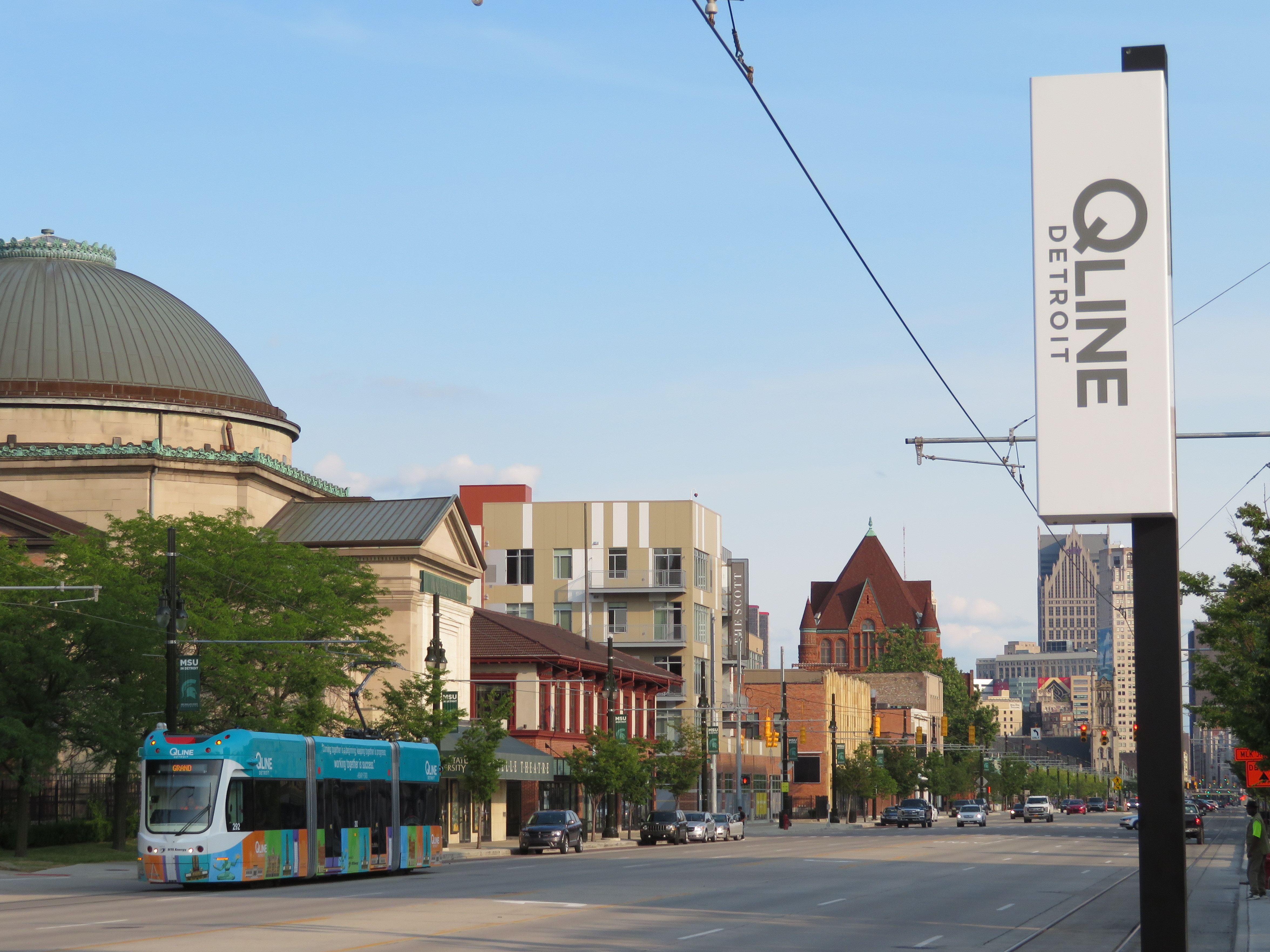
We also took the new QLine Streetcar. It was a fun ride, and I’m happy to report that the service was well used by both residents and tourists alike. But I have some serious concerns as well.
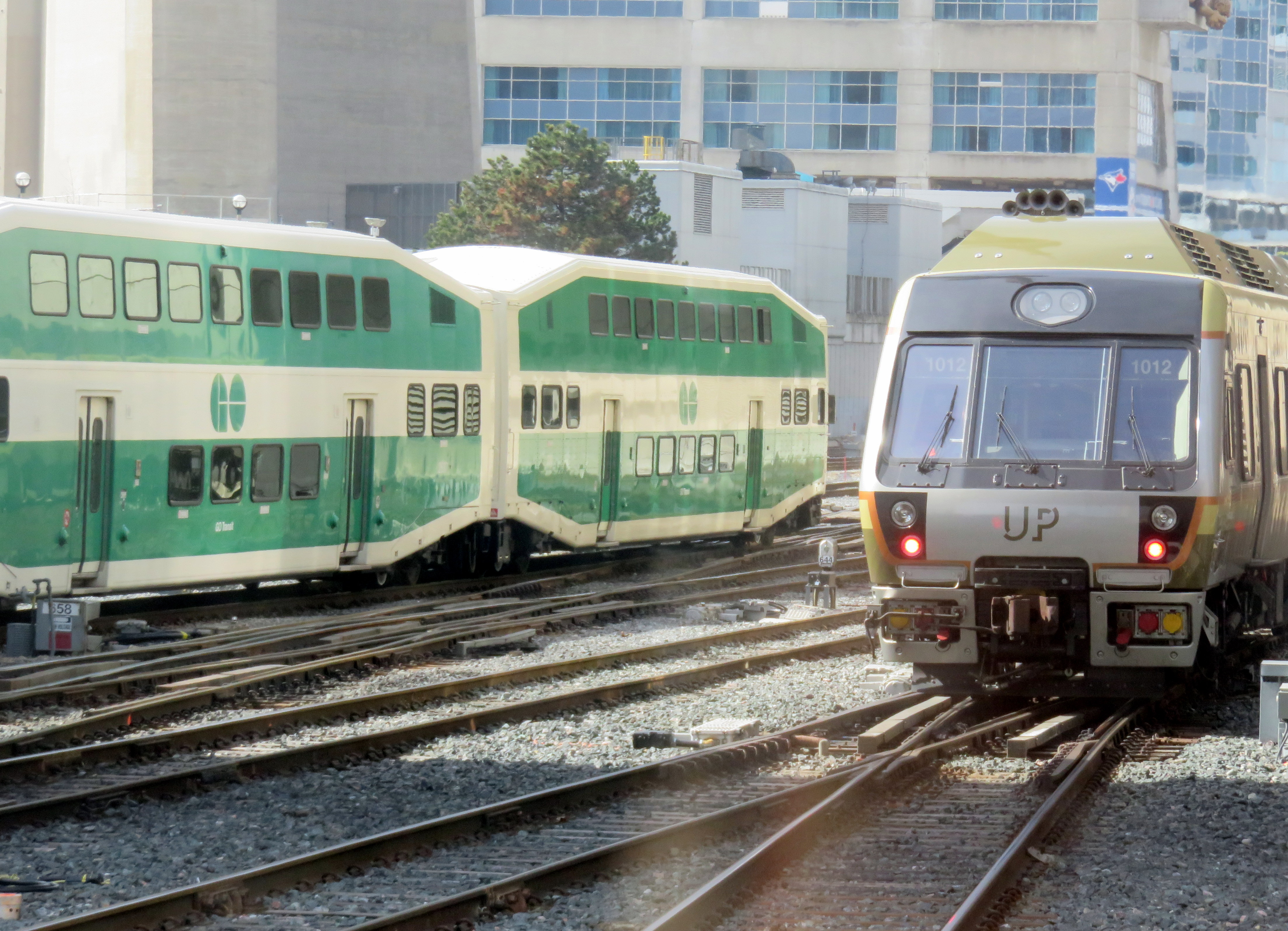
Electrification for GO Transit and UP Express has been proposed for years
At GO Transit’s Willowbrook Maintenance Centre in Mimico today, the Ontario Minister of Transportation, Steven Del Duca, announced the start of the transit project assessment process (TPAP) that will allow GO to move forward with its plans for electrification. GO RER, the $13.5-billion regional rail network plan, is dependent on a new fleet of electric trainsets to provide rapid transit across the Greater Toronto and Hamilton Area.
But Del Duca introduced a new twist to the plot. Along with the electrification TPAP, the province will also look into the feasibility of hydrogen-powered trains. Hydrogen-powered trains are being tested in Germany by Alstom, a French rail manufacturer.
Quoted in the Toronto Star, Del Duca said that “this is a decision that we’re making that will have to last for a generation and beyond, so we want to make sure that we’re at the leading edge of the technology.”
The Alstom experimental train, a Cordelia LINT, is a similar model to the one used in Ottawa for the O-Train Trillium Line, a diesel light rail operation. The hydrogen-powered model has yet to be tested in revenue service; hydrogen propulsion also has yet to be tested on heavier rail equipment. The Cordelia LINTs are light rail vehicles, and under current railway regulations, cannot share the same tracks with heavier freight and passenger trains.
My fear is that this is yet another distraction from transportation needs in the here and now. Further, I worry that the “fuel cell technology symposium” will not only distract from the GO RER project, it will give credence to NIMBYs opposing electrification – be it the construction of gantries and overhead wires, or those worried about the effects of electromagnetism.
I have more faith in building sound, tested and true, transit systems than pursuing the newest technology there is. Electric trains have been around for over 100 years. Electric multiple unit regional rail as we know it is used in scores of cities worldwide, including Montreal, New York, and Philadelphia. Electric multiple unit trains (EMUs), which can be purchased from at least a half-dozen firms, are reliable, quick, and suitable for GO RER.
The provincial government has an unfortunate history of promoting new technologies that end either in failure — the 1970s-era GO-ALRT plans, for example, or the promotion of Ontario-made compressed natural gas (CNG) buses to replace electric trolley buses in Toronto and Hamilton in the early 1990s. (Those buses were either scrapped early, or converted to conventional diesel propulsion.) The Scarborough RT, originally planned as the nucleus of a conventional light rail network, was replaced by a propitiatory linear induction system heavily promoted by the province.
The idea of hydrogen-powered trains is attractive: they have zero at-source emissions; the Alstom train is train is exceptionally quiet, and only emits steam and condensed water. Electrification requires overhead gantries and wires, along with substations at regular intervals; hydrogen-powered trains require none of these expenses. What isn’t clear is whether hydrogen powered trains offer the other advantages of electric train operation, namely quick acceleration and deceleration needed for a frequent-stop regional rail service.
I want GO RER to be built, and I want it to be built right. I just fear that the attention given to an emerging technology will be yet another distraction, especially going into an election year.
The weekend of May 26-27 in Toronto was a lovely one. My fiancée and I spent the Saturday and Sunday walking around Toronto, visiting some of the Doors Open sites and Harbourfront. Among the highlights were the new Daniels School of Architecture at 1 Spadina Crescent, a beautiful heritage re-use of the original Knox College (the neo-gothic building that looms over Spadina Avenue), and the Toronto Railway Museum, located at Toronto’s Roundhouse.
After the Doors Open sites closed at 5:00 PM, we walked along the waterfront as far east as Sugar Beach, before heading west to the High Park neighbourhood for dinner. With the Bloor-Danforth Subway (Line 2) closed for maintenance between Broadview and St. George Stations, we opted to take a local bus on Queen’s Quay to Union Station, transfer to the subway there, and transfer again at St. George to Keele.
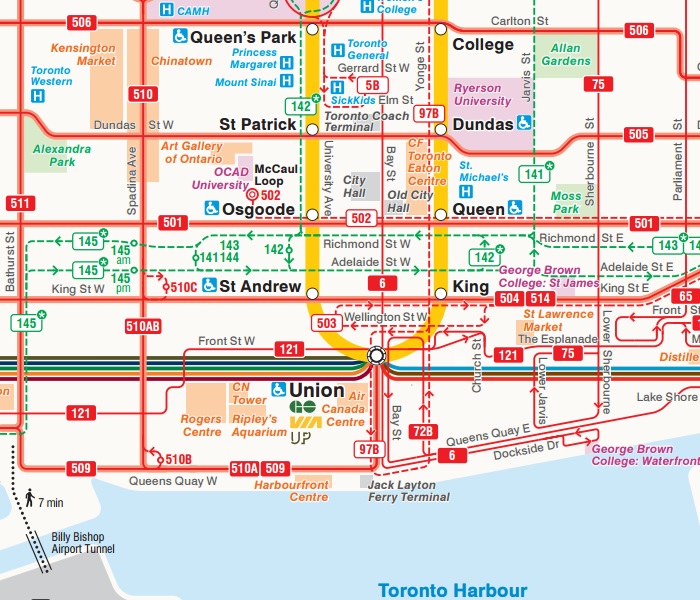
Route 72B Pape operates between Pape Station and Union Station via Commissioners Street and Queen’s Quay, a valid and long-standing transfer with the subway at Union. The 509 and 510 streetcars serve Union via a direct, underground connection, but buses — the 6 Bay, the 72 Pape, and the 121 Fort York-Esplanade — have on-street stops at Front and Bay Streets; a transfer is required.
I made the assumption that the transfer would be recognized by Presto when we tapped on the 72B Pape bus, and again when we got into the station. That turned out to be a mistake, as I found out a few days later when I checked my Presto activity online. At 6:27 PM, the TTC $3.00 Presto fare was paid on the bus (Queen’s Quay East at Jarvis Street West Side), and again at 6:41 PM at Union Station. (more…)
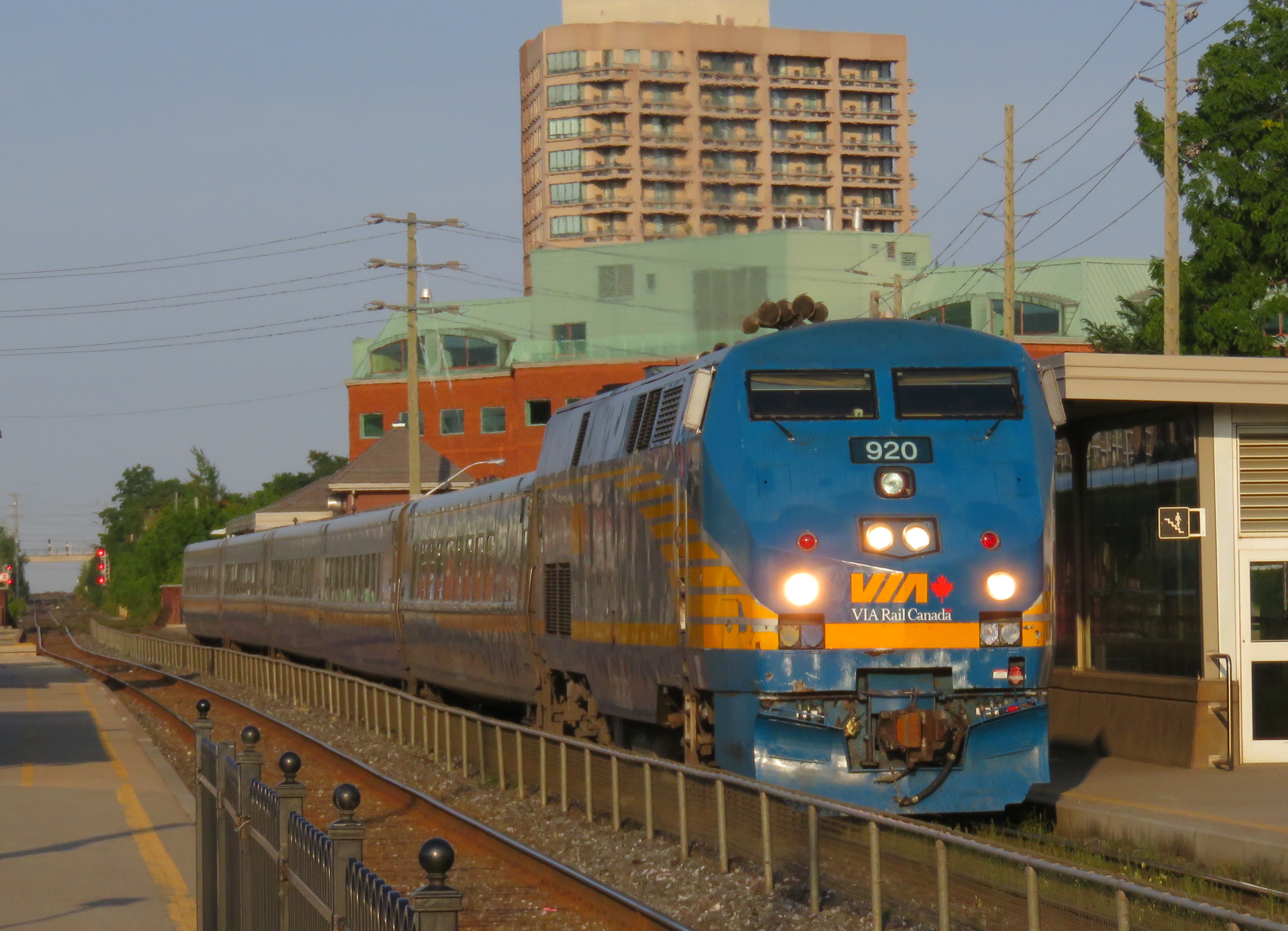
VIA Rail train at Brampton Station, on the Toronto-Kitchener rail corridor
Updated Friday May 19, 2017:
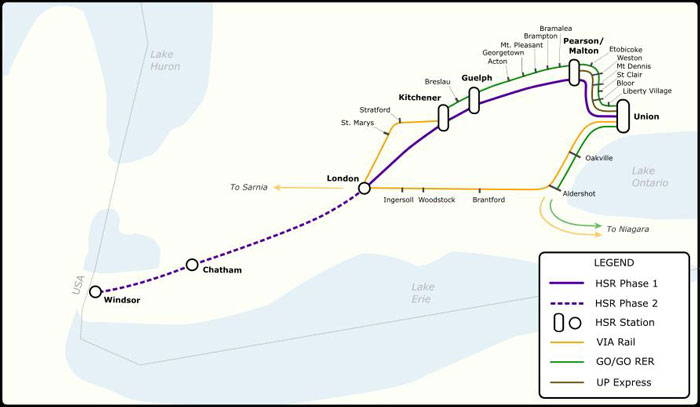
Today, Premier Kathleen Wynne announced the commencement of an Environmental Assessment on bringing high-speed rail to Southwestern Ontario, connecting Toronto and Pearson Airport with Guelph, Kitchener, and London, with Phase II continuing to Windsor, with a potential stop in Chatham.
Former federal Transport Minister David Collenette was assigned to write a report on building the corridor; it is now public on the Ministry of Transportation’s website. It proposes operating speeds up to 250 km/h, making it a true high speed line (though slower than many lines in Europe and East Asia, which have cruising speeds between 270 and 320 km/h). The estimated cost of the project is estimated to be $21-billion, reducing travel times from Toronto to Windsor to a mere two hours.
Proposed High Speed Rail system for Southwestern Ontario
An option for a 300 km/h HSR service was studied, but found to be even more expensive, requiring more dedicated tracks. The 250 km/h option will allow it to use most of the existing Toronto-London and London-Windsor corridors.
For southwestern Ontario, high speed rail could be a boon. Kitchener-Waterloo is a major educational and technological hub; faster and more frequent rail service will benefit university students, tech workers, and other commuters, perhaps those priced out of the Toronto housing market. London’s economy has taken some hits in recent years, so bringing it within commuting distance to Toronto and K-W gives residents there more options.
Between Toronto and Kitchener, the report assumes two off-peak HSR trains an hour, and one GO train every hour, making local stops. It also assumes that GO RER service will continue to terminate at Bramalea, a poor location to terminate regional rail services; Downtown Brampton is one stop away. Building the “missing link” along Highway 407 will allow many more trains to pass through Downtown Brampton, which would allow for local RER trains to be extended to west Brampton, at Mount Pleasant GO. It would be a shame if the HSR plans (which, in principle, I support) pushed aside regional and local needs.
Statford and St. Marys, which are only served by VIA trains (and no intercity coach service) will also have to be considered, as they will be bypassed by HSR. As well, towns and cities elsewhere in southwest Ontario, such as Simcoe, Tillsonburg, Wallaceburg, and St. Thomas, have no bus or rail access. For less than the $15 million pledged for the HSR EA, the province could fund several years’ worth of basic intercity bus service to connect these communities together.
Unless assumptions change, Brampton residents will see twice as many trains speed by their downtown core than stop, which I think is unfortunate. In the original post below, I was worried that high speed rail dreams would distract from more immediate needs. I’m now afraid that I was right.
Original post dated April 26, 2017
When have I heard this one before?
According to CTV News, the provincial government is looking to build a new high-speed rail line between Toronto, Kitchener, and London. The new plan, to be announced next month, is based on the work of former federal Transport Minister David Collenette.
During his time as Transport Minister under Prime Minister Jean Chretien, Collenette backed incremental VIA Rail improvements, as well as VIA-FAST, a higher-speed train service between Toronto, Ottawa, and Montreal. Those proposed improvements were cancelled when Paul Martin became prime minister; currently VIA is pushing for a revised version of that previous plan. Collenette also pushed hard for a rail link between Toronto Pearson International Airport and Union Station, a fundamentally flawed proposal known as “Blue 22.” That airport rail link proposal was later relaunched as a provincial project and opened as UP Express in 2015.
Ontario Transportation Minister Steven Del Duca was not especially clear about the plans for such as high-speed rail service, saying “…there are multiple definitions for high-speed rail depending on what you’re looking at.” Del Duca cited “geographical limitations,” while hoping that the federal government would contribute funds towards the project.
Interestingly, only a week ago, Deputy Minister Deb Matthews (and London MPP) was downplaying the province’s plans, saying the province only promised to study, but not necessarily build, the high-speed rail corridor.
I worry that high-speed rail is a distraction. In Canada, we have an abysmal record of proposing high-speed rail projects, but never following through. Even VIA’s less ambitious plan for dedicated tracks and new equipment to provide more frequent and reliable service, with somewhat faster travel times, is not yet secure.
There is already a Toronto-Kitchener-London service; two VIA trains operate daily in each direction along the entire route, while GO Transit operates more frequent weekday trains to Brampton and four weekday round trips to Kitchener. Before the 1990 Brian Mulroney-era VIA cuts, there were five round trips on this line. In the 1980s, the fastest VIA train between Toronto, Kitchener, and London took 3 hours, 2 minutes; today, the fastest train is 3 hours, 22 minutes.
This Rick Mercer Report video will never get old
All that I want for the Toronto-Kitchener-London corridor in the short-to-medium term is the same as what VIA is proposing between Toronto and Montreal:
Dedicated tracks. On the Toronto-Kitchener-London corridor, this means building a new rail corridor, known as “The Missing Link” for freight trains between Halwest (near Bramalea GO Station) and Milton. This new route would divert Canadian National (CN) freight trains that currently pass through Brampton and Georgetown on the Toronto-Chicago mainline. Potentially, Canadian Pacific (CP) trains passing through Toronto and Mississauga could also be diverted, freeing up capacity on GO Transit’s Milton Line. CN freight traffic limits the frequency and speed of GO Transit rail service to Brampton and Kitchener; moving the through freight trains would allow for frequent, electrified, GO RER service beyond Bramalea, as currently proposed. CN is interested in partnering with the province to build this link; CP has not expressed interest. Map of the “Missing Link” from a 2015 IBI Group report
Rail improvements. Between Georgetown and Kitchener, the railway is owned by Metrolinx, and hosts four weekday GO Transit trains in each direction, two daily VIA trains in each direction, and several Goderich-Exeter Railway (GEXR) freight trains. Track is in good shape, but has several slow sections, including a two-kilometre section west of Guelph Central Station where trains crawl at 10 miles an hour (16 km/h).
Improving rail speeds in central Guelph will be expensive, especially where the railway runs in the middle of residential Kent Street, but it will be worth it. Beyond Kitchener, the track is leased and maintained by GEXR, which has allowed the rails to deteriorate. Slow speeds are acceptable by a no-frills short line freight operator, determined to minimize maintenance costs, but not so for passenger rail. VIA trains are consistently late because of the condition of track, especially between Stratford and London. Purchasing the track, installing welded rail, and improving grade crossings will substantially improve reliability and speeds on this corridor.Incremental improvements, such as grade separations, improved signalling, and new passing tracks, would permit frequent, reliable, and faster rail service.
A new train fleet. Via Rail’s coaches are nearing the end of their useful lives; among the rolling stock used on the Toronto-Kitchener-London service are HEP-I and HEP-II coaches built in the 1950s and refurbished several times since. GO Transit’s commuter coaches are acceptable for shorter trips, but are uncomfortable for long-distance travel. With the completion of the “Missing Link” and the acquisition of the Kitchener-London rails, it would be possible to electrify the entire corridor. Electric trains benefit from faster acceleration times, especially electric multiple units.
Some of these improvements can be started within the next year, before the 2018 provincial election. If the province wants to show that it’s serious about providing effective rail service to Kitchener and London, there’s no need for another high-speed rail study. Simply continue the work on the “Missing Link,” plan for GO RER to continue west of Bramalea GO, improve the existing rail infrastructure, and acquire the optimal fleet for medium-distance rail services. Once that is complete, planning for even higher speeds, possibly with a new purpose-built alignment, should begin.
Canadians have been teased with high-speed rail proposals that never get anywhere, meanwhile existing rail infrastructure is neglected and intercity services are cut. It’s time to get moving with a sensible plan that can start right now.
Previously on this blog, I wrote about how new public institutions like hospitals and university campuses are built in isolated, auto-dependent areas without regard to provincial land use policies. In St. Catharines, a new modern hospital on the city’s western outskirts replaced two urban sites, despite available opportunities that would be more accessible to at-need populations. In Orillia, Lakehead University built its campus on the edge of that small city, far from other institutions or its charming downtown core. Similar decisions are being made for new hospitals and university campuses in Niagara Falls, Windsor, and Milton.
But Metrolinx and GO Transit, its regional transit subsidiary, often fail too to meet the provincial goals of intensification of urban centres and major transit nodes, containing urban sprawl, and promoting sustainable transportation. In Downtown Brampton, an anchor mobility hub, Metrolinx plans to build a new surface parking lot — demolishing several houses and two office buildings in the process — to satisfy commuters’ demands for free parking.
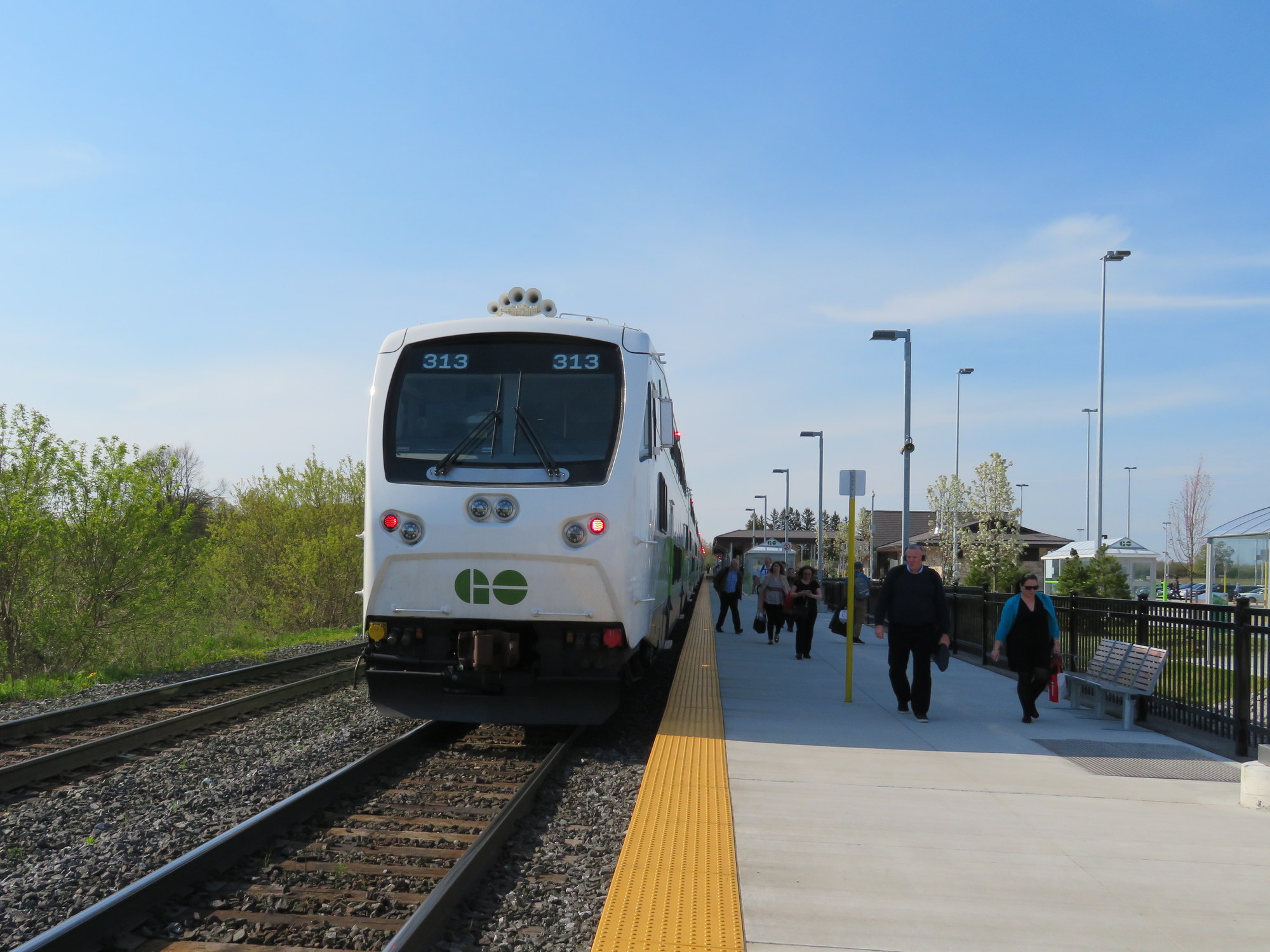
This failure is especially evident on the newly extended Richmond Hill Line, where one new station — Gormley — opened late last year, and another — Bloomington — is now under construction. Both stations do not support any evident land use policy (both are located on the environmentally sensitive Oak Ridges Moraine); they continue GO Transit’s heritage of building stations that serve car owners, but remain largely inaccessible to pedestrians, cyclists, or local transit users.
I recently took the train north to Gormley to inform my critique of GO Transit’s new stations. I came away even more disappointed than I had expected.
Note: a version of this article has been cross-posted to Spacing Toronto
For 2016’s annual Torontoist Heroes and Villains feature, I nominated Toronto Councillor Glenn De Baeremaeker (Ward 38, Scarborough Centre) as villain of the year. (“Pedestrian blaming” won that dubious honour.) But I remain proud of my choice. As I wrote back in December:
De Baeremaeker’s record of environmentalism has been overshadowed by an increasingly antagonistic tone, pitting supposedly downtrodden Scarborough against the rest of the city in his one-track quest to build a one-stop subway extension to his ward. In his myopic support of the subway, De Baeremaeker is opportunistic and vindictive, takes the low road, insults critics who engage in good faith debates, and in the process does a disservice to the community he represents.
Councillor De Baeremaeker hasn’t changed his tone.
Yesterday, May 10, the City of Toronto held a public consultation at Scarborough Civic Centre on the next phase of planning for that one-stop, 6.2-kilometre subway extension, which is estimated to cost $3.35 billion, and open no earlier than 2026.
I wish I was able to attend last night’s meeting, as disgruntled Scarborough residents questioned the merits of that transit plan. And Councillor De Baeremaeker shamelessly blamed “downtown councillors” for the shortcomings of that one-stop subway. For a councillor who is rightly proud of his past environmental advocacy, it was surely a low point.
Toronto Star reporter Jennifer Pagliaro, an excellent local journalist, covered the meeting.
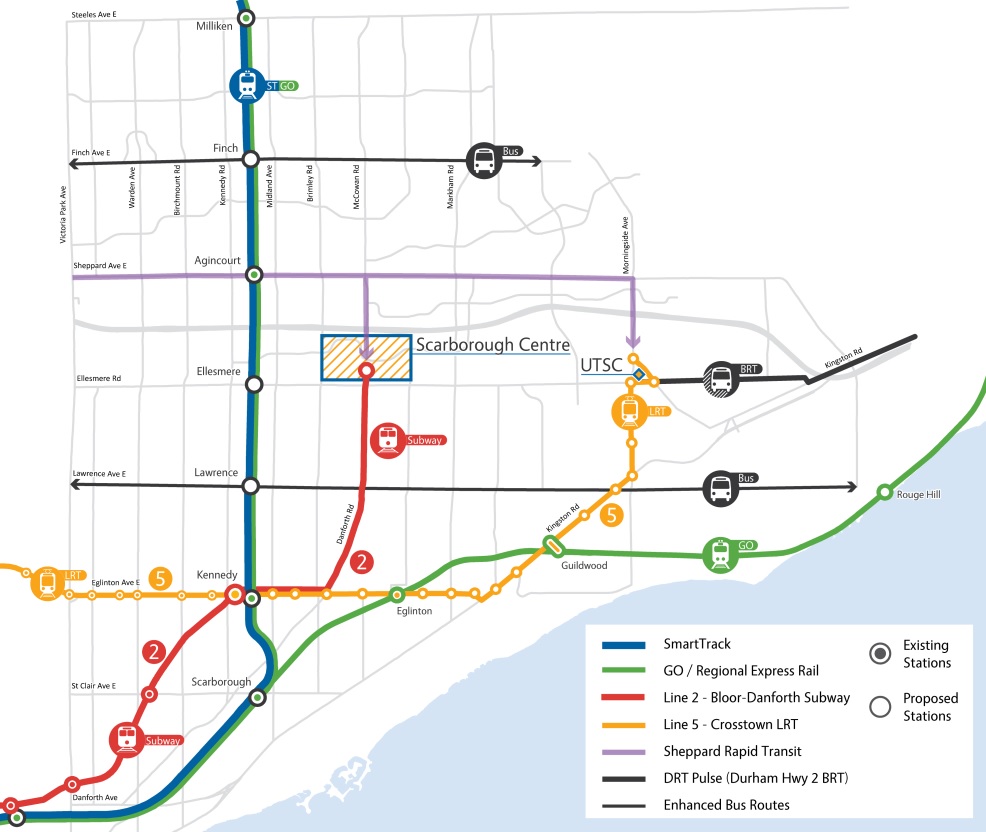
City of Toronto map from February 2016 illustrating current plans for the Scarborough Subway and connecting transit.
At the public consultation, TTC and City planning staff answered queries from members of the public, many questioning the utility of the single-stop subway. There are no additional funds to rough in future stations, such as at McCowan Road and Lawrence Avenue, where the line would intersect the busy 54 Lawrence East bus and serve Scarborough General Hospital. As building future stations later would require an extended shut-down of the line, the one-stop subway extension will likely be forever a one-stop subway.
(The eastern extension of the Eglinton-Crosstown LRT from Kennedy Station to University of Toronto’s Scarborough Campus is also part of the new plan for Scarborough, but the LRT component is unfunded.)
Shameless as ever, Councillor De Baeremaeker resorted to strawman arguments, talking up a “suburban/urban divide”:
[De Baeremaeker] blamed “downtown councillors,” who represent the most densely populated wards in the city, for not wanting to fund more frequent transit stops like their residents enjoy.
Yes, it is true that all councillors representing central Toronto opposed the subway extension, but so did several suburban politicians, most notably Councillor Paul Ainslie (Ward 43 – Scarborough East). Yet not one of those councillors wanted less transit for Scarborough. Instead, they backed a seven-stop LRT replacement for the ageing Scarborough rapid transit line, including an extension to Centennial College and Sheppard Avenue in Malvern. That less-expensive line was fully funded by the provincial government, which would have permitted scarce funds to be spent on other transit projects across Toronto.
Meanwhile Mayor John Tory was most interested in pushing SmartTrack, a fantasy rail project that got pared down as parts of the line were found to be impossible to build, and costs increased. The eastern end of SmartTrack conflicted with the Scarborough Subway extension. The three-stop subway plan was cut to a single stop at Scarborough Centre, to keep costs down and to not cannibalize SmartTrack.
Yet Tory and De Baeremaeker are allies on the subway extension; Tory named him one of his Deputy Mayors to champion the line. But Tory’s push for his own project put him at odds with De Baeremaeker’s focus on the subway extension, any subway extension, to his ward.
It is also worth noting that until 2012, De Baeremaeker supported Transit City, the transit plan championed by David Miller that would have delivered three new light rail lines to Scarborough.
I am not surprised by De Baeremaeker’s shameless politics. But his performance last night was especially crass and dishonest. Backed into a corner, faced with angry local residents, he lashed out at imaginary villains. But subway backers largely have themselves to blame; despite winning every recent vote on the subway plan, they have only one stop to show for it.
Metrolinx light rail vehicle mock-up at Gage Park, meets a Brampton Transit Zum bus, 2013.
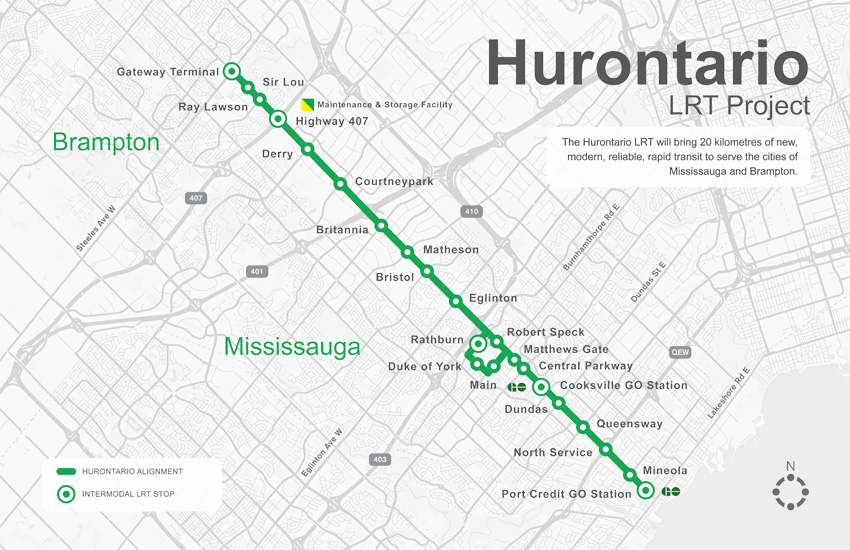
Earlier this week, I visited Brampton City Hall, where at a public open house, Metrolinx and city staff provided an update of the Hurontario Light Rail Transit project. Brampton City Hall was an ironic location for the open house; before Brampton Council voted against building the LRT up to Downtown Brampton and the GO/VIA Station, the LRT line would have stopped right here. Even with Brampton’s decision, there will be three stops in the city, so an open house for local residents to provide their feedback was still needed.
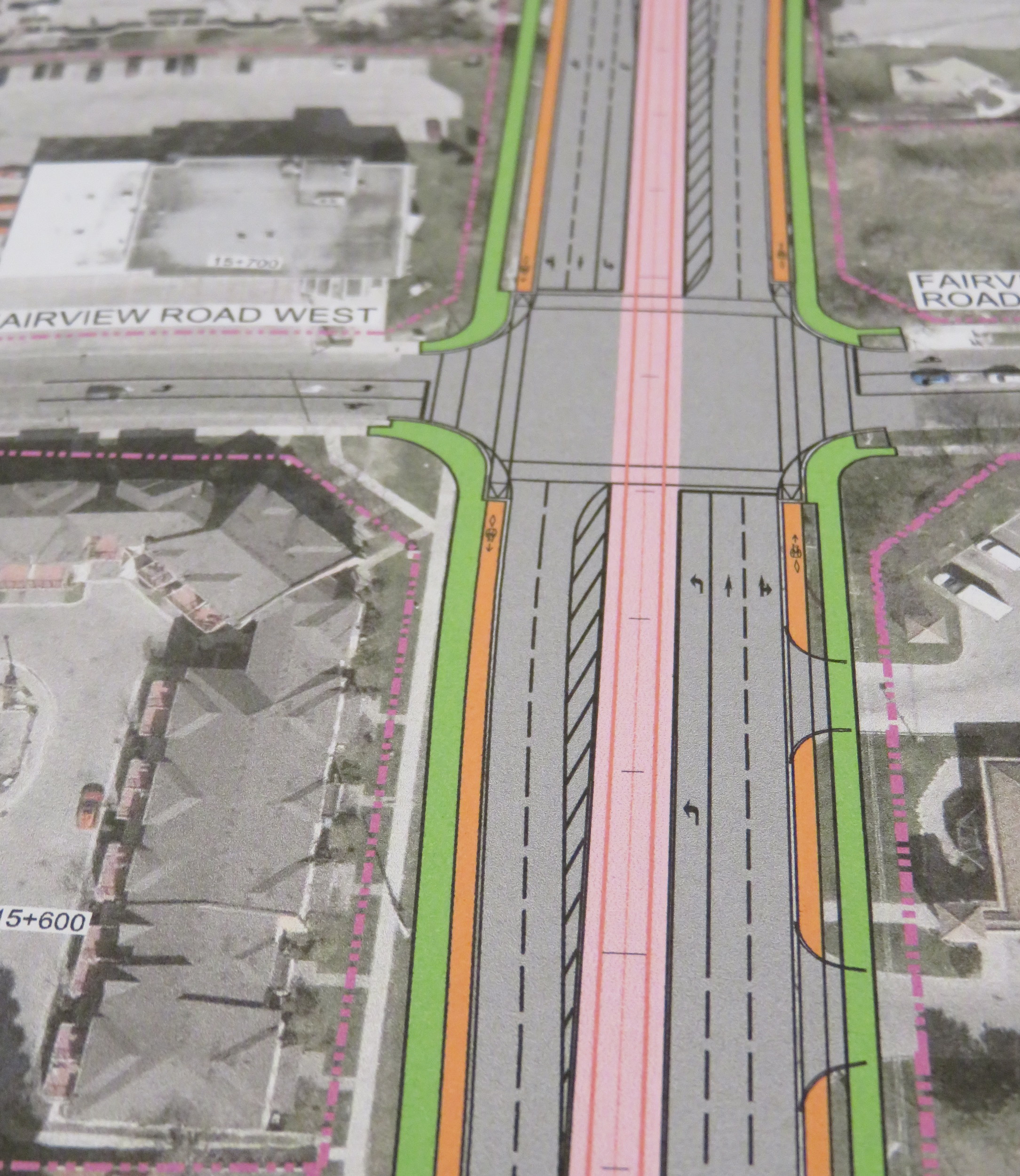
The open house was quite interesting as more design details were displayed. There`s a focus on promoting active transportation — walking and cycling — and urbanizing much of the corridor. Three lanes of motor traffic will go down to two in most places, and right turning traffic will be tamed. This will make Hurontario Street a safer and more pleasant place to be.
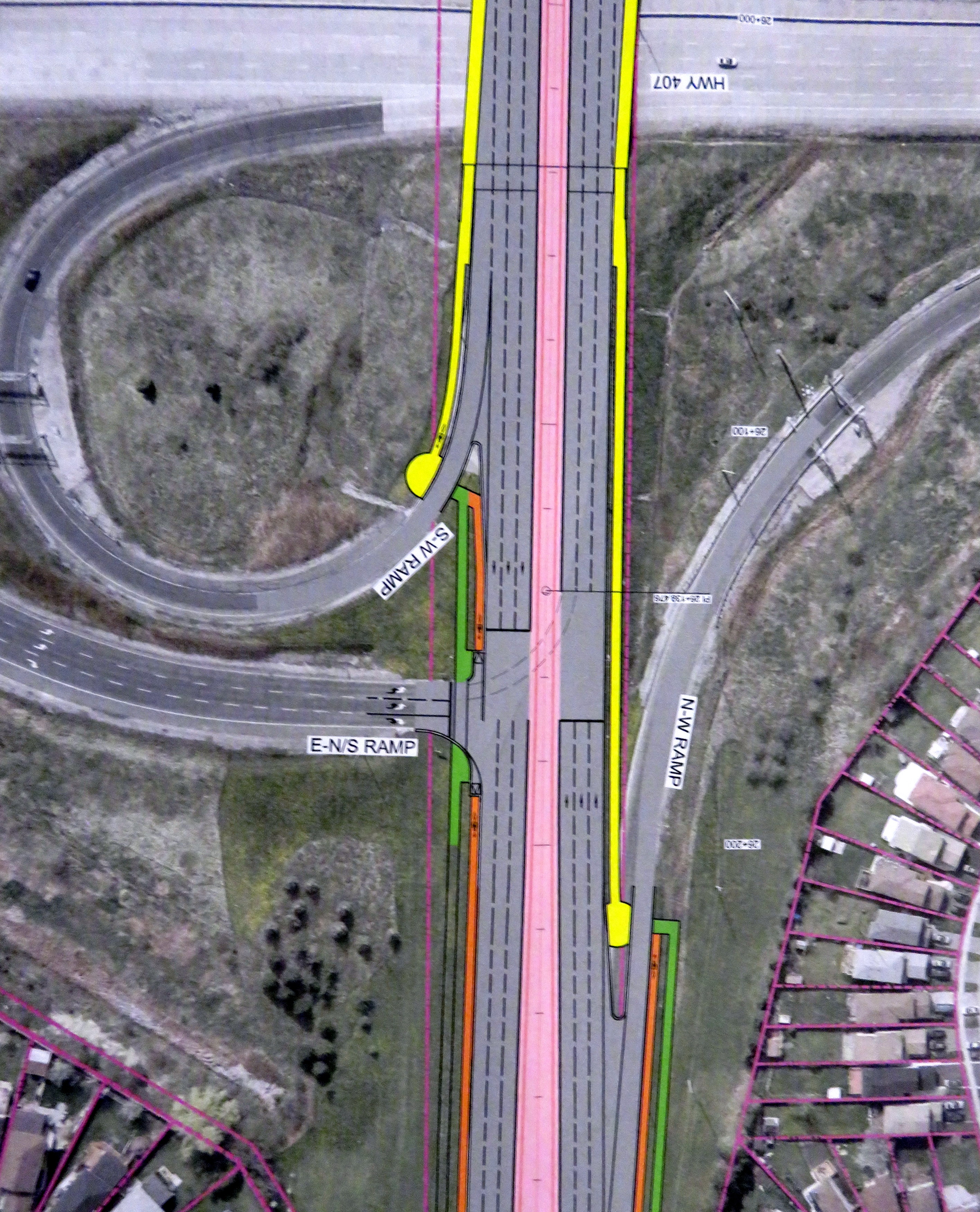
Along the entire LRT corridor, Hurontario Street will feature separated bike infrastructure — for the most part, there will be separated bike lanes, with multi-use paths in a few areas, especially south of the Queensway, where Hurontario Street is narrower. Sidewalks are also wider. With only a few exceptions, cyclists will be able to ride across intersections without being required to dismount. Those exceptions are at the Queen Elizabeth Way, and at Highways 403 and 407, where Ministry of Transportation Ontario (MTO) standards at interchanges will force the “stop, dismount, wait for gap” regime; pedestrians will also still have to yield to motor traffic.
Typical cross-section once the LRT is built. The orange paths are the separated bike lanes, the green paths are sidewalks. Hurontario Street will only have two traffic lanes in each direction.
At expressways, like at Highway 407, pedestrians and cyclists still must yield to motor traffic at on-ramps.
In another benefit for pedestrians and cyclists, channelized right turns are eliminated along the entire route. Channelized right turns (like the one shown below) are convenient for motorists, but they increase conflicts with foot traffic and are incompatible with lower speeds and safe cycling infrastructure. Their removal also creates new room for streetscaping opportunities.
An example of a channelized right turn
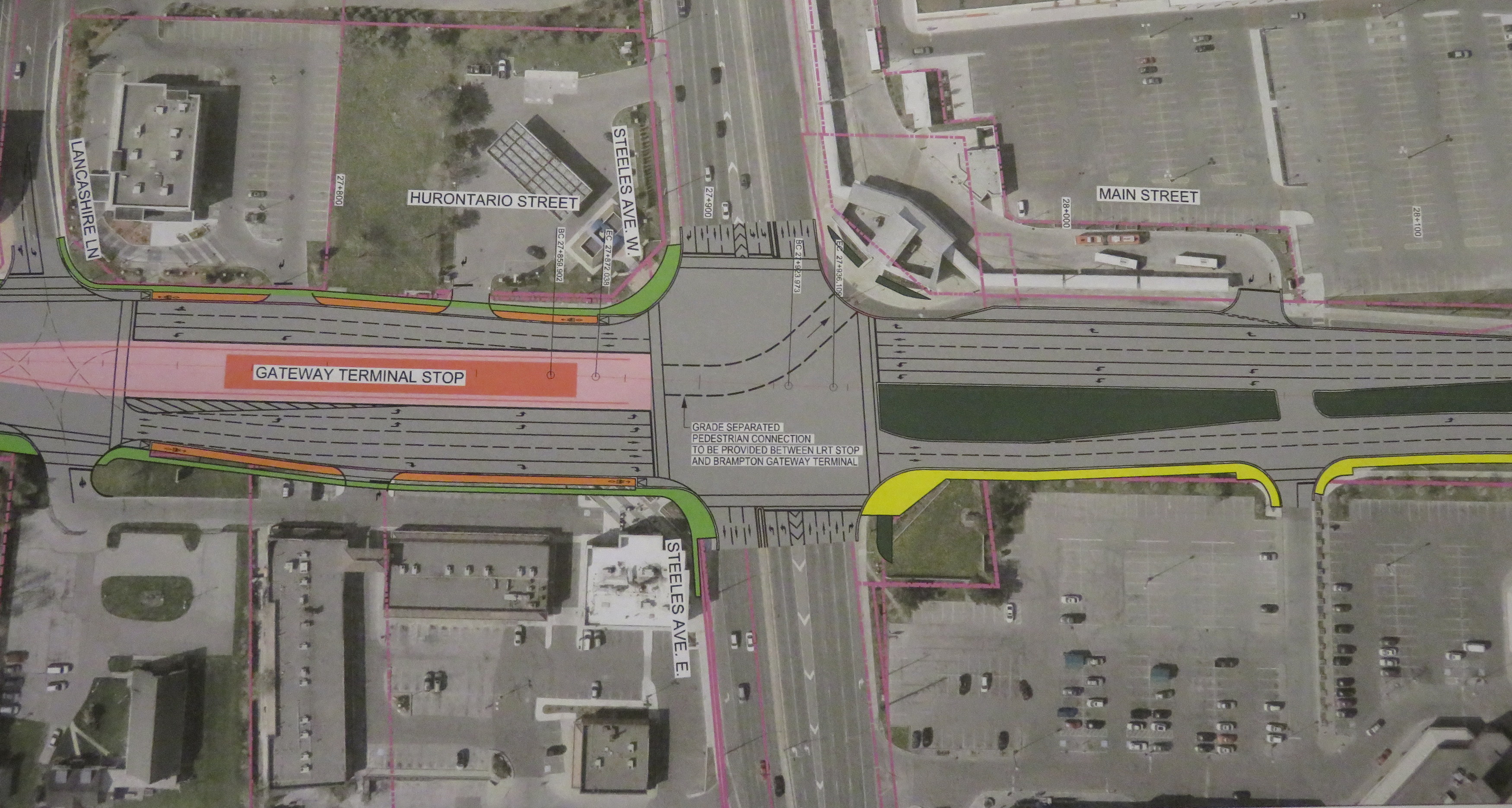
The northern terminus of the LRT, at least for now, will be at Steeles Avenue. As Brampton debates other LRT alignments (Kennedy Road and McLauglin Road are indirect alternatives to reach Downtown Brampton), the stop was moved to the south side of the intersection. This is unfortunate: the Brampton Gateway bus terminal, which opened in 2012, was designed to easily connect with the planned LRT stop on the north side of the intersection, with two short crosswalks across southbound Main Street.
Planned LRT terminus at Steeles Avenue, including tunnel between the LRT platform and the Brampton Gateway Terminal.
Instead, a more expensive tunnel is required to accommodate transferring passengers between the LRT and buses. Elevators and escalators will provide direct access to the tunnel; crosswalks at Steeles Avenue and Lancashire Lane will also be accessible from the platform.
The final contract is planned to be signed in mid-2018 and construction should begin in Fall 2018. As the City of Mississauga backs the LRT project, hopefully any change in the provincial government will not jeopardize this plan. Not only will Mississauga (and south Brampton) get a fine new transit service, it will also see a tamer, more urbanized main street.
And maybe Brampton City Council will come to its senses and extend the transit corridor via the direct, least-expensive, Main Street alignment.
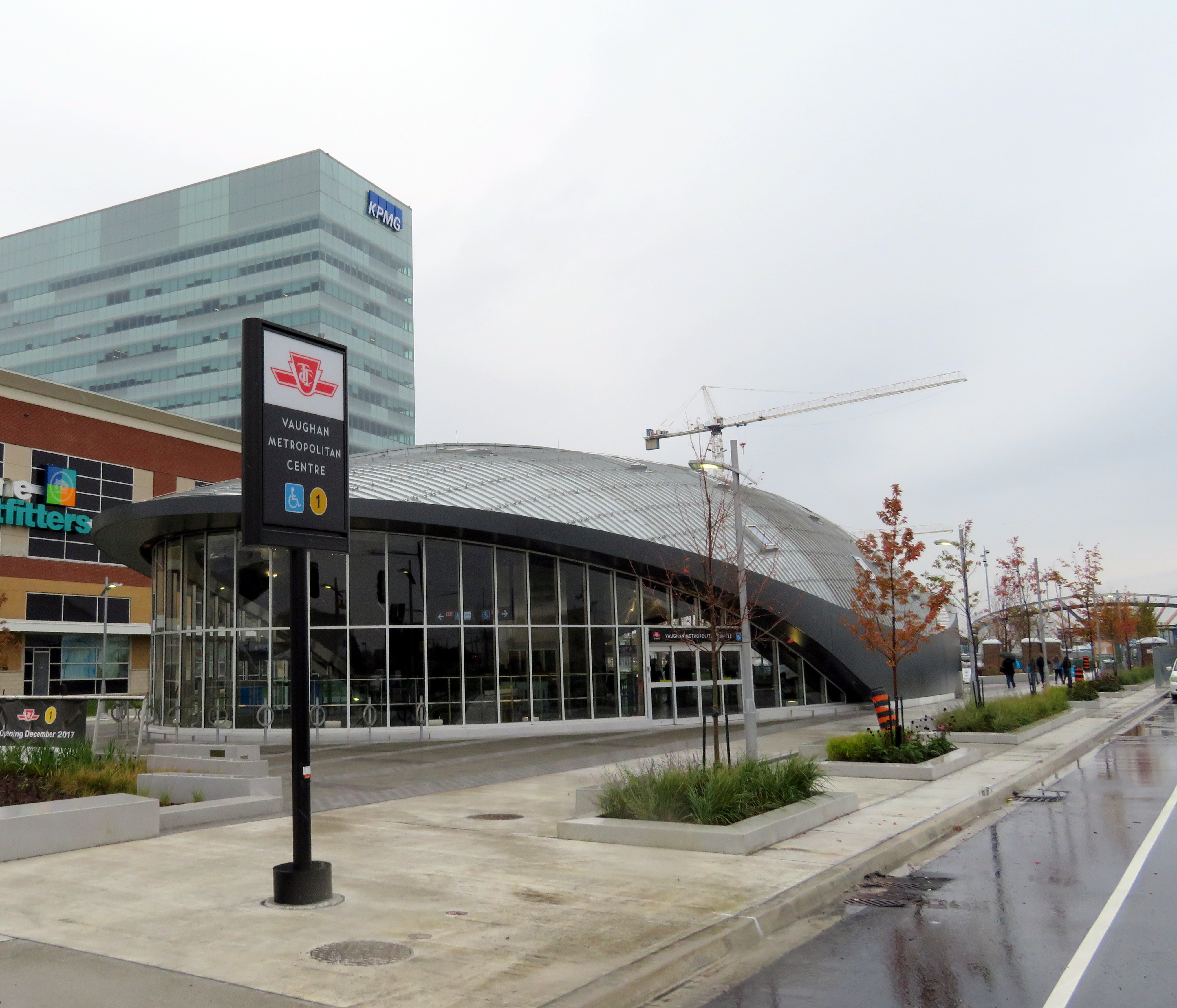 Vaughan Metropolitan Centre Station
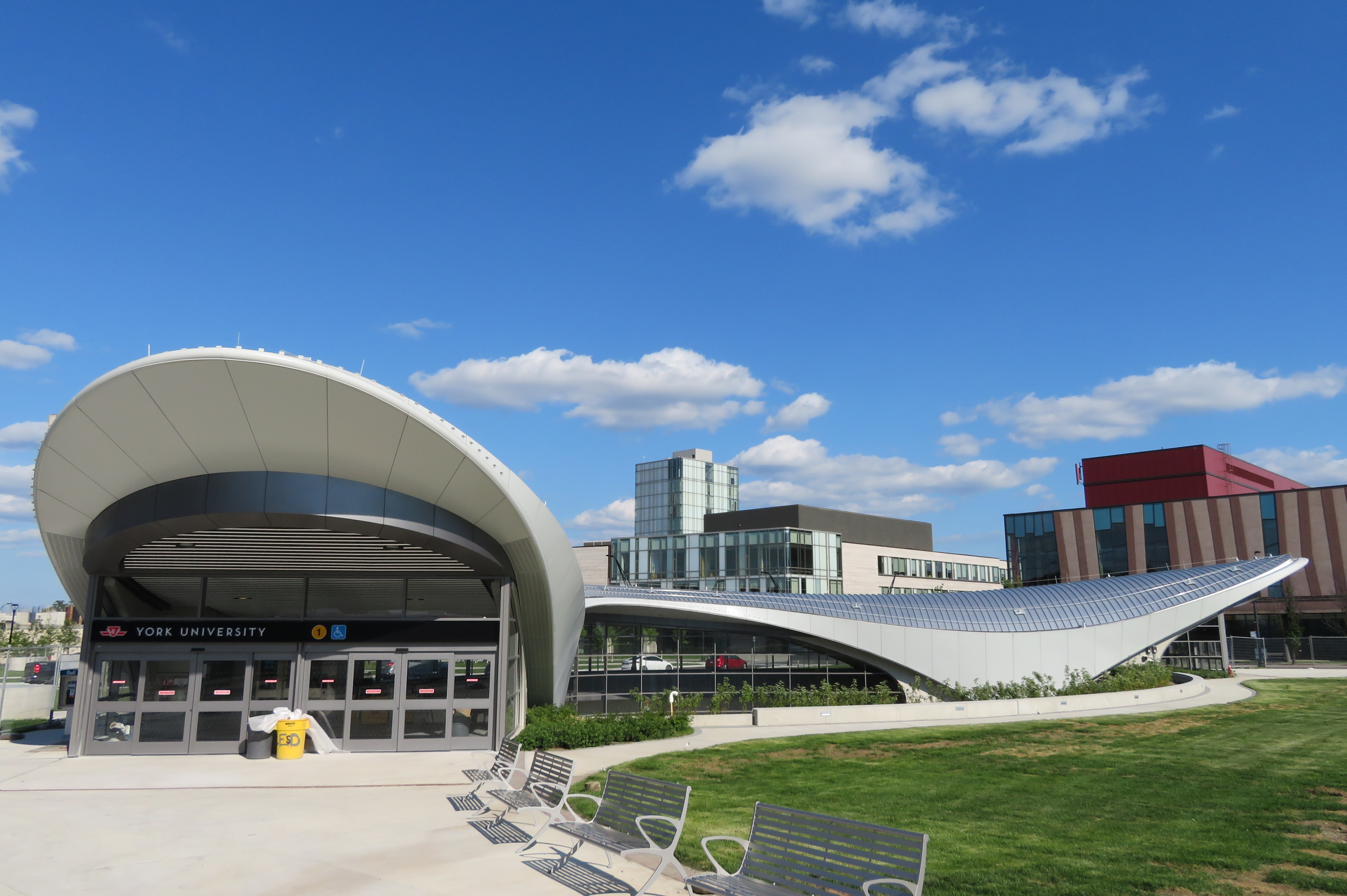 York University Station, August 2017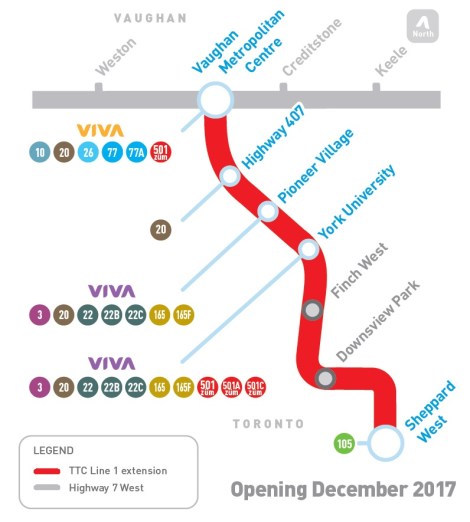
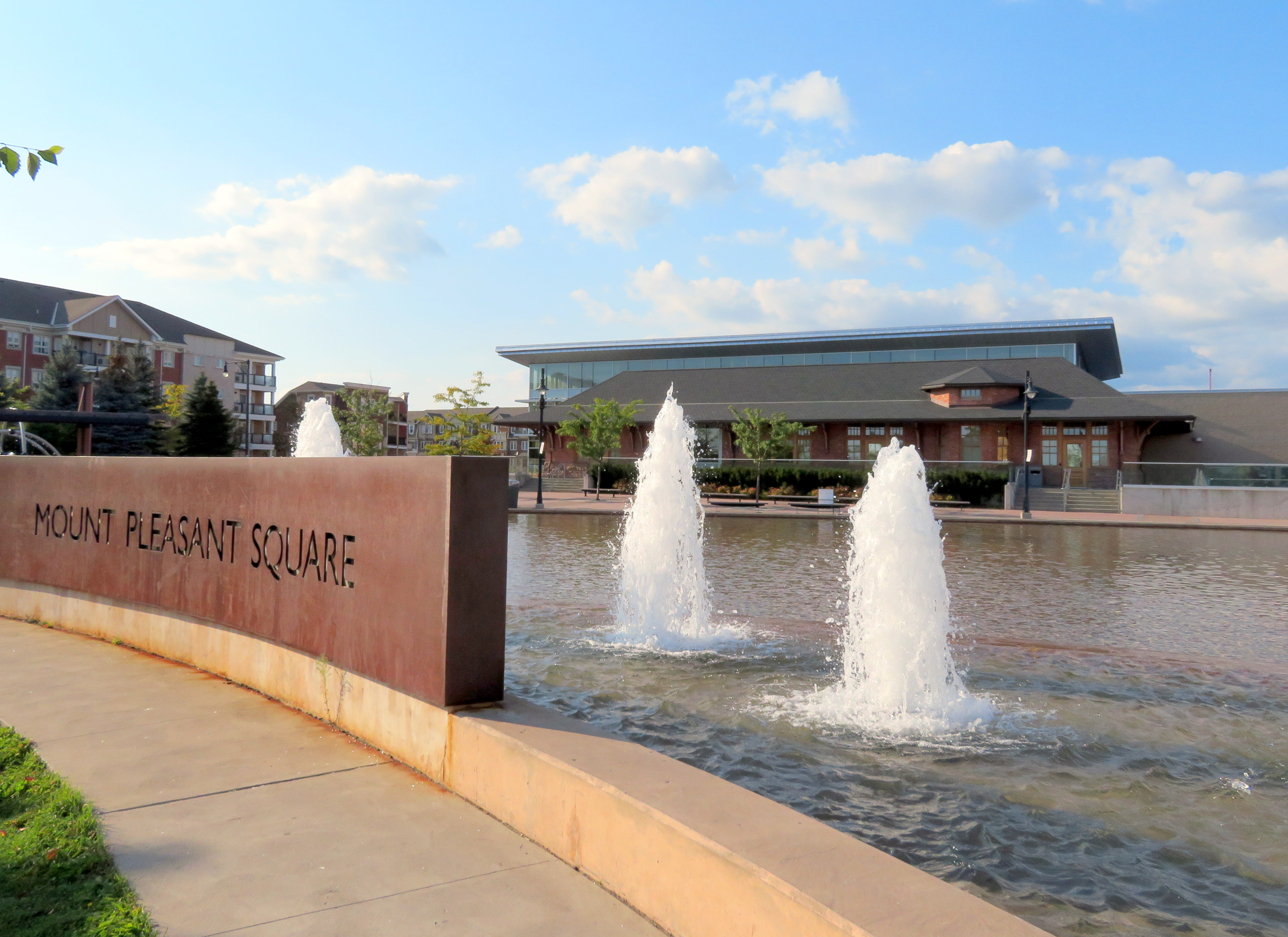 Mount Pleasant Square, Brampton
 Mount Pleasant’s old Presbyterian church is now a mosque.
 The Brampton Public Library incorporates the former Brampton CPR Station, rebuilt here at Mount Pleasant Village
 Woodward Avenue at Mack Avenue, August 2017
 Electrification for GO Transit and UP Express has been proposed for years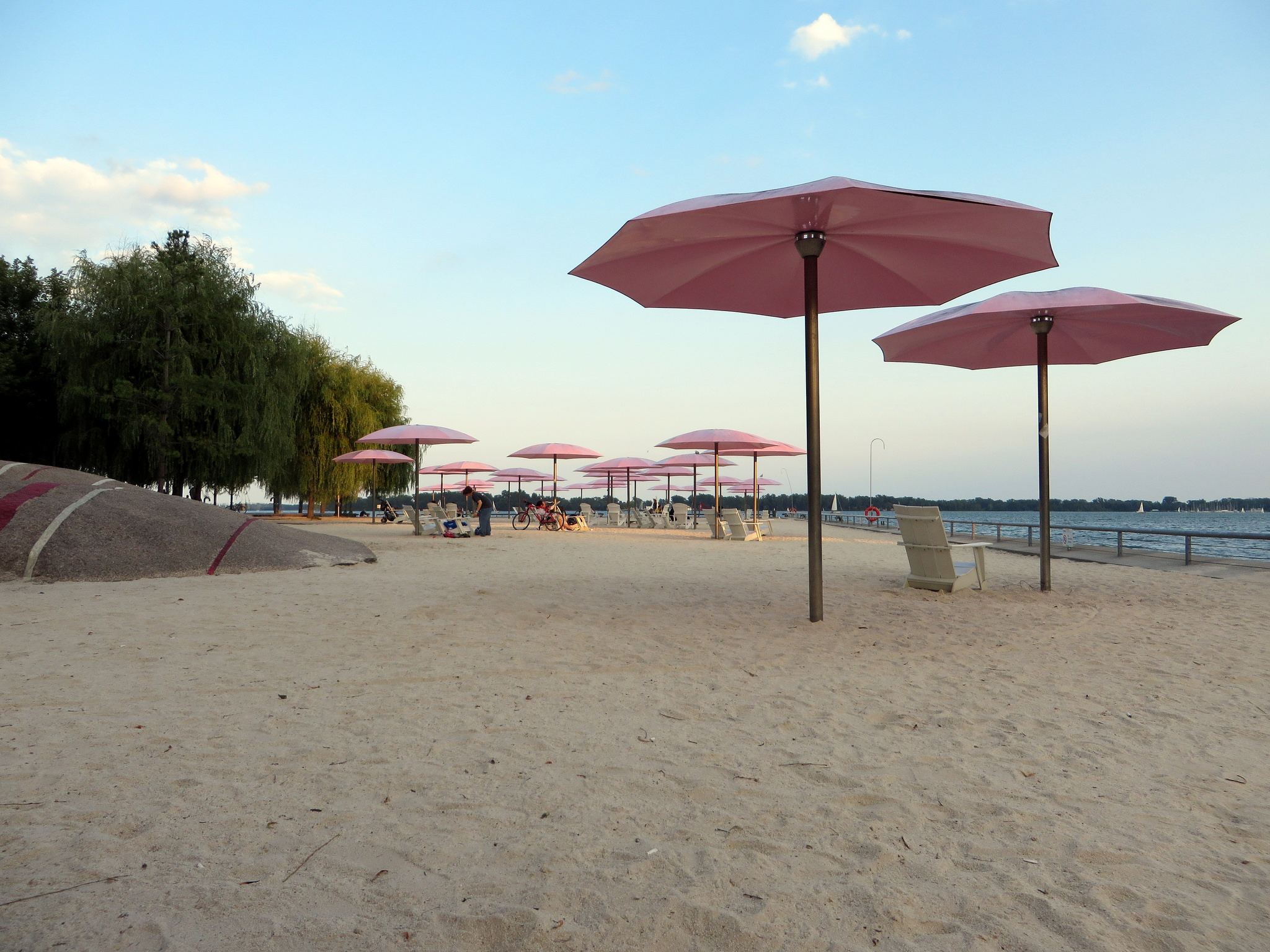
 VIA Rail train at Brampton Station, on the Toronto-Kitchener rail corridor
 Proposed High Speed Rail system for Southwestern Ontario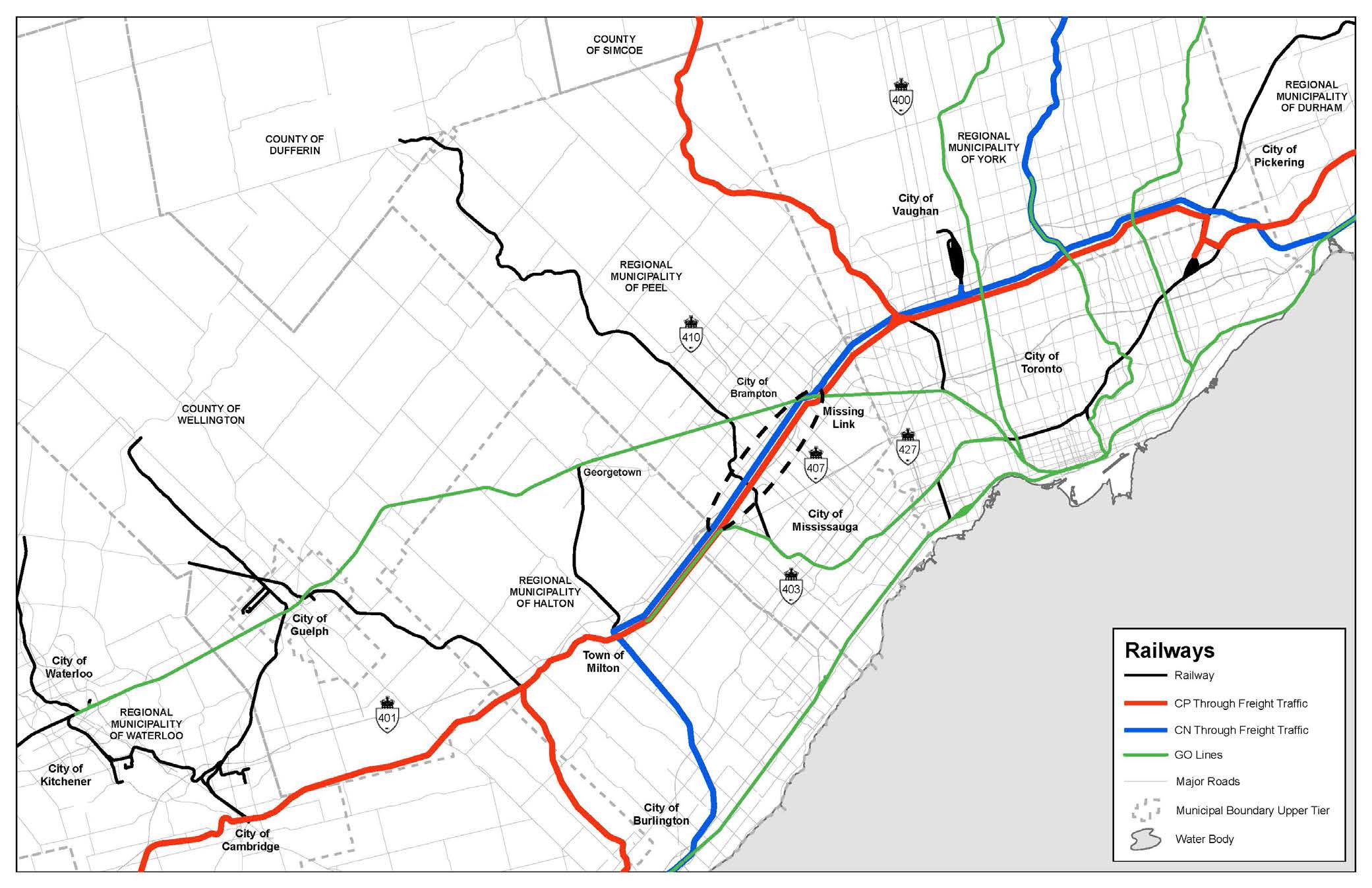
 GO Train at Gormley Station
 City of Toronto map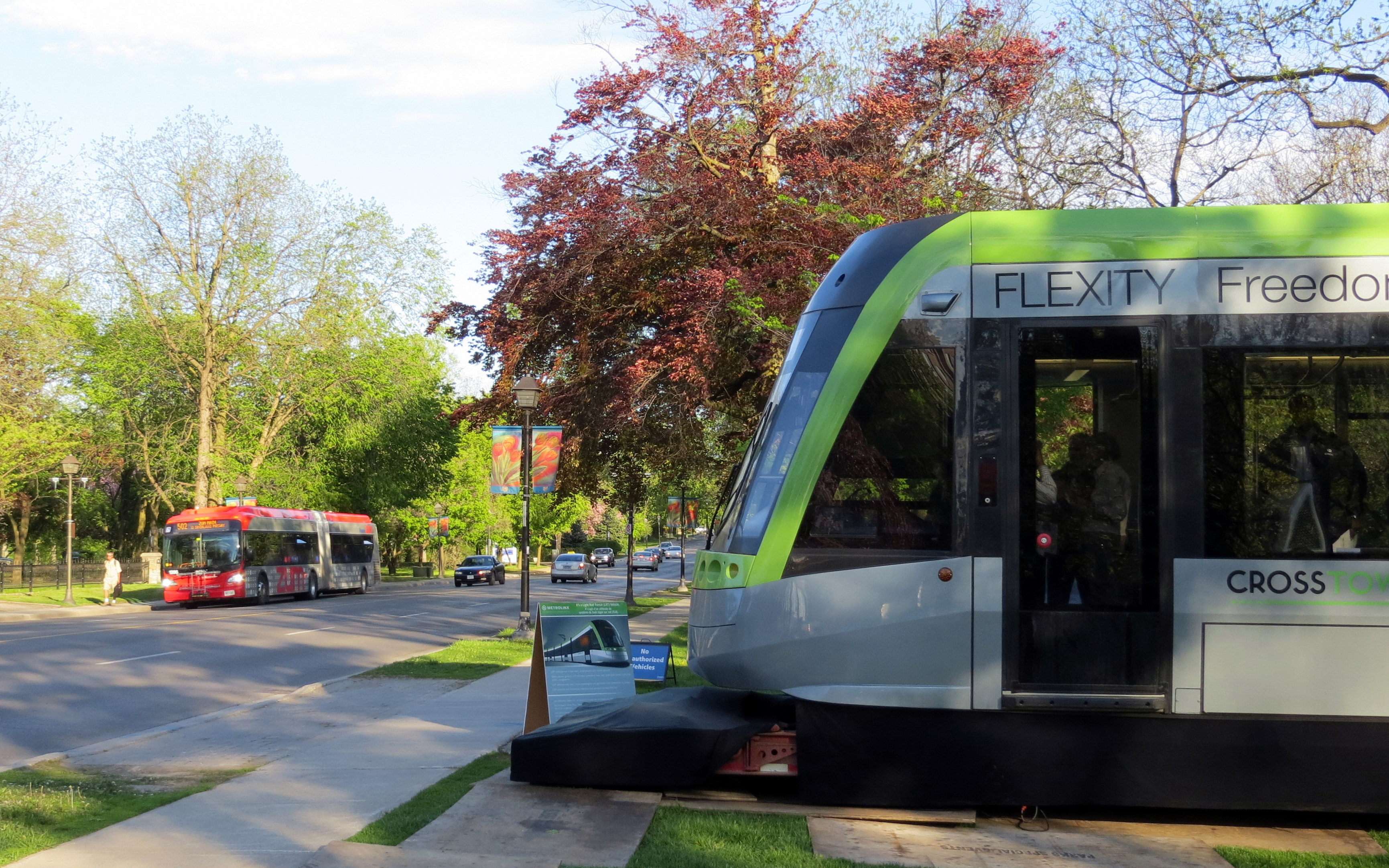
 Typical cross-section once the LRT is built. The orange paths are the separated bike lanes, the green paths are sidewalks. Hurontario Street will only have two traffic lanes in each direction.
  At expressways, like at Highway 407, pedestrians and cyclists still must yield to motor traffic at on-ramps.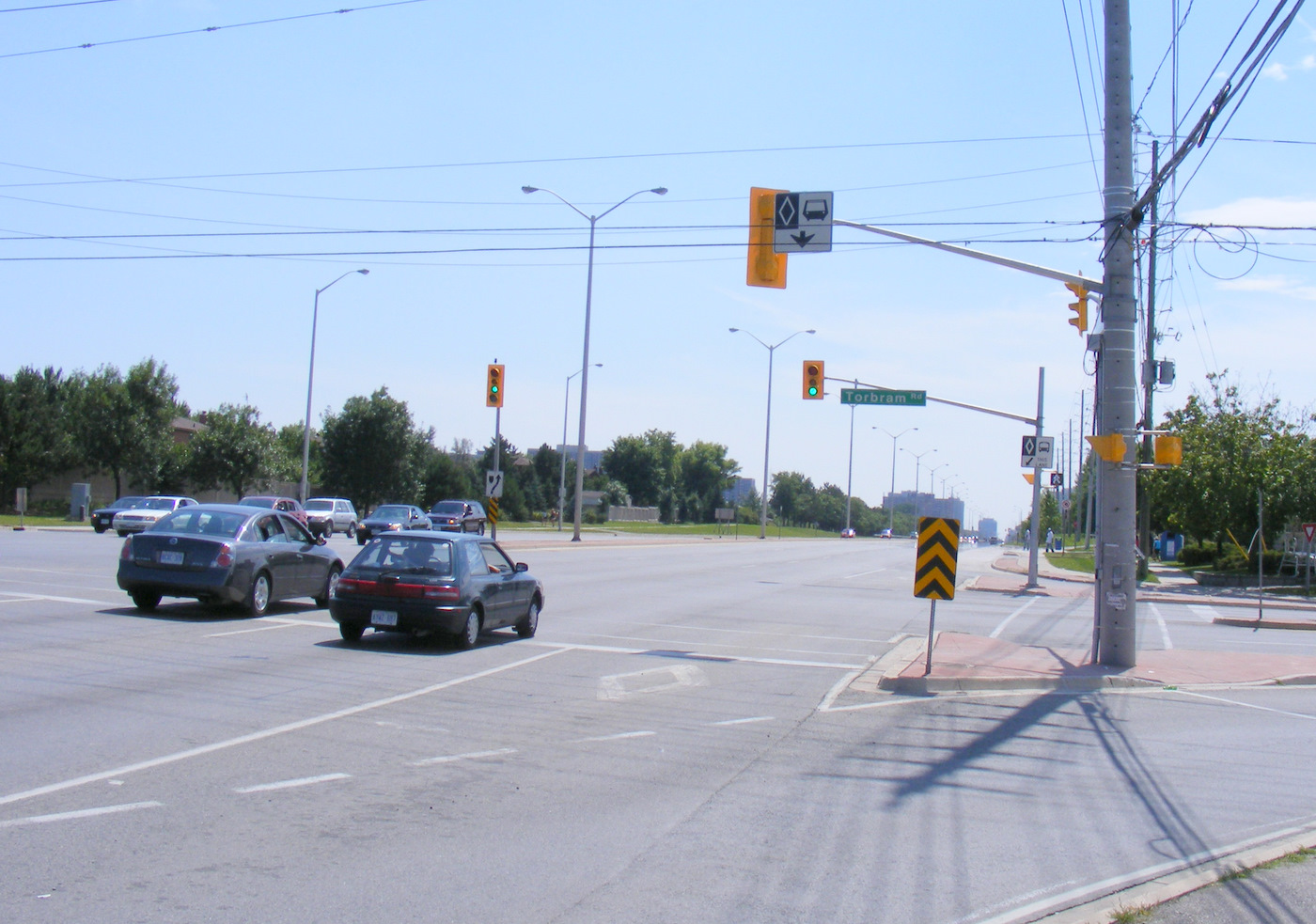
 Sean Marshall