Category: Urban Planning

  • Shortsighted short-turns at Bramalea GO

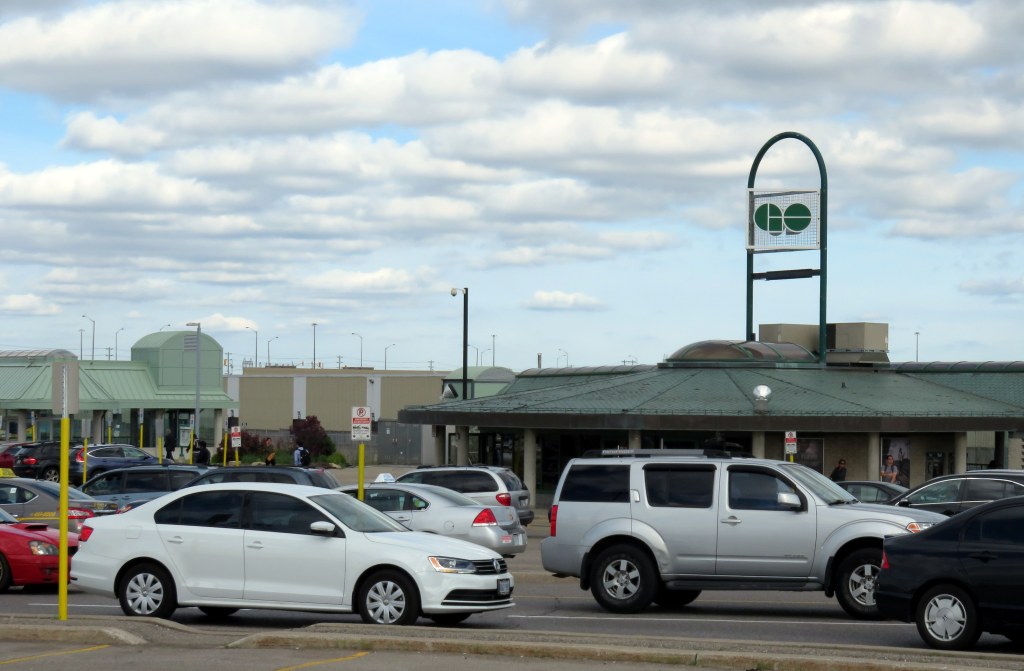
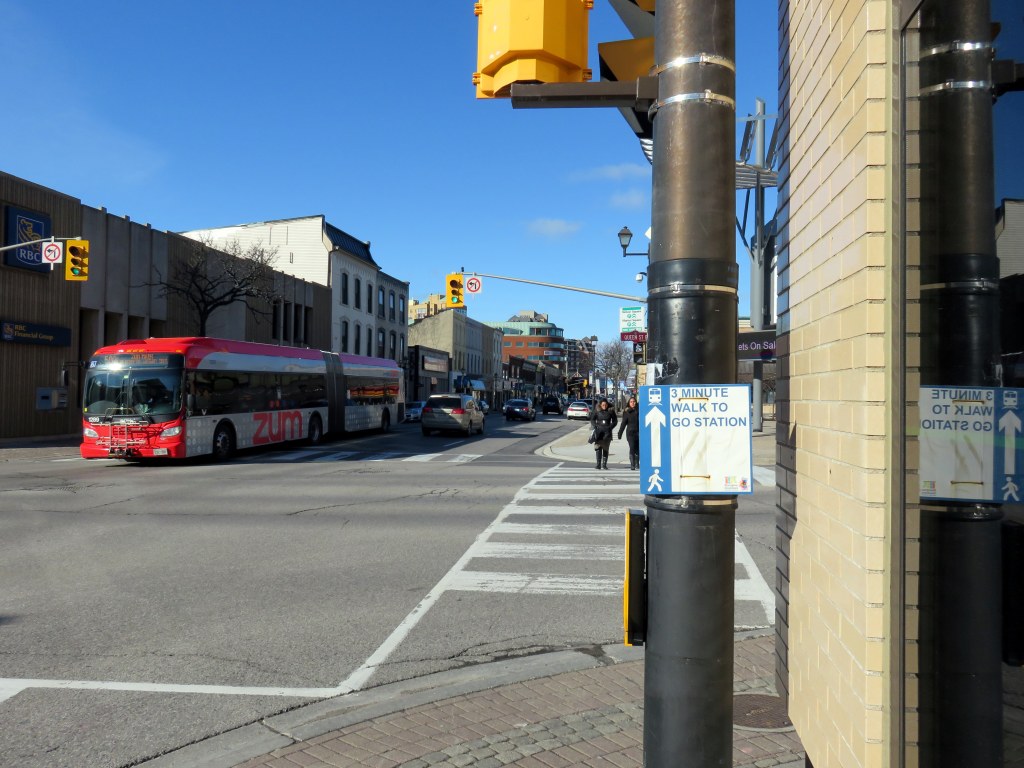
    IMG_2321-001Bramalea GO Station

    Earlier this week, I took a train from Union Station to Bramalea, as I was preparing for a walk that I will hosting on Sunday exploring Canada’s first satellite city.

    Bramalea Station opened in 1973 when the Georgetown GO train service — GO Transit’s second commuter rail line — was inaugurated. The station is located at the southwest corner of Steeles Avenue and Bramalea Road, surrounded by factories, warehouses and busy roads and highways.

    There’s little to fault GO Transit for locating its station where it is. In 1973, GO was still in its infancy, launching its first rail services along the Lakeshore Line in 1967. It wasn’t anything more than a commuter rail service, offering downtown-bound commuters an alternative to driving all the way in; free and ample parking was part of that successful model. In 1967, GO Transit was created to reduce the need to upgrade provincial highways; it allowed Downtown Toronto to become a bustling global financial centre without needing huge parking lots and garages and more freeways feeding into it; .

    The GO station is located in Bramalea’s south end, next to the CN mainline, surrounded by land designated for industrial development since 1959, when work began on that new suburb. The station is located near a waste-to-energy plant (an incinerator), and is located under Pearson Airport’s flight paths. Since GO insists on providing free parking to its customers, Bramalea (unlike, say, Downtown Brampton) isn’t a bad place to put lots of parking spots; in total, Bramalea has 2,377 parking spots. And since Bramalea Station is adjacent to Highway 407, it’s a major transfer point for GO bus routes to York University, Hamilton, Guelph and Kitchener.

    But like too many GO stations, Bramalea is needlessly hostile to pedestrians and cyclists, and is even hostile for many local transit users. As Metrolinx, the agency responsible for GO Transit, pursues Regional Express Rail (RER), it has a responsibility to improve Bramalea Station. As it exists right now, Bramalea is a terrible transit terminal.

    (more…)

  • On Toronto’s newest ten-year cycling plan

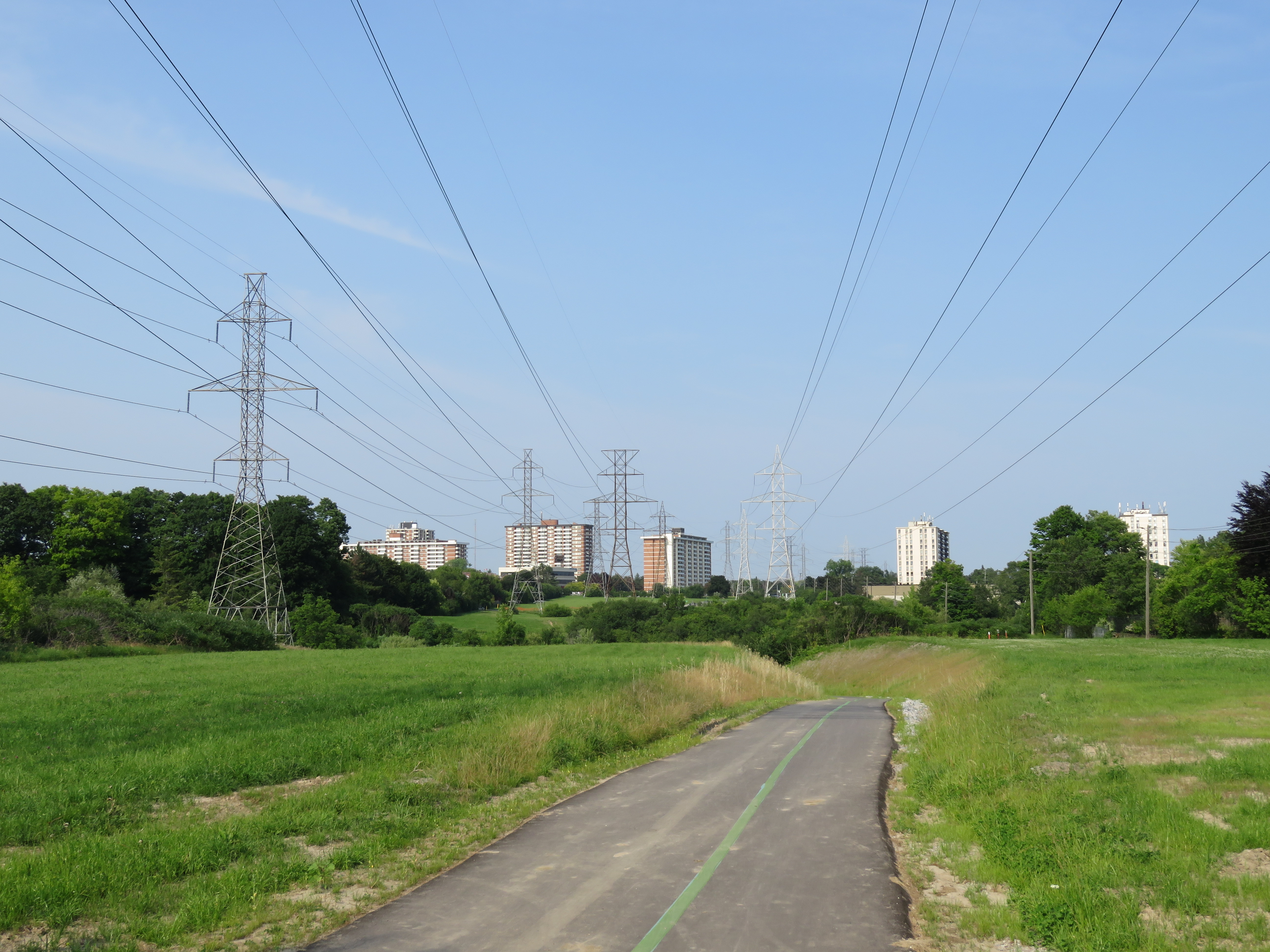
    The newly completed Finch Hydro Corridor
    The Finch Hydro Corridor

    The City of Toronto has released a new proposed Ten Year Cycling Network Plan, which establishes a minimum grid of cycling infrastructure across the entire city. It will be presented to the Public Works and Infrastructure Committee next week; city staff, who have worked long and hard on this project, consulting many stakeholders and members of the public, recommend its adoption by City Council. It will create over 500 kilometres of safer cycling routes, while connecting existing bike lanes and trails to each other. The plan would cost just over $150 million over ten years, a bargain.

    Of course, we’ve been down this road before. Only a fraction of the cycling infrastructure approved in previous plans has been built. And many new trails that were built — following hydro corridors and abandoned railways in suburban parts of the city — don’t connect to nearby ravines and parks. And railways and highways remain major barriers; there are only three places where the city’s designated cycling network crosses Highway 401.

    Last week’s Council approval of the Bloor Street bike lanes between Shaw Street and Avenue Road — a simple pilot project — didn’t look like a sure thing, even though it ended up voting 38-3 in favour.

    Deputy Mayor Denzil Minnan-Wong warned of “bike lane creep,” afraid that a safe bike route would extend to Danforth Avenue (which it should). And Councillor Stephen Holyday (Ward 3, Etobicoke Centre) ridiculously claimed cycling advocates were “trying to build a wall” around the downtown core, ignoring the fact that there’s a subway along the same corridor, which moves many times more people than two lanes of Bloor Street, and there are other options — such as the Gardiner Expressway, which we are needlessly committed to keeping up — for getting downtown with a car.

    Some of the highlights of the new plan:

    • Long distance cycling corridors, such as Bloor/Danforth from Etobicoke to Kingston Road in Scarborough, Kingston Road from the Beaches to West Hill, and Yonge Street from Downtown to Steeles Avenue.
    • New connections across railways, ravines and highways.
    • Extensions to popular off-road trails, such as the West Toronto Railpath.

    Highways are very dangerous for pedestrians and cyclists to cross: high-speed ramps are marked with signs telling pedestrians to wait for gaps. Cyclists must navigate cars quickly changing lanes and exiting freeways. And railways can create long, impenetrable barriers unless pedestrians trespass on railway property. I wrote about it at more length in Spacing.

    The worst example might be where Bridgeland Road ends on one side of the Metrolinx-owned Newmarket Subdivision (GO Transit’s Barrie Line) and Floral Parkway ends on the other side. Highway 401 conspires to make this an exceptionally bad case. Happily, this is one of the places where the city seeks to build a new bridge or tunnel to allow cyclists and pedestrians to cross safely, and I am glad to see other gaps addressed in this latest plan.


    An example of how railways and highways create barriers to active transporation

    There are four large maps (large PDF files) that show the existing cycling network and the proposed new routes. They correspond to the four community council boundaries.

    Toronto and East York
    North York
    Etobicoke-York
    Scarborough

    It’s not only important that City Council approve this new plan, it’s also crucial that proponents of active transportation keep on top of the city to actually build the new cycling infrastructure and multi-use paths and bridges. We’ve seen this play out before: council approves a great plan for cycling, for transit, for urban development, and then rests on its laurels. Let’s do better this time around.

  • The TTC’s disappearing parking lots: why this isn’t a bad thing

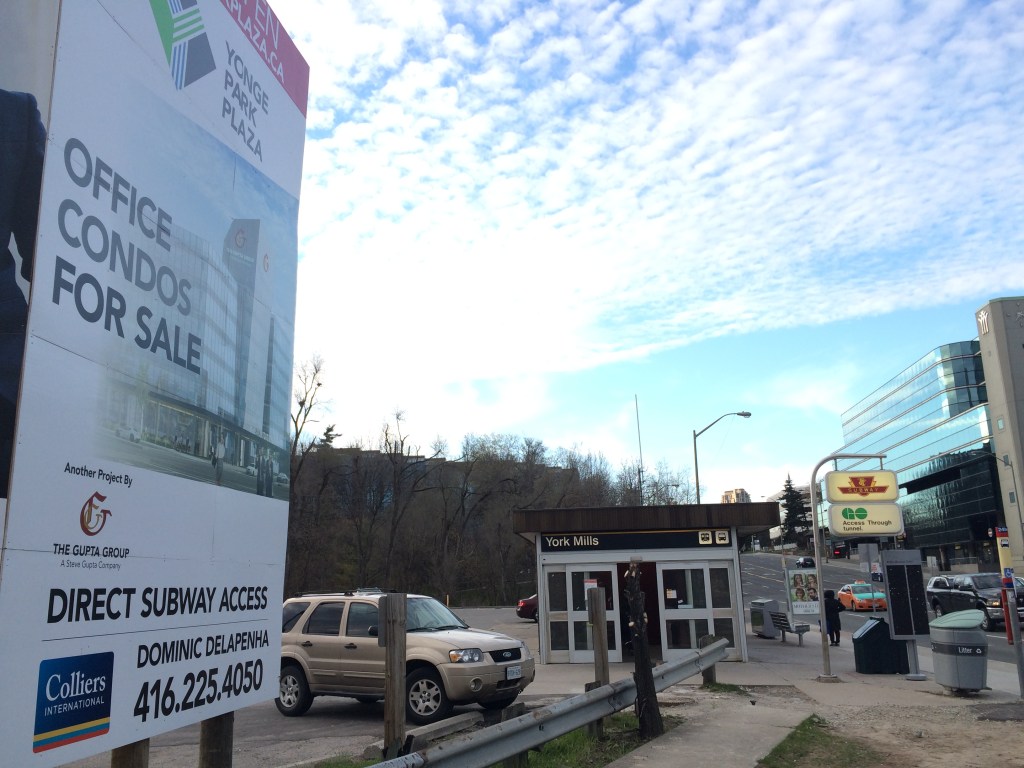
    IMG_6376New office development at the TTC York Mills Station parking lot

    I’ve written several times on my blog about GO Transit’s problems with free parking. The Toronto Transit Commission (TTC) also operates many parking lots — 11,000 parking spots located at 13 of its 69 subway and RT stations — but has declared many of its lots surplus to its needs. Right now, the City of Toronto’s real estate arm, Build Toronto, is in the process of selling or leasing TTC lots for residential and commercial redevelopment. The TTC, unlike GO Transit, charges for parking at all lots, and it isn’t in a hurry to build more. For the TTC, redeveloping parking lots raise money (which, in the TTC’s case, goes to the city) while they generate additional ridership.

    There’s a difference between TTC subway stations and GO Transit stations, to be sure. The TTC relies mostly on buses and streetcars, as well as walk-up traffic, to feed its rail system, while GO Transit relies mostly on suburban commuters driving to its stations. They are different models. But in urban areas like Downtown Brampton, I believe GO Transit should be much more innovative than deciding to rip down a city block to build yet another “free” surface parking lot.

    GO Transit should rethink their model, encouraging more walk-up and local transit connections as it transforms into a regional rail system. Redeveloping some of its lots is a good way to go; commuter parking garages can easily be integrated into new urban uses and make their stations more attractive places to walk and cycle.

    I have more to say about the TTC’s parking lot crunch over at Torontoist.

  • Missed opportunities on the Mississauga Transitway

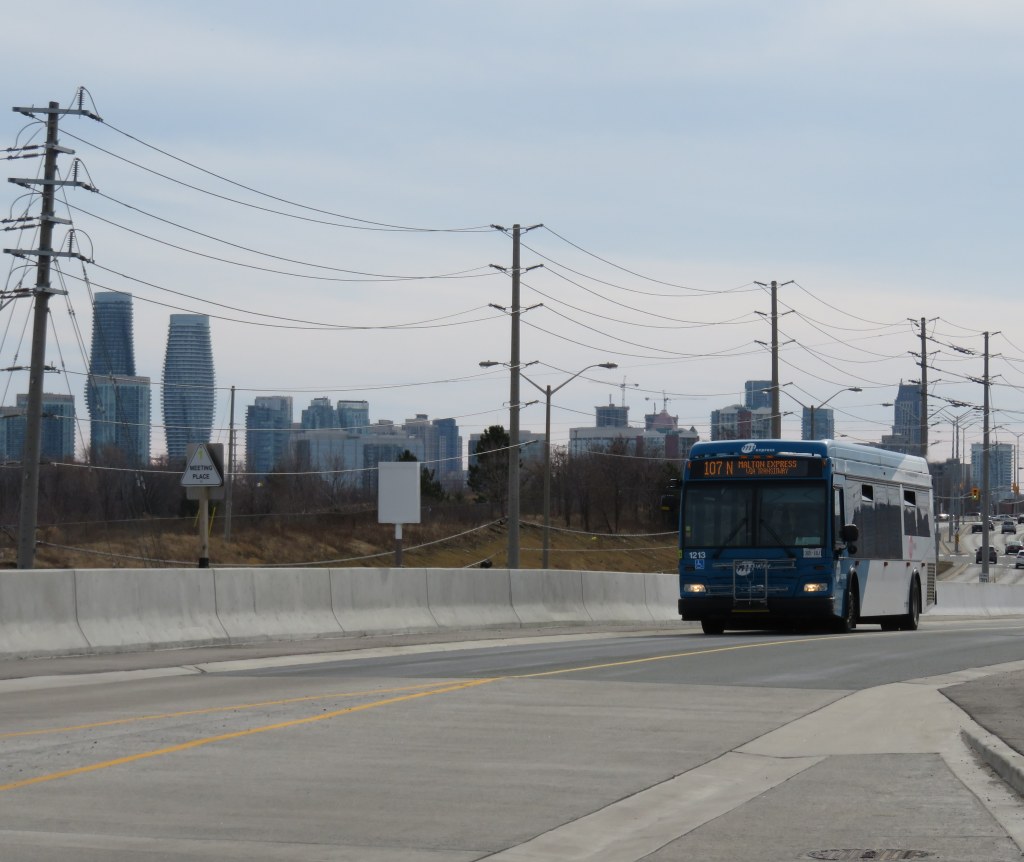
    IMG_0343-001Route 107 Malton Express bus on the Mississauga Transitway at Tomken Station

    After riding the UP Express back in March, the inspiration for a post on a proposed transit hub at Toronto Pearson International Airport, I went for a ride on the Mississauga Transitway.

    I first rode the Mississauga Transitway on a snowy Monday, November 17, 2014, the day it opened. At the time, only four stations were opened — Central Parkway, Cawthra, Tomken, and Dixie. On my first visit, I was unimpressed. But I decided to give it another try after the two new stations opened, on a Saturday, when I had plenty of time to check out the service, the new stations, and the environs.

    I have many thoughts and criticisms about this new piece of transit infrastructure, which will cost the City of Mississauga and Metrolinx a combined $528 million.

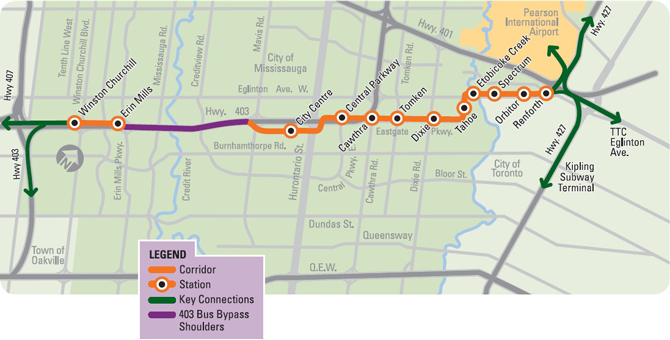
    mississauga_transitway_map_en-670x340Map of Mississauga Transitway, taken from the GO Transit website

    What is the Mississauga Transitway?

    The Mississauga Transitway is a bus rapid transit (BRT) project. BRT is a term used in the transit industry to describe everything from limited-stop conventional buses, perhaps with some perks like all-door boarding and queue-jump lanes sometimes called BRT-lite (Brampton Zum is a good example), to fully grade-separated, high speed bus corridors that operate like metro lines (the Ottawa Transitway and Bogota’s TransMillenio system are good examples). Other busways in Canada include the Ottawa Transitway, to be partially replaced by light rail transit, the Gatineau Rapibus corridor, York Region’s Viva Rapidways, and Winnipeg’s RT corridor.

    The Mississauga Transitway is a true BRT system, but it has several major weaknesses.

    (more…)

  • GO Transit and the high cost of “free” parking, Part II: Brampton Boogaloo

    IMG_0610-001

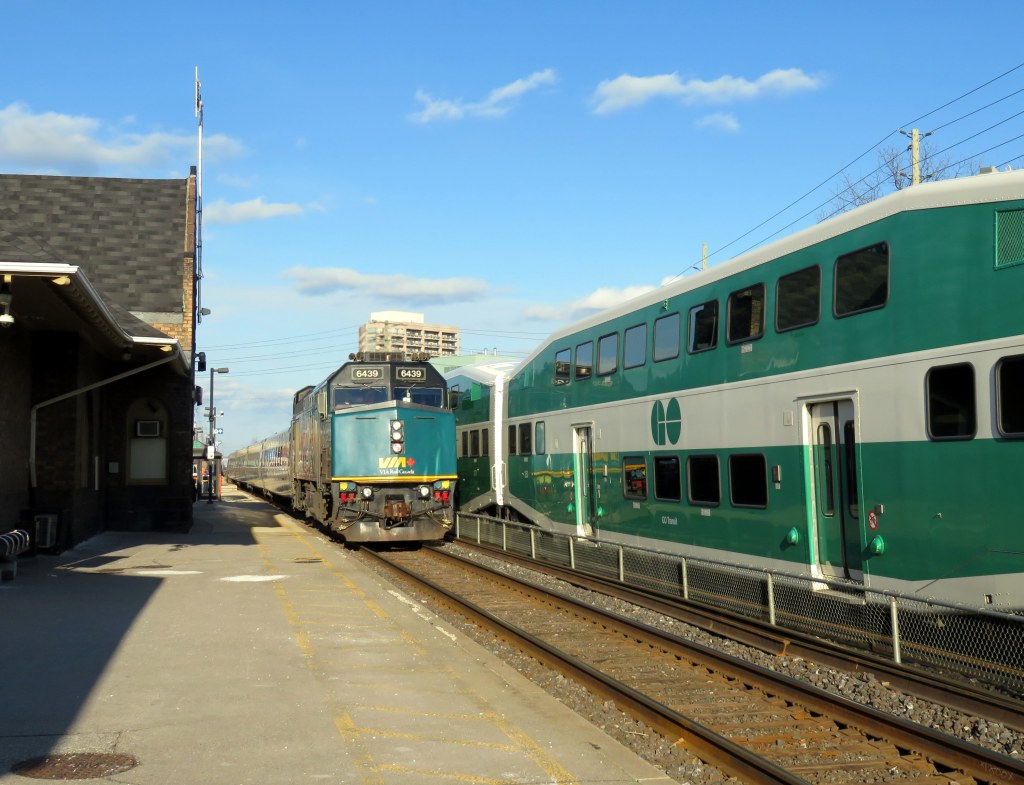
    GO and VIA Trains meet at Brampton Station

    September 20, 2016 update: Metrolinx has begun the process of demolishing its newly-acquired Downtown Brampton properties. It has applied for a demolition permit for 28A and 28B Nelson Street West, two semi-detached dwellings that were built in 2001. In the  City of Brampton, demolition permits for residential properties must be approved by the Planning & Infrastructure Services Committee. The permit will likely be approved at the September 26, 2016 meeting of that committee.


    On April 5, 2016, Peter Criscione at the Brampton Guardian reported on a matter that arose during the regular meeting of the City of Brampton Planning & Infrastructure Services Committee on April 4. Metrolinx, the regional transit authority that operates GO Transit and UP Express, confirmed the purchase of 1.78 acres in Downtown Brampton, land that will be used for surface parking.

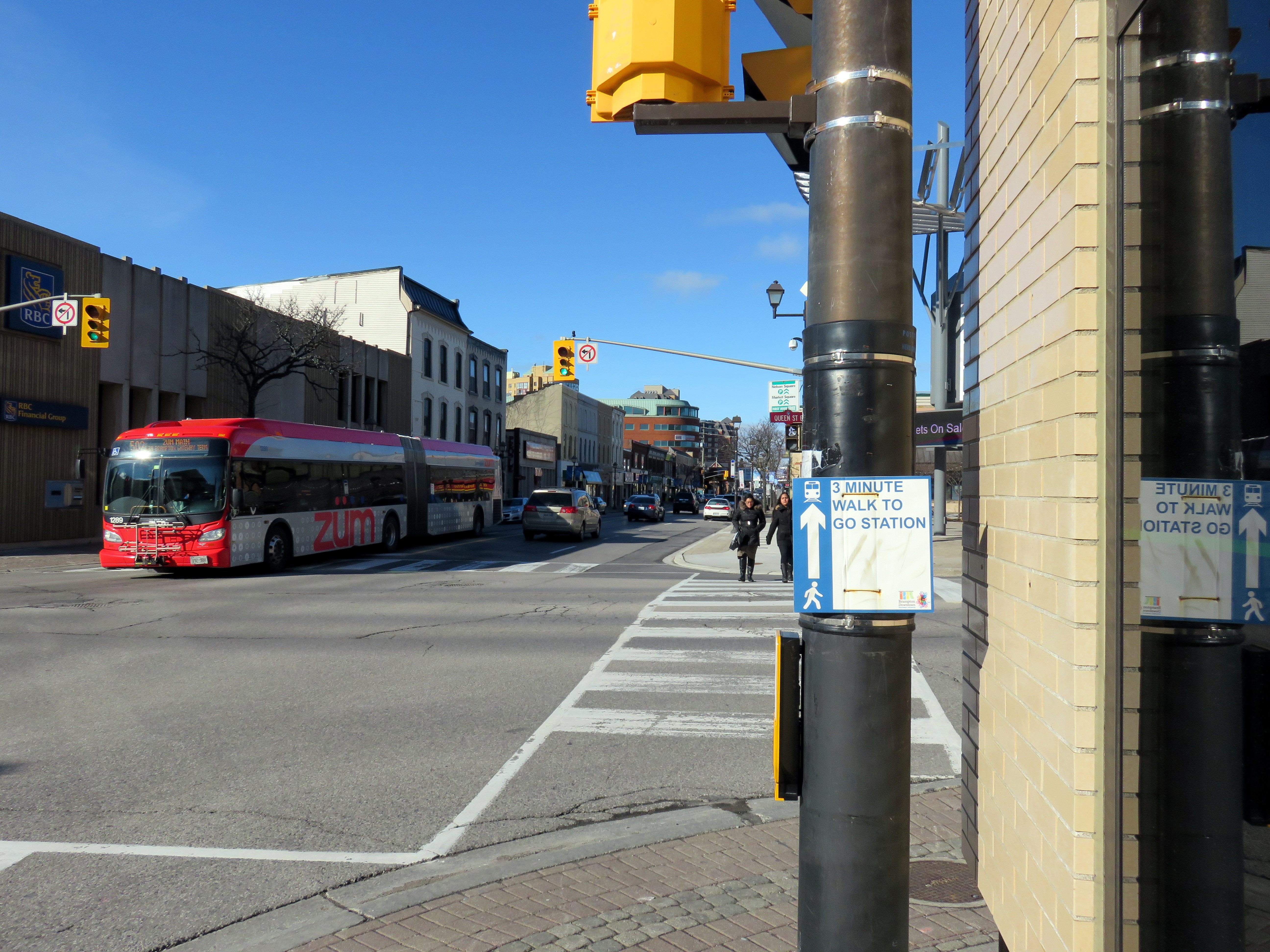
    Brampton Station, served by GO Transit and VIA trains, is located in Downtown Brampton, and is adjacent to Brampton Transit’s downtown transit terminal. With local shopping, restaurants, residential areas and employment, it is one of the most walkable stations in GO Transit’s system; it has a Walk Score of 90. (Bramalea GO Station, in comparison, has a Walk Score of 22.) The options of getting to Brampton Station without a car are quite good, at least as far as most GO stations go.

    But Brampton Station’s two lots are full, and there are planned service improvements to Brampton, including eventual hourly evening and weekend rail service. Not everyone can be expected to take transit, walk, or get a ride to the station. But I find this land assembly troubling.

    According to Criscione, and noted in the minutes of the April 4 meeting [page 25-26], the properties purchased by Metrolinx include:

    • 20 Nelson Street West
    • 37 George Street North
    • 41 George Street North
    • 26 Nelson Street West
    • 3 Railroad Street (includes 3 separate parcels)
    • 28A Nelson Street West
    • 28B Nelson Street West
    • 30 Nelson Street West
    • 42 Elizabeth Street North

    The planning committee asked staff to contact Metrolinx and report on the status of its recent and pending purchases of downtown lands. It also invited Metrolinx to work with city staff and officials, as well as present their plans at a future meeting.

    The purchase of downtown lands for a parking lot is troubling, in my opinion. Downtown Brampton is a designated “anchor hub” — a major mobility hub where two or more rapid transit lines meet where transit-oriented development and intensification is encouraged. At no point do I see new surface parking lots are part of this vision, especially if buildings must be vacated and demolished to do so. And Downtown Brampton, not yet experiencing a building boom, has plenty of parking lots and garages that could be employed instead.

    The embedded Google Map below shows where these properties are located, immediately south of Brampton Station, and west of the Brampton Transit downtown terminal.


    On Friday, April 8, I visited Downtown Brampton to have a look at the properties in question.

    (more…)

  • Mapping Major League Baseball’s stadiums by walkablity, transit access

    22078160783_012aad4fb6_k

    What major league ballpark is the easiest to get to by public transit? Which stadium has the highest walk score? And where does the phrase “take me out to the ball game” absolutely require getting in a car and fighting traffic to do so?

    Over at Torontoist, I explore these questions in more detail. I created a map of all thirty major league stadiums (and the 2017 home of the Atlanta Braves). About half the stadiums are located in downtown areas or urban neighbourhoods, close to transit stations, bars, restaurants, and shopping; the other half are generally surrounded by parking lots.

    SkyDome isn’t a great ballpark, especially when the dome is closed, but in these rankings, it does really well.

  • The terminus of the Hurontario LRT: an opportunity for something better

    IMG_8755-001
    Downtown Brampton, the logical terminus of the Hurontario-Main LRT

    I’ve written several times about the Hurontario-Main light rail transit (LRT) project on this blog. Last summer, I led a walk along Main Street, discussing Downtown Brampton’s wonderful built heritage, the potential for Main Street, and explaining why alternative routes, proposed by councillors and private interests, weren’t feasible. Floodplains aren’t great places to build higher-order transit lines.

    Needless to say, I was very disappointed that Brampton City Council voted 6-5 last October against building the LRT between Steeles Avenue and Downtown Brampton. A vocal and wealthy minority, including a former premier of Ontario, opposed the project; it didn’t help that Mayor Linda Jeffrey found herself in constant opposition with several city councillors who backed other candidates for mayor in the 2014 municipal election. A Toronto Star reporter, assigned to the western GTA beat, wasn’t reporting fairly on this issue either.

    Since that unfortunate vote, I resigned myself to a truncated Hurontario-Main LRT corridor that will still serve three or four stops in Brampton, but will stop short of its logical terminus.

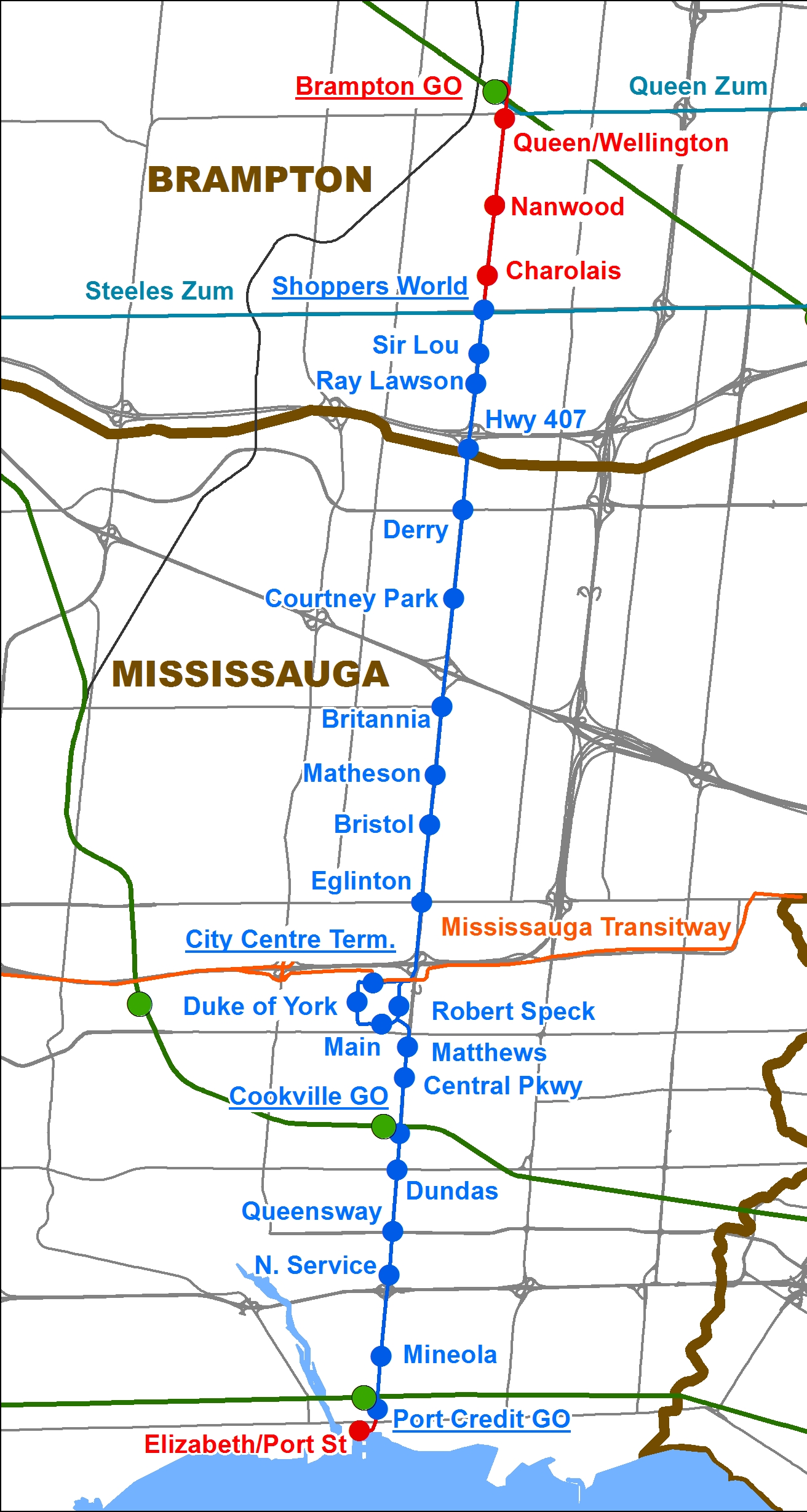
    I recently made a trip out to the intersection of Steeles Avenue and Main and Hurontario Streets, the new northern terminus of the planned LRT. Construction of the 20-kilometre line, between Port Credit and Steeles Avenue, is scheduled to begin in 2018.
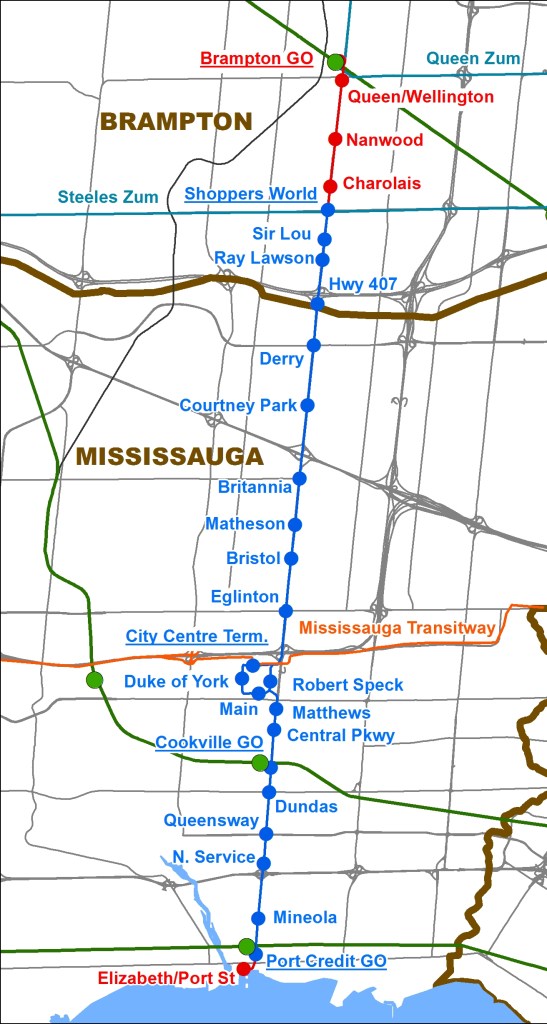
    HMLRT
    The Hurontario-Main LRT, after Brampton City Council’s vote in October 2015. 

    The corner of Steeles Avenue and Main Street is already a major transit hub. Eleven Brampton Transit bus routes (including two Züm routes), a Miway express bus, and GO Transit buses serve the corner; the Brampton Gateway Terminal is the city’s second-busiest transfer point. The new Gateway Terminal, which opened in 2014, was built to accommodate ridership growth and facilitate transfers with the proposed LRT, which will stop in the median of Main Street.

    As far as Toronto’s suburbs go, this corner of Brampton is relatively dense. There are several rental towers within a short walking distance; there are also three nearby townhouse complexes. Shoppers World, on the northeast corner, is a large regional shopping centre, albeit a mall that has fallen on hard times. On the southwest corner, there is still an old farmfield, surrounded by subdivisions, apartment towers and retail. There are many opportunities for transit-oriented development.
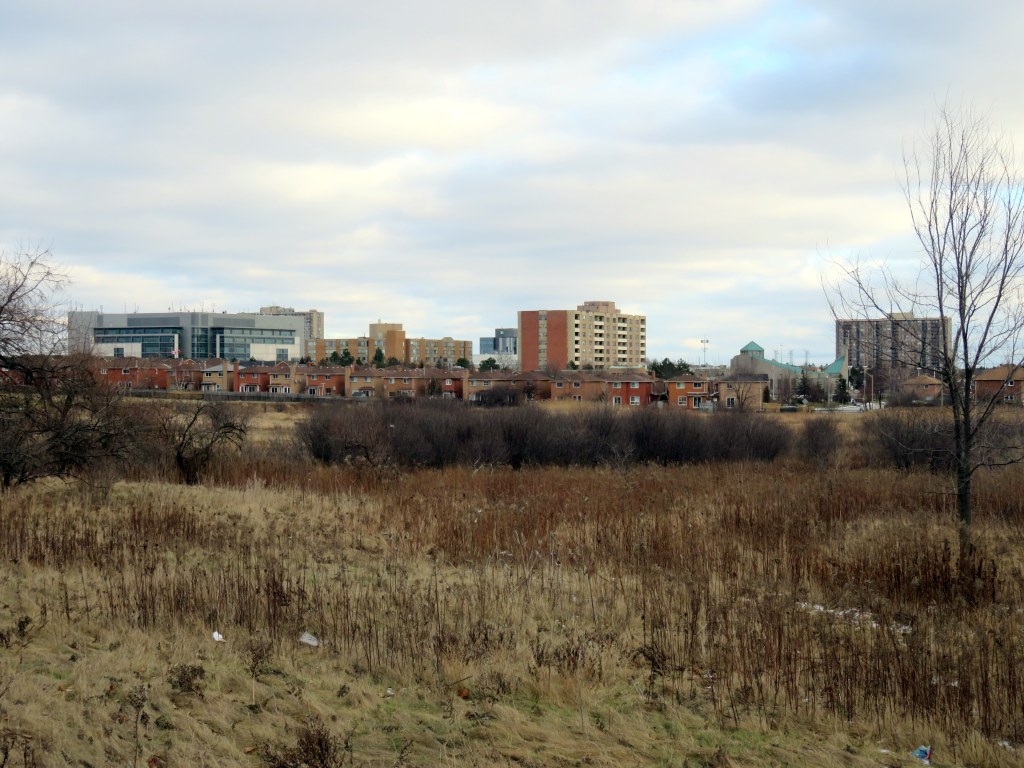
    IMG_8803-001A fallow farm field, south of Shoppers World. The area is zoned for medium and high density housing developments, including townhouses and apartment buildings. 

    If Downtown Brampton, Brampton’s busiest bus route (501 Queen) and a GO Transit and VIA Rail station weren’t just 3 kilometres away, this would actually be an ideal terminus for a suburban light rail transit line.
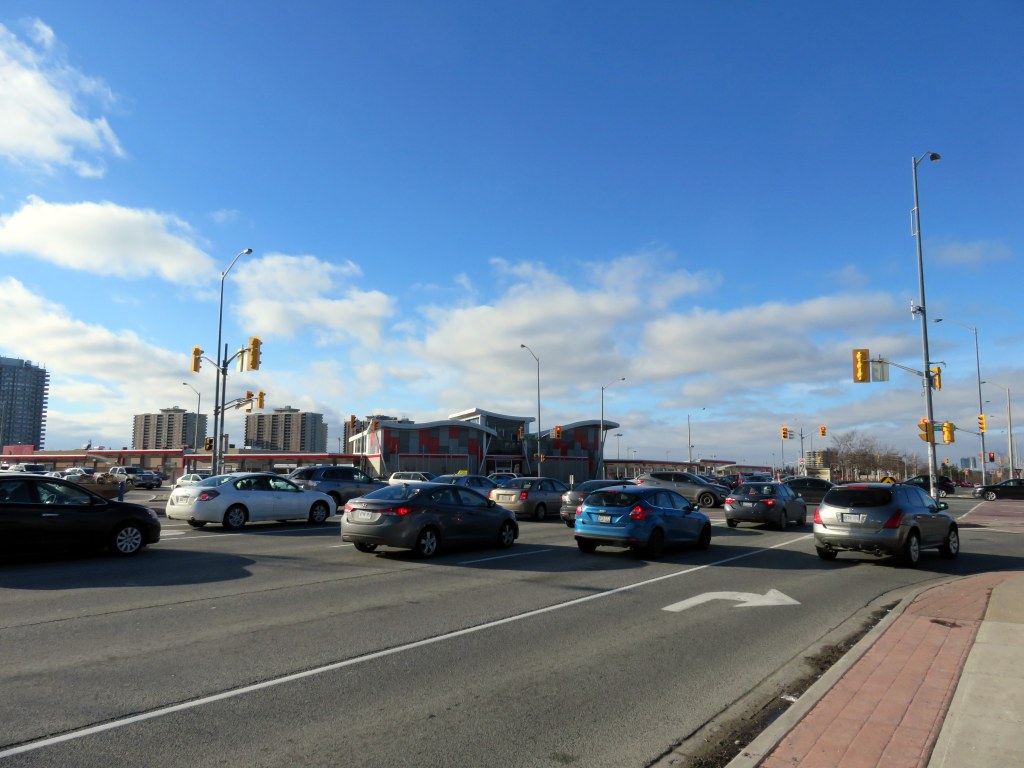
    IMG_8776-001The corner of Steeles and Hurontario/Main, looking northwest. The Brampton Gateway Terminal is on the opposite corner.

    One of the greatest opportunities for new transit-oriented development is Shoppers World Brampton. First opened in 1969 by Peel Elder Limited (who also developed Shoppers World Danforth), the mall went through several additions over the years; by the 1980s, it boasted over 200 stores, including a Simpson’s, K-Mart, Pascal Hardware, cinemas, and two supermarkets. At one time, Shoppers World even had indoor waterslides. By 2000, Simpsons became The Bay, and K-Mart became Zellers.

    Growing up only a 15-minute walk away, Shoppers World was my local mall. Pizza Hut was a favourite place to meet up with friends, I fondly remember the free popcorn at Jumbo Video, and the bus terminal made it easy to get to better malls, particularly Square One. My first paying gig was returning abandoned shopping carts to K-Mart for $5 each.

    By the 1990s, the mall’s owners neglected the property, while Bramalea City Centre and Square One renovated and expanded. There were persistent rumours that the mall would be closed and re-developed with highrise towers.
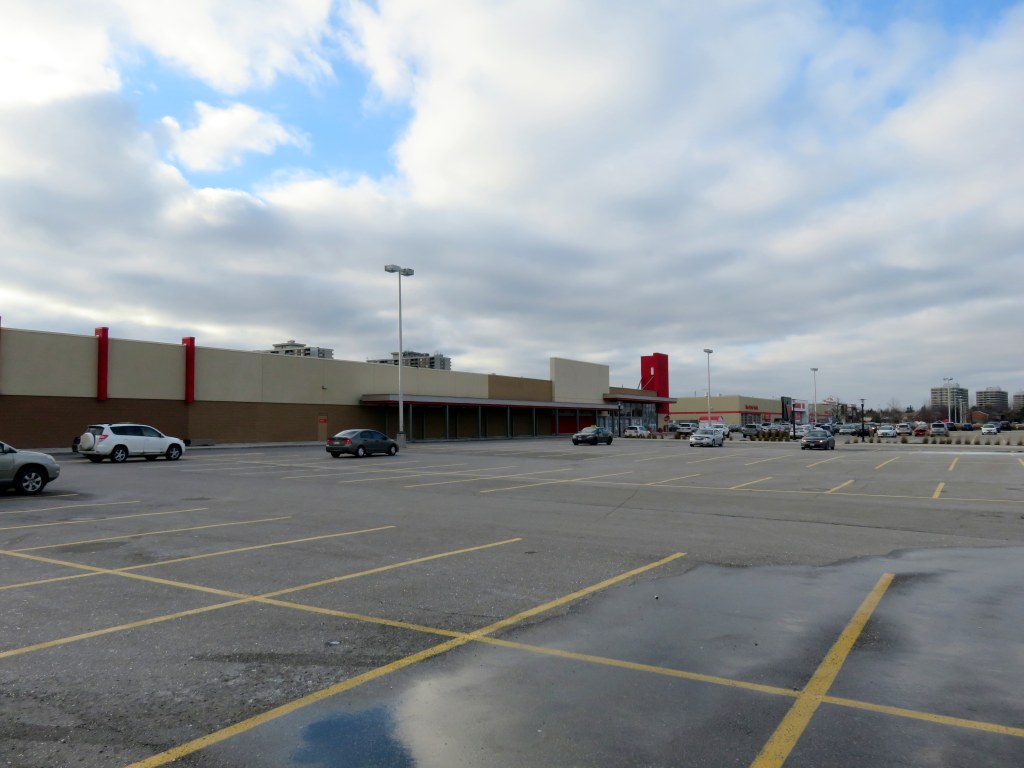
    IMG_8782-001A mostly empty Shoppers World parking lot on a Saturday afternoon.

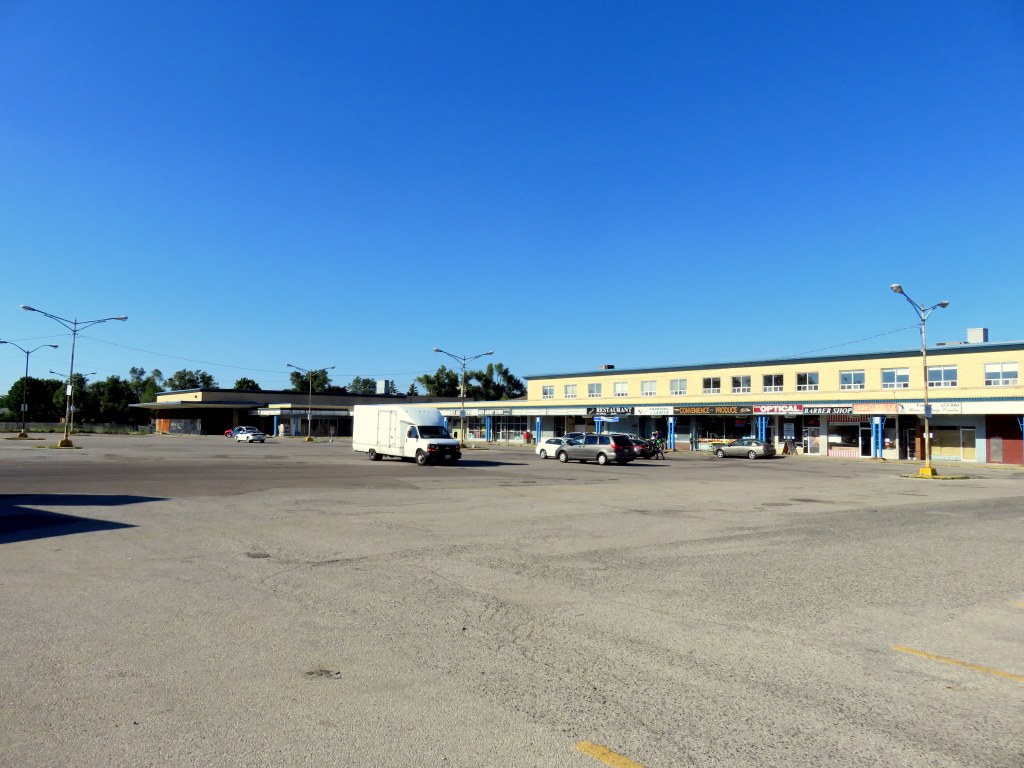
    RioCan REIT took over Shoppers World Brampton in 2000, renovated the property, and added new big-box retailers such as Canadian Tire. But The Bay closed in 2007, and Target, which took over Zellers’ lease, shut down last year. The final indignity came when the shuttered Bay store was torn down and replaced by Lastman’s Bad Boy.

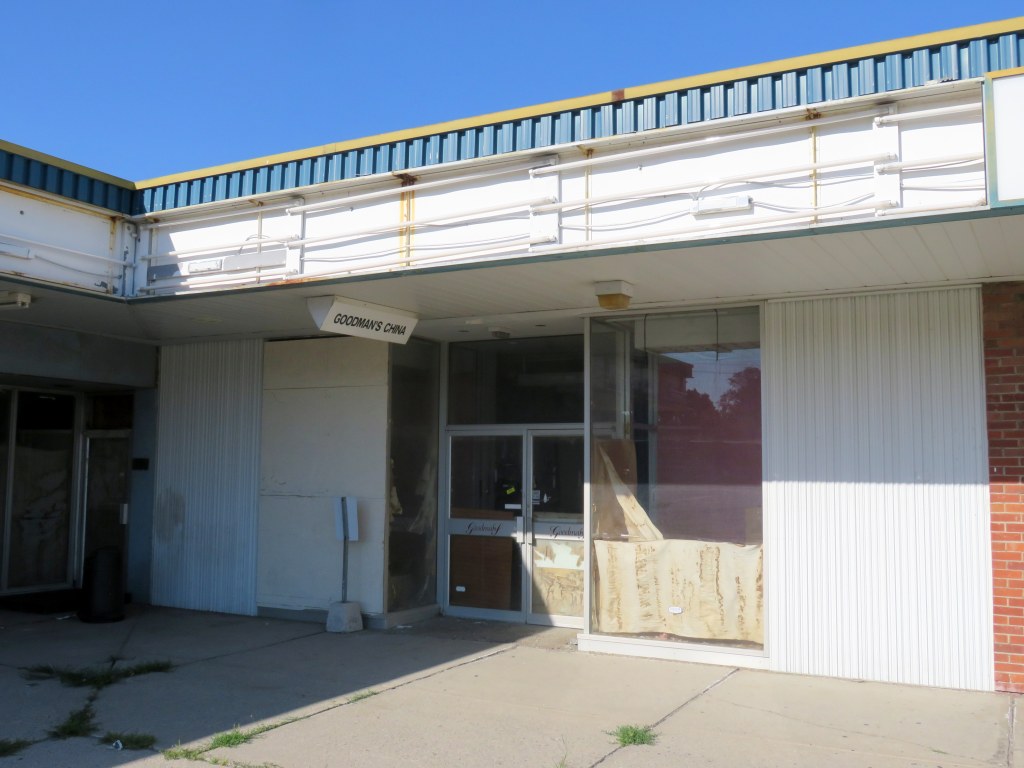
    Shoppers World isn’t yet a dead mall – while many national chains left in the last two decades, small businesses have moved in. However, there are still plenty of vacancies, especially in the north end of the mall, near where The Bay used to be. The new Bad Boy and Beer Store are accessed only from outside the mall, making it harder to draw customers in.
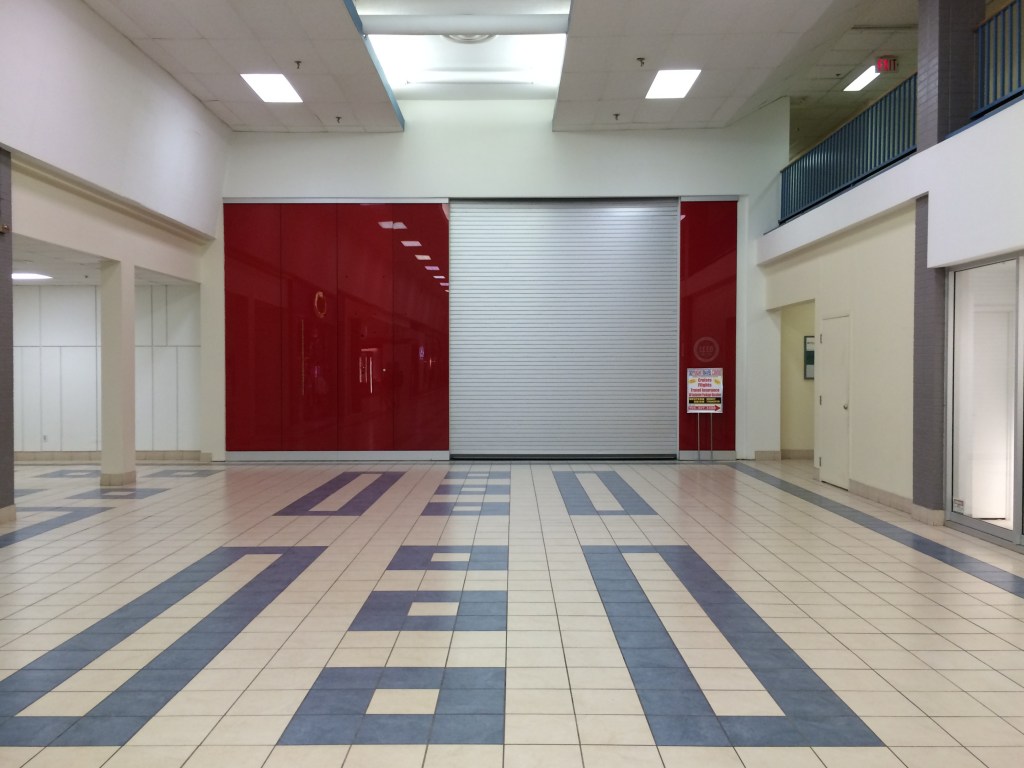
    IMG_2887-001The former mall entrance to Target, showing the floor tiles installed in the 2000-2002 renovations.

    The answer, I think, is to partially redevelop Shoppers World into a mixed-use, transit-oriented development, retaining a majority of the retail space, but including new residential, office and community uses. Shops at Don Mills, at Don Mills Road and Lawrence Avenue in Toronto, isn’t a bad model to follow, but better residential integration and a proper link with the transit hub would be necessary. Humbertown, a smaller, but controversial development proposed for Etobicoke, has the right mix of retail and residential intensification.

    One day, I believe a new Brampton City Council will come to its senses and get the LRT extended to Downtown Brampton as proposed. This is what happened in Mesa, Arizona, a Phoenix suburb that originally opposed a light rail corridor from Downtown Phoenix, Tempe, and Arizona State University, to its downtown. After the first phase of the Valley Metro LRT opened in December 2008, political opposition to a light rail extension along Main Street faded. The LRT through Downtown Mesa opened to great fanfare in August, 2015.

    But until that time comes, there are some opportunities to capitalize on the approved plan. Steeles Avenue isn’t the ideal place to end the Hurontario LRT, but it’s a good place to start planning something better.
  • The least-worst alternative for the Gardiner East

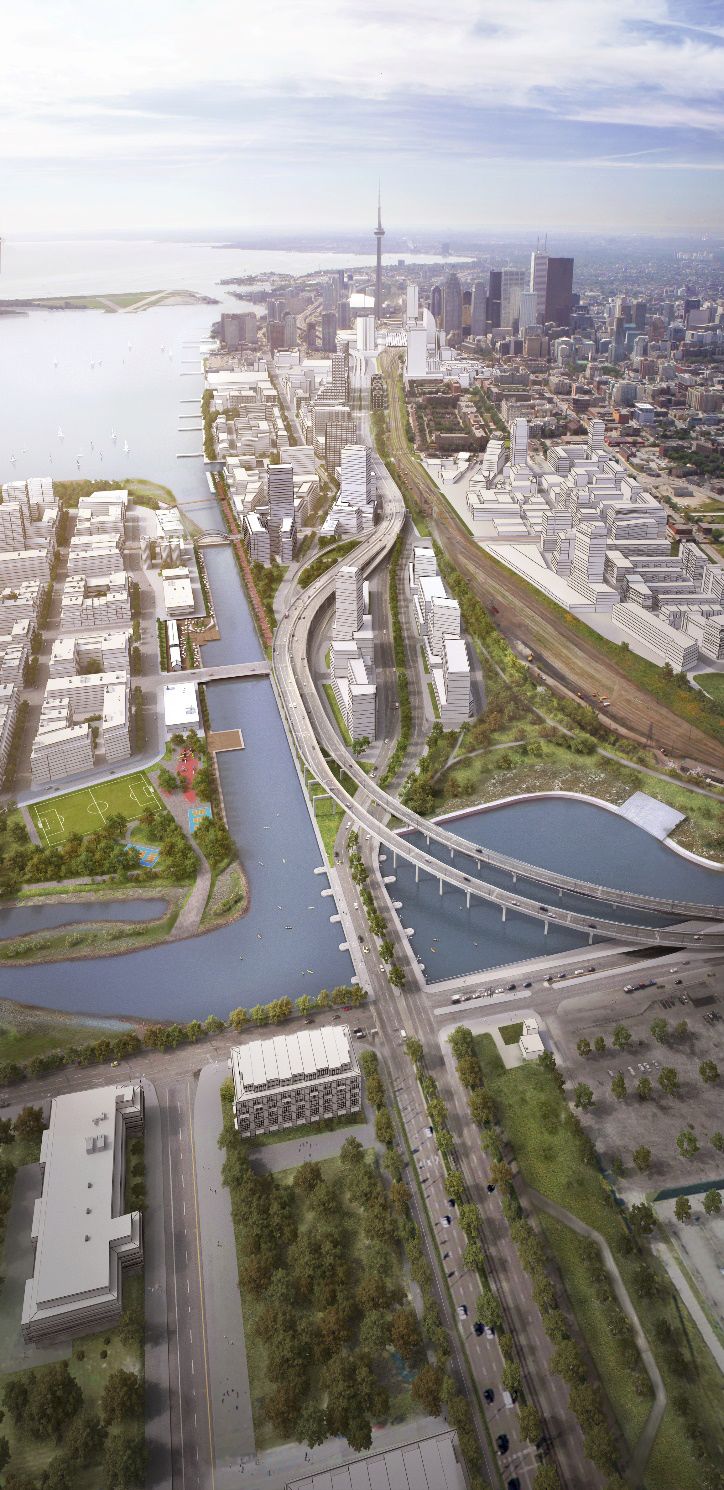
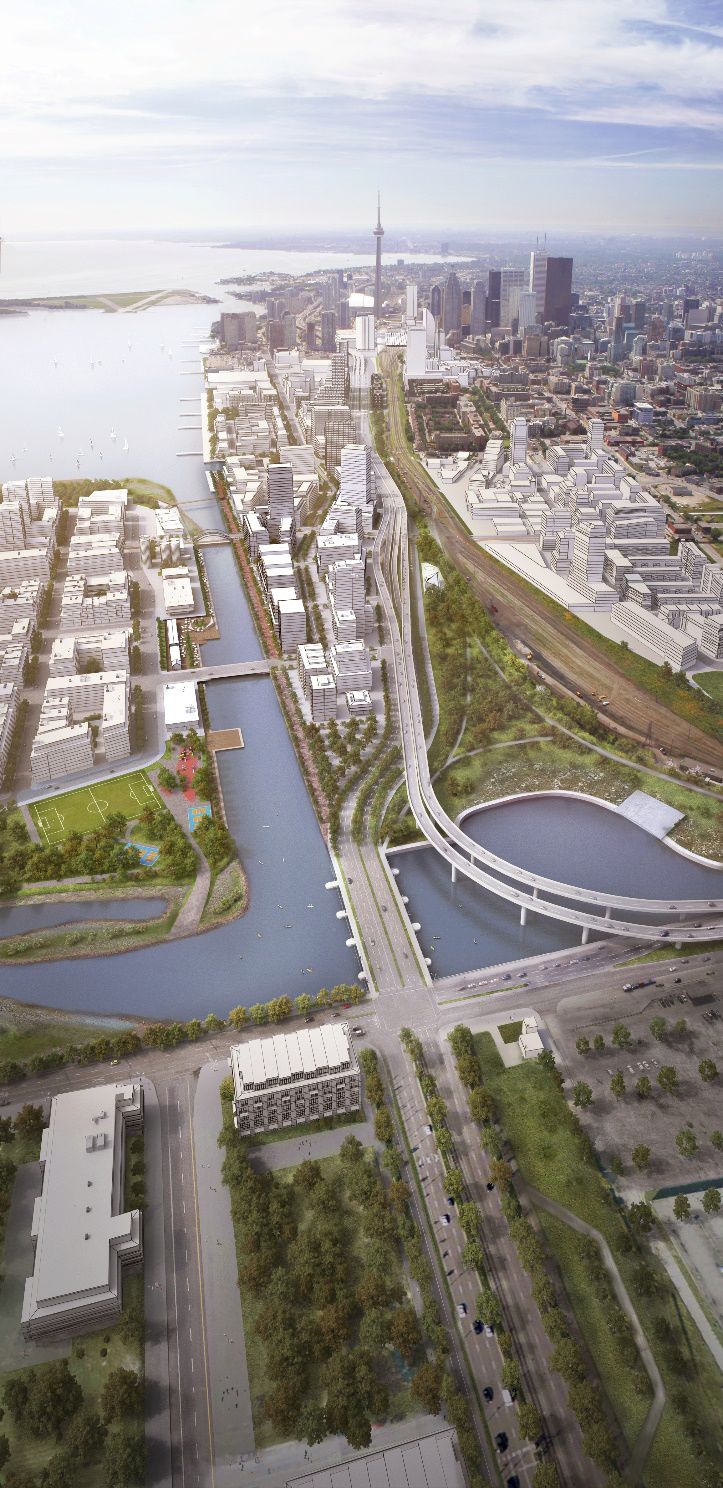
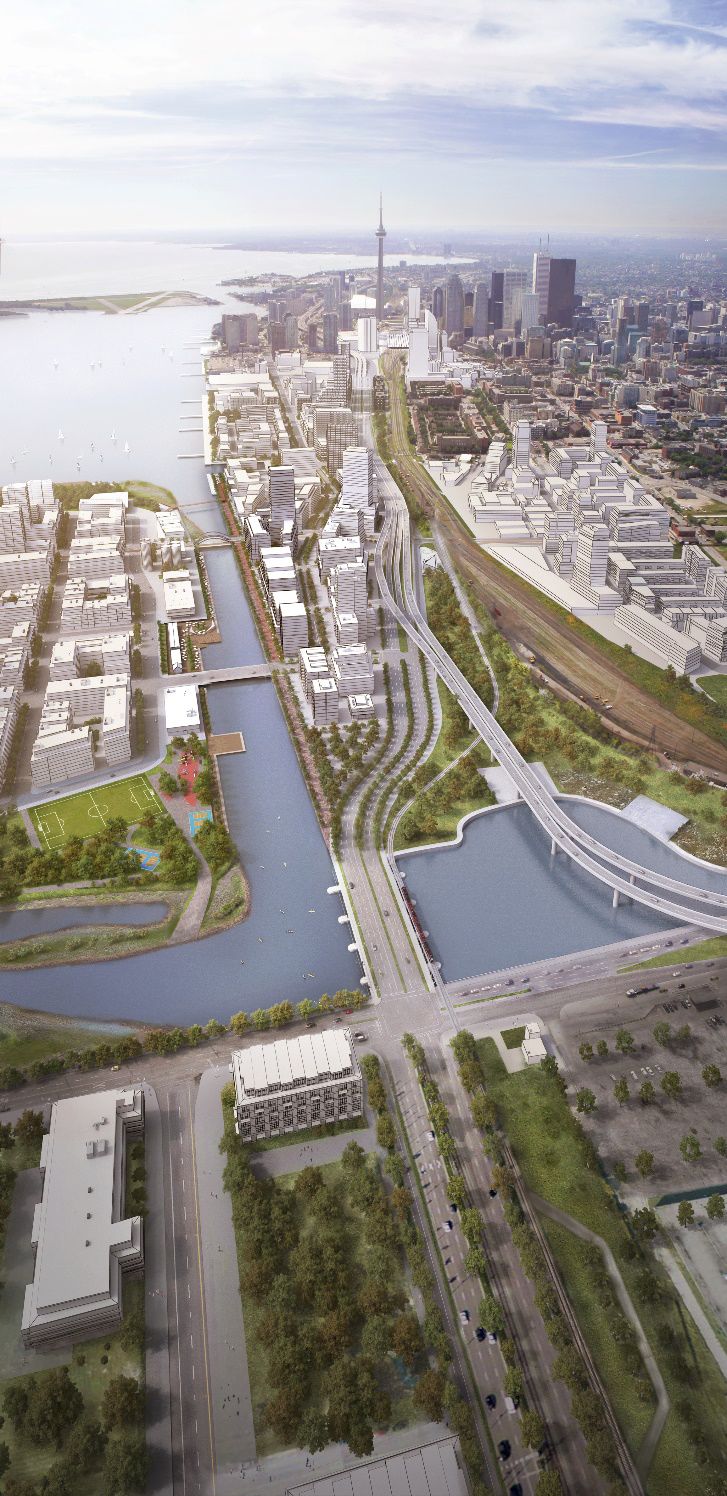
    Back in May, I outlined the reasons why I supported the removal of the elevated Gardiner Expressway east of Jarvis Street. Of the various options, which included maintaining the existing highway, a so-called “hybrid” section that would maintain most of the existing structure, but re-route the section between Cherry Streets and the Don Valley Parkway, and the removal option, which would see a widened Lake Shore Boulevard take over from the demolished freeway, similar to how New York City replaced the elevated West Side Highway.

    The removal option was the cheapest of the three alternatives ($326 million in up-front capital costs and $135 million in ongoing maintenance over a 100-year lifecycle). The study’s traffic models claimed that removal would only increase travel times by 3-5 minutes. Removing the East Gardiner offers the most opportunities to develop the East Harbourfront. Then, I conceded that an eight-lane Lake Shore Boulevard won’t be the most pleasant street to cross, but it won’t be much different than University Avenue.

    But for the benefit of east-end and suburban motorists and several vocal lobbies, council voted 24-21 for the “hybrid” option on June 11, 2015, despite higher costs ($414 million in up-front capital costs, and $505 million in maintenance over a 100-year lifecycle). The relatively close vote was an early test of John Tory’s hold on Toronto City Council.

    Yesterday, the City of Toronto released two important SmartTrack studies. The first was on the projected ridership of Mayor John Tory’s signature campaign promise; the second was on the feasibility of the problematic Eglinton West spur, which observers pretty much expected would be replaced by the planned extension of the Eglinton-Crosstown LRT. Ridership for SmartTrack would be high, but this is predicated on easy transfers, subway-like frequencies, and it being part of the regular TTC fare system. Fifteen-minute service, GO-like fares (which I’ve described as being unfairly expensive for intra-Toronto commutes) and a shorter line will, obviously, reduce ridership, and its relief of the TTC subway. But at least SmartTrack is getting smarter.

    On the same day, we learned more about the City Council-supported “hybrid” options for the Gardiner East as City and Waterfront Toronto staff released detailed assessments on three potential alignments endorsed by the City’s Public Works and Infrastructure Committee. You can view the entire media presentation here.


    Gardiner_media_presentation1     Gardiner_media_presentation2     Gardiner_media_presentation3
             Hybrid 1                             Hybrid 2                          Hybrid 3

    Of the three, “Hybrid 1” is the cheapest to construct, as it uses the existing DVP-Gardiner ramp configuration, but impacts the naturalization of the mouth of the Don River, necessary for flood mitigation. By largely using existing infrastructure, it also minimizes construction delays. “Hybrid” concepts 2 and 3 move the ramps north, but they would be tighter, reducing traffic speeds. These two alternatives also open up more land for development.

    “Hybrid 3” is preferred in all areas except for cost, as it has the greatest potential for development and has the least impact on the planned naturalization of the mouth of the Don. It’s estimated that “Hybrid 3” will cost $569 million to build, and $483 million in long-term maintenance costs, for a total of $1.052 billion. “Hybrid 1” would cost $424 to build, and $482 million in long-term maintenance costs.


    CriteriaCriteria for the three Hybrid options, from slide 39 of the City of Toronto media presentation

    As per David Rider’s report in the Star, we should expect that City and Waterfront Toronto staff expect to recommend “Hybrid 3” to the public works committee and city council. Local councillor Pam McConnell, who backed the “remove” option and still prefers it, will likely endorse the “Hybrid 3” alignment as well, as it delivers the most benefits to the community.

    I’m still disappointed by last year’s vote to keep the Gardiner Expressway up, but I’ll concur with Councillor McConnell. If Mayor Tory and Council are determined to keep the unnecessary eastern section of the Gardiner Expressway up, it should be backing the least-worst option for doing so.

  • A vision for King Street

    21207239313_0c5746b3f8_o

    In today’s Toronto Star, city columnist Ed Keenan reports on the “King Street Visioning Study,” a city planning project that will soon be available for public feedback. The study proposes improving streetcar operations along the King Street Corridor between Dufferin and Parliament Streets as well improving the public realm, making it a more pleasant place to walk. The 504 King Streetcar is the busiest surface route in the TTC’s system, and as I, and many others, have said before, the streetcar needs to be able to move more people more efficiently. But now City Planning is leading the study, not the TTC, making this a more holistic vision for King Street.

    Chief City Planner Jennifer Keesmaat says that it’s “reasonable” that the initial pilot projects could be started in early 2017. Work has already been contracted to some of the same firms that were responsible for transforming Queen’s Quay (which despite some construction delays, and conflicts in a few places between pedestrians, cyclists, and motorists, is a fantastic project).

    Keesmaat echoes previous attempts at creating a King Street Transit Mall, suggesting a similar system of alternating one-way sections that would provide for taxis, deliveries and passenger drop-offs and pick-ups, but forcing through traffic onto parallel streets. Extending transit priority all the way from Dufferin to Parliament could do a lot to streetcar improve operations, especially as the TTC is planning a new 514 route on King between Dufferin and Cherry Streets to supplement the overburdened 504 line and better serve the West Donlands, Distillery District, and Liberty Village.

    Yes, King Street improvements would start off as pilot projects, much like the bicycle lanes on nearby Richmond and Adelaide Streets, or the decade-old 2-hour transfer on St. Clair Avenue, or the Toronto Hydro ALAMP street lighting trials that should have concluded years ago. (Toronto seems to like permanent pilot projects.) That said, previous plans for a King Street transit mall never even got to the “pilot project” phase.

    But hearing that pedestrians and transit will be getting priority is music to my ears. Knowing that City Planning, and not just the TTC, is looking at this gives me optimism that this could finally go ahead. There will be opposition from businesses along the corridor, taxi drivers, suburban politicians concerned about a non-existent “war on the car.” And it’s not clear if Mayor John Tory is in favour, or a majority of city councillors.

    An improved public realm is especially appropriate on King Street, especially through historic Old York on the east and the cultural and tourist draws of the Entertainment District on the west. Sidewalks are often crowded, especially as the theatres get out in the evening, but with such diverse uses along the corridor, from bank towers to night clubs, King is one of Toronto’s most vibrant streets. Toronto often has trouble with attractive streetscaping (thanks to ugly wooden poles and overhead wires, cheap, grey street furniture, and ugly traffic signals), but it has recently managed to get Queen’s Quay (mostly) right.

    As for design, I’m hoping for something interesting and something different. I’d do away with the Muskoka chairs mentioned in Keenan’s article. They’re wonderful on Toronto’s waterfront, but I’d like to see some imagination on King Street. What about seating shaped like director’s chairs in front of the TIFF Lightbox? (Oh, and on the subject of TIFF, could we tell film festival organizers to stuff it when they want to wreck the King Streetcar again in 2016?)

    After years of talk about fixing King Street, there’s a very serious proposal to do something about it. Maybe the third time’s the charm.

  • Milton’s self-inflicted growing pains

    There’s an interesting article in today’s Toronto Star about Milton’s growing pains. The Town of Milton, which has grown tremendously in the last 15 years, complains that the province has neglected to provide the growing municipality with transit and other infrastructure. In 2001, its population was only 31,471. But In 2006, after finally connected to “The Big Pipe” that brought treated lake water to the municipality, the population increased to 53,939, an increase of 71.4%. In 2011, the town’s population went up again to 84,362; by 2016, Milton’s population will be well over 100,000.

    But no one should be surprised by Milton’s growing pains. Milton’s population stagnated for years as its reliance on well water constrained residential and commercial growth. Once all that developer-owned land had access to water and waste water pipes, of course, tract housing, big box stores, and warehouses were going to follow. In recent years, Milton’s housing density has increased in accordance with the province’s Places to Grow Act; with more townhouses and low-rise apartment buildings and houses on smaller lots. But apart from higher densities, land use and planning is still based on automobile ownership and suburban zoning plans.

    Milton is outside the continuous built-up Greater Toronto area. It doesn’t have great transit links, apart from the rush hour GO Trains. Apart from two interchanges off Highway 401, it doesn’t have great highway access. If it’s cheap housing you seek, and nothing else, Milton might be the right place to live. But if you want transit, parks, walkable neighborhoods, access to community services, and short drives, Milton isn’t the right place to buy.

    Many of the concerns are valid. The local hospital hasn’t expanded to accommodate the growing population. Highway 401 hasn’t been expanded through Milton since the 1980s. And while GO Transit has increased the number of trains (from five to nine outbound and inbound trips in the last two decades) and buses, the parking lot has completely filled up.

    But one of the main messages that I read in the article is that there isn’t enough parking. To paraphrase Homer Simpson, parking is the cause of  – and solution to – all of Milton’s problems. Residents and councillors complain about parking at the GO station, such as resident Giles vanderHolt, who says, “there’s a huge need for more GO transit parking and better train service to Milton.”

    GO Transit isn’t going to be adding more train service to Milton any time soon. The Milton Line also serves six stations in Mississauga, and is the busiest route outside the frequent Lakeshore corridor. But the Milton line is almost entirely owned by Canadian Pacific, and it’s a busy freight line. GO simply cannot add any more trains, and if it did, it wouldn’t solve Milton’s parking problem.

    Surrounding the GO Station, there’s a retail plaza anchored by a Loblaws, and surrounding it, there are several industrial parks and single family houses. There is no transit-oriented development located there, nor is any planned.

    Milton GO Station and surrounding areas

    I have plenty to say about GO Transit’s reliance on free parking, and I wouldn’t be surprised if GO is drawing up plans for a parking garage at Milton. But to be fair, people don’t move to Milton that are planning to give up their cars. Milton Transit isn’t very good, but it does use the GO Station as its primary hub. Meanwhile, GO has been trying a new ride-booking system for commuters to use to get to and from Milton GO Station. That’s an interesting idea that could be expanded to other outer-suburban communities as a short-to-medium term solution. If GO ever implemented parking charges, it could prove to be a good alternative for commuters where transit links are spotty or non-existent. But Milton could do far more to encourage people to walk, bike and take transit to its station, and develop an urban core.

    Milton has been lobbying for years for a university campus, at a site called “Milton Education Village.” But it wants to locate the campus in a greenfield site a 15-minute drive away from the GO Station, distant even from Highway 401. Students from outside Milton will either be dependent on cars to reach the site, or had better hope that transit connections from the west aren’t as bad as they are from the Milton Carpool Lot.

    Oshawa made the mistake of building a major campus as far as possible from its downtown core and transit infrastructure. Why does Milton want to do the same thing?

    On one hand, Milton is right to complain about poor infrastructure. People live there, by choice or by necessity, and they deserve a proper hospital and other provincial services. GO Transit is doing the right thing by trying out a ride-sharing service to and from the GO station. On the other hand, Milton is a “leap-frog” suburb, with poor urban planning and an auto-centric mentality that has helped to create a lot of its mess. Building some transit-oriented development around the GO station, and improving transit links would be a good place to start turning the page.

    0FXZYgd.jpgScreenshot from the classic Simpsons episode “Homer vs. the Eighteenth Amendment”