
On Sunday, February 8 the Eglinton-Crosstown LRT opened to the public without any pomp or circumstance. Perhaps embarrassed by the public’s reaction to Line 6 Finch West, there were no giveaways, no parties, and no promotional materials. That turned out to be a shame, in a way, because Line 5 seems to be alright so far, a week after its initial opening. Travel times on the LRT are improved over the previous 32 and 34 bus routes, though with lesser speed improvements on the surface section versus the western portion. The two-car Bombardier Flexity trains do not crawl through intersections on Eglinton Avenue East unlike the single-car Alstom Citadis Spirits on Finch Avenue West.
Furthermore, learning some lessons from the botched Line 6 launch, the TTC — the operator of Line 5 trains — is looking for public feedback and promises improvements to speed and frequencies later in 2026. There are certainly ways in which this line can improve further. All that said, the Eglinton-Crosstown LRT offers needed optimism for Toronto’s transit future, especially as more projects are underway.
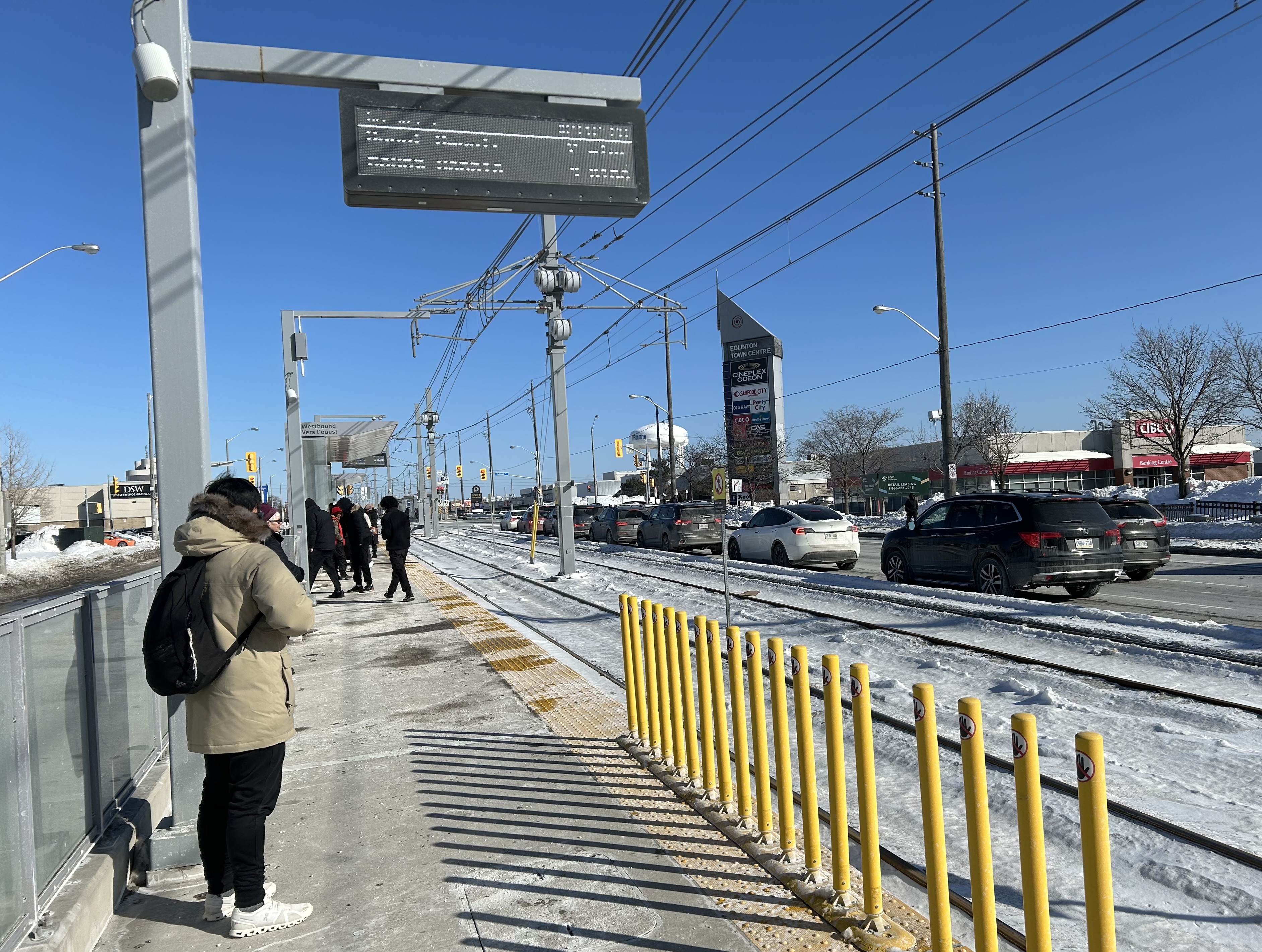
As there was not going to be any opening day events, I chose to only take a short ride on Line 5 with my spouse, riding only between Hakimi Lebovic Station in Scarborough and Avenue Road Station in Midtown Toronto before heading to a family gathering. February 8 was sunny, cold, and windy. The outdoor shelters were definitely not built for adverse conditions, with minimal protection from westerly winds. Still, there was a good crowd waiting for westbound trains at Hakimi Lebovic, which is surrounded by big box retail stores like Walmart, Canadian Tire, and Rona. But it is also the stop for one of Centennial College’s campuses and Scarborough’s Adonis supermarket, which specializes in Mediterranean and Middle Eastern foods, complete with an assembly line-like pita oven. In the long term, this area will be redeveloped with high-rise mixed-use towers.
There were certainly opening day crowds on February 8, enticed by free rides, with the expected hiccups. The trains that afternoon were crowded, though not packed, though there were large crowds at Eglinton Station, the transfer point to the Yonge Subway that opened 72 years prior. With the early morning crowds of transit enthusiasts mostly done, afternoon riders were largely made up of families, with many children enjoying the ride. (The rear sections of the two-car trains were especially popular, with wrap-around windows giving a great view of the surroundings). There were delays caused by passenger alarms (likely pressed in error), and several elevators out of order.
I returned for a much more thorough visit on Tuesday, February 10 to get a better impression of the service on a regular revenue day and compare the Line 5 in limited interim service to the buses it just replaced. I came away mostly satisfied with the LRT, though with some concerns and items that should be corrected.
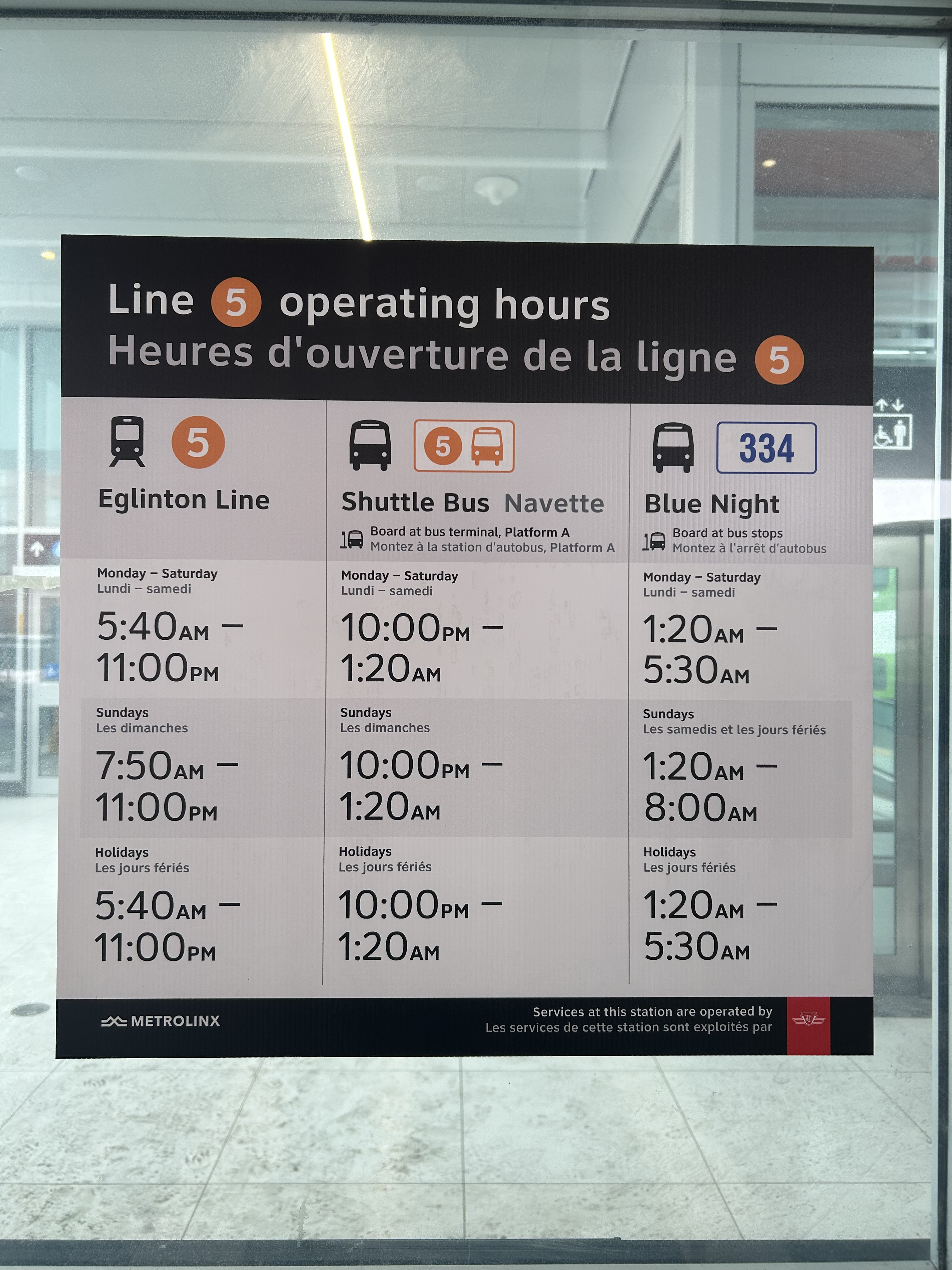
I started at Kennedy Station, now a hub for TTC and GO Transit services, with Stouffville Line trains running hourly between Union Station and Markham weekday middays and weekends, with more frequent unidirectional peak service. The completion of a second track and new platforms through central Scarborough is still a long way off, preventing more frequent and bidirectional peak service on the GO rail line. Kennedy has been the terminal of the Line 2 Bloor-Danforth Subway since 1980, with an extension to Sheppard Avenue and McCowan Road under construction (though also delayed due to tunneling problems). Construction of a busway on the abandoned Scarborough RT route north of Kennedy Station should be complete by the end of this year.
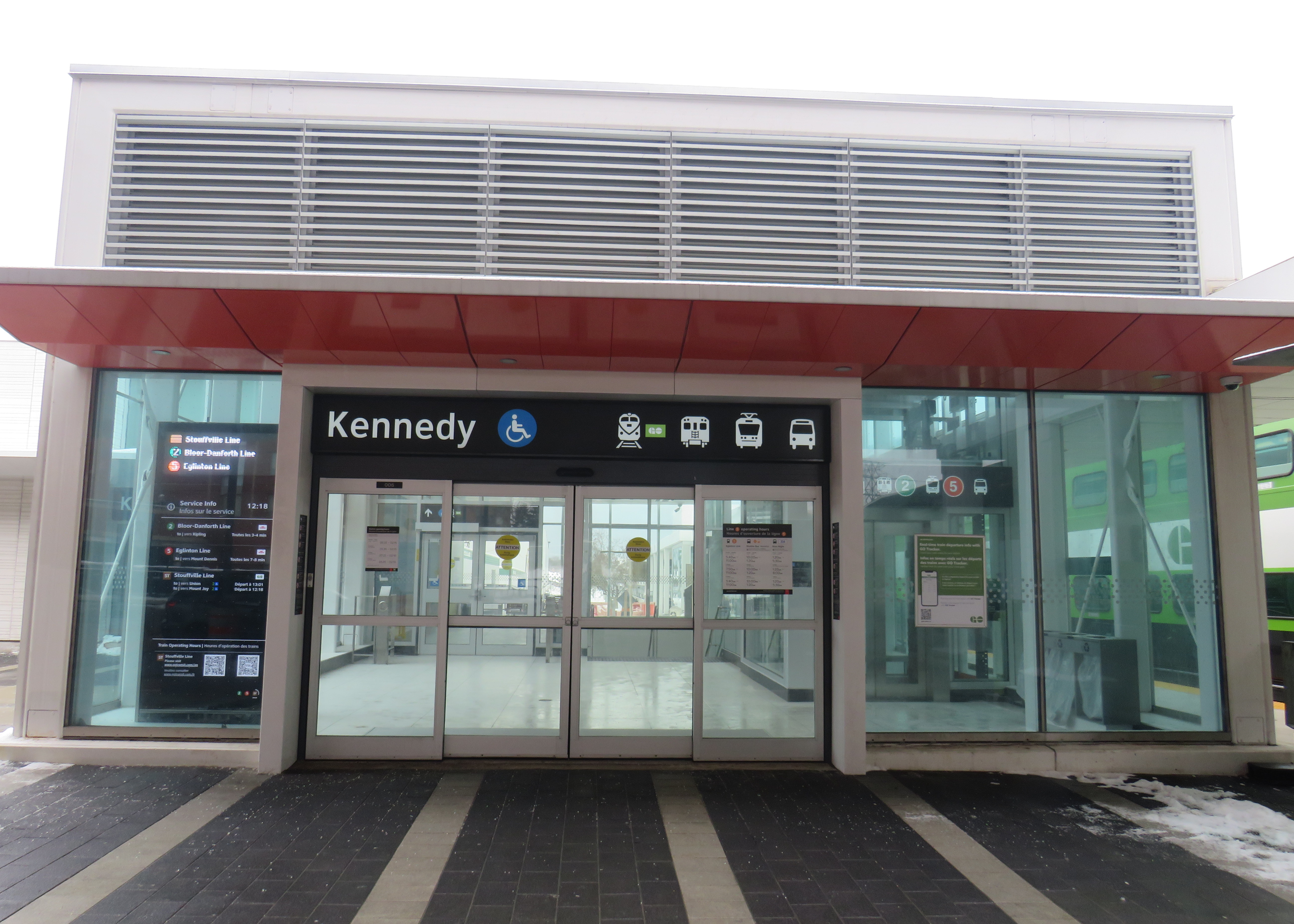
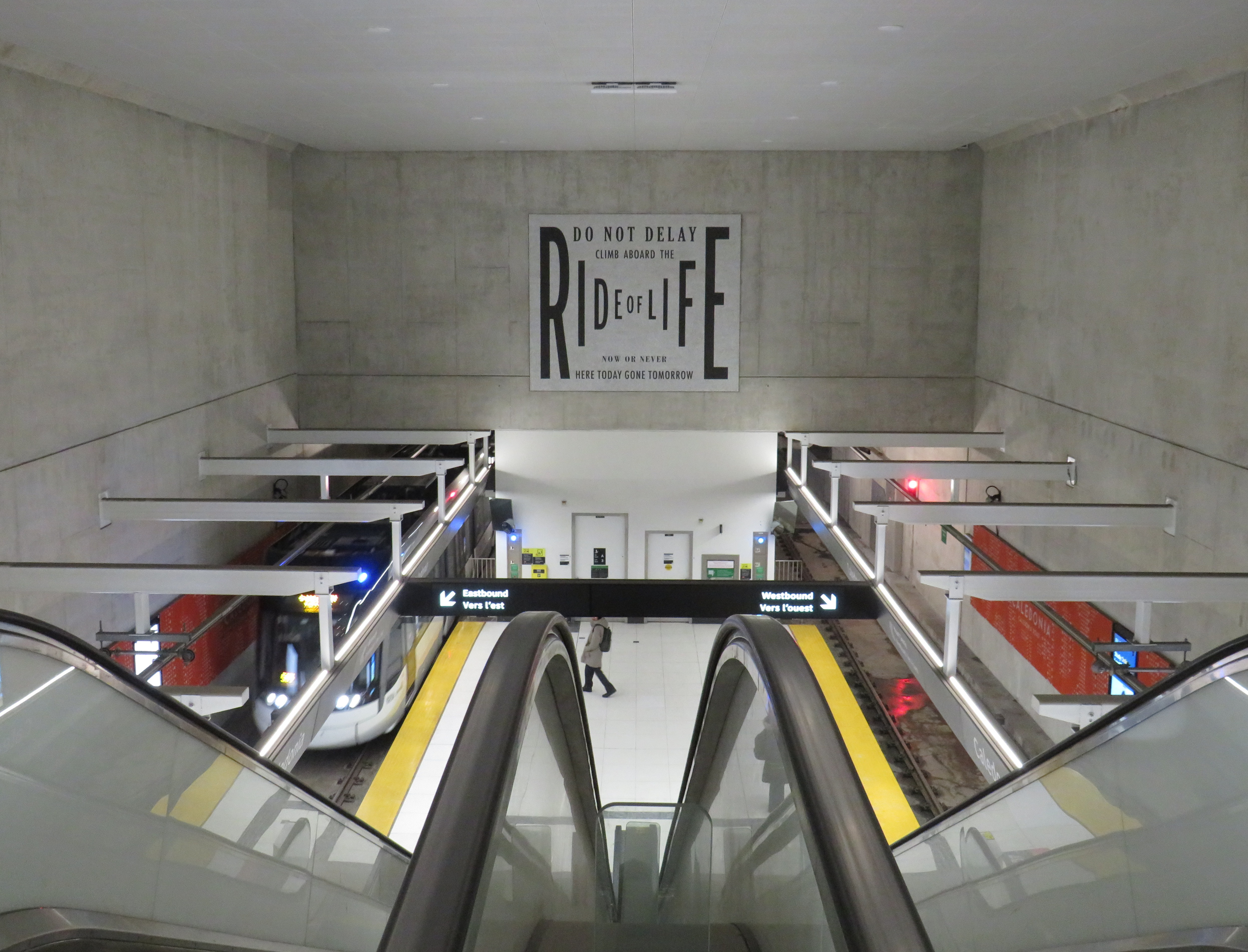
The tunnel between the GO platform and LRT is representative of the underground Line 5 stations. The corridors, mezzanines, and platforms are clean and well lit, though spartan, with white walls, white flooring, and white ceilings, with the occasional sign or public art breaking the monotony.
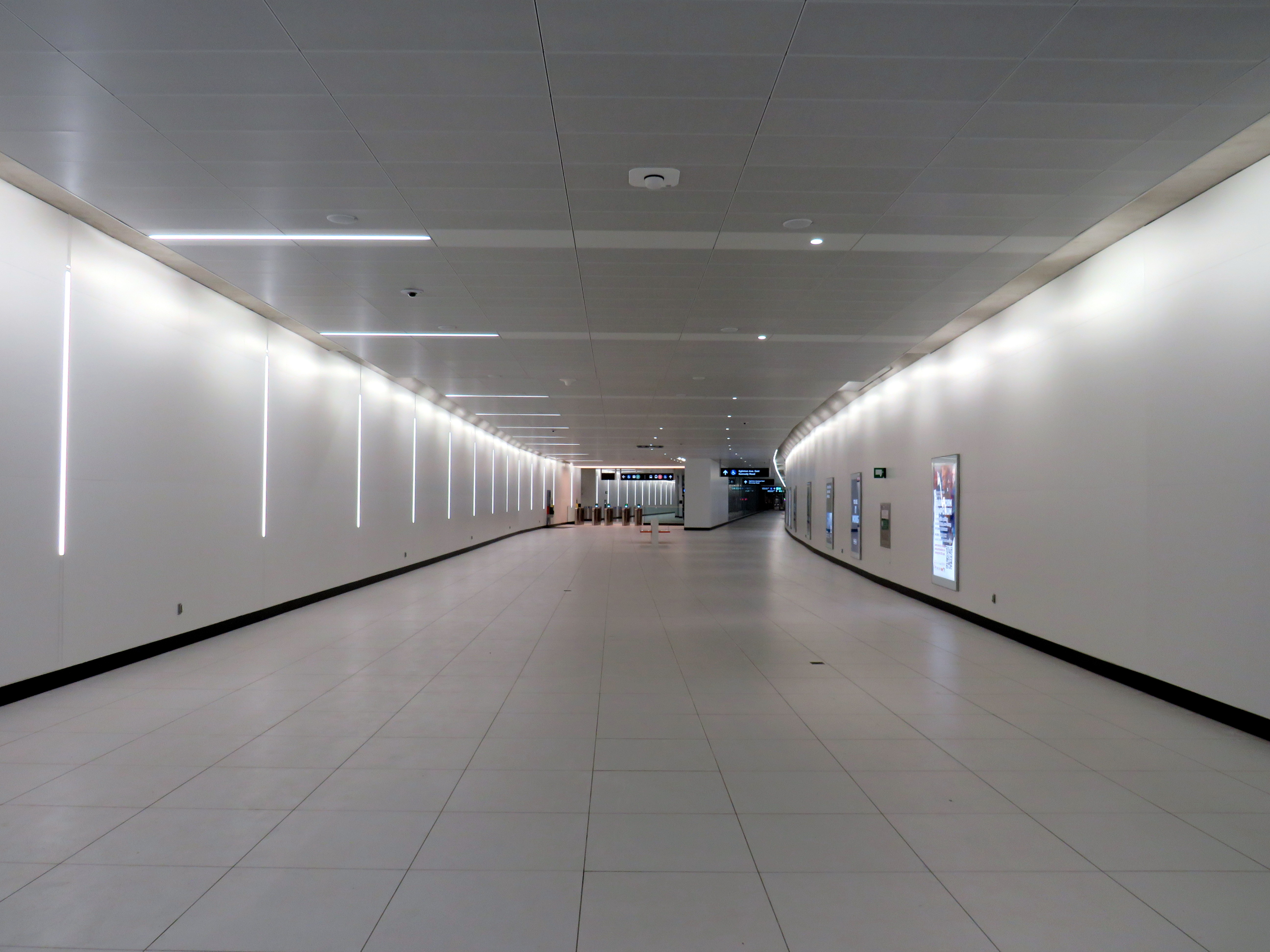
As with the connection at Finch West Station between subway and LRT, two sets of crash doors separate the two rail transit modes, left in the closed position. These should be left in an open position except during an alarm or after hours as they present a barrier for transferring passengers. Barring that, automatic sliding doors should be used instead of requiring push buttons.
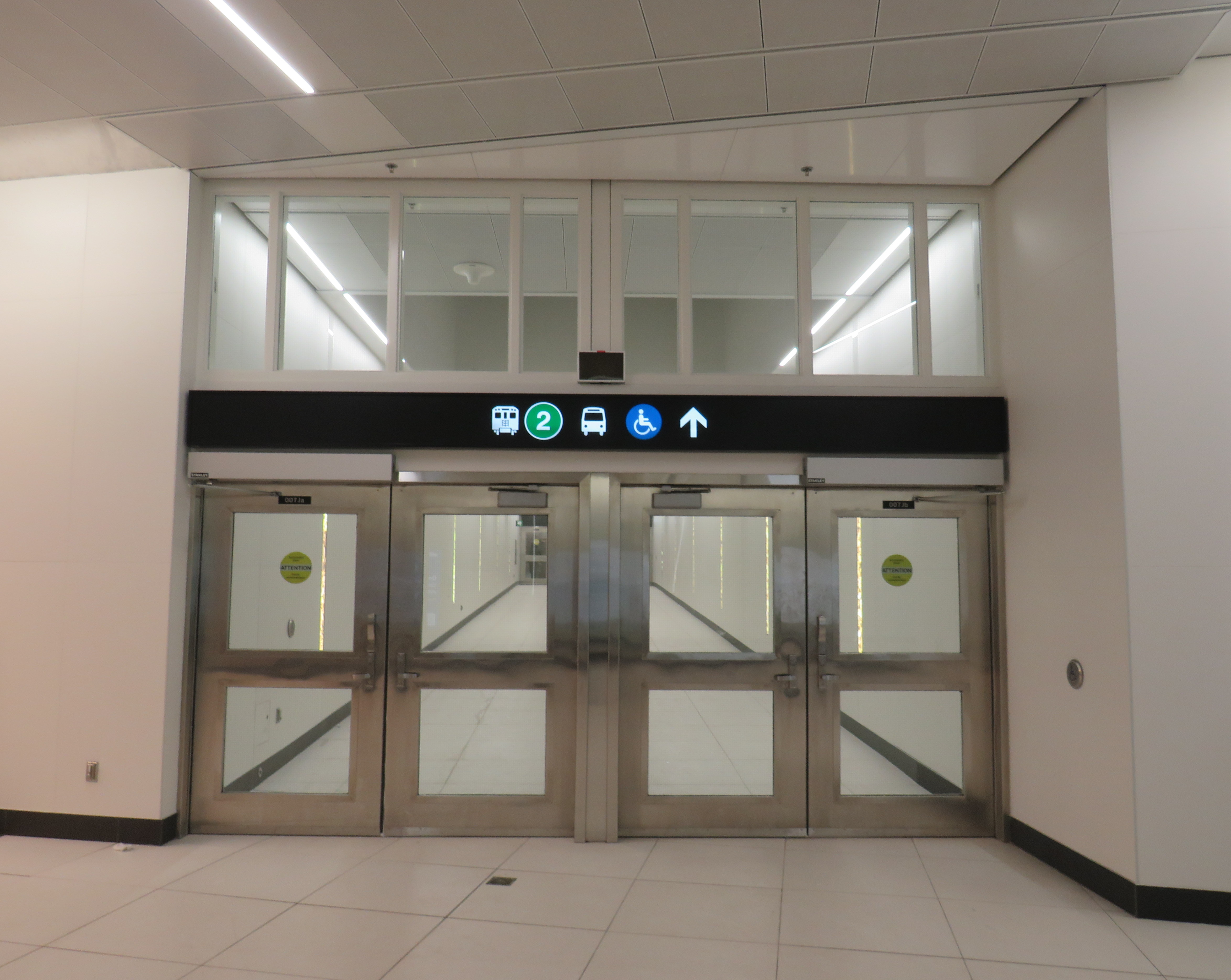
Though the stations are built to permit three-car LRT trains, for now, two-car trains are operating. The platforms are marked with floor decals advising passengers to proceed past the spots allocated for the third car. Proper barriers, such as metal fencing, would make the train positions clearer while discouraging unauthorized track access. Flexible yellow bollards on all platforms line up with the couplers that connect the LRT cars; at enclosed stations, automatic announcements warn passengers to stay away from the yellow warning line when someone steps on it.
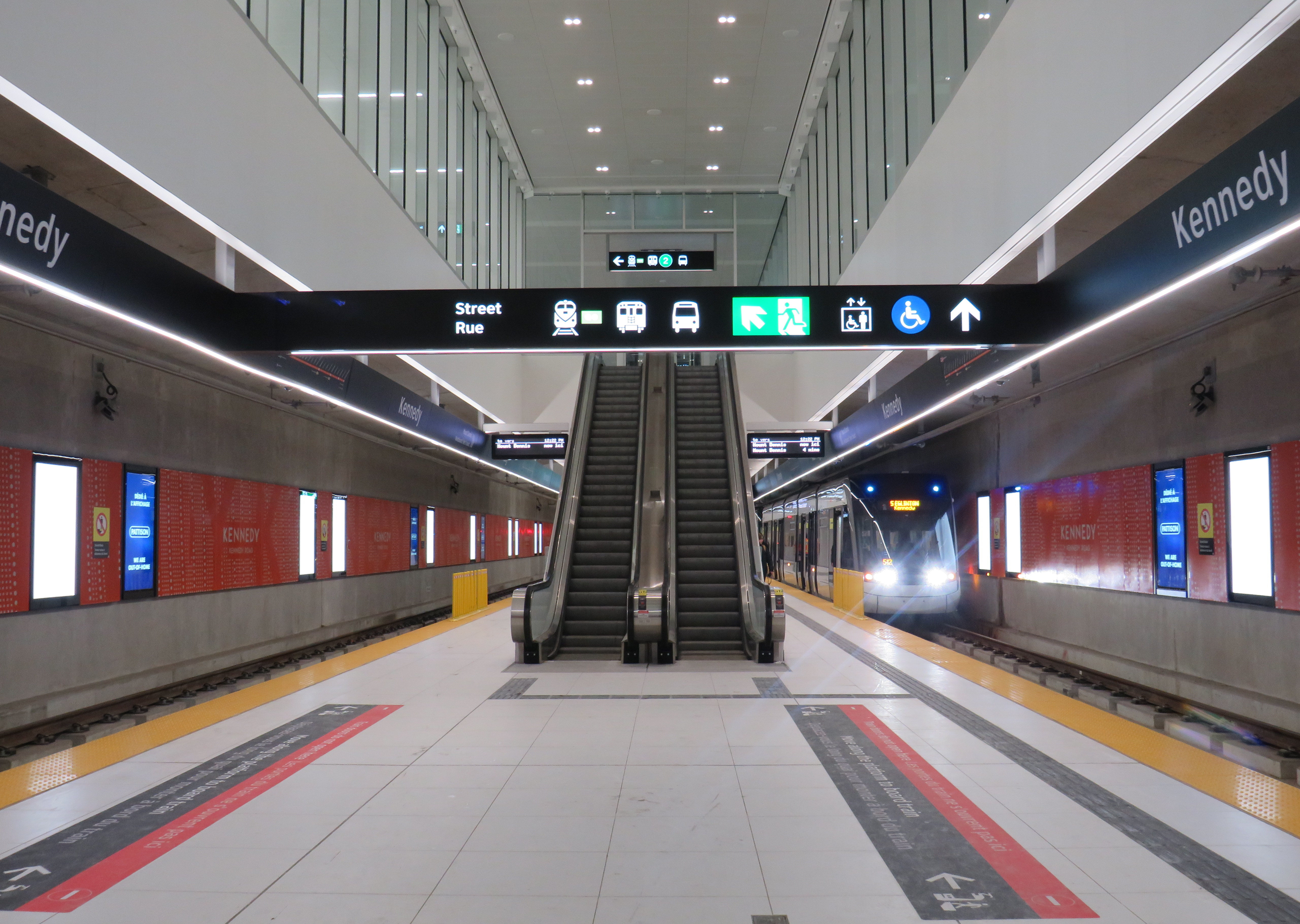
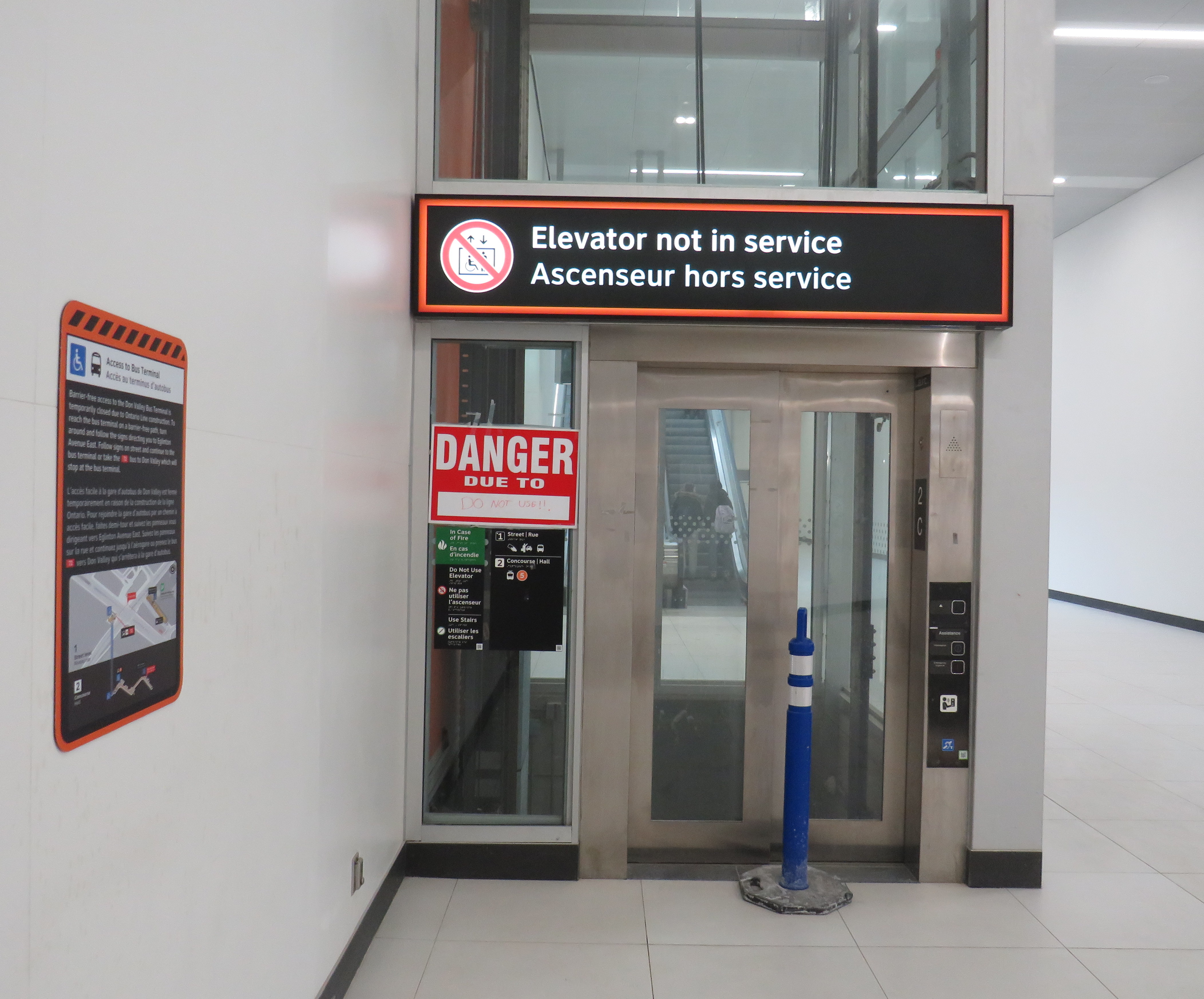
The confusingly named Don Valley Station at Don Mills Road (previously known as Science Centre Station before that nearby attraction was closed prematurely) is an important bus transfer point to the busy 25/925 Don Mills, 54/954 Lawrence East, 72C Pape, and the 100 Flemingdon Park buses, along with the less-frequent 162 and 191 routes. Unfortunately, the elevator between the fare-paid bus platform and the LRT is closed for long-term construction on the Ontario Line, which will terminate at elevated platforms at Don Valley Station. The bus loop is also partially closed off, with the through 25/925 buses stopping on street. Though signage (with an orange border) is quite clear about the elevator outage, it seems like a poor design choice to have the elevator within the Ontario Line construction zone and not provide some redundancy, like a second elevator, given the importance of this bus transfer point.
The bus terminal area is quite large but does not have any public washrooms despite its size and importance. This feels like a significant oversight given the number of buses that serve it as well as its future role as a connection with the Ontario Line. New washrooms were included at Mount Dennis, Cedarvale, and at Eglinton Stations (in addition to the washrooms already found in the subway station area).
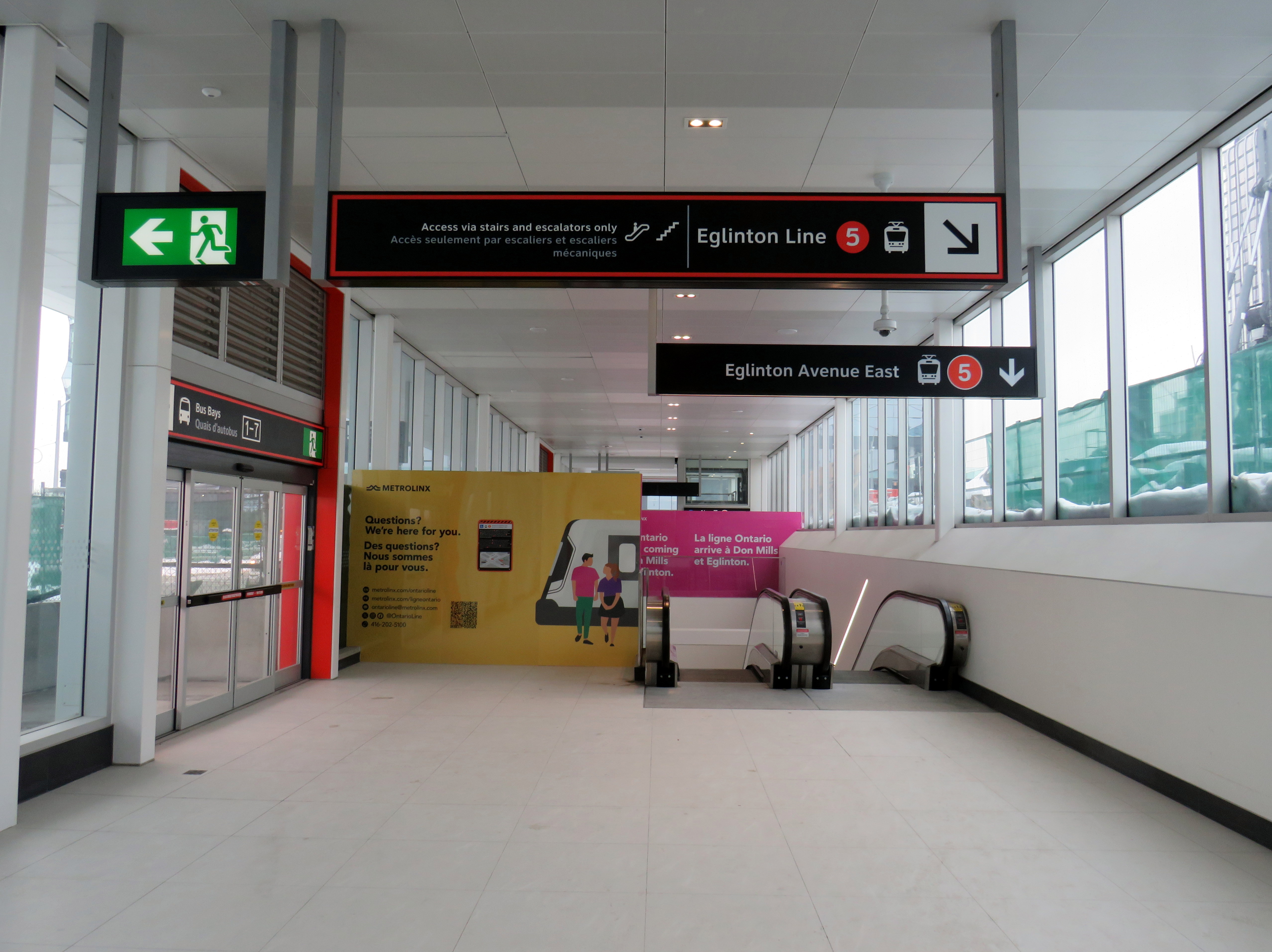
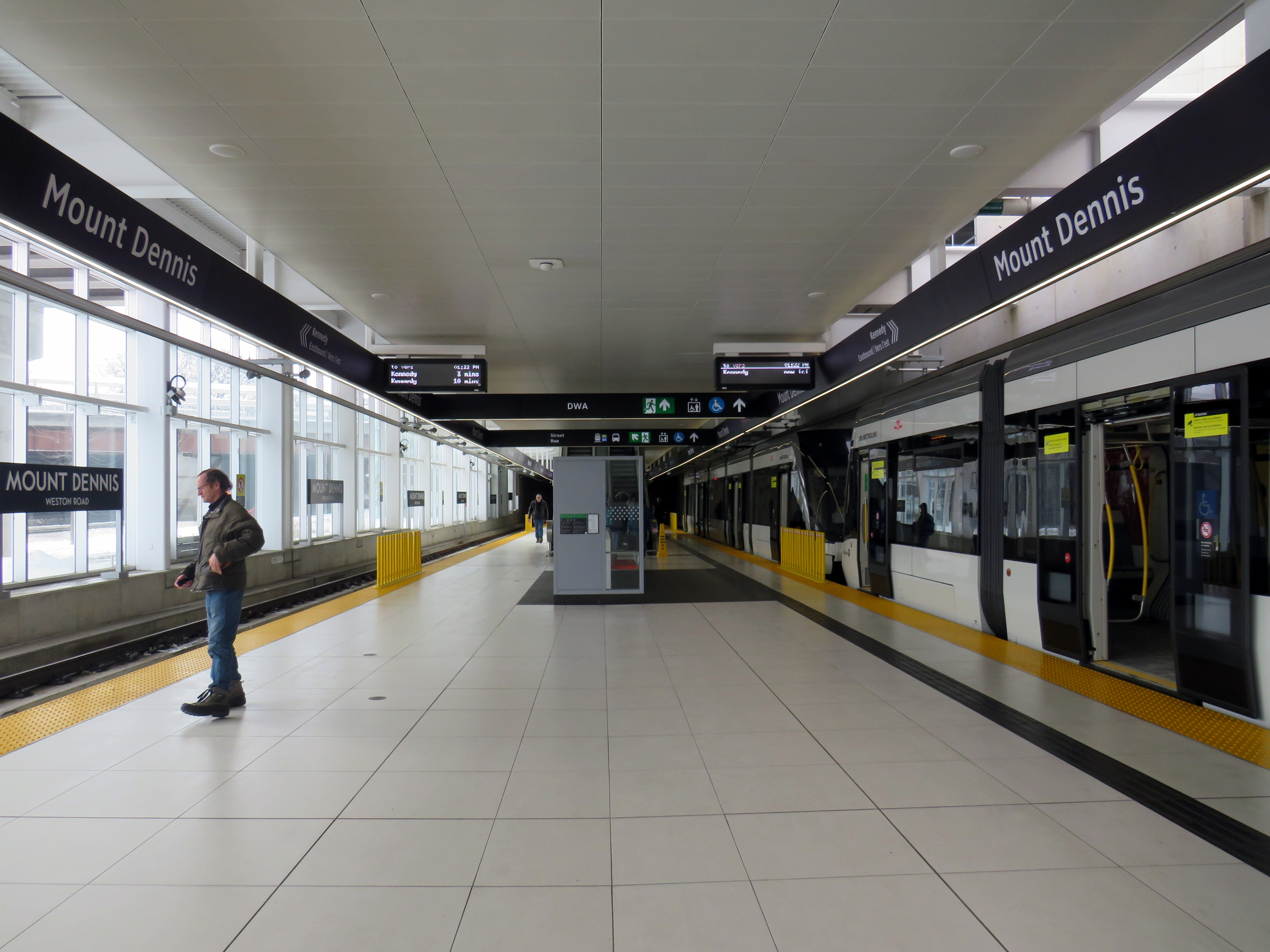
Transfers to the subway at Cedarvale and Eglinton Stations are relatively easy, despite the engineering challenges of connecting the new LRT with existing subway stations that were not planned for such connections. (This only makes the awkward Finch West Station transfer even more ridiculous in comparison as that subway station was built while Line 6 was being planned). And though the underground sections are limited to a top speed of 60 km/h for now, the ride between Laird and Mount Dennis felt speedy.
The table below indicates the travel times for westbound and eastbound trains on Tuesday February 10. Despite an 8-minute delay, the westbound trip was 25 minutes faster end-to-end than the bus two weeks prior, though the mostly surface running portion between Kennedy and Laird was just one minute faster than the bus on Tuesday, January 20.
On the return trip eastbound to Kennedy, the total trip was 62 minutes faster — over twice the speed — of the rush hour buses, with 12 minutes saved between Laird and Kennedy. The overall travel times (minus the 8-minute westbound delay) were similar to those reported by fellow transit watchers on social media during the opening day. Because of the exclusive right of way, traffic conditions do not impact the running time at different times of the day.
Travel times on Line 5 on Tuesday, February 10, 2026
| Westbound (read down) | Stop/Station | Eastbound (read up) |
|---|---|---|
| 12:23 Dep. | Kennedy | 3:14 Arr. |
| 12:26 | Ionview | 3:12 |
| 12:27 | Birchmount | 3:10 |
| 12:30 | Golden Mile (Warden Ave.) | 3:06 |
| 12:31 | Hakimi Lebovic | 3:04 |
| 12:32 | Pharmacy | 3:01 |
| 12:25 | O’Connor (Victoria Park Ave.) | 2:58 |
| 12:38 | Sloane (Bermondsey) | 2:54 |
| 12:41 | Wynford | 2:51 |
| 12:43 | Aga Khan | 2:48 |
| 12:44 | Don Valley (Don Mills Rd.) | 2:46 |
| 12:46 | Sunnybrook Park (Leslie St.) | 2:44 |
| 12:51 | Laird | 2:41 |
| 12:53 | Leaside (Bayview Ave.) | 2:39 |
| 12:55 | Mount Pleasant | 2:26 |
| 12:57 | Eglinton (Yonge St.) | 2:34 |
| 12:59 | Avenue Road | 2:33 |
| 1:00 | Chaplin | 2:31 |
| 1:02* | Forest Hill (Bathurst St.) | 2:29 |
| 1:10 | Cedarvale | 2:27 |
| 1:12 | Oakwood | 2:25 |
| 1:14 | Fairbank (Dufferin St.) | 2:24 |
| 1:17 | Caledonia | 2:21 |
| 1:19 | Keelesdale (Keele St.) | 2:20 |
| 1:21 Arr. | Mount Dennis | 2:18 Dep. |
| 62 minutes** | Total travel time | 56 minutes |
** Would have been 54 minutes without delay
Room for improvements
Line 5 operates more like a subway than a streetcar, even with the slower surface section east of Laird Station. Travel times are improved throughout the route. But there were some apparent issues. Luckily, many of those can be fixed, or at least mitigated.
There was still some times when the trains were operating with service gaps or bunching, even in the underground section. These were likely the results of minor service disruptions (like the one encountered on my westbound trip) or poor traffic signal priority on the surface section. The close proximity of traffic signals between Birchmount Road and Victoria Park Avenue is an issue that needs to be mitigated with more aggressive signal priority, at least at the secondary intersections of Pharmacy Avenue, Hakimi/Lebovic, and Sinnott Road where there would be few delays to north-south buses. On one ride, the train I was riding managed to hit every red light between Ionview and Credit Union Drive.
Though every station has elevators, several were not working during my two visits, and the long-term closure of the elevator between LRT and bus terminal at Don Valley is especially frustrating. Though there is an alternative elevator to street level on the southwest corner of Eglinton Avenue and Don Mills Road, it requires a long trek across two sides of the busy intersection and over to Gervais Drive to access the connecting buses.
The trains themselves are an assault to the auditory senses, with lengthy recorded announcements that not only include next station announcements (which are useful) but also reminders to sit or hold on to handrails when departing every stop. Torontonians have been riding electric streetcars for over 130 years, and subways for over 70 years and so these announcements in English and French (it being a Metrolinx project, bilingualism is mandated) are redundant and slightly annoying.
But the promise of higher speeds and better signal priority should address most of these early-day concerns. For now, at least, Eglinton seems to be working fine, though crowding and daily operations should be monitored closely to ensure it only gets even better.
 Sean Marshall