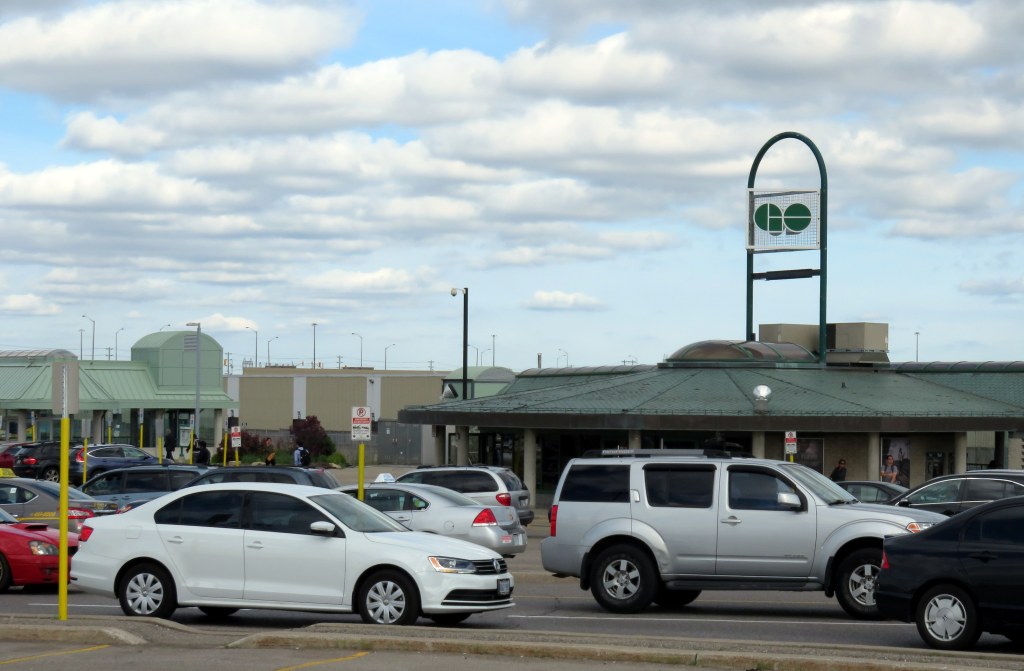
 Bramalea GO Station
Earlier this week, I took a train from Union Station to Bramalea, as I was preparing for a walk that I will hosting on Sunday exploring Canada’s first satellite city.
Bramalea Station opened in 1973 when the Georgetown GO train service — GO Transit’s second commuter rail line — was inaugurated. The station is located at the southwest corner of Steeles Avenue and Bramalea Road, surrounded by factories, warehouses and busy roads and highways.
There’s little to fault GO Transit for locating its station where it is. In 1973, GO was still in its infancy, launching its first rail services along the Lakeshore Line in 1967. It wasn’t anything more than a commuter rail service, offering downtown-bound commuters an alternative to driving all the way in; free and ample parking was part of that successful model. In 1967, GO Transit was created to reduce the need to upgrade provincial highways; it allowed Downtown Toronto to become a bustling global financial centre without needing huge parking lots and garages and more freeways feeding into it; .
The GO station is located in Bramalea’s south end, next to the CN mainline, surrounded by land designated for industrial development since 1959, when work began on that new suburb. The station is located near a waste-to-energy plant (an incinerator), and is located under Pearson Airport’s flight paths. Since GO insists on providing free parking to its customers, Bramalea (unlike, say, Downtown Brampton) isn’t a bad place to put lots of parking spots; in total, Bramalea has 2,377 parking spots. And since Bramalea Station is adjacent to Highway 407, it’s a major transfer point for GO bus routes to York University, Hamilton, Guelph and Kitchener.
But like too many GO stations, Bramalea is needlessly hostile to pedestrians and cyclists, and is even hostile for many local transit users. As Metrolinx, the agency responsible for GO Transit, pursues Regional Express Rail (RER), it has a responsibility to improve Bramalea Station. As it exists right now, Bramalea is a terrible transit terminal.
Regional Express Rail promises to change GO Transit’s rail system from a commuter rail service to a true regional rail network. It promises frequent, electric train services serving Toronto and many inner-905 suburbs. But the initial plans focus on tracks owned by Metrolinx. This poses a problem for Brampton. Bramalea, not urban Downtown Brampton, will be the terminus of most GO trains.

 Map of GO Kitchener Corridor showing proposed GO RER rail services between Union Station and Kitchener. Frequent, 15-minute services will only go as far west as Bramalea Station; no rail services at all are planned during evening and weekend hours west of Bramalea. [Source]
Metrolinx owns the rail corridor between Union Station and Halwest Junction, which is located just east of Bramalea Station. Between Halwest and Silver Junction, near Georgetown, the tracks are owned by CN and makes up part of its main freight corridor between the United States, Toronto, and eastern Canada. Either major rail expansion through Downtown Brampton will be required for additional GO services, or the construction of a new rail corridor, known as the “Missing Link,” will need to be built.
Extending GO RER to Downtown Brampton and to Mount Pleasant Station is necessary. Downtown Brampton is an urban growth node and a major transit hub; Mount Pleasant is an interesting transit-oriented mixed-use development. The transfer from train to bus can add up to 30 minutes to trip times to these stations versus taking a direct train.
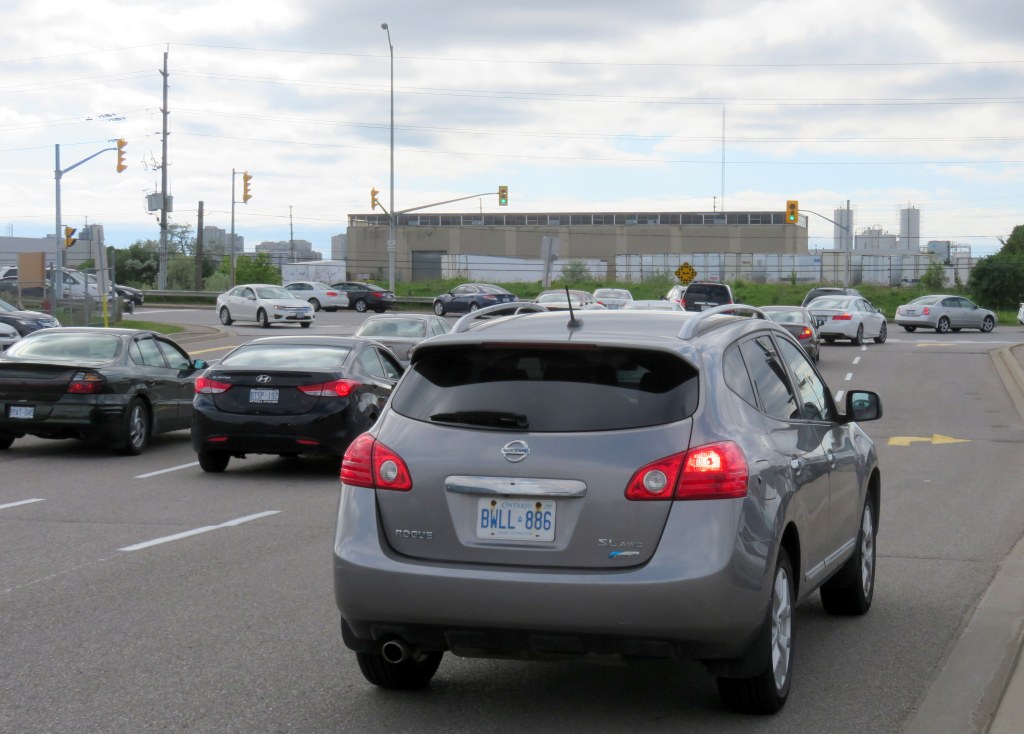 GO Transit commuters escaping the Bramalea GO Station after an afternoon train from Union Station arrives.
Bramalea Station has a bus loop adjacent to the train platforms which makes many bus-train connections relatively painless. But not all Brampton Transit routes serve the station directly: Routes 11 Steeles and 511 Zum serve stops on Steeles Avenue, while Route 115 Airport Express only stops on Bramalea Road.
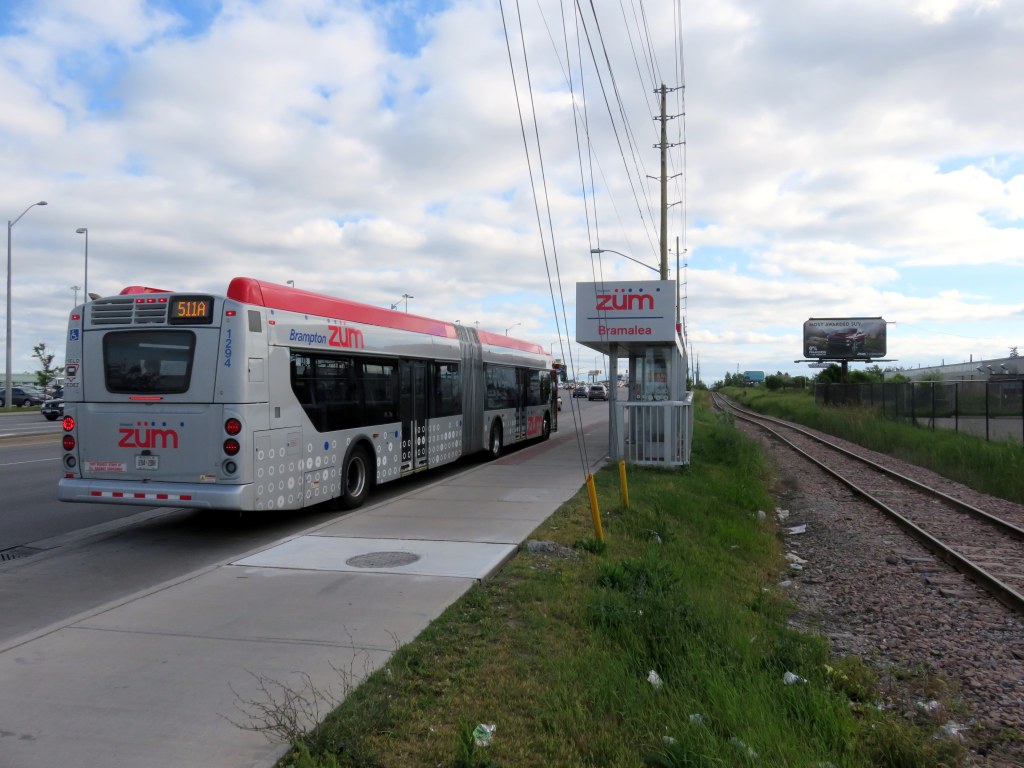 Brampton Transit bus stop for Routes 11 and 511 westbound on Steeles Avenue
To get to these Brampton Transit stops, the vulnerable pedestrian must first cross Bramalea Station’s gigantic parking lot, then make their way across up to 14 traffic lanes at the intersection of Bramalea Road and Steeles Avenue, including channelized right-turn lanes on all four corners. With heavy car and truck traffic, the intersection is very intimidating to cross on foot or by bicycle.
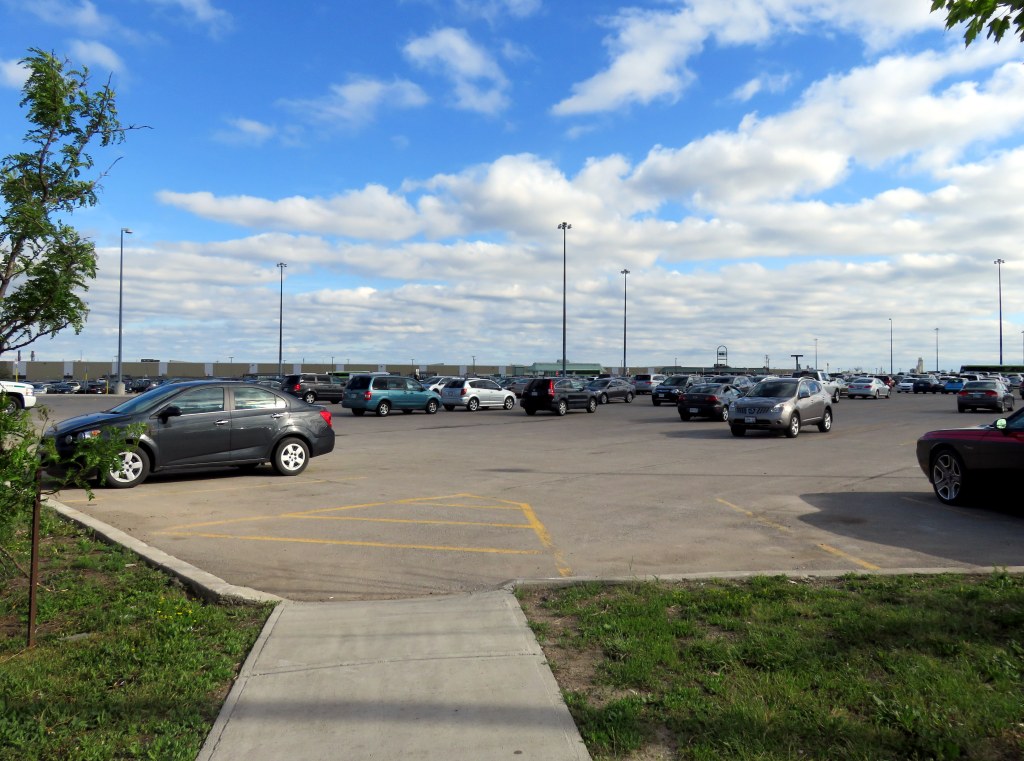
The pedestrian entrance to Bramalea GO Station from the corner of Bramalea Road and Steeles Avenue leads directly into a parking lot
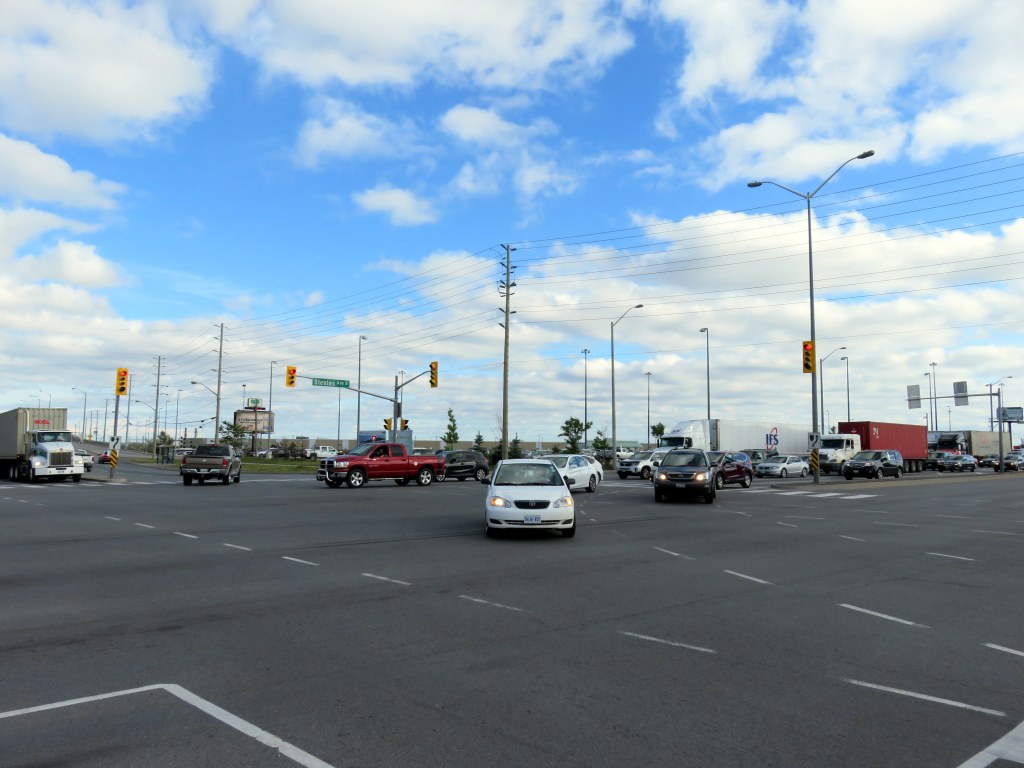
The corner of Steeles Avenue and Bramalea Road
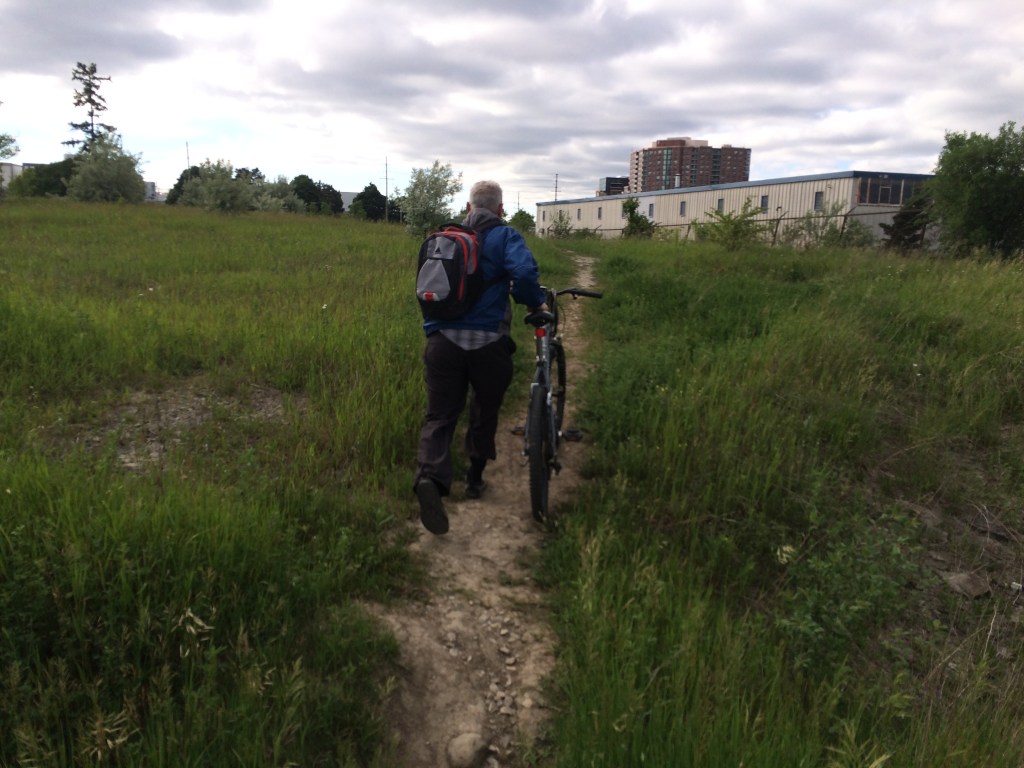
There is a well-worn, yet not legitimate path between the signalized crossing at the GO Transit parking lot and Steeles Avenue to Orenda Road to the north. The path crosses an industrial rail spur and cuts across vacant land. To the north are two new rental high rise towers, and the residential A and B Sections of Bramalea.
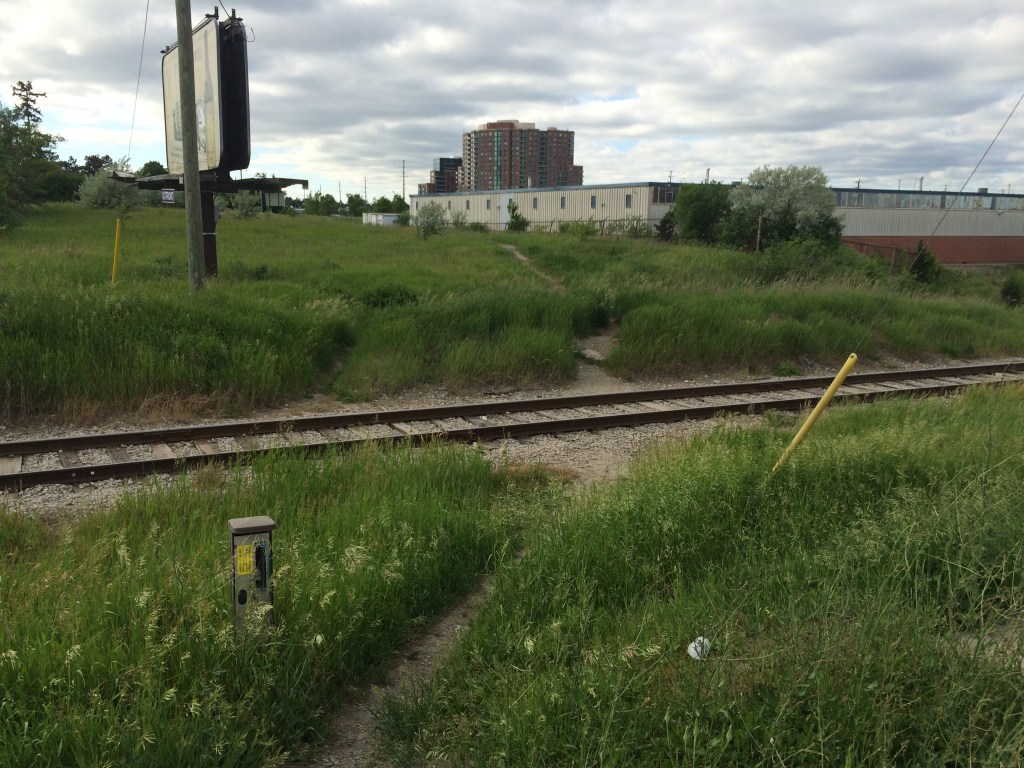 A well-worn, yet unauthorized path is probably the safest pedestrian route to nearby residential areas to the north.
The path is clearly visible between Steeles Avenue and the corner of Orenda Road and Victoria Crescent.
Recommendations
Unless Metrolinx is determined to extend GO RER through Brampton, where better transit connections and more passengers can be properly served, many modifications should be made to Bramalea Station to improve bus connections and promote active transportation.
- Improve walking and cycling routes. Metrolinx and the city should acknowledge the well-known shortcut to Orenda Road; it should be graded, paved and turned it into a useful multi-use path. The City of Brampton and Region of Peel could improve pedestrian safety at the Bramalea/Steeles intersection by removing the channelized right turn lanes and improving the existing crosswalks. Bramalea Road should have protected bike lanes as well.
- Improve the bus loop, making it easier for buses to enter and exit, and re-route Brampton Transit routes 11, 511 and 115 to the station. I was told that there were plans for Bramalea Station improvements, but I could not find any specifics.
- Improve pedestrian and cycling routes through the parking lot. Pedestrians should not have to dodge cars in an inhospitable parking lot as they walk to public transit.
- The Canadian Tire warehouse on the southeast corner of Bramalea Road and Steeles Avenue will be moving to a new facility in Caledon. The large parcel of land would be ideal for office and mixed-use development; if designed well, it could promote more pedestrian activity at this transit node.

Bramalea Station should be treated a temporary, not a permanent terminus for GO RER. It’s a bad location, distant from high-density residential and commercial development, and it’s a far distance from most of Brampton’s population. But at least Bramalea is useful for parking and bus connections, so it is, and should remain a logical and important stop on the Kitchener corridor.
In the meantime, there’s plenty that Metrolinx, the City of Brampton, and the Region of Peel can do in the short term to make some lemonade out of a lemon of this railway station.


Leave a Reply