Tag: Bramalea

  • Safer streets need more than just speed cameras

    Safer streets need more than just speed cameras

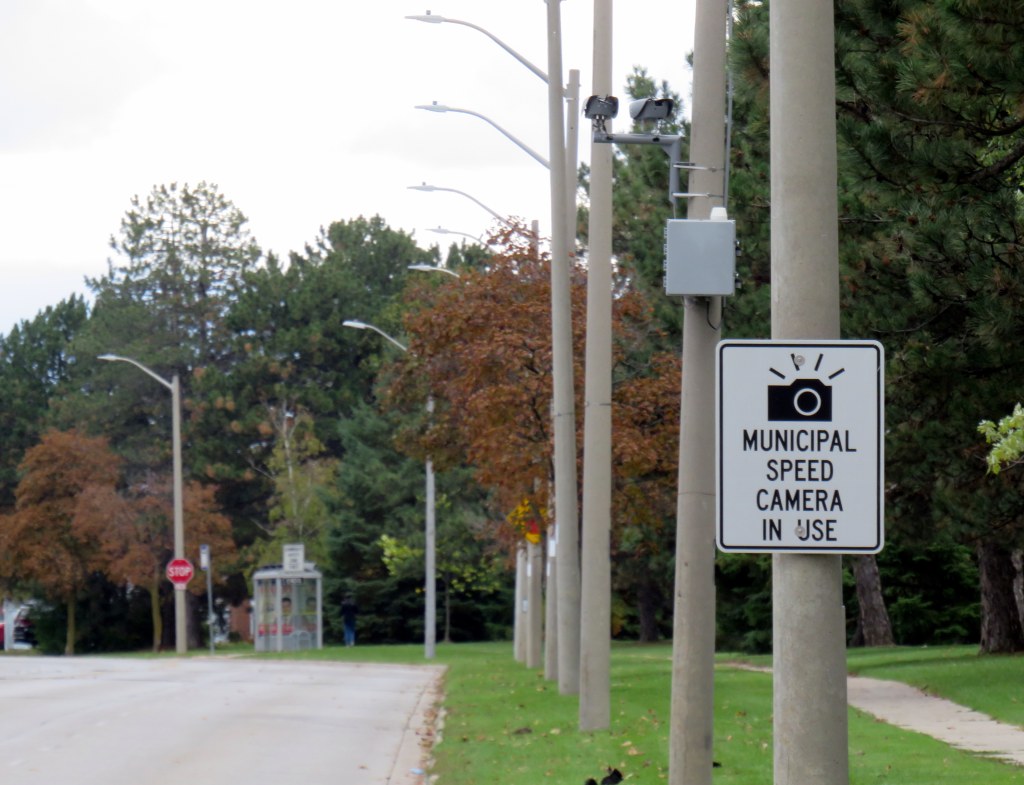
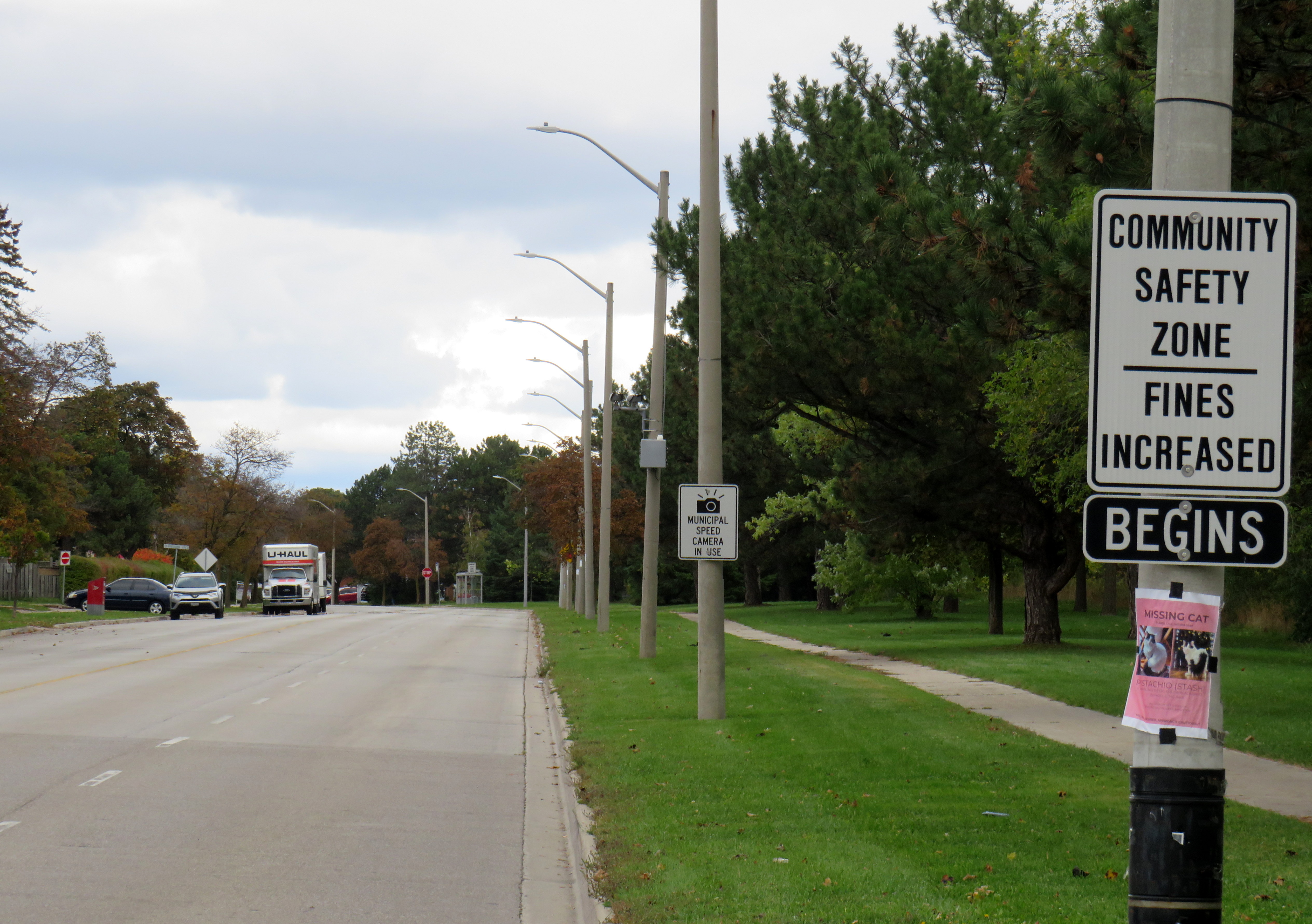
    Dearbourne Boulevard, a four-lane collector street designated a community safety zone

    Last week, while visiting Brampton, I came across one of the hundreds municipal speed enforcement cameras that Premier Doug Ford’s government wants to rip out across the province. The camera, on a four-lane collector street in Bramalea, is in a residential area, adjacent to several parks, including a pathway to a local public school, in an area designated a community safety zone. This is precisely the type of place that the government intended speed enforcement cameras would go when they were permitted under provincial legislation in 2019.

    In a September 2025 government press release touting the move as “protecting taxpayers,” Ford, whose government was in power when these cameras were permitted, claimed that the program became “a cash grab;” supporting quotes included those from former Liberal leader and current Vaughan mayor Steven Del Duca, a representative of the province’s municipal police unions, and a spokesperson from the right-wing Canadian Taxpayers Federation.

    If only there was a simple, effective way for taxpayers to avoid the so-called “cash grab.”

    It was interesting who was not quoted in that press release, including doctors, educators, safety advocates, and even police brass. Ontario police chiefs support automated speed enforcement. It is also worth noting most municipalities support the cameras; Vaughan is one of only a few municipalities that recently rejected the road safety program; Del Duca was joined by just two other conservative-leaning mayors.

    Of course, the arguments against the cameras, which in Toronto, were repeatedly vandalized or stolen, never held water. There were no tickets mailed out to drivers going just a few kilometres over the limit. Furthermore, speed enforcement was never a “cash grab” as the fines collected went to pay for the administration of the program, to “Vision Zero” works, such as the installation of speed cushions and improved pedestrian crossings, and to the province, which the collects the victim surcharges added to every Highway Traffic Act fine. The City of Brampton found that not only were the cameras effective in reducing speeds, they had the support of a majority of its residents.
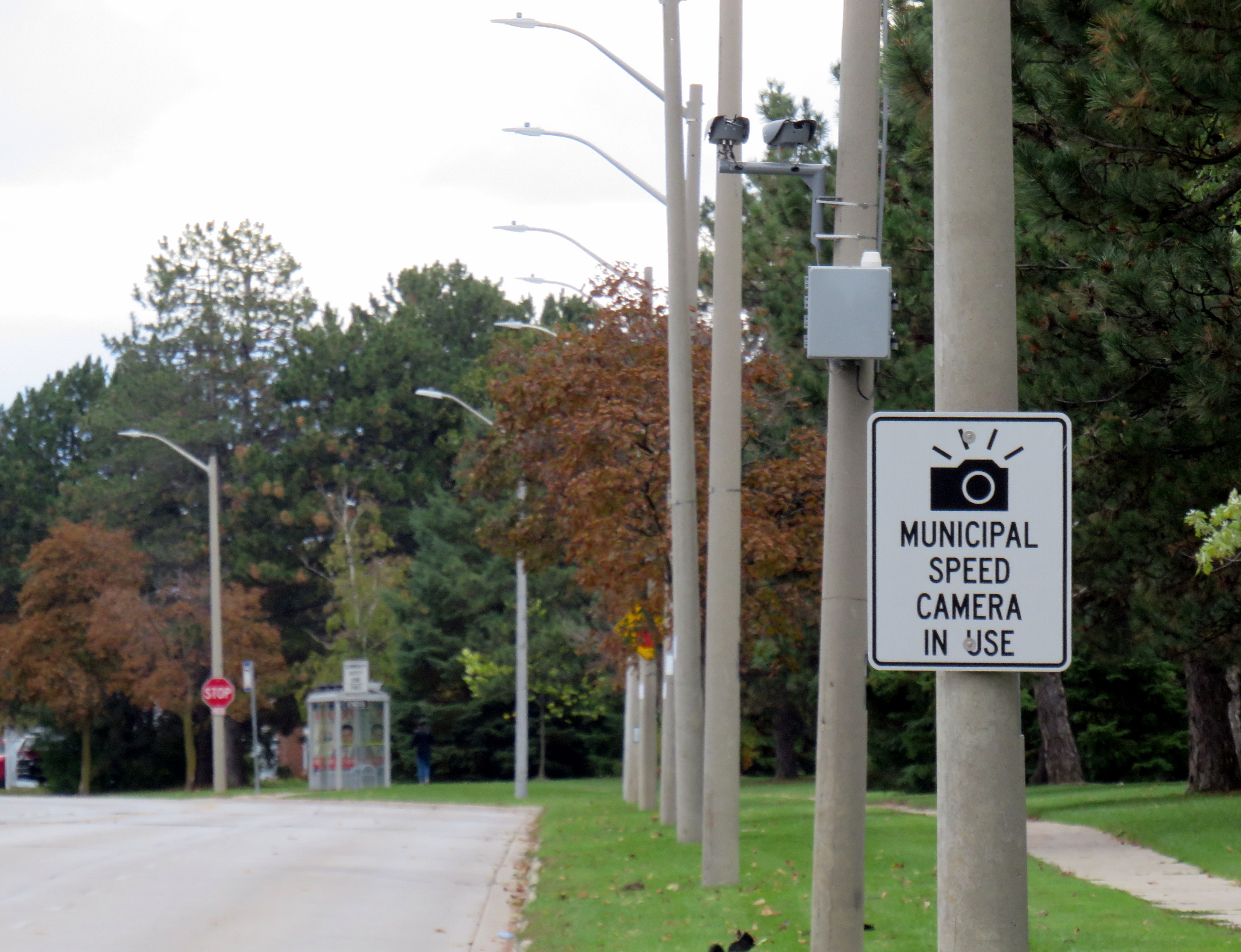
    Municipal speed camera

    That said, while visiting Dearbourne Boulevard, I realized that speed enforcement cameras on their own are not effective in creating safer streets.

    Dearbourne Boulevard serves one of the oldest parts of Bramalea, established in the early 1960s as a self-contained satellite town, where residents were expected to drive to most destinations. After amalgamation into the City of Brampton, traffic increased and more transit became available. Nearby, several newer high-rise apartment buildings were built, walking distance to Bramalea GO Station. A bus route, 16 Dearbourne, runs along the street, connecting the neighbourhood with several shopping plazas, the GO Station, and the transit hub adjacent to Bramalea City Centre.

    Despite having low traffic and serving a residential area (an industrial area is just to the south, but it is inaccessible from Dearbourne), it is still a wide four lane street. The only traffic signal is at Bramalea Road; there are two all-way stops at Delamere Drive and Dorchester Road. At the east end of Dearbourne, the T-intersection with Balmoral Drive is controlled only be a stop sign, with two long and gentle right turn slip lanes. The speed limit is 50 km/h, and there are no speed cushions, curb extensions, or even painted buffers to indicated that drivers should go slower. In October 2022, a pedestrian was struck and seriously injured at one of the two all-way stop intersections; the driver fled the scene.

    Though to its credit, the City of Brampton has been improving many suburban streets and roads to reduce speeds and promote walking and cycling. Charolais Drive, Vodden Street, Central Park Boulevard, and Vodden Road saw traffic lanes replaced by new cycling lanes, with little pushback from residents. Dearbourne Boulevard was also slated for improvements in 2021-2022, but that work was not yet started.
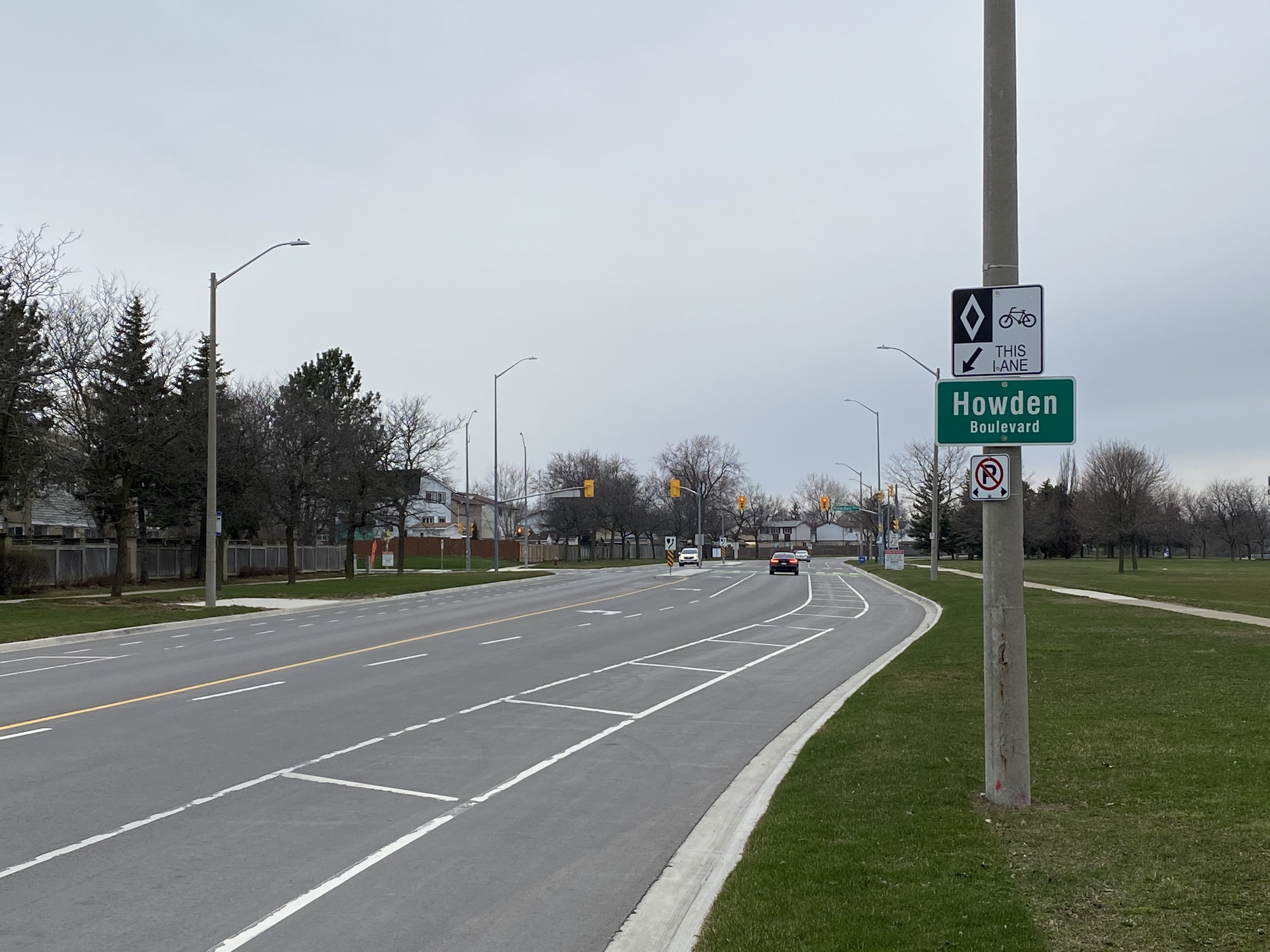
    Central Park Boulevard, Howden Boulevard, and Vodden Street were among several four-lane collector roads tamed with new cycling infrastructure in the last five years, creating a new through east-west cycle route

    Now, it might be too late. Not only will the speed camera be prohibited under a bill being rushed through the provincial legislature (going around the consultation process where concerned citizens, advocates, or safety experts could depute to MPPs), but another omnibus bill was just introduced, which if passed, would prohibit all Ontario municipalities from removing general traffic lanes to install cycling infrastructure, or even transit lanes and on-street patios.

    Given the provincial government’s increasing hostility to anything that inconveniences drivers, be it road tolls, vehicle license renewal fees, automated speed enforcement, or bike lanes, it leaves municipalities fewer options to protect their most vulnerable road users and promote sustainable and healthy transport options. Though Doug Ford claims that alternatives like flashing lights and more signs would do the trick, they do not do much to deter aggressive and dangerous drivers, unlikely to get caught.

    For streets like Dearbourne Boulevard, there are a few options. Lowering the speed limit to 40 km/h should be a first step. The redundant outer two lanes could be converted to parking-only spaces, with curb extensions and bollards at intersections. The slip lanes at Balmoral Drive should be ripped out.

    Roads designed in the 1960s and 1970s for traffic that never really materialized need to be rethought, with or without Queen’s Park’s support.
  • A better Bramalea Station, finally

    A better Bramalea Station, finally

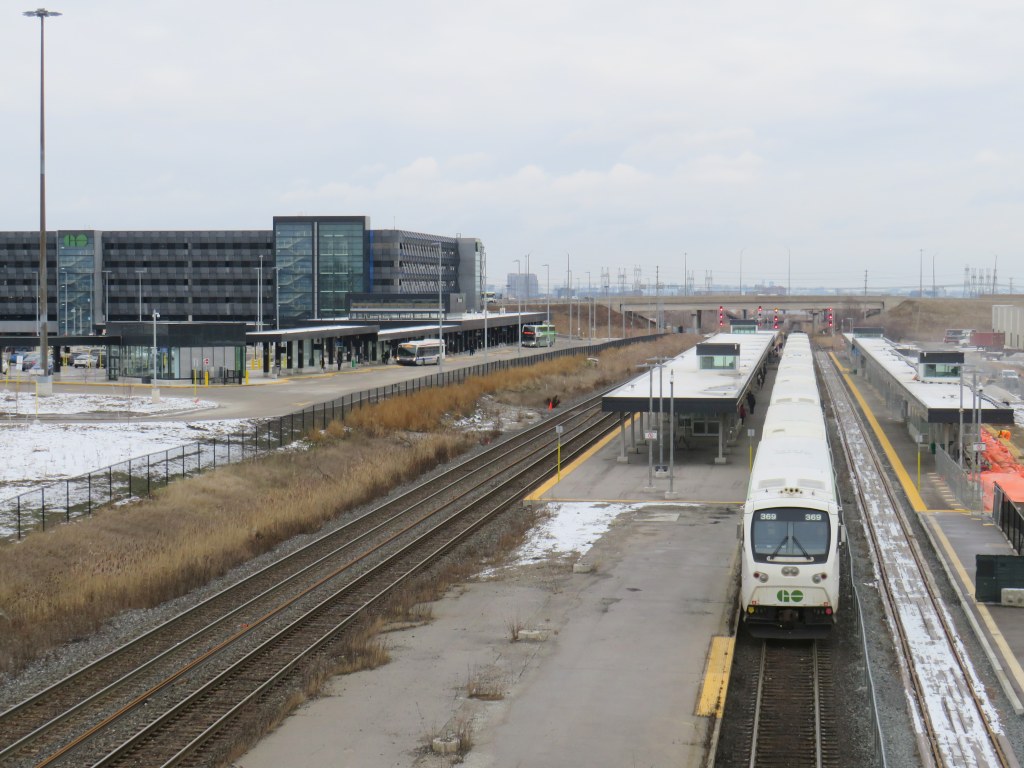
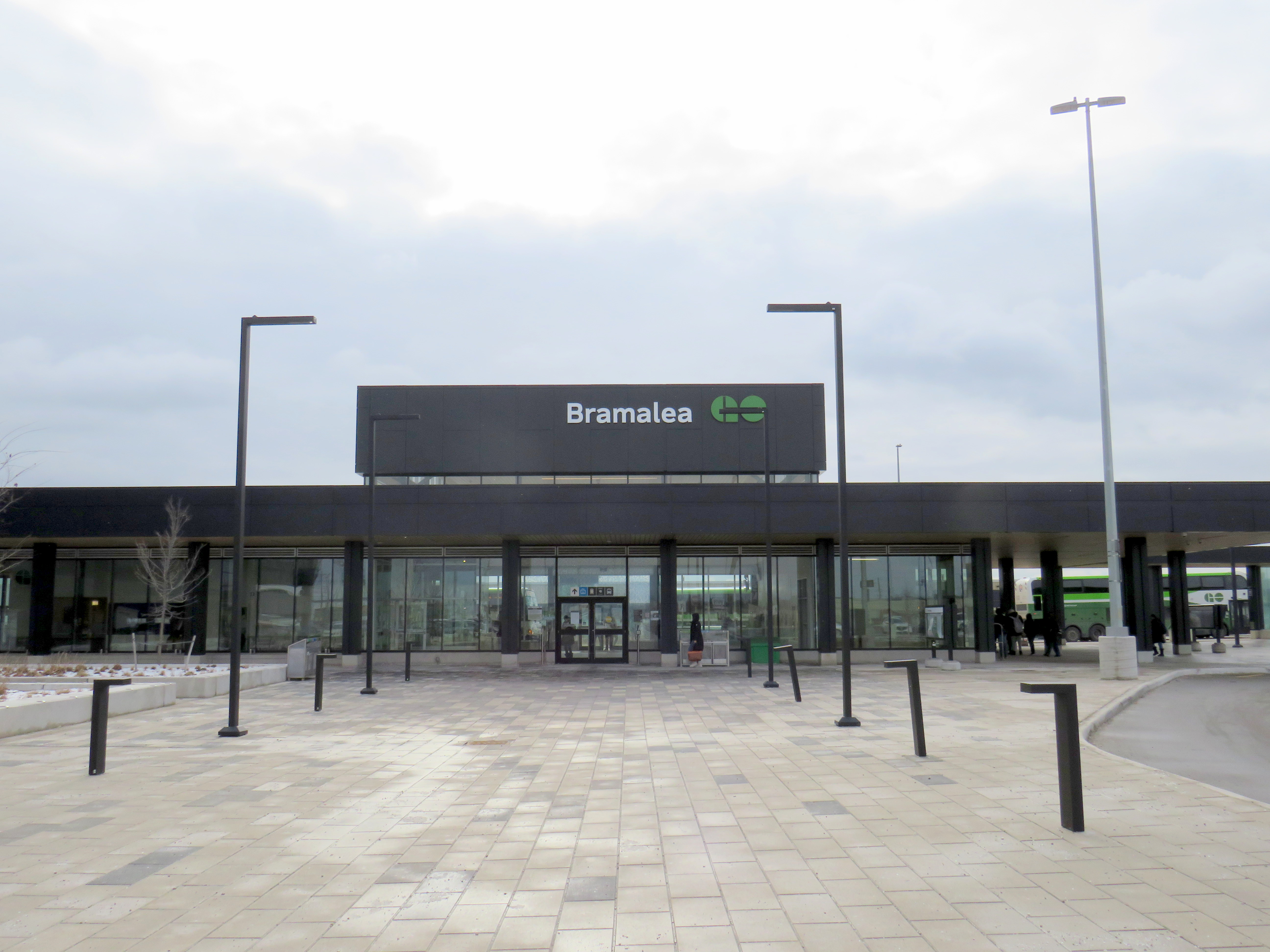
    I have written a lot about Bramalea GO Station on this website. In 2016, I wrote about the poor pedestrian, cycling, and transit access to the station; in 2020 I was stranded at the station because of poor train-bus connections, and in 2021, I compared the construction of a new parking garage at Bramalea to a new parking lot at nearby Brampton GO Station.

    But in January 2023, I returned to Bramalea GO Station and came away feeling satisfied. Metrolinx has finally built a Bramalea GO Station that works. Now it is time to use the rebuilt station to its full potential.

    (more…)
  • A tale of two stations: Brampton and Bramalea

    A tale of two stations: Brampton and Bramalea

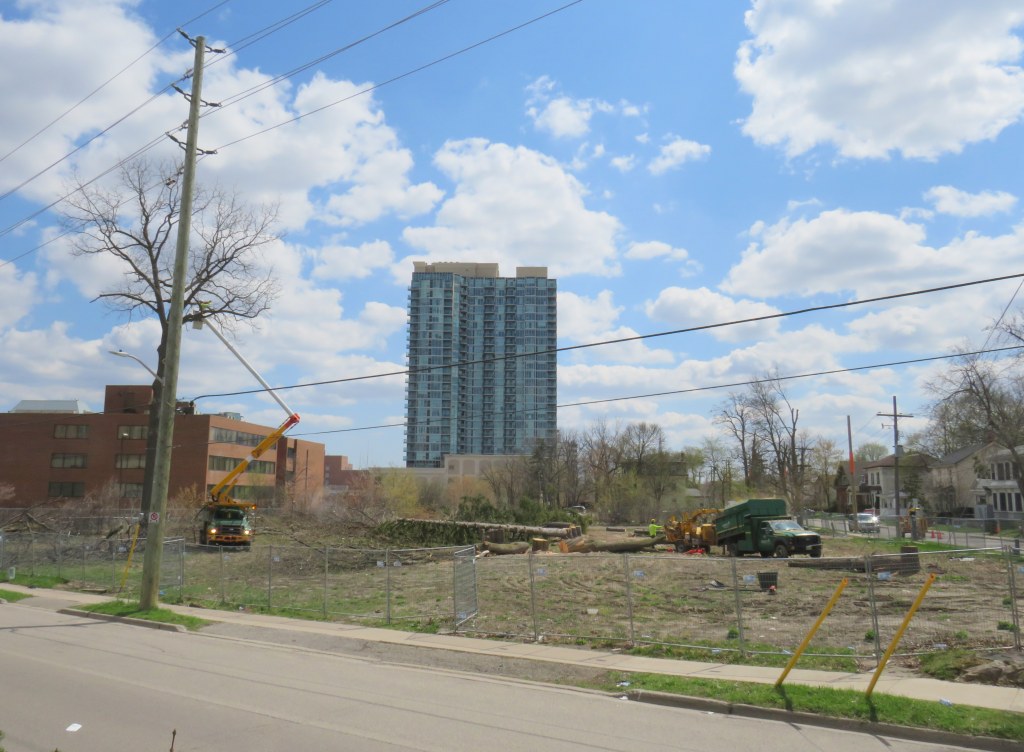
    Cutting down trees to make way for a surface parking lot in Downtown Brampton

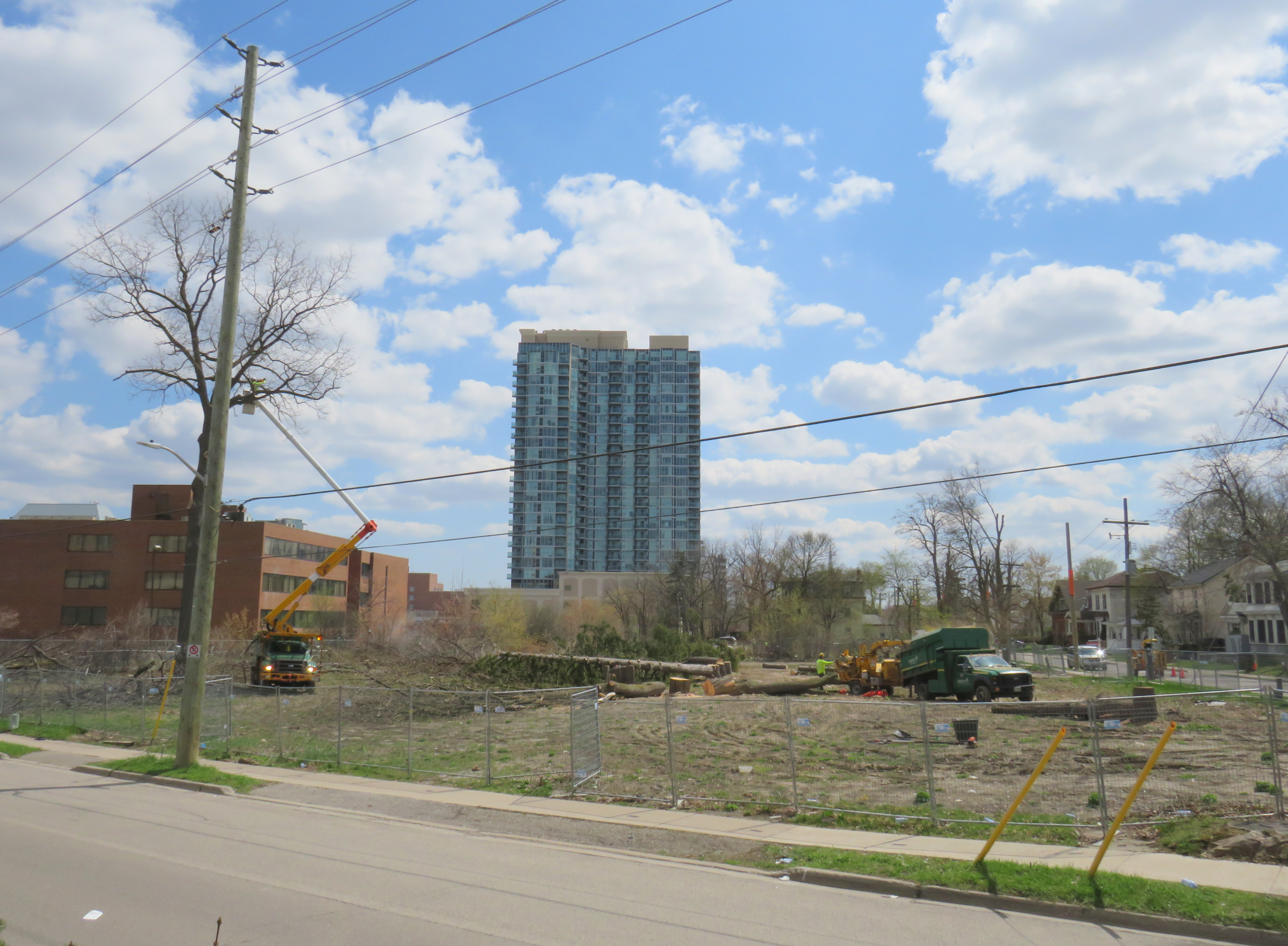
    Earlier this April, contractors hired by Metrolinx cut down trees on its Downtown Brampton property, where twelve houses once stood. The work, originally scheduled for the week of March 22, did not begin until April 12.

    The tree removal brings Greater Toronto’s regional transit operating and planning authority one step closer to building a new 200-plus surface parking lot in a city that hopes to renew its downtown core.

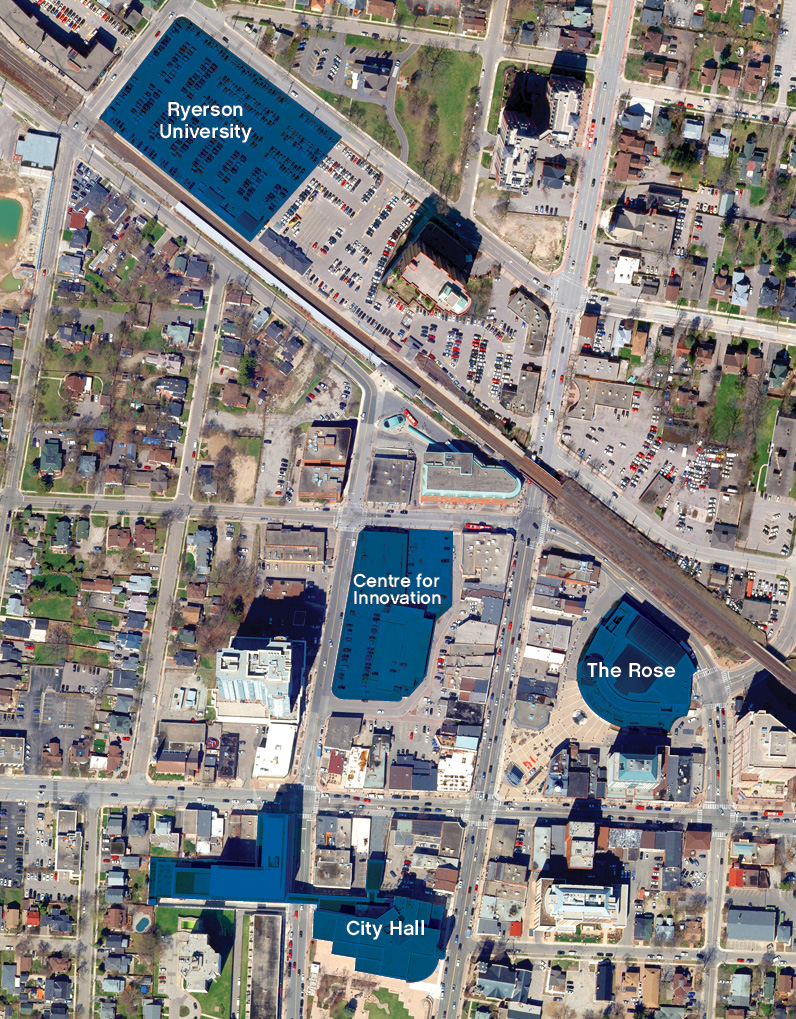
    Starting in 2016, Metrolinx purchased over a dozen homes along with two four-storey office towers in an area bounded by Railroad, Nelson, and Elizabeth Streets, immediately south of the Brampton GO Station. It vacated and demolished the houses between 2016 and 2019, and left the two office buildings vacant. Metrolinx’s plan was to build a new surface parking lot to expand parking capacity, though in early 2018, the Liberal provincial government announced a new Ryerson University/Sheridan College campus on the existing main parking lot on the north side of the station. Metrolinx’s acquisition of occupied homes — including heritage-listed buildings and a rooming house — made more sense.

    After the election of a new Progressive Conservative government led by Doug Ford, funding for the educational campus was pulled, though the City of Brampton and Ryerson University continued to advance plans for the downtown area. The city bought up more of the downtown core, including the southeast corner of George and Nelson Streets, across from the vacated office buildings, as well as the thirty-year old office building at 2 Nelson Street West, below which is the Brampton Transit downtown terminal. These newly acquired lands would be home to a larger bus terminal that would link to an expanded GO station and a proposed extension of the Hurontario LRT, and an Innovation Centre that would serve the education campus and include a new central library.

    The old plans for the Ryerson Unversity/Sheridan College building on the GO Transit parking lot, and a Centre for Innovation on the southeast corner of George and Nelson Streets. The Metrolinx lands are in the block between the Centre for Innovation and the GO Station/proposed Ryerson building

    As part of its Vision 2040 inspirational guidelines, Brampton now seeks to focus new midrise and highrise development in and around the downtown core, along Queen Street eastwards towards Bramalea City Centre, and in the Main and Steeles area, where the Hurontario LRT will terminate, and where RioCan, owners of Shoppers World, plan to redevelop the mall.

    Already, there are several high-rise developments in the downtown area under construction or in the planning phase. More development lands will be unlocked with the Riverwalk project, which will improve flood protection along Etobicoke Creek while providing an improved public space.

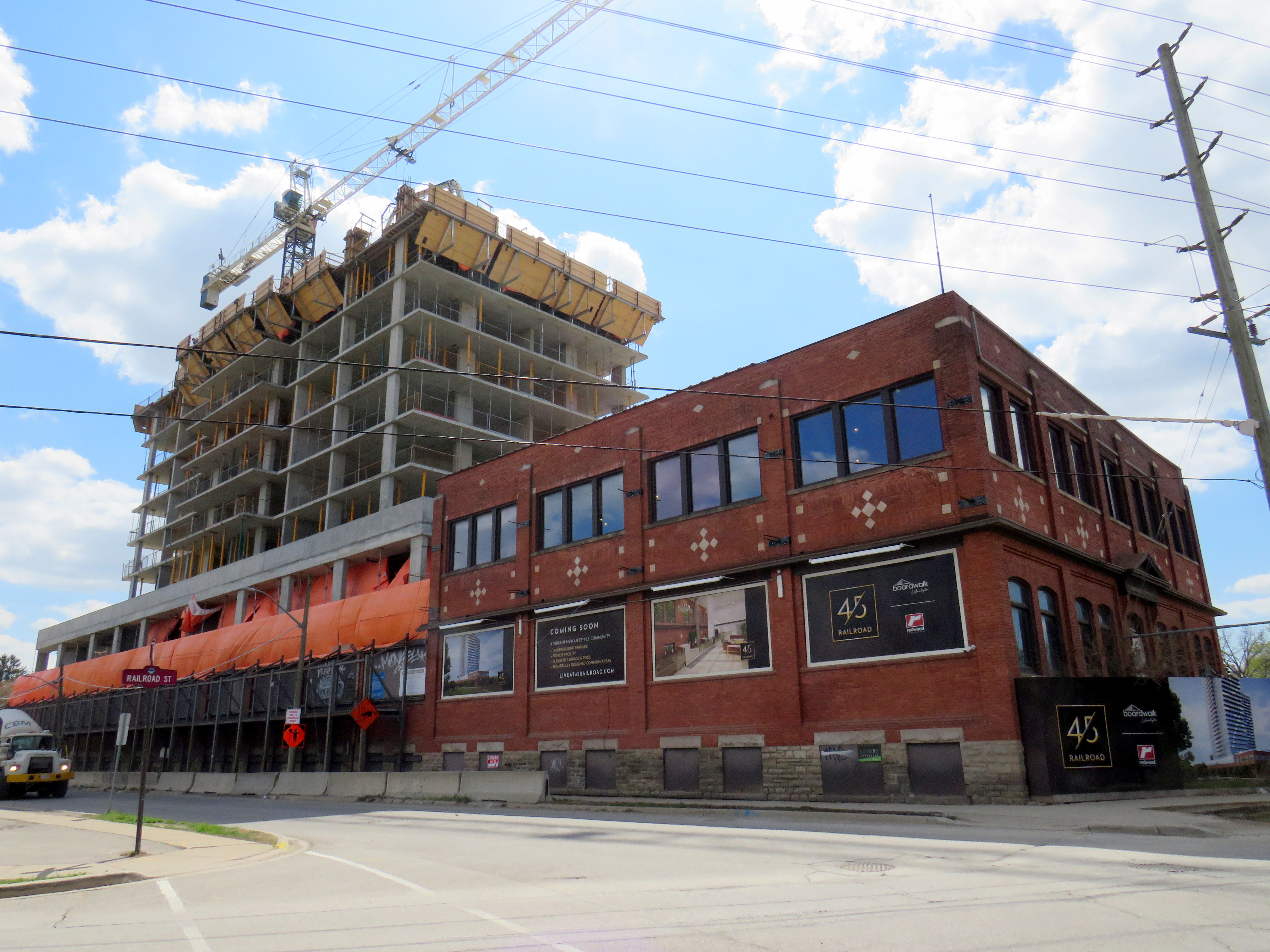
    A two-tower rental highrise development is progressing on the old Dominion Skate Factory lands, across the tracks from the GO Station, bringing hundreds of new residents to the downtown core and right to the station.

    Given Brampton’s urban aspirations for its downtown core, another surface parking lot — adding 200 spots to the existing 861 spaces — is not the right idea.

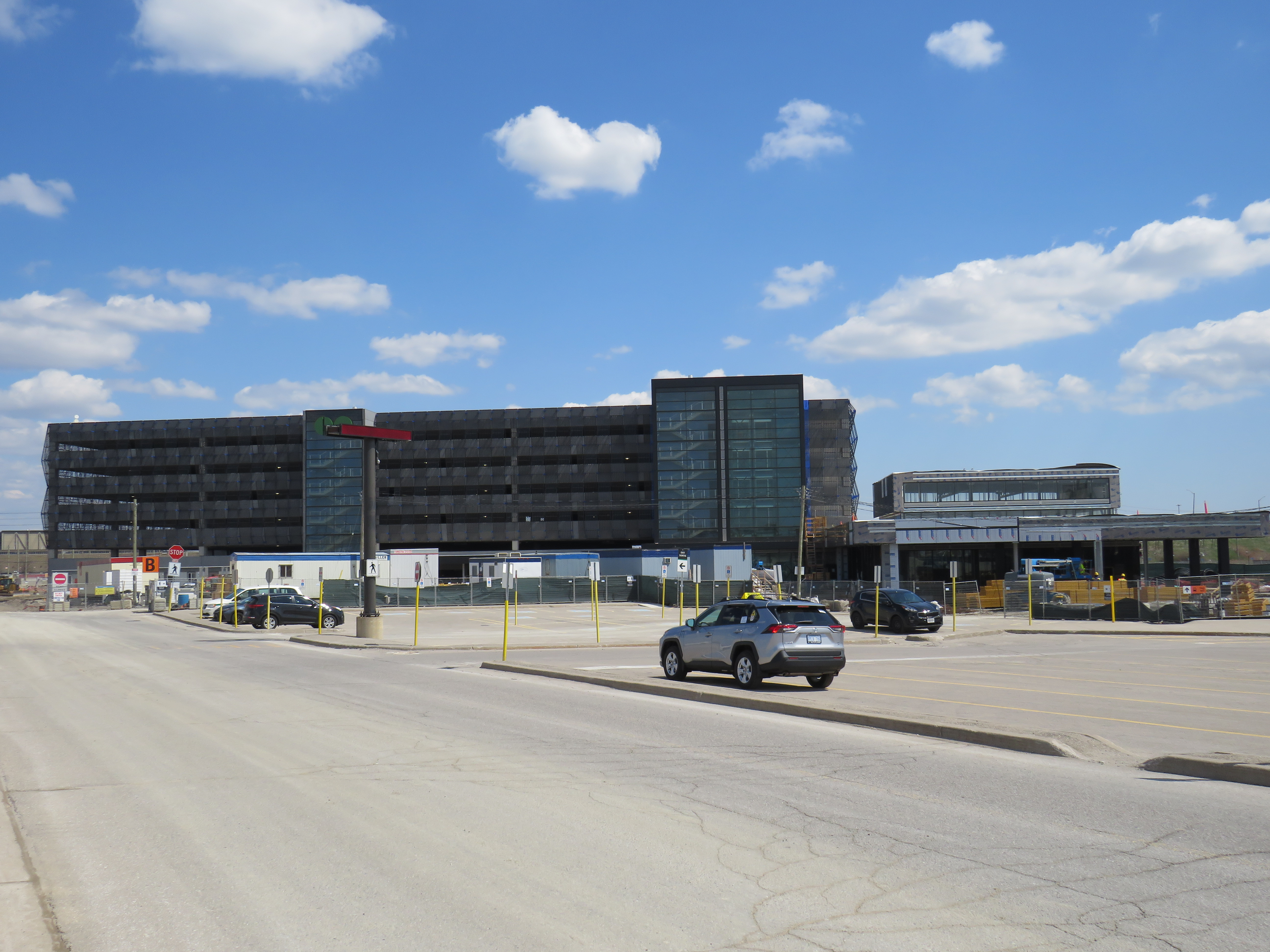
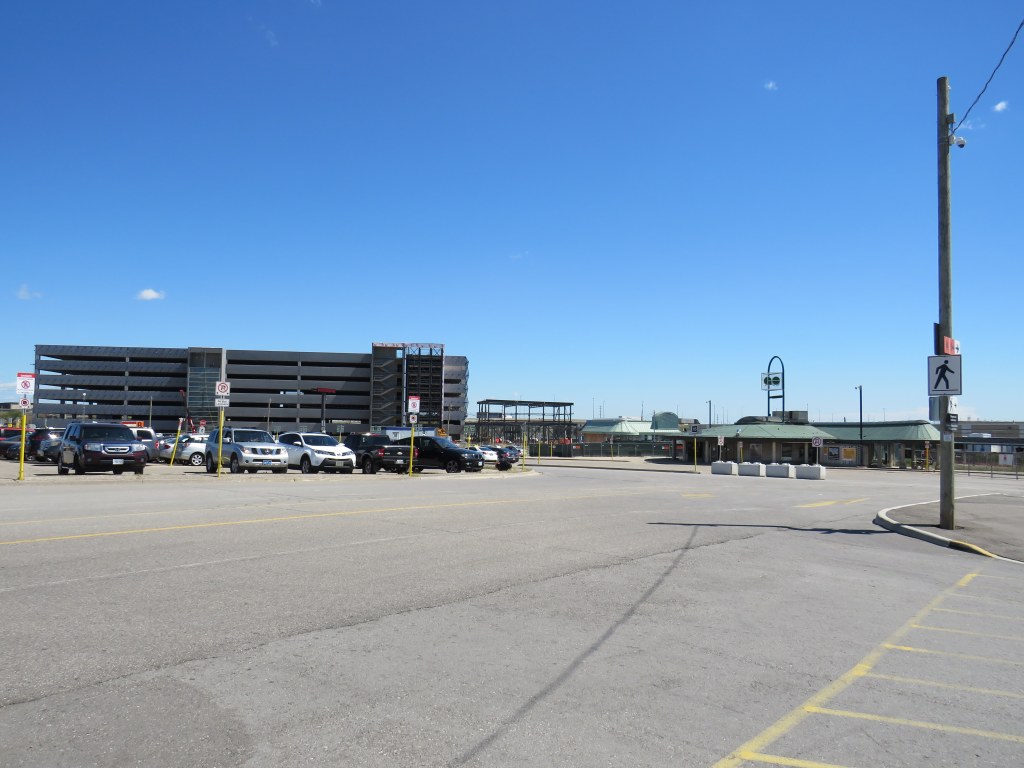
    At Bramalea Station, construction has nearly finished on a 1,300 spot parking garage, part of a larger project that also includes a new, larger station building, a larger bus terminal, additional pedestrian tunnels, and improved platforms and security features. Bramalea already has over 2500 parking spaces, but unlike in Downtown Brampton, this is a logical space for parking expansion. The station is surrounded by warehouses and factories, at the intersection of two major truck routes, and close to highways. It is not a place that is easily urbanized. However, improved pedestrian and cycling access is very much warranted.

    New garage nearly complete at Bramalea GO Station

    With the expansion of parking at Bramalea GO, why is Metrolinx eager to add another parking lot in Downtown Brampton, especially with Ryerson’s downtown plans on hold?

    Hopefully we will learn more shortly.

  • Stranded at Bramalea GO: Metrolinx’s missed connections

    Stranded at Bramalea GO: Metrolinx’s missed connections

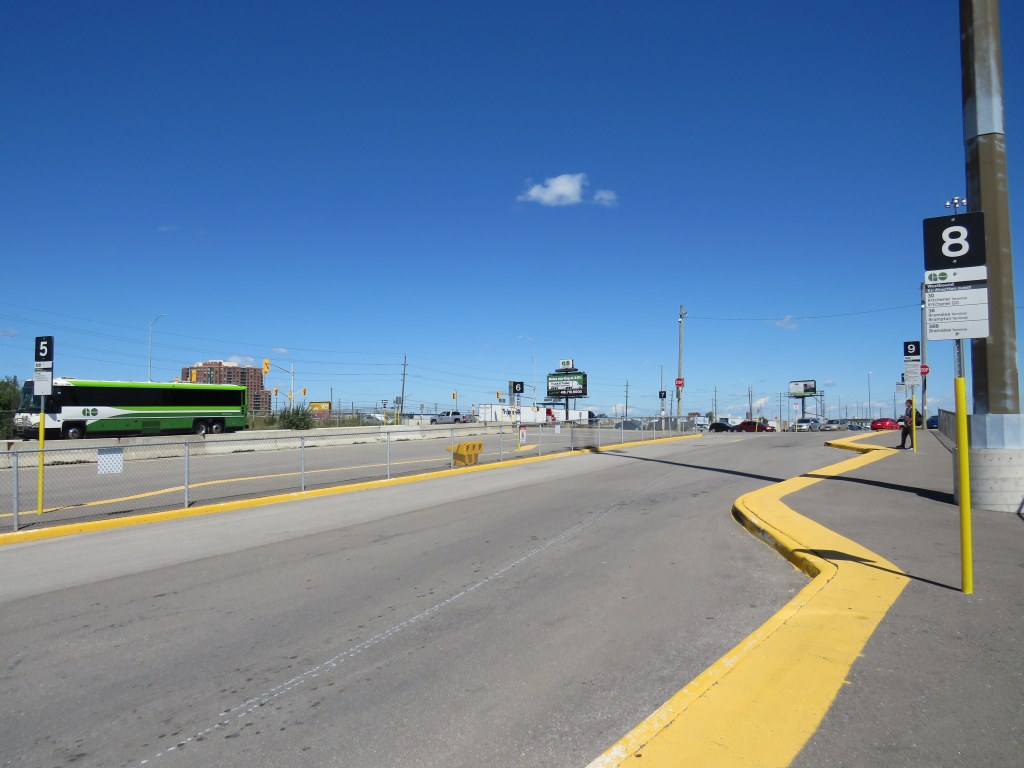
    Temporary bus terminal, Bramalea GO Station
    The inhospitable temporary bus terminal at Bramalea GO Station

    On Tuesday, August 25, I paid a visit to Kitchener.

    Greyhound suspended all operations in Eastern Canada on May 13, 2020 due to low ridership during the COIVD-19 pandemic. Meanwhile VIA Rail reduced its operations, including Train 85, which departed Union Station at 10:55 AM for Guelph, Kitchener, Stratford, and London. Therefore, GO Transit became the only way to get between Toronto and Kitchener-Waterloo for a day trip without a car.

    From boarding the 11:53 Kitchener Line train from Union Station, it should have taken just under two hours to get to Downtown Kitchener. Instead, because of a minor train delay, and a failure of the connecting bus to hold for transferring passengers, it took me three and a half hours.

    If we value transit users, passengers must not be left behind when making these transfers, especially when connecting between posted connections.

    (more…)
  • Shortsighted short-turns at Bramalea GO

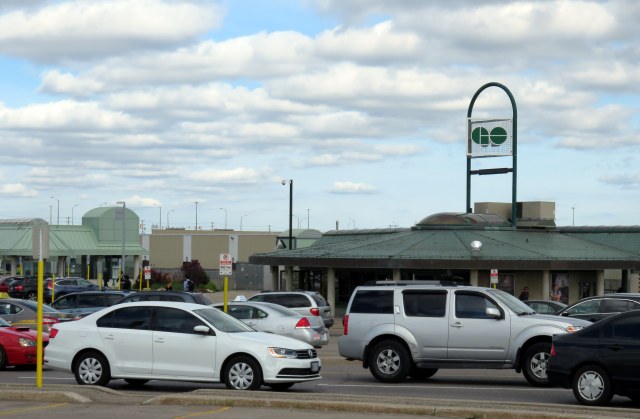
    IMG_2321-001Bramalea GO Station

    Earlier this week, I took a train from Union Station to Bramalea, as I was preparing for a walk that I will hosting on Sunday exploring Canada’s first satellite city.

    Bramalea Station opened in 1973 when the Georgetown GO train service — GO Transit’s second commuter rail line — was inaugurated. The station is located at the southwest corner of Steeles Avenue and Bramalea Road, surrounded by factories, warehouses and busy roads and highways.

    There’s little to fault GO Transit for locating its station where it is. In 1973, GO was still in its infancy, launching its first rail services along the Lakeshore Line in 1967. It wasn’t anything more than a commuter rail service, offering downtown-bound commuters an alternative to driving all the way in; free and ample parking was part of that successful model. In 1967, GO Transit was created to reduce the need to upgrade provincial highways; it allowed Downtown Toronto to become a bustling global financial centre without needing huge parking lots and garages and more freeways feeding into it; .

    The GO station is located in Bramalea’s south end, next to the CN mainline, surrounded by land designated for industrial development since 1959, when work began on that new suburb. The station is located near a waste-to-energy plant (an incinerator), and is located under Pearson Airport’s flight paths. Since GO insists on providing free parking to its customers, Bramalea (unlike, say, Downtown Brampton) isn’t a bad place to put lots of parking spots; in total, Bramalea has 2,377 parking spots. And since Bramalea Station is adjacent to Highway 407, it’s a major transfer point for GO bus routes to York University, Hamilton, Guelph and Kitchener.

    But like too many GO stations, Bramalea is needlessly hostile to pedestrians and cyclists, and is even hostile for many local transit users. As Metrolinx, the agency responsible for GO Transit, pursues Regional Express Rail (RER), it has a responsibility to improve Bramalea Station. As it exists right now, Bramalea is a terrible transit terminal.

    (more…)