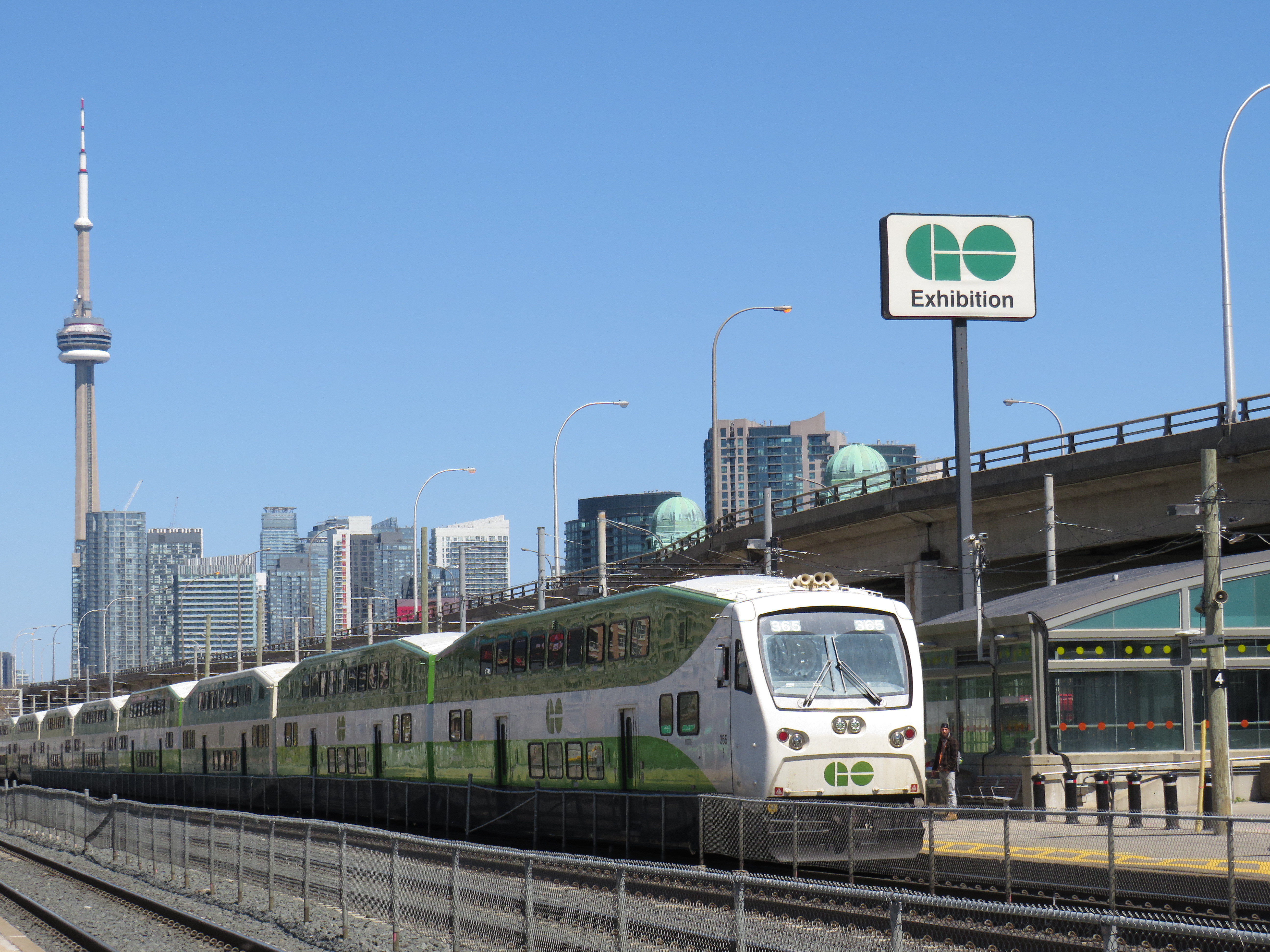
GO Transit passengers might be in for a shock after Labour Day as new schedules and new penalties come into effect. On several rail corridors, off-peak trains are being cancelled and replaced with buses, while the fines for not paying a GO Transit fare are increasing — by over 450% for a first-time offense.
During the evening of Friday, August 28 — just five days before the Labour Day long weekend — GO Transit quietly released its new schedules for the Fall 2026 period. Typically, schedule changes include the restoration of extra bus trips on the Highway 407 Corridor (which serves several college and university campuses), as well as bus routes to Guelph, Kitchener-Waterloo, St. Catharines, and Peterborough. The fall schedule change often brings certain service improvements and schedule adjustments to reflect demand and operating changes. But the changes for September 2026 are mostly cuts to rail services.
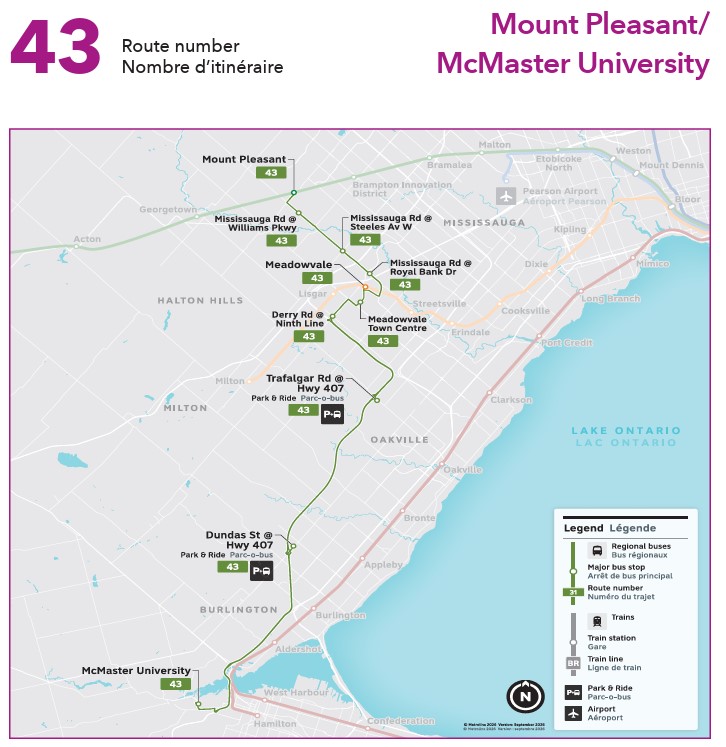
There is one new bus route, Route 43 between Mount Pleasant GO Station in Brampton and McMaster University in Hamilton, via Meadowvale and Highway 407, running mainly in the peak direction, Mondays through Fridays.
But on the Barrie Line, there will be one less weekday round trip between Allandale Waterfront and Union Station: the southbound 21:10 trip and the northbound 22:01 trip disappear, along with the 20:54 northbound to Aurora. Those runs will be replaced with buses. But the southbound 21:10 train from Allandale took 1 hour and 42 minutes, arriving at Union at 22:52. The replacement bus, including a transfer at Aurora, takes nearly three hours, with no access to washrooms and no direct access to Downsview Park Station.
On weekends and holidays, the first southbound train from Allandale Waterfront will now be at 14:05, the last train will be two hours later, at 16:05. From Union Station, the first northbound train will be at 16:54, to Aurora only. The old Table 65 schedule has six round trips to Barrie on weekends, with hourly service to and from Aurora.
There will be similar cuts to the train schedule on the Stouffville Line, where there will be no train service until after 3PM on weekends and holidays. The 23:00 and midnight trains from Union on weekdays are gone, as are the evening inbound trains. There will be replacement buses, but those are often stuck in traffic on the Don Valley Parkway and Highway 404. On the Lakeshore West line, the 15-minute weekend afternoon service between Union and Oakville is gone and the Niagara train service extension on weekdays is down to just one peak-direction train.
Though there is no notice of changes yet on the GO Transit homepage, it did post a partial explanation on X.
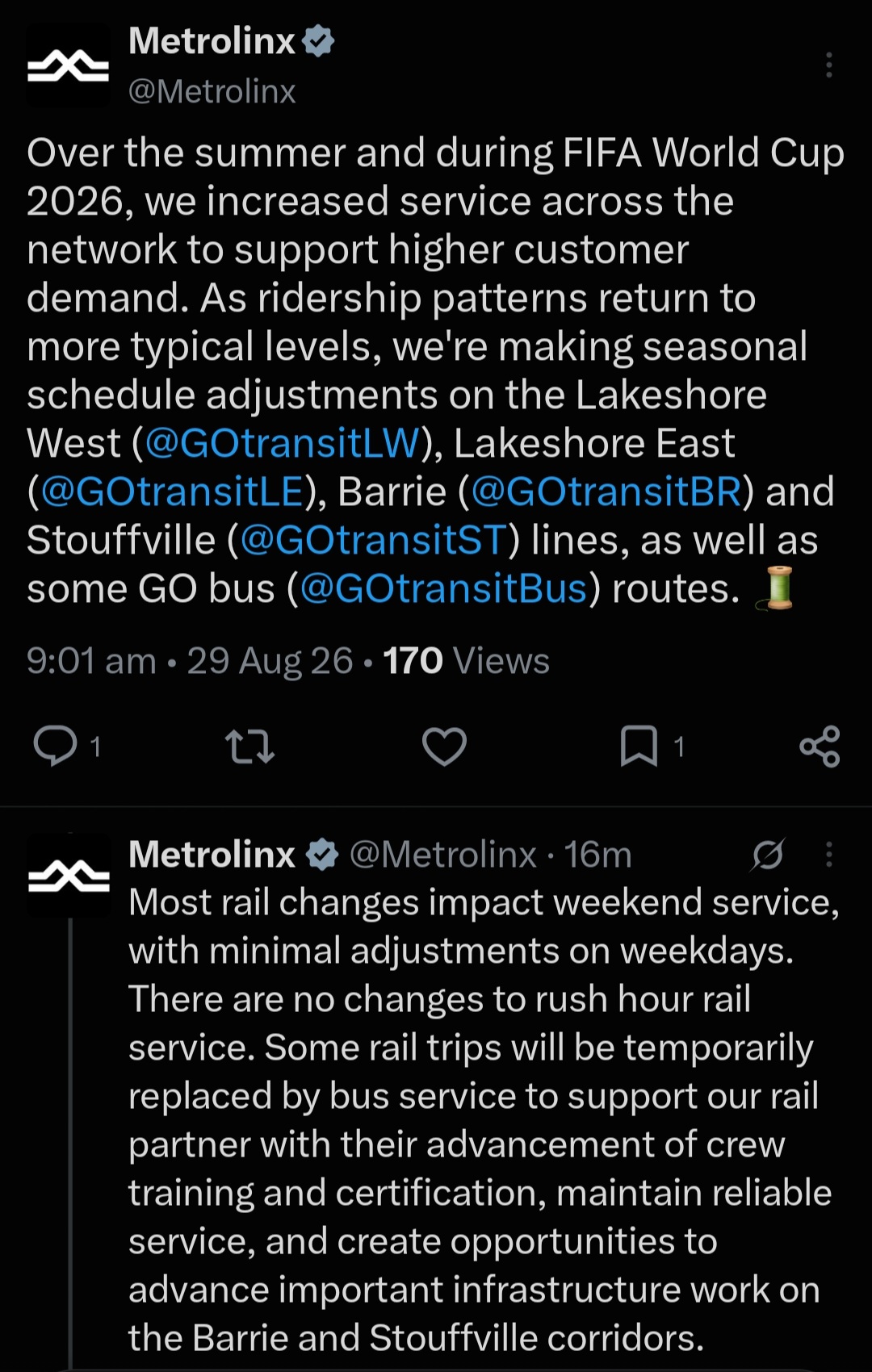
GO Transit says the rail trips replaced by buses are to “support our rail partner with their advancement of crew training and certification, maintain reliable service, and create opportunities to advance important infrastructure work…” What this is actually saying is that Alstom, which has a contract to operate and maintain the trains, has a crew shortage and a backlog of staff training. While GO Transit buses are operated and maintained by GO Transit employees, its trains are not. As Metrolinx is reliant on the contractor to staff the trains, it needs to reduce the number of shifts to ensure the remaining trains are fully staffed.
There’s no word on when train service can be restored, never mind improved, to meet demand. This can be traced back to the botched partnership with ONxpress that would have seen the Deutsche Bahn subsidiary take over GO rail operations and expansion.
The late announcement of these service changes is a symptom of the culture of secrecy at Metrolinx. The reason for the service cuts goes even deeper.
No Fare?
The concurrent changes to Metrolinx’s fare evasion penalties should also be concerning.
Because GO Transit’s rail service operates on a strict proof-of-payment system, it can sometimes be possible to forget to tap on or off at stations, which have no fare gates unlike the TTC subway and underground light rail stations. Often, Presto farecard validators are positioned in awkward areas, away from platform access points. Under the old policy, the first-time $35 fine and the second-time $50 fine were similar to penalty fares levied in the United Kingdom, acknowledging that mistakes happen. A failure to tap should not automatically result in a first-time fine four times higher than not paying for street parking in Toronto ($50).
At the very least, Presto validation (tap) machines should always be easy to spot and easy to access, reducing the number of honest mistakes. It should also follow that the penalty for not paying a transit fare should be treated as the equivalent for not paying for parking especially in an open system without fare gates.


Leave a comment