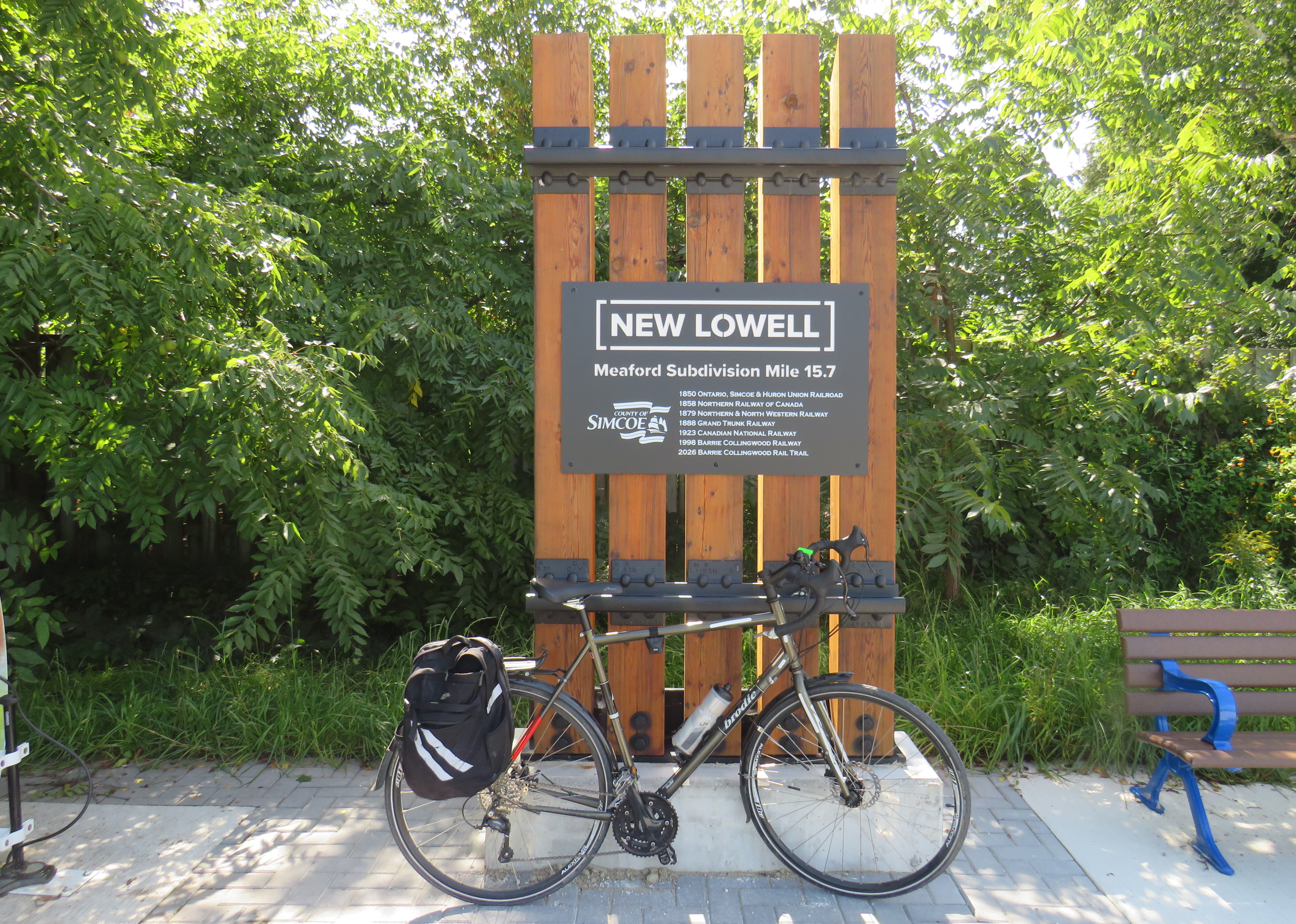
Just before the new Fall 2026 GO Transit schedules kicked in, I decided to take a ride between Barrie and Collingwood, travelling on Ontario’s newest section of rail trail, an extension of the Barrie-Collingwood trail between Stayner and Angus. My ride on September 3 was pleasant and mostly uneventful, taking my bike to the shores of Lake Huron for the first time. Despite a successful 55 kilometre one-way ride, getting a bus ride back to Barrie, both the trail and the transit connections could be significantly improved.
The Barrie-Collingwood Rail Trail is named for the Barrie-Collingwood Railway (BCRY), a short line freight operation that took over from CN in the 1990s. The route through Barrie and Collingwood was built by the Ontario, Simcoe, and Huron Railway between 1853 and 1855, the province’s first rail line. Soon renaming itself the Northern Railway of Canada, the company expanded to Meaford, Orillia, and Gravenhurst before becoming part of the Grand Trunk Railway network. CN, which took over the Grand Trunk in 1923, ended passenger service to Collingwood in 1960.
After CN threatened abandonment of the railway, the town of Collingwood and the City of Barrie established the Barrie-Collingwood Railway (BCRY) in 1998. BCRY ensured continued rail service to several industries in the area. Though BCRY remains active in the Barrie area, including a spur into Innisfil (a remnant of the CN Beeton Sub), service into Collingwood was discontinued in 2011. The active track now ends at Utopia, east of Angus, where BCRY interchanges with the CPKC mainline. The discontinuance of railway service in western Simcoe County allowed for a rail trail to be developed along the line.
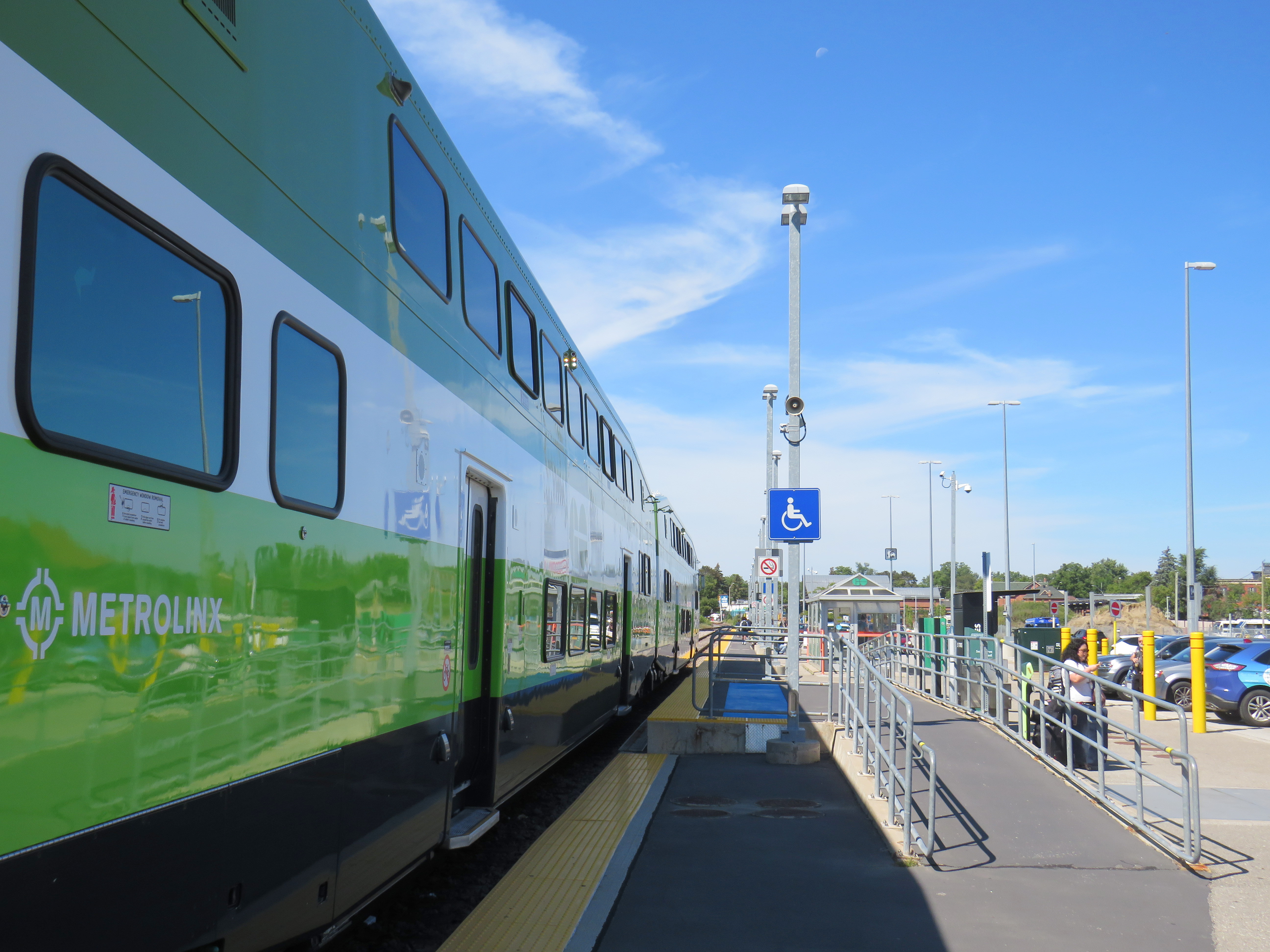
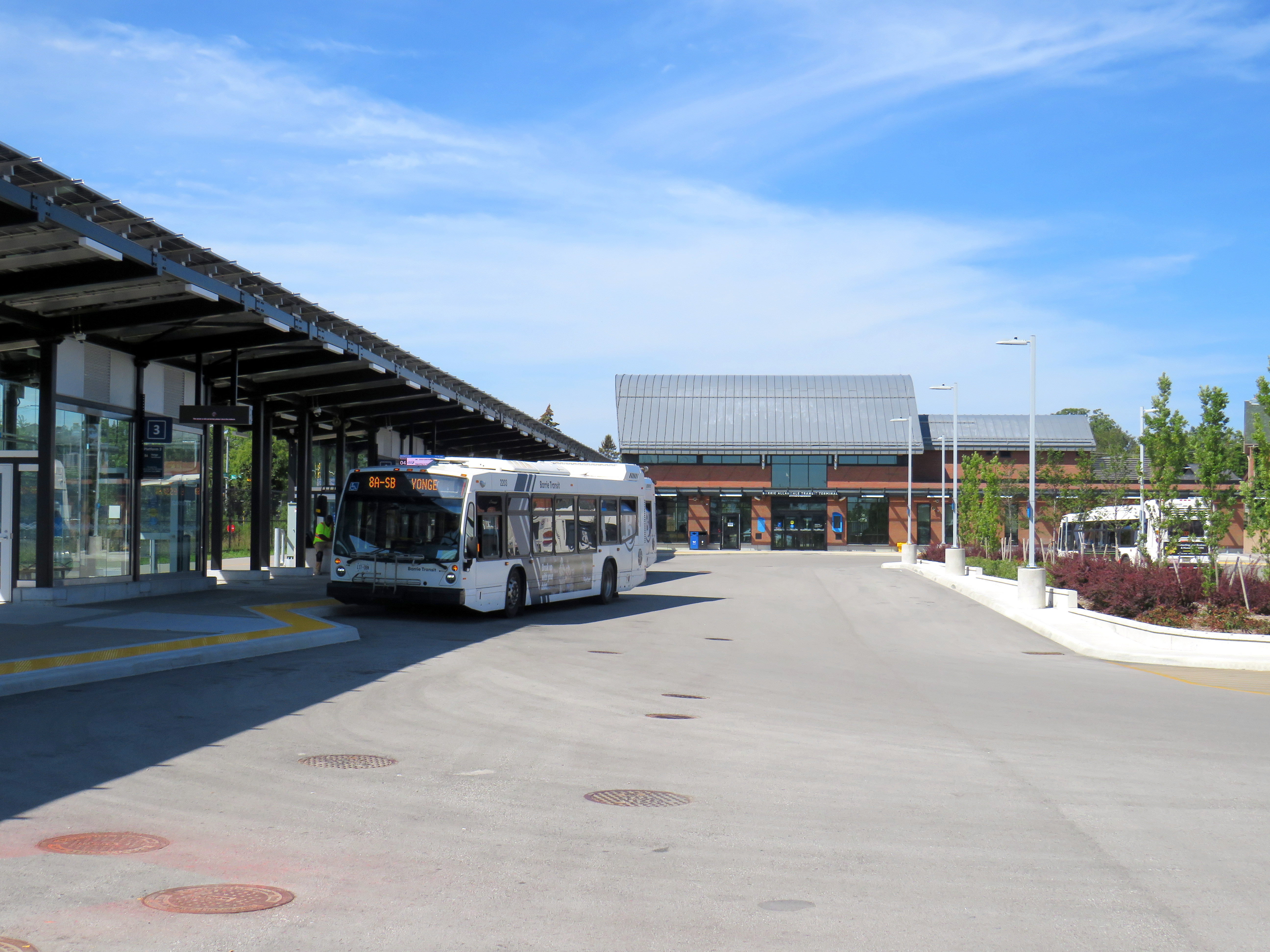
I started my ride on a Thursday morning, taking the 9:54 Barrie Line train from Union all the way to the end at Allandale Waterfront Station, arriving at 11:37. Unfortunately, the hourly Simcoe County Linx bus to Wasaga Beach — Route 2 — leaves the adjacent Allandale Bus Terminal thirty minutes past the hour, forcing a 50 minute wait to if I wanted to continue by transit. I elected to begin my bike ride here instead.
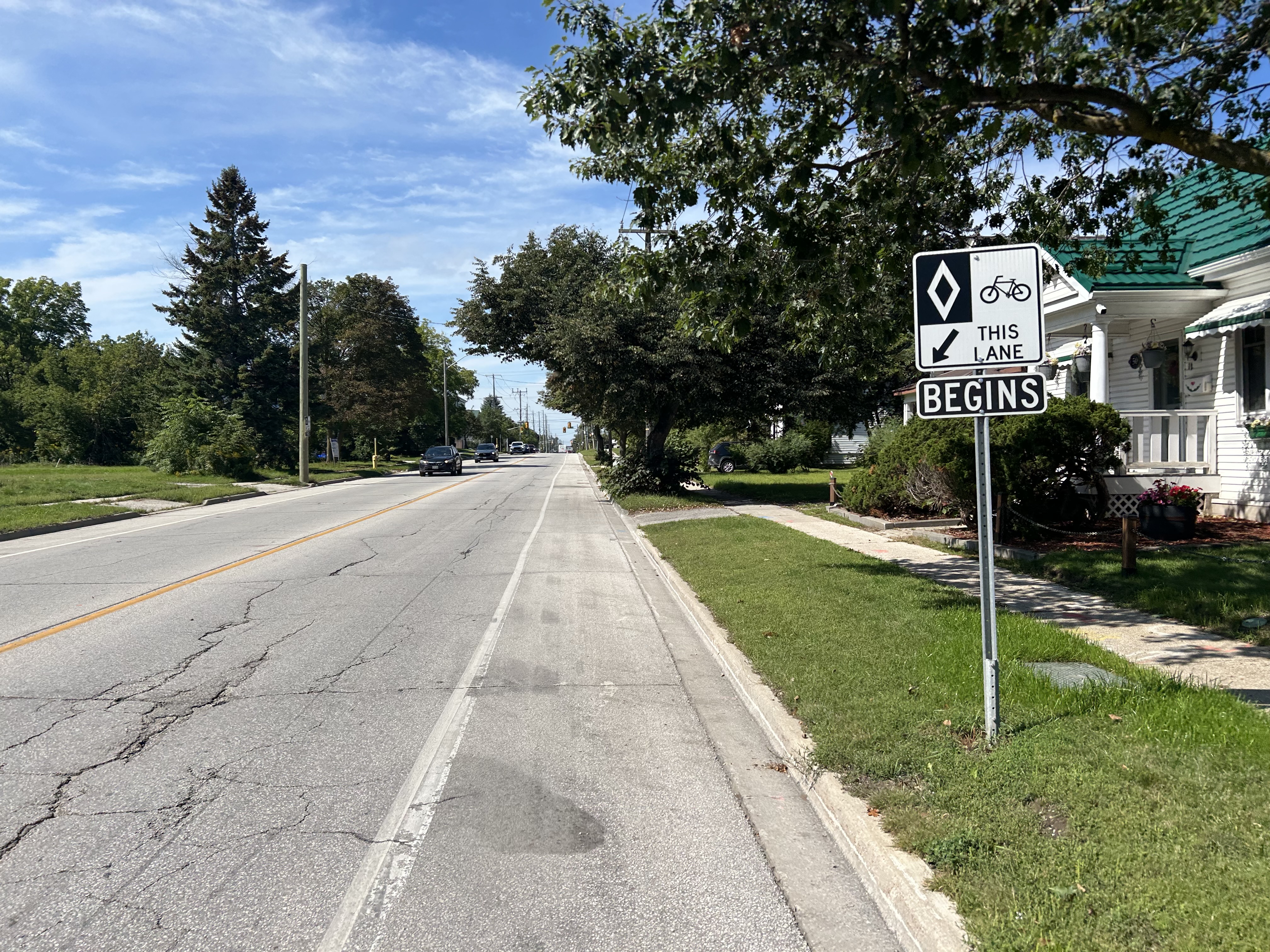
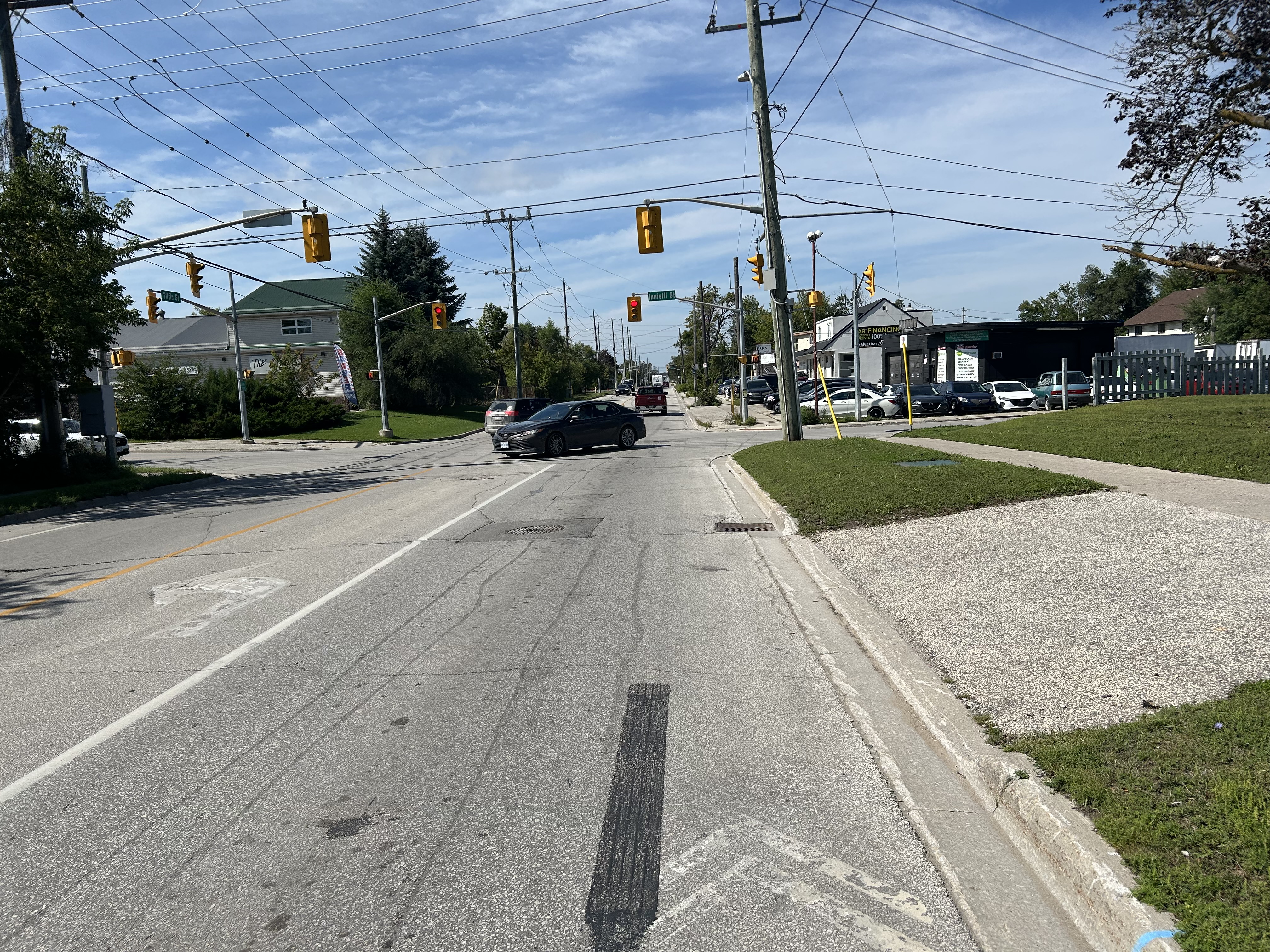
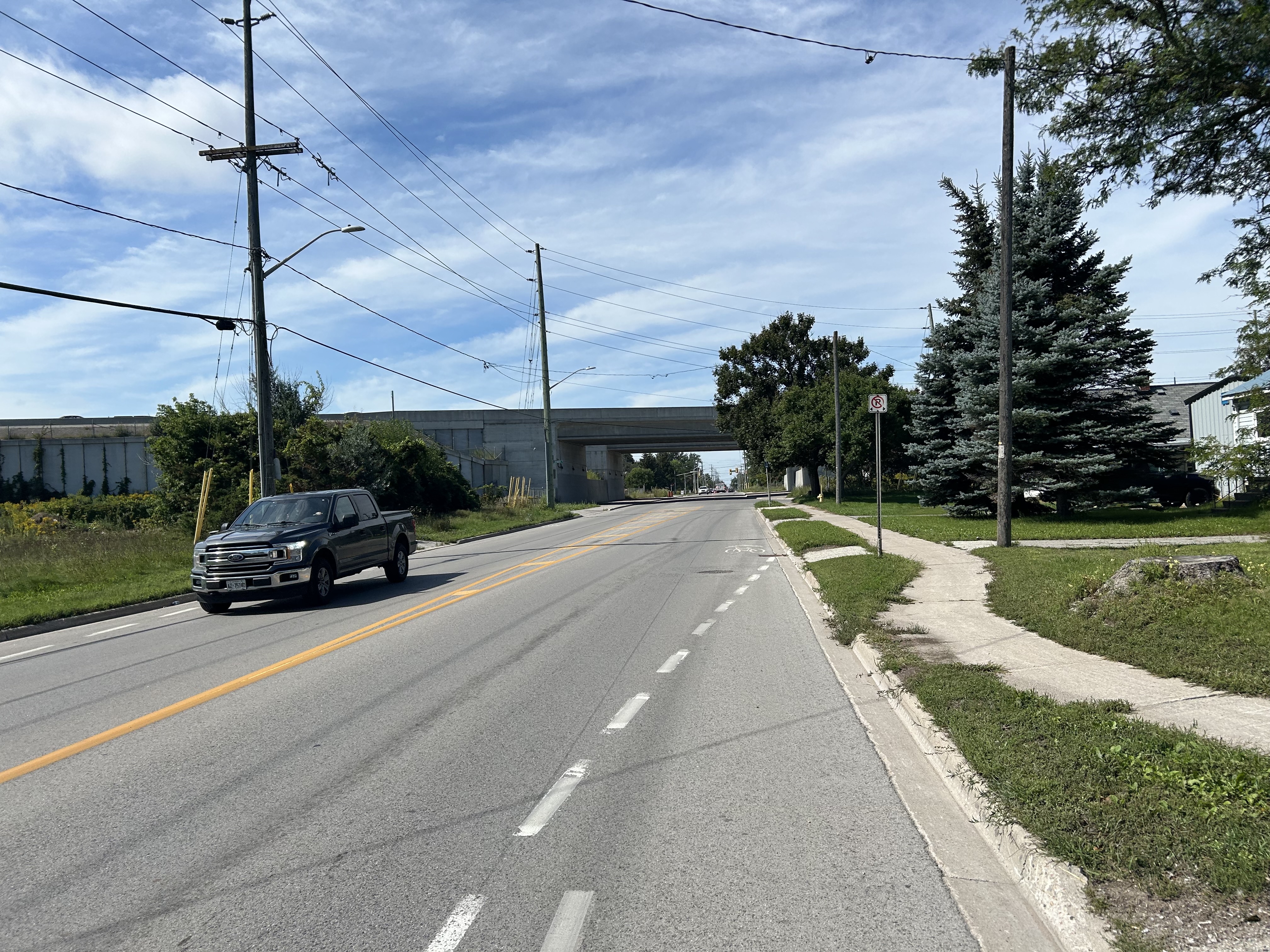
The ride between Allandale and the beginning of the rail trail in Angus is very direct, following Tiffin Street in Barrie to County Road 90. Tiffin Street is mostly a two lane collector road with intermittent painted bike lanes that disappeared approaching signalized intersections to make room for left turn lanes. The bike lane also disappeared before crossing under Highway 400. But since it’s a straight, flat road with a moderate amount of traffic, it was certainly a better experience than my last ride through Barrie earlier this summer.
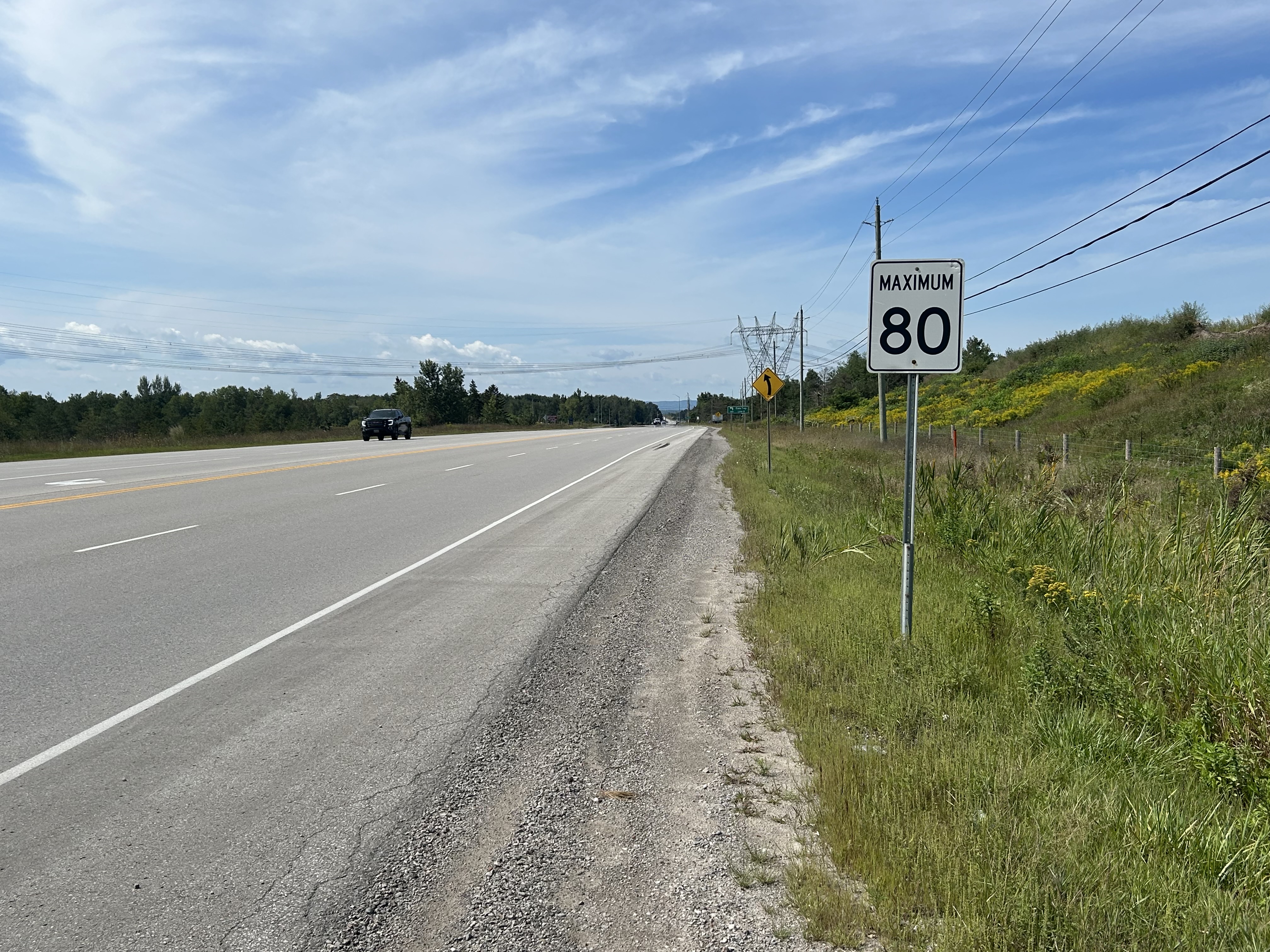
Simcoe County 90, a former provincial highway connecting Barrie, Angus, and CFB Borden, was widened from a two-lane road to a five-lane highway, including a centre turn lane. The posted speed limit is 80 km/h. However, there are decent paved shoulders along the entire stretch between the end of Tiffin Street and just before entering Angus. While County Road 90 was not the most pleasant riding experience because of traffic noise, it felt safe enough for a casual, yet confident, cyclist such as myself, and should be the minimum expectation in Ontario for rural cycling routes. But it would not be the place for a family ride.
Though I ended up following County Road 90 all the way into Angus, one may choose to turn south onto Essa 5th Line and connect to the beginning of the rail trail there.
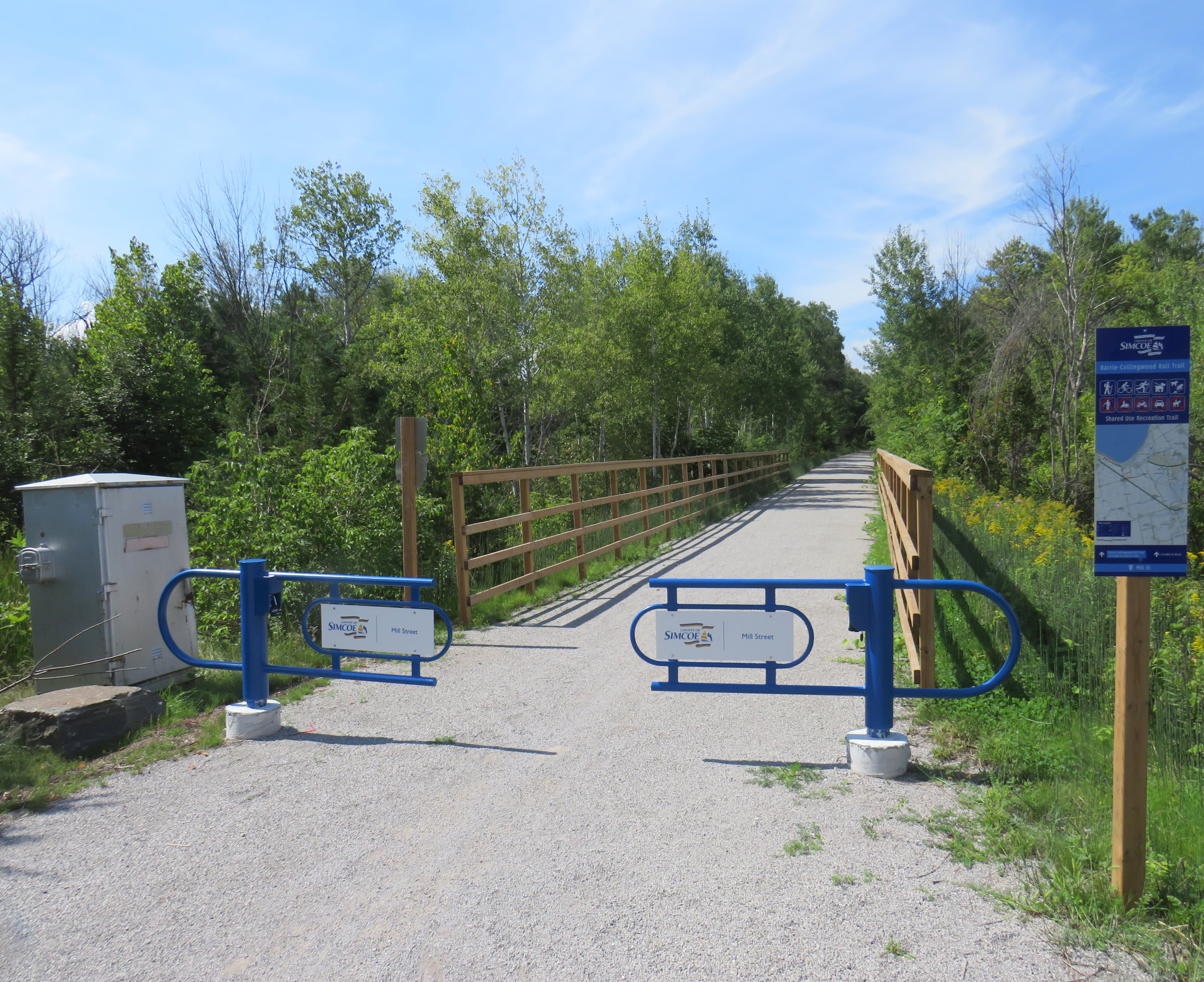
Once reaching the Barrie-Collingwood Rail Trail, the cyclist is treated to a pristine, shaded corridor all the way to New Lowell. On this section, the crushed gravel surface is well groomed and there are benches at regular intervals. The p-gates at each intersection are just far enough apart to be easily passable at a slow speed, and wayfinding is excellent.
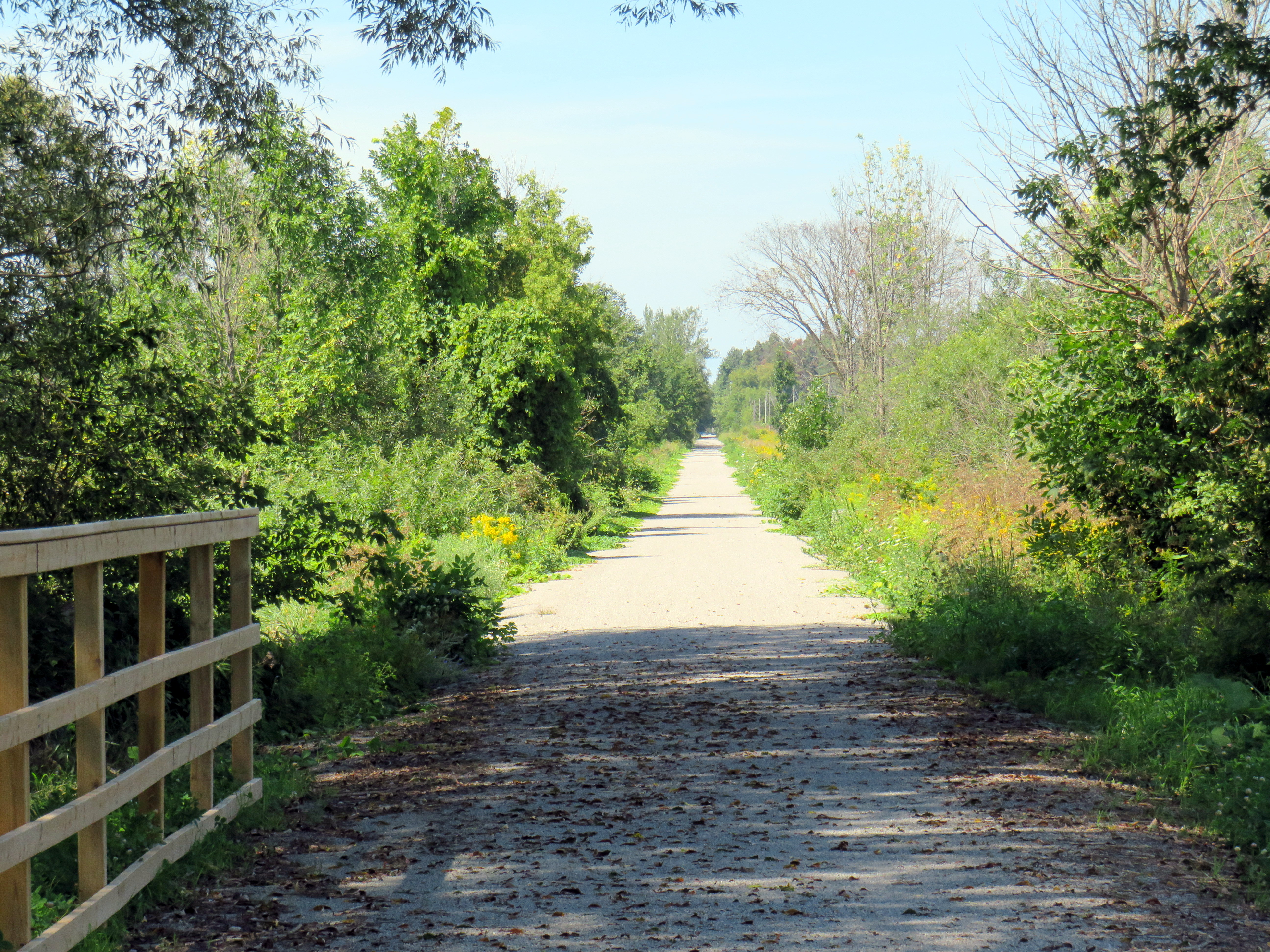
Unfortunately, between New Lowell and Stayner, the trail could use some grooming, with looser gravel that made for a slower and slipperier ride (I am not the first cyclist to complain about this). This was also a much less shaded section of trail, and I felt myself slowly losing energy before a change to stop in town for a break and to refresh my water bottle.
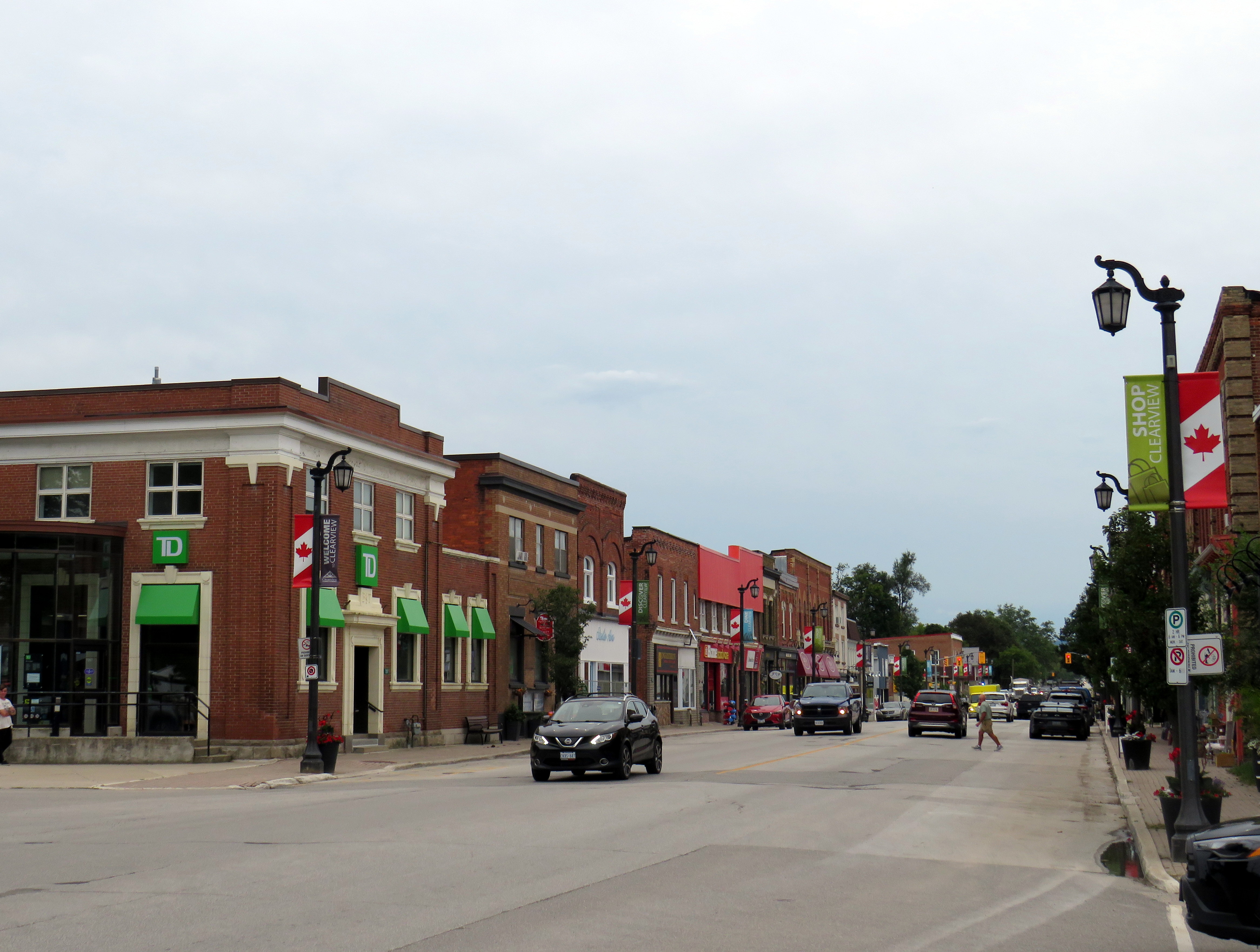
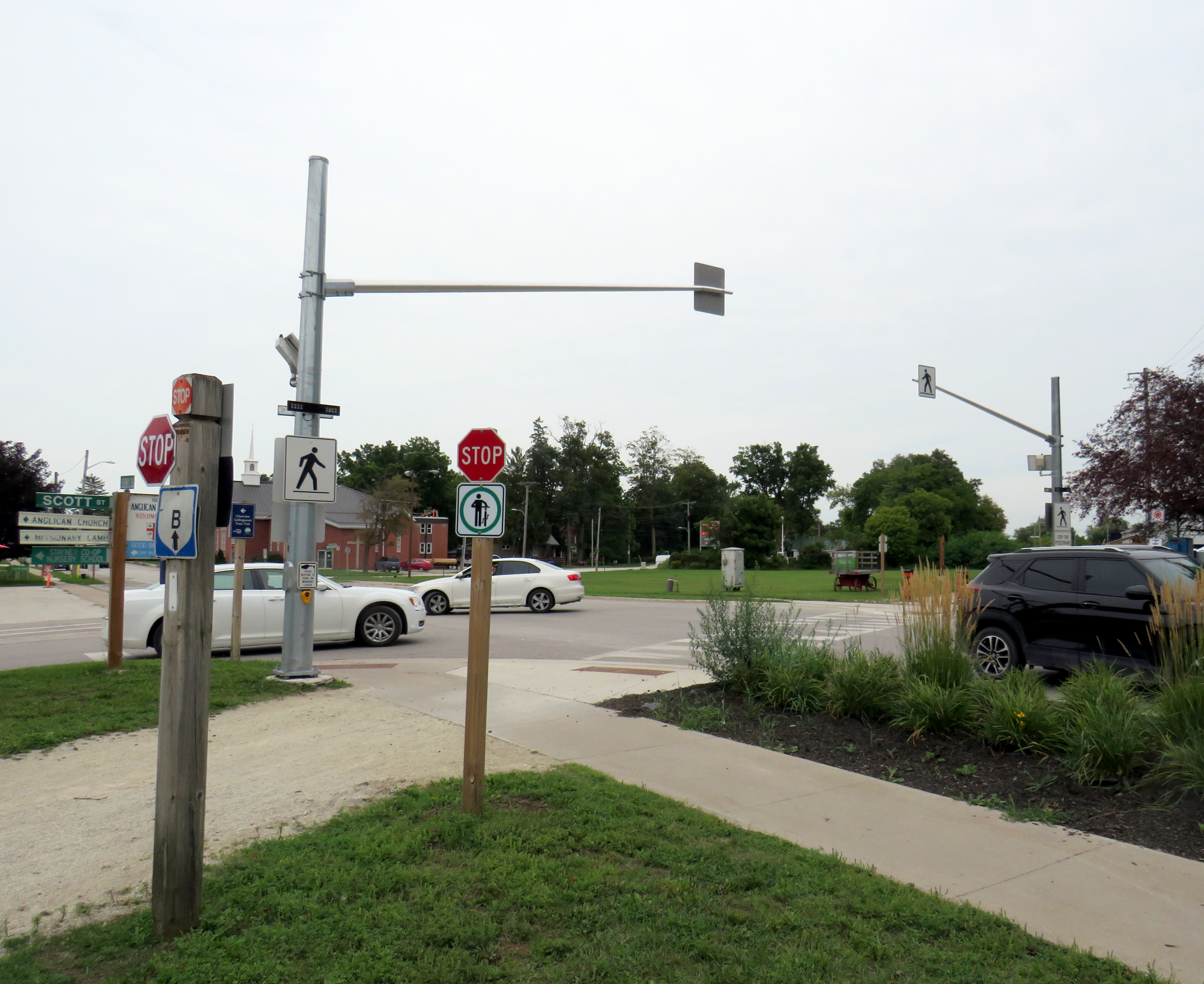
At Stayner, the trail crosses busy Highway 26 twice: the first time at Main Street, adjacent to the town centre, and again at Airport Road. Both have signalized pedestrian crossings where railway signals once stood. Stayner is also where the trail shifts to being on the old railway right-of-way to being immediately beside it.
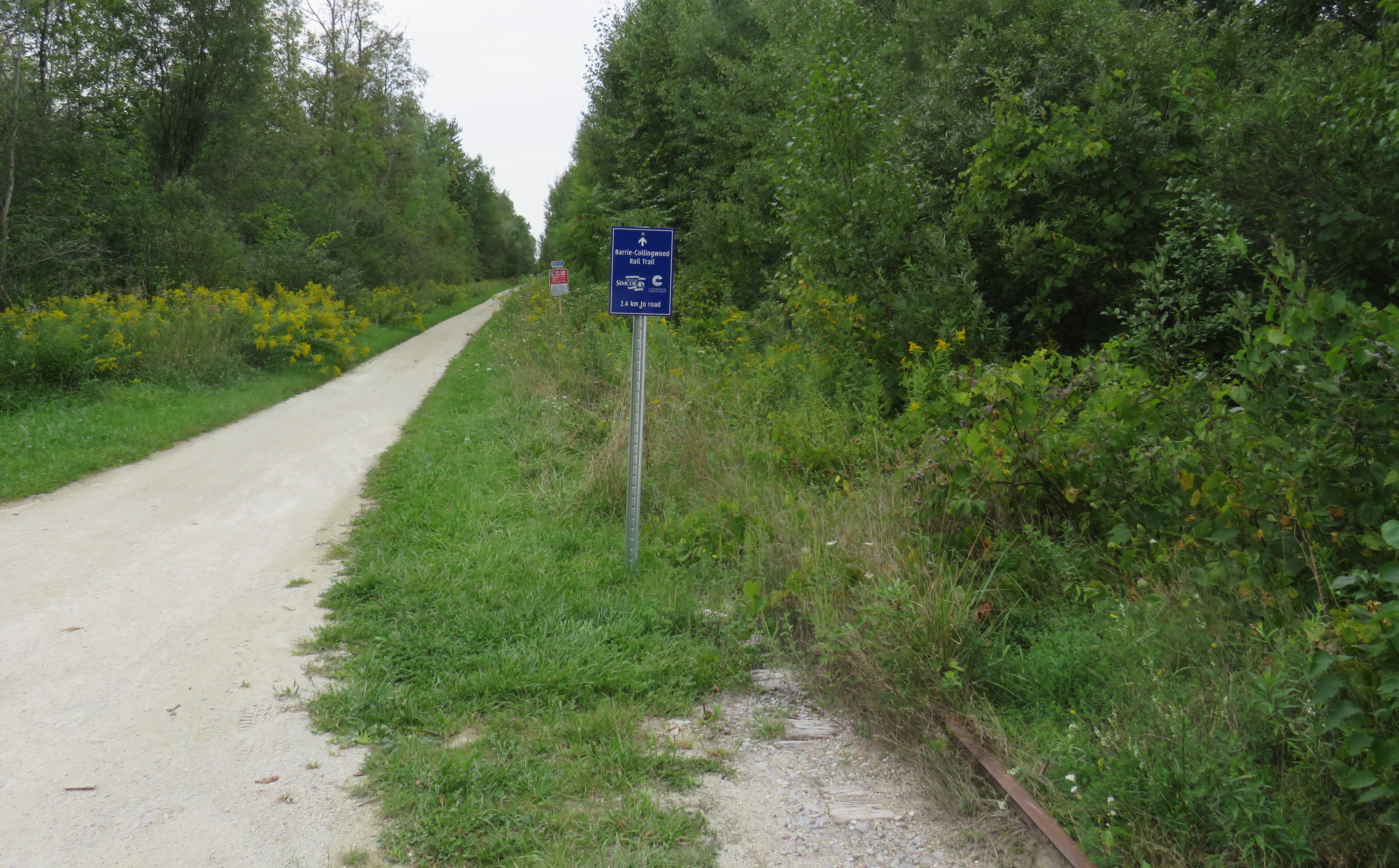
The older section of trail between Stayner and Collingwood was constructed as part of a watermain project connecting Clearview Township (which includes Stayner) with Georgian Bay at Collingwood in the mid 2010s, not long after the last train left Collingwood. It appears that, at the time, there was thought to retaining the railway should it ever be required again; notably old rail bridges at Stayner and Batteaux have not been converted for trail use. However, the intact rails have been completely overgrown with vegetation and most crossings have been removed or paved over. With the track completely gone between Angus and Stayner, there’s almost no chance rail service of any kind will ever return to the 170-year-old corridor.
The section of trail between Stayner and Poplar Sideroad — Collingwood’s town limit) is smooth and straight except for a short detour on country road at Batteaux. However, there are no benches or rest areas along this 10 kilometre stretch. But once within Collingwood, the trail becomes part of the town’s recreational network, which connects the entire community. At the very end is the reconstructed Collingwood Station, which replaced an older building erected by the Northern Railway of Canada (the successor to the pioneering Ontario, Simcoe and Huron) and is home to a local museum.
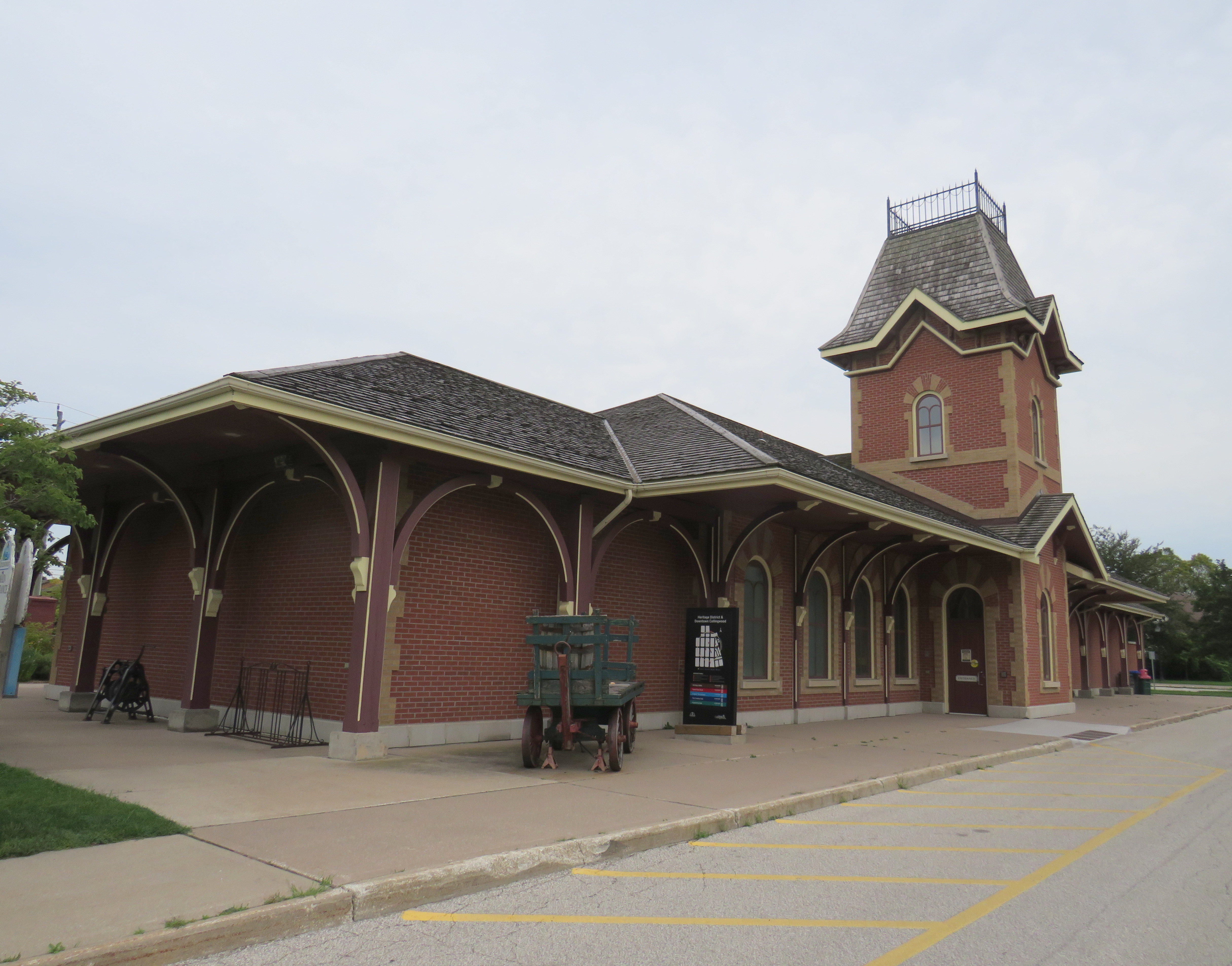
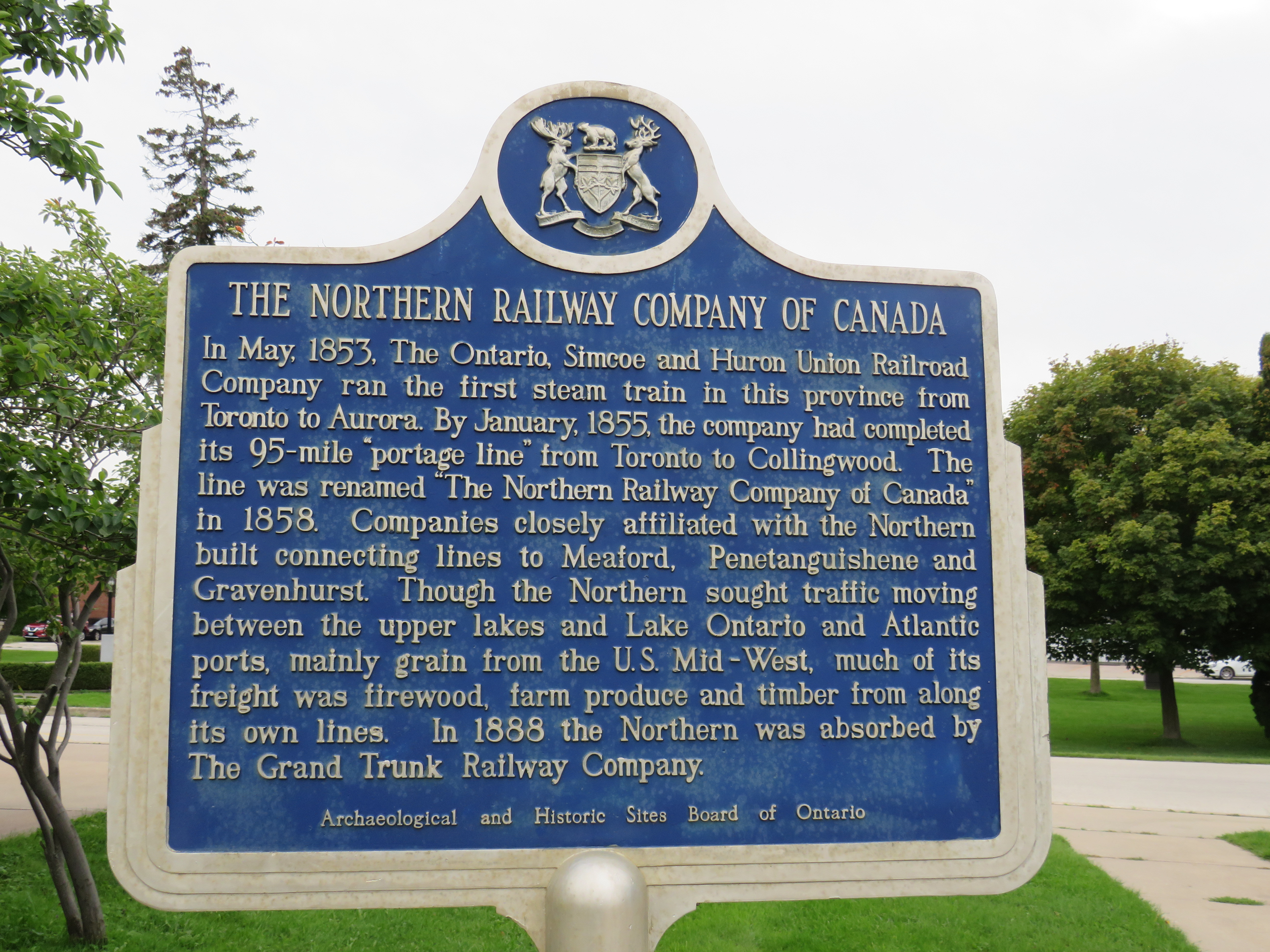
I had just enough time to get a snack and beverage before getting the 6:00 PM Simcoe County Linx bus to Wasaga Beach and then to the 6:30 PM bus back to Barrie, the last trip of the day.

Needed improvements
This ride from Barrie to Collingwood, through mostly pleasant, highlights the need for improvements to both transit and trail access in Simcoe County, though many of these suggestions should not be particularly challenging to implement.
The first issue is Simcoe County Linx’s schedules, which are not timed to meet arriving GO trains at Allandale, nor do they facilitate weekend excursions. Though there is a Flixbus route between Toronto, Barrie, Collingwood, and Owen Sound, it only operates five days a week outside of the busy summer period, where it ran twice daily in 2026.
Simcoe County is to be commended for expanding hourly public transit throughout the county (with two more routes planned). But except for the short Route 4 between Collingwood and Wasaga Beach, there is no evening, weekend, or holiday service. The 6:30 PM departure of Route 2 from Allandale Waterfront is too early for most rush hour trains to arrive; the last possible connection is a tight 4 minutes between the arrival of the 4:38 PM train departure from Union Station which is scheduled to get into Allandale at 6:26. A recommended 7:30 PM departure, would give enough time for two additional evening trains to arrive.
Furthermore, there are no connections from Allandale Station north on Routes 1 and 3, which serve Midland and Orillia; they depart from Georgian College/Royal Victoria Hospital on the north end of Barrie and require paying an additional Barrie Transit fare. Allandale Waterfront could function as a hub serving all of Simcoe County and points beyond (including Muskoka and Grey County) but there are missing links and a need for schedule and fare integration between GO, Simcoe County, and Barrie Transit.
Though there is the occasional call for restoring passenger rail to Collingwood to serve the area’s resorts and the year-round population, the rail corridor is pretty much lost. Buses, connecting with GO trains from Toronto, can certainly fill the need of serving visitors to Wasaga Beach, Collingwood, and cottage country, as long as the connections are easy and the buses take passengers where they want to go. This requires GO, Simcoe County, the local municipalities and the resort operators to work together.
As for the trail, there are a few things Simcoe County and the City of Barrie can do to improve cycling in the region. Though wayfinding along the trails themselves is very good, there’s nothing to guide cyclists between them. Cycling routes can be better posted, with wide paved shoulders prioritized on roads like Veteran’s Drive/5th Sideroad, between Tottenham and Beeton, and to the south end of the North Simcoe trail towards Penetanguishene.
Long term, a better off-road cycling facility could connect Angus and Barrie (and the North Simcoe Rail Trail) without having to use a busy highway, paralleling the still-active BCRY corridor.
Finally, the condition of the county’s rail trails should be monitored and maintained for safe and comfortable cycling conditions, with attention paid to the trail surface and providing ample rest areas.
With some key transit and road improvements, Simcoe County has the potential for being Ontario’s rail trail capital, providing a safe, sustainable, and active tourism option that will benefit locals and visitors alike.


Leave a comment