
Previously on this website, I discussed the problems with the unsightly, intrusive, and poorly thought-out mess of Jersey barriers plopped in front of Union Station along Front Street. They have not only been an eyesore unbefitting a signature heritage structure, but they have also been difficult for pedestrians to navigate around, especially at the corners of Front and Bay and Front and York.
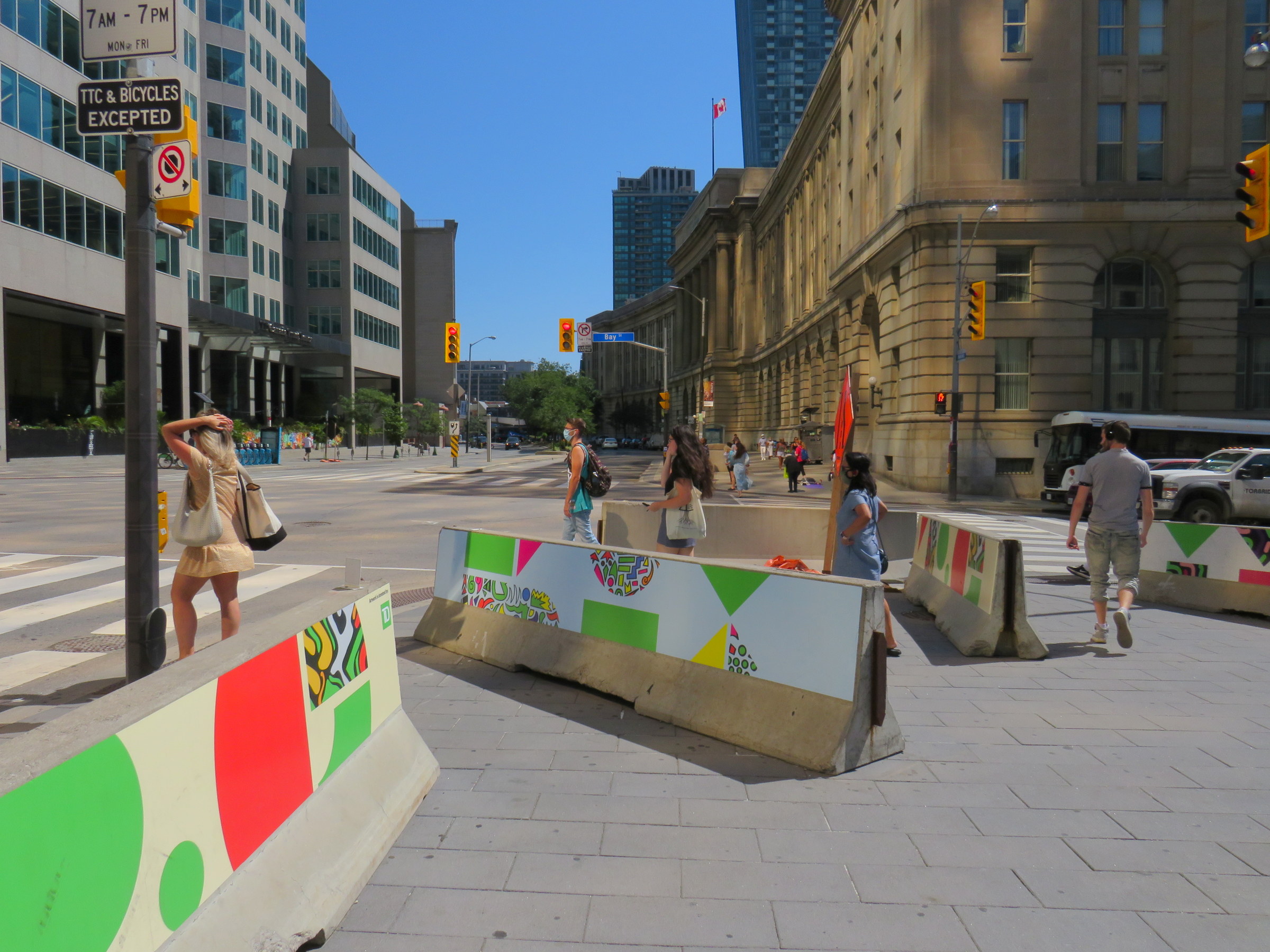
Fortunately, work is just starting on a new system of concrete blocks and bollards to protect the pedestrian plaza and the sidewalks in front of the station. However, this will not be complete until the end of 2025.
Inside Union Station, however, a lot has changed in the last few years. In general, pedestrian flow within the station building has improved, especially with the opening of the GO Transit York Concourse, which provides a second access point for regional trains. Flow between subway, train, and shops is considerably improved; there are also a lot more food and retail options befitting a central transport hub.
Despite new escalators and elevators, accessibility in Union Station remains poor. Though technically, the station is fully accessible to anyone using a wheelchair or other mobility device, the wayfinding is absent in key areas. There is only one small elevator that directly connects the subway level with the Great Hall, UP Express trains, and Front Street. An accessible route is also difficult to find.
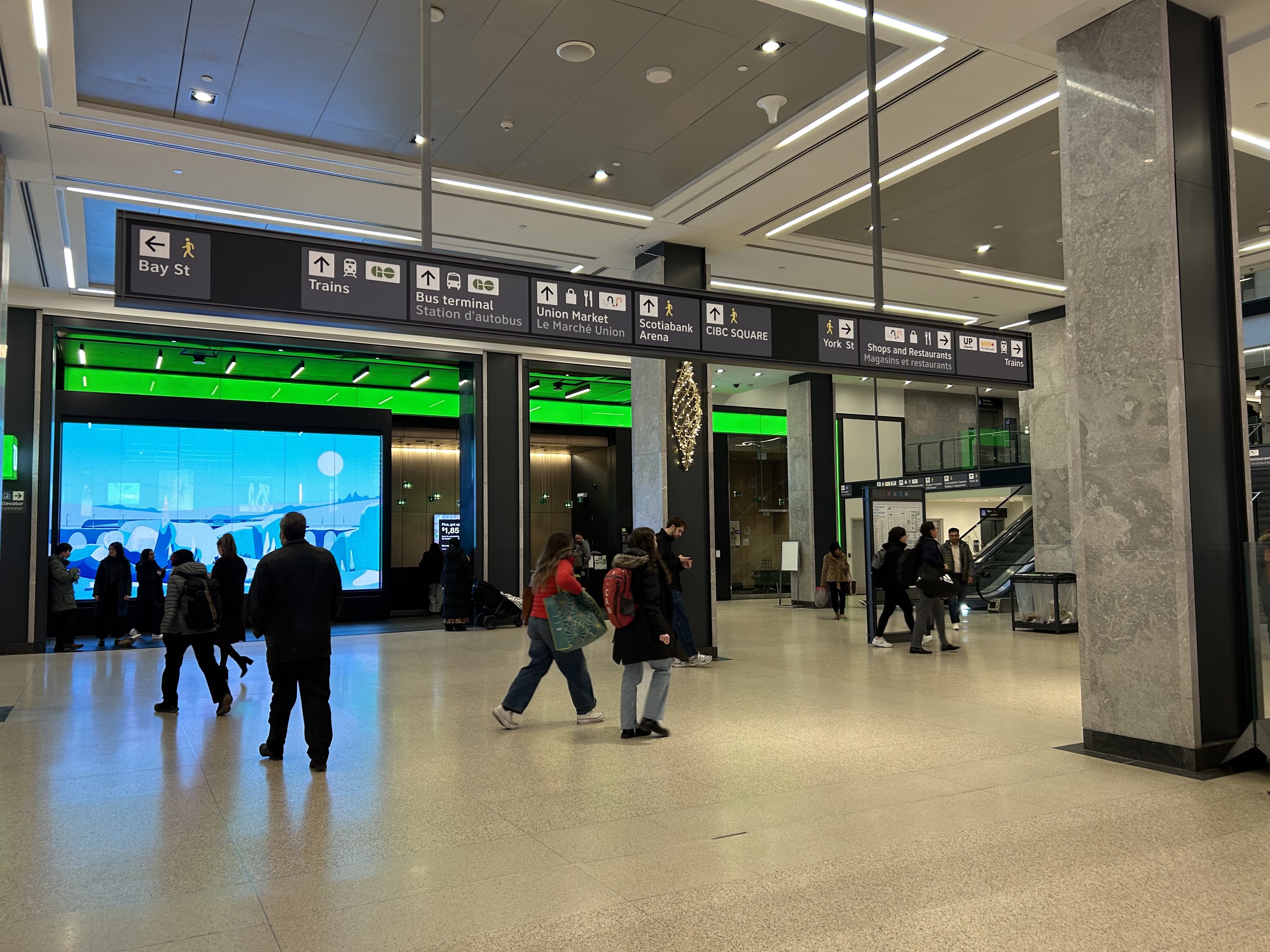
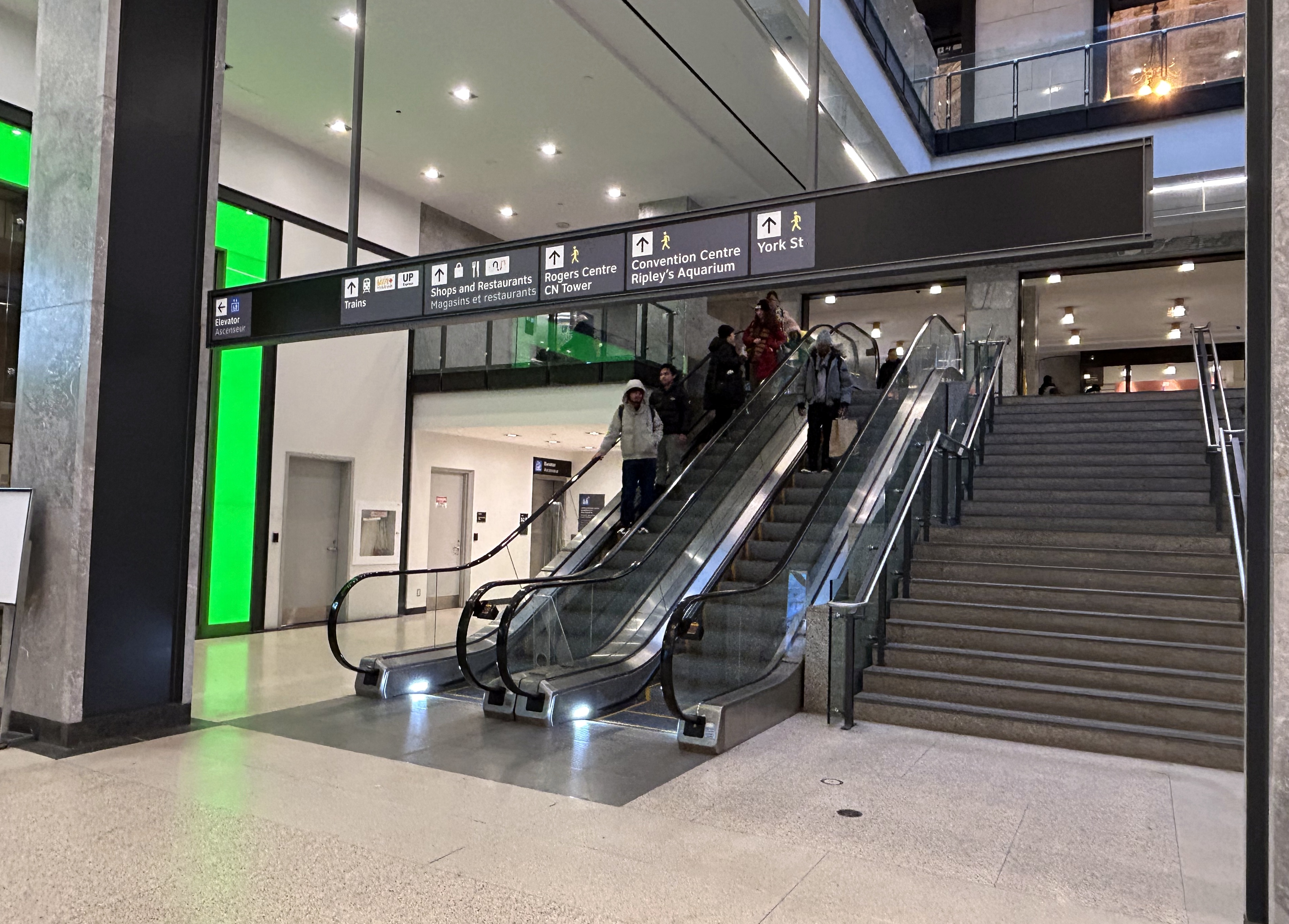
Imagine entering Union Station from the adjacent TTC subway station with a wheeled device or a mobility aid. There is a large concourse with signs leading forward towards the GO Transit York Concourse along with Scotiabank Arena, the bus terminal, and Union Station shops and food kiosks. To the left is Bay Street, and to the right are a set of escalators and stairs leading up towards VIA Rail and UP Express trains. Behind the stairs and escalators is a single elevator, hidden away.
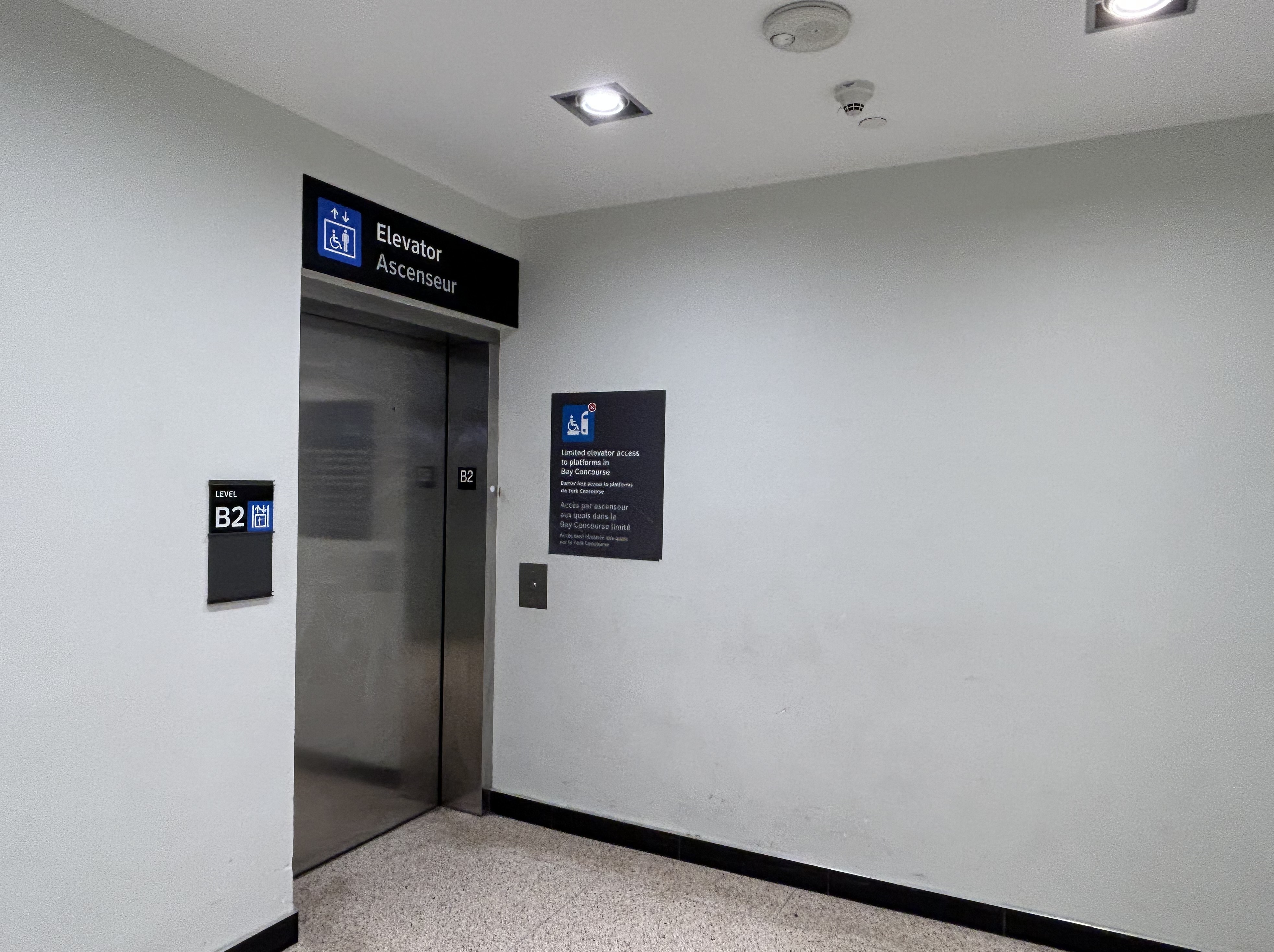
The elevator provides no information other than a sign that indicates that this is, in fact, an elevator, and this is the B2 level. This is a single, small elevator, which operates slowly.
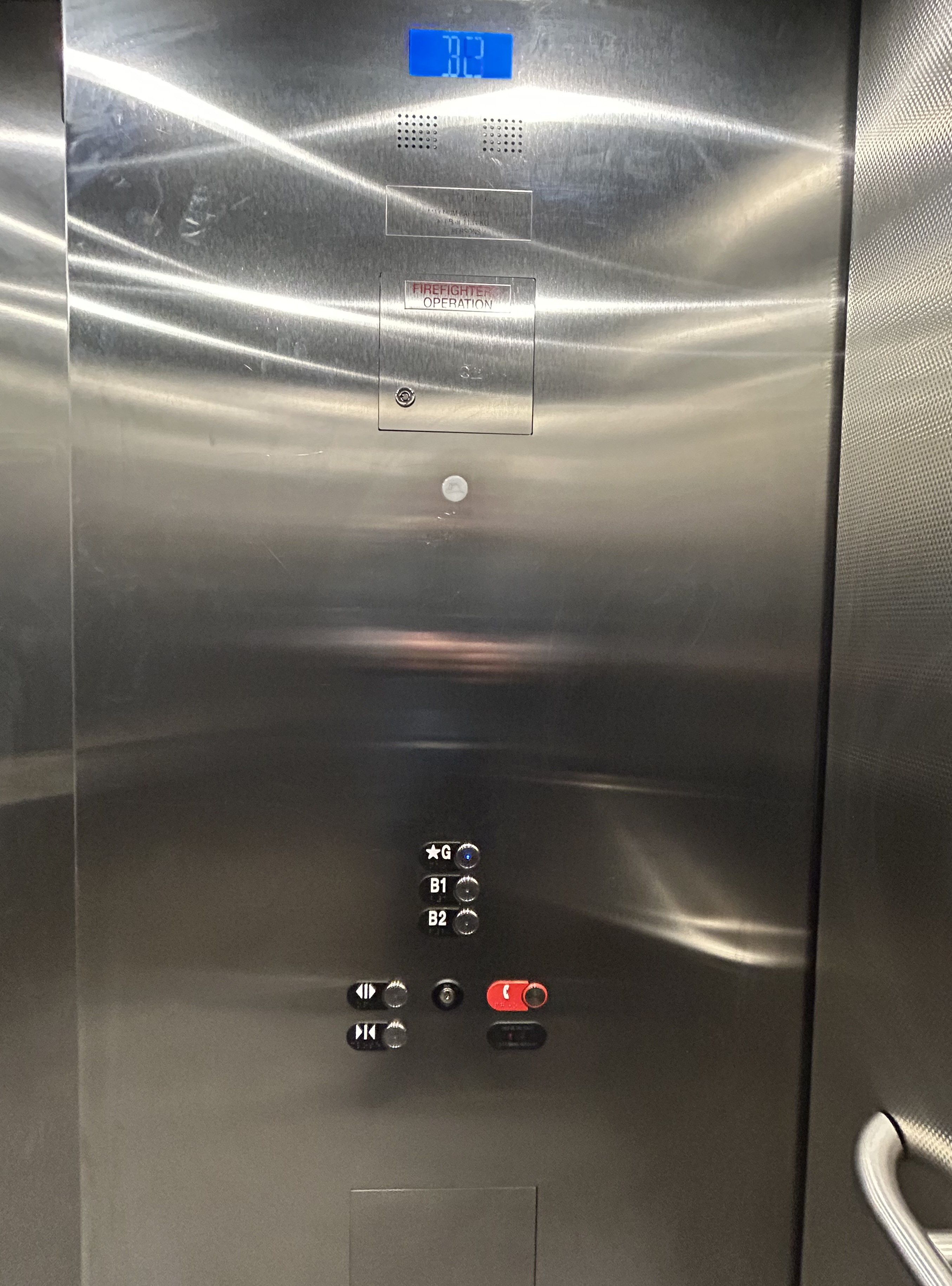
Once inside the elevator, there is no information other than buttons marked “G”, “B1”, and “B2”. There is nothing to tell the elevator user what is accessible from each floor.
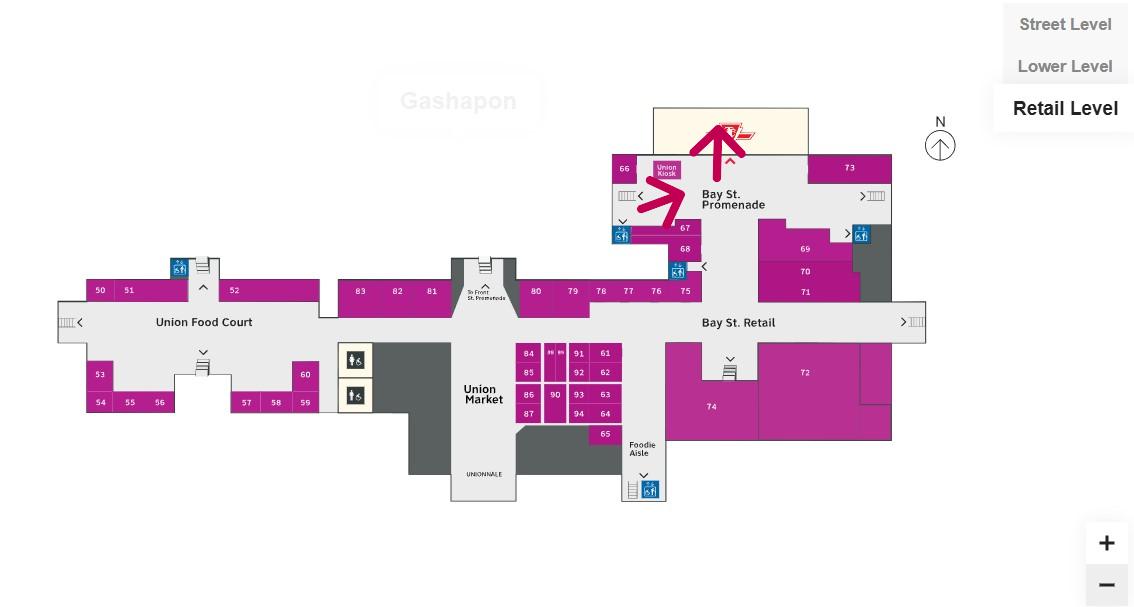
Confusingly, the official Union Station map directory calls the three levels “Street Level” (G, the Heritage structure including the Great Hall, West and East Wings, along with the path towards UP Express and the Skywalk), “Lower Level” (B1, the GO York and Bay Concourses, the concourse beneath the Great Hall, and the VIA departure area) and “Retail Level” (B2, including the food court, food hall, and connections to the subway). In the elevators, the audio prompts only mention the three level names.
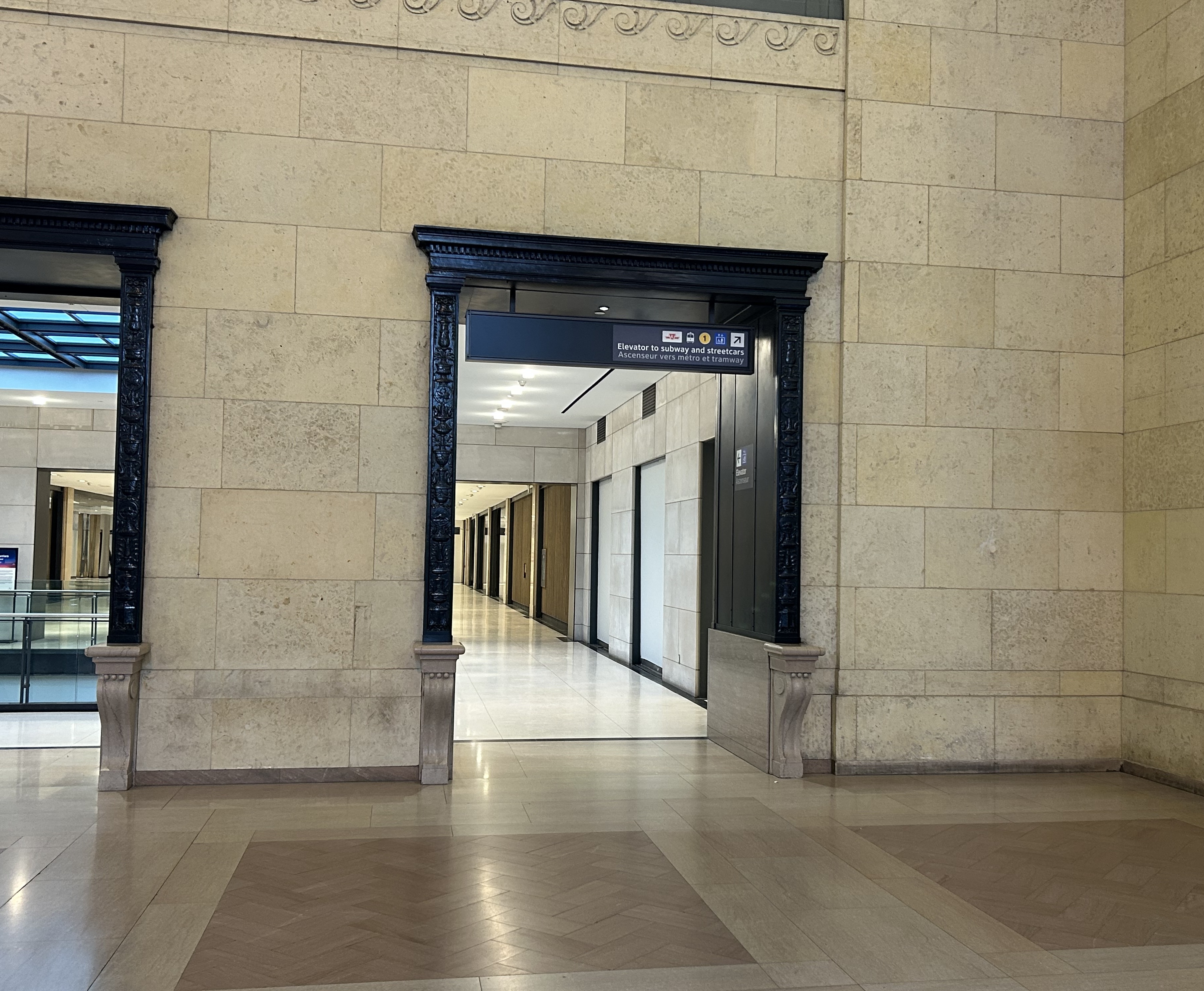
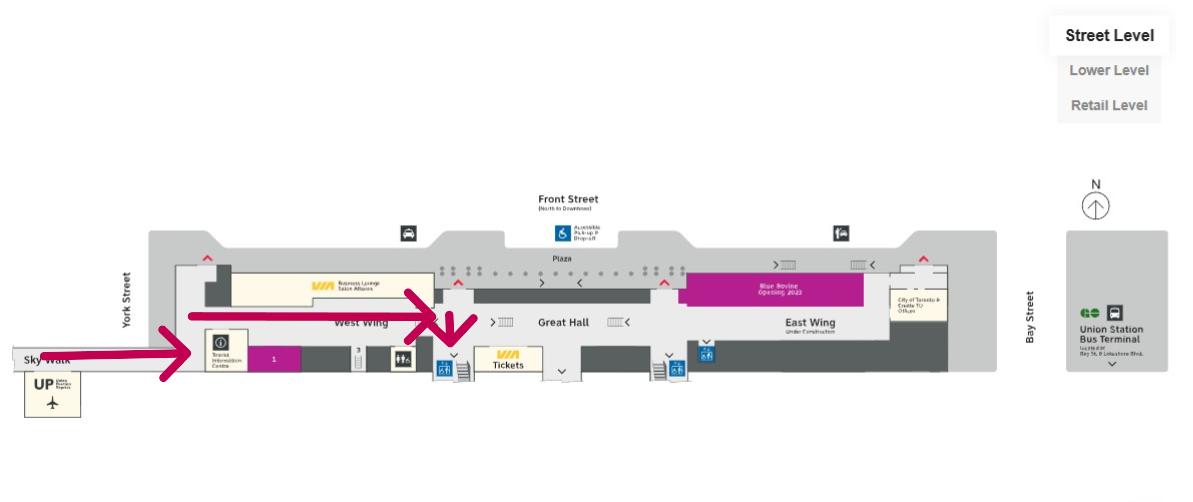
At G level, which includes the Great Hall, VIA Rail departures and business class lounge, and the passage west towards UP Express trains and the Skywalk to the CN Tower and Rogers Centre, the elevator is also hidden behind a wall.
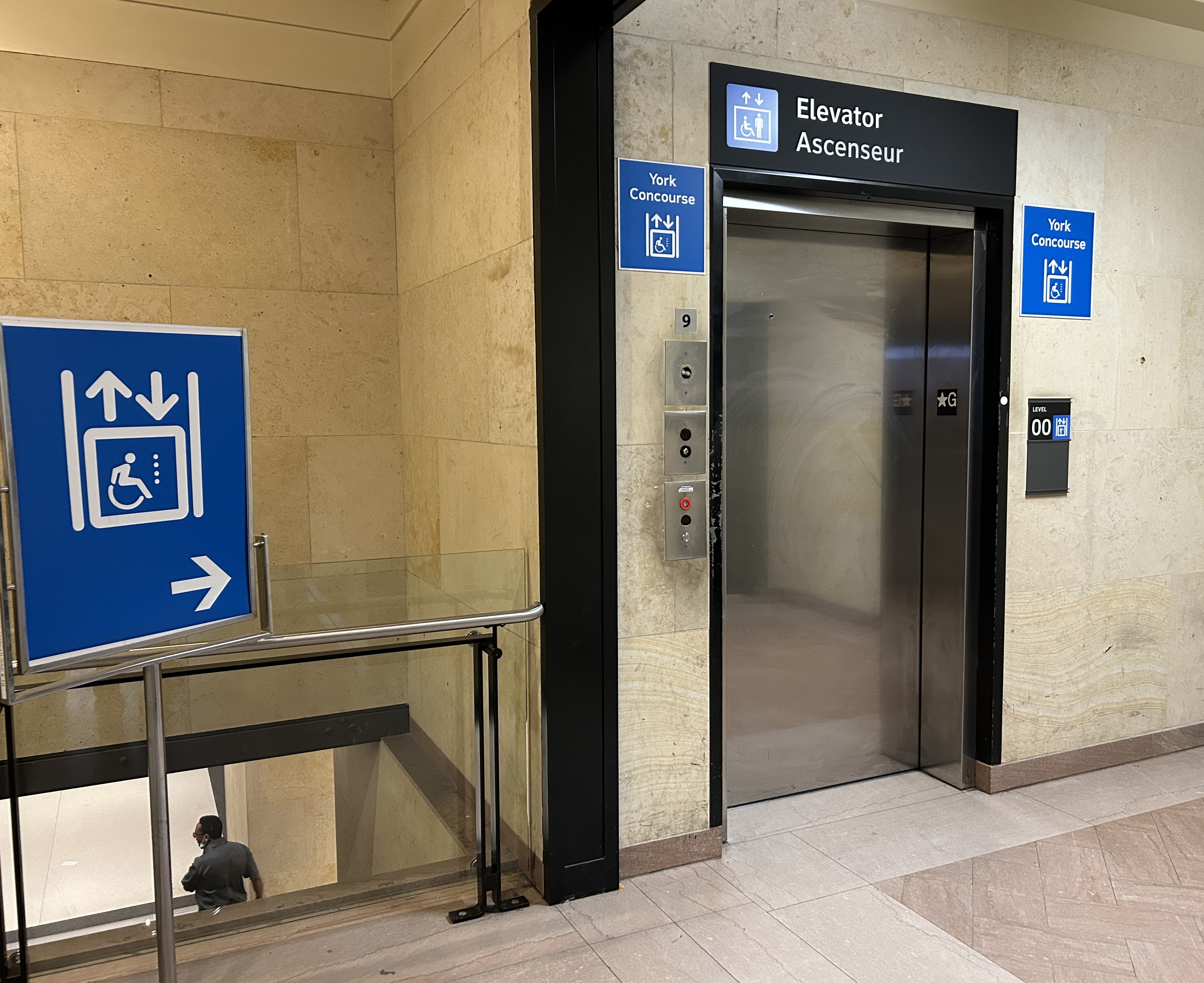
On the west side of The Great Hall, there is also an elevator, beside the stairway down to the GO Transit York Concourse. This elevator does not serve level B2.
If the traveler was only connecting from subway to UP Express with a heavy bag, and not using a mobility device, they might decide to take an escalator from the subway B2 level to the B1 level, the lower Union Station concourse originally intended as an arrivals area for intercity trains. However, there is no elevator or upwards escalator to be seen.
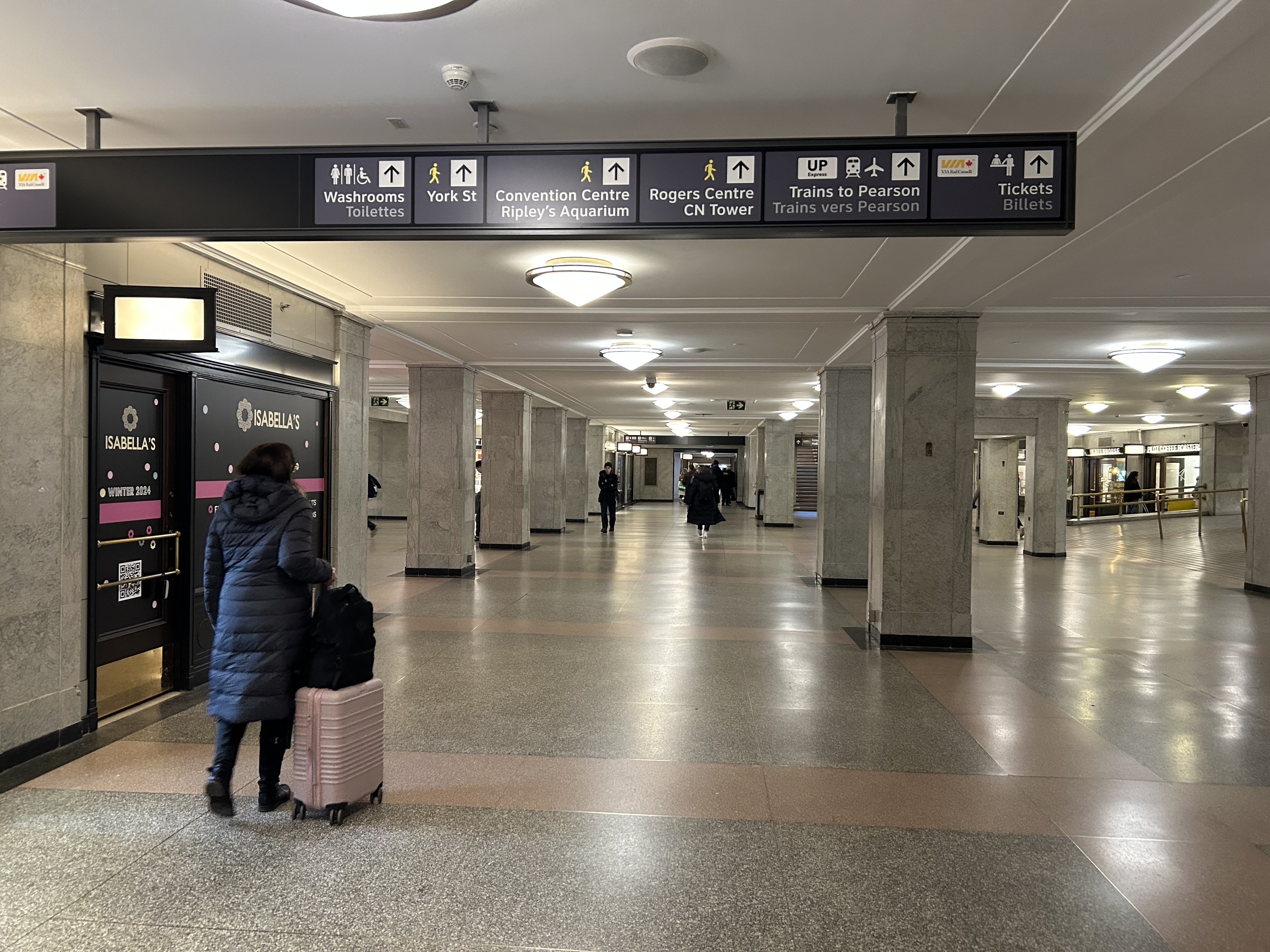
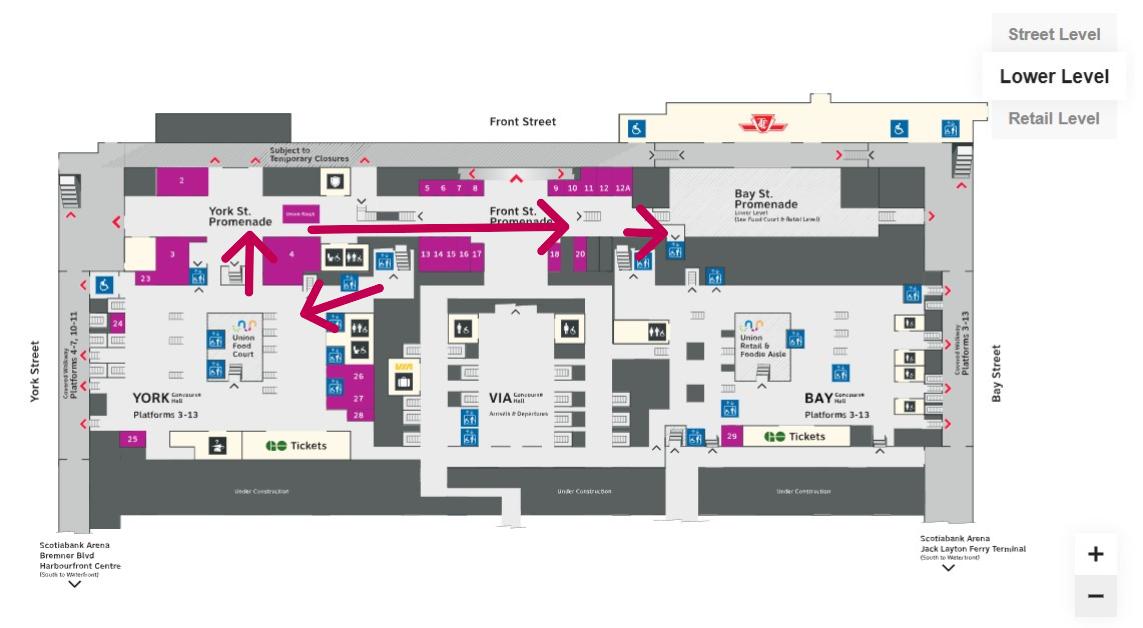
If one knew Union Station well, they could make a lengthy detour through the ramps in the VIA Rail area to get to the Great Hall or go around through the GO York Concourse to reach the elevator or up escalator to the Great Hall. But these routes are not marked from the lower concourse area.
To show how difficult it can be to navigate the station while using a wheeled device (be it a wheelchair, stroller, or wheeled luggage), I shot this video showing how a first-time visitor getting off an UP Express train from Union Station would try to find the TTC subway entrance.
At no point was there any visible signage showing the most direct route for someone requiring a barrier-free path from UP Express to the subway. The maps below show the route I took:
Whenever I travel through an international airport — Toronto Pearson is a good example — I never have to think too hard about where the accessible routes are. Escalators are easy to find. There are banks of two or three large elevators in strategic locations on the ground side of airports, connecting departure and arrival areas, as well as ground transportation facilities. As Canada’s busiest transport hub — busier than Toronto Pearson Airport even — Union Station’s elevators and escalators should be plentiful and easy to find.
I am aware that there are particular challenges at Toronto Union Station — the City of Toronto controls only the common areas, such as the Great Hall, the retail areas, and the main entrances. Metrolinx, the agency responsible for GO Transit and UP Express, controls the York and Bay Concourses, as well as the UP Express station area. VIA Rail maintains its departures area. There are also heritage elements that need to remain intact, such as the Great Hall. But these issues of ownership and heritage preservation do not excuse the difficulty of getting around with a mobility device or even a wheeled bag.
Why weren’t multiple elevators installed connecting all three levels, to improve capacity, speed, and provide redundancy in the case of an elevator outage? Why are there not easy-to-find elevators in the West Wing near the UP Express area?
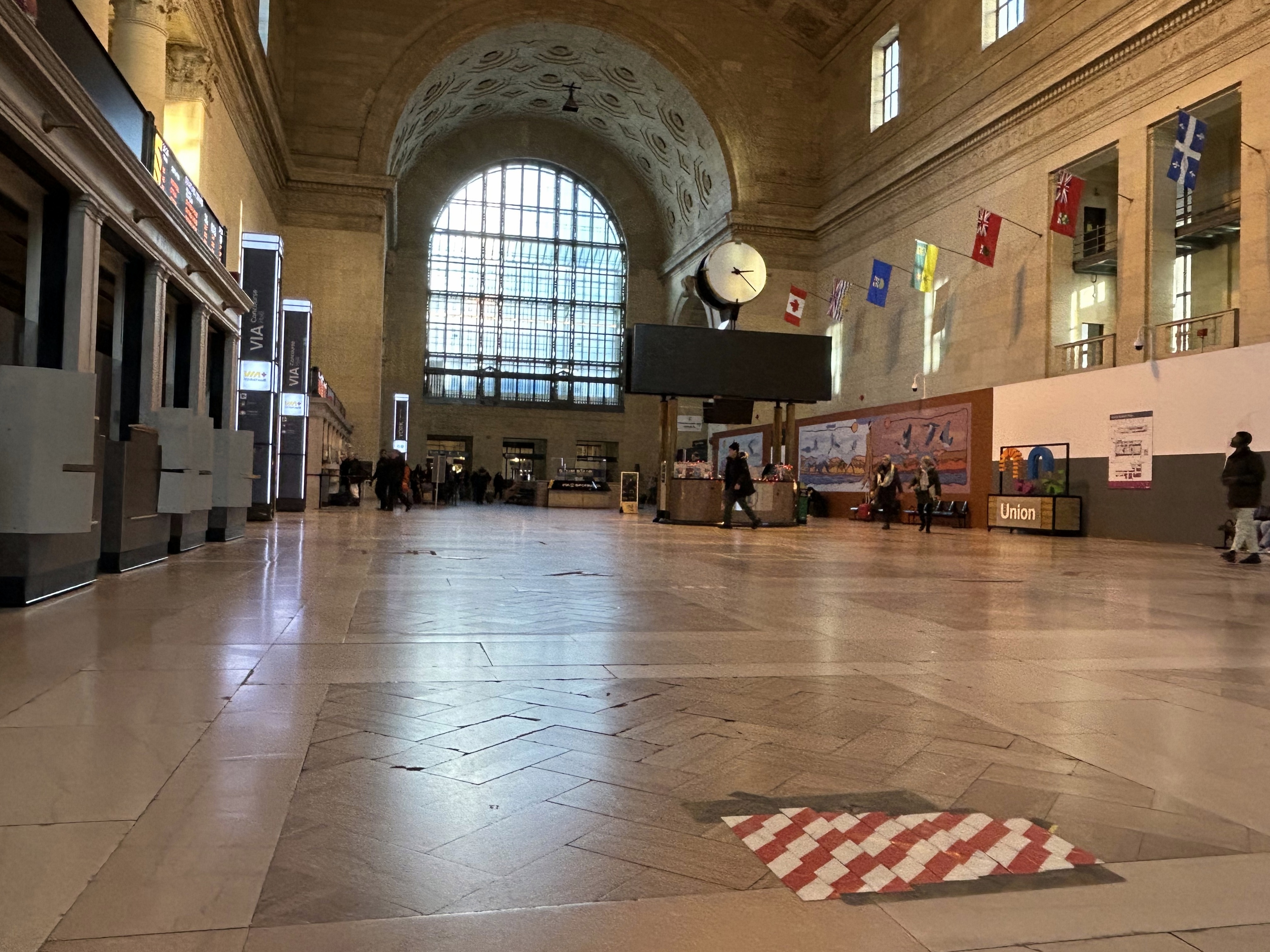
Judging by the condition of the signature Great Hall itself, there is work yet to be done before Union Station is fully restored to its 1920s grandeur. It should not be too hard to improve accessibility and wayfinding as well. Not just for Torontonians, but for international travelers too.
 Sean Marshall
4 replies on “Dysfunction Junction: another Union Station malfunction”
The wayfinding at ‘Onion’ Station is an exercise in absurdity. And as Mr Marshall points out, three agencies are involved in the overall milieu, however, one of them maintains the tradition at many of their stations: Metrolinx.
I’m continually astounded at how ludicrous the ‘wayfinding’ is at many stations. It’s as if whoever is in charge has never lived as a normal human on this planet.
Take Bloor Station, for example. Like many stations, the elevators have two stops. And yet, instead of having one arrow point up on a button, and one down, there’s a litany of possibilities listed beside all the buttons.
One of those options is “UP”. You don’t have to be even a high school grad to realize what that means to someone coming in from the airport who hasn’t a clue of what Union Pearson is.
Brilliant these Metrolinx minions. Not…That’s just one of the many ‘happy little mind games’ they play with you.
And here’s the clincher on the modern Metrolinx mensa minion:
The original stations, like Rouge Hill, has elevators with two buttons, with…wait for it…an arrow pointing up, and the other down.
it’s a heritage building. You can’t just willynilly go slapping in unsightly elevators everywhere. Not only is it visually unattractive. It’s structurally impossible in many cases. We need to get over this idea that every single space needs to be accessible. It’s not practical for older buildings. And costs a fortune. In unions case It’s not hard to find the elevators if you use your brain. I get it though many who need those services have issues with their brains. But that remains more of a you problem and less of an us problem.
I strongly disagree with this comment and the sentiment behind it. Union Station is Canada’s busiest transport hub and welcomes thousands of travellers from outside Toronto every day.
Despite the heritage designation, over the last decade, there’s a new food court, a new food hall, retail, new GO passenger concourses, a rebuilt subway connection.
But somehow providing better elevator access was just too much.
Absolutely agree, the accessibility of Union Station needs improvement. Why is the management of the station so uncoordinated? Would it be sensible for the different levels of governments to establish a jointly operated Union Station Corporation?