Category: Infrastructure

  • Ontario’s new ride: ION LRT opens in Kitchener-Waterloo

    1-IMG_2377.JPG

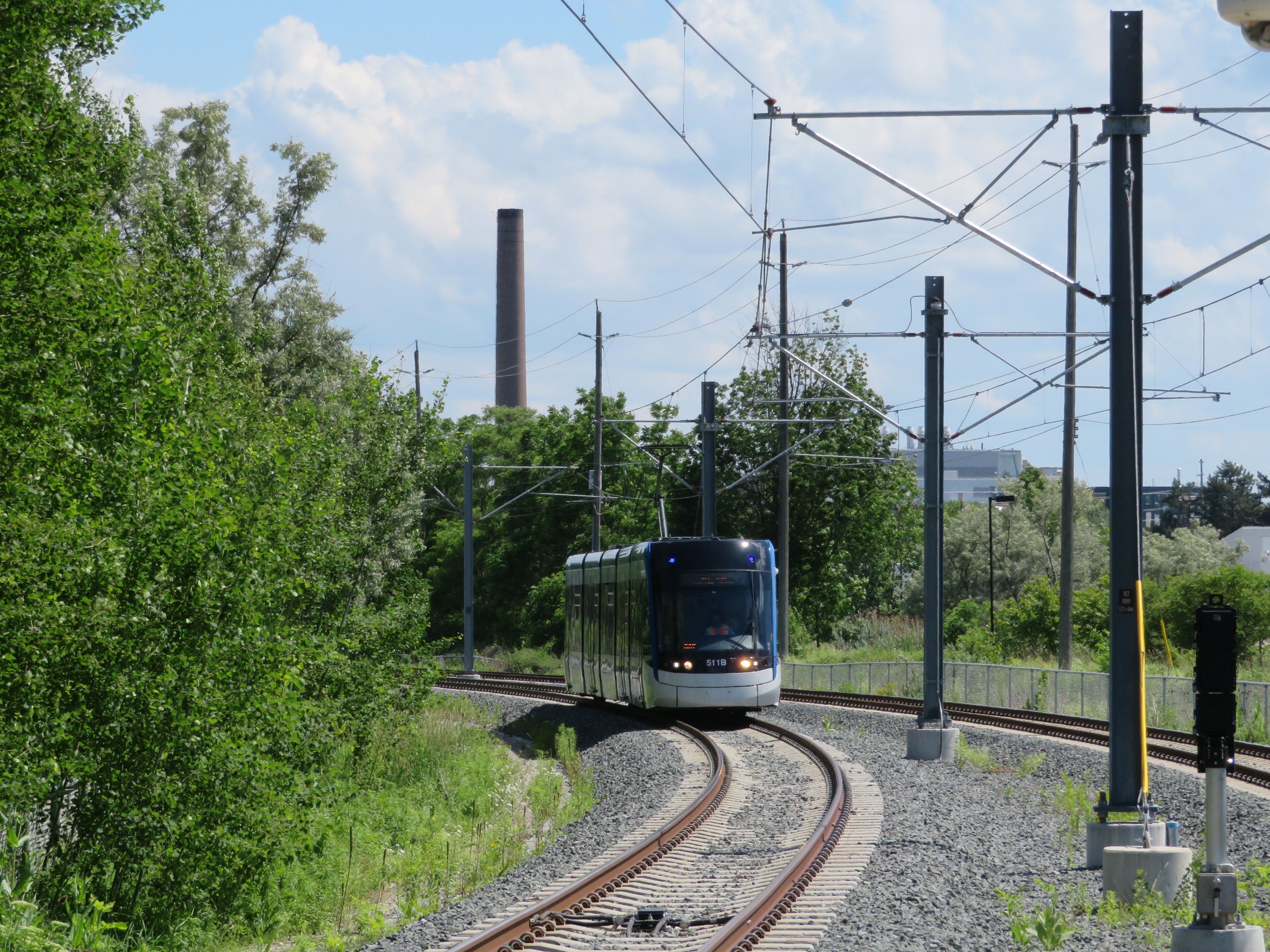
    On June 21, 2019, Ontario’s first modern light rail transit (LRT) system opened to the public. The launch of ION in Kitchener-Waterloo represents an important milestone for both the region and for the province as a whole: additional light rail systems in Ottawa and Toronto will open in the next few years, while other systems are planned for Hamilton and Mississauga-Brampton.

    There are several things that make ION particularly remarkable.

    Kitchener-Waterloo’s population is much smaller than other cities that have adopted rail transit in Canada and the United States. In 2016, the combined population of the cities of Kitchener and Waterloo was less than 350,000, making Kitchener-Waterloo the smallest urban area in North America to boast such a system (Waterloo Region, which also includes the City of Cambridge and three rural townships, has a population of nearly 550,000). Kitchener and Waterloo were connected by streetcar until 1946, then by a trolley bus until 1973. Kitchener Transit, then Grand River Transit (GRT) continued to serve the two cities.

    Despite the small population, LRT makes sense here, as many of the region’s trip generators line up along a single corridor, including Downtown Kitchener, Uptown Waterloo, the University of Waterloo, several high schools, and the main hospital. It is also within walking distance of Wilfrid Laurier University. ION is also fully integrated with the connecting bus system, which was re-organized in conjunction with the opening of the new LRT to provide more direct routing and better connect with the rail service.

    By operating on dedicated corridors and alongside regular traffic, the ION route also demonstrates the flexibility unique to light rail systems. Where it runs on private rights of way, crossings are protected by railway-style lights, bells, and gates. Where it operates in reserved lanes at street level, there are dedicated signals and transit priority at most intersections. This isn’t just a streetcar.

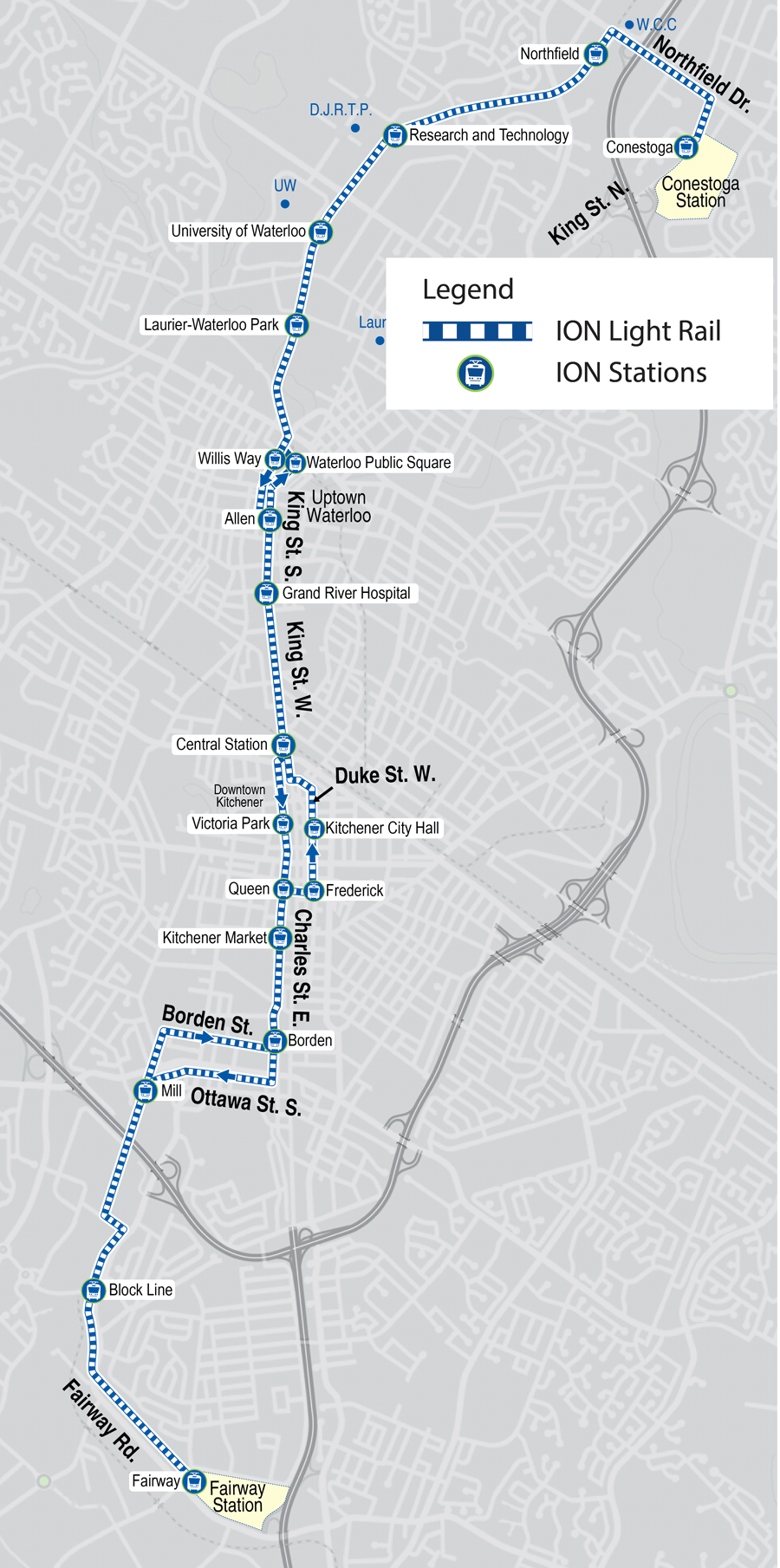
    2018-route-ION-LRT-map
    ION LRT route map, from the GRT website

    Torontonians may be forgiven for confusing LRT with traditional streetcars; ION uses Bombardier-built light rail vehicles similar to Toronto’s new low-floor streetcars, and the TTC has marketed streetcars on Spadina Avenue, Queen’s Quay, and St. Clair Avenue as “streetcar rapid transit” before. The difference, though, is that ION LRT stops are spaced further apart than local streetcar stops in Toronto, they take advantage of signal priority, and they partially run off-street.

    LRT, of course, fills a wide spectrum. At its slowest and simplest is the typical streetcar, such as Toronto’s legacy street railway, or some of the new streetcars being built in the United States, such as Detroit’s QLine or the Atlanta Streetcar. Streetcars in private right-of-ways, such as on Spadina or St. Clair Avenues in Toronto, provide additional reliability and speed. On the other end are metro-style LRT systems completely separated from traffic, often featuring tunnels or elevated structures. Ottawa’s Confederation Line, once it finally opens, will be an example of LRT built to the highest standards. The Ctrain in Calgary comes close to this standard as well, though trains are forced to crawl through downtown on a congested Seventh Avenue transit mall.

    I had the opportunity to ride ION twice in the opening week: the first time, on Monday June 24 (on the way home from a weekend in Stratford) and again with a few friends on Saturday June 29. Trains were consistently packed; GRT reported that over 73,000 passengers rode the LRT during opening weekend.

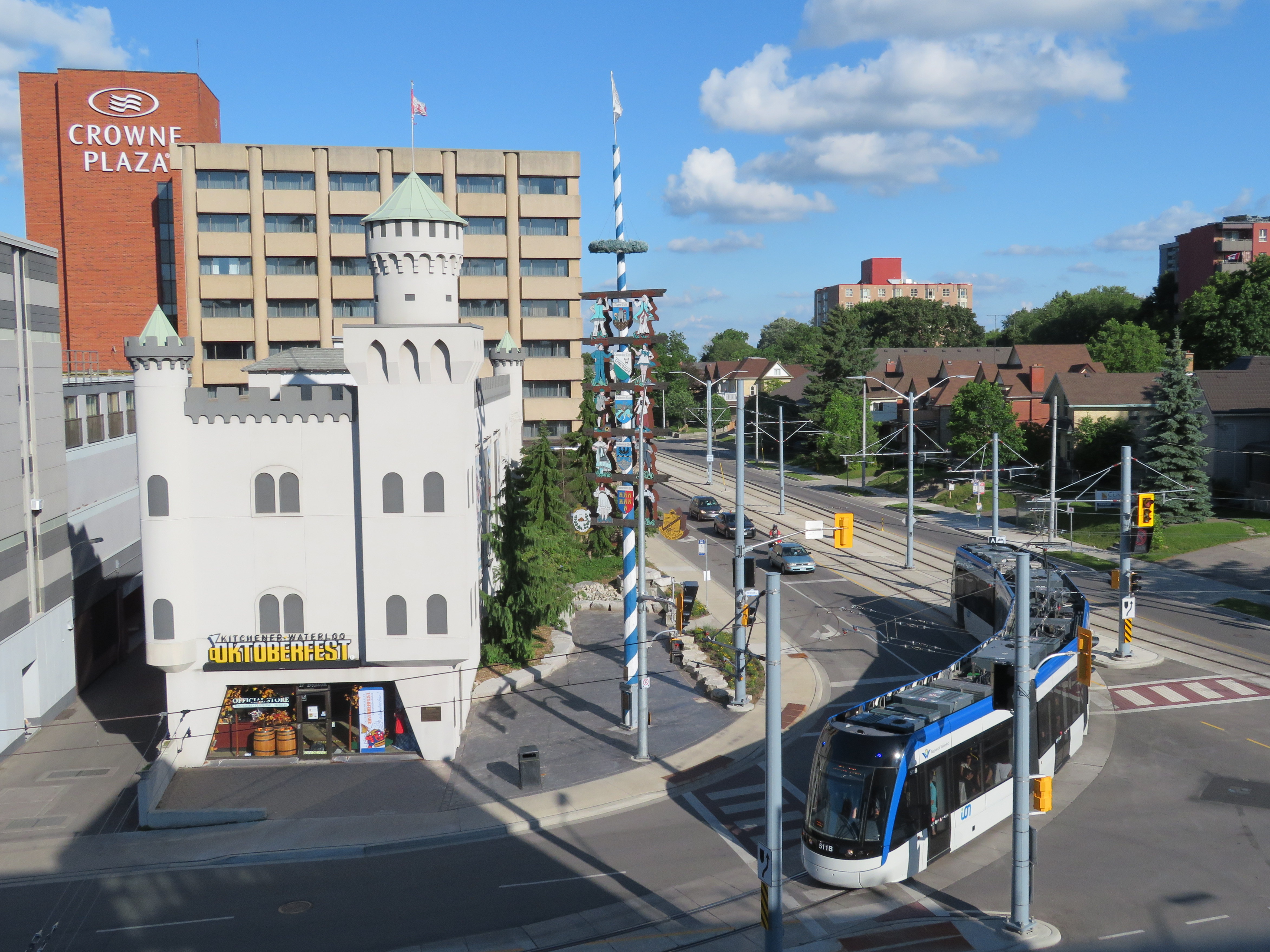
    1-IMG_2411-001
    ION train at Charles and Benson Streets, wrapping around Oktoberfest headquarters

    Operations were not yet perfected. On Saturday June 29, there were noticeable gaps in service, with workers doing switch repairs at the northern terminal at Conestoga Mall. This caused long waits at the northern end of the line. The automatic train control system was disabled, reducing speeds along sections of track where operators had to operate by line-of-sight.

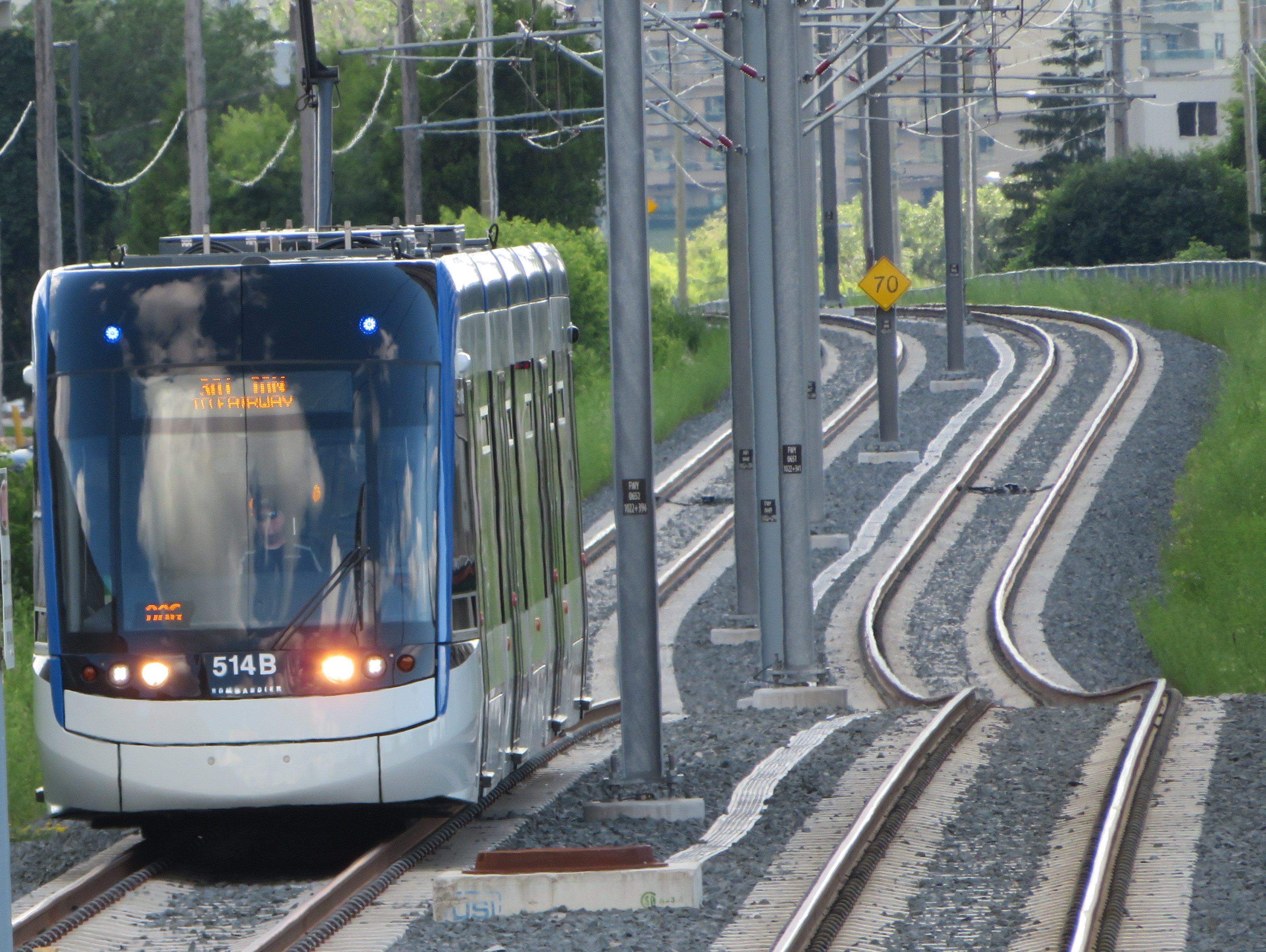
    The schedules could also be a little faster, with reduced station dwell times. Trains must also crawl through tight corners in Downtown Kitchener, Uptown Waterloo, and at Haywood Avenue. But it was nice to see transit priority working: trains ran through many intersections without having to stop, and speeds were impressive (up to 70 kilometres per hour) on the off-road sections of track.

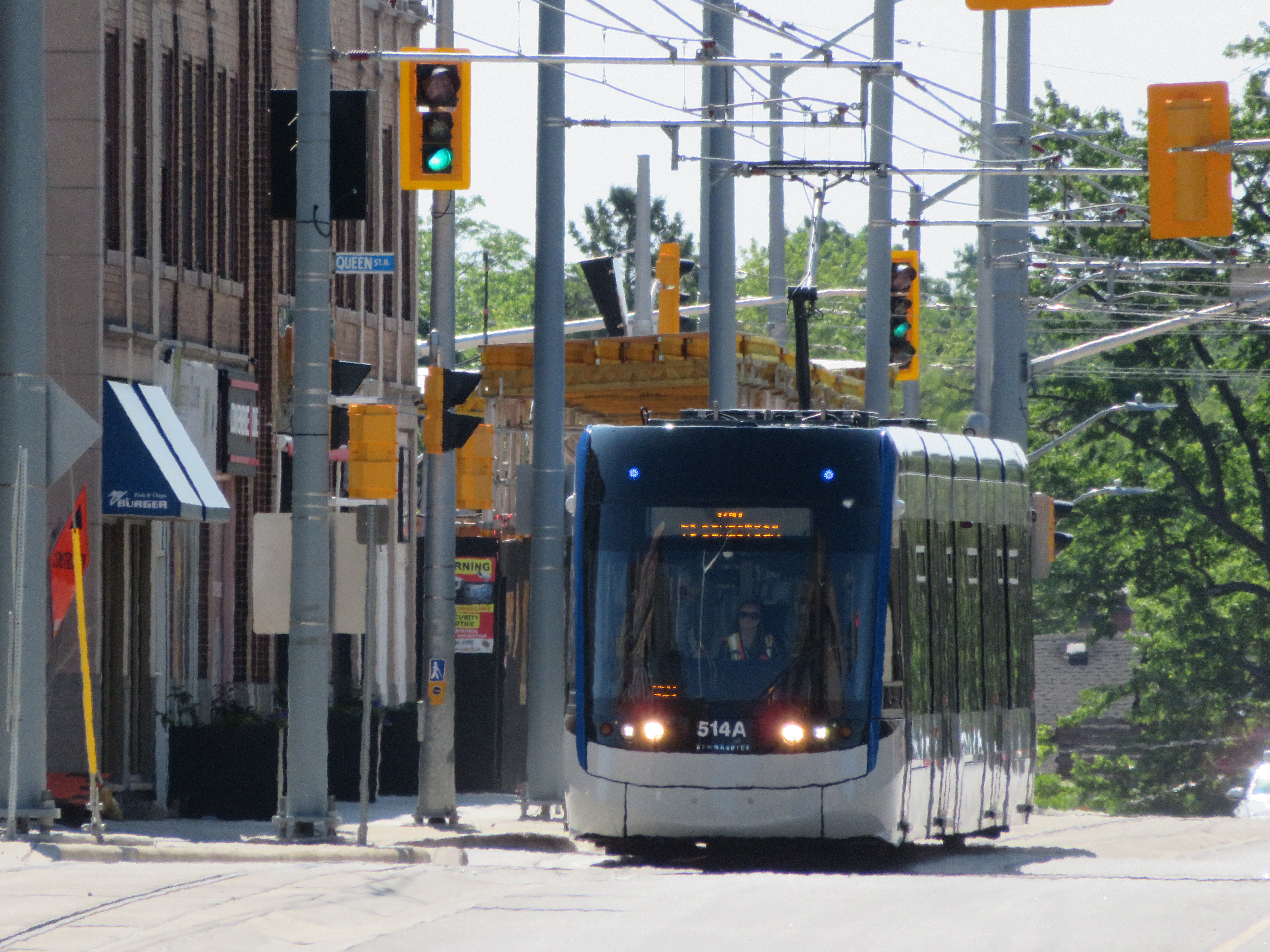
    1-IMG_2199ION train on Duke Street in Downtown Kitchener
    Along the entire corridor, travel times have improved only slightly over the old express bus, the Route 200 iXpress. Between Conestoga and Fairview Park terminals, the scheduled bus time ranged from 45 to 59 minutes, depending on the time of day. The LRT has a consistent 43-minute scheduled travel time between the two terminals. But it still promises to be more reliable.

    The greatest improvements in travel time are between University of Waterloo and Conestoga Mall, Uptown Waterloo, and Downtown Kitchener, where travel times have been reduced by 5-7 minutes.

    A promised second phase will extend ION LRT south to Cambridge. For now, an express bus serves the planned corridor.

    There is certainly room for improvement,  though these at least can be made slowly and incrementally. Hopefully, as passengers and drivers get more used to LRT operations, travel times can be tightened up a bit. But the system will be successful if it attracts more riders (without turning away existing passengers with overcrowding or longer travel times due to transfers from buses), and encourages higher-density, transit-oriented development along the route.

    I will return to Kitchener-Waterloo later this summer once ION is “broken in” and the novelty wears out. Offering free fares during the opening week was a nice way to encourage residents to check out the new service, but overcrowding and inexperience were problems.

    I am hopeful that ION helps to change local attitudes towards light rail and encourages other mid-sized cities and suburban municipalities to follow Waterloo Region’s example.

    1-IMG_2391-001ION train approaching Fairway Terminal. The speed limit on this section of track is 70 km/h.
  • How the QEW made way for Ontario’s transportation innovation

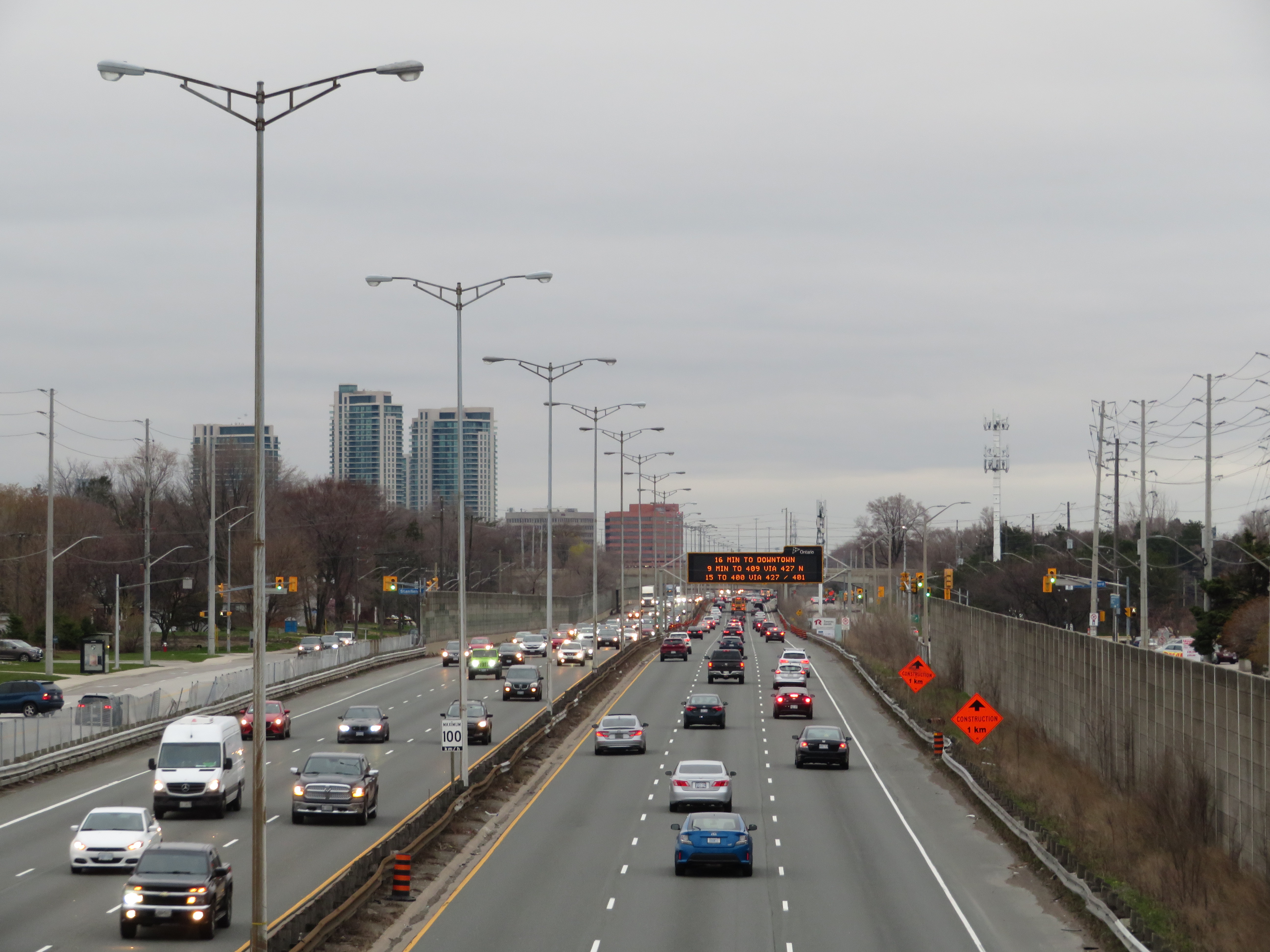
    IMG_1263.JPGQueen Elizabeth Way looking east towards Dixie Road in Mississauga
    Eighty years ago, the Queen Elizabeth Way was officially dedicated by King George VI and Queen Elizabeth (for whom it was named). The QEW, which connected Toronto with Hamilton and Niagara Falls, was not only Canada’s first superhighway, it was also the longest divided highway in North America. When it opened on June 7, 1939, it featured such innovations as continuous lighting, extensive landscaping, and Canada’s first cloverleaf interchange.

    But the QEW was not built to modern freeway standards. Despite boasting interchanges and traffic circles, it also had many signalized intersections, private driveways, as well as two lift bridges. As traffic increased after the Second World War, the QEW became known as a notorious “death trap.” Luckily, safety innovations developed by Ontario’s Ministry of Transportation and its predecessors have since made Ontario’s highways among the safest on the continent. Interestingly, the QEW is also indirectly responsible for the creation of one of North America’s most successful commuter rail systems.

    I wrote more on the history of the QEW and Ontario’s record of highway safety innovation for TVO.

  • A “fantastic bonanza:” another transit plan up in smoke?

    24-768x614.jpg

    On the CBC radio program Metro Morning on March 28, Toronto Mayor John Tory spoke about his concerns regarding Premier Doug Ford’s plans to upload the city’s subway system, as well as Ford’s intentions to build new subway extensions to Richmond Hill and Scarborough Centre, bury the Eglinton West LRT, and start the long-planned Relief Line. Instead of a conventional subway, the Relief Line envisioned by the province would use a “new technology,” despite planning and engineering underway for a subway, using an existing subway yard for Relief Line train storage.

    But Tory, who has been passive so far about the province’s plans, was hopeful that the unspecified new technology proposed for the Relief Line would be a “fantastic bonanza” for Toronto, but he added that he didn’t know for sure what would come of the new plan.

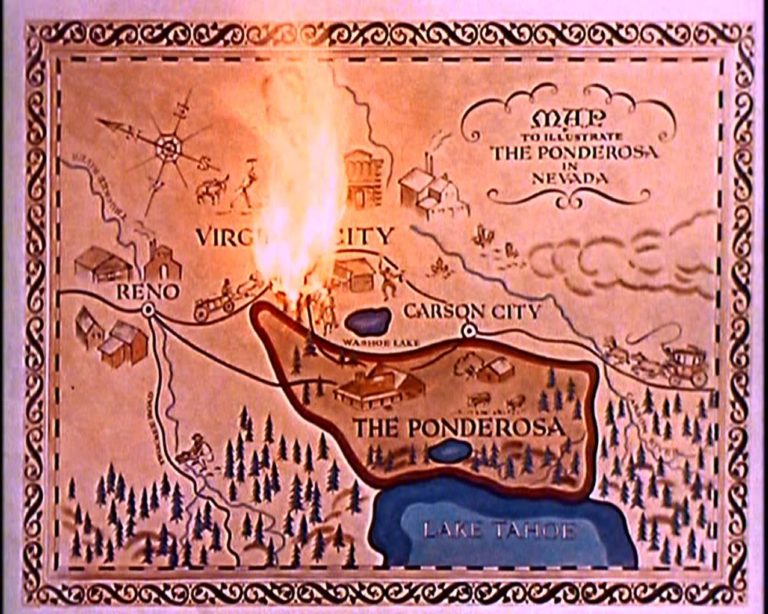
    It is curious that Tory called this hostile takeover a “fantastic bonanza.” Bonanza was a long-running Western television show, starring Lorne Greene as the patriarch of the Cartwright family, owners of a vast ranch on Lake Tahoe. Bonanza was famous for its theme music and opening credits, which featured a burning map of the Cartwrights’ Ponderosa ranch before introducing the cast.

    Opening theme for Bonanza

    Bonanza’s burning map is a great metaphor for Toronto’s transit planning. Newly elected mayors and premiers burn the maps left behind by their predecessors, and time is wasted on new feasibility studies and engineering reports, ready just in time for someone else to get elected with yet another idea. Plans come and go, but hardly anything ever gets built.

    There’s plenty of blame to go around. After a prolonged spurt of subway construction in the 1950s, 1960s and 1970s, momentum was lost. In the 1980s, Bill Davis’ Progressive Conservatives insisted on a novel linear-induction rail system for Scarborough, rather than the light rail project already underway. The Liberals, under David Peterson, proposed several subway lines, though it was scaled back under NDP Premier Bob Rae. In 1994, work started on the first phases of the Eglinton and Sheppard subways. When Mike Harris’ government was elected in 1995, they cancelled Eglinton, filling in a hole already dug for the tunnel boring machines.

    There was new hope in 2003, when a new Liberal provincial government was elected, and David Miller, an urban progressive, became mayor of Toronto. While the province’s top priority was the extension of the Spadina Subway to York University and Vaughan, it was willing to help fund major improvements to GO Transit, along with new light rail systems in Ottawa, Kitchener-Waterloo, Hamilton, and Mississauga-Brampton. It also committed to Miller’s proposed Transit City LRT network, including a fully grade-separated replacement of the ageing Scarborough RT.

    There were valid criticisms of Transit City — there were too many transfers to get around the top of the city, there was no Relief Line, and a few of the proposed lines, like parts of the Jane and Don Mills LRTs, were too difficult to build as surface rail projects. But because of Miller, the Eglinton-Crosstown LRT is well underway, and preliminary work continues on Finch Avenue West.

    Work would have also started on the Scarborough RT replacement and expansion and the Sheppard East LRT, had Rob Ford not been elected in 2010, promising “subways, subways, subways” and burning the transit maps for which new projects were planned and being built. Seven funded LRT stops in Scarborough became three unfunded subway stops. Overestimating Rob Ford, and hoping to keep seats in Scarborough, the Liberal government folded to his demands, and work stopped on the LRT replacement.

    Rob Ford’s disastrous term was followed by John Tory’s twin obsessions of SmartTrack and an austerity agenda, at a time when the Yonge and Bloor-Danforth subways were overwhelmed by demand caused by a growing population and a booming economy — hardly the conditions that demanded low spending on civic services and infrastructure and yet another half-baked transit plan.

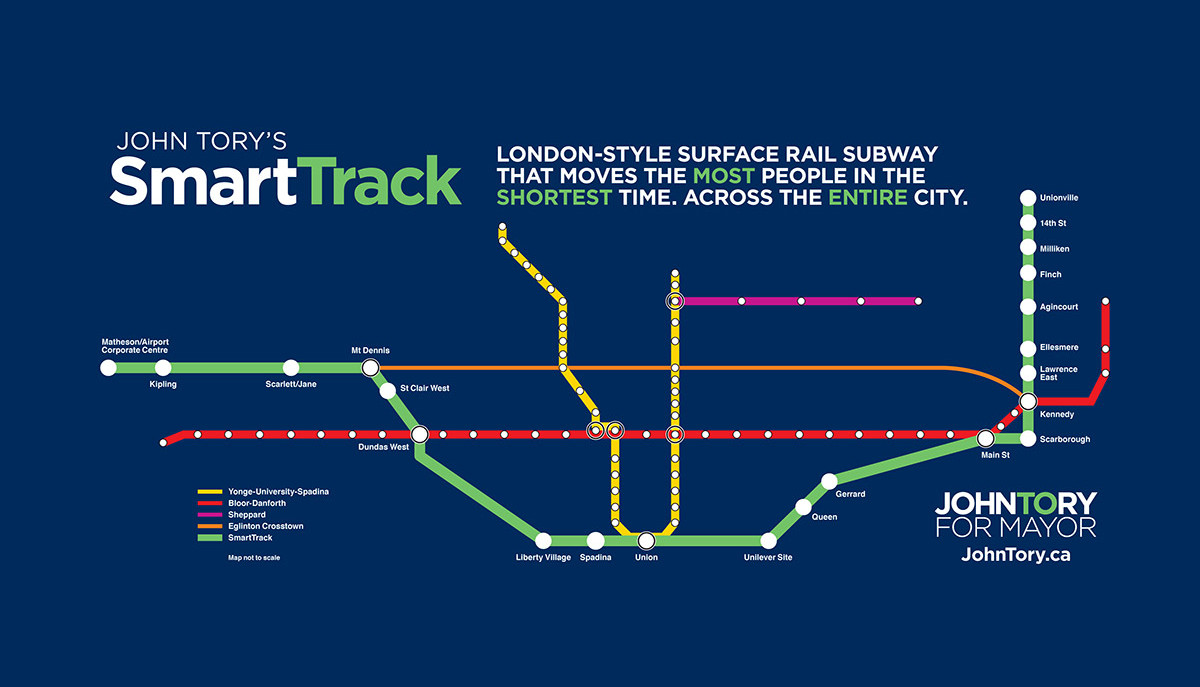
    smarttrack_fbSmartTrack map from the 2014 John Tory campaign
    Tory promised that it would only take seven years to build SmartTrack, which would mostly use existing railway infrastructure, along with a new section of track in Etobicoke, on land already sold off for development. Tory’s insistence on SmartTrack further delayed momentum on the Relief Line. Though Tory remained committed to the Scarborough subway extension over the approved and funded LRT, it was reduced to a single stop as costs ballooned, while the subway and SmartTrack threatened to cannibalize each other. We don’t hear much about SmartTrack anymore, but at least Tory has come around on the Relief Line.

    But Doug Ford’s latest musings make it clear why the planned subway upload is so dangerous.

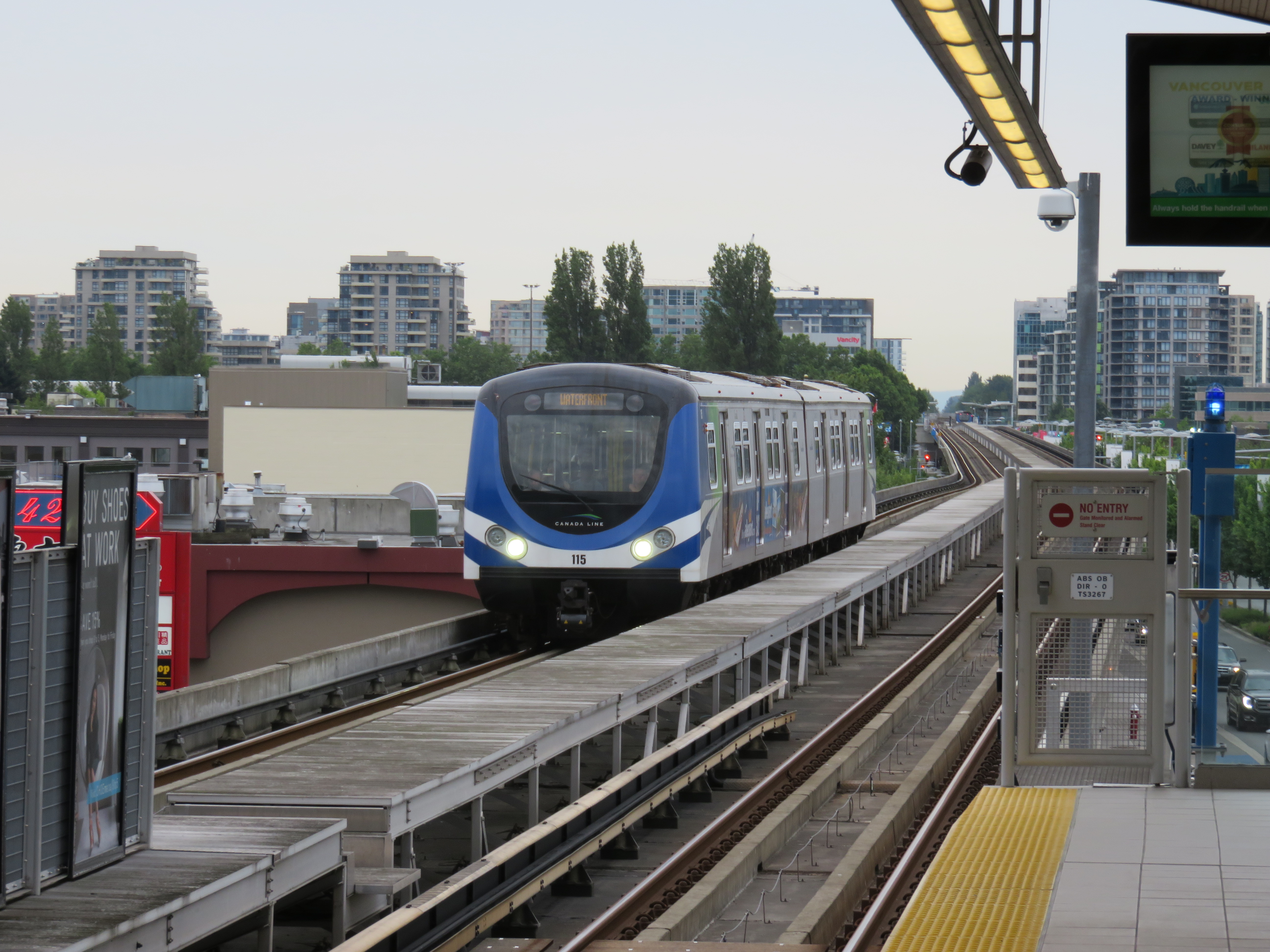
    19817903155_db9d9bb379_o.jpgCanada Line in Richmond, British Columbia
    So what now for the Relief Line?

    Despite the inevitable Simpsons monorail jokes (Doug Ford did promise a monorail on Toronto’s waterfront when he was a city councillor in 2011), the new technology the province is considering is likely an automated light metro line, similar to the Canada Line in Vancouver. The Canada Line links Vancouver’s city centre with the international airport and the suburb of Richmond. It was built as a private-public partnership (P3) project, in which a private company was contracted to design, build, and operate the line. It’s an attractive option for a conservative government: P3s promise to be cheaper to build and operate than a conventional public project.

    But the Canada Line has problems. Though trains are frequent, it was built too small to accommodate growth. The outer terminals at Vancouver airport and Richmond-Brighouse are both single track/single platform. Station platforms are too short — only 40 metres long — to increase train sizes. And as many stations are underground, it’s too expensive to extending platforms to fit larger trains. Some relief is coming, but even then, the maximum capacity of the Canada line is 15,000 persons per direction per hour, far less than Vancouver’s SkyTrain lines or Toronto’s subway. If this is the route Toronto takes, it won’t be long before the Relief Line itself will need relief.

    Once again, I fear that Toronto will continue to spin its wheels thanks to the Ford circus. And it’s a shame — though sadly not surprising — that Mayor Tory isn’t fighting back.

  • Filling the gap in Southwestern Ontario

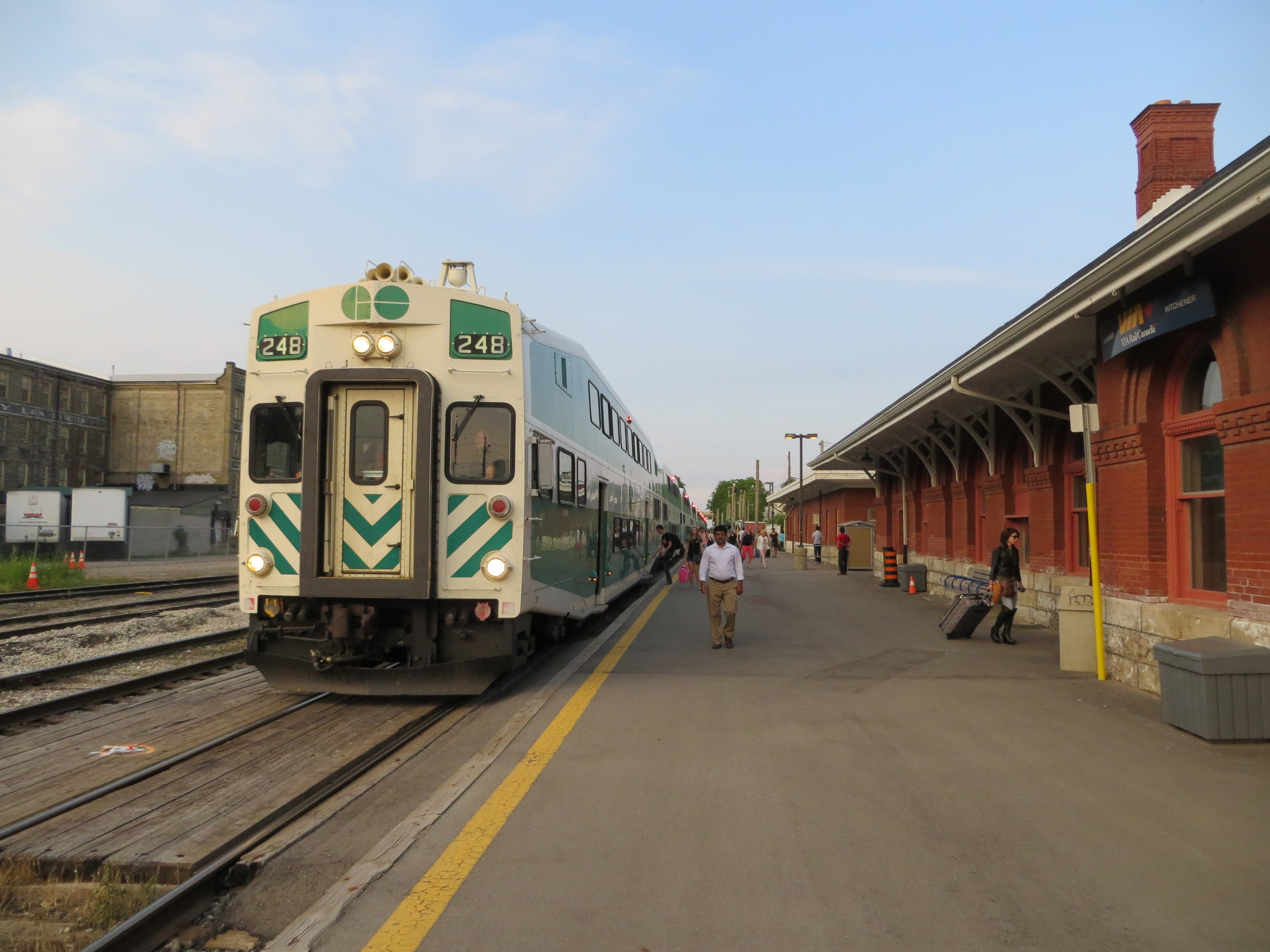
    9119948871_f1716baa80_oWhile there’s GO train service between Toronto, Guelph, and Kitchener, it’s inadequate for the regions’s transportation demands 
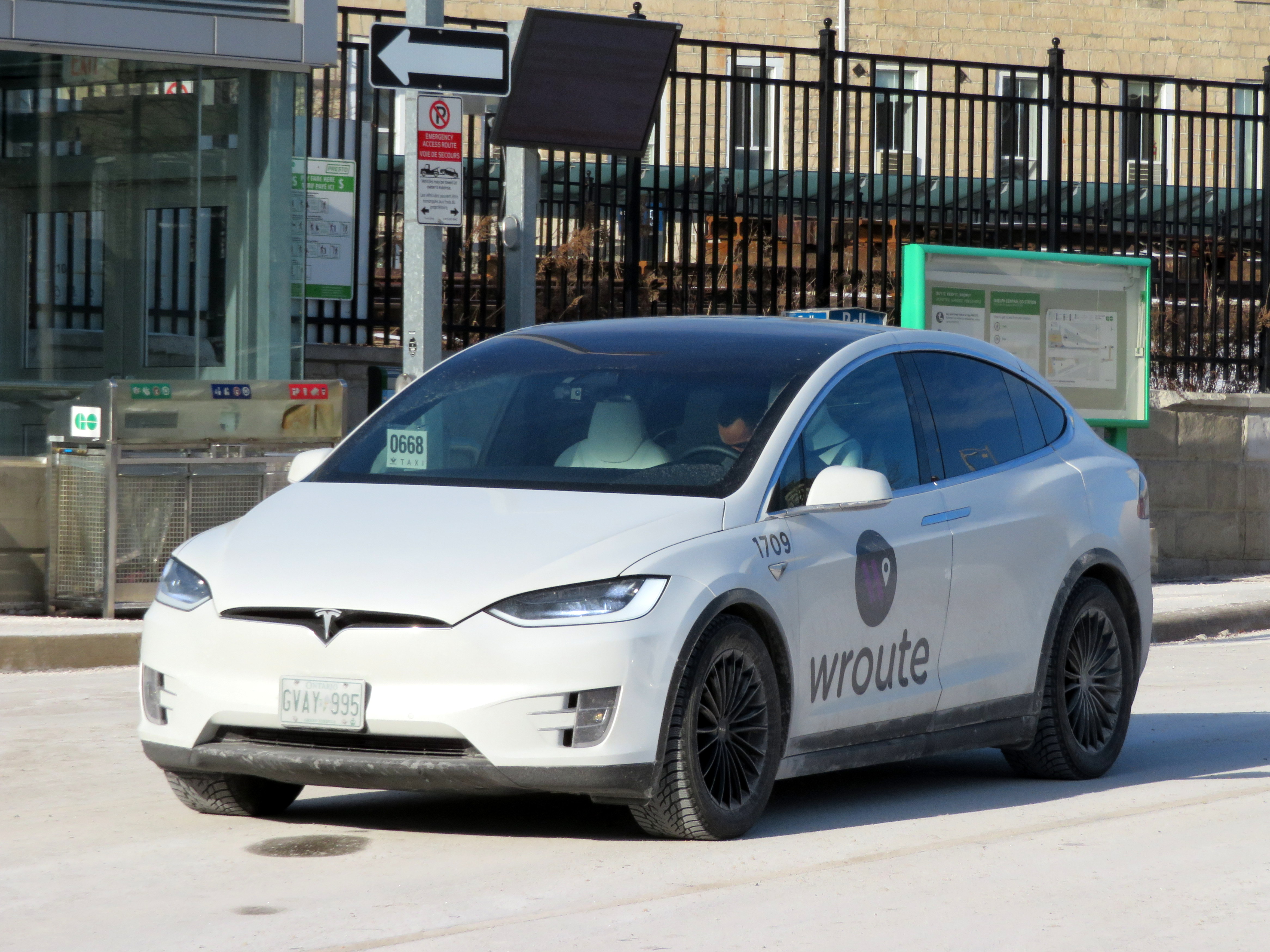
    Earlier this year, I took a ride on Wroute, a new service connecting Guelph, Kitchener, and Burlington that has some characteristics of a bus service, a taxi company, and ride-hailing app. With a fleet of Tesla Model X electric SUVs, Wroute tries fill a gap left by GO Transit and other intercity transportation operators in the Guelph-Kitchener/Waterloo-Hamilton Triangle. It’s an interesting concept, but it is not enough to move commuters quickly, reliably, frequently and, most important, affordably.

    I spoke with two Kitchener residents — James Bow, author and webmaster of Transit Toronto, and Brian Doucet, Canada Research Chair in cities planning at the University of Waterloo — to find out what the region really needs.

    You can read the full article at the TVO website here.

    IMG_8407-001.JPGTesla operated by Wroute at Guelph Central Station
  • A year later, progress on Canongate Trail

    IMG_8531-001
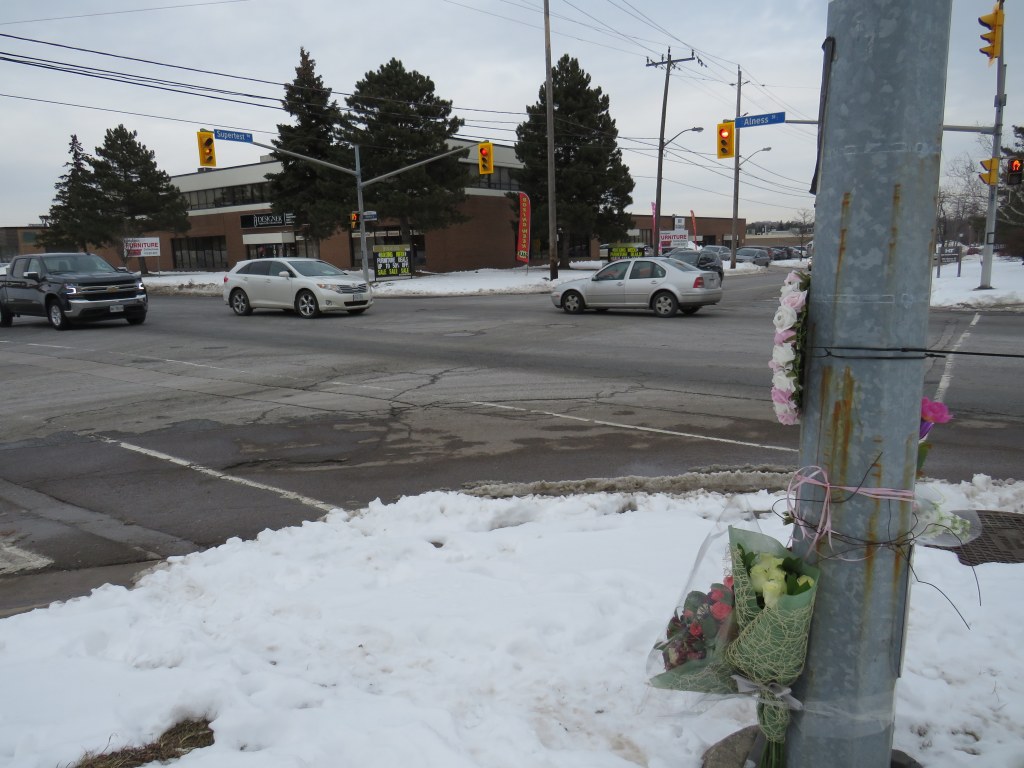
    Canongate Trail, February 2019

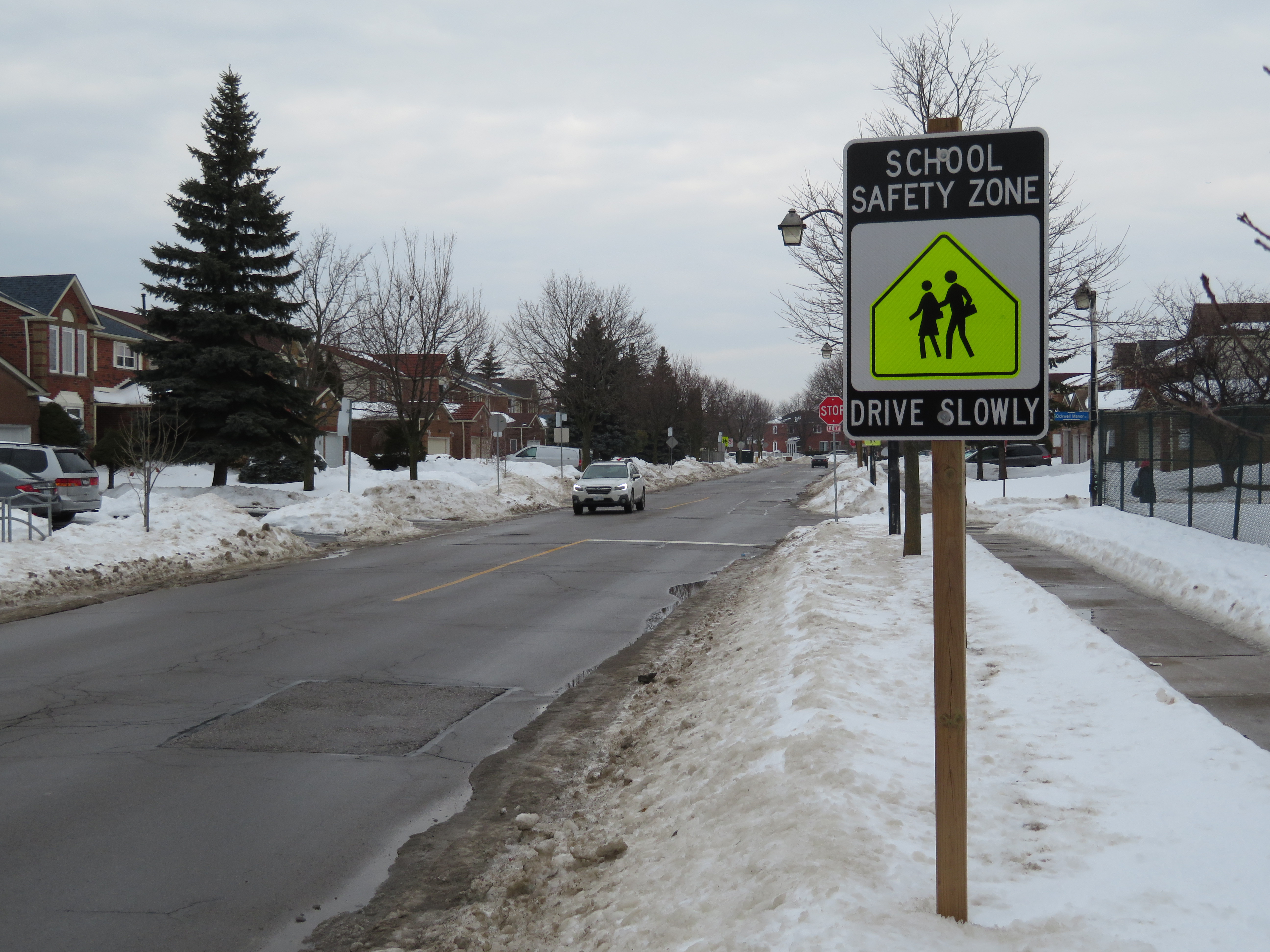
    In February 2018, Duncan Xu, an 11-year old boy, was struck and killed crossing a residential street in North Scarborough on his way home from school. He was one of forty-two pedestrians unintentionally struck and killed by motorists in Toronto last year.

    Not long after Duncan’s death, I visited the neighbourhood and wrote about the tragedy.  Canongate Trail, where Duncan was struck, is a two-lane residential street. At the time, there were no traffic calming measures in place to slow down motorists, many of whom used Canongate as a shortcut around the busy intersection of Kennedy Road and Steeles Avenue. The local councillor, Jim Karygiannis, decided to unilaterally close a walkway linking the rear schoolyard with Canongate Trail, close to where Duncan was killed. Duncan used the walkway before he tried to cross the street.

    Since then, more permanent fixes were made. At the request of Karygiannis and local residents, city staff studied both reducing speed limit and installing traffic calming measures. While staff recommended reducing the speed limit to 30 kilometres an hour, they concluded that traffic calming measures such as speed humps were unwarranted.

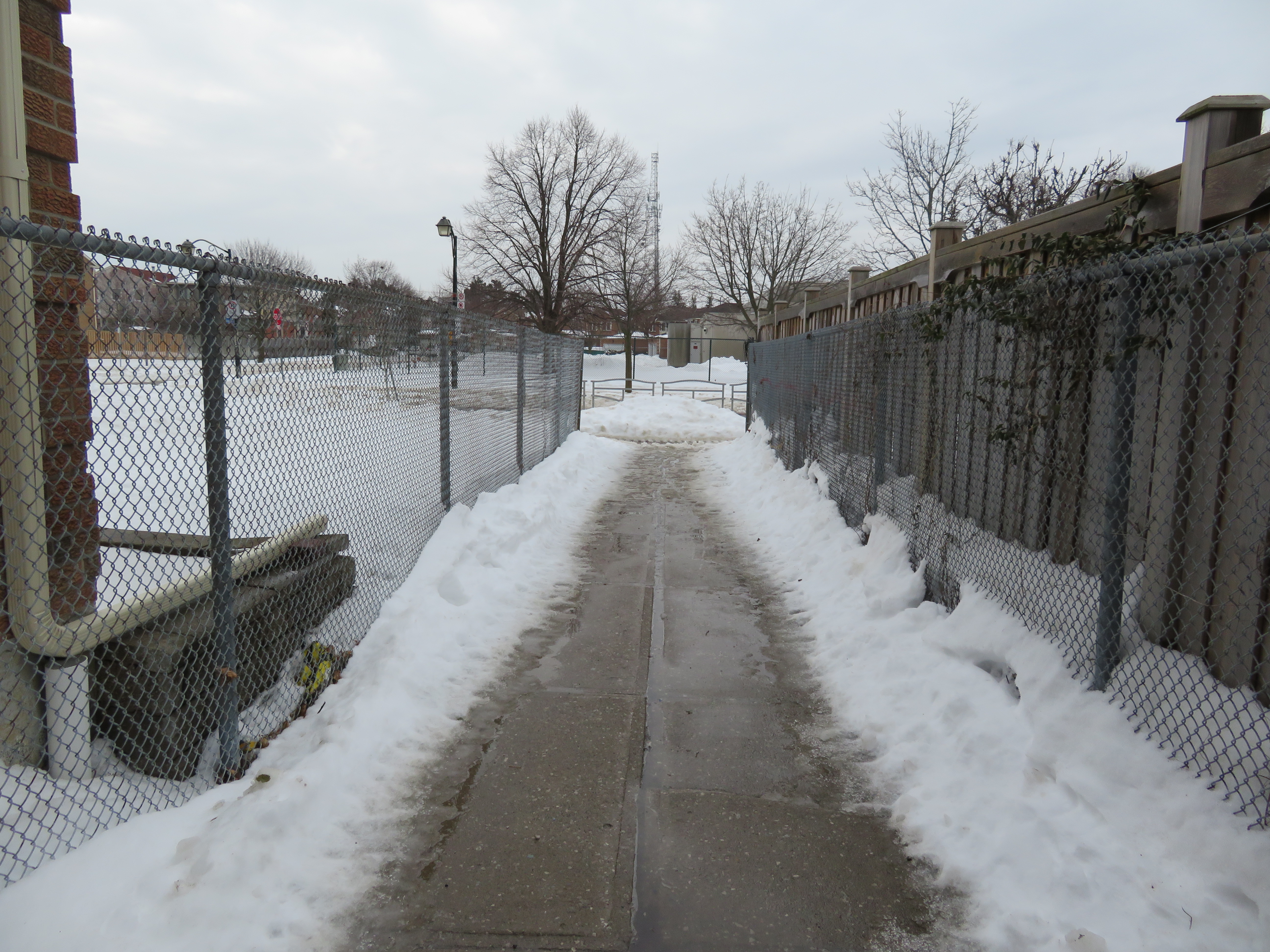
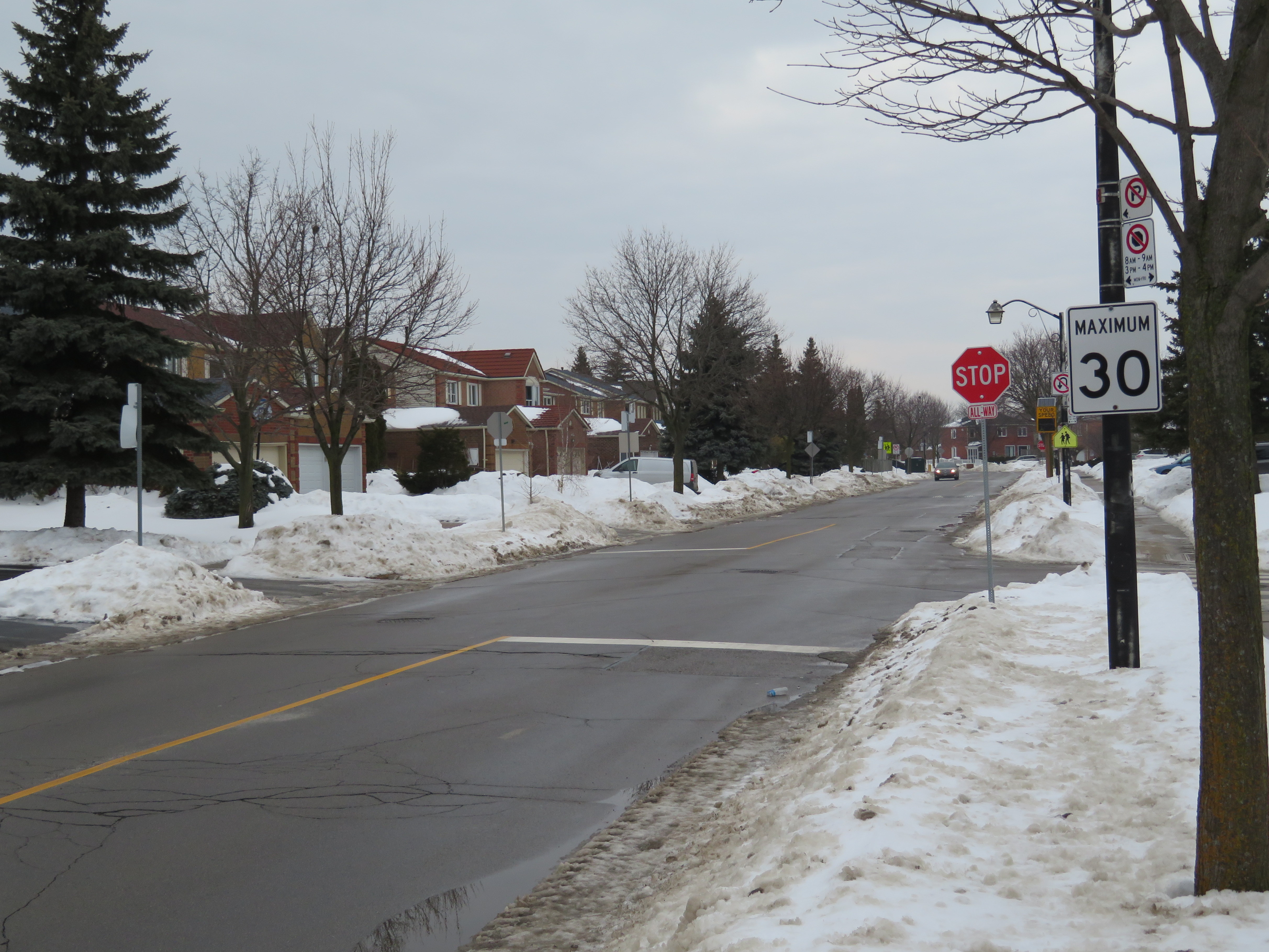
    The speed humps were added anyway, along with other measures. A new all-way stop was added at Ockwell Manor Drive, near where the walkway meets the Canongate Trail sidewalk. Beyond the point where the walkway meets the sidewalk, fencing was installed to discourage children from running into the street. These are significant improvements.

    IMG_8530-001The walkway to the school and a nearby park is reopened, with a metal barrier between the sidewalk and the roadway
    Still, more can always be done. Curb extensions or bulb-outs at intersections would be another effective traffic calming measure, narrowing the roadway, slowing down turning vehicles, and increasing pedestrian visibility while reducing pedestrian crossing distances.

    What’s most disheartening though is that it took a young child’s death for these measures to happen. All residential streets should have a 30 km/h limit and streets designed to slow motorists down, including measures such as curb extensions and speed humps. As with the “Slow Down – Kids at Play” lawn sign campaign, action only comes after a high-profile tragedy. Even then, it’s not enough.

    It’s good to see progress on Canongate Trail. But this should be the standard everywhere. We can and should do better in Toronto if we are all serious about implementing a true Vision Zero policy.

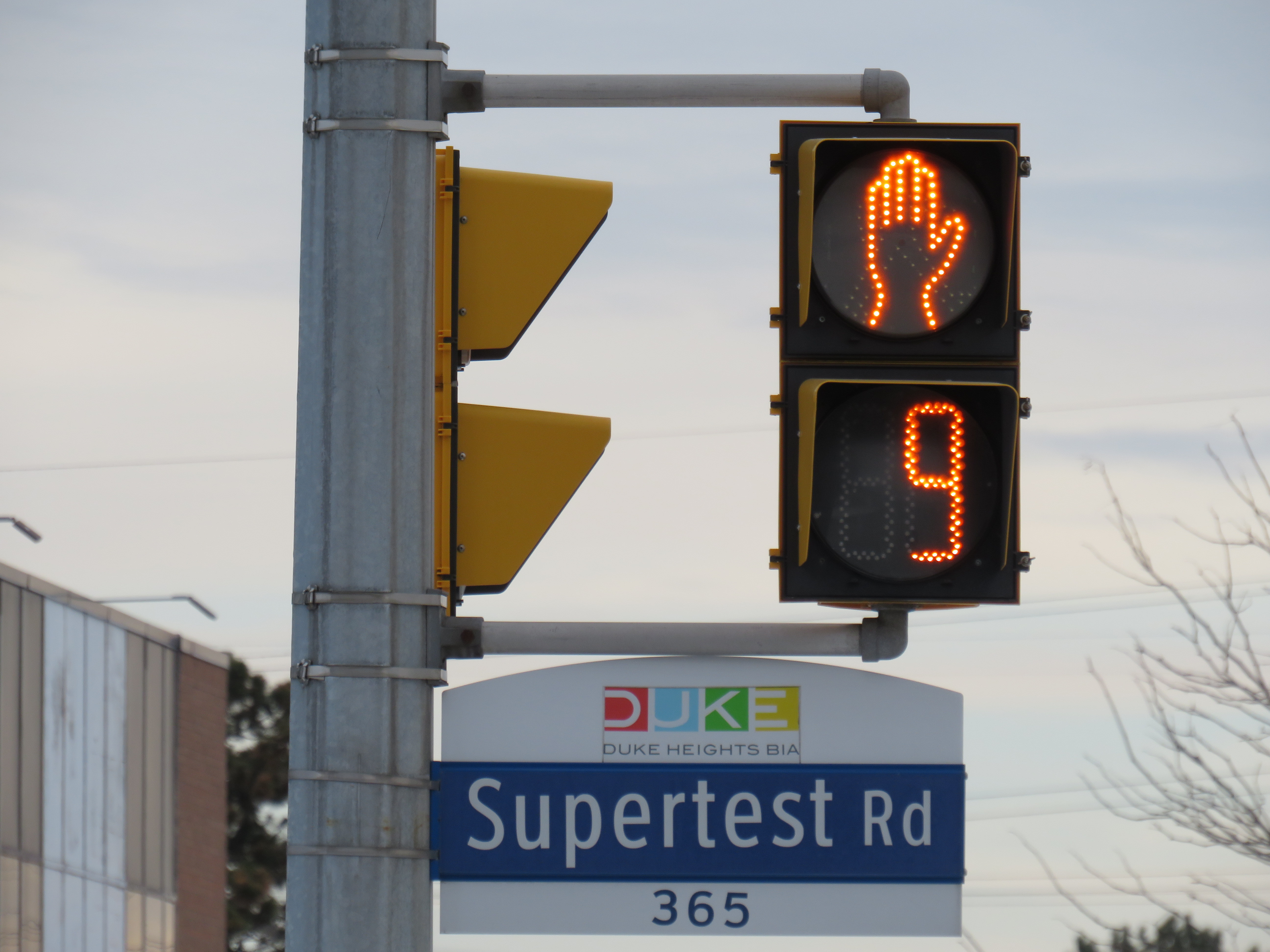
    IMG_8535-001New 30 km/h speed limit and a new stop sign on Canongate Trail, February 2019
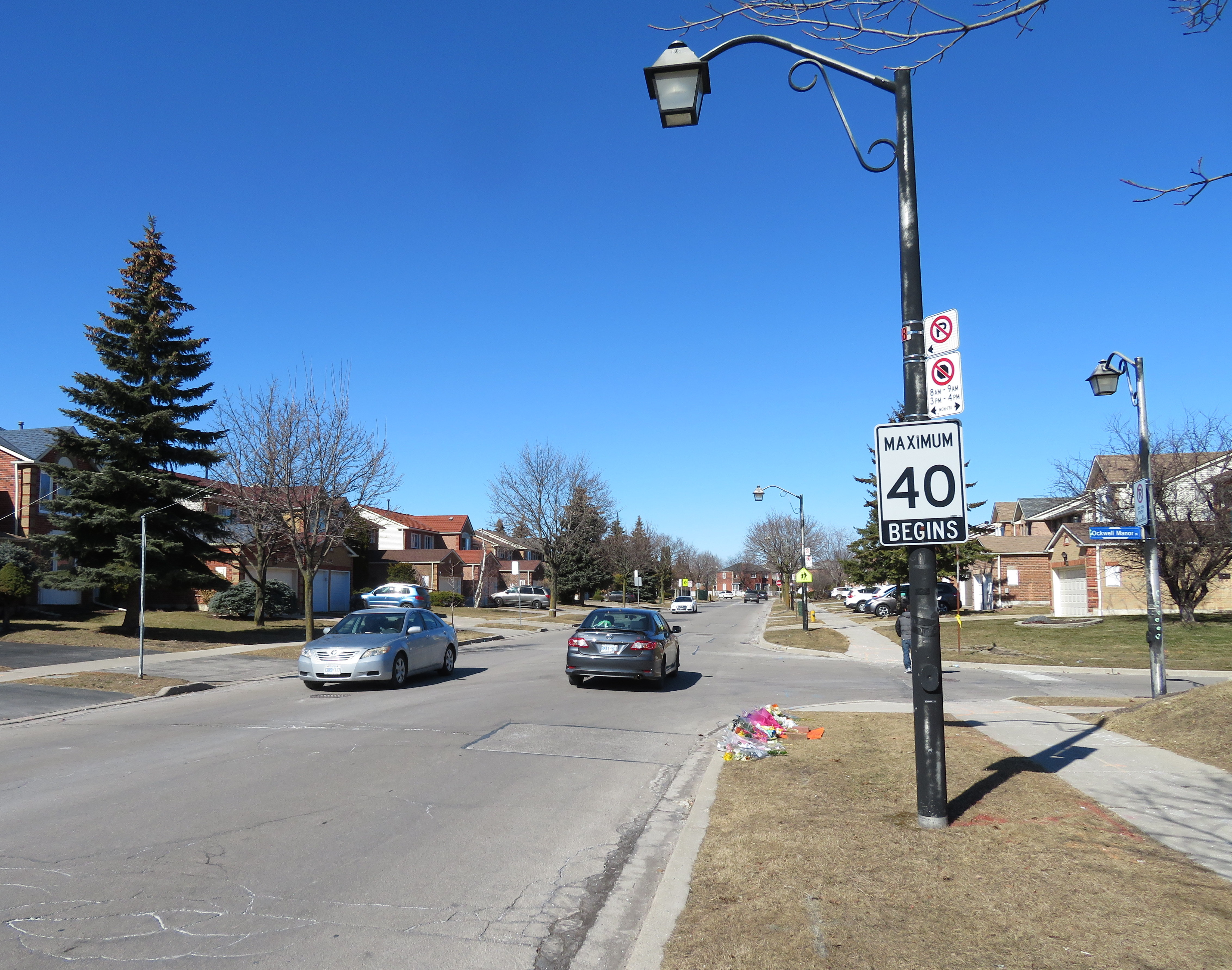
    IMG_6027-001What Canongate Trail looked like in March 2018
  • What GO Transit service to Brampton might look like without the freight bypass

    IMG_0610-001
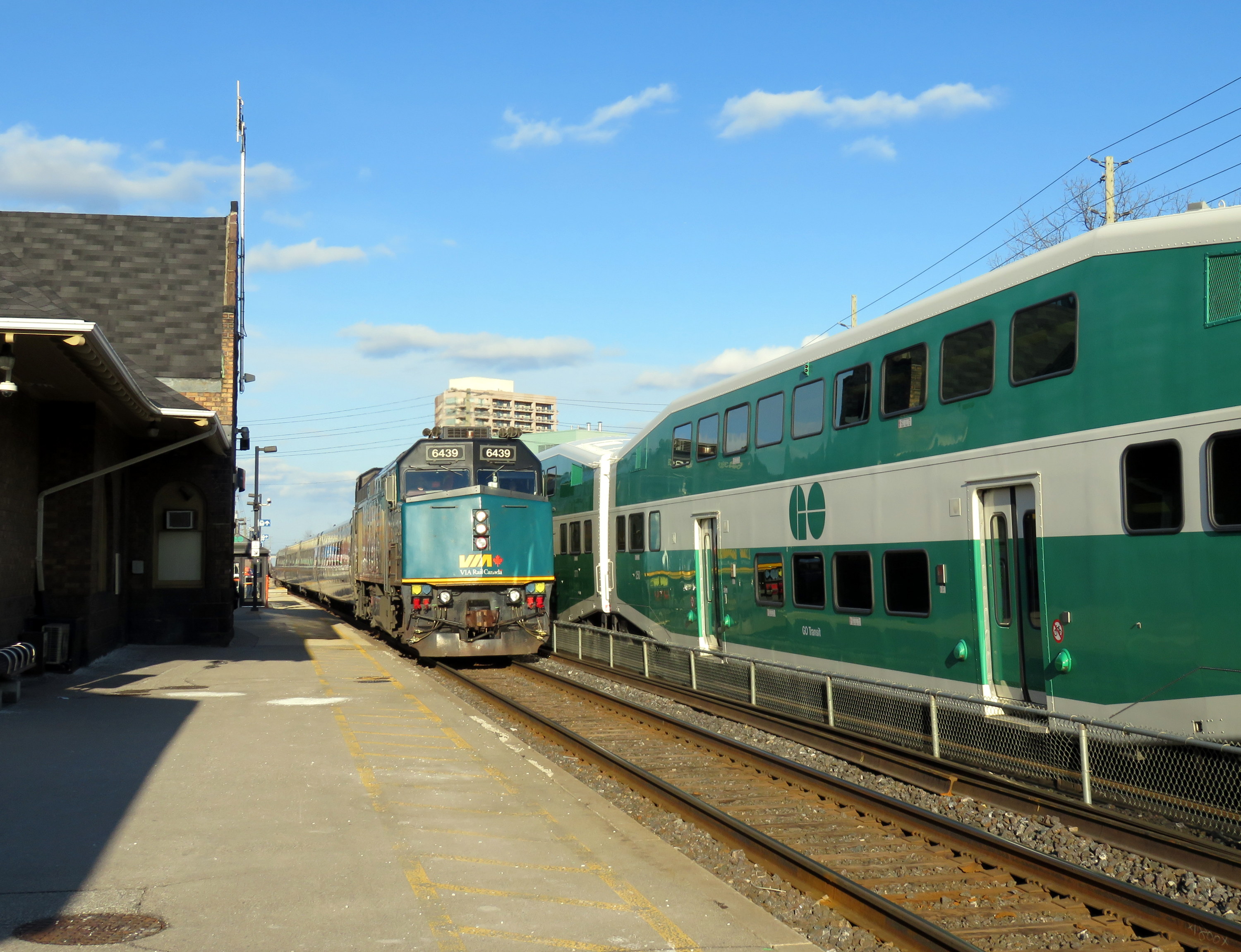
    VIA and GO trains meet at Brampton Station

    In 1967, GO Transit launched a new rail service between Pickering and Hamilton. The new commuter train service was made possible as GO just built a new freight bypass so its trains could avoid Downtown Toronto and connect to a new sorting yard in Vaughan. Today, trains on the Lakeshore Line operate as frequently as every fifteen minutes during weekdays, and every half hour on weekends. Unfortunately for Brampton, that freight bypass built in the 1960s runs right through its downtown core, limiting the number of passenger trains that can serve Brampton, Guelph, and Kitchener.

    Last December, the provincial government cancelled plans for a new freight bypass that would have diverted CN trains from a critical section of track in Brampton, allowing for frequent GO and intercity services. Around the same time, a new GO Transit schedule resulted in extreme overcrowding and extended delays on the Kitchener Line. As population and ridership grows, there are few answers and little promise of relief that the freight bypass would have provided.

    In my debut article for Bramptonist, I comment on the future of the Kitchener Line, the only GO line serving Ontario’s fourth largest city and an important commuter link to Guelph and Kitchener-Waterloo. What can Brampton expect now that the freight bypass is dead?

  • Subways don’t always last 100 years

    IMG_7232-001
    Former Toronto Mayor Rob Ford liked to claim that subways would last one hundred years, while other “inferior” forms of transit, like light rail systems, would last only thirty.

    At the time, Ford was pushing for a subway extension to Scarborough Town Centre that would replace the Scarborough RT. The SRT opened in 1985 and nearly thirty years later, the line needed a major rebuild, including new equipment. The City of Toronto planned to replace the aging system with a modern LRT route, including a three kilometre extension with two new stations at Centennial College and at Sheppard and Progress Avenues in Malvern. The line would have been fully funded by the province, and the rebuild would have reduced the cumbersome transfer from the subway platforms.

    Of course, Rob Ford was wrong about subways lasting 100 years. While Toronto’s subway system is over sixty years old — the original Yonge Subway opened in 1954 between Union and Eglinton Stations —  only the tunnels and station structures themselves remain from that era. The Yonge Subway is on its fourth generation of vehicles. Each of the stations have been renovated with new turnstiles, tiling, signage, and elevators. The TTC is also working on a new automated signalling system, and track replacement is an ongoing program.

    Had the Scarborough RT been built as originally planned as an LRT route, there would only be the need for ongoing maintenance and new replacement vehicles. Extensions of the line would have been much easier and cheaper. The problem was that the planned route was converted — with pressure from the provincial government — to an Intermediate Capacity Transit System, a novel technology which was then being developed by the Province of Ontario. The rolling stock — nearing 30 years old — had to be replaced, and Bombardier, the successor to the provincial Urban Transportation Development Corporation, no longer built vehicles that could fit a tight turning radius between Ellesmere and Midland Stations. That’s why, after 30 years, the SRT needs a replacement.

    But you don’t have to travel far to see proof that subways don’t last a hundred years. In Rochester’s case, that city’s subway lasted only twenty-nine years before abandonment.

    IMG_7219-001High Falls, Rochester

    Rochester, New York is an interesting city. It’s best known as the home of Kodak and Xerox, with a few attractions that make it a worthwhile place to visit, including the George Eastman Museum and estate, The Strong Museum, and the most easterly of Frank Lloyd Wright’s classic Prairie Style houses.

    It also has America’s only fully-abandoned subway system.

    The Rochester Subway was one of three subways planned and built in mid-sized American cities after the First World War. All three, coincidentally, were designed to permit streetcars to run under city streets using abandoned canal beds.

    Cincinnati’s subway was the first to begin construction. Work began in 1919 on the path of the old Miami and Erie Canal, which once linked the Ohio River with Lake Erie at Toledo. But costs increased and construction was never completed. Today, the Cincinnati Streetcar runs on top of the abandoned subway route along Central Parkway.

    IMG_5599-001Central Parkway in Cincinnati in January 2015, where new streetcar tracks run above the abandoned subway line

    Rochester was the second city to build a subway line in a disused canal bed. The Erie Canal was rerouted around Downtown Rochester in 1919 and the new subway line — of which less than three kilometres was below grade — was built along the old waterway. A new downtown roadway, Broad Street. was built above the old canal. Service began in 1927 and was abandoned in 1956, as streetcar service in Rochester came to an end. Suburban growth along with population decline in old central city, and the prioritization of new interstate highways, put an end to rapid transit in that city.

    Newark was the last city to build a new subway system in an old canal bed. Opened in 1935, the Newark City Subway was built between the Pennsylvania Railroad Station (which now serves Amtrak, NJ Transit commuter trains, and PATH subway trains to New York City) and northwestern suburbs. The City Subway, which operated PCC streetcars until 2001, later became the core of New Jersey Transit’s Newark Light Rail System.

    IMG_7230-001

    In Rochester, several sections of the abandoned subway remain visible to the public, including both tunnel portals. Stairs leading down from the Broad Street Bridge, which spans the Genesee River and once carried the Erie Canal, allow the general public to get a glimpse of the tunnel (it is also accessible from the Genesee Riverway Trail next to Blue Cross Arena without stairs), and all the graffiti lining the walls.

    IMG_7238-001A public walkway from the Genesee Riverway at the Broad Street Bridge allows visitors to get a glimpse of the abandoned Rochester Subway

  • A tale of two university campuses

    BramptonParkingLot
    Site of Brampton’s new Ryerson/Sheridan campus

    Last week, the provincial government announced two new post-secondary educational campuses in Toronto’s fast-growing western suburbs, due to open in 2022. Wilfrid Laurier University will be partnering with Conestoga College on a new facility in Milton. Brampton will be getting a new Ryerson University campus in partnership with Sheridan College. Both new campuses, each receiving $90 million in provincial capital funding, will be focused on undergraduate STEAM (science, technology, engineering, arts, and mathematics) programs. Both will host up to 2,000 students once the new facilities are fully operational.

    Despite the many commonalities between the new Milton and Brampton facilities, the announced campus locations could not be any more different. Milton’s Laurier/Conestoga campus (which I previously wrote about as an example of the problems of greenfield institutions) will be located on a new greenfield site on the southwestern outskirts of the town’s built-up area, while Brampton’s Ryerson/Sheridan campus will be located in that city’s downtown core, on a site currently used for commuter parking. But since GO Transit’s free commuter parking has to go somewhere, Metrolinx has been buying up and demolishing houses and offices on a nearby downtown block.

    I compared the two new campuses for TVO

  • Toronto’s Zero Vision and the folly of Seniors Safety Zones

    IMG_4386-001Eglinton Avenue East near Brimley Road, one of twelve Seniors Safety Zones in the City of Toronto

    Despite its status as a global city, a city that’s often ranked as one of the world’s safest, a city that likes to think of itself as both progressive and a top place to do business, Toronto does a lousy job of protecting its residents from injury and death on its roads.

    Although there have been a few positive steps — the new King Street Pilot, launched last week, or the Bloor Street bike lanes, made permanent between Avenue Road and Shaw Street in October — Toronto does far too little to protect pedestrians and cyclists in this city. The installation of sidewalks in residential neighbourhoods are often opposed by local residents resistant to losing driveway space on which to park their cars, or unhappy about having to clear sidewalks of snow and ice. Affluent neighbourhoods might be dotted with “drive slow – kids at play”  lawn signs, but their residents and elected representatives will oppose new bike lanes and lower speed limits on the arterial roads they use to commute downtown.

    The general idea of reducing road violence is a popular one. But specific actions are often opposed. The city’s own Vision Zero strategy — weak as it is — is a good indication of the ambivalence to road safety we have in this city.

    IMG_4403-001Woman and young child cross seven lanes of traffic at a crosswalk at Eglinton Avenue East and Danforth Road

    Vision Zero, which originated in Sweden, is the road safety philosophy that no loss of life is acceptable, and that all road users are human, that humans make mistakes, and road design must minimize the impacts of those mistakes. Complete streets that accommodate all road users (pedestrians, cyclists, motorists, and transit users), and road engineering measures to protect pedestrians and cyclists and reduce traffic speeds are in the spirit of Vision Zero.

    But when Mayor John Tory and Public Works and Infrastructure Committee Chair Jaye Robinson (Councillor, Ward 25) originally announced the city’s Vision Zero plan in June 2016, it merely aimed to reduce serious collisions involving pedestrians and cyclists by 20 per cent over a ten year period, allocating $68.1 million over five years.  The plan itself was modest. After a social media backlash and criticisms from active transportation activists (including Walk Toronto, of which I am a co-founder and a steering Committee member), the plan was revised, with an additional $10 million allocated and the goal to eliminate serious collisions, rather than simply reduce that number.

    One of the specific measures in the city’s Vision Zero plan is the creation of seniors safety zones, areas with high volumes of older adult pedestrians and higher risk of collision. Older adults make up a majority of pedestrian deaths in Toronto; 37 of the 43 pedestrians killed  in 2016 were over the age of 55. According to the City of Toronto’s Vision Zero Road Safety Plan, seniors safety zones will feature changes intended to improve pedestrian safety, such as lower speed limits, improved street lighting, advanced and extended walk signals at signalized intersections, red light cameras and radar speed signs, improved sidewalks and additional crosswalks, and increased enforcement.

    Twelve seniors safety zones were designated across the entire city of Toronto. Five are in the old City of Toronto, including Dundas Street at Bloor, Dundas at College/Lansdowne, and Dundas at Spadina. Six are in Scarborough, and one is in North York.

    IMG_0643
    Senior Safety Zone sign and 40 km/h speed limit, Danforth Avenue at Coxwell

    On Danforth Avenue, two senior safety zones were identified: near Coxwell Avenue and near Main Street. The speed limit on Danforth Avenue was reduced from 50 km/h to 40 km/h in 2016, but few other visible changes are apparent. Danforth Avenue is a five lane street, including a centre lane for left turns, and is paralleled by a subway line. The curb lanes on Danforth are unusually wide, and are used for parking outside of weekday rush hours. There are no bike lanes on Danforth either.

    Despite the 40 km/h speed limit, the wide lanes, dedicated turning lanes, and the absence of daytime local transit promote high speeds. The design speed of Danforth is simply too high; simply reducing the speed limit and putting up “senior safety zone” signs will do far too little.

    IMG_4396-001Seniors Safety Zone sign on Eglinton Avenue East, at Brimley Road. Note the 60 km/h speed limit sign

    Eglinton Avenue East, between Midland Avenue and Danforth Road in Scarborough, is another senior safety zone. Two pedestrians were killed on this stretch of road in 2016.

    Eglinton Avenue through Scarborough is seven lanes wide, including a centre left-turn lane to cross streets and commercial properties that line the wide street. Traffic signals  are typically 500 metres apart; many TTC bus stops on Eglinton Avenue East are located far from a designated crosswalk. Buses are frequent between Midland and Brimley; four frequent routes feed into the Kennedy subway station to the west. Again, there is no cycling infrastructure to be found.

    The senior safety zone here is a joke. Not one safety intervention was made here. The yellow-and-black safety zone signs that read “drive slowly” are merely advisory, and do not stand out among other traffic  and commercial signage. The 60 km/h speed limit was not changed, and intersections were not altered at all to improve pedestrian safety.

    IMG_4374-001At Eglinton and Midland Avenues, wide curb radii encourage speedy right turns into crosswalks; many drivers do not stop at the red light before making a right turn

    Several residential side streets off of Eglinton, such as Winter Avenue, do not even feature sidewalks. The signs might say “seniors safety zone” but there is no evidence that pedestrian safety is taken seriously at all here.

    IMG_4379-001
    Winter Avenue’s sidewalks disappear a mere 50 metres south of Eglinton Avenue

    Physical interventions, such as narrower lanes (which could make room for cycling infrastructure and/or wider sidewalks), bump-outs at crosswalks to improve pedestrian visibility and slow down right-turning vehicles, would be more effective. Police enforcement, or speed radar cameras, would be an additional deterrent against dangerous driving.

    At least the city has taken notice of the unacceptable numbers of pedestrians and cyclists killed in Toronto, but simply putting up new speed limit and safety zone signs are not enough. Without road engineering works to slow traffic down, and without effective police enforcement against speeding and drivers’ failures to obey traffic signs and yield the right of way to pedestrians, we only get feel-good measures and ineffective signs. A real commitment to Vision Zero requires political will, which so far is lacking at City Hall. Instead, we get zero vision.

  • The trouble with those “cyclists dismount” signs

    IMG_3940

    Recently, I wrote about inconsistent, misleading, and problematic signage at road construction sites. Too often, cyclists are instructed to dismount and walk when a bike lane or general traffic lane is closed for construction.

    But these signs also exist where many multi-use trails and paths cross intersections. In suburban municipalities such as Brampton and Mississauga, multi-use paths adjacent to major roadways are preferred over on-street bike lanes (protected or not). But they too, are littered with signs instructing cyclists to stop, get off their bikes, and walk across the intersection, such as the example illustrated below, in Mississauga.

    IMG_2302-001

    The trouble is, the Ontario Traffic Manual (OTM), used by transportation planners and engineers to design roadways and install the appropriate signage, takes a dim view of signage requiring cyclists to dismount when on roadways or on multi-use trails:

    “It is sometimes necessary for cyclists to dismount their bicycle and walk when the terrain or cycling conditions are difficult and no alternatives exist. However, the option of asking cyclists to dismount and walk their bikes should not be relied upon in lieu of adequately accommodating cyclists through appropriate road design.”

    Book 18 of the OTM (available here as a PDF) states that the “dismount and walk” sign should “be used only in exceptional cases, such as where an in-boulevard facility ends, and cyclists would discharge into a sidewalk or pedestrian zone.” This clearly means that these signs should not exist when a bike route or multi-use trail crosses a driveway or an intersection, but only when the route ends and becomes a sidewalk, or at a pedestrian mall where cycling is not permitted. (Page 118, OTM Book 18, 2013 edition.)

    OTM Book 18 page 118Excerpt from page 118, book 18 of the Ontario Traffic Manual, December 2013 edition

    The OTM also says that “…cyclists usually find it difficult to rationalize why “dismount and walk” restrictions are in place, and conclude that they were a poor, illogical or arbitrary decision. Thus, if facility designs cause cyclists to make what they consider to be unnecessary stops, this will increase the likelihood that they will ignore or disobey traffic controls.”

    What the Ontario Traffic Manual does specify, is how signage, road markings, and design should be made to clearly mark crossing locations, warn motorists to watch for cyclists, and to remind cyclists to yield to pedestrians. Figure 4.103 from OTM Book 18, shown below, illustrates how a mixed pedestrian and cyclist route on the side of a road — like those in Brampton and Mississauga — should meet an intersection. While signs warn motorists and cyclists to watch out for each other, and for cyclists to yield to pedestrians, there are no “cyclists dismount” signs to be seen in the diagram.

    OTM Book 18 page 124 .jpg
    Illustration of how a multi-use trail should meet an intersection. Figure 4.103, from page 124, book 18 of the Ontario Traffic Manual, December 2013 edition

    Multi-use trails are an effective way of providing safe cycling infrastructure, especially in the suburbs, where traffic speeds are higher and politics may not make installing bike lanes an easy sell. Traffic engineers have figured out that those ubiquitous “cyclists dismount” signs are not effective and developed designs that instead accommodate cyclists.

    It’s time that municipalities figured this out.