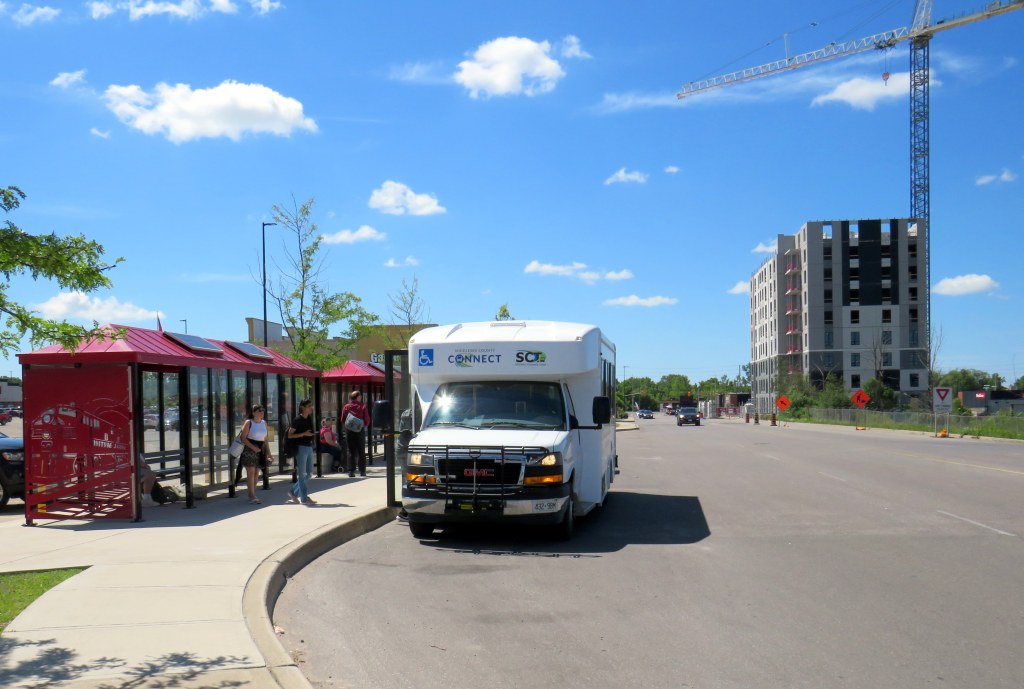
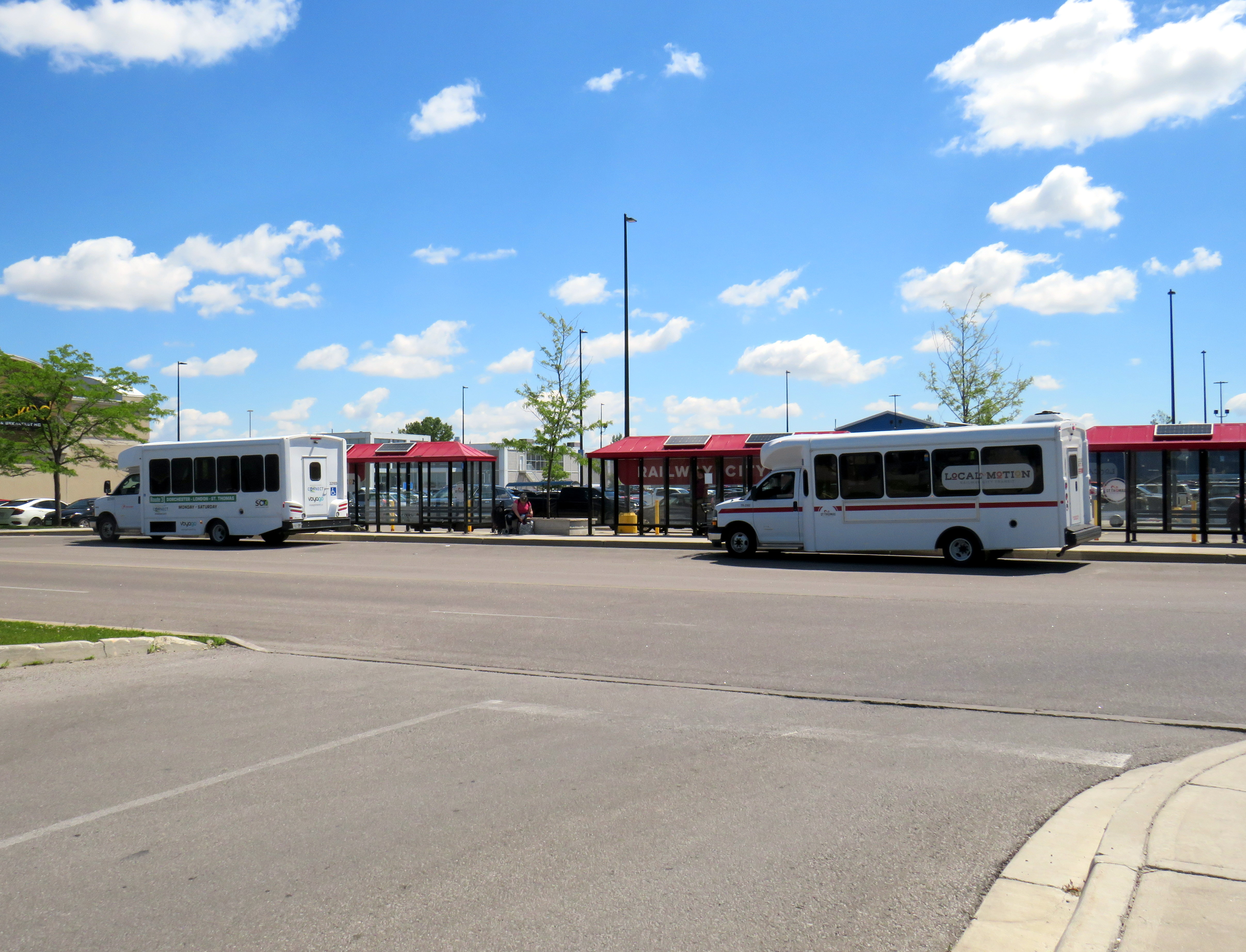
Middlesex County Connect and “Local Motion” buses at St. Thomas, June 2024
On Saturday, June 15, I took a trip that was not possible for over a decade: I went to St. Thomas, Ontario, without a car. This was possible because of one of several new intercity transit links that opened this year in Ontario, and I have updated my interactive map accordingly.
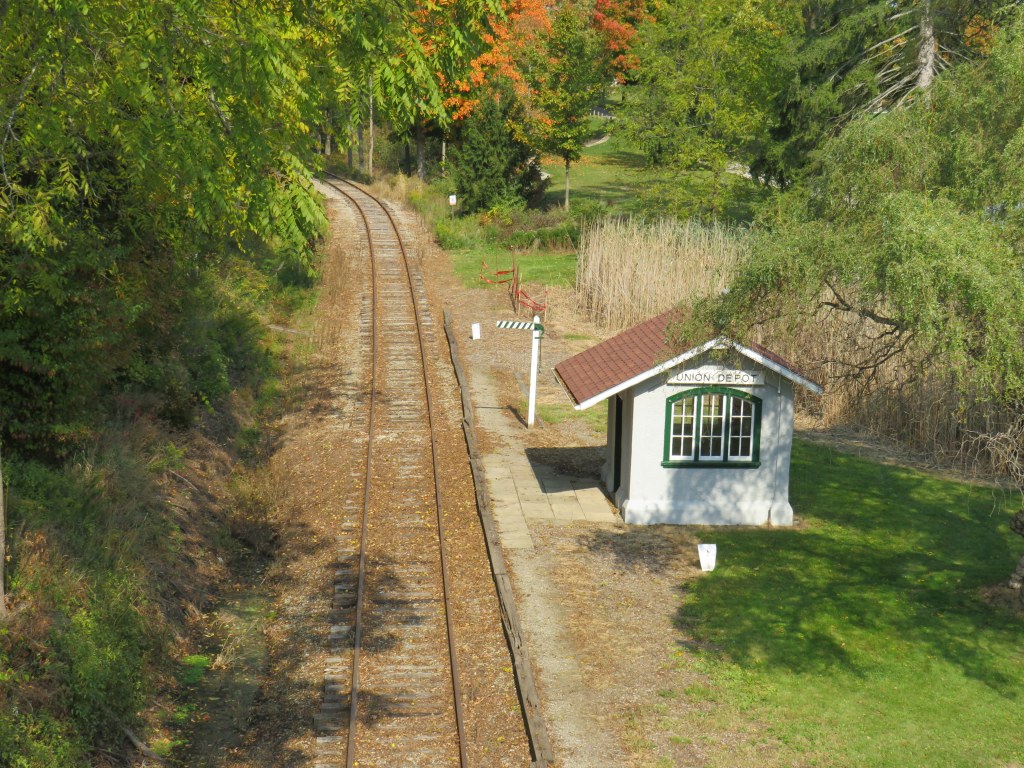
Just south of St. Thomas — Ontario’s Railway City — sits a small stucco-clad shelter, just below the Sparta Road bridge. Until 1957, electric trains of the London & Port Stanley Railway would regularly pass this little, unstaffed station serving the nearby community of Union.
There are dozens of union stations across North America, several of which are still in regular passenger service. Toronto’s Union Station is the continent’s second-busiest railway station, surpassed only by New York’s Penn Station. Union Stations in Chicago, Washington, and Los Angeles are among the top fifteen in Canada and the United States, while other grand union station buildings still greet rail passengers in Winnipeg, Kansas City, and Denver.
Kansas City’s Union Station, with downtown skyline backdrop
Union stations, by definition, are passenger facilities used by two or more railways. They allowed for shared services and passenger convenience, though they required ample access to each railway’s tracks. Toronto’s Union Station, for example, was built for the Grand Trunk and Canadian Pacific Railways, which both had rail corridors following the waterfront into Downtown Toronto. Ottawa, too had a Union Station that was used by CN and CP until 1966 (and in earlier years, New York Central trains called at Ottawa’s Union Station).
In some cases, a union station might be a small depot at the junction of two railways. The small Inglewood Station in Caledon was technically a union station as it was used by Canadian National and Canadian Pacific.
Great Hall, Chicago’s Union Station
Of course, the little Union Station in rural Elgin County was never a true union station. It was merely a flag stop for the L&PS, where awaiting passengers would signal their intention to board by lowering a wooden board affixed to a pole next to the station shelter.
The L&PS Railway opened in 1856 to connect London to nearby St. Thomas and to Port Stanley, giving the growing city access to Lake Erie. In 1913, the City of London, which owned the line, upgraded and electrified the railway under the direction of then-mayor Adam Beck, who championed public hydro electricity and a proposed network of electric railways across the province.
Though bulk freight was the railway’s bread-and-butter — it connected with a train ferry service to Ohio — the L&PS operated regular local passenger service connecting two cities, four separate railways (CN at London and the Wabash, Michigan Central, and Pere Marquette Railroads at St. Thomas), and the popular summer resorts and cottages at Port Stanley.
With improved highways and increased auto ownership, the L&PS ceased passenger service in 1957, though there was regular bus service until the 1990s. Today, it is impossible to get between London, St. Thomas, and Port Stanley without a car. The railway was sold to CN in the early 1960s. CN used the railway to access a new Ford assembly plant as well as local industry in London and St. Thomas, but eventually ceased freight service south of St. Thomas.
The abandoned track south of St. Thomas was acquired by the Port Stanley Terminal Railway, which today operates family-friendly excursions from the former L&PS station in Port Stanley. Though you can no longer board a train at Union, you can still watch trains go by. A restored LP&S interurban passenger car can be found at the Halton County Radial Railway museum near Rockwood.
Passing by Union Station, riding the PTSR excursion train
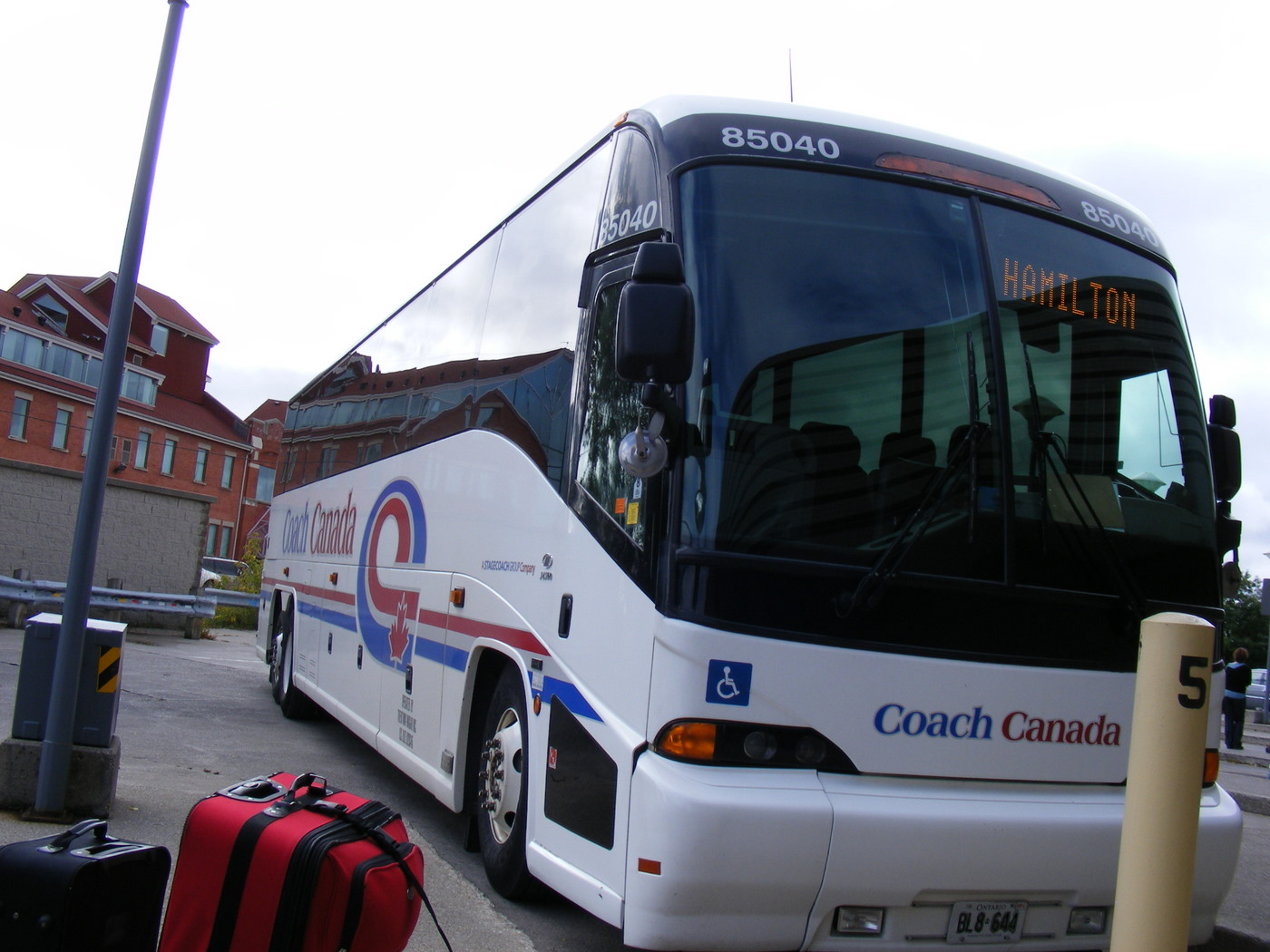
Coach Canada bus at the Guelph Terminal, three weeks before it abandoned the Guelph-Hamilton service in 2009
The state of intercity bus travel in Ontario is bleak. While there are still many bus options if you’re travelling between large cities, since the 1980s, hundreds of weekly bus trips and dozens of routes have been cut in Ontario, leaving many small cities and towns with minimal or no intercity transportation options. St. Thomas, a city of 45,000 located a mere 25 kilometres south of London, once had daily buses going in every direction. Today, it has none. Although studies on the modernization of the province’s beleaguered, skeletal bus system got underway in 2016, bus travel remains an afterthought.
Brockville and St. Thomas are two small Ontario industrial cities that wouldn’t normally attract much attention. But both communities are working on remarkable projects that re-purpose former railway infrastructure to create interesting public spaces that don’t just lure out-of-town visitors, but add a significant asset to be enjoyed by the entire community. The St. Thomas Elevated Park and the Brockville Railway Tunnel are the type of local, community-driven projects that I can get excited about.
St. Thomas likes to call itself the Railway Capital of Canada. One hundred years ago, five separate railway companies served the city. The Canada Southern (CASO) Railway, later purchased by the Michigan Central Railroad (which became part of the New York Central empire), built its headquarters and shops here; its double-tracked corridor was the fastest route between Buffalo and Detroit. St. Thomas was a stop on the London and Port Stanley Railway, a busy electric railway that ran regular passenger services until 1957. On the edge of town is the Jumbo monument, near the site where the famous Barnum and Bailey circus elephant was killed during a train stop.
Jumbo Monument, at the westerly entrance to Downtown St. Thomas
The 1873 Canada Southern Station. The tracks it once served have disappeared.
Today, most lines into St. Thomas are abandoned, including the once-mighty Canada Southern; major rail customers such as Ford Motor Company closed local factories. The last passenger train, Amtrak’s Niagara Rainbow, departed from St. Thomas in 1979. The Port Stanley Terminal Railway runs tour trains along part of the old L&PS route, but its trains — for now — only board in Port Stanley.
Despite the loss of the railways, St. Thomas has retained much of its railway heritage. The Elgin County Railway Museum has made its home in the old Michigan Central shops. The station building still stands too — built in 1873, it is one of the longest stations in Canada, extending 108 metres. It was recently renovated and houses offices and retail businesses. A replica of the LP&S station was built downtown, with the hopes of accommodating Port Stanley-bound tour trains. Just west of Downtown St. Thomas is the Kettle Creek Viaduct, which is slated to become a new signature park.


 Jumbo Monument, at the westerly entrance to Downtown St. Thomas
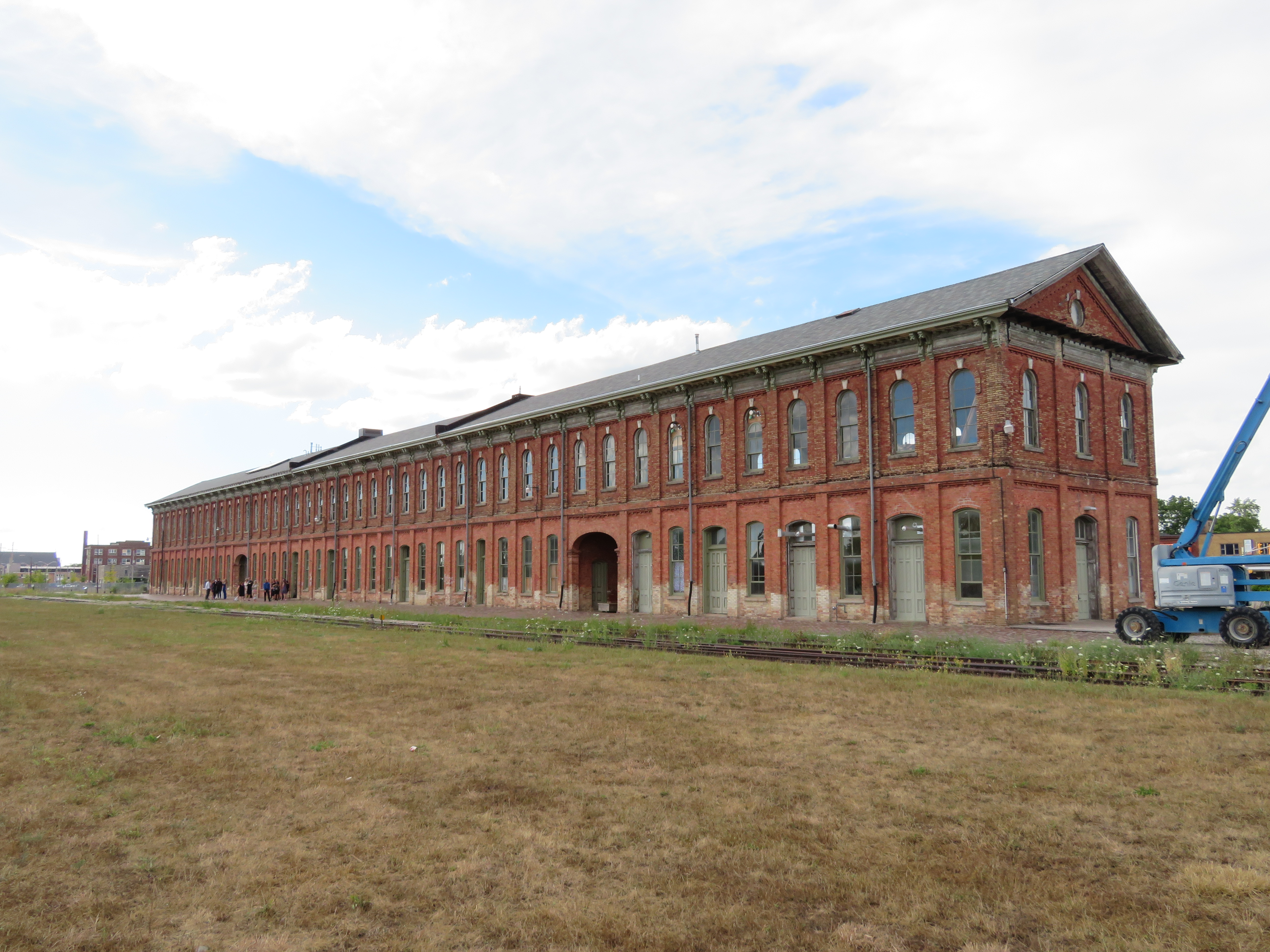 The 1873 Canada Southern Station. The tracks it once served have disappeared.
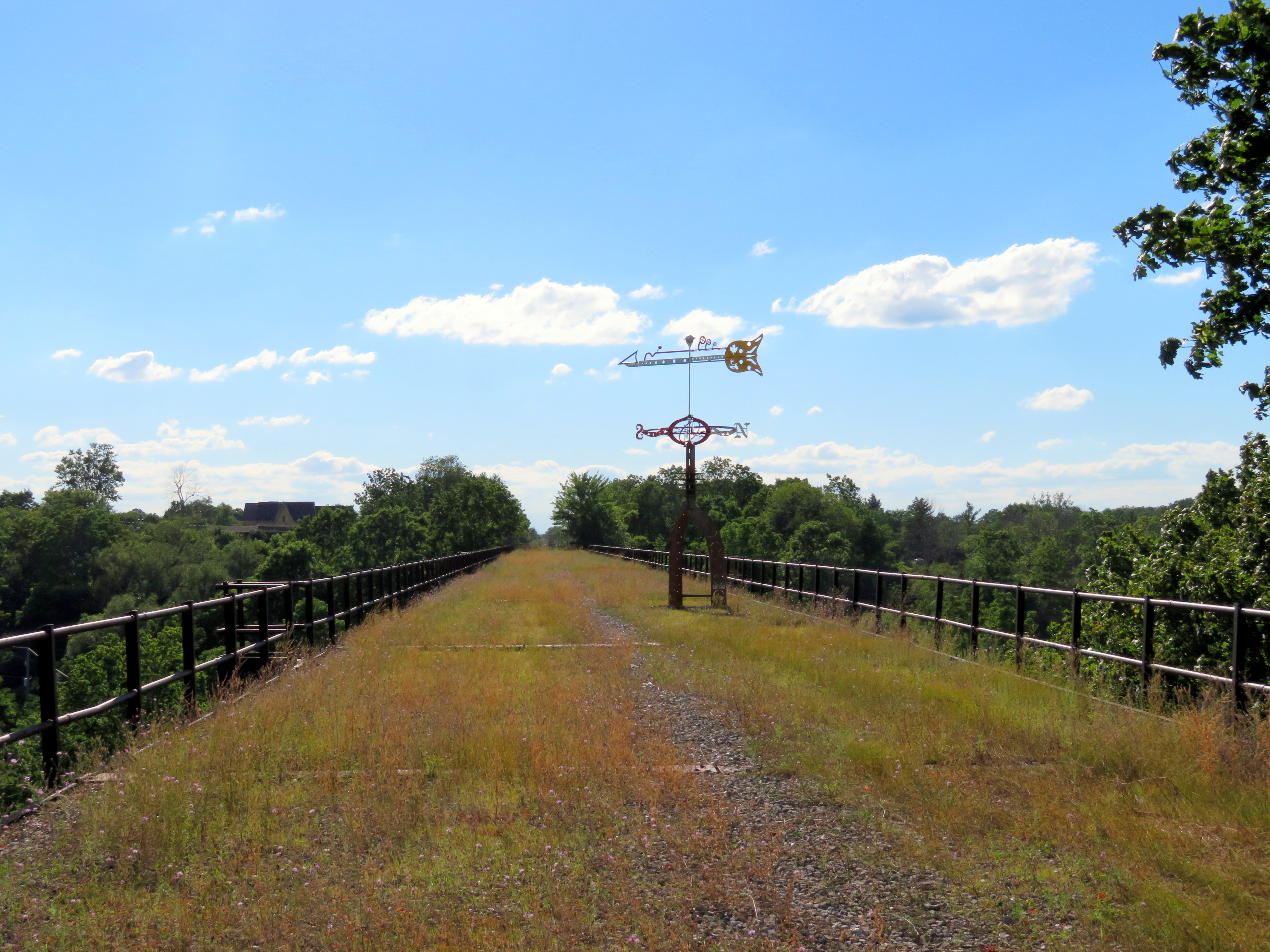 Kettle Creek Viaduct, the future
