Tag: Niagara Falls

  • Ontario municipalities over the barrel, again

    Ontario municipalities over the barrel, again

    Once again, Doug Ford wants to mess with local democracy. This time, it’s in Niagara Region.

    With the recent news overload — yet another war in the Middle East, rising fuel costs, another municipal mayoral race — not to mention the flood of news from Queen’s Park (a new mega-convention centre on Lake Ontario, moves to let bigger passenger jets on an expanded island airport, and legislation to increase secrecy within the highest levels of provincial government), you might be forgiven for missing yet another bit of news.

    In what has become a tradition for failed mayoral candidate and current Progressive Conservative premier Doug Ford, there’s another move to disrupt local democracy, this time in Niagara Region. Since his party was elected to government in 2018, Premier Ford has been busy tinkering with local governance. First was the sudden interference in Toronto’s municipal election, introducing election to force the city to reduce the number of elected councillors from 47 to just 25. That was soon followed by the cancellation of new open elections for regional chairs in Peel, York, Niagara and Muskoka Regions (who are normally appointed by those councils), the introduction of “strong mayor” powers, the aborted dissolution of Peel Region, the consolidation of conservation authorities, and the takeover of elected school boards.

    In the last few weeks, the Ford government set its sights on Niagara Region, pushing for the quick amalgamation of its 13 municipal governments ahead of municipal elections this coming October.
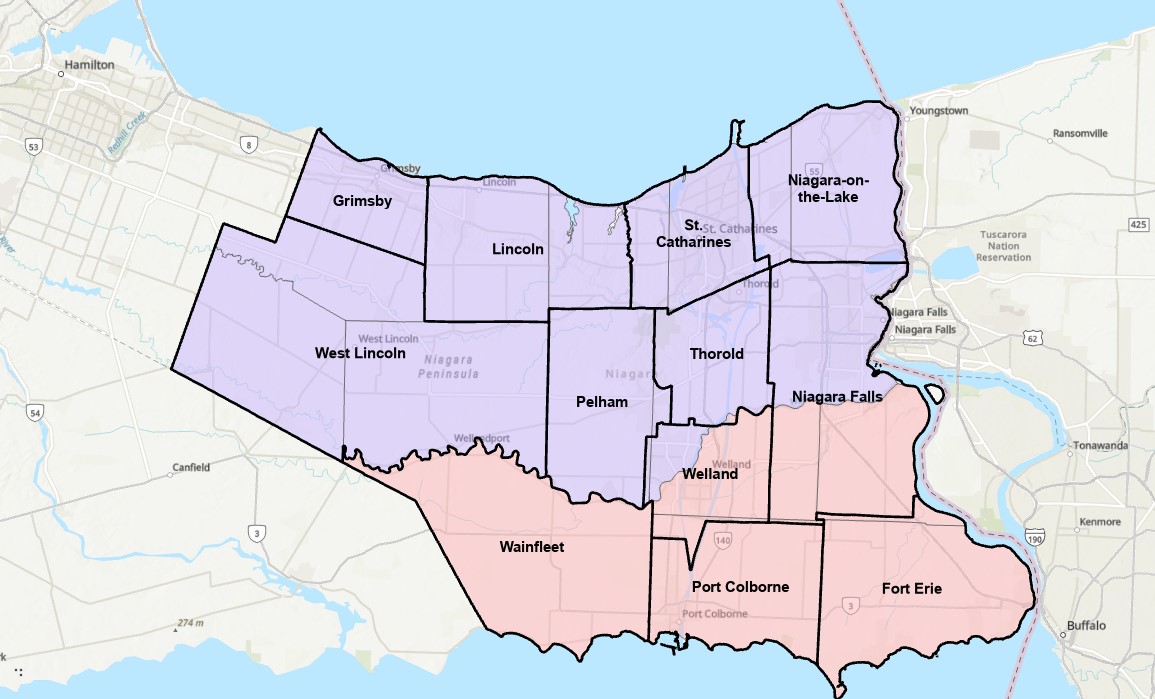
    Niagara Region municipalities, with former Lincoln County townships in blue and Welland County townships in red

    Niagara Region is one of eight regional governments in Ontario, a specialized level of government introduced by an earlier Progressive Conservative government in the 1970s, following on the success of Metropolitan Toronto created in 1954. Regional governments had more powers and responsibilities than counties, including regional planning and the provision of water and wastewater systems deemed essential for smart urban growth. Most regions formed their own police services, and many took on responsibility for household waste management and public transit (Durham, Waterloo, York, and most recently Niagara). Other services, such as fire departments, libraries, local planning, parks and recreation, and local public works remained the responsibility of the cities, towns, and townships.

    The Mike Harris-led PC government, elected in 1995, was a big proponent of municipal amalgamations. After amalgamating the City of Toronto in 1998, it replaced regional governments in the Hamilton, Ottawa, and Sudbury areas with amalgamated cities in 2001, and broke up the former region of Haldimand-Norfolk creating two stand-alone municipalities. Dozens of other amalgamations took place in those years, including Chatham-Kent and Kawartha Lakes (formerly Victoria County). On top of that, provincial costs were downloaded to those new creations, including social and health services and thousands of kilometres of provincial highways.

    That era of drastic municipal change came to an end in December 2003, when a new Liberal government was elected, with relative calm for nearly fifteen years, until June 2018. During that time, the status quo prevailed, without a full review of the operations, finances, and role of municipal governments that would inform good faith reforms.

    Niagara Region is made up of twelve lower tier municipalities: the cities of St. Catharines, Niagara Falls, Welland, Thorold, and Port Colborne, the towns of Fort Erie, Grimsby, Lincoln, Niagara-on-the-Lake, and Pelham, and the townships of Wainfleet and West Lincoln. The current region is a result of that earlier wave of regional government establishments in much of Ontario; prior to 1970, Niagara was made up of two counties — Lincoln and Welland — with fifteen townships and nearly a dozen smaller cities and towns between them.

    As with all remaining regional governments, Niagara Region Council is made up of municipal politicians who also sit on their local city or town councils. Each mayor sits on the regional board, and to make up for population disparity between urban centres and rural townships, the larger municipalities send additional councillors who already sit on their local councils. Though some regions have chairs elected by the region’s populations, others have a non-elected chair, typically chosen by the regional council.

    The Niagara problem started when the provincial government used its new authority to appoint its own preferred chair to Regional Council after the previous chair, former Liberal MPP Jim Bradley, died in office in late 2025. Bob Gale quickly promoted regional amalgamation, backed by Premier Ford, citing tax increases and too many local politicians. The idea is unpopular amongst Niagara residents, especially those in smaller communities such as Niagara-on-the-Lake, which under a four-municipality model, would be joined with Niagara Falls (whose mayor backed the idea).

    Repeatedly, it has been shown that municipal amalgamations fail to save taxpayers’ money but only make municipal government more distant to the residents it serves. Though the number of municipal politicians would decrease (there are 126 across the 12 lower-tier municipalities), in smaller towns and rural townships, these are part-time positions. In Toronto, the moves from seven councils down to one in 1998 and from 44 councillors down to 25 in 2018 failed to save operating funds, as the number of paid employees to support each councillor increased to manage their greater workloads. Even the conservative Fraser Institute found no tax savings when studying the effects of amalgamation on smaller Ontario municipalities. Furthermore, with many services already the responsibility of the region, what savings could be had if police, transit, social services, housing, and major roads are already amalgamated?

    For now, the idea of amalgamation in Niagara Region is stalled, but not because wiser heads prevailed. Chair Bob Gale resigned just three months into his term after local anti-hate organizations found he had in his collection of historical artifacts a copy of Mein Kampf signed by its author, Adolf Hitler.

    One of the other problems with a quick amalgamation of such a large area is that there is no study on what boundaries actually make sense. Does the combination of 12 municipalities into just four actually work? Should the new boundaries just lump existing towns together, or more intelligently redraw existing boundaries completely? For example, should the City of Thorold be just thrown in with a neighbour as is, or could be split into three, with the urbanized area joining St. Catharines, the area east of the canal joining Niagara Falls, and the southern rural area joining Pelham and Welland?

    Unfortunately, as hospitals face funding and staffing crises, as students face increasing debt loads to complete post-secondary education, and the economy continues to face headwinds, Doug Ford manages to get bogged down into distractions like shiny new buildings on Toronto’s waterfront, municipal restructurings, and needless new highways. The next provincial election will not come for another three years, and yet the premier wants to play mayor.
  • An idea with merit

    An idea with merit

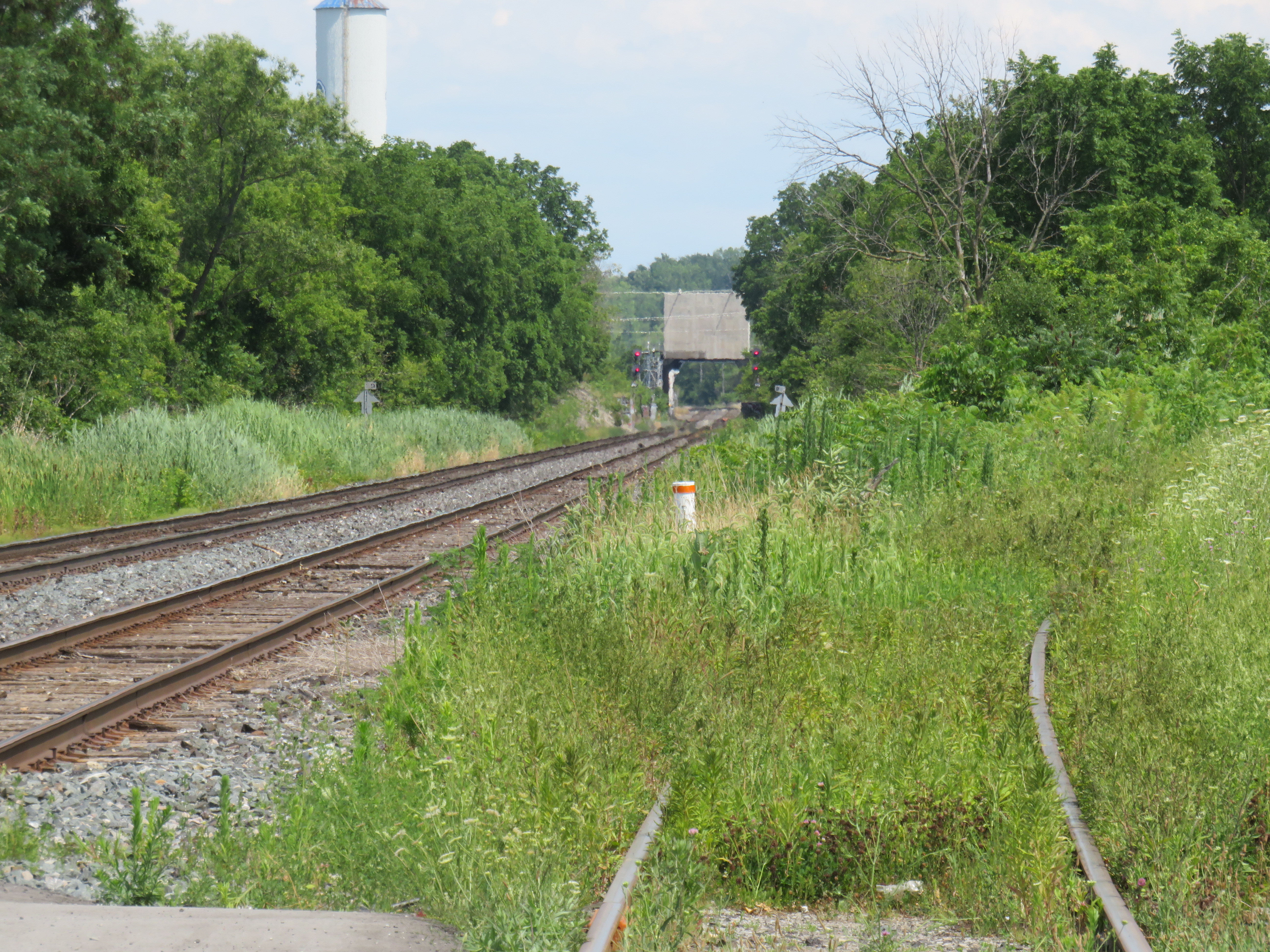
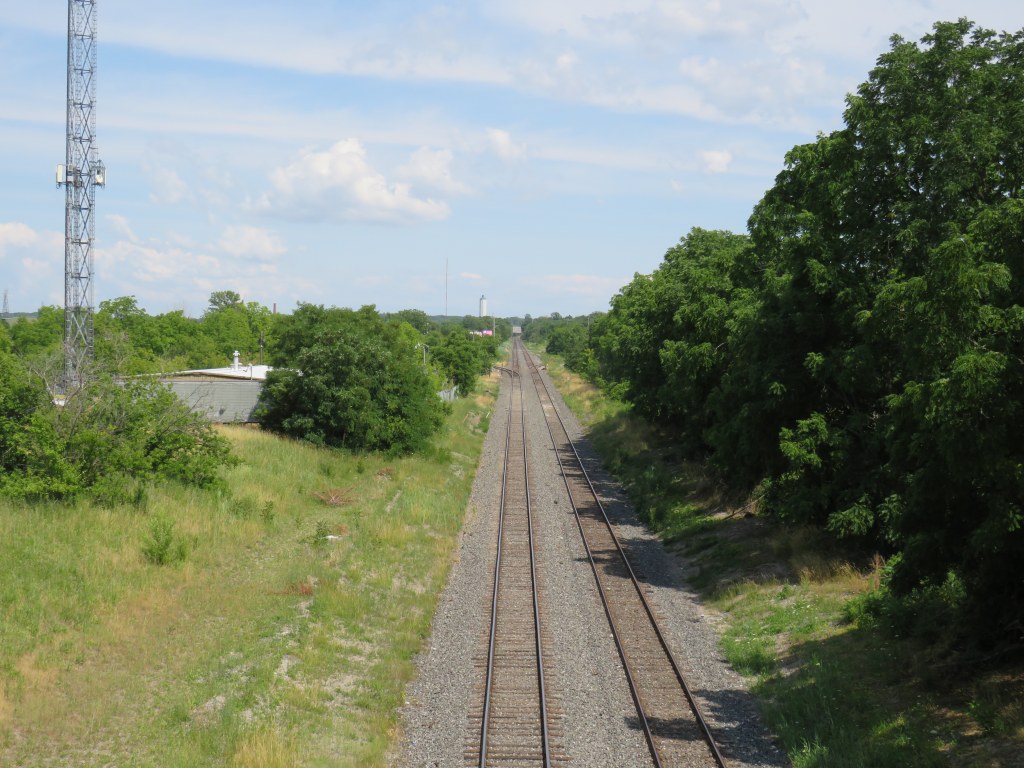
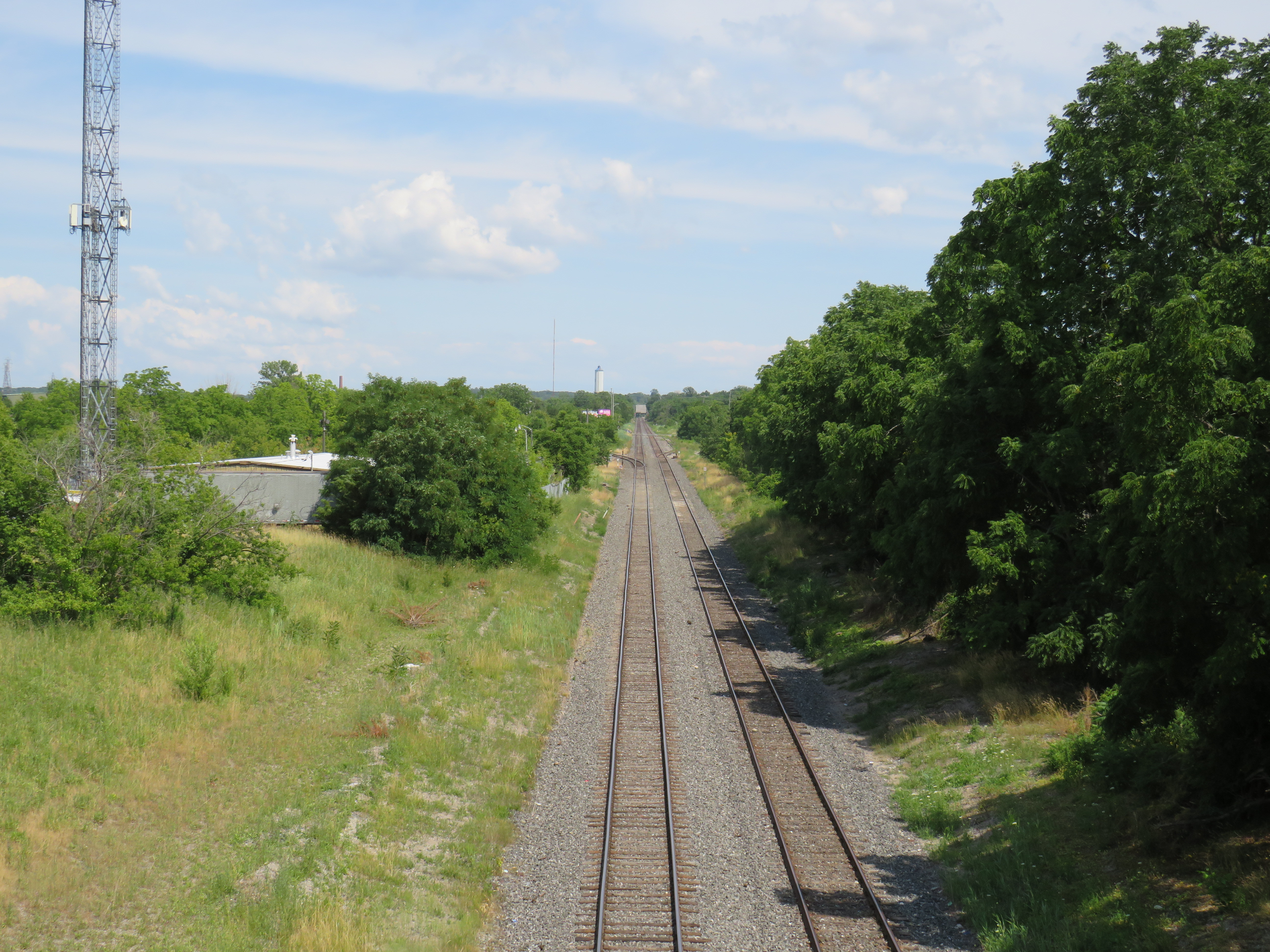
    Looking east on the CN mainline from Merritt Street in St. Catharines towards the Welland Canal

    The case for reviving Merritton Station

    On the morning of Saturday, July 9, a GO Transit train filled with hundreds of passengers heading from Toronto to Niagara Falls, was stuck at St. Catharines when a lift bridge over the Welland Canal was unable to lower the deck to allow trains to pass.

    After over an hour of holding at the St. Catharines VIA Station, GO Transit was forced to send the train back to Toronto. In an advisory on Twitter, GO informed customers that they “will need to make their own accommodations” for getting between St. Catharines and Niagara Falls, and would not be sending any shuttle buses.

    Needless to say, this left many families disappointed. With GO Transit understandably unable to muster enough buses on a summer weekend to quickly transfer 1500 passengers (which would require at least 25 coaches), the decision not to provide alternate transportation is understandable, if unfortunate.

    The summer weekend Toronto-Niagara train service is incredibly popular, especially the Saturday and Sunday morning departures from Union Station, and the evening return trip. Specially-outfitted bicycle coaches allow for dozens of bicycles to be transported by train; Niagara Region is an excellent cycling destination.

    Recent fare innovations, including the $10 weekend day pass and a special GO Transit-Niagara Parks package have only contributed to the route’s success. As GO Transit is able to carry 1500 passengers on each train between Toronto and Niagara, it is invaluable not only for supporting the local tourism industry, it provides an alternative to driving on the congested Queen Elizabeth Way.

    Unfortunately, the CN Grimsby Subdivision, which runs between Hamilton and Niagara Falls, is hardly ideal for frequent commuter and excursion service. Trains crawl through Hamilton, and much of the line is single-tracked, limiting capacity. Furthermore, trains to and from Niagara must back in to Hamilton’s West Harbour GO Station, which still does not have a direct connecting track to the east.

    But the Welland Canal lift bridge is the greatest barrier for providing frequent and reliable rail service to Niagara Falls. During the Great Lakes shipping season, train traffic must yield to the busy St. Lawrence Seaway. Constructing a bridge or a tunnel is difficult and costly as railways are limited to typically no more than a 2% grade, and the freighters require a high clearance (as evident with the nearby QEW Garden City Skyway). Constructing a tunnel is also difficult, as the railway begins climbing the Niagara Escarpment just east of the canal, and would need to climb an even longer distance from canal. (A railway tunnel south of Welland has no such constraints as it is well above the escarpment.)

    Looking east towards the Welland Canal lift bridge from Glendale Avenue. The disused CN Thorold Spur disappears into the weeds at right.

    As a short-to-medium term measure, Metrolinx should look at constructing a new station at Merritton, located southeast of Downtown St. Catharines and approximately three kilometres east of St. Catharines Station. Until 1961, Merritton was an independent town, an industrial centre served by both the Grand Trunk/CN and the electric Niagara, St. Catharines and Toronto Railway. With amalgamation with St. Catharines, the closure of the passenger railway stations, and the loss of the historic paper and textile mills, Merritt Street has seen better days.

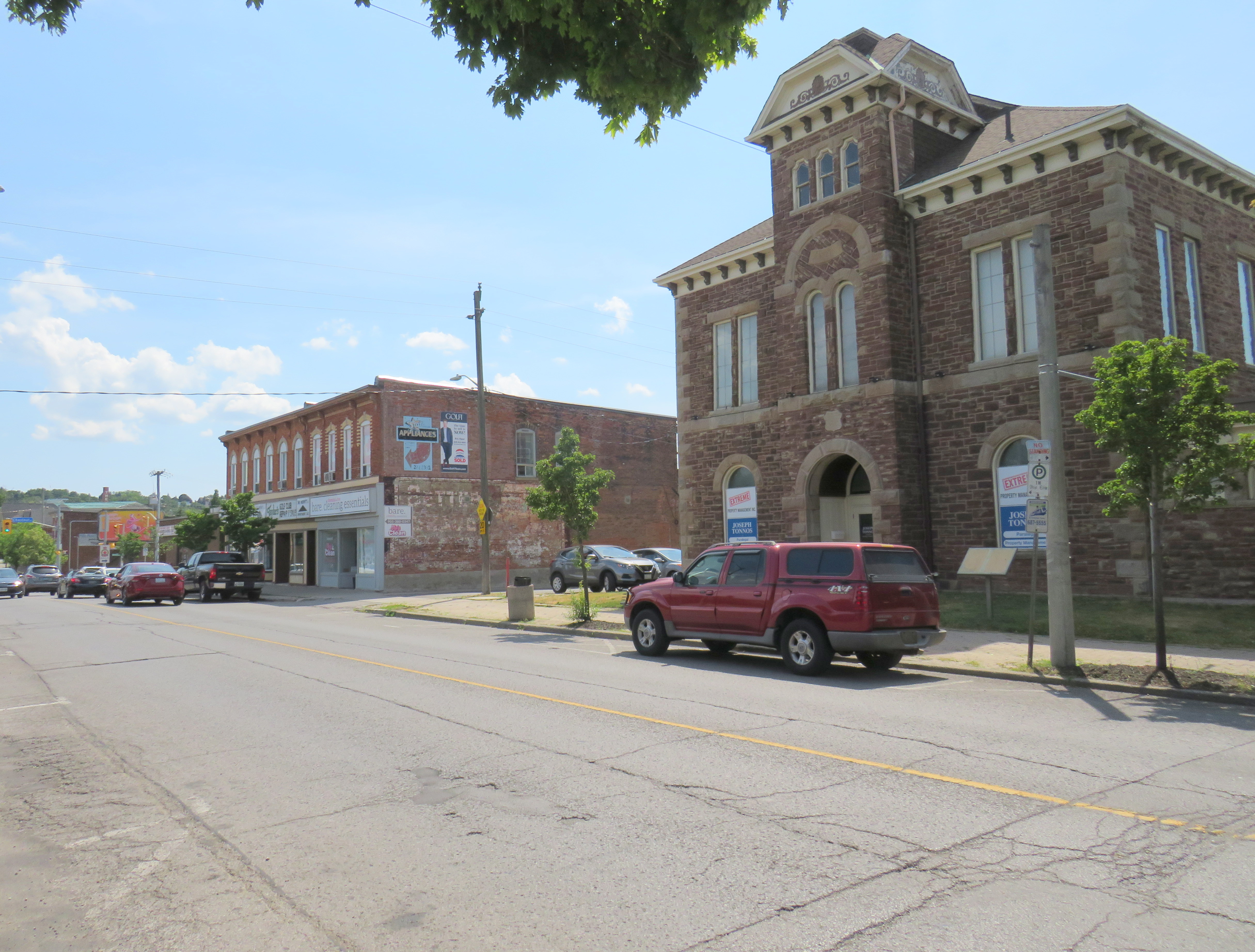
    Merritt Street, just south of the CN Railway. The stone building at right is the former town hall.

    Merritton’s CN Station was located on the east side of Merritt Street. Passenger service ended by the 1960s, and industrial switching activity between the former NS&T and CN’s Thorold spur line declined, so the building was eventually abandoned. It burned down in 1994, and there is little trace of its existence.

    Unlike the active VIA station on the west side of St. Catharines, Merritton is quite close to the Welland Canal and the Niagara Circle Route. Merritt Trail, which follows the original Welland Canal route, is within a short walk from Merritton. It is also much easier for buses arriving from Niagara-On-The-Lake, Thorold, and Niagara Falls to access a station site at Merritton than the awkwardly-located St. Catharines Station, with four to five minutes saved, especially if there were direct access from Glendale Avenue.

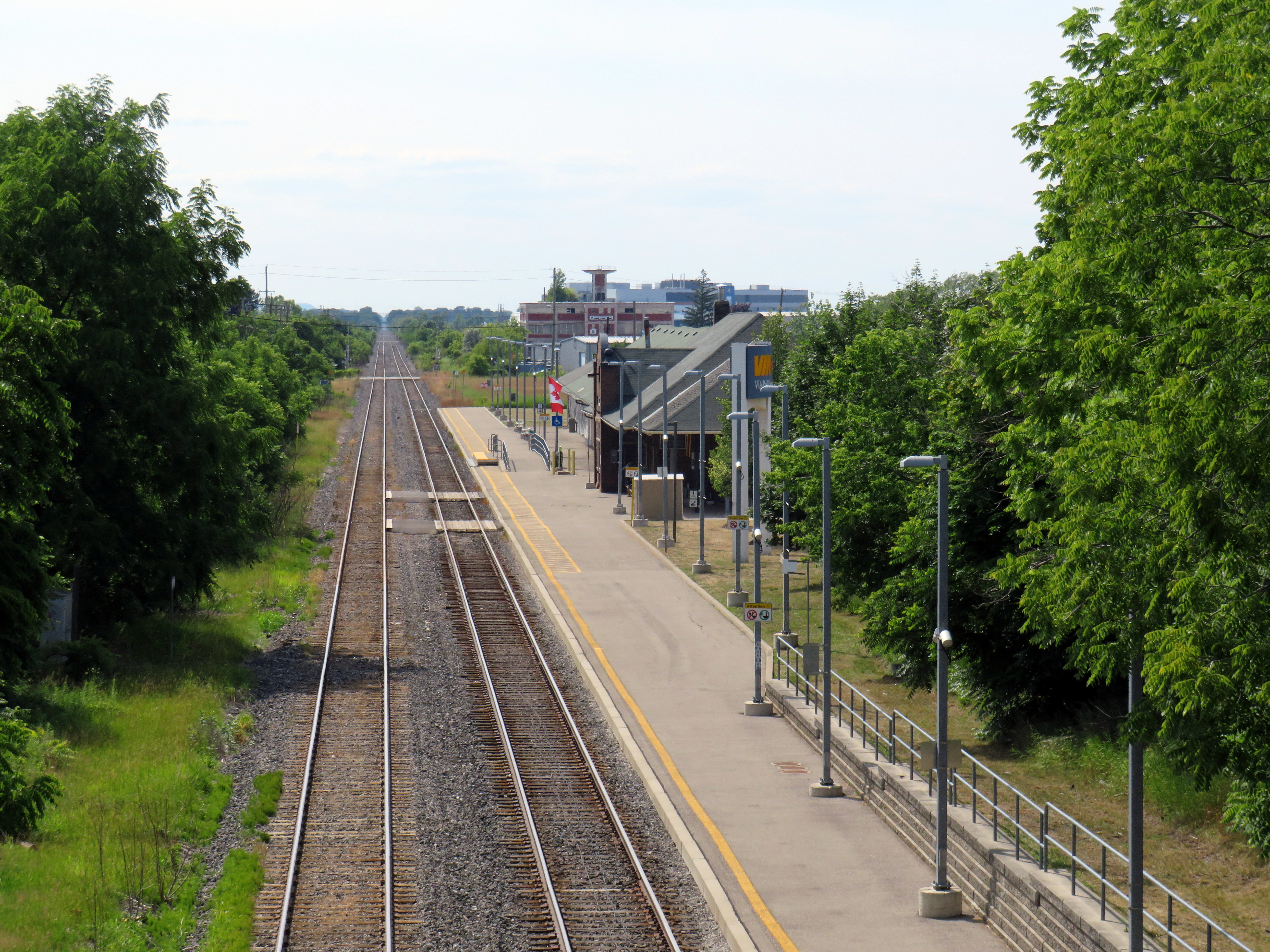
    St. Catharines VIA/GO Station, off of St. Paul Street West. Awkwardly located for bus access, the station platform is a 25 minute walk to Downtown St. Catharines.

    Not too far from Merritton is St. Catharines Museum and Lock 3 Centre, which tells the history of the region and the Welland Canal; a platform provides excellent views of passing ships. Niagara College and the Outlet Collection are also close by, via Glendale Avenue. Whenever there’s a delay or failure at the lift bridge, there are more options at Merritton, especially if a proper bus transfer point is constructed.

    Ideally, a grade-separated Welland Canal crossing would become an integral part of a frequent Toronto-Hamilton-Niagara-Bufffalo rail service. In the meantime, a stop at Merritton for GO commuter and excursion trains would provide new transit and cycling connections, while serving passengers in eastern St. Catharines, Niagara-on-the-Lake, and Thorold.

    St. Catharines: where the Bruce Trail is at its least Bruce Trail-ish

    I travelled to St. Catharines on a lovely July Friday, taking GO Transit’s Route 18K bus from Aldershot Station through Hamilton, along the QEW, and to Brock University in St. Catharines. The university campus is at the top of the Niagara Escarpment, boasting direct connections with the Bruce Trail.

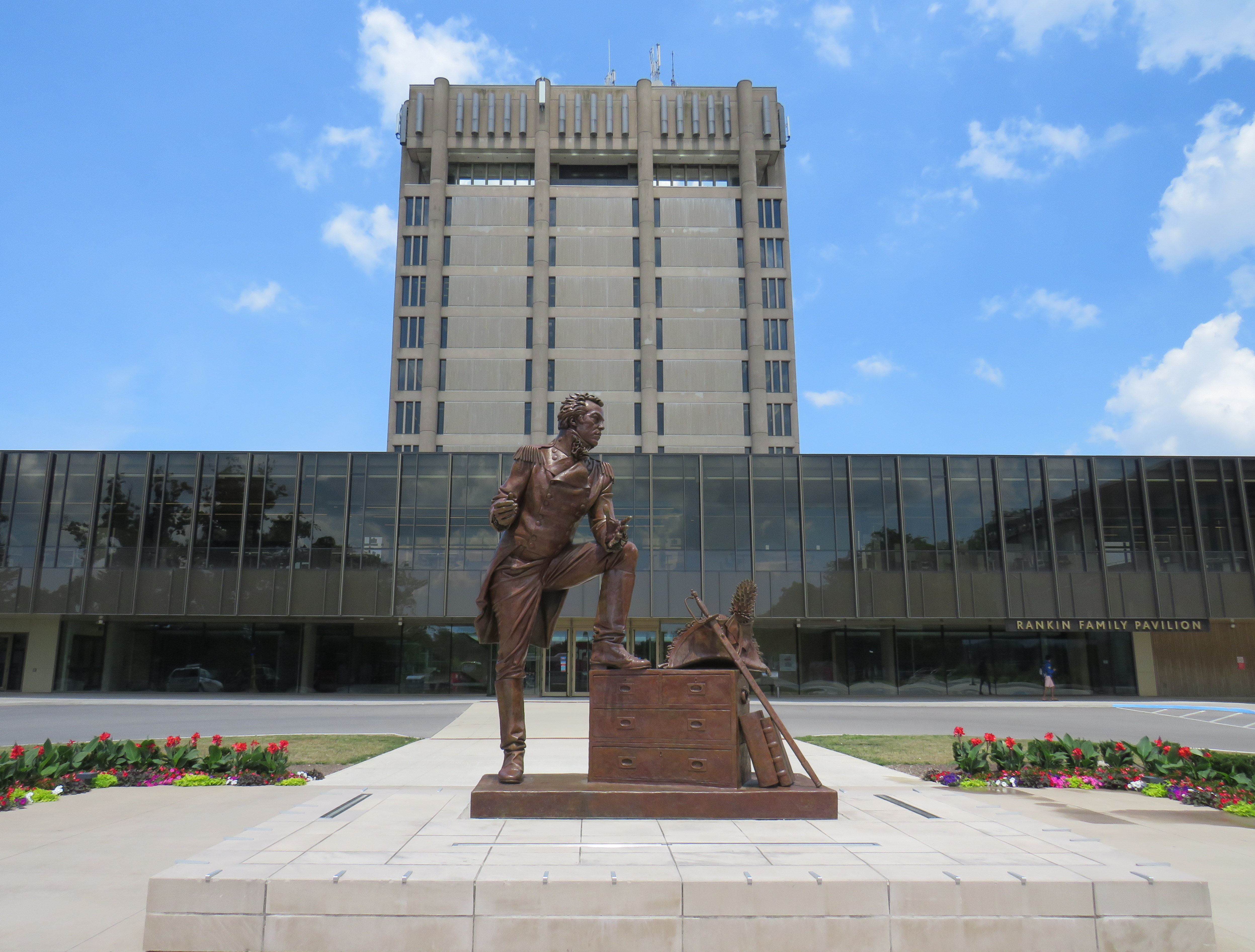
    Statue of General Brock at the main university entrance

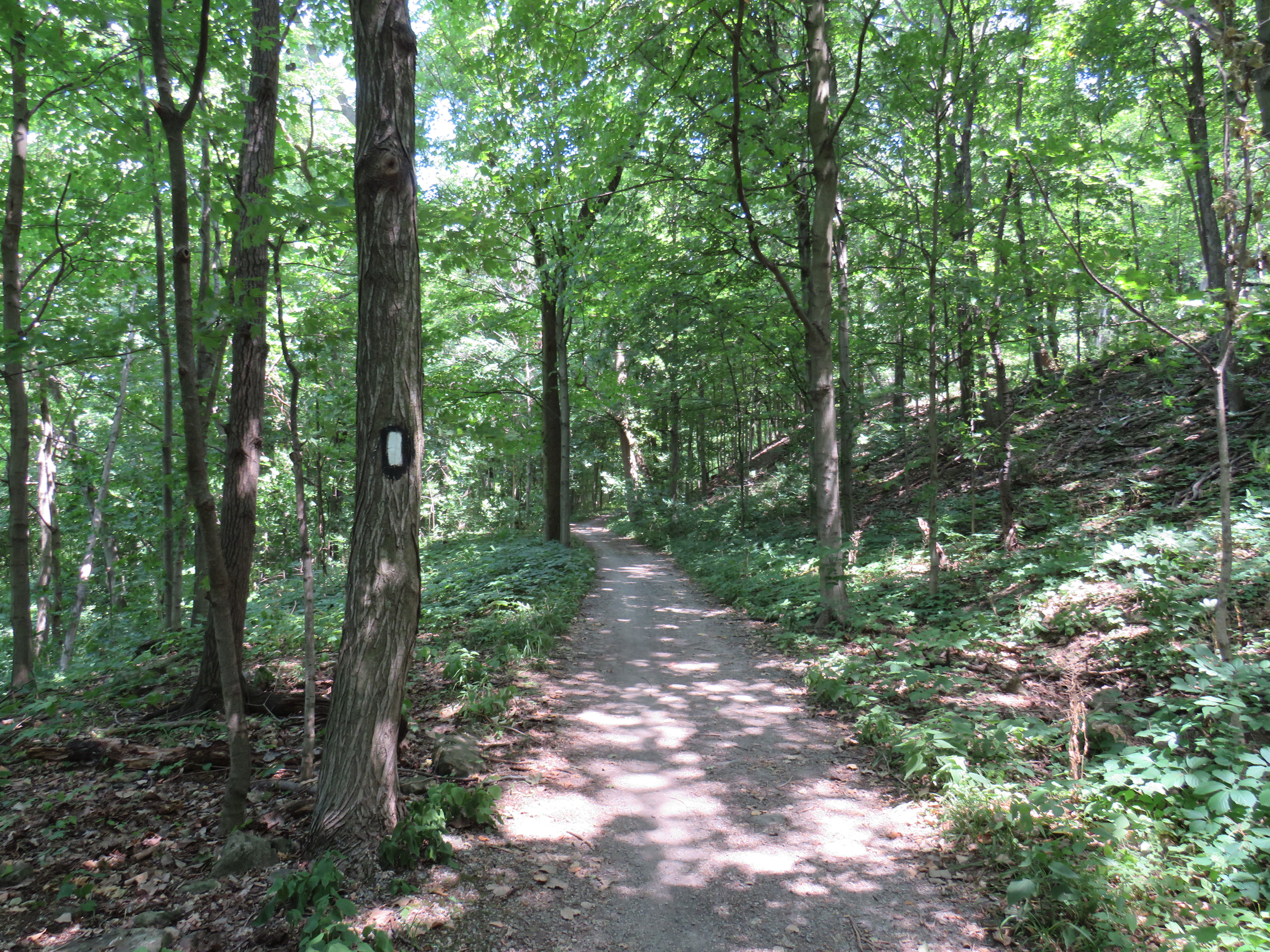
    The walk eastwards towards Merritton from Brock University started out promising. The thick tree cover provided welcome shade, and apart from a rather dangerous crossing of Glenridge Avenue, felt little different than anywhere else on the southern part of the famous trail.

    A promising start
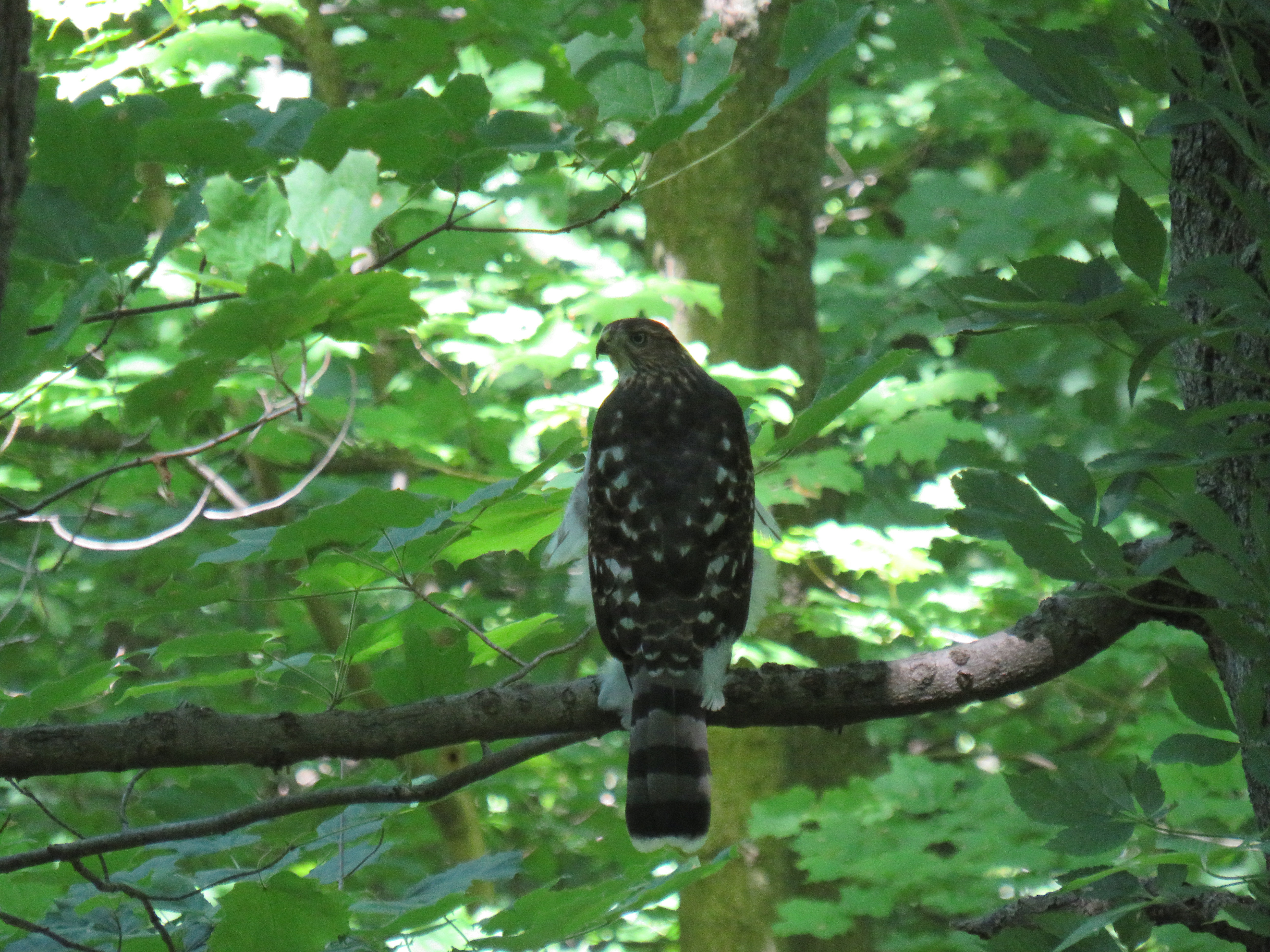
    Being watched by a young red-tailed hawk

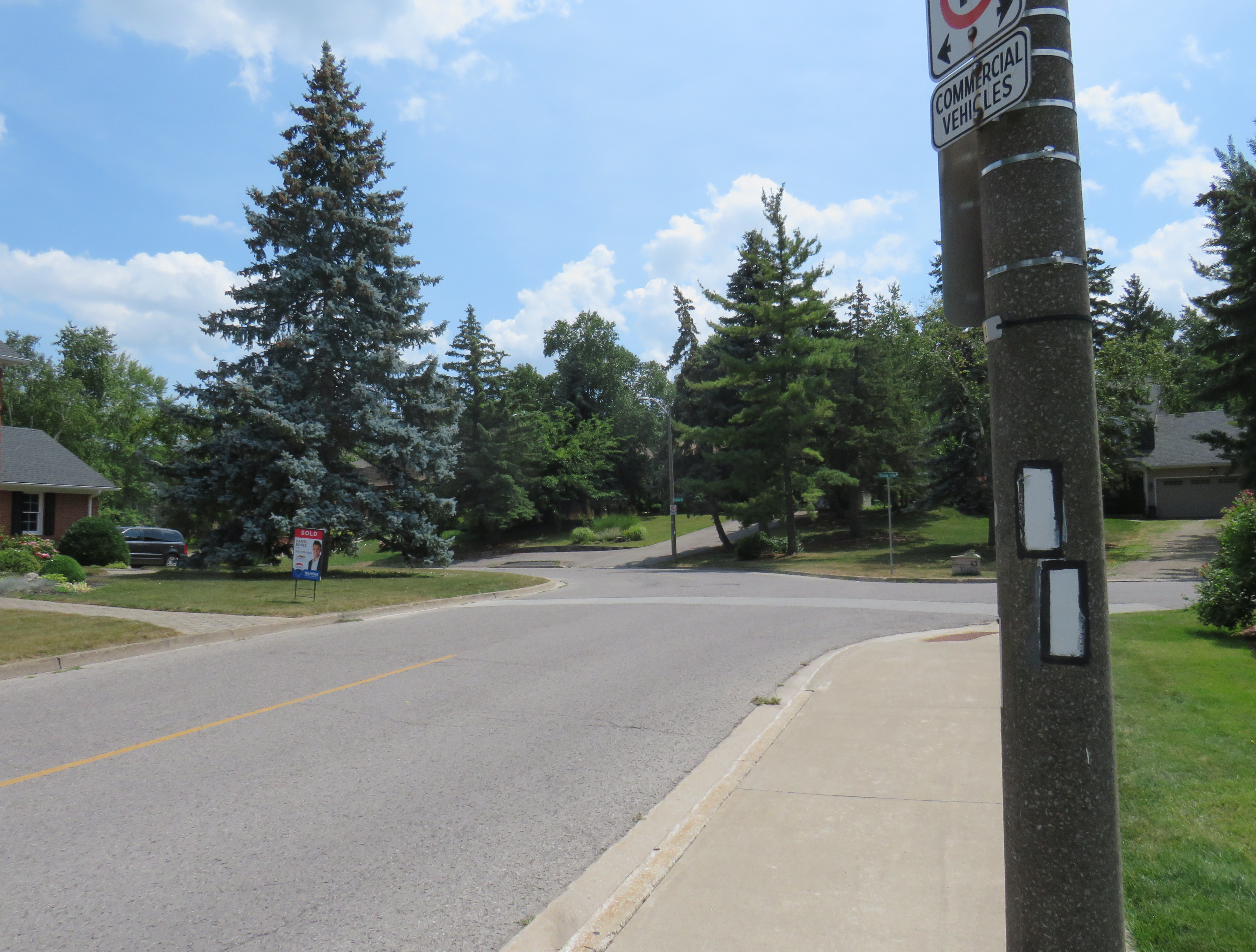
    At Tremont Drive, the trail suddenly enters a subdivision, with only the tell-tale white blazers to assure hikers that yes, in fact, this is part of the Bruce Trail.

    Bruce Trail blazers are the only hint that this is part of Ontario’s greatest hiking trail

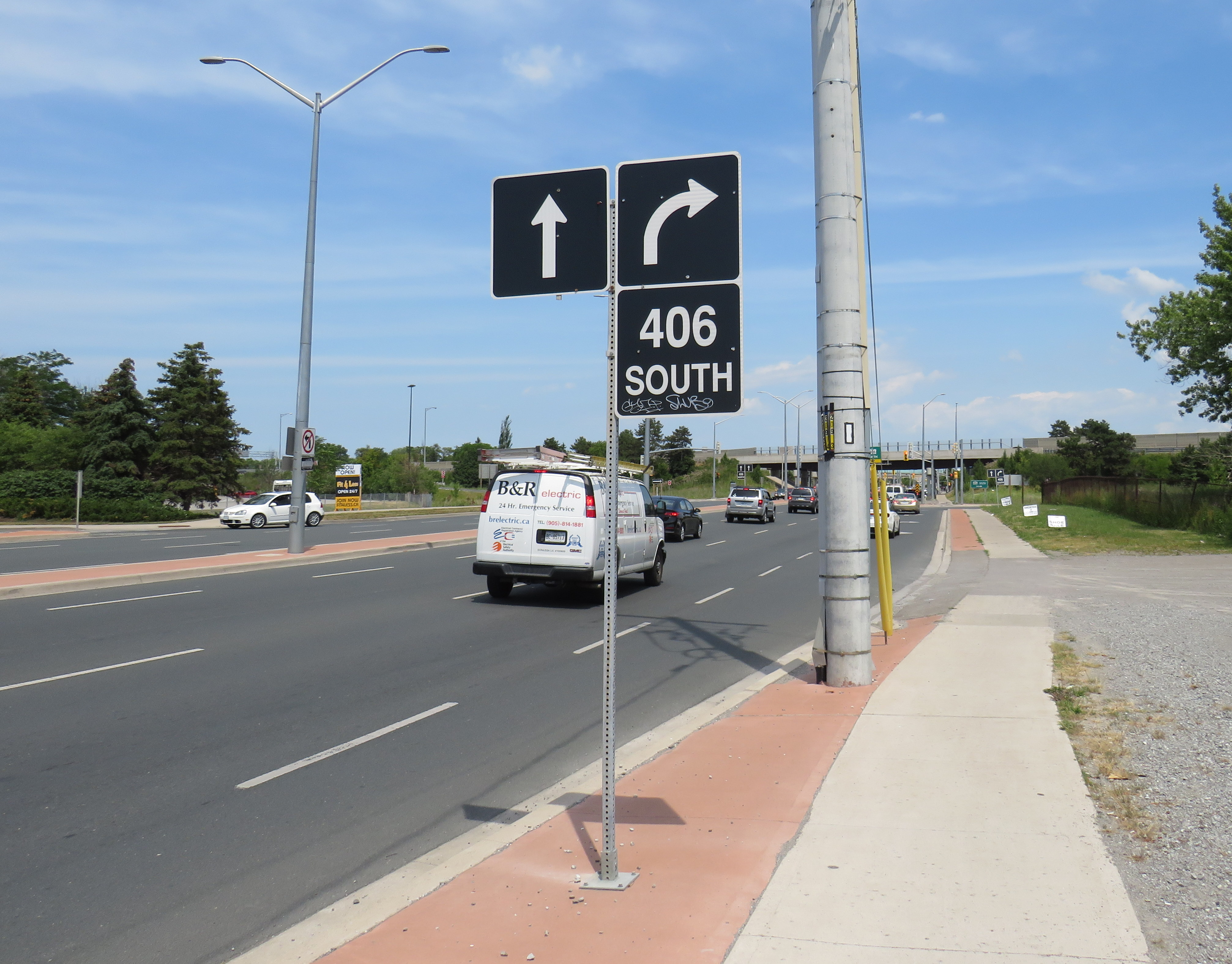
    The trail continues to busy Glendale Avenue, and crosses Highway 406 at the interchange. At each traffic light, pedestrians are required to press the “beg button” to get a walk signal, even if one is crossing in the same direction as the through traffic. In most other places, the walk signal comes on automatically in conjunction with the dominant traffic flow.

    Though the Bruce Trail also passes through Hamilton, a city nearly four times the size of St. Catharines, the trail there manages to remain separated from traffic and even from the city as a whole, much like Toronto’s ravine park systems.

    Glendale Avenue at Highway 406: the lowpoint of the 900 kilometres of Bruce Trail
  • Biking off to Buffalo

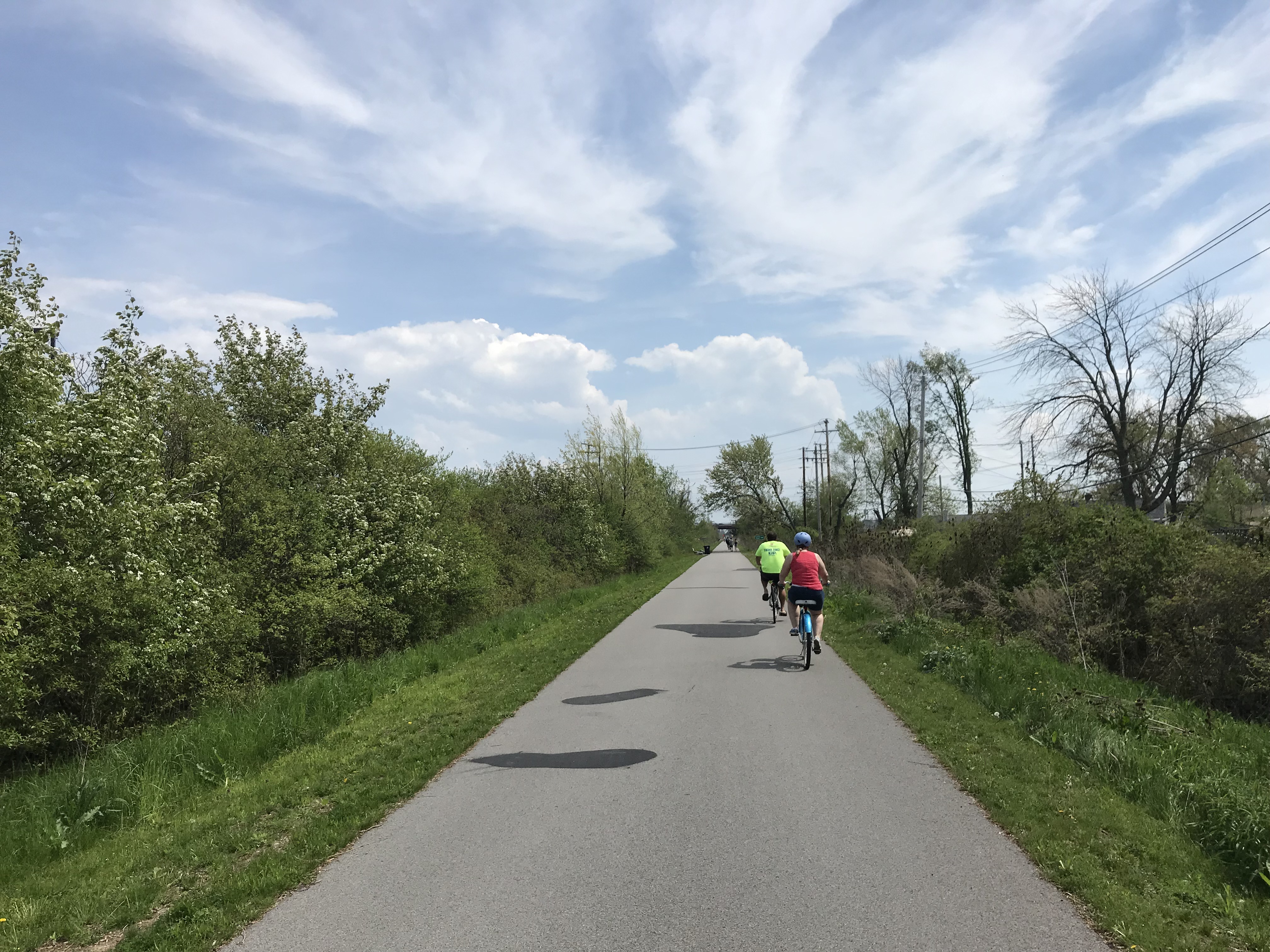
    IMG_6241Tonawanda Rail Trail

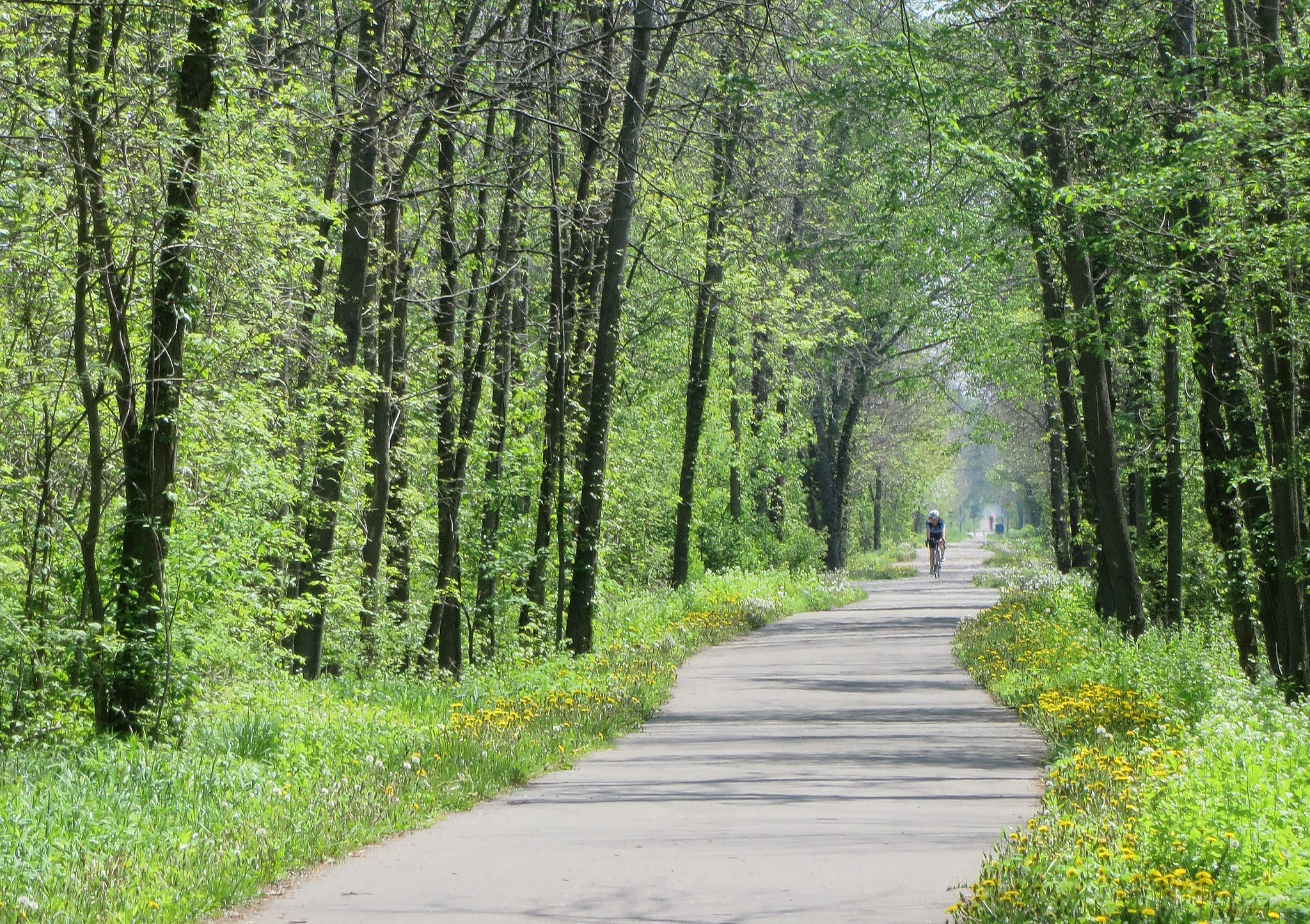
    Back on Victoria Day weekend, I biked down to Toronto’s Union Station, loaded by wheels onto a GO train, and headed for Niagara. I have biked through Niagara before, and it is a very pleasant place for cycling, with many paved paths, quiet roads, and paved shoulders and bike lanes along many busier roads. Charming towns such as Niagara-on-the-Lake and Port Colborne offer many places for cyclists to eat, drink, and stay. If you haven’t yet done so, GO Transit’s bike train is worth checking out this year.

    It is also possible to cross the border by bike as well, where there are many great bike routes and parks worth exploring. On my last trip, this is exactly what I did.

    IMG_6143.jpg
    GO Transit’s bike train at Union Station

    Officially, cyclists may cross at three of the four bridges over the Niagara River. To the north, cyclists may cross at the Queenston-Lewiston Bridge, which connects Ontario Highway 405 with Interstate 190. However, cyclists must cross with traffic (there’s no sidewalk, and pedestrians are prohibited), an unappealing option.

    The Rainbow Bridge allows both pedestrians and cyclists, though cyclists can not use the sidewalk (which offers great view of the nearby falls),but must also ride with traffic. But the Rainbow Bridge prohibits trucks; it is easy to access from city streets in both Niagara Falls, Ontario, and Niagara Falls, New York.

    The Peace Bridge, at the end of the Queen Elizabeth Way in Fort Erie, also permits pedestrians and cyclists, though cyclists must walk their bikes on the sidewalk. A multi-year rehabilitation project closed the sidewalk, but work was recently completed and the sidewalk will open shortly. In the meantime, the Peace Bridge offers a shuttle van (I called on July 1 2019 to confirm its operation, the representative I spoke to advises to call the Peace Bridge office to request a pick up). The Peace Bridge’s website offers detailed instructions on how to access the crossing on both sides.

    The Peace Bridge is free to pedestrians and cyclists in both directions, though cyclists on the Rainbow Bridge are charged $1 (US or Canadian) to travel to Canada.

    I chose to take the Rainbow Bridge both ways. It being a long weekend, I had to wait in traffic both ways, but at least the views are decent, and it’s a flat bridge deck.

    IMG_6166Crossing the Rainbow Bridge by bike means waiting in traffic…

    IMG_6169…though at least the view is nice

    Once across in Niagara Falls, New York, it is easy to access Niagara Falls State Park, which offers great views of the Falls, and is free to enter (though there are charges for parking and for accessing the viewing tower and lower gorge trails). Cyclists are asked to dismount and walk in sections of the park, though it is a reasonable request due to the crowds.

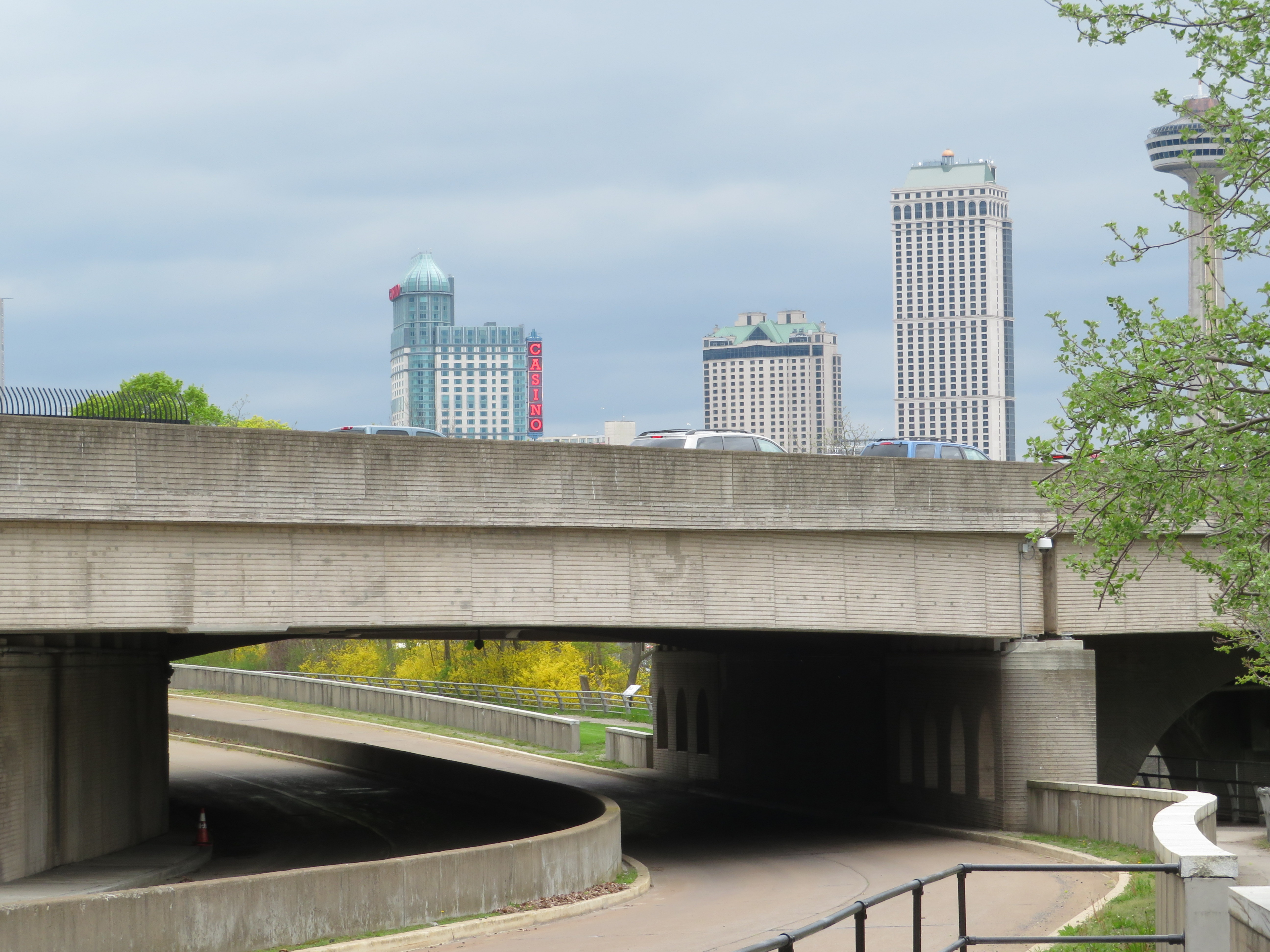
    I then biked along the Niagara Scenic Parkway upriver towards Tonawanda. The parkway was formerly named the Robert Moses State Parkway, but it has since been tamed to improve pedestrian and cycling facilities along the Niagara River, with the road closed completely at the Rainbow Bridge, and narrowed elsewhere. I doubt the Power Broker would have approved.

    1-IMG_1624.JPGAbandoned section of the Robert Moses State Parkway under the Rainbow Bridge
    South of Tonawanda, I chose to follow a new rail trail that followed an old interurban line that connected Buffalo with Tonawanda and Niagara Falls. The International Railway Company once operated a large network of street railways in Buffalo and Niagara Falls, as well as rural lines leading as far as Hamburg and Lockport. It also once operated a tourist trolley along both sides of the Niagara River, making it a truly international operation. Interurban service ended in 1937, while the last streetcars ran in 1950.

    IMG_6244
    Tonawanda Rail Trail guide sign

    The Niagara Frontier Transportation Authority, the public successor to the IRC, retained ownership of the Tonawanda corridor, planning a spur line of the new Buffalo Metro LRT. But local opposition and a lack of funds derailed those plans; happily, it is now a wonderful trail with safe, signalized crossings at every major cross street.

    Once in Buffalo, there are many bike lanes, and lower levels of traffic. Not once was I honked at or felt threatened by motorists. The city is mostly flat, and there are many neighbourhoods and landmarks worth checking out, with great restaurants, bars, and breweries. There are many hotels and bed and breakfasts in Downtown Buffalo and in the Allentown area.

    1-IMG_1528
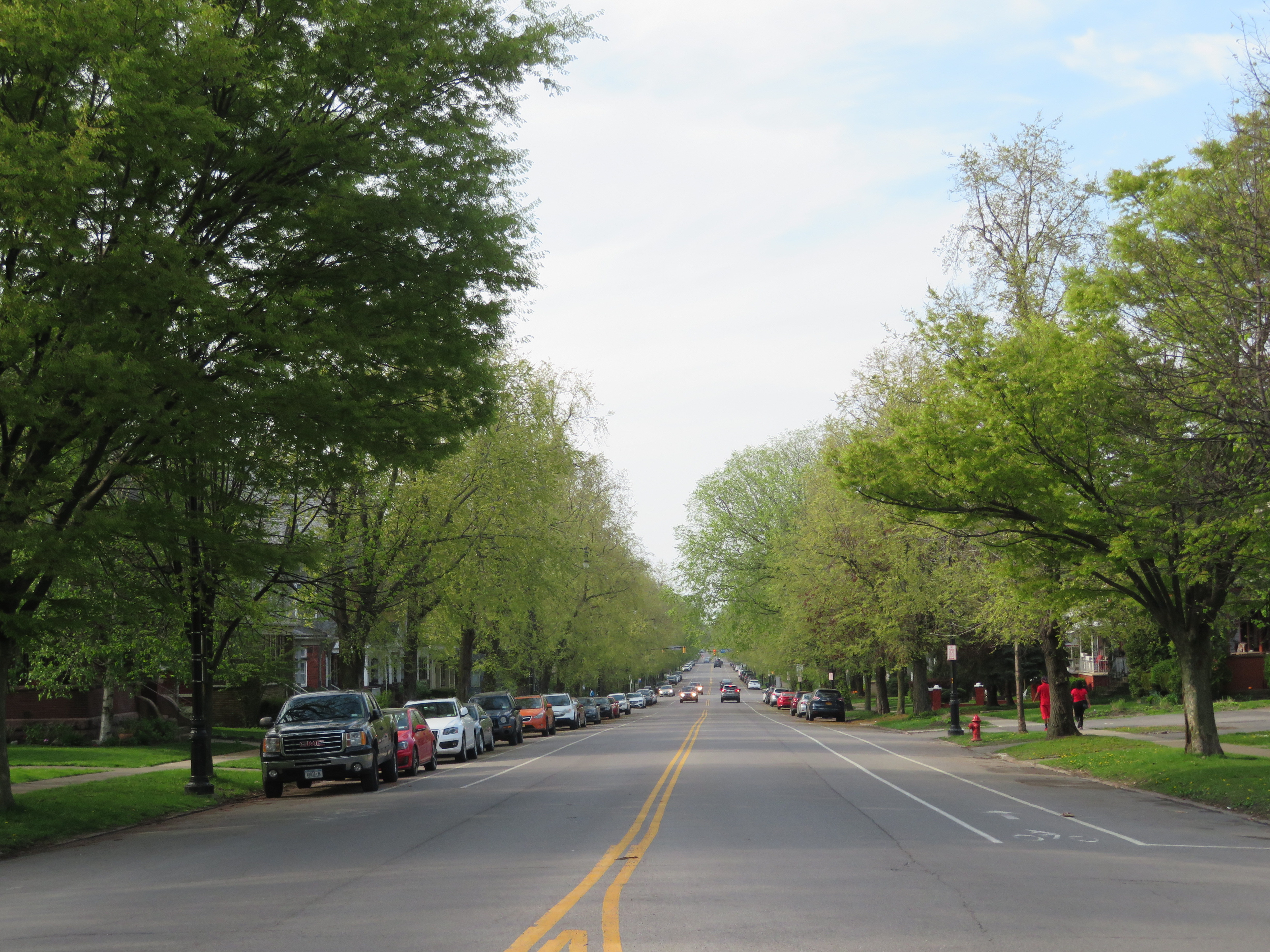
    Bike Lanes on tree-lined Richmond Avenue

    1-IMG_1525-001
    Symphony Circle, one of many traffic circles as part of Fredrick Law Olmsted’s parkway system developed for Buffalo

    Visiting Buffalo on a Sunday/Monday of a Canadian long weekend also meant being in town on normal working day on Monday, where commercial and institutional buildings are open to the public. The view from the observation deck at Buffalo City Hall is fantastic, while the Council Chamber is an art deco masterpiece.

    1-IMG_1594
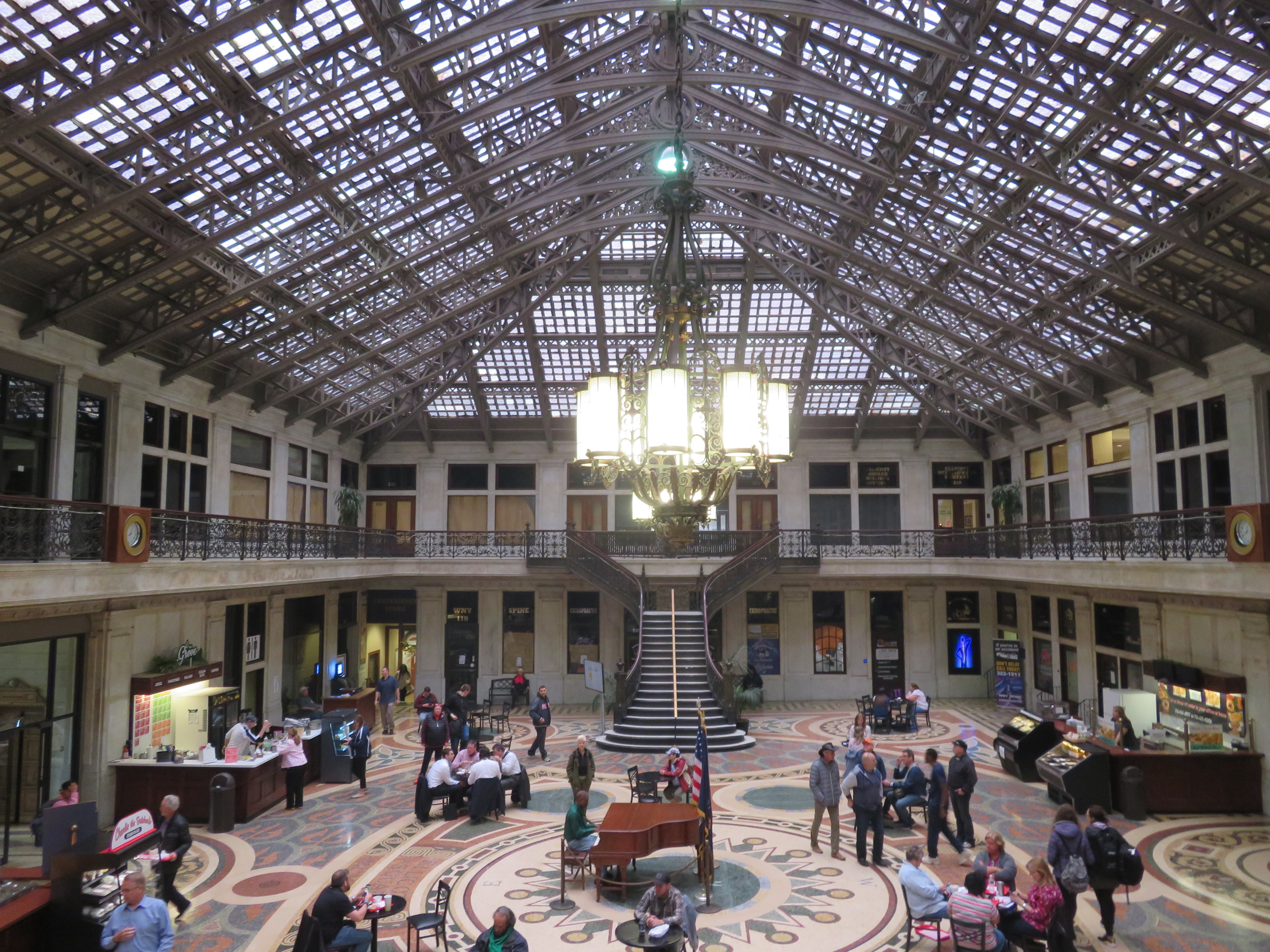
    I had lunch in the Ellicott Square Building, which, when completed in 1896, was the largest office building in the world. The building was designed by Charles Atwood of Chicago’s D.H. Burham & Company, and its interior courtyard is spectacular. Several food vendors operate weekdays.

    1-IMG_1570-001Courtyard, Ellicott Square Building

    Buffalo is an attractive cycling destination because a back-up option exists. The NFTA buses are all equipped with bike racks; the Route 40 bus runs direct from Downtown Buffalo to Downtown Niagara Falls, New York. The Monday was cool, wet, and windy, and I was tired (I later found out I was coming down with a bad cold), so I opted to spend the extra time cycling around downtown and the Erie Canal Harbour area and take advantage of the bus service back.

    The GO Niagara bike train operates every weekend until Labour Day, and again during Canadian Thanksgiving Weekend. The Buffalo-Niagara region has a lot to offer cyclists, and it is worth your consideration.

  • Ontario’s land use scandal: Another greenfield hospital for Niagara

    IMG_8728 (2)-001

    Recently, I discussed the greenfield locations of new hospital and post-secondary institutions in Ontario, focusing on the new St. Catharines Hospital site and the Orillia campus of Lakehead University, but also mentioning the proposed sites of a new hospital for Windsor, and an university campus in Milton. Hospitals and educational institutions are primarily funded by the province, which likes to promote sustainable development policies such as the Greenbelt, and mobility hubs at major transit nodes.

    The trouble with these new sites, located far from each city’s urban centre, is that they are difficult to reach by walking, cycling, or public transit. They don’t support downtown businesses, they ignore other potential urban land parcels (often former industrial sites), and are not in accordance with the province’s own land use policies.

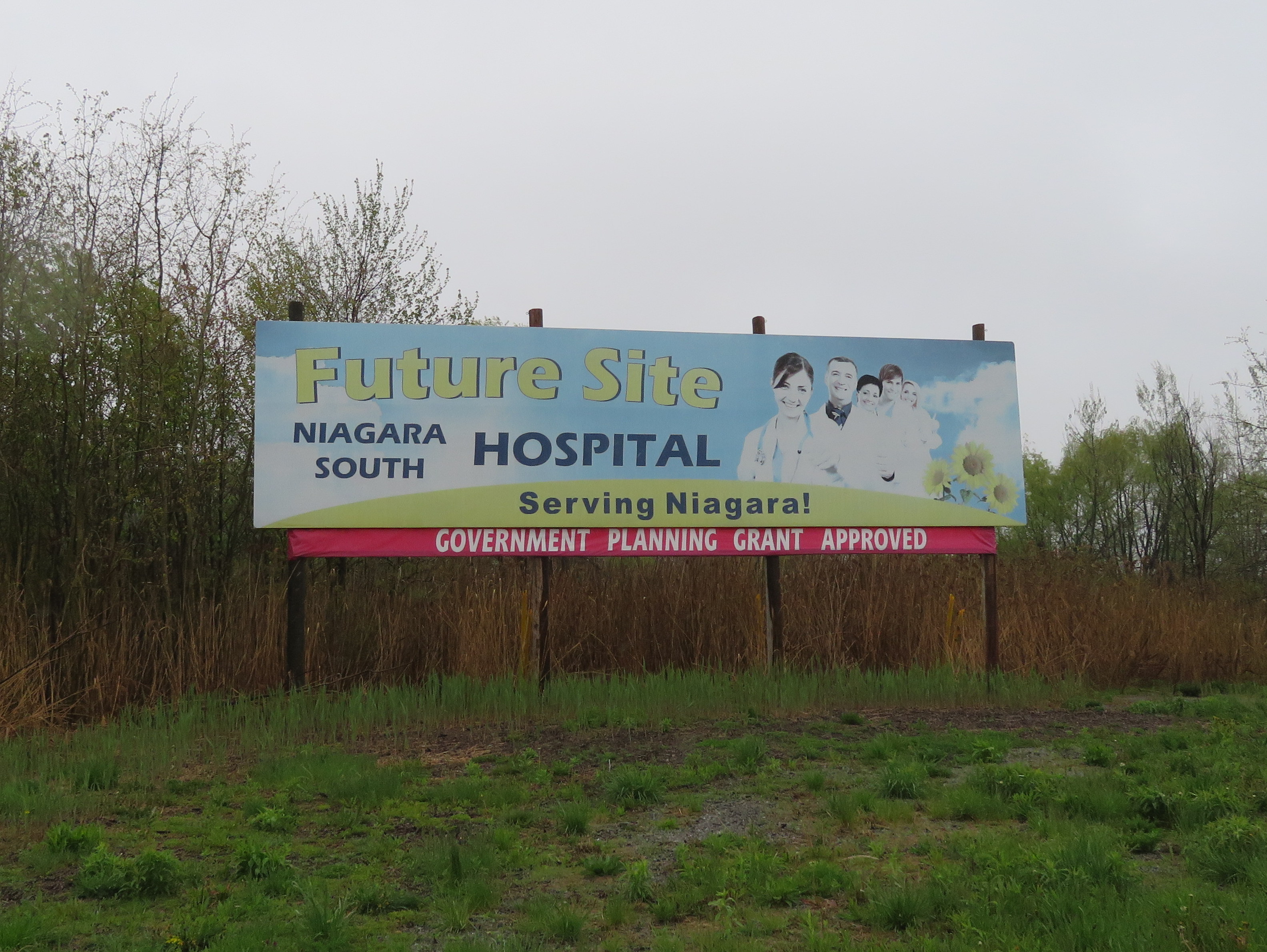
    I recently returned to Niagara Region to examine Niagara Health’s plan to consolidate health services outside of St. Catharines (where it already merged two urban hospital sites to a single suburban location). It proposes consolidating most health services located in five municipalities (Niagara Falls, Welland, Port Colborne, Fort Erie, and Niagara-on-the-Lake) into one site, at the corner of Biggar and Montrose Roads, south of Niagara Falls’ urban area, but adjacent to an interchange with the Queen Elizabeth Way (QEW).

    Niagara Falls, like most of urbanized Niagara Region, is de-industrializing, with modest population growth. Employment is largely dependent on public sector jobs, such as the education and health services, and the city’s tourism industry. As a large employer, the hospital should be as accessible to its employees, as well as its patients, as possible.


    Map of current Niagara Health sites and proposed new hospital

    The proposed hospital site is at the corner of two two-lane country roads, in an area without sidewalks. To the north and west is a golf course; to the south is a Hungarian community hall, farm fields, and a few exurban ranch houses. The land was donated in 2013 by a local business family, but last fall, Niagara Falls City Council was considering purchasing an additional 20 acres for staff parking. (more…)

  • Riding the Niagara Circle Route

    17959785808_ed39cf7cad_kThe Friendship Trail, part of the the Greater Niagara Circle Route

    Back on Victoria Day weekend, I took advantage of GO Transit’s summer weekend train service to go for a two-day ride around Niagara Region, on a circle to and from Niagara Falls via the Niagara River, the Welland Canal, and a rail trail connecting Port Colborne and Fort Erie, a circle tour of just under 150 kilometres over those two days.

    For several years now, special GO trains operate on weekends and holidays from Canada Day weekend to Labour Day weekend; and on Victoria Day and Thanksgiving weekends. On the Niagara trains, GO operates two specially-equipped cars with bicycle storage on the lower levels to accommodate cyclists looking to get out to this bicycle-friendly corner of Southern Ontario.

    Day 1 – Niagara Falls to Port Colborne

    I cycled from the GO train at Niagara Falls, down and up the Niagara Escarpment, mostly following the official Greater Niagara Circle Route, stopping at Brock’s Monument, Queenston, Niagara-on-the-Lake for food and libations, then to the Welland Canal and following that to Port Colborne. There are many historic sites and wineries along the way to visit, and you’re likely to spot several lake and ocean-going freighters along the way in the canal. Except for the escarpment, the ride is very flat and forgiving to the less experienced cyclist.

    Port Colborne, about half-way on the two-day ride, is a lovely place to stay overnight; there are several good bed and breakfasts that welcome cyclists, as well as a few good food options downtown. Several people, including the B&B host, recommended an Asian-Mexican fusion restaurant located in an old railway station. That busy little place also had bike racks and a bike repair stand provided by a well-known independent Toronto brewery.

    Port Colborne is now the home of the Jadran, better known as Captain John’s, as it awaits scrapping.


    (more…)