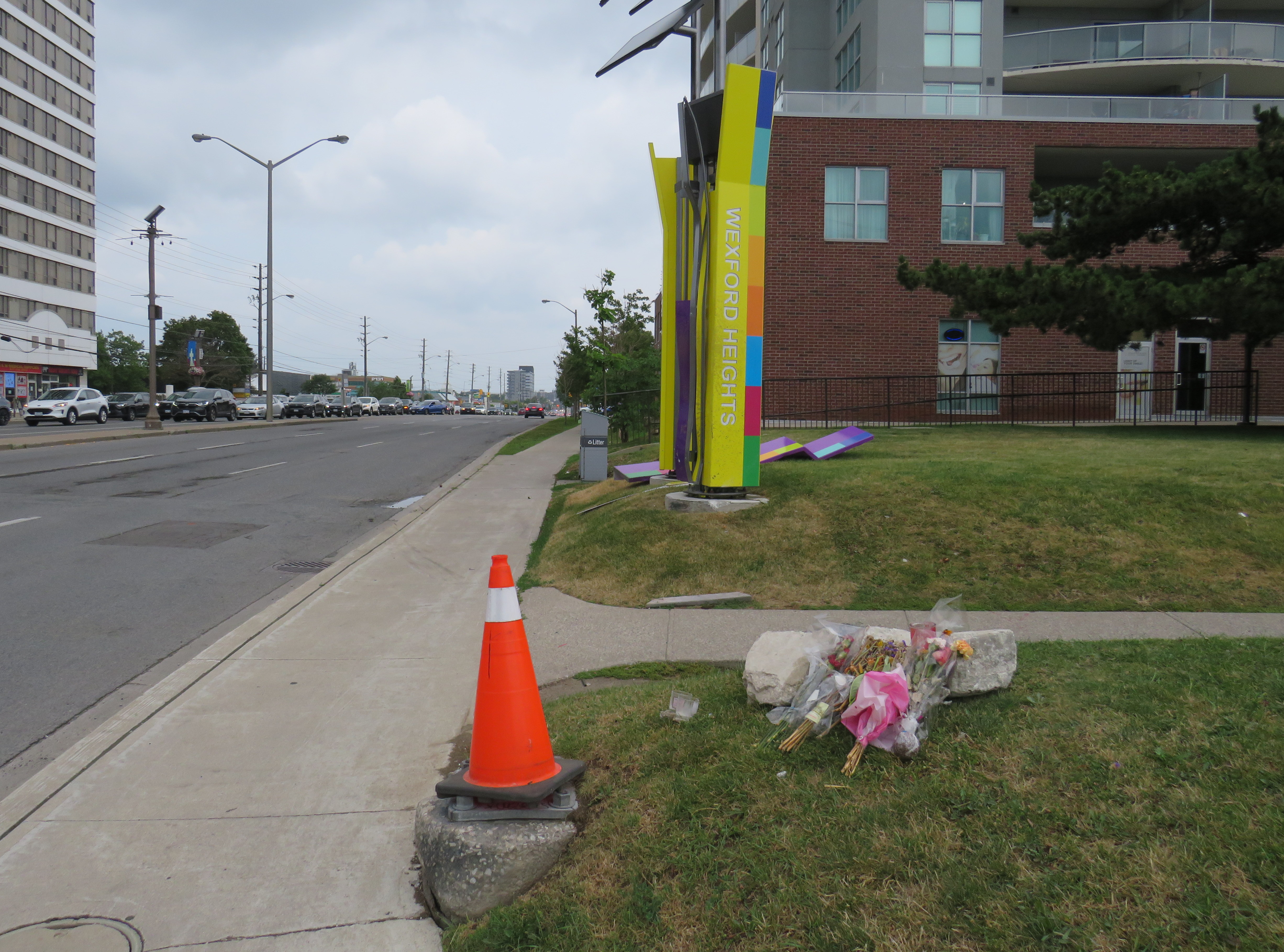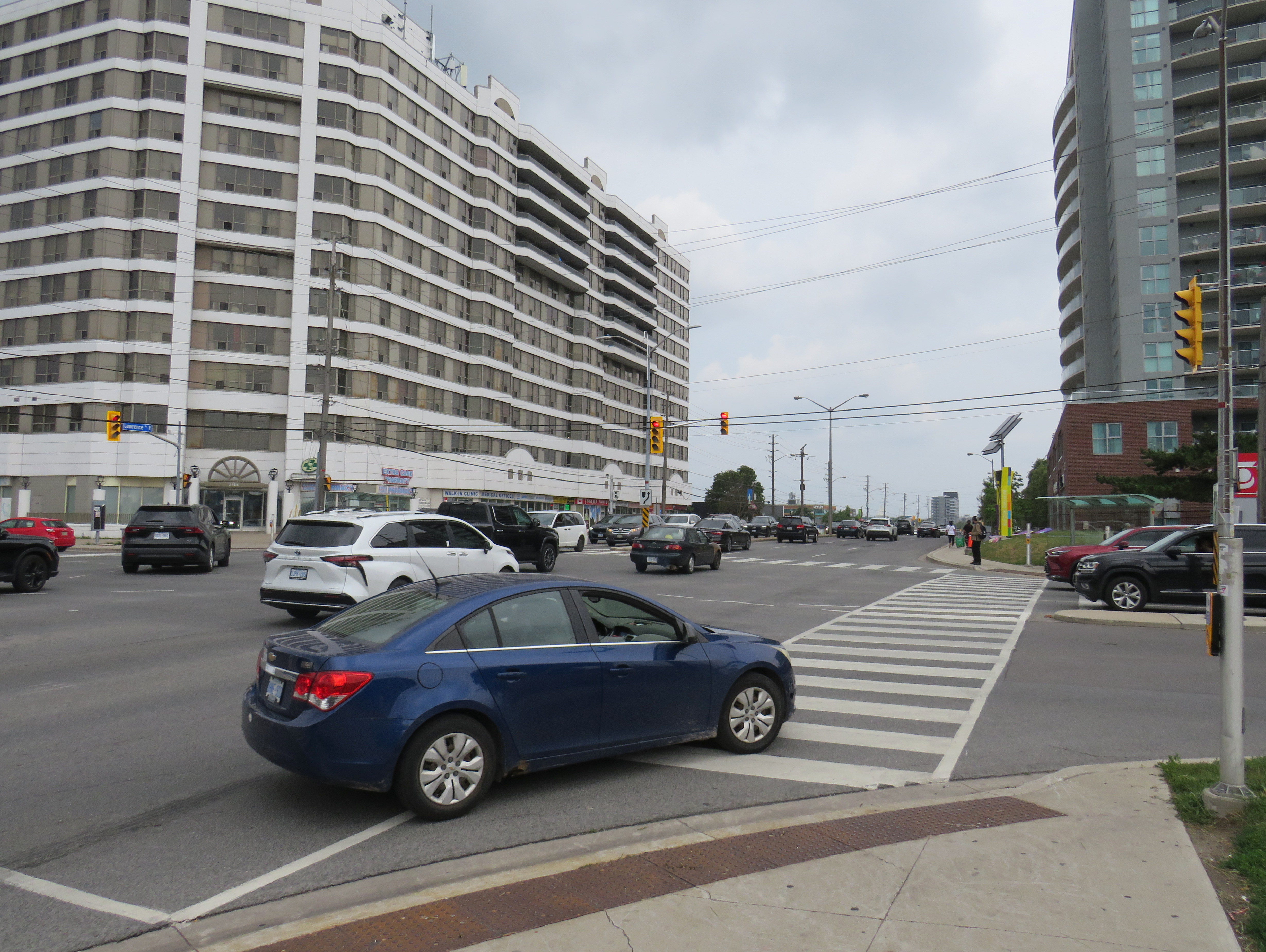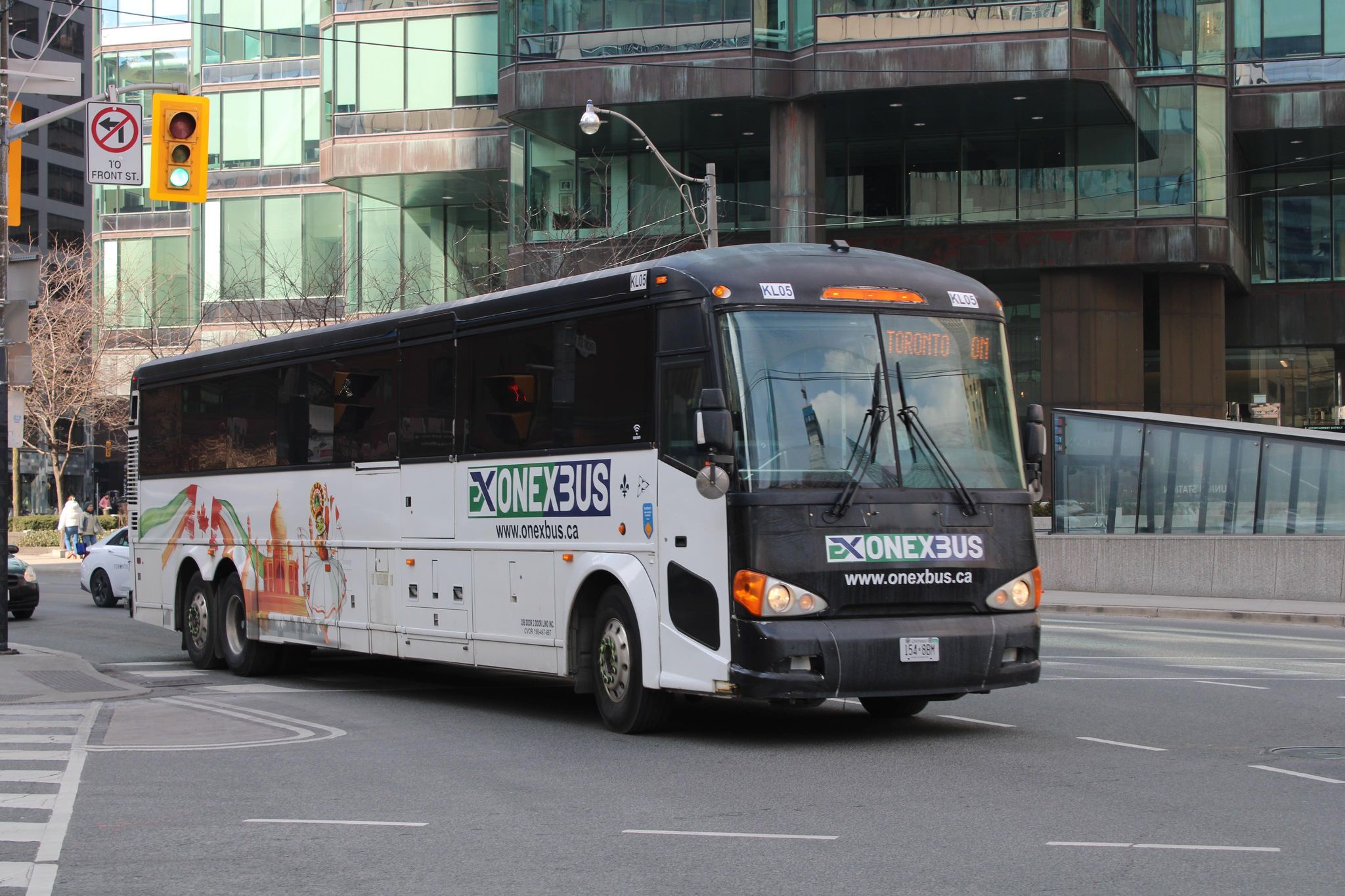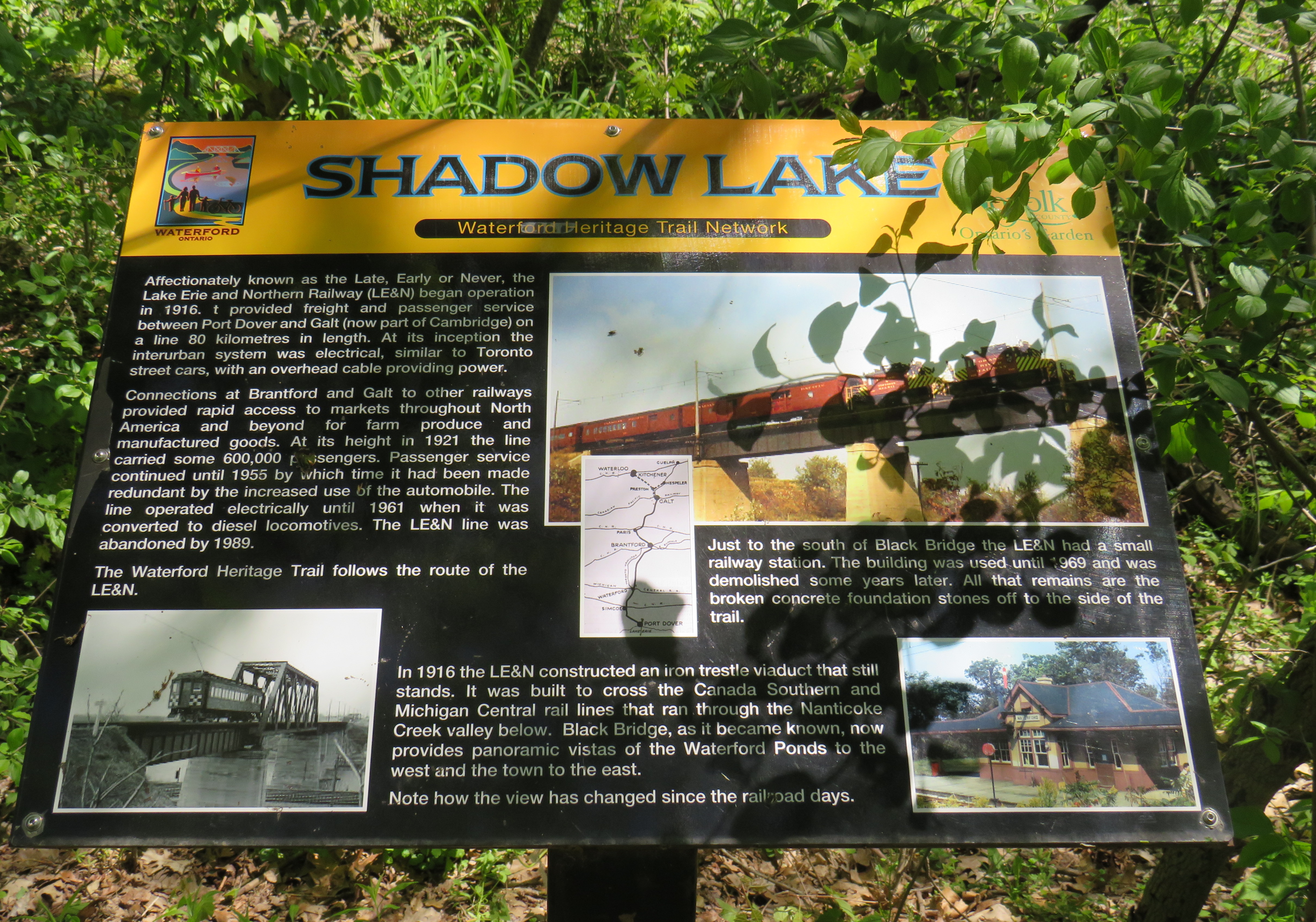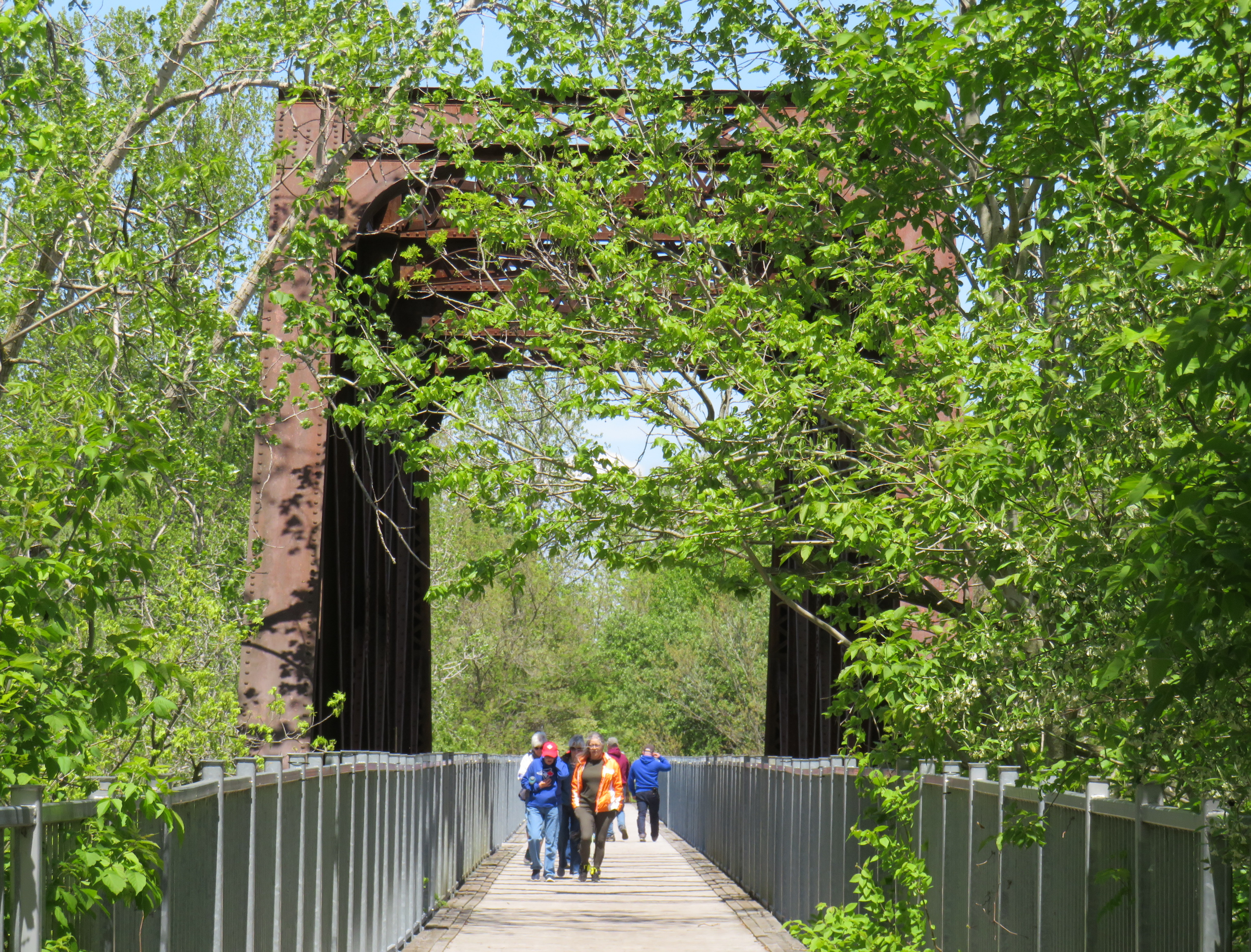
On Wednesday, March 18, a boy on a motorized bicycle was struck and killed at the Alexandra Avenue railway crossing in Mississauga. The tragedy, which occurred despite properly-working lights and gates at the three-track crossing, is a reminder of how important rail safety can be. Despite decades of “Operation Lifesaver” safety awareness campaigns, police enforcement, and upgrades to high-risk railway crossings, these tragedies continue to occur. Deaths on Canada’s railways affect many lives, including the victim’s family and friends, as well as the train crew, who can not brake the train in time. When these collisions happen, they can also tie up rail passengers and goods movement for many hours as emergency responders do their work and an investigation takes place.
Trackside memorial at Alexandra Avenue, March 31, 2026
This particular crossing, near Cawthra Avenue and Lakeshore Road, sees up to 125 GO Transit and VIA Rail passenger trains daily; the three-track corridor is one of the busiest stretches of railway in Canada. The Alexandra Ave. crossing was also ranked as the 21st riskiest in the country in a Transport Canada list of nearly 25,000 road-rail intersections. Of the top 25 railway crossings ranked by risk in Canada, 14 are owned by Metrolinx, the provincial agency in charge of GO Transit. At the very top of the list is another Mississauga railway crossing, where the GO Lakeshore West corridor meets Lorne Park Road.
Lorne Park Road crossing
According to the Transportation Safety Board of Canada, between the years 1999 to 2022, 630 people were killed and 774 people were seriously injured due to collisions with trains at grade crossings, an average of 26 per year. In most instances (69%) those who were killed were in motor vehicles, with pedestrians and cyclists making up the remainder.
The railway crossing inventory, last published in June 2021, ranks grade crossings according to their risk using GradeX, an internal analysis tool. Relative risk of each crossing is based on several factors, including historical accident data, train speeds, traffic volumes, sight lines at crossings, crossing protection features, and the local built environment to determine the level of collision risk. Fields include location (road crossing and railway subdivision/mile), type of protection (passive, with just an “X” crossbuck sign, or active, with lights, bells, or gates), number of collisions in the last five years since the dataset was compiled, speed limits, and traffic estimates.
With this information, railways and road authorities can then work to improve the crossing to reduce the risk, or construct a grade separation to eliminate the risk. For example, the Burloak Drive crossing of the GO Lakeshore West Corridor and number 5 on the Transport Canada list, is currently being replaced with an underpass.
The Transport Canada list is comprehensive, but it is not perfect, nor is it complete. The Ontario Northland Railway, whose tracks extend north from North Bay through Northeastern Ontario, is conspicuously missing. Several crossings in the map, mostly private crossings, do not have the correct latitude and longitudes. Several abandoned railways, including the Orangeville-Brampton and Barrie-Collingwood (west of Angus) still appear, as do long-decommissioned crossings of industrial spurs. The risk ranking also changes. In a 2016 CBC News article, the Melbourne Road CN crossing west of London, Ontario was ranked fourth riskiest. In the more recent dataset available online, it is ranked 341th, even though there were no physical changes to the railway crossing visible in Google Streetview from 2009 through 2023.
The Lorne Park Road crossing is interesting for several reasons. After many years as a stop on the CN mainline, it was briefly a GO Transit station, with commuter train service only for its first year in 1967-1968. The two-lane road crosses the three-track railway at approximately a 30-degree angle; immediately to the north of the tracks is the intersection with Birchview Drive, which is parallel to the tracks. That intersection is controlled only with a stop sign, with pedestrians crossing the street at a wide angle with no marked crosswalk. The same number of trains that cross Alexandra Avenue also cross at Lorne Park Road, making it a busy crossing, and motor and pedestrian traffic is higher, as Lorne Park Road is a busier collector street with adjacent commercial properties. To its credit, however, Metrolinx recently upgraded the crossing, with enhanced pedestrian gates that prevent access when the railway crossing lights are activated.
City of Mississauga aerial photography of the Lorne Park Road crossing, with Birchview Drive meeting Lorne Park Rd. immediately north of the railway (source)
A 2022 City of Mississauga-commissioned report by HDR recommended that the Lorne Park crossing be studied for future grade separation (it also recommended a more detailed study into closing the Alexandra Avenue crossing along with an Ogden Avenue grade separation), given the high number of train crossings, expected to increase with future GO Transit service expansion.
Building new overpasses or underpasses can be expensive and disruptive, especially in older urban environments where space is at a premium. Closing crossings completely can disconnect communities, especially for pedestrians and cyclists, who may have to travel much longer distances or use dangerous roads to get to their destinations. But they are often necessary for ensuring safe, frequent, and speedy train service. In the meantime, upgrading existing crossing and minimizing risk, along with continued education, is the way to go.
Highway 403 in Mississauga, with HOV lanes in the centre
In the last year, making the occasional car trip to visit family in Northeastern Ontario or just to get out of the city for a day or two, I kept wondering what the point of those new high occupancy vehicle (HOV) lanes were on the Queen Elizabeth Way, Highway 400, or Highway 401. At first, they seemed like a real time saver for anyone riding on a transit bus or driving with a few family members, friends, or carpool colleagues in the car. As time went on, with new exceptions, minimal or no police enforcement, and increasingly aggressive driving post-pandemic, one is left wondering why the province even bothers adding them to more highways.
Now, amongst a flood of moves and musings by our oft-Trumpian premier, it appears that the province has given up on even the veneer of sustainability with these highway widenings throughout the Greater Golden Horseshoe and Ottawa regions. On Tuesday, March 17 — St. Patrick’s Day — Transportation Minister Prabmeet Sarkaria announced a proposed regulatory amendment that would allow all cars and light trucks in the HOV lanes, during off-peak periods. The change would “help keep drivers moving across the province, so they can spend less time in traffic and more time with their families and friends.”
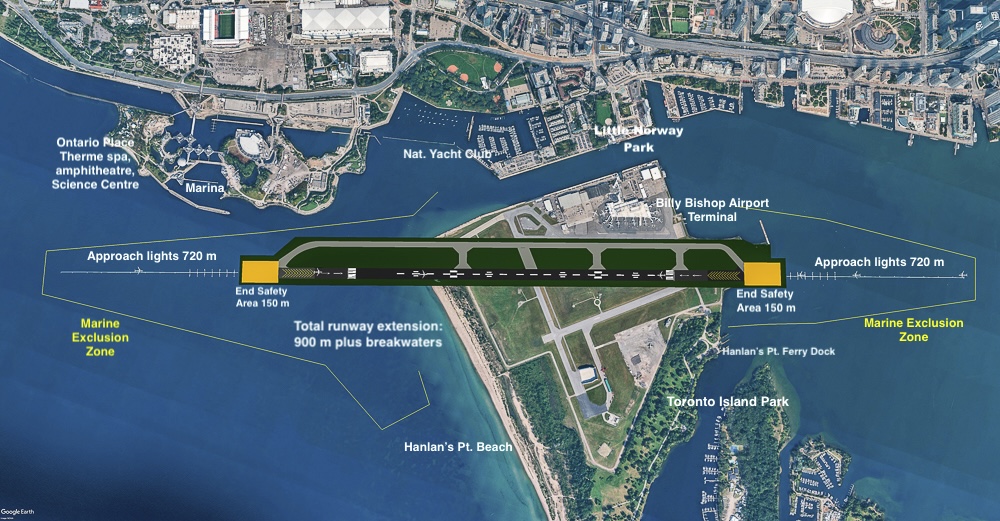
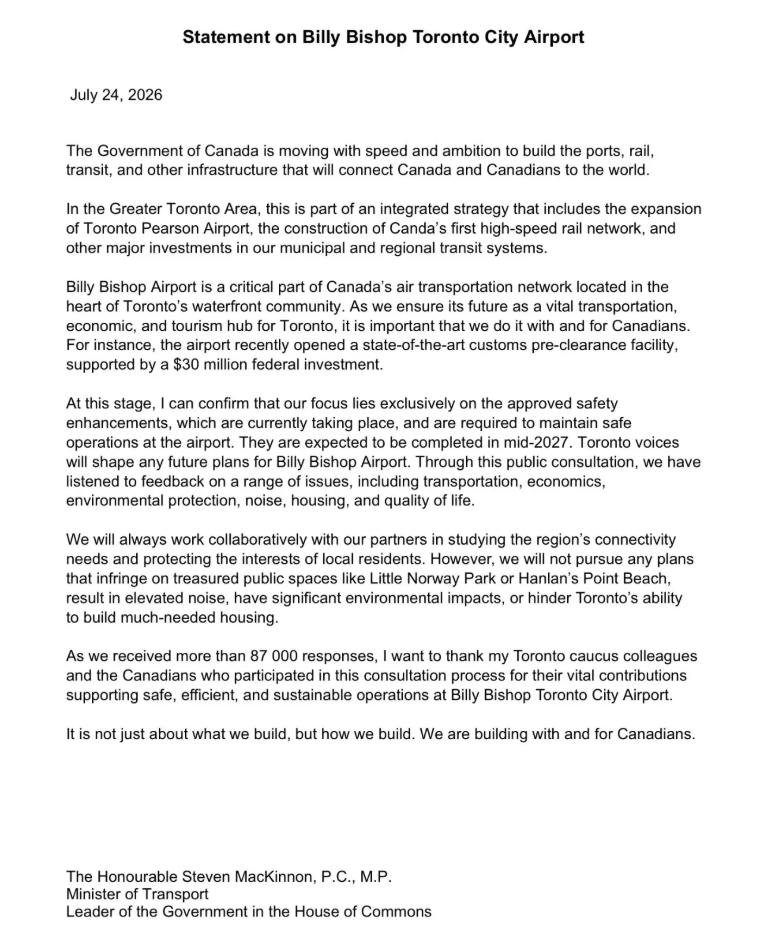
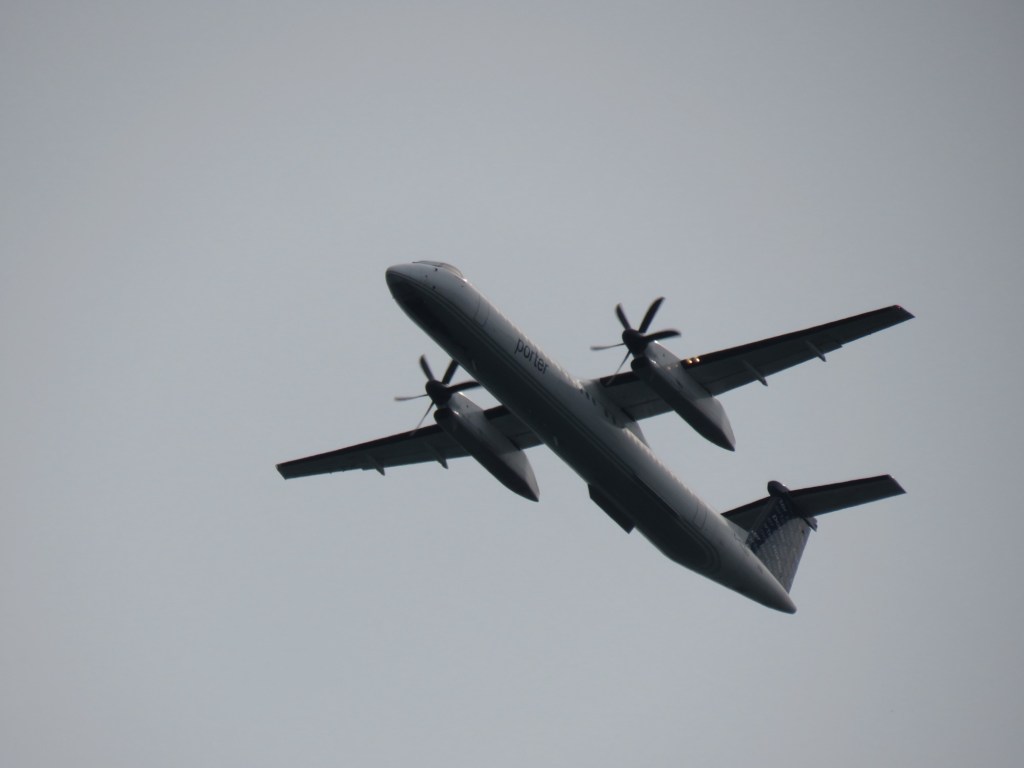
This announcement is part of a stream of messages from Doug Ford and his government clearly seeking the attention of the news media and the public. The week prior, Ford was talking about expanding the Toronto Island airport, even seizing control of the City of Toronto’s interest to ensure that jets could land on the waterfront. Before that, Ford mused about a new convention centre built on Lake Ontario near Exhibition Place. This week, Ford was on a law-and-order kick, attacking a fair and impartial judiciary, promoting the idea of “Bail TV,” and praising a homeowner that shot an intruder during a home invasion. Maybe this is to distract from scandal and a new proposed law to shield the premier, ministers, and staff from journalists using freedom of information requests to keep the government accountable.
The legislative assembly will finally reconvene next week, starting Monday, March 23, after a 14-week break.
The first HOV lanes were introduced on Highway 403 through Mississauga and on Highway 404 southbound from Highway 7 to Highway 401/Don Valley Parkway in 2005. A year later, the HOV lanes were touted as an “unqualified success,” with the minister of transportation at the time, Liberal Donna Cansfield, promising more reserved lanes to follow, with the QEW through Oakville and Burlington to be the next implementation. With the Ontario Provincial Police (OPP) conducting active enforcement on those two sections, they found that only 5 percent of motorists in the HOV lanes were violating the law.
GO Transit was an especially keen user of the new HOV lanes. In 2005, only the Lakeshore Line had regular off-peak train service, and buses filled in the gaps in between. The 404 lanes saved valuable minutes for buses on the 70/71 Stouffville Line route between Union Station and Markham; the City of Toronto designated sections of the inner paved median on the DVP as well for GO buses that could be used to bypass traffic congestion.
Clip from the Toronto Star on Thursday, Dec 14, 2006
At the time, the HOV lanes saved carpoolers and transit riders up to 17 minutes on the initial segments on Highways 403 and 404. The additional capacity created with the new lane (no existing lanes were to be converted to HOV-only under provincial policy) also led to time savings for all drivers, at least in the short term. Increased traffic caused by suburban growth and induced demand eventually negated those time savings for general traffic.
HOV lanes were included in more highway expansion projects. The QEW HOV lanes through Oakville and Burlington were added in 2011. Lanes on Highways 400, 410, and 427 and Highway 417 in Ottawa followed, and when Highway 401’s express/collector system was expanded through western Mississauga and Milton, HOV lanes were part of that too.
“One more lane should do it,” Highway 401 in Mississauga, with HOV lanes in the middle of a recently widened highway
Regulations on the use of HOV lanes were relaxed over the years too. Motorcyclists were permitted, as were any vehicle with a “green” license plate (available to any battery-electric or plug-in hybrid car, SUV, or light truck). HOT permits were also added, for anyone willing to pay and enter a lottery for the right to use the lanes while driving alone. Taxis and airport limos were also allowed, even when not carrying a passenger.
Poor driving habits, which seemed to have gotten worse since the COVID-19 pandemic, have made a mockery of the initial intentions of the HOV lanes. Without enforcement, the HOV lanes are essentially treated by some drivers as fast lanes, with sudden swerving in and out despite double solid lines and “Do Not Cross” signs consistently posted along the highway, intended to reduce weaving. Solo drivers regularly use the lanes without consequence to get around slower drivers or trucks.
Despite “Do Not Cross” signs, and a double solid line between the HOV lane and general traffic, this regulation is regularly ignored
For now, we do not know what “off-peak hours” would mean when the provincial government finally legalizes another bit of the selfish and aggressive driving behaviour the rest of us have sadly gotten accustomed to. The QEW is frequently jammed most weekends between May and October, when families and tourists travel between Toronto, Hamilton, and Niagara. Highway 400 is notorious on Friday evenings and Sunday afternoons during Cottage Country commutes.
This is yet another motorist-friendly move by this government eager to hold onto seats in suburban ridings and please its wealthy backers, along with permanent gas tax breaks, abandonment of license plate renewal fees, the prohibition on speed enforcement cameras, and the construction of destructive new highways like the 413. But at least this latest move is an acknowledgement of something I have felt for years about the HOV lanes in Ontario: a simple greenwashing of highway expansion, making us feel better about laying more concrete and asphalt.
Once again, Doug Ford wants to mess with local democracy. This time, it’s in Niagara Region.
With the recent news overload — yet another war in the Middle East, rising fuel costs, another municipal mayoral race — not to mention the flood of news from Queen’s Park (a new mega-convention centre on Lake Ontario, moves to let bigger passenger jets on an expanded island airport, and legislation to increase secrecy within the highest levels of provincial government), you might be forgiven for missing yet another bit of news.
Niagara Region municipalities, with former Lincoln County townships in blue and Welland County townships in red
Niagara Region is one of eight regional governments in Ontario, a specialized level of government introduced by an earlier Progressive Conservative government in the 1970s, following on the success of Metropolitan Toronto created in 1954. Regional governments had more powers and responsibilities than counties, including regional planning and the provision of water and wastewater systems deemed essential for smart urban growth. Most regions formed their own police services, and many took on responsibility for household waste management and public transit (Durham, Waterloo, York, and most recently Niagara). Other services, such as fire departments, libraries, local planning, parks and recreation, and local public works remained the responsibility of the cities, towns, and townships.
The Mike Harris-led PC government, elected in 1995, was a big proponent of municipal amalgamations. After amalgamating the City of Toronto in 1998, it replaced regional governments in the Hamilton, Ottawa, and Sudbury areas with amalgamated cities in 2001, and broke up the former region of Haldimand-Norfolk creating two stand-alone municipalities. Dozens of other amalgamations took place in those years, including Chatham-Kent and Kawartha Lakes (formerly Victoria County). On top of that, provincial costs were downloaded to those new creations, including social and health services and thousands of kilometres of provincial highways.
That era of drastic municipal change came to an end in December 2003, when a new Liberal government was elected, with relative calm for nearly fifteen years, until June 2018. During that time, the status quo prevailed, without a full review of the operations, finances, and role of municipal governments that would inform good faith reforms.
Niagara Region is made up of twelve lower tier municipalities: the cities of St. Catharines, Niagara Falls, Welland, Thorold, and Port Colborne, the towns of Fort Erie, Grimsby, Lincoln, Niagara-on-the-Lake, and Pelham, and the townships of Wainfleet and West Lincoln. The current region is a result of that earlier wave of regional government establishments in much of Ontario; prior to 1970, Niagara was made up of two counties — Lincoln and Welland — with fifteen townships and nearly a dozen smaller cities and towns between them.
As with all remaining regional governments, Niagara Region Council is made up of municipal politicians who also sit on their local city or town councils. Each mayor sits on the regional board, and to make up for population disparity between urban centres and rural townships, the larger municipalities send additional councillors who already sit on their local councils. Though some regions have chairs elected by the region’s populations, others have a non-elected chair, typically chosen by the regional council.
The Niagara problem started when the provincial government used its new authority to appoint its own preferred chair to Regional Council after the previous chair, former Liberal MPP Jim Bradley, died in office in late 2025. Bob Gale quickly promoted regional amalgamation, backed by Premier Ford, citing tax increases and too many local politicians. The idea is unpopular amongst Niagara residents, especially those in smaller communities such as Niagara-on-the-Lake, which under a four-municipality model, would be joined with Niagara Falls (whose mayor backed the idea).
Repeatedly, it has been shown that municipal amalgamations fail to save taxpayers’ money but only make municipal government more distant to the residents it serves. Though the number of municipal politicians would decrease (there are 126 across the 12 lower-tier municipalities), in smaller towns and rural townships, these are part-time positions. In Toronto, the moves from seven councils down to one in 1998 and from 44 councillors down to 25 in 2018 failed to save operating funds, as the number of paid employees to support each councillor increased to manage their greater workloads. Even the conservative Fraser Institute found no tax savings when studying the effects of amalgamation on smaller Ontario municipalities. Furthermore, with many services already the responsibility of the region, what savings could be had if police, transit, social services, housing, and major roads are already amalgamated?
For now, the idea of amalgamation in Niagara Region is stalled, but not because wiser heads prevailed. Chair Bob Gale resigned just three months into his term after local anti-hate organizations found he had in his collection of historical artifacts a copy of Mein Kampf signed by its author, Adolf Hitler.
One of the other problems with a quick amalgamation of such a large area is that there is no study on what boundaries actually make sense. Does the combination of 12 municipalities into just four actually work? Should the new boundaries just lump existing towns together, or more intelligently redraw existing boundaries completely? For example, should the City of Thorold be just thrown in with a neighbour as is, or could be split into three, with the urbanized area joining St. Catharines, the area east of the canal joining Niagara Falls, and the southern rural area joining Pelham and Welland?
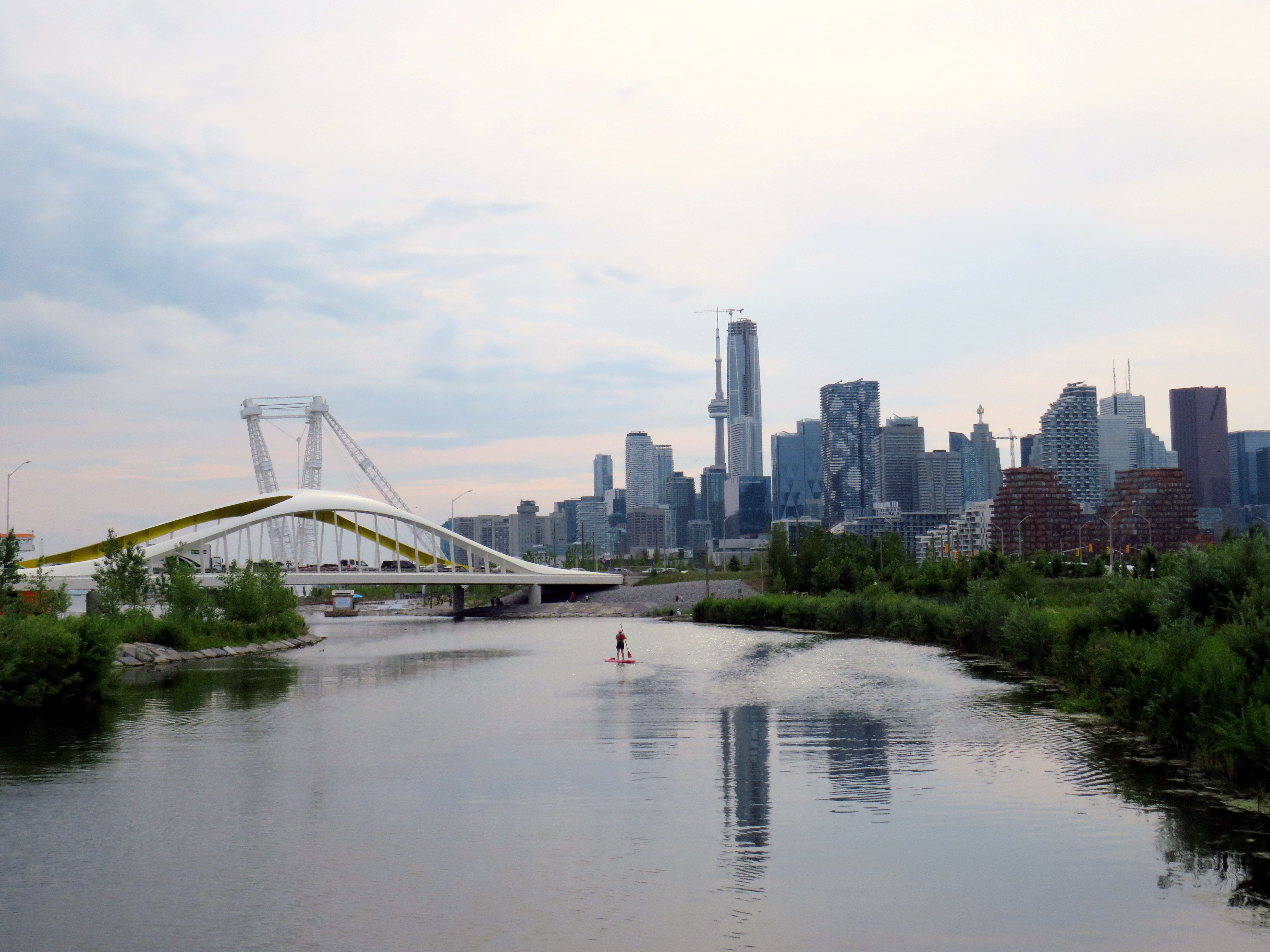
Unfortunately, as hospitals face funding and staffing crises, as students face increasing debt loads to complete post-secondary education, and the economy continues to face headwinds, Doug Ford manages to get bogged down into distractions like shiny new buildings on Toronto’s waterfront, municipal restructurings, and needless new highways. The next provincial election will not come for another three years, and yet the premier wants to play mayor.
In 1998, the new City of Toronto was created when the Progressive Conservative government led by Mike Harris forced the merger of Metropolitan Toronto and its six constituent cities and borough. Dubbed the Megacity, it was part of a new round of municipal restructurings that affected much of the province, with Hamilton and Ottawa getting the same treatment three years later. Making less news in 1998 was the abolition of Kent County and the amalgamation of all 21 of its towns, villages and townships with the City of Chatham, creating the new municipality of Chatham-Kent.
Over 25 years later, there are challenges remaining from amalgamation. The new, larger municipality must administer a large mostly rural area but where nearly half the population lives in just one urban centre. But there are benefits, such as a consolidated library system that provides rural residents with more materials and services. Importantly too, is that Chatham-Kent was one of the first municipalities to introduce a rural transit service to connect outlying communities with the city centre, expanding the reach of Chatham’s existing urban bus system.
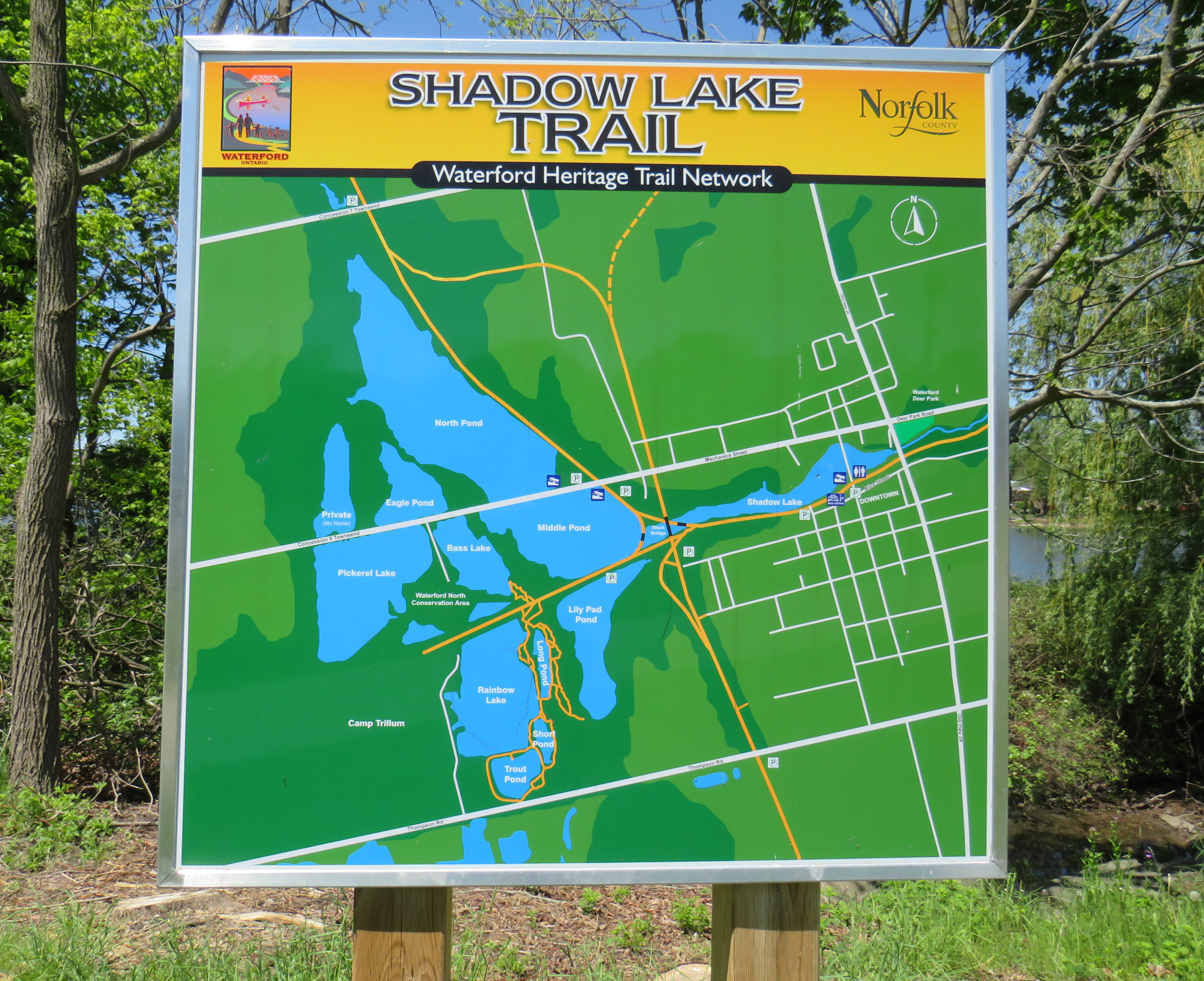
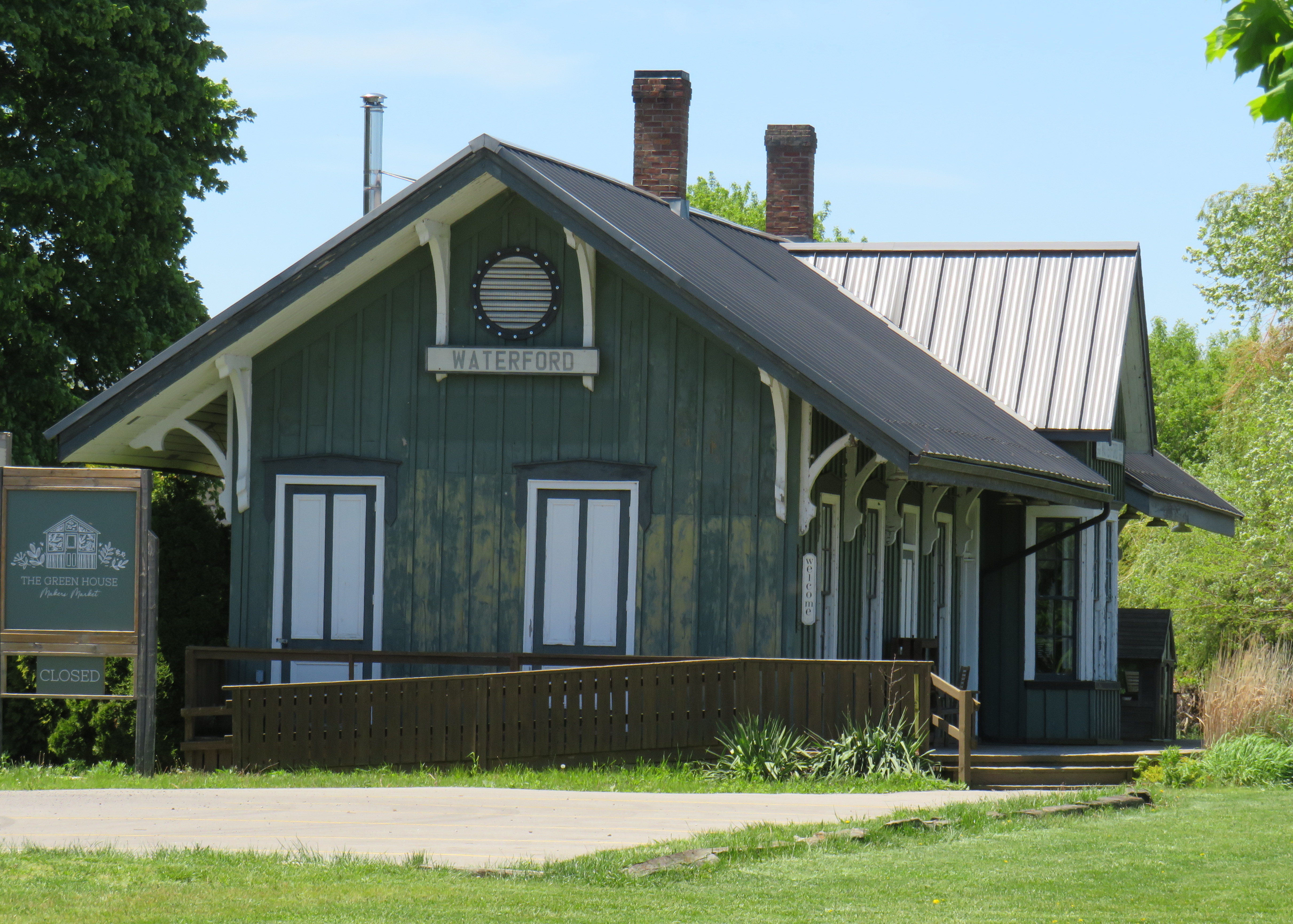
Three Ride CK routes — A, C, and D — extend from the bus terminal in Downtown Chatham to Wallaceburg (the second-largest community in Chatham-Kent), Dresden, Blenheim, Ridgetown, and Tilbury, covering most of the former towns that made up Kent County. (A fourth route, B, was proposed to serve Thamesville and Bothwell, but has not been implemented.) There is also a seasonal summer bus that serves the lakeside communities of Erieau and Mitchell’s Bay, echoing the former Chatham, Wallaceburg, and Lake Erie electric interurban service.
Most RideCK buses — local and intercommunity — are cutaways, meaning that the passenger seating area is in a separately-built body added to a cab and truck chassis. Though these vehicles are popular for paratransit services, low-ridership rural routes, and in smaller communities like Brockville, they do not offer a particularly smooth ride. However, they are an economical option for smaller communities.
Bus stop in Wallaceburg
Each of the three intercommunity routes operate Monday through Saturday, with two morning and two evening round trips, with an additional midday run that leaves Downtown Chatham at 12:15 PM on weekdays; this additional trip was added several years after service began. There is a timed transfer to the local Chatham routes, allowing for onward connections to shopping, schools, medical services, employment, or social activities. All three rural routes also stop at the hospital in Chatham. The midday trip was added to provide an early return home for anyone taking the bus from outlying areas, such as for a medical appointment, and not then stuck waiting an entire day in Chatham.
I rode RideCK between Chatham and Wallaceburg and back in early February 2026; the midday 12:15 departure had decent ridership with six other passengers leaving the bus terminal (a seventh got on at the big box retail cluster north of Chatham’s urban area); there were five other passengers on the way back south on the first evening bus (5:45 PM leaving Chatham). Given that Chatham-Kent has maintained the service for so long is indicative of how the rural buses are seen as a necessity in the municipality. In Wallaceburg, on-demand local transit is also available, a recent improvement by the municipality.
Intercommunity routes have a flat cash fare of $5.25 (though online materials still show the older $5 fare), though transfers to local transit are provided.
Ride CK Route A between Chatham, Wallaceburg, and Dresden
Though Routes A and C are fairly direct, Route D involves a long one-way loop to serve several small communities (including Cedar Springs, Buxton, and Merlin) before continuing to the former town of Tilbury and then back to Chatham. The route passes near, but does not stop at, Pain Court, and completely misses Wheatley.
The circuitous Ride CK Route D making a one-way loop through Cedar Springs and Tilbury
Though Chatham-Kent should be commended on identifying the need for rural transit and maintaining it for over two decades, it still demonstrates the challenges and gaps of operating a municipally provided rural transit service. Ideally, Chatham-Kent would be able to partner with neighbouring Lambton and Essex Counties to provide direct service to more communities. Tilbury should be part of an east-west service between Chatham and Windsor along the Highway 2 corridor, serving towns along Lake St. Clair such as Belle River. That would open connections to the University of Windsor and the main St. Clair College campus, along with other destinations, while improving service to Tilbury.
Route D, then, could be straightened and routed to serve Wheatley, even continuing west to make a connection to Leamington (which sadly, is losing its bus service to Windsor). With good scheduling, such connections could allow passengers to continue on VIA Rail service to London and Toronto.
Ontario needs a province-wide rural transit strategy with long-term funding and strong incentives to get reluctant municipalities (such as Halidmand County) on board. Until then, it is up to each local area to determine what, if any, transit service could look like, and up to residents to demand — and make use — of these services.
Unfortunately, the costs of maintaining this website and the ArcGIS Online portal to my maps continue to rise, especially as the amount of information provided and the number of views grow. If you enjoy my work and find the maps useful, please consider buying me a coffee to help with those costs. Thank you!
Interestingly, the 939B, which runs all the way from Kennedy Station to Finch West Station via Scarborough Centre, McCowan Road, and Finch Avenue, uses the York University Busway to get between Dufferin Street and Finch West Station. That busway, opened in 2009, was built to speed up travel times between the former subway terminus at Downsview Station (now called Sheppard West Station) and the university campus as the Line 1 extension to Vaughan was underway. When the Scarborough Busway opens — likely by the end of this year — it will use that exclusive transitway (also a temporary measure to speed buses along a subway project) as well.
From Finch West Station, it took 44 minutes to ride to the other end at Humber College Station, 20 minutes faster than during a problematic ride back in December. The average speed was 14.1 km/h, with a short spurt of speed (up to 56 km/h) up the hill between Islington and Kipling Avenues.
Screenshot from a GPS app with the distance, average speed, and time it took to get from Humber College to Finch West Station
On the return trip, it took almost 46 minutes from Humber College to Finch West, less than 4 minutes faster than my last eastbound ride in December, and with an average speed of 13.8 km/h. The eastbound train I was riding managed to arrive at Kipling Avenue (Mount Olive Station) just as the LRT signals were turning from amber to red (motor traffic still had 10 seconds of green light), followed by the stop at the far-side station there. The train also managed to arrive at Islington Avenue as the LRT signal was turning red, resulting in another long wait. At each intersection, the trains crawled at 15-20 km/h as parallel traffic sped by, and the Alstom Citadis cars were noticeably rough riding. The section between Humber College Station and Westmore Drive is especially painful, with LRV cars making the turn at 7-8 km/h.
On Eglinton Avenue east, the two-car Bombardier Flexity trams manage to glide through at-grade intersections at a less frustrating speed, and they noticeably provide a lighter, quieter ride.
On the positive side, station dwell times on Line 6 were noticeably reduced, and it seems that operations are a bit more consistent after two months of operation; there were no notable gaps between LRV cars. However, there are still issues to be worked out, as Friday, February 27 saw more switch problems that closed part of the line for several hours.
Hopefully, further operational improvements and signal priority follow, and the signal and track issues get sorted out. I’ll return later in March for another ride to see if the ride improves further. I worry, though, about the Citadis LRVs, as they are looking more and more like a defective product that may not be redeemable.
Metrolinx construction on Finch Avenue East in Scarborough
On Finch Avenue East in Scarborough, where the busy roadway meets the GO Stouffville Line, one will encounter a major construction project. Cranes and pile drivers line the railway crossing, with dozens of construction workers busy building a new grade separation between the rails and roadway. Once complete, the underpass will allow Finch Avenue traffic to pass unimpeded by more frequent GO train service and provide additional safety to all road users.
But the overpass was meant to be much more than just a rail bridge. A clue can be found in the construction site signage. Though the construction equipment is all marked for Green Infrastructure Partners (GIP), GIP is part of a project-specific consortium called “SmartTrack Construction Partners” or STCP, noted in a 2024 City of Toronto progress report. The SmartTrack name is interesting, as this was also going to be a site of a so-called SmartTrack station.
Construction site signageCloseup of another site sign, with the “SmartTrack Construction Partners” name and logo clearly displayed
The Finch-Kennedy GO Station became part of a five-stop remnant of the SmartTrack concept, a “surface rail subway” promoted as part of John Tory’s 2014 successful mayoral campaign and subsequently made part of city policy, even maintaining the brand name. As I have written extensivelyabout the troubled proposaland failed implementation of SmartTrack on this website, I will not go into any detail. But SmartTrack promised the construction of 13 entirely new regional rail stations augmenting 9 existing or committed GO stations on the Stouffville and Kitchener corridors, including a new rail branch on Eglinton Avenue West to Mississauga. One of those stations was to be at Finch Avenue East.
“John Tory’s SmartTrack,” depicting what the “London-style” transit service would look like, from Tory’s 2014 campaign
Since 2015, the SmartTrack concept began to shrink as the difficulty of building a regional rail line on Eglinton West became clear and as other transit projects came forward. The Ontario Line, now under construction, fills the downtown subway relief function that SmartTrack promised. The tunneled western extension of Line 5 from Mount Dennis to Renforth replaces the problematic western section of Tory’s proposal. Furthermore, GO Expansion would transform much of the GO rail network into a more frequent, all-day service on five of its seven lines would provide more service to more stations than SmartTrack ever could. (Unfortunately, Metrolinx is dragging its heels on GO’s transformation.) Even better, all these projects were promoted and funded by the province, while SmartTrack was a municipal effort.
But Finch SmartTrack Station, referred to in official planning materials as “Finch-Kennedy,” survived a whole decade, one of four remaining city-funded SmartTrack-branded stops from that early campaign map (a fifth stop was later added to the Barrie GO Corridor, at Bloor Street). Even as a regular GO Transit stop, Finch-Kennedy would have been quite useful for Scarborough commuters as well as promote new mixed-use development in northeastern Toronto. Surrounding the site are commercial plazas and industrial malls, self-storage units, and low-density residential subdivisions. The streetscape plan of the station below illustrates the site’s surroundings.
As planned, Finch-Kennedy Station would have been a no-frills rapid transit stop, with two tracks and platforms that span the Finch Avenue overpass. Access between the street (with curbside bus stops) and platforms would have been easy and direct, with stairs and elevators connecting the two modes on both sides of the street. With more frequent GO service facilitated by the double track expansion of the corridor, and proposed electrification, the Stouffville Line would have been a really useful link between the frequent 39/939 bus route (the busiest bus corridor in Toronto) to Union Station, the transfers to Lines 2 and 5 at Kennedy Station, and to Markham to the north. There would be no parking on-site, but just an access driveway on the northeast corner for service vehicles.
Though GO could double track the Stouffville Corridor and run more frequent trains without the grade separation if no station was to be built at Finch, an underpass would be necessary if trains were going to decelerate, stop, and accelerate within a short proximity of Finch Avenue. Building the platforms on the bridge structure only makes transit connections easier.
Due to cost overruns, SmartTrack is down to just three stations, which are now in various stages of construction. Along with King-Liberty, Finch-Kennedy was dropped from the list in December 2024, even as construction on the first and most critical phase, the Finch underpass, was already underway. Earlier this week, the Toronto Star reported that nearly $100 million were spent on these two now-deferred stations. The cost of completing Finch-Kennedy had jumped by $130 million, to a total of almost $370 million.
Even though the station is deferred, heavy construction continues on Finch Avenue East. The SmartTrack name lives on through the firm tasked with finishing the grade separation intended to literally support the new transit connection. Presumably, the bridge will be built with provision for the transit station to be added later. But it will only be even more expensive to go back later and complete the job.
Meanwhile, after resigning in disgrace in Winter 2023, not long after his re-election, John Tory is rumoured to make another run for mayor against his replacement, Olivia Chow. Tory will have a lot to answer for if he chooses to run again; the tattered remains of his SmartTrack legacy should certainly be one of those questions.
On Sunday, February 8 the Eglinton-Crosstown LRT opened to the public without any pomp or circumstance. Perhaps embarrassed by the public’s reaction to Line 6 Finch West, there were no giveaways, no parties, and no promotional materials. That turned out to be a shame, in a way, because Line 5 seems to be alright so far, a week after its initial opening. Travel times on the LRT are improved over the previous 32 and 34 bus routes, though with lesser speed improvements on the surface section versus the western portion. The two-car Bombardier Flexity trains do not crawl through intersections on Eglinton Avenue East unlike the single-car Alstom Citadis Spirits on Finch Avenue West.
Furthermore, learning some lessons from the botched Line 6 launch, the TTC — the operator of Line 5 trains — is looking for public feedback and promises improvements to speed and frequencies later in 2026. There are certainly ways in which this line can improve further. All that said, the Eglinton-Crosstown LRT offers needed optimism for Toronto’s transit future, especially as more projects are underway.
Mostly smooth operation of Line 5 during the first week(more…)
A westbound LRV train on Eglinton Avenue in Scarborough, January 2026
After fifteen long years, the wait is over. On Sunday, February 8, the Eglinton-Crosstown LRT will finally open to the public, with the first train leaving Kennedy Station at 7:00 AM. (The first eastbound train will depart Mount Dennis at 7:07 AM.) Rides will be free on that first day, but there will be no opening celebration, no ribbon cutting, and no giveaways. At first, trains will run until 11 PM, with Line 5 shuttle buses from 10 PM until 1AM, when the 334 night bus takes over.
After the botched opening of Line 6 Finch West, it is clear that no one in charge wants to celebrate the opening of this new transit line after years of construction delays and false hope of completion in 2020, 2021, 2022, 2023, 2024 and 2025. So if you want to check out Toronto’s new ride, go do it at your own convenience. You won’t miss anything.
There will be no party, like the one arranged last December at Finch West
But even if the trains run slower than originally planned at first, there should be a ramping up of speeds and transit priority in the surface-running eastern section. The tunneled section will have speeds up to 60 km/h between stations, making it considerably faster than the buses it will replace. During a visit to Scarborough last month, it already seemed that trains were running a bit faster in the outdoor section than on Finch West, so there’s definitely some reason to welcome the LRT in its initial “soft opening” phase.
The TTC notes that once full service is operational later in 2026, the end‑to‑end travel times will be “approximately 50–55 minutes.” That’s about twice as fast as the bus when going all the way from Mount Dennis to Kennedy. Perhaps, once the trains are running on a full schedule until 1AM and with expected performance improvements, there will be a formal ceremony to conclude this long journey.
Notably on Sunday February 8, there will be significant changes to the bus network, including 2 discontinued routes, 13 route changes, and 4 new routes. Most notably, Routes 54 and 954 on Lawrence Avenue East will now terminate at Don Valley Station instead of at the subway at Eglinton Station. Route 35 Jane will no longer continue south of Weston Road, but will instead terminate at Mount Dennis (with new Route 27 Jane South taking over that southern section). The 47 Lansdowne will be split into two, with 18 Caledonia providing service north of Eglinton. Routes 51 Leslie and 56 Leaside will be merged (with a short 151 Leslie North bus on the north end), and the 32C branch will be replaced with the new 158 Trethewey bus. The map below shows how the TTC buses will connect with Line 5. (Route 901, between Mount Dennis Station and Pearson Airport via Dixon Road, has not yet been approved.)
Map showing TTC bus route changes; several of these were already implemented in late 2025. Only the 901 express route to Pearson Airport has not been approved.
I will certainly make time to check out Line 5 on Sunday, followed by a more fulsome review a week or two after opening to form an honest and thoughtful opinion.
Passengers boarding the 34 Eglinton East bus, January 28, 2026
On Sunday, February 8, the long-awaited (and long-delayed) Line 5 Crosstown LRT will finally open to the public (or maybe not). The new line, 19 kilometres long with 25 stops, is nearly twice as long as the 11-kilometre Finch West LRT that opened in December.
Unlike the troubled Finch West LRT, the Eglinton-Crosstown line is largely underground, with twelve stations, from Mount Dennis to Laird, completely separated from road traffic. A western extension through central Etobicoke to the Mississauga border at Renforth will also be completely grade-separated. There are several other major differences: the Crosstown line will be more frequent than Finch West, and will have more capacity, with two-car trains operating at all times. The equipment will be different too: Bombardier Flexity cars, the same as those used in Kitchener-Waterloo, will make the up the trains. Furthermore, the underground section will be computer controlled (which might turn out to be a complication, rather than an advantage).
A light rail train passes traffic on Eglinton Avenue East in Scarborough
However, some aspects will be the same. The surface-running eastern section between Leslie Street and Kennedy Road will feature 10 outdoor stops and 16 traffic signals, though the LRT will dip below ground at Don Mills Road (formerly Science Centre Station, now Don Valley Station) and under Kennedy Road into the Kennedy Station transit hub. As with Finch West, this was a Metrolinx-led project with a private consortium in charge of construction and maintenance, with the TTC in charge of train operations. So it will be interesting to see how Line 5 fares.
With subway, light rail, buses, and GO trains, Kennedy Station is becoming a proper transit hub
In the meantime, just as with my visits to Finch West, I decided to see how long it takes to get across the LRT corridor. In May 2024, I walked the entire route over three days, getting to know the corridor better (while documenting my stroll on a social media platform that I have since abandoned). With rumours of a mid-winter 2026 opening, I decided to ride the buses to get further context and time the rides.
Congestion at Eglinton Avenue West and Oakwood Avenue, May 2024
Tuesday, January 20 was an ideal day to ride the 32 Eglinton West and 34 Eglinton East buses. That was several days after the last snowfall (and a few days before the next big dump), and the roads and sidewalks were completely clear. It was a bright, sunny (albeit cold) day, and there was only one short construction zone on Eglinton Avenue, near Caledonia Road. Though only a small number of riders would use the entire Crosstown LRT line as part of a regular commute, it was worth getting a sense of how long the trip would take between each station.
I started at Kennedy Station after taking a Stouffville Line GO train one stop from Union Station, rode the 34 Eglinton East bus all the way to Eglinton Station at Yonge Street, and then after a break (including a stop at Cinnabon), continued west to Mount Dennis Station, which is already open to GO and UP Express trains, as well as a few TTC routes. The last half of the ride coincided with high school dismissal times that resulted in some crowding, especially between Avenue Road and Dufferin Street.
From Mount Dennis, I returned eastbound during a busy weekday afternoon rush hour, transferring to the first available 34 Eglinton East bus at Eglinton Station all the way back to Kennedy.
Waiting for the 34 Eglinton East bus to Kennedy Station, January 20, 2026
The table below shows the timings at each LRT stop.
Westbound (read down)
Stop/Station
Eastbound (read up)
1:28 PM dep.
Kennedy
5:35 PM arr.
1:32
Ionview
5:30
1:34
Birchmount
5:28
1:37
Warden Ave. (Golden Mile)
5:24
1:39
Hakimi Lebovic
5:22
1:42
Pharmacy
5:20
1:43
Victoria Park Ave. (O’Connor)
5:18
1:46
Bermondsey
5:15
1:49
Wynford
5:08
1:51
Don Mills Rd. (Don Valley)
5:01
1:53
Leslie St. (Sunnybrook Park)
4:58
1:57
Laird
4:50
2:00
Bayview Ave. (Leaside)
4:48
2:04
Mount Pleasant
4:44
2:10 PM arr. 2:47 PM dep.*
Eglinton Station (Bus transfer)
4:39 PM dep. 4:32 PM arr.***
2:52
Avenue Road
4:25
2:54
Chaplin
4:19
2:58
Bathurst St. (Forest Hill)
4:15
3:03
Cedarvale Stn.
4:09
3:07
Oakwood
3:56
3:11
Dufferin St. (Fairbank)
3:51
3:18
Caledonia**
3:44
3:21
Keele St. (Keelesdale)
3:41
3:25
Mount Dennis
3:37 PM
87 minutes
Total ride time (inc. a 7 min transfer at Eglinton Stn.)
118 minutes
* This gap provided an opportunity to use the washroom, and get a coffee and snack ** Time noted at Blackthorn Ave, the closest stop to the LRT station entrance *** Took first 34A bus to Kennedy Station that departed Eglinton after my arrival; a 34C bus to Wynford Dr. and Flemingdon Park departed first
On the surface buses, the most significant traffic delays are near the Don Valley Parkway and Allen Road, especially eastbound between Oakwood Avenue and Cedarvale Station and between Don Mills Road and Bermondsey Avenue. For anyone crossing Yonge Street, the transfer between buses takes on average seven minutes including walking and waiting time.
Line 5, the Eglinton Crosstown LRT, will run deep below the Line 1 University Subway at Cedarvale Station
The dedicated right of way should allow transit riders to get ahead of traffic congestion, especially around Allen Road, where the trains will run in a deep bore tunnel. In theory, the median right-of-way will help get passengers past congestion near the DVP and the big box retail in the Golden Mile, but if the trams are as slow through intersections as on Finch and held up by red lights, the advantage here will be minimal.
At Eglinton and Warden, I did see a traffic signal hold a green light a few extra seconds to allow a train to pass through before changing, so that was a positive sign. But watching the trains go by every few minutes, I noted that the transit priority system was not at all aggressive, and as on Finch, transit signals turn red 12 seconds before the general traffic signals do.
On January 28, Eglinton and Warden, the transit signals stayed green for a short extra time to allow the non-revenue LRT train to pass through and stop at the far-side platform. The train was moving at a more reasonable clip too.
The Eglinton Crosstown LRT, unlike Finch West, serves a regional need that requires better speeds and more capacity than a mere surface tram, especially as it will have many bus routes directly feeding into it, rather than just intersecting. Several bus routes that used to continue into Eglinton Station, such as 54 Lawrence East, will instead terminate at Don Valley (formerly Science Centre) Station, where riders going west to the subway will have to transfer. For inexplicable reasons, the short section between Don Mills Road and Laird will have one at-grade station with a signalized intersection, a weak link in what will likely be a very busy section of the line.
Map of planned changes to TTC bus routes with Line 5’s opening. Some of the changes, including the introduction of Route 164 Castlefield and the extensions of routes 79, 161, and 168 to Mount Dennis Station have already been implemented.
Hopefully, some of the lessons from the Line 6 opening will be applied to Eglinton before it opens. There should also be an opportunity, just as there is on Finch, to make further changes to operations where applicable during a “soft opening” period. But we can not afford yet another botched transit project, especially after 15 years of waiting.
With planning now well underway for the Alto high speed passenger rail corridor between Quebec City and Toronto, there has been some speculation that Ottawa’s grand old Union Station, in the heart of the capital’s downtown core and a mere stone’s throw from Parliament Hill, could see trains again. Local business leaders and Mayor Mark Sutcliffe are excited by the idea of a downtown station, expecting that a downtown transport hub would help revitalize the local economy. Though it’s a very attractive idea, there are unfortunately just too many reasons why this would not be feasible.
To understand why, it’s worth diving into the history and urban politics of railways in the National Capital Region.
The Grand Trunk Central Station, opened in 1912, provided a grand entrance to Canada’s capital city that was previously served by a few smaller stations just outside the downtown core. The station, designed in the Beaux-Arts style, was built as a stub-end terminal. This meant that trains would arrive and depart from the south and would have to be backed up to change direction. This suited the Grand Trunk Railway just fine, as it lined up perfectly with its route to Montréal via Alexandria (still used by VIA Rail today). The railway also built a hotel across the street — the Chateau Laurier — and connected the station with the hotel with a pedestrian tunnel.
Entrance lobby, soon after opening. Note the tunnel under the staircase to the Chateau Laurier. (Library & Archives Canada)
The 1912 station was intermodal from the very beginning. Right outside the station’s front doors, there were Ottawa Electric Railway streetcar platforms serving several routes on Rideau and Sparks Streets, the two main commercial corridors in Downtown Ottawa. Right below the canal and railway bridge next to the station was the Hull Electric Railway’s loop; its streetcars crossed into Ontario via the Alexandra Bridge.
The Alexandra Bridge carried CPR trains, Hull streetcars, pedestrians, and motor vehicles when it opened in 1901
Soon after opening, the Canadian Pacific Railway joined the Grand Trunk, resulting in the terminal being renamed Union Station; the short-lived Canadian Northern Railway (CNoR) soon followed. As the CPR’s tracks to Hull (via the Alexandra Bridge) ran next to the GTR’s station, it suited the CPR well. Unlike Grand Trunk, both the CPR and CNoR had direct lines to Toronto.
Two platforms on the west side of the station allowed through CPR trains to continue towards the Alexandra Bridge and even return to Ottawa via the Prince of Wales Bridge to the west; this was the route the iconic Canadian train between Montréal and Vancouver took when it was inaugurated in 1955. Most trains — including all GTR and CNoR, however, terminated at the six stub-end tracks. Both GTR and CNoR were absorbed into the new Canadian National Railway (CN) by 1922.
Approach tracks and Bush trainshed, Ottawa Union Station. A wintery scene, with a frozen Rideau Canal on the left. The yards at right are now occupied by the Rideau Centre, Convention Centre, and Department of Defense Headquarters (Library and Archives Canada)
In the 1940s, the federal government led by Liberal prime minister William Lyon Mackenzie King wanted to beautify the nation’s capital region and address traffic congestion. Ottawa — and the federal government — was rapidly growing, while political leaders wanted a cityscape that matched the ambitions of an expanding nation. French urban planner Jacques Gréber was commissioned to plan the region’s future; Gréber’s recommendations, released in 1950, were ambitious and transformative. (You can read the entire report here.)
The Gréber Plan — formally titled “Plan for the National Capital” — called for new highways, the abandonment of Ottawa’s streetcars (which were seen as antiquated with unsightly overhead wires), and the removal of all railway infrastructure within the City of Ottawa. The old CN and CPR lines would make way for new roads, including a four-lane arterial along the east side of the Rideau Canal, leading to a new road bridge replacing the Alexandra. A new railway bypass along the periphery of the city would replace all urban trackage, with a proposed new Union Station site in Gloucester Township, south of Walkley Road. Most industrial uses — including the historic paper mills along the Ottawa River — would be moved to the new railway line.
Proposed highway system for Ottawa-Hull and environs, from Gréber’s reportProposed Railway system: Ottawa Hull and environs from Gréber’s report
Though the plan was not fully implemented, it did set the stage for much of the urban planning and infrastructure changes during Ottawa’s next fifty years. The railway bypass was constructed between Bell’s Corners in the west and Ramsayville in the east, with the old Grand Trunk tracks through the city replaced with The Queensway, now part of Highway 417. New parkways lined the rivers and canals. Two new multilane traffic bridges crossed the Ottawa River (though the Alexandra Bridge was maintained for traffic and pedestrians) and Albert and Slater Streets were made one-way, with a new bridge over the Rideau Canal (the Mackenzie King Bridge) linking them to the east. A large Greenbelt encompassed the city region, intended to direct growth while preserving natural areas.
Fortunately, the passenger station was relocated to a point much closer to the city centre than the Gréber Plan envisioned: the old CN and CP tracks along the Rideau River south of the city centre were kept in place but rerouted to serve a new modernist station that opened in July 1966. The new Ottawa Station, designed by John C. Parkin, is one-of-kind. The architecture invokes an airport terminal, with large, sheltered driveways and an airy open lobby/concourse, and was the last grand railway station built in North America. In 1966-1967, there were still two daily transcontinental trains departing from Ottawa Station, along with multiple trains to Toronto and Montreal, including a Toronto-Ottawa night train. Today, there are just eight trains to Toronto and five trains to Montréal.
Ottawa Station, which opened July 31, 1966
Soon after the new station opened, the tracks and ancillary buildings around Union Station were removed, making way for Colonel By Drive, the Rideau Centre shopping mall, a new convention centre, and headquarters for the Department of Defense. The station building itself survived, however, first becoming a temporary museum space during the 1967 Centennial celebrations, then a government conference centre, mostly closed off to the public.
The temporary Senate Chambers in the former train concourse at Ottawa Union Station
Right now, the grand building is the temporary home of Canada’s Senate, and is again accessible to the public, via a free tour. The renovations to the building are very sympathetic to the built heritage. As reconstruction of Centre Block, the regular home of both Houses of Parliament, is still five years away from completion, there’s still lots of time to take the tour.
Awaiting Alto
The Alto high speed rail line project, now in the planning stage, will connect Québec, Montréal, Ottawa, and Toronto, with a total of seven stations (the other three are planned in Trois-Rivières, Laval, and Peterborough). The first segment, with the start of construction set for 2029, will link Montréal, Laval, and Ottawa. Consultations on the specific route and station locations are underway, with the broad corridors noted in maps available on the Alto website.
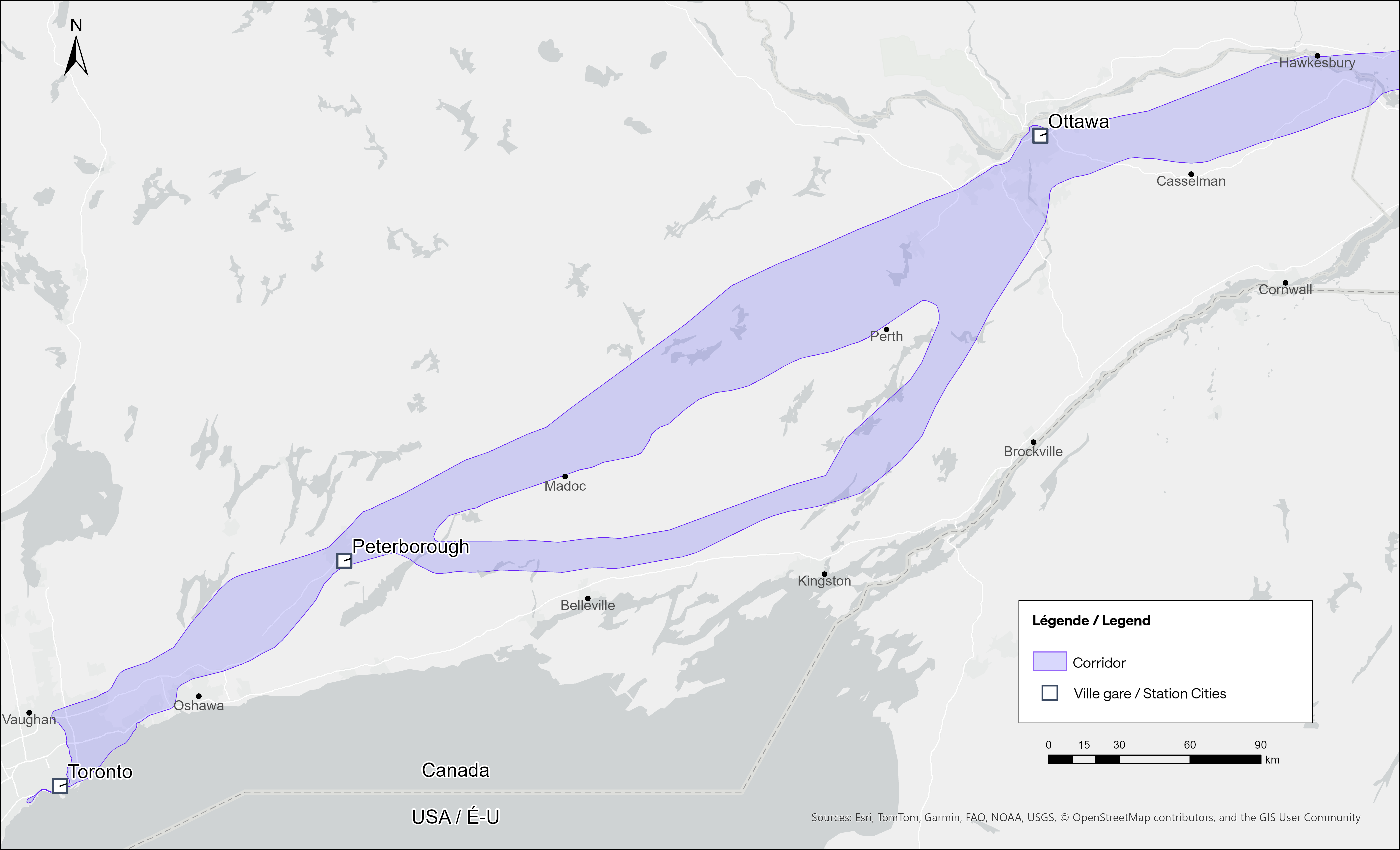
Map of potential routings for the Alto high speed line in OntarioMap of the planned routing for the Alto high speed line in Quebec
The maps clearly show a route between Ottawa and Montréal that will pass through Prescott & Russell Counties, roughly following an abandoned CPR corridor until about Hawkesbury, at which point it would cross into Quebec (following an older abandoned CNoR route) to Laval, then continue south into central Montréal, though not necessarily the existing Central Station (this would likely require a new tunnel under Mount Royal). The Montréal station appears to be a terminal for trains coming from Ottawa and from Trois-Rivières and Québec, much like the existing VIA Central Station.
Alto’s next phase towards Toronto could follow one of two broad routes between Ottawa and Peterborough, either just north of Highway 7, through the Canadian Shield, or a southerly alignment through the Rideau Lakes region and then through South Frontenac and passing near Stirling and Campbellford. All planned routes would require passing through Ottawa entirely on the Ontario side of the Ottawa River, making a through station particularly likely, especially for the critical Toronto-Montréal market.
On the detailed consultation map, highlighted areas show where the seven station locations are being considered.
The map for Ottawa shows possible station locations in an area including the current VIA station and the old Union StationThe Montréaland Laval station locations under consideration. The Montréal station area highlighted includes the locations of Central and Lucien L’Allier Stations.The Montréal station for Alto is clearly intended to be a terminal.
The idea of a downtown Ottawa Station for the new high speed rail corridor is certainly enticing. It would breathe new life into a 114-year-old landmark, provide a very convenient spot for Ottawa politicians, public servants, business travelers, tourists, and students attending nearby University of Ottawa. Rideau O-Train Station is less than two blocks away. However, it would require a new tunnel and/or elevated structure to reach the station from the rail corridors to the south. Furthermore, Centre Block would have to reopen on schedule so the Senate can move back before construction can start on refurbishing the station for passenger service.
The 1966 Ottawa VIA Station, on the other hand, has its own advantages. There is plenty of room to build new high speed train platforms, which should provide level boarding for efficient passenger movement. There is also room for parking, passenger pick-up and drop-off, as well as easy access to the highway, unlike Union Station. With the closure of the Ottawa bus station, the VIA Rail Station has become a multimodal hub, with Ontario Northland, Flixbus, and Orleans Express all using the station’s driveway, along with a KLM/Air France shuttle to Dorval Airport. There is also a dedicated O-Train LRT station on-site, though it could be better integrated with the station building.
Perhaps most importantly, the existing VIA station can help ensure the existing Corridor service remains integral, as passengers from Kingston, Belleville, and elsewhere on Lake Ontario and the St. Lawrence River will not be served by Alto; neither would Casselman, Alexandria and Dorval. That the station is a through-line, and not a stub-end terminal, will also ensure that the crucial Toronto-Montréal market will see minimal delays from back-tracking and reversing at a downtown terminal. Though there are instances of high-speed trains reversing directions at major hubs — Trenitalia’s Frecciarossa mainline between Milan and Salerno turns back at Roma Termini and at Napoli Centrale — this is an uncommon arrangement.
All the planned Alto high speed rail stations will have to be easily accessible and close to the downtown cores of the cities it serves. At this point in the planning process, this looks like it will be the case at all three big city stations. But it will need more than walk-up traffic like downtown office workers and tourists; it will be most successful as part of a complete network of local, regional and intercity transport, including the conventional VIA rail system. With specific improvements, including new platforms and better O-Train station integration, the modern yet historic 1966 Ottawa Station is well suited for all of these needs.